I have spent 5 years in mission work in the West Indies and South America. I have preached mainly part time for 40 years, much of that time while working with a full time job in Christian education. I am currently at Madison Academy in Huntsville, Alabama and serving as a shepherd at the Monrovia Church of Christ. God has blessed me with a wife and 3 grown children (and their families) who are much more loving than I am!
After a recent donation I made for EEM (they print Bibles and Bible story books), the lady there said thanks and included this: “Praise the Lord for the Eternal Impact this will make for the KINGDOM.” I thought about the significance of that statement. The gift would hopefully put a children’s Bible story book in the hands of a child in the Ukraine or one of the other 30 countries that EEM works for. A child that has very little or nothing, and that child will read that book and learn Bible stories that might lead them to become Christians later. Or the gift might put a Bible (translated into his native language) in the hands of a person in an very poor ex-Communist country in Europe who has no Bible. One lady said that her family had no books whatsoever, and the Bible EEM gave her was the only book in her house. That might lead to that person becoming a Christian and sharing the word with others in his family or community.
All of that might lead to someone having eternal life through faith in Jesus who died for them. Printing and distributing those Bible story books and/or Bibles will make an “eternal impact” for the kingdom of Jesus, which is the church. It will lead to many being saved and added to the church of Jesus Christ. That made me ask myself, “Am I doing things that will make an eternal impact of the life of anyone?” I need to use my money to support my family, but am I generously using my money to store up treasure in heaven? Jesus said, Matthew 6:19 “Do not store up for yourselves treasures on earth, where moth and rust destroy, and where thieves break in and steal. 20 But store up for yourselves treasures in heaven, where neither moth nor rust destroys, and where thieves do not break in or steal; 21 for where your treasure is, there your heart will be also.” You accomplish that by using your money, energy, and time to help others in need in the name of Jesus and to help spread the good news of salvation in Jesus here and abroad. A large % of the world’s population is still “unreached” with the gospel. When you help others you are storing up treasures “for yourself”, assuring yourself of a place with Jesus and his believers forever in heaven (wherever that is). You are not earning salvation by your good deeds, but you are showing that your faith in sincere and real. Faith that has no action is not sincere faith and will not be rewarded. We are saved by grace, not works, but we will be “rewarded”. Hebrews 11:6 And without faith it is impossible to please Him, for the one who comes to God must believe that He exists, and that He proves to be One who rewards those who seek Him.” As believers we already have eternal life, but when we die we will get a special reward of eternity in heaven without all the stuff we have to live with in this life. No more tears, no more pain, no more sadness when our loved ones die, no more living in a world full of violence and hate, no more worry, no more fear, no more stress I don’t know what that will be like exactly. One person, said “I sure hope there will be chocolate in heaven: I can’t live without chocolate!” Maybe, who knows. It will be Disneyland times one million and more.
So, today, ask yourself: “Am I spending most of my time, energy, and money on things that have no eternal impact for me or for others or for the kingdom?” Most of your time is spent on your job and sleeping, but what do you do with the rest of your time? What are you pursuing: money and things that money can buy for yourself or for your hobby, or shopping for clothes that you don’t even really need?
Titus 1:2 (ESV): “In hope of eternal life, which God, who never lies, promised before the ages began”.
John 3:16 (ESV): “For God so loved the world, that he gave his only Son, that whoever believes in him should not perish but have eternal life”.
Romans 6:23 (ESV): “For the wages of sin is death, but the free gift of God is eternal life in Christ Jesus our Lord”.
John 17:3 (ESV): “And this is eternal life, that they know you, the only true God, and Jesus Christ whom you have sent”.
1 John 5:11 (ESV): “And this is the testimony, that God gave us eternal life, and this life is in his Son”.
Romans 8:24-25 (ESV): “For in this hope we were saved. Now hope that is seen is not hope… But if we hope for what we do not see, we wait for it with patience”.
1 Peter 1:3 (NLT): “…Now we live with great expectation, and this is because God raised Jesus Christ from the dead”.
John 10:28 (ESV): “I give them eternal life, and they will never perish, and no one will snatch them out of my hand”.
1 John 2:25 (ESV): “And this is the promise that he made to us—eternal life”.
Titus 3:7 (ESV): “…so that being justified by his grace we might become heirs according to the hope of eternal life
What will it be like if there is no life after death? I recently talked to a very nice man in his 30’s with a wife and 3 teenage children. He said that he was not into talking about life after death. I told him that I wanted to live eternally with my family and that was important to me. I told him that I did not want to simply die and cease to exist for eternity. He said, “we didn’t exist for millions of years so it’s no big deal if we cease to exist for eternity after we die.” The idea of ceasing to exist didn’t bother him. He had no hope of anything good after death. He added, “If there is life after death, I have been a pretty good person and that will be enough.”
I feel bad using that conversation b/c it might seem that I am trying to capitalize on it to do a blog article. But the conversation impacted me a lot. I gave a mini testimony to the man, which he said did not offend him, about the hope of eternal life for those who trust in Jesus’ death for our sins and belief that He was raised from the dead to give us eternal life. I pray that God will open the man’s heart so we can talk more.
The conversation got me thinking about my hope of eternal life. My children believe in Jesus and have the hope of eternal life. We all hope that one day we will all be together in heaven (wherever that is) enjoying eternal life with God, Jesus the Lamb, and other believers in Jesus. I look forward to seeing my mom and dad there, and my wife’s dad. Her mom is stil living at 96.
Read all those verses above. Add 1 John 5:13 These things I have written to you who believe in the name of the Son of God, so that you may know that you have eternal life.” Those living before Jesus defeated spiritual death in 70 AD were still living for the “hope of eternal life” b/c the fulfillment of that hope was still in their future. After Jesus defeated spiritual death in 70 AD, believers after that have eternal life. Now look at John 8:21 Martha then said to Jesus, “Lord, if You had been here, my brother (Lazarus) would not have died. 22 Even now I know that whatever You ask of God, God will give You.” 23 Jesus *said to her, “Your brother will rise from the dead.” 24 Martha *said to Him, “I know that he will rise in the resurrection on the last day.” 25 Jesus said to her, “I am the resurrection and the life; the one who believes in Me will live, even if he dies, 26 and everyone who lives and believes in Me will never die. Do you believe this?” 27 She *said to Him, “Yes, Lord; I have come to believe that You are the [i]Christ, the Son of God, and He who comes into the world.” There was a resurrection in the future when Jesus said this, but notice closer what Jesus said. Jesus said that the resurrection and living eternally was not just about some judgment day and resurrection day. He himself is the resurrection. Believe in Him and you will live even if you die physically. You will never die again spiritually. Some part of you will receive an eternal spiritual body when you become a Christian and you will continue to live eternally with God and Jesus after you die.
1 Corinthians 15 tells us a lot about immortality and eternal life. First of all Paul tells us that our resurrected body will be spiritual not physical. I am amazed at all the Bible scholars who say that someday we will be raised with an eternal physical body. Paul taught just the opposite of that. Secondly Paul tells us that some of those that Paul was writing to would still be alive when the resurrection woud happen. Thirdly Paul tells us that whether dead or alive when that resurrection would happen that all believers would receive immortality, which is the same as eternal life. Paul said that Jesus would destroy spiritual death which would allow for believers to have immortality. Now I believe that resurrection happened in 70 AD just as Daniel predicted in Daniel 12:1-2. All the Old Testament dead, whether wicked or rightesous would be raised to receive their eternal fate of immortality or of destruction. Paul had said in Acts 24:15 that there was “about to be” a resurrection at the time he was speaking. But even if you think the resurrection is still in our future at some point, the lesson in 1 Corinthians 15 is still the same. Believers receive immortality today when they accept Jesus and become Christians. Ephesians 2:1-3 says that they are raised from the dead and made alive spiritually.
The thought of dying still scares me, I must admit, although it shouldn’t. When doubt arises, I try to think about Jesus’ resurrection. The same power of God that raised Jesus from the dead will give me an eternal, immortal part that will live on after death. I hope that those reading this article have that hope. The only way to get that hope is to believe in Jesus (John 3:16). He died to give you that hope. Don’t reject him.
Here is the argument for the traditional Good Friday crucifixion of Jesus.
Arguments for the Traditional Friday Crucifixion:
Jewish Time Reckoning: In the first century, any part of a day was often counted as a full day. Therefore, Friday (day 1), Saturday (day 2), and Sunday (day 3) fulfill the “three days” requirement
“Preparation Day” Definition: The Gospels identify the day of crucifixion as “Preparation Day” (John 19:31), which is commonly understood to mean the day before the Sabbath (Friday).”
Is it possible that Jesus was raised on Saturday evening (our time which would be Jewish first day of the week) instead of early Sunday morning? AI: “Yes, there is a prominent theological and chronological argument that Jesus was resurrected on Saturday evening (our time), rather than Sunday morning. This theory hinges on a strict, 72-hour interpretation of Jesus’ prophecy that he would be in the “heart of the earth” for “three days and three nights” (Matthew 12:40), combined with Jewish sunset-to-sunset timekeeping.
Here is the breakdown of that view based on the search results: The “Saturday Night” Argument
Jewish Timekeeping: In the first century, days started at sunset, not midnight. Therefore, “the first day of the week” (Sunday) began at sunset on Saturday.
The 72-Hour Count: To have 72 hours, three full nights (Wed, Thu, Fri) and three full days (Thu, Fri, Sat), Jesus would have needed to rise around sunset on Saturday—the very beginning of the first day of the week.
Tomb Evidence: When the women arrived at the tomb early Sunday morning, it was already empty (John 20:1). This indicates the resurrection happened sometime before their arrival, potentially Saturday night.
Wednesday Crucifixion: To align with a Saturday night resurrection, proponents believe Jesus was crucified on a Wednesday, not a Friday. In this scenario, Thursday was a “high day” Sabbath (Passover), Friday was a day of preparation, and Saturday was the regular weekly Sabbath.” In other words, there was a “high day” Sabbath in the last week that did not fall on the weekly Saturday Sabbath, and then there was the weekly Sabbath also mentioned which was on a Saturday That helps clear up what looks like a conradiction in the gospels.
BTW, if you use a strict 72 hour count then the 72 hours ends on Saturday evening at 6pm (Jewish time) and he had to be raised shortly after that. Otherwise, if he were raised, let us say, early Sunday morning our time, then he would be in the tomb more than 72 hours. That would be inconsistent with insisting that the 72 hours was exactly 72 hours. So this view would necessitate that Jesus was raised Saturday evening our time which would be the Jewish first day of the week.
Does it matter? Of course not, except for one thing. If Jesus meant 72 hours when he said “3 days and 3 nights” then he would have been mistaken if he was only in the tomb less than a full 72 hours. Some say that the 3 days and 3 nights could just mean part of 3 days and just two nights. I mean, when we say we are going to the beach for 3 days, that would only include 2 nights. If, as many believe, Jesus was crucified on Friday, he would only be in the tomb a couple of hours on Friday before 6pm Saturday began, and all day Saturday, and then several hours on Sunday: thus parts of 3 days and 2 full nights. The Jewish use of day and night is more specific than that. When the terms day and night are used together, it always refers to a 12 hour day and a 12 hour night (as in Genesis on day 1). So the full 72 hours in the tomb makes more sense.
All this is based on Jesus being raised on the first day of the week (Jewish time). Yes the women came to the tomb early on Sunday, the first day of the week, but it doesn’t say that he was raised on Sunday morning our time. Luke 24:1 the women came on the first day of the week to the tomb. Jesus is walking and talking with the 2 men on the road to Emmaus that same day. Then in 24:21 one of the men said that “it is now (Sunday) the third day since these things (i.e. the trial and crucifixion of Jesus) happened.” Does he mean that Sunday was the 3rd day since Jesus was crucified or does he meant that on that Sunday 3 full days that had passed since Jesus was crucified or does he mean that it was the 3rd day since the sealing of the tomb which happened probably on the day after the crucifixion. A lot hinges on how to interpret what the man said .
Many believe that Sunday was indeed the 3rd day since he was crucified, which is actually what 24:21 says. If so, that gives credibility to the view that Jesus was crucified on Good Friday. Here is that view:
AI: “In Luke 24:21, the first day of the week (Sunday) is considered the “third day” because of inclusive reckoning, a common first-century Jewish idiom where any part of a day is counted as a full day. Crucifixion on Friday our time (Day 1), burial on Saturday our time (Day 2), and resurrection Sunday morning our time (Day 3) constitutes three days. That would be the parts of 3 days and 2 full nights view.
How the 3rd Day Calculation Works: This view used Roman time and our time with a day beginning at. 12 am.
Day 1 (Friday): Jesus was crucified and buried before sunset. This portion of Friday counts as the first day.
Day 2 (Saturday/Sabbath): Jesus remained in the tomb for the entirety of Saturday.
Day 3 (Sunday): Jesus rose early in the morning, making Sunday the third day of the sequence.
This inclusive method meant that the partial time on Friday, the whole day of Saturday, and the early hours of Sunday were recognized together as three days, rather than a strict 72-hour period. The disciples in Luke 24:21 were counting Sunday as the third day since the events of Friday.” That view makes sense also if it doesn’t have to be a full 72 hours.
Using this same inclusive method, some have even argued that Jesus was crucified on Thursday our time before 6 pm, and, using our time, thus was in the tomb Thur, Fri, and Sat nights and that would mean he was only in the tomb 2 full days (Friday and Saturday our time) but that Sunday was the third day since his death, which is what the man on the road said (Luke 24:21). That view makes more sense that the crucified on Good Friday view to me, but it still would mean that he was not in the tomb a full 72 hours, (instead, 3 full nights and parts of 3 days). Here is that view:
AI: “Yes, it is historically and biblically possible that Jesus was crucified on a Thursday rather than a Friday. This view argues that a Thursday crucifixion provides a full 72 hours (“three days and three nights”) to fit the “sign of Jonah” prophecy (Matthew 12:40), allowing for a Thursday burial and a Sunday resurrection.
Key Arguments for a Thursday Crucifixion:
Three Full Days and Nights: A Thursday death allows for three full nights (Thursday/Fri, Fri/Sat, Sat/Sun) in the tomb before rising on Sunday, addressing the limitation of a Friday crucifixion, which only covers two nights.
Two Sabbaths Theory: Proponents argue that a “special Sabbath” (First Day of Passover) occurred on Friday, followed by the regular Saturday Sabbath. The women could have purchased spices on Friday in between the two Sabbaths.
Timing of Passover: A Thursday crucifixion aligns with the view that Jesus was killed at the same time the Passover lambs were being prepared on Nisan 14.
Back to the crucified on Wed Jewish time before Thursday Jewish time began at 6pm
If Jesus was raided shortly after Jewish first day of the week began at 6pm Saturday Jewish time, then start there and back up 72 full hours. That would take you back to crucifixion on Wednesday Jewish time, in the tomb that night Thursday night Jewish time, Thursday day, Friday night, Friday day, Saturday night, Saturday day (all Jewish times) which be right at 72 full hours in the tomb. But how would we reconcile that the man in Luke 24 said that Sunday was only the 3rd day since the crucifixion. Some interpretations suggest that the “third day” refers not to the crucifixion itself, but to the finalization of the sealing of the tomb (which happened probably on the morning after he was crucified). So if that is so, then backing 3 days from Sunday would be from Friday Jewish time, Saturday Jewish time, and then Sunday the 3rd day since the sealing of the tomb on Thursday Jewish time.
I’m still not sure which view to take? What about you? The main thing is that he was crucified for our sins, buried, and raised on the 3rd day. But the timing of all that is debated a lot, and you can see why. After writing this article, I remembered why I have not spent much time in the past studying this topic. Every time I do, I can’t come up with a definitive view. The fact that Jesus specified 3 days and 3 nights does make me want to study it more closely!
Just something to think about as we celebrate the resurrection of Jesus.
We hear the words “legalism” and “liberalism” tossed out a lot in religious discussions nowadays. Usually it is implied that it is bad or unscriptural to be a “legalist” or a “liberal”. What do these two terms even mean? The definition of these two terms can differ even among sincere interpreters of the Bible, but here is a slide from the Borger Church of Christ that I think really nails it on what legalism is and what it is not.
WHAT LEGALISM IS. Let’s discuss these points. 1) Mattew 23:23 The Pharisees stressed tithing even if they were hypocrites in their hearts. They would tithe even of garden spices that they grew, and yet they neglected mercy and compassion. So legalism includes hypocritically keeping laws of God. You are a legalist if you think that keeping God’s laws can save you even if you are an insincere hypocrite.
2) Mark 7:6-7 The Pharisees condemned Jesus’ disciples for not washing their hands before eating based on their traditions that they had added to the Law of Moses. Jesus said that their worship was vain b/c they taught as doctrine the commandments of men (i.e. their tradition and commandments that they bound on others). Actually, tradition itself is not necessarily bad. In 2 Thessalonians 3:6 Paul called the teachings he had given them “tradition received from us”. Taking the Lord’s Supper every week becomes a tradition based on the commands of Jesus. Even traditions not based on the commands of the Bible are not necessarily bad. Many churches had a weekly tradition of 2 songs, a prayer, another song, and then the sermon every Sunday week after week. Nothing wrong with that. Tradition becomes wrong when, like the Pharisees, someone or some church binds its way of doing things on others, judging and condemning those who don’t follow their example. The Jehovah’s Witnesses have a long standing doctrinal tradition of “no blood transfusions”. They legalistically condemn those who use blood transfusions medically. They don’t allow their members to use them. I would call that legalism. If someone chooses not to have a blood transfusion, that is their choice based on their interpretation of the Bible, but they should not bind that on others.
3) Romans 14:1-3 Paul is discussing differences among believers on eating meats or not, and observing special days. Some say that was just different opinions and not doctrine, but Paul gave a clear doctrine about eating meats (or eating anything). In 1 Timothy 4:1-4 he said that a Christian can eat anything that he wants as long as he gives thanks for it. Paul even said that eating meats offered to idols is not wrong unless it causes someone to stumble by their eating and violating their conscience. But even if there is a clear doctrine about eating meats, Paul said that two believers who disagreed on that should not judge each other and should not withdraw fellowship from one another over that issue. That issue is not a “heaven/hell” issue. God’s grace covers many doctrinal misunderstandings or else none of us would make it to heaven b/c no one understands every single Bible doctrine or teaching perfectly. There are a few “heaven/hell” doctrines like the Deity of Jesus, salvation by grace through faith in the sacrifice of Jesus, loving one another, and obeying God’s moral laws (with right and wrong being defined by God). These are discussed in 1 John as tests of walking in the light and of fellowship with God and other believers. But almost all issues that believers divide over are not heaven/hell issues. Eating meats or not, observing special days (Lent, Sabbath observance), having and eating in kitchens in your church building, using one cup or many cups in the Lord’s Supper, etc. are not heaven/hell issues. Someone might claim they have Bible verses on each of those issues, but that it not the point. The point is that even if someone disagrees with you on the issue, you should not judge them or withdraw fellowship from them b/c those are not heaven/hell issue. Even if you think that you are the one with the correct understanding of the doctrine in question, you still should not condemn those who disagree. I realize that we might even disagree of what the heaven/hell issues are but we should be very reluctant to not make a non heaven/hell issue or doctrine to be a heaven/hell one that we bind on others, causing division.
4) Acts 15 was the conference to decide if circumcision should be demanded of Gentile Christians which is what some Jewish Christians were doing (the Judaizers). The conference, using the inspired testimony of Paul and others, decided that circumcision should not be bound on Gentile Christians. Paul said that circumcision was not a heaven/hell issue in itself, but that binding the practice on others causing division becomes a heaven/hell issue (Galatians 5:1-4). It’s okey to have your opinion about any and all doctrines and issues. Follow your conscience. But if its not a heaven/hell issue then don’t bind your opinion on others, judging and condemning others and causing division.
5) Luke 18:9-14 The Pharisee bragged in his prayer about how he tithed and fasted. He bragged how he was not a sinner like the publican who prayed “God be merciful to me the sinner”. The Pharisee was self-righteous. You are a legalist if your keeping the Laws of God makes you feel superior to others who don’t keep God’s laws as you interpret them. If you do that, you are acting like you own keeping of laws of God saves you, like you are earning your salvation which is legalism in its worst form. You are no longer giving full credit to the grace of God in your salvation and you will probably not be compassionate toward others.
6) 3 John 1:9-11 John condemned Diotrephes harshly. In 3 John, John told the Christians to receive evangelists who came to them teaching the truth about Jesus. Diotrephes claimed to be first among his church. He disagreed with John and those sent out by John on doctrines (mainly the Deity of Jesus), so he unjustly accused John with malicious words and refused to help those sent by John. Not only that, he forbade any other church members from helping them: he even put those who helped them out of the church. This Diotrephes is the kind of church leader whom Paul warned about, those who cause dissension and division, who try to be dictators of others in the church (Romans 16:17). Many such men have split churches time and time again.
WHAT LEGALISM IS NOT. Luke 6:46; John 14:15; Matthew 7:21-23; Rom 6:17. Someone keeping the laws of God as they interpret them is not legalism. They might even have some really strict law keeping that you think is unnecessary in you opinion. A lady thinks she should wear a little covering in the assembly. She should follow her conscience on that, just don’t condemn those who don’t wear it. You can abstain from alcohol completely, just don’t condemn those who drink in moderation. You can choose to not eat pork, just don’t condemn those who do. Over and over the Bible stresses obedience to God’s commands. Someone who tries to keep all of God’s commands in the strictest, most literal sense is not a legalist. He can be a strict keeper of God’s law and yet still trust in the grace of God for salvation and not in his own law keeping. So we should not call him a a legalist and mock him b/c he is such a strict law keeper One final note. Today, if I insist on following a literal interpretation of Paul’s passages where he condemns homsexuality, then some will say that I am a “legalist”, that I am more interested in laws than love. That is not Biblical. If the Bible clearly condemns a practice, then I am nto a legalist if I boldly denounce that practice. If the issue is a heaven/hell issue, like LGBTQ or the Deity of Jesus or universlaissm, then I am not a legalist for condemning such things
THE CLEAR MESSAGE OF THE BOOK OF HEBREWS The message of the book of Hebrews is clear. The author is telling the Jewish Christians not to leave their faith in Jesus. Don’t be decieved by their non-Christian Jewish brethren who will reveolt agaisnt the Romans in a few years. Don’t go back to trusting in the Law of Moses. In Christ, you have a better messenger than angels, a better deliverer than Moses, a better high priest than Aaron, a better covenant than the old one, a better sacrifce than animals, and a better way of faith. Don’t let the mockers (2 Peter 3) discourage you to think that Jesus’ prediction of his imminent 2nd coming is not going to happen: Hebrews 10:37 He is coming soon and will not delay”. In 30 ADJesus had predicted that He would come within that generation (Matthew 24:30-34) and that was going to be fulfilled in 70 AD which would still be within that generation. The old covenant is about to disappear (Hebrews 8:13), and it did in 70. AD. God is about to (mello) judge the Jews in 70 AD and, if you leave the faith, you will be judged also b/c you have “trampled underfoot the Son of God, and has regarded as unclean the blood of the covenant by which he was sanctified, and has insulted the Spirit of grace? ” (Hebrews 10:26-31). God is going to shake the heavens and earth (a great judgment) one more time in 70 AD, removing the old heavens and earth (the Jewish system) and replacing it with the new heavens and earth, i.e. the Messianic new covenant system (Hebrews 12:18-24).
THE 10 PRACTICAL INSTRUCTIONS TO THE RECIPIENTS OF THE LETTER Having made that message clear, how would you close this letter if you were the author of Hebrews? The message has been about not losing their faith, about not quitting. But not a lot of specific Chrsistian duties. So the book closes with some generic Christian duties for them to practice. 1) Love your fellow Christians. 2) Practice hospitality.for Christians whom you don’t know who need assistance. 3). Remember those in prison b/c of their faith. 4) Be faithful to your marriage vows. 5) Don’t love money. 6) Imitate the faith of those who led you to Christ. 7) Don’t be led astray by those trying to get you to go back to trusing in the old covenant. 8) Continue to offer up spiritual sacrifices of praise, doing good and sharing. 9) Obey your leaders. 10) Pray for us (i.e. those teeaching the Word). These are so practical. The general message in the book is directed to the Jewish Christian who are discouraged and tempted to leave the faith, but chapter 13 had practical admonitions that apply to all Christians of all times. So look at those 10 things and see how you are doing.
THE BENEDICTION AND MYSTERIOUS CLOSING REMARKS The Hebrews author closes the book with a neat benediction: Hebrews 13:20 Now may the God of peace, who brought up from the dead the great Shepherd of the sheep through the blood of the eternal covenant, that is, Jesus our Lord, 21 equip you in every good thing to do His will, working in us that which is pleasing in His sight, through Jesus Christ, to whom be the glory forever and ever. Amen.” Notice the specific mention of the “blood of the eternal covenant” which of course is the blood of Jesus, but the author wants to emphasize again the new covenant. He/she also says, 13:22 But I urge you, brothers and sisters, listen patiently tothis word of exhortation, for I have written to you briefly.” 13 fairly long chapters is brief? He/she adds, 13:23 Know that our brother Timothy has been released, with whom, if he comes soon, I will see you.” No one knows where and when Timothy was in prison so as to be released. How was Timothy’s release going to help the author to be able to visit the recipients of the letter? Again, no one knows. Finally, 13:24 Greet all of your leaders and all the saints. Those from Italy greet you.” Does this mean that the author wrote the letter from Italy, or simply that some ex-patriots from Italy were with him/her when he/she wrote the letter? Again, no one knows. Interesting mysterious ending to the letter.
BY FAITH THE WALLS OF JERICHO FELL DOWN Hebrews 11:30 By faith the walls of Jericho fell down after the Israelites had marched around them for seven days.” It is interesting that the Hebrew writer picks this one event from the period of the conquest of the promised land under Joshua, who took Moses’ place leading Israel after Moses died. He could have cited Joshua’s faith when Joshua was one of the 12 spies sent to spy out the land and only Joshua and Caleb had faith that God could defeat the Canaanites. He could have cited Joshua’s great faith in asking God to make the sun stand still so that Israel could get a more complete victory over the Amorites. Would you have ever thought to ask God for such an amazing miracle? But for some reason the Hebrew writer chose the fall of Jericho as this hall of faith moment of faith during the period of the conquest. This incident would have included the faith of Joshua and the Israelite army. The “captain of the army of the Lord” had appeared to Joshua at Gilgal as a man with a sword. This man was God Himself and told Joshua to take off his sandals b/c he was standing on holy ground (i.e. in the presence of God Himself, just as Moses was at the burning bush) (Joshua 5:13-15) In Joshua 6 this man (and it calls him “the Lord”) gives Joshua the battle plan for taking Jericho. It would not be a long siege of the city to starve them to surrender, or build siege towers on ramps to attack. The plan was to march around the city one time each day for 6 days (without saying a word) with the ark of the covenant and the priests in front. Can you imagine the derisive, mocking calls directed toward them from the men from Jericho from the top of the walls. Then to march around the city 7 times on the 7th day, and at the blowing of the trumpets by the priest the army was to shout and the walls would fall. Joshua never questioned the Lord about this crazy plan. It would take about 1 hour to march around the city that had a 1/2 mile circumference. Joshua 4 perhaps indicates that 40,000 Israelites marched around the walls. 4:12 The sons of Reuben, the sons of Gad, and the half-tribe of Manasseh crossed over in battle formation before the sons of Israel, just as Moses had spoken to them; 13 about forty thousand equipped for war, crossed for battle before the Lord to the desert plains of Jericho.” That verse referred to the crossing of the Jordan but perhaps tells us the number of men who marched around the city. 40,000 men marching around the city had to be an impressive sight and their silence as they marched had to be nerve wracking to the men of Jericho as they watched! By faith he told his army about the plan. They never questioned the plan saying, “Joshua, are you serious? That is your plan for taking the city?” The Israelites had faith also as they marched around the city. After that last time around the city on the 7th day, they had faith that when they shouted that the walls would fall, and they did. So they would march 7 hours around the city on that 7th day. Give credit to this generation of Israelites. The generation (age 20 and above) that came out of Egypt in the exodus all died in the 40 years in the wilderness b/c of lack of faith (Hebrews 3). Those 20 and under when they came out of Egypt and those born during the 40 years made up the new generation that entered the promised land by faith. Jericho was the first city in the promised land to be conquered. Judges 2 pays a great compliment to that new generation: 7 The people served the Lord all the days of Joshua, and all the days of the elders who survived Joshua, who had seen all the great work of the Lord which He had done for Israel.” That new generation conquered the major cities and armies of the Canaanites in 7 1/2 years (although they did not completely destroy all the Canaanites as God had commanded them). The generation after them would revert to a generation lacking faith. Judges 2:10 All that generation (i.e. the generation that conquered Canaan) also were gathered to their fathers; and another generation rose up after them who did not know the Lord, nor even the work which He had done for Israel.” That would be the generation that began the period of the judges during which the Israelites forsook God and worshipped other gods for over 300 years. So the new generation that conquered the land would be the only faithful generation for over 300 years.
THE COMPARISON TO OUR HISTORY IN THE USA That new generation was like the “Greatest Generation” here in the USA. AI: “The generation immediately preceding the Greatest Generation (born 1901–1927) is generally known as the Lost Generation. Born roughly between 1883 and 1900, this cohort came of age during World War I and was shaped by the societal shifts following the industrial revolution, with many experiencing disillusionment after the war.” That might be comparable to the “lost” generation of Israelites who spent 40 years in the wilderness. I’m sure they felt “disallusioned” also, knowing their fate to gradually all die in the wilderness. “The Greatest Generation that followed the Lost Generation was born 1901–1927, and is the American cohort that lived through the Great Depression and fought in World War II. Coined by Tom Brokaw, this term honors their resilience, patriotism, and sacrifice. They are known for their commitment to duty, frugality, and for building modern post-war America.” They built the churches that made America great. Alexis de Tocqueville (1805–1859), a French political thinker and historian who visited the United States in 1831-1832 said that religion played a crucial role in American democracy by fostering morality and supporting freedom. He observed that American religious life was robust and that churches helped sustain the “virtue” needed for a self-governing society.” Their work ethic made America great. That would include the parents of my wife and me. The history of the USA kinda parallels the story in Joshua and Judges. The generation after the greatest generation was the “baby boomers”. Whether Baby Boomers were a “good” generation is heavily debated, Boomers were active in fighting for equality, inclusivity, and individual rights in the 1960s and 70s, contributing to a more open society. They helped drive changes in racial, gender, and sexual equality. But critics often label them a “selfish” generation, preoccupied with gaining wealth. Boomers are often criticized for shifting from the social activism of the 1960s to a culture of consumerism, materialism, and self-indulgence in the 1970s and 80s. They brought in the “sexual revolution” and use of drugs (Woodstock, 1969). Baby boomers (born 1946–1964) have had a higher, and significantly more unstable, divorce rate than the Greatest Generation. As of 2025, baby boomers still hold the highest divorce rate of any generation ever in the US, often termed “gray divorce” when occurring later in life, breaking from the more traditional, long-lasting marriage norms of their parents.” Most of the greatest generation would not even think about divorcing even if they were not “happy” in marriage. My wife’s mom would not even allow her daughter to say the word “divorce”. It just wasn’t an option! My dad’s parents seemed pretty miserable in their 80 year long marriage, but they would never have considered divorce. Some of that was the social stigma of divorce and some was the Bible teaching about not divorcing. I found my grandmom’s journal where she kept notes for the “Baptist Church of Christ”. I wish I knew more about that! Some of it they were just too tired raising 10 kids on the farm working hard from sunrise to sunset to worry about divorcing! The overall U.S. divorce rate has declined significantly since peaking around 1980, when baby boomers were young adults, dropping to its lowest level in 40 years. While divorce rates fell for younger generations (Gen X/Millennials), the divorce rate for those over 50 (the “gray divorce” trend) actually doubled from 1990 to 2017. Younger generations often cite witnessing the pain of their parents’ (boomer) divorces as a motivation to keep their own marriages together. Additionally, marrying at older ages, higher education levels, and cohabitation before marriage have reduced divorce rates.” (AI) But let’s give the boomers some credit. Most continued to believe in God and the Bible, went to church, and tried to raise their children in the right way. “ It was the millennials, not the boomers, who were a major driving force behind the decline in American belief that the Bible is the literal word of God. Research shows they are more skeptical of the Bible, with a large portion viewing it as a book of myths or fairy tales, or as an outdated document, rather than divine scripture. Millennials are more likely than older generations to identify as atheists, agnostics, or “nothing in particular,” separating themselves from traditional religious beliefs.” (AI) Then there’s Gen Z. “Gen Z did not start the LGBTQ movement, but they significantly accelerated its visibility, acceptance, and adoption of queer identities, with up to 30% of them identifying as LGBTQ+.” (AI) Sounds a lot like the period of the Judges to me! I’m thankful for our “greatest generation” that he had.
BY FAITH RAHAB WAS SAVED FROM THE DESTRUCTION OF JERICHO AND ITS PEOPLE Hebrews 11:31 By faith the prostitute Rahab did not perish along with those who were disobedient, after she had welcomed the spies in peace.” So what was the faith of Rahab based on? The king of Jericho had heard that the 2 spies sent by Joshua to spy out the city had been to Rahab’s house, but Rahab told him that they had escaped. She had hidden them on the roof and later let them down by a rope through a window to escape from the city (her house was high on the city wall). She told the 2 spies: Joshua 2:9 “I know that the Lord has given you the land, and that the terror of you has fallen on us, and that all the inhabitants of the land have despaired because of you. 10 For we have heard how the Lord dried up the water of the Red Sea before you when you came out of Egypt, and what you did to the two kings of the Amorites who were beyond the Jordan, to Sihon and Og, whom you utterly destroyed. 11 When we heard these reports, our hearts melted and no courage remained in anyone any longer because of you; for the Lord your God, He is God in heaven above and on earth below. ” The reports about the exodus, the Red Sea, and the conquest of the Amorite kings had convinced her that the God of Israel was the only true God. BTW everyone in Jericho (and Canaan) heard about the plagues in Egypt where God showed His power over the false gods of Egypt. That should have told them that the God of Israel was more powerful than the Canaanite gods like Baal and Asherah, but Rahab was the only Canaanite who was converted to belief in the God of Israel. God gave all the Canaanites the same opportunity to believe before He sent the Israelites to judge and destroy them. Thus by faith she rescued the spies. She asked for the safety of her whole family and was promied that. She would gather her immediate family and relatives in her house and put a scarlet thread through the window to show Israel the only ones to spare in the city. The part of the wall with Rahab’s house did not fall. “Archaeologists, including German excavations of 1907-1909, found evidence that a portion of the northern wall did not collapse, unlike other sections.” (AI) ” Excavations by Garstang and Garwood from 1930-1936 found evidence of collapsed walls, intense burning (the Israelites burned Jericho), and massive grain storage (indicating a short siege as per the 7 day siege in Joshua)”. Rahab’s family was saved as promised. Joshua 6:22 And Joshua said to the two men who had spied out the land, “Go into the prostitute’s house and bring the woman and all she has out of there, just as you have sworn to her.” 23 So the young men who were spies went in and brought out Rahab, her father, her mother, her brothers, and all she had; they also brought out all her relatives, and placed them outside the camp of Israel.” The Hebrew writer doesn’t mention the saving of her whole family, but that is important. It shows her influence. Hopefully our faith in God and Jesus that saves us will lead to the salvation of our familes and many others. Yes, Rahab was a prostitute but I’m sure that changed after she joined Israel. Yes, she told a lie. She told the men who came searching for the spies that the spies had already escaped the city even though they were up on her roof. My sister in law once said, “She was a prostitute. What’s one more sin gonna hurt?” I’m sure God approved of that lie as part of her faith in saving the spies. If my family was in the back bedroom and a gunman came in and asked if anyone else was in the house, I would lie and say that no one else was in the house. Of course that doesn’t justify lying in general, which is a sin. James used the example of Rahab to show that “faith wihout works is dead”. James 2:24 You see that a person is justified by works and not by faith alone. 25 In the same way, was Rahab the prostitute not justified by works also when she received the messengers and sent them out by another way? ” Saving faith must be demonstrated by action (works) although the works do not save us. We are saved by grace through faith (Ephesians 2:8-10). What if Rahab had refused to hide the spies, saying “I do believe that the god of Israel is the one true God but I can’t help you. Helping you would endanger me and my whole family. I can’t let you in my house. Go find somewhere else to hide.” If she had said that, she would not have been saved in the destruction of Jericho and she would not have been saved from her sin of prostitution.
The Hebrew writer gave us two great examples of faith from the period of the conquest of Canaan. What a great chapter in Hebrews 11.
1) BY FAITH MOSES WAS HIDDEN FROM PHAROAH WHEN HE WAS BORN. Hebrews 11:23 By faith Moses, when he was born, was hidden for three months by his parents, because they saw he was a beautiful child; and they were not afraid of the king’s edict.” Of course, this was by the faith of his parents and not the faith of the baby Moses. Kinda like when parents have their babies baptized, trusting that the parents and the church will bring that baby up to be a Christian some day. That baby doesn’t even know what is going on, except a few annoyng drops of water. Interesting: the Orthodox Church immerses those babies 3 times! That must be a frightening experience for the baby! Back to Moses as a baby. It took a lot of courage for Moses’ parents to hide the baby Moses for 3 months. There were probably taskmasters roaming in and out of the Israelite houses or tents, listening for a crying baby that they would then kill. Maybe even a fellow Israelite would know about the hidden baby Moses and tell the taskmasters to get a reward of some kind. Non-Jews often sold out the location of Jews in hiding for money from the Germans. Did Moses’ parents just want to protect their little newborn? They hid the baby by faith, so maybe they had faith that God would help them find a way to save their baby. Maybe they even knew that the time was nearing for God’s promise (Genesis 15) to bring Israel out of foreign slavery and they had faith that their baby might be the deliverer chosen by God. It takes a lot of faith to raise a child for the Lord in today’s sinful culture. AI: “Proverbs 22:6, “Train up a child in the way he should go, and when he is old he will not depart from it,” is a biblical mandate for parents to provide godly guidance, education, and nurturing in the early, formative years. This training involves nurturing a child’s spiritual, moral, and emotional development, creating a lasting foundation that influences their character throughout life.” Too often parents are too busy with their careers and their own interests. They allow the world to train up their children. Then they are shocked when their children turn to alcohol, drugs and porn. 66-75% of teens raised in churches leave their churches during or after college. They might not leave their faith in God and Jesus, but many do that also.
2) BY FAITH MOSES CHOSEN TO SUFFER WITH GOD’S PEOPLE INSTEAD OF ENJOYING LIFE IN EGYPT Hebrews 11:24 By faith Moses, when he had grown up, refused to be called the son of Pharaoh’s daughter, 25 choosing rather to endure ill-treatment with the people of God than to enjoy the temporary pleasures of sin, 26 considering the reproach of Christ greater riches than the treasures of Egypt; for he was looking to the reward.” When did Moses make this choice? He was raised by Pharoah’s daughter and had the luxurious life of an Egyptian prince. Who told him that he was a Hebrew and not an Egyptian? When did he figure that out? His mom nursed him for Pharoah’s daughter but did she have any further contact after he was weaned? We do know that at the age of 40 he made the choice to join the Hebrew slaves. Acts 7:20 At this time Moses was born; and he was beautiful to God. He was nurtured for three months in his father’s home. 21 And after he had been put outside, Pharaoh’s daughter took him away and nurtured him as her own son. 22 Moses was educated in all the wisdom of the Egyptians, and he was proficient in speaking and action. 23 But when he was approaching the age of forty, it entered his mind to visit his countrymen, the sons of Israel. 24 And when he saw one of them being treated unjustly, he defended and took vengeance for the oppressed man by fatally striking the Egyptian. 25 And he thought that his brothers understood that God was granting them deliverance through him; but they did not understand.” At 40 he visited the Hebrew slaves, probably to tell them that he was ready to be their deliverer from slavery. He is casting his lot with the slaves, never to be able to go back to being an Egyptian prince. He kills the taskmaster, thinking that will be the sign that he is the deliverer. But the next day Moses broke up a fight between two Hebrew slaves and one of them said “‘Who made you a ruler and judge over us? 28 You do not intend to kill me as you killed the Egyptian yesterday, do you?’” Moses knew then that they were not ready to follow him in a slave Spartacus like rebellion. Perhaps Moses planned for the 600,000 male slaves to take up their tools as weapons and attack the Egyptians. We don’t know what his plans for rebellion were. It is understandable that the slaves rejected Moses. Why would they accept an Egyptian prince in fine clothes to be the deliverer, one who had never been a slave a single day, one who had never shared their miseries of slavery? Let’s give Moses credit for his faith in this incident at the age of 40. He did what he did by faith, believing that God was going to use him to deliver the slaves. Was he just sympathetic to their suffering, or did he somehow find out God’s promise to Abraham in Genesis 15 that after 4 generations the Hebrew slaves would be delivered? We just know that he acted by faith in God’s protection and promises. Why at age 40? Did he only realize he was a Hebrew close to turning 40 or had he known that for a long time before that but just got the courage and decided to act when he turned 40? “According to the Talmud (Avot 5:26), 40 is the age when one moves from knowledge to deeper understanding (binah). Famous sages like Hillel, Johanan ben Zakkai, and Akiva only began their intensive rabbinical careers at age 40, following a similar pattern to Moses.” (AI) Coincidence that Moses made his life changing decision at age 40? What does it mean that he “considered the reproach of Christ greater riches than the treasues of Egypt”? He did not know about the suffering of Christ 1500 years later, but the Hebrew writer sees a parallel of Moses’ choice to suffer with Christ’s suffering. In Moses’ mind God would give him a greater reward by joining God’s suffering people than the luxurious life of a prince. That is faith!
3) BY FAITH MOSES LEFT EGYPT NOT FEARING THE WRATH OF PHAROAH Hebrews 11:27 By faith he left Egypt, not fearing the wrath of the king; for he persevered, as though seeing Him who is unseen.” Is this referring to when Moses left Egypt at the age of 40 when he saw that the slaves were not ready to accept him as their deliverer? If so, it contradicts Exodus 3:14 Then Moses was afraid and said, “Surely the matter has become known!” 15 When Pharaoh heard about this matter, he tried to kill Moses. But Moses fled from the presence of Pharaoh and settled in Midian.” Moses fled from Phaoah and left Egypt, but Hebrews 11:27 says that he left Egypt “not fearing the wrath of the king (Pharoah)”. Most think that Hebrews 11:27 is referring to Moses leaving Egypt at the age of 80, leading the slaves on the exodus from Egyptian slavery. Moses made excuses at the burning bush for not wanting to obey God’s command to go tell Pharoah to let the slaves go free. No doubt his old fears of Pharoah came to his mind at the burning bush. But when he stood before Pharoah telling Pharoah to let the slaves go free, Moses was no longer afraid. God had given Moses miraculous signs to use when he stood in Pharoah’s court (the staff turning. to a snake and his hand becoming leprous and then clean) that would bolster Moses’s confidence and ease his fears. What made Moses so courageous when he stood before Pharoah? AI: “He stood before Pharaoh, backed by divine authority, to demand the release of the Israelites, persevering by focusing on the invisible God rather than the intimidating ruler.” “As though seeing Him who is unseen” (Hebrews 11:27). His faith in the unseen God gave him courage to overcome his fears. What are your fears? Failure in your career? Sickness and cancer? Of death? Your fears can be fear of someone or something. You can overcome your fears by faith, by trusting in God. The thing you fear might still happen, but you will face it courageously in faith. You will find something good even in bad circumstances, or you will find eternal life if you die from what you fear. Isaiah 41:10 So do not fear, for I am with you; do not be dismayed, for I am your God. I will strengthen you and help you; I will uphold you with my righteous right hand. Psalm 27:1 The Lord is my light and my salvation— whom shall I fear? The Lord is the stronghold of my life—of whom shall I be afraid? Psalm 118:6 The Lord is with me; I will not be afraid. What can mere mortals do to me? John 14:27 Peace I leave with you; my peace I give you. I do not give to you as the world gives. Do not let your hearts be troubled and do not be afraid.
4) BY FAITH MOSES AND ISRAEL KEPT THE PASSOVER Hebrews 11:28 By faith he kept the Passover and the sprinkling of the blood, so that the destroyer of the firstborn would not touch them.” This of course refers to the night when the death angel passed through Egypt killing all the firstborn of the Egyptians. The firstborn of the Israelites could be saved by sprinkling blood on their doorposts. The Israelites would eat the Passover lamb and Passover meal that night, fully dressed, packed, and ready to depart from Egypt on sudden notice. No doubt Moses ate the Passover meal, but did he have his firstborn in Egypt at that time and sprinkle blood on a doorpost to spare his firstborn? Exodus 4 suggests that Moses took Zipporah and his 2 children with him back to Egypt. 4:19 Now the Lord said to Moses in Midian, “Go back to Egypt, for all the men who were seeking your life are dead.” 20 So Moses took his wife and his sons and mounted them on a donkey, and returned to the land of Egypt. Moses also took the staff of God in his hand.” But then clearly Exodus 18:1-7 says that Moses’ father in law Jethro brought Zipporah and the 2 sons to meet Moses when Moses camped at Mt Sinai after crossing the Red Sea. Moses had for some reason sent his wife and sons back to Midian even though they started with him going back to Egypt. 18:2 And Jethro, Moses’ father-in-law, took in Moses’ wife Zipporah, after he had sent her away, 3 and her two sons.” So they did not go to Egypt with Moses. Perhaps he sent them back after the incident where God tried to kill Moses b/c he had not circumcised his son but Zipporah cut off the foreskin and threw it at Moses’ feet and rebuked him ““You are indeed a groom of blood to me!” So Moses would have eaten the Passover lamb meal and maybe even sprinkled blood on the doorpost along with the people even though his firstborn was not in any danger of being killed that night b/c he was in Midian, not Egypt. No doubt the Israelites were in a state of panic as they heard reports of all the firstborn of the Egyptians being killed. Exodus 12:29 Now it came about at midnight that the Lord struck all the firstborn in the land of Egypt, from the firstborn of Pharaoh who sat on his throne to the firstborn of the captive who was in the dungeon, and all the firstborn of cattle. 30 And Pharaoh got up in the night, he and all his servants and all the Egyptians, and there was a great cry in Egypt, for there was no home where there was not someone dead.” The generation of those slaves who left Egypt never made it to the promised land b/c of a lack of faith (Hebrews 3), but they at least had enoug faith to put that blood on their doorposts. Moses had faith to keep that Passover that night also. The Passover feast was to be an annual feast of the Jews although they did not always observe it properly. Most think that they did not observe the Passover in the 40 years in the wilderness (except once at Mt Sinai) b/c they did not circumcise their males as they should, have during that 40 years which was a requirement for keeping the Passover. Joshua corrected that with a mass circumcision ceremony at Gilgal in Joshua 5, after which they kept the Passover. Faithful Jews have always kept the Passover “by faith”. AI: “Jews express profound faith when observing Passover (Pesach) by re-enacting the Exodus story, treating it as a personal liberation rather than just a historical event. The Seder ritual serves as a profound expression of faith in God’s redemption, providence, and the enduring strength of the Jewish people.” We non-Jew Christians are not required to keep the Passover (or any of the Jewish feasts) but it is good when we eat meals with our families and talk about what God has done for us in history by sending Jesus to die for us and making that a very personal thing.
5) BY FAITH MOSES AND ISRAEL PASSED THROUGH THE RED SEA WHEN THE WATERS PARTED. Hebrews 11:29 By faith they passed through the Red Sea as through dry land; and the Egyptians, when they attempted it, were drowned.” Actually the Israelites were in a state of panic when they reached the Red Sea with no visible way to escape the approaching Egyptian army with all their chariots stirring up quite a trail of dust that could no doubt be seen miles away. Exodus 14:10 As Pharaoh approached, the sons of Israel looked, and behold, the Egyptians were coming after them, and they became very frightened; so the sons of Israel cried out to the Lord. 11 Then they said to Moses, “Is it because there were no graves in Egypt that you have taken us away to die in the wilderness? Why have you dealt with us in this way, [bq]bringing us out of Egypt? 12 Is this not the word that we spoke to you in Egypt, saying, ‘Leave us alone so that we may serve the Egyptians’? For it would have been better for us to serve the Egyptians than to die in the wilderness!” Not much faith there! God had purposely brought them to this crisis of faith but they were failing. Moses told them, ““Do not fear! Stand by and see the salvation of the Lord, which He will perform for you today; for the Egyptians whom you have seen today, you will never see them again, ever. 14 The Lord will fight for you, while you keep silent.” He then parted the sea with his staff so that Israel could cross over. To Israel’s credit, they at least had enough faith to cross through this sea with “the waters were like a wall to them on their right and on their left.” Liberal critics of this story say the waters they passed through were a shallow “sea of reeds” and that a strong wind blew the waters back, which makes no sense at all. There was a “wall” of water on their right and left. They were terrified and it took faith to step into that dry land and walk an estimated 6-10 miles across the Gulf of Aqaba across to the Saudi Arabian coast. I do believe that Mt Sinai was in Midian in modern day Saudi Arabia and not at the traditional site in the Sinai peninsula. Research that if you wish. But can you imagine walking 6-10 miles with loaded carts and animals and children, the whole time these two walls of water ready to crash in on you? Probably glancing back often to see if the Egyptians were crossing also. As you know, after they safely crossed over, God removed the cloud that had been holding the Egyptians back and they tried to cross over on the dry land. Moses stretched out his staff and the waters collapsed on them, killing them all. Exodus 14:30 So the Lord saved Israel that day from the hand of the Egyptians, and Israel saw the Egyptians dead on the seashore. 31 When Israel saw the great power which the Lord had used against the Egyptians, the people feared the Lord, and they believed in the Lord and in His servant Moses.” Truly, Hebrews 11:29 by faith Israel crossed the Red Sea. That incident would be the high point of their faith. After the crossing, they would camp at Mt Sinai for a whole year. They would worship the golden calf while Moses was on Mt Sinai getting the 10 commandments. They would complain about lack of water and food, never trusting God for their needs. Moses would send out the 12 spies and the people would rebel, wanting to return to Egypt instead of trusting in God to defeat the Canaanites as Joshua and Caleb did. Hebrews 3 says that they were not allowed to enter the promised land b/c of a lack of faith. Hebrews 3:16 For who provoked Him (God) when they had heard? Indeed, did not all those who came out of Egypt led by Moses? 17 And with whom was He angry for forty years? Was it not with those who sinned, whose dead bodies fell in the wilderness? 18 And to whom did He swear that they would not enter His rest, but to those who were disobedient? 19 And so we see that they were not able to enter because of unbelief.” It is interesting that the Hebrew writer commends the faith of Israel in crossing the Red Sea since that was their only moment of faith ever and they would then later become perhaps the worst example of faith. Did you have great faith at one time but now it seems as if your faith is weak? If so, then you need to go back to the great works of God that he has done. The miracles of the Old Testament, the miracles of Jesus.
EVERY PROFESSIONAL SPORT HAS A HALL OF FAME Almost every professional sport has a “hall of fame”. Prominent North American Sports Halls of Fames: Baseball (National Baseball Hall of Fame and Museum): Located in Cooperstown, NY, this museum honors MLB history, famously considered one of the strictest to enter. Pro Football Hall of Fame: Situated in Canton, OH, this hall houses bronzes busts of inductees. Naismith Memorial Basketball Hall of Fame: Located in Springfield, MA, the birthplace of basketball. Hockey Hall of Fame: Based in Toronto, Ontario, Canada, dedicated to the history of ice hockey. NASCAR Hall of Fame: Located in Charlotte, NC, featuring interactive exhibits and racing simulators. International Tennis Hall of Fame: Situated in Newport, RI. International Boxing Hall of Fame: Located in Canastota, NY. National Soccer Hall of Fame: Located in Frisco, TX. National Wrestling Hall of Fame and Museum: Located in Stillwater, OK.
GOD HAS HIS OWN HALL OF FAME BUT IT IS REALLY A HALL OF FAITH Every Old Testament character listed in Hebrews 11 is indeed famous, but only famous b/c of his/her faith. Hebrews 11:2 For by it (i.e. faith)the people of old gained approval.” Some like Noah, Abraham, Joseph, Moses, and David really stand out for their faith, but even those were not perfect. Noah got drunk which led to the curse on Ham, Abraham lied twice (same lie) that Sarah was his sister to avoid being possibly killed, Joseph mistreated his brothers when they came to Egypt accusing them of being spies even puting one of them in prison before he eventually forgave them, Moses fled Egypt and then made excuses at the burning bush for not wanting to obey God’s command to go tell Pharoah to let Israel go, David committed adultery with Bathsheeba and had her husband Uriah killed, and Samson chased Philistine women which led to his death. So even the best examples of faith had major flaws. What does that tell us? It tells us that we don’t have to have perfect, flawless faith Thank goodness for that!
JACOB ONLY HAS ONE MENTION OF HIS FAITH IN HEBREWS 11 AND THAT IS WHEN HE IS DYING! But one of the heroes in the hall of faith in Hebrews 11 has always gotten my attention. Hebrews 11:21 By faith Jacob, as he was dying, blessed each of the sons of Joseph, and worshiped, leaning on the top of his staff.” One act of faith out of 147 years of life, and that act of faith was while he was dying. Did Jacob have no other great moments or deeds of faith during his 147 years? Let’s review the main events of his life.
1) AT BEERSHEBA. He took advantage of his hungry brother Esau, getting Esau to give Jacob his birthright, a very valuable thing, for a bowl of stew. So Jacob starts off selfish and unloving. Did you ever take advantage of your siblings?
2) AT HEBRON. He joins his mother Rebekkah in lying to Jacob’s blind aged father Isaac to steal a blessing that Isaac had intended for Esau. Selfish, greedy, lying even to his father. Did you ever lie to your parents? That might be the worst lie possible! Was favoritism ever a problem in your family? It certainly contributed to Jacob’s bad actions early in life.
3) AT BETHEL. As he flees Canaan to escape the wrath of Esau, he spends the first night and has the dream of the ladder to heaven. He awakes and names the place Bethel, “House of God”. God tells him that He will be with him on his journey to Haran and back to Canaan. Jacob expresses no faith, but proposed a deal. Genesis 28:20 Jacob also made a vow, saying, “If God will be with me and will keep me on this journey that I take, and give me food to eat and garments to wear, 21 and I return to my father’s house in safety, then the Lord will be my God. 22 And this stone, which I have set up as a memorial stone, will be God’s house, and of everything that You give me I will assuredly give a tenth to You.” In other words, “If you protect me God on this journey, then I will accept You as my God and give a tenth to you.” It’s a wonder God didn’t ditch him right there! God is patient.
4) IN HARAN. After 20 years of serving Laban and battling wits with a deceptive Laban over wives for Jacob and flocks, God told Jacob to return to Canaan. Jacob tells Rachel and Leah, Genesis 31:5 “the God of my father has been with me. 6 You know that I have served your father with all my strength. 7 Yet your father has cheated me and changed my wages ten times; however, God did not allow him to do me harm.” Jacob had tried to outwit Laban and had been successful, but here it seems that he finally realized that it was God protecting and blessing him and not his own cunning. This statement from Jacob is more an epiphany of realizing what God had been doing for him during the 20 years than an act of faith. He never acted out of faith during those tough 20 years with Laban, always relying on his own cunning.
5) AT PENIEL. On returning from Haran to Canaan, he is told that Esau is coming with 400 men to meet him. Jacob was “greatly afraid and distessed”. The last time he had seen Esau 20 years earlier was when Esau was wanting to kill Jacob. To his credit, Jacob speaks to God, reminding Him of the promise God had made to protect Jacob, asking Him to save him from Esau. But as usual, He relies on his cunning to divide his people into 3 groups to consecutively meet Esau with Rachel and Joseph in the last group. His plan is that if Esau starts killing Jacob’s family, than Rachel and Joseph can escape. He sends everyone and all his animals across the river and spends the night alone (out of fear?). He wrestles with a man who appears, and after wrestling all night realizes that the man is an appearance of God himself. He names the place Peniel, “face of God” b/c he had seen God and lived. Typical Jacob, he demands a blessing from the man before he will let the man go, as if the man couldn’t get away if he wanted to since he had already dislocated his thigh. The man (God) changes Jacob’s name to Israel, “he who wrestles with God”. The next day Jacob goes out to meet Esau and Esau runs to hug Jacob, kisses him, and they both weep. Esau had forgiven him and Jacob had nothing to fear from Esau. It’s amazing how we worry about things that never happen! Later Jacob and Esau would bury Isaac when he died at age 180. I don’t know if you would call this an incident of Jacob’s faith, but at least he did ask God to save him from Esau.
6) AT SCHECHEM. Jacob came to the city of Shechem which is in Canaan. To his credit he built an altar to God there. But then his daughter Dinah was raped by a prince named Shechem who then asked to marry Dinah. Jacob does nothing and says nothing. Simeon and Levi deceive the men of Shechem, getting them to be circumcised on the pretense that Shechem could marry Dinah if they did so. Then Simeon and Levi killed all the males while they were recovering from being circumcised and took all their flocks, wealth, and families. Where was Jacob during all this? Silent. He finally spoke, Genesis 34:30 Then Jacob said to Simeon and Levi, “You have brought trouble on me by making me repulsive among the inhabitants of the land, among the Canaanites and the Perizzites; and since my men are few in number, they will band together against me and attack me, and I will be destroyed, I and my household!” 31 But they said, “Should he treat our sister like a prostitute?” Jacob is more concerned about his own safety than he was about the rape of his daughter. No faith there. Maybe if Jacob had led in faith the resolution of the rape then Simeon and Levi would not have done what they did. But Jacob’s cowardice in this incident is obvious.
7) AT HEBRON. Jacob continued the practice of favoritism with his childen as he gave Jospeh the coat of many colors and preferential treatment which led to Joseph’s brothers selling him to slavery in Egypt. Later, during the 7 years of famine, he only cared about the safety of his other favorite son by Rachel, i.e. Benjamin, when he refused to send Benjamin with the other brothers to Egypt to get food. On their 2nd trip he finally allowed them to take Benjamin as Joseph had demanded, but again his only concern was what might happen to Benjamin and not the safety of the other 10 brothers or the brother in prison in Egypt.
8) IN EGYPT. After Joseph revealed himself to his brothers, he had Jacob’s whole family of 70 brought to Egypt to survive he famine. Joseph brought his father Jacob to meet Pharoah. Pharoah asked Jacob how many years he had lived. Jacob replied, Genesis 47:9 “The years of my living abroad are 130; few and unpleasant have been the years of my life, nor have they attained the years that my fathers lived during the days of their living abroad.” What a terrible summary of his life spoken to a stranger he had never met. The truth is that his life had been unpleasant for the most part b/c he had always wrestled with God, trying to control circumstances and get wealth and safety by his own cunning instead of fully trusting in God. That could probably be said of me and many of you reading this article.
9) IN GOSHEN. After 17 years in Egypt, Jacob was dying and Joseph brought his 2 sons, Ephraim and Manasseh for a final blessing from Jacob. Jacob blessed the younger Ephraim to be greater than the older Manasseh, which displeased Jospeh. Jacob then blessed Joseph, saying Genesis 48:15 ““The God before whom my fathers Abraham and Isaac walked, the God who has been my shepherd all my life to this day, 16 the angel who has redeemed me from all evil.” An epiphany that God had always been his shepherd his whole life, protecting and blessing him, in spite of Jacob’s wrestling with God to control circumstances. I know personally that I can relate to what Jacob said. I have tended to worry and try to control things instead of fully trusting in God. I did obey God and went where I felt like God wanted me to go be a part of his plan just like Jacob did. But I often wrestled with God for control of my life and did not always enjoy the peace that comes wiht fully trusting God. A lot of worrying and a lot of fear. Jacob, as he was dying, finally could look back at his 147 years and see how God had used him to be a part of the plan to make a great nation, Israel. I hope that I can relax and have a similar epiphany when it is time for me to die.
10) IN GOSHEN. Then comes that one mention of the faith of Jacob out of all his 147 years of living. Hebrews 11:21 By faith Jacob, as he was dying, blessed each of the sons of Joseph, and worshiped, leaning on the top of his staff.” By blessing Joseph’s sons, Jacob was showing his faith in the promises of God to bless his family in the future. He told his sons to bury him back in Canaan in the cave of Machpelah where Abraham, Sarah, Isaac, and Rebekah were buried. That’s faith that the promise God made to Abraham in Genesis 15 that after slavery the chosen family would come out of Egypt and go to the promised land. Picture his last moments. He “worshipped” God as he leaned on his staff for support by the side of his bed, unable to stand on his own strength. That’s the only mention of Jacob ever worshipping God in 147 years. He then “drew his feet into the bed and breathed his last, and was gathered to his people.”
I have not tried to discredit Jacob and his faith, just to point out the facts. I can’t judge his heart or his faith. But I know that, in spite of Jacob’s weaknesses and lack of faith for almost all of his life that he is in God’s hall of faith. In other words, we dont’ have to have perfect faith to be in God’s hall of faith. We do have to obey God, and Jacob always obeyed God. Abraham left Ur to go to Canaan out of great faith. Jacob returns to Canaan mainly out of fear of Laban, not out of faith. I can relate to that since I went to a school of preaching after getting my engineering degree mainly out of fear, but God blessed me anyway. Abraham dies satisfied with his life (Genesis 25:8) but Jacob summarized his life as “unpleasant”, at least at the age of 130. But God used both of them to carry out his plan to make a great nation of Israel and lead them to the promised land. I want this article to give you hope. Your faith does not have to be perfect to be pleasing to God. Many of the patriarchs in the hall of faith had dysfunctional families, but God blessed them anyway. Did you come from a dysfunctional family? God can bless you anyway if you have faith. Does your faith waver at times? God can still use you. The grace of God and the blood of Jesus will cleanse you from your sins and mistakes. I feel like the man who told Jesus, “I believe. Help my unbelief.”
ABRAHAM’S FAITH (1): BY FAITH ABRAHAM LEFT UR WHEN HE WAS CALLED Hebrews 8:8 By faith Abraham, when he was called, obeyed by going out to a place which he was to receive for an inheritance; and he left, not knowing where he was going.” Ur was an ancient Sumerian city in southern Mesopotamia near the head of the Persian Gulf in what is Iraq today. . “A thriving, wealthy port city during the Early Bronze Age, it was dominated by the Sumerian moon god Nanna. The city was at its height around 2000 B.C., which aligns with traditional dating for Abraham. Critics claimed Ur never existed but it was excavated extensively by Sir Leonard Woolley from 1922-1934, revealing it was a highly advanced civilization with intricate jewelry, musical instruments, and urban housing, unearthing a grand ziggurat, royal tombs, and thousands of cuneiform tablets that confirmed its status as a major Sumerian city-state..” (AI) Joshua 24:2 says that Abraham’s father Terah served other gods (maybe Nanna) but we don’t know if Abraham did. Jewish tradition (Midrash) characterizes Terah as a maker and seller of idols,We don’t know how many times God spoke to Abraham or if God gave him some kind of miraculous confirmation that He was the one true God. We just know that God called Abraham to leave Ur at the age of 65 and he left in faith, not knowing where he was going. He would head 600 miles northwest with his wife Sarai, nephew Lot, his brother Haran, and servants to Haran (where Nanna was also worshipped) where he would spend about 10 years until Terah died. We don’t know if Terah ever quit serving other gods. At the age of 75 God told him (Genesis 12) to make the 400 mile journey on down to the Promised Land, and he did so. Abraham left Ur by faith to go the Promised Land. He didn’t have a map or GPS to guide him He just trusted in God as his GPS. 50 years ago my wife and I left Alabama to go to Trinidad, West Indies, which is over 2,000 miles from Alabama. I remember a big “send-off” at the Birmingham airport with our parents and many Christian supporters gathered right at the gate (you could do that back then) as we boarded the plane.I remember taking our seats on the plane and thinking, “What have we done? This is crazy. We are going off to a far away land for at least 3 years, not knowing so many details about our stay in Trinidad.” I had a really sick feeling in my stomach on that plane. But we knew that we would come back to Alabama once each year to visit and see our parents. We knew we had missionary friends in Trinidad to greet us and take care of us until we found our own place to live. Our parents came to Trinidad to visit us so we didn’t leave all relatives forever as Abraham did. Abraham was leaving Ur not knowing any details about provisions in the Promised Land for his stay there. He just trusted God and obeyed Him, leaving Ur by faith. BTW, our going to Trinidad, while not equal to Abraham’s journey, began a journey of faith for my wife and me. We felt the need to go train leaders in the newly established churches in Trinidad and establish new churches. We didn’t get some miraculous call, but we believed that was what God wanted us to do, so we did it. We were scared and nervous, but we went. It turned out to be the beginning of a life journey of faith for us, going wherever we felt God wanted us to go work over the past 50 years. It turned out to be the best thing that ever happened to us. I had an engineering degree from UAB and a job with Alabama Power, and probably could have continued to work there until retirement as a friend of mine did. We could have stayed in Birmingham, living close to our parents, which would have been great. But God had something better for us. I just got calls from Trinidad from two close brothers and sisters there. It made my heart glad. We would have missed baptizing and working with all those people in Trinidad if we had stayed in Birmingham! Abraham could have stayed in Ur and started serving the one true God, but God had a better plan for Abraham. Does God have a possible plan for you that scares you? Just trust God and “go”. Most people want their futures to be laid out in detail with secure plans for success. Life is so much more interesting if we see ourselves on a faith journey with God, just going where He calls us to go, doing what He calls us to do.
ABRAHAM’S FAITH (2): BY FAITH ABRAHAM LIVED IN THE PROMISED LAND LIKE A STRANGER Hebrews 8:9 By faith he lived as a stranger in the land of promise, as in a foreign land, living in tents with Isaac and Jacob, fellow heirs of the same promise; 10 for he was looking for the city which has foundations, whose architect and builder is God.” Abraham lived 100 years in the Promised Land. He lived in tents the whole time, moving from place to place, often driven from water wells by the Canaanites. He never built a house for Sarai, or lived in a city in Canaan. He never received “citizenship” in Canaan. He would have been considered an “illegal immigrant”. He was just a stranger, a foreigner, living the entire 100 years in Canaan. After 3 years in Trinidad, we moved to Colombia, South America to do mission work. I remember that on our visas to stay there we were considered “estranjeros” for our 2 year stay there. That means “strangers”, just like in Hebrrews 11:9 Abraham was a “stranger” in Canaan. We sing that song, “This world is not my home, I’m just a passing through”. Here is that song. https://www.youtube.com/watch?v=t8e57YGVj7Q One of the verses touched me: “I have a loving mother waiting for me.” My mom moved to Huntsville to be near us where we could take care of her as she aged. I would sometimes just go by her apartment and sit when I was struggling with things. We didn’t talk much. We mainly watched “Samford and Son” on TV! She did in 2010 at the age of 92. I often wish I could go sit and visit with her. My dad died in 1992. I look forward to seeing both of them some day in heaven. Most of us spend too much time planting roots in this world as if we are going to be here forever. Abraham was looking for a heavenly city and was totally content to just be a stranger in Canaan. Our citizenship is in heaven (Philippians 3:20).
ABRAHAM’S FAITH (3): BY FAITH ABRAHAM DIED WITHOUT RECEIVING THE PROMISED LAND Hebrews 11:13 All these died in faith, without receiving the promises, but having seen and welcomed them from a distance, and having confessed that they were strangers and exiles on the earth. 14 For those who say such things make it clear that they are seeking a country of their own. 15 And indeed if they had been thinking of that country which they left, they would have had opportunity to return. 16 But as it is, they desire a better country, that is, a heavenly one. Therefore God is not ashamed to be called their God; for He has prepared a city for them.” Can you imagine how Abraham might have felt when he arrived in Canaan and God told him that he would never personally actually receive official ownership of the Promised Land. In Genesis 15, after being in the land for several years,God informed him he would not personally get to own the land but that it would be his descendants who would get it, but even then only 4 generations later and after spending a few hundred years in slavery in a foreign country. I wonder how he felt after hearing that? Did he think, “God, why didn’t you tell me that before I left Ur.” Did that discourage him? Did he feel like God had deceived him? Apparently not. Apparently he just trusted God on those promises that were “far off, from a distance” (Hebrews 11:13) and confessed that he would spend the next 90 years as a “stranger and pilgrim” in Canaan. He would go through many difficult times during that 100 years: famine that caused him to go to Egypt where he feared for his life and told Pharoah that Sarah was his sister, conflict with Lot that separated them, conflict with the Canaanites who would drive him from wells of water that his servants dug. The only piece of property in Canaan that he ever owned was the cave of Macpelah which he had to buy to bury Sarah in. He had to buy property that technically he already owned! I wonder if during that 100 years in Canaan he ever thought about going back to Ur? Since he would never actually get the land, why not go back to Ur where he would probably have relatives and a more secure living standard? He would probably be a respected citizen back in Ur. I know that I often thought about going back to Alabama while we were in Trinidad for 3 years, even though we had a nice house and a great life and ministry there. I missed a lot of things about our life back in Alabama. The only shows on TV were British shows that were weird (we did get MASH shows and looked forward to that). I was not able to see any American football games on TV, only soccer and cricket matches. No Alabama football games for 3 years!!!! No internet to get shows or games. To talk to our parents we had to go through a ham operator in San Fernando who had to go through a ham operator in the US who would make a collect call to our parents! Now we can talk to Trinidadians and see their faces as we talk! So yes, even though we were very happy and fulfilled, I thought often about when we would go back to Alabama. Did Abraham ever think about going back to Ur? Apparently not! Hebrews 13:16 says that he had the opportunity to go back to Ur any time that he wanted to. But Abraham was not discouraged or frustrated and never wanted to go back to live in Ur, or even to visit in Ur. He was looking for a heavenly country, a heavenly city. I don’t know what that heavenly country and city would have looked like in his mind. I guess that’s kinda like our vision of going to heaven even though we don’t know exactly where that is or what it will look like. We know that there will be no hunger or thirst or scorching heat or tears and that the Lamb Jesus our shepherd will guide us to springs of the water of life giving us eternal life where God dwells (Revelation 7:16,17). But we don’t even know where that is or any other details. I wonder what Abraham’s vision of the heavenly country or city looked like? All we know is that Abraham by faith lived in Canaan for 100 years as a stranger and was totally satisfied with his status. Genesis 25:7-8 says that he lived a long life and was “satisfied” with his life. He died satisfied with his journey of faith with God. If your goals in life are materialistic, you will never be satisfied. Ecclesiastes 5:10 “Those who love money will never be satisfied with the money they have. Those who love wealth will not be satisfied when they get more and more. This is also senseless.” (ERV) They will die, not satisfied with their life on earth. Those who seek a heavenly eternal existence will live to please God and will die satisfied with their life on earth. But it takes faith to live like Abraham did: faith that there is such a heavenly place prepared for us. I hope you have that faith. An atheist has nothing to look forward to after death. Go listen to the song “Looking for a city” for an encouraging reminder of our heavenly city that we are looking for. https://www.youtube.com/watch?v=oVjXDhOfne0 Great lyrics!
ABRAHAM’S FAITH (4): BY FAITH ABRAHAM OFFERED ISAAC AS A SACRIFICE Hebrews 11:17 By faith Abraham, when he was tested, offered up Isaac, and the one who had received the promises was offering up his only son; 18 it was he to whom it was said, “Through Isaac your descendants shall be named.” 19 [o]He considered that God is able to raise people even from the dead, from which he also received him back as a type.” Of course, he did not have to actually kill Isaac as a human sacrifice. An angel told him there was a ram to offer in the place of Isaac. But Hebrews 11:17 says that in God’s eyes he “offered Isaac as a sacrifice” since Abraham was willing to do that. I can’t possibly imagine what Abraham thought when God told him to go to Mt Moriah and offer Isaac as a sacrifice. He had spent 25 years planting his seed in the womb of his barren wife Sarai but finally at the age of 100 Isaac was born. He loved his son Ishmael that he bore through Hagar, but he knew that the promise that his descendants would be “like the stars and the sands on the shores” would be fulfilled through Isaac, not Ishmael. Killing Isaac would mean that that promise would never be fulfilled. We don’t know how old Isaac was when going with Abraham to Mt Moriah: we do know he was old enough and strong enough to carry the wood for the sacrifice. Josephus estimated that Isaac was 25, but he could have been just a teenager. The idea of making a human sacrifice would have seemed totally inconsistent with the God that Abraham worshipped. The Canaanites did human sacrifices to their gods, like to Molech the Moabite god, and God would later condemn such a practice as an abomination. He would strongly condemn King Ahaz and King Manasseh of Judah for offering a son as a human sacrifice to Molech. But here God is commanding Abraham to offer his son to God as a human sacrifice. But did Abraham argue with God? No. He got up early the next morning to take Isaac and offer him. He told Sari, “we will return after making the offering” (Genesis 22:5). That implies that he expected to return with Isaac after the sacrifice. How could he think that? Hebrews 11:17-19 tells us what Abraham was thinking. It says that Abraham thought that God would surely raise Isaac from the dead after offering him as a sacrifice. Abraham had never seen God raised anyone from the dead, and yet he reasoned this out in his mind. He offered Isaac by faith. He trusted God so much that he believed that God would do the impossible and raise Isaac from the dead after the sacrifice. Talk about faith that God will provide! Talk about “with God all things are possible”. Have you ever been in a tough situation where it just looks like there is going to be a terrible ending? Have you ever been terribly frustrated with some tragedy and wondered how God could allow such a thing to happen? Were you able by faith to think of a great positive thing that God might do to help you overcome that situation even if it ended terribly, some good that God had in mind? It’s called the “power of positive thinking” (Norman Vincent Peale: you can read his book online free). It’s called “possibility thinking”. “Impossibility thinking” fixates on why something cannot be done rather than how it can be done. With God, all things are possible. Always think of what great thing God might do in a terrible crisis. He might not save someone you love from cancer, but there is something great that God can do even in that situation. BTW God provided a ram to take Isaac’s place. Abraham named the place, “The Lord will provide” (Jehovah Jireh). That ram was aa type of Jesus’s death sacrifice to take our place as sinners. Jesus was offered to saved us from spiritual death. It’s amazing to see all the Old Testament types that should have prepared the Jews to accept Jesus as the offering for their sins.
CONCLUSION Paul says that those who believe in Jesus will be credited with righteousness and just like Abraham was credited with righteousness throug his faith (Genesis 15:6; Galatians 3:6-9). His faith is our example to follow. We become the “sons of Abraham” (spiritually) when we imitate his faith by believing in Jesus. Paul said that Abraham was “the father of all who believe’ (Romans 4:11). Christians are the true sons of Abraham today. The unbelieving Jews told Jesus,“Abraham is our father.” Jesus *said to them, “If you are Abraham’s children, do the deeds of Abraham (i.e. believe like Abraham did)”. (John 8:39). He went on to tell them that the devil was their father! God promised Abraham that he would have many descendants. There are the Arabs who descended from his son Ishmael. There are still Jews who don’t believe in Jesus and yet have been given statehood in Palestine. They claim to be God’s chosen people and most evangelicals still consider them to be God’s chosen people even though they don’t believe in Jesus (although many Messianic Jews do believe in Jesus). God’s chosen people, the true sons of Abraham, are believers in Jesus. They make up the church which consists of believers in Jesus from all the nations. Thus all the nations are blessed through the seed of Abraham, which is Jesus (Galatians 3:16). I know this article was long, but I think the faith of Abraham can be of great encouragement for our faith today. I hope this article blesses you.
Hebrews 11:5 By faith Enoch was taken up so that he would not see death; and he was not found because God took him up; for before he was taken up, he was attested to have been pleasing to God. 6 And without faith it is impossible to please Him, for the one who comes to God must believe that He exists, and that He proves to be One who rewards those who seek Him.”
ENOCH WAS PLEASING TO GOD. What does that mean? Paul said: “So whether we are at home or away, we make it our aim to please him. (2 Corinthians 5:9)”. “Finally, then, brothers, we ask and urge you in the Lord Jesus, that as you received from us how you ought to walk and to please God, just as you are doing, that you do so more and more. (1 Thessalonians 4:1).” Who do you most want to please? When we admire someone, we want to please them. Jesus said, “The Father has not left Me alone, for I always do those things that please Him” (John 8:29). When we admire and revere God, we want to do whatever pleases Him, whatever brings Him joy and pleasure. We know what pleases Him and we try to do that. For example, the Lord is also pleased when we are generous and share with those in need: “But do not forget to do good and to share, for with such sacrifices God is well pleased” (Hebrews 11:16). We don’t just live to please ourselves.
AN ILLUSTRATION FROM MARRIAGE: From GotQuestions.org “The concept of pleasing God can be compared to a marriage. A woman accepts a man’s proposal and becomes his wife because she loves him and he loves her. They are as married and in love as two people can be, yet they seek ways to continue pleasing each other. He brings her flowers, not so that they will remain married, but because he delights in pleasing her. She gives him a backrub and wears the perfume he likes, not so that he will love her but because she loves him. Likewise, once we’ve entered into a spiritual relationship with God, we want to do things that honor and delight Him.”
ENOCH HAD FAITH IN GOD. Pleasing God begins with faith in God. Without faith it is impossible to please God. We don’t know how much special revelation Enoch had from God. Had God spoken to him often? “Faith comes by hearing and hearing by the word of God’ (Romans 10:17) so surely God had spoken to him. He was a descendent in the line of Seth, the godly line, so surely he would have been taught about the one true God through oral tradition. The most basic thing that someone coming to God needs is to believe that God exists, of course. One might possibly believe that God exists and yet not want to come to God, but if you do want to come to God you must believe that God exists in order to be pleasing to God.
HAVE YOU EVER DOUBTED THE EXISTENCE OF GOD? Have you ever been an atheist who denies that God exists? Or maybe a skeptic who doubts that God exists? Or maybe an agnostic who says that we can’t really know if God exists? Do you ever have moments of doubt where you kinda wonder how this omniscient, omnipresent, omnipotent, spirit that fills the universe can really exist? I think most of us have those moments. A friend of mine said that when he has such a moment of doubt, he goes to the mirror and looks at his eye! He is thinking about all the complex steps required to see: steps and parts that could not have randomly formed by atheistic evolution. The eye is designed by God. The whole human body with its many systems is designed by God. All the systems have to be present and working for the body to be alive and function (irreducibal complexity). The over 30 physics constants in the universe are finely tuned (such as the “G” gravitational constant in the equation F=Gm(1)m(2)/r^2, or the “C” speed of light in the equation E=mc^2). The periodic table is arranged by atomic numbers with each succeeding element in the table having one extra proton and electron. Atheists say the universe started with an explosion of a few elements (although they can’t say where the elements or the explosion came from). How could a few elements evolve randomly into the precision of the periodic table? Atheists say that the universe began from nothing, but the first law of thermodynamics says that, if there was ever nothing, then there would still be nothing. You can’t get something from nothing. As Hebrews 3:2 says, “every house has a builder”. You would never think that a house just popped into existence from nothing. Atheists say that life had to come from non-living chemicals at some point in evolution, but the law of biogenesis says that you can only get living things from living things. Scientists like Redi and Pasteur showed that spontaneous generation doesn’t happen. Before that, it was thought maggots could come from dead meat (they come from flies laid on the meat which is what Redi showed). I could go on, but the bottom line is that there is no other believable view as to how the universe and well designed life came to be if there is no God. It might take faith to believe that there is a God who created everything, but that is more plausible that not believing in God. There must be a supernatural force outside of nature that created it all, and we call that “God”. Romans 1:20 says that we can see God’s invisible power by what he created and that there is no excuse for not bellieving that there is a god. That is called “natural revelation”. That doesn’t tell us what that God is like. It takes “special revelation” where God speaks through prophets to tell us what God is like and what His will is for us. God has done that also in His Word, the Bible. You can see why David said, “The fool has said in his heart that there is no God.”
If you have faith and are pleasing to God like Enoch, you probably won’t get carried up into heaven before you die. But one day when you do die, you will be carried up into heaven to be with Jesus forever. You can meet Enoch and talk about his life and his faith. Won’t that be fun?

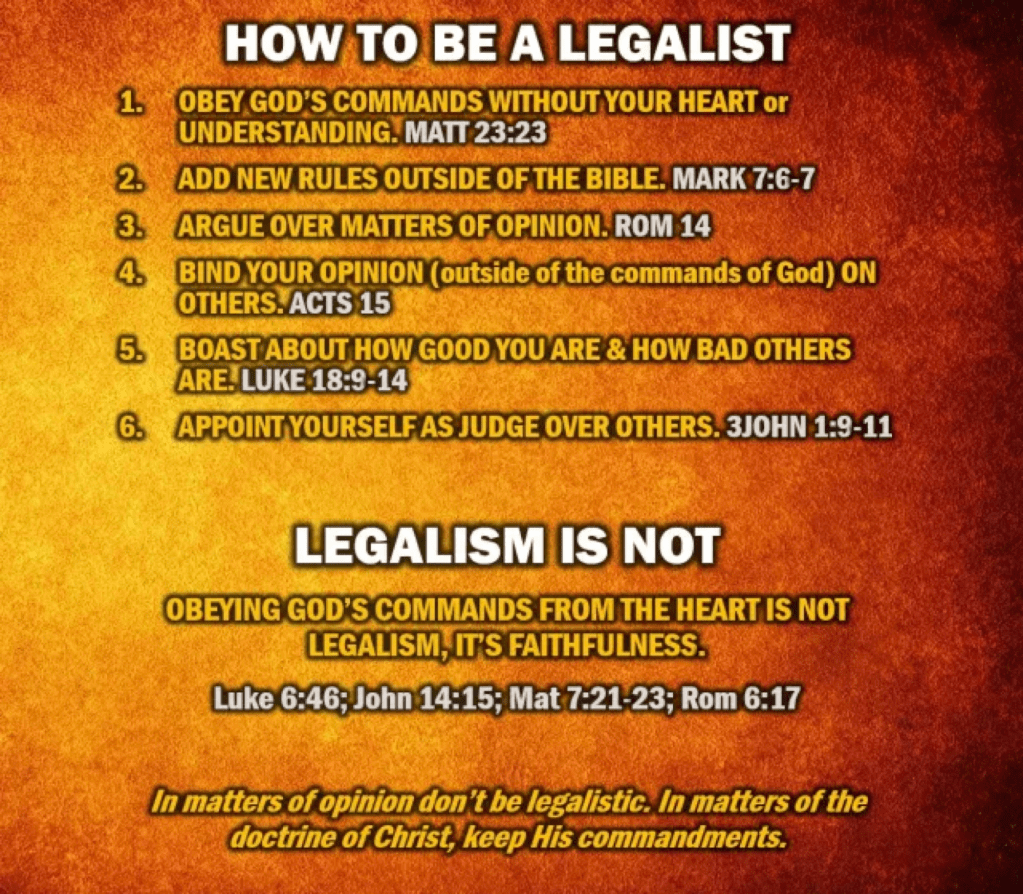
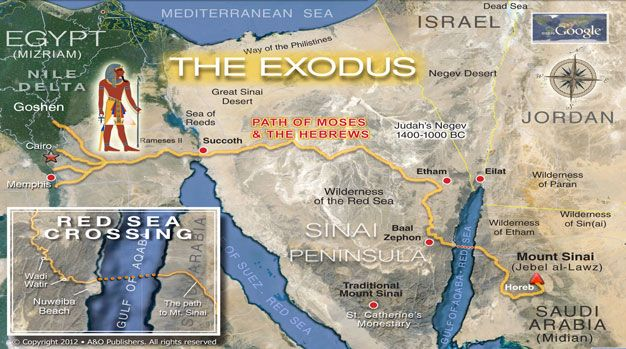
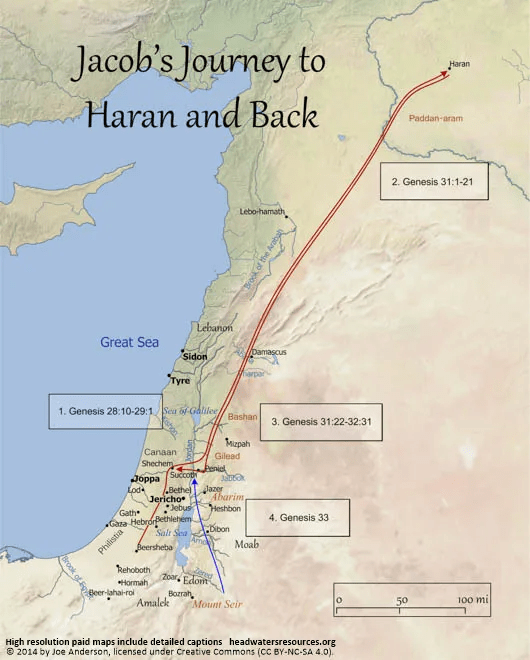
 Nicky's Notes