SEPT 23. READ NUMBERS 24-28

Numbers 24: Balaam’s prophecy from Peor. Balaam has done his 2 prophecies for Balak, each time blessing Israel instead of curing them as Balak had paid him to do. Then the Spirit of God comes on Balaam and he gives a 3rd prophecy at Peor, again blessing Israel. Balak is angry with Balaam, but again, to Balaam’s credit, he affirms to Balak that he will only speak what the Lord tells him to speak. Is Balaam still a true prophet in good standing with the Lord? Balaam then gives a 4th prophecy that predicts events long after the current situation. Numbers 24:“I see him, but not now; I behold him, but not near; A star shall come forth from Jacob, A scepter shall rise from Israel.” AI: “Many scholars view a first fulfillment in King David, who conquered Moab centuries later (conquering Moab was part of Balaam’s prophecy). Jewish and Christian traditions also view it as a messianic prophecy, predicting Jesus to arise as king of the Jews in the distant future. Christians often connect the star imagery to Jesus and the Star of Bethlehem.” It is possible that the Persian magi read this prophecy and it influenced their journey to find the baby king of the Jews, led by a divinely guided star.

Numbers 25: So is that the end of the story of Balaam? Did he get his money promised to him by Balak or did Balak refuse to pay him since he blessed Israel instead of curing them? The answers come from the sin at Peor. The Israelite men began having sex with the Moabite women and worshipping the Moabite god Baal. God sent a plague killing 24,000. The only thing that stopped the plague was when Eleazar’s son Phinehas (a future high priest) caught an Israelite man, Zimri, and a Moabite woman, Cozbi, in the Israelite camp having sex and Phinehas drove a spear through their bodies (apparently while having sex). But what does Balaam have to do with the sin at Peor? Numbers 31:16 “Behold, these caused the sons of Israel, through the counsel of Balaam, to trespass against the Lord in the matter of Peor…” Apparently Balaam still wanted his reward from Balak but the Spirit had kept him from cursing Israel. So he came up with another plan to sell to Balak. He counseled the Israelite men to start having sex with the Midianite women and to start worshipping Baal. Balaam knew that God would punish Israel if they did that, and God did indeed kill 24,000 for that sin at Peor. This is why Balaam is condemned in the New Testament.

AI: Balaam is explicitly condemned in three distinct locations in the New Testament. In each instance, he is invoked by the biblical authors as a prominent warning against false teachers, greed, and spiritual corruption.

1. Revelation 2:14 — “The Doctrine of Balaam”. In Jesus’ letter to the church in Pergamum, He condemns those who tolerate the “teaching” or “doctrine” of Balaam. This passage highlights how Balaam, unable to curse Israel directly, maliciously advised King Balak of Moab to entice the Israelites into sexual immorality and idolatry.

For the full biblical text of Revelation 2:14, please consult the referenced document.

2. 2 Peter 2:15–16 — “The Way of Balaam”. The Apostle Peter uses Balaam as a case study for false prophets who abandon righteousness out of a love for money, recalling how the prophet was rebuked by a talking donkey. You can find the full passage in the referenced source.

3. Jude 1:11 — “The Error of Balaam”. Jude groups Balaam with Cain and Korah as an archetype of rebellion and deceit, condemning false teachers driven by financial profit. The complete verse is available in the referenced document.

Numbers 26: God orders another census be taken of the fighting men over the age of 20 in the new generation. The first census was taken when Israel first came to Sinai 40 years earlier of the generation that died in the 40 years in the wilderness (all over 20). The First Census (Numbers 1) totaled 603,550 men, and the Second Census (Numbers 26) taken roughly 38 to 40 years later totaled 601,730 men. That means the entire population of Israel was over 1 1/2 million including men, women, and children.

Numbers 27 gives laws about inheritance of land. The presumably unmarried daughters of Zelophehad appealed to Moses to receive some of their deceased father’s land. Apparently they got none of his inheritance. God told Moses that they should get the first rights to their father’s land ahead of even their brothers. God gave a law of passing inheritance on “per stirpes” or blood relatives first, etc. This whole incident shows God compassion for women. Compare that with how many cultures mistreat women.

Moses is then told that he will not be allowed to enter Canaan b/c of his sin at Meribah. He is told to appoint Joshua as his successor and join Joshua with Eleazar the new high priest to lead Israel, using the Urim and Thumim to make decisions.

Numbers 28 gives the laws for animal sacrifices for the daily offering of 2 lambs, the Sabbath extra 2 lambs, the first of each month offerings, the Passover offerings on the 14th day of the first month, and the Pentecost Feast of Weeks offerings 50 days after Passover. That’s a lot of animal sacrifices and blood. All stood as a type of the need for the blood of Christ to forgive all sins of the old and new covenant. I’m glad we are not living under the old covenant!

SEPT 22 READ. NUMBERS 19-23

Numbers 19 is mainly the burning of the red heifer (a young female cow that has not yet given birth to a calf). The ashes would be placed outside the camp so that people could use them for purification if they became unclean (for example if they touched a dead body). AI: “The red heifers in Israel are central to ongoing biblical prophecies, local breeding programs, and intense regional geopolitical tensions. Many religious Jews and Christian Evangelicals believe that performing this purification ceremony is the essential prerequisite step required to ritually cleanse worshippers and allow for the rebuilding of the Third Temple on the Temple Mount in Jerusalem. The presence and potential sacrifice of these heifers have triggered profound alarm across the Muslim world.”

But let me be clear: the offering of all animals, including the red heifer, under the old covenant ceased when Jesus died and gave His blood for the new covenant. Hebrews 9:11“But when Christ appeared as a high priest of the good things to come, He entered through the greater and more perfect tabernacle, not made with hands, that is to say, not of this creation; 12 and not through the blood of goats and calves, but through His own blood, He entered the holy place once for all, having obtained eternal redemption. 13 For if the blood of goats and bulls and the ashes of a heifer sprinkling those who have been defiled sanctify for the cleansing of the flesh, 14 how much more will the blood of Christ, who through the eternal Spirit offered Himself without blemish to God, cleanse [p]your conscience from dead works to serve the living God?” Jews who don’t believe in Jesus are still preoccupied with offering red heifers instead of believing in the eternal cleaning power of the blood of Jesus. Pray for them that they can come to believe in Jesus. Many Jews do believe in Jesus (Messianic Jews), groups like Jews for Jesus. Don’t get caught up in all the talk about what’s happening in Israel today as if it is part of Biblical prophecy being fulfilled. Many evangelical Christians are even saying that. Just ignore it and focus on getting the gospel of Jesus out to the lost.

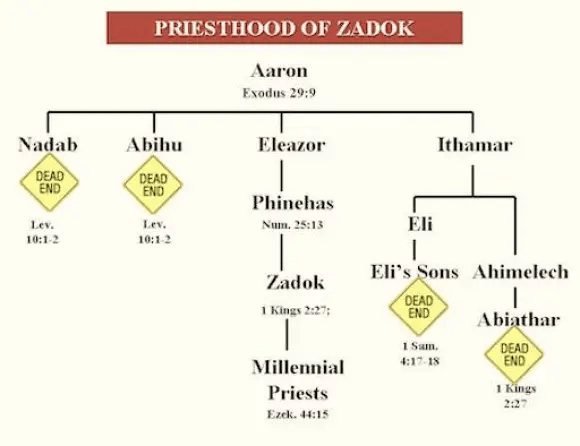
Numbers 20 is the death of Miriam, the sin of Moses, and the death of Aaron. Miriam was Moses’ sister, the one who was struck with leprosy b/c she criticized Moses for the exalted position God had given him (Numbers 12). Aaron was Moses’ brother who was anointed the first Levitical high priest. He was Moses’ spokesman in dealing with Pharoah but he was also responsible for letting the people get out of control in building the golden calf at Mt Sinai (Numbers 13-14). Aaron’s son Eleazar took his place (Aaron’s first two sons, Nadab and Abihu, had been killed by God for offering “strange fire” in Numbers 10). The priesthood would remain in Eleazar’s family for many generations.

The sin of Moses (and Aaron) was not just striking the rock when God had told him to speak to the rock. Psalm 106:32They also provoked Him to wrath at the waters of Meribah, so that it went hard with Moses on their account; 33because they were rebellious against His Spirit, he spoke rashly with his lips.” Numbers 19:10 and Moses and Aaron gathered the assembly before the rock. And he said to them, “Listen now, you rebels; shall we bring forth water for you out of this rock?” God told Moses that he had not “treated God as holy in the sight of the people”. Moses basically lost his temper! You can understand why. He had just spent 40 years wandering in the wilderness with the complaining, unbelieving generation that came out of Egypt. He had watched about one million Israelites die in the wilderness during that 40 years. But now the new generation is about to enter Canaan and what are they doing? Complaining about the lack of water, wishing they had died in Egypt instead of coming to the wilderness. Moses is probably thinking, “Here we go again. God is probably going to make this new generation wander in the wilderness another 40 years. I don’t think I can handle that at the age of 120!” But he sinned, both by striking the rock instead of speaking to it and by his rash words. I’m sure God was displeased with this new generation complaining, but He was patient with them. Moses lost his patience. Moses was not allowed to enter the Promised Land b/c of this sin, but God actually did him a favor. Moses was 120, tired of leading disobedient, grumbling people. It would take 7 years of fighting, conquering 31 Canaanite kings, to conquer Canaan. Moses was spared all that and God would bury him. Instead Moses was able to die and enjoy a peaceful rest with God.

Life Lesson: Do people disappoint you and frustrate you at times? Do you lash out at them with words that you late regret? Are you patient with others when they let you down and when they do wrong things? Do you get tired of your friends complaining about things instead of being appreciative? Colossians 3:12 So, as those who have been chosen of God, holy and beloved, put on a heart of compassion, kindness, humility, gentleness and patience; 13 bearing with one another, and forgiving each other, whoever has a complaint against anyone; just as the Lord forgave you, so also should you.”

Moses had been told by God not to kill the Edomites b/c they were relatives, descended from Esau (Jacob’s brother), so he politely asked Edom to allow Israel to pass through Edomite territory on the final stretch to Canaan. But the Edomites would not let them pass through their territory and “came out against him with a heavy force and with a strong hand.” The map shows how Israel then went around Edom territory to avoid conflict.

Numbers 21 is the incident of the bronze serpent. As they pass around Edom, which just meant extra time in the wilderness instead of going. through Edom, the people began to complain again: no food and no water. They even “loathed” the manna God was giving them every day. Think how Moses must have felt. “I can’t believe this is happening again!” What will God do to these people? So God sent poisonous snakes and many died. The people begged Moses to intercede for them as he had done many times for the unbelieving generation, and he did. God told him to place a bronze serpent on a standard. Anyone bitten could look at that serpent and be healed. God’s patience with the Israelites is amazing. He becomes angry with them but over and over again he forgives them. Jesus used this incident to predict his crucifixion on the cross. John 3:14As Moses lifted up the serpent in the wilderness, even so must the Son of Man be lifted up; 15so that whoever believes will in Him have eternal life.” God already knew that one day His Son Jesus would be hung on a cross when this incident with Israel happened. Did God purposely, specifically choose this bronze serpent method of healing them to give a type of the crucifixion of Jesus? Probably so. He could have healed them many other ways, but He specifically chose this bronze serpent way.

Numbers 21 continues Israel’s journey to Canaan, defeating Sihon king of the Amorites and Og king of Bashan. Israel lived in Amorite lands for a while. (see the map)

Numbers 22: Israel comes to the plains of Moab (see the map), east of the Jordan river. This begins the story of Balaam the prophet. Balak, the king of Moab, saw the Israelites and heard what they had done to Sihon and Og. He sent messengers to hire Balaam to come curse Israel as they passed by Moabite land. AI: “Opinions among modern Bible readers differ on whether he “fell” from a state of true grace or was always a mercenary pagan whom God temporarily commandeered to protect His people.” Balaam does seem to have a speaking relationship with Yahweh as he consults with Yahweh, which might mean that he was indeed a true prophet of God at this time. Either way, God at first told Balaam not to go. Balak sent more messengers and more money. As if the Lord would change His mind on this, Balaam apparently is tempted by the offer of riches and consults the Lord again. This time the Lord tells him to go but only to speak what God tells him to speak.

So Balaam heads to Moab on his donkey. The Lord is angry with him for going even though He had told him to go. Perhaps the Lord had only allowed him to go so God could use this to bless Israel. The angel of the Lord stood in Balaam’s path with a sword and the donkey swerved off the road. Apparently only the donkey saw the angel at first. Balaam struck the donkey at least 3 times trying to get the donkey moving but the donkey just lay down. Then follows a conversation between Balaam and his donkey. The donkey talks to Balaam and Balaam answers him, even admitting that his donkey had never acted like that before. Then the Lord let Balaam see the angel and the angel told him that the donkey had saved Balaam’s life by stopping him. He warned Balaam to continue his journey to Moab but to only speak what God tells him to speak. So this incident was just a last warning to Balaam. “Skeptics point to the talking donkey as a clear indicator of folklore and fables, arguing that literal talking animals belong in fairy tales rather than historical records.” It is a strange story, but Moses who recorded it in Numbers tells it as an actual historical event.

Life Lesson: There are a lot of stories in the Bible that critics mock. The parting of the Red Sea, the walls of Jericho falling, Jesus turning water to wine and his other miracles, etc. But the Bible is the Word of God and is not full of fables and myths. If God can make a donkey from nothing, then He can make the donkey talk. If He made water, which He did, from nothing, then He can change that water to wine, which He also made from nothing. The Bible has been shown to be the Word of God by fulfilled prophecies and you can believe all the historical events recorded in the Bible. Don’t let some professor or atheist try to undermine your faith in the Bible.

Numbers 23: Balaam meets Balak and Balak carries him to a high place of the god Baal so that Balaam can curse Israel. Instead, the Sprit of God takes over and 3 times Balaam blesses Israel instead of cursing them. Balak is obviously angry at Balak and is not getting his money’s worth from him! To Balaam’s credit, he at least at this point is obeying what God and the angel told him to do. So why is Balaam condemned in the New Testament? More to follow.

SEPT 19. READ NUMBERS 4-8

Just a few interesting things in Numbers 4-8:

The test for an unfaithful wife (Numbers 5:11-31). If a man suspects that his wife has been unfaithful, he is to bring her to the priest who makes her drink holy water. If she is guilty, her abdomen would swell and she would miscarry (if she was pregnant). I assume that she would be stoned to death if guilty. If nothing happens to her after drinking the water, then she is innocent. I know what you are thinking (or I presume to know!). What is the test for a husband who is suspected of adultery? Well there isn’t one! So is God a misogynist? God is no respecter of persons. I think this test is to protect the wives of evil Jewish husbands. As Jesus said in Matthew 19, the law for divorce in Deuteronomy 24 was b/c of the hardness of the hearts of men’s hearts, to protect the wives. I think it is the same case in Numbers 5. The test would keep an evil husband from false accusing his wife of adultery which could lead to her shame, even her stoning.

The Nazarite vow (Numbers 6:1-21). AI: “People take the Nazirite Vow (outlined in Numbers 6) to completely dedicate themselves to God for a specific season or a lifetime by removing ordinary distractions and pursuing intense spiritual focus.

Key Reasons for Taking the Vow

Intense Consecration: By abstaining from wine and grape products (symbolizing earthly joy and luxury), letting hair grow wild (a visible sign of humility and set-apart status), and avoiding dead bodies (pursuing strict ritual purity), the person removed worldly distractions to draw closer to a higher power.

Gratitude and Thanksgiving: People often took the voluntary, temporary vow to thank God for a major blessing, such as recovering from a serious illness or the birth of a child.

Combating Temptation: In Jewish tradition, an individual might take the vow as a temporary discipline to restrain physical desires or overcome personal pride and temptation.

Samuel and Samson in the Old Testament and John the Baptist in the New Testament took the Nazarite vow.

The priestly blessing (Numbers 6:22-27).

22 The Lord said to Moses, 23 “Tell Aaron and his sons, ‘This is how you are to bless the Israelites. Say to them:

24 “‘“The Lord bless you
    and keep you;
25 the Lord make his face shine on you
    and be gracious to you;
26 the Lord turn his face toward you
    and give you peace.”’

27 “So they will put my name on the Israelites, and I will bless them.”

That’s about it in these chapters. Keep up on. your daily reading. If you fall way behind, just pick up on the current date reading.

SEPT 18 READ LEVITICUS 26-27; NUMBERS 1-3

Leviticus 26: Blessings for obeying God’s laws; Curses for disobeying God’s laws.

Leviticus 26 outlines the conditional covenant between God and Israel, promising profound Blessings and Curses (Lev 26:1-46) — The Fellowship based on their obedience or disobedience to His commandments. [1]

Core Foundation (Verses 1–2)

  • Idolatry forbidden: God commands Israel not to make idols, carve images, or set up sacred stones.
  • Sabbath observance: They must keep God’s Sabbaths and revere His sanctuary. [1, 2, 3, 4]

Blessings for Obedience (Verses 3–13)

  • Abundant harvest: Seasonal rains will yield massive crops, allowing them to thresh grain until the grape harvest and eat safely until full.
  • Peace and security: God will grant peace in the land so they can sleep without fear, and hostile armies will flee before them.
  • Increase and fertility: The nation will be fruitful and multiply.
  • Divine presence: The ultimate reward is God walking among them to be their God while they remain His people.

Curses for Disobedience (Verses 14–39)

  • Sickness and distress: God will bring sudden terror, wasting diseases, and burning fevers that consume the eyes and sap life.
  • Unfruitful land: Their hard work will be wasted because the soil will yield no crops and the skies will turn to iron.
  • Escalating discipline: If disobedience continues, punishment intensifies in four compounding, sevenfold stages—from wild animals robbing them of children to military siege and starvation.
  • Exile: The disobedient nation will be scattered among enemy nations and their cities left desolate.

Promise of Restoration (Verses 40–46)

  • Repentance: If the exiled people humble themselves and confess their sins, God will remember His covenant with Abraham, Isaac, and Jacob.
  • Unbroken commitment: Even during severe correction, God promises never to utterly reject or destroy them to the point of breaking His covenant.

Numbers 1-3. The census and arrangement of the camp. These are the chapters you “skim” through. The book of Numbers is called “Numbers” b/c of the two numberings (censuses) of the people: the first at Mt Sinai during the year they are there (Numbers 1; 603,550 fighting men above the age of 20), and the second on the plains of Moab 40 years later after the disobedient generation has all died off in the wilderness (Numbers 26: 601,730 fighting men). The Levites were placed in the middle nearest the tabernacle along with Moses and the priests. The duties of the 3 Levitical families for taking care of and moving of the tabernacle are given. This is the way Israel would camp each time they would stop during the 40 years in the book of Numbers. Just imagine the logistics of this. Over 600,000 fighting men over the age of 20 would mean 1 1/2 to 2 milliion total people. They gather their manna every day. They get water from the rock every day. But I wonder what their daily life was like.

Numbers will contain the story of those 40 years in the wilderness, although 38 of the 40 years is only. told about in 6 of the 36 chapters in Numbers (chapters 15-20). A sad statistic: about 1 1/2 to 2 million Israelites die in the 40 years wandering in the wilderness. That’s about 37,000 per year and 100 per day. That had to be the most depressing time for everyone. Imagine disposing of the bodies (I assume they had to be buried to prevent diseases like cholera but the Bible doesn’t record burying them). Imagine knowing that you, if you were 20 or older, are going to die in this horrible wilderness and nothing can change that. All that for later in your reading in Numbers.

Here’s a great slide showing the contents of the book of Numbers.

Here is the map that we will be using as we study Numbers. Bible.ca is a great source of information. The map correctly (IMO) places Mt Sinai to the east of the Gulf of Aqaba instead of at the traditional site west of that gulf. That means Mt Sinai was in modern day Saudi Arabia. The Israelites spend a whole year at Mt Sinai, so that’s where Numbers begins.

SEPT 17. READ LEVITICUS 21-25

Leviticus 21-22: Laws for priests.

Rules on Mourning and Death (Leviticus 21:1–6)

  • General priests: Cannot make themselves ceremonially unclean by touching a dead body, except for immediate family members (mother, father, son, daughter, brother, or dependent unmarried sister). [1, 2]
  • Body modifications: Priests are prohibited from shaving their heads, trimming their beards, or cutting their bodies as part of funeral mourning rituals.

Rules on Marriage and Family (Leviticus 21:7–15)

  • Marriage restrictions: Ordinary priests cannot marry a prostitute, a woman who has been defiled, or a divorced woman.
  • The High Priest: Held to an even higher standard; he must marry only a virgin from his own people and cannot marry a widow, a divorced woman, or a prostitute. He also cannot go near any dead body, even that of his own parents.
  • Family discipline: If a priest’s daughter becomes a prostitute, she brings shame upon her father and is to be burned to death.

Physical Requirements for Service (Leviticus 21:16–24)

  • No physical blemishes: Any descendant of Aaron with a physical defect or blemish cannot approach the altar to offer food/gifts to God.
  • Disqualifying conditions: Included blindness, lameness, a disfigured face, a broken limb, a hunchback, a dwarf, chronic eye/skin diseases, or damaged testicles.
  • Allowance: While disqualified from serving at the altar or entering the inner sanctuary, priests with physical defects were still permitted to eat the holy food.

Handling Holy Offerings and Uncleanness (Leviticus 22)

  • Partaking in sacrifices: Priests who are ceremonially unclean (due to a bodily discharge, skin disease, or touching something unclean) cannot eat the sacred holy offerings until they are cleansed.
  • Who may eat: Only members of the priest’s household (including bought servants or daughters who return home due to widowhood/divorce) may eat the holy food; unauthorized outsiders, guests, or hired workers cannot.
  • Unblemished sacrifices: Priests were also responsible for ensuring that any animal brought by the Israelites for sacrifice was completely free of physical defects.

Leviticus 23: The feast days.

Leviticus 24: The lamp and bread of the sanctuary. The priests were commanded to keep the lamps on the lampstand (the menora) burning continuously. There were to change out the bread on the table of shewbread every Sabbath and the priests could eat the old bread. A blasphemer is stoned to death by the entire congregation. “Eye for eye and tooth for tooth” is established as a rule of justice.

Leviticus 25: The Sabbatic year and the year of Jubilee. The laws for redemption.

Leviticus 25 outlines a system of Sabbath and Jubilee years that functioned as a radical agricultural, economic, and social reset for ancient Israel.

The Sabbath Year (Shabbat)

  • Timing: Occurred every seventh year.
  • Land Rest: Fields and vineyards were left unworked; no sowing, pruning, or harvesting of planned crops.
  • Provision: Whatever the land produced naturally could be eaten freely by everyone, including landowners, servants, hired workers, and local animals.
  • Trust: It required Israel to trust God for a triple harvest in the sixth year to sustain them through the fallow period.

The Year of Jubilee (Yovel)

  • Timing: Occurred every 50th year, following a sequence of seven Sabbath cycles (7 x 7 = 49 years).
  • Proclamation: Announced with the blowing of the ram’s horn (shofar) on the Day of Atonement.
  • Land Return: Leased, sold, or mortgaged ancestral land reverted to its original family owners.
  • Emancipation: Hebrew debt slaves and bonded laborers were set free to return to their clans.
  • Agricultural Rest: Like the Sabbath year, the land received a second consecutive year of rest from planting and harvesting.

Theological Purpose

  • Divine Ownership: The foundational premise was that “the land is mine [God’s] and you reside in my land as foreigners and strangers” (Lev. 25:23).
  • Economic Equity: It prevented permanent generational poverty and the extreme accumulation of land and debt by a wealthy few. Capitalism is better than communism but capitalism breeds greed

In Leviticus 25, the laws of redemption ensured that ancestral land and impoverished Israelites could not be permanently lost or enslaved.

Rules for Redeeming Property (Land)

  • Temporary sales: Land was never sold permanently because it ultimately belonged to God; a sale was essentially a lease based on the number of crops until the next Jubilee.
  • Self-redemption: The original owner could buy their land back at any time by paying back the value of the crops for the remaining years until the Jubilee.
  • Kinsman-Redeemer (Go’el): If a person grew too poor to redeem their land, a nearest relative was obligated to step in and buy it back for them.
  • The Jubilee Reset: If neither the owner nor a relative could redeem the land, it automatically reverted to the original family during the 50th Year of Jubilee.

Rules for Redeeming People (Slaves/Servants)

  • Poverty-driven servitude: An Israelite who grew impoverished could sell themselves into service to a fellow Israelite or a foreigner.
  • Family buyout: A relative could redeem an Israelite sold into servitude to a foreigner at any time by calculating the price based on the years remaining until the Jubilee.
  • Release at Jubilee: If they were not redeemed earlier by a family member, indentured Israelites were freed automatically with their children during the Year of Jubilee.

These chapters are hard to read and sort out the detials so I hope that the AI bullet articles help clarify all the laws.

SEPT 15. READ LEVITICUS 11-15

Chapter 11: Clean and unclean meat. Great slide. Barnes Bible Charts has a lot of great images you can research.

Why did God forbid eating of unclean meats? That avoided eating scavengers that carried harmful diseases (although rabbits aren’t scavengers, and spanish mackerel, and swordfish don’t have scales and aren’t scavengers but are unclean). I’m not sure what other reasons God might have commanded this. What about Christians eating unclean meats today? Groups like the 7th Day Adventists won’t eat pork. These food laws were given specifically to Israel and not to Gentiles or all mankind. Paul answered this question in 1 Timothy 4:1 But the Spirit explicitly says that in later times some will [a]fall away from the faith, paying attention to deceitful spirits and doctrines of demons, by means of the hypocrisy of liars seared in their own conscience as with a branding iron, men who forbid marriage and advocate abstaining from foods which God has created to be gratefully shared in by those who believe and know the truth. For everything created by God is good, and nothing is to be rejected if it is received with gratitude; for it is sanctified by means of the word of God and prayer.” Christians are under the new covenant, not the old, and can eat anything as long as they give thanks.

Chapter 12: Laws of motherhood.

A “sin” offering after childbirth. AI: “In ancient Israelite law, contact with major bodily fluids and blood made a person ritually unclean for a set time (40 days for a boy, 80 days for a girl). The Hebrew word for “sin offering” (chata’at) is often better translated as a “purification offering.” It restored the mother so she could re-enter the holy sanctuary. The sacrifice did not mean the mother committed a personal crime or moral wrong. It simply removed the ritual barrier caused by the blood of childbirth.” Luke 2:22 “And when the time came for their purification according to the Law of Moses, they brought Him (the baby Jesus) to Jerusalem to present Him to the Lord.”

Chapter 13: The test for leprosy.

AI: The word for “leprosy” צָרַעַת (tsaraath) designates an array of divinely diagnosed contaminations that could afflict skin, clothing, and even houses. It likely included common issues like psoriasis, eczema, boils, ringworm, and lucoderma. Scripture never confines the term to modern Hansen’s disease; instead, it functions as a covenant marker of uncleanness that calls for priestly discernment and ritual resolution. The word appears about thirty-five times, with its densest concentration in Leviticus 13–14.” Of course it included Hansen’s Disease. White hair in the infection is mentioned as a test for leprosy. tzaraath actually described a broad category of escaling or inflammatory skin conditions. It most likely referred to vitiligo, an autoimmune condition where skin completely loses its pigment and the hairs inside the white patches frequently turn white. As you can see, the priests are the health officers, not doctors. Some of the skin diseases were contagious and the laws of leprosy helped keep them from spreading. God was concerned about the physical and spiritual welfare of Israel (and us also).

Chapter 14: Cleansing a leper or a leprous house.

Under the Law of Moses outlined in Leviticus 14, cleansing a healed person with a skin disease required a careful, multi-day purification ritual conducted by a priest which included several animal sacrifices. It is interesting that the priest offered a guilt offering and placed blood on the tip of the person’s right ear, right thumb, and right big toe. It is also interesting that leprosy could be found in houses, resulting even possibly in tearing down the whole house.

Chapter 15: Laws for bodily fluids and discharges

Leviticus 15 outlines ancient Israelite laws regarding ceremonial uncleanness caused by various bodily fluids and discharges. These laws included bodily discharges of sexually transmitted diseases, normal seman emission, a woman’s menstrual periods, and prolonged or abnormal bleeding outside of the normal menstrual cycle. The woman with the blood issue that Jesus healed would fit into that last category.

Many of these laws were just for ceremonial uncleanness and did not involve moral sins. Many of them were just designed to prevent the spread of disease and for good hygiene. Remember, these laws were given when the priests were serving as the health officers and there were no doctors. Doctors today could use these same methods to detect diseases today, I suppose.

Hang in there! Halfway through your favorite book in the Bible.

SEPT 16. READ LEVITICUS 16-20

Leviticus 16: The Day of Atonement. Yom Kippur, the holies day of the year for Jews. Only the high priest entered the Most Holy Place (Holy of Holies), and only once per year on the Day of Atonement. He enters twice, sprinkling blood on the mercy seat where God dwelt the first trip for his own sins, and then sprinkling blood for the sins of the people for the past year. The sins of the people are put on a goat and the goat is driven off into the wilderness to never come back. That’s where we get “scapegoat” from, an innocent person who takes the blame for a guilty person. Better watched than read:

The typology for the Day of Atonement is found in Hebrews 9:23 Therefore it was necessary for the copies of the things in the heavens to be cleansed with these, but the heavenly things themselves with better sacrifices than these. 24 For Christ did not enter a holy place made with hands, a mere copy of the true one, but into heaven itself, now to appear in the presence of God for us; 25 nor was it that He would offer Himself often, as the high priest enters the holy place year by year with blood that is not his own. 26 Otherwise, He would have needed to suffer often since the foundation of the world; but now once at the consummation of the ages He has been manifested to put away sin by the sacrifice of Himself. 27 And inasmuch as it is appointed for men to die once and after this comes judgment,” Under the new covenant, Jesus is our High Priest. The tabernacle was a “copy” of the real dwelling place of God in heaven. The blood of animals sprinkled on the mercy seat forgave sins, but only b/c God would use the blood of Jesus to forgive sins in the old covenant. Hebrews 9:15 For this reason He is the mediator of a new covenant, so that, since a death has taken place for the redemption of the transgressions that were committed under the first covenant, those who have been called may receive the promise of the eternal inheritance.” The blood of animal sacrifices could not on its own forgive sins. The yearly Day of Atonement could not permanently remove sins. Hebrews 10:1 For the Law, since it has only a shadow of the good things to come and not the very [z]form of things, can never, by the same sacrifices which they offer continually year by year, make perfect those who draw near. Otherwise, would they not have ceased to be offered, because the worshipers, having once been cleansed, would no longer have had consciousness of sins? But in those sacrifices there is a reminder of sins year by year. For it is impossible for the blood of bulls and goats to take away sins.” Jesus entered the real Most Holy Place in heaven where God dwelt, offered his blood, not he blood of animals, for the forgiveness of sins. He only needed to make one trip, not two like the Levitical high priests, since he did not need to offer blood for his own sins. He only needed to enter one time, not every year like the Levitical priests. His offering was “once for all time”. Hebrews 10:11 Every priest stands daily ministering and offering time after time the same sacrifices, which can never take away sins; 12 but He, having offered one sacrifice for sins for all time, sat down at the right hand of God, 13 waiting from that time onward until His enemies be made a footstool for His feet. 14 For by one offering He has perfected for all time those who are sanctified.” 

Chapter 17: Warning about eating blood. Also a command to make all sacrifices at the tabernacle and not outside the camp. Why? Leviticus 17:They shall no longer sacrifice their sacrifices to the goat demons (goat-like or satyr-like wilderness deities) with which they play the harlot.” A satyr is a mythical creature portrayed as half-man and half-beast. Commentators note that the Israelites likely picked up these worship practices during their time enslaved in Egypt, where goat idols and gods symbolizing fertility for herds and crops were common in desert regions.

Chapter 18: Warnings against committing sins of the Egyptians or Canaanites. Leviticus 18:You shall not do what is done in the land of Egypt where you lived, nor are you to do what is done in the land of Canaan where I am bringing you; you shall not walk in their statutes. That would include sex or marriage with blood relatives or even bestiality. Also a condemnation of homosexuality: Leviticus 18:22: “You shall not lie with a male as with a woman; it is an abomination”.

Chapter 19: Various laws.

Rules for holy living, social justice, and personal behavior based on the command, “Be holy, for I the LORD your God am holy”. (19:2)

Core Command

  • Be Holy: God tells the people of Israel to copy His holiness in their daily lives.
  • Parents and Sabbaths: Everyone must respect their mother and father and keep the Sabbath holy.
  • No Idols: People must not turn to false gods or make metal idols.

Helping the Poor and Strangers

  • Leave Food: Farmers must leave the edges of their fields and fallen grapes for the poor and foreigners.
  • Fair Pay: Bosses must pay hired workers before the morning comes.
  • Help the Vulnerable: Do not curse a deaf person or trip a blind person.
  • Love Foreigners: Treat foreigners living among you like your own people and love them as yourself.

Honesty and Fairness

  • No Stealing or Lying: Do not steal, lie, or trick your neighbor.
  • Fair Courts: Judges must be fair. They must not favor the poor or the rich.
  • No Gossip: Do not spread rumors or gossip about others.
  • Love Your Neighbor: Do not hold a grudge. Love your neighbor as yourself.

Daily and Purity Rules

  • No Mixed Items: Do not plant two types of seeds in one field, breed two different kinds of animals, or wear clothes made of mixed threads.
  • Body Marks: Do not cut your skin or get tattoos for the dead.
  • Honest Weights: Use honest scales and honest measures for buying and selling.

Leviticus 20: Strict laws and punishments to keep the ancient Israelites holy and separate from neighboring nations.

Idolatry and the Occult

  • Child sacrifice: Anyone who gave their child to the idol Molech faced death by stoning. It is hard to fathom that King Manasseh of Judah offered his child to Molech but he did.
  • Spiritualism: Turning to mediums, wizards, or spiritists resulted in being cut off from the community.

Family and Respect

  • Disrespecting parents: Anyone who cursed their father or mother was put to death.

Sexual Laws and Incest

Bestiality: Having sex with an animal was forbidden, and both the person and the animal were put to death.

Adultery: Having sex with a neighbor’s or another man’s wife resulted in the death penalty for both people.

Incest: Having sex with close relatives, such as a father’s wife, a daughter-in-law, or a sister, was strictly forbidden under punishment of death or being childless.

Marrying a mother and daughter: Marrying both a woman and her mother was considered a depraved act, punished by burning.

Same-sex relations: Men having sex with men as they would with a woman were put to death. Leviticus 20:13 If there is a man who lies with a male as those who lie with a woman, both of them have committed a detestable act; they shall surely be put to death. Some pro LGBTQ advocates have said that we can’t use these Law of Moses verses to condemn homosexuality today. They say that we say that verses that condemn wearing a shirt of both polyester and cotton don’t apply to us today, but that we say verses condemning homosexuality do apply and that we are inconsistent. Maybe so. But I would argue that a sin against the unnatural sin of homosexuality is an eternal principle but shirts are not. The sin of homosexuality goes back to the very beginning when God joined a man and a woman in marriage and the two would become one flesh (the sex act). I usually just go to Romans 1 where Paul clearly condemns homosexuality. Romans 1:26 For this reason God gave them over to degrading passions; for their women exchanged the natural function for that which is unnatural, 27 and in the same way also the men abandoned the natural function of the woman and burned in their desire toward one another, men with men committing indecent acts and receiving in their own persons the due penalty of their error.” Those verses in Romans should settle the debate once for all.

Conclusion: As you can see, the book of Leviticus has many commands that apply to us today along with all those commands about animal sacrifices and feast days that don’t apply to us as Gentile Christians.

SEPT 14. LEVITICUS 6-10

There are times where you just google it! Leviticus 6-9 is about eating the offerings described in Leviticus 1-5. AI:

Animal offerings in Leviticus were disposed of by burning them on the altar, giving portions to the priests to eat, or sharing them as a meal with the worshipper, depending on the specific type of sacrifice.

Here is how the five primary animal offerings described in Leviticus were handled:

1. Burnt Offering (Olah)

  • God’s portion: The entire animal (bull, sheep, goat, dove, or pigeon) was completely burned on the altar into smoke.
  • Disposal: Nothing was eaten by humans; the hide was given to the officiating priest as a fee, and the rest was consumed by fire overnight.

2. Peace Offering (Shelamim)

  • God’s portion: The fatty portions surrounding the entrails, kidneys, and the long lobe of the liver were burned on the altar.
  • Priest’s portion: The breast (wave offering) and the right thigh (contribution offering) went to the priests.
  • Worshipper’s portion: The remaining meat was eaten in a sacred communal meal by the offerer and their family at the sanctuary, usually within one to two days.

3. Sin Offering (Chatat)

  • For common people/laymen: The fatty parts were burned on the altar, and the remaining cooked meat was eaten by the male priests inside the Temple courtyard.
  • For the High Priest or the whole congregation: The fat was burned on the altar, but the entire remainder of the animal (skin, flesh, entrails) was carried and burned completely outside the camp or city in a clean place. No human ate it.

4. Guilt or Trespass Offering (Asham)

  • God’s portion: The fat portions were burned on the altar.
  • Priest’s portion: The remaining meat was considered holy and was eaten exclusively by the male priests within the sanctuary area, similar to the standard sin offering.

5. Grain Offering (Minchah)

  • Note: Though usually flour and oil, it accompanied animal drink offerings. A handful of the grain/flour mixture was burned on the altar as a memorial, and the remainder was baked and eaten by the priests.

THE REMAINS OF THE SIN OFFERING BURNED OUTSIDE THE CAMP One point about the remainder of the animal for the sin offering being carried and burned completely outside the camp.This was also the case on the Day of Atonement. Leviticus 16:27 But the bull of the sin offering and the goat of the sin offering, whose blood was brought in (by the high priest into the Most Holy Place and sprinkled on the mercy seat) to make atonement in the holy place, shall be taken outside the camp, and they shall burn their hides, their flesh, and their refuse in the fire. 28 Then the one who burns them shall wash his clothes and bathe his body with water, then afterward he shall come into the camp.” Hebrews 10:10 We have an altar from which those who serve the tabernacle have no right to eat. 11 For the bodies of those animals whose blood is brought into the holy place by the high priest as an offering for sin, are burned outside the camp. 12 Therefore Jesus also, that He might sanctify the people through His own blood, suffered outside the gate. 13 So, let us go out to Him outside the camp, bearing His reproach.” These verses in Hebrews speak directly to the instructions in Leviticus. The Hebrew writer is writing to Jewish Christians who were leaving the Christian faith and going back to Judaism. The tabernacle and temple had a brazen altar that the sin offerings were burnt on in the courtyard of the tabernacle and temple. “We” Christians in the new covenant have an altar on which Jesus was offered and it is found outside of Judaism and the old covenant. Our altar Jesus was offered on is “outside the gates” of Judaism. Calvary where Jesus was crucified was outside the city gates of Jerusalem. Those leaving the faith have no right to eat from that Christian altar, i.e. eat the body and drink the blood of Jesus (John 6). The Hebrews writer is thus telling the Jewish Christians not to leave the faith and go back to the animal sacrifices of Judaism on the brazen altar of the temple. We must go outside the camp (i.e. Judaism) to find the altar Jesus was offered on. Jesus suffered on the cross at Calvary outside the city gates and we must be ready to suffer like He did. The faithful Jewish Christians being written to in Hebrews suffered much.

THE SIN OF NADAB AND ABIHU, AARON’S PRIESTLY SONS Leviticus 10:1 Now Nadab and Abihu, the sons of Aaron, took their respective firepans, and after putting fire in them, placed incense on it and offered strange fire before the Lord, which He had not commanded them. And fire came out from the presence of the Lord and consumed them, and they died before the Lord.” AI: “They likely used ordinary or common fire instead of taking holy coals from the bronze altar of burnt offering where God’s fire burned. They acted on their own accord (“which he had not commanded them”), treating sacred rituals casually rather than with strict obedience. Their actions showed a failure to distinguish between what is holy and what is common, violating God’s standard that those who come near Him must treat Him as holy (Leviticus 10:3). Some biblical scholars suggest they may have acted carelessly or presumptuously under the influence of alcohol, which is linked to subsequent warnings about priests drinking before service (Leviticus 10:).”

This is a sad ending for Aaron’s 2 priest sons, Nadab and Abihu. These 2 sons had been given a special privilege of seeing, eating, and drinking with God at Mt Sinai. Exodus 24:Then Moses went up with Aaron, Nadab and Abihu, and seventy of the elders of Israel, 10 and they saw the God of Israel; and under His feet there appeared to be a pavement of sapphire, as clear as the sky itself. 11 Yet He did not stretch out His hand against the nobles of the sons of Israel; and they saw God, and they ate and drank.” In spite of that, they failed to obey God in using the correct fire offering. Can you imagine fire coming down out of heaven, striking them, and burning them to a crisp? Aaron probably watched his sons die in such a horrible way. Aaron was probably proud of his 2 son priests and now they are but ashes on the ground. We might wonder why God was so harsh over what some might call a careless mistake on their part. But God is setting an example of what happens when we disobey God and we Christians today need to take note of that. We are saved by grace so you don’t have to perfectly obey God so don’t’ use the sin of Nadab and Abihu to condemn instrumental music in worship as some have done in the past. But we should try to obey every command of God to the best of our ability. There is a lot of strange fire being offered today by Christians, fire that God did not command. The whole LGBTQ issue is a direct violation of clear commands in both the old and new covenant. The marriage bond between a man and a woman is sacred and holy and yet many are not treating it as holy. They are substituting unholy homosexual relationships and marriages that are strange fire.

THE SIN OF ELIAZAR AND ITHAMAR This is not of major importance but I never understand what Leviticus 10:12-20 was about, so I found this on gotquestions.org

“Due to the disobedience of Aaron’s sons Nadab and Abihu, the Lord caused those two men to die. Later that day, Aaron and his remaining sons allowed the sin offering to burn up. Moses was angry with Aaron’s other two sons, Eleazar and Ithamar, as a result. This situation is hard to understand until we take a closer look at the context and the Law in general.

For one thing, Moses had just commanded Aaron and his remaining sons to eat the offering (Leviticus 10:12–14). When he discovered they had let it burn up, he was understandably upset.

Also, the chapter opens with the death of two of Aaron’s sons: “Aaron’s sons Nadab and Abihu took their censers, put fire in them and added incense; and they offered unauthorized fire before the Lord, contrary to his command. So fire came out from the presence of the Lord and consumed them, and they died before the Lord” (Leviticus 10:1–2). Likely due to their grief over the deaths of Nadab and Abihu, Aaron and his sons Eleazar and Ithamar chose to let the sacrifice burn up rather than to eat it. Moses was upset because this was breaking the command God had given the priest to use this offering in part as their food.

Another reason Moses was upset was probably that he feared a fate similar to that of Nadab and Abihu would befall Aaron, Eleazar, and Ithamar. He confronted Aaron, saying, “Why didn’t you eat the sin offering in the sanctuary area? . . . You should have eaten the goat in the sanctuary area, as I commanded” (Leviticus 10:17–18).

Aaron’s response to Moses is full of pathos: “Today my sons presented both their sin offering and their burnt offering to the LORD. And yet this tragedy has happened to me. If I had eaten the people’s sin offering on such a tragic day as this, would the LORD have been pleased?” (Leviticus 10:19, NLT). These words satisfied Moses that Aaron was living in fear and obedience to God (verse 20).”

I’m sure Aaron was very concerned about possibly losing his 2 surviving sons, Eleazar and Ithamar b/c they had not obeyed Moses’ command to eat the priestly portions of the offering. Was God going to burn them up also? But Moses accepted Aaron’s explanation for them not eating the portions and they were not burned. I think this says a lot of motives. Nadab and Abihu had impure motives in what they did, possibly even drinking as they did it. Apparently Elezar and Ithamar just committed a careless but understandable (due to their grief over losing their 2 brothers) act of not obeying and God and Moses overlooked it. So maybe that is a note of hope for us knowing we often commit those sins of “omission and commission”.

You might be wondering what happened to Eleazar and Ithamar after this incident in Leviticus 10. Here’s a summary.

Background and Tragedy

  • Four sons: Aaron and his wife Elisheba had four sons: Nadab, Abihu, Eleazar, and Ithamar.
  • Fatal mistake: Nadab and Abihu offered unauthorized “strange fire” to God, and fire from the Lord consumed them.
  • No public mourning: God told Aaron, Eleazar, and Ithamar not to mourn the deaths so they would not die themselves.

Eleazar

  • Next high priest: Eleazar was chosen by God to succeed his father Aaron as the high priest of Israel.
  • Leadership role: He served as chief over the leaders of the Levites and helped Moses and Joshua manage the camp and divide the Promised Land.
  • Lineage: Most of the high priests in Israel’s history came from Eleazar’s family line, including Zadok.

Ithamar

  • Tabernacle manager: Ithamar, the youngest son, was put in charge of the tabernacle’s construction resources, offerings, and inventories.
  • Levite supervisor: He oversaw the Gershonite and Merarite Levites who carried the heavy parts and curtains of the tent of meeting.
  • Lineage: Later high priests, including Eli, descended from Ithamar’s family line.

SEPT 13 READ LEVITICUS 1-5

Ok, here’s the book you have been dreading reading! I will see if we can make it interesting. Here is an outline:

Chapters 1-5 cover the burnt offering, grain offering, peace offering, sin offering, and guilt offering. Great slide;

Several times after describing the particular offering it says, “Thus (with the animal sacrifice) the priest shall make atonement for him in regard to his sin which he has committed, and he will be forgiven.” But read Hebrews 10:1 For the Law, since it has only a shadow of the good things to come and not the very form of things, can never, by the same sacrifices which they offer continually year by year, make perfect those who draw near. Otherwise, would they not have ceased to be offered, because the worshipers, having once been cleansed, would no longer have had consciousness of sins? But in those sacrifices there is a reminder of sins year by year. For it is impossible for the blood of bulls and goats to take away sins.” Sounds like a contradiction, doesn’t it? Perhaps this will help clear this up: Hebrews 9:13 For if the blood of goats and bulls and the ashes of a heifer sprinkling those who have been defiled sanctify for the cleansing of the flesh, 14 how much more will the blood of Christ, who through the eternal Spirit offered Himself without blemish to God, cleanse your conscience from dead works to serve the living God?” The blood of bulls and goats did “cleanse the flesh” but did not “cleanse the conscience”. Making an offering did forgive a sinner of his sin, but it wasn’t really the blood of animals that did it. Forgiveness was by the grace of God under the Law based on God knowing that He would one day use the blood of Jesus to forgive all sins. Once Jesus died, His blood “flowed backward and forward”. Backward to cover all those sins forgiven by the offerings under the Law. Hebrews 9:15 For this reason He is the mediator of a new covenant, so that, since a death has taken place for the redemption of the transgressions that were committed under the first covenant, those who have been called may receive the promise of the eternal inheritance.” David is an example of someone forgiven under the Law of Moses. David said ““Blessed are those whose lawless deeds have been forgiven, and whose sins have been covered.” (Romans 4:7) God forgave him of his sin with Bathsheeba, but it was by the blood of Jesus and the grace of God that he was forgiven. Maybe an example of all this is when you receive things bought with your credit card. You receive the purchased item immediately but the account is only settled at the end of the month when you pay the credit card bill. Sincere repentant sinners were forgiven under the old covenant but “on credit”, the final redemption price being paid with the blood of Jesus.

Hebrews goes on to discuss the old and the new covenants. Hebrews 9:16 For where a covenant is, there must of necessity be the death of the one who made it. 17 For a covenant is valid only when men are dead, for it is never in force while the one who made it lives. 18 Therefore even the first covenant was not inaugurated without blood. 19 For when every commandment had been spoken by Moses to all the people according to the Law, he took the blood of the calves and the goats, with water and scarlet wool and hyssop, and sprinkled both the book itself and all the people, 20 saying, “This is the blood of the covenant which God commanded you.” 21 And in the same way he sprinkled both the tabernacle and all the vessels of the ministry with the blood. (Exodus 23). 22 And according to the Law, one may almost say, all things are cleansed with blood, and without shedding of blood there is no forgiveness.” The author goes on to say that the Law was “about to disappear” at the time of writing (about 60 AD). Hebrews 8:13 When He said, “A new covenant,” He has made the first obsolete. But whatever is becoming obsolete and growing old is ready to disappear.” The old covenant did “disappear” in 70 AD when the Romans destroyed the temple and Jerusalem. Since 70 AD there have been no animal sacrifices, temple, or priesthood to offer sacrifices.

That’s about it for Leviticus 1-5. I hope this article has been helpful in your study.

SEPT 12. READ EXODUS 36-40

In Exodus 25-31 God gave Moses the instructions for building the tabernacle and making the furnishings in it. You may wantt to go back to the blog article on Exodus 26-30 for pictures of the tabernacle, the coverings, the furnishings, and the priestly garments. Exodus 35-40 tells about the actual building of the tabernacle, its furnishings, and the priestly garments. The people volunteered to bring the materials: gold, silver, skins for curtains, linen, etc and they brought so much that they were told to quit bringing any. It has been estimaed that the value of the materials donated was 70-100 million dollars in today’s currency. God gave the Spirit to certain craftsmen to enable them to build with. It took about 6 months to build everything and it was completed about one year from when they left Egypt. Exodus 39:42 So the sons of Israel did all the work according to all that the Lord had commanded Moses. 43 And Moses examined all the work and behold, they had done it; just as the Lord had commanded, this they had done. So Moses blessed them.” In chapter 40 Moses put everything it its proper place and location.

THE GLORY OF THE LORD Exodus 40:34 “Then the cloud covered the tent of meeting, and the glory of the Lord filled the tabernacle. 35 Moses was not able to enter the tent of meeting because the cloud had settled on it, and the glory of the Lord filled the tabernacle. 36 Throughout all their journeys whenever the cloud was taken up from over the tabernacle, the sons of Israel would set out; 37 but if the cloud was not taken up, then they did not set out until the day when it was taken up. 38 For throughout all their journeys, the cloud of the Lord was on the tabernacle by day, and there was fire in it by night, in the sight of all the house of Israel.”

The main idea of the tabernacle is that it was a visible place of the dwelling of God among Israel. Exodus 25:8: “And let them make me a sanctuary; that I may dwell among them.” Exodus 29:45-46: “And I will dwell among the children of Israel, and will be their God. And they shall know that I am the Lord their God… Shekinah is a Hebrew word meaning “that which dwells” or “the dwelling presence”. While the exact word Shekinah does not appear in the Hebrew Bible, the root verb shakan (meaning “to dwell” or “to pitch a tent”) is used frequently. Rabbis later used Shekinah to describe tangible encounters with God. The tabernacle was later replaced with the temple that Solomon built, and God dwelt in that temple. God’s presence filled Solomon’s Temple as a radiant cloud of glory during its dedication, According to 1 Kings 8 and 2 Chronicles 5, when the priests placed the Ark of the Covenant inside the Most Holy Place, a thick cloud filled the house of the Lord so intensely that the priests could not continue their work. Later in the history of Israel, the glory of the Lord would depart from the temple due to the sins of the people (Ezekiel 10-11) which led to the destruction of the temple in 586 BC by the Babylonians.

Ezekiel predicted that when the Messiah would come: Ezekiel 37:27: “My tabernacle also shall be with them: yea, I will be their God, and they shall be my people. Ezekiel predicted that the glory of God would return to the temple in Ezekiel 43:1–5, “coming from the east and entering through the east gate to fill the temple.” There is much debate over what Ezekiel’s temple was in Ezekiel 40-48, but I believe it is fulfilled in church, the temple of God in the New Testament. God came to dwell in His people, the church, a spiritual temple not physical. “The New Testament reveals that this physical tent foreshadowed Jesus coming to “tabernacle” or dwell among us, and later sending the Holy Spirit to live inside believers. John 1:14: “And the Word was made flesh, and dwelt among us, (and we beheld his glory, the glory as of the only begotten of the Father,) full of grace and truth.” The Greek word for “dwelt” is skenoo, which literally means to “tabernacle” or pitch a tent. 2 Corinthians 6:16: “…For ye are the temple of the living God; as God hath said, I will dwell in them, and walk in them; and I will be their God, and they shall be my people.” Revelation 21:3: “And I heard a great voice out of heaven saying, Behold, the tabernacle of God is with men, and he will dwell with them, and they shall be his people, and God himself shall be with them, and be their God.” Zechariah 6:12 predicted, “‘Thus says the Lord of hosts, “Behold, a man whose name is Branch, for He will branch out from where He is; and He will build the temple of the Lord.” I believe that temple that Jesus built for God to dwell in is the church. The same Shekinah glory that filled the tabernacle fills the church today where God dwells in His people.