WAKING UP AT 3 AM

Ok, it is 3 AM and I just woke up. Sometimes I try to go back to sleep, but often I just go ahead and get up and watch a TV series (I suggest Sue Thomas FBI on Amazon Prime, 3 seasons)- or I start blogging! “No, not another blog! When will he quit doing a daily blog?”

So, what about waking up at 3 AM? C.S.Lewis said, “You probably think you have insomnia.No you probably do not have a sleeping problem . Instead something spiritual is taking place. God is trying to reach out to you as one of his chosen.” Often it is the middle of the night that our darkest fears arise, maybe even a panic attack (if you’ve never had one, you can’t empathize). We awaken to a cloud of worry and doom. (AI) “According to C.S. Lewis, when God wakes you up between 3 AM and 5 AM, He wants you to: 1) Align yourself with His will: Hear His voice, intercede for others, and receive direction, wisdom, and spiritual empowerment.  2) Pray fervently: Pray against the enemy, who can pervert the good things God does.  3) Maximize the moment: Don’t force yourself back to sleep, but embrace the moment of encounter.”  Lewis says that God speaks specifically to us at 3 AM. His voice gives us instructions on how to deal with and solve the problems and issues we will face during the day. It is a time to ask God questions and then patiently wait for his answers to your questions. Those answers may come in many different forms, but they will come.

Jacob wrestled all night with the man at Penuel as he anxiously waiting meeting Esau, thinking Esau would seek revenge for how Jacob stole his birthright and blessing. After the man touched Jacob’s hip and knocked it our of joint, Jacob realized he had been wrestling with, not just a man, but God visiting him in human form. He named the place Penuel, “the face of God”, b/c he had seen the face of God and lived. But then Jacob demanded a blessing before he would let the man go! That takes a lot of nerve! It would be obvious to Jacob that, if the man could knock his hip out by touching him, that he could knock out every joint in body, totally disabling him. And yet Jacob dared to. demand a blessing before he would let him go. And then the man blessed him and changed his name from Jacob to Israel (“he who wrestles with God).

Lewis suggests that you sleeplessness could be you subconsciously wrestling with your fears, your worris, your doubts, and your questions. But, like Jacob, you can emerge from your 3 AM wakening with a new sense of purpose and closeness to God. The world might sleep, but God does not sleep. Psalms 121:4-5 TPT He will never slumber nor sleep; he is the Guardian-God for his people, Israel. YAHWEH himself will watch over you; he’s always at your side to shelter you safely in his presence.” (Lewis) “While the world sleeps, God is fully alert, intimately aware of your fears, doubts, and deepest desires. Don’t worry. God is waking you up at 3 AM to have a divine encounter.”

I encourage you to watch this video of C.S.Lewis. Even if you don’t wake up at 3 AM regularly, it is still a very inspiring message. https://www.youtube.com/watch?v=EJXGdXdrW-8

David cried out to God in the middle of the night. Psalm 119:62 states, “At midnight I rise to give thanks unto thee because of thy righteous judgments.” Psalm 63:6 says this: “On my bed I remember you; I think of you through the watches of the night.” Actually, David had 7 set times of prayer. Psalm 119:164 Seven times a day I praise You Because of Your righteous judgments.” I don’t know the 7 exact times of the day that David praised God, but maybe this helps. “The divisions in earlier times were simpler, and here they are listed in 7 stages beginning from sunset – the start of the Hebrew day:

Cool of the day – breezes before evening (Gen. 3:8)

Evening – the 1st night watch (Lamentations 2:19)

Midnight – the middle night watch (Judges 7:19)

Cockcrow – the last night watch (3 Maccabees 5:23-26)

Dawn – the morning watch (Exodus 14:24)

When the sun gets hot – late morning (1 Sam. 11:9,11)

Noon – the middle of the day (Psalm 55:17)

David prayed and praised the Lord at all of these times, including the 3rd watch, which is from 12 AM midnight to 3 AM. Jesus mentioned 4 watches: Mark 13:35 Therefore, stay alert—for you do not know when the master of the house is coming, whether in the evening, at midnight, or when the rooster crows, or in the morning”. We should be on the alert for spiritual danger and pray at these hours. Prayer is a weapon to fight the evil influences in your life. If you don’t pray regularly, then that is like going into a battle without any weapons (Lewsi). Lewis said that God is awakening us spiritually at 3 AM (or 3AM – 5 PM). It is a time for self reflection spiritually, for praying for others, for finding the “peace that passes all understanding” (Philippians 4:8). The distractions and daily worries and routine are still a few hours away. The mind is clearer and not rushed. Jesus walked on water in the 4th watch (3-5 AM) to meet the disciples in the storm for a divine encounter.

Ok, you don’t wake up at 3 AM like me. What about when you first wake up every morning at 6 AM or 7 AM. Lewis in Mere Christianity: “It comes the very moment you wake up each morning. All your wishes and hopes for the day rush at you like wild animals. And the first job each morning consists simply in shoving them all back; in listening to that other voice, taking that other point of view, letting that other larger, stronger, quieter life come flowing in. And so on, all day. Standing back from all your natural fussings and frettings; coming in out of the wind.” How many of us begin each day without even talking or listening to God in a brief moment of prayer? We are always in a hurry to get ready to go to work, to go workout, to go play golf, to get the kids ready for school and make breakfast for the family (at least my mother did that; today I think it’s “grab a pop tart on the way out”). Rush, rush, rush: no time for God. Then we are so busy at work or school and we spend the whole day without talking to God. We come home tired, ready for supper and to watch a ballgame or a movie or read a book. We forget to talk to God. We go to bed and maybe say a brief prayer, maybe even fall asleep while praying (I do that often). All that doesn’t sound like someone who is seeking God and God’s guidance 24/7.

At 3 AM, we can relax, pray, and encounter God. We can pray for others. As I write this (closer to 6 AM now), I can almost feel the presence of God in our kitchen/den area. It’s like God is everywhere, but God is right here with me in this room. That’s the amazing thing about God. He is a spirit that fills the universe, and yet He is a personal being who can intimately be with anyone who seeks him. Lewis said “relying on God has to begin again every day.”

If we wake to pray at 3 AM or whenever we awake, praye will call us to action and purpose during the day. We pray for guidance, and then we look all day for God guiding us to do things, say things. We pray for others, and then all day we look for ways to contact and encourage those we pray for. We pray for God to “lead us not into temptation, but deliver us from evil” and then we are more alert to spiritual temptation during the day. We thank him in the morning, and then we are more likely to thank him often during the day.

It is important to clear our minds of daily distractions and stresses in order to clearly hear the voice of God. You know how irritating it is to try to talk to someone when their minds are on something else. It is the same with God. How do we know when God is actually speaking to us? You always have the word of God, but what about that small voice He talks to us with, or that divine feeling or emotion? It took little boy Samuel 4 times to decide that the voice calling him was not Eli, but Samuel But when he finally answered the voice, God gave him the instructions he needed to tell Eli. Each of us has to decide when God is directly speaking to us. The key is your closeness to God. The closer you are to God, the easier it will be to determine that God is speaking to you. All that is subjective, but true.

So, if God does wake you up at 3 Am, or if you have trouble falling asleep, or if you wake at 6 AM, I hope C..S.Lewis’ suggestions will help you. Listen to the video. Meanwhile, we went to McDonalds for breakfast and I’m headed home to take a nap!

IS THAT ALL THERE IS? PEGGY LEE

Happy new year?????? Not so happy in New Orleans on New Year’s Eve. Not so happy for a lot of people who suffer from depression. Gallup poll from Feb, 2024: https://news.gallup.com/poll/505745/depression-rates-reach-new-highs.aspx You can read the stats for yourself, but quoting the article: “The percentage of U.S. adults who report having been diagnosed with depression at some point in their lifetime has reached 29.0%, nearly 10 percentage points higher than in 2015. The percentage of Americans who currently have or are being treated for depression has also increased, to 17.8%, up about seven points over the same period. Both rates are the highest recorded by Gallup since it began measuring depression using the current form of data collection in 2015. Over one-third of women (36.7%) now report having been diagnosed with depression at some point in their lifetime, compared with 20.4% of men, and their rate has risen at nearly twice the rate of men since 2017. Those aged 18 to 29 (34.3%) and 30 to 44 (34.9%) have significantly greater depression diagnosis rates in their lifetime than those older than 44.” Rates among women, young adults, blacks, and hispanics are rising the fastest.

Christmas is such a wonderful time of the year. We switched to an all snowy white tree this year and loved it. Xmas gift opening brunch with family. The grandkids now “order” exactly what they want for Xmas through their parents to the grandparents and relatives! I feel like Amazon: click and buy! Everyday we have an Amazon grandkid gift coming to our house! Before I die I bet we get Amazon drones flying in gifts via overnight delivery. My favorite character is the Grinch. Some say I have a Grinch personality. I’m proud of that. I enjoy being the Grinch, but I do enjoy Xmas. It’s the one time of the year where you kinda live in a make-believe world of happiness for a few days.

But then the day after Xmas, we spent a few hours taking down the tree, the ornaments, the wreaths, the Santas, the little village sets, etc. Then reality sets in. “Is that all there is”? Like a drunk who drinks to forget his troubles, he wakes up from his drunk and his troubles are still there. Actually, for some the holidays themselves are depressing. Maybe you lost a loved one during the preceding year. Maybe you just miss your parents like I do. Maybe you were in a divorce or custody battle as a parent or a child. Maybe you are in serious financial trouble. Maybe you are worried about losing your job. Maybe you or a loved one just got diagnosed with a serious or terminal disease or sickness (as happened to two of my friends). Maybe bad things happened to you as a child.

1969: Peggy Lee song: “Is that all there is”. She is more known for her 1958 song “Fever” but this song resonated with me. I encourage you to listen to the song on youtube. https://www.youtube.com/watch?v=LCRZZC-DH7M I graduated HS in 1967 and my wife in 1969, to that’s our decade. It was a decade of great promise (going to the moon) but also a decade of tragedy (JFK, MLK, Vietnam Conflict). The son actually reminds me of that decade. From AI: “The song was written and produced by Jerry Leiber and Mike Stoller and inspired by a short story by Thomas Mann. Lee’s granddaughter, Holly Foster Wells, said that the song resonated with Lee because it spoke to the woman behind her glamorous image. Lee had experienced many difficult events in her life, including watching her family’s home burn down as a child and having her first husband leave her. She demanded of the writers that only she should sing he song. ” From the lyrics: as a child she stood in her pajamas shivering while watching her house burn in a fire “And when it was all over I said to myself Is that all there is to a fire? Is that all there is Is that all there is? If that’s all there is my friends Then let’s keep dancing Let’s break out the booze and have a ball If that’s all there is.” (Obviously that was not the child saying that at the time, but the song looking back at that bad incident in life.) In the song, when she was 12 her dad carried her to a circus with clowns, dancing bears, elephants, and a high flying act, but something was missing, so she said “is that all there is to the circus”: if that’s all there is let’s keep dancing break out the booze (the chorus). So she fell in love and it was wonderful until one day he walked away and she said “is that all there is to love”: then let’s keep dancing, booze. The last stanzas of the song are amazing:

I know what you must be saying to yourselves
If that’s the way she feels about it
Why doesn’t she just end it all?
Oh, no, not me
I’m not ready for that final disappointment (the song discourages suicide!)

Because I know
Just as well as I’m standing here talking to you
That when that final moment comes
And I’m breathing my last breath (btw Peggy Lee died at 81)
I’ll be saying to myself

Is that all there is
Is that all there is?
If that’s all there is my friend
Then let’s keep dancing
Let’s break out the booze and have a ball
If that’s all there is.

Many speculate over the meaning of the song, but how did Peggy see the meaning? From Ivan: “For her, the song is not about failure or defeat, but about survival and growth. Granted that life may have many disappointments in store for you, you still have to learn from those disappointments, get past them and move on in contentment, never giving up the search for more.

In Peggy’s own words, from an interview: “It’s about the experiences you go through in life, necessary for growth… The attitude has a lot to do with how we survive. If you can love work enough to take the dues you have to pay, it’s worth it. If not, there must be something else you can do to make you happy.”

I thought this was good from AI: “Peggy Lee’s song “Is That All There Is?” is about questioning the meaning of life and accepting that life is a series of disappointments. The song’s lyrics are told from the perspective of someone who is disillusioned with life’s events and suggests that people should enjoy life’s moments instead of worrying.”

The dancing and booze part sounds a lot like Ecclesiastes. After Solomon failing in his attempts to find meaning in life with booze, money, women, building projects, etc., and after citing all the inconsistencies in life, he says in (The Message) 2:24 The best you can do with your life is have a good time and get by the best you can. The way I see it, that’s it—divine fate. Whether we feast or fast, it’s up to God. ” 5:18-20 After looking at the way things are on this earth, here’s what I’ve decided is the best way to live: Take care of yourself, have a good time, and make the most of whatever job you have for as long as God gives you life. And that’s about it. That’s the human lot. Yes, we should make the most of what God gives, both the bounty and the capacity to enjoy it, accepting what’s given and delighting in the work. It’s God’s gift! God deals out joy in the present, the now. It’s useless to brood over how long we might live.
If you can trust God and enjoy life in spite of all your troubles and bad times, then even that is a gift from God, so be thankful. 9:Seize life! Eat bread with gusto, Drink wine with a robust heart. Oh yes—God takes pleasure in your pleasure! Dress festively every morning. Don’t skimp on colors and scarves.
Relish life with the spouse you love Each and every day of your precarious life. Each day is God’s gift. It’s all you get in exchange For the hard work of staying alive. Make the most of each one! Whatever turns up, grab it and do it. And heartily! This is your last and only chance at it, For there’s neither work to do nor thoughts to think In the company of the dead, where you’re most certainly headed.
” The Message is a paraphrase, so take the words with a grain of salt, but I think it got the meaning about right in simply words and thoughts.

Ecclesiastes ends with 12:13 The conclusion, when everything has been heard, is: fear God and keep His commandments, because this applies to every person. 14 For God will bring every act to judgment, everything which is hidden, whether it is good or evil.” So Ecclesiastes is not promoting hedonism (wine, materialism, pleasure) since that is all “vanity (futility), a chasing after the wind”. The Hebrew word for vanity is hebel: Vanity, breath, vapor, futility, emptiness. All pursuits for meaning in life (why am I here, what is my purpose for living), whether materialism or pleasure, are like a “vapor”. You can see the steam off boiling water, but it only appears for a little while and it is gone, nothing lasting about it. Materialism and pleasure only last for a few moments (compared to eternity). Life is so full on inconsistencies as Ecclesiastes points out over and over, such as the wicked prosper and the righteous suffer, a man lives all his life to accumulate things and leaves them to someone who doesn’t appreciate them, etc. The righteous and the wicked endure the same troubles. Ecclesiastes says you might as well enjoy life in spite of all that, but he adds a caveat (a warning or caution) that God will hold you into account for your actions.

So where are you after Xmas and New Year’s Day? You might be sad or even depressed. You might need to seek help. You might need medication. But maybe “if that is all there is” and Ecclesiastes can help you just live for today. Forget about the past. Don’t worry about tomorrow. Live today as if it was the last day of your life. Even if bad or terrible things happen in the future, why waste today worrying about the “what ifs”? I assure you that if today was your last day, you would not want to spend your last day miserable. You would not be obsessed with finding out the meaning about why things happen to you or why you act the way you do. So, today, enjoy life as it this was your last day. Eat with friends or loved ones. Call people and tell the you love them. Do something that really makes you happy. Yes, examine to see if you are ready to meet your Maker. If you are not ready, do what it takes to get ready. Accept Jesus as your Savior, believe and be baptized to wash away your sins (Acts 22:16). Confess your sins and ask forgiveness if you have drifted away from God. Get you mind ready for eternal life. But then go out and enjoy the day!

I was raised on “Dear Abby”, a very famous newspaper column that ran from 1956 till 2000. She gave great advice on love and family problems. It was free counseling. The Holy Spirit gives us free counseling constantly through God’s word.

I hope you have a great day. Every day.


ZECHARIAH 9-14 ALREADY FULFILLED

This might be a little “meat not milk (Hebrews 5)” study. A little advanced math (Calculus). Many say Zechariah 14:4 has not been fulfilled yet, that it will be fulfilled when Jesus comes back at some time in the future. On that day His feet will stand on the Mount of Olives, which is in front of Jerusalem on the east; and the Mount of Olives will be split in its middle from east to west forming a very large valley. Half of the mountain will move toward the north, and the other half toward the south.” In contrast, I think all of the predictions in Zech 9-14 were fulfilled in the destruction of the temple and of Jerusalem in 70 AD by the Romans.

To begin with: In Luke 21:22 Jesus said that, 20 “But when you see Jerusalem surrounded by armies, 22 because these are days of punishment, so that all things which have been written will be fulfilled. That would be “all things written, including prophesies, in the Old Testament”. This would happen within the generation of those he was speaking to. Luke 21:32 Truly I say to you, this generation will not pass away until all things take place.” The Greek word genea as used in the NT always means a 40 year period or the people living in a 40 year period. The “Jerusalem surrounded by armies would have to happen within that generation, and it did in 70 AD when the Romans sieged and destroyed Jerusalem. I quote all this in Luke 21 b/c that means that everything in Zechariah 9-14 must be fulfilled by 70 AD according to Jesus. Not “some predictions” but “all predictions” in the OT had to be fulfilled by 70 AD or else Jesus is a false prophet.

Now to Zechariah 9-14 and specific predictions that were fulfilled by 70 AD. BTW an excellent video on this by Alex Polyak thebiblefulfilled.com He has many videos that are great. Check it out!

  1. Zech 9:9 Rejoice greatly, daughter of Zion! Shout in triumph, daughter of Jerusalem! Behold, your king is coming to you; He is righteous and endowed with salvation, Humble, and mounted on a donkey, Even on a colt, the foal of a donkey.” Fulfilled when Jesus rode into Jerusalem on a donkey.
  2. Zech 11:1 Open your doors, Lebanon, So that a fire may feed on your cedars. Wail, juniper, because the cedar has fallen, For the magnificent trees have been destroyed.” Polyak says this was fulfilled in 70 AD. The temple in Jerusalem was built with cedars from nearby Lebanon. So the “fires feeding and destroying” the cedar timbers would be the fire that destroyed the temple in 70 AD.
  3. Zech 11:Then I said, “I will not pasture you. What is to die, let it die, and what is to perish, let it perish; and let those who are left eat one another’s flesh.” Josephus tells of a well known, rich Jewish woman who cooked and ate her baby during the siege of Jerusalem in 70 AD. The Romans cut off all food to the city and starvation lead to cannibalism
  4. Zech 11:10 And I took my staff Favor and cut it in pieces, to break my covenant which I had made with all the peoples. 11 So it was broken on that day, and so the afflicted of the flock who were watching me realized that it was the word of the Lord.” The end of the Jewish Age and of the old covenant was in 70 AD. Hebrews 8:13 When He said, “A new covenant (Jeremiah 31:31-34),” He has made the first obsolete. But whatever is becoming obsolete and growing old is about to disappear.” That was written in about 62 AD. The old covenant was “broken” and disappeared in 70 AD.
  5. Zech 11:13 Then the Lord said to me, “Throw it to the potter, that magnificent price at which I was valued by them.” So I took the thirty shekels of silver and threw them to the potter in the house of the Lord.” This was the money Judas received to betray Jesus but which he threw back in the temple. The money was used to buy a potter’s field to bury poor people.
  6. Zech 12:“Behold, I am going to make Jerusalem a cup that causes staggering to all the peoples around; and when the siege is against Jerusalem, it will also be against Judah. It will come about on that day that I will make Jerusalem a heavy stone for all the peoples; all who lift it will injure themselves severely. And all the nations of the earth will be gathered against it.” This would be the siege of Jerusalem by the Romans (“all the nations gathered against it”) in 70 AD.
  7. Zech 12:On that day the Lord will protect the inhabitants of Jerusalem, and the one who is feeble among them on that day will be like David, and the house of David will be like God, like the angel of the Lord before them. And on that day I will seek to destroy all the nations that come against Jerusalem.” I believe this is the saving of the remnant who heeded Jesus’ words in Matthew 24 to flee the city when they had the opportunity (before the final siege in 70 AD). History (Eusebeus) records that the Jewish Christians in the city fled safely to Pella . But how were the nations the sieged the city (i.e. the Romans) “destroyed” in 70 AD. Not physcially. Jesus said in John 18:36 Jesus answered, “My kingdom is not of this world. If My kingdom were of this world, My servants would be fighting so that I would not be handed over to the Jews; but as it is, My kingdom is not of this realm.” So we do not expect “The kingdom of the world has become the kingdom of our Lord and of His Christ; and He will reign forever and ever (Revelation 11:15)” to be a physical destruction of the kingdom of Rome. Instead, it was the demonic prince of the kingdom of Rome that was destroyed in 70 AD, as well as all the demonic princes of all the kingdoms of the world. This ideas is supported by Rev 16:14 for they are spirits of demons, performing signs, which go out to the kings of the entire world, to gather them together for the war of the great day of God, the Almighty.” It was the demons of the kingdoms that would be destroyed in 70 AD.
  8. Zech 12:10 “And I will pour out on the house of David and on the inhabitants of Jerusalem the Spirit of grace and of pleading, so that they will look at Me whom they pierced; and they will mourn for Him, like one mourning for an only son, and they will weep bitterly over Him like the bitter weeping over a firstborn. 11 On that day the mourning in Jerusalem will be great, like the mourning of Hadadrimmon in the plain of Megiddo.” Jesus was pierced on the cross with nails and then a spear. But this passage refers to the mourning of the Jews when the temple was being destroyed in 70 AD. The book of Revelation was written about 63-65 AD, predicting things that would “shortly take place” (Rev 1:1-3; 22:4-10). Rev 1:Behold, He is coming with the clouds, and every eye will see Him, even those who pierced Him; and all the tribes of the earth will mourn over Him. So it is to be.” So the mounring of the Jews would be at the 2nd coming in 70 AD as they endured a horrible “tribulation” of suffering and the destruction of their beloved temple. This would occur at 70 AD. “Armageddon” (“hill of Megido”) in only mentioned once, in Rev 16:14 for they are spirits of demons, performing signs, which go out to the kings of the entire world, to gather them together for the war of the great day of God, the Almighty. 15 (“Behold, I am coming like a thief. Blessed is the one who stays awake and keeps his clothes, so that he will not walk about naked and people will not see his shame.”) 16 And they gathered them together to the place which in Hebrew is called Har-Magedon (or Armageddon).” Megiddo was an ancient city in Palestine that was the site of many military encounters due to its strategic location. In Rev 16:16 and Zech 12:11 it refers to 70 AD. All the events predicted in Revelation had to happen “shortly” after the time of writing, so Armageddon had to be 70 AD and not some final war still in our future as many claim. Jesus also predicted the mourning of the Jews in 70 AD in Matthew 24:30 And then the sign of the Son of Man will appear in the sky, and then all the tribes of the earth will mourn, and they will see the Son of Man coming on the clouds of the sky with power and great glory.” That had to be fulfilled within that generation, so it had to be 70 AD. Matthew 24:34 Truly I say to you, this generation will not pass away until all these things take place.” The Jews still mourn at the “waiting wall” over the destruction ofJerusalem in 70 AD. Tisha B’Av is a day of fasting, mourning, and reflection that commemorates the destruction (in 70 AD) of the Second Temple in Jerusalem. It’s considered the saddest day in the Jewish calendar. 
  9. Zech 13:1 “On that day a fountain will be opened for the house of David and for the inhabitants of Jerusalem, for sin and for defilement.” This would be a fountain of living water (John 4:13 Jesus answered and said to her, “Everyone who drinks of this water will be thirsty again; 14 but whoever drinks of the water that I will give him shall never be thirsty; but the water that I will give him will become in him a fountain of water springing up to eternal life”) provided for the remnant who accepted Jesus as the Messiah before 70 AD. Rev 22:1 And he showed me a river of the water of life, clear as crystal, coming from the throne of God and of the Lamb.” This fountain of living water came from the new Jerusalem, the church, the bride of Christ, that would replace the old Jerusalem which was destroyed in 70 AD (Rev 21). That new Jerusalem would come down out of heaven to earth, providing this living water (Rev 21:1).
  10. Zech 13:7 “Awake, sword, against My Shepherd, And against the Man, My Associate,” Declares the Lord of armies. “Strike the Shepherd and the sheep will be scattered”. Jesus and Matthew said this was fulfilled when the disciples fled to a home after the arrest of Jesus in the Garden.
  11. Zech 13:8 And it will come about in all the land,” Declares the Lord, “That two parts in it will be cut off and perish; But the third will be left in it. And I will bring the third part through the fire, Refine them as silver is refined, And test them as gold is tested. They will call on My name, And I will answer them; I will say, ‘They are My people,’ And they will say, ‘The Lord is my God.’” The 2/3 that would be destroyed would be the million Jews destroyed in the siege of Jerusalem in 70 AD. The 1/3 would be the remnant that escaped to Pella, but they would be tested by fire to refine them in the tribulation of 70 AD (Matthew 24:21; Daniel 12:1-3). Peter speaks of the diaspora Jewish Christians being tested by fire with trials for a “little while” before being saved (1 Peter 1).
  12. Zech 14:1 Behold, a day is coming for the Lord when the spoils taken from you will be divided among you. For I will gather all the nations against Jerusalem to battle, and the city will be taken, the houses plundered, the women raped, and half of the city exiled, but the rest of the people will not be eliminated from the city.” Remember Luke 21:22 “all the things that have been written will be fulfilled” within the generation Jesus was speaking to (Luke 21:32 Truly I say to you, this generation will not pass away until all things take place.) So the events in Zechariah 14 had to be fulfilled in the first century AD and 14:1 is the Roman nations gathered to destroy Jerusalem in 70 AD.
  13. Zech 14:Then the Lord will go forth and fight against those nations, as when He fights on a day of battle. On that day His feet will stand on the Mount of Olives, which is in front of Jerusalem on the east; and the Mount of Olives will be split in its middle from east to west forming a very large valley. Half of the mountain will move toward the north, and the other half toward the south. And you will flee by the valley of My mountains, for the valley of the mountains will reach to Azel; yes, you will flee just as you fled from the earthquake in the days of Uzziah king of Judah. Then the Lord, my God, will come, and all the holy ones with Him!” this is not to be fulfilled literally with the Mount of Olives literally being split when Jesus comes back in our future. It had to be fulfilled within the generation Jesus spoke to (Luke 21:22,32). It does happen figuratively at Jesus’ 2nd coming in 70 AD. That event would be “earthshaking”, cataclysmic. Thus the splitting of the Mount of Olives figure. Even though the Romans destroyed Jerusalem, God will then destroy the demonic prince of Rome (Rev 16:16) at the battle of Armageddon in 70 AD. The remnant of Jewish Christians in the city would flee to Pella for safety just as Jesus told the to in Matthew 24.
  14. Zech 14:On that day there will be no light; the luminaries will die out. For it will be a unique day which is known to the Lord, neither day nor night, but it will come about that at the time of evening there will be light.” This was fulfilled in the new Jerusalem, the church, the bride of Christ. Rev 21:23 And the city has no need of the sun or of the moon to shine on it, for the glory of God has illuminated it, and its lamp is the Lamb. 24 The nations will walk by its light, and the kings of the earth will bring their glory into it. 25 In the daytime (for there will be no night there) its gates will never be closed; 26 and they will bring the glory and the honor of the nations into it.”
  15. Zech 14:And on that day living waters will flow out of Jerusalem, half of them toward the eastern sea and the other half toward the western sea; it will be in summer as well as in winter.” As in Zech 13:1 and Rev 22:1 the living water of eternal life (John 4:13; 7:37) will flow out of the new Jerusalem, which is the church, the bride of Christ (Rev 21). This is the same water flowing from Ezekiel’s Messianic temple and new Jerusalem in Ezekiel 47:1 Then he brought me back to the door of the house; and behold, water was flowing from under the threshold of the house toward the east, for the house faced east. And the water was flowing down from under, from the right side of the house, from south of the altar. And he brought me out by way of the north gate and led me around [a]on the outside to the outer gate, by the way facing east. And behold, water was spurting out from the south side.” That living water would give life everywhere it flowed. Ezekiel 47:And he said to me, “Son of man, have you seen this?” Then he brought me back to the bank of the river. Now when I had returned, behold, on the bank of the river there were very many trees on the one side and on the other. Then he said to me, “These waters go out toward the eastern region and go down into the Arabah; then they go toward the sea, being made to flow into the sea, and the waters of the sea become fresh. And it will come about that every living creature which swarms in every place where the river goes, will live. And there will be very many fish, for these waters go there and the others become fresh; so everything will live where the river goes.” This is not some 3rd temple that Jews and many Christians expect to be built in our future. In the new Jerusalem that came down from heaven to earth (Rev 21:1), which is the bride of Christ, the church (Rev 21:9-10) that would “shortly happen” (Rev 21:1-3; 22:5,10) there would be no temple for the Lord is the temple. Rev 21:22 I saw no temple in it (i.e. the new Jerusalem 21:10), for the Lord God the Almighty and the Lamb are its temple.” There is no 3rd temple to be built someday. This beautiful passage closes out the last chapter of Revelation and sums up the predictions in Zechariah 13:1; 14:6-8, and Ezekiel 47,48. Revelation 22:1 And he showed me a river of the water of life, clear as crystal, coming from the throne of God and of the Lamb, in the middle of its street. On either side of the river was the tree of life, bearing twelve kinds of fruit, yielding its fruit every month; and the leaves of the tree were for the healing of the nations. There will no longer be any curse; and the throne of God and of the Lamb will be in it, and His bond-servants will serve Him; they will see His face, and His name will be on their foreheads. And there will no longer be any night; and they will not have need of the light of a lamp nor the light of the sun, because the Lord God will illuminate them; and they will reign forever and ever.” Everything lost in the Garden (Paradise Lost by John Milton) would be restored figuratively with the living water, trees that bear fruit year round (i.e. Christians), no more curse from the Fall in the Garden, no more night for the Lord is our Light.
  16. Zech 14:16 Then it will come about that any who are left of all the nations that came against Jerusalem will go up from year to year to worship the King, the Lord of armies, and to celebrate the Feast of Booths. 17 And it will be that whichever of the families of the earth does not go up to Jerusalem to worship the King, the Lord of armies, there will be no rain on them. 18 And if the family of Egypt does not go up or enter, then no rain will fall on them; it will be the plague with which the Lord strikes the nations that do not go up to celebrate the Feast of Booths. 19 This will be the punishment of Egypt, and the punishment of all the nations that do not go up to celebrate the Feast of Booths.” The Romans would destroy Jerusalem in 70 AD but God would then judge the Romans with spiritual death (figuratively a “plague” 14:14). But some of the nations (Romans) would start worshipping Yeshua and Yahweh the King of Kings yearly at the Feast of Booths. That would be Gentile Christians who would start worshipping Jesus. We know the Feast of Booths (Tabernacles) was a shadow of the new covenant and certainly not binding on Gentile Christians in the new covenant. So this must be figurative, using the terminology of the old covenant worship but really meaning the true new covenant worship and not the old covenant shadows. This is typical of Messianic predictions. Jeremiah said that in the Messianic Age David would be king and prince (fulfilled in Jesus) and there would always be Levitical priests to offer burnt offerings (Jeremiah 33:17). Again, we know the Levitical priesthood and burnt offerings were done away with in the new covenant so this can’t be literal. It must be figurative using old covenant worhip terminology but really meaning worship in the new covenant.

That concludes my Zechariah 9-12 comments. There are still a lot of verses in those chapters that I don’t understand, but I think all of it was fulfilled by 70 AD b/c of Luke 21:21-22. Zechariah prophesied about 500 years before 70 AD, so that is amazing fulfilled prophecy, which is God’s #1 way of proving that He is the one true God.

BREAKFAST AT MCDONALDS

Change of pace. Shift gears. My wife and I go to McDonalds every Sunday morning for Egg McMuffins and senior coffee. Around $10. About $2 of actual ingredients or less, but that’s eating out. Then my granddaughter told me about the McDonalds app, which everyone in the world already uses that except me. We get a 2nd breakfast sandwich for $1 now and save $3. That makes it taste better to me. Don’t tell me that I am cheap. I already know that.

But as we sit this morning eating at MdDonalds, I look out the window and see some muhly grass, small cypress plants, some pansies, and some mulch. A sparrow or two. Do you think those plants or birds are worried about the future? Here is your Bible thought for the day: Matthew 6:25 “Therefore I tell you, do not be anxious about your life, what you will eat or what you will drink, nor about your body, what you will put on. Is not life more than food, and the body more than clothing? 26 Look at the birds of the air: they neither sow nor reap nor gather into barns, and yet your heavenly Father feeds them. Are you not of more value than they? 27 And which of you by being anxious can add a single hour to his span of life?[g] 28 And why are you anxious about clothing? Consider the lilies of the field, how they grow: they neither toil nor spin, 29 yet I tell you, even Solomon in all his glory was not arrayed like one of these. 30 But if God so clothes the grass of the field, which today is alive and tomorrow is thrown into the oven, will he not much more clothe you, O you of little faith? 31 Therefore do not be anxious, saying, ‘What shall we eat?’ or ‘What shall we drink?’ or ‘What shall we wear?’ 32 For the Gentiles seek after all these things, and your heavenly Father knows that you need them all. 33 But seek first the kingdom of God and his righteousness, and all these things will be added to you.” 34 “Therefore do not be anxious about tomorrow, for tomorrow will be anxious for itself. Sufficient for the day is its own trouble.

Are you a worrier? I am. I worry about not having anything to worry about. I think, “things are going too good; surely something bad is going to happen!” I am a “what if” person. What it this happens, what if this or that goes wrong. People hate to travel with me b/c I stress them out with my worrying. Anyone out there like that?

Jesus wasn’t telling us to not even try to work hard and provide for our needs. The birds don’t “sow or reap or gather into barns”, but they do constantly look for bugs to eat and to carry back to their chicks in their nests. But they don’t store up in barns for the future. They live day to day. And your (our) heavenly Father feeds them. How much of my time and energy is spent on planning for the future, for retirement, for possible catastrophic events? Again, nothing wrong with insurance and retirement plans. That is just good stewardship of what God has given us. But that should not be my main focus. I need to be focused on just enjoying each day that God gives me.

The sad thing is that, compared to most third world countries, I really don’t have anything to worry about. I have money, a nice house, stocked pantry, food in the fridge and freezer, and a credit card to go to a grocery store that in over stocked with food. I have a family doctor and we have hospitals and medical help for any sickness. I have medicare A and B and a supplemental policy to pay for it. I have nice cars. In the meantime, some child is walking 3 miles one way to get dirty water from a pond that the animals drink from and waste gets into. I. saw a “Water for Life” commercial raising money for drilling wells for clean water in Africa. A lady’s baby had died from drinking contaminated water. The mother could do nothing to get clean water and they did not have money for medical help. She had a 2nd baby and was afraid to let that baby drink the only water she had, the dirty water, for fear that child would die also.

Maybe a good New Year’s resolution for me would be to try not to worry so much. As Jesus said, worrying about something doesn’t help one bit, and it is a lack of faith. Seek first the kingdom of God and let God provide. What can I do today that would be the kingdom living that you read about in the sermon on the mount? What can I do today that will help someone find the kingdom of God and salvation. That’s what I need to be focussing on.

Have a great new year.

2 PETER 3 NOT THE END OF THE WORLD

Most think that 2 Peter 3 is predicting the end of the earth, the burning up of the “elements” that make up the earth. Many think that it predicts a future (in our future) creation of a new heavens and earth recreating the earth to its pristine Garden of Eden state. I don’t. I believe it is prredicting 70 AD. Notice my “keys” to believing this chapter to be about 70 AD.

2 Peter 3:1 Beloved, this is now the second letter I am writing to you in which I am stirring up your sincere mind by way of a reminder, to remember the words spoken beforehand by the holy prophets and the commandment of the Lord and Savior spoken by your apostles.” Here is the purpose for writing this letter: to remind the diaspora Jewish Christians of several things. He hs already reminded them of some things in 2 Peter 1:12-14. Key 1: the things in this chapter were. predicted by the prophets and by Jesus through his apostles.

2 Peter 3:Know this first of all, that in the last days mockers will come with their mocking, following after their own lusts, and saying, “Where is the promise of His coming? For ever since the fathers fell asleep, all things continue just as they were from the beginning of creation.” For when they maintain this, it escapes their notice that by the word of God the heavens existed long ago and the earth was formed out of water and by water, through which the world at that time was destroyed by being flooded with water. But by His word the present heavens and earth are being reserved for fire, kept for the day of judgment and destruction of ungodly people.

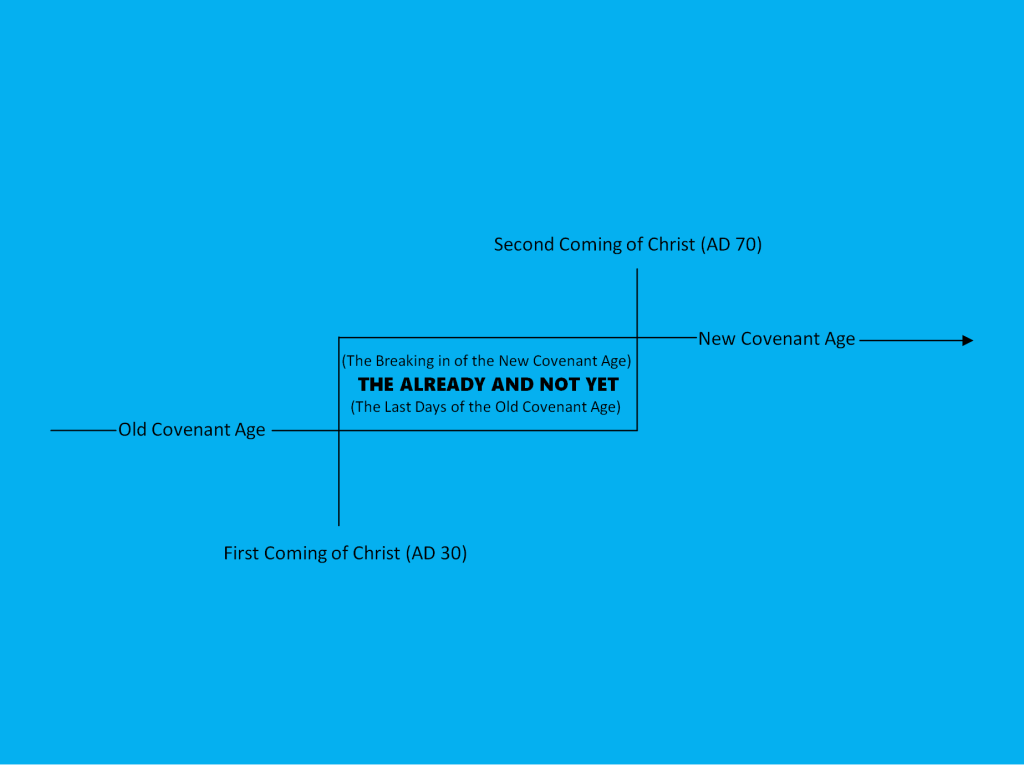
Key 2: This event occurred in the “last days”. That phrase refers to the last days of the Jewish Age. Acts 2:17 “‘And in the last days it shall be, God declares, that I will pour out my Spirit on all flesh, and your sons and your daughters shall prophesy, and your young men shall see visions, and your old men shall dream dreams; 18 even on my male servants and female servants in those days I will pour out my Spirit, and they shall prophesy. 19 And I will show wonders in the heavens above and signs on the earth below, blood, and fire, and vapor of smoke; 20 the sun shall be turned to darkness and the moon to blood, before the day of the Lord comes, the great and magnificent day. 21 And it shall come to pass that everyone who calls upon the name of the Lord shall be saved.’ 40 And with many other words he bore witness and continued to exhort them, saying, “Save yourselves from this crooked generation.” The last days would start in 30 AD (Acts 2) as Peter said that the apostles speaking in tongues was the beginning of the fulfillment of Joel’s prophecy that the miraculous power of the Holy Spirit would be poured out on believers during the last days. The last days would end with “the great and magnificent day of the Lord”, i.e. a judgment day (the day of the Lord in the OT refers to a day of judgment: Joel 1:15; 3:14; Zephaniah 1:7,14; Obadiah 1:15). That great judgmenet day of the Lord would be 70 AD when God judged the evil, unbelieving Jews who had rejected Jesus as rthe Messiah and were rebelling against Rome. God sent the Romans under Vespasian and then Titus to put down the rebellion from 67-70 AD, killing thousands of Jews and then destroying the city of Jerusalem and the temple in 70 AD, killing 1 million Jews according to Josephus. Acts 2:40 this would occur within that “generation” of Jews that Peter was speaking to. The Greek word genea always means a period of about 40 years or the people living in a 40 years period, the same as we speak of the “baby boomers generation”. Matthew 1 lists 42 “generations” from Abraham to Jesus, which is bout 2,000 years (each genertion about 40-45 years). Malachi 4:“Behold, I am going to send you Elijah the prophet before the coming of the great and terrible day of the Lord. He will turn the hearts of the fathers back to their children and the hearts of the children to their fathers, so that I will not come and strike the land with complete destruction.” John the Baptist would be the Elijah to come. Matthew 17:10 And His disciples asked Him, “Why then do the scribes say that Elijah must come first?” 11 And He answered and said, “Elijah is coming and will restore all things; 12 but I say to you that Elijah already came, and they did not recognize him, but did [d]to him whatever they wanted. So also the Son of Man is going to suffer at their hands.” 13 Then the disciples understood that He had spoken to them about John the Baptist.” Malachi said that Elijah would come shortly before the “great and terrible day of the Lord” which could only be 70 AD, a “complete destruction of the land”. John was not able to get the Jews the repent and the land was destroyed in 70 AD. Malachi 4:5 was predicting 70 AD to be the “great and terrible day of the Lord”, which is the same day in Acts 2:20. Thus the end of the last days was in 70 AD. 70 AD also marked the end of the miraculous being poured out on believers. Only the apostles were able to lay hands on baptized believers and given them miraculous Gifts (Acts 8:14-24), so when all the apostles died by 70 AD, the gifts died out, at least giving of new gifts died out. So 2 Peter 3:2 says that the events of 2 Peter 3 would occur in the last days, which limits the fulfillment to the period from 30 AD to 70 AD. That day of the Lord in 70 AD would be the 2nd coming of Jesus which he said would happen within the lifetime of those he ws speaking to (Matthew 10:23; 16:27-28; 24:30-34; 26:64). There are no other verses in the gospels that predict a “coming back” of Jesus that would not occur within their lifetime. None (find one if you can). Jesus himself had warned that false prophets would come and lead many away from the truth (Matthew 24:11) before 70 AD: Matthew 24:34 Truly I say to you, this generation will not pass away until all these things take place.” The mockers in 2 Peter 3:3 would be those false prophets before 70 AD who mocked Jesus’ prediction. in Matthew 24 that He was coming within that generation to destroy the temple and fulfill Daniel’s prediction about the “abomination of desolation” (Daniel 9:24-27).

Key 2: It was people, not dirt, that would be destroyed when the heavens and earth that existed in Peter’s day would be destroyed. The mockers said that things had been the same on earth since the creation with no cataclysmic day of the Lord as Jesus predicted to happen (Matthew 24) happening. But they forgot about the destruction of the old heavens and earth during the flood. The world was destroyed in that flood. What was “destroyed”? Evil people were destroyed. The earth went through drastic changes during the flood, but the earth and heavens were not literally destroyed. That left the heavens and earth that existed in Peter’s time and they were reserved for a day of judgment and destruction of ungodly people. Notice it would be ungodly people who would be destroyed when the current heavens and earth were to be destroyed, not literally the earth itself being destroyed.

2 Peter 3:But do not let this one fact escape your notice, beloved, that with the Lord one day is like a thousand years, and a thousand years like one day. The Lord is not slow about His promise, as some count slowness, but is patient toward you, not willing for any to perish, but for all to come to repentance.”

Jesus and the apostles had predicted the judgment day of the Lord at Jesus’ 2nd coming would be within the lifetime of those they were speaking to, within that generation of Jews living at that time. Matthew 23:36 Truly I say to you, all these things will come upon this generation.” The 2nd coming had not happened yet at the time Peter wrote 2 Peter (about 65 AD), but that didn’t mean it would not happen within that generation, and it did happen soon after Peter wrote this letter (5 or so years later). He would still fulfill his promise within that generation It could happen at any time, but any extra years would just be the Lord giving more time for Jews to repent and accept Jesus as the Messiah. Any extra years would mean nothing in God’s time frame b/c a day with the Lord was like 1000 years and a 1000 years as one day. People try to use 2 Peter 3:8 to argue that “soon” could be thousands of years when Revelation predicts that the events to be fulfilled in Revelation would happen “shortly”, “soon” (Revelation 1:1-3; chapter 22). But when God warns people about an imminent judgment, His warning is in their time frame, not His. He is saying, “you better repent b/c this judgment day is about to happen. to you soon”. If I told my students at school, “you will have a test soon so you better prepare by studying hard”, they would clearly understood soon to be in their time frame. Mark 1:15 “Repent for the kingdom of heaven is at hand”. The need to repent was b/c of the imminent soon coming of the kingdom in their lifetime. Revelation 1:Blessed is the one who reads, and those who hear the words of the prophecy and keep the things which are written in it; for the time is near.” The need to hear and keep the things written in Revelation was b/c the time was near, in their lifetime. The Greek work mello is used several times in warnings to the 7 churches (Revelation 1:19; 2:10; 3:10,16; 6:11; 8:13; 12:5). Mello always means “about to happen” in the NT.

2 Peter 3:10 But the day of the Lord will come like a thief, in which the heavens will pass away with a roar and the elements will be destroyed with intense heat, and the earth and its works will be discovered.”

Key 3: The “elements” to be destroyed when the. current heavens and earth would be destroyed were not the physical elements of which the earth is made of (hydrogen, oxygen, nitrogen, etc.). The Greek word for elements is stoicheion: Element, principle, rudiment. It is used 7 times in the NT and never refers to the physical elements of the earth (Galatians 4:3,9; Colossians 2:8,20; Hebrews 5:12; 2 Peter 3:10,12). For example, Hebrews 5:12 For though [i]by this time you ought to be teachers, you have need again for someone to teach you the elementary principles of the actual words of God (i.e. the basics) , and you have come to need milk and not solid food.” The word stoicheion always refers to the basic teachings of the Law or of the pagan religions and never refers to the physical elements of the earth. 2 Peter 3:10,12 is no exception. There it refers to the basics of the Jewish system that would be destroyed in 70 AD. The temple would be destroyed; no more animal sacrifices or priests after 70 AD; the kingdom would be taken from the Jewish nation (Matthew 21:43); no more genealogy tables to confirm who the true Messiah was. But it sounds like fire and heat? That is typical of figurative apocalyptic language such as “moon turned to blood” (Isaiah 13 where it is talking about judgment on Babylon in 539 BC), “stars fall” (Matthew 24:30 and this had to happen within that generation 24:34), “heavens rolled up like a scroll” (Isaiah 34 where it is talking about judgment of the nations in Isaiah’s time). So it doesn’t have to mean literal fire in 2 Peter 3:10.

2 Peter 3:11 Since all these things are to be destroyed in this way, what sort of people ought you to be in holy conduct and godliness, 12 looking for and hastening the coming of the day of God, because of which the heavens will be destroyed by burning, and the elements will melt with intense heat! 13 But according to His promise we are looking for new heavens and a new earth, in which righteousness dwells.”

Key 4: God had made a “promise of a new heavens and earth” that they were looking for. Where is that found in the Scriptures? The only place that is found is Isaiah 65 and 66. Isaiah 65:17 “For behold, I create new heavens and a new earth; And the former things will not be remembered or come to mind. 18 But be glad and rejoice forever in what I create; For behold, I create Jerusalem for rejoicing And her people for gladness. 19 I will also rejoice in Jerusalem and be glad in My people; And there will no longer be heard in her The voice of weeping and the sound of crying. 20 No longer will there be in it an infant who lives only a few days, Or an old person who does not live out his days; For the youth will die at the age of a hundred, And the one who does not reach the age of a hundred Will be thought accursed.” What is this “new Jerusalem” in the NT? That new Jerusalem is the church. Hebrews 12:22 But you have come to Mount Zion and to the city of the living God, the heavenly Jerusalem, and to myriads of angels, 23 to the general assembly and church of the firstborn who are enrolled in heaven…” Revelation 21:1 Then I saw a new heaven and a new earth; for the first heaven and the first earth passed away, and there is no longer any sea. And I saw the holy city, new Jerusalem, coming down out of heaven from God, prepared as a bride adorned for her husband.” Now remember, everything predicted to happen in Revelation would happen “shortly” (1:1-3) , “near” (22:10) , “soon” (22:6) , “I am coming quickly” (22:10). The new Jerusalem coming down out of heaven to earth is no exception. That had to happen soon. John then describes the new Jerusalem as the bride of Christ, which is the church. Revelation 21:Then one of the seven angels who had the seven bowls, full of the seven last plagues, came and spoke with me, saying, “Come here, I will show you the bride, the wife of the Lamb.” 10 And he carried me away in the Spirit to a great and high mountain, and showed me the holy city, Jerusalem, coming down out of heaven from God, 11 having the glory of God.” 2 Corinthians 11: For I am jealous for you with a godly jealousy; for I betrothed you to one husband, to present you as a pure virgin to Christ.” What about the “new heavens and earth” predicted in Isaiah 65:17. Again, Revelation 21:1 the new heavens and earth replaces the old heavens and earth and that has to happen soon, shortly, near. Revelation was written about 63 AD predicting the destruction of Jerusalem in 70 AD. The old heavens and earth would be the Jewish system, temple, sacrifices, etc. Hebrews 8:13 (written in 60 AD) predicted that the old covenant was “ready to disappear” and it did 10 years later. The old heavens and earth was destroyed in 70 AD. The new heavens and earth had to happen soon. That could only be the new Messianic order of things, the Messianic Age, the new reign of the Messiah. Hebrews 12:25 See to it that you do not refuse Him who is speaking. For if those did not escape when they refused him who warned them on earth, much less will we escape who turn away from Him who warns us from heaven. 26 And His voice shook the earth then, but now He has promised, saying, “Yet once more I will shake not only the earth, but also the heaven.” 27 This expression, “Yet once more,” denotes the removing of those things which can be shaken, as of created things, so that those things which cannot be shaken may remain. 28 Therefore, since we receive a kingdom which cannot be shaken, let’s show gratitude, by which we may offer to God an acceptable service with reverence and awe; 29 for our God is a consuming fire.” The old heavens and earth, the Jewish system, contained thing that could be “shaken”, created things, like the temple and the city of Jerusalem. God would shake that old system one more time and the last time, when he destroyed the temple and the city in 70 AD. A kingdom that cannot be shaken, i.e. the church kingdom, remained after 70 AD and remains today.

The final scripture where a new heavens and earth is promised is Isaiah 66:18 “For I know their works and their thoughts; the time is coming to gather all the nations and tongues. And they shall come and see My glory. 19 And I will put a sign among them and send survivors from them to the nations: Tarshish, Put, Lud, Meshech, Tubal, and Javan, to the distant coastlands that have neither heard of My fame nor seen My glory. And they will declare My glory among the nations. 20 Then they shall bring all your countrymen from all the nations as a grain offering to the Lord, on horses, in chariots, in litters, on mules, and on camels, to My holy mountain Jerusalem,” says the Lord, “just as the sons of Israel bring their grain offering in a clean vessel to the house of the Lord. 21 I will also take some of them as priests and Levites,” says the Lord.”

22 “For just as the new heavens and the new earth, Which I make, will endure before Me,” declares the Lord, “So will your descendants and your name endure. 23 And it shall be from new moon to new moon And from Sabbath to Sabbath, All mankind will come to bow down before Me,” says the Lord.
24 “Then they will go out and look At the corpses of the people Who have rebelled against Me. For their worm will not die And their fire will not be extinguished; And they will be an abhorrence to all mankind.”

Notice some event where the nations are gathered and there would be “survivors” (65:19) sent to the nations (i.e. Gentiles). That doesn’t sound like the end of the world and physical destruction of the earth, does it? Those survivors would “declare God’s glory among the Gentile nations”, which is preaching the word to the Gentiles. That is not the end of the world. God would make some of the converts from the nations as “priests and Levites”. That is not in heaven. That is figurative for the priesthood of believers in the church. All Christians are spiritual priests whether Jew or Gentile. Obviously God did not literally make Christian converts as Levites. This is typical of Messianic figurative language. It uses things familiar to the Jews in a figurative sense. The same with “all mankind will worship me on new moons and sabbaths”. Paul condemned those making Christians observe new moons: Colossians 2:16 Therefore, no one is to act as your judge in regard to food and drink, or in respect to a festival or a new moon, or a Sabbath day— 17 things which are only a shadow of what is to come; but the substance belongs to Christ.” Likewise in Jeremiah 33:17 For this is what the Lord says: ‘David shall not lack a man to sit on the throne of the house of Israel; 18 and the Levitical priests shall not lack a man before Me to offer burnt offerings, to burn grain offerings, and to prepare sacrifices continually.’”  This passage is definitely a prediction of the Messiah and his kingdom, fulfilled in Jesus (figuratively “David”). Also there would be Levitical priests in the Messianic kingdom who would offer burnt offerings. Is that saying that in Messianic kingdom we would go back to Levitical priests and animal sacrifices? Again, that is figurative language of the priesthood of believers. The burnt offerings would be figurative of the sacrifice of Christ in the new covenant. But a lot of figurative language that was confusing to the Jews when Jesus came. They were expecting a literal fulfillment of this figurative language and missed the whole boat! I think these predictions were fulfilled figuratively in the church now. Some Christians make the same mistake of the Jews and expect Jesus to return some day and establish a physical kingdom. The unbelieving Jews still expect the real Messiah (not Jesus) to come some day to establish a physical Jewish kingdom with animal sacrifices, priests, and a 3rd temple. But bottom line for our lesson is that Isaiah 66:22 the new heavens and earth, which is obviously in context the new Messianic age and not the end of the world and heaven itself, will endure before God. That is the Messianic system or order of things where Christ reigns in the church. It is not a new re-created earth and heaven. Peter says that God promised a new heavens and earth and that can only be found in Isaiah 65 and 66 and there it is not the end of the world but refers to the Messianic order of things which we have had for 2,000 years.

2 Peter 3:14 Therefore, beloved, since you look for these things, be diligent to be found spotless and blameless by Him, at peace, 15 and regard the patience of our Lord as salvation; just as also our beloved brother Paul, according to the wisdom given him, wrote to you, 16 as also in all his letters, speaking in them of these things, in which there are some things that are hard to understand, which the untaught and unstable distort, as they do also the rest of the Scriptures, to their own destruction. 17 You therefore, beloved, knowing this beforehand, be on your guard so that you are not carried away by the error of unscrupulous people and lose your own firm commitment, 18 but grow in the grace and knowledge of our Lord and Savior Jesus Christ. To Him be the glory, both now and to the day of eternity. Amen.

Audience relevance! How does this apply to the diaspora Jewish Christians Peter is writing to. He says they were “looking for these things. Were they expecting the new heavens and earth to come in their lifetime? I think so b/c Jesus and the apostles told them that Jesus was coming in their lifetime. Let’s throw in 1 Peter 4:The end of all things is near.” In an earlier article on 1 Peter 4, I said that “the end” had to be “near” or else Peter is a false prophet. What end was he predicting that was near? It was not the end of the world, but the end of the Jewish system in 70 AD. So in 2 Peter 3, would the removal of the old heavens and earth not be included in “end of all things” of 1 Peter 4:7????? The end of all things must include the destruction of the old heavens and earth in 2 Peter 3. That alone should make us realize that 2 Peter 3 is predicting something that is “near” and is not predicting the literal destruction of the heavens and earth in our future going on 2,000 years now since the prediction was made.

Regard any extra time as possible salvation for some before the 2nd coming in 70 AD. Peter then said that Paul “spoke of these things”. What things? The 2nd coming of Jesus was a common teaching of Paul and 2 Peter 3 is based on the prediction of the 2nd coming. 2 Peter 3:Know this first of all, that in the last days mockers will come with their mocking, following after their own lusts, and saying, “Where is the promise of His coming?” Paul spoke of that 2nd coming especially in 1 and 2 Thessalonians and 1 Corinthians 15. He said in Acts 24:15 that there was “about to be” (mello) a resurrection of the righteous and unrightesous. He told the Athenians that God had set a day in which he was “about to ” (mello) judge the world through Jesus. He said in 2 Timothy 4:1 that Jesus was “about to (mello) judge the living and the dead. So Paul did speak on the same things as Peter did on eschatology (the study of the end). Some of Paul’s teaching is “hard to understand” (like 2 Thessalonians 2 and 1 Corinthians 15) but can be understood. But the “untaught and unstable” distort Paul’s teachings, just as they do today. They do this also to the “rest of the Scriptures”. This would refer to the OT Scriptures since the NT canon had not been completely formed at the time Peter wrote 2 Peter. But that statement by Peter means that Peter considered Paul’s writings to be inspired and equal to the OT inspired writings. Some today would say that Paul was not inspired, that he was not a true apostle. They said that back when Paul was living and fighting the Judaizers who tried to undermine him. Paul has to defend his apostleship in Galatians and 2 Corinthians especially. 2 Corinthians 12:12 The distinguishing marks of a true apostle were performed among you with all perseverance, by signs, wonders, and miracles.” The conversion of Paul when he saw the resurrected Jesus make it obvious that he was a true apostle. Nothing could have converted this killer of Christians other than seeing the resurrected Jesus. The reason some question his apostleship and inspiration today is that they don’t want to accept his teaching that homosexuality is a sin. They say that he is homophobic and just opinionated. They say we don’t have to follow his commands or his condemnation of homosexuality. But I always send them to 2 Peter 3:16 where Peter said that Paul’s writings were inspired Scripture. Most everyone accepts Peter as an apostle (maybe they even think he was the first pope). So can we trust Peter’s confidence that Paul’s writings were Scripture? I think so. Peter then closes with a warning against being carried away by unscrupulous people, i.e. the false prophets and teachers and mockers that were among them. Instead, grow in the grace and knowledge of Jesus. Amen.

So there it is. I think 2 Peter 3 is all about 70 AD and not at all about a prediction for our future of the destruction of the earth and re-creation of the earth. Many scholars have come to this same conclusion, so this is not some new teaching I came up with.


2 PETER 2. FALSE PROPHETS

I saw an image of 2 Peter 2 that is really good. From another blog. Dave Owens https://guamdaveo.blogspot.com/2018/12/devotional-beware-false-teachers-2.html

2 Peter 2:1 But false prophets also appeared among the people, just as there will also be false teachers among you, who will secretly introduce destructive heresies, even denying the Master who bought them, bringing swift destruction upon themselves. Many will follow their indecent behavior, and because of them the way of the truth will be maligned; and in their greed they will exploit you with false words; their judgment from long ago is not idle, and their destruction is not asleep.

3 traits identify false prophets or false teachers: 1) Immoral “indecent” sexual behavior, often taking advantage sexually with followers, like David Koresh who claimed that all the married women in his Branch Davidian cult were his wives, no longer to have sex with their husbands; 2) power; they “exploit” you, which implies taking control over followers, a power or pride thing; 3) greed; money is almost always involved; TV evangelists like Joel Osteen net worth $100 million, Joyce Meyers $8 million, Pat Roberson $100 million, Kenneth Copeland $300 million, Benny Hinn $60 million. BTW notice the phrase “even denying the Master who bought them”. Calvinism: TULIP. The L is “limited atonement”: since God only predestined a certain number to be saved, then Jesus only died for them, not for the whole world. But 2 Peter 2:1 says that Jesus “bought” these false teachers with his blood, so he died for them also and “Limited atonement” is wrong. False teachers will be judged and destroyed.

2 Peter 2:For if God did not spare angels when they sinned, but cast them into hell and committed them to pits of darkness, held for judgment; and did not spare the ancient world, but protected Noah, a preacher of righteousness, with seven others, when He brought a flood upon the world of the ungodly; and if He condemned the cities of Sodom and Gomorrah to destruction by reducing them to ashes, having made them an example of what is coming for the ungodly; and if He rescued righteous Lot, who was oppressed by the perverted conduct of unscrupulous people (for by what he saw and heard that righteous man, while living among them, felt his righteous soul tormented day after day by their lawless deeds), then the Lord knows how to rescue the godly from a trial, and to keep the unrighteous under punishment for the day of judgment, 10 and especially those who indulge the flesh in its corrupt passion, and despise authority.

The main premise is “the Lord knows how to rescue the godly from a trial, and to keep the unrighteous under punishment for the day of judgment“. 3 examples of God judging and punishing the unrighteous: 1) the angels that sinned (when Satan led them in a rebellion against God) who were already in hell awaiting judgment; 2) the ungodly world before the flood; 3) the ungodly people in Sodom and Gomorrah by reducing them to ashes; 2 examples of God rescuing the godly from a trial: 1) He saved Noah and 7 others from the flood; 2) He brought Lot out of Sodom safely; Lot was oppressed by the perverts in Sodom, his soul tormented day and night by their deeds; we have to ask why he moved into Sodom if he was so against their sins; I assume he could get richer faster than living in the land that Abraham allowed him to pick (Genesis 12) but it cost him as he lost all his possessions, his wife turned to a pillar of salt, his 2 daughters got him drunk and committed incest with him.

2 Peter 2:Reckless, self-centered, they speak abusively of angelic majesties without trembling, 11 whereas angels who are greater in might and power do not bring a demeaning judgment against them before the Lord. 12 But these, like unreasoning animals, born as creatures of instinct to be captured and killed, using abusive speech where they have no knowledge, will in the destruction of those creatures also be destroyed, 13 suffering wrong as the wages of doing wrong. They count it a pleasure to revel in the daytime. They are stains and blemishes, reveling in their deceptions as they feast with you, 14 having eyes full of adultery that never cease from sin, enticing unstable souls, having hearts trained in greed, accursed children; 15 abandoning the right way, they have gone astray, having followed the way of Balaam, the son of Beor, who loved the reward of unrighteousness; 16 but he received a rebuke for his own offense, for a mute donkey, speaking with a human voice, restrained the insanity of the prophet.

Again, the 3 traits of false teachers and false prophets: 1) sexually immoral, revelers in the daytime, eyes full of adultery that never cease from sin; 2) power: they revile angelic authorities, abusive speech control of followers, deceptive; 3) greed, money; hearts trained in greed, following the way of Balaam. The story of the prophet Balaam is in Numbers 22-24. He was hired by the Balak the king of Moab to curse Israel as they passed through the land of Moab on the way to the Promised Land. He agreed to go but his donkey spoke to him on the way rebuking him. He apparently would have cursed Israel and received his pay, but 4 times the Spirit made Balaam bless Israel instead of cursing them. The 4th time Balaam even predicted the coming of the Messiah in the distant future. Balaam did eventually get his pay at Peor (Numbers 25) when he advised Balak to get the Israelite men to have sex with the Moabite women which led to God killing 24,000 Israelites. The killing was stopped when Phinehas stuck a spear through an Israelite man and a Moabite woman having sex brazenly in the Israelite camp. Balaam was a prophet for hire just like the false prophets in 2 Peter 2.

2 Peter 2:17 These are springs without water and mists driven by a storm, for whom the black darkness has been reserved. 18 For, while speaking out arrogant words of no value they entice by fleshly desires, by indecent behavior, those who barely escape from the ones who live in error, 19 promising them freedom while they themselves are slaves of corruption; for by what anyone is overcome, by this he is enslaved. 20 For if, after they have escaped the defilements of the world by the knowledge of the Lord and Savior Jesus Christ, they are again entangled in them and are overcome, the last state has become worse for them than the first. 21 For it would be better for them not to have known the way of righteousness, than having known it, to turn away from the holy commandment handed on to them. 22 It has happened to them according to the true proverb, “A dog returns to its own vomit,” and, “A sow, after washing, returns to wallowing in the mire.”

Another trait of false prophets is that they entice followers to engage in fleshly desires, promising them “freedom” to sin. A great example of this is the David Berg cult The Children of God, the Family Interntional who practised free sex and used sex to draw in new members (flirty fishing). Peter then adds that if someone has escaped from sin (i.e. has been saved) but then is overcome by sin, the latter state is worse than the first (he is worse than if he never became a Christian). In other words, he was once saved but fell from grace and ended up lost again. Does that imply degrees of punishment? Peter says it is like a dog returning to his vomit or a washed clean pig returning to wallow in the mud. That’s a pretty simple example, and yet Calvinists still say that you can’t fall from grace!

The Christian churches has been and continues to be filled with false prophets and false teachers for the past 2,000 years. Joseph Smith of the Mormons; Russell and Rutherford of the Jehovah’s Witnesses; Ellen G White of the Seventh Day Adventists; David Koresh of the Branch Davidians; Jim Jones of the People’s Temple; David Berg of the Children of God; Marchall Applewhite of the Heaven’s Gate suicidal cult; Mary Baker Eddy of the Christian Scientists; the false teachers and preachers of the LGBQT movement; the numerous false prophets who predicted the coming of Christ at certain dates that did not come true; the pope who claims to be the head of the church, who claims that God still gives inspired doctrines through him; the mega church TV evangelicals who are worth 10-100 million dollars. In the church I grew up in, a preacher of some denomination who taught different than my church on some minor doctrines like instrumental music in worship were considered to be false teachers, but I don’t agree with that. Always examine the motives of any teacher. Search the Scriptures to see if what they are teaching is the word of God. Have the attitude of the Bereans: Acts 17: 11 Now these Jews were more noble than those in Thessalonica; they received the word with all eagerness, examining the Scriptures daily to see if these things were so.”

2 PETER 1:18-21 The mount of transfiguration and the prophetic word made more sure!

2 Peter 1:16 For we did not follow cleverly devised tales when we made known to you the power and coming of our Lord Jesus Christ, but we were eyewitnesses of His majesty. 17 For when He received honor and glory from God the Father, such a declaration as this was made to Him by the Majestic Glory: “This is My beloved Son with whom I am well pleased”— 18 and we ourselves heard this declaration made from heaven when we were with Him on the holy mountain.

Peter had just said in 1:12-15 that he was reminding them of things they already knew. So in 1:16-18 he is telling them the credibility of what he was reminding them of. No cleverly devised tales (muthos: Myth, fable, tale). (AI) “In the Greco-Roman world, myths were common and often used to explain natural phenomena, cultural practices, or religious beliefs. These stories were part of the cultural fabric and were often accepted without question. However, in the context of early Christianity, “muthos” took on a negative connotation, representing teachings or beliefs that were contrary to the truth of the Gospel and the teachings of Jesus Christ.”  Justin Martyr’s (2nd century AD) pushed-back against Trypho’s claim that the Christ — as a Christian messiah figure — was a marvelous tale, an invention.” “The central myth of the Roman cult of Mithras (the cult flourished in the empire between 1st and 4th centuries) is the story of Mithras slaying a bull to create the world. Mithras was born from a rock, and is often depicted as a young man carrying a torch and a dagger. The sun god sent a raven to Mithras, who reluctantly agreed to sacrifice a white bull. The bull’s blood created life, and the bull’s tail and genitals created the first plants and the holy seed that shaped all creatures on earth. The bull’s cloak became the sky, and the moon transformed from the bull. Day and night began to alternate, the moon’s cycle started, and the seasons began to change. ” Maybe Peter was talking about myths like this. If Peter were writing his letter today, it might be the book of Mormon myth that he would refer to. (AI) “The Book of Mormon told the 1,000-year history of the Israelites, who were led from Jerusalem to a promised land in the Western Hemisphere. In their new home, they built a civilization, fought wars, heard the word of prophets, and received a visit from Christ after his resurrection. According to Joseph Smith, an angel named Moroni revealed to him in 1823 that a set of gold plates containing the sacred history were buried in a hill in New York. The plates were engraved by ancient prophets.”

But Peter points out that “we” (Peter, James, and John) were eyewitnesses (epoptés: Eyewitness)of Jesus’ transfiguration (Matthew 17). How do we know something really happened in history? The only way is “credible (believable) eyewitness (they actually saw it happen) testimony (they can say “I know it happened b/c I saw it). Some say we did not land on the moon (some of my students actually say that!). They say that it could be a conspiracy with trick images. I guess that is possible, but there are thousands of NASA scientists who saw it and the men who actually walked on the moon. There are enough CET that I believe it. Even historical accounts could be inaccurate so we have to see if there really is CET for an event in history. But the key to all Christianity is CET, just as Peter said. Did Jesus really do miracles? Was he really raised from the dead? We have several eyewitnesses of his resurrection. 1 Corinthians 15 lists them: 15:For I handed down to you as of first importance what I also received, that Christ died for our sins according to the Scriptures, and that He was buried, and that He was raised on the third day according to the Scriptures, and that He appeared to Cephas, then to the twelve. After that He appeared to more than five hundred brothers and sisters at one time, most of whom remain until now, but some have fallen asleep; then He appeared to James, then to all the apostles; and last of all, as to one untimely born, He appeared to me also. Those listed certainly had the opportunity. Their motives appear to be sincere. They were not known liars. They did not even expect Jesus to die or be raised. They fled into hiding when he was arrested. They had nothing to gain by faking a resurrection myth. They all died a martyrs’ death later while testifying to the resurrection and none of them recanted their testimony in the face of death. Someone might say, “yes but Muslim martyrs die for what Christians believe is a false prophet. The difference is that Muslims believe that they are dying for a truth. Few would die for what they know is a lie. There was a sufficient number of witneses. Paul even mentioned 500 at one time although we have no record of that. But the amazing thing is that Paul said “most of whom remain until now (i.e. until when he wrote 1 Corinthians in 55 AD). Readers of the letter could go talk to most of those 500 eyewitnesses. That is how Luke got the information for his gospel. Luke 1:1 Since many have undertaken to compile an account of the things accomplished among us, just as they were handed down to us by those who from the beginning were eyewitnesses and servants of the word, it seemed fitting to me as well, having investigated everything carefully from the beginning, to write it out for you in an orderly sequence, most excellent Theophilus; so that you may know the exact truth about the things you have been taught. The priests said the disciples stole the body and made up the story of the resurrection. But the disciples were in hidiing, too afraid to come out. They would have had to sneak by probably 4 armed Roman soldiers who, even if they were asleep as claimed, would not have awakened as the disciples rolled back a stone over the mouth of the tomb that weighed probably 2,000 pounds, and then sneak out with the body without waking them. That’s hard to believe. Even if they stole the body, why didn’t the Romans or the Jews go find the body? The apostles began preaching the resurrection in the same city only 50 days after the resurrection occurred. That would have given their enemies the occasion to debunk their claims. If someone claimed a resurrection happened 50 days ago in our cemetary here in Madison, we would be able to check that out and verify it or discredit it. A lot of people claim someone was raised from the dead today but it is always in a far off land with no way to verify it.

Then there is the apostle Paul. While not with the original 12, some 10 years later he saw the resurrected Jesus on the way to kill Jewish Christians in Damascus. It changed him into an eyewitness who died for preaching the resurrection. What motives could have caused Paul to make up his claim that he saw the resurrected Jesus? Money? Power? Sex? He lost all those things by becoming a Christian. What about James the Lord’s brother? He, along with Jesus’ other brothers, did not believe in Jesus until he saw him raised. Even the enemies of Jesus admit that the tomb was empty. So they come up theories about what happened to the body, none of which are credible. Maybe he faked death, the “swoon theory”? So after being scourged, a crown of thorns, nailed to the cross for 6 hours, a spear pierced his side and out came blood and water? So, somehow, he was in the tomb 3 days after that and came out walking all around Jerusalem and Galilee for 40 days? Do you believe that? Yes, the main witnesses to the resurrection were the apostles and Paul, and yes you could say they were biased. But they were actually biased against the ides of him even dying, not to mention being raised. The resurrection changed their bias into believing that he was raised. Look at the evidence, the CET, for the resurrection just as you would look at the evidence, the CET, for us landing on the moorn. Even if you are not sure whether the apostles and Paul were inspired by the Holy Spirit in their testimony, just look at the evidence as you would any historical event. I think there is sufficient CET to believe that Jesus was raised from the dead. And also to believe that he was really transfigured before Peter, James, and John on the mount, just Peter claimed in 2 Peter 1:16. The key word: “eyewitnesses”. In court or in examining history, one must prove that the supposed eyewitnesses to an event were false witnesses. You can’t show that the apostles were false witnesses.

Peter puts emphasis, not only of seeing the majestic glory of the transfigured Jesus on the mount, but the declaration in a loud voice from the Father: “this is my beloved Son in whom I am well pleased”. Jesus truly was the Son of God. Jesus had told them not tell anyone about the transfiguration until after he was raised. Matthew 17:When they were coming down from the mountain, Jesus commanded them, saying, “Tell the vision to no one until the Son of Man has risen from the dead.” I found this to be a good AI answer: “Jesus instructed the apostles to keep the Transfiguration a secret until after his resurrection to avoid premature and potentially misguided expectations about his messianic identity and role. He wanted the full revelation of his identity and purpose to be revealed through his death and resurrection, rather than through a premature understanding of his glory.” Before the resurrection, few would have believed the apostles seeing Moses, Elijah on the mount. Few would believe the transfiguration of Jesus on the mount. Even those who believed the testimony of the 3 apostles might have tried to force Jesus into a physical kingdom. After the resurrection, their testimony would be more believable and the purpose of the transfiguration would be more clear.

2 Peter 2:19 And so we have the prophetic word made more sure, to which you do well to pay attention as to a lamp shining in a dark place, until the day dawns and the morning star arises in your hearts. 20 But know this first of all, that no prophecy of Scripture becomes a matter of someone’s own interpretation, 21 for no prophecy was ever made by an act of human will, but men moved by the Holy Spirit spoke from God.”

This credible eyewitness testimony (CET) of Peter, James, and John on the Mount of Transfiguration made the prophetic predictions coming true in Jesus more “sure” (bebaios: Firm, secure, steadfast, sure) (believable, credible, provable). “The Greek word “bebaios” conveys the idea of something that is firm, secure, and reliable. In the NASB, it is translted: certain (1), firm (2), firmly grounded (1), guaranteed (1), more sure (1), steadfast (1), unalterable (1), valid (1). We have firm ground in believing in the even of the transfigurtion of Jesus and his resurrection. Guzik: ” Professor Peter Stoner has calculated that the probability of any one man fulfilling eight of these OT Messianic prophesies is one in 100,000,000,000,000,000 (10 to the 17th power). That number of silver dollars would cover the state of Texas two feet deep. Stoner says that if you consider 48 of the prophecies, the odds become one in 10 to the 157th power.” Jesus was the light of the world: John 1:In Him was life, and the life was the Light of mankind. And the Light shines in the darkness, and the darkness did not grasp it.” This was the true Light that, coming into the world, enlightens every person.” John 3:19 And this is the judgment, that the Light has come into the world, and people loved the darkness rather than the Light; for their deeds were evil. 20 For everyone who does evil hates the Light, and does not come to the Light, so that his deeds will not be exposed. 21 But the one who practices the truth comes to the Light, so that his deeds will be revealed as having been performed in God.” John 8:12 Then Jesus again spoke to them, saying, “I am the Light of the world; the one who follows Me will not walk in the darkness, but will have the Light of life.” This fulfillment of Messianic prophecy, if heeded, would lead them to spiritual light and coming out of spiritual darkness “until the day dawns and the morning star arises”. Jesus claims to be the “morning star” in Revelation 22:16 “I, Jesus, have sent My angel to testify to you of these things for the churches. I am the root and the descendant of David, the bright morning star.” The Greek is phósphoros: Light-bringer, Morning Star: we get the element “phosphorus” from this Greek word. As a result of the gradual combustion of white phosphorus in contact with the air, white phosphorus glows in the dark. This characteristic of Phosphorus is known as Phosphorescence. (AI) “In ancient Greek culture, the term “phósphoros” was often associated with the planet Venus when it appeared as the morning star. This imagery was common in both Greek and Roman mythology, where celestial bodies were personified as deities or symbols of divine presence. In the biblical context, the use of “phósphoros” aligns with the Jewish and early Christian understanding of light as a symbol of divine truth and revelation.” “The term “phósphoros” is used to describe something that brings or bears light. In the New Testament, it is metaphorically used to refer to the “morning star,” symbolizing the dawn of a new day or the arrival of enlightenment and hope. It conveys the idea of illumination and guidance, often associated with Christ as the bringer of spiritual light.” Does this refer to the 2nd coming of Jesus when he would make all things clear? Peter has mentioned the 2nd coming in 1 Peter and will discuss it in 2 Peter 3 which I believe is predicting AD 70 (more later). Revelation is about 70 AD, and chapter 22 speaks of the light for those living after 70 AD: 22:1 And he showed me a river of the water of life, clear as crystal, coming from the throne of God and of the Lamb, in the middle of its street. On either side of the river was the tree of life, bearing twelve kinds of fruit, yielding its fruit every month; and the leaves of the tree were for the healing of the nations. There will no longer be any curse; and the throne of God and of the Lamb will be in it, and His bond-servants will serve Him; they will see His face, and His name will be on their foreheads. And there will no longer be any night; and they will not have need of the light of a lamp nor the light of the sun, because the Lord God will illuminate them; and they will reign forever and ever.” Peter wants the light of Christ to “arise in their hearts”. 2 Corinthians 4:And even if our gospel is veiled, it is veiled to those who are perishing, in whose case the god of this world has blinded the minds of the unbelieving so that [c]they will not see the light of the gospel of the glory of Christ, who is the image of God. For we do not preach ourselves, but Christ Jesus as Lord, and ourselves as your bond-servants on account of Jesus. For God, who said, “Light shall shine out of darkness,” is the One who has shone in our hearts to give the Light of the knowledge of the glory of God in the face of Christ.” The light of Christ will do no good util it shines in our hearts, our belief, our emotions. One of my children gave me a Nebo 12k flashlight for Xmas. It is so bright: 12,000 lumens. The maximum LED headlights is 3,000 lumens, so the 12k is 4 times as bright! It will come in handy. You can’t even look directly into the 12k. Jesus is like that. His light is so bright as it shines in our hearts now. But that is nothing compared to the day that we pass and see the glory of Jesus fully.

Finally Peter says: 2 Peter 2:20 But know this first of all, that no prophecy of Scripture becomes a matter of someone’s own interpretation, 21 for no prophecy was ever made by an act of human will, but men moved by the Holy Spirit spoke from God.” This is a comment about the “prophetic word made more sure”. Why can we trust the prophets as tehy made their Messianic predictions? B/c they were not just giving their own thoughts or interpretation of God’s word, gut were moved (pheró: To bear, carry, bring, lead)by the Holy Spirit. Guzik: “According to Green, the ancient Greek word translated “moved” has the sense of carried along, as a ship being carried along by the wind or the current (the same word is used of a ship in Acts 27:1517). It is as if the writers of Scripture “raised their sails” in cooperation with God and the Holy Spirit carried them along in the direction He wished.” This is “inspiration”: When people speak of the Bible as inspired, they are referring to the fact that God divinely (miraculously by the Holy Spirit) influenced the human authors of the Scriptures in such a way that what they wrote was the very Word of God. In the context of the Scriptures, the word “inspiration” simply means “God-breathed.” Inspiration means the Bible truly is the Word of God and makes the Bible unique among all other books.” (from gotquestions.org) Of course only the originals were inspired; the copies and translations were not. We have thousands of manuscript copies in the original languages, translations into other languages, papyrus fragments, etc. to try to get as close as we can to the original writings. Bible scholars believe that we have close enough to the originals that we can trust our translations today. There are many variants (differences) among all the manuscripts, translations, and fragments but almost all are insignificant and none affect the major doctrines of the Bible. I like Paul’s definition of inspiration: 1 Corinthians 2:10 For to us (apostles) God revealed them (the hidden things of God) through the Spirit; for the Spirit searches all things, even the depths of God. 11 For who among people knows the thoughts of a person except the spirit of the person that is in him? So also the thoughts of God no one knows, except the Spirit of God. 12 Now we have not received the spirit of the world, but the Spirit who is from God, so that we may know the things freely given to us by God. 13 We also speak these things, not in words taught by human wisdom, but in those taught by the Spirit, combining spiritual thoughts with spiritual words.” The writers were allowed to use their own vocbulary to a certain degree, but the final words they preached and wrote were the words of God.

Wow that was long!


2 PETER 1:1-15 Who wrote 2 Peter? Peter’s ladder of virtues!

2 Peter 1:1 Simon Peter, a bond-servant and apostle of Jesus Christ,

Many question whether Peter really wrote 2 Peter. He says in 2 Peter 1:A lot of uncertainly about exactly when Peter wrote 2 Peter and when he died. Tradition says that he was crucified upside down in Rome by Nero. Since Nero died in 68 AD, we can assume Peter both wrote 2 Peter and died between 64-67 AD. Are we sure Peter wrote 2 Peter? Many scholars say Peter did not write 2 Peter (even if they think he did write 1 Peter). Here is an article that discusses that debate over who wrote 2 Peter. https://answersingenesis.org/is-the-bible-true/did-peter-write-2-peter/?srsltid=AfmBOoqlolwPdUTr6Zvy1Nb5zI2-Cqhe_32JKTx8HuQ_zLsswW7kjs1j

I won’t summarize the article, but one point is interesting. Some say the grammar and style of 2 Peter is different that 1 Peter, which is true. I thought the article made a valid answer to that: “The differences between 1 Peter and 2 Peter reflect the specific pastoral situations in each. For example, 1 Peter is written to encourage believers who are facing suffering for their faith (1 Peter 1:63:14). On the other hand, 2 Peter is written to warn believers about false teachers (2 Peter 2). In 2 Peter, Peter is at a different stage in his life, although only a few years apart from 1 Peter, as he knows that he is near death and so is leaving a farewell address (2 Peter 1:12–15).” Another issue is: “It is well noted amongst scholars that of all the books in the New Testament, 2 Peter had the most difficult time of being accepted into the canon. One of the reasons for this is that there were other letters that were forgeries (e.g., The Gospel of PeterThe Acts of PeterThe Apocalypse of Peter) around the second century claiming to be written by Peter.” “The early church father and historian of Christianity, Eusebius (AD 263–339), in his compilation on early church history, tells his readers that although 2 Peter was disputed, it was not unknown but recognized by many (Histeccl. 3.25). Irenaeus (AD 130–202), bishop of Lyon, seems to have had access to 2 Peter as the wording of 3:8, “with the Lord one day is as a thousand years, and a thousand years as one day,” is very close to what he wrote (Haer. 5.23.2). Other early church fathers, such as Clement of Alexandria (AD 150–215), also appear to accept 2 Peter as Scripture (see Eusebius Histeccl. 6.14.1, 3.25.3).” Bottom line, in the 4th century AD our 27 books of the NT were “officially” acknowledged to be the ” NT canon” of inspired scripture. Those who made that decision were not inspired and could have made a mistake, accepting a book that was not inspired or rejecting one that was inspired. But they did reject a few spurious “Peter epistles” like “The Acts of Peter”, and they did accept 2 Peter even though they acknowledged that many doubted Peter as the author. They saw enough evidence that the early church fathers accepted Peter as the author based on comments they made. I would add another argument that Peter wrote 2 Peter. My argument comes from 2 Peter 3 and his prediction of a new heavens and earth. As I will show later in a blog on 2 Peter 3, I think that chapter is predicting 70 AD. If so, the letter was written before that event, i.e. before 70 AD. If it was written before 70 AD, then those living at about the same time as Peter’s death would have known if Peter really wrote it. They would have exposed the letter as spurious if he did not write it. Another good article: https://bible.org/article/2-peter-peter%E2%80%99s “2 Peter was recognized as canonical by the Councils of Hippo and Carthage in the fourth century, and this is the more significant because these Councils rejected the Epistle of Barnabas and 1 Clement, because they were not of apostolic origin. . . . At the Reformation it was regarded as second-class Scripture by Luther, rejected by Erasmus, and regarded with hesitancy by Calvin.” I would claim that 2 Peter is “first class Scripture” b/c of the accurate prediction about 70 AD found in 2 Peter 3. I found this to be a good point in the article: “The struggle over 2 Peter began early in church history. “II Peter was disputed up to the time of Eusebius. It was quoted less and discussed more by the Church Fathers than any other single book of the New Testament.”11 The earliest certain reference to ii Peter is in Origen, whom Eusebius (H.E. vi. 25) refers to as having said that Peter left one acknowledge epistle, and ‘perhaps also a second, for it is disputed… .’ Farther back than Origen it is not easy to trace.12 Robert Picirilli has shown that 2 Peter is clearly a possible source for several allusions by the early church fathers. If and when the similarities between 2 Peter and the Fathers are a possible twenty-two times, “the level of likelihood ranging from merely possible to highly probable”13 is high that 2 Peter is Peter’s. He summarizes the external evidence well, by saying that:

One cannot dogmatically affirm that there are certainly no allusions to 2 Peter in the Apostolic Fathers; the common material is too obviously there… . [The] authenticity of 2 Peter will have to be debated on grounds other than whether the Apostolic Fathers knew it and alluded to it.” The arguments for and against Petrine authorship are many and complicated. But I do think Peter wrote 2 Peter.

2 Peter 1:1 To those who have received a faith of the same kind as ours, by the righteousness of our God and Savior, Jesus Christ: Grace and peace be multiplied to you in the knowledge of God and of Jesus our Lord, for His divine power has granted to us everything pertaining to life and godliness, through the true knowledge of Him who called us by His own glory and excellence. Through these He has granted to us His precious and magnificent promises, so that by them you may become partakers of the divine nature, having escaped the corruption that is in the world on account of lust.”

Notice twice “granted to us“:

1) His divine power has granted to us everything pertaining to life and godliness. His divine “power” (dunamis: Power, strength, ability, might, miracle: the word we get dynamite from). Dunamis is often used of the miraculous power of God and of the Holy Spirit. It is often translated “miracle”. God’s miraculous power has granted (dóreomai: To give freely, to bestow) to us everything pertaining to eternal life and godliness (eusebeia: Godliness, piety, devotion). (AI) “In the New Testament, “eusebeia” refers to a reverent and devout attitude towards God, characterized by a life that reflects His holiness and commands. It encompasses both an inner piety and outward conduct that aligns with God’s will. This term is often associated with living a life that is pleasing to God, marked by moral integrity and spiritual devotion.”

2) Through these things (i.e. His own glory and excellence) He has granted to us His precious (timios: Precious, valuable, honorable)and magnificent (megas: Great, large, mighty: from which we get mega) promises so that by them (His promises) you can become partakers (koinónos: Partner, sharer, companion, participant) of the divine nature, having escaped the corruption (phthora: Corruption, decay, destruction) in the world on account of lust. God promised eternal life to us: Titus 1:in hope of eternal life, which God, who never lies, promised before the ages began and at the proper time manifested in his word through the preaching with which I have been entrusted by the command of God our Savior” It is by that promise of eternal life that we partake of God’s nature, which I take to mean “immortality”. 1 Timothy 6:15 he who is the blessed and only Sovereign, the King of kings and Lord of lords, 16 who alone has immortality, who dwells in unapproachable light, whom no one has ever seen or can see. To him be honor and eternal dominion. Amen.” 1 Corinthians 15:53 For this perishable body must put on the imperishable, and this mortal body must put on immortality. 54 When the perishable puts on the imperishable, and the mortal puts on immortality, then shall come to pass the saying that is written: “Death is swallowed up in victory.”55 “O death, where is your victory? O death, where is your sting?” Think about that for a moment. We have escaped the sinful corruption of the world (and of us) through lust. We were trapped by our own lusts that separated us from God and made us dead spiritual. Ephesians 2:1 And you were dead in the trespasses and sins in which you once walked, following the course of this world, following the prince of the power of the air, the spirit that is now at work in the sons of disobedience— among whom we all once lived in the passions of our flesh, carrying out the desires of the body and the mind, and were by nature children of wrath, like the rest of mankind.” Usually you “escape” from something really bad, like being held a prisoner in a terrible place. By the grace of God, we escaped that corruption, that decay, that spiritual rottenness and have been given immortality, constantly cleansed by the grace of God through faith in the blood of Jesus. We share (partakers) of God’s immortality. All the bad in this life means nothing in light of this immortality and eternal life. 2 Corinthians 4:16 So we do not lose heart. Though our outer self is wasting away, our inner self is being renewed day by day. 17 For this light momentary affliction is preparing for us an eternal weight of glory beyond all comparison, 18 as we look not to the things that are seen but to the things that are unseen. For the things that are seen are transient, but the things that are unseen are eternal.” I watch my wife’s 94 year old mother, her body failing in so many ways, “wasting away”. It helps to think that inside of her is this immortal body that will pass into eternal life with God, Jesus, her deceased husband of 70 years. I know she is ready and doesn’t even want to hang on to this life.

2 Peter 1:Now for this very reason also, applying all diligence, in your faith supply moral excellence, and in your moral excellence, knowledge, and in your knowledge, self-control, and in your self-control, perseverance, and in your perseverance, godliness, and in your godliness, brotherly kindness, and in your brotherly kindness, love. For if these qualities are yours and are increasing, they do not make you useless nor unproductive in the true knowledge of our Lord Jesus Christ. For the one who lacks these qualities is blind or short-sighted, having forgotten his purification from his former sins. 10 Therefore, brothers and sisters, be all the more diligent to make certain about His calling and choice of you; for as long as you practice these things, you will never stumble; 11 for in this way the entrance into the eternal kingdom of our Lord and Savior Jesus Christ will be abundantly supplied to you.

But you can fall from grace and lose your eternal life (Calvinism says that you can’t fall from grace). Galatians 5:You are severed from Christ, you who would be justified by the law; you have fallen away from grace.” 2 Peter 2:20 For if, after they have escaped the defilements of the world by the knowledge of the Lord and Savior Jesus Christ, they are again entangled in them and are overcome, the last state has become worse for them than the first. 21 For it would be better for them not to have known the way of righteousness, than having known it, to turn away from the holy commandment handed on to them. 22 It has happened to them according to the true proverb, “A dog returns to its own vomit,” and, “A sow, after washing, returns to wallowing in the mire.” A saved sinner can also become complacent and revert to his lusts. He can “forget” his purification from sin nd just take that for granted. He can become very worldly minded. He can become “useless and unproductive”, bearing little or no fruit. So to “make certain your eternal life, here are the qualities that you need to practice so that you don’t “stumble” and fall from grace. So you can receive “entrance into the eternal kingdom of Jesus”. They were “already” in the kingdom, the church, of Jesus. Colossians 1:13 He has delivered us from the domain of darkness and transferred us to the kingdom of his beloved Son, 14 in whom we have redemption, the forgiveness of sins.” But there was another “phase” of the kingdom to be delivered in 70 AD (as 1 Peter talked about so much) when the kingdom was officially realized as the kingdom above all worldly kingdoms. Revelation 11:“The kingdom of the world has become the kingdom of our Lord and of his Christ, and he shall reign forever and ever.” Entrance into that phase of the kingdom was still future to the diaspora that Peter was writing to. Notice what Paul told the new converts on his first journey: Acts 14: 21 When they had preached the gospel to that city and had made many disciples, they returned to Lystra and to Iconium and to Antioch, 22 strengthening the souls of the disciples, encouraging them to continue in the faith, and saying that through many tribulations we must enter the kingdom of God.” We are not waiting to enter that kingdom today. We are in that kingdom, the church, the saved.

This is the famous Christian ladder: This image from Paul Reich: https://www.plumblineministries.org/post/the-progression-of-godliness

Obviously it all starts with “faith” since we are saved by grace through faith. Are these 7 virtures to be added to faith sequential, logical order, each virture building on the previous one. In other words, is “moral excellence” the first things we strive for once we are saved? And then add knowledge” to your “moral excellence”? Is there any priority of virtues here? I don’t think so. “Love” is the last one, and surely love is perhaps the first virtue we should strive for after becoming a Christian. I think the image above gives a brief definition of each virtue that will suffice. I am going to just sit here (and I encourage you the reader to do the same) and think about whether I have these virtues and are they “increasing” (2 Peter 1:For if these qualities are yours and are increasing) constantly in my Christian walk. Rate yourself from 1 to 10 (10 being the highest) on these virtues in your life. Which ones are you the strongest in? Which ones are you the weakest in? I don’t get drunk or cheat on income tax, but what about my sinful thoughts and desires? I think I have the knowledge of God’s word pretty good, but do I really know God Jesus in a personal, intimate way? Can I control my lustful thoughts, passions, and desires? How “pious” am I, worshipping God constantly, giving him honor and praise? How affectionate am I with other believers, just good old brotherly love “(philadelphia: Brotherly love, love of brothers: Philadephia, the city of brotherly love) with hugs and concern? (AI) “Philadelphia refers to the love and affection shared among believers, akin to the love between siblings. It emphasizes a deep, familial bond that transcends mere friendship, highlighting the unity and mutual care expected within the Christian community. This term is used to describe the ideal relational dynamic among Christians, characterized by kindness, compassion, and support.” Finally, how loving am I? The Greek word for “love” is agape. (AI) “Agapé is a term used in the New Testament to describe a selfless, sacrificial, unconditional love. It is the highest form of love, often associated with the love of God for humanity and the love that believers are called to have for one another. Unlike other Greek words for love, such as “eros” (romantic love) or “philia” (brotherly love), agapé is not based on emotions or feelings but is an act of the will, characterized by a commitment to the well-being of others.” Finally, are these virtues “increasing” as the years go by? In some of them, I think I am doing worse than I did when I first became a Christian. I don’t know about you, but I have a lot to work on! I’m thankful we have the grace of God and don’t have to practice these virtues perfectly.

What a challenge from Peter to the diaspora of Jewish Christians! What a challenge to us today! I need to look at the image above every day and think about practicing these virtues. I need to think about my purification from sin and how wonderful it is to be saved and given immortality and eternal life. How many days do I probably get up and go through the day with all its lusts and stresses and never even think about my forgiveness from sin?

2 Peter 1:12 Therefore, I will always be ready to remind you of these things, even though you already know them and have been established in the truth which is present with you13 I consider it right, as long as I am in this earthly dwelling, to stir you up by way of reminder, 14 knowing that the laying aside of my earthly dwelling is imminent, as also our Lord Jesus Christ has made clear to me. 15 And I will also be diligent that at any time after my departure you will be able to call these things to mind.

I have taught lessons through the entire Bible many, many times since I started preaching and teaching the word. I have studied and taught the same books, like Acts, over and over through the years. I also realize that anyone in my classes have studied the same books multiple times with different teachers. I sometimes think, why keep studying the same Bible books over and over? Isn’t once enough? A lot of people feel that way and maybe that’s why the shift from direct Bible study to a study of some book some person wrote about the Bible. That’s ok, but I’m thinking, “why not just let the Holy Spirit Himself speak to us directly through the written word. There will always be a new, fresh perspective on the same passages even though we’ve studied them many times. Also our circumstances, age, season of life, experiences change. The Holy Spirit can take the. same book, like James, and apply it in a current, different way than He would have 5 years earlier.

Then there is the “reminder” factor. Peter is saying, “you already know all this; I’m just reminding you b/c it is very important.” That’s what a “reminder” is. Reminding us of something we already know. I get a phone call from my doctor: this is a reminder that you have an appointment Tuesday. I already knew I had the appointment, but I appreciated the reminder so I would not “forget” to go. Peter had spoken in 2 Peter 1:For the one who lacks these qualities is blind or short-sighted, having forgotten his purification from his former sins.” Peter is trying to remind them of what it felt like when they first became Christians, when Jesus forgave all their sins, when they arose from the water of baptism to a new life, when they were so excited and happy about their new birth. Some had forgotten that, just as we tend to take that for granted today. Peter wanted to “stir” (diegeiró: To awaken, to stir up, to arouse) them up with this reminder, to call them to action (to go to that doctor appointment). (AI) “The verb διεγείρω is used in the New Testament to describe the action of awakening or stirring someone from sleep or inactivity. It conveys a sense of urgency and thoroughness, often implying a transition from a state of rest or dormancy to one of alertness or action. This term can be used both literally, as in waking someone from physical sleep, and metaphorically, as in stirring someone to spiritual awareness or action.” Peter wants to stir them to be “diligent” about the 7 virtues on the spiritual ladder.

Peter said that he wanted to remind them as long as was alive, but that, when he wrote the letter, his death was imminent. As stated in the 1st article on 2 Peter 1, his death was at the hands of Nero who died in 68 AD. Thus Peter died before that, sometime between 64-67 AD. He said that he would be
diligent” even after death that this 2nd letter would remind them of his warnings in the letter. We must be able to read 2 Peter as if Peter is personally speaking directly to us through the Holy Spirit. My mom wrote some long letters about things before she died. Occasionally I read through those letters again. When I do, I can just see her face, her voice, her expressions as if she was talking directly to me even though she was dead.

1 PETER 5:1-14

1 Peter 5:1 Elders who [are] among you, I exhort, who [am] a fellow-elder, and a witness of the sufferings of the Christ, and of the glory about to be (mello which always means “about to”) revealed a partaker, (YLT) shepherd the flock of God among you, exercising oversight, not under compulsion but voluntarily, according to the will of God; and not with greed but with eagerness; nor yet as domineering over those assigned to your care, but by proving to be examples to the flock. And when the Chief Shepherd appears, you will receive the unfading crown of glory. You younger men, likewise, be subject to your elders; and all of you, clothe yourselves with humility toward one another, because God is opposed to the proud, but He gives grace to the humble.

Again, the letter of 1 Peter is filled with full preterist comments, and here is one: An exhortation to fellow elders among the diaspora. The glory was about to be (mello) revealed, which would have to be 70 AD. Peter was an apostle but also an “elder”. He along with James and John were the “pillars” of the church in Jerusalem, which could mean they were elders there. Perer personally wintessed the suffering of Jesus, more so than any other apostle. After all, he followed Jesus to Pilate’s hall and watched the trials and mockery of Jesus. He might have witnessed the actual scourging of Jesus. We don’t know exactly where he went right after his 3rd denial of Jesus. Maybe he went straight to the house where the other apostles were hiding. He doesn’t give a list of qulifications of elders as in 1 Timothy 3 and Titus 1. Instead, he focusses on the main work of elders, which is “shepherd the flock”. and “be an example to the flock”. Maybe he remembers Jesus’ words to him by the Sea of Galiee after he was raised: 3 times Jesus told Peter, “feed my sheep”. He asserts the authority of elders: exercising oversight but not under compulsion, not for greed (getting money although some elders could get money 1 Timothy 5), not domineering (katakurieuo: To lord over, to exercise dominion over, to subdue: The verb κατακυριεύω is used in the New Testament to describe the act of exercising dominion or authority over others, often with a connotation of oppressive or authoritarian control) over the sheep but proving to be examples. When the Chief Shepherd appears (the 2nd coming again), the elders would receive a crown of glory (again, a glory “about to be revealed 1 Peter 5:1). You younger men, humbly submit to the elders among you. Of course this was during the time of miraculous gifts. The miraculously gifted offices of the early church were Ephesians 4:11 apostles, prophets, evngelists, pastors (i.e. elders) and teachers. So these elders would have had miraculous gifts no doubt. They would be in more of a position to shepherd the flock and exercise oversight (which implies authority over the flock). Elders today do not have miraculous gifts and must be very careful not to lord it over the flock, controlling the flock with their opinions. I have been with elders who are more interested in controlling the flock than shepherding the flock. I knew one elder who did very little, if any, actual shepherding but told me that the only reason he was an elder was to control the flock. He ended up helping to split the church. Sometimes the elders are not very good examples. One brother quit smoking and started dipping so he could become an elder. He also was very legalistic with his opinions: he believed we should not use any version but the KJV. Sometimes they are very leglaistic and oppose free thinking among he flock. I know of one eldership that withdrew from a fellow elder b/c he was teaching full preterism, which is what I believe. But also I have known many good shepherd elders who do a great job. The challenge for younger men who are not elders is to know how to deal with “bad” elders. Plus, in most churches, elders are like supreme court justices: appointed for life. There is no “elder recll” vote every year, which there should be.

1 Peter 5:Therefore humble yourselves under the mighty hand of God, so that He may exalt you at the proper time, having cast all your anxiety on Him, because He cares about you. Be of sober spirit, be on the alert. Your adversary, the devil, prowls around like a roaring lion, seeking someone to devour. So resist him, firm in your faith, knowing that the same experiences of suffering are being accomplished by your brothers and sisters who are in the world. 10 After you have suffered for a little while, the God of all grace, who called you to His eternal glory in Christ, will Himself perfect, confirm, strengthen, and establish you11 To Him be dominion forever and ever. Amen.

Humble yourselves. Cast all your anxiety on Him (merimna: Care, anxiety, worry). (AI) “The term “merimna” refers to the concept of care or anxiety, often implying a sense of distraction or concern that divides one’s attention. In the New Testament, it is used to describe the worries and concerns of life that can distract believers from their faith and trust in God.” The classic text on worry: Matthew 6:25 “For this reason I say to you, do not be worried about your life, as to what you will eat or what you will drink; nor for your body, as to what you will put on. Is life not more than food, and the body more than clothing? 26 Look at the birds of the sky, that they do not sow, nor reap, nor gather crops into barns, and yet your heavenly Father feeds them. Are you not much more important than they? 27 And which of you by worrying can add a single day to his life’s span? 28 And why are you worried about clothing? Notice how the lilies of the field grow; they do not labor nor do they spin thread for cloth29 yet I say to you that not even Solomon in all his glory clothed himself like one of these. 30 But if God so clothes the grass of the field, which is alive today and tomorrow is thrown into the furnace, will He not much more clothe you? You of little faith! 31 Do not worry then, saying, ‘What are we to eat?’ or ‘What are we to drink?’ or ‘What are we to wear for clothing?’ 32 For the Gentiles eagerly seek all these things; for your heavenly Father knows that you need all these things. 33 But seek first His kingdom and His righteousness, and all these things will be provided to you. 34 “So do not worry about tomorrow; for tomorrow will worry about itself. Each day has enough trouble of its own.” Philippians 4:Do not be anxious about anything, but in everything by prayer and pleading with thanksgiving let your requests be made known to God. And the peace of God, which surpasses all comprehension, will guard your hearts and minds in Christ Jesus.” “Anxiety in a man’s heart weighs him down, but a good word makes him glad” (Proverbs 12:25) It suggests that constant worry can feel like a heavy burden, causing stress, sadness, and even physical symptoms like fatigue or difficulty sleeping. We should be on the alert (grégoreó: To watch, to be vigilant, to stay awake). (AI) “The verb “grégoreó” primarily means to be watchful or vigilant. It conveys the idea of staying awake and being alert, both physically and spiritually. In the New Testament, it is often used in the context of spiritual readiness and moral alertness, urging believers to be attentive to their faith and the coming of the Lord.” He tells them to watch out the devil who is prowling about like a roaring lion. I personally don’t believe the devil is doing that after 70 AD. In Revelation 20 the devil, Satan, is cast into the lake of fire and brimstone and is destroyed along with his angels (2 Peter 2). If that is 70 AD, and I believe it is, then how can he still be prowling around. So we should still be on the alert, but there is no Satan running around. Evil exists without Satan. Sin exists b/c sin is due to our lusts (James 1).

Back to the theme of 1 Peter: suffering. 5:9 knowing that the same experiences of suffering are being accomplished by your brothers and sisters who are in the world. 10 After you have suffered for a little while, the God of all grace, who called you to His eternal glory in Christ, will Himself perfect, confirm, strengthen, and establish you.” Again, “after you suffer a little while”. 1 Peter 1:In this you greatly rejoice, even though now for a little while, if necessary, you have been distressed by various trials.” It would be about 6 years from the writing of the letter to 70 AD and the relief the diaspora would get from their suffering at the hands of their unbelieving Jewish countrymen. Relatively speaking, all suffering is but for a little while compared to eternity. 2 Corinthians 4:16 Therefore we do not lose heart, but though our outer person is decaying, yet our inner person is being renewed day by day. 17 For our momentary, light affliction is producing for us an eternal weight of glory far beyond all comparison, 18 while we look not at the things which are seen, but at the things which are not seen; for the things which are seen are temporal, but the things which are not seen are eternal.” Romans 8:18 For I consider that the sufferings of this present time are not worthy to be compared with the glory that is about to (mello) be revealed to us.”

Closing remarks.

1 Peter 5:12 Through Silvanus, our faithful brother (for so I regard him), I have written to you briefly, exhorting and testifying that this is the true grace of God. Stand firm in it! 13 She who is in Babylon, chosen together with you, sends you greetings, and so does my son, Mark. 14 Greet one another with a kiss of love. Peace be to you all who are in Christ.

David Guzik: “By Silvanus… I have written to you: This portion was probably written by Peter’s own hand, after he (according to the custom of the day) had dictated the bulk of the letter to Silvanus. This man Silvanus was probably the same one known as Silas in many of Paul’s letters.” Peter apparently wrote the letter from “Babylon”. In Revelation, “Babylon” was the name written on the forehead of the harlot (Rev 17:5), which was the great city (Rev 17:18) “where the Lord was crucified, i.e. Jerusalem Rev 11:8). So “Babylon” is Jerusalem, not Rome as many claim. There is no clear Bible evidence that Peter ever went to Rome, let alone resided in Rome. Also no evidence that he was the bishop in Rome or the first pope in Rome, as the Catholics claim. Paul wrote the letter to the church in Rome and never mentions Peter although he lists numerous people by name in Romans 16. Paul wrote Romans in about 57 AD. You would think that he would have mentioned Peter if Peter had been in Rome. Early church fathers, like Irenaeus of Lyons, wrote that Peter and Paul preached in Rome and established the Church there. But Irenaeus lived in the late 2nd century and had no first hand information. Probably the church in Rome started when Jews from Rome were baptized in Jerusalem on the Day of Pentecost in 30 AD (Acts 2) and then went back to Rome. “There is in fact no New Testament evidence, nor any historical proof of any kind, that Peter ever was in Rome. All rests on legend.” Guzik: “So does Mark my son: This verse connects Mark with Peter, apparently the same Mark of Acts 12:1212:25, and 15:37-39. When the style and perspective of the Gospel of Mark are taken into account, many believe that Peter was Mark’s primary source of information for his gospel.”

Greet one another with a holy kiss. That’s another one of those commands that we decide was cultural and we don’t have to obey it! Or obey it if you want to!

Peace be to you all who are in Christ.

That concludes my articles on 1 Peter. I hope you have benefited from them

1 PETER 4:1-11

1 Peter 4:1 Therefore, since Christ has suffered in the flesh, arm yourselves also with the same purpose, because the one who has suffered in the flesh has ceased from sin, so as to live the rest of the time in the flesh no longer for human lusts, but for the will of God. For the time already past is sufficient for you to have carried out the desire of the Gentiles, having pursued a course of indecent behavior, lusts, drunkenness, carousing, drinking parties, and wanton idolatries. In all this, they are surprised that you do not run with them in the same excesses of debauchery, and they slander youbut they will give an account to Him who is ready to judge the living and the dead. For the gospel has for this purpose been preached even to those who are dead, that though they are judged in the flesh as people, they may live in the spirit according to the will of God.

Peter had just mentioned the suffering of Christ in 3:18 For Christ also suffered for sins once for all time, the just for the unjust, so that He might bring us to God, having been put to death in the flesh, but made alive in the spirit.” “Therefore” “arm (hoplizó: To arm, to equip: the word is only used once in the NT) yourselves to suffer just as Christ did.  (AI) “In ancient Greek culture, the concept of arming oneself was closely associated with the life of a soldier. Greek hoplites were heavily armed infantry soldiers, and the term ὅπλον referred to their armor and weapons. The act of ὁπλίζω would have been understood as a crucial step in preparing for warfare, emphasizing readiness and protection.” “The one who has suffered in the flesh has ceased (pauó: To cease, to stop, to restrain) from sin”. That does not mean the Christian will reach a state of never sinning. 1 John 1:If we say we have no sin, we deceive ourselves, and the truth is not in us.” It does mean that is you turn from sin that you will suffer. 2 Timothy 3:12 Indeed, all who desire to live a godly life in Christ Jesus will be persecuted.” Outsiders will not persecute you if you are still participating in the same sins that they commit. They will persecute you if you condemn and turn from the sins they are living in. So if you do suffer for Jesus, it is a sign that indeed you have turned or ceased from sin. It is a sign that you have chosen “to live the rest of the time in the flesh no longer for human lusts, but for the will of God.”

Those lusts can be summed up in 1 John 2:15 Do not love the world or the things in the world. If anyone loves the world, the love of the Father is not in him. 16 For all that is in the world—the desires of the flesh and the desires of the eyes and pride of life—is not from the Father but is from the world. 17 And the world is passing away along with its desires, but whoever does the will of God abides forever.” I wonder how many church going Christians have not really made this choice. They are still living in their lusts just like the non Christians are. They are no different than outsiders. They don’t suffer persecution or mockery either. Peter says to his readers that they should have already turned from these lusts, and then he names the lusts.

“Indecent behavior” is aselgeia: Licentiousness, debauchery, sensuality, lewdness. (AI) “In the Greco-Roman world, “aselgeia” was often associated with the hedonistic lifestyles prevalent in certain segments of society. The term captures the essence of living without regard for moral or social norms, often in pursuit of personal pleasure. Such behavior was not only common in pagan religious practices but also in the broader cultural context, where indulgence in sensual pleasures was sometimes celebrated.” “Carousing” is kómos: Revelry, carousing, orgy. (AI) “In ancient Greek culture, a “kómos” was a common feature of religious festivals and social gatherings, where participants engaged in revelry and merrymaking. These events were often associated with the worship of Dionysus, the god of wine, and were marked by a lack of restraint and moral boundaries. The New Testament writers, aware of these cultural practices, used the term to caution against the dangers of such excesses and to promote a life of holiness and discipline.” “Drinking parties” is potos: Drinking, banquet, feast. (AI) “ In the Greco-Roman world, banquets and drinking parties were common social events. These gatherings were not only for celebration but also for discussing philosophical ideas, forming political alliances, and enjoying entertainment. However, they could also lead to moral excesses and were sometimes criticized by philosophers and moralists of the time. In Jewish culture, while wine was a common part of meals and celebrations, excessive drinking was generally discouraged.” “Wanton” is athemitos: unlawful, forbidden, improper. (AI) “The term “athemitos” is used to describe actions or behaviors that are considered unlawful or forbidden according to divine or moral law.” “Idolatries” is eidólolatria: Idolatry (a transliteration: the process of converting a word or phrase from one writing system to another while preserving its pronunciation.. ” (AI) “ In the Greco-Roman world, idolatry was a prevalent practice, with numerous gods and goddesses being worshipped through statues and images. Temples dedicated to these deities were common, and religious rituals often involved offerings and sacrifices to idols. For early Christians, rejecting idolatry was a significant aspect of their faith, as it distinguished them from the surrounding pagan culture.”

The pagan Gentiles were “surprised” (xenizó: To entertain, to lodge, to surprise, to astonish) that the Christians were no longer running with them in the same excesses of debauchery. (AI) “The verb “xenizó” primarily means to entertain or to host a stranger or guest. It can also imply being surprised or astonished by something unusual or unexpected. In the New Testament, it often carries the connotation of hospitality, especially in the context of welcoming and caring for fellow believers or strangers.” The connection between entertaining a stranger and being surprised (the two translations of xenizo) is that one is surprised when a stranger comes to your door looking for hospitality. You didn’t expect that person to show up at your door and you are surprised. “running with them” is suntrechó: To run together, to rush together, to come together. (AI) “The verb “suntrechó” is used in the New Testament to describe the action of people coming together quickly, often in a crowd or group, usually with a sense of urgency or excitement. It conveys the idea of converging or assembling rapidly, often in response to an event or situation.” “Debauchery” is asótia: Dissipation, debauchery, profligacy, reckless living. (AI) “ In the Greco-Roman world, “asótia” was often associated with the behavior of those who lived extravagantly and without regard for societal norms or personal responsibility. Such lifestyles were typically marked by excessive drinking, sexual immorality, and wastefulness. The term would have been understood by early Christians as a warning against adopting the hedonistic practices prevalent in the surrounding pagan culture.” The pagan Gentiles will slander (blasphémeó: To blaspheme, to speak evil of, to slander, to revile) you if you do not run with them in their debauchery.

These are some interesting word studies. The sins of the first century Gentiles are very similar to where our culture is today. Sexual immorality, drinking parties, hedonism (the ethical theory that pleasure (in the sense of the satisfaction of desires) is the highest good and proper aim of human life), drunkenness. Sinners today are “running together” to have a drinking party at a bar, to “hook up” with someone there for random sex, to find some thrill adventure that makes them laugh and be happy. They work at jobs but live for pleasure, sex, and drinking. I think it will become more and more apparent who the true children of God are in the future. The true Christian will not participate in those things. The sinners will mock them for not participating with them. “Oh, you think you are too good, better than us. You are going to miss out on all the fun.” It will also be harder and harder for the true Christian to abstain from all these sins. Their friends do all these sins and are surprised that you don’t. Psalm 1:Blessed is the man who walks not in the counsel of the wicked, nor stands in the way of sinners, nor sits in the seat of scoffers;
but his delight is in the law of the Lord, and on his law he meditates day and night.” 1 Corinthians 15:33 Do not be deceived: “Bad company ruins good morals.”

“But they (the pagan Gentiles) will give account to Jesus who is ready to judge the living and the dead”. We automatically think this refers to some future (in our future) final judgment, but notice 2 Timothy 4:I do fully testify, then, before God, and the Lord Jesus Christ, who is about to (mello which always means about to happen in the NT)judge living and dead at his manifestation and his reign.” 1 Peter 4:17 For it is time for judgment to begin with the household of God; and if it begins with us first, what will be the outcome for those who do not obey the gospel of God?This sounds like a judgment of the pagan Gentiles as well as the Jews in 70 AD. But how would AD 70 be a judgment on the Gentiles (as described in Romans 2)? In 70 AD, the Jewish Christians were shown to be the true children of God and not the unbelieving Jews who were killed in the destruction of the temple and city. That event in 70 AD would have also shown the pagan Gentiles that the Jewish diaspora Christians living among them in the empire were the true children of God. It would also show that the Jewish diaspora Christians whom they slandered were really the people of God. It would have exposed their pagan sinful life. The godly lives of the Christians would judge and condemn the sins of the pagan Gentiles and unbelieving Jews. The idea is found in 1 Peter 2:12 Keep your behavior excellent among the Gentiles, so that in the thing in which they slander you as evildoers, they may because of your good deeds, as they observe them, glorify God on the day of visitation.” So 70 AD was not a judgment of the Gentiles and the whole world as most depict it with an end of the world and everyone, dead or alive, standing before Jesus in judgment to be given eternal sentences and punishment. It was simply a time when the true Christian way of life in believers would be shown to be the one true way of God and thus the pagan Gentiles would be judged.

That judgment in 70 AD that was about to happen (2 Timothy 4:1) would be a judgment of “the living and the dead”. Jesus was “ready” to do that judgment. Vs 6 says that the gospel was preached to the dead, so the “dead” in vs 6 must be those spiritually dead, not physically dead. So the “dead” in vs 5 would also have to be the spiritually dead. The pagan Gentiles who would have to give an account for their sins (vs 5) would be the spiritually dead in vs 5 that Jesus was about to judge through the lives of the true believers. Some of those Gentiles who slandered the Christians would see the error of their ways and “glorify God in the day of visitation” (1 Peter 2:12), become Christians, and “live spiritually (4:6).

1 Peter 4:The end of all things is near; therefore, be of sound judgment and sober spirit for the purpose of prayer. Above all, keep fervent in your love for one another, because love covers a multitude of sins. Be hospitable to one another without complaint. 10 As each one has received a special gift, employ it in serving one another as good stewards of the multifaceted grace of God. 11 Whoever speaks is to do so as one who is speaking actual words of God; whoever serves is to do so as one who is serving by the strength which God supplies; so that in all things God may be glorified through Jesus Christ, to whom belongs the glory and dominion forever and ever. Amen.

This is such a critical statement: “the end of all things is near (eggizó: To draw near, to approach, to come near)”. The word eggizo is often translated in the NASB as “at hand” (Mark 1:15 the kingdom is at hand) or “approaching” (Luke 19:29 as Jesus approched Bethpage), or “near” (Luke 21:8 the time is near discussing AD 70 and things that were to happen within that generation Luke 21:32 verily I say to you — This generation may not pass away till all may have come to pass). So Peter’s meaning is clear. He is predicting the end of all things to happen soon. The world did not end soon, so he is not predicting that.If he was predicting that, then he is a false prophet b/c the end of the world did not happen soon. What did end soon (about 6 years after writing 1 Peter) was the destruction of Jerusalem and the judgment on the Jews in 70 AD, so this must be what Peter is referring to. He is referring to the end of the Jewish age, the Jewish nation as God’s nation, the end of keeping the Law and animal sacrifices, etc. that happened in 70 AD.

Since that end was near, Peter gives a list of Christian duties: use good judgment, pray, be
fervent (ektenés: Earnest, fervent, constant in love). The Greek adjective ἐκτενής (ektenés) conveys the idea of being earnest, fervent, or constant in action or attitude. It is often used to describe a quality of intense and sustained effort or emotion, particularly in the context of prayer, love, or other spiritual disciplines. The term suggests a stretching or reaching out with purpose and dedication. The word is derived from the Greek verb ἐκτείνω (ekteinō), meaning “to stretch out” or “to extend.” Be hospitable (philoxenos: Hospitable: Derived from two Greek words: φίλος (philos), meaning “loving” or “friend,” and ξένος (xenos), meaning “stranger” or “foreigner.” (AI) “In the ancient Near Eastern and Greco-Roman cultures, hospitality was a highly valued virtue. It was often seen as a sacred duty to welcome and care for travelers and strangers, who were vulnerable and dependent on the kindness of others. In the early Christian community, hospitality was especially important as believers traveled to spread the Gospel and needed safe places to stay. The practice of hospitality was also a means of demonstrating the love of Christ to others, both within and outside the faith community.” Use your unique spiritual gift (miraculous or not) to serve others as a good steward of that gift. Gifts can be divided into 2 general ctegories: 1) Speaking (like prophesying, tongues, teaching), and 2) Serving (like healing, mercy, exhortation). All things to the glory of God forever. Which category is your gift: speaking or serving? Or some of both (me).