I have spent 5 years in mission work in the West Indies and South America. I have preached mainly part time for 40 years, much of that time while working with a full time job in Christian education. I am currently at Madison Academy in Huntsville, Alabama and serving as a shepherd at the Monrovia Church of Christ. God has blessed me with a wife and 3 grown children (and their families) who are much more loving than I am!
Please read the last article on the all sufficiency of Christ (Colossians chapters 1 and 2). Summary:Jesus is all sufficient for your forgiveness and guidance. He is the Son of God, the very icon (exact image) of the Father. He is the Creator and all things hold together by His power. He is your redemption from sin and reconciliation with God. He is the head of the church and directs every thought, word, and deed. Don’t let anyone tell you that simple faith and obedience is not enough, that you need to focus on sectarian rules or new revelation or asceticism or visions or intellectual doctrinal debates or charisms of some latter day prophet or legalism withdrawing fellowship with other believers. You don’t need those things to be “spiritual”, to be more “complete or mature” as a Christian.
So, Christ is all sufficient but what does that mean in practical daily Christian living? Since he is all sufficient, do we even need to try to quit sinning? Will the all sufficient grace of Jesus save us no matter what we do (universalism)? Do we need to do good works since salvation can’t be earned by good works? Are there any rules to keep? Are there any doctrines essential to salvation and fellowship with other Christians?
I think the Colossian letter answers all those questions. Remember, Paul is writing to house churches in Colossae who don’t have a completed New Testament. Some false teachers are trying to persuade them to focus on some new philosophy about the nature of Christ or some food laws of the Old Testament or some visions they have seen. After discussing the all sufficiency of Christ in chapters 1 and 2, what will Paul tell them to focus on.
1:4 Continue “your faith in Christ Jesus and the love which you have for all the saints.”
1:10 Walk in a manner worthy of the Lord, to please Him in all respects, bearing fruit in every good work and increasing in the knowledge of God.”
1:23 Continue in the faith firmly established and steadfast, and not shifting from the hope of the gospel that you have heard.”
3:1 Therefore, if you have been raised with Christ, keep seeking the things that are above, where Christ is, seated at the right hand of God. 2 Set your minds on the things that are above, not on the things that are on earth.” Don’t focus of all that stuff the false teachers are pushing at you.
3:5-11 Put off the old sinful self and all your old sinful thoughts, deeds, and practices. Sexual immorality, impurity, passion, evil desire, and greed, which amounts to idolatry, anger, wrath, malice, slander, and obscene speech from your mouth. lying. That list covers it all, doesn’t it? Look at each one of those and ask yourself, “How hard am I really tryin to no commit those sins?”
3:10-13 Put on the new self that is constantly being “renewed”. The Greek for renewed is anakainoó: To renew, to make new again. (AI): “The verb ἀνακαινόω (anakainoó) is used in the New Testament to describe the process of renewal or making something new again. It conveys the idea of restoration and transformation, often in a spiritual or moral sense. This renewal is typically associated with the inner self or mind, indicating a profound change that aligns with God’s will and purposes.” Put on a heart of compassion, kindness, humility, gentleness, and patience; 13 bearing with one another, and forgiving each other just as Christ forgives you, love, which is the perfect bond of unity, peace, be thankful. Let the word richly dwell within you b/c that is the main way that the Spirit renews your mind every day to put off the old and put on the new. It is a constant battle of the mind 24/7 to do that, but you have to stay in the word. Look at that list to put on. Which ones do you need to ask the Spirit to help you practice more? Ephesians expresses this same “put off the old, put on the new renewal of the mind: Ephesians 4:22 to put off your old self, which belongs to your former manner of life and is corrupt through deceitful desires, 23 and to be renewed in the spirit of your minds, 24 and to put on the new self, created after the likeness of God in true righteousness and holiness.” A great summary verse: Colossians 3:17 Whatever you do in word or deed, do everything in the name of the Lord Jesus, giving thanks through Him to God the Father.”
3:18-4:1. Be a submissive wife, loving husband, obedience child, gentle father, obedient slave, fair slave master. It should all start in the home!
4:2-4. Be devoted to prayer with thanksgiving. 3 praying at the same time for us as well, that God will open up to us a door for the word, so that we may proclaim the mystery of Christ. Pray for the spread of the gospel throughout the world. Pray and support organizations like EEM that print and distribute Bibles in many countries in many languages.
4:5-6. Make the most of every opportunity that you have to influence outsiders, non Christians. 6 Your speech must always be with grace, as though seasoned with salt, so that you will know how you should respond to each person.” That would include handling conflicts, not returning insult for insult, defending the faith ready to give an answer to everyone who asks you about the hope of eternal life that you have, and just being kind to others in your speech, encouraging others. That would include: Ephesians 5:4 Let there be no filthiness nor foolish talk nor crude joking, which are out of place, but instead let there be thanksgiving.”
4:7-18 Share greetings with fellow believers and co-workers in the kingdom. Paul mentions several, including John Mark and Luike. Special mention of Epaphras who started and pastored the church at Coossae but was in Rome when Paul wrote the letter: 4:12 Epaphras, who is one of your own, a bond-servant of Christ Jesus, sends you his greetings, always striving earnestly for you in his prayers, that you may stand mature and fully assured in all the will of God. 13 For I testify for him that he has a deep concern for you and for those who are in Laodicea and Hierapolis.” Also share this letter with the Laodiceans and read the letter I wrote to them.
In closing, remember that Paul told how they became Christians and how they were saved. Colossians 2:9 For in Him all the fullness of Deity dwells in bodily form, 10 and in Him you have been made complete, and He is the head over every ruler and authority; 11 and in Him you were also circumcised with a circumcision performed without hands, in the removal of the body of the flesh by the circumcision of Christ, 12 having been buried with Him in baptism, in which you were also raised with Him through faith in the working of God, who raised Him from the dead. 13 And when you were dead in your wrongdoings and the uncircumcision of your flesh, He made you alive together with Him, having forgiven us all our wrongdoings, 14 having canceled the certificate of debt consisting of decrees against us, which was hostile to us; and He has taken it out of the way, having nailed it to the cross. 15 When He had disarmed the rulers and authorities, He made a public display of them, having triumphed over them through Him.“
I’m still convinced that one must believe, repent, confess, and be baptized for the remission of sins (Acts 2:38; 22:16). These verses teach that baptism is the final “step”, being buried (the word baptizo means immersion) in the water and then raised up from the water. Still saved by grace through faith, but baptism is part of that initial saving faith. Similar to Namaan being told to dip in the River Jordan 7 times to be healed of leprosy. The water or the number of dips didn’t save him, it was the power of God. But he was given “conditions” to meet to be cleansed and he would not have been cleansed if he did not obey those conditions. The same with baptism. It’s not the water. It’s not a “work” by which we earn salvation. It’s simply a condition of faith that must be met. We were dead in sin, but after baptism we were raised to walk in newness of life (Romans 6:1-6). Baptism is not just something you do to join a church. It is a critical step in being saved by grace through faith.
So, if you are not a Christian, please do so. If you have not been baptized, please do so. Don’t let anyone get your focus off the all sufficiency of Jesus and what simple Christian living is.
Do you see why I made the title?If Colossians was the only book in the New Testament that you had, it would be more than adequate for you to believe in the all sufficiency of Christ and how you should live a a believer.
CHRIST IS ALL YOU NEED AND COLOSSIANS IS ALL YOU NEED!
(AI): “If you ever lose confidence in the all-sufficiency of Jesus Christ, it means you start to doubt that Jesus alone can provide everything you need for salvation and a fulfilling life, potentially looking to other sources or actions to fill the gaps in your faith, which goes against the core Christian belief that Jesus is enough on his own.”
The theme of the letter to the Colossians is “the all sufficiency of Christ”. Paul is in house arrest in Rome for 2 years around 60 AD, during which he wrote his 4 prison epistles: Ephesians, Philippians, Colossians, and Philemon. Epaphras started the church in Colossae. Epaphras was a coworker of Paul’s and a native of Colossae. He likely converted to Christianity while Paul was in Ephesus. Maybe he was converted while Paul was teaching two years in the school of Tyrannus in Ephesus. Paul would have laid his hands on him and given him miraculous gifts. He then returned to Colossae to spread the gospel. He probably ministered to the Colossae church for several years. He traveled to Rome to update Paul on the church’s condition. That’s how Paul knew about the heresy being spread at Colossae. He became Paul’s fellow prisoner in Rome. (AI): “During Paul’s three-year stay at Ephesus, “all the residents of Asia (including Colossae), both Jews and Greeks, heard the word of the Lord” (Acts 19:10, CSB). It is quite possible that Paul, while in Ephesus, had led Epaphras to Christ, discipled him, and then commissioned him as a church-planter to Colossae.”
Picture Paul in Rome writing a letter to the house church(es) in Colossae after Epaphras told him about the false teaching being spread in Colossae. Mind you that the church there doesn’t have a copy of the New Testament yet. They might have had access to the gospel. But Paul is dealing with a very specific issue that maybe Epaphras is not able to deal with. The Colossians would have respected Paul as an apostle and hopefully they dealt with the issues after receiving Paul’s letter. It makes you thankful that we have the completed New Testament “so that we may no longer be children, tossed to and fro by the waves and carried about by every wind of doctrine, by human cunning, by craftiness in deceitful schemes” (Ephesians 4:14).
What was the heresy being spread in the church there? This wasn’t a minor dispute over eating meats. The heresy attacked the very nature and sufficiency of Christ. (AI) “The concept of “all-sufficiency”: This means that Jesus’ sacrifice and power are enough to cover all your needs, including forgiveness of sins, eternal life, and strength to live a godly life; you don’t need to add anything else to be saved or live a righteous life.”
(AI): “The “Colossian Heresy” refers to a set of false teachings that spread within the early Christian church in Colossae, which Apostle Paul addressed in his Epistle to the Colossians; this heresy likely involved a mixture of Jewish legalism, pagan mysticism, and angel worship, essentially downplaying the supremacy of Christ and emphasizing the need for additional rituals or practices beyond faith in Jesus for salvation.
Key points about the Colossian Heresy:
Secret knowledge:The false teachers might have presented their beliefs as a form of “secret knowledge” accessible only to a select few.
Focus on angels:A significant aspect of the heresy was the excessive reverence or worship of angels, potentially viewing them as intermediaries between God and humans, diminishing Christ’s role.
Ascetic practices:The heresy might have also promoted strict asceticism, encouraging practices like fasting and self-denial beyond what was necessary.
Jewish legalism:Some elements of the heresy could have involved adherence to Jewish laws like circumcision or dietary restrictions, even for Gentile Christians.”
The false teachers were persuasive. Colossians 2:4 I say this so that no one will deceive you with persuasive arguments. 2:8 See to it that there is no one who takes you captive through philosophy and empty deception in accordance with human tradition, in accordance with the elementary principles of the world, rather than in accordance with Christ. 2:16 Therefore, no one is to act as your judge in regard to food and drink, or in respect to a festival or a new moon, or a Sabbath day— 17 things which are only a shadow of what is to come; but the substance belongs to Christ. 18 Take care that no one keeps defrauding you of your prize by delighting in humility and the worship of the angels, taking his stand on visions he has seen, inflated without cause by his fleshly mind, 19 and not holding firmly to the head, from whom the entire body, being supplied and held together by the joints and ligaments, grows with a growth which is from God.”
False teachers are still very persuasive today, deceiving many Christians. Following Christ is really pretty simple. You acknowledge Jesus as the Messiah, the Son of God, the Savior. You put your faith in His atoning death on the cross for the forgiveness of your sins. You try to stop “practicing” sin. You try to love fellow Christians and the lost. You try to allow Jesus to lead you in every aspect of your life. You try to obey his commands. You try to be a loving mate, child, worker, neighbor, and influence with everyone in your life. Then some persuasive false teacher comes along and says, “what you are doing is not enough. You need to keep some of the food and feast laws of the Old Testament”(even though they were given to the Jews and you are not a Jew, you are a Gentile Christian under the new covenant:the Seventh Day Adventists do this). “You need to have some secret knowledge that is not in the New Testament” (the Mormons do that with the Book of Mormons which they say is equal to the New Testament in authority; Christian Science does this with their special healing concepts taken from their prophetess). “You have the wrong view of the nature of Christ; he was a created being, not eternal” (the Jehovah’s Witnesses teach that and then use persuasive arguments to get you to believe that Jesus invisibly came in 1914 AD to establish the Kingdom Hall of Jehovah’s Witnesses and that you need to join).”
Or maybe a persuasive teacher (not so radical as the cult teachers mentioned above) comes along and says, “Here is a list of doctrines that you must follow: no instrumental music in worship, Lord’s Supper every Sunday, no jewelry, infant baptism, etc and you can’t fellowship with others who don’t adhere to these teachings” (the doctrines might just be honest attempts to teach the truth, but it is legalism to make minor doctrines as tests of fellowship with other Christians). “You need to come worship with us b/c we have a pastor or prophet who gets visions from God to guide us” (many cults have latter day prophets who rely on visions they have seen). “You need to speak in tongues to really be a spiritual Christian and you need to follow our Spirit led prophets” (the Bethel group does that as well as many Pentecostal groups: speaking in tongues might not be a heaven/hell issue but it can’t be used to make believers feel more spiritual than others who don’t do such practices).
Indeed we have plenty of the “Colossian heresy” today among religious groups. You might wonder why false teachers would come up with all these heretical or divisive teachings. Maybe it is just a desire for control or power over others, to make the false teacher feel more important b/c of his/her teaching. Maybe even money or sexual motives. Maybe an honest attempt to get people to believe in truths that he/she thinks other believers have missed, but even if that is the case they should not cause division.
But Paul says that the. root of the problem of the heresy is that some are not totally sold on the “all sufficiency of Christ”. Again: “The concept of “all-sufficiency”: This means that Jesus’ sacrifice and power are enough to cover all your needs, including forgiveness of sins, eternal life, and strength to live a godly life; you don’t need to add anything else to be saved or live a righteous life.” We should focus all our attention, devotion, and study on Christ and not issues, new philosophy, new rules and regulations, new forms of spirituality, new intellectual debates, new revelations, etc. Since Christ is the head of the body, he does give us all the basic truths we need. His revelation through the inspired apostles and prophets as recorded in the New Testament is sufficient for us. We won’t come up LGBQT approval if we trust in the sufficiency of His revelation. We won’t listen to a pope as the head of the church. We won’t accept extra books like the Book of Mormon. We won’t follow some latter day prophet. We might sit around in a house church and discuss issues and doctrines, and we can have minor disagreements, but we will always trust Jesus’ new covenant to keep us straight!
We will not feel like we have to keep more rules to be more righteous. We will trust in the reckoned or imputed righteousness of Christ that is given us by our faith in Jesus. We won’t feel like we need some extra secret knowledge or false spirituality to be more spiritual.
We are now ready for Paul’s doctrinal statement of the “all sufficiency of Christ”:
Colossians 1:13 For He rescued us from the domain of darkness, and transferred us to the kingdom of His beloved Son, 14 in whom we have redemption, the forgiveness of sins.
15 He is the image of the invisible God, the firstborn of all creation: 16 for [y]by Him all things were created, both in the heavens and on earth, visible and invisible, whether thrones, or dominions, or rulers, or authorities—all things have been created through Him and for Him. 17 He is before all things, and in Him all things hold together. 18 He is also the head of the body, the church; and He is the beginning, the firstborn from the dead, so that He Himself will come to have first place in everything. 19 For it was the Father’s good pleasure for all the fullness to dwell in Him, 20 and through Him to reconcile all things to Himself, whether things on earth or things in heaven, having made peace through the blood of His cross.
21 And although you were previously alienated and hostile in attitude, engaged in evil deeds, 22 yet He has now reconciled you in His body of flesh through death, in order to present you before Him holy and blameless and beyond reproach— 23 if indeed you continue in the faith firmly established and steadfast, and not shifting from the hope of the gospel that you have heard, which was proclaimed in all creation under heaven, and of which I, Paul, was made a minister.
24 Now I rejoice in my sufferings for your sake, and in my flesh I am supplementing what is lacking in Christ’s afflictions in behalf of His body, which is the church. 25 I was made a minister of this church according to the commission from God granted to me for your benefit, so that I might fully carry out the preaching of the word of God, 26 that is, the mystery which had been hidden from the past ages and generations, but now has been revealed to His saints, 27 to whom God willed to make known what the wealth of the glory of this mystery among the Gentiles is, the mystery that is Christ in you, the hope of glory. 28 We proclaim Him, admonishing every person and teaching every person with all wisdom, so that we may present every person complete in Christ. 29 For this purpose I also labor, striving according to His power which works mightily within me.“
Paul gives 12 facts about Christ in these verses:
He is King (verse 13). We are translated into his spiritual kingdom, the church, which is his figurative body of the saved. Jesus is “King of kings and Lord of lords” (Revelation 19:16) .
He is our Redeemer (verse 14). The Greek is apolutrósis: Redemption: release effected by payment of ransom. He frees us from the power of death and sin. The ransom price is paid to God to appease His wrath against our sin. His grace will cover you if you sincerely try. His blood will continue to cleanse us of our sins (1 John 1:7). Ephesians 1:7 In him we have redemption through his blood, the forgiveness of our trespasses, according to the riches of his grace, 8 which he lavished upon us, in all wisdom and insight”.
The image of the invisible God (verse 15). The Greek is eikón: Image, likeness, representation, as with the image of an emperor on a coin. “If you have seen Me, you have seen the Father” (John 1:9)
The firstborn of all creation (verse 15). The Greek is prototokos: Firstborn but in the sense that the firstborn son has preeiminence or soverignty over other sons. Jesus was the not the first thing created by God like the JW’s teach. Paul makes that clear in the next verse.
Creator of all things (verse 16). John 1:1 In the beginning was the Word, and the Word was with God, and the Word was God. 2 He was in the beginning with God. 3 All things were made through him, and without him was not any thing made that was made.” He is the creator of all things, so he can’t be part of the creation itself.
He is eternal (verse 17). “Before Abraham was, I Am” (John 5:58). Micah 5:2 But you, O Bethlehem Ephrathah, who are too little to be among the clans of Judah, from you shall come forth for me one who is to be ruler in Israel, whose coming forth is from of old, from ancient days.” Isaiah 9:For to us a child is born, to us a son is given; and the government shall be upon his shoulder, and his name shall be called Wonderful Counselor, Mighty God, Everlasting Father, Prince of Peace.” If he is eternal, then he was not created.
In Him all things hold together (verse 17). What is gravity? What keeps protons and electrons from collapsing into the nucleus of elements? What makes Newton’s laws of motion work? What keeps stars and planets in orbit? It is the power of Jesus who holds all things together.
The Head of the Church (verse 18, 24). The head controls every organ in the body and everything that we do. We must look to Jesus, not the pope, to direct everything we do. Ephesians 1:22 And he put all things under his feet and gave him as head over all things to the church, 23 which is his body, the fullness of him who fills all in all.”
The firstborn from the dead (verse 18). Again the Greek is prototokos: Firstborn. He was not the first one ever raised from the dead (for example Lazarus were raised by Jesus), but he was the preeminent one ever raised from the dead. His resurrection would verify Christianity.
The has first place in everything (verse 18). The Greek is próteuó: To have the first place, to be preeminent, the first in importance. He must be first in everything thing you think, say, and do. He must be first priority in your life.
In Him the fullness of God dwells (verse 19). The Greek is pléróma: Fullness, completion, that which fills. In other words, the Father filled Jesus with everything that He, the Father, is. He is God. John 1:1 In the beginning was the Word, and the Word was with God, and the Word was God. John 1:14 And the Word became flesh and dwelt among us, and we have seen his glory, glory as of the only Son from the Father, full of grace and truth.” John 20:28 Thomas answered him, “My Lord and my God!” 29 Jesus said to him, “Have you believed because you have seen me? Blessed are those who have not seen and yet have believed.” Believed what? Believed, like Thomas, that Jesus is Lord and God!
He is our reconciliation with God (verse 20-22). The Greek is apokatallassó: To reconcile completely, to restore to favor. It emphasizes the total restoration of a relationship that was once broken due to sin. Romans 5:10 For if while we were enemies we were reconciled to God by the death of his Son, much more, now that we are reconciled, shall we be saved by his life. 11 More than that, we also rejoice in God through our Lord Jesus Christ, through whom we have now received reconciliation.” 2 Coriinthians 5:18 All this is from God, who through Christ reconciled us to himself and gave us the ministry of reconciliation; 19 that is, in Christ God was reconciling[c] the world to himself, not counting their trespasses against them, and entrusting to us the message of reconciliation. 20 Therefore, we are ambassadors for Christ, God making his appeal through us. We implore you on behalf of Christ, be reconciled to God. 21 For our sake he made him to be sin who knew no sin, so that in him we might become the righteousness of God.”
Christ then is all sufficient for those who trust in Him. If you are just trusting in Jesus and walking in the light, then you don’t need anything or anyone else. Don’t let anyone tell you that you need something else to be “complete in Christ” (Colossians 1:28). It is “Christ in you” that is the hope of the glory of eternal life (Colossians 1:27). Focus on who Christ is and what he provides for you instead of your religious works and good deeds.
Let’s finish where we started. (AI): “If you ever lose confidence in the all-sufficiency of Jesus Christ, it means you start to doubt that Jesus alone can provide everything you need for salvation and a fulfilling life, potentially looking to other sources or actions to fill the gaps in your faith, which goes against the core Christian belief that Jesus is enough on his own.” When you have problems, do you believe that Christ is sufficient to give you the strength to handle the problem? When you feel like you are no doing enough or that you don’ know enough, do you trust Jesus to save you anyway? When someone is trying to add things that you need to be complete in Christ, can you tell them, “No thanks. Jesus is all I need.”
I close with a song. “Jesus is all the world to me.” You can listen to the song on youtube.
1 Jesus is all the world to me, My life, my joy, my all; He is my strength from day to day, Without him I would fall: When I am sad, to him I go, No other one can cheer me so; When I am sad, he makes me glad, He’s my friend.
2 Jesus is all the world to me, My friend in trials sore; I go to him for blessings, and He gives them o’er and o’er: He sends the sunshine and the rain, He sends the harvest’s golden grain; Sunshine and rain, harvest of grain, He’s my friend.
3 Jesus is all the world to me, And true to him I’ll be; Oh, how could I this friend deny, When he’s so true to me? Following him I know I’m right, He watches o’er me day and night; Following him by day and night, He’s my friend.
4 Jesus is all the world to me, I want no better friend; I trust him now, I’ll trust him when Life’s fleeting days shall end: Beautiful life with such a friend, Beautiful life that has no end; Eternal life, eternal joy, He’s my friend.
Okay, this article gets into some serious Bible study so buckle up!
Daniel 9 begins with: 9:1 “In the first year of Darius the son of Ahasuerus, of Median descent, who was made king over the kingdom of the Chaldeans— 2 in the first year of his reign, I, Daniel, observed in the books the number of the years which was revealed as the word of the Lord to Jeremiah the prophet for the completion of the desolations of Jerusalem, namely, seventy years.” Darius the Mede defeated Babylon and Belshazzar in 539 BC (Daniel 5:30). So in the 1st year of Darius in 539 BC the 70 years of Babylonian captivity is just about over (the 1st deportation in 606 BC to 536 BC when Cyrus the king of Persia allowed Jews to return to rebuild the temple). Daniel confesses the sins of the nation but asks God to fulfill His promise and let the Jews return to Palestine. Gabriel came to him and gave him what is called the “70 weeks prohecy” that goes way past the return in 536 BC.
Daniel 9:24 “Seventy weeks have been decreed for your people and your holy city, to finish the wrongdoing, to make an end of sin, to make atonement for guilt, to bring in everlasting righteousness, to seal up vision and prophecy, and to anoint the Most Holy Place. 25 So you are to know and understand that from the issuing of a decree to restore and rebuild Jerusalem, until Messiah the Prince, there will be seven weeks and sixty-two weeks; it will be built again, with streets and moat, even in times of distress. 26 Then after the sixty-two weeks, the Messiah will be cut off and have nothing, and the people of the prince who is to come will destroy the city and the sanctuary. And its end will come with a flood; even to the end there will be war; desolations are determined. 27 And he will confirm a covenant with the many for one week, but in the middle of the week he will put a stop to sacrifice and grain offering; and on the wing of abominations will come the one who makes desolate, until a complete destruction, one that is decreed, gushes forth on the one who makes desolate.”
Here is a great timeline of Daniel:
The best way to show what I believe is the correct interpretation of the 70 week prophecy is this chart:
Dates on the chart: Matthew 24 is critical in determining these dates as will be explained below.
1) 457 BC Decree to rebuild Jerusalem: 457 BC (when Artaxerxes allowed the Jews to finish rebuilding the walls and the city). Would be finished in 49 years (the 7 weeks)
2) 30 AD The Messiah cut off (died): 30 AD at the end of the 69th week (62 more weeks after the first 7 weeks for a total of 483 years from the decree to rebuild till the death of the Messiah Jesus)
3) 30 AD – 63 AD Gap (read below to see why there must be a gap)
3) 70 AD The destruction of the city(Jerusalem) and the sanctuary (the temple) and the abomination of desolation: 70 AD (the end of the 70th week and the last 7 years of the prophecy from 63-70 AD)
I do believe each week is a prophetic 7 year period, so 70 x 7 = 490 years from the decree to rebuild the Jerusalem ( 457 BC when Artaxerxes allowed the Jews to finish rebuilding the walls and the city as recorded in Ezra) to the end of the 70th week. 7 weeks (49 years) to rebuild the walls and the city, then 62 more weeks (434 years) till the Messiah Jesus is “cut off” (dies, is crucified) and that puts the end of the 69th week (after 483 years) it at about 30 AD. That date for the death of Christ can be off some since Jesus really was born in 4-5 BC instead of 0 BC/AD (you can google that!). But for sure the death of Christ is at the end of the 69th week and that just leaves one more week, the 70th week (7 years). But the 70th week cannot begin immediately after the end of the 69th week. Why not? B/c the end of the 70th week (490th year) is when the “the people of the prince who is to come will destroy the city and the sanctuary and that refers to the destruction of Jerusalem and the temple by the Romans and Titus in 70 AD. How do we know that? B/c Daniel 9:27 puts the “abomination of desolation” at the end of the 70th week, which refers to some desolation and destruction of the temple. So when was the “abomination of desolation”? We must go to Matthew 24 to get that answer. Jesus said in Matthew 24:15 “So when you see the abomination of desolation spoken of by the prophet Daniel, standing in the holy place (let the reader understand), 16 then let those who are in Judea flee to the mountains.” But then he adds in Matthew 24:34 Truly, I say to you, this generation will not pass away until all these things take place.” The Greek word for generation is genea and in the New Testament always refers to a 40 year period or the people living in. a 40 year period, just like we use the term the “x” generation. So Jesus is saying that the abomination of desolation predicted by Daniel in Daniel 9:27 had to occur within the next 40 years after he said these things in Matthew 24, and that could only be the destruction of the temple and Jerusalem by the Romans in 70 AD. So the end of the 70th week is the abomination of desolation. Daniel also predicted the abomination of desolation to occur at the “end time” in Daniel 11:31, 35, 40. Then in Daniel 12:11 Daniel again mentions the abomination of desolation at the “end time” (12:4, 9), the “end” (12:13) the “end of the age (12:13, i.e. the end of the Jewish Age). Again, we go to Matthew 24 to find when “the end” happened. Matthew 24:14 And this gospel of the kingdom will be proclaimed throughout the whole world as a testimony to all nations, and then the end will come.” That “end” would also have to happen within the next 40 years before that generation passed away(24:34). That could only be the end of the Jewish theocracy and the end of the Jewish Age in 70 AD.
The bottom line is that the 70th week ended at 70 AD at the destruction of the temple and city by the Roman emperor Titus. That means that those who say that the 70th week is yet to be fulfilled in our future, still yet to be fulfilled, are wrong! This is a typical iinterpretation of the 70th week that futurists say is stll to be fulfilled in the future: “According to the biblical prophecy in Daniel 9, the “70th week” refers to a seven-year period where the Antichrist will rise to power, make a covenant with Israel that he will later break, and unleash a time of great tribulation upon the earth, ultimately culminating in the return of Jesus Christ at his second coming. The covenant will be broken halfway through the seven-year period, marked by the “abomination of desolation” which could involve the re-establishment of pagan worship in the Jerusalem temple (so the temple has to be rebuilt?). The 70th week is often seen as the final stage before the end times and the 2nd coming of Jesus.” I believe that the 70th wek has already been fulfilled by 70 AD in the first century.
The end of the 70th week also coincided with the 2nd coming of Jesus. We go again to Matthew 24:29 “Immediately after the tribulation of those days the sun will be darkened, and the moon will not give its light, and the stars will fall from heaven, and the powers of the heavens will be shaken. 30 Then will appear in heaven the sign of the Son of Man, and then all the tribes of the earth will mourn, and they will see the Son of Man coming on the clouds of heaven with power and great glory.” That coming also had to happen within that generation (24:34). That is consistent with Jesus’ other predictions that his 2nd coming would be within the lifetime of those he was speaking to (Matthew 10:23; 16:27,28; 26:64), which could only refer to his coming in judgment on the Jews in 70 AD at the destruction of the temple. There are no other predictions by Jesus in the gospels of a “coming back” at some time beyond 70 AD or in our future.
Yes this view of the 70 weeks prophecy leaves a gap between the end of the. 69th week and the beginning of the 70th week. If not, then the 70th week would have to be the 7 years immediately following the death of Jesus at the end of the 69th week and that would not put the end of the 70th week to be 70 AD which we have established that it must be so. So the end of the 69th week is around 30 AD. The 70th week ends at 70 AD, so the 7 years of the 70th week must begin at 63 AD. That makes a gap of about 33 years. Why would there be such a gap? B/c even though Jesus predicted his 2nd coming to be within that generation, he also said that no one, even he, knew the exact time of the 2nd coming. So there had to be a gap where the 1st century Christians were waiting for the imminent 2nd coming but did not know the exact date. They had to be ready at all times. They could only watch for the signs of the 2nd coming such as the surrounding of Jerusalem by the Gentile army (the Romans) and the tribulation or suffering of the Jews during the wars of the Jews (67-70 AD). Those Jewish Christians who heeded Jesus’ warnings in Matthew 24 escaped the city before the final siege and safely fled to Pella according to Eusebius.
Daniel 12 also predicts a tribulation at the end of the age, at the end time. Daniel 12:1 “Now at that time Michael, the great prince who stands guard over the sons of your people, will arise. And there will be a time of distress such as never occurred since there was a nation until that time; and at that time your people, everyone who is found written in the book, will be rescued.” Again, Jesus said that tribulation surrounding the abomination of desolation was to happen within the generation he was speaking to. Matthew 24:21 For then there will be great tribulation, such as has not been from the beginning of the world until now, no, and never will be.” He is saying that Daniel’s prediction of a tribulation at the end time was fulfilled in the tribulation experienced by the Jews in the destruction of Jerusalem. During Titus’ siege of the city, the Jews in the city suffered greatly with hunger, resorting to cannibalism. Josephus said that one million Jews died in the siege and another 200,000 were taken captive back to Rome as slaves. Those who say the tribulation of Matthew 24:21 is still to be fulfilled in our future are wrong! They mistakenly propose some tribulation just before Jesus comes back and begins his supposed millennial reign.
The 70th week wil also bring several Messianic blessings. Daniel 9:24 “Seventy weeks have been decreed for your people and your holy city, to finish the wrongdoing, to make an end of sin, to make atonement for guilt, to bring in everlasting righteousness, to seal up vision and prophecy, and to anoint the Most Holy Place. The Messiah the Prince (9:25) finish the sins of the nation by judgment on the wicked Jews in 70 AD, end the grip that sin and death have on believers, provide atonement for sins through the death of Jesus, bring in righteousness imputed to believers through faith in Jesus, fulfill all the. prophecies of the Old Testament (Luke 21:22) and thus no more prophecies to fulfill after 70 AD, and anoint the new Most Holy Place in heaven when Jesus enters bringing His blood to the Father for our sins. If the 70th week hasn’t happened yet, then we don’t yet have these wonderful Messianic blessings. But by 70 AD, the plan of redemption was finished once for all time and believers have these blessings.
Finally, Daniel 12 also predicts a resurrection at the end time, at the end, at the end of the age. Daniel 12:2 And many of those who sleep in the dust of the ground will awake, these to everlasting life, but the others to disgrace and everlasting contempt.” In the Old Testament, both the righteous and the unrighteous went to the hadean world, probably the state described in the parable of the rich man and Lazarus. The righteous would be in comfort in Abraham’s bosom and unrighteous would be in torment. As we have seen, Jesus’ words in Matthew 24 show us that this resurrection of Daniel 12:2 would occur at the end of the age in 70 AD. The dead of the OT would be raised in 70 AD to receive their final sentencing: eternal life or eternal contempt. Paul said that resurrection of Daniel 12:2 was the “hope of Israel” and that it was “about to happen” when he spoke in Acts 24: 14 `And I confess this to thee, that, according to the way that they call a sect, so serve I the God of the fathers, believing all things that in the law and the prophets have been written, 15 having hope toward God, which they themselves also wait for, [that] there is about to be (Greek word mello which always means “about to be” in the NT) a rising again of the dead, both of righteous and unrighteous” (Young’s Literal Translation). Where did the prophets predict a resurrection. In Daniel 12:2! Hades was thrown into the lake of fire and brimstone in 70 AD so hades no longer exist. Revelation 20:13 And the sea gave up the dead who were in it, Death and Hades gave up the dead who were in them, and they were judged, each one of them, according to what they had done. 14 Then Death and Hades were thrown into the lake of fire. This is the second death, the lake of fire.” After 70 AD, believers would go directly to be with Jesus and enjoy eternal life.
If you are still reading, thanks. If all this is a little too much, just remember that Jesus basically said that the 70 weeks prophecy ended in 70 AD. That should ease your mind (or the mind of others whom you talk to who might be concerned due to false teaching) when you hear predictions about the 70th week being fulfilled in our future. It should also be comforting that we have all those wonderful Messianic blessings now. We are not still waiting for them to be delivered.
King Nebuchadnezzar II ruled Babylon from approximately 605–562 BCE. Daniel was carried captive to Babylon in 605 BC. In the king’s 2nd year (603 BC), Daniel’s 2nd year in captivity, the king had a dream of a statue. He was smart. He told his magicians to tell him what he dreamed and the interpretation and they could not. Imagine me asking you to tell me exactly what I dreamed last night! They went to kill Daniel and his 3 friends who had been elevated to counselor positions after refusing to eat the food in Daniel 1. Daniel asked for time to let God give him the dream and its interpretation. Here is an image of the awesome, giant, radiant statue that the king saw.
Daniel said the statue had a head of gold, chest and arms of silver, belly and thighs of bronze, and legs of iron and clay. He told the king that he, Babylon, was the head of gold. He doesn’t say in chapter 2 who the other 3 successive kingdoms will be after Babylon. A stone would crush the statue. In the days of the 4th iron kingdom, God would set up a 5th kingdom, His kingdom, that would never be destroyed. Daniel 2:44 And in the days of those kings the God of heaven will set up a kingdom which will never be destroyed, and that kingdom will not be left for another people; it will crush and put an end to all these kingdoms, but it will itself endure forever.” I want to fill in the blanks on the last 3 kingdoms and God’s kingdom in the simplest way possible.
I. 47 years later in Daniel 7, in the 1st year (556 BC) of King Belshazzar of Babylon (556-539 BC), Daniel saw a dream of 4 beasts. Here is what he saw.
These beasts are the same 4 kingdoms as in the statue in chapter 2. Daniel does not say who the 4 kingdoms are so we still can’t identify the rest of he kingdoms after Babylon. Notice that the 4th beast had “iron” teeeth, 10 horns, and a “little horn” that comes up after the 10 horns. The “iron” part means this is the same kingdom as the 4th iron kingdom of ch 2. We can assume that the 1st lion beast is Babylon.
II. In the 3rd year of Belshazzar (553 BC), Daniel saw a vision that helps us identify the 2nd and 3rd kingdom of the statue (which is the same as the 2nd and 3rd beast in ch 7). Daniel tells us who the 2nd and 3rd kingdoms are:
So the powerful conquering ram would be the 2nd kingdom (the chest and arms of silver of the statue in ch 2 and the 2nd bear beast of ch 7) would be the Medo-Persians who conquered Babylon in 539 BC under Darius (Daniel 5:30) and Cyrus.
The high flying goat that crushes the ram would be the 3rd kingdom (the belly and thighs of bronze of the statue in ch 2 and the 3rd leopard beast in ch 7) would be the Grecian kingdom that conquered the Persians in 330 BC. The goat has a “prominent horn” which would be Alexander the Great who conquered the Persians and spread the Grecian kingdom all the way to India in 10 years (333-323 BC). But soon after that the prominent horn would be broken into 4 smaller horns. That is exactly what happened after Alexander died in 323 BC. HIs kingdom was divided among his 4 generals, creating 4 smaller kingdoms. The most notable of these 4 were the Seleucid Kingdom (Syris) and the Ptolemaic Kingdom (Egypt) who wrestled for control of the Jews and their land for the next 160 years after the death of Alexander until the Maccabean revolt which gained independence for the Jews in 167 BC. This is an amazing detailed prediction of events 200 years in the future. This has led the critics to say that Daniel was written in the 2nd century BC since no one can predict the future like that (but God can). The Romans then took over the Jews in 63 BC and controlled the Jews from then on. The Jews rebelled in 67 BC which led to the destruction of the temple and Jerusalem by the Romans in 70 AD.
III. So we can identify the first 3 kingdoms of the statue in ch 2 as Babylon, Medo-Persia, and Greece. We still need to identify the 4th iron kingdom of the statue (the 4th iron teeth beast of ch 7). Several keys to filling in the blanks.
1) Mark 1:15 where Jesus said “the time is fulfilled and the kingdom of God is at hand” (i.e. God’s 5th kingdom of Daniel 2:44-45 that God would set up during the days of the 4th kingdom). Jesus even said that some of those he was speaking to would still be alive to see that kingdom set up: Mark 9:1 And Jesus was saying to them, “Truly I say to you, there are some of those who are standing here who will not taste death until they see the kingdom of God when it has come with power.”
2) That kingdom was to be a spiritual kingdom. John 18: world, My servants would be fighting so that I would not be handed over to the Jews; but as it is, My kingdom is not of this realm.” God’s kingdom would be a spiritual kingdom, not physcial power based like that of David’s kingdom. That spiritual kingdom would be the church. Matthew 16:18 And I also say to you that you are Peter, and upon this rock I will build My church; and the gates of Hades will not overpower it. 19 I will give you the keys of the kingdom of heaven.” For this prediction to come true, Peter had to use those keys to allow people to enter that kingdom of God. Peter did that in Acts 2 when he preached the first gospel sermon that allowed 3,000 to be baptized for the remission of sins and to enter the church kingdom.
3) A little syllogistic reasoning tells us that the 4th iron kingdom of the statue is the Romans Empire. a) the 5th kingdom (Daniel 2:44), God’s kingdom, was to be set up during the days of the 4th kingdom. b) that 5th kingdom (the church kingdom), was at hand, to be established while some listening to Jesus were still alive. c) since Rome was the kingdom ruling when Jesus said that the kingdom was at hand, then Rome must be the 4th kingdom of the statue of Daniel 2.
The church is the 5th kingdom of God set up during the days of the Roman Empires. We read of the establishment of the church in Acts 2.
So now we can present this image of the statue of Daniel 2, combining the 4 beasts of Daniel 7:
We can combine that image with the ram and goat of Daniel 8:
We can even add this image that fully explains (in fine print) the 5th kingdom of God, the church:
So now we realize that Daniel’s predictions in chapter 2 extend over 600 years into the future. Only a prophet of God can predict the future so accurately. Imagine someone trying to predict the superpowers that will come about in the next 600 years in our future. On a final note, the Roman Empire fell in 476 AD so the 5th kingdom, God’s kingdom, had to be established before 476 BC or else Daniel and Jesus are false prophets. Those who expect Jesus to set up an earthly kingdom must come up with some explanation if the 5th kingdom was not set up before 476 AD. So they say that Jesus postponed setting up that earthly kingdom b/c the Jews rejected him, left the church as a substitute, and will come back in our future (going on 2000 years now since Jesus’ predictions) to set up an earthly kingdom in some kind of a “revived Roman Empire” (some world government). Hebrews 10:37 refutes the idea of a delayed 2nd coming to set up Jesus’ kingdom: “For yet in a very little while, He who is coming will come, and will not delay.” Also, if Jesus did not come in his kingdom while some who were listening to him were still alive, then he is a false prophet. There are no scriptures that teach a delayed 2nd coming or a delayed establishment of the kingdom. If people will acknowledge that the kingdom of God is the church, a spiritual kingdom not physical, then the predictions of Daniel and Jesus are accurately fulfilled in the 1st century. There is no physical kingdom to be set up in our future, period. Those who still expect Jesus to come and set up an earthly kingdom are making the same mistake that the Jews who rejected Jesus made when they rejected him as the Messiah b/c they expected a physical, conquering Messiah who would set up a restored physical Jewish kingdom that would defeat the Romans. At least they are not making the same mistake of rejecting Jesus as the Messiah!
On a side note, the sea beast of Revelation 13 has the same lion, leopard, and bear imagery as Daniel 7 and therefore must be he Roman Empire. He also had 7 heads and 10 horns.
The 10 horns of the 4th iron teeth beast in Daniel 7 and of the sea beast in Revelation 13 would be the first 10 emperors of Rome beginning with Julius Caesar (the Jewish historian Josephus living in the first century AD said that Julius was the first king and Augustus was the 2nd).
The “little horn” that came up after the 10 horns in Daniel 7 is the same as the “small horn” that came up after the ram and goat in Daniel 8. That little horn in Daniel 7 would utter great boasts and wage war against the saints (the Jews). The small horn in Daniel 8 would come out of one of the 4 smaller kingdoms that the goat’s prominent horn would be broken into (the 4 smaller kingdoms when Alexander died) and would claim to be equal to God and would destroy the sanctuary (the temple) at the “time of the end” (Daniel 8:19 And he said, “Behold, I am going to inform you of what will occur at the final period of the indignation, because it pertains to the appointed time of the end.”) The “time of the end” in Daniel 12 refers to the end of the Jewish Age in 70 AD, not to the end of the world. That small horn would even oppose the Prince of princes which must be Jesus (Daniel 8:25), so the small horn can’t be Antiochus Epiphanes who polluted the temple in the 2nd century BC as many think. It must be someone after Jesus. All this fits the 11th emperor Titus. Titus, the son of the 10th emperor Vespasian, was not an emperor yet when he led the destruction of Jerusalem and the temple in 70 AD, but he would later become the 11th emperor in 79 AD, so you can see why he is called the little horn or small horn. He is also the “man of sin” of 2 Thessalonians 2:4 who opposes and exalts himself above every so-called god or object of worship, so that he takes his seat in the temple of God, displaying himself as being God.” That could only be Titus who actually entered the temple when he destroyed it and defiled the temple with sacrifices to the Roman gods. Many think that Nero was the man of sin but Nero never entered the temple. Many think that the man of sin, the little horn, the Anti-Christ will be someone in our future, but Paul said that mystery of lawlessness was “already at work” when he wrote 2 Thessalonians, not in the distant future, and there is no temple for the man of sin to “take his seat in” today.
That also tells us when the book of Revelation was written. It was written during the days of the 6th emperor, Nero who died in 68 AD. Revelation 17:9 This calls for a mind with wisdom: the seven heads are seven mountains on which the woman is seated; 10 they are also seven kings, five of whom have fallen, one is, the other has not yet come, and when he does come he must remain only a little while.” At the time of writing Revelation, 5 emperors had already died (Julius through Claudius), the 6th (Nero) “is” (i.e. reigning at the time of writing. Since he died in 68 AD, Revelation had to be written while he was alive and before 68 AD.
I hope this has been pretty simple, logical, and most importantly, accurate.
King Nebuchadnezzar II ruled Babylon from approximately 605–562 BCE. Daniel was carried captive to Babylon in 605 BC. In the king’s 2nd year (603 BC), Daniel’s 2nd year in captivity, the king had a dream of a statue. He was smart. He told his magicians to tell him what he dreamed and the interpretation and they could not. They went to kill Daniel and his 3 friends who had been elevated to counselor positions after refusing to eat the food in Daniel 1. Daniel asked for time to let God give him the dream and its interpretation. Here is an image of the awesome, giant, radiant statue that the king saw.
Daniel said the statue had a head of gold, chest and arms of silver, belly and thighs of bronze, and legs of iron and clay. He told the king that he, Babylon, was the head of gold. He doesn’t say in chapter 2 who the other 3 successive kingdoms will be after Babylon. A stone would crush the statue. In the days of the 4th iron kingdom, God would set up a 5th kingdom, His kingdom, that would never be destroyed. Daniel 2:44 And in the days of those kings the God of heaven will set up a kingdom which will never be destroyed, and that kingdom will not be left for another people; it will crush and put an end to all these kingdoms, but it will itself endure forever.” I want to fill in the blanks on the last 3 kingdoms and God’s kingdom in the simplest way possible.
I. 47 years later in Daniel 7, in the 1st year (556 BC) of King Belshazzar of Babylon (556-539 BC), Daniel saw a dream of 4 beasts. Here is what he saw.
These beasts are the same 4 kingdoms as in the statue in chapter 2. Daniel does not say who the 4 kingdoms are so we still can’t identify the rest of he kingdoms after Babylon. Notice that the 4th beast had “iron” teeeth, 10 horns, and a “little horn” that comes up after the 10 horns. The “iron” part means this is the same kingdom as the 4th iron kingdom of ch 2. We can assume that the 1st lion beast is Babylon.
II. In the 3rd year of Belshazzar (553 BC), Daniel saw a vision that helps us identify the 2nd and 3rd kingdom of the statue (which is the same as the 2nd and 3rd beast in ch 7). Daniel tells us who the 2nd and 3rd kingdoms are:
So the powerful conquering ram would be the 2nd kingdom (the chest and arms of silver of the statue in ch 2 and the 2nd bear beast of ch 7) would be the Medo-Persians who conquered Babylon in 539 BC. The high flying goat that crushes the ram would be the 3rd kingdom (the belly and thighs of bronze of the statue in ch 2 and the 3rd leopard beast in ch 7) would be the Grecian kingdom that conquered the Persians in 330 BC. The goat has a “prominent horn” which would be Alexander the Great who conquered the Persians and spread the Grecian kingdom all the way to India in 10 years (333-323 BC). But soon after that the prominent horn would be broken into 4 smaller horns. That is exactly what happened after Alexander died in 323 BC. HIs kingdom was divided among his 4 generals, creating 4 smaller kingdoms. The most notable of these 4 were the Seleucid Kingdom (Syris) and the Ptolemaic Kingdom (Egypt) who wrestled for control of the Jews and their land for the next 160 years after the death of Alexander until the Maccabeans revolt which gained independence for the Jews in 167 BC. This is an amazing detailed prediction of events 200 years in the future. This has led the critics to say that Daniel was written in the 2nd century BC since no one can predict the future like that (but God can).
III. So we can identify the first 3 kingdoms of the statue in ch 2 as Babylon, Medo-Persia, and Greece. We still need to identify the 4th iron kingdom of the statue (the 4th iron teeth beast of ch 7). Several keys to filling in the blanks.
1) Mark 1:15 where Jesus said “the time is fulfilled and the kingdom of God is at hand” (i.e. God’s 5th kingdom of Daniel 2:44-45 that God would set up during the days of the 4th kingdom). Jesus even said that some of those he was speaking to would still be alive to see that kingdom set up: Mark 9:1 And Jesus was saying to them, “Truly I say to you, there are some of those who are standing here who will not taste death until they see the kingdom of God when it has come with power.”
2) That kingdom was to be a spiritual kingdom. John 18: world, My servants would be fighting so that I would not be handed over to the Jews; but as it is, My kingdom is not of this realm.” God’s kingdom would be a spiritual kingdom, not physcial power based like that of David’s kingdom. That spiritual kingdom would be the church. Matthew 16:18 And I also say to you that you are Peter, and upon this rock I will build My church; and the gates of Hades will not overpower it. 19 I will give you the keys of the kingdom of heaven.” For this prediction to come true, Peter had to use those keys to allow people to enter that kingdom of God. Peter did that in Acts 2 when he preached the first gospel sermon that allowed 3,000 to be baptized for the remission of sins and to enter the church kingdom.
3) A little syllogistic reasoning tells us that the 4th iron kingdom of the statue is the Romans Empire. a) the 5th kingdom (Daniel 2:44), God’s kingdom, was to be set up during the days of the 4th kingdom. b) that 5th kingdom (the church kingdom), was at hand, to be established while some listening to Jesus were still alive. c) since Rome was the kingdom ruling when Jesus said that the kingdom was at hand, then Rome must be the 4th kingdom of the statue of Daniel 2. So now we can present this image, combining the 4 beasts of Daniel 7:
We can combine that image with the ram and goat of Daniel 8:
We can even add this image that fully explains (in fine print) the 5th kingdom of God, the church:
So now we realize that Daniel’s predictions in chapter 2 extend over 600 years into the future. Only a prophet of God can predict the future so accurately. Imagine someone trying to predict the superpowers that will come about in the next 600 years in our future. On a final note, the Roman Empire fell in 476 AD so the 5th kingdom, God’s kingdom, had to be established before 476 BC or else Daniel and Jesus are false prophets. Those who expect Jesus to set up an earthly kingdom must come up with some explanation if the 5th kingdom was not set up before 476 AD. So they say that Jesus postponed setting up that earthly kingdom b/c the Jews rejected him, left the church as a substitute, and will come back in our future (going on 2000 years now since Jesus’ predictions) to set up an earthly kingdom in some kind of a “revived Roman Empire” (some world government). Hebrews 10:37 refutes the idea of a delayed 2nd coming to set up Jesus’ kingdom: “For yet in a very little while, He who is coming will come, and will not delay.” Also, if Jesus did not come in his kingdom while some who were listening to him were still alive, then he is a false prophet. There are no scriptures that teach a delayed 2nd coming or a delayed establishment of the kingdom. If people will acknowledge that the kingdom of God is the church, a spiritual kingdom not physical, then the predictions of Daniel and Jesus are accurately fulfilled in the 1st century. There is no physical kingdom to be set up in our future, period. Those who still expect Jesus to come and set up an earthly kingdom are making the same mistake that the Jews who rejected Jesus made when they rejected him as the Messiah b/c they expected a physical, conquering Messiah who would set up a restored physical Jewish kingdom that would defeat the Romans. At least they are not making the same mistake of rejecting Jesus as the Messiah!
I hope this has been pretty simple, logical, and most importantly, accurate.
You know what a “set up” is. You work a plan to get someone in trouble. You “set them up” to get in trouble. Darius the Mede is not found in archaeological or historical records, but we trust the Bible when it says that Darius the Mede took over Babylon from Belshazzar the night of the handwriting on the wall (5:32). He is also the king of record in Daniel 6, 9, and 11. Darius had 3 commissioners and 120 satraps. Daniel was one of the 3 commissioners. Darius was planning on making Daniel the chief commissioner over the whole kingdom. Daniel 6:4 Then the commissioners and satraps began trying to find a ground of accusation against Daniel regarding government affairs; but they could find no ground of accusation or evidence of corruption, because he was trustworthy, and no negligence or corruption was to be found in him. 5 Then these men said, “We will not find any ground of accusation against this Daniel unless we find it against him regarding the law of his God.”
Let’s stop there for a moment. Look at our politics today. It is not hard to find corruption or negligence or moral indiscretion to accuse many of our political leaders of, is it? But they could find nothing to accuse Daniel of. Nothing! Lesson #1 from this chapter: what could your enemies find about you to accuse you of to make you look bad or get you in trouble? Are you totally honest in all your business dealings, paying taxes, driving the speed limit (ouch!), hours at work accountability, a little too loose with flirting or sex talk, lying to your boss (mabye just a half-lie), lying to cover up for someone, etc. No one is perfect, but our goal should be to be so spotless than an enemy can’t find a single bad thing to accuse us of.
So they plan to set Daniel up. They look at Daniel’s religious habits. What does he do so conscientiously that they can set a trap for him. Daniel had a habit of praying 3 times a day from his upper room with the window open facing Jerusalem. With a little spy work, they. had seen him doing this every single day without fail. So they got the king to issue a decree that if anyone prayed to any other god (than Marduk, the patron god of Babylon probably) or person (other than Dairus) then that person would be thrown into the lions’ den. They knew that such a decree and threat would not stop Daniel from praying every day. Lesson #2 from this chapter: What religious habit do you do so consistently that your enemies could count on you doing it even it meant you would be killed for doing it? What if the government passed a law against meeting in churches or house churches, or against distributing Bibles to others, or trying to convert others to Christianity? Would you still do those things even if it meant going to jail? Are you so consistent in doing those religous habits that some atheistic organization would get such laws passed to get you in trouble, knowing that you would still do your religious habit in spirt of the threat? Does anyone at work ever say, “Yeah I see John reading his Bible or praying every free moment at work or school or with a group for any event”? Or, “I know where you can find John on Sunday morning, meeting in a church or hosting a house church or small group in his house”? Or, “Yeah, John is always telling others about Jesus every chance he gets wherever he goes”?
BTW, we don’t really think that our government will ever pass such laws, but such is common in countries where Christians are persecuted, like North Korea, or Pakistan, or Somalia, or Lybia, or Eritrea, or Yemen, or Nigeria, or Sudan, or Iran, or Afghanistan. Those are the 10 most dangerous countries for Christians to live in according to Open Doors Ministry (a ministry dedicated to helping persecuted Christians all over the world). We take our religious freed for granted in the U.S. We need to be more concerned about using church and individual contribution money for things like helping persecuted Christians. From Stewardship.org: “There are more than 360 million persecuted Christians worldwide who suffer oppression and discrimination daily. That’s 1 in every 7 believers globally. Some face violence and abduction, while others risk losing their jobs and livelihood.” Several organizations like VOM (Voice of The Martyrs) and Open Doors help persecuted Christians. Look at how much money churches spend on buildings, staff, and programs for ourselves, and how little they give to drill wells for clean water, to print Bibles, to help persecuted Christians, to provide for poor children, to help refugees caught in civil wars, etc. Maybe its time churches looked at how they spend the money entrusted to them by donors.
Their plan worked. Surely Daniel knew about the decree but he continued praying 3 times a day in open sight to all from his open window. He didn’t say, “I think God will be ok if I start praying where no one can see me”. They told the king about Daniel praying to his God Yahweh. Daniel 6:14 Then, as soon as the king heard this statement, he was deeply distressed, and set his mind on rescuing Daniel; and until sunset he kept exerting himself to save him.” But he could not change the decree. The king ordered Daniel to be thrown into the lion’s den. He couldn’t rescue Daniel but he told him, “your God whom you continually serve will Himself rescue you” (6:16). Daniel 6:18 Then the king went to his palace and spent the night fasting, and no entertainment was brought before him; and his sleep fled from him.”
You know how the story ended! Daniel 6:19 Then the king got up at dawn, at the break of day, and went in a hurry to the lions’ den. 20 And when he had come near the den to Daniel, he cried out with a troubled voice. The king began speaking and said to Daniel, “Daniel, servant of the living God, has your God, whom you continually serve, been able to rescue you from the lions?” 21 Then Daniel spoke to the king, “O king, live forever! 22 My God sent His angel and shut the lions’ mouths, and they have not harmed me, since I was found innocent before Him; and also toward you, O king, I have committed no crime.” 23 Then the king was very glad and gave orders for Daniel to be lifted up out of the den. So Daniel was lifted up out of the den, and no injury whatever was found on him, because he had trusted in his God. 24 The king then gave orders, and they brought those men who had maliciously accused Daniel, and they threw them, their children, and their wives into the lions’ den; and they had not reached the bottom of the den before the lions overpowered them and crushed all their bones.
Darius then issued an amazing decree. Daniel 6:5 Then Darius the king wrote to all the peoples, nations, and populations of all languages who were living in all the land: “May your peace be great! 26 I issue a decree that in all the realm of my kingdom people are to tremble and fear before the God of Daniel;
For He is the living God and enduring forever, And His kingdom is one which will not be destroyed, And His dominion will be forever. 27 He rescues, saves, and performs signs and miracles In heaven and on earth, He who has also rescued Daniel from the power of the lions.”
That is a great testimony. Look at the miracles God did in the book of Daniel. The fiery furnace miracle, the handwriting on the wall, the humbling of Nebuchadnezzar, and now the lions’ den miracle. The kings of Babylon and Media saw these miracles. Perhaps the stories of these miracles convinced Cyrus to allow the Jews to return from exile. Perhaps Isaiah predicting the the return under Cyrus by name influenced him. Did Darius the Mede actually convert to belief in the one true God Yahewh? Is this his testimony, similar to that of Nebuchadnezzar in Daniel 4? We can only hope to meet Darius and Nebuchadnezzar in eternal life some day and talk to them about their experiences. Won’t that be great? If Darius did convert to Yahweh, how many in his kingdom converted to Yahweh b/c of his decree and testimony? Such has happened before. In Armenia Christianity is the state religion and the Armenian Apostolic Church is the national church. Armenia is the first country who recognized Christianity as a state religion in 301 AD. St. Gregory the Illuminator convinced Tiridates III, the king of Armenia, to convert to Christianity. Before this, the dominant religion in Armenia was Armenian paganism. Christianity had not yet been legalized by Constantine in the empire in 301 AD. Gregory the Illuminator was the founder and first official head of the Armenian Apostolic Church. He converted Armenia from Zoroastrianism to Christianity.
Such. possible conversion stories are why Paul tells Timothy, 1 Timothy 2:1 First of all, then, I urge that requests, prayers, intercession, and thanksgiving be made in behalf of all people, 2 for kings and all who are in authority, so that we may lead a tranquil and quiet life in all godliness and dignity. 3 This is good and acceptable in the sight of God our Savior, 4 who wants all people to be saved and to come to the knowledge of the truth. 5 For there is one God, and one mediator also between God and mankind, the Man Christ Jesus, 6 who gave Himself as a ransom for all, the testimony given at the proper time.” We should pray for all countries, but especially for countries where Christians are persecuted. We should pray for the leaders of those countries, for God to work on converting those leaders or at least for them to open up religious freedom in their countries. God can do what we consider to be impossible. Who would have thought that the Berlin Wall could fall?
Daniel 6:28 So this Daniel enjoyed success in the reign of Darius, and in the reign of Cyrus the Persian. Again, not much historical help to fill in the blanks on the transfer of power from Darius the Mede to Cyrus the king of Persia. We know that Daniel 1:21 And Daniel continued until the first year of Cyrus the king.” It was in that 1st year of Cyrus that Ezra 1:1 Now in the first year of Cyrus king of Persia, in order to fulfill the word of the Lord by the mouth of Jeremiah, the Lord stirred up the spirit of Cyrus king of Persia, so that he sent a proclamation throughout his kingdom” (in 536 BC to allow the Jews in Babylon to return to the holy land to rebuild the temple). Perhaps Cyrus was influenced by Isaiah predicting that Cyrus, by name, would allow them to return. Darius defeated the Babylonians in 539 BC but Cyrus allowed the Jews to return in his first official year as king in 536 BC, so apparently Cyrus helped defeat the Babylonians in 539 BC (as history records) but only officially began reigning as king of Persia in 536 BC (his 1st year as king, Ezra 1:1). I don’t claim to be a historian, but that is my reckoning of events. We know that Daniel lived at least to the 3rd year of Cyrus b/c Daniel 10:1 In the third year of Cyrus king of Persia, a message was revealed to Daniel, who was named Belteshazzar.” Daniel was carried captive to Babylon in the first deportation by Nebuchadnezzar in 605 BC as a youth (let’s say age 20?). He was in Babylon the entire 70 years till the 1st year of Cyrus in 536 BC, and then at least 2 more years till the 3rd year of Cyrus. That makes Daniel about 90 years old when he sees the vision in the 3rd year of Cyrus (Daniel 10:1). We don’t think that Daniel returned with those who returned to the holy land to rebuild the temple. It is pure speculation as to why he didn’t if indeed he didn’t return. Maybe he was just too old for the trip. Maybe he felt he could do more good as a respected official in the kingdom of Cyrus. We don’t know when and how he died. From Wikipedia: “The Book of Daniel mentions that Daniel lived in Babylon and may have visited the palace of Susa, Iran, but the place where he died is not specified; the tradition preserved among the Jews and Muslims is that he was buried in Susa. Today the Tomb of Daniel in Susa is a popular attraction among local Muslims and Iran’s Jewish community alike.” The Tomb of Daniel in the city of Susa, in Iran:
That pretty much concludes the historical part of Daniel (chapters 1-6). Chapters 7-12 will be visions and predictions in the reign of Belshazzar, Darius, and Cyrus. Until then.
Most know the story of the handwriting on the wall in Daniel 5. Belshazzar was the king of Babylon in Daniel 5. He is called the son of Nebuchadnezzar in 5:22 but historical records say that he was the son of Nabonidus (556-539 BC). The Hebrew word for “son” is bar: Son, heir, pure, clean. There is no physical lineage back to. Nebuchadnezzar although some say that Belshazzar was a son in law to Nebuchadnezzar, or maybe it just means he was an heir to the throne following Nebuchadnezzar. Belshazzar actually co-reigned with his father Nabonidus but appears to be the one in charge.
The story begins with a feast. Daniel 5:1 Belshazzar the king held a great feast for a thousand of his nobles, and he was drinking wine in the presence of the thousand. 2 While he tasted the wine, Belshazzar gave orders to bring the gold and silver vessels which his father Nebuchadnezzar had taken out of the temple which was in Jerusalem, so that the king and his nobles, his wives, and his concubines could drink out of them. 3 Then they brought the gold vessels that had been taken out of the temple, the house of God which was in Jerusalem; and the king and his nobles, his wives, and his concubines drank out of them. 4 They drank the wine and praised the gods of gold and silver, of bronze, iron, wood, and stone.” In other words, they were having a drunken feast! They praised their god idols that were made out of gold, etc. They drank wine out of the gold vessels taken from the temple in Jerusalem when King Nebuchadnezzar destroyed Jerusalem and the temple in 586 BC. You can see why God is going to destroy Babylon b/c of their arrogance and blasphemy of the one true God Yahweh.
Daniel 5:5 Suddenly the fingers of a human hand emerged and began writing opposite the lampstand on the plaster of the wall of the king’s palace, and the king saw the back of the hand that did the writing. 6 Then the king’s face became pale and his thoughts alarmed him, and his hip joints loosened and his knees began knocking together.” Sorry but I just have to thrown this image of a boy whose knees knocked in fear. Belshazzar had to look something like this:
None of his diviners or sorcerers could interpret the handwriting. Daniel 5:9 Then King Belshazzar was greatly alarmed, his face grew even more pale, and his nobles were perplexed.” The queen reminded him of how Daniel had interpreted the vision of the statue for Nebuchadnezzar, so Daniel was summoned. The king offered to make Daniel third in the kingdom if he could interpret the handwriting, but Daniel refused any reward. Daniel reminded the king of how the great Nebuchanezzaar was humbled by God to live like an animal b/c of his pride (Daniel 4). He told Belshezzar: Daniel 5:22 Yet you, his [v]son, Belshazzar, have not humbled your heart, even though you knew all this, 23 but you have risen up against the Lord of heaven; and they have brought the vessels of His house before you, and you and your nobles, your wives, and your concubines have been drinking wine out of them; and you have praised the gods of silver and gold, of bronze, iron, wood, and stone, which do not see, nor hear, nor understand. But the God in whose hand are your life-breath and all your ways, you have not glorified.”
Daniel then gave the interpretation: Daniel 5:26 This is the interpretation of the message: ‘Mene’—God has numbered your kingdom and put an end to it. 27 ‘Tekel’—you have been weighed on the scales and found deficient. 28 ‘Peres’—your kingdom has been divided and given to the Medes and Persians.” Daniel was promoted to being third in the kingdom but that didn’t last long!
Daniel 5:30 That same night Belshazzar the Chaldean king was killed. 31 So Darius the Mede received the kingdom at about the age of sixty-two.” There is no historical records of a Darius the Mede, but we trust God’s word that he did exist in history. Many times there is no historical record of some event or person in the Bible, only later to find archaeological evidence that proves that the Bible was accurate. Such was the case with the discovery of archaeological proof of the existence of the Hittites. Darius is mentioned again in Daniel 9:1 In the first year of Darius the son of Ahasuerus, of Median descent, who was made king over the kingdom of the Chaldeans. The Medes had actually joined Babylon to defeat the Assyrians in 612 BC. Whoever this Darius was, he had a major part in defeating the Babylonians and took over their kingdom in 539 BC. Cyrus the Great, the king of Persia, is given credit for conquering Babylon in 539 BC according to history. Both the Babylonian Chronicles and the Cyrus Cylinder describe Babylon being taken “without battle”. “King Cyrus the Great diverted the Euphrates River to conquer Babylon. He dug trenches upstream to create a reservoir, which lowered the water level in the city. Cyrus’ soldiers waded into the river at night. They marched up the riverbed to Babylon’s gates, which were left open. The Persians took the city with little resistance. The Babylonians were partying and had left the gates open and unguarded. The Babylonians also felt so secure that they didn’t expect an attack.” (AI) That matches the story in Daniel 5 of the feast that night. History says that Belshazzar was killed and Nabonidus was captured and exiled.
“The Cyrus cylinder: clay cylinder; a Babylonian account of the conquest of Babylon by Cyrus in 539 BC, of his restoration to various temples of statues removed by Nabonidus, the previous king of Babylon, and of his own work at Babylon.” (From theBritishmuseum.org). Cyrus is the king that Isaiah the prophet predicted would defeat the Babylonians and allow the Jews to return to the holy land. He predicted Cyrus by name over 100 years before Cyrus was even born! Isaiah, Jeremiah, and Ezekiel had all predicted the fall of Babylon due to her idolatry, cruelty, and arrogant blasphemy of Yahweh.
TheNabonidus Chronicle. ” The Babylonian Chronicles (consisting of 45 tablets), specifically the “Nabonidus Chronicle,” provide a detailed account of the fall of Babylon, describing its conquest by the Persian king Cyrus the Great without a battle, and are considered a primary source for this historical event.”
That’s a lot of history! The story in Daniel 5 reinforces that “pride goes before destruction and a haughty spirit before a fall” (Proverbs 16:18). Nebuchadnezzar died before Belshazzar was born, so Belshazzar did not actually see Nebuchadnezzar becoming like an animal due to his pride, but Daniel said that Belshazzar knew about it. Daniel 5:22 Yet you, his son, Belshazzar, have not humbled your heart, even though you knew all this.” History repeats itself unless we learn from the mistakes of the past and correct them. Pride makes some rulers think their kingdoms are invincible even though they read of earlier rulers falling even though they thought their kingdoms were invincible. We read about the fall of the Roman Empire, but we don’t really think that the U.S. could fall one day. From AI: “The fall of the Roman Empire was caused by a combination of factors including political instability, economic decline, overexpansion, military overspending, barbarian invasions, civil wars, corruption within the government, and a weakening Roman army; with the most significant factor being the constant pressure from Germanic tribes migrating into the empire’s borders, leading to numerous invasions and weakening the empire’s defenses.” We find several of those same facors in our country, do we not? Government overspending has created a deficit that might bankrupt our country (don’t think that could not happen). We have political instability in my opinion and are deeply divided politically. We have government corruption and wasteful spending. We have the constant threat of terrorists. We have violence as evidence by the many shootings. We have moral decline and a rejection of the Bible’s definition of sin and the approval of homosexuality (the LGBQT movement). We have the breakdown of the family unit with over 50% divorce rate and with homosexual marriages.
Can you pray this prayer with me? “God, please help our country return to You and to Your word. Whatever it takes, humble us before it is too late. Give us leaders who will not just make America great militarily and economically, but will lead us back to You. Forgive us for forsaking Your word and our Judeo-Christian roots. We still have so many resources that can be used to do Your work all over the world, so it would be sad to see America fall or lose those resources. Give us a grass roots revival like the first and second great awakening. Purge out the churches that no longer hold fast to your word. Thank for you the material blessings that you have given so many of us. Thank you for the remnant of conservative Christians who still hold fast to Your word. Thank you for sending your Son to die for our sins, providing eternal life no matter what happens in our country or in the world. Amen. ”
He was one of the greatest kings ever in terms of his power and of his kingdom of Babylon. He reigned for 43 years (605 – 562 BC). He is know for his construction projects such as the Hanging Gardens of Babylon (supposedly one of the 7 wonders of the world). He was a warrior-king who defeated the Egyptians (605 BC) and the Assyrians (612 BC). God used him to. destroy Jerusalem and the temple in 586 BC. His name is used 88 times in the Bible! God used him to judge the evil nations surrounding Judah as was predicted by the prophets Isaiah, Jeremiah, and Ezekiel. God had already used the Assyrians to take the northern kingdom of Israel capative and destroy the capital Samaria in 722 BC. God used even pagan nations to judge other nations. That really bothered Habakkuk the prophet. Habakkuk questioned God, “I know Judah needs to be punished for her sins but how can you, God, use such a pagan evil nation like Babylon to punish her?” God told him that in due time Babylon would also be judged for her sins, and she was when Cyrus and the Persians conquered Babylon in 539 BC, which was predicted by the prophets. Daniel 2:20-22 says, “He removes kings and raises up kings”. Judah would remain in captivity in Babylon for 70 years before Cyrus allowed them to return to rebuild the temple in 536 BC.
A closer look at Daniel 4. I don’t think I ever noticed that much of Daniel 4 is written in the. first person. “I, Nebuchadnezzar” is used often (4:4, 18, 34, 37), and a lot of “I, me, my”. Most of this chapter is Nebuchadnezzar telling his own story of his own belief in the God of Daniel and Judah! This is his personal testimony! Daniel 4 begins: “Nebuchadnezzar the king to all the peoples, nations, and populations of all languages who live in all the earth: “May your peace be great! 2 I am pleased to declare the signs and miracles that the Most High God has done for me. 3 How great are His signs and how mighty are His miracles! His kingdom is an everlasting kingdom, and His dominion is from generation to generation.” That would be his conclusion after the 7 years of madness and living like an animal. He then in 4:1-18, in 1st person, tells about his dream of a great tree cut down to a stump and the stump being given an animal’s mind for 7 period of tme to humble him. His magicians could not interpret the dream, so Daniel came and interpreted it for him. Daniel had earlier interpreted his vision of the statue in Daniel 2, so the king had confidence in Daniel’ ability to interpret dreams.
4:19 “Then Daniel, whose name is Belteshazzar, was appalled for a while as his thoughts alarmed him.” Imagine telling the king of the then known world that he is about to become like an animal for 7 years! Daniel told him that the tree was the king and the stump was that he would be cut down and humbled to live like an animal for 7 periods (probably 7 years) until he would recognize that the Most High (i.e. Yahweh the God of Judah) is ruler over the realm of mankind and bestows it on whomever He wishes. A stump, if not dug up and its roots destroyed, can grow into a tree again and Daniel told the king that he could regain his reign over his kingdom if he humbled himself. Daniel advised him: “wipe away your sin by doing righteousness, and your wrongdoings by showing mercy to the poor, in case there may be a prolonging of your prosperity.” (4:27)
Nebuchadnezzar did not heed the warning of the dream for a year. 4: 29 Twelve months later he was walking on the roof of the royal palace of Babylon. 30 The king began speaking and was saying, ‘Is this not Babylon the great, which I myself have built as a royal residence by the might of my power and for the honor of my majesty?’ “Pride goes before destruction and a haughty spirit before a fall” (Proverbs 16:18). While he was still saying this, a voice told him that he was about to lose his sovereignty and that he would live like an animal for 7 periods until he recognized that it was Yahweh who had made him great. 4:33 Immediately the word concerning Nebuchadnezzar was fulfilled; and he was driven away from mankind and began eating grass like cattle, and his body was drenched with the dew of heaven until his hair had grown like eagles’ feathers and his nails like birds’ claws.” Notice that 4:34-37 goes back to 1st person. 4:34 “But at the end of that period, I, Nebuchadnezzar, raised my eyes toward heaven and my reason returned to me, and I blessed the Most High and praised and honored Him who lives forever; for His dominion is an everlasting dominion, and His kingdom endures from generation to generation. 4:36 At that time my reason returned to me. And my majesty and splendor were restored to me for the honor of my kingdom, and my state counselors and my nobles began seeking me out; so I was reestablished in my sovereignty, and surpassing greatness was added to me. 37 Now I, Nebuchadnezzar, praise, exalt, and honor the King of heaven, for all His works are true and His ways just; and He is able to humble those who walk in pride.” He learned his lesson the hard way! But he did learn his lesson and gave God the glory for his greatness as king of Babylon. He resumed his sovereignty and completed his 43 year reign. Did he quit worshipping the god Marduk, the patron deity of Babylon, after this? Did he have faith in the one true God, Yahweh? Did he ever lose that faith in God? Did he repent of his cruelty to Judah and the kings of Judah? Did he repent of his cruelty to many nations? Did he repent of making the golden image and requiring everyone to bow down and worship the image and the king (Daniel 3). Did he repent of throwing the 3 Hebrew lads in the fire? After that incident, he did make a decree that anyone who blasphemed the god of the Hebrews would be punished, but there is not mention of his person faith in their god. I wish we knew how his story ended.
It is so easy for us to be prideful. Most of us have nice homes, good jobs, good money, good retirement, good insurance. We have worked for years and by great effort have achieved a certain level of success. It is so easy to go out on the porch and say, “Look at all that I have achieved; look at my possessions”. It might be then that God strikes us with something bad to humble us! Give God the glory for any success we achieve in life!
Does God still work among nations, to raise up kings and remove them when He wants to? We know he did that with the 4 kingdoms of the statue in Daniel 2 (Babylon, Medo-Persia, Greece, and Rome). That led to the establishment of His church kingdom in the days of the Roman Empire, and of Jesus beginning his reign over that church kingdom (Daniel 7:13) and over all the kingdoms of the world (Revelation 11:15). God’s plan of redemption was wrapped up in 70 AD with the destruction of the temple and the fulfillment of all Old Testament prophecy (Luke 21:22). Did God have a specific plan for nations after 70 AD? Or did he just leave the fate of nations to the freewill of men? Did he leave it mainly to free will and then just intervened occasionally? We don’t know and there are no true prophets who can tell us how God is involved in nations? There is no prophet of God that can tell us why God allowed Hitler to do what he did, or Stalin.
9th-century-BC depiction of the Statue of Marduk, with his servant dragon Mušḫuššu. This was Marduk’s main cult image in Babylon. From wikipedia.
Peter spoke of trial by fire, a fiery trial. 1 Peter 1:1 Peter 1:7 “That the trial of your faith (being much more precious than gold that perisheth, though it be tested with fire)”. Peter 4:12-19 “Beloved, think it not strange concerning the fiery trial which is to try you, as though some strange thing happened unto you”. But I think that was figurative fire! How would you respond if you literally were thrown into a fiery furnce. Picture the fire chambers where they cremate bodies, or the iron furnaces in Birmingham, AL where they made steel. I can’t think of a worse way to die. Christians have been threatened with death by many different means over the past 2,000 years. 70 Christians were just beheaded in the Congo recently. Shelley writes, “Many Christians were even crucified. Some were sewn up in the skins of wild beasts; then big dogs were let loose upon them, and they were torn to pieces. Women were tied to mad bulls and dragged to death. After nightfall Christians were burned at the stake in Nero’s garden. The Roman people who hated the Christians were free to come into the garden, and Nero drove around in his chariot enjoying the horrible spectacle to the full.”[10] This may be what Peter was writing about, when he wrote, “Do not be surprised at the fiery ordeal among you” (1 Pet. 4:12). [10] Shelley, Bruce L. Church History in Plain Language: Fourth Edition. Nashville, NT: Thomas Nelson. 2013. 44. Here is a good article of persecution and martyrdom of Christians: https://www.evidenceunseen.com/theology/historical-theology/persecution-of-christianity-ad-33-325/ Foxes Book of Martyrs is also good.
You probably know where I am headed with this since I started the last article with Daniel 1. Yes, Daniel 3 tells about the 3 Hebrew young men who were thrown into the fiery furnace. They had refused to bow to the 90 feet high, 9 feet wide, gold image that King Nebuchadnezzar had made and had commanded that all bow down and worship. That’s nine stories high. I can’t imagine what it took to even make that image and what it was worth being solid gold. Some Chaldeans told the king about the 3 Hebrews who were not bowing down when the music sounded. The king gave them a 2nd chance to bow down, but they would not. Daniel 3:16 Shadrach, Meshach, and Abednego answered and said to the king, “O Nebuchadnezzar, we have no need to answer you in this matter. 17 If this be so, our God whom we serve is able to deliver us from the burning fiery furnace, and he will deliver us out of your hand, O king. 18 But if not, be it known to you, O king, that we will not serve your gods or worship the golden image that you have set up.” I admire the courage and faith of these 3 young men. They believed not only that God was “able” to deliver them from the fire, but that “he will deliver us”. We should believe that God is able to do what we pray for, but we don’t have to believe that he will always do what we pray for. Jesus asked the Father to remove the cup of suffering and death that he was facing, but I think he knew that the Father would not do that. He knew that he had to die for the sins of the world. John 12:27 “Now is my soul troubled. And what shall I say? ‘Father, save me from this hour’? But for this purpose I have come to this hour.” He added, “if not, thy will be done”. I believe that the 3 Hebrews would have been fine with just dying in the fire but they had that extra faith that God was going to deliver them. But even if it meant dying in the fire, they would not worship the image. That would violate the 1st and 2nd of the 10 commandments: Have no other gods and make no graven images to bow down and worship.
I honestly don’t know how I would respond if threatened with being burned to death, or beheaded or any other type of death, if I would not deny Christ. I hope I would respond as the 3 Hebrews did, but who knows what we will do in that moment facing threats of death. Many early Christians joyfully died as martyrs, refusing to deny Christ, such as Polycarp who was burned at the stake. Felicitas and Perpetua were Christian martyrs in the third century who were put to death in Carthage, Africa. Perpetua: A noblewoman who was recently married and nursing an infant son. Felicitas: A slave who was pregnant when arrested. Their martyrdom is told in The Passion of St Perpetua, St Felicitas, and their Companions Perpetua’s account is considered historical and is the earliest surviving text written by a Christian woman. According to the historical account of Saint Perpetua, her father repeatedly pleaded with her to renounce her Christian faith and offer a sacrifice to the Roman emperor, so that she could return home to her infant child and avoid martyrdom; essentially begging her to recant her faith to be with her baby. He might have told her that she didn’t even mean it if she would recant her faith and that God would surely understand her need to live and take care of her infant. I mean, Rahab lied about where the 2 spies were and God didn’t punish her for that. But no, Perpetua would not deny Christ even if it meant death and not being able to see her child again. They walked to the arena with their companions.They were placed in the arena with wild animals. A wild cow was let loose to mock Felicity as a nursing mother. Perpetua guided the executioner’s sword to her neck. Felicity and Perpetua embraced, kissed each other, and received the sword. (AI)
Who knows? Under such a death threat for my faith I might do as many did during the Decian persecution. The Decian persecution (250 AD) was a period of persecution of Christians that occurred under the Roman emperor Decius. The persecution was traumatic for Christian communities, and many lapsed in their faith and went into hiding, but later repented and asked to be readmitted into the church fellowship. The Novatian sect opposed the readmission of Christians who had lapsed in their faith during the Decian persecution. Would you have voted to allow those apostates, as they were called, back into Christian fellowship? What if your dad or mom had died under the persecution b/c they would not deny Christ? Would that change how you felt about the apostates being allowed back in?
These stories seem so foreign to us. There might be someone reading this blog who has suffered such persecution, but most of us have never suffered such, especially threats of death if we won’t deny Christ. In places like North Korea, Christians are under constant threat of being sent to labor camps or executed for their faith. Here are the 10 most dangersous places to be a Christian from the Open Doors ministry: https://www.opendoorsus.org/en-US/stories/10-most-dangerous-places-Christian/ I can only hope that I would have the faith and courage of the 3 Hebrew men if I faced death like they did and as many martyrs have faced.
What kind of persecution was Peter talking about when he spoke of “fiery trials”. This would about the same time period that Nero was persecuting Christians in Rome, burning some. In The Beast of Revelation, Kenneth L. Gentry argues that Nero’s persecution of Christians was empire-wide. So maybe that is why Peter called it “fiery” trials. Peter was writing to Jewish Christians scattered across the empire. The Hebrews letter affirms persecution in the empire since it was written to Jewish Christians in Palestine and Jerusalem. Hebrews 10:32 But recall the former days when, after you were enlightened, you endured a hard struggle with sufferings, 33 sometimes being publicly exposed to reproach and affliction, and sometimes being partners with those so treated. 34 For you had compassion on those in prison, and you joyfully accepted the plundering of your property, since you knew that you yourselves had a better possession and an abiding one.” 13:3 Remember those who are in prison, as though in prison with them, and those who are mistreated, since you also are in the body.”
Back to Daniel 3. They threw them in the fire but the king was astonished when he saw 4 men in the fire, he 4th like a son of the gods. Many believe that 4th man was the pre-incarnate Jesus who made brief appearances in the Old Testament such as the man who wrestled with Jacob and the angel of Jehovah. The 3 men came out of the fire, their clothes not burned, their hair not even singed. Do you really believe this miracle happened? If you do, it is a great testimony to the existence of the one true God Yahweh. The king then made a decree that anyone who spoke against the god of the Hebrew men would be killed, and promoted the 3 men.
Pray for believers who are persecuted all over the world, even facing death for their faith. Subscribe to receive the Voice of The Martyrs (VOM) magazine to read true stories of the faith of those persecuted. What if we had born born in North Korea? Why were we born in the U.S. where we are not persecuted? Would my faith be courageous in North Korea in spite of the risks? I can only hope so.
What is “conviction”? A firmly held belief or opinion. You might have your beliefs due to religion or parental influence or peer pressure or social media or some mentor or personal study on a topic.Examples might be what you won’t watch on TV. Dating rules on sexual behavior. Is Jesus the only way to salvation. Divorce is not an option. What you will eat and what. you won’t eat. Keeping your promises. Cheating or lying. Not committing adultery on your mate. Giving your employer all your effort. Sticking to your budget. Not hanging out with people who are cursing and using sex talk. Abortion is not an option.
The best Bible example of conviction is Daniel when he refused to eat the king’s food. He and his 3 friends had a great opportunity after being carried into exile in Babylon by Nebuchadnezzar in 606 BC in the first deportation of captives to Babylon. He must have still been in his teens. Daniel 1:3 Then the king commanded Ashpenaz, his chief eunuch, to bring some of the people of Israel, both of the royal family and of the nobility, 4 youths without blemish, of good appearance and skillful in all wisdom, endowed with knowledge, understanding learning, and competent to stand in the king’s palace, and to teach them the literature and language of the Chaldeans. 5 The king assigned them a daily portion of the food that the king ate, and of the wine that he drank. They were to be educated for three years, and at the end of that time they were to stand before the king.” Daniel had the opportunity to have a relatively good life in Babylon, working in the king’s palace. But he had to eat the king’s food and wine for 3 years. Daniel’s conscience would not allow him to eat that food. Why did he refuse? (AI) “Daniel refused to eat the king’s food because he believed it would “defile” him, likely due to the food being offered to pagan gods as part of Babylonian religious rituals, potentially including unclean animals according to Jewish dietary laws, and thus considered a violation of his faith and loyalty to God; he wanted to remain pure and dedicated to his own religious practices.” Do you realize what he might be giving up? He might have angered the king and been sent to do harsh slavery jobs, or even killed for insubordination.
But he never hesitated on his decision to refuse the food. Conviction is something that you already have made up. your mind that you will or won’t do. You are tempted sexually and have an opportunity to act on that. You have to have firmly made your mind ahead of time that you will not give in. If you wait till the moment you are tempted to decide, you might be a lot more likely to give in and commit fornication or adultery. The same with all those other examples. Someone could be trying to get you to violate your conscience or sin. Maybe your friends or peers are trying to influence you or pressure you to drink or cheat. If you are convicted in your beliefs it will be a lot easier to say “no. If you have to “think about it” you are more likely to give in.
Once you have a firm belief or opinion on something, you should never violate your conscience. From gotquestions.org “The conscience is defined as that part of the human psyche that induces mental anguish and feelings of guilt when we violate it and feelings of pleasure and well-being when our actions, thoughts and words are in conformity to our value systems. The Greek word translated “conscience” in all New Testament references is suneidēsis, meaning “moral awareness” or “moral consciousness.” The conscience reacts when one’s actions, thoughts, and words conform to, or are contrary to, a standard of right and wrong.” God gave humans something that animals don’t have. We can reason out right and wrong and then we will feel guilty if we do what we believe is wrong. That is a gift from God. Paul told the Romans that they should follow their consciences on eating or not eating meats. Paul said it was okay to eat meats, but if anyone still believed it was wrong to eat then he said that person should follow his/her conscience and not eat. Romans 14:23 But whoever has doubts is condemned if he eats, because the eating is not from faith. For whatever does not proceed from faith is sin.” From gotquestions.org “Another reference to conscience in the New Testament is to a conscience that is “seared” or rendered insensitive as though it had been cauterized with a hot iron (1 Timothy 4:1-2). Such a conscience is hardened and calloused, no longer feeling anything. A person with a seared conscience no longer listens to its promptings, and he can sin with abandon, delude himself into thinking all is well with his soul, and treat others insensitively and without compassion.”
God took care of Daniel when he refused the king’s food. Daniel 1:9 And God gave Daniel favor and compassion in the sight of the chief of the eunuchs, 10 and the chief of the eunuchs said to Daniel, “I fear my lord the king, who assigned your food and your drink; for why should he see that you were in worse condition than the youths who are of your own age? So you would endanger my head with the king.” I don’t know how God gave Daniel favor with that man, but He did. That man was afraid of what the king would do to him if Daniel’s not eating caused him to look worse than the youths who did eat. He could have been killed for allowing Daniel to not eat the food. But he gave Daniel that 10 day test of not eating the king’s food, probably eating vegetables only. A big risk on his part. If you are firm in your convictions, God will help you to keep them and to have a good outcome in situations you find yourself in. Daniel 1:15 At the end of ten days it was seen that they were better in appearance and fatter in flesh than all the youths who ate the king’s food. 16 So the steward took away their food and the wine they were to drink, and gave them vegetables.”
This led Daniel to receive a position of prominence in Babylon serving under Nebuchadnezzar. Daniel 1:17 As for these four youths, God gave them learning and skill in all literature and wisdom, and Daniel had understanding in all visions and dreams. 18 At the end of the time, when the king had commanded that they should be brought in, the chief of the eunuchs brought them in before Nebuchadnezzar. 19 And the king spoke with them, and among all of them none was found like Daniel, Hananiah, Mishael, and Azariah. Therefore they stood before the king. 20 And in every matter of wisdom and understanding about which the king inquired of them, he found them ten times better than all the magicians and enchanters that were in all his kingdom. 21 And Daniel was there until the first year of King Cyrus.” Cyrus and the Persians conquered Babylon in 539 BC and allowed the Jews to return to the holy land to rebuild the temple in 536 BC, so that means that Daniel lived the entire 70 years in Babylon, probably dying around the age of 90.
Several years ago my school was in the middle of being challenged on. certain doctrinal teachings. It caused them to come up with a “statement of faith” of the school’s basic beliefs. They came up with a nice basic set of beliefs that all teachers had to affirm. Doctrines like belief in the Deity of Jesus and that salvation is only through Jesus. Even that set of beliefs has been challenged with the new gender and homosexual issues. They had to add the belief that marriage is between a man and a woman. They had to add that gender is either male or female, just as God stated in Genesis 1:27 which reads, “So God created man in his own image, in the image of God he created him; male and female he created them.”
Sometimes we change our beliefs on a subject and that is okay. We should always be learning and open to changing our beliefs. Maybe the person who thinks it is wrong to eat meats could be shown what Paul said and change his mind. But if they don’t, then be careful not to cause that person to eat meats and violate his/her conscience, thus causing a “weak” brother to sin. Don’t influence him to do something that violates his/her conscience. Maybe you were raised to believe that certain religious practices like instrumental music were sinful, but over time you changed your mind. Now you can enjoy sitting in a worship service and being edified with instrumental worship. Preachers and church leaders have filled our minds with traditional, often sectarian doctrines, and it is hard to change. We often thing that something is wrong just b/c that’s what our preachers told us was wrong. Be like the Bereans. Acts 17:11 Now these Jews were more noble than those in Thessalonica; they received the word with all eagerness, examining the Scriptures daily to see if these things were so.” I do a lot of teaching on eschatology and my beliefs go against traditional teachings but I believe my views are logical and consistent. But I know it is hard to go against what the church and Christianity have mostly taught for the past 2,000 years (with some noticeable exceptions like the late 1800’s with several Biblical scholars who held my beliefs). I just hope that people would be open and let the Spirit lead them in studying truth and to not be afraid to go against traditonal beliefs. I do realize that I could be wrong in my teachings, but I am convinced that I am not and therefore I will continue to teach my beliefs with conviction. I believe the study of eschatology is important and vitally needed today.
So what are your beliefs that you firmly hold, that you would risk everything to follow? Are you firmly committed to being faithful to your mate? The Holy Spirit is constantly, through the Word and providential ways, convicting us of sin. John 16:7 Nevertheless, I tell you the truth: it is to your advantage that I go away, for if I do not go away, the Helper will not come to you. But if I go, I will send him to you. 8 And when he comes, he will convict the world concerning sin and righteousness and judgment.” Does your conscience still prick you when you commit a sin that you know that the Spirt has told you is wrong? Does your conscience still prick you when you fail to do something that you know that the Spirit would want you to do? James 4:17 So whoever knows the right thing to do and fails to do it, for him it is sin.” Were you once strongly convicted in your beliefs but now you are doing bad things that you never would have done years ago? The world puts so much pressure on our convictions. Is your faith strong enough to resist that pressure?
Maybe, like my school did, it is time for you to write down what you firmly believe in. Make a list, a “statement of faith” to live by. Read it often to remind yourself of what you believe. It might help you to say “no” when tempted to violate your conscience.

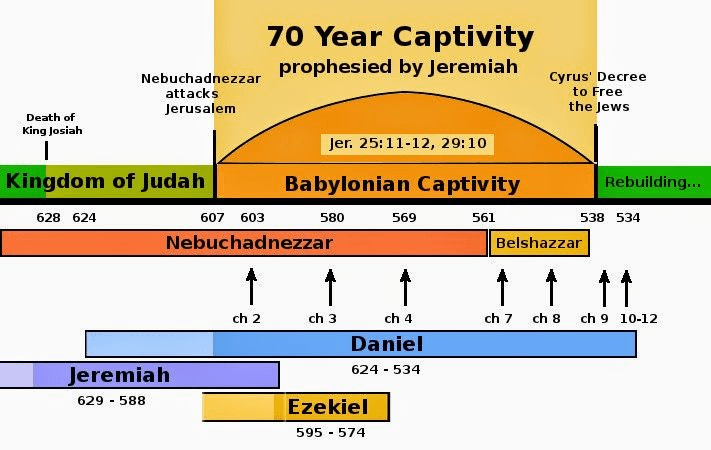
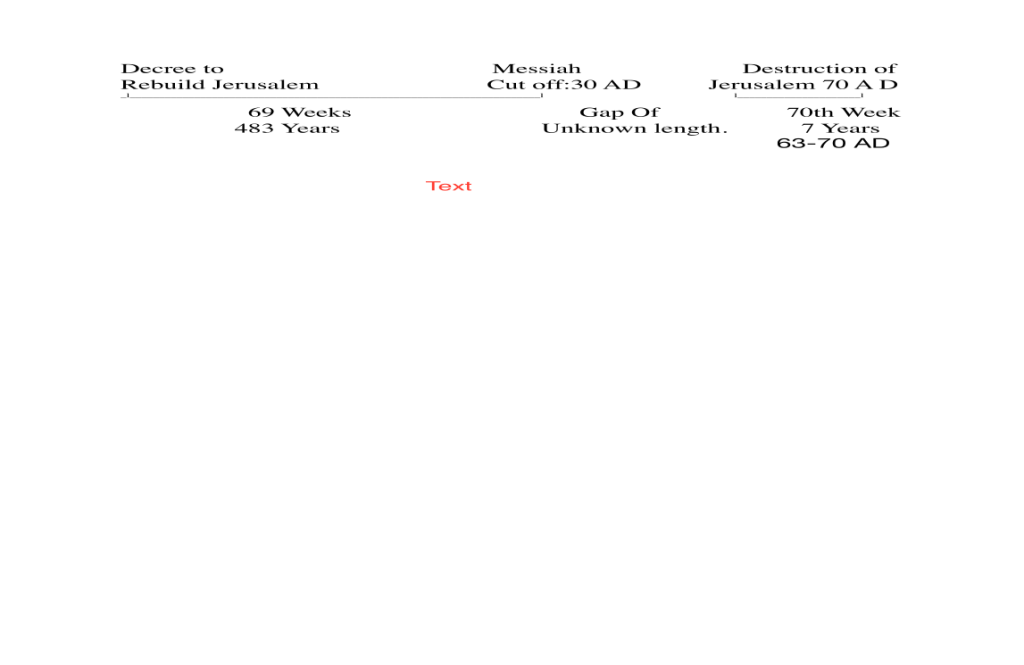
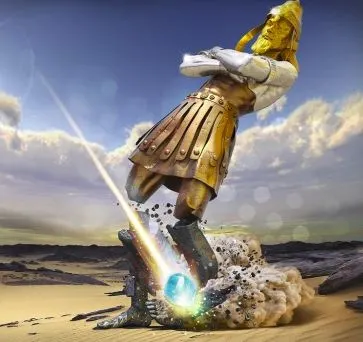

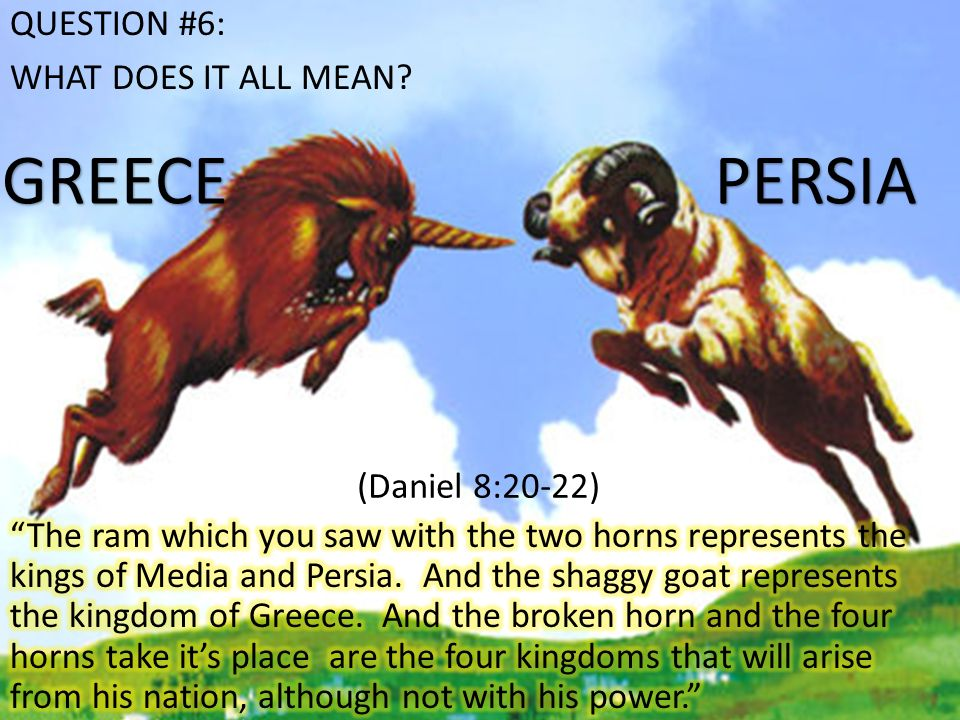
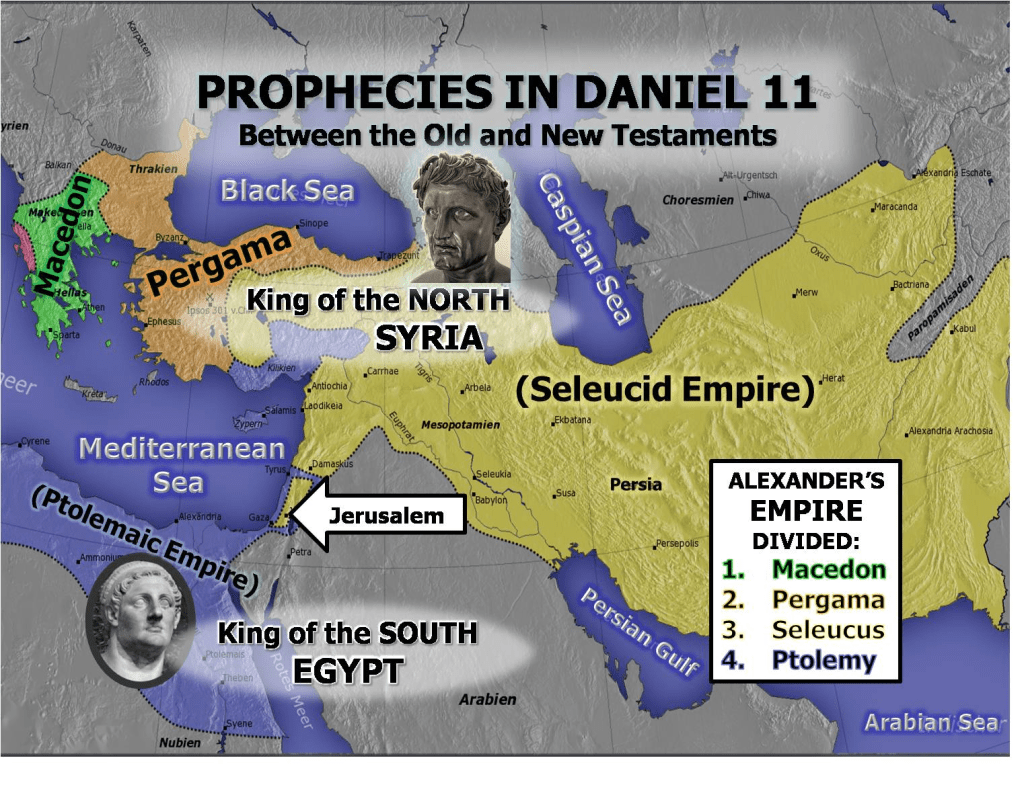
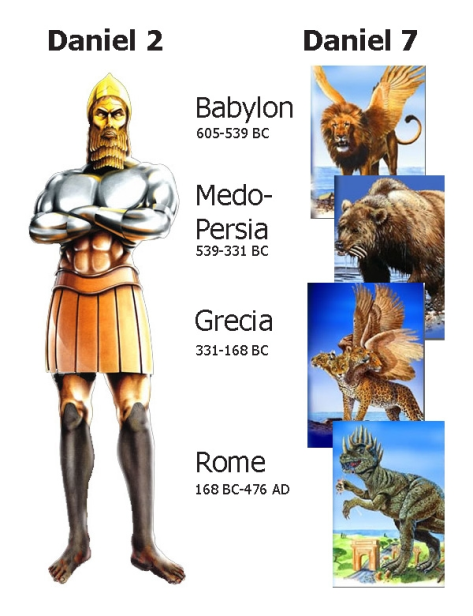
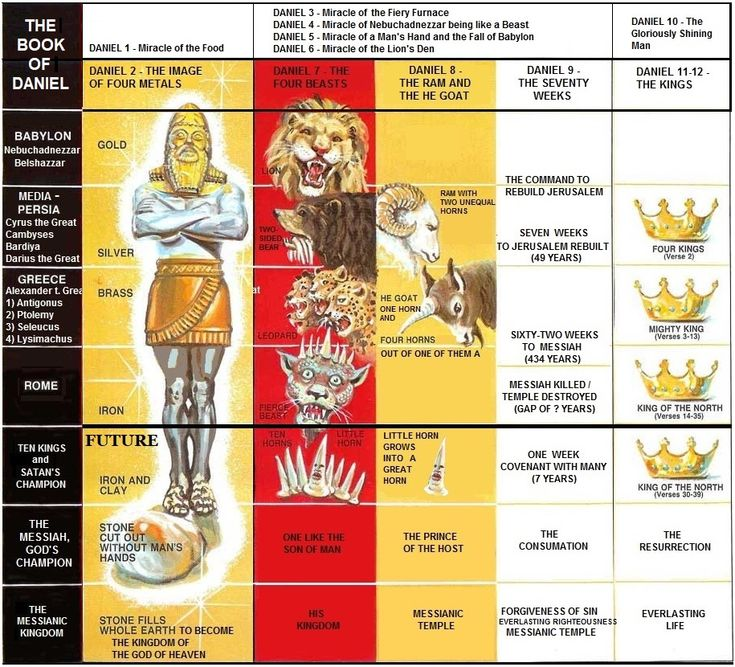
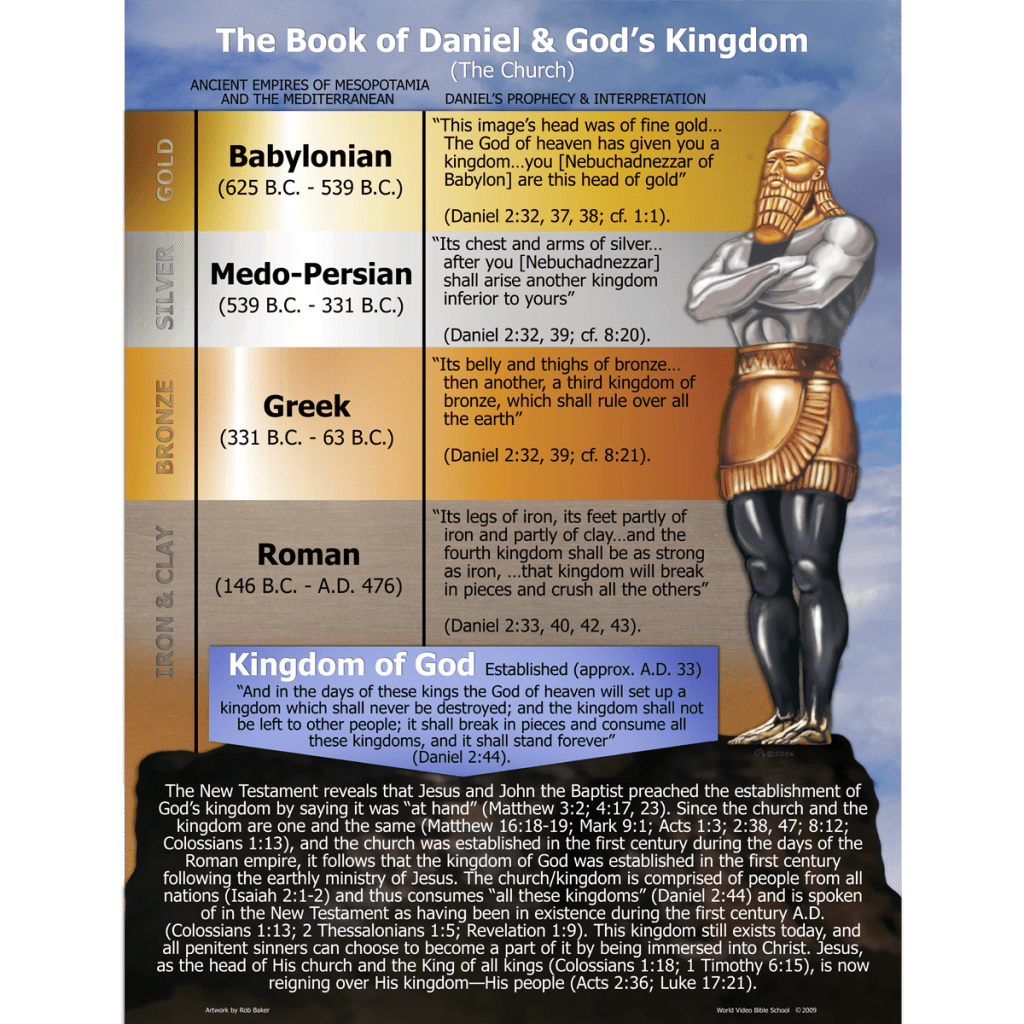
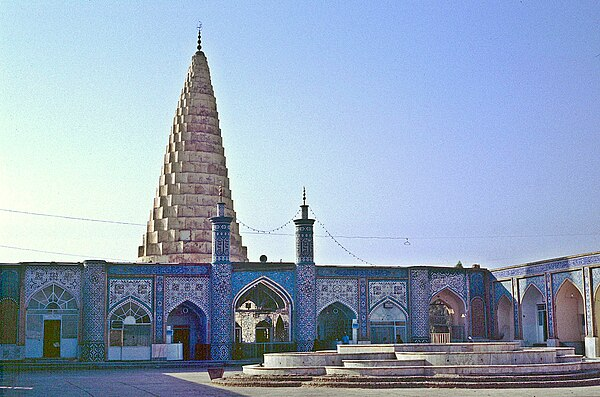

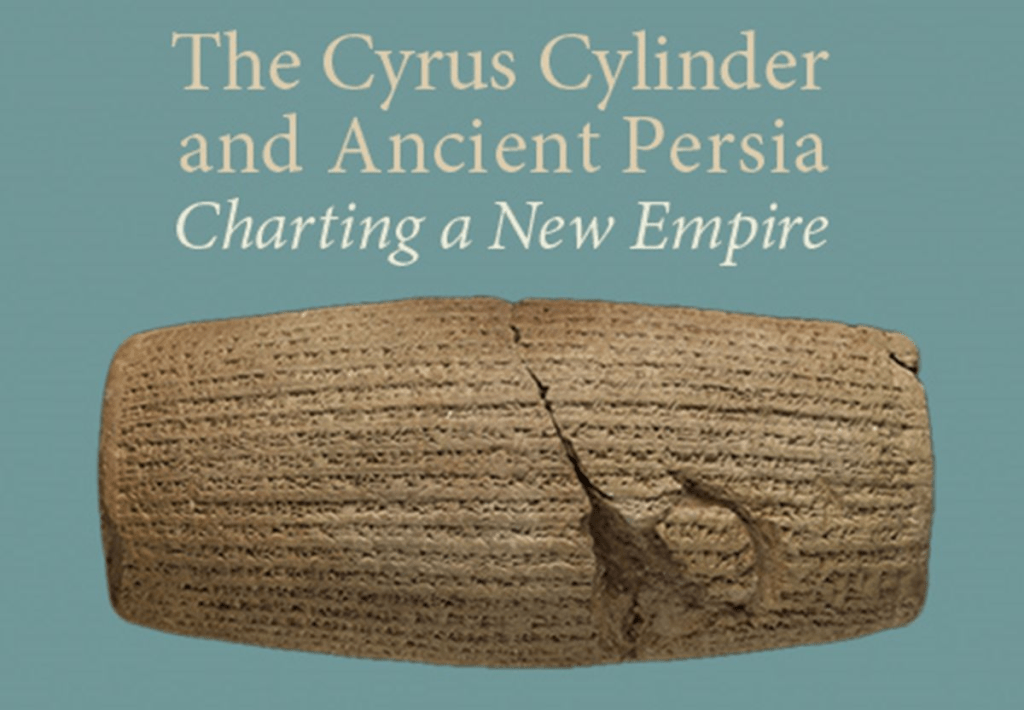

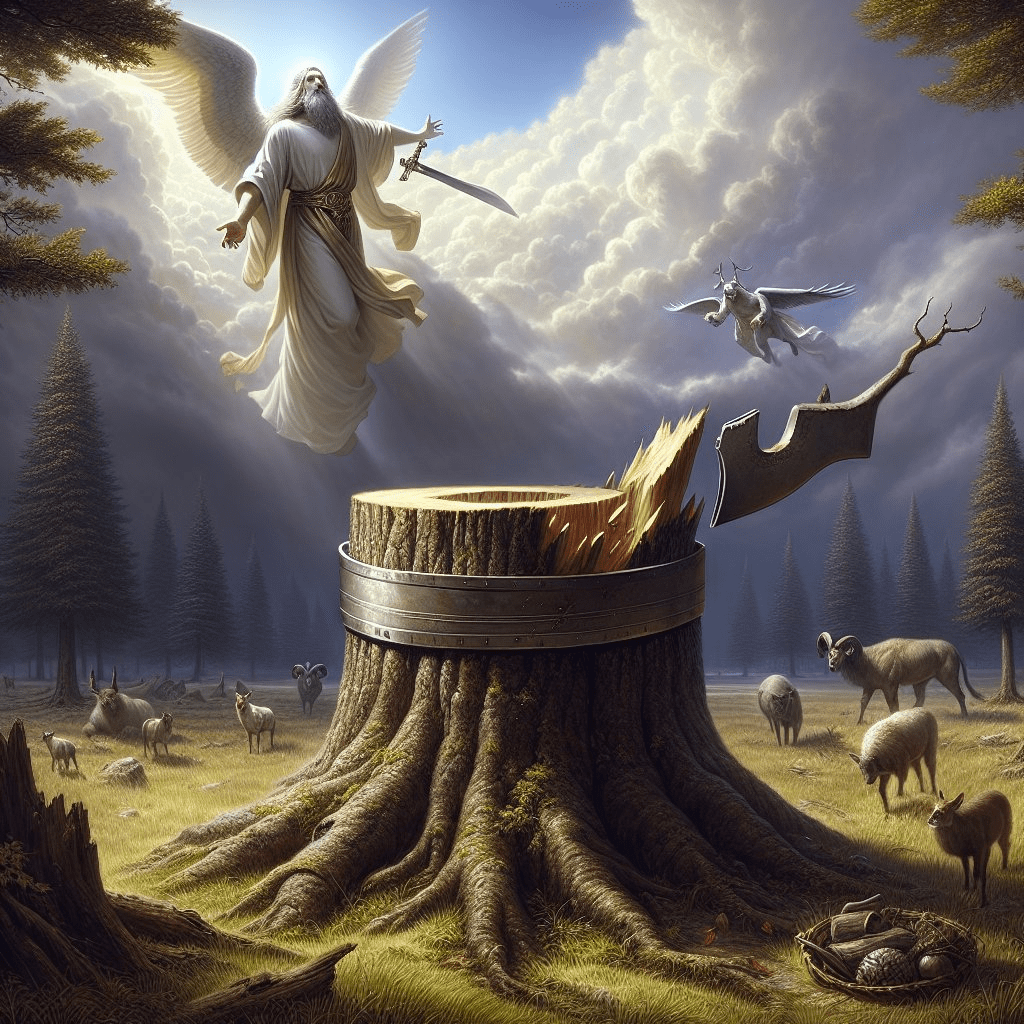
 Nicky's Notes