I have spent 5 years in mission work in the West Indies and South America. I have preached mainly part time for 40 years, much of that time while working with a full time job in Christian education. I am currently at Madison Academy in Huntsville, Alabama and serving as a shepherd at the Monrovia Church of Christ. God has blessed me with a wife and 3 grown children (and their families) who are much more loving than I am!
Here is a map of Paul’s voyage to Rome as a prisoner when he appealed to Caesar. Notice the island of Crete where they planned to spend the winter but the hurricane winds blew them out to sea for 14 days out of control. Notice the island of Malta where they shipwrecked and Paul was bitten by a poisonous snake but unharmed. Notice Rome where he spent 2 years in house arrest and wrote the prison epistles of Ephesians, Pilippians, Colossian, and Philemon.
AUTHOR: The apostle Paul (Phl 1:1), joined in his salutation by Timothy. Personal references by the author (Phl 1:12-14; 2:19-24; 3:4-7; 4:15-16) are certainly consistent with what we know of Paul from other New Testament sources. Paul’s authorship of this letter is also supported by the testimony of early “church fathers” such as Polycarp and Irenaeus.
THE CITY OF PHILIPPI: Named after Philip of Macedonia, the father of Alexander the Great, it was a major city of Macedonia on the road from Rome to Asia known as the Egnatian Way. It was the site of a famous battle in 42 B.C. in which Antony and Octavius defeated Brutus and Cassius. In 30 B.C., Octavian made the town a Roman colony where retired soldiers could live and enjoy the full privileges of Roman citizenship (to which Paul may have alluded in Phl 3:20).
THE CHURCH AT PHILIPPI: During his second missionary journey (49-52 A.D.), Paul and his traveling companions (Timothy and Silas) were making their way across Asia Minor (Turkey) when Paul received a vision at Troas. In the vision, a man of Macedonia pleaded, “Come over to Macedonia and help us.” Perceiving that the Lord was calling them to go to Macedonia, they sailed from Troas (Luke having joined them) and eventually arrived at Philippi (Ac 16:6-12).
With the conversion of Lydia (Ac 16:13-15) and the Philippian jailor (Ac 16:25-34), the church was established at Philippi. The lack of a synagogue seems to indicate that Jews were not prevalent and so the church may have consisted primarily of Gentiles. From the conversion of Lydia and references in the epistle itself (Phl 4:2-3), it is evident that a number of women played a role in the growth of the church.
When it became necessary for Paul to leave, Luke seems to have stayed at Philippi (based upon careful observations of personal pronouns; e.g., “we, they”, cf. Ac 16:12; 17:1). As Paul left Macedonia, the church at Philippi became a significant source of support (Phl 4:15-16; 2 Co 11:9).
Paul visited the church at Philippi again on his third missionary journey (Ac 20:3,6).
TIME AND PLACE OF WRITING: Philippians is one of Paul’s four “prison epistles” (Phl 1:7,13,17; cf. Ephesians, Colossians, and Philemon). The general consensus is that these epistles were written during Paul’s imprisonment at Rome (cf. Ac 28:16,30-31). If such is truly the case, then Paul wrote Philippians around 61-63 A.D. from Rome.
PURPOSE OF THE EPISTLE: The church at Philippi had sent a gift to Paul in Rome by the hand of Epaphroditus (Phl 4:10,18). Paul uses this occasion not only to thank them, but to comfort them concerning his situation as a prisoner for Jesus Christ (Phl 1:12-14). He also writes of his plans to send Timothy soon (Phl 2:19-24), and why he considered it necessary to send Epaphroditus back to them (Phl 2:25-30). There may have also been a problem at Philippi involving two women, for Paul has a few words to say concerning them (Phl 4:2-3).
THEME OF THE EPISTLE: Throughout this short and rather personal epistle, one keynote resounds again and again. That keynote is joy. Five times the word “joy” (Grk., chara) is found (Phl 1:4,25; 2:2,29; 4:1), and the verb “to rejoice” (Grk., chairein) occurs eleven times (twice in Phl 1:18; 2:17,18; 4:4; once in Phl 2:28; 3:1; 4:10). For this reason, the epistle to the Philippians has often been called Paul’s “hymn of joy” in which the theme is: “Rejoice in the Lord!”
“Rejoice in the Lord always. Again I will say, rejoice!”
Here is a map of Paul’s 2nd missionary journey during which he established the church at Philippi.
From an article by Brian Tabb:
Joy is “a feeling of great pleasure and happiness.” It’s the emotion we feel when life is good — when the sun is shining, when our team is winning, when we are healthy, happy, and heartened. Most people do not typically speak of the happiness of heartbreak, the pleasure of migraines, or the bliss of losing.
Philippians is the most joyful book in the Bible — the apostle Paul uses the Greek words for joy and rejoicing sixteen times in only 104 verses. And yet he writes from a dingy Roman prison, a place we would typically associate with misery and trial, which most people assume are the opposites of joy. He’s surrounded by every conceivable obstacle to joy, so why does he seem so happy?
Here is a neat list of the 7 topics covered in the letter. from blueletterbible.org. I will try to make note of most of the places where the word joy or rejoice is found, which is the theme of the book.
1:1-12 A personal “prayer with joy” (1:4) for their love and faith and enduring suffering with him for the gospel.
List the 7 main sections of this epistle.
1)1:12-26 The situation in Rome. Paul circumstances, i.e. as a prisoner, had turned out for the good of the gospel b/c he had been allowed freedom under house arrest to preach the gospel which led to the conversion of some of the Praetorian Guard (a special guard to protect the emperor). He could even “rejoice” (1:18) that some were trying to undermine him and yet at least they were preaching Christ. A similar thing happened on his visit to Philippi when he and Silas were put in prison and yet were singing songs of joy and praise to God which led to the conversion of the jailor and his household. When bad things or circumstances happen to you, can you look for how God might use your bad circumstances to spread the gospel and help others?
2) 1:19-30 Exhortation to behavior worthy of the gospel even if they had to suffer for their faith as Paul did. He would “rejoice” (1:18) knowing their prayers and the Holy Spirit might lead to his freedom from prison. Paul went on to say that he would actually prefer to die and go to be with Jesus (to die is gain) but that he would probably get out of prison (at least this first imprisonment for he would end up being beheaded in his 2nd imprisonment later) which would allow him to preach the gospel more (to live is Christ’ benefit). The Philippian Christians continued to suffer after Paul left after establishing the church there (he left b/c Jews followed him to the city to try to kill him and he had to flee). So there might be a tendency for them to be ashamed of Paul being a prisoner as if he were a convict. They should not be ashamed of his suffering.
3) 2:1-18 He urges them to “comlete his joy” (2:2) by being united in love. He gives an admonition to have the same attitude of humility as Jesus did in giving up equality with God to lower himself to become a man and die a suffering death. Seek not your own interests, but put the interests of others ahead of yours, just like Jesus did. Work out your salvation with fear and trembling for it is God working in you to do His will and pleasure. Don’t grumble and complain, which is what many do when things are not going well. Be lights in a dark ungodly world of darkness. He will be “glad and rejoice” with them even if he ends up dying in prison (2:17). “Be glad and rejoice with me” (2:18).
4) 2:19-30 Plans involving Timothy and Epaphroditus. Paul praises Timothy, his child in the faith, for his unselfish service to others and planned to send him to Philippi to tell them how he was doing. He also praised Epaphroditus, who had almost died serving Paul and the Philippians. He knew they would “rejoice” to see Epaphroditus (2:28) so “receive him with all joy” (2:29).
5) 3:1-21 So “rejoice in the Lord” 3:1, but he gives warnings against the Judaizers who were trying make Gentile Christians keep the Law of Moses and even getting Jewish Christians to put their trust in Law keeping instead of Jesus and the grace of God. Paul said that he was righteous under the Law but that righteousness could not save him. Instead he found the righteousness which is by faith in Jesus that did save him. He had put his past behind him and was pressing on toward the goal of the prize of eternal life. He encouraged the readers to do the same and to beware of the Judaizers who whose god was their belly (preaching for money) and who enemies of the cross and the grace in Christ. HIs citizenship was in heaven, not on earth.
6) 4:1-9 The Philippians were his “joy and crown” (4:1). I know my converts in mission work and Christian education, however many they may be, will be my joy and reward when I die. He urges two women members, who apparently are having conflict, to get along. He gives the famous “rejoice in the Lord always, again I say rejoice 4:4 (the simple song with those words). The coming of the Lord was “at hand”. The early church lived in constant expectation that Jesus would come back in their lifetime, just as Jesus predicted that he would. The apostles also predicted that. My favorite verses, 4:6-7. Be anxious in nothing, but in everything give thanks and the peace of God wil guard your hearts and minds (although I still worry too much). Let your mind dwell on good things, not worldly or bad things. Exhortations to unity, joy, and peace
7) 4:10-20 He “rejoiced” (4:10) that they had sent him supplies through Epaphroditus while he was in prison to meet his needs, although he assures them that he had learned the secret of “contentment” in whatever circumstances he was in, whether good or bad. They had sent him support when he worked left Philippi to go preach in Athens and Corinth. Paul would never accept money from the people he was preaching to in any location, but he did accept their help while establishing the church in Corinth so that he could spend more time preaching instead of supporting himself fully by tent making. He was confident that God would supply the needs of the Philippians in the future. He gives thanks for their generosityd
4:21-23 He closes the letter with greetings from the saints in Rome and from members of Caesar’s household that apparently had been converted.
Here is the outline given in blueletterbible.org It is a great outline to use your study of the letter.
Also helpful in the outline you can click on the verses referred to in each point and they will pop up.
Here are some OT verses on joy.
Psalm 37:4: “Delight yourself in the Lord”
Psalm 32:11: “Be glad in the Lord and rejoice”
Psalm 16:11: “In your presence there is fullness of joy; at your right hand are pleasures forevermore”
Psalm 118:24: “This is the day which the LORD hath made; We will rejoice and be glad in it”
Isaiah 61:10: “I will have much joy in the Lord. My soul will have joy in my God”
Psalm 30:5: For his anger lasts only a moment, but his favor lasts a lifetime; weeping may stay for the night, but rejoicing comes in the morning.
Proverbs 10:28: “The prospect of the righteous is joy, but the hopes of the wicked come to nothing”
Psalm 126:4-6: “The Lord has done great things for us, and we are filled with joy”
Psalm 28:7: “My heart leaps for joy and I will give thanks to him in song”
Proverbs 17:22 ~ A joyful heart is good medicine, but a crushed spirit dries up the bones.
Psalms 47:1 Clap your hands, all you nations; shout to God with cries of joy.
Isaiah 35:10 and those the LORD has rescued will return. They will enter Zion with singing; everlasting joy will crown their heads. Gladness and joy will overtake them, and sorrow and sighing will flee away.
Ecclesiastes 9:7 Go, eat your food with gladness, and drink your wine with a joyful heart, for God has already approved what you do.
Nehemiah 8:10 Nehemiah said, “Go and enjoy choice food and sweet drinks, and send some to those who have nothing prepared. This day is holy to our Lord. Do not grieve, for the joy of the LORD is your strength.” (The song The joy of the Lord will be my strength).
Psalm 100:1 Make a joyful noise to the Lord, all the earth! 2 Serve the Lord with gladness! Come into his presence with singing!
Psalms 27:6 Then my head will be exalted above the enemies who surround me; at his sacred tent I will sacrifice with shouts of joy; I will sing and make music to the LORD.
Here are some good NT verses.
Romans 14:17 For the kingdom of God is not a matter of eating and drinking, but of righteousness, peace and joy in the Holy Spirit,
John 16:22 So with you: Now is your time of grief, but I will see you again and you will rejoice, and no one will take away your joy.
1 Peter 1:8-98 Though you have not seen him, you love him; and even though you do not see him now, you believe in him and are filled with an inexpressible and glorious joy,9 for you are receiving the end result of your faith, the salvation of your souls.
James 1:2-32 Consider it pure joy, my brothers and sisters, whenever you face trials of many kinds,3 because you know that the testing of your faith produces perseverance.
Galatians 5:22 ~ But the fruit of the Spirit is love, joy, peace, patience, kindness, goodness, faithfulness,
Romans 12:12 ~ Rejoice in hope, be patient in tribulation, be constant in prayer.
Romans 12:15 Rejoice with those who rejoice, weep with those who weep.
IN CONCLUSION:
Christians ought to be the most joyful and happiest people on earth b/c of the hope of eternal life. Even when we are suffering greatly, we can rejoice knowing that we have an eternal place of joy waiting for us where there will be no pain or death. We can have internal everlasting joy even while on earth even when we are crying on the outside for whatever reason. So why am I not happier and more joyful? Maybe it is b/c my mind is not “set on the things that are above, but instead set on the things of the earth” (Colossian 3:1-4).
Jesus is our example. Hebrews 12: 2 fixing our eyes on Jesus, the pioneer and perfecter of faith. For the joy set before him he endured the cross, scorning its shame, and sat down at the right hand of the throne of God. He was not laughing or happy on the cross. He was suffering so much that he prayed, “My God, my God, why hast Thou forsaken me”. And yet he kept the prospect of being reunited with the Father after his ascension before him as his motivation to endure.
Here are some ways to be more joyful in the Lord: From the internet:
Spend time with God: Consistently spending time in God’s presence can increase joy.
Remember God’s goodness: Meditate on God’s goodness and faithfulness to you.
Express gratitude: Thank God for His blessings.
Read the Bible: Make reading the Bible a priority and try to understand what you can learn about God as a person.
Pray: Pray throughout the day, even for small things, or to praise God.
Ask for more: Ask God for more, even if you feel guilty about it.
Find God everywhere: Try to find God in everyday life.
Have a clear conscience: Unaddressed sin can diminish joy.
Prioritize God’s Word: Consider who you listen to the most and how their words encourage or discourage your meditation on God’s Word.
My prayer is that we can all be more joyful in the Lord at all times. “Rejoice in the Lord always, and again I say rejoice” (Phil 4:4).
Author: The apostle Paul was the primary writer of the Book of Colossians (Colossians 1:1).
Date of Writing: The Book of Colossians was likely written between A.D. 58-62. The letter was part of the 4 “prison epistles” that Paul wrote during his 2 years of imprisonment (“house arrest”) in Rome at the end of his voyage to Rome when he appealed to have his trial before Caesar (the right of a Roman citizen, which he was).
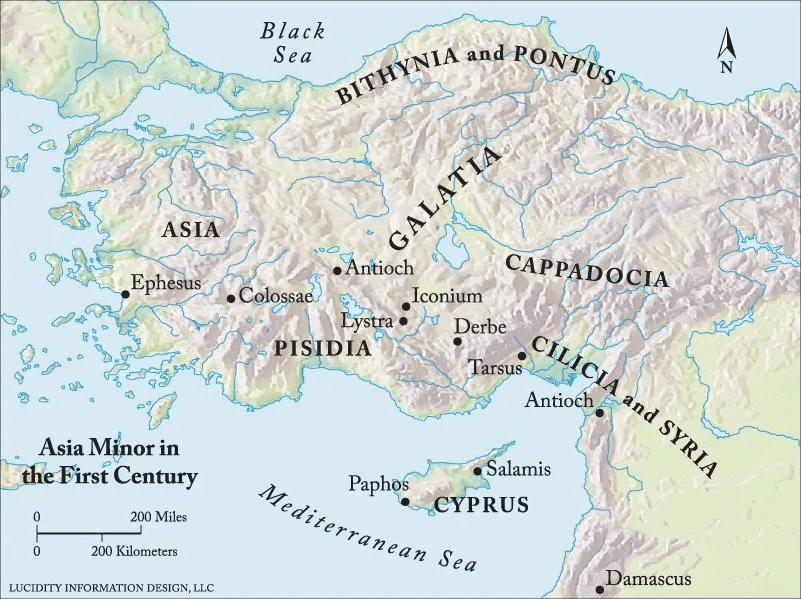
THE CITY OF COLOSSE: The city was located about 100 miles east of Ephesus in Asia Minor (modern day Turkey). Together with Hieropolis (Col 4:13) and Laodicea (Col 2:1; 4:13-16.; Re 3:14-22.), Colosse made up a tri-city area. Each city had its own distinction:
Hierapolis, a place for health, pleasure, and relaxation
Laodicea, known for its commercial trade and politics
Colosse, known simply as a small town
Colosse was mostly a pagan city, with a strong intermingling of Jews (in 62 B.C., there were 11,000 Jewish freemen in the tri-city area). This may explain the nature of some of the problems that arose among the church in Colosse (problems with both pagan and Jewish origin).
THE CHURCH AT COLOSSE: The establishment of the church is uncertain. At issue is whether Paul himself had ever been there. Some suggest that Paul may have done some work there during his third journey, on the way to Ephesus (cf. Ac 18:23; 19:1). Others point out that Paul’s comments imply that he had not personally been in Colosse (cf. Col 2:1). One possibility is that the church was established during Paul’s extended stay at Ephesus, where the effect of his work spread throughout Asia Minor (cf. Ac 19:8-10). It may not have been Paul himself, but one of his co-workers who went out to Colosse. Paul’s remarks in the epistle indicate that Epaphras was the one who preached the gospel there (Col 1:5-8) and in Hierapolis and Laodicea (Col 4:12-13). Though he was with Paul at the time the epistle was written, Epaphras is identified as “one of you” (Col 4:12), suggesting that he may have originally been from Colosse.
Other members of the church at Colosse included Philemon, Apphia, and Archippus, who may have been father, mother, and son. By comparing the epistle to the Colossians with that written to Philemon, it is reasonable to suppose that the church at Colosse met in their home (cf. Col 4:17. with Phe 1-2., and the references to Archippus). If Philemon and his family were hosts of the church at Colosse, then Onesimus (Philemon’s slave) would have also been a member there upon his return (cf. Col 4:7-9 with Phe 8-16).
TIME AND PLACE OF WRITING: Colossians is one of Paul’s four “prison epistles” (Col 4:18.; cf. Ephesians, Philippians, and Philemon). The general consensus is that these epistles were written during Paul’s imprisonment at Rome (cf. Ac 28:16,30-31). If such is truly the case, then Paul wrote Colossians around 61-63 A.D. from Rome. The indication is that the epistles to the Colossians, Philemon and the Ephesians were carried to their destination by Tychicus and Onesimus (cf. Col 4:7-9; Phile 10-12.; Eph 6:21-22).
PURPOSE OF THE EPISTLE: Paul had received a report of the situation at Colosse by way of Epaphras (Col 1:7-8). This report was for the most part favorable (Col 2:5). But the subject matter in the epistle strongly suggests that the church was facing a two-fold danger as described below.
Purpose of Writing: Paul wrote Colossians to warn the believers of doctrinal error and to spur them to continued growth in Christ. The first half of the Book of Colossians is a theological treatise that includes one of the most profound presentations of “Christology”anywhere in the New Testament. The second half is a mini-ethics course, addressing every area of Christian life. Paul progresses from the individual life to the home and family, from work to the way we should treat others. The theme of this book is the Lordship of Jesus Christ and His sufficiency in meeting our needs in every area.
Here is a great article on “what is Christology” from gotquestions.org
The word “Christology” comes from two Greek words meaning “Christ / Messiah” and “word” – which combine to mean “the study of Christ.” Christology is the study of the Person and work of Jesus Christ. There are numerous important questions that Christology answers:
Who is Jesus Christ? Almost every major religion teaches that Jesus was a prophet, or a good teacher, or a godly man. The problem is, the Bible tells us that Jesus was infinitely more than a prophet, a good teacher, or a godly man.
Is Jesus God? Did Jesus ever claim to be God? Although Jesus never uttered the words “I am God,” He made many other statements that can’t be properly interpreted to mean anything else.
Why is the virgin birth so important? The virgin birth is a crucial biblical doctrine because it accounts for the circumvention of the transmission of the sin nature and allowed the eternal God to become a perfect man. What does it mean that Jesus is the Son of God? Jesus is not God’s Son in the sense of how we think of a father/son relationship. God did not get married and have a son. Jesus is God’s Son in the sense that He is God made manifest in human form (John 1:1,14).
A Biblical understanding of Jesus Christ is crucial to our salvation. Many cults and world religions claim to believe in Jesus Christ. The problem is that they do not believe in the Jesus Christ presented in the Bible. That is why Christology is so important. It helps us to understand the significance of the deity of Christ. It demonstrates why Jesus is the atoning sacrifice for our sins. Christology teaches us that Jesus had to be man so that He could die – and had to be God so that His death would pay for our sins. It is perhaps the most important area of theology. Without a proper understanding of who Jesus Christ is and what He accomplished, all other areas of theology will be errant as well.
An in-depth study of Christology has incredible personal impact on the believer’s daily life. As we delve into the heart of Jesus, we begin to grasp the amazing concept that He, being fully Man and fully God, loves each of us with a never-ending love the extent of which is hard for us to imagine. The various titles and names of Christ in the Scriptures give insight into who He is and how He relates to us. He is our Good Shepherd, leading, protecting and caring for us as one of His own (John 10:11,14); He is the Light of the world, illuminating our pathway through a sometimes dark and uncertain world (John 8:12); He is the Prince of Peace (Isaiah 9:6), bringing tranquility into our tumultuous lives; and He is our Rock (1 Corinthians 10:4), the immovable and secure base who we can trust to keep us safe and secure in Him.
Brief Summary: Colossians was written explicitly to defeat the heresy that had arisen in Colosse, which endangered the existence of the church. While we do not know what was told to Paul, this letter is his response.
We can surmise based on Paul’s response that he was dealing with a defective view of Christ (denying His real and true humanity and not accepting His full deity). Paul appears also to dispute the “Jewish” emphasis on circumcision and traditions (Colossians 2:8-13; 3:11). The heresy addressed appears to be either a Jewish-Gnosticism or a mix between Jewish asceticism and Greek (Stoic?) philosophy. He does a remarkable job in pointing us to the sufficiency of Christ.
The Book of Colossians contains doctrinal instruction about the deity of Christ and false philosophies (1:15-2:23), as well as practical exhortations regarding Christian conduct, including friends and speech (3:1-4:18).
Connections: As with all the early churches, the issue of Jewish legalism in Colosse was of great concern to Paul. So radical was the concept of salvation by grace apart from works that those steeped in Old Testament law found it very difficult to grasp. Consequently, there was a continual movement among the legalists to add certain requirements from the law to this new faith. Primary among them was the requirement of circumcision which was still practiced among some of the Jewish converts. Paul countered this error in Colossians 2:11-15. in which he declares that circumcision of the flesh was no longer necessary because Christ had come. His was a circumcision of the heart, not the flesh, making the ceremonial rites of the Old Testament law no longer necessary (Deuteronomy 10:16, 30:6.; Jeremiah 4:4., 9:26.; Acts 7:51; Romans 2:29).
Practical Application: Although Paul addresses many areas, the basic application for us today is the total and complete sufficiency of Christ in our lives, both for our salvation and our sanctification. We must know and understand the gospel so as not to be led astray by subtle forms of legalism and heresy. We must be on guard for any deviation that would diminish the centrality of Christ as Lord and Savior. Any “religion” or cult that tries to equate itself with the truth using books that claim the same authority as the Bible, or which combines human effort with divine accomplishment in salvation must be avoided. Other religions cannot be combined with or added to Christianity. Christ gives us absolute standards of moral conduct. Christianity is a family, a way of life, and a relationship—not a religion. Good deeds, astrology, occultism and horoscopes do not show us God’s ways. Only Christ does. His will is revealed in His word, His love letter to us; we must get to know it!
The following ppt. slides are by Lindsay Morton and can be found in his ppt.
The answer is the all sufficiency of Christ, His person, HIs work, and HIs wisdom.
The danger of relapse into paganism with its gross immorality (cf. Col 1:21-23; 2:6.; 3:5-11.)
We are facing that with the hedonism of our culture, the drinking, sex, overeating, gluttony, pursuit of pleasure (hedonism), worship of sports, gambling, luxury. This danger is probably greater to most Christians in America b/c of the affluence we enjoy. More Christians fall away from the love of money, the worries, riches, and pleasrues that rob us of bearing the fruit of the Spirit (Luke 8:14) rather than some doctrinal error such as the Colossians faced.
The danger of accepting what has been come to known as“The Colossian heresy”. This heresy was a syncretism involving four elements of both pagan and Jewish origin:
1 Philosophies of men – which denied the all sufficiency and pre-eminence of Christ (Col 2:8.)
If Christ is the head of the church, then we should be following his commands, trusting his wisdom on current hot topic issues involved sex. Instead we have the philosophy of men telling us why certain tings are ok. We are surrounded by religious cults and Christian groups that deny the deity of Jesus such as Christian Science and Jehovah’s Witnesses.
2 Judaistic ceremonialism – which attached special significance to the rite of circumcision, food regulations, and observance of special days (Col 2:11.,16-17.). The Judaizers (Jewish Chritians who made keeping the Law as a test of fellowship with the Gentile Christians) followed Paul to every church he established, trying to destroy his teaching and influence.
There are so many groups that want to get us back to keeping the unclean meats laws of the OT, keeping the Jewish feasts, etc. There are many cults that do that such as House of Yahweh. .
3 Angel worship – which detracted from the uniqueness of Christ (Col 2:18.) From Sam Storms: “Paul warns against the excessive preoccupation with angels and their involvement in human life. He believed that this preoccupation distracted from the centrality of Jesus Christ. The word translated as “worship” could also mean “invoke” or “conjure”. People who worship angels may be soliciting angels to provide protection, blessings, or success.” That happens today also.
4 Asceticism – which called for harsh treatment of the body as the means to control its lusts (Col 2:20-23). “The word asceticism comes from the Greek askesis, which means practice, bodily exercise, or athletic training. Early Christians adopted the word to describe spiritual exercises performed to acquire virtue. ” Asceticism is a practice of self-denial that has been followed by many Christians throughout history. It can be practiced in a variety of ways, including:
Fasting: Early Christians fasted before Easter, and some Christians have fasted periodically or abstained from specific foods and drinks.
Celibacy: Celibacy was considered the first commandment in some ascetic movements, and virgins and celibates were prominent in early Christian communities.
Solitary confinement: Some Christians have lived in solitary confinement in cells, or in deserted tombs or fortresses.
Self-inflicted pain: Some Christians have inflicted pain on themselves as a form of asceticism. In the Phillipines some believers allow themselves to be nailed to a cross.
Living in poverty: Saint Francis required his brothers to live among the poor, and the Dominicans took a vow of poverty.
Jesus taught “self denial” but not with the idea that makes someone holier than others or that abstaining from things earns one’s salvation.
The 2nd section of Colossians is practice exhortatiions that the Colossian Christians should focus on instead of the philosophes of men, the legalism of Jewish asciticism, and the immorality around them.
It is very similar to the practical section of Ephesians (ch 4-6). Just a few slides from the Lindsay Morton ppt.
My suggestion is to simply read Colossians 3 and 4. Too often we get caught up in discussing the different doctrines of the NT. It can become a very intellectual form of Christiantiy.
Ask yourself the following questions as you read these 2 chapters.
1 Is my mind mostly set on spiritual things or earthly things? 3:1-4
2 Are there any sinful deeds or emotions in 3:5-11 that I still struggle to “put off” (i.e. stop)? How hard am I really trying to put these things off?
3 How am I doing “putting on” the new self practices, attitudes, and deeds (3:12-17)? How much am I into the “word dwelling in me”? How thankful am I? How much do I listen to and sing Christian music at church or home? We would be good to read this section every day before we go to work or play.
4 Which of the categories in 3:18-4:1 apply to me (husband, wife, child, parent, boss, worker)? How well am I doing following the specific exhortations for my category? How submissive am I as a wife? How loving am I as a husband? How respectful and obedient am I as a child? How good am I as a father training my children witout provoking them to anger by my hypocrisies that they see and by how I treat them at times? How good am I doing as a loyal hard worker at work? How am I doing treating my workers fairly as a boss?
5 How devoted and consistent am I in my prayer life (4:2-4)? How often do I pray, not just asking for my personal needs and health, but for persecuted Christians worldwide (The Voice of the Martyrs organization constantly sends out info on that) and for the preaching of the gospel in foreign lands (locally also of course)?
6 Do I make wise use of my time, with emphasis on spiritual priorities instead of materialistic or pleasure (4:5-6)? Is my speech always kind and gracious to non Christians, always trying to speak to them as the Holy Spirit would want me to speak?
7 In 4:7-18 Paul mentions many of his co-workers and fellow Christians and commends them for their work with him in the kingdom, mentioning specific things they do and some of their needs. Take the time to make a list of you co-workers in the kingdom and the good things they are doing for Jesus. Pray for them, mentioning their needs to God and thanking God for them. Then send them an email telling them how much you appreciate their work.
Actually, 5:21 says 21 submitting to one another out of reverence for Christ. So it doesn’t say “walk” but I am making it one of the “walks” of chapters 4-6.
“Walk in submission to one another” in Ephesians 5:21 means to humbly prioritize the needs and perspectives of others in your relationships, putting aside your own desires and ego, with the understanding that this act of submission is done out of reverence for Christ and to reflect his love in your interactions with others; essentially, it calls for mutual respect and a willingness to yield to one another within a community or relationship.
We might think this is just a verse for wives to be subject to their husbands, which it does include that, but it would include all our relations with others: husbands and wives, children and parents; slaves and masters. A husband is submitting in a way to his wife when he puts aside his own ego and needs to love and cherish her needs. Etc.
Christianity should change the way we treat others in all the different relationships in 5:22-6:9. What good is it if a man is a great member of the church but mistreats his wife, or abuses his wife or children, or is a cruel boss to his workers? He might obey all the commands in 4:1-5:21 and yet commit perhaps the worse sin of all in how he treats others.
This is also tied to being filled with the Spirit.
6. 5:22-6:9 Walk in submission to one another.
Actually, 5:21 says 21 submitting to one another out of reverence for Christ. So it doesn’t say “walk” but I am making it one of the “walks” of chapters 4-6.
“Walk in submission to one another” in Ephesians 5:21 means to humbly prioritize the needs and perspectives of others in your relationships, putting aside your own desires and ego, with the understanding that this act of submission is done out of reverence for Christ and to reflect his love in your interactions with others; essentially, it calls for mutual respect and a willingness to yield to one another within a community or relationship.
We might think this is just a verse for wives to be subject to their husbands, which it does include that, but it would include all our relations with others: husbands and wives, children and parents; slaves and masters. A husband is submitting in a way to his wife when he puts aside his own ego and needs to love and cherish her needs. Etc.
Christianity should change the way we treat others in all the different relationships in 5:22-6:9. What good is it if a man is a great member of the church but mistreats his wife, or abuses his wife or children, or is a cruel boss to his workers? He might obey all the commands in 4:1-5:21 and yet commit perhaps the worse sin of all in how he treats others.
This is also tied to being filled with the Spirit.
6. 5:22-6:9 Walk in submission to one another.
Actually, 5:21 says 21 submitting to one another out of reverence for Christ. So it doesn’t say “walk” but I am making it one of the “walks” of chapters 4-6.
“Walk in submission to one another” in Ephesians 5:21 means to humbly prioritize the needs and perspectives of others in your relationships, putting aside your own desires and ego, with the understanding that this act of submission is done out of reverence for Christ and to reflect his love in your interactions with others; essentially, it calls for mutual respect and a willingness to yield to one another within a community or relationship.
We might think this is just a verse for wives to be subject to their husbands, which it does include that, but it would include all our relations with others: husbands and wives, children and parents; slaves and masters. A husband is submitting in a way to his wife when he puts aside his own ego and needs to love and cherish her needs. Etc.
Christianity should change the way we treat others in all the different relationships in 5:22-6:9. What good is it if a man is a great member of the church but mistreats his wife, or abuses his wife or children, or is a cruel boss to his workers? He might obey all the commands in 4:1-5:21 and yet commit perhaps the worse sin of all in how he treats others.
This is also tied to being filled with the Spirit where Paul ended the 5th walk as wise men.
5:22-33 Husbands and wives
A.5:22-33 Husbands and wives
These images are from saralandchristians.com
4:20 The husband is to nourish (supply her needs)and cherish (thalli, to keep warm, warm someone up, revive their health, by nourishing. Used in 1 Thess 2:7 of a nursing mother cherishing (cares for) her children).
Q: Do most husbands even know what their wives needs are or care if he is really supplying those needs?
Q: Do most husbands show their wives how much they cherish them? “Cherish is the word that I use to describe …” song by the Association.
Q: What would you say are a wife’s main needs?
Q: Under what circumstances would a wife not have to be in submission to her husband? If he beat her? If he verbally abused her? If he lied to her? If he didn’t support her financially? If he was a drunk?
B) 6:1-4 Children and parents
Also from saralandchristians.com
Q: Is there ever a time when children do not have to obey their parents?
What if the parents won’t let them be baptized or go to church with their friends?
Q: What are some ways that fathers might exasperate their children and provoke them to anger?
Why are only fathers mentioned here and not mothers?
If you have children, do you remember times when you probably provoked your children to anger or disobedience because of the way you disciplined them?
C) 6:5-9 Bondservants and masters
Q: Does it surprise you that neither Jesus nor the apostles tried to do away with slavery?
How did the Christians in the northern and southern churches handle the slavery issue around the time of the Civil War?
Do you think that a Christian master would voluntarily free his slave once he becomes a Christian?
We will study Philemon later where Paul tells Philemon to receive back kindly his runaway slave who had become a Christian while Paul was in Roman prison. Paul did not tell him to free Onesiphorus.
7. 6:10-20 Stand with the armor of God against the schemes of the devil
So far it has been about our “walk” and conduct. But if you are out walking and someone attacks you, then you have to keep walking to get to your goal but you need to defend yourself with a weapon like a gun or a knife, etc.
The Christian walk is the same way. The devil had devious schemes to deceive Christians and many different ways of attacking Christians to get them to sin and fall from grace.
Thus the need for the “whole armor of God”. You can’t fight on your own. You need the strength of God and His armor.
Q: After reading all the individual parts of the armor and what they do, which one do you need the most?
Q: 6:18 8 praying at all times in the Spirit, with all prayer and supplication. To that end, keep alert with all perseverance.
How often do you pray for God to help you fight the devi, to not give in to temptation?
6:21-24 FINAL GREETINGS
Paul sent Tychicus to see how they were doing.
Tychicus is mentioned five times in the New Testament:
Acts 20:4: Tychicus is mentioned alongside Trophimus
Ephesians 6:21–22: Paul sends Tychicus to the Ephesians to tell them about his circumstances and encourage them
Colossians 4:7–9: Paul sends Tychicus to the Colossians to tell them about his circumstances and encourage them
Titus 3:12: Paul considers sending Tychicus to Crete to assist Titus 2 Timothy 4:12: Paul sends Tychicus to Ephesus. Tychicus was an Asiatic Christian who accompanied Paul on part of his journey from Macedonia to Jerusalem. Paul trusted Tychicus and referred to him as a “dear brother” and “faithful servant”.
The Catholic Church calls Tychicus St. Tychicus, and his feast day is April 29. Church tradition holds that he was martyred for his faith in Colophon, which is 24 miles from Ephesus.
Spiritual darkness is the state of a person who is living apart from God. The Old Testament book of Isaiah, in prophesying of the Messiah, speaks of a deep spiritual darkness that enveloped the people: “The people walking in darkness have seen a great light; on those living in the land of deep darkness a light has dawned” (Isaiah 9:2). This passage reappears in the New Testament, in Matthew 4:16, to announce that those who have come to know the God of Israel through His Son Jesus Christ are the ones who have been delivered from spiritual darkness and now walk in the light of God’s life.
The apostle John taught that God is light: “This is the message we heard from Jesus and now declare to you: God is light, and there is no darkness in him at all. So we are lying if we say we have fellowship with God but go on living in spiritual darkness; we are not practicing the truth” (1 John 1:5–6, NLT). And Jesus declared that He is the light of the world: “I am the light of the world. Whoever follows me will never walk in darkness, but will have the light of life” (John 8:12).
Thus, spiritual darkness means not having fellowship with God through a relationship with Jesus Christ. The darkness of separation from God is overcome through Christ: “In him was life, and that life was the light of all mankind. The light shines in the darkness, and the darkness has not overcome it” (John 1:4–5).
From the moment Adam and Eve sinned, humans have lived in a fallen world. All people are born in a fallen state of sin and separation from God. Until a person is reborn of God’s Spirit, he or she lives in spiritual darkness. Sin darkens our understanding and destroys our spiritual sight, cloaking us in deep darkness: “But the way of the wicked is like deep darkness; they do not know what makes them stumble” (Proverbs 4:19). Moses compares this state of sin and disobedience to groping about like “a blind person in the dark” (Deuteronomy 28:29). One of Job’s friends speaks of those who are lost in spiritual darkness: “Darkness comes upon them in the daytime; at noon they grope as in the night” (Job 5:14).
Living in rebellion to God and His will is equivalent to living in spiritual darkness. When the Lord commissioned Paul, He said, “I am sending you to the Gentiles to open their eyes, so they may turn from darkness to light and from the power of Satan to God. Then they will receive forgiveness for their sins and be given a place among God’s people, who are set apart by faith in me” (Acts 26:17–18, NLT).
After salvation, believers become beacons of the spiritual light of Christ: “For you were once darkness, but now you are light in the Lord. Live as children of light” (Ephesians 5:8). Those who are in Jesus Christ have been rescued from the kingdom of darkness: “He has delivered us from the domain of darkness and transferred us to the kingdom of his beloved Son” (Colossians 1:13, ESV). Those who reject Jesus Christ face eternal separation from God in “blackest darkness” (Jude 1:4–13).
In Judaism, a person’s inner character and moral quality are understood to be reflected through the eyes. In Matthew 6:22–23, Jesus compares the moral condition of an unregenerate soul to darkness: “The eye is the lamp of the body. If your eyes are healthy, your whole body will be full of light. But if your eyes are unhealthy, your whole body will be full of darkness. If then the light within you is darkness, how great is that darkness!” Jesus’ listeners would have understood that a healthy eye is one that lets in light just as a healthy regenerated heart lets in spiritual light. But a sick or sinful eye (or heart) shuts out light, leaving the soul in spiritual darkness.
The apostle Paul describes those in a sinful state before knowing Christ as possessing a darkened, closed mind and a hardened heart: “Their minds are full of darkness; they wander far from the life God gives because they have closed their minds and hardened their hearts against him” (Ephesians 4:18, NLT).
Unbelievers live in spiritual darkness because Satan, the god of this world, has blinded their minds. They cannot see the glorious light of the gospel: “Satan, who is the god of this world, has blinded the minds of those who don’t believe. They are unable to see the glorious light of the Good News. They don’t understand this message about the glory of Christ, who is the exact likeness of God” (2 Corinthians 4:4, NLT).
Note: Many of the images below are from Micky Galloway ppt. which is on the internet so I assume I can use them.
Spiritual darkness refers to all that is in opposition to the light of God’s love in Christ. The good news that Jesus brings to this world is that His light—His life-giving Spirit—floods light and life into the spiritual darkness of the sinner’s heart. The One who opened the eyes of the blind can also bring us out of spiritual darkness. No matter how deep the darkness, the light of God’s love and truth overcomes every sin that separates us from God.
Q: 5:3,5 The two main sins of the darkness are sexual immorality and greed (covetousness). “Filthiness, foolish talk, and crude jesting” are probably connected to those two main sins.
Would you say that our society today is characterized by 1)sexual immorality (4202 porneía (the root of the English terms “pornography, pornographic”; cf. 4205/pórnos) which is derived from pernaō, “to sell off”) – properly, a selling off (surrendering) of sexual purity; promiscuity of any (every) type which would include fornication, adultery, homosexuality) and
2) greed (4124 pleoneksía (a feminine noun derived from 4119/pleíōn, “numerically more” and 2192/éxō, “have”) – properly, the desire for more (things), i.e. lusting for a greater number of temporal things that go beyond what God determines is eternally best (beyond His preferred-will, cf. 2307/thélēma); covetousness (coveting).
Q: What factors contribute to such a sexual immoral society that we have?
(Personal question to ask yourself): How hard is it to resist sexually immoral thoughts and deeds? How hard is it to to resist lust? What if, like Garfield, all our thoughts were put up in words above us all day? God sees those thoughts even if others can’t.
Q: What factors contribute to such a greedy, materialistic society that we have?
Jesus said, “Beware of all kinds of greed” (Luke 12:15) in the parable of the rich man building bigger barns.So are there different kinds of greed?Yes, “desire for more” material things, power, control, status, attention, recognition, even time.
Q: We all are blessed materially. When does a healthy desire for more in life become greed?
(Personal question to ask yourself): Am I content with what I have or always thinking about how to get more? Contentment is the key to overcoming greed.
Hebrews 13:4 Let marriage be held in honor among all, and let the marriage bed be undefiled, for God will judge the sexually immoral and adulterous. 5 Keep your life free from love of money, and be content with what you have, for he has said, “I will never leave you nor forsake you.” 6 So we can confidently say,
“The Lord is my helper; I will not fear; what can man do to me?”
Philippians 4:11 Not that I am speaking of being in need, for I have learned in whatever situation I am to be content. 12 I know how to be brought low, and I know how to abound. In any and every circumstance, I have learned the secret of facing plenty and hunger, abundance and need. 13 I can do all things through him who strengthens me.
Q: Paul says to not only don’t participate in them but to “expose the deeds of darkness”. How can we do that without becoming judgmental or self righteous?
5. 5:15-21 Walk not as unwise men but as wise men
Q: What does “make the best use of your time for the days are evil” (4:16) mean? Is that just talking about time management for all your daily tasks (although that is wise)?
In Ephesians 5:15, “make the best use of your time” means to be intentional and careful about how you spend your time, prioritizing activities that align with God’s will and serve others, rather than wasting time on worldly pursuits, especially considering that “the days are evil” (meaning the world is not aligned with God’s values)
Jesus said in John 9:4 We must work the works of him who sent me while it is day; night is coming, when no one can work.
1 Peter 4:2 so as to live for the rest of the time in the flesh no longer for human passions but for the will of God. 3 For the time that is past suffices for doing what the Gentiles want to do, living in sensuality, passions, drunkenness, orgies, drinking parties, and lawless idolatry. 4 With respect to this they are surprised when you do not join them in the same flood of debauchery, and they malign you; 5 but they will give account to him who is ready to judge the living and the dead.
Q: 4:18 Don’t be drunk with wine, but be filled with the Spirit.
How big of a problem is drinking in our society?
Without naming names, think of all the Christians you know who have ruined their lives with drinking.
Drinking is considered a significant problem in society, as excessive alcohol use is a leading preventable cause of death, contributing to a substantial number of deaths each year, and also causing significant health, social, and economic issues, including accidents, violence, family problems, and workplace disruptions; making it a major public health concern both in the United States and globally.
Key points about the scale of the drinking problem:
High mortality rate: Excessive alcohol use is linked to a large number of deaths annually, ranking it among the leading preventable causes of death.
Economic impact: Alcohol misuse incurs significant costs due to healthcare expenses, lost productivity, and legal issues associated with alcohol-related incidents.
Prevalence of alcohol use disorder (AUD): Millions of people in the US are diagnosed with AUD, indicating a substantial population struggling with problematic drinking habits.
Social consequences: Alcohol abuse can lead to family dysfunction, relationship problems, and increased risk of violence.
Global concern: Excessive alcohol consumption is recognized as a major public health issue worldwide.
Q: Why do people drink so much (moderate drinking is not forbidden in the Bible)?
Why is it such a problem on college campuses?
Why do even many Christians ruin their lives with drinking?
Q: What does it mean to be filled with the Spirit (4:18)? Miraculous?
Q: 4:19 Being filled with the Spirit leads to singing psalms, hymns, and spiritual songs, singing and making melody in our hearts to the Lord, teaching and admonishing one another (Colossians 3:16).
What is the difference between psalms, hymns, spiritual songs?
Do you enjoy singing to the Lord?
Does such singing uplift you and edify you?
What if we could all sing like Vincent?
Does it matter how good you sing? Make a joyful “noise” (Psalm 100)
How important is Christian music to you and others?
Does making melody in our hearts mean you can’t make melody with instruments along with the singing?
psalmos: a striking (of musical strings), a psalm. 5568 psalmós – a psalm (“Scripture set to music”). Originally, a psalm (5568/psalmós) was sung and accompanied by a plucked musical instrument (typically a harp), especially the OT Psalms.
Regardless of one’s view of the use of instruments in worship, is that issue a heaven/hell issue?
Would it be good to add instruments to our worship, or would it be divisive? It seems that it would cause many to either violate their conscience and sing or to leave.
Is there a workable solution if many of the congregation would like to have some instrumental worship?
Does contemporary Christian music mean a lot to you?
What are some of the dangers of using instruments in worship?
Q: Tied to being filled with the Spirit is giving thanks to God the father and to our Lord Jesus Christ “always and for everything” (4:20).
How often do you thank God each day?
How often do you tell others thank you (probably we do that more than we thank God as we tend to take God for granted).
1 THESSALONIANS 5:16-18Rejoice always, pray continually, give thanks in all circumstances; for this is God’s will for you in Christ Jesus.
PSALM 103:1-4Praise the LORD, my soul; all my inmost being, praise His holy name. Praise the LORD, my soul, and forget not all His benefits — who forgives all your sins and heals all your diseases, who redeems your life from the pit and crowns you with love and compassion.
PSALM 95:1-5 (NKJV)Oh come, let us sing to the LORD! Let us shout joyfully to the Rock of our salvation. Let us come before His presence with thanksgiving; let us shout joyfully to Him with psalms. For the LORD is the great God, and the great King above all gods. In His handare the deep places of the earth’ the heights of the hills are His also. The sea is His, for He made it; and His hands formed the dry land.
PHILIPPIANS 4:4-7Rejoice in the Lord always. I will say it again: Rejoice! Let your gentleness be evident to all. The Lord is near. Do not be anxious about anything, but in every situation, by prayer and petition, with thanksgiving, present your requests to God. And the peace of God, which transcends all understanding, will guard your hearts and your minds in Christ Jesus.
COLOSSIANS 3:15-17Let the peace of Christ rule in your hearts, since as members of one body you were called to peace. And be thankful. Let the message of Christ dwell among you richly as you teach and admonish one another with all wisdom through psalms, hymns, and songs from the Spirit, singing to God with gratitude in your hearts. And whatever you do, whether in word or deed, do it all in the name of the Lord Jesus, giving thanks to God the Father through Him.
There were 6 “walks” in Eph 4-6. This referred to the way Christians were to live and act as a result of their special calling into the one body (the doctrinal section in Eph 1-3).
2. 4: 17-32 Walk no longer as the Gentiles
Paul had just talked about the church “maturing” (Eph 4:13), and now he describes what a mature church would look like.
4:25-32 But what does that mean to put off the old self and put on the new self. Let’s get specific on what to put off and what to put on.
4:30 A key verse in the midst of this. 30 And do not grieve the Holy Spirit of God, by whom you were sealed for the day of redemption. The Holy Spirit is constantly working to help us (through the written word and other ways) to do all this. Just like parents are constantly trying to instill these life principles in their children and it grieves them when their children do wrong and don’t do right. It grieves the Holy Spirit when we don’t.
Q: Which one (or ones!) of these do you struggle with the most to put away the bad and do the right?
Q: The “Gentiles” would be the non-Christians around us. Are the non-Christians today really as bad as Paul described them to be?
Are we really different than them? Do we need to be different like the Amish? Can we be “in the world but not of the world”? John 17:14 I have given them your word, and the world has hated them because they are not of the world, just as I am not of the world. 15 I do not ask that you take them out of the world, but that you keep them from the evil one. 16 They are not of the world, just as I am not of the world.
Would your friends and co-workers say that you are different? How could they tell a difference?
3. 5:1-2 Walk in love as Christ loved us and gave himself for us
The “walk” of Ephesians 5:2 refers to our behavior and how we act. We walk in love when we act like God. When we behave like Jesus, we are walking in love. Just as children like to imitate their parents, we are to mimic God in the same way Jesus copied His Father’s behavior.
The Greek word translated as “love” in this passage is agape. Agape is sacrificial, unselfish, unconditional love that proves itself through actions. It perfectly describes God’s love for us (John 3:16) and Christ’s love for us (1 John 3:16). With agape, “God showed how much he loved us by sending his one and only Son into the world so that we might have eternal life through him” (1 John 4:9, NLT). When the Bible says, “God is love” in 1 John 4:8, the word “love” is a translation of agape. God’s nature, His essence, is selfless, sacrificial, unconditional love.
The apostle John stressed that, since God loves us sacrificially and unconditionally, we ought to love others in the same way: “Dear friends, since God so loved us, we also ought to love one another” (1 John 4:11). Again, we walk in love by imitating God’s love for us in how we show love to others. Jesus taught the same principle when He said, “There is no greater love than to lay down one’s life for one’s friends” (John 15:13, NLT).
The apostle Paul gives a detailed description of how to walk in love: “Love is patient and kind. Love is not jealous or boastful or proud or rude. It does not demand its own way. It is not irritable, and it keeps no record of being wronged. It does not rejoice about injustice but rejoices whenever the truth wins out. Love never gives up, never loses faith, is always hopeful, and endures through every circumstance” (1 Corinthians 13:4–7, NLT). The greatest virtue we can nurture in our Christian walk is agape love (1 Corinthians 13:13).
In Ephesians 5:2, Paul said that Jesus “gave himself up for us.” Giving ourselves up means offering our lives to God in sacrifice. It means following, obeying, submitting, serving, and living in a committed relationship with Him. Giving ourselves up means walking in love. When we behave like this, our lives become “a fragrant offering” that is pleasing to God and everyone who encounters the scent (Leviticus 1:17; 3:16). Paul urged believers to offer themselves “as a living sacrifice, holy and pleasing to God—this is your true and proper worship” (Romans 12:1).
When we walk in love, we show the world that we are true followers of Jesus Christ: “Your love for one another will prove to the world that you are my disciples” (John 13:35, NLT; see also 1 John 3:14).
As God’s children and members of His family, we are called to deny our own selfish desires and interests for the sake of God and others. Although we are free in Christ, we use our freedom “to serve one another in love. For the whole law can be summed up in this one command: ‘Love your neighbor as yourself’” (Galatians 5:13–14, NLT). Peter said, “You were cleansed from your sins when you obeyed the truth, so now you must show sincere love to each other as brothers and sisters. Love each other deeply with all your heart” (1 Peter 1:22, NLT). This wholehearted, sacrificial imitation of God’s divine agape is what it means to walk in love.
Q: Would you friends, family, co-workers, people you do business with say that you are a loving Christian, that they see the love of God and of Jesus in you?
Of course there are different ways of expressing love?
Q: Which of these is your primary way of expressing love?
Having given 3 fairly deep doctrinal chapters, Paul goes on in the last 3 chapters to give day to day practical commands for living the life of one who has been saved and added to this church body of believers of all different backgrounds.
A key word is “walk”, used figuratively of how you move about as a Christian day to day, how you conduct yourself. There are 6 walks found in Eph 4-6. Let’s examine the first.
4:1-16 Walk in a manner worthy of your calling in the “unity of the faith” (which includes both dotrinal unity and love unity)
Q: Does God call us to become Christians? How? Do you consider your conversion to be a calling of God? Does God call people by some voice or thought that He puts in your head? We probably have different opinions on that, but one thing for certain is that he calls us “through the gospel”. The good news of salvatiion by grace through Christ’s death for us is the drawing power.
2 Thessalonians 2:13 But we ought always to give thanks to God for you, brothers beloved by the Lord, because God chose you as the firstfruits to be saved, through sanctification by the Spirit and belief in the truth. 14 To this he called you through our gospel, so that you may obtain the glory of our Lord Jesus Christ.
In ch 2 and 3 Paul gave the doctrine of the mystery of uniting Jew and Gentile believers into the one church body. But that brings together believers from two totally different backgrounds. Just as in the church today, we have many different backgrounds and personalities. It is one thing to say that we are united in one body, but it is another thing to say that we love and tolerate one another in love when we have conflicts and differences.
Q: 4:1-3 gives the qualities necessary for us to really have “unity” in the church. Which of these is the most important in your opinion? Which one do you struggle with practicing?
Paul then goes on to give the 7 doctrinal truths that are necessary to have “unity”. Hindus could have all the qualities in 4:1-3 and be united as Hindus, but that would not be unity in Christ. There are 7 basic doctrines and beliefs that we must have to really have Christian unity.
This list excludes those who believe in other gods than Yahweh and other Lords than Yeshua (Jesus). The one baptism is water baptism for the remission of sins (as opposed to the baptism of the Holy Spirit or of fire as some teach). There is one body, which is the church, which is believers all over the world.
Q: How exclusive is this list among those who have the one faith but are in many different denominations? It is exclusive, but some of the 7 doctrines could be interpreted differently.
Q: Does the one baptism have to be for exactly the right reason (i.e. the remission of sins) in the right manner (immersion)? Can it be sprinkling or pouring? Does that really matter? Can it be baby baptism? Why can’t we unite of what the “on baptism” of unity is?
Q: Does the “one body” include all the denominations who have many different names and beliefs but basically hold to these 7 doctrines? The church I was raised in taught that the different man made denominations could not be part of the “one body”, but I disagree with that. The one body is simply those saved by grace throug faith even though they are in different denominations. Unity of those denominations would be great, but not essential for salvation. The founders of the Churches of Christ, Stone and Campbell, sought to get believers from all denominations to put away their denominational names and creeds and just be united as Christians, but they did not say that those believers in those denominations were not Christians.
But what about the denominations that are going LGBQT? Are they still part of the one body?
The “one hope” is that of eternal life. But there are many views on eschatology (amillinealism, ? Do we all have to believe the same on eschatology? Add preterism to the chart below.
4:8 Jesus gave miraculous “gifts” to certain men in the early church to give the doctrinal truths necessary for unity. He “ascended” to heaven to pour out those gifts on men.
Act 2:33 Being therefore exalted at the right hand of God, and having received from the Father the promise of the Holy Spirit, he has poured out this that you yourselves are seeing and hearing.
This would include the 5 miraculously gifted leadership positions (apostles, prophets, evangelists, pastors, and teachers) as well as the miraculous gifts given to members of the church (1 Cor 12). Thus in 4:16 “every joint” helped maintain unity in the body.
These 5 gifted positions were to equip the saints for ministry, to build up the body, to a mature unity of faith and knowledge, to not be tossed about by deceitful doctrines, to speak the truth in love.
Jesus prayed for this “unity of the faith” in John 17:20 “I do not ask for these only, but also for those who will believe in me through their word, 21 that they may all be one, just as you, Father, are in me, and I in you, that they also may be in us, so that the world may believe that you have sent me. 22 The glory that you have given me I have given to them, that they may be one even as we are one, 23 I in them and you in me, that they may become perfectly one, so that the world may know that you sent me and loved them even as you loved me.
This is Jesus’ prayer on the night before he is crucified the next day. It would be like me knowing that I will die tomorrow and the night before I pray that my 3 children will always be united and love and help each other after I die.
Q: As a result of these gifted 1st century positions, do we have all that we need for Christian unity and “maturity” in the church? If we have all that we need doctrinally for unity, then why. do we have so many different denominations teaching so many different doctrines? I might teach my 3 children all that they need to become mature adults, but that doesn’t mean they will become mature adults.
What would be examples of “deceitful doctrines” that stray from that unity? This sounds more devious than just differences of interpretation on issues and doctrines that are not heaven or hell issues, such as those given by Paul in Romans 14 (eating of meats, observing of days, etc.). Deceitful doctrines sounds like doctrines taught by devious people trying to lure and pull believers away from the one body, maybe their motivation is power or sex or money.
Peter spoke of such false prophets in 2 Peter 2:But false prophets also arose among the people, just as there will be false teachers among you, who will secretly bring in destructive heresies, even denying the Master who bought them, bringing upon themselves swift destruction. 2 And many will follow their sensuality, and because of them the way of truth will be blasphemed. 3 And in their greed they will exploit you with false words. Their condemnation from long ago is not idle, and their destruction is not asleep.
Q: What are some doctrines that are not heaven or hell doctrines? Maybe instrumental music in worship, frequency of taking the Lord’s Supper, names and organization of churches, etc. We should not make any doctrine a heaven or hell doctrine unless the scriptures specifically do so. If we make almost every doctrine a heaven or hell one, then we will end up in untold division, as some groups have found out.
Q: So what are the doctrines are heaven or hell essential doctrines to the “unity of the faith”?
The list of 7 doctrines in this chapter is where we start, but even then the “one baptism” can be interpreted differently. Certainly the one faith would include the belief that Jesus is the Son of God whose death is the only way to be saved. That would rule out all the cults who deny the deity of Jesus.
There are certain sins that Paul says in Galatians 5:19 Now the works of the flesh are evident: sexual immorality, impurity, sensuality, 20 idolatry, sorcery, enmity, strife, jealousy, fits of anger, rivalries, dissensions, divisions, 21 envy, drunkenness, orgies, and things like these. I warn you, as I warned you before, that those who do such things will not inherit the kingdom of God. The Bible teaches that homosexuality is a sin, but the LGBQT issue has divided churches and believers, but there can be no compromise on that. Sometimes unity is not possible if some refuse to acknowledge the inspiration of Scripture and won’t allow the Bible to define what is right and wrong.
Q: Do we still need and have those gifted leaders today?
Apostles (the Mormon church has 12 apostles)? Paul spoke of false apostles: Paul spoke of “false apostes”: For such are false apostles, deceitful workers, transforming themselves into apostles of Christ. And no wonder! For Satan himself transforms himself into an angel of light. Therefore it is no great thing if his ministers also transform themselves into ministers of righteousness, whose end will be according to their works (2 Corinthians 11:13-15).
Prophets (many churches claim to have prophets)? What about all the prophets of all the cults? The Mormons have Joseph Smith as their prophet, the Seventh Day Adventists have Ellen G. White, the Jehhovah’s Witnesses have Rutherford and Russell, Christian Science have Mary Baker Eddy, and countless more examples. These false prophets have no miraculous confirmation that they are a prophet and no predicting of the future to confirm that they are prophets. They also add to the “all truth” that was given to the original apostles without any proof that Jesus is allowing them to do that.
Evangelists (are our preachers really evangelists?) In the early church, evangelists were gifted men who moved around preaching the gospel, establishing churches, grounding churches in the truth as Paul left Timothy in Ephesus to do (1 Timothy 1:3 As I urged you when I was going to Macedonia, remain at Ephesus so that you may charge certain persons not to teach any different doctrine) or as Paul left Titus in Crete to do (Titus 1:5 This is why I left you in Crete, so that you might put what remained into order, and appoint elders in every town as I directed you—). It was not a permanent paid position such as the paid clergy position that we have invented in churches today. The church did provide food and a place to stay for the evangelists who came to them. The Didache (a first century document) warns “You should treat apostles and prophets as the Gospel commands. Receive every apostle that comes to you as you would the Lord. But he must not stay more than one day, or two if necessary: but if he stays three days, he is a false prophet.” In other words, he must be preaching for the money! There were gifted elders and teachers to lead the church, so a permanent paid evangelists were not needed or authorized. We don’t have miraculously gifted elders or teachers today, but we still have many good elders and teachers in our churches. Why do we spend so much money of permanent paid pastors and preachers?
I can see how evangelists who do mission work to establish churches might need to be supported (as my family was doing mission work in Trinidad and Colombia), but even then that was not a permanent position. It is interesting that the Moravians sent out many missionaries all over the world (I encourage you to read about their history). They taught them a trade so they could support themselve in the foreign country they worked in, gave them money to get there, but did not support them as they lived there!
Pastors (i.e. elders; are our elders today gifted?): The word for shepherd is poimainó: to act as a shepherd. [4165/poimaínō (“to shepherd, tend”) occurs 11 times in the NT, usually with a figurative sense of “shepherding (tending) God’s flock.” This provides Spirit-directed guidance (care) conjunction with feeding His people (teaching them Scripture).] This is the word Paul used in Acts 20 when telling the elders (4245presbýteros – properly, a mature man having seasoned judgment (experience); an elder.) whom God had made to be overseers (episkopos: a superintendent, an overseer: this is the word used of elders in 1 Timothy 3 and Titus 14166poimḗn – properly, a shepherd (“pastor” in Latin); (figuratively) someone who the Lord raises up to care for the total well-being of His flock (the people of the Lord).) to “shepherd (Pastors (i.e. elders; are our elders today gifted?): The word for shepherd is poimainó: to act as a shepherd. [4165/poimaínō (“to shepherd, tend”) occurs 11 times in the NT, usually with a figurative sense of “shepherding (tending) God’s flock.” This provides Spirit-directed guidance (care) conjunction with feeding His people (teaching them Scripture).] This is the word Paul used in Acts 20 when telling the elders (4245presbýteros – properly, a mature man having seasoned judgment (experience); an elder.) whom God had made to be overseers (episkopos: a superintendent, an overseer: this is the word used of elders in 1 Timothy 3 and Titus 1) to shepherd (4166poimḗn – properly, a shepherd (“pastor” in Latin); (figuratively) someone who the Lord raises up to care for the total well-being of His flock (the people of the Lord) the flock. In other words, the 3 Greek words in Acts 20 refer to the same position: elders( presbyteros from which we get presbyters), overseers (episkopos from which we get bishops), shepherds (poimen from which we get pastors and shepherds). The early church organization at the local level was “elders and deacons”. Philippians 1:1: Paul wrote to the “overseers and deacons” in Philippi.1 Timothy 3: Paul lists qualifications for elders and deacons, including that elders should be experienced Christians with good reputations and well-ordered families. Titus 1: Paul refers to elders and overseers as the same. Acts 20:28: Paul spoke to the elders in Ephesus and told them to be overseers of the church. 1 Peter 5: Paul uses language of elders both shepherding and overseeing. In Christianity, the roles of presbyters and bishops have varied across time and denomination, often as 2 different positions, but the words refer to one position, that of elders.
Bottom line, the gifted “pastors” in Eph 4:11 were shepherds or elders, not preachers like the term is used for preachers in denominations today. They were appointed in churches even soon after they were established. Paul on his 1st missionary journey: Acts 14:21 When they had preached the gospel to that city and had made many disciples, they returned to Lystra and to Iconium and to Antioch, 22 strengthening the souls of the disciples, encouraging them to continue in the faith, and saying that through many tribulations we must enter the kingdom of God. 23 And when they had appointed elders for them in every church, with prayer and fasting they committed them to the Lord in whom they had believed. So Paul appointed elders in those local congregations very soon after he established those churches. Those elders would have met the qualifications for elders in 1 Tim 3, but they would have needed the miraculous gifts to enable them to guide and protect the flock from false teachers. I believe all the first century elders had miraculous gifts, just as Eph 4:11 claims.
We do not have miraculously gifted elders today, so do we still need elders? I think so. They just need to realize their limitations since they are not miraculously gifted. Of course, they can still protect the flock from heresy without being gifted by using the “all truth” in the Word, and they can still lovingly shepherd and care for the flock. They need to be careful about forcing their “opinions” on the flock.
Teachers : According to Ephesians 4:11, “pastors and teachers” are listed together, but whether they represent one single position or two distinct gifts is a matter of debate among scholars; some interpret it as meaning that all pastors should be teachers, but not all teachers are necessarily pastors, suggesting a distinction between the roles even if they are closely related. One of the qualifications for an overseer or elder was “apt to teach” (1 Timothy 3:1The saying is trustworthy: If anyone aspires to the office of overseer, he desires a noble task. 2 Therefore an overseermust be above reproach, the husband of one wife, sober-minded, self-controlled, respectable, hospitable, able to teach… Of the elders that Paul told Titus to appoint in Crete: Titus 1:9 He must hold firm to the trustworthy word as taught, so that he may be able to give instruction in sound doctrine and also to rebuke those who contradict it. So, elders did teach in the churches, but in Eph 4:11 the “teachers” probably referred to a different position from elders. There were miraculously gifted teachers in the early church. 1 Cor 12:27 Now you are the body of Christ and individually members of it. 28 And God has appointed in the church first apostles, second prophets, third teachers, then miracles, then gifts of healing, helping, administrating, and various kinds of tongues. 29 Are all apostles? Are all prophets? Are all teachers? Do all work miracles? 30 Do all possess gifts of healing? Do all speak with tongues? Do all interpret? 31 But earnestly desire the higher gifts.It is interesting that Paul list the top 3 gifted positions in the church at Corinth as apostles, prophets, and teachers. It is also interesting that he does not include the miraculously gifted positions of elders or evangelists. Evangelists traveled church to church, so I can see why they were not included, but were there not miraculously gifted elders in the church at Corinth. I found this on the internet:”No, elders do not appear in any Biblical accounts of the church at Corinth. The church at Corinth lacked the spiritual maturity that would have been necessary for elders to be present. The church was made up of people with a history of immoral lifestyles, including sexual immorality, idolatry, and adultery. There was also evidence that many Corinthian disciples were former members of pagan mystery cults.” But then I found this. “For example, there is nothing said in the New Testament of the Eldership in Corinth, yet the epistle of the church in Rome to the church in Corinth commonly called the epistle of Clement, written about the close of the first century, proves that there was a plurality of Elders in Corinth.” Maybe the church added elders after Paul’s death as the miraculous gifts ceased to exist?
Do we need teachers today in churches, even if they are not miraculously inspired? I think so. They just need to be grounded in the Word.
Ch 1 introduced the mystery: Eph 1:9 making known to us the mystery of his will, according to his purpose, which he set forth in Christ 10 as a plan for the fullness of time, to unite all things in him, things in heaven and things on earth.
Ch 3 will define and discuss that mystery.
Q: What do you think of when you think of a “mystery”?What is the mystery revealed to Paul?
Some classic examples include the Sherlock Holmes stories by Sir Arthur Conan Doyle, Agatha Christie’s novels about Hercule Poirot and Miss Marple, Alex Cross stories by James Patterson, Janet Evanovich’s Stephanie Plum mysteries, and many more. I found this on mysteries of the universe:
Some mysteries of the universe include:
Dark matter: An invisible form of matter that is thought to make up more than 80% of the universe’s mass, but scientists know very little about it.
Black holes: Because nothing can escape a black hole, physicists struggle to understand these objects and what happens when something falls into one.
Dark energy: A hypothetical form of energy that is thought to make up around 70% of all content in the universe.
The Big Bang: The Big Bang theory describes the origin of the universe as an explosion from an infinitely dense point, but it doesn’t explain what came before this event.
Quantum entanglement: A strange phenomenon that connects the entire cosmos into an integrated whole, and is the key to quantum computing and cryptography.
The Fermi paradox: The lack of evidence for alien life in our universe despite the seemingly endless opportunities for it to emerge.
Gravity: A basic force of nature that shapes the formation, structure, and motion of stars, galaxies, and the cosmos itself.
Origin of life: The origin of life on Earth is one of the great mysteries in the universe.
Greek for mystery: mustérion: a mystery or secret doctrine. In classical Greek a hidden thing, secret, mystery.
In the NT it is used of the mystery of the kingdom (Mk 4:11), and the mystery of the gospel. It is used 6 times in the book of Ephesians (1:9; 3:3,4,9; 5:32; 6:19).
The mystery of how God was going to save sinners, both Jew and Gentile believers in Jesus, was hidden all through the OT. The mystery was revealed to Paul and the apostles (Greek for revelation: apokalupsis: an uncovering). Paul would write down what had been revealed to him about the mystery; the readers could understand Paul’s insight (understanding) into the mystery when they read his letter. We can do the same today.
Q: Why was this mystery hidden all through the OT?
A great verse: The world was not ready to know the mystery until the fulness of times (Galatians 4:4) in the days of the Roman Empire when things were just right for spreading the gospel (one language, roads, Pax Romana peace, etc.). Many prophetic predictions about the Messiah had to be made and recorded even if the prophets didn’t understand what they were predicting. .
1 Peter 1:10 Concerning this salvation, the prophets who prophesied about the grace that was to be yours searched and inquired carefully, 11 inquiring what person or time[a] the Spirit of Christ in them was indicating when he predicted the sufferings of Christ and the subsequent glories. 12 It was revealed to them that they were serving not themselves but you, in the things that have now been announced to you through those who preached the good news to you by the Holy Spirit sent from heaven, things into which angels long to look.
Not even the angels or prophets could understand the mystery. It was like putting a puzzle together, piece by piece. You can’t see the full picture until all the pieces come together. Isaiah 53 is the closest prophecy to uncovering the mystery, but still incomplete.
The apostles did not understand the mystery while Jesus was with them. They were given the miraculous inspiration of the Holy Spirit to understand the mystery. Even after the resurrection, Acts 1: 6 So when they had come together, they asked him, “Lord, will you at this time restore the kingdom to Israel?” 7 He said to them, “It is not for you to know times or seasons that the Father has fixed by his own authority. 8 But you will receive power when the Holy Spirit has come upon you. They were still expecting a physical kingdom to be established by Jesus, just like the kingdom of David in the OT.
Another great verse:
1 Corinthians 2:6 Yet among the mature we do impart wisdom, although it is not a wisdom of this age or of the rulers of this age, who are doomed to pass away. 7 But we impart a secret and hidden wisdom of God, which God decreed before the ages for our glory. 8 None of the rulers of this age understood this, for if they had, they would not have crucified the Lord of glory. 9 But, as it is written,
“What no eye has seen, nor ear heard, nor the heart of man imagined, what God has prepared for those who love him”—
10 these things God has revealed to us through the Spirit. For the Spirit searches everything, even the depths of God. 11 For who knows a person’s thoughts except the spirit of that person, which is in him? So also no one comprehends the thoughts of God except the Spirit of God. 12 Now we have received not the spirit of the world, but the Spirit who is from God, that we might understand the things freely given us by God. 13 And we impart this in words not taught by human wisdom but taught by the Spirit, interpreting spiritual truths to those who are spiritual.
14 The natural person does not accept the things of the Spirit of God, for they are folly to him, and he is not able to understand them because they are spiritually discerned. 15 The spiritual person judges all things, but is himself to be judged by no one. 16 “For who has understood the mind of the Lord so as to instruct him?” But we have the mind of Christ.
Romans 16:25 Now to him who is able to strengthen you according to my gospel and the preaching of Jesus Christ, according to the revelation of the mystery that was kept secret for long ages 26 but has now been disclosed and through the prophetic writings has been made known to all nations,
I loved this image off the internet showing the process of revelation.
Romans 16:25 Now to him who is able to strengthen you according to my gospel and the preaching of Jesus Christ, according to the revelation of the mystery that was kept secret for long ages 26 but has now been disclosed and through the prophetic writings has been made known to all nations, according to the command of the eternal God, to bring about the obedience of faith— 27 to the only wise God be glory forevermore through Jesus Christ! Amen.
Colossians 1:25 of which I became a minister according to the stewardship from God that was given to me for you, to make the word of God fully known, 26 the mystery hidden for ages and generations but now revealed to his saints. 27 To them God chose to make known how great among the Gentiles are the riches of the glory of this mystery, which is Christ in you, the hope of glory.
Q: According to Eph 3:10,11, what was God’s eternal purpose that he was working out through the ages? What is the church’s responsibility to tell the world about this mystery and bring souls into this church of all ethnic group believers in Jesus?
A united believing church made up of all ethnic groups shows the result of this great mystery being fulfilled on earth. The death of Jesus for our sins was God’s plan from the beginning.
1 Peter 1:18 knowing that you were ransomed from the futile ways inherited from your forefathers, not with perishable things such as silver or gold, 19 but with the precious blood of Christ, like that of a lamb without blemish or spot. 20 He was foreknown before the foundation of the world but was made manifest in the last times for the sake of you 21 who through him are believers in God, who raised him from the dead and gave him glory, so that your faith and hope are in God.
But the church was also in God’s plan as part of saving people from sin through Jesus. The church’s main mission is to glorify God by our deeds and words. It should also be vitally concerned with spreading the gospel of this mystery to all nations. Instead, we find churches in the U.S. building multi milliion dollar buildings and spending about 80% of the money they collect (God’s money) on salaries, etc. instead of printing Bibles, supporting organizations that drill wells for clean water and that do humanitarian relief (all of which is followed up by preaching the gospel and establishing churches), helping persecuted believers in foreign countries (Voice of the. Martyrs does this constantly), etc. Eastern European Missions focuses on printing Bibles and children’s story Bibles in many languages to be distributed all over the world, including Arabic translations to try to allow Muslims to read the mystery.
Here is a great image of a puzzle that ends up showing Jesus. The prophets all contributed little pieces of the puzzle over many centuries. When you put a puzzle together you can’t see the full picture until you get it finished (unless you cheat and look at the puzzle picture on the box!) No one could see the Jesus puzzle put together until the 1st century when all the pieces came together.
Q: Have you ever thought about how great it is to be living after the mystery had been revealed? We get to see the finished picture?
3:14-21 PRAYER FOR SPIRITUAL STRENGTH
Q: What does it mean to be “rooted and grounded in love”? (A garden analogy?)
I came from a church that rooted and grounded me in correct doctrine, but love was not the main potting soil as I matured in Christ. Doctrine is essential but love is the potting soil that allows us to mature in Christ.
Q: What is the idea behind knowing the “breadth, length, height, and depth” of the love of Christ? But that love “surpasses knowledge”?
How can you know something that can’t be known? That must mean that love of Christ is something that must be experienced and not just a doctrine to be learned. In math, we have problems like how to divide by 0, but you can’t divide by 0, so it it undefined (the answer is basically unknown).
Q: What does it mean to be filled with the fulness of God?
What an image:
Q: What are your thoughts on 3:20-21? Not just what you ask but what you imagine (noeó: to perceive, think)? What power is at work within us? The church is to glorify God. Is that the organized church?
Do these verses help increase your faith and prayer life? You might ask God for things that you think you or others want or need. We might even imagine some great things to ask God for that are pretty much impossible. But God knows our hearts and minds and is able to do more than we can even ask or imagine. Wow!
Q: Give your overall impressions of these first 3 doctrinal chapters. Do they make you feel any more special in God’s eyes?
What was the favorite topic for you in these chapters?
Eph 2:1-10 is directly tied to 1:15-23. Again, from p. 19: This power of God’s working (that Paul wanted the eyes of their hearts opened to see) is in accordance with God’s power when he raised Jesus from the dead, seated him at His right hand “in the heavenly places” far above all spiritual powers of darkness and made him head over the church, which is his body. This last few verses will set the tone for God’s power raising us from the spiritual dead, making us alive spiritually, and seating us with Jesus at the right hand of God in the heavenly places.
Yes, “saved by grace through faith” is considered the central doctrine of the New Testament, primarily based on verses like Ephesians 2:8-9 which state that salvation is a gift from God received through faith, not by any merit of our own actions; essentially meaning that God’s grace is the sole basis for our salvation when we put our trust in Jesus Christ.
Key points about this doctrine:
Grace is undeserved favor: This means that God’s love and forgiveness are freely given, not earned by good works.
Faith is essential: To receive this grace, one must believe in Jesus Christ and accept his sacrifice as sufficient for their salvation.
Not by works: This doctrine emphasizes that salvation cannot be achieved through personal efforts or adherence to religious laws, but solely through faith in Jesus.
Romans 3:21 But now the righteousness of God has been manifested apart from the law, although the Law and the Prophets bear witness to it— 22 the righteousness of God through faith in Jesus Christ for all who believe. For there is no distinction: 23 for all have sinned and fall short of the glory of God, 24 and are justified by his grace as a gift, through the redemption that is in Christ Jesus, 25 whom God put forward as a propitiation by his blood, to be received by faith. This was to show God’s righteousness, because in his divine forbearance he had passed over former sins. 26 It was to show his righteousness at the present time, so that he might be just and the justifier of the one who has faith in Jesus.
27 Then what becomes of our boasting? It is excluded. By what kind of law? By a law of works? No, but by the law of faith. 28 For we hold that one is justified by faith apart from works of the law. 29 Or is God the God of Jews only? Is he not the God of Gentiles also? Yes, of Gentiles also, 30 since God is one—who will justify the circumcised by faith and the uncircumcised through faith. 31 Do we then overthrow the law by this faith? By no means! On the contrary, we uphold the law.
Romans 3 is perhaps the greatest detailed statement of salvation by grace through faith, not works. Eph 2:8-10 is a shortened form. Paul continually has to fight the Judaizers who are undermining his teaching of the gospel. They teach that the Gentile Christians should keep the Law of Moses as well as the teachings of Jesus. They made that a test of fellowship in the early church.
In Romans 3, he uses the term “justification” for salvation. It is a legal term. dikaioó: to show to be righteous, declare righteous. The believer is “made righteous/justified” (1344/dikaióō) by the Lord, cleared of all charges (punishment) related to their sins. Moreover, they are justified (1344/dikaióō, “made right, righteous”) by God’s grace through faith. This also called “imputed or reckoned righteousness” in Romans 4:What then shall we say was gained by Abraham, our forefather according to the flesh? 2 For if Abraham was justified by works, he has something to boast about, but not before God. 3 For what does the Scripture say? “Abraham believed God, and it was counted to him as righteousness.” 4 Now to the one who works, his wages are not counted as a gift but as his due. 5 And to the one who does not work but believes in him who justifies the ungodly, his faith is counted as righteousness. The Greek word for “counted or credited or imputed” is logizomai: to reckon, to consider. 3049logízomai (the root of the English terms “logic, logical“) – properly, compute, “take into account”; reckon (come to a “bottom-line”), i.e. reason to a logical conclusion (decision). This word is used 11 times in Romans 4 alone.
The “bottom line of” or “logical reason for” salvation is that works can’t save someone (neither works of the Law of Moses or any works system), and that God counts a person to be righteous by his faith, not works. It is “on the basis of faith”.
Philippians 3:8 Indeed, I count everything as loss because of the surpassing worth of knowing Christ Jesus my Lord. For his sake I have suffered the loss of all things and count them as rubbish, in order that I may gain Christ 9 and be found in him, not having a righteousness of my own that comes from the law, but that which comes through faith in Christ, the righteousness from God that depends on faith—
Romans 11:6 But if it is by grace, it is no longer on the basis of works; otherwise grace would no longer be grace.
Q: Does James contradict Paul in James 2?
James 2:21 Was not Abraham our father justified by works when he offered up his son Isaac on the altar? 22 You see that faith was active along with his works, and faith was completed by his works; 23 and the Scripture was fulfilled that says, “Abraham believed God, and it was counted to him as righteousness”—and he was called a friend of God. 24 You see that a person is justified by works and not by faith alone.
Martin Luther, the main leader of the Protestant Reformation, promoted 3 key concepts of reform of the Catholic Church.
The three solas are a set of maxims that summarize Martin Luther’s theology and were a rallying cry for Luther and other reformers:
Sola scriptura: Scripture alone
Sola gratia: By grace alone
Sola fide: By faith alone
By “faith alone” he meant salvation is not by works, just as Paul taught. But he called the letter of James a “strawy epistle” b/c of James’ saying that “a person is justified by works and not by faith alone”. He said that the letter should not be in the NT canon.
Paul and James do not contradict each other. Paul is discussing the basis of God saving someone, which is 100% by grace. But Paul does say that faith is necessary. James is discussing what kind of faith is necessary for salvation by grace, which is an active, working faith. Faith without works is dead and will not save someone. James is not saying that salvation is on the basis of works, which would indeed contradict Paul. Works prove or show that one has sincere, saving faith necessary to be saved.
Q: How many works are necessary to prove that one has the faith that is necessary to be saved?
A key verse: Matthew 13:8 Still other seed fell on good soil, where it produced a crop—a hundred, sixty or thirty times what was sown.
Also Luke 12:48 From everyone who has been given much, much will be demanded; and from the one who has been entrusted with much, much more will be asked.
In my religious upbringing, we were taught salvation by grace through faith. But b/c of our fear of teaching of denominations who taught that salvation was by grace through faith that did not include baptism, and who taught “once saved, always saved” (without having to have an active working faith), we ended up emphasizing the necessity of works so much that it left members thinking that there was no way they could do enough works to be saved. They doubted their salvation b/c of that.
He reconciled Jew and Gentile believers back to God through the blood of the cross. That made them brothers in Christ and took away the enmity between the two. to reconcile completely (ἀπό) (others, to reconcile back again, bring back to a former state of harmony. The Law of Moses was a source of conflict dividing the two, making the Jews feel superior, looking down and judging the Gentiles. Jesus took away that wall by destroying the condemning power of the law, even for the Jews who continued to keep the Law up till 70 AD. Of course, the Gentiles were never under the Law. There was now peace between Jew and Gentile believers.
The only way conflicts between different groups will be removed is when all of them become Christians, brothers and sisters in Christ.
John 14:27 Peace I leave with you; my peace I give you. I do not give to you as the world gives. Do not let your hearts be troubled and do not be afraid.
The church, made up of Jew and Gentile believers, is a spiritual temple built on the foundation of the apostles and prophets, with Jesus being the chief cornerstone.
Some great images taken from the internet:
Q: How was the Law a source of enmity between Jews and Gentiles?
The problem was not the law itself. The Law was spiritual (Romans 7), perfect. But it did separate the Jew from the Gentiles, giving the Jews a sense of superiority (Romans 2). But even then the Law, if used properly (Romans 10), would lead all Jews to Christ where they would be united with the Gentiles in the church. Under grace, the Law no longer had condemning power even if the Jewish Christians continued to keep the Law up till 70 AD. Jesus destroyed the condemning power of the Law when he died to save from sin. After his death, the Law should no longer be a source of enmity b/c both Jew and Gentile Christians were saved by the same grace, and none were saved by the Law.
Q: What are some of the sources of conflicts between groups of people today?
The world is full of hate and conflict. Most current is the Arab/ Israel conflict that goes all the way back to Isaac and Ishmael. We have the Ukraine/Russia conflict. There is North and South Korea. We still have a big racial divide in the U.S. in spite of decades of legislation trying to remove that. We have “hate crimes” against minority groups in the U.S.
Q: Many actual walls have been built to separate groups that are enemies, such as the Berlin Wall. Many peace treaties have been made in attempts to make peace between groups that are enemies, such as the Treaty of Versailles: Ended World War I between Germany and the Allies. The treaty required Germany to disarm, pay reparations, and recognize the independence of states that were previously part of the German Empire.
But what is the only way to make peace between groups that are enemies for whatever reason?
Q: In what way is the church built upon the foundation of the apostles and prophets? Does that mean there would be no additional apostles and prophets after the original ones?
(The Mormons and others claim to have apostles today.)
The original 12 apostles (minus Judas replaced by Mathias, Acts 1) plus Paul (an apostle out of due season, 1 Cor 15) were given special authority (Ephesians 4 will define that authority). Jesus told them that the Holy Spirit would guide them into all the truth.
John 14:26 26 But the Helper, the Holy Spirit, whom the Father will send in my name, he will teach you all things and bring to your remembrance all that I have said to you.
John 16:13 13 When the Spirit of truth comes, he will guide you into all the truth, for he will not speak on his own authority, but whatever he hears he will speak, and he will declare to you the things that are to come.
This led to a “once for all time” delivery of the faith of Jesus.
Jude 3:3 Beloved, although I was very eager to write to you about our common salvation, I found it necessary to write appealing to you to contend for the faith that was once for all delivered to the saints.
Only these original apostles had that special authority. There is no “apostolic succession” of apostles (as the Mormons claim they have with their apostles, and other groups like the Latter Rain claim to have apostles) after them to replace them and continue special revelation after they died.
Notice that this is giving thanks for the Ephesian believers b/c Paul had heard of their faith and love. He is thankful that they have believed and remained faithful even in a pagan city like Ephesus where Diana was worshipped (Acts 18).
He give these thanks in unceasing prayer and also prays that God will give them the “Spirit of revelation and wisdom and knowledge of him” having “their eyes enlightened to know 3 things:
1 The hope to which he has called you, i.e. the hope of eternal life.
2 The riches of his glorious inheritance in the saints
3 The immeasurable greatness of his power toward us who believe.
This power is in accordance with God’s power when he raised Jesus from the dead, seated him at His right hand “in the heavenly places” far above all spiritual powers of darkness and made him head over the church, which is his body. This last few verses will set the tone for God’s power raising us from the spiritual dead and seating us with Jesus at the right hand of God in the heavenly places.
Q: What does “having the eyes of your heart enlightened” mean in Ephesians 1:18?(Does the human heart have spiritual senses that are dormant but can be awakened by God?)
We may be overlooking certain obvious truths here. Physiologically, the human heart consists of nothing more than “a hollow organ that pumps blood through the circulatory system by rhythmic contraction and dilation.”[1] Therefore, perhaps we might recognize references to “the heart” as the predispositions, inclinations and traits of personality that are characterized by our minds, at the core of our consciousness.
Naturally, the mind and the heart are two separate aspects of human nature; we shouldn’t allow metaphorical or poetic language to overwhelm our common sense. With that in mind, we can proceed a bit further metaphorically as we identify the “biblical heart.” Dr. James Burton Coffman has observed:
“According to the Scriptures, it is ‘the heart’ that imagines (Genesis 6:5), understands (Matthew 15:13), reasons (Mark 2:8), thinks (Luke 9:47), believes (Romans 10:9), and loves (1 Peter 1:22). These passages are more than enough to identify the Scriptural ‘heart’ as the mind or seat of the intelligence” (emphasis added).
Interestingly, the “blindness of the heart” is found in Ephesians 4 (KJV).
Ephesians 4:18, KJV: “[Gentiles having] the understanding darkened, being alienated from the life of God through the ignorance that is in them, because of the blindness of their heart…”
Suppose we illuminate this verse a bit by relying on key phrases in the NASB, beginning at verse 17 for context:
Ephesians 4:17-18: “So this I say, and affirm together with the Lord, that you walk no longer just as the Gentiles also walk, in the futility of their mind, being darkened in their understanding, excluded from the life of God because of the ignorance that is in them, because of the hardness of their heart…” (emphasis added).
Here, the “eyes of [the] heart” constitute our intellect and mental, spiritual recognition of other-worldly truths. Paul’s reference to the Gentiles’ “ignorance” is helpful toward the remaining clause “hardness of their heart.” (“blindness” in KJV). As we put all the pieces together, we should understand that the phrase “eyes of the heart” is merely our conscious recognition of that which Satan labors so arduously to suppress:
2 Corinthians 4:3-4: “And even if our gospel is veiled, it is veiled to those who are perishing, in whose case the god of this world has blinded the minds of the unbelieving so that they might not see the light of the gospel of the glory of Christ, who is the image of God.”
Paul further relates his concern over the veil of duplicity that clouds the minds of the faithless:
2 Corinthians 11:3: “But I am afraid that, as the serpent deceived Eve by his craftiness, your minds will be led astray from the simplicity and purity of devotion to Christ” (emphasis added).
The biblical heart is clearly a vital aspect of our intellect, recognition of spirit truths, and the faithful humility we exercise in Christ.
According to the Bible, Elisha’s servant’s eyes were opened by the Lord in 2 Kings 6:17:
The king of Syria sent an army to capture the prophet Elisha in the city of Dothan.
Elisha and his servants were surrounded by the army at night.
The servant asked Elisha, “Oh, my lord, what shall we do?”.
Elisha replied, “Don’t be afraid. Those who are with us are more than those who are with them”.
Elisha prayed, “O LORD, open his eyes so he may see”.
The Lord opened the servant’s eyes, and he saw the hills full of horses and chariots of fire all around Elisha.
Elisha then prayed to the Lord to make the Aramean army blind, which he did. Elisha led the Arameans to Samaria, telling them, “This is not the way, nor is this the city. Follow me and I will lead you to the man whom you are seeking”.
Q: The spiritual blessings are found in “the heavenly places” (1:3). What are the “heavenly places”? 1:20 Jesus was raised to sit in the heavenly places.
This phrase is used 5 times in Ephesians: 1:3,20; 2:6; 3:10; 6:12. In 2:6, the saved are seated with Christ in the heavenly places, so it must be a spiritual realm that we are in while on earth and not just a future place in heaven somewhere in the future after we die. The blessings are “spiritual” in nature, not physical. We are living in a spiritual world that can’t be seen. It is a spiritual world in which both good and bad powers and authorities exist and work (6:12). It is a spiritual realm where Christ has defeated all the evil powers that can rule over us.
I believe it is a spiritual realm all around us, right now. I believe it is where my mother and father are, perhaps even totally aware of what is happening on earth.
Doesn’t this make you just feel different about everything you do? Can you see yourself living in a spiritual realm as in an out-of-body experience at all the things happening in this world?
Q: Do you believe that faithful Christians immediately go into another phase of these heavenly places when they die? If so, are they aware of what’s happening on earth? If so, can they be sad over bad things on earth? Does the phrase “no tears in heaven” apply here?
A couple of key verses.
John 11:24 Martha said to him, “I know that he will rise again in the resurrection on the last day.” 25 Jesus said to her, “I am the resurrection and the life.[d] Whoever believes in me, though he die, yet shall he live, 26 and everyone who lives and believes in me shall never die.
The OT dead were kept in hades until they were judged (Daniel 12:1,2) and given their final reward or punishment. That is not where the dead in Christ go. We are able to go be with Jesus immediately after death.
Revelation 21:1 Then I saw a new heaven and a new earth, for the first heaven and the first earth had passed away, and the sea was no more. 2 And I saw the holy city, new Jerusalem, coming down out of heaven from God, prepared as a bride adorned for her husband. 3 And I heard a loud voice from the throne saying, “Behold, the dwelling place of God is with man. He will dwell with them, and they will be his people,[b] and God himself will be with them as their God. 4 He will wipe away every tear from their eyes, and death shall be no more, neither shall there be mourning, nor crying, nor pain anymore, for the former things have passed away.”
This describes the new Jerusalem, i.e. the church, on earth after the old Jerusalem has been destroyed. It describes God dwelling in his people and his people dwelling in God, right here on earth, now. The “no more tears, no death, no crying, no pain” etc. is right now on earth for Christians. This is spiritual joy and life even though we still cry and die physically. These verses do not refer to life after death although they would also describe life after death. But they would not preclude sadness in heaven after death.