Ephesians 1:1-15 Spiritual blessings in Christ

It’s been a while since I bogged on Nicky’s Notes but I plan on doing more now.

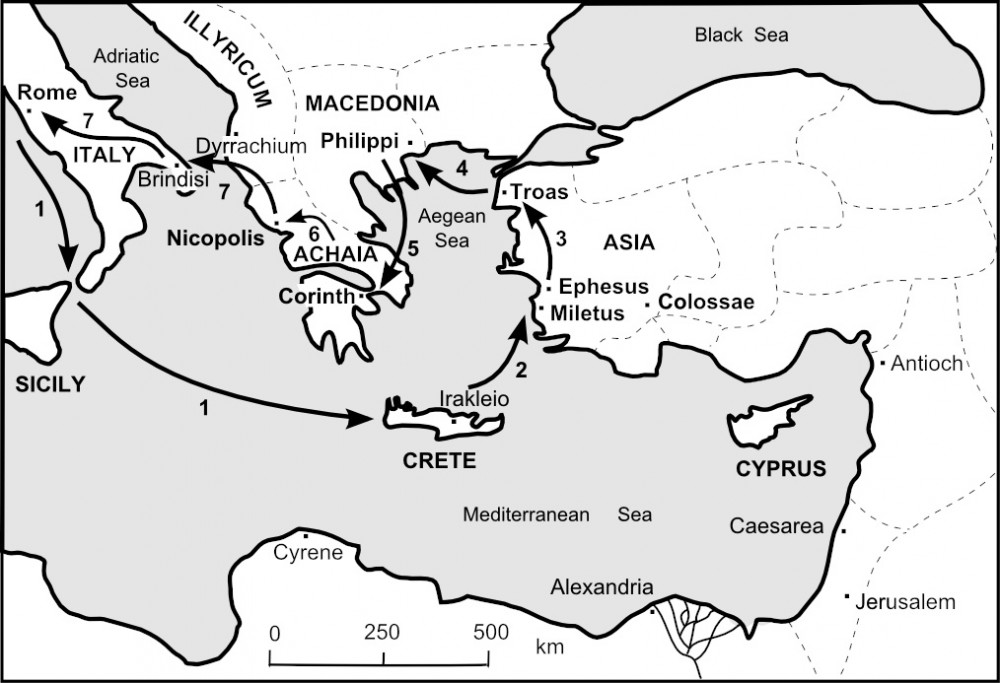
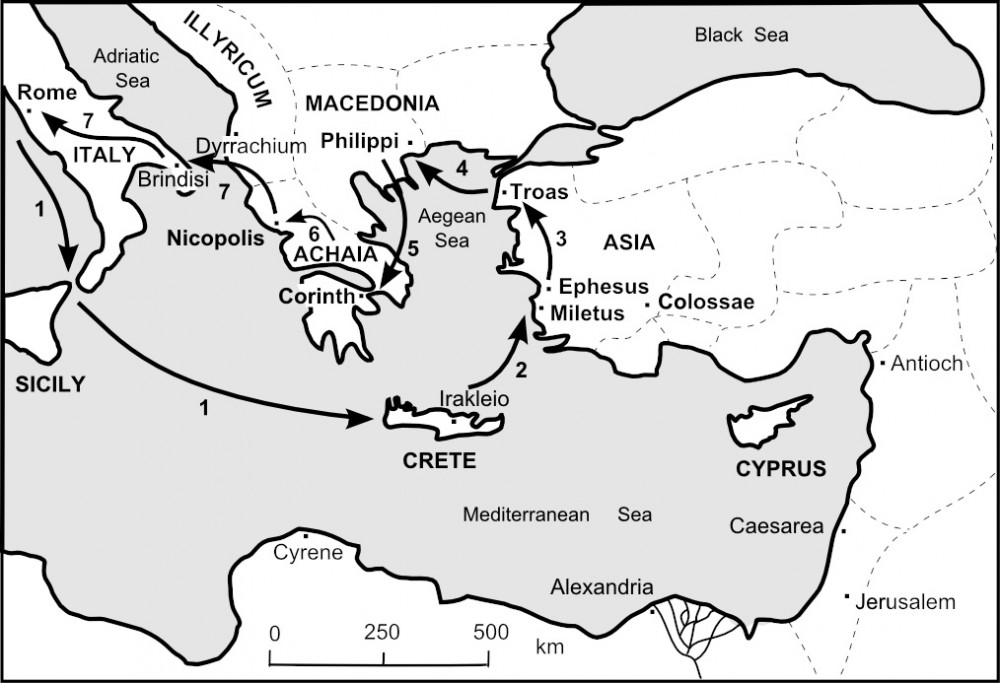
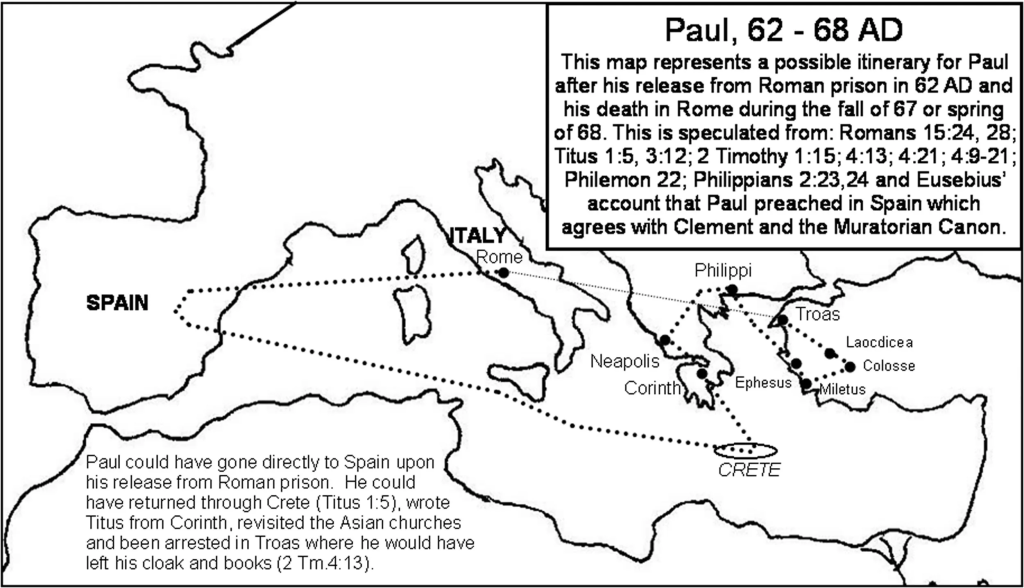
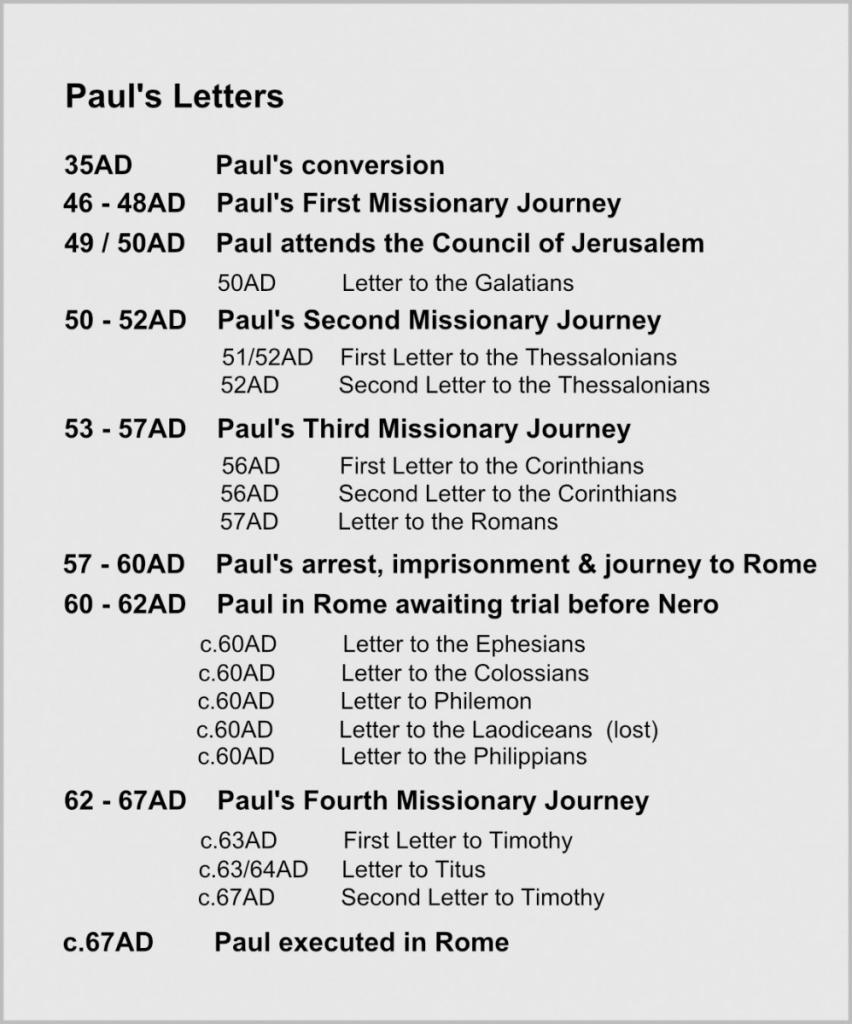
I am enjoying teaching Ephesians to our home group on Wednesday nights. Here are some thoughts on Ephesians. Paul finished his voyage to Rome (his 4th journey) in Rome as a prisoner under house arrest for 2 years (Acts 28). Here is a neat map off the google images.

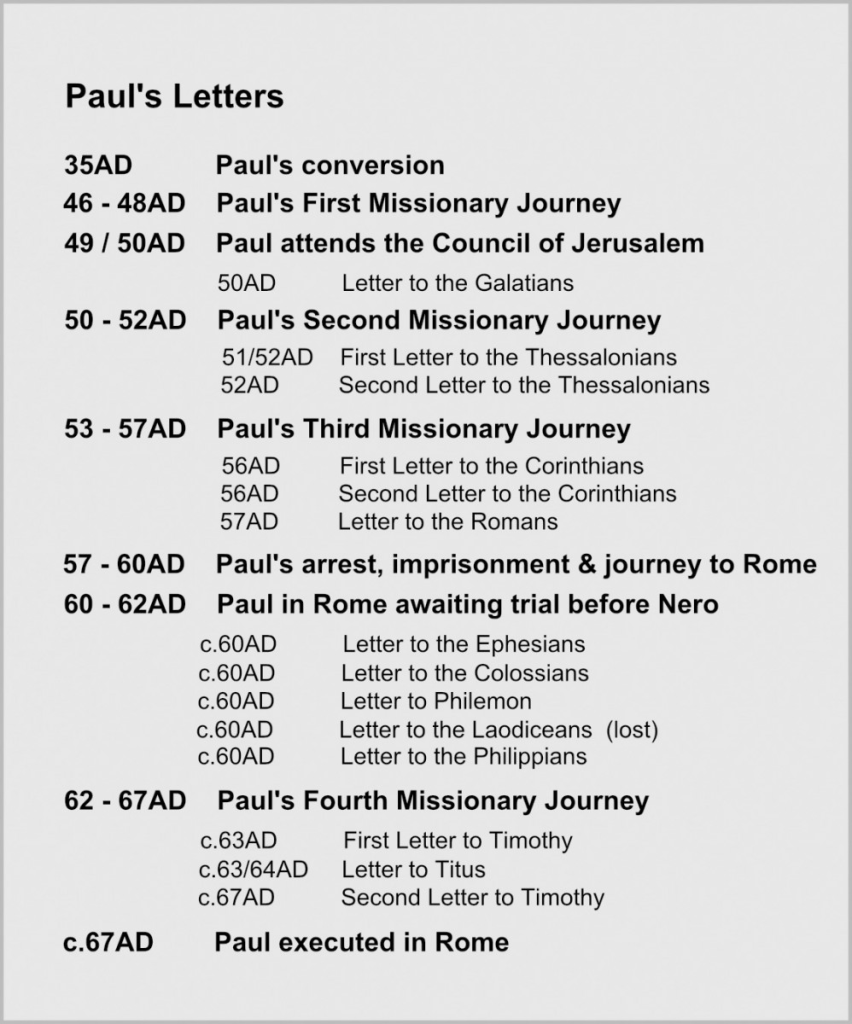
During those 2 years, he wrote the “prison epistles” of Ephesians, Colossians, Philippians, and Philemon. While some claim this letter might not have been written specifically to the Ephesian church, it clearly says it was written to the Ephesians (1:1). Of course, Paul meant for all of his letters to be passed around and read by all the churches he was associated with.

There are two distinct sections in this book. 1) Doctrinal Ch 1-3; 2) Practical Ch 4-6

This article will discuss the doctinal section by dividing the 3 chapters into several topcs.

  1. 1:3-15 SPIRITUAL BLESSINGS IN CHRIST

I found this image.

Notice the phrase “to the praise of His glory” in 1:6,12,14. This section is about what God has graciously done for those who have “heard and believed in Him (Jesus)”.

These spiritual blessings were by the “purpose of HIs will” (1:5,9,11) and “plan” (1:10). All this was due to the “grace” of God (1:6,7). We did not and cannot earn it by good works. Notice that we were “predestined” (1:5,11) and chosen before the foundation of the world.

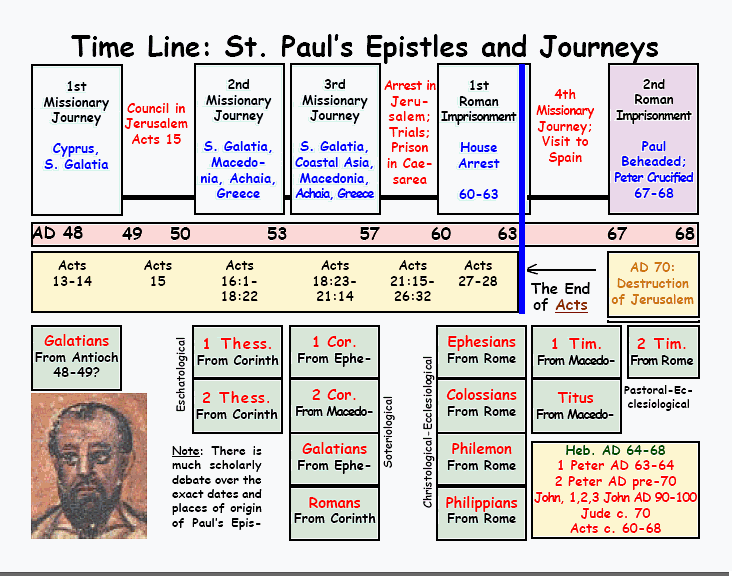
Before we get into the controversial issues in this section, just look at that list of spiritual blessings and rejoice in what God has done for you (if you are a sincere, faithful believer). Using the numbers in the image above:

#1 You were chosen by God. You didn’t choose your parents, your parents chose you. Not so with adopted chldren. The parents out of love and compasion chose to adopt you. That is how it is with us, the Father’s adopted children. Once adopted, we are fully accepted as if we were birth children. My wife and I try to make no distinction bewteen our natural and adopted children.

#2 We are blessed with being holy, not by our own goodness, but b/c God has made us holy by His grace. He has reckoned or imputed righteousness to us even though we are not righteous. The word for holy means “set apart”. The word for saint is “one who has been set apart”. We are all saints (not like the Catholic saints who have to acheive or earn sainthood by some great works). On your worst sinful day, you are still holy in the eyes of God by God’s doing, not your own. Repent, ask for forgiveness, and rejoice that you are still holy in the eyes of god. 1 Corinthians 1:30: “Because of God you are in Christ Jesus, who has become for us wisdom from God. In Christ we are put right with God, and have been made holy, and have been set free from sin”. Hebrews 10:10, 14: “And in accordance with this will [of God], we have been made holy (consecrated and sanctified) through the offering made once for all of the body of Jesus Christ (the Anointed One)”. 

#3) You have been predestined to be adopted as sons of God, children of the Father. 1 John 3:1 “See what kind of love the Father has given to us, that we should be called children of God; and so we are”. I have 10 grandchildren, 5 of whom were adopted. I have seen the joy of those adopted grandchildren as they have found joy in finding the love and security of their new moms and dads (my children) whereas they were basically orphans before their adoption. That adoption as children of the Father and thus brothers of Jesus should mean just as much to us!

#4) You are blessed with grace “in the Beloved”, i.e. Jesus. The phrase “In Christ” is used 35 times in the book of Ephesians, 11 times just in this section alone. These spiritual blessings are only available “in Christ” to those who believe. Galatians 3:26 “for in Christ Jesus you are all sons of God, through faith. 27 For as many of you as were baptized into Christ have put on Christ. 28 There is neither Jew nor Greek, there is neither slave nor free, there is no male and female, for you are all one in Christ Jesus”.The emphasis is clearly on what God has done and not what we have done. He takes a sinner and by His grace, not by our works or goodness, He makes us a cleansed sinner even though we still sin. God gets all the glory when the world looks at a cleansed sinner. Our new cleansed self is not b/c of what we have done or the good works we do as Christians. It is 100% the work of God in cleansing us by His grace and power.

#5) You are redeemed by the blood of the Lamb. The Greek word: apolutrósis: a release effected by payment of ransom. As in paying a ransom price to free a slave. This redemption price was his blood according to the riches of his grace which he “lavished” on us (1:8). “Lavished” in the Greek is perisseuó: to be over and above, to abound. In English, “lavish” means bestow something in generous or extravagant quantities. 

#6) You are forgiven of sins by God’s grace “in the Beloved”, ie. “in Christ. You don’t even have to live a sinless life. 1 John 1:7 “if we walk in the light…the blood of Jesus cleanses (present tense, continues to cleanse) us from all sin”. 1 John 2:1,2 “if we do sin, we have an adocate with the Father, Jesus Christ… the propitiation for our sins”.

#7 We know the solution to the mystery that was hidden all through the Old Testament that even the prophets did not understand (1 Peter 1:”10 Concerning this salvation, the prophets who prophesied about the grace that was to be yours searched and inquired carefully, 11 inquiring what person or time[a] the Spirit of Christ in them was indicating when he predicted the sufferings of Christ and the subsequent glories. 12 It was revealed to them that they were serving not themselves but you, in the things that have now been announced to you through those who preached the good news to you by the Holy Spirit sent from heaven, things into which angels long to look”). The mystery or hidden plan was how could God saved sinners and yet be just and punish sin which the just Judge of the universe must do? We know the answer to that mystery, i.e. that Jesus died for us, satisfying the wrath of God against our sins, allowing God to be “just and the justifier of the one who has faith in Jesus” (Romans 3:26).

#8 We are blessed to be united into the worldwide body of believers, the church, the spiritual body of Jesus, made up of different ethnic groups. We look different and live in different cultures, but we all have one thing in common, i.e. saved by God’s grace and children of God in one big spiritual family. I know it warms my heart to hear of fellow believers coming to Christ in foreign nations. It greives me to hear of brothers and sisters suffering for their faith in foreign countries as organizations like Voice of the Martyrs continual remind us of (get there monthly publication free). We have so much racial tension in America and yet there is nothing but love between us in Christ. We see the constant conflict between Muslims and Israel but then we hear of Arab Muslims being converted to Christ now worshipping with Jewish Christians in some places.
#9)You have been predestined to receive an “inheritance”, eternal life, both now (1 John 5:13 ” I am writing these things to you who believe in the name of the Son of God that you may know that you have eternal life”) and after you die physically (John 11:25 Jesus said to her, “I am the resurrection and the life.[d] Whoever believes in me, though he die, yet shall he live”). Most would love to get the news that they just inherited a billion dolars. That does’t even compare with our inheritance!

#10 You are sealed with the Holy Spirit as a guarantee that you will receive that eternal inheritance. Sealed” in the Greek: 4972 sphragízō (from 4973 /sphragís, “a seal”) – properly, to seal (affix) with a signet ring or other instrument to stamp (a roller or seal), i.e. to attest ownershipauthorizing (validating) what is sealed. “Guarantee” in the Greek: 728 arrhabṓn – properly, an installment; a deposit (“down-payment”) which guarantees the balance (the full purchase-price).

But now for the controversial topic: predestination (#3 above, Ephesians 1:5,11). The Greek word means “to predetermine, foreordain”. So, predestination is a Biblical doctrine. The question is whether God’s predestination takes away the freewill of men. Is the Calvinism doctrine of predestination Biblical? 

What verses do Calvinists use to support Calvinism?

Romans 5: 12 Therefore, just as sin entered the world through one man, and death through sin, and in this way death came to all people, because all sinned—

U

Ephesians 1:even as he chose us in him before the foundation of the world, that we should be holy and blameless before him. In love he predestined us[b] for adoption to himself as sons through Jesus Christ, according to the purpose of his will, 

L

John 10:11 “I am the good shepherd. The good shepherd lays down his life for the sheep.

I

John 6:37 “All that the Father gives Me will come to Me, and whoever comes to Me I will never cast out.”  44 “No one can come to me unless the Father who sent me draws them

P

John 10:27 My sheep listen to my voice; I know them, and they follow me. 28 I give them eternal life, and they shall never perish; no one will snatch them out of my hand. 29 My Father, who has given them to me, is greater than all; no one can snatch them out of my Father’s hand.

What are the verses that refute Calvinism?

T

Rom 5:12 death passed upon all men b/c all have sinned, not b/c all have been born inheriting Adam’s sin

Ezek 18 the soul that sinners shall die. The chapter goes on to discuss a righteous man who has an ungodly son, and vice versa. Each one shall give account for his own sins. 

U

Eph 1:13 those predestined had heard and believed the gospel. 

John 3:16 “For God so loved the world, that he gave his only Son, that whoever believes in him should not perish but have eternal life.

Acts 2:37 Now when they heard this they were cut to the heart, and said to Peter and the rest of the apostles, “Brothers, what shall we do?” 38 And Peter said to them, “Repent and be baptized every one of you in the name of Jesus Christ for the forgiveness of your sins, and you will receive the gift of the Holy Spirit.

Salvation can’t be earned, but it is “conditional” based on the response of the hearer of the gospel.

L

2 Corinthians 5:15 says, “He died for all, so that those who live would no longer live for themselves, but for Him who died and was raised for their sake”.

1 John 2:2: “Christ is the propitiation for not only the sins of those who are believers, but of the whole world”. 

Revelation 3:20 KJV Behold, I stand at the door, and knock: if any man hear my voice, and open the door, I will come in to him, and will sup with him, and he with me.

I

Ac 7:51 “You men who are stiff-necked and uncircumcised in heart and ears are always resisting the Holy Spirit; you are doing just as your fathers did.”

Galatians 5:You are severed from Christ, you who would be justified[a] by the law; you have fallen away from grace. 

2 Peter 2:20 For if, after they have escaped the defilements of the world through the knowledge of our Lord and Savior Jesus Christ, they are again entangled in them and overcome, the last state has become worse for them than the first. 21 For it would have been better for them never to have known the way of righteousness than after knowing it to turn back from the holy commandment delivered to them. 

Hebrews 6:For it is impossible, in the case of those who have once been enlightened, who have tasted the heavenly gift, and have shared in the Holy Spirit, and have tasted the goodness of the word of God and the powers of the age to come, and then have fallen away, to restore them again to repentance, since they are crucifying once again the Son of God to their own harm and holding him up to contempt. 

Often verses in the Bible “seem” to contradict each other but we know the Bible is the inspired word of God and it cannot contradict itself. So seemingly contradictory passages must be harmonized. For example, how can John 10:27-29 (above under “P”) which supports Calvinism teaching that one of he elect can’t fall from grace be harmonized with Galatians 5:4 (above under “P” verses that refute Calvinism) which clearly says that some of the Galatian believers had “fallen from grace”? The answer s in taking a closer look at John 10:27-29. Verse 27 says “my sheep hear my voice, they listen and they follow me”. The security of the believer in Jesus here is clearly for those sheep who continue to follow Jesus, is it not? This doesn’t promise “once saved always saved” for those who cease following Jesus. How can Calvinists just ignore Galatians 5:4 and 2 Peter 2:20-21?

So how do some try to explain the apparent contradiction? Some would simply say, “that believer who goes back into sin and rejects faith in Jesus ” never was really saved, never was really one of the “elect”. But Galatians 5:4 says they had “fallen from grace”. You can’t fall from a horse that you were never on. You can’ fall from grace if you were never in grace. If “irresistable grace” (the “I” of Calviinism) was working on a perso to enable them to believe and be saved in the beginning, why would that “I” not keep them from ceasing to believe later in their spirtual journey? This type of trying to explain away the obvious teaching of the Scriptures leads to other issues. Can a believer ever be assured of his salvation if it might be that “he was never really saved” if he falls later? Yet, the preacher will tell him that he has the assurance of his salvation once he believes. Arminians who reject Calvinism and yet say they believe in eternal security of the believer often say “they were never really saved” if one “backslides” back into sin, and yet they assure the one who gets saved that he can have the full assurance of his salvation. True Calvinism would just say this discussion is meaningless. God’s power can save the elect even if they fall back into sain b/c salvation is just not by human goodness or works. God’s grace is so powerful that it can saved the elect even if they fall back into sin (whether they ever repent and change or not). I think that is the teaching of Calvinism, but there are probably Calvinists who have their own opinions on this.

Bottom line, why is it so hard to just harmonize John 10:27-29 and Galatians 5:4 and accept that initial salvation is conditional based on a person believing in Jesus (salvation is by grace through faith, not of works Ephesians 2:8-9) but continued salvation after that is also conditional on a sincere, working faith (James 2:24 you see that a man if justified by works and not faith alone). Thus one can truly be saved and have the full assurance of salvation by grace only to lose that salvation if he “falls from grace” through disobedience and loss of faith in Jesus. Of course, we would never know when one “crosses that line” into falling from grace (only God determiines that) but the line does exist according to Scripture.

Of course, that gets back to the “U” (unconditional election) of Calvinism. We know that one is not saved “on the basis of his works or what he does”, but that does not mean that there are no conditions one must submit to in order to be saved. As John 3:16 and Acts 2:38 show in the verses that refute Calvinism, two things are obvious: 1) Johne 3:16 Salvation is available to “whosover” chooses to be saved (not just an elect group arbitrarily chosen by God to the exclusion of all others to show God’s sovereign power); 2) Acts 2:38 they asked “what must we do?”. Why didn’t Peter tell them, “you are totally depraved due to the original sin of Adam (the “T” in Calvinism), you are unable to even believe or do anything in order to be saved, you need to just sin at the mourners’ bench and cry out to God for some sign that you are in the elect and if you don’t get that sign, sorry, no salvation for you? That is basically what Calvinism would tell someone to do although I’m sure many Calvinists modify that. It is obvious that God has placed “conditions” that one must meet in order to be saved even though salvation is 100% by grace. Those initial conditions to be saved are belief, repentance, confession, and baptism. The condition to remain saved by grace is a sincere, working faith (not a perfect faith or a sinless faith). It is obvious that the invitaion to salvation is available to anyone and not just the ones that God has predetermined to be saved (the “L” limited atonement, i.e since only the predestined elect are going to be saved, then Jesus only died for the elect and not ror all men which 1 John 2:2 (above) refutes). Of course this is the Arminian position that says that salvation is by grace and yet is consitonal based on the freewill choices of men on whether to believe and obey Jesus or not.

Is Calvinism really a dangerous doctine? Yes and no. Many true Calvinists or even Arminians who have a modified view of “once saved always saved” continue to believe, obey, and bear the fruit of the Spirit and are truly saved (even if they believe that they could backslide and yet still be saved (Calvinism)or even if they believe that there is the possiblity that they never were really saved if they do backslide (Aminianism)). So in the end, for those believers who are “faithful unto death”, the whole Calvinism vs Arminianism discussion is bunch of theological words. They just want to live for Jesus by God’s grace, assured of their salvation. So for them Calvinism is not a dangerous doctrine even if it is wrong.

But for many, Calvinism could be dangerous and that is the point of writing this long article trying to refute Calvinism. How could it be dangerous? 1) It could make someone believe that, even if he belleves he is one of the saved elect, that he can continue in a blatant sinful life that he will be saved anyway. Paul said, “shall we continue in sin that grace may abound?” (Romans 6:1). I think Paul anticipated someone saying that b/c he had just said in Romans 5:20 “where sin increased, grace abounded all the more”. If “P” of Calvinism is false and a person can fall from grace, then Calvinism could be fatally dangerous to the eternal salvation of such a person. 2) If could make someone quit tryiing to get saved if he sincerely goes to the mourners’ bench and yet gets no sign that the Holy Spirit is enabling him to believe and be saved. He feels nothing, there is no miraculous direct operation of the Spirit confirmation. He goes home discouraged, thinking there is no hope for his salvation. I have personally seen this happen to someone. That person was a sincere, hard working family man of impeccable character. He was taught the Calvinistic view of being saved, went to mourners’ bench, felt nothing and went home discouraged, thinking he was not one of he elect and that there was nothing he else he could do to be saved. I showed him Acts 2:38 and he said, “you mean I can simply choose to believe, repent, and be baptized” and be saved and have the assurance that I am saved?” I said “that’s what Peter an apostle said, that’s what the 3,000 did and they were added to the church, which is the saved (Acts 2:47), and that’s what you can do to be saved and know that you are saved”. He was so joyful. He was baptized that night and enjoyed his savlation by grace for many years until he died a few years ago. I thank God that He led that man and me to that conversation.

Do you see why I say that Calvinism can be a dangerous doctrine? Die hard Calvinists will read this article and immediately start refuting my points. Many Calvinistic preachers of Calvinistic churches would probably lose their position if they refuted Calvinism. Or maybe they just truly believe that TULIP is Biblical. My hope is that this article will help someone who is confused by Calvinism. Maybe someone like my friend who is searching for salvation but can’t find it b/c of Calvinism. Or just someone who thinks the Bible is full of contradictions that even the theological scholars cannot agree on.

I truly hope that the first part of this article will warm your hearts with the spiritual blessings that we have in Jesus. I hope the 2nd part about Calvinism will not take away from your Christian joy if your are indeed living for Jesus regardless of you doctrinal position on the matter. God bless your reading of this article. I pray that I have “spoke the truth in love” (Ephesians 4:15).

Ezekiel

Discussion

  1. Ezekiel was carried in exile to Babylon in 596 BC (the 2nd deportation by Nebuchadnezzar), a decade before the fall of Jerusalem in 586 BC. He began prophesying 5 (1:2) years before Jerusalem fell and prophesied many years after the 586 BC.
  2. His first vision in Babylon is of the 4 living creatures (1:5), the wheels, the throne, a man surrounded with a radiant glory, and a rainbow. Compare this with Rev 1. The 4 living creatures are probably symbolic of God’s agents of judgment on Judah, Israel, and the nations. They have eyes to see all that is going on over the earth. They can act rapidly.
  3. God appointed him as a watchman (3:17) to warn the people to repent. He tells him to eat a scroll (3:1) that has bad predictions on it. Compare with Rev 10:9,10 where John is told to eat a little book that has the predictions of the book of Revelation.
  4. He does several sign acts like making a siege on a small brick model of Jerusalem (4:1-3), lying on his side 390 days and then 40 days, eating food cooked over cow dung (4:12). 
  5. In ch 8 he has a vision of what is going on back in the temple (8:16) in Jerusalem: 70 elders worshiping idolatrous images, women worshiping Tammuz, 25 men worship the sun. 
  6. The glory of the Lord departed from the temple (10:18) and from Jerusalem (11:23) due to the idolatry of the people, but there will be a remnant saved. 
  7. He does more signs: carrying baggage (12:3) for exile around, eating food while quaking (12:18).
  8. In ch 13 he denounces the false prophets (13:2) who say Jerusalem will not be destroyed. 
  9. Even Noah, Daniel, and Job could not spare Jerusalem’s fate (14:14). 
  10. He pictures Judah as an unfaithful wife whom he rescued from her birth, groomed her, married her, but she has become a harlot (16:28), committing adultery with the gods of other nations (Chapter 16). He says her older sister is Samaria (Israel) and he younger sister is Sodom (16:46). 
  11. In ch 18 he makes it clear that they are not being punished for the sins of their fathers, but for their own sins. That principle is stated in 18:20, “the soul that sins shall die. The son will not bear the punishment for the father’s sin, nor the Father bear punishment for the son’s sins.” 
  12. In ch 19, he gives a lamentation over the last 3 kings of Judah. 
  13. In ch 20 God refuses to be inquired of by the elders (20:3). Ezekiel reminds them of their idolatry in Egypt, rebellion in the wilderness, and idolatry in Canaan, and current idolatry. 
  14. In ch 21 Babylon will be a sharpened sword (21:9,19) that God uses to destroy Judah. 
  15. In ch 23 he tells of 2 harlot sisters: Oholah, which is Samaria (23:4), and Oholibah, which is Jerusalem (23:4). Both committed harlotry with gods of the nations and will be punished. 
  16. Why do you think God would not allow Ezekiel to mourn the death of his wife? 24:15-17 
  17.  Ch 25-32 He gives prophecies against the surrounding nations: Ammon, Moab, Edom, Philistia, Tyre ch 26-28 (Isaiah 23: 1st by Nebuchadezzaar, later by Alexander), Egypt ch 29-32 (defeated by Necuchaddezzar in 572 and 568 BC; 29:18). 
  18. In 33:21-22 he gets word from refugees from Jerusalem that the city has fallen. The people will hear but not heed Ezekiel, but when his prophecies “come to pass-as surely they will- then they will know that a prophet has been in their midst” (33:33).
  19. In ch 34 he condemns the shepherds (34:1) of Israel for not feeding and taking care of the flock. He predicts that God will set over them a shepherd, David (Jesus) (34:23,24). Jesus the good shepherd (John 10), chief shepherd (1 Pet 5:4), great shepherd (Heb 13:20) 
  20. He predicts that a remnant will be restored and God will put His Spirit in them to give them a new heart to obey Him. This is Messianic under the shepherd David (35:25-27).
  21. In ch 37 he sees the vision of the valley of dry bones (37:1) (i.e. dead spiritual Israel). But God puts His Spirit (37:14) in them, they grow flesh and come out of graves and come alive. This has to be Messianic when God poured out His Spirit on all flesh. Joel 2:28; Acts 2. 
  22. In ch 37:15-28, he also unites 2 sticks, Israel and Judah, cleanses them, and makes David as their king (Jesus), makes an everlasting covenant and sets his sanctuary (37:28) in their midst. Compare this with Rev 21:1-3 where the New Jerusalem comes down to earth and God puts his tabernacle (sanctuary) among men and dwells among them. This is the church, 21:9. 
  23. Ch 38, 39 the. Messianic destruction of all of Judah’s enemies is represented by Prince Gog of Magog who come up to destroy Israel (38:14-16) in the “latter years” (38:8) but are destroyed by God. God will restore the fortunes of Israel (39:25) and pour out His Spirit (39:29) on Israel. Again, this is Messianic, Joel 2, Acts 2. In Rev 20:8 Gog is Rome attacking Jerusalem. 
  24. In ch 40-46 he gets a vision of a new temple (40:5) to be built one day. It will be larger and far more glorious than the temple of Solomon. The glory of the Lord will fill this temple again (43:1-5). That glory has been gone since the temple was destroyed. 
  25. Levitical priests will be offering animal sacrifices in this new temple (42:13; 43:18-27). For those who believe that this is to be a temple rebuild one day when the Messiah comes, this is a real problem. Hebrews teaches us that the priesthood of Levi and animal sacrifices have been done away, so surely God will not one day restore those. 
  26. There is a Prince who offers animal sacrifices and goes in and out of the temple (Chapter 46). Would this not be David the prince of 34:24; 37:25? Again that would be Jesus. Hebrews teaches us that Jesus our King offered his own blood, not animals. This is a real problem for those who think Ezekiel is predicting a physical temple to be built one day and Levitical priests offereing animal sacrifices. 
  27. This new temple must surely be figurative of the temple that the Branch (Jesus) would build one day (Zechariah 6:12-15). He is both king and priest on His everlasting throne. That temple will be the church, a spiritual temple (1 Cor 3:16;. 6:19) where God dwells (Ephesians 2:22). Notice in Rev 21:22 there is no temple in the new Jerusalem, the church (i.e. no physical temple). 
  28. In ch 47, Ezekiel sees a river 47:5 flowing out from this new temple. It provides life for the fish and there are trees on its banks that bear fruit year round for the healing of the nations. Compare this with Rev 22:1-5, a river of life flowing from the church temple of Rev 21. 
  29. The book ends with the naming of this new Jerusalem, “The Lord is there” (48:35). In Rev 21:1-3 God will make his abode among men and dwell with them in the church.
  30. Extra discussion: What is the role of shepherds in the church today? Acts 20:17-38 where they are called elders, shepherds, and overseers. 1 Timothy 3:1-7; Titus 1:5-9 give the qualifications for elders. Hebrews 13:17 gives their responsibility. 1 Pete 5:1-3 stresses leadership by example not dictatorship. Eph 4:11 lists elders as pastors and teachers (one office); no doubt miraculously equipped in the 1st century. How much authority do elders even today since they are not inspired? Do we still need elders? Most elderships are boards of directors.

Habakkuk

Read the overview of Habakkuk from Chuck Swindoll. https://insight.org/resources/bible/the-minor-prophets/habakkuk

Habakkuk was recognized as a prophet to Judah. He prophesied after the fall of Assyria in 612 BC since he doesn’t mention Assyria at all. He probably then prophesied in the latter reign of Josiah or during the reign of Jehoiakim, one of the last kings of the southern kingdom of Judah. The reforms of Josiah were “too little, too late” to saved Judah from punishment. The book is unique in that it is a dialogue between Habakkuk and God. Twice, Habakkuk questions God about what God is doing or not doing, and twice God answers him (ch 1,2). It concludes with a confession of faith (ch 3).

Does injustice in society bother you? Does it bother you that so many evil people seem to get rich while the righteous never seem to “get ahead”? Does the violence, the mass shootings, bother you? Does it bother you that “the poor get poorer and the rich get richer” in life? Well, all these things bothered Habakkuk. He complained to God that “justice is never upheld”. He has been preaching to the people of Judah, condemning them for their sins, but after he does that, he goes to God in private, questioning Him about why He doesn’t punish the wicked. God answers him: “The wicked will be punished. I am sending the Chaldeans (Babylons) to punish the wicked in Judah. God did that when Babylon invaded Judah and destroyed the temple and Jerusalem in 586 BC.

But that answer bothered Habakkuk. 1:13 “Why are You silent when the wicked swallow up Those more righteous than they?” Ok, Judah deserved to be punished for their sins. But, he questions God, how can God use those who are more evil than Judah to punish Judah? The Babylonians worshiped many false gods. They were known for their immorality. The harlot (which was Jerusalem) in the book of Revelation had “Babylon” written across her forehead (Rev 17), a symbol of the immorality of Jerusalem. To use a nation to punish Judah that was more wicked and idolatrous than Judah really bothers Habakkuk.

Can you imagine this? God decides to punish the U.S. for our immorality, for forsaking our Judeo-Christian values, so He sends radical terrorists to take over our country. They will set off bombs in our major cities and overthrow our government. These terrorists are idolaters or, maybe atheists. How would you feel if that happened? Do you remember how we felt after 9/11 attacks. We look at America and we are grieved by the sexual immorality and violence in our country, by that lack of respect for the word of God, by the LGBTQ movement that seems to be taking over, etc. We know that our nation needs to be humbled. We know we need a grass roots revival like the Great Awakening. But for God to use idolatrous or atheistic savage terrorists to punish us? We may be wicked, but most of our people still believe in the one true God and most are still good people. Maybe this helps us understand how Habakkuk felt about God using the Babylonians to punish Judah.

“This account of wrestling with God is, however, not just a fragment from a private journal that has somehow entered the public domain. It was composed for Israel. No doubt it represented the voice of the godly in Judah, struggling to comprehend the ways of God. God’s answers therefore spoke to all who shared Habakkuk’s troubled doubts. And Habakkuk’s confession became a public expression — as indicated by its liturgical notations” (taken from Biblestudytools.com). Habakkuk waits for God’s answer to this 2nd question, expecting to be reproved for his questioning of God. 2:1 I will stand on my guard post And station myself on the rampart; And I will keep watch to see what He will speak to me, And how I may reply [r]when I am reproved”. God then makes a prediction and tells Habakkuk to write it down. 2:2-3 Then the Lord answered me and said, “Record the vision And inscribe it on tablets, That [s]the one who [t]reads it may run.“For the vision is yet for the appointed time;It [u]hastens toward the goal and it will not [v]fail. Though it tarries, wait for it; For it will certainly come, it will not delay”. He then predicts that He will indeed one day punish the Babylonians (ch 2). He gives 5 “woes” that will befall the Babylonians, condemning their brutality, greed, and idolatry. That will be fulfilled when the Medes and Persians defeat Babylon in 539 BC. The atheistic Communist Stalin defeated the atheistic Nazi Hitler’s invading forces in Russia, which was a major factor in the fall of Hitler. Many worried about the power of Stalin, and rightfully so. But no one would have expected or predicted the fall of the mighty Russian nation that happened many years later. Habakkuk’s prediction of the fall of the mighty Babylonian Empire, which had just defeated Assyria in 612 BC, is a critical prophecy. Some would even live to see Babylon fall in 539 BC some 50 years later after Habakkuk made this prediction.

Habakkuk says, 2:4 “Behold, as for the proud one, His soul is not right within him; But the righteous will live by his [w]faith”. He is encouraging the righteous in Judah to trust that God will eventually execute justice and punish the wicked even if that doesn’t appear that God is doing that at the time. In other words, quit questioning what God is doing and just trust Him. I don’t know where the U.S. is headed in the future. Will we become a secular state with very little respect for God? Will God punish us with another great depression to humble us, or more terrorist attacks? Will God allow radical Muslim terrorists to overthrow us? Will we destroy ourselves with corruption and immorality as the Romans did? I don’t know. We can only trust God that He will eventually execute justice and punish the wicked, whether in this life or the next. 2:20 “But the Lord is in His holy temple. Let all the earth be silent before Him.” Habakkuk tells us to quit questioning God, to be silent. Do you remember the little song using this verse. We sang that song to get children to be quiet in church services or VBS. Or we sang it in church to get people to be reverent during the service. Not quite the context as it originally used in Habakkuk.

Paul cites Hab 2:4 in Romans,” For I am not ashamed of the gospel: for it is the power of God unto salvation to every one that believes; to the Jew first, and also to the Greek. For therein is revealed a righteousness of God from faith unto faith: as it is written, “But the righteous shall live by faith” (1:16-17). Just as in Habakkuk, he is encouraging the righteous remnant to trust in God for their salvation through the saving gospel of Jesus Christ. This verse in Romans had a tremendous impact on Martin Luther, the founder of the Reformation Movement. I encourage you to stop here and read “Luther’s breakthrough in Romans”. https://lutheranreformation.org/theology/luthers-breakthrough-romans/ It introduces the term “infused grace” from Catholicism. God infuses or puts grace in believers so that by their righteous actions (penance and the rituals of Catholicism) can become righteous. That is a works based righteousness. Luther, using Hab 2:4, came to realize that righteousness is “imputed righteousness” where God reckons us to be right in his eyes, not on the basis of our works, but on the basis of our faith, our trusting in what Jesus did for us on the cross. His comment on this verse: ‘The righteous shall live by faith.’ Now I felt as though I had been reborn altogether and had entered Paradise. In the same moment the face of the whole of Scripture became apparent to me. My mind ran through the Scriptures, as far as I was able to recollect them, seeking analogies in other phrases, such as the work of God, by which He makes us strong, the wisdom of God, by which He makes us wise, the strength of God, the salvation of God, the glory of God. Just as intensely as I had now hated the expression ‘the righteousness of God,’ I now lovingly praised this most pleasant word. This passage from Paul became to me the very gate to Paradise.” [6] He had come to hate righteousness because he could never do enough penance or rituals to obtain it, but now he could love the fact that God makes us righteous simply through our faith. This verse will change the lives of all who are living under some legalistic works based system of religion. My own Church of Christ movement put so much emphasis on correct doctrine and working faith that it became similar to the Catholicism that Luther was raised in. We ended up leaving people to trust in their knowledge and works rather than the grace of God for their salvation. We seldom stressed that we are “saved by grace through faith and not works” (Ephesians 2:8,9) for fear that someone will adopt the Calvinistic “can’t fall from grace” error. Our teaching left believers with very little assurance of their salvation even though we worked hard to try to obtain it. It also caused many splits over minor doctrines that we made heaven/hell issues in our zeal for obedience to the truth. Many have “discovered grace” and felt the same experience that Luther did. They now have full assurance of their salvation. They no longer divide over minor issues, trusting that God’s grace will save us even though we disagree on minor issues. I remember how excited I was to get into a deep study of the book of Romans in the school of preaching that I attended for 2 years. Few east of the Mississippi River had boldly taught the message of Romans, but my Romans teacher did, and it changed my theology drastically.

Chapter 3 concludes with Habakkuk’s reaction to God’s 2nd answer about punishing the Babylonians one day. 3:2 Lord, I have heard [an]the report about You and[ao]I fear. O Lord, revive Your work in the midst of the years,
In the midst of the years make it known; In wrath remember [ap]mercy.” 3:16-10

I heard and my [ay]inward parts trembled,
At the sound my lips quivered.
Decay enters my bones,
And in my place I tremble.
Because I must wait quietly for the day of distress,
[az]For the people to arise who will invade us.
17 Though the fig tree should not blossom
And there be no [ba]fruit on the vines,
Though the yield of the olive should fail
And the fields produce no food,
Though the flock should be cut off from the fold
And there be no cattle in the stalls,
18 Yet I will exult in the Lord,
I will rejoice in the God of my salvation.
19 The Lord [bb]God is my strength,
And He has made my feet like hinds’ feet,
And makes me walk on my high places.

He can only trust God and wait for Him to act. He dreads the invading Babylonian army that will destroy the temple and Jerusalem and take Judah captive for 70 years. He can only beg that God be merciful as He executes His wrath on Judah. Somehow, he even comes to “exult and rejoice” in God in spite of the impending judgment that is coming on Judah. No doubt he lived to see the fall of Jerusalem and yet had faith that in the long run God would do what was best. Even the righteous remnant in Judah would suffer, but they could rejoice in their suffering. The righteous remnant of believers all across the globe can rejoice in their suffering. Many persecuted believers in Muslim and atheistic countries can rejoice in the message of Habakkuk.

So, when your eyes see things in life where you question why God allows bad, evil stuff to happen, and you begin to have doubts about God’s very existence or doubts about His character (is He a God of justice), then read the book of Habakkuk. Be silent and trust God. Try to rejoice in God. Try to assure others that God is still the one true God. Don’t feel guilty about your doubts and questions you are asking God. Study the Bible to find all the answers you can find.


Zephaniah

I continue to be impressed with Swindoll’s summaries of the books of the prophets in the OT. Read his overview of Zephaniah at this link. https://insight.org/resources/bible/the-minor-prophets/zephaniah

Having read that, let’s do this article! Zephaniah is the great great grandson of the good king Hezekiah of Judah. Zephaniah and Habbakuk are the only two prophets who prophesied only to the southern kingdom of Judah after the Assyrian captivity of the northern kingdom of Israel (722 BC) and yet before the captivity of Judah to Babylon (586 BC). The other. major and minor prophets prophesied to both kingdoms (like Isaiah, Hosea, Amos, Micah) or to Judah some after 586 BC (like Jeremiah, Ezekiel, Daniel) or to some foreign nation (like Jonah, Nahum). He prophesied probably in the latter period of Josiah (some think about 630 BC), still before the fall of Assyria to Babylon in 612 BC (2:13 he predicts the fall of Assyria so it had not fallen yet). He also predicts the judgment of many other nations which would apparently be in the future at the hands of the Babylonians as they took world power from the Assyrians. Josiah was a good king of Judah whose reforms led to the discovery of the book of the Law of Moses which had been lost due to idolatry and neglect. Josiah had the book read to all the people and called on them to repent. Maybe Zephaniah is following up on that.

Zephaniah 1:7 [e]Be silent before the Lord [f]God! For the day of the Lord is near. 1:14 Near is the great day of the Lord, Near and coming very quickly;
Listen, the day of the Lord!” The day of the Lord is a day of judgment on Judah. The Babylonians would carry the first captives to Babylon in 606 BC, the second captives in 596 BC, and the last group in 586 BC when they destroyed the city of Jerusalem and the temple. So indeed the day of the Lord was near and coming very quickly. The NT writers talk about a day of the Lord, a judgment day on the nation of Israel, and the 2nd coming of Jesus as being “near” (Revelation 1:3; 2:10; James 5:8; 1 Peter 4:7), “in a very little while” (Hebrews 10:37). Jesus had predicted the destruction of Jerusalem and the temple, and judgment on the Jews that the Romans would fulfill in 70 AD (Matthew 24) within the generation of those to whom he was speaking (Matthew 24:34). Jesus even predicted His coming while some to whom he was speaking would still be alive. I am amazed when people say that the word “near” could be “near in God’s time frame” and thus thousands of years since “with the Lord a day is like a thousand years ” (2 Peter 3:8). A day in God’s time frame is like a thousand years, or even a million years, since He is not bounded by time. But when Zephaniah or the NT writers predicted a day of the Lord that was near, he/they were not speaking in God’s time frame. It is obvious that he/they were speaking in the time frame of the people he/they were speaking to.

But back to this judgment that was imminent when Zephaniah prophesied. The people of Judah were worshiping idols, even the god Milcom (probably the god of the Ammonites). They might even have offered their first born to the god Molech (of the Moabites) as the evil king Manasseh of Judah did. God will judge them and send them into Babylonian captivity for 70 years (606-536 BC) to stop their idolatry. It is interesting that, while the Jews who later returned from captivity still were very sinful and disobedient to God (Malachi is a good picture of this), there is no mention of idolatry among the Jews after their captivity in Babylon all the way down to the times of Jesus. This cessation of idolatry was important to the coming of Jesus in the first century AD. At least the Jews in Jesus’ time were still believing in the one true God, Yahweh, and not idolatrous. That would have made it much more difficult when Jesus came as the Son of God (which god?), or when he claimed to be equal to the Father (John 5:18), or when Thomas called him “my Lord and my God” (John 20:28-29). If they were still idolatrous, the thought would be, “which god”?

In chapter 3, he condemns their princes, judges, prophets, and priests. Josiah’s reforms had helped, but the corruption within Judah and her leadership was too deeply rooted to have a grass roots revival that might spare her from God’s judgment. But there are some who are “humble and lowly” (3:12). There will also be a remnant (2:7,9; 3:13) for whom God will “restore your fortunes” (2:7; 3:20). We know a remnant did return from Babylonian captivity in 536 BC (actually 3 returns to rebuild the temple, reform the keeping of the Law, and the rebuilding of the walls). This might be what Zephaniah is referring to.

So what application do we get from this book, if any? We might look at the corruption in the leadership and people in our nation that was once built on Christian values. We might wonder if God is about ready to send some judgment on our country. Or we might look at God’s people, the Christians, and the churches in this great country. Have we become idolatrous with the worship of pleasure, or our possessions, our materialism and greed, our hobbies, our careers? Has the leadership within the church become corrupt? I mean, we are talking about the sins of God’s people and yet today even some church leaders are telling God’s people that things like homosexuality, gay marriages, etc. are not even sinful! We are trying to get God’s people to obey God’s word and yet some church leaders are telling God’s people that the writings of the NT are not really the words of God, just the words of men. 1 Thessalonians 2: 13 “For this reason we also constantly thank God that when you received the word of God which you heard from us, you accepted it not as the word of men, but for what it really is, the word of God, which also performs its work in you who believe.” The church has often become more like a religious business to be run with big budgets and professional staffs and expensive buildings. May God help us to humble ourselves and return to God.

Jeremiah

As I did with Nahum, I refer you to Chuck Swindoll’s overview of Jeremiah at this link. https://insight.org/resources/bible/the-major-prophets/jeremiah

Now, I will follow up with a few thoughts of my own after you have hopefully read that overview. Jeremiah began prophesying at the age of 20 in 627 BC and prophesied until 582 BC. His scribe Baruch would write down all his words (35:32; 45:1). He began while Assyria was still a world power and a threat to Judah, just as they had been in the days of Hezekiah in 701 BC although Nahum (652 BC) had predicted the fall of Ninevah (Ninevah would be destroyed in 612 BC by the Babylonians, Medes, and Persians). So he saw Ninevah destroyed, and Babylon took Assyria’s place as the world power. He began during the reign of the good king Josiah of Judah (640-610 BC). Josiah was the king who began to reign at the age of 8, the one who found the book of the Law that had been lost due to lack of use, and made many reforms.

The last 4 kings of Judah were either sons or grandsons of Josiah.

Josiah’s sons: 1 Chron. 3:15 lists Josiah’s four sons in this order:

  1. 1) Johanan (oldest, but mentioned only here in Scripture)
  2. Jehoiakim
  3. Zedekiah
  4. Shallum = Jehoahaz

But the sons did not rule in their birth order. Here is the record, additional names included:

  1. Jehoahaz (Josiah’s #4) = Shallum; reigned 3 months (608)
  2. Jehoiakim (Josiah’s #2) = Eliakim; reigned 11 years (608-597)
  3. Jehoiachin (Josiah’s grandson, son of #2, Jehoiakim) = Joiachin = Jeconiah = Coniah; reigned 3 months (597). According to the Hebrew Massoretic text, he was 8 years old when he began to reign. But a comparison of 2 Kings 24:8 with the Septuagint (Greek) of 2 Chron. 36:9 indicates that he was 18 years old when he began to reign.
  4. Zedekiah (Josiah’s #3) = Mattaniah; reigned 11 years (not the brother of Jehoiachin as in 2 Chron. 36:10; cf. 1 Chron. 3:16 where it is stated that Jehoiachin (Jeconiah) had a son named Zedekiah; 2 Kings 24:17 rightly identifies Zedekiah as uncle to Jehoiachin. NOTE: Ezekiel dates his prophecies (8:1; 20:1, etc.) to the exile of Jehoiachin, not to the reign of Zedekiah. In 2 Kings 25:27 Jehoiachin is still referred to as king.

The book of Jeremiah is difficult to follow because it will skip back and forth between Jeremiah prophesying to Jehoiakim, Jehoiachin (Coniah), and Zedekiah (notice Jeremiah 21-22 all 3 kings are mentioned).

As you can see, things moved into the final stages for Judah after Josiah was killed in a battle against the Egyptians. Pharoah Neco did not want to fight him, but Josiah forced the fight and was killed at Megiddo. Josiah had made reforms but for Judah, it was “too little, too late”. The idolatry and sins of Judah were too far rooted to get out. God used Jeremiah to predict to the last kings of Judah that Judah was going into Babylonian captivity. He even encouraged Zedekiah to not rebel against Babylon, but he did anyway, which led to the destruction of Jerusalem and the temple and the carrying of Judah into Babylonian captivity in 586 BC.

So Jeremiah lived to see the fall of Assyria in 612 BC, but then he also saw the 1st deportation in 606 BC, the 2nd deportation in 596 BC, and the fall of Jerusalem and the 3rd deportation into Babylon in 586 BC. He would see King Nebuchadnezzar of Babylon appoint Gedaliah as governor of Judea after Jerusalem fell, only to see some Jews assassinate Gedaliah. Fearing reprisal from Nebuchadnezzar, they fled to Egypt for safety, carrying Jeremiah with them, although he warned them not to flee. Most think Jeremiah died in Egypt around 582 BC.

In chapter 7, he condemns Judah for idolatry, immorality, and injustice (oppression of the poor), saying that Judah had broke their covenant with God (11:8). Even the intercession of Moses and Samuel, if they had been living and could approach God, would not avoid Judah’s fall to Babylon (15:1). He is told not to marry lest his wife and children perish at the hands of the cruel Babylonians (16:1). Passhur the priest had him beaten and put in stocks where he was mocked (ch 20). He mourned and cursed the day of his birth. He will come to be known as “the weeping prophet”. He makes it clear to Judah that Babylon will take them into captivity for 70 years because of their idolatry (ch 25), although in the same chapter he predicts that Babylon will be destroyed at the end of the 70 years.

In the reign of Jehoiakim, he says that Judah has refused to listen to the warnings of “My servants the prophets”. 26: And you will say to them, ‘Thus says the Lord, “If you will not listen to Me, to walk in My law which I have set before you, to listen to the words of My servants the prophets, whom I have been sending to you [q]again and again, but you have not listened”. Jeremiah was arrested and sentenced to death (ch 26), but was released. Instead, another prophet, Uriah, who had also prophesied against Judah, fled to Egypt but was brought back to Jehoiakim who killed him. In chapter 36, Jeremiah’s predictions against Jehoiakim were written on a scroll which Jehoiakim cut with a knife and burned, although Jeremiah had Baruch write them again on another scroll.

During Zedekiah’s reign, the false prophet Hananiah predicted that Judah would be freed from the yoke of Babylon within 2 years (ch 28). Jeremiah told him that would not be true, and that he would die within the current year, which he did. In the meantime, Jeremiah assures those Jews already in Babylon (taken during the 1st or 2nd deportations in 606 BC and 596 BC) that they would be safer in Babylon rather than joining in the rebellion against Babylon that was happening in Palestine (ch 29). Also in the reign of Zedekiah, Jeremiah is arrested and put in a dungeon, and then later thrown in to a cistern, but he is rescued at Zedekiah’s orders by an Ethiopian eunuch (ch 37,38). Zedekiah then has a private conversation with Jeremiah. Jeremiah gives him one last chance to surrender to the Babylonians and save Jerusalem from falling, but Zedekiah is afraid of his officials and does not surrender. After an 18 month siege of the city, Jerusalem fell and was destroyed by the Babylonians and the temple destroyed (ch 39; ch 52). Zedekiah flees the city, but is caught. He gets to see his sons killed before his very eyes, and then the Babylonians put out his eyes and carried him captive to Babylon. Jeremiah is treated kindly by the Babylonians and entrusted to the newly appointed governor Gedaliah.

Chapters 40-45 occur after the fall of Jerusalem in 586 BC. Gedaliah is assassinated by some Jews, and they flee to Egypt. Jeremiah warns them not to go, but they go anyway and taken Jeremiah with them. As already stated, we don’t know their fate but can only assume that they and Jeremiah perished in Egypt. At some point before his death, he predicted that Babylon would fall to the Medes at the end of the 70 years in captivity (ch 51). The Medes and Persians did destroy Babylon in 539 BC, which allowed the Jews to make 3 returns from captivity to rebuild the temple, reform the Law keeping, and rebuild the walls of Jerusalem. In the 37th year of King Jehoiachin’s exile to Babylon, he was released from prison there and treated kindly till his death.

Jeremiah not only promises a return from Babylonian captivity, but he also predicts the time when God will make a new covenant with Judah.

31:31 “Behold, days are coming,” declares the Lord, “when I will make a new covenant with the house of Israel and with the house of Judah, 32 not like the covenant which I made with their fathers in the day I took them by the hand to bring them out of the land of Egypt, My covenant which they broke, although I was a husband to them,” declares the Lord. 33 “But this is the covenant which I will make with the house of Israel after those days,” declares the Lord, “I will put My law within them and on their heart I will write it; and I will be their God, and they shall be My people. 34 They will not teach again, each man his neighbor and each man his brother, saying, ‘Know the Lord,’ for they will all know Me, from the least of them to the greatest of them,” declares the Lord, “for I will forgive their iniquity, and their sin I will remember no more.”

We know this has a Messianic fulfillment because the Hebrews writer quotes this entire section in Hebrews 8:8-13. He says the old covenant with the Jews was “obsolete, growing old, and ready to disappear”. He wrote around 60 AD, and predicted the fall of Jerusalem (70 AD). He predicted that 70 AD would be the time when the old covenant with the Jews would finally be completely replaced by the new covenant. There would be a change of the priesthood, a change of the Law, a change of the sacrifices (from animals to the blood of Jesus), etc. In this new covenant, a person would not be born into the covenant like in the old covenant, but would only be in the new covenant if they “know the Lord”, i.e. a personal relationship through faith in Jesus, the Son of God, who died for their sins. Jesus’ death would be “once for all time”, unlike the high priest going into the Holy of Holies every year on the Day of Atonement to get the sins of Israel remembered for another year.

Jeremiah makes another Messianic prediction in ch 33: 14 ‘Behold, days are coming,’ declares the Lord, ‘when I will fulfill the good word which I have spoken concerning the house of Israel and the house of Judah. 15 In those days and at that time I will cause a righteous Branch of David to spring forth; and He shall execute justice and righteousness on the earth. 16 In those days Judah will be saved and Jerusalem will dwell in safety; and this is the name by which she will be called: the Lord is our righteousness.’ 17 For thus says the Lord, ‘[ak]David shall never lack a man to sit on the throne of the house of Israel; 18 [al]and the Levitical priests shall never lack a man before Me to offer burnt offerings, to burn grain offerings and to prepare sacrifices [am]continually.’” This prediction is really interesting. He predicts that the righter Branch of David will come one day (that always refers to Jesus in the OT), that the Davidic line of kings would continue forever after Jesus comes, and that the Levitical priesthool would continue to offer sacrifices after Jesus comes. Now, if you understand the figurative language Messianic predictions of the OT prophets, this passage is easy to understand. Jesus, the Branch of David, would sit on the throne of David (as God promised David in 2 Samuel 7) forever (as Gabriel told Mary that Jesus would do in Luke 1). The continuous Levitical priesthood prediction is also fulfilled in Jesus, who is the high priest in the new covenant (Hebrews 7), a high priest who reigns forever because he does not die like the Levitical priests did. If this was interpreted literally, the Levitical priesthood would continue after Jesus came. Instead, the Hebrew writer says that the Levitical priesthood was completely done away with and replaced by the eternal priesthood of Jesus, who was of the tribe of Judah, not Levi. It is amazing to me that most look for such Messianic predictions to be fulfilled literally instead of figuratively. They usually say that most of the Messianic kingdom predictions have not even been fulfilled yet because they expect them to be fulfilled literally. For instance, 33: For I will restore the [ai]fortunes of the land as they were at first,’ says the Lord.” Such predictions to restore Israel to their Holy Land in Palestine are taken by most to be fulfilled literally by Israel being restored to Palestine, which they usually say was fulfilled in the creation of the state of Israel in 1948 AD. The promises of restoration to the land were made to the remnant of Israel who would believe in Jesus as the Messiah, and not made to the entire unbelieving nation of Israel. Those promises were fulfilled for the 1st century AD remnant of the Jewish Christians, and had nothing to do with physical land. They, like the other Messianic predictions, were written in figurative language using OT covenant terminology. In Romans 9-11, Paul says that God kept His promises to Israel, but that those promises were made to the believing remnant and not to the entire nation. There are no prophecies that predict anything for the nation of Israel after 70 AD.

As did most of the prophets, Jeremiah gave a distant future promise of hope for the few righteous in Judah who grieved with him over the sinfulness of the nation. They would not even live to see the predictions in chapter 31 and 33 come true (700 years later), but it would still give them a bit of comfort to know that God was preparing something better for the remnant of Judah. I doubt they understood the “new covenant” promise at all. They also probably mistakenly thought the continuance of the Levitical priesthood would be fulfilled literally, as did the Jews when Jesus came (which caused them to reject Jesus and His teaching about the new covenant). But at least they had hope. The apostles and NT writers would by the Holy Spirit explain the spiritual fulfillment of all these predictions, and the believing remnant would accept a spiritual fulfillment. The rest of the Jews would reject Jesus because they wanted a physical fulfillment and restoration of the nation to its power under the reign of David.

One last thought that Swindoll emphasized. “The prophecies of Jeremiah offer us a unique insight into the mind and heart of one of God’s faithful servants. The book includes numerous personal statements of emotional engagement, painting Jeremiah not merely as a prophet brought on the scene to deliver God’s message but also as a red-blooded human being who felt compassion for his people, desired judgment for evildoers, and was concerned about his own safety as well.” How does that apply to us? Well, if you are concerned about the sin around us and in the world, if you have compassion for the righteous who are being persecuted all over the world, if you desire judgment against the wicked of the world, then you can at least appreciate Jeremiah. If you are persecuted as he was, then you can appreciate him even more. Most of us are not persecuted, but many Christians are persecuted in foreign countries. They can not only sympathize with Jeremiah, but can empathize with him. They have wept under the pain of persecution. They have been mocked by their fellow countrymen because of their conversion to Christianity. They have been imprisoned like Jeremiah. They have been maligned by their national leaders. The Voice of the Martyrs continually sends out requests for prayer and help for persecuted Christians all over the world. I urge you to request a free subscription to their magazine. They will ask for donations, but it is free and it is both sad but heart worming to see the plight of fellow believers and yet how they remain strong and how VOM helps them.

Nahum

To begin with, go to this link to read a brief overview of Nahum by Chuck Swindoll. It is really good and I won’t try to repeat everything he wrote. https://insight.org/resources/bible/the-minor-prophets/nahum

Now, what stands out about the book of Nahum and how does it apply to us and help us? Nahum is one of those books that is easy to date: sometime between the fall of No-amon (Thebes) in Egypt (663 BC), which Nahum refers to in the past tense, and the rebuilding of Thebes (654 BC). He prophesied during the reign of perhaps the most evil king of Judah, King Manasseh, and yet before the very end of Manasseh’s reign when he repented in 648 BC. That means Nahum is still prophesying during the idolatrous and evil period of Manasseh’s reign.

God had sent Jonah in about 760 BC to announce that Ninevah was about to fall, but Ninevah repented and God spared them, at least for the time, much to Jonah’s anger. We don’t know how long the revival in Ninevah lasted, but Ninevah and Assyria returned to their evil ways after that and now, 100 years after Jonah, the prophet Nahum announced that Ninevah was going to fall. Read the 3 chapters of Ninevah. It is a detailed description of the panic and destruction of the city. Assyria was at full strength (1:12), God was about to destroy them. Assyria had been a world power for several centuries (especially from 900-600 BC). They conquered all of Mesopotamia and expanded the empire to include much of the Middle East including Egypt, Babylonia, Israel, and Cypress. They reached their peak under the rule of King Tiglath-Pileser I. The final, and perhaps strongest, of the Assyrian Empires ruled from 744 BC to 612 BC.

Assyria had been a great thorn in the side of the northern kingdom of Israel. 2 Kings 17:1-6 tells about the fall of Samaria (and Israel) to Assyria.

17:1 “Hoshea son of Elah began to rule over Israel in the twelfth year of King Ahaz’s reign in Judah. He reigned in Samaria nine years. He did what was evil in the Lord’s sight, but not to the same extent as the kings of Israel who ruled before him.

King Shalmaneser of Assyria attacked King Hoshea, so Hoshea was forced to pay heavy tribute to Assyria. But Hoshea stopped paying the annual tribute and conspired against the king of Assyria by asking King So of Egypt* to help him shake free of Assyria’s power. When the king of Assyria discovered this treachery, he seized Hoshea and put him in prison. Then the king of Assyria invaded the entire land, and for three years he besieged the city of Samaria. Finally, in the ninth year of King Hoshea’s reign, Samaria fell, and the people of Israel were exiled to Assyria. They were settled in colonies in Halah, along the banks of the Habor River in Gozan, and in the cities of the Medes.” Samaria, the capital of Israel, fell to Assyria in 722BC.

Assyria continued to be a bully and oppressor of the southern kingdom of Judah after the fall of Israel, the northern kingdom. 2Kings18.13–19.37 tells about Assyria’s siege of Jerusalem in 701 BC by King Sennacherib of Assyria when Hezekiah was the king of Judah. Read that section in 2 Kings. Even though Assyria was a terribly cruel empire, God had actually used Assyria to punish His people in the northern kingdom. He had allowed Assyria to take Israel into exile in 722 BC and transplanted Assyria’s to take their place, which led to the Samaritan people that you read about in the NT. So, in the reign of Hezekiah of Judah, Assyria is ready to overthrow Jerusalem and take Judah into captivity also. Hezekiah was a good king and had made many reforms. So God was favorable to Hezekiah and Judah at this time. But, as you read 2 Kings 18 and 19, notice the arrogance and blasphemy of Assyria. The Assyrians mock Judah for trying to resist them. They brag at how they had conquered the gods of many nations, and they mocked Judah for trusting in their god to deliver them. This arrogance and blasphemy seems to be the turning point in God using Assyria any longer. 2 Kings 19:

27 “But I know you well— where you stay and when you come and go. I know the way you have raged against me. 28 And because of your raging against me and your arrogance, which I have heard for myself, I will put my hook in your nose and my bit in your mouth. I will make you return by the same road on which you came.” 32 “And this is what the Lord says about the king of Assyria: “His armies will not enter Jerusalem. They will not even shoot an arrow at it. They will not march outside its gates with their shields nor build banks of earth against its walls. 33 The king will return to his own country by the same road on which he came. He will not enter this city, says the Lord. 34 For my own honor and for the sake of my servant David, I will defend this city and protect it.” That night God killed 185,000 of the Assyrian army and the siege lifted and King Sennacherib returned to Assyria, only to be assassinated after that by his own sons. Assyria continued to be a world power after this, but something interesting happened after Jerusalem was saved. God told Hezekiah that he was about to die, but God gave him 15 extra years and the miracle of the sun dial going backwards to confirm that. The Babylonians sent messengers to Hezekiah to check out that miracle, and Hezekiah boastfully showed them the treasures of the temple. God then told Hezekiah that the Babylonians would eventually take Judah captive. God knew that after Hezekiah’s good reign would follow the most evil king of Judah, King Manasseh. He knew that He would one day allow Babylonian to do what Assyria had tried to do, i.e. overthrow Jerusalem and take Judah captive. Hezekiah reigned from 715-686 BC. His evil son Manasseh would reign for 55 years (some of that co-regent with Hezekiah and as sole reign 686-642 BC).

That brings us back to Nahum who prophesied sometime between 663-654 BC during the evil reign of Manasseh. God has already told Hezekiah that it would be Babylon who would take Judah captive some day, and now through Nahum he predicts the fall of Assyria which would happen in 612 BC, paving the way for Babylon to be the world power that would destroy Jerusalem and the temple, and take Judah captive in 586 BC as God had told Hezekiah. Ninevah would be destroyed 50 years after Nahum predicted it, but the plans are already in working. God is moving among the nations. As Daniel said in Daniel 2:21 God “removes kings and establishes kings”. He will remove the Assyrian Empire and replace it with the Babylonian Empire. Babylon will do His will and destroy Jerusalem and take Judah into captivity for 70 years (606-536 BC). God will then send the Medes and Persians to destroy Babylon in 539 BC, and cause Cyrus the Persian king to allow Judah to return to the Holy Land to rebuild the temple. Ezra will make a 2nd return from Babylon to reform the keeping of the Law. Nehemiah will make a 3rd return to rebuild the walls of Jerusalem.

But did the fall of Ninevah happen just as Nahum predicted? Yes, in every detail. I suggest you go to this Wikipedia cite to get an a good account of the battle of Ninevah in 612 BC. https://en.wikipedia.org/wiki/Battle_of_Nineveh_(612_BC) Or google it! Of course, the agnostics say Nahum could not have predicted this 50 years before it happened! They say he or someone using his name wrote the book of Nahum after the fact! But we know God can use his prophets to predict the future. That is they way He proves that His prophets are true prophets.

So, other than seeing prophecy fulfilled, which in very valuable to us, how does Nahum apply to us? To answer that, look at how it applied to Judah at the time that it was written. Most of the original readers would not live to see the prophecy come true. But they could get comfort to know that eventually God would punish the evil, idolatrous, wicked, cruel Assyrians. Notice that is how Nahum begins his book. Nahum 1:

A jealous and avenging God is the Lord;
The Lord is avenging and [b]wrathful.
The Lord takes vengeance on His adversaries,
And He reserves wrath for His enemies.
The Lord is slow to anger and great in power,
And the Lord will by no means leave the guilty unpunished.”

No doubt the righteous people among Judah are depressed by the evil reign of Manasseh and the cruelty of the Assryians. After Jerusalem was spared under Hezekiah, they probably still feared that eventually God would send the Assyrians after all to punish Judah just as He had send them to punish Israel. They perhaps wonder about God’s justice in the world and why the wicked are allowed to prosper. God had described Himself to Moses in Exodus 34 as a slow to anger but wrathful God who would seek vengeance against the wicked and by no means leave the guilty unpunished. So, they wonder, is God really capable of doing that, and if so, why does He not act. Nahum just wants them to know that God will eventually punish the wicked, cruel Assryians. Some might even live to see it happen. Notice Nahum does not even mention the Babylonians and what they would do to Jerusalem and Judah in 586 BC. For the time being, He just wants the righteous in Judah to have some comfort in knowing that God will eventually execute justice in the world. The wicked in Judah would care less about what Nahum was predicting probably, but the righteous need to know God’s plans.

So how does that apply to us today? I’m not sure that many of us in America can appreciate this book. In the U.S. we are living in a period of peace and prosperity. There is no world power threatening our existence, or is there? Many of us are very concerned about the spread of radical religious extremists. ISIS was a big threat for a while. Many of us remember the Bay of Pigs in Cuba and the nuclear confrontation between Kennedy and Krushchev of Russia in the 1960’s and how close we came to WWIII. 9/11 struck hard at us. Now the conflict with Iran is posing the threat of another war. Terrorism scares us to death, imagining what the terrorists will use next. Where will all this end up in the future? Only God knows, and He does not send prophets any more to predict the future. Some claim to be able to do that, but their prophecies never come true 100% of the time. In spite of all this, we can know that eventually God will punish the wicked. He will act among the nations to do His will. He might just let the free will of man carry out its course. But eventually, He will execute justice. Just remember, if America doesn’t return to its roots and follow God, part of His plans might be to allow America to be destroyed also. Nahum said Ninevah would fall, but late Judah would fall also.

Christians living in 3rd world countries probably understand the application of Nahum better than we do. They are often faced with radical extremists threatening their very existence, just as the righteous among Judah faced the threat from Assyria. They have watched radical them come in, kill and imprison their leaders, persecute their fellow Christians, burn their churches, etc. Maybe they can read Nahum and get similar hope that God will one day execute justice and punish those who persecute them even if they don’t live to see it. Indeed, we wonder how God might do that. But believers wondered how God would stop Hitler and the Holocaust also, but God did eventually stop him. I hope this article helps you appreciate this short little book of prophecy and how it might apply to us. Relax and let God take care of the affairs of the world. Just set a good Christian example for those around you and let God do His thing. But be assured that He will do His thing. Take comfort in that.

Amos the Prophet

Amos 7:10 Then Amaziah, the priest of Bethel, sent word to Jeroboam king of Israel, saying, “Amos has conspired against you in the midst of the house of Israel; the land is unable to endure all his words. 11 For thus Amos says, ‘Jeroboam will die by the sword and Israel will certainly go from its land into exile.’” 12 Then Amaziah said to Amos, “Go, you seer, flee away to the land of Judah and there eat bread and there do your prophesying! 13 But no longer prophesy at Bethel, for it is a sanctuary of the king and a royal [cq]residence.”

14 Then Amos replied to Amaziah, “I am not a prophet, nor am I the son of a prophet; for I am a herdsman and a [cr]grower of sycamore figs. 15 But the Lord took me from [cs]following the flock and the Lord said to me, ‘Go prophesy to My people Israel.’ 16 Now hear the word of the Lord: you are saying, ‘You shall not prophesy against Israel nor shall you [ct]speak against the house of Isaac.’ 17 Therefore, thus says the Lord, ‘Your wife will become a harlot in the city, your sons and your daughters will fall by the sword, your land will be parceled up by a measuring line and you yourself will die [cu]upon unclean soil. Moreover, Israel will certainly go from its land into exile.’”

As you can see, Amos prophesied mainly to the northern kingdom of Israel during the reign of Jereboam II, an evil king who reigned for 41 years (790-750 BC)of mainly prosperity and peace. Jonah the prophet, according to 2 Kings 14:23-27, had given a good prophecy to Jereboam that he would be successful militarily, that God was not ready yet to turn Israel over to foreign powers. But Amos, looking at the evil and idolatry of Jereboam, gives a different prophesy. He predicts that Israel will go into captivity soon, and they did, to Assyria, in 722 BC. Jonah finally went to Nivevah, the capital of Assyria, and preached to them which led to their repentance, which made Jonah angry and depressed. We don’t know what happened to Jonah after he returned from Ninevah as the Bible is silent on that. If he did return to Israel to continue prophesying to Jereboam, you have to wonder if he and Amos ever met and had a discussion about Amos’ prophecy that Assyria would take Israel into exile. Can you imagine how Jonah felt when he heard Amos’ prediction that it would be Israel falling and not Assyria?

Amos 3:

“You only have I [ab]chosen among all the families of the earth;
Therefore I will [ac]punish you for all your iniquities.”
Do two men walk together unless they have made an [ad]appointment?
Does a lion roar in the forest when he has no prey?
Does a young lion [ae]growl from his den unless he has captured something?
Does a bird fall into a trap on the ground when there is no [af]bait in it?
Does a trap spring up from the earth when it captures nothing at all?
If a trumpet is blown in a city will not the people tremble?
If a calamity occurs in a city has not the Lord done it?
7 [ag]Surely the Lord [ah]God does nothing
Unless He reveals His secret counsel
To His servants the prophets.
A lion has roared! Who will not fear?
The Lord [ai]God has spoken! Who can but prophesy?

This is a very insightful passage about God’s work with His prophets. Who knows the mind, thinking, and plans of God? No one. Does God want man to know what He is planning and doing, and why He is doing it? Yes. So He communicates to man through “His servants the prophets”. The Hebrew word for prophet simply means “spokesman”. That phrase is used many times in the Old Testament. The prophet was God’s spokesman. Of course, God used the Holy Spirit to inspire (the Greek word means “God breathed”) or put His words in their mouths. 2 Peter 1: 20 But know this first of all, that no prophecy of Scripture is a matter of one’s own interpretation, 21 for no prophecy was ever made by an act of human will, but men moved by the Holy Spirit spoke from God.” Jeremiah 1:9 Then the LORD reached out his hand and touched my mouth and said to me, “I have put my words in your mouth.” There is a constant battle to defend the inspiration of the Scriptures.

Amos 2:Thus says the Lord,
“For three transgressions of Israel and for four
I will not revoke its punishment,
Because they sell the righteous for money
And the needy for a pair of sandals.
“These who [o]pant after the very dust of the earth on the head of the helpless
Also turn aside the way of the humble;
And a man and his father [p]resort to the same [q]girl
In order to profane My holy name.
“On garments taken as pledges they stretch out beside every altar,
And in the house of their God they drink the wine of those who have been fined.

Amos 3:15 “I will also smite the [ao]winter house together with the summer house;
The houses of [ap]ivory will also perish
And the great houses will come to an end,”
Declares the Lord.

Then there is this condemnation of the women of Israel where Amos calls them the “cows of Bashan” (the image of fat cows enjoying the green grass of Bashan). In my mission experiences, the women usually end up as the spiritual strength of the congregations. Amos 4:1 “Hear this word, you cows of Bashan who are on the mountain of Samaria,
Who oppress the poor, who crush the needy,
Who say to [aq]your husbands, “Bring now, that we may drink!”

In Amos 4 tells us that, as evil as Israel was, they still loved to offer their sacrifices and give their tithes. They are the prime example of “hypocritical religion”.

“Enter Bethel and transgress;
In Gilgal multiply transgression!
Bring your sacrifices every morning,
Your tithes every three days.
[au]Offer a thank offering also from that which is leavened,
And proclaim freewill offerings, make them known.
For so you love to do, you sons of Israel,”
Declares the Lord God.

Amos 5:10 They hate him who reproves in the [bb]gate,
And they abhor him who speaks with integrity.
11 Therefore because you [bc]impose heavy rent on the poor
And exact a tribute of grain from them,
Though you have built houses of well-hewn stone,
Yet you will not live in them;
You have planted pleasant vineyards, yet you will not drink their wine.
12 For I know your transgressions are many and your sins are great,
You who distress the righteous and accept bribes
And [bd]turn aside the poor in the [be]gate.
13 Therefore at [bf]such a time the prudent person keeps silent, for it is an evil time.”

Amos 5:

21 “I hate, I reject your festivals,
Nor do I [bj]delight in your solemn assemblies.
22 “Even though you offer up to Me burnt offerings and your grain offerings,
I will not accept them;
And I will not even look at the peace offerings of your fatlings.
23 “Take away from Me the noise of your songs;
I will not even listen to the sound of your harps.
24 “But let justice roll down like waters
And righteousness like an ever-flowing stream.

Amos 6:

Those who recline on beds of ivory
And sprawl on their couches,
And eat lambs from the flock
And calves from the midst of the stall,
Who improvise to the sound of the harp,
And like David have [bp]composed songs for themselves,
Who drink wine from [bq]sacrificial bowls
While they anoint themselves with the finest of oils,
Yet they have not grieved over the ruin of Joseph.
Therefore, they will now go into exile at the head of the exiles,
And the sprawlers’ [br]banqueting will [bs]pass away.

Amos 8: Hear this, you who [da]trample the needy, to do away with the humble of the land, saying,

“When will the new moon [db]be over,
So that we may sell grain,
And the sabbath, that we may open the wheat market,
To make the [dc]bushel smaller and the shekel bigger,
And to cheat with [dd]dishonest scales,
So as to buy the helpless for [de]money
And the needy for a pair of sandals,
And that we may sell the refuse of the wheat?”

I have cited all these passages to show the sins of Israel and their religious hypocrisy. It scares me to see America committing similar sins. We have such a luxurious lifestyle even though everyone complains about their financial situation. Compared to the 3rd world countries, almost everyone in the U.S. is well off. Yet the average church going Christian gives 2-3% of his income to any kind of charity or church. In the meantime, most of us have nice houses, even a vacation house added to that, nice cars, eat out a lot at nice restaurants, take nice expensive vacations, etc. But we continue with our nice churches with multi-million dollar buildings and well paid professional church staffs. Churches spend most of their contributions on themselves and very little for helping the people of the world whom God would want us to focus on.

The last half of the book consists of visions of the judgment of Israel that Amos sees: a locust swarm (that God actually changes His mind and doesn’t send), a fire (He changes His mind and doesn’t send that either), a plumb line (like that used by builders to lay straight block) that shows that Israel is not obeying God like it should be, and a basket of overripe summer fruit (getting spoiled and ready to dispose of ).

As bad as all that sounds, Amos closes with a prediction of hope for Israel. There will be no return from Assyrian captivity as their was with Judah returning from Babylonian captivity, so Amos did not predict a return from captivity. Instead, he made a Messianic prediction:

Amos 9:

11 “In that day I will raise up the fallen [dl]booth of David,
And wall up its breaches;
I will also raise up its ruins
And rebuild it as in the days of old;
12 That they may possess the remnant of Edom
And all the [dm]nations who are called by My name,”
Declares the Lord who does this.

13 “Behold, days are coming,” declares the Lord,
“When the plowman will overtake the reaper
And the treader of grapes him who sows seed;
When the mountains will drip sweet wine
And all the hills will be dissolved.
14 “Also I will restore the [dn]captivity of My people Israel,
And they will rebuild the ruined cities and live in them;
They will also plant vineyards and drink their wine,
And make gardens and eat their fruit.
15 “I will also plant them on their land,
And they will not again be rooted out from their land
Which I have given them,”
Says the Lord your God.

I know this is Messianic because James quoted this passage in Amos 9 when, in the Jerusalem council, he was showing that the Gentiles had been added to the Jewish church at the time he was speaking.

Acts 15:13 After they had stopped speaking, [e]James answered, saying, “Brethren, listen to me. 14 Simeon has related how God first concerned Himself about taking from among the Gentiles a people for His name. 15 With this the words of the Prophets agree, just as it is written,

16 ‘After these things I will return,
And I will rebuild the [f]tabernacle of David which has fallen,
And I will rebuild its ruins,
And I will restore it,
17 So that the rest of [g]mankind may seek the Lord,
And all the Gentiles [h]who are called by My name,’
18 Says the Lord, who [i]makes these things known from long ago.

You seldom hear this prophesy from Amos discussed but it is extremely important. James’ citation in Acts 15 shows that the “fallen tabernacle of David” had been restored as he spoke, in about 50 AD. That shows that it is figurative language referring to the church that Jesus established that began in Acts 2 on the Day of Pentecost in 30 AD with the first 3,000 souls who were saved and added to the church. That shows that the Gentile believers were added on an equal basis to that church along with Jewish believers, which is why James quoted Amos 9. It also shows the use of figurative language by the prophets in describing the future church. An image of reapers walking right behind the sowers gathering the fruit immediately from seeds just sowed (obviously impossible), of mountains dripping sweet wine (I’ve seen little water falls coming out of mountains, but not wine), of Israel being restored to their land never to be plucked up again off off it (even that was fulfilled figuratively in the early church and it had nothing to do with actually being restored to the land of Palestine although that is how most interpret it). None of these Messianic predictions were to be fulfilled literally. David’s tabernacle was not to be restored with some physical structure like the OT tabernacle.

But in conclusion, one of the things that stands out about Amos is his very common background. A shepherd and caretaker of trees who did not attend the school of prophets as was common during his time. A common man who was called by God to go condemn Israel (and other nations). Even his language throughout the book is the language used by commoners.

Amos 3:

Does a lion roar in the forest when he has no prey?
Does a young lion [ae]growl from his den unless he has captured something?
Does a bird fall into a trap on the ground when there is no [af]bait in it?
Does a trap spring up from the earth when it captures nothing at all?

Amos 5:

18 Alas, you who are longing for the day of the Lord,
For what purpose will the day of the Lord be to you?
It will be darkness and not light;
19 As when a man flees from a lion
And a bear meets him,
[bi]Or goes home, leans his hand against the wall
And a snake bites him.

These passages are examples taken from everyday life of common people. We live in a world of professional preachers and clergy. Often we think that system is essential for the church business and big, stable churches that we have developed. I guess that it is if that is the system of churches that you want to develop. But, in my opinion, the professional preacher/clergy system has done more harm than good. I have seen churches with multiple, common men who could speak the word of God on Sundays to the flock (preferable men who were elders) and use all that money that we pay staff to drill wells for people in 3rd world countries, take care of AIDS orphans, or print Bibles in foreign languages to teach them about Jesus and His church. Often it is professional preachers/clergy who lead the flock astray, using their influence to teach false doctrine (like preachers who advocate homosexuality and homosexual marriages). Often it is professional preachers/clergy who cause multiple splits over minor doctrines in the church. We have many common men with common jobs who can teach and speak the words of God as well as any professional. Let’s build our churches around common men like Amos.

Hosea and Spiritual Adultery

The prophet Hosea was a contemporary with Isaiah, Amos, and Jonah. He prophesied during the reign of Kings Uzziah and Hezekiah of Judah, and King Jereboam II of Israel. That would be in the 790-750 BC time period.

The story of Hosea is most unusual. Imagine this scenario. You are the local preacher at a church. God tells you to go marry a prostitute and have 3 children by her. Imagine what the people will think if you do this. You are shocked at such a command, but He tells you that this has a spiritual parallel with the spiritual harlotry of the Israelites you are preaching to, so you do it. The names of each of the 3 children have a meaning that applies to the Israelites also. It must be hard for you to love your wife, Gomer, since this is like an arranged marriage. But you make the best of it, and then Gomer leaves you and the children and goes back into harlotry. You probably figure that you are just as well off with her being gone. Then you find out that she is on the auction block, just like the human traffickers do with prostitutes today. Then God gives you the 2nd shocking command. He tells you to go buy her off the auction block and love her. So you do because this also has a spiritual parallel with Israel, and this parallel is Messianic in nature to be fulfilled 700 years in the future. Hosea 3: For the sons of Israel will remain for many days without king or prince, without sacrifice or sacred pillar and without ephod or [af]household idols. Afterward the sons of Israel will return and seek the Lord their God and David their king; and they will come trembling to the Lord and to His goodness in the last days.” That phrase “last days” is the time period from 30 AD to 70 AD, the last days of the Jewish Age. Joel 2 predicted that the Spirit would be poured out miraculously on the remnant in the last day. Peter in Acts 2 said that prediction began to be fulfilled on the Day of Pentecost in 30 AD and would last until the “terrible judgment day of the Lord”. That judgment day was the judgement of the Jews in 70 AD and the destruction of the temple and the city of Jerusalem by Titus and the Romans. Also Hosea 3:5 predicts that David will be Israel’s king in the last days. This is symbolic and refers to Jesus, the Branch of David as He is called by the prophets. Several prophets predicted that David would be the king, prince, and priest of Israel in the Messianic kingdom. But this prophecy does not apply to the whole nation of Israel as many say it does. It only applies to the remnant of Israel during those “last days” who believed in Jesus as the Messiah and became the Jewish Christian church. As Hosea predicted, after many days without a king (the last king of Judah was in 586 BC), the remnant would be gathered and Jesus (David) would be their king. The remnant would like Hosea’s wife who went back into harlotry, but God would redeem her (“buy her back”) and love her again. I wonder what Hosea’s marriage was like after he bought her off the auction block. Did she appreciate Hosea’s love? The Jewish remnant church certainly appreciated God’s saving love in the first century AD. Did she understand at all the spiritual parallel that her marriage was to Israel? Did that satisfy her need for love and keep her from ever leaving Hosea and the kids again? Unfortunately, we don’t know the answers to those questions.

Hosea then condemns Israel of spiritual harlotry because they went after other lovers, i.e. the pagan gods of the nations around them. Hosea 4:

11 Harlotry, wine and new wine take away the [an]understanding.
12 My people consult their wooden idol, and their diviner’s wand informs them;
For a spirit of harlotry has led them astray,
And they have played the harlot, departing [ao]from their God.
13 They offer sacrifices on the tops of the mountains
And [ap]burn incense on the hills,
Under oak, poplar and terebinth,
Because their shade is pleasant.
Therefore your daughters play the harlot
And your [aq]brides commit adultery.
14 I will not punish your daughters when they play the harlot
Or your [ar]brides when they commit adultery,
For the men themselves go apart with harlots
And offer sacrifices with temple prostitutes;
So the people without understanding are [as]ruined.
18 Their liquor gone,
They play the harlot continually;
Their [au]rulers dearly love shame.
19 The wind wraps them in its wings,
And they will be ashamed because of their sacrifices.”

Hosea 5: I know Ephraim, and Israel is not hidden from Me;
For now, O Ephraim, you have played the harlot,
Israel has defiled itself.
Their deeds will not allow them
To return to their God.
For a spirit of harlotry is within them,
And they do not know the Lord.”

Hosea 9:1 Do not rejoice, O Israel, [ca]with exultation like the [cb]nations!
For you have played the harlot, [cc]forsaking your God.
You have loved harlots’ earnings on [cd]every threshing floor.”

This introduces a term, “spiritual adultery” that we need to discuss. The church is the bride of Christ. Jesus loves his bride and wants His bride to love Him and Him only, and to be faithful to Him. Paul said it like this in 2 Corinthians 11: For I am jealous for you with a godly jealousy; for I betrothed you to one husband, so that to Christ I might present you as a pure virgin. But I am afraid that, as the serpent deceived Eve by his craftiness, your minds will be led astray from the simplicity and purity of devotion to Christ.” We understand what adultery is in a marriage. A husband or wife starts being attracted to another male or female, which leads to an affair and adultery. Every husband or wife wants his mate to put him or her first in their affections and love. When we start putting money, or possessions, or careers, or hobbies, or anything ahead of our affection for Jesus, then we are flirting with “spiritual adultery”. Too often we think of Christianity as obeying Jesus as Lord of our lives, and that is indeed a correct concept. But Jesus is more than just our Lord, or king. He is our husband in a very intimate personal relationship. It might help us to think our our relationship with Jesus in this husband/wife figure. Think how it would make your mate to find out you had an affair. Think how it makes God feel when we commit spiritual adultery. It makes our little love affairs with worldly things more personal. Several times the Scriptures say that God is a “jealous” God, and now you can see why. James 4: You adulteresses, do you not know that friendship with the world is hostility toward God? Therefore whoever wishes to be a friend of the world makes himself an enemy of God. Or do you think that the Scripture speaks to no purpose: “[e]He [f]jealously desires the Spirit which He has made to dwell in us”?

Hosea condemns them from not being “loyal” to God. Hosea 6:

What shall I do with you, O Ephraim?
What shall I do with you, O Judah?
For your [be]loyalty is like a morning cloud
And like the dew which goes away early.
For I delight in loyalty rather than sacrifice,
And in the knowledge of God rather than burnt offerings.

The Hebrew word translated “loyal” here can be translated as “mercy, loving-kindness, or faithfulness”. Some translations say, “I delight in mercy rather than sacrifice”. It seems that in Hosea 6:6 that the idea is that the bride of God should be faithful to Him, just like a wife should be faithful to her husband. Of course, that faithfulness to one’s mate, and to God, is because of the love a husband or wife has for his/her mate, or love to God. Part of the idea might be that you feel compassion for your mate in that you would not want to hurt them by having other lovers. Again, our relationship with Jesus as His bride is very personal, like with your mate. Imagine a husband who commits adultery on his wife, but has no feelings of guilt when his wife breaks down crying in hurt and anguish. So God desires us to feel and extend love and compassion for His desires, just as He is jealous for our love and loyalty. Jesus cites this verse, and the NASB uses the Greek word “compassion” instead of loyalty: Matthew 9: 13 But go and learn [g]what this means: ‘I desire [h]compassion, [i]and not sacrifice,’ for I did not come to call the righteous, but sinners.” In that context, the Pharisees had no love for the sinners Jesus was eating with. If they had felt love for God, they would have felt love for the people God loves, but they did not. They put the emphasis on sacrifices and tithing.

Hosea condemns many of the sins of Israel and Judah but I think the main point in the book is the spiritual harlotry idea. I hope this article will help you personalize your relationship with Jesus as in a marriage relationship. In whatever you do, think of it in that way. Would it make my wife jealous if she saw me doing this? Am I starting to feel more affection for worldly things than I do for my spiritual husband Jesus? I don’t believe in the idea of women becoming nuns, but it is interesting that nuns considered themselves to be married to Jesus, and thus did not need husbands.

ISAIAH 1-6 STUDIES

I did an article on the Messianic prophecies in Isaiah. But there is a lot more than that in Isaiah. I will focus on some of the great lessons and verses in Isaiah in this article.

  1. THE HYPOCRITICAL WORSHIP OF JUDAH

Isaiah 1:11 “What are your multiplied sacrifices to Me?”
Says the Lord.
“I have had enough of burnt offerings of rams
And the fat of fed cattle;
And I take no pleasure in the blood of bulls, lambs or goats.
12 “When you come to appear before Me,
Who requires of you this trampling of My courts?
13 “Bring your worthless offerings no longer,
Incense is an abomination to Me.
New moon and sabbath, the calling of assemblies—
I cannot endure iniquity and the solemn assembly.
14 “I hate your new moon festivals and your appointed feasts,
They have become a burden to Me;
I am weary of bearing them.
15 “So when you spread out your hands in prayer,
I will hide My eyes from you;
Yes, even though you multiply prayers,
I will not listen.
Your hands are covered with blood.

16 “Wash yourselves, make yourselves clean;
Remove the evil of your deeds from My sight.
Cease to do evil,
17 Learn to do good;
Seek justice,
Reprove the ruthless,
[g]Defend the orphan,
Plead for the widow. 18 “Come now, and let us reason together,”
Says the Lord,
“Though your sins are as scarlet,
They will be as white as snow;
Though they are red like crimson,
They will be like wool.
19 “If you consent and obey,
You will eat the best of the land;
20 “But if you refuse and rebel,
You will be devoured by the sword.”
Truly, the mouth of the Lord has spoken.

21 How the faithful city has become a harlot,
She who was full of justice!
Righteousness once lodged in her,
But now murderers.
22 Your silver has become dross,
Your drink diluted with water.
23 Your rulers are rebels
And companions of thieves;
Everyone loves a bribe
And chases after rewards.
They do not defend the orphan,
Nor does the widow’s plea come before them.

This passage speaks for itself against hypocritical religion. They were offering sacrifices, praying, and keeping the sabbath, but they were oppressing or neglecting the poor, the widows, and the orphans. They were not treating people fairly and the land was full of violence. The acid test of true Christianity is not how many times we go to church or how much money we put in the collection plate. It is how we treat our fellow man, how we take care of the poor, the widows, and the orphans. It is how we try to stop the ruthless who are oppressing others. As James 1:27 says, “pure and undefiled religion is to visit the widows and orphans in their distress”.

2. THE WOMEN OF JUDAH JUDGED

Isaiah 3:16 Moreover, the Lord said, “Because the daughters of Zion are proud
And walk with heads held high and seductive eyes,
And go along with mincing steps
And tinkle the bangles on their feet,
17 Therefore the Lord will afflict the scalp of the daughters of Zion with scabs,
And the Lord will make their foreheads bare.”

18 In that day the Lord will take away the beauty of their anklets, headbands, crescent ornaments, 19 dangling earrings, bracelets, veils, 20 headdresses, ankle chains, sashes, perfume boxes, amulets, 21 finger rings, nose rings, 22 festal robes, outer tunics, cloaks, money purses, 23 hand mirrors, undergarments, turbans and veils.

24 Now it will come about that instead of sweet perfume there will be putrefaction;
Instead of a belt, a rope;
Instead of well-set hair, a plucked-out scalp;
Instead of fine clothes, a donning of sackcloth;
And branding instead of beauty.
25 Your men will fall by the sword
And your mighty ones in battle.
26 And her gates will lament and mourn,
And deserted she will sit on the ground.

Why does Isaiah attack the women of Judah? That is pretty obvious from reading this section. The women were extremely worldly and excessive in their clothing, accessories, hair, and appearance. No doubt they treated poor women with contempt and took advantage of them. In the mission work I have been involved in, it has always been that the women of the church are the heart and soul of the church. Yes, they can also be the source of slander, gossip, and contention. Paul mentioned 2 women in Philippians 4 who apparently were having conflict. Some of the Corinthian church women were apparently misusing their gifts to try to take over leadership from the men. He tells Timothy to not let the women usurp authority over the men. But in my experience, godly, humble women have always been the heart and soul of the church. The men are often focused on their jobs, as they should be as the main providers in the home. They deal with the stress of the workplace, although more and more women have to deal with that same stress (which btw probably hurts the spirituality of the home and church). It is the older women who are teaching the younger women to love their husbands and children (Titus 2). Paul has some specific instructions about widows and younger women in 1 Timothy 5: A widow is to be put on the list only if she is not less than sixty years old, having been the wife of one man, 10 having a reputation for good works; and if she has brought up children, if she has shown hospitality to strangers, if she has washed the saints’ feet, if she has assisted those in distress, and if she has devoted herself to every good work. 11 But refuse to put younger widows on the list, for when they feel sensual desires in disregard of Christ, they want to get married, 12 thus incurring condemnation, because they have set aside their previous pledge. 13 At the same time they also learn to be idle, as they go around from house to house; and not merely idle, but also gossips and busybodies, talking about things not proper to mention. 14 Therefore, I want younger widows to get married, bear children, keep house, and give the enemy no occasion for reproach; 15 for some have already turned aside to follow Satan. 16 If any woman who is a believer has dependent widows, she must assist them and the church must not be burdened, so that it may assist those who are widows indeed.” Paul also warns godly women about being too concerned about their clothes and outward appearance in 1 Timothy 2: Likewise, I want women to adorn themselves with proper clothing, modestly and discreetly, not with braided hair and gold or pearls or costly garments, 10 but rather by means of good works, as is proper for women making a claim to godliness. Peter has similar comments in 1 Peter 3: Your adornment must not be merely external—braiding the hair, and wearing gold jewelry, or putting on dresses; but let it be the hidden person of the heart, with the imperishable quality of a gentle and quiet spirit, which is precious in the sight of God.” Television ads and women being in the workplace has made many women focus on their appearance and clothing. In the U.S., one study showed that the average women spends $125,000 on clothing, handbags, accessories in her lifetime, and the figure is $200,000 for women under the age of 25. Older women were not raised on the emphasis on appearance that younger women are today. 2 out of every 5 women said they reapply their makeup up to 5 times a day. And yet 3 out of every 5 said they couldn’t find anything suitable to wear in their wardrobe. Another study showed that the average women spends over $300 per month on beauty products, hair treatments, or “beauty experiences” like facials, manicures, tanning, and pedicures. I imagine that amount is the same for church women as well as non-church women. Yes, I want my wife and women in the church to take care of their personal appearance, but aren’t we going to the same extremes as in Isaiah? Yes, I know that men have their bad spending habits and are often overly concerned about their clothing and appearance, but Isaiah focuses on the women in Israel as I am focusing on the women in the church. BTW those surveys I mentioned sound unrealistic but still accurately reflect trends among most women. The godly woman in Proverbs 31 is still the example for all women to follow. Stop and read that chapter again before you read on.

3. THE “WOES” TO THE WICKED

From Marlene Ellis

Isaiah 5:Woe to those who add house to house and join field to field,
Until there is no more room,
So that you have to live alone in the midst of the land!
In my ears the Lord of hosts has sworn, “Surely, many houses shall become desolate,
Even great and fine ones, without occupants.
10 “For ten acres of vineyard will yield only one bath of wine,
And a homer of seed will yield but an ephah of grain.”
11 Woe to those who rise early in the morning that they may pursue strong drink,
Who stay up late in the evening that wine may inflame them!
12 Their banquets are accompanied by lyre and harp, by tambourine and flute, and by wine;
But they do not pay attention to the deeds of the Lord,
Nor do they consider the work of His hands.

13 Therefore My people go into exile for their lack of knowledge;
And their honorable men are famished,
And their multitude is parched with thirst.
14 Therefore Sheol has enlarged its throat and opened its mouth without measure;
And Jerusalem’s splendor, her multitude, her din of revelry and the jubilant within her, descend into it.
15 So the common man will be humbled and the man of importance abased,
The eyes of the proud also will be abased.
16 But the Lord of hosts will be exalted in judgment,
And the holy God will show Himself holy in righteousness.
17 Then the lambs will graze as in their pasture,
And strangers will eat in the waste places of the wealthy.

18 Woe to those who drag iniquity with the cords of falsehood,
And sin as if with cart ropes;
19 Who say, “Let Him make speed, let Him hasten His work, that we may see it;
And let the purpose of the Holy One of Israel draw near
And come to pass, that we may know it!”
20 Woe to those who call evil good, and good evil;
Who substitute darkness for light and light for darkness;
Who substitute bitter for sweet and sweet for bitter!
21 Woe to those who are wise in their own eyes
And clever in their own sight!
22 Woe to those who are heroes in drinking wine
And valiant men in mixing strong drink,
23 Who justify the wicked for a bribe,
And take away the rights of the ones who are in the right!

But Isaiah condemns the men also! Not so much for their spending habits on their looks and concern for personal appearance, but for their greed, banqueting (partying), drinking, pride, and how they treat the poor by bribes. These are all listed in the “woes” in Isaiah 5. My dad was raised in the great depression era and was raised poor. He worked hard his whole life for minimum wages. We lived in very modest houses. He never bought anything that he didn’t really need. He generously helped others with his time and money. He never led a prayer in church but attended and set a godly example for me in his daily life and service to others. He loved his family and cared for them by hard work. He was the type of men Paul described in 1 Thessalonians 4: But we urge you, brethren, to excel still more, 11 and to make it your ambition to lead a quiet life and attend to your own business and work with your hands, just as we commanded you, 12 so that you will behave properly toward outsiders and [p]not be in any need. Or in Ephesians 4:28 He who steals must steal no longer; but rather he must labor, performing with his own hands what is good, so that he will have something to share with [t]one who has need.” We have this crisis in the welfare system of absentee dads. But we also have a similar crisis among middle and upper class dads. The emphasis is so great on making money, buying expensive houses, buying “man toys” like guns and boats, spending money on sports. Men in the church are just as guilty as non-church men. The average church going man spend 2-3% of their income on charity or church contributions. This emphasis on career and making money also limits the time he actually spends one on one with his children and wife. His children spend hours every day on social networking and just a few minutes at best every day one on one with dad. And then there is the partying and drinking. Need we say more about the drinking habits of American men. In Isaiah’s time, the “heroes” of society were the bullies and wine drinkers. In our times, the heroes are the sports heroes who make millions, or musicians or actors, or super rich business men who started all these businesses that consume our money. Who would consider the simple, godly, conservative living Christian family man to be a hero today? Don’t forget to mention gambling that is ruining the lives of so many men today. Again, these trends probably are the same for church and non-church men to a large degree. What about the addiction to porn among even church going men? Studies show that over 30% of men in church on a given Sunday have viewed porn on the internet within the last month. This country became great because of hard working, godly men, most of whom were also faithful Christians in churches all over America. One French visitor commented that the strength of America was its churches. But has that changed? Do Christian men still go to church, give that 2-3% of their income to the church, etc. and yet they are just as worldly as non Christian, non church going men? You be the judge.

4. ISAIAH’S VISION OF THE THRONE OF THE LORD

From alittleperspective.com

Isaiah 6: From Bible.art  

I think this image tells us what Isaiah saw, except each of the seraphim had 6 wings. They were calling out to one another, “Holy, holy, holy is the Lord of hosts; the whole earth is full of his glory!” And the foundations of the thresholds shook at the voice of him who called, and the house was filled with smoke. Of course we don’t know what the Lord Himself actually looked like on the throne. Was it an elderly man like figure? God is a spirit, not flesh, so what exactly did Isaiah see on that throne?

And I said: “Woe is me! For I am lost; for I am a man of unclean lips, and I dwell in the midst of a people of unclean lips; for my eyes have seen the King, the Lord of hosts!” (YHWH tsaba) Then one of the seraphim flew to me, having in his hand a burning coal that he had taken with tongs from the altar. And he touched my mouth and said: “Behold, this has touched your lips; your guilt is taken away, and your sin atoned for.” 

What would your reaction be if you saw this throne scene? The temple is shaking like in an earthquake (you know the panic people feel in an earthquake). You are standing in the presence of God. You have seen the Lord (some grandiose image of Him). Isaiah’s sinfulness is awakened by the vision. I think the worst of sinners, like Hitler, and the most infamous atheists would all have this same reaction in the presence of the Lord. But God takes away and atones for his sins. The Hebrew word for “atone” is kaphar: To cover, to atone, to make reconciliation, to purge. The same root word for the mercy seat in the Holy of Holies. From AI: “According to the Hebrew Bible, the kaporet (Hebrew: כַּפֹּרֶת kapōreṯ) or mercy seat was the gold lid placed on the Ark of the Covenant, with two cherubim at the ends to cover and create the space in which Yahweh appeared and dwelled. Isaiah would have thought of the high priest sprinkling blood on the mercy seat (Leviticus 16:13) to make atonement (Leviticus 16:16 kaphar: to cover over, pacify, make propitiation) for the sins of Israel for the whole past year. The mercy seat was figuratively where God dwelt, where the high priest could be in the presence of God. Now Isaiah has that privilege! This vision is critical to God’s calling of Isaiah to preach. 6:Then I heard the voice of the Lord, saying, “Whom shall I send, and who will go for Us?” Then I said, “Here am I. Send me!” What should be the main motivation for preaching the gospel? It should be gratitude for the atonment of our sins through the cross of Jesus. How many of us really feel that motivation? We don’t need a special vision like Isaiah or Ezekiel had (Ezekiel 1) to be aware of our sinfulness. When I think about my sinful thoughts and deeds for each day I live, I should feel very unworthy of grace. But then I feel relieved, happy, and grateful that I am forgiven by the grace of God. If I feel that every day, then I should want to tell sinners about the forgiveness they can have in Jesus. If I don’t feel that, it is probably b/c my mind is set on earthly things and not the things above. Colossians 3:1″If then you have been raised with Christ, seek the things that are above, where Christ is, seated at the right hand of God. Set your minds on things that are above, not on things that are on earth.” If so, I need to start and close each day thinking about my sins I have committed and the forgiveness I have received.

The sad thing is that he is told that the people won’t listen and repent at his preaching. So he asks, “how long do I need to do this since they are not even going to listen”? The answer: until the Lord brings devastating judgment on them with only a tenth surviving. That tenth would be the remnant, the “holy seed is the stump”. As God told Elijah, 1 King 19:18 Yet I will leave seven thousand in Israel, all the knees that have not bowed to Baal, and every mouth that has not kissed him.” In all of God’s judgments against the sins of Israel, He has always had a remnant that were saved. A remnant is “Remnant” is used to describe a small part or piece that is left over after the majority of something has been used or destroyed, like the scaps of a piece of cloth used to patch a garment, or the remnants of a building that was destroyed. Romans 9 talks about the remnant of Jews who accpeted Jesus as the Messiah and who would be spared the judgment of the Jews in 70 AD when the temple was destroyed. Romans 9:27 And Isaiah cries out concerning Israel: “Though the number of the sons of Israel be as the sand of the sea, only a remnant of them will be saved”. Paul is quoting Isaiah 10:20 In that day the remnant of Israel and the survivors of the house of Jacob will no more lean on him who struck them, but will lean on the Lord, the Holy One of Israel, in truth. 21 A remnant will return, the remnant of Jacob, to the mighty God. 22 For though your people Israel be as the sand of the sea, only a remnant of them will return. Destruction is decreed, overflowing with righteousness.” The context there is a return of a remnant from captivity, but the principle is the same.
6:And He said, “Go, and tell this people:‘Keep on listening, but do not understand;
And keep on looking, but do not gain knowledge.’ 10 Make the hearts of this people insensitive,
Their ears dull, And their eyes blind, So that they will not see with their eyes, Hear with their ears,
Understand with their hearts, And return and be healed.”

11 Then I said, “Lord, how long?” And He answered, “Until cities are devastated and without inhabitant,
Houses are without peopleAnd the land is utterly desolate,12 The Lord has completely removed people,
And there are many forsaken places in the midst of the land.13 Yet there will still be a tenth portion in it, And it will again be subject to burning, Like a terebinth or an oak Whose stump remains when it is cut down. The holy seed is its stump.”

The Prophet Jonah

I encourage you to go to thebibleproject.com right now before you read this article. Go to Old Testament videos and find and watch the Jonah one, about 7 minutes long. Then come back and read this article. It is the best video of all the project videos I have seen and really got me thinking.

Jonah prophesied during the reign of Jereboam II (791-751 BC; a 41 year reign), an evil king of the northern kingdom of Israel (the 14th king of Israel). A short summary is given of his reign. His 41 years were perhaps the most peaceful and prosperous times of the northern kingdom. Apparently Jonah the prophet had predicted that Jereboam II would be successful militarily (he even took Damascus, the capital of Syria) as some sore of savior for Israel to deliver them from their oppression. That was in spite of the idolatry and sinfulness of Jereboam II and Israel, worshipping the goddess Astarte.

newworldencyclopedia.org/entry/Jeroboam_II Read this article about Jereboam II. Amos and Hosea denounced Jereboam II for his idolatry and sinfulness, but Jonah appeared to support him. Jereboam II might have paid tribute to Assyria, which might explain why Jonah didn’t want to go preach to the Ninevites, the capital of Assyria. God had told him to go preach to Ninevah that the city would be overthrown soon (40 days after he finally got there). Jonah was afraid they would repent, and He knew that God was a merciful God and might spare them. He would have loved to see Ninevah overthrown so as to make the northern kingdom even more secure and prosperous. Did Jonah just ignore the idolatry of Jereboam II in the sake of national peace and prosperity? Amos and Hosea could not ignore it, and denounced it. So we don’t get an image of a good prophet in Jonah even before we go to the book of Jonah.

The book brings up more questions in my mind than answers. Why would God send Jonah to Ninevah? Did God not know that he would rebel and get on a ship going in the opposite direction to get away from God? Did God know he would do that but wanted to get Jonah to tell the sailors on that ship about the one true God. They ended up fearing Jonah’s god Yahweh after they threw him overboard and the storm calmed. Did those sailors start worshipping the one true god from then on? Will they be in heaven? Was all this God’s plan to save them? He had told them that he was fleeing from the presence of the Lord, but apparently had not tried to convert them. What made Jonah think that he could run away from God? He told the sailors to throw him overboard to calm the sea. Was that a noble act or just a selfish, desperate way to end it all?

I wonder what Jonah was thinking while he was in the belly of the great fish for 3 days and nights. He repented of refusing to go to Ninevah as he sloshed in the gastric juices and weeds in the fish’s belly. So the Lord caused the fish to vomit him on dry ground. Meanwhile, he has wasted valuable time. When he finally arrived to preach at Ninevah, his message was 8 words: “Yet 40 days and Ninevah will be overthrown”, so Jonah had delayed several days getting is message to Ninevah. Was that all he told them? Did he not tell them that God was a merciful God who might spare them if they would repent? Did he not try to tell them about his one true God Yahweh? Apparently not. Can you picture him walking through this great city that took 3 days to walk through, crying out this message? He obeyed God by preaching to them, but he doesn’t encourage them to repent.

What caused the king to repent and almost force all the people to repent? Did Jonah have any private conversations with him, telling him about the one true God (I don’t think so since he didn’t want them to repent)? Did the king have any prior knowledge of Jonah’s God? Did God know they would repent and this was just an idle threat, or did He not know how they would respond? If they did not repent, how would that have changed history? Ninevah did not fall until 612 BC, so who would have taken the city in the mid 700’s BC? Does their repentance mean they were saved from their sins and could go to heaven if they remained faithful to Yahweh? If not, then what good would this repentance do, just spare them for a few more years. Nahum will come over 100 years later and predict the fall of Ninevah (which happened in 612 BC), so their repentance at the preaching of Jonah was not permanent. But thousands were saved and, I think, will be in heaven if they stayed faithful to Yahweh. How many such dealings did God have with the Gentile pagan nations? We knew about Melchizadek, king of Salem and priest of the Most High God. He worked in Salem, but that is all we know. Did God have priests like him and prophets like Jonah working with the pagan nations all along to try to save them?

So they repented and God spared them. Jonah becomes angry that God spared them. He prayed, but it was “I knew this might happen and that’s why I didn’t want to come preach to Ninevah. I knew You were slow to anger and merciful (read Exodus 34:1-7 to see these attributes of God as given to Moses), and was afraid they would repent and you would spare them. Just kill me”. How can a prophet talk to God like that? I’m surprised that God didn’t just zap him on the spot. Give him the death he asked for. Instead He asked Jonah if it was good for him to be angry over this, and Jonah did not reply. What could have made Jonah have such an unloving, hateful attitude toward the Ninevites? Is this just the self-righteousness typical of the Jews, thinking they were the chosen race and superior to the pagans? Had Jonah never experienced the saving love of God in his own life that would have motivated him to love his enemies the Ninevites? Or was it his nationalistic loyalty that knew about the horrible cruelty of the Assyrians and just wanted them dead? We tend to think of America’s enemies like that. We just want Isis exterminated and probably spend little time praying for their salvation because we think it is hopeless.

So he goes out of the city and refused to rejoice with the people. He is angry and builds a shelter to shield him from the sun that was bearing down on him. God sends a rapid growing plant to grow and shelter him and he is “extremely happy”. But God sends a worm to eat the plant and he is back in the burning sun, more angry than ever. He again wishes to die. God again asks him if he should be angry. This time, Jonah responded and said that he did have good reason to be angry. God had given him a little visual aid lesson and he refused to accept it. God asks him how he could have compassion on the plant that died and yet not have compassion on the people of Ninevah. In Micah 6:7-8 God calls on Israel to do justice, love mercy, and walk humbly. Jonah missed on all 3 points! Does God still work like that, giving us little visual aid lessons to try to get us to change our bad attitudes? What kind of a prophet is this that he has such an unloving attitude? Can you imagine a preacher who has 50 people come forward to be saved and he is angry because they are all from a race or social class that he despises? Balaam became corrupt for the money that Balak the king of Moab gave him in the incident at Peor, but no money seems to be involved in Jonah’s bad attitude- just bias, prejudice, and hate. Have you ever noticed such prejudice in a nice white, middle and upper class, church? Eyebrows get raised when several guys from the local drug recovery ministry visit the Sunday morning service, or when some poor looking different race people visit. Churches tend to have their own little in house ministries that cater mainly to their own members’ needs and wants, built around sermons and speeches and trips to water rafting or eating out places. I’m glad to be a part of a group that serves breakfast and groceries to about 150 poor people of all races every Saturday morning. But there is still that temptation to look down on them because of their social class. James 2 condemned social class prejudice in the church, a rich and poor issue.

What makes you “extremely happy”? Is it, like Jonah, things that make for your personal comfort, or is it letting God use you to help and save others? I love my prius, my recliner, my house, my hobby, my hot water, my AC in the hot summer, etc. But God is thinking about saving those Ninevites in a foreign country. God is thinking about human trafficking, child prostitution, children dying from a lack of health care and clean water, refugees in camps in war torn areas, the aids orphans, children raised in the cycle of welfare and slums, the lost Hindu, Muslim, and atheistic countries. But do I care about those whom God loves? Will I go or send money to help those groups? Do our churches focus on spending contributions to help those groups or to keep the flock comfortable so they will pay off the buildings and pay the staff.

So how does this story and book end? Job had a happy ending. Job repented and God restored his blessings. But Jonah? Nothing. We don’t know if Jonah ever changed his bad attitude. I think it would have been recorded if he did. We don’t know if he just went back to prophesying to Jereboma II but had to tell him that their enemy would not be overthrown after all. Twice he wished to be dead, so maybe he just quit being a prophet and went into a state of depression and anger. Why does the book end in silence? Probably because Jonah left Ninvevah without a response, still angry. But is there a lesson for us? Maybe God wants you to put yourself in Jonah’s place and ask how you would respond under similar circumstances. Has God ever tried to humble you, to give you an attitude adjustment, and yet you just keep resisting? Your pride, bias, lusts, whatever keep you from repenting and changing? You pray wen you get in the belly of a fish, but you don’t change your attitude. Maybe you are at a critical point in your life as you read this article. How will your story end?

Jesus mentioned both Jonah and Ninevah in Matthew 12: 38 Then some of the scribes and Pharisees said to Him, “Teacher, we want to see a [ak]sign from You.” 39 But He answered and said to them, “An evil and adulterous generation craves for a [al]sign; and yet no [am]sign will be given to it but the [an]sign of Jonah the prophet; 40 for just as Jonah was three days and three nights in the belly of the sea monster, so will the Son of Man be three days and three nights in the heart of the earth. 41 The men of Nineveh will stand up with this generation at the judgment, and will condemn it because they repented at the preaching of Jonah; and behold, something greater than Jonah is here.” Did this miracle of Jonah in the fish for 3 days really occur? Many say it did not; even some preachers say it did not. But Jesus said that it did and that’s enough for me. The main reason we know stories and miracles in the OT really happened is because Jesus referred to them. The revival in Ninevah would be comparable to the Great Awakening in Europe and America. Jesus said that he would be in the earth for the same 3 days and nights as Jonah was in the fish. Was Jesus in the tomb a full 72 hours? No. But the language loosely applied doesn’t demand that. We might say that we are going to the beach for 3 days, and get charged for 3 nights stay even if we don’t stay the full 72 hours. I wonder if God purposely chose the length of Jonah’s stay in the fish to match the time Jesus spent in the tomb? Did God look that far ahead?

I’m surprised that the Jews collected this book in the OT canon. It casts a bad image on Jonah who apparently was a respected prophet back in Israel. It shows the self-righteousness and unloving attitude of one of their prophets, probably reflective of the attitude of most of the Israelites. But Jonah was accepted as a true prophet and that was the test for adding a book to the canon. It is safe to say that they never doubted the veracity of the story of Jonah in the fish.I wonder who Jonah told about this story. As I said in the beginning of the article, this book brings up a lot of questions that really get me thinking. I hope the book makes me do some soul searching about my own attitudes and actions. How about you?