I have spent 5 years in mission work in the West Indies and South America. I have preached mainly part time for 40 years, much of that time while working with a full time job in Christian education. I am currently at Madison Academy in Huntsville, Alabama and serving as a shepherd at the Monrovia Church of Christ. God has blessed me with a wife and 3 grown children (and their families) who are much more loving than I am!
Quaker beginnings: AI: “Quakers started in England in the mid-17th century with George Fox, a shoemaker’s apprentice who sought direct, personal experience with God, rejecting church hierarchies and rituals. His followers, called “Friends,” believed in an “Inner Light” within everyone, leading to practices of silent, expectant worship and radical ideas about equality, simplicity, and peace, which caused significant persecution but led to the founding of Quaker sanctuaries for religious freedom like Pennsylvania by William Penn in 1862. King Charles II granted William Penn the charter for Pennsylvania to repay a debt and provide refuge for persecuted Quakers.
Quaker persecution: Quakers were persecuted for their radical, nonconformist beliefs that challenged religious and political authority, particularly their emphasis on the “Inner Light” (direct revelation from God) in every person, rejection of clergy/hierarchy, refusal to swear oaths, and plain dress/speech, which Puritans in England and the Massachusetts Bay Colony viewed as heresy, blasphemy, and social disruption, leading to imprisonment, fines, banishment, and even execution.
Quakers’ name: Quakers got their name from George Fox, who told a magistrate in 1650 to “tremble at the word of the Lord,” leading the judge to call Fox and his followers “Quakers” as an insult for their intense religious feeling, which sometimes involved trembling or “quaking” during worship, a name they later embraced. While they call themselves “Friends,” the nickname stuck, referencing both the physical manifestations of spiritual experience and the admonishment to fear God’s word.
Quaker gender equality: Quakers promoted women’s participation in meetings and believed in the inherent worth of every individual, influencing democratic ideals and human rights. Though early Quakers participated in slavery, they initiated the first anti-slavery petition in North America in 1688 and became leaders in the abolitionist movement.
Quaker church meetings, or “Meeting for Worship,” is primarily a period of silent, unprogrammed gathering where attendees sit together, often in a circle, waiting expectantly for direct connection with the Divine Spirit, with anyone free to offer brief, inspired spoken messages (ministry) if moved, before concluding with fellowship and handshakes. There’s no pastor, script, or set agenda, emphasizing personal spiritual experience, equality, and community connection through shared silence and listening.
Quaker stats: There are about 400,000 Quakers worldwide, with the largest populations in Africa (mainly Kenya), and Latin America (Bolivia, Guatemala), followed by North America and Europe. Quakers live in many states in the U.S.
Quaker oats: Maybe you are thinking about Quaker Oats right now, maybe some you had for breakfast. Sorry, but Quaker Oats had no affiliation with the Quaker religion. The name and images was chosen in 1877 b/c of the Quakers’ reputation for honesty, integrity, and quality. The figure represents a generic Quaker man in traditional garb.
Quaker beiefs: Traditional Quakers believe in salvation through faith in Jesus Christ, often emphasizing that this faith leads to an inner, direct experience with God’s “Inner Light” or “Inner Christ,” which guides them to live righteously. Quakers hold diverse views on Jesus, but generally see him as central, acknowledging him as God’s Son, though not always equating him with the traditional Trinity.” Quakers see Jesus as a transformative spiritual guide, the embodiment of God’s love, and the way to salvation through inward transformation, not just external forgiveness, emphasizing living His teachings, like loving others, as the path to redemption, with belief in “that of God in everyone” leading to a personal, immediate connection with the divine. Salvation is seen as liberation from sin’s power, becoming more Christ-like through inner light and guidance, rather than solely escaping punishment.”
Quakers a cult? Most experts do not consider Quakers to be a cult, although their religious experiences are unique and different than most mainstream Christians. They consider Jesus to be God’s Son and beIieve in salvation by grace through faith in Jesus, which is the core belief of Christians.
I copied all that out from AI but I believe it is all very accurate. Their philosophy about their assemblies is interesting to me. Many Christians no doubt go to church and never really focus on inner transforming spiritual thoughts. They are surrounded by noise and distractions. Your focus might be on analyzing his words instead of analyzing your inner spiritual person. A preacher might talk for 30 minutes and not even have a lot of encouraging thoughts. Maybe we would do good to try some Quaker assemblies. Quaker assemblies don’t have the emphasis on preaching of the word or congregational singing or Lord’s Supper, but they are designed for a different purpose.
I hope you are enjoying these articles on world religions.
WHO WAS WILIAM MILLER AND WHAT WAS THE GREAT DISAPPOINTMENT? A Baptist preacher William Miller (1782-1849 AD) predicted the 2nd coming to be sometime between 1843 and 1844, but it didn’t happen. That came to be called “The Great Disapppointment”. Many lost their faith in the Bible since they thought Miller had accurately predicted the Daniel 8 prediction of 2300 days and nights until the sanctuary that would be overthrown by the “little horn” (who would claim to be equal to God) would be restored. Now Miller used the day=year principle (which isn’t always proper to use but is at other times) to start with the decree to rebuild Jerusalem in 457 BC and going forward 2,300 years to get a date for the 2nd coming around 1843-1844. He convinced several hundred thousand Christians in different denominations along the East coast that his interpretation of Daniel 8 was correct. Many sold their possessions prior to 1843 and waited on their rooftops for Jesus to return in 1843, but it didn’t happen even up to 1844. My last blog article “The Great Disappointment of 1843 and Daniel 8” gives my interpretation of the 2300 days if you care to read it.
But this article deals with the 7th Day Adventists religion. AI: “After the 1844 “Great Disappointment,” a group of Adventists, including Ellen G. White, James White, and Joseph Bates, continued studying prophecy, focusing on the seventh-day Sabbath (Saturday) and Christ’s ministry in the heavenly sanctuary, eventually organizing formally in 1863 in Battle Creek, Michigan. A remnant of these Adventists concluded the date was correct but the event was the beginning of Christ’s final judgment in heaven, not His earthly return. Key figures like Joseph Bates and Ellen G. White emphasized the biblical seventh-day Sabbath (Saturday) as part of this “present truth,” alongside the soon-coming “advent” (return) of Jesus. Believers in these distinct doctrines officially organized as the “Seventh-day Adventist Church in 1863.”
ELLEN G. WHITE AND THE GREAT CONTROVERSY. “Ellen G. Whitewas a foundational prophet and co-founder of the Seventh-day Adventist Church, providing visionary guidance, shaping core doctrines, and inspiring global mission through prolific writings and counsel that unified early believers and established the church’s identity, particularly in areas like health, education, and lifestyle, influencing its growth into a worldwide movement. She wrote extensively about the imminent Second Coming of Jesus, encouraging believers to prepare, but she never set a specific date after the failed 1844 Millerite predictions. Her book The Great Controversy details the cosmic struggle between Christ and Satan, from its origins in heaven to its conclusion on Earth, covering Christian history (the The Great Controversy by Ellen G. White, a co-founder of the Seventh-day Adventist Church, details the cosmic struggle between Christ and Satan, from its origins in heaven to its conclusion on Earth, covering Christian history (covering the The Great Controversy by Ellen G. White, a co-founder of the Seventh-day Adventist Church, details the cosmic struggle between Christ and Satan, from its origins in heaven to its conclusion on Earth, covering Christian history (covering the Reformation, Protestantism, Wycliffe, Huss, and Luther), prophecies to be fulfilled toward the end of the earth’s history, and Seventh-day Adventist doctrines, serving as a key text in Adventist theology about sin, redemption, and the final conflict. Perhaps you found a copy of The Great Controversy placed in your mailbox by the SDAs.
SABBATH KEEPING. The book highlights the Sabbath (Saturday) as a central point of controversy, with the enforcement of Sunday observance leading to the final conflict. Keeping the Sabbath became a core doctrine of the SDA movement, and still is. Seventh-day Adventists strictly observe the Sabbath, keeping it on Saturday (the seventh day) from Friday sunset to Saturday sunset, as a holy day of rest, worship, and fellowship, based on the Fourth Commandment and the example of Jesus, distinguishing it from Sunday worship. They rest from secular work, focus on spiritual activities like church services, nature, family, and Bible study, and see it as a memorial of creation and a sign of God’s covenant.”
INVESTIGATIVE JUDGMENT AND UNCLEAN MEATS: “Another key doctrine is Investigative Judgment, or Sanctuary Doctrine, which states that since 1844, Christ has been examining the lives of professed believers in the heavenly sanctuary to determine who is worthy of eternal life. Ellen G. White taught that in 1844, while Jesus did not return to earth for his 2nd coming as William Miller predicted, Jesus in 1844 moved from the Holy Place to the Most Holy Place in the heavenly sanctuary to begin an “Investigative Judgment” of believers’ lives. Investigative judgment would end just before Jesus’ future 2nd coming. Seventh-day Adventists (SDAs) do not eat pork, along with other “unclean” meats like shellfish, based on biblical dietary laws in Leviticus 11, viewing these prohibitions as health principles to glorify God and prepare for Jesus’ return, though vegetarianism is also strongly encouraged.
I think that covers the history and main doctrines of the SDA movement. Let’s examine the doctrines.
1 Sabbath keeping. Yes the Jews were commanded to “observe the Sabbath and keep it holy” (the 4th of the 10 commandments of Exodus 20). But Gentiles were never commanded to keep the Sabbath. The Sabbath was a special sign between God and Israel. Exodus 31: 16 So the sons of Israel shall keep the Sabbath, to celebrate the Sabbath throughout their generations as a permanent covenant.’ 17 It is a sign between Me and the sons of Israel forever; for in six days the Lord made heaven and earth, but on the seventh day He ceased from labor, and was refreshed.” SDAs teach that the Sabbath was kept from the beginning in b/c of this verse in Genesis: “Genesis 2:2 By the seventh day God completed His work which He had done, and He rested on the seventh day from all His work which He had done. 3 Then God blessed the seventh day and sanctified it, because on it He rested from all His work which God had created and made.” But Nehemiah 9 says that God made known the Sabbath to the Jews on Mt Sinai. Nehemiah 9:13 Then You came down on Mount Sinai, and spoke with them from heaven; you gave them just ordinances and true laws, good statutes and commandments.14 So You made known to them Your holy Sabbath, and gave them commandments, statutes, and law, through Your servant Moses.” In Genesis 2:2-3 Moses is simply telling why God chose the Sabbath as a special day for the Jews but he is not saying that Sabbath keeping began in the Garden for all people. We don’t read of any of the patriarchs keeping the Sabbath in the book of Genesis. Yes, Jesus was a Jew still living under the Law so He kept the Sabbath. The Law of Moses was in effect for the Jews up to the destruction of the temple in 70 AD. Paul, even as a Jewish Christian, kept the Law and the Sabbath. But Gentile Christians were never required to keep the Law of Moses or the Sabbath. Nor are we Gentile Christians required to keep the Sabbath today. It is fine if Christians decide to keep the Sabbath today, but they should not bind Sabbath keeping on Gentile Christians or condemn them for worshipping on Sunday. Paul told Christians not to judge each other over observance of days. Romans 14:5 One person values one day over another, another values every day the same. Each person must be fully convinced in his own mind. 6 The one who observes the day, observes it for the Lord.” Many Gentile Christians see a great benefit in keeping the Sabbath today.
DID CONSTANTINE START SUNDAY WORSHIP? SDAs believe that the Roman Catholic Church and Constantine (4th century) changed the Sabbath worship to Sunday associating that with the mark of the beast in Revelation, linking it to Satan and sun worship. Christians began worshipping together on Sunday, as 2nd century church history confirms, b/c Sunday was the day Jesus arose from the dead. early Church Fathers like Justin Martyr 160 AD)and Ignatius (early 2nd century) in the 2nd century explicitly documented that Christians regularly met for worship on Sunday, the “Lord’s Day,” to commemorate Jesus’ resurrection, shifting from Jewish Sabbath practices for most believers. Paul was specifically speaking of the weekly collection for the poor saints in Jerusalem to be collected every Sunday (the first day of the week) in 1 Corinthians 16:Now concerning the collection for the saints, as I directed the churches of Galatia, so you are to do as well. 2 On the first day of every week, each of you is to put aside and save as he may prosper, so that no collections need to be made when I come.” That does confirm that the Corinthian Christians were assembling on Sundays every week to take the Lord’s Supper (1 Corinthians 11)and edify one another. So Constantine did not start Sunday worship in the 4th century as SDAs claiim.
2 Not eating unclean meats like pork (Leviticus 11). The law of not eating unclean meats was a law given to Jews, not Gentiles. It was not a law given to Gentiile Christians under the new covenant which replaced the old covenant. Paul said that Christians can eat anthing God created as long as they give thanks for it. 1 Timothy 4:1 But the Spirit explicitly says that in later times some will fall away from the faith, paying attention to deceitful spirits and teachings of demons, 2 by means of the hypocrisy of liars seared in their own conscience as with a branding iron, 3 who forbid marriage and advocate abstaining from foods which God has created to be gratefully shared in by those who believe and know the truth. 4 For everything created by God is good, and nothing is to be rejected if it is received with gratitude; 5 for it is sanctified by means of the word of God and prayer.” Paul specifically condemned those who bind food restrictions on new covenant Christians. If any Christians choose to not eat unclean meats, that is fine; they just should not condemn others who do eat unclean meats like pork. SDAS should be commended for their emphasis on healthy eating, but not on the false reason they use (Leviticus 11) as a basis for their teaching.
3 Investigative judgment. Hebrews 9 refutes this doctrine. Hebrews presents Jesus as our High Priest. The writer says that Jesus, at the time of writing, had already entered the Holy of Holies in heaven to offer his blood to the Father as the sacrifice for out sins. That would have occurrred after he was riased and ascended to the Father. Hebrews 9:11 But when Christ appeared as a high priest of the good things having come, He entered through the greater and more perfect tabernacle, not made by hands, that is, not of this creation; 12 and not through the blood of goats and calves, but through His own blood, He entered the holy place (i.e. the Most Holy Place where the Father dwells) once for all time, having obtained eternal redemption. 24 For Christ did not enter a holy place made by hands, a mere copy of the true one, but into heaven itself, now to appear in the presence of God for us; 25 nor was it that He would offer Himself often, as the high priest enters the Holy Place (again, the Most Holy Place where the Father dwells) year by year with blood that is not his own. 26 Otherwise, He would have needed to suffer often since the foundation of the world; but now once at the consummation of the ages He has been revealed to put away sin by the sacrifice of Himself.” The Levitical, Aaronic High Priest entered the Most Holy Place into the presence of God, the mercy seat on the ark of the covenant, to offer blood to cleanse the sins of the nation on the Day of Atonement each year. Jesus entered the Most Holy Place in heaven once for all time after he arose and ascended to the Father. That had already happened by the time Hebrews was written in about 60 AD and not in 1843. The whole doctrine of investigative judgement was simply an attempt to reinterpret the failed prophecy of the Great Disappointment instead of just calling it what it was, i.e. a prediction by a false prophet William Miller. The date 1843 has nothing to do with the fulfillment of Biblical prophecy or of Jesus entering the Holy of Holies in heaven in 1843.
IS THE SEVENTH DAY ADVENTISTS MOVEMENT A CULT: There are about 24 million SDAs worldwide in 210 countries and territories. AI: ” Seventh-day Adventists teach that salvation is by grace through faith in Jesus Christ, emphasizing that it’s a free gift received by believing in His atoning sacrifice, not earned by works, though obedience to God’s law is seen as the natural fruit and evidence of this saving faith, not its cause. They believe Jesus’ perfect life, death, and resurrection provide the only means for forgiveness, justification, and eternal life, vindicating God’s law while offering mercy.” Is the SDA movement a cult? That is a debated topic. Having a latter day prophetess Ellen G. White is a sign of a cult, but their belief in salvation by grace through faith makes them more mainstream Protestantism. There laws on Sabbath keeping, not eating unclean meats, and even investigative judgment would not necessarily make them a cult unless they made those laws a source of division and condemning all other Christian denominations.
WHO WAS WILIAM MILLER AND WHAT WAS THE GREAT DISAPPOINTMENT? A Baptist preacher William Miller (1782-1849 AD) predicted the 2nd coming to be sometime between 1843 and 1844, but it didn’t happen Many lost their faith in the Bible since they thought Miller had accurately predicted the Daniel 8 prediction of 2300 days and nights until the sanctuary (i.e. the temple which would be overthrown by the “little horn” who would claim to be equal to God) would be restored. Now Milller used the day=year principle (which isn’t always proper to use but is at other times) to start with the decree to rebuild Jerusalem in 457 BC and going forward 2,300 years to get a date for the 2nd coming around 1843-1844. He convinced several hundred thousand Christians in different denominations along the East coast that his interpretation of Daniel 8 was correct. Many sold their possessions prior to 1843 and waited on their rooftops for Jesus to return in 1843, but it didn’t happen even up to 1844. Where did Miller go wrong in his interpretation of Daniel 8?
THE DANIEL 8 PREDICTIONS WOULD BE FUFILLED AT THE END TIME? If I may, here is what I think Daniel 8 was really predicting. One clue is the phrase “the end” and the “final period of the indignation at the appointed time of the end”. Gabriel told Daniel when this would all be fulfiled: 8:17 “Son of man, understand that the vision pertains to the time of the end.” 8:19 And he said, “Behold, I am going to inform you of what will occur at the final period of the indignation, because it pertains to the appointed time of the end.” When was this appointed time of the end? In the Olivet Discourse in Matthew 24, Jesus predicted the destruction of the temple. He also predicted “the end”: 24:14 This gospel of the kingdom shall be preached in the whole world as a testimony to all the nations, and then the end will come.” That end, along with all the events predicted in the chapter, would have to happen within the generation of those he was speaking to at that time. Matthew 24:34 Truly I say to you, this generation will not pass away until all these things take place.” The Greek word for “generation” is genea and it always refers to a 40 year period or the people living in a 40 year period when used in the New Testament. So “the end” that Jesus predicted had to come about within the next 40 years after he made the predictions in Matthew 24. So he is not talking about the end of the world. He is talking about the end of the Jewish Age, the end of the old covenant (Hebrews 8:13, written about 60 AD, predicted that the old covenant was “about to disappear” and it did when the temple was destroyed in 70 AD), the end of the old heavens and earth (i.e. the Jewish system of God ruling the earth; Peter predicted the destruction of the old heavens and earth, i.e the Jewish system, that would occur in 70 AD even though many wrongly think Peter is predicting the literal burning up of the earth). All those things would indeed occur 40 years after Jesus predicted them when the Romans destroyed the temple and Jerusalem in 70 AD. The gospel was indeed preached to the whole world by 70 AD as confirmed by Paul in Colossians 1:23 “the hope of the gospel that you have heard, which was proclaimed in all creation under heaven.” The apostle Peter, in. about 60 AD, said in 1 Peter 4:7 The end of all things is near.”, so he is also by inspiration predicting the end of the Jewish Age and old covenant. Peter wrote this about 60 AD and “the end” happened in 70 AD.
DANIEL 7,8 THE LITTLE HORN: Daniel predicts the coming of the “little horn”. Daniel 8:9 And out of one of them came a rather small horn which grew exceedingly great toward the south, toward the east, and toward the Beautiful Land. 10 It grew up to the heavenly lights, and some of the lights, that is, some of the stars it threw down to the earth, and it trampled them. 11 It even exalted itself to be equal with the Commander of the army; and it removed the regular sacrifice from Him, and the place of His sanctuary was overthrown.” This little horn would be a Roman emperor who would overthrow the sanctuary (i.e. the temple) and claim to be equal to God. The “little horn” of Daniel 7 and 8 is the Roman Emperor Titus who did indeed allow himself to be worshipped as god. He is the one who led the Romans in the destruction of the temple and Jerusalem in 70 AD. Titus is the one Daniel predicted to overthrow the sanctuary (i.e. the temple) in Daniel 8:11 It (the little horn) even exalted itself to be equal with the Commander of the army; and it removed the regular sacrifice from Him, and the place of His sanctuary was overthrown.” Titus was also the “man of sin” in “2 Thessalonians 2:3 No one is to deceive you in any way! For it will not come unless the apostasy comes first, and the man of lawlessness is revealed, the son of destruction, 4 who opposes and exalts himself above every so-called god or object of worship, so that he takes his seat in the temple of God, displaying himself as being God.” Paul added: 2:7 For the mystery of lawlessness is already at work”, proving that this man of sin was someone living at the time of writing of 2 Thessalonians in 52 AD. Only Titus fits this description of the man of sin.
WHEN WAS THE 2300 DAYS PROPHECY FULFILLED? So what about the 2300 evenings and mornings for the santuary to be restored in Daniel 8:14 For 2,300 evenings and mornings; then the sanctuary will be properly restored”? Miller said that was the 2300 years from 457 BC to 1843 AD. I think this refers to an actual 2300 days, not 2300 years. I believe that it refers to the 7 years of the final period before 70 AD, i.e. 63 AD to 70 AD (7 years x 360 days/year is about 2300 days).
DANIEL 9:24-27 THE ABOMINATION OF DESOLATION AND THE 70 WEEKS PROPHECY: Daniel had predicted in Daniel 9:24-27 that a prince would destroy the city of Jerusalem and the sanctuary (the temple) at the end of the famous 70 weeks prophecy. He called that event the “abomination of desolation”. Jesus, again in Matthew 24, told us when that prediction was fulfilled. Matthew 24: 15 “Therefore when you see the abomination of desolation which was spoken of through Daniel the prophet, standing in the holy place.” That had to happen within that generation, within the next 40 years (Matthew 24:34 Truly I say to you, this generation will not pass away until all these things take place.”) If not, then Jesus is a false prophet just as the Muslims, uneblieving Jews, and atheists claim. But it was fulfilled in 70 AD. Back to Daniel 9. Daniel broke down the 70 weeks into 3 periods: the first 7 weeks, the next 62 weeks, and then the final 70th week. At the end of the 70th week the abomination of desolation would occur, which Jesus said was fulfilled in 70 AD. Even if we aren’t sure about the meaning of the timing in the breakdown into 7 weeks and 62 weeks, we can be sure when the 70th week ended. It ended with the abomination of desolation in 70 AD That means that all those who predict that the 70th week is still to be fulfilled in our future are wrong.
THE 70TH WEEK BROKEN INTO TWO PARTS: I believe that the day=year principle can be properly applied to the 70th week which means the 70th week was 7 years. It would be the 7 years from 63-70 AD. Daniel even predicted that something would happen in the middle of the 70th week. Daniel 9:27 And he (the prince to come who would destroy the city and sanctuary) will confirm a covenant with the many for one week, but in the middle of the week he will put a stop to sacrifice and grain offering.” I believe this prince is Titus who did the “abomination of desolation” of the temple in 70 AD The period between 63-70 AD was broken down into 2 parts. The first 3 1/2 years from 63-66 AD was a period when the Jews and Romans were still “getting along”. The Jews even had a daily offering for the emperor in the temple up to 66 AD. AI: “the Jews stopped daily sacrifices for the Roman Emperor in Jerusalem in 66 AD, an act seen as open rebellion and a primary trigger for the First Jewish-Roman War, initiated by Zealots led by priest Eleazar, signifying defiance against Roman rule despite Rome’s official tolerance for Jewish religious practices like these imperial offerings.” That stopping of the offering in 66 AD would be in the middle of thet last 7 year period before 70 AD, just like Daniel predicted. Then the Jewish-Roman War begin in 66 AD and lasted 3 1/2 years leading up to the final abomination of desolation in 70 AD. The book of Revelation, which was written before 70 AD, predicted that last 3 1/2 year war leading up to the final destruction of the city and temple. Revelation 11:1 Then there was given to me a measuring rod like a staff; and someone said, “Get up and measure the temple of God and the altar, and those who worship in it. 2 Leave out the courtyard which is outside the temple and do not measure it, because it has been given to the nations (i.e. the Romans); and they will trample the holy city for forty-two months” 42 months is 3 1/2 years. Daniel 12 also spoke of this same 3 1/2 years from 66-70 AD. Daniel 12:4 And thou, O Daniel, hide the things, and seal the book till the time of the end (i.e. the same “end” of the Jewish Age in 70 AD that Jesus predicted)” (Young’s Literal Tsl). 12:7 After a time, times, and a half, and at the completion of the scattering of the power of the holy people (i.e. the Jews who were killed by the Romans, about one million according to Josephus) by Titus and the Romans in 70 AD).” This “time, times, and half of a time” matches the 3 1/2 years from 66-70 AD during which this scattering of the power of the holy people, the Jews, was fulfilled.
DANIEL 12: THE END OR TIME OF THE END, THE UNPARALLELED TRIBULATION OF THE JEWS, AND THE RESURRECTION OF THE DEAD IN 70 AD: Daniel 12:9 And he saith, `Go, Daniel; for hidden and sealed [are] the things till the time of the end.”Daniel 12:11 and from the time of the turning aside of the perpetual [sacrifice], and to the giving out of the desolating abomination, [are] days a thousand, two hundred, and ninety.” This “desolating abomination” in vs 11 can only be the same “abomination of desolation” in Daniel 9:27 and Matthew 24:15, which was the destruction of the temple in 70 AD. That was also the “end time” predicted by Daniel and by Jesus (Matthew 24:15). Daniel was told, Daniel 12:13 But as for you, go your way to the end; then you will rest and rise for your allotted portion at the end of the age.” If this end of the age was in 70 AD, how did Daniel “rise at the end of the age”? The answer is found in Daniel 12:1 “Now at that time (i.e. the “end time just discussed in Daniel 11:35, 40 at which time the abomination of desolation would occur, 11:31) Michael, the great prince who stands guard over the sons of your people, will arise. And there will be a time of distress such as never occurred since there was a nation until that time; and at that time your people, everyone who is found written in the book, will be rescued. 2 And many of those who sleep in the dust of the ground will awake, these to everlasting life, but the others to disgrace and everlasting contempt.” Jesus predicted that same unparalleled destress on the Jewish people in Matthew 24:21 For then there will be a great tribulation, such as has not occurred since the beginning of the world until now, nor ever will again.” That tribulation had to occur within the next 40 years (24:34 within that generation) and did indeed occur with horrible suffering by the Jews at the hands of the Romans from 63-70 AD. AI: “Flavius Josephus extensively documented the severe suffering, internal strife, famine, and massacres among Jews leading up to and during the Roman siege of Jerusalem in 70 AD, portraying widespread moral decay and lawlessness as divine punishment, with atrocities committed by Jewish factions (Zealots) against each other, creating conditions for the horrific famine and violence described in The Jewish War.” But what about the holocaust in WWII? 7 millions Jews were killed by Hitler. Was that not worse than the one million killed by the Romans in 70 AD? I believe that Jesus is specifically predicting the tribulation on the Jewish nation while the nation was still God’s holy nation and kingdom. That ended in 70 AD as God took the kingdom from the Jews and gave it to a spiritual kingdom, the church. Matthew 21:43 Therefore I say to you, the kingdom of God will be taken away from you and given to a people producing its fruit (i.e. to the church).” Peter told the scattered Jewish Christians, 9 But you are a chosen people, a royal priesthood, a holy nation, a people for God’s own possession” (1 Peter 2:9). The holocaust was not a tribulation sent by God. to punish the Jews as His old covenant theocratic nation. The holocaust was a horrible suffering of the Jews but not one predicted by the prophets or by Jesus.
THE RESURRECTION OF THE OLD COVENANT DEAD IN 70 AD: Back to Daniel 12:2 And many of those who sleep in the dust of the ground will awake, these to everlasting life, but the others to disgrace and everlasting contempt.” This predicted resurrection of the righteous and the wicked was also to occur at the end time in 70 AD. All the dead of the old covenant were kept in the hadean world, waiting for their resurrection in 70 AD to receive their final sentencing of eternal life or eternal damnation. That is the place probably that Jesus referred to in the parable of the rich man and Lazarus in Luke 12 with a place of temporary safety in “Abraham’s arms” for the beggar Lazarus and torment for the rich man in Hades. Daniel 12:2 predicted a resurrection of the old covenant dead to occur at the end of the age in 70 AD. Did that happen? Yes it did. This is the resurrection Paul spoke of in Acts 24: 15 having hope toward God, which they themselves also wait for, [that] there is about to be a rising again of the dead, both of righteous and unrighteous.” The Greek translated by Young’s Literal Tsl as “about to be” is the Greek word mello, which always in the new testament refers to something about to happen or a place someone is about to come to. So Paul is saying that the resurrection of the dead was about to happen as he spoke. Was he a false prophet or just mistaken? Of course not. He is talking about the Daniel 12:2 predicted resurrection of the old covenant dead that would occur in 70 AD. Paul is saying that predicted resurrection was about to happen when he spoke. He said that in about 60 AD and the resurrection of Daniel 12:2 occurred in 70 AD, so that fits the “about to happen” prediction of Paul. Daniel would be raised in 70 AD to receive his reward of eternal life. 12:13 But as for you, go your way to the end; then you will rest and rise for your allotted portion at the end of the age.”
I know this is long and tedious reading. You might not even be interested in William Miller’s failed prediction. You might not even be interested in where he went wrong in his interpretation of Daniel 8. You might not believe that my interpretation of Daniel 8 is correct. But I do hope that this article has spurred some to do a deeper study of Daniel8, Matthew 24, and Revelation.
In the next blog, I will discuss the main religious group that came out of the Great Disappointment of 1843, i.e. the 7th Day Adventists. They put an interesting twist on that event and added some things that shoud be discussed. Until next time
Psalm 103 is one of my favorite psalms. It has so many valuable topics and truths.
The Hebrew word for ” bless” is barak: To bless, to kneel. It can be God blessing man or man blessing God. It can be used 4 ways: 1. to kneel (the primary meaning) 2. (implication, man toward God) to bless God as an act of adoration 3. (implication, God toward man) to bless man as a benefit 4. (by euphemism) to curse (God or the king, as treason)
Psalm 103 is the 2nd use of those 4: blessing God. What does “blessing God” mean? AI: “Blessing God means to adore, praise, exalt, and thank Him for His greatness and gifts, acknowledging Him as the source of all good, often involving deep reverence, worship (like kneeling), and expressing profound gratitude with your whole being, as seen in the Psalms. It’s an act of honoring Him from a right relationship with Him, distinct from God’s blessings upon us.” Psalm 100:4: “Enter his gates with thanksgiving, and his courts with praise! Give thanks to him; bless his name!“. Psalm 34:1 Contains the promise, “I will bless the LORD at all times”. How do you begin each day? Thinking about what you have to do that day? Just going through the morning rituals without even thinking about God? Thinking about the probems you are facing? Complaining about things? Or do you start with a few moments of blessing God?. Kneeling might help. Do you start thanking God for all His “benefits” (gemul: Recompense, reward, benefit, dealing). That is an interesting word b/c it implies that the Lord is rewarding you for your faith and devotion (as if you are earning them or deserving of them). But isn’t that what Hebrews 11:6 states? 6 And without faith it is impossible to please Him, for the one who comes to God must believe that He exists, and that He proves to be One who rewards those who seek Him.” The Greek word for “rewards” is misthapodotés: Rewarder. It is only used one time in the New Testament: someone “paying what is due; a rewarder“, a paymaster. We can’t earn our salvation or earn God’s blessings, but He does give material and spiritual benefits to those who seek Him. In that sense, our blessings and benefits are a reward for our fear and obedience to God. Always give thanks and praise for those benefits. Never start a day without doing that. Do that at different, random times during each day. Cell phones and social media are a big hindrance to our using spare time moments during the day to praise and thank God. When we have a spare moment, we pull out our phones and start social networking when we could be using that spare moment to praise and thank God.
The Psalmist then reminds us of the compassionate and forgiving nature of God. He recalls the incident with Moses in Exodus 33-34. Moses was weary of leading the constantly complaining, rebellious, and idolatrous Israelites in the wilderness. He begged God to show him a special vision of God’s presence and glory to enable him to lead the people. God told him to go to a rock where God would allow him to see God’s “back” (but not His face for no man can see the face of God and live). God would pass by Moses in that rock and make known His nature and ways. Moses would get that special gimpse of God that he needed to lead the people. But God also revealed the fundamental truths (Exodus 34:6,7) of His nature as He passed by. These truths in Exodus 34:6-7 are cited several times in the Old Testament (Numbers 14:18; Psalm 86:15; 145:8; Joel 2:13; Nahum 1:3; Jonah 4:2). Jews don’t call Exodus 34:6-7 a specific name, but it’s known as the revelation of God’s “Thirteen Attributes of Mercy”. These attributes, revealed to Moses, form a core theme in Jewish liturgy, especially during the High Holidays, representing God’s patient, merciful, and forgiving character that extends grace even to those who don’t deserve it, while also holding people accountable.”
Yes, God forgives but God also gets angry at sin and will “visit the iniquity of the fathers God has gotten very angry at sinners in the past and no doubt does so today. He “displays his wrath every day” (Psalm 7:11) in righteous indignation against the evil. God was very angry with the northern kingdom Israel. 2 Kings 17:18 Therefore the Lord was very angry with Israel and removed them out of his sight. None was left but the tribe of Judah only. The Lord became very angry with Moses when he kept making excuses for not going to Egypt to tell Pharoah to let God’s people go free: Exodus 4:14 Then the anger of the Lord burned against Moses.” No doubt the Lord is very angry at the many sins of our liberal nation, calling “evil good and good evil”. No doubt He is very angry with churches and people that support LGBTQ+. He probably gets angry with me when I do the same sins over and over, but fortunately God is “slow to anger” and will not “harbor His anger forever”. Psalm 30:5 “His anger lasts a moment, but His favor a lifetime”. Isaiah 57:15 “I dwell in a high and holy place, and also with the contrite and lowly of spirit in order to revive the spirit of the lowly and to revive the heart of the contrite. 16 For I will not contend forever, nor will I always be angry.” God comes off His high and holy place in heaven and makes his forgiving presence with us (God dwells in us) to revive our guilt ridden spirits. He lets us know that He is not always angry with us but loves and forgives us.
The Father’s love is unconditional, but notice that His forgiveness of our sins is conditional. That forgiveness is for those “who fear Him”, who keep His covenant, who obey His precepts. For those He removes their sins as “far as the east is from the west”. How far is that? East and west are directions, opposite directions. Technically, east continues east infinitely, and likewise for west. So picture a line with infinity (an arrow pointing east) on one end and infinity (an arrow pointing west) on the other end. Your sins are forgiven from one directional infinity to the other. Hebrews 8:12 even says that He will remember our sins no more: “For I will be merciful toward their wrongdoings, and their sins I will no longer remember.” I think that just means that He will never bring them up again so as to condemn us for our sins. Sometimes we act like we forgive someone but then bring up their past mistakes. There is no condemnation for those in Christ Jesus (Romans 8:1) We have the continual 24/7 cleansing of our sins by the grace of God and sacrifice of Jesus on the cross. We should be sorrowful when we sin, confess our sin, and repent of our sins, but no one does all that perfectly But we don’t have to do that perfectly The heavenly Father “knows how we are formed”, i.e. He knows our weaknesses and is understanding and compassionate when we sin. An earthly father knows the weaknesses of his children and forgives them over and over when they do wrong b/c of those weaknesses. He treats each child differently based on their weaknesses and strengths. The Father does the same. I often think about how sinful I am. I still commit some of the same sins now as I did 50 years ago when I became a Christian. I still struggle with the same lusts and temptations over and over. I question, “How could the Father keep forgiving me of the same sins even when I don’t try as hard as I could to stop them?” But He does keep forgiving me. Micah gives another picture of God’s forgiveness. Micah 7:18-19: “Who is a God like you, who pardons sin and forgives the transgression of the remnant…You will again have compassion on us; you will tread our iniquities underfoot and throw all our sins into the depths of the sea”.
Then comes an amazing comparison of the love of the Father to the love of earthly fathers. Earthly fathers are encouraged to mirror the Heavenly Father’s love, providing spiritual, emotional, and wise guidance. Unfortunately many chlldren grow up without loving fathers: maybe overly harsh, cruel. demanding fathers. Ephesians 6:4 “Do not exasperate your children; instead, bring them up in the training and instruction of the Lord”. Maybe absentee fathers who just weren’t present in their children’s lives much. Maybe fathers who left their wives and split their homes, leaving the children questioning the value of familial love. But a loving earthly father mirrors the heavenly Father’s love. Such a father never quits loving his children no matter what they do. He might disapprove of what they do or even be forced to administer “tough love” in extreme cases, but he will always be ready to forgive and restore even wayward children. The parable of the prodigal son demonstrates that. The father in that parable is God the Father, and he immediately forgave his wayward son who had taken his share of his inheritance and squandered it and was returning home hoping just to be a servant and have food to eat. Instead, the father killed the fatted caff and made a feast. Unfortunately the older brother did not have that love for his younger brother. The older brother represented the Pharisees who were criticizing Jesus for eating with sinners. Charles Dickens and Ralph Waldo Emerson praised that parable as one of the greatest short stories ever told.
BTW a side story: AI: “Martin Luther deeply struggled with viewing God as a loving Father due to his own harsh, authoritarian earthly father, Hans Luther, whose stern discipline mirrored Luther’s view of a wrathful, judgmental God, making the concept of divine grace a massive breakthrough as he realized God’s love was freely given, not earned through works or fear. This personal conflict fueled his spiritual despair, as his intense efforts as a monk only intensified his sense of sin and God’s distance until he discovered justification by faith.” Even if a child did not have a loving earthly father, he can still find one in the loving heavenly Father. It might be more difficult for him, but it should make the love of the heavenly Father even more amazing.
Psalm 103:19-22 ends with a call for the angels and for all of God’s creation to “Bless the Lord”.
This was long but what a great psalm. Perhaps you can see why I consider it one of my favorite, if not most favorite, psalms.
AI: “Jehovah’s Witnesses believe that Jesus began his invisible reign as King of God’s Kingdom in heaven in October 1914, marking the start of the “last days,” a pivotal time foretold in Bible prophecy, leading to Armageddon and the establishment of God’s earthly paradise, ending sickness, poverty, and death, with 144,000 (from Revelation 7:4; 14:1-5) anointed ones ruling alongside Christ in heaven, while the majority of faithful followers (the great multitude in Revelation 7:9-17) live forever on the paradise earth. Jehovah’s Witnesses (JWs) believe they represent God’s true Kingdom on Earth, viewing themselves as its subjects and representatives, actively living by its laws and preaching its message, even though the Kingdom itself is a heavenly government established in 1914 with Jesus as King, meant to replace all human governments. They see themselves as the only ones truly following Christ’s commands and God’s will for this “last day” period, organizing themselves as God’s visible earthly agency. Jehovah’s Witnesses believe those not among the 144,000 (who go to heaven) or the “great multitude” (who live on paradise Earth) will face destruction (annihilation) at Armageddon or are part of those who are simply disobedient and will not survive to see the new world. “The early JW leader Rutherford predicted that a grreat resurrection would occur in 1925 but that didn’t happen. Later publications, particularly in the 1960s, built anticipation for 1975 as the 6,000th anniversary of Adam’s creation, suggesting Armageddon could occur then, leading to widespread excitement and disappointment when it didn’t happen.” Rutherford published a book in 1920 “Millions Now Living Will Never Die”. He was obviously wrong about that also. While 1914 remains central, earlier predictions (like 1925, 1975) were later abandoned as specific end-times markers, though the core belief in 1914’s significance endures as the beginning of Christ’s kingship.”Thus they believe that the “2nd coming” occurred in 1914 but was an invisible coming.” Jehovah’s Witnesses have many other unusual beliefs. “They believe that pledging allegiance or saluting a flag is a form of worship directed toward an object or nation, which the Bible prohibits, reserving worship for God alone.” They believe that taking blood transfusions is a sin, based on their interpretation of Bible verses commanding them to “abstain from blood” (Genesis 9:4, Leviticus 17:10, and Acts 15:28, 29).
There are so many false teaching in all this. In Matthew 4:17 Jesus predicted ““Repent, for the kingdom of heaven has come near (at hand in some translations). Jesus said in Mark 9:1 “Truly I say to you, there are some of those who are standing here who will not taste death until they see the kingdom of God when it has come with power.” Unless Jesus was a false prophet (which he wasn’t), then Jesus’ kingdom was set up while some of those listening to him speak were still alive. That kingdom was a spiritual kingdom, the church. In John 18:36 Jesus said “My kingdom is not of this world”. It was established in Acts 2 in 30 AD (not 1914 AD) when 3,000 were baptized for the remission of sins and became the first church. Thus Paul would say that the Colossian Christians were in that kingdom. Colossians 1:13 For He rescued us from the domain of darkness, and transferred us to the kingdom of His beloved Son, 14 in whom we have redemption, the forgiveness of sins.” The apostle John said in Revelation 1:5 To Him who loves us and released us from our sins by His blood— 6 and He made us into a kingdom, priests to His God and Father—to Him be the glory and the dominion forever and ever. Amen.” JWs teach that the kingdom did not exist until 1914 and that contradicts all these passages.
JWs see themselves as the only true restored followers of Jesus but Christians in the book of Acts and the New Testament were true followers of Jesus 2,000 years ago and we have had 2,000 years of faithful Christian followers of Jesus since then. Jehovah’s Witnesses believe the 144,000 are indeed members of their religion. They take that as a literal number but they don’t take the part in Revelation 14:4 to be literal: 3 And they *sang a new song before the throne and before the four living creatures and the elders; and no one was able to learn the song except the 144,000 who had been purchased from the earth. 4 These are the ones who have not defiled themselves with women, for they are celibate.” Also the book of Revelation is about things that were going to happen shortly, soon after the time of writing of the book. Revelation 1:1 The Revelation of Jesus Christ, which God gave Him to show to His bond-servants, the things which must soon take place. 3 Blessed is the one who reads, and those who hear the words of the prophecy and keep the things which are written in it; for the time is near. Revelation 22:6 And he said to me, “These words are faithful and true”; and the Lord, the God of the spirits of the prophets, sent His angel to show His bond-servants the things which must soon take place. 10 And he *said to me, “Do not seal up the words of the prophecy of this book, for the time is near. So the 144,000 would be some people from the first century and not future JW members at least 2,000 years later.
JWs teach that Jesus’ 2nd coming was in 1914. But Jesus predicted that his coming back would be within the lifetime of those he was speaking to (Matthew 10:23; 16:27,28; 24:30-34; 26:64). 3 times in Revelation Jesus said “I am coming quickly” (thus an imminent 2nd coming) (Revelation 22:7,12,20). He did not delay that coming. Hebrews 10:37 For yet in a very little while, He who is coming will come, and will not delay.” Many Christians will admit that Jesus said that his 2nd coming was imminent within the generation of those he was speaking to, but then they will say that He delayed his coming. But Hebrews 10:37 refutes any such “delayed coming theory”. The fact that Rutherford made false predictions about Jesus coming back in 1925 and then in 1975 should be enough to tell you that the JWs are based on false prophets. Why should anyone follow their teachings if they have been shown to be false prophets?
Peter told Christians in 1 Peter 2:13 Submit yourselves for the Lord’s sake to every human institution, whether to a king as the one in authority, 14 or to governors as sent by him for the punishment of evildoers and the praise of those who do right.17 Honor all people, love the brotherhood, fear God, honor the king.” Yet the JWs dishonor our country and our government by their refusal to say the Pledge of Allegiance or salute the flag. Peter told them to honor the king even though that king was an emperor at that time who claimed to be God and who was part of the Roman Empire that persecuted early Christians
There are so many things false in the teaching of Jehovah’s Witnesses. They are encouraged by their leaders to go out knocking on doors, passing out JW literature. So if they knock on your door, show them love but be ready to challenge their teachings with Biblical passages. JWs also teach that Jesus was “a” god, the first thing created by the Father, but not equal to the Father. 2 John warned Christians about those who deny the Deity of Jesus: 2 John 7 For many deceivers have gone out into the world, those who do not acknowledge Jesus Christ as coming in the flesh. This is the deceiver and the antichrist. 8 Watch yourselves, that you do not lose what we have accomplished, but that you may receive a full reward. 9 Anyone who goes too far and does not remain in the teaching of Christ, does not have God; the one who remains in the teaching has both the Father and the Son. 10 If anyone comes to you and does not bring this teaching, do not receive him into your house, and do not give him a greeting; 11 for the one who gives him a greeting participates in his evil deeds.” Many JWs leave the JW faith and are shunned or disfellowshipped by their family and church. Be ready to help a JW member who has left that religion.
It should be noted that the JWs were connected with the Great Disappointment of 1844. “Jehovah’s Witnesses are connected to the Great Disappointment of 1844 because their movement, the International Bible Students Association, grew out of the fragmented Millerite movement that was shattered by the failure of William Miller‘s prophecy (that Jesus’ 2nd coming would be in 1843-44), with Jehovah’s Witnesses founder Charles Taze Russell being heavily influenced by other Millerite remnants who sought to reinterpret biblical prophecy after the disappointment, leading to new Adventist-rooted groups like the Jehovah’s Witnesses.” In other words they tried to minimize the impact of Miller’s failed predictions by their teachings that Jesus came back in 1914 invisibly, etc, still teaching an imminent 2nd coming just at a later date in 1925 or1975.
I hope this has been beneficial. You might not even know a member of the JWs, but be ready if one comes knocking on your door!
Psalm 139: “13 For You created my innermost parts; You wove me in my mother’s womb. 14 I will give thanks to You, because I am awesomely and wonderfully made; Wonderful are Your works, And my soul knows it very well. 15 My frame was not hidden from You When I was made in secret, And skillfully formed in the depths of the earth; 16 Your eyes have seen my formless substance; And in Your book were written All the days that were ordained for me, When as yet there was not one of them.”
A little Hebrew word study: 1) Vs 13 “created” is qanah: To acquire, to buy, to possess, to create. It is usually transated as “purchase, bought, acquired”. NASB translates it “created” but the idea is that God took possession of our “innermost parts”. 2) Vs 13 “Innermost parts” is (kilyah: Kidneys). AI: “In the sacrificial system the kidneys, always accompanied by the encasing fat, were removed from every peace, sin, and burnt offering and placed upon the altar as Yahweh’s exclusive portion (for example, Exodus 29:13; Leviticus 3:4; 4:9; 8:16). Thus the kidneys were the choicest inward parts of the human body. The idea is that God claimed our inward parts as His own to direct their formation in the womb. 3) Vs 13The Hebrew for “wove” is cakak: To cover, to hedge, to protect, to overshadow. It was the word used of the cherubim covering the ark of the covenant in the Holy of Holies. So the idea is that God protected the forming of all of our inward parts after conception under His Divine control.
4) Vs 14″Awesomely” is yare’: Fear, revere, be afraid and appears approximately three hundred thirty-one times in the Old Testament, embracing the spectrum from terror before danger to reverent awe before the LORD. The idea here is reverent awe of God’s power as He forms all the parts of the body. 5) Vs 14 “Wonderfully” is palah: To be distinct, to be separated, to be distinguished, to be wonderful. “The verb פָלָה (palah) expresses the action of setting apart, distinguishing, or dealing differently with someone or something. In every occurrence the initiative belongs to the LORD, who marks out persons or groups for protection, favor, or wonder.” (biblehub.org) The idea is that each person is set apart as a unique creation of God. Indeed, every person has a unique DNA, the instructions for all the parts. 6) Vs 14 “Wonderful” is pala: To be wonderful, to be extraordinary, to be difficult, to be marvelous. It “is the Old Testament’s principal verb for what is “extraordinary,” “beyond human capacity,” or “wonderfully accomplished.” When attributed to the Lord it celebrates His miraculous interventions”. (biblehub.org) It is inconceivable that the body parts could have ever evolved without miraculous intervention. All the part have to be there for a living human being to live, to exist. How could one part start being randomly formed by chance? It would have no function without other parts, so how would it survive long enough (over long periods of time) to form the other needed parts? That whole 9 months of gestation is nothing but a miracle of God.
7) Vs 15 “Frame” is otsem: Might, strength, power. It “carries an inner‐core emphasis. Whether rendered “strength,” “might,” or “frame,” it points to the hidden structure that makes outward action possible. The word paints a picture of bones that give shape, or of latent force that empowers deeds—something unseen yet indispensable.” (biblehub.org) The formation of the body parts is hidden to the naked eye but not hidden from God. We do an ultrasound to see the unborn baby in the womb but God has His ultrasound eye watching every second of the formation process from conception to birth. 8) Vs 15 “Skillfully” is raqam: To embroider, to weave with colored threads. The idea is that God, like a weaver of threads into a garment, makes and shapes every part of the body in the womb until it is born with all the parts working in harmony. Can you picture God as a weaver doing that? 9) Vs 16 “Formless substance” is golem: Unformed substance, embryo. It “denotes an unshaped, embryonic form. The noun appears a single time in Scripture and immediately evokes the mystery of God’s creative work at the earliest stage of human life.” (biblehub.org) The idea is that we cannot see that actual moment that life begins in the womb but that God’s eyes can. God’s measuring our time on earth begins at conception. The Psalmist says that “All the days that were ordained for me, when as yet there was not one of them.” 10) Vs 16 “Ordained” is yatsar: To form, fashion, create. It “depicts purposeful forming, shaping or fashioning. Scripture applies the term pre-eminently to God, whose intentional artistry brings creation, covenant people and individual destinies into being.” (biblehub.org) God sees your whole destiny. That statement starts life at day 0 and includes our entire life. Does that mean that everything we do in our entire lives is predestined and we can’t change our fate or destiny? I don’t think so but that is anothe study perhaps. My theory is that God can choose to know every single detail of our future but doesn’t have to do that in order to be God. That leaves room for free will choices that can dictate our future. The other option is Calvinistic predestination which I don’t believe is Biblical.
I can understand from human reasoning all the arguments that are given by abortion activists. AI: “Pro-abortion (pro-choice) arguments center on bodily autonomy, reproductive freedom as a human right, women’s equality, health, and socioeconomic factors, asserting that individuals should control their reproductive lives, preventing forced pregnancy, ensuring safe healthcare, and enabling life choices, while also citing potential benefits like sparing children from abusive homes or poor conditions. Key themes include that only the pregnant person should decide, abortion access promotes gender equality, bans create unsafe abortions, and it’s a crucial healthcare decision.” If someone does not believe in God or in the Bible, then I could see them arguing for abortion rights. To them, abortion is not destroying life but simply destroying a blob of matter before it becomes life. But even then, when would abortionists say that the embryo does become a living being? After the first trimester, or the second trimester?
But if you believe the Bible, then several verses show that the Holy Spirit tells us that life begins at conception. To me, Psalm 139:13-16 are the most convincing Bible verses that show that life beings at conception for all the reasons given above. Then there is Jeremiah 1:5 5 “Before I formed you in the womb I knew you,and before you were born I consecrated you;I appointed you a prophet to the nations.” That verse indicates that God knew Jeremiah even before the gestation period in the womb began. That indicates that God considered life to exist during the whole 9 months in the womb.
But even if you don’t believe that Psalm 139 is inspired by the Holy Spirit, I would still argue that life begins at coneption. You have all your unique DNA at conception that dictates the formation of all the body parts. DNA “is a complex molecule that carries the genetic instructions inside living cells, acting like a blueprint for building and operating an organism, but it requires a cell’s machinery to function and replicate.” AI: “DNA begins its work at the exact moment of conception (fertilization), when sperm and egg fuse to form a unique zygote (a single, lving cell), creating a complete genetic blueprint that directs the new cell to divide, organize, and develop into a full organism, with genes activating immediately to guide this complex process. This single cell contains all the instructions for the individual’s traits, and this genetic information starts directing development from the very first moments, even before implantation.” In other words at conception, a living cell is formed and the DNA begins to go to work. In other words, there is life in the zygote at conception. How can anyone say that there is no life at conception if there is life in the living cell zygote formed at conception. To destroy the zygote or embryo at any time after conception is to destroy life itself. The arguments for abortion rights might sound convincing to some, but the mother’s rights to her body do not include the right to destroy a living zygote or embryo. There are no other humanistic reasons that can justify taking of life at any time after conception.
In other words, I believe that life begins at conception and aborting that life at any time after conception is the destroying of life, which is forbidden by God. There could be an exception for saving the mother’s life if a choice has to be made. To me, rape is not a justifiable reason for an abortion. There is still life at conception in the womb of a rape victim. A child born after rape can always be given up for adoption. Over 63 million legal abortions have occurred in the U.S. since 1973 (Roe V Wade legalizing abortion). Around 73 million induced abortions happen globally each year, according to the World Health Organization (WHO). In the U.S., numbers vary by source, with estimates around 600,000 to over 900,000 yearly. “The overturning of Roe v. Wade in June, 2022 has not led to a national decrease in abortions. While some states enacted bans, shifting abortion access, overall numbers rose due to medication abortion availability and cross-state travel, with some sources showing a slight drop in the first half of 2025 in non-ban states.” (AI) “Testimonies from botched abortion survivors, like Melissa Ohden, describe surviving toxic saline infusions or other procedures intended to end their lives, being left for dead, and later finding purpose as advocates for abortion survivors.” (AI) Of course failed abortion attempts in the latter stages of gestation would not prove that life begins at conception, but it would argue that even abortions in the 2nd and 3rd trimester are the taking of life. I found this to be interesting (if accurate): AI: “in early U.S. history (colonial to mid-1800s), abortion was a common, legal practice before “quickening” (fetal movement), often provided by midwives using herbal remedies, with laws only criminalizing it later in the 19th century as medical professionals pushed for restrictions due to safety concerns and changing societal views, though early beliefs considered a fetus not a person until movement was felt.” But what did the churches in early US believe about abortion? AI: “The dominant Christian worldview in early America viewed abortion as morally wrong, viewing it as the destruction of human life, with condemnation appearing in foundational Christian texts like the Didache and writings from early church fathers. Texts from the 1st and 2nd centuries, like the Didache and the Letter of Barnabas, explicitly forbade abortion, linking it to murder and infanticide, a stance rooted in Jewish ethics and the belief in the sanctity of life from conception. Writers like Athenagoras (2nd Century) and St. Basil the Great (4th Century) called abortion “murder”. ” The condemnation of abortion by early Christians and by churches since then does not prove that life begins at conception, but it supports the pro-life position. Many, but not all, LGBTQ churches approve of abortion, The Bible itself is the authority for condemning abortion regardless of what churches say.
My prayer is that one person out there who reads this might be convinced to not abort a baby if they are thinking about doing that. For the rest of us, we need to have our Bible verses ready to discuss this issue with people, especially with young people who often are easily led astray by pro abortion activists’ arguments.
Psalm 37:7 Rest in the Lord and wait patiently for Him;Do not get upset because of one who is successful in his way, because of the person who carries out wicked schemes. 8 Cease from anger and abandon wrath; Do not get upset; it leads only to evildoing. 9 For evildoers will be eliminated, but those who wait for the Lord, they will inherit the land.”
The hebrew for “upset” is charah: To be hot, to burn, to be angry, to be kindled: to glow or grow warm; figuratively (usually) to blaze up, of anger, zeal, jealousy — be angry, burn, be displeased, fret self, grieve, be (wax) hot, be incensed, kindle, be wroth. It is used 90 times in the OT: most often describing anger, but at times pointing more broadly to intense indignation or grief.
That’s a good word to describe how I feel about government spending and the church business! Maybe how you feel aso. Not just disagree or sad or grieved about how things are going, but anger. That stuff makes me angry and often out of my anger I harshly judge and criticize people and the way things are done. That makes me miserable at times. But David said “do not get upset” over evil people and things.
We must turn those things and people over to God. Quit trying to control things. Let God be in control. He might be allowing bad things to happen to punish or humble people, and there we are going against His will. Let God determine the outcome. Let go and let God.
Wait patiently on the Lord to act. Maybe I have a leak in my plumbing. It is a serious leak so I call a professional plumber. If I have confidence in the plumber coming and fixing the leak, then I just sit back and try to wait patiently till he gets to my house. But if I don’t have confidence that he will get here quickly, or if I don’t trust him to fix it properly, then I will probably try to fix it myself and make it even worse b/c I am not a plumber. Or maybe he is coming, but doesn’t come as quickly as I want him to. I get upset, maybe angry.
We can’t fix all the evil in the world or church. Government spending, waste, and the deficit. Churches using most of their collected money on themselves instead of helping the poor, heping persecuted Christians worldwide, drilling wells, and printing Bibles. Churches going LGBQT. We can get upset and angry but that only makes us miserable. If we trust in the Lord to fix things then we will do anything that we can do to make things better, but then we will calmly sit back and wait on him to act. If things don’t get fixed quickly, then we can assume that the Lord has a reason to let things get worse. If that happens, we still relax, knowing that God is in control. We will look for reasons that God is allowing evil and then we try to help God in whatever He is doing. But bottom line, we leave things that upset us with God. We will “rest” (damam: To be silent, to be still, to cease, to be quiet) and wait for Him to act. The Hebrew word for “wait” is interesting: chuwl: To twist, whirl, dance, writhe, travail, be in anguish, be pained. You might be in anguish and inner turmoil while you wait on the Lord, but if you trust Him then you will wait. James 1:Now everyone must be quick to hear, slow to speak, and slow to anger; 20 for a man’s anger does not bring about the righteousness of God.”
Does that make sense?
I don’t just get frustrated with things: I get angry. That word “upset”. All that does is bring me down It eats at me so much that I can’t see the positive that is still out there amidst all the bad stuff. I need to work on not being upset over things!
So how do you react to things that grieve you, that. frustrate you, that bother you, that go against how you think things should be done?
AI: “The Baháʼí Faith is a global religion founded by (a self proclaimed prophet) Baháʼu’lláh in 19th-century Iran, centered on the core belief in the oneness of God, the oneness of religion, and the oneness of humanity, promoting unity, justice, equality (especially of women and men), and harmony between science and religion, viewing all world religions as part of a single, progressive divine plan. Baháʼís focus on spiritual development, community service, and building a peaceful, unified world, practicing daily prayer, fasting, and communal worship without clergy, adhering to a strict ethical code.”
From wikipedia: “The Baháʼí Faith has three central figures: the Báb (1819–1850), executed for heresy (by a Persian Muslim firing squad b/c they considered the Bab to be a threat to Persian Islamic faith), who taught that a prophet similar to Jesus and Muhammad would soon appear; Baháʼu’lláh (1817–1892), who claimed to be said prophet in 1863 and who had to endure both exile and imprisonment; and his son, ʻAbdu’l-Bahá (1844–1921), who made teaching trips to Europe and the United States after his release from confinement in 1908. After ʻAbdu’l-Bahá’s death in 1921, the leadership of the religion fell to his grandson Shoghi Effendi (1897–1957). Baháʼís annually elect local, regional, and national Spiritual Assemblies that govern the religion’s affairs, and every five years an election is held for the Universal House of Justice, the nine-member governing institution of the worldwide Baháʼí community that is located in Haifa, Israel, near the Shrine of the Báb.
According to Baháʼí teachings, religion is revealed in an orderly and progressive way by a single God through Manifestations of God, who are the founders of major world religions throughout human history; the Buddha, Jesus, and Muhammad are cited as the most recent of these Manifestations of God before the Báb and Baháʼu’lláh. Baháʼís regard the world’s major religions as fundamentally unified in their purpose, but divergent in their social practices and interpretations. The Baháʼí Faith stresses the unity of all people as its core teaching; as a result, it explicitly rejects notions of racism, sexism, and nationalism. At the heart of Baháʼí teachings is the desire to establish a unified world order that ensures the prosperity of all nations, races, creeds, and classes.”
This chart does a great job of showing how the Baha’i faith looks at progressive revelation via the founders of the world’s major religions.
I find the Baha’i faith fascinating. It is the perfect religion for those who don’t want to judge or condemn any of the world’s main religions or the faith of anyone in those religions. Perfect for those who believe that there are “many roads to God”. The logic is that there are many roads leading into Huntsville, Al. Roads from the south, north, east, and west. But they all end up in the same place, Huntsville, right? Is that true of all the world’s religions even though they teach totally different doctrines on salvation and faith? Perfect for those who reject the exclusivity claims of Christianity. One Christian lady changed to Buddhism b/c she despised the Christian claim that Jesus was the only way for salvation. She did not examine the evidence or rationale behind that claim. She just didn’t like the idea of any religion claiming to be the only true religion.
Baha’ism honors 9 world religion founders: Abraham, Moses, Zoroaster, Krishna, Buddha, Jesus, Mohammed, the Bab, Bahaullah (the founder of Bahaism). According to Bahaism, each of these brought genuine revelations from God, but none of them brought all of God’s truth and none of them brought the one and only true religion. AI: “Baha’is believe there’s one God who reveals His will progressively through different divine messengers for different ages, bringing teachings suited for humanity’s spiritual development at that time. Each Manifestation fulfills the promises of the one before and announces the coming of the next, building upon past teachings. Baháʼís believe these past spiritual teachers brought divine guidance suited to their times, encouraging the study of other faiths to find shared truths and promote unity, while emphasizing the core spiritual principles remain constant across religions. Baha’i Faith teaches that all major religions come from the same God and contain fundamental truths, viewing them as progressive stages of one divine religion, with Baha’u’llah’s revelation being the latest for humanity’s current stage.”
Christians do believe in progressive revelation from God. Moses brought the Law and the old covenant for the Jews, but then Jesus came with the new covenant. Gentile Christians do not have to obey the animal sacrifices, etc. of the old covenant, so indeed the Mosaic law was only for a limited, specified time before Jesus came. Christianity claims to be the last of God’s progressive revelation. Hebrews 1:1 God, after He spoke long ago to the fathers in the prophets in many portions and in many ways, 2 in these last days has spoken to us in His Son.” Jesus in turn gave the Holy Spirit to his apostles to miraculously inspire them to deliver all the truth of the new covenant for all time. John 16:13 But when He, the Spirit of truth, comes, He will guide you into all the truth.” That completed God’s progressive revelation to man, once for all time. Jude 3 Beloved, while I was making every effort to write you about our common salvation, I felt the necessity to write to you appealing that you contend earnestly for the faith that was once for all time handed down to the saints.” According to the Bible, there would be no more progressive revelation after the apostles. Period. No more prophets delivering new revelations from God. That rules out the Popes whom Catholics claim to give continuous new revelations from God on doctrinal issues given through countless papal decrees or bulls. That rules out Islamic claim that Muhammed was God’s final prophet, some 600 years after Jesus, and that the Koran, not the Bible, is the last of God’s progressive revelation and that we should follow the Koran. Islam does believe that Moses and Jesus were prophets with progressive revelations from God but they reject Jesus’ claim that he was the Son of God and that the New Testament was the last of God’s progressive revelation. Islam would also reject all the other world religions like Buddhism, Hinduism, Zoroastrianism, and even Bahaism. It was a Persian Muslim group that excecuted the Bab in 1850. Judaism (except for Messianic Jews) reject that Jesus came as the Messiah with new revelations from God that they should start following. On and on we could go.
None of the other major world religions (Hinduism, Buddhism, Zoroastrianism) would claim progressive revelation of truth. Hinduism just has its gods and goddesses, reincarnation, karma, dharma, and epic tales. Buddhism has the teachings of the Buddha to give enlightenment and the release from suffering. Zoroaster started preaching one God, Ahura Mazda. We could add many other world religions that Bahaism doesn’t specifically name as one of the 9 major religions, such as Shintoism, Taoism, Confucianism, Sikhism, etc.
But the idea that all the world’s religions just gave revelations from God for their specific times and that they all somehow harmonize into one final revelation from God, uniting them all in Bahaism, is just contradictory. Muslims and Jews reject Christian claims. Shintoism follows the sun goddess Amaterasu and all the kami spirits. That contradicts the Muslim, Jewish, and Christian claim that there is only one true God, the God of the Bible (Yahweh to the Christians and Jews, Allah to the Muslims-though Allah is not the same as Yahweh). The Hindus have 3 main gods: Brahma, Vishnu, and Shiva. Do we need to honor those gods as part of progressive revelation or was that just a need for ancient times in India.
Those contradictions and questions don’t even include modern day prophets like Joseph Smith and Mormonism. Or Ellen G. White and 7th Day Adventists. Or Rutherford and Russell, the founding prophets of Jehovah’s Witnesses. Would the Baha’i faith say that those prophets of those groups were part of God’s progressive revelation and had truth from the one true God? How could Bahaists reject those latter day prophets?
But here’s “the catch” (a hidden problem or negative in an otherwise solution that sounds good on the surface but is “too good to be true”). Only one of those 9 world religions honored by Bahaism claims to be the only true way to God. John 14:6 Jesus *said to him, “I am the way, and the truth, and the life; no one comes to the Father except through Me.” So the Baha’is can’t include Jesus as one of the 9 world religions that each brought some truth from God but not the only truth. But then we have to ask, can Jesus’ claim of exclusivity be proven? The answer is “yes” There are many proofs to Jesus’ claim, but the main one is his resurrection from the dead. Paul preached on Mars Hill to those who worshipped many Roman gods. He told them that following Jesus was the only way to eternal life. He said that Jesus’ resurrection proved that. Acts 17:30 So having overlooked the times of ignorance, God is now proclaiming to mankind that all people everywhere are to repent, 31 because He has set a day on which He will judge the world in righteousness through a Man whom He has appointed, having furnished proof to all people by raising Him from the dead.” There are many convincing proofs that Jesus was raised from the dead. Jesus died and was raised from the dead. Name another world religion whose leader, prophet, and founder has such proof. In other words, Bahaism sounds “too good to be true” since it offers a belief that allows its followers to not condemn any of the world’s relgions. But the catch is that it, as well as any other of the world’s religions, have no proof that any of their revelations are really from the one true God. Only Christianity has such irrefutable proof.
Not only that, the real issue is this: only Christianity teaches that one is not saved by what he does. Most of those world religions teach that their followers should do good and be good persons. Buddhism has the Buddha’s 8 noble truths: right speech, right actions, etc. as well as not lying, stealing, or gossiping. Zoroaster taught his followers to do good works, good deeds, and good words. Confucius taught his followers to respect others. Taoism taught the 3 jewels: compassion, modesty, and humility. Sikhism taught followers to be kind, to live an honest life and work hard. Mormons are usually very moral people. But here’ the other catch. Being a good person as a follower of those religions doesn’t save you from your sins. Those religions might promise faithful followers a better reincarnation or inner peace or just a better way of living, but none of them offer the forgiveness of sins from the one true God, Yahweh. Only Christianity offers that. But how is Christianity different from those religions? Aren’t Christians also taught to be kind, honest, good words, good works, etc. Yes. Aren’t they taught to seek inner peace of mind? Yes. But in Christianity, we are not saved by our goodness or good works. We are saved 100% by the unearned grace of God through putting our faith and trust in Jesus as God’s sacrifice on the cross for our sins. We are not saved by what we do, but by what Jesus did for us on the cross. No other world religion has such a plan of salvation. That is what makes Christianity unique. Most any of the major world’s religions can help you be a better person, but only Christianity can saved you from your sins.
So Christianity has exclusive claims of being the only true faith, and has the proof to back up those claims So examine the proofs before you reject the exclusive claims of Christianity. Of course one must come to believe that Jesus did die and be raised in order to be saved. Here is the major difference in Islam and Christianity. Islam claims that Jesus was not the Son of God, but Jesus claims that he was. Islam claims that Jesus was not even crucified, certainly not raised from the dead. Islam claims that eternal rewards will be based on keeping the 5 pillars of Islam, a works system of salvation. Islam does not believe that one is saved from sin by faith in the vicarious offering of Jesus on the cross. Each person must decide to follow Jesus or Muhammed, and I respect that choice. But I wish all Muslims could see the grace of God that comes from putting faith in what Jesus did on the cross. All those in the other world religions must realize that their good works can’t save them. They must examine their religion to see if it is from God or man, to see if their religion has miraculous proof that it is truly a revelation from God that they can stake their eternal futures on. Many are dong that and finding salvation through Jesus. Christians should be utilitizing all our resources to spreading the gospel message to all the countries dominated by all those world religions. Getting the Bible to them in their own languages so they can examine the claims and proofs of Christianity. It’s too bad that churches are spending 80% of their collections on buildings, staff, etc. instead of spreading the gospel and supporting missionaries That’s another blog I guess.
Let’s dig into Isaiah 24-29.It will be digging deep, but here we go. Most think Isaiah 24-29 is one section predicting one future event. Some say it has a dual fulfillment, but I don’t believe that to be the case. If an Old Testament prediction is about a specific event, like the birth of Jesus in Bethlehem (Micah 5:2), then it can have one and only one fulfillment. Isaiah 24-29 is predicting one specific event to occur in Isaiah’s future, and has no dual fulfillment. But what is that one future event that is predicted in those chapters? Let’s start digging.
Here are some of my conclusions on this section.
1 The predicted future (Isaiah’s future) events in Isaiah 24-29 would all occur at the same time. It says “on that day” several times (24:21; 25:9; 26:1; 27:1,13; 28:5. The phrase doesn’t necessarily mean one 24 hour day, but it does mean a specific period of time in the future. I might say, “in my dad’s day” and you know that means, not a 24 hour day, but period of time in his ife. The event(s) in all 6 chapters are said to be fulfilled in the future at the same time. But when is that time of fulfillment. Keep digging.
2 The destruction of Jerusalem and a judgement of the evil Jews is the main event predicted to happen in Isaiah’s future. 24:12; 25:2,12; 29:1-3,7 (Ariel is Jerusalem in these verses). Isaiah was written about 700 BC so I suppose it could be predicting the destruction of Jerusalem by the Babylonians in 586 BC, but there are reasons to believe that it is predicting the destruction of Jerusalem by the Romans in 70 AD and not the destruction in 586 BC. The reasons are given below. BTW this destruction is describe in figurative language (24:19 the earth is broken apart and split, which is typical figurative language used of the judgement of nations in the Old Testament). Keep digging.
3 Isaiah 28:16 predicted that a precious cornerstone will be laid in Zion in Isaiah’s future, and that prediction was fulfilled in Jesus being the cornerstone of the church. Isaiah 28:“Behold, I am laying a stone in Zion, a tested stone, a precious cornerstone for the foundation, firmly placed. The one who believes in it will not be disturbed.” 1 Peter 2:6 quotes this verse and says that this prediction was fulfilled in Jesus being the chief cornerstone of the church. If Isaiah 28:16 is a prediction fulfilled by Jesus the Messiah, then it stands to reason that all 6 chapters will be fulfilled when the Messiah Jesus came. Keep digging.
4 Isaiah 25:7 predicts that in Isaiah’s future death will be swallowed up for all time, and that is a prediction fulfilled in 70 AD. Isaiah 25:7 “Now the Lord of armies will prepare a lavish banquet for all peoples on this mountain; a banquet of aged wine, choice pieces with marrow, and refined, aged wine.7 And on this mountain He will destroy the covering which is over all peoples, the veil which is stretched over all nations. 8 He will swallow up death for all time.” Jesus came to abolish spiritual death. Jesus began His reign over His spiritual kingdom, the church, when he ascended to the Father after his resurrection. He would reign till He conquered all his enemies. The last enemy to conquer was death (1 Corinthians 15:25,26). Actually He had already abolished death for believers during the transition period from 30-70 AD. 2 Timothy 1:10: “He has abolished death and brought life and immortality to light through the gospel”. But spiritual death would not be officially destroyed until His coming in 70 AD to judge the Jews, using the Romans, at the destruction of the temple and Jerusalem. Then, in 70 AD, spiritual death would be destroyed once for all time and immortality would be given to believers and to the righteous dead of the old covenant who would be raised in 70 AD just as Daniel predicted in Daniel 12:2. (Isaiah 26:19 predicted that resurrection to happen in 70 AD: “Your dead will live; their corpses will rise. You who lie in the dust, awake and shout for joy, for your dew is as the dew of the dawn, and the earth will give birth to the departed spirits.”) Paul even says that some of those he was writing to at Corinth would still be alive to experience that immortality. 1 Cor 15:51 Behold, I am telling you a mystery; we will not all sleep, but we will all be changed.” He then says that in 70 AD at Jesus’ coming that Isaiah 25:7 would be fulfilled (and he quotes that verse) and that spiritual death would be destroyed. 1 Cor 15:54 But when this perishable puts on the imperishable, and this mortal puts on immortality, then will come about the saying that is written (in Isaiah 25:7): “Death has been swallowed up in victory. 55 Where, O Death, is your victory? Where, O Death, is your sting?” 56 The sting of death is sin, and the power of sin is the Law; 57 but thanks be to God, who gives us the victory through our Lord Jesus Christ.” The Law was the source of spiritual death and the Law ended in 70 AD. After 70 AD, there was no more temple (it has never been rebuilt), no more animal sacrifices, and no more priests. The writer of the book of Hebrews said that, at the time of writing of the book (about 60 AD), the Law and the old covenant was “about to disappear”. Hebrews 8:13 When He said, “A new covenant (the prediction of a new covenant made in Jeremiah 31:31-34),” He has made the first obsolete. But whatever is becoming obsolete and growing old is about to disappear.” It officially did disappear and end in 70 AD. At the same time in 70 AD, spiritual death was destroyed once for all time. This fulfillment of Isaiah 25:7 in 70 AD shows that Isaiah 24-29 was a Messianic prediction and not the destruction of Jerusalem in 586 BC. I am always amazed at those who say that Jesus has not defeated death yet. He defeated spiritual death for all believers. John 11:John 11:25-26: “Jesus said to her (i.e. to Martha), ‘I am the resurrection and the life. Whoever believes in me, though he die, yet shall he live'”, and everyone who lives and believes in Me will never die.” Jesus did not come to destroy physical death. Believers still die physically, but they will live on spiritually forever after physical death. Have we dug deep enough to discover the meaning of Isaiah 24-29? I hope so.
The conclusion then is that Isaiah 24-29 was a Messianic prediction to be fulfilled with the coming of Jesus the Messiah and the destruction of Jerusalem in 70 AD. The 6 chapters are filled with figurative language that is hard to understand the exact meaning of, but we know that it has already been fulfilled in 70 AD. Most importantly these chapters in Isaiah tell us that Jesus is the cornerstone of the church and that spiritual death has been defeated once for all time. The predictions in Isaiah 24-29 were made in 700 BC, about 800 years before the temple was destroyed in 70 AD. This is another amazing example of fulfilled prophecy in the Old Testament.
Maybe you never ever studied Isaiah 24-29. I hope this study helps you understand these chapters but also to find some nuggets of truth in the amazing word of God. Keep digging deeper into the word of God and you will find many more treasures of truth.
I will wrap up the articles on the book of James with chapter 5. A simple outline:
1 WARNING TO THE RICH AND A CALL TO PATIENCE VS 1-12 James continues to rebuke the sins of the scattered Jewish Christians that he is writing to. He condemns the rich for hoarding up their riches and expensive garments, for withholding the pay of their laborers (the Old Testament required that you pay workers their wages at the end of the day Leviticus 19:13 and Deuteronomy 24:14-15), for luxurious living to appease their desire for pleasure, and for putting to death the righteous poor who don’t have the money to resist them in court. Vs 1 Come now, you rich people, weep and howl for your miseries which are coming upon you. Those miseries coming on them would no doubt be at the destruction of Jerusalem in 70 AD in just a few years after the letter was written around 60 AD. AI: “James, the Lord’s brother, was martyred around A.D. 62 in Jerusalem, according to early historians like Josephus and Hegesippus, after being stoned and clubbed for refusing to renounce his faith in Jesus.” He is condemning Jewish Christians in this case.
He adds a word of encouragement for those whom they were oppressing. 7 Therefore be patient, brothers and sisters, until the coming of the Lord.” He said that “the coming of the Lord is near (i.e. near in time). That “coming of the Lord that was near in their time frame ” has to be Jesus coming in judgement on the Jews in 70 AD. Matthew 24 is Jesus’ prediction of that coming. Matthew 24:29 “But immediately after the tribulation of those days (i.e. the terrible tribulation the Jews suffered at the hands of the Romans during the wars of the Jews in 66-70 AD) the sun will be darkened, and the moon will not give its light, and the stars will fall from the sky, and the powers of the heavens will be shaken (figurative language typical of judgements against nations as used often in the Old Testament, not literal stars falling from the sky). 30 And then the sign of the Son of Man will appear in the sky, and then all the tribes of the earth will mourn, and they will see the Son of Man coming on the clouds of the sky with power and great glory.” Jesus then added, Matthew 24:34 Truly I say to you, this generation will not pass away until all these things take place.” The Greek word for “generation” always means a 40 year period or the people living in a 40 year period (like our x or z generations) in the New Testament.
The Greek word for “patience” is makrothumeó: To be patient, to endure, to be long-suffering. It refers to patiently enduring suffering but also long-tempered (to defer anger), refusing to retaliate with anger. Some who suffer for their faith might react in anger or “complaining against one another” (Vs 9). James encourages them to have patience like a farmer who waits for the early and late rains. The farmer can’t control the circumstances and must simply endure any suffering with a good attitude. James gives the prophets who suffered as an example to follow. For example: Jeremiah: Known as the “weeping prophet,” he faced imprisonment, beatings, and threats for warning Jerusalem about its impending judgment. Elijah: Fled from Queen Jezebel’s wrath, was fed by ravens, and experienced deep despair, yet remained faithful. Isaiah: Tradition suggests he was sawn in half by his own people. Daniel: Thrown into the lions’ den for refusing to stop praying to God. But the greatest example of enduring suffering was Job. James says that the outcome of Job’s patient suffering was good and that the Lord is full of compassion and is merciful. Job had all his lost possessions restored double at the end of his suffering, a very good outcome. Not all suffering is rewarded in this life, but Job’s was. If you suffer, go read the book of Job as you example to follow! He lost all his children, all his possessions, and was covered with boils from his head to his feet. But he said “The Lord giveth and the Lord taketh away. Blessed be the name of the Lord.” (Job 1:21) He said “Shall we accept good things from the Lord and not accept adversity” (Job 2:10). He did complain a lot in the book, but he never lost his faith in God. James then tells them not to take oaths but to let their yes be yes and their no be no (5:12). Why does he bring oaths into his discussion? It’s likely that the taking of oaths had become a way of manipulating people or allowing wiggle room to get out of some kinds of contracts. Perhaps suffering Christians might be tempted to take evasive oaths (like swearing an oath by earth but then later revoking that oath by saying that the person swore by earth and not by heaven) in order to try to get out of some of their legal issues with the rich.
2 Prayer Vs 13-18 James closes with the need for pray. 3 special case needs that call for prayer or some other specific action: 1) If you are suffering, pray. Churches need to pray more and preach less 2) If you are cheerful, sing praises. Hopefully, those who are cheerful can encourage those who are suffering and struggling with being joyful. 3) If you are sick, call for the elders to pray for you and to anoint you with healing oil (probably miraculous gift of healing that elders might have). That must be a miraculous thing b/c it says the elders’ prayer will restore the sick, and the miraculous gifts did that without failures. I personally don’t believe that elders have that kind of miraculous power today, but they can still pray for the flock for physical and spiritual healing. 4) if you need to confess sins, confess them to one another and pray for one another for physical and spiritual healing. James then gives a statement about the power of prayer. Not just the power of prayer, but the power of the prayer of a righteous man. That would be intercessory prayer on behalf of one another. I don’t know how intercessory prayer works but I believe that it does. Abraham’s intercessory prayer for Lot saved Lot from being destroyed in Sodom and Gomorrah. James gives the example of the pryers of Elijah, who prayed for a drought and then prayed for rain, with both prayers being answered. It takes a lot of humility to confess your sins to someone else. You have to trust them that they won’t tell others about some of the things you confess. Kinda like the priests’ seal of confession. But it makes us accountable for our actions if we do that with someone we trust. That person can hold us accountable for things we do. Big churches make it difficult to practice all these prayer and confession things. They are better done in small groups.
James concludes this chapter and the book with James 5:19 My brothers and sisters, if anyone among you strays from the truth and someone turns him back, 20 let him know that the one who has turned a sinner from the error of his way will save his soul from death and cover a multitude of sins.” I suppose that would be a natural follow up of confessing sins to one another and to the elders. When a brother or sister has really gone astray from the faith and is living in sin, and then they confess their sins, then you have saved a soul from eternal death or separation from God. Paul spoke of this also in Galatians 6:1 Brothers and sisters, even if a person is caught in any wrongdoing, you who are spiritual are to restore such a person in a spirit of gentleness; each one looking to yourself, so that you are not tempted as well.”
The book of James has many topics. Most of the topics are preaching against specific sins that apparently the Jewish Christians were committing. I don’t know where James got his info from about sins in the scattered Jewish church. James doesn’t spend a lot of time on salvation by grace through faith, which is Paul’s theme. He is more like the old time negative preaching that many of us were raised with. So much of the preaching today doesn’t preach against the sins that the flock is committing. Maybe we need more of the old school preaching, but many would prefer the Joel Osteen positivity (and there is a place for that positivity also!).
I hope this study of James has been beneficial to you. God bless till next time.


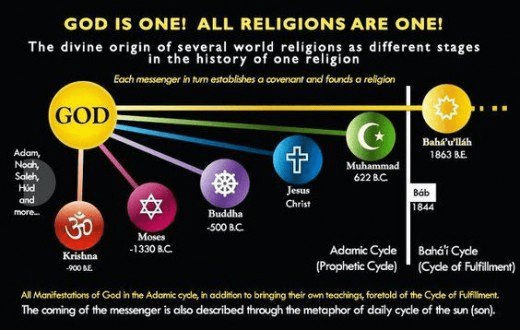
 Nicky's Notes