I encourage you to watch the movie, Hell and Mr. Fudge (it’s on Amazon Prime). Our Bible house group saw it at a small Athens, Al movie theater when it first came out. It’s the true story of Edward Fudge’s life and his journey of studying doctrines that were controversial in his church. He mainly focused on two main doctrines: 1) Do the wicked burn forever in torment in hell? 2) Does God’s grace cover all believers in all denominations? Fudge, after much, much indepth study, concluded that the wicked do not burn forever in hell but are annihilated or destroyed at death. He also concluded that there were Christians saved by the grace of God in all denominations and that we should not let our views on non essential issues separate us from fellowship with other denominations. Carl Ketcherside influenced him a lot on the second doctrine while Fudge was attending a Bible college. I remember when I was a teen hearing from the pulpit that Ketcherside was a liberal b/c. of his teaching.
I don’t know where you stand on these two issues, but this article is not about debating the issues. I mainly just want to encourage you to watch the movie. It has many warm stories of Edward meeting and marrying his wife and having children, his relationship with his father, his enouragement in tough times from a very close friend, the support of his father, mother, and wife. It has some sad stories of the death of his father, the death of a teen friend whom Edward was told would burn in hell forever, getting fired from a church. It is a study of the character of a man who studied the Bible and went wherever his study led him even it got him ostracized by church leaders and preachers.
It is a study of sectarian legalism. What is that? This is my definition: it is when beliefs that are not heaven or hell issues are made tests of fellowship with other believers. It leads to judging and condemning those who disagree with you. It leads to splits within churches over issues like instrumental music, kitchens and eating in the church building, using church contributions to support orphan homes, using only one cup in the Lord’s Supper, having Bible classes, frequency of taking the Lord’s Supper, and many, many more. All doctrines are important but very few are heaen/hell doctrines. Some say we must draw the line on any doctrine. My stance is that we should never make an issue or doctrine a test of fellowship unless the Bible clearly makes it a test of fellowship. There are only a few doctines that are clearly heaven/hell doctrines. 1 John lists 3: 1) Belief that Jesus is the Son of God who died for our sins. 2) Love one another, love God with all your heart, and love all mankind. 3) Obedience to God’s moral commands as defined by the Bible. There are black and white moral commands that must be obeyed. For example, the Bible clearly condemns the LGBQT teachings. All other issues than these 3 are not heaven/hell issues in my opinion.
The movie shows the dark side of sectarian legalism in the way Fudge was treated by many preachers and church leaders. He said that he was ostracized by the churches in Limestone County, Al which is where Athens is located. He went on to have a successful career as an attorney in Texas and continued his preaching ministry. There is a sad part toward the end of the movie. His wife took the kids and left him fo a while b/c he was so obsessed with endless studying to get the answer to the eternal fate of the wicked that he was hard to live with. In his own words, he became obsessed with defending his beliefs to the neglect of his family. In 1 Timothy 1:4, Paul cautioned against focusing on “fables and endless genealogies” as they lead to questions and disputes rather than godly edification through faith. So Fudge is not without fault in this movie and that’s a good lesson for us.
How did the movie end? He finally felt that he found the “missing piece” in the doctrine of the “immortal soul”, i.e. the doctrine that every person born has an eternal, immortal soul that must live forever somewhere, heaven or hell, after one dies. He concluded that the Bible doesn’t teach that, but that this docrine came in from outside influences like Plato. He read Matthew 10:28 And do not be afraid of those who kill the body but are unable to kill the soul; but rather fear Him who is able to destroy both soul and body in hell” and concluded that meant the annihilation of body and soul of the wicked. He noted that Jesus said that those who do not believe in him would “perish” not burn forever in agony (John 3:16). Romans 6:23 “the wages of sin is death but the free gift of God is eternal life”. Paul promised immortality to believers: 1 Corinthians 15:53 For this perishable body must put on the imperishable, and this mortal body must put on immortality.” Fudge finally concluded that immortality was only promised to believers, not to the wicked. He felt the pressure of going against 2,000 years of church teaching on hell. He based his beliefs on the study of the Bible and not emotion, but he did beieve that the eternal suffering of the wicked in hell went against the loving character of God. He wrote a book “The Fire That Consumes” in 1982. All of his research is in that book and he deals with objections to his conclusions. He was reunited with his wife and children once he ended his research.
Does it even matter whether the wicked just cease to exist at death or do they suffer torment in heall forever? Well of course if the Bible clearly teaches that the wicked suffer forever in hell, then we should be teaching that. Fudge doesn’t believe it teaches that but you will have to decide for yourself if he got it right. To some, it isn’t enough punishment for the wicked if they just cease to exist. Some feel that the wicked deserve to suffer forever. Fudge would say that goes against the loving character of God. The wicked made their choices in life and they die, are annihilated, and eternally separated from the presence of God. Is that enough “punishment”? Some feel that we need the doctrine of burnig in hell forever to scare people into becoming Christians. I know I got baptized at 14 mainly to keep from burning in hell forever. Would a wicked person be less likely to become a Christian if he thought that the consequences of his unbelief was simply ceasing to exist at death instead of burning forever in hell? I don’t know. Maybe some would say, “Well, I think I will just enjoy my lusts without any moral restraints, refuse to obey God, and then just die and cease to exist.” But eternal life is for those who want to live forever with Jesus, the Father, and the saints. The love of God in sending Jesus to die for our sins should be sufficient motivation for us becoming Christians and not the threat of hell. The Catholic church used the threat of purgatory and hell for 1,000 years to coerce people into obeying the rules of the church and paying indulgences! Evangelicals have used the same threat to get people to accept Jesus.
So what about universalism, the doctrine that eventually God will save everyone including the wicked in heaven eternally? Would an appeal to the loving character of God take us one step further than just denying the eternal suffering of the wicked in hell? Would that lead us to conclude that God will eventually save everyone and not allow the wicked to suffer forever or even to cease to exist and therefore not be able to enjoy eternity in heaven? Many have adopted universalism today. Fudge may have even adopted some form of universalism later: I’m not sure about that. I am not a universalist. Immortality is promised to believers. One’s opportunity to believe is in this life. There is no promise of a future opportunity after death to believe. Hebrews 9:27 And just as it is appointed for man to die once, and after that comes judgment.” To me, one’s eternal fate is sealed at death. I will not be disappointed if God decides to give the wicked a 2nd chance some day and save them in heaven eventually. I feel for people raised in Hindu or atheistic countries where it is so hard to leave the religion you are raised in. I feel for the many tribes in Africa that mabye don’t have the opportunity to hear the gospel fo Jesus like we do. I will allow God to decide the fate of all people. But I don’t find where the Bible teaches that He will just save everyone eventually. Is the character of God so loving that He will not allow the wicked to not live in heaven forever with Him? Or is that just wishful thinking? I’m going to make sure of my eternal life and immortality after death by believing in Jesus while here on earth. What about you?
I encourage you to subscribe for free to have the My Utmost For His Highest by Oswald Chambers to come to your email every day. I am enjoyed a renewed interest in his daily devotionals.
For example the devotional for March 17 was tken from 2 Corinthians 5:9 Therefore we also have as our ambition, whether at home or absent, to be pleasing to Him.” The Greek for “ambition is philotimeomai: To strive earnestly, to aspire, to be ambitious. “The verb “philotimeomai” conveys the idea of making it one’s aim or ambition to achieve something honorable or praiseworthy. It reflects a strong desire to accomplish a goal that is considered noble or virtuous. In the New Testament, it is used to describe a commendable pursuit or aspiration, often in the context of living a life that is pleasing to God.” (AI). The word is also translated as “goal” or “aim”, but I think “ambition” is the best translation. “While ambition can be a positive motivator, unchecked or excessive ambition can lead to negative consequences, including unethical behavior, burnout, and neglecting important aspects of life.” There is nothing wrong with having the ambition to climb the corporate ladder, achieve success in your career or field, make a lot of money, or own a lot of possessions as long as that ambition doesn’t become the main goal in life to the neglect of the spiritual or as long as we give God the glory and use our success for Him.
But notice that 2 Corinthians 5:9 says that our ambition should be “to be pleasing to Him”. There is nothing wrong with having spiritual goals, such a converting others, helping build a good church, going on mission trips, being involved in community efforts, etc. But Chambers says that those things should no be out ambition or aim. Our ambition should simply be to be pleasing to God. Yes, that would lead to striving to achieve some spiritual goals, but our ambition is just to be pleasing to God. If we make that our ambition, then the Spirit will guide us into specific spiritual things that God wants us to be to make him happy, to make him be pleased with us. Sometimes we set our own spiritual goals mainly to please ourselves, using our own wisdom and gifts without seeking God to see if he would really be pleased with what we are trying to achieve. I might be wanting to preach somewhere but that might not be what he wants me to do to be pleasing to him. He might have other things that He wants me to do.
That Greek word for “ambition” is only used 3 times in the New Testament: Romans 15:20 where Paul “aspired” to preach the gospel; 2 Corinthings 5:9; and in 1 Thessalonians 4:11. I love the one in 1 Thessalonians 4:11 and to make it your ambition to lead a quiet life and attend to your own business and work with your hands, just as we instructed you, 12 so that you will behave properly toward outsiders and not be in any need.” I especially like this passage b/c it describes my dad. He was from the “great generation.” AI: “The “Greatest Generation” refers to Americans born roughly between 1901 and 1927, who came of age during the Great Depression and World War II, and are often characterized by their strong work ethic, frugality, and patriotism.” My dad was born in 1918 so he lived through the Great Depression and World War II (although he did not serve b/c of some medical reason I have been told). He was raised country farm dirt poor. I’m not sure he graduated high school before he went to work with a concrete making plant and worked for them for about 50 years. He never made more than minimum wage so he worked a lot of overtime to provide for us. There was no union at his work, so his reward for all those years was a retirment check of about $100 per month! He built a modest house for us to live in comfortably but we never had much money. He took time to carry me fishing a lot and we built a cabin from scratch on Smith Lake and spent many weekends there fishing and swimming. He attended church regularly with our family but never led a prayer in church. He never prayed aloud with me or our family except when my mom would say at the dinner table, “Ambres, lead the prayer”, and he would pray “God is great, God is good, let us thank him for our food”. We never had a spiritual talk. He never said “I love you”, probably b/c his parents never expressed love for each other. The first time he said “I love you” to me was when he was 72 and was told that he had only 2 more years to live due to a lung disease. He spend those last 2 years expressing love, listening to gospel music, and reading the Bible, and died at age 74 in 1992. As you can see, he didn’t do a lot of the things you might expect a spiritual father to do. But what he did do was to make it his ambition or goal in life to fulfill that passage in 1 Thessalonians 4:11 and to make it your ambition to lead a quiet life and attend to your own business and work with your hands, just as we instructed you, 12 so that you will behave properly toward outsiders and not be in any need.” He did those things all his life! He lived a simple, quiet life. He mided his own business. He worked with his hands. He helped anyone who needed someone to fix something. He did things for a lot of people. When he died, about 500 people signed the register book at his visitation or funeral. Those people were from work, church, family, community, etc. Just a lot of people that he had helped, using his hands and knowledge of how to fix things, all through his life. We tend to think that a “spiritual”man is a Bible quoting, daily Bible reader, prayer leader, elder or deacon in the church, regular church attender, etc. But to me, my dad defines what it means to be spiritual for just a lot of ordinary, hard working, common people.
Read what Paul said in 1 Corinthians 12:14 For the body is not one part, but many. 15 If the foot says, “Because I am not a hand, I am not a part of the body,” it is not for this reason any less a part of the body. 16 And if the ear says, “Because I am not an eye, I am not a part of the body,” it is not for this reason any less a part of the body. 17 If the whole body were an eye, where would the hearing be? If the whole body were hearing, where would the sense of smell be? 18 But now God has arranged the parts, each one of them in the body, just as He desired. 19 If they were all one part, where would the body be? 20 But now there are many parts, but one body. 21 And the eye cannot say to the hand, “I have no need of you”; or again, the head to the feet, “I have no need of you.” 22 On the contrary, it is much truer that the parts of the body which seem to be weaker are necessary; 23 and those parts of the body which we consider less honorable, on these we bestow greater honor, and our less presentable parts become much more presentable, 24 whereas our more presentable parts have no need of it. But God has so composed the body, giving more abundant honor to that part which lacked, 25 so that there may be no division in the body, but that the parts may have the same care for one another. 26 And if one part of the body suffers, all the parts suffer with it; if a part is honored, all the parts rejoice with it.”
Think about what Paul said. We tend to give the most honor to the more gifted in the church, the leaders, the preacher, the elders, the youth ministers, the ones who seem to be more important. But Paul says that those people know that they are more gifted and more visible, and they do not need to constantly be told how important they are. they don’t need special attention to buld them up, to show how badly they are needed in the body. Often times they are inflated with their own gifts and importance, as was teh case in the Corinthian church where some of the more gifted members had become arrogant. Instead it is the less noticeable who we need to give special attention and honor to. We need to constantly be telling them how important they are in the body. There is someone like my dad who got very little notice in the church activities, but the church is the people, not the organized church business model. He was important to the body in what he was doing to use his hands to help a lot of people outside of the church assembly, men’s business meetings, Bible classes, or visitation programs. We tend to think of the church in the church business model and what the members visibly do for the church business. Instead we should think of the church as the people using their gifts 24/7 at home, at work, in their friendships, in taking care of their kids and/or elderly parents. We sometimes say “10% of the members do 90% of the church work”, but that usually means church work taking care of the building, being involved in the visitation program, attending Sunday night as well as Sunday morning, attending Wednesday evening Bible classes, doing projects around the building, taking care of assembly preparations, etc. Maybe not all, but many of those 90% that we criticize are people like my dad who are fulfilling 1 Thessalonians 4:11 every day. They are doing “church work”. Or maybe some unassuming, humble, barely noticeable lady member who takes food to the poor every Saturday, or takes care of elderly parents, or takes care of some widows in the church or takes care of foster children. That is “church work”. We tend to give honor to those more visible in the church busines work instead of the real church work. We need to keep giving special honor to the less noticeable members doing the less noticeable church work.
I guess I got sidetracked! Just make it your ambition to be pleasing to God and He will guide you on what He wants you to do. It might not be what you want to do, but that doesn’t matter! Ask yourself every moment today: “Does what I am doing, thinking, or saying please the Father?
Adios y Dios los bendiga! Goodbye and God bless you.
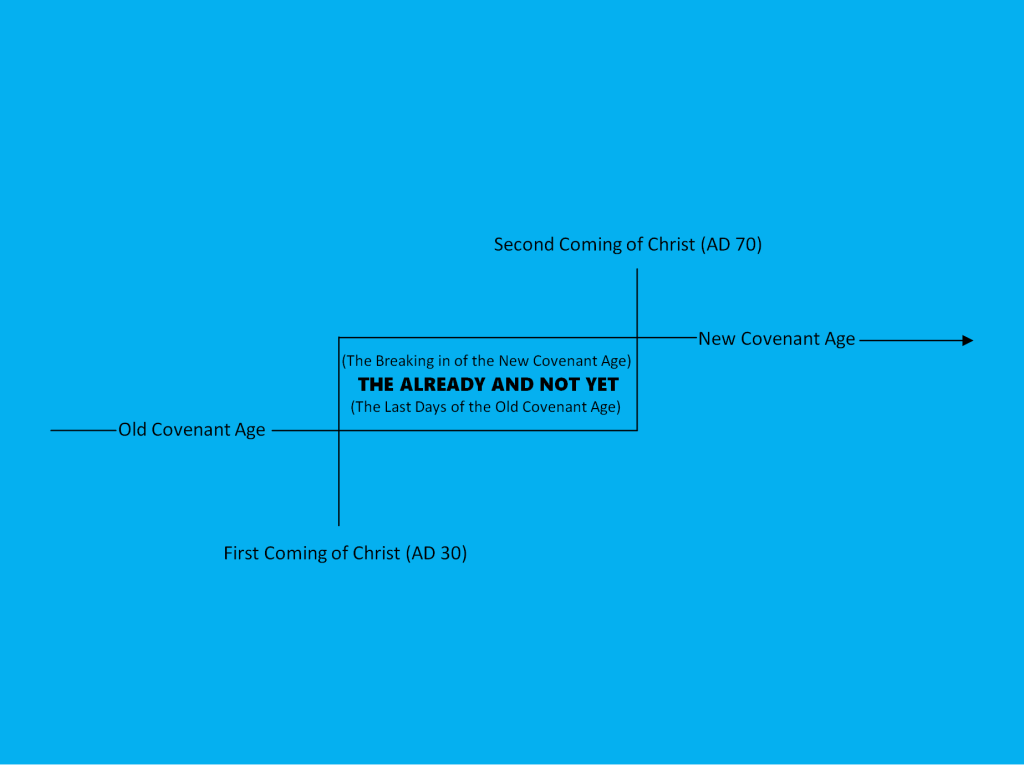
This is a follow up article to the “Jesus came to conquer spiritual death” article so please read that first. Jesus did conquer spiritual death. But there is an apparent contradiction. 1) Paul said that the Ephesian Christians had already been raised from the dead spiritually before 70 AD (he wrote Ephesians in about 60 AD)? Ephesians 2:4 But God, being rich in mercy, because of His great love with which He loved us, 5 even when we were dead in our wrongdoings, made us alive together with Christ (by grace you have been saved), 6 and raised us up with Him, and seated us with Him in the heavenly places in Christ Jesus.” Likewise with the Colossian Christians: Colossians 2:12 having been buried with Him in baptism, in which you were also raised with Him through faith in the working of God, who raised Him from the dead. 13 And when you were dead in your wrongdoings and the uncircumcision of your flesh, He made you alive together with Him, having forgiven us all our wrongdoings.” 2) But the last enemy, spiritual death, was not defeated until 70 AD according to 1 Corinthians 15 (again read the first article if you haven’t). If spiritual death, the last enemy, was not conquered until 70 AD (1 Corinthians 15), then how could the Ephesians and Colossians be raised from the dead spiritually before 70 AD. That is the “already and not yet” of the transition period from 30 AD to 70 AD. This is an excellent article by Alex Polyak on this topic: https://thebiblefulfilled.com/the-already-and-not-yet/. Thebiblefulfilled.com is his site and he has many excellent videos and articles. He also has an excelent book, “The End is Here” (amazon prime) that is very detailed and deals with all the objections to full preterism). Why reinvent the wheel? I can’t explain this any better than Alex did, so I will simply quote directly from his article and say “Amen”.
“The New Testament is filled with New Covenant realities that had already arrived in part (pre-AD 70), but had not yet arrived in full. Consider the following examples:
Salvation had already arrived in part (2 Tim. 1:9, Titus 3:5, 1 Cor. 6:11), but salvation still had to come in full (Rom. 13:10; 1 Pet. 1:5; Heb. 9:28).
Righteousness had already come in part at the cross (1 Pet. 2:24), yet Righteousness would not come in full until “the elements burned with fervent heat” / the new heaven and earth (2 Pet. 3:13; Gal. 5:5).
Redemption had already happened in part (Eph. 1:7), yet Redemption still needed to happen in full (Eph. 1:14; 4:30; Rom. 8:23).
The Adoption had already happened in part (Rom. 8:15), but the Adoption still needed to happen in full (Rom. 8:23)
The Kingdom of God had already come in part (Col. 1:13; Luke 11:20), but the Kingdom of God still needed to come in full (Mark 9:1, Luke 21:31, Rev. 11:15).
The Gathering of Jews and Gentiles into one new body, Christ, had already begun in part (Eph. 2:12–13), but the Gathering would happen in full at the second coming (2 Thess. 2:1–2, Matt. 24:30–31).
The New Jerusalem had arrived in part (John 4:23, Heb. 12:22–24), yet the New Jerusalem still had to come in full (John 4:21, 23; Rev. 21:2).
The (General) Resurrection had already happened in part (John 5:24–25; Eph. 2:1, 2:6; Col. 3:1–2), but the Resurrection still needed to happen in full (John 5:28–29; 1 Thess. 4:16–17; 1 Cor. 15:51–52; Rev. 20:13).
The New Testament is filled with such New Covenant realities that had already arrived in part, but had not yet arrived in full. In fact, some of these events are spoken about in both the present and future tenses in the very same passage, just a few verses apart (see the redemption example above)! Either the New Testament writers/apostles blatantly and repeatedly contradicted each other–and even their own statements–or there was something more going on here. The already/not yet concept explains this nicely. The New Covenant realities had already arrived in part (pre-AD 70)…but they had not yet arrived in full. And when would they arrive in full? When the Old Covenant age of types and shadows[1] completely vanished away, which would happen at Jesus’ second coming in AD 70.[2] Paul captured this sentiment beautifully in saying (in AD 62/63): “He who has begun a good work in you [saints in Philippi] will complete it until the day of Jesus Christ” (Phil. 1:6).
Note: Just about all Christians acknowledge the “already/not yet” concept. However, while preterists[3] contend it refers to the time period between AD 30 and AD 70, futurists[4] argue it refers to the time period between AD 30 and today–a 2000+ year time period–which would negate the purpose for using such a concept in the first place!
The time period between AD 30 (Jesus’ earthly ministry) and AD 70 (the second coming) was a time of transition. The Old Covenant types and shadows were gradually passing away…and the New Covenant realities were gradually being built up. As the writer of Hebrews said in approximately AD 60: “In that He [God] says, ‘A new covenant,’ He has made the first [covenant] obsolete. Now what is becoming obsolete and growing old is ready to vanish away (Heb. 8:13). The Old Covenant was growing old…and the New Covenant was being built up.”
Now a few of my comments. If the futurists are correct, then we are still waiting for Jesus to return to conquer the last enemy death. Maybe they think that means that Jesus will return in the future to conquer physical death, but we have already seen that he did not come to abolish physical death. So if he hasn’t fully conquered spiritual death yet, then our redemption is not complete. I prefer to believe that he fully accomplished what He came to do, and that is to conqer spiritual death completely in my life and in the life of all believers. We are not living in the transition period (30-70 AD), still waiting for the completion of the redemption process in 70 AD. We usually read the New Testament as if we were living in the transition period, taking things written to those living in the transition period as if they were written directly to us.
I’m especially interested in the point Alex made about the kingdom. “The Kingdom of God had already come in part (Col. 1:13; Luke 11:20), but the Kingdom of God still needed to come in full (Mark 9:1, Luke 21:31, Rev. 11:15).” The spiritual kingdom of God, which is the church, was established in Acts 2 in 30 AD. Christians in the transtion period were added to that kingdom. Colossians 1:13 For He rescued us from the domain of darkness, and transferred us to the kingdom of His beloved Son, 14 in whom we have redemption, the forgiveness of sins.” But then Paul told recent converts on his first missionary journey: Acts 14:21 And after they had preached the gospel to that city and had made a good number of disciples, they returned to Lystra, to Iconium, and to Antioch, 22 strengthening the souls of the disciples, encouraging them to continue in the faith, and saying, “It is through many tribulations that we must enter the kingdom of God.” So there was another phase of that kingdom that the believers were going to enter later. Most think that is heaven, but it is referring to the final phase of the establishing of the spiritual kingdom in 70 AD. That is what Jesus predicted in Luke 21:31 So you too, when you see these things happening, recognize that the kingdom of God is near. 32 Truly I say to you, this generation will not pass away until all things take place.” Luke 21 is Jesus’ predictions about the destruction of Jerusalem in 70 AD. If the kingdom had already been established in 30 AD, how could he say that the kingdom would be “near” in 70 AD. B/c the final phase of the establishment of the kingdom would happen in 70 AD at the end of the transition period. The mistake that futurists make is that they are still looking for Jesus to establish a physical kingdom. They think that the final phase will be Jesus returning some day to establish a physical kingdom, but he never planned to establish a physical kingdom. John 18:36 Jesus answered (Pilate), “My kingdom is not of this world. If My kingdom were of this world, My servants would be fighting so that I would not be handed over to the Jews; but as it is, My kingdom is not of this realm.”
Another good point by Alex: “The New Jerusalem had arrived in part (John 4:23, Heb. 12:22–24), yet the New Jerusalem still had to come in full (John 4:21, 23; Rev. 21:2).” Isaiah had predicted the new Jerusalem. Isaiah 65:“For behold, I create new heavens and a new earth; And the former things will not be remembered or come to mind. 18 But be glad and rejoice forever in what I create; For behold, I create Jerusalem for rejoicing And her people for gladness. 19 I will also rejoice in Jerusalem and be glad in My people; And there will no longer be heard in her The voice of weeping and the sound of crying.” Hebrews 12 calls it the “heavenly Jerusalem” and is referring to the church, not to a physical city. Hebrews 12:22 But you have come to Mount Zion and to the city of the living God, the heavenly Jerusalem, and to myriads of angels, 23 to the general assembly and church of the firstborn who are enrolled in heaven.” The new Jerusalem, which is the church, was established in 30 AD in Acts 2. So how does John predict the new Jerusalem coming down to earth at some time in the future after he wrote Revelation in about 65 AD?? Revelation 21:1 Then I saw a new heaven and a new earth; for the first heaven and the first earth passed away, and there is no longer any sea. 2 And I saw the holy city, new Jerusalem, coming down out of heaven from God, prepared as a bride adorned for her husband.” He then adds: 21:9 Then one of the seven angels who had the seven bowls, full of the seven last plagues, came and spoke with me, saying, “Come here, I will show you the bride, the wife of the Lamb.” 10 And he carried me away in the Spirit to a great and high mountain, and showed me the holy city, Jerusalem, coming down out of heaven from God, 11 having the glory of God.” Again, “already and not yet”. There was another phase of the establishment of the new Jerusalem, i.e. the church, that would be completed in 70 AD. Why 70 AD? B/c the book of Revelation was written about 65 AD about things that. were going to happen shortly, soon, near (Revelation 1:1-3; 22:1-10). The book is about the destruction of the old Jerusalem in 70 AD, just as Jesus had predicted in Matthew 24. The final phase of establishing the new Jerusalem would be the removal of the old Jerusalem in 70 AD. So the transition Christians were already in the kingdom but would enter the completed final phase of the kingdom in 70 AD. But still it would be a phase of the spiritual kingdom, the church, and not some physical kingdom. Revelation 21:1-11 says that the new Jerusalem was the “bride of Christ” which of course is the church. The Hebrew writer spoke of this: Hebrews 13:14 For here we do not have a lasting city, but we are seeking the city which is to come.” It was still in the future for the transtion Christians, but not for us. We live after the final phase of the new Jerusalem, the church, was completed in 70 AD.
One last point from Alex: “Redemption had already happened in part (Eph. 1:7), yet Redemption still needed to happen in full (Eph. 1:14; 4:30; Rom. 8:23).” Paul said that the Ephesians had their redemption, the forgiveness of sins. Ephesians 1:7 In Him we have redemption through His blood, the forgiveness of our wrongdoings, according to the riches of His grace 8 which He lavished on us.” But just a few verses later he spoke of a future redemption for them: 1:13 In Him, you also, after listening to the message of truth, the gospel of your salvation—having also believed, you were sealed in Him with the Holy Spirit of the promise, 14 who is a first installment of our inheritance, in regard to the redemption of God’s own possession, to the praise of His glory.” In Luke 21 Jesus predicted the destruction of Jerusalem in 70 AD in Luke 21. He spoke of the redemption of believers in 70 AD: Luke 21:28 But when these things begin to take place, straighten up and lift up your heads, because your redemption is drawing near.” So the redemption process began in Acts 2 in 30 AD when the first 3,000 were baptized for the remission of sins, but the full redemption process was not completed until 70 AD when the last enemy, spiritual death, was destroyed, when they would receive their immortality whether dead or alive (1 Corinthians 15, read the first article). BTW this is what Paul was referring to in Romans 8:23 And not only that, but also we ourselves, having the first fruits of the Spirit, even we ourselves groan within ourselves, waiting eagerly for our adoption as sons and daughters, the redemption of our body.” There was a future redemption for the transition Christians he was writing to even though they had already been redeemed and forgiven of sins. Futurists say this future redemption has not yet happened. They say it will be a future recreation of the earth to its original Garden of Eden state at some future 2nd coming of Jesus and that believers will get some kind of a new physical body to live on earth for a millennium or maybe even forever. But notice Romans 8:18 For I reckon that the sufferings of the present time [are] not worthy [to be compared] with the glory about to be (mello which always means something about to happen) revealed in us.” Their future redemption phase that Paul predicted in 8:23 was about to happen in their lifetime, so it could not refer to something that has not even happened yet some 2,000 years later! That future redemption for them was the final phase of redemption in 70 AD as predicted by Paul and Jesus. That is why the Roman Christians were so eagerly waiting for that final phase of redemption. Romans 8:19 For the eagerly awaiting creation waits for the revealing of the sons and daughters of God.” In 70 AD the identity of the true sons of God would be revealed. It would be shown once for all that God had rejected the unbelieving Jews and that the true sons of God were the Christians. The transition Christians had been told by Jesus and the apostles that all this was going to happen in their lifetime, so that explains why they were so eagerly awaiting their future redemption at 70 AD. I don’t know how much they understood all that would happen in 70 AD, but they were fully expecting it to happen within their lifetime and eagerly waiting for it. Again, we read transition passages as if they were written directly to us, but they weren’t. Romans 8:23 has already been fulfilled. The final redemption of believers has been available since 70 AD. We have that full redemption. When we die, we live on eternally in our spiritual bodies in heaven, wherever that is!
Hopefully this article explains the “already and not yet” concept. Again, I encourage you to read some of Alex Polyak’s articles and watch his videos on thebiblefulfilled.com.
One last note. Compare this transition period to our transition period in choosing a new president. We elect a new president in November but he is inaugurated in January. There is a transition period between the election and the inauguration. The newly elected president is called the president elect until his inauguration. He is the official next president once he is elected. He starts to form his new cabinet during the transition. The things of the old administration begin to b removed during the transition period, and are completely removed by the inauguration. But he doesn’t officially become the president until the inauguration. That’s the same as the transtion period in the New Testament. Jesus began his reign as king in his new spiritual kingdom in 30 AD, but he did not finalize his reign and his kingdom until 70 AD. He began removing all the remnants of the old Jerusalem, the old covenant, the old heavens and earth (i.e. the Jewish system), the old animal sacrifices, the old covenant priesthood, etc. during the last days of the Jewish Age (from 30-70 AD), but those things were completely removed in 70 AD. In about 60 AD, the Hebrew writer wrote: Hebrews 8:13 When He said, “A new covenant,” He has made the first obsolete. But whatever is becoming obsolete and growing old is about to disappear.” That old covenant was about to disappear in 70 AD just a few years after this was predicted. Hebrews 9:8 The Holy Spirit is signifying this, that the way into the holy place has not yet been disclosed while the outer tabernacle is still standing, 9 which is a symbol for the present time.” The final phase of the redemption process was not disclosed (phaneroó: To make manifest, to reveal, to make known, to show openly) until 70 AD after everything in the old covenant was removed. AI: “The verb “phaneroó” is used in the New Testament to describe the act of making something visible or known that was previously hidden or not apparent.” There had to be a lot of confusion about God’s final plan during this transition period. For 2,000 years God’s presence was built around the priesthood, the animal sacrifices, and the temple. But the Paul and others start preaching about a new covenant based on the blood of Jesus. So would believers in Jesus just try to obey both covenants? Should believers in the future do that? Just a lot of confusion. But 70 AD explains it all and brings the plan all together. This is what Paul was referring to in Ephesians 1:9 He made known to us the mystery of His will, according to His good pleasure which He set forth in Him, 10 regarding His plan of the fullness of the times, to bring all things together in Christ, things in the heavens and things on the earth.”
It all began with Adam and Eve. Genesis 3:15 Then the Lord God took the man and put him in the Garden of Eden to cultivate it and tend it. 16 The Lord God commanded the man, saying, “From any tree of the garden you may freely eat; 17 but from the tree of the knowledge of good and evil you shall not eat, for on the day that you eat from it you will certainly die.” Die physically or spiritually? They woould eventually die phyically since they were kicked out of the garden of Eden and could no longer eat of the tree of life, but they did not die physically the very. day they sinned. So it must be that they died spiritually the very day they sinned. Spiritual death is the result of sin. Sin causes us to be separated from a relationship with God. Isaiah 59:But your wrongdoings have caused a separation between you and your God, And your sins have hidden His face from you so that He does not hear. Paul confirms that Adam’s sin brought spiritual death to himself and to all men, but why? Romans 5:12 Therefore, just as through one man sin entered into the world, and death through sin, and so death spread to all mankind, because all sinned.” Romans 6:23 For the wages of sin is death, but the gracious gift of God is eternal life in Christ Jesus our Lord.”
Jesus came to conquer spiritual death. Hebrews 2: 14 Therefore, since the children share in flesh and blood, He Himself likewise also partook of the same, so that through death He might destroy the one who has the power of death, that is, the devil, 15 and free those who through fear of death were subject to slavery all their lives.” Isaiah 25:8 He will swallow up death for all time, And the Lord God will wipe tears away from all faces, And He will remove the disgrace of His people from all the earth; For the Lord has spoken. 9 And it will be said on that day, “Behold, this is our God for whom we have waited that He might save us. This is the Lord for whom we have waited; Let’s rejoice and be glad in His salvation.” So when was Isaiah’s prophecy fulfilled? 1 Corinthians 15 tells us when. In that chapter Paul is discussing the resurrection and what kind of a body wll believers recieve in the resurrection. He says that the resurrected body will be a spiritual, imperishable body. He then says, 15:51 Behold, I am telling you a mystery; we will not all sleep, but we will all be changed.” Paul is clearly saying that the resurrection of the dead would occur while some of those he is writiing to were still alive. He is saying that, dead or alive, the believers would receive immortality. 15:52 in a moment, in the twinkling of an eye, at the last trumpet; for the trumpet will sound, and the dead will be raised imperishable, and we will be changed. 53 For this perishable must put on the imperishable, and this mortal must put on immortality. 54 But when this perishable puts on the imperishable, and this mortal puts on immortality, then will come about the saying that is written: “Death has been swallowed up in victory. 55 Where, O Death, is your victory? Where, O Death, is your sting?” 56 The sting of death is sin, and the power of sin is the Law; 57 but thanks be to God, who gives us the victory through our Lord Jesus Christ.” He quotes Isaiah 25:8,9 and says that in the resurrection “death would be swallowed up in victory”. That would be spiritual death caused by the sting of sin. He says that the power of sin was the Law of Moses. So when did the Law end? The Law ended in 70 AD. Hebrews 8:13 In speaking of a new covenant, he makes the first one obsolete. And what is becoming obsolete and growing old is ready to vanish away.” The Hebrew author wrote that about 60 AD and he said that the first covenent was “ready to vanish away” at the time he wrote the letter. That has to be 70 AD whe the Romans destroyed the temple and the city of Jerusalem. The temple has never been rebult since then. There have been no Levitical priests and animal sacrifices since then. God replaced the old covenant with the new covenant in 70 AD. Thus he destroyed death by taking away the Law which was the power of sin which caused spiritual death. Spiritual death was the last enemy conquered by Jesus in 70 AD. 1 Corinthians 15:25 For He must reign until He has put all His enemies under His feet. 26 The last enemy that will be abolished is death.” That would be spiritual death. Daniel had predicted that a resurrection of the righteous and the unrighteous would occur at the end of the age, i.e. the end of the Jewish Age in 70 AD. Daniel 12:2 And many of those who sleep in the dust of the earth shall awake, some to everlasting life, and some to shame and everlasting contempt.” Paul predicted the imminence of that resurrrection in Acts 24:14 `And I confess this to thee, that, according to the way that they call a sect, so serve I the God of the fathers, believing all things that in the law and the prophets have been written, 15 having hope toward God, which they themselves also wait for, [that] there is about to be (mello in the Greek which always mean something about to happen when used in the New Testament but is usually mistranslated as “certainly will be”) a rising again of the dead, both of righteous and unrighteous.” (Young’s Literal Translation). Notice that Paul says that resurrection was predicted in the law and the prophets, so he must be referring to Daniel 12:2! That resurrection was fulfilled in 70 AD. The dead under the old covenant had been in hades awaiting their resurrection and final sentencing at 70 AD. In 70 AD the righteous dead of the old covenant and the believers in Jesus would be given immortality whether dead or alive. That is why Paul told the Thessalonians not to worry about their dead believing loved ones who died before that resurrection. They would still get their immortality. Immortality is only promised to believers in Jesus in the New Testament and never to unbelievers.
Jesus accomplished his mission of destroying spiritual death in the lives of believers. 2 Timothy 1:10 and which now has been manifested through the appearing of our Savior Christ Jesus, who abolished death and brought life and immortality to light through the gospel.” John 11: 25 Jesus said to her, “I am the resurrection and the life (spiritual). Whoever believes in me, though he die (physically), yet shall he live (spiritually), 26 and everyone who lives and believes in me shall never die (spiritually).” I just had an epiphany! In one sense, he did conquer physical death. Not that he stopped believers from dying or that he abolished physical death all together. Instead, he conquered spiritual death for believers so that physical death was not the end for them. They would keep on living spiritually, eternally, after death. That makes Hebrews 2:15 even more meaningful: 15 and free those who through fear of death were subject to slavery all their lives.” Believers don’t have to fear physical death any longer. Thank you Lord for that thought b/c many of us still have that fear of death that has a constant hold on us making us death’s slaves!
My wife suggested this one. I told her that no one was invisible b/c I can see them. But I really knew what she meant. We always eat our Egg McMuffins at McDonalds every Sunday morning at 7 AM. The one we eat at is especially clean and has great managers. They hire one man to do nothing but clean, mop, pick up trash, etc. He looks to be a very simple fellow although he might be the boss like in the TV show “undercover boss”. But he is there every week, so I don’t think he is the boss! My wife called him one of the “invisible people” that we seldom take notice of. AI: “”Invisible people” can include mentally challenged adults, disadvantaged, unwed mothers on welfare, runaway teens, ex offenders, uneducated and unskilled people, illegal immigrants who clean hotels or do menial jobs, residents in inner city projects, elderly, child orphans or foster children, homeless people or anyone who experiences a sense of being ignored or separated from society as a whole. It can include just ordinary people doing all the little jobs that make life easier for us, people that we take for granted. We might say “thank you” but that’s about it, or we might even tip a little. But often we just get our service from them and ignore them.
Jesus was good at not ignoring the invisible people. The woman at the well. Would you pay much attention to a woman who had been divorced 5 times, was living with someone not her husband, and who was a foreigner that many looked down on in society? Jesus did. He would not even “snuff out a smoldering wick or break a bruised reed”. He would try to bring out the best in everyone. He would draw out what little faith someone had. He would give hope to those struggling with life. We don’t know how that woman at the well ended up, but he gave her hope of a better life if she would accept the living water Jesus had to offer.
Jesus stopped to heal the blind men who were following him, even though they were crying out, making a disturbance. He talked with a sinful woman who anointed his feet at Simon the Pharisee’s house. Simon was appalled that Jesus would even let this sinful woman touch his feet. He laid his hands on and blessed the little children who were brought to him by their parents, even when his disciples were rebuking them for bringing the children. He stopped to heal the woman with the 12 year bleeding issue. He did not rebuke her for secretly touching his garment but praised her faith instead. Jesus took note of the demon possessed man who had been living in the tombs and cast the demon Legion out of him. The whole town nearby ignored this man and just hoped that he would stay in the tombs area. Jesus ate with the tax collector Matthew and his “sinner friends” even though he was criticized greatly for doing so. Jesus stopped to talk to the Syrophoenician woman even though his disciples were begging him to send her away b/c she was crying out loud, annoying them. He then challenged and drew out her faith and case the demon out of her daughter.
So the lesson today is for us to pay attention to the “invisible people” that we see every day. Not just pay attention to them, but seek them out. “To visit the widows and orphans is pure and undefiled religion” according to James 1:28. There are plenty of widows out there who might not need financial help but who would love to have some one come visit and talk to them. Each one has a story to tell. Go to some place like the House of the Harvest here in Huntsville on Saturday morning and you will find plenty of invisible people. Many of them speak Spanish and are delighted when I give them breakfast with a little Spanish conversation. Go offer to help someone who fosters children. They often have many challenges. Think through your own daily experiences and identify those invisible people in your life. Stop and take time to talk to them and help them if possible.
Remember, the invisible people are all very visible to God so don’t ignore them.
Are you always in a hurry? My wife and I have different hiking styles. I attack the trail to finish it as quickly as I can. She stops often, and I have to wait on her. She says that we should stop along the way to, as Jesus said, “consider” the great things God has created in nature. “Consider” in the Greek is katanoeó: To observe, consider, perceive, understand. (AI): “The verb κατανοέω (katanoeó) is used in the New Testament to denote a deep, attentive observation or consideration. It implies more than a casual glance, suggesting a thorough and careful examination or contemplation. This term is often used to encourage believers to pay close attention to spiritual truths or to the example set by others.” I am Type A: Type A individuals as outgoing, ambitious, rigidly organized, highly status-conscious, impatient, anxious, proactive, and concerned with time management. People with Type A personalities are often high-achieving workaholics.” My wife is Type B: People with a type B personality may be easygoing and laid-back, and approach tasks with less urgency. Type B personality traits include patience, flexibility, and an even temper. People with a type B personality may be more prone to procrastination or distraction from a task.” So combining a Type A and a Type B in marriage for 54 has been an experiment of patience with each other’s personality quirks. I won’t go any further in that discussion! I’m sure she has put up with a lot more of my quirks than I have hers. At least I am saying that for this article!
Back to hiking and life in general. Every day in an adventure with God if you will make it: the statement “everyday is an adventure with God if you will make it” suggests that embracing a life of faith and actively seeking God’s presence can transform ordinary days into meaningful and exciting experiences.” That means that we have to “stop along the way” and “consider” everything closely. We should ask, “What might God be doing in this situation? How can God use me in this situation? How can I be kind and help that person I see who needs help?” We can consider nature and everything God has created, and then praise God for creating it all, whether He did it in 6,000 or 6 billion years. Either way, it’s amazing to create everything from nothing with such amazing design. We can consider scriptures, looking more closely at what they meant to the original recipients and how they might apply to us today. Hebrews 2:1 Therefore we must pay much closer attention to what we have heard, lest we drift away from it.” Most of us dont just quit our devotion to Jesus. We just “drift away” slowly, like a small boat drifts out into the lake when it is loosed from the dock. We are so busy with our “worries, riches, and pleasures” (Luke 8:14) that keep us from bearing fruit and spiritual growth. We just drift away from our devotion, praying less, meditating on God and His word less.
So, short and sweet. Make today an adventure with God, considering God’s presence in everything in your life today.
Are you familiar with the book of devotionals by Oswald Chambers (1874-1917)? It is 365 devotionals to be read one at a time for the whole years. Oswald Chambers was talented in poetry, music, and art, but his passion was preaching the gospel. His parents were baptized by. the famed British pastor Charles Spurgeon and were very spiritual. Oswald felt that he heard the Lord call him, “I want you in My service but I can do without you.” He spent a decade in a theological training school and later began his own Bible Training School. He had a very “dry” period of several years until he asked God “for the baptism of the Holy Spirit, whatever that meant”. Jesus’ words in Luke 11:13 changed everything for him. Luke 11:3 If you then, who are evil, know how to give good gifts to your children, how much more will the heavenly Father give the Holy Spirit to those who ask him!” He asked God the Holy Spirit and relied on the Spirit for the rest of his life in his preaching and writing. He married Gertrude Hobbs but he called her “Biddy”. He died from complications from an appendectomy in 1917. After his death, Biddy began putting his writings into some 4 dozen books, most notably My Utmost For His Highest. With her help, Oswald reached more people after death than he had in life.
I remember reading his devotionals in My Utmost For His Highest. It just seemed that each one spoke to my needs for that particular day. Is that just coincidence or the work of the Holy Spirit through Oswald giving me what I need for that day? I don’t know, but it sure seemed to work everyday. Maybe that is why so many people read these same 365 devotionals year and year and they never get old.
I urge you to go online and request the daily devotionals from the book to be sent to your email. I feel the same way about the Spirit using the Bible every day to meet our particular needs for that day. The Bible is not just like our constitution, filled with laws and doctrines, once for all time (and it does have that). All of it was written specifically to someone living in the past: to the Jews, to people living in the first century, to believers in churches, and to individuals like Timothy and Titus. None of it was written directly to us and yet the Spirit can use the Bible to speak to us through the application of what the Spirit wrote to others. Hebrews 4:12 For the word of God is living and active, sharper than any two-edged sword, piercing to the division of soul and of spirit, of joints and of marrow, and discerning the thoughts and intentions of the heart.” The Spirit can apply the word to our lives and needs. So when we read the word, we should be asking, “Ok, I know this was written to someone else, but what would the Sprit want me to take from it in my life today?” My mom wrote several looooooong letters before she died, dealing with some issues. When I read those letters, I can feel her spirit still speaking behind those words. It is the same with the Spirit and the word. When you read the word, try to picture the Spirit (however you might picture the Sprit) watching you reading the word and hoping that you will apply what you read to your daily life and needs.
If you are not into eschatology, you might want to skip this article! If you are interested, what did Jesus mean when he said “I am coming quickly” in Revelation 22:7,12,20?
Jesus said “I am coming quickly” 3 times in Revelation 22 (22:7,12,20). Does that mean “like a speeding bullet” but not necessarily “soon”? Or does it mean “soon” as translated in the ESV and the YLT (Young’s Literal Translation)? Does it mean that, when He does come, it will happen swiftly, but not necessarily soon? The Greek word is tachu: Quickly, swiftly, soon. “The adverb “tachu” is used in the New Testament to convey a sense of immediacy or urgency. It often describes actions that are to be undertaken without delay or events that are expected to occur soon. The term emphasizes the promptness or rapidity of an action or event.” Thayer’s Greek Lexicon: ταχύ(neuter of the adjective ταχύς), adverb (from Pindar down), quickly, speedily (without delay): Matthew 5:25; Matthew 28:7; Mark 16:8 Rec.; Luke 15:22 L Tr brackets WH; John 11:29; ἔρχεσθαι, Revelation 2:5 Rec.bez elz, ; ; forthwith, i. e. while in the use of my name he is performing mighty works, Mark 9:39.” An example of its use in Matthew 22:7 And go quickly and tell His disciples that He has risen from the dead; and behold, He is going ahead of you to Galilee. There you will see Him; behold, I have told you.” 8 And they left the tomb quickly with fear and great joy, and ran to report to His disciples.” So the use here is swiftly but also without delay. It is used two other times in Revelation: 2:16 Therefore repent. If not, I will come to you soon and war against them with the sword of my mouth. (ESV) 3:10 `Because thou didst keep the word of my endurance, I also will keep thee from the hour of the trial that is about to (mello in the New Testament always means something about to happen) come upon all the world, to try those dwelling upon the earth. (YLT) 11 I am coming soon. Hold fast what you have, so that no one may seize your crown.” (ESV). In 3:10,11 the coming “soon” is tied to things “about to happen”, so the context shows that “soon” is the best interpretation of tachu in 3:11.
μέλλω (melló) (melló: to be about to, to intend, to be destined) is used several times in the messages to the seven churches. 1:19; 2:10; 3:2,10, 16. It is obvious that the meaning is things about to happen to the 7 churches. “The Greek verb “μέλλω” (melló) always means “about to happen” in the New Testament. It is often mistranslated “certainly or surely or just is to happen” but that is not how it is used in the New Testament. It always means “about to happen”. Young’s Literal Translation does a good job of always translating mello correctly as “about to”.
The 2nd coming is part of the predictions of Revelation. Revelation 1:7 Behold, He is coming with the clouds, and every eye will see Him, even those who pierced Him; and all the tribes of the earth will mourn over Him. So it is to be. Amen.” This is the same language as Matthew 24:30 And then the sign of the Son of Man will appear in the sky, and then all the tribes of the earth will mourn, and they will see the Son of Man coming on the clouds of the sky with power and great glory. ” That coming in Matthew 24 had to happen within that generation. 24:34 Truly I say to you, this generation will not pass away until all these things take place.” (genea in the New Testament always means a 40 year period or the people living in a 40 year period, just as we use it in the “baby boomers’ generation”). So what is the context of Revelation 1:7? The context is things that will happen shortly or soon. Revelation 1:1 The Revelation of Jesus Christ, which God gave Him to show to His bond-servants, the things which must soon (tachos: Speed, swiftness, quickness: Strongs “From the same as tachus; a brief space (of time), i.e. (with en prefixed) in haste — + quickly, + shortly, + speedily.”) take place. Tachos is the same word in Revelation 22:6 And he said to me, “These words are faithful and true”; and the Lord, the God of the spirits of the prophets, sent His angel to show His bond-servants the things which must soon take place.Revelation 1:3 Blessed is the one who reads, and those who hear the words of the prophecy and keep the things which are written in it; for the time is near.” The Greek for “near” is eggus: Near, close, at hand. “The Greek word “ἐγγύς” (eggus) is used to denote proximity in terms of space, time, or relationship. It conveys the idea of something being near or imminent. In the New Testament, it is often used to describe the nearness of the Kingdom of God, the coming of Christ, or the proximity of a person or event.” It is translated 29 out of 31 times used as “near”, so the context of Revelation is things that are “imminent”. Eggus is the word used in Revelation 22:10 And he *said to me, “Do not seal up the words of the prophecy of this book, for the time is near.” Just two verses after that is 22:12 “Behold, I am coming soon, bringing my recompense with me, to repay each one for what he has done.” There is that tachu word that means quickly, swiftly, soon, but the ESV translates it “soon” because it is predicting something that is “near” (22:10). The same with Revelation 22:20 He who testifies to these things says, “Surely I am coming soon.” Amen. Come, Lord Jesus!” One other thing. In 22:10, John is told “do not seal up the words of the prophecy of this book, for the time is near.” Why is he told not to seal up the prophecies? It, again, is b/c their fulfillment is “near“. How could that be thousands of years later? Daniel was told to seal up his predictions, and his predictions would happen about 600 years after he made them. So to not seal up the predictions of Revelation would have to mean they were going to happen at least in the next few hundred years, and not thousands of years. But “near” makes it mean soon after Revelation was written.
Hopefully, that is enough Greek word studies and Revelation context (probably overkill for most readers). But it should be apparent (at least I think it is) that the events predicted in the book of Revelation were “about to happen”, “soon”, “shortly”, “near”. Not just some of the events, but all of them. The book begins and ends with the same words: “the time is near”, these things are going to happen “soon”. That would include the 2nd coming which be both swiftly, soon, without delay: usually translated “quickly” but “soon would be the better translation as in the ESV. Those who believe that the 2nd coming “quickly” in Revelation 22:7,12,20 does not mean “soon” are those who do not believe that John is predicting that the 2nd coming was “near” and would happen “soon”. So they take “quickly” to mean just “swiftly” but not necessarily “soon”, but that is not the context of the 2nd coming in Revelation. So, is John predicting that the 2nd coming was soon, near? If so, could he be referring to Jesus’ coming in judgment on the Jews in 70 AD, just as Jesus predicted in Matthew 24:30-34, and not to some coming that would be thousands of years later? If he was predicting that Jesus’ 2nd coming would be soon, near and then it didn’t happen soon or near, then would that make him mistaken or a false prophet?
A little human interest story. Recently a mentally challenged adult was able to visit the Signals Museum in Huntsville, Al. He has listened to radios 24/7 all his life and his parents let him buy radios, stereos, etc. all through the years. He has bought hundred of them. If you go on a trip and call him, he will always ask “what radio station do they have”. He enjoyed the visit to the Signals Museum. It’s mission is “to educate visitors about the history of information communication advancements and the scientists, engineers and business leaders who made them possible” (from their brochure). It has many amazing exhibits and displays, such as telephone, telegraph, radio, television, Ham Shack, etc. . Go visit if you can.
One of the exhibits is “telegraphs”. In big letters on the display are the words, “What God hath wrought”. That is taken from Numbers 23:23 (KJV). That was the first message ever sent over a long distance telegraph line (from Washington, D.C. to Baltimore, Maryland). The inventor of the telegraph was Samuel Morse and the message was sent in “morse code” on May 24, 1844. Annie Elsworth composed the message. The context of Numbers 23 is the prophet Balaam’s 2nd attempt to curse Israel as they passed through Moab on the final leg to the Promised Land under Joshua. Balaam tried 4 times to curse Israel to get his pay from Balaak the king of Moab, but all 4 times the Spirit took over and Balaam blessed Israel. The whole verse reads: Numbers 23:23 For there is no magic curse against Jacob, nor is there any divination against Israel; at the proper time it shall be said to Jacob and to Israel, what God has done!” (NASB). In other words, not only would the Spirit not curse Israel but one day in the future people would be amazed at what God did for Israel, HIs people. He would lead them into the. Promised Land and defeat all the Canaanite nations. He would make a great nation of Israel and established the mighty kingdom of David. He would do mighty miracles for them such as the walls of Jericho and the sun standing still. People would look at the history of Israel and her God Yahweh and say, “Wow! Look what God did with them. What an amazing God!”
I can’t read what Annie Elsworth had in mind when she composed that 4 word message, but I can only guess that she was amazed at what God had accomplished through Morse and others in inventing the telegraph. What an amazing way of sending information. That was just the beginning, of course, and look at where we are today. The history of all that is at the museum. Even as late as 1974, when we were in Trinidad, West Indies, we had to find a ham operator in Trinidad and get him to talk to a ham operator in the U.S. who would then call our parents collect so we could talk through the them via ham. Now I can call people in Trinidad on whatsapp and see their faces as we talk.
All that got me thinking about signals from God. How did He communicate with man? How did he reveal Himself to man? It starts with “general revelation”. Romans 1:20 For since the creation of the world His invisible attributes, that is, His eternal power and divine nature, have been clearly perceived, being understood by what has been made, so that they are without excuse.” The very existence of a universe created from nothing and the design of that universe tell us there is a creator God. Psalm 19:1 “The heavens tell of the glory of God; And their expanse declares the work of His hands. 2 Day to day pours forth speech, And night to night reveals knowledge. 3 There is no speech, nor are there words; Their voice is not heard. 4 Their line has gone out into all the earth, And their words to the end of the world.” Constantly 24/7 the universe and everything created is speaking to us, telling “there is a glorious God who created everything. Give Him the honor and praise that is due Him.” Atheists can’t hear that message appaarently.
But gneral revelation via the creation does not tell us what that God is like. Is is the Greek pantheon of gods headed by the chief god Zeus? Or is the many gods of Hinduism with Brahma, Vishnu, and Shiva? Or is it Ahura Mazda and Angra Mainyu of Zoroastrianism? Or is it the many Egyptian gods like Ra, the sun god? Thus God used “special revelation” to tell us what He is like and what His plans are. He used prophets who were inspired by the Holy Spirit. 2 Peter 1:20 But know this first of all, that no prophecy of Scripture becomes a matter of someone’s own interpretation, 21 for no prophecy was ever made by an act of human will, but men moved by the Holy Spirit spoke from God.” They told us in inspired words what God has been doing throughout history with Israel. They told us about the many miracles of God. They told us about the nature of God. They told us about God’s plan to save sinners by sending His Son to die for us. There had to be a message sent via the telegraph or it would mean nothing. God’s special revelation through prophets was that message sent via God’s telegraph system.
Just as communication methods have progressed from the simple first message sent via telegraph, God’s revelatiion progressed. After centuries of prophets, God spoke through HIs Son. Hebrews 1:1 God, after He spoke long ago to the fathers in the prophets in many portions and in many ways, 2 [a]in these last days has spoken to us in His Son, whom He appointed heir of all things, through whom He also made the world.” Now it is the “red letter” words of Jesus (used in the gospels in some Bibles) that tell us even more about the Father and HIs will. He then left the Spirit with His apostles, guiding them to “all truth” and they preached and wrote the rest of the New Testament, leaving us a core of all the truth that we would need to “not be tossed about by every wind of doctrine”. God sill speaks to us through creation and through His word. He even speaks to us in personal ways as we listen for HIs voice.
Well, there you have it. The “Signals” history of God’s communication to us. We live in an amazing time of communication. We also llive in an amazing time of studying God’s communication via HIs word. You can click on biblehub.com and get the Greek or Hebrew for any word in the Bible with its meaning, its cultural usage, different translations of the word, and the places in the Bible where it is used. You can google the internet to get amazing research on any Bible topic.
Here is Peyton Synthetic Gospel Harmony for Jesus praying in the Garden of Gethsemane. I like Peyton b/c it blends all 3 accounts of his prayer into one.
FRIDAY
Jesus Prays in Gethsemane – Before Dawn (Mk 14:32-42; Mt 26:36-46; Lk 22:39-46; Jn 18:1)
Lk 22:39 Then Jesus went out and made his way, as he customarily did, Mt 26:36 to a place called Gethsemane, Jn 18:1 across the Kidron Valley. There was an orchard there, and he and his disciples went into it. Lk 22:40 When he came to the place, he said to them, “Sit here and pray that you will not fall into temptation Mt 26:36 while I go over there and pray.” 37 He took with him Peter, James, and John, the two sons of Zebedee, and became anguished and distressed. 38 Then he said to them, “My soul is deeply grieved, even to the point of death. Remain here and stay awake with me.” Mk 14:35 Going a little farther, about a stone’s throw, he threw himself down with his face to the ground and prayed that if it were possible the hour would pass from him. 36 He said, “Abba, Father, all things are possible for you. Lk 22:42 If you are willing, take this cup away from me. Yet not my will but yours be done.” 43 [Then an angel from heaven appeared to him and strengthened him. 44 And in his anguish he prayed more earnestly, and his sweat was like drops of blood falling to the ground 45 When he got up from prayer, he came to the disciples and found them sleeping, exhausted from grief. Mk 14:37 He said to Peter, “Simon, why are you sleeping? Couldn’t you stay awake with me for one hour? 38 Get up, stay awake and pray that you will not fall into temptation. The spirit is willing, but the flesh is weak.” Mt 26:42 He went away a second time and prayed the same thing, “My Father, if this cup cannot be taken away unless I drink it, your will must be done.” Mk 14:40 When he came again he found them sleeping; they could not keep their eyes open. And they did not know what to tell him. Mt 26:44 So leaving them again, he went away and prayed for the third time, saying the same thing once more. 45 Then he came to the disciples a third time and said to them, “Are you still sleeping and resting? Enough of that! Look, the hour is approaching and the Son of Man is betrayed into the hands of sinners. 46 Get up, let us go. Look! My betrayer is approaching!”
Notice the words that describe Jesus’ mental and emotional state in the Garden. 1) Mt 26:37 “Anguished” (lupeó: To grieve, to cause sorrow, to distress). 2) “distressed” (adémoneó: To be distressed, troubled, or deeply grieved). 3) Mt 26:38 “Deeply grieved” (perilupos: Deeply distressed, exceedingly sorrowful, very sad). perílypos (an adjective, derived from 4012/perí, “encompassing” and 3077/lýpē, “sorrow”) – properly, being sorrowful “all-around,” i.e. engulfed in sorrow. AI: “The term “perilupos” is used to describe a state of profound emotional distress or sorrow. It conveys a sense of being overwhelmed by grief or sadness, often in response to a significant or impending event. In the New Testament, it is used to express the deep emotional turmoil experienced by individuals in moments of great trial or anticipation of suffering.” In other words, not just grieved (lupeo in 26:37) but overwhelmed with grief, perilupos 26:38). 4) Mt 26:38 “to the point of death”. What does that mean? “He confesses a deeply troubled state of mind. “Jesus describes this as being so distressed that He almost feels the emotion would kill Him.” Have you ever been so troubled, depressed, grieved that you just felt like you couldn’t go one, you couldn’t face life any longer? Jesus felt that. 5) Lk 22:44 “sweat like drops of blood falling to the ground”. 2 possible meanings for this: “Hematohidrosis: This condition occurs when blood vessels around the sweat glands rupture, allowing blood to mix with sweat. It can be caused by extreme distress or bleeding disorders. Simile: The phrase “like drops of blood” could be a simile to compare the large, heavy drops of sweat to blood dripping from a wound.” Since it says “like”, I think it means a simile.
So, was Jesus depressed? It would seem so. He is “overwhelmed” with grief which is a symptom of depression. He feels that his grief and anxiety is going to kill him. He is sweating thick drops of sweat, which is a sign of a panic attack for me (I have awakened from a panic attack, sweating profusely even though the room temperature is cool). Is depression a lack of faith? Had Jesus lost his faith in the Father’s plan? Of course not. Some might feel guilt b/c they feel that their depression is due to their lack of faith. That just adds more stress to their depression. Depression is just a fact of our human weakness that we all endure at one time or another, some for longer periods than others.
So how did Jesus handle his depression? He prayed. Mk 14:35 Going a little farther, about a stone’s throw, he threw himself down with his face to the ground and prayed that if it were possible the hour would pass from him. 36 He said, “Abba, Father, all things are possible for you. Lk 22:42 If you are willing, take this cup away from me. Yet not my will but yours be done.43 Then an angel from heaven appeared to him and strengthened him. 44 And in his anguish he prayed more earnestly.” He prayed this same prayer 3 times. Did he really think that it was “possible” that his impending hour of suffering and death would pass from him and not happen? He knew that his fate, dying on the cross, was imminent, but He knew it had to happen to do the Father’s will and save sinners. After his triumphal entry into Jerusalem, John 12:27 “Now is my soul troubled. And what shall I say? ‘Father, save me from this hour’? But for this purpose I have come to this hour. 28 Father, glorify your name.” I think his mind knew that it was not possible at the last moment to change God’s plan for him to die, but his fleshly spirit was so overwhelmed that he asked the Father if there was any other way. He is so distressed that he even reminds the Father “all things are possible for you”. But then he adds, “yet not my will but yours be done”. He is totally ready to accept his fate, suffer, and die. I think he knew there was no other way.
When we pray for a loved one with cancer, we know that all things are possible with God. He can use doctors and medicine to reverse a death sentence, or He can just reverse it mysteriously without medicine. So our grief causes us to pray for healing. We pray with faith that God can heal. We don’t pray with faith that God will heal. We know, as Jesus did, that for whatever reason God might not let the fate of our loved one pass: he/she will die from the cancer. We should not feel guilty if our loved one dies, thinking that he/she died b/c of our lack of faith or lack of prayer. I have heard some expressing that thought when we had a loved one die and it devastating to the survivors, causing them to live with unnecessary guilt for years afterward. We lost a loved one in a car accident, and as she was in intensive care I was asked, “we prayed and we believe so she will be okay, right?” We lost another loved one in intensive care and I heard someone say that if we prayed hard enough and believed enough that the loved one would live. She did not live and I wonder how that statement affected others’ faith in God.
We just have to pray, believing that God might heal, but we must be ready to accept whatever the will of the Father is. Not some predetermined Calvinistic fate, but whatever the Father feels is best. Then we just leave the outcome to God. We don’t lose any faith in God is he doesn’t heal. We accept it and move on. If we pray like Jesus did, then the Father can say “yes” to all of our prayers. We pray, “heal my loved one, but if not, do what is best”. The Father can say, “yes, I wil do that”: even if our loved one dies, He has answered “yes” to our prayer. If we just pray, “Father heal my loved one”, then He can’t say yes. He can say “I hear your prayer, but “no”, I will not heal your loved one.”
We can learn so much from the prayer life of Jesus. Here is a great site that lists all the verses (and you can click on the verses for each time of prayer listed) in which Jesus prayed: https://jesusalive.cc/times-jesus-prayed/. Here is a great summary from the article by Steve Shirley:
“The Bible tells us in (1 Th 5:17) to “pray without ceasing.” While I don’t believe this literally means to never stop praying, I would say that Jesus probably came closer to never stopping than any person who has ever lived on this planet. He was continually in a prayer mode. He is shown to pray: alone (Mt 14:23)(Mk 1:35)(Lk 9:18)(Lk 22:39-41), in public (Jn 11:41-42)(Jn 12:27-30), before meals (Mt 26:26)(Mk 8:6)(Lk 24:30)(Jn 6:11), before important decisions (Lk 6:12-13), before healing (Mk 7:34-35), after healing (Lk 5:16), to do the Father’s will (Mt 26:36-44), among other things. He also taught on the importance of prayer (Mt 21:22)(Mk 11:24-26)(Mt 7:7-11)(Lk 11:9-13)(Jn 14:13-14)(Jn 15:7,16)(Jn 16:23-24)(Mt 5:44)(Lk 6:27-28)(Mt 6:5-15: including the Lord’s Prayer)(Lk 11:2-4)(Mt 18:19-20). If you take all of the places that show Jesus praying, you will have a PERFECT outline of how to pray (check out Jn 17).” Go to the article and read this summary b/c you can click on the verses and see each verse for each category. You can’t do that from reading the summary in this blog article. The author lists 25 places, times, and occasions where Jesus prayed and you can click on the verses for each one.
I don’t know about you, but my prayer life is weak and I hope this article will help me be more prayerful.
So, add “prayer” to “heal to deal with depression.”

 Nicky's Notes