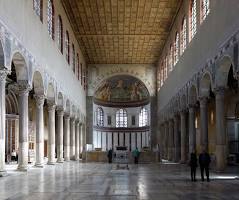
PAUL’S 3RD JOURNEY COLLECTION FOR THE POOR SAINTS IN JERUSALEM

A very important part of Paul’s 3rd missionary journey was collecting money from the churches to take to the poor saints in Jerusalem. He said that this was a way for the mainly Gentile churches that he had established (Corinth, Philippi, Galatia, etc.) to show their appreciation for the role of the Jerusalem church in spreading the gospel to the Gentiles. Paul’s base of operation for his 3 missionary journeys was Antioch of Syria, but that church in Antioch was started by Jewish Christians fleeing persecution in Jerusalem (Acts 11:19-26). The persecution of Christians in Jerusalem first started in Acts 8:1-3 and they spread through Judea and Samaria, but in Acts 11 they had spread north to Antioch, establishing a mainly Gentile church there. Acts 11:19 So then those who were scattered because of the persecution that occurred in connection with Stephen made their way to Phoenicia, Cyprus, and Antioch, speaking the word to no one except to Jews alone. 20 But there were some of them, men of Cyprus and Cyrene, who came to Antioch and began speaking to the Greeks as well, preaching the good news of the Lord Jesus. 21 And the hand of the Lord was with them, and a large number who believed turned to the Lord. 22 The [q]news about them reached the ears of the church in Jerusalem, and they sent Barnabas off [s]to Antioch. 23 Then when he arrived and witnessed the grace of God, he rejoiced and began to encourage them all with resolute heart to remain true to the Lord; 24 for he was a good man, and full of the Holy Spirit and faith. And considerable numbers were added to the Lord. 25 And he left for Tarsus to look for Saul; 26 and when he had found him, he brought him to Antioch. And for an entire year they [w]met with the church and taught considerable numbers of people; and the disciples were first called Christians in Antioch.” So the Jewish Jerusalem church was considered the “mother church” of the Gentile churches.

Paul, in his Romans letter written from Corinth during his 3rd journey, comments on this 3rd journey collection in Romans 15:22 For this reason I have often been prevented from coming to you (i.e. to the Christians in Rome); 23 but now, with no further place for me in these regions, and since I have had for many years a longing to come to you 24 whenever I go to Spain—(tradition and the Muratorian Canon said that he did make a visit to Spain after his release from 2 years of house arrest in Acts 28) for I hope to see you in passing (he did get to go to Rome but as a prisoner Acts 27-28), and to be helped on my way there by you, when I have first enjoyed your company for a while— 25 but now, I am going to Jerusalem, serving the saints. 26 For Macedonia and Achaia have been pleased to make a contribution for the poor among the saints in Jerusalem. 27 For they were pleased to do so, and they are indebted to them. For if the Gentiles have shared in their spiritual things, they are indebted to do them a service also in material things. 28 Therefore, when I have finished this, and have put my seal on this fruit of theirs, I will go on by way of you to Spain. 29 I know that when I come to you, I will come in the fullness of the blessing of Christ.” Perhaps the Jewish saints in Jerusalem were still suffering from an earlier famine, predicted by the prophet Agabus, in the reign of Claudius for which the church in Antioch had taken up a collection and sent it via Paul and Barnabas (Acts 11:27-30).

Paul, in his first letter to the Corinthians written during his 3 year stay in Ephesus while on his 3rd journey, spoke of this collection: 1 Corinthians 16:1 Now concerning the collection for the saints (i.e. the poor saints in Jerusalem), as I directed the churches of Galatia (no actual record of this in his letter to the Galatians), so you are to do as well. On the first day of every week, each of you is to put aside and save as he may prosper, so that no collections need to be made when I come. When I arrive, whomever you approve, I will send them with letters to take your gift to Jerusalem; and if it is appropriate for me to go also, they will go with me.” There were several delegates from the different churches who traveled with Paul toward the end of his 3rd journey all the way to Jerusalem carrying the contributions from their respective churches. AI: “When Paul traveled to Jerusalem with church contributions (the “collection”) for the poor saints, he was accompanied by several delegates representing the Gentile churches, including LukeSopater (son of Pyrrhus) of BereaAristarchus and Secundus (both from Thessalonica), Gaius (from Derbe), TimothyTychicus, and Trophimus (from Asia/Ephesus). These men served as witnesses to ensure the funds from churches in Macedonia, Achaia (Greece), and Asia were delivered faithfully, building unity and preventing suspicion.”

AI: “The early church in Corinth, like many New Testament churches, met in various homes (house churches) but had a regular, collective assembly on the first day of the week (Sunday), primarily for worship, fellowship, and to take collections for the needy in Jerusalem, as described in Paul’s letters, particularly 1 Corinthians. This Sunday gathering was a significant, unified event for the whole congregation, even as daily fellowship occurred in smaller home groups, emphasizing both intimate community and broader unity. Evidence suggests that early Christians, including those in the Corinthian era, met on Sunday mornings before dawn specifically because Sunday was a regular work day in the Roman world. Sunday became a non-work day in the Roman world on March 7, 321 AD, when Emperor Constantine issued a civil law decreeing that all judges, city dwellers, and craftsmen should rest on “the venerable day of the sun,” though agricultural labor was still permitted. This decree, reflecting both Christian and pagan sun-worship influences (like Mithraism), marked the first national legal recognition of Sunday as a day of rest, establishing it as a public holiday alongside existing festival days. Seventh-day Adventists (SDAs) teach that Sunday worship originated from pagan sun worship and was later adopted by the Catholic Church, eventually becoming the standard Christian practice, which they see as a deviation from the biblical Saturday Sabbath. They argue that early Christians, influenced by Roman culture and the “apostate” church, shifted worship from Saturday (the biblical Sabbath) to Sunday (the pagan “Lord’s Day” or “Sun’s Day”), a change solidified by Roman Emperor Constantine in 321 AD.”

A couple of points here. It is obvious from 1 Corinthians 16:1 and Acts 20:7 that the early Christians had already (by around 55 AD) had begun to have their main assembly on Sundays, the first day of the week. No doubt the Jewish Christians, during the transition period from AD 30 to AD 70, still observed the Sabbath and gathered in their synagogues for Saturday worship and instruction. But the Gentile Christians were never commanded to keep the Sabbath. The Sabbath keeping was a special sign and command for the Jewish (Exodus 31:16-17) and Gentiles were never commanded to observe the Sabbath. Some protestants taught that “Sunday was the Christian sabbath” but that is not true. The Sabbath was and still is Saturday, but Gentile Christians do not have to “remember the Sabbath day to keep it holy” as commanded in the 10 commandments. So saying that Sunday is the Christian Sabbath in order to say that one is keeping the 4th commandment (of the 10) is not accurate.

In the 2nd century, “historical accounts, particularly from Pliny the Younger (c. 110 AD) and writings from early Church Fathers, confirm that 2nd-century Christians regularly met on the first day of the week (Sunday) before dawn to worship Christ, sing hymns, and share a meal, celebrating Jesus’ resurrection and new creation, even as some continued Jewish practices while shifting focus to this “Lord’s Day”. The Didache (Early 2nd Century): An early Christian manual that speaks of gathering to break bread on the Lord’s Day. Justin Martyr (Mid-2nd Century): Described Christians meeting on Sunday (the “Lord’s Day”) for worship, scripture, and the Eucharist, noting the shift from the Jewish Sabbath.” (AI)

BTW, the church I was raised in used 1 Cor 16:1-4 as the basis for a command for Christians today to give every Sunday as part of the “5 acts of acceptable worship” but that it obviously a misuse of Scripture. The command in 1 Cor 16 was a special contribution that would end when Paul made his visit to Corinth and took the money from them to carry to Jerusalem. How can that be a command for us today? Of course it’s permissible to give when we assembe on Sundays, but not a command taken from 1 Cor 16.

I have digressed from the 3rd journey collection for the poor saints in Jerusalem, but I find the AI research on the early Christian assemblies to be interesting, accurate, and helpful. I know that AI is copying from articles and I can’t give their sources b/c they don’t give them, but I usually find the AI info to be great. In my next blog I want to go into Paul’s comments on this collection in 2 Corinthians 8,9.

Until tomorrow, Lord willing.


GEN Z

I teach Bible to Gen Z’s every day. Most say Gen Z’s were born 1997 to 2012, making them 13 to 28 as of 2025. I teach 15-17 year old Gen Z’s. AI: “Gen Z’s biggest concerns revolve around ** economic, financial insecurity (cost of living, job security, housing, home ownership), climate change, and mental health (stress, loneliness, anxiety from tech/future uncertainty), alongside significant worries about social justice, gun violence, and AI’s impact on jobs, showing deep engagement with global and personal futures. Generation Z is often cited as the most stressed generation, reporting higher rates of mental health concerns like anxiety and depression. This is linked to growing up with constant exposure to social media, academic and economic pressures, and global uncertainties like climate change and political turmoil.” About 25% of Gen Z identify as LGBQT. About 70% of Gen Z approve of homosexuality.  Gen z make up about 20% of the population.

Having stated all those alarming stats (i.e. alarming if you believe the Bible to be the word of God), about 38% of Gen Z identify as Christians. 48% are religiously unaffiliated (which could mean atheist, agnostic, or “no religion in particular”. Gen z is the most secular generation yet and is the first generation ever to have a higher non Christian percentage than Christian. There is hope with all the TPUSA rallies on Christian campuses. What this means, though, is that the moral gap among younger Christians is wider than ever. If 70% of Gen Z approve of homosexuality, that only leaves 30% of Gen Z who might possibly believe that the Bible is the word of God and that the Bible clearly condemns homosexuality. That is a wide gulf that is hard to cross. The Christian rallies on college campuses are wonderful, but probably involve a relatively small % of Gen Z.

So what’s the point? Just concern. How can we convince that 70% (i.e. those who accept homosexuality) that the writings of the apostle Paul are the word of God and that his condemnation of homosexuality is from God and not from some homophobic whose opinions mean nothing? We can only keep sowing the seed of the word of God, but the liberal trends are very concerning for the future of the U.S. in my opinion. There are many minor doctrines that Christians can disagree on, but the homosexual issue is the litmus test for whether someone accepts the Bible as the word of God or not.

Where do we start to try to change this trend? I think we need to go back to the same method that Paul used in his letters to defend his apostleship. Paul’s enemies tried to convince his followers that he was not an apostle equal to the other apostles. They said that his teaching of not circumcising of Gentile converts was wrong and that they must be circumcised. Paul defended his apostleship often, showing that his teachings were the word of God. He said the “distinguishing marks of a true apostle” were signs, wonders and miracles that they did, and then said that he did those same miraculous proofs showing that he was a true apostle, equal in authority to the other apostles (2 Corinthians 12:11 I have become foolish; you yourselves compelled me. Actually I should have been commended by you, since I was in no respect inferior to the most eminent apostles, even though I am a nobody. 12 The distinguishing marks of a true apostle were performed among you with all perseverance, by signs, wonders, and miracles).”

In the Galatian letter, he wrote: Galatians 1:11 For I would have you know, brothers and sisters, that the gospel which was preached by me is not of human invention. 12 For I neither received it from man, nor was I taught it, but I received it through a revelation of Jesus Christ.” He is thus claiming that his teachings were directly from Jesus Himself. His enemies were claiming that he got his teachings from the other apostles but that he didn’t get it correctly on the issues of circumcision of Gentiles.

After giving instructions on how to use miraculous gifts to the church at Corinth, Paul said this: 1 Corinthians 14:37 If anyone thinks that he is a prophet or spiritual, let him recognize that the things which I write to you are the Lord’s commandment. 38 But if anyone does not recognize this, he is not recognized.” He is claiming that his teachings are the commands of the Lord.

He had already told the Corinthians that his words were from the Spirit of God. 1 Corinthians 2:12 Now we have not received the spirit of the world, but the Spirit who is from God, so that we may know the things freely given to us by God. 13 We also speak these things, not in words taught by human wisdom, but in those taught by the Spirit, combining spiritual thoughts with spiritual words.”

Paul said this to the Thessalonians that he converted to Jesus: 1 Thessalonians 2:13 For this reason we also constantly thank God that when you received the word of God which you heard from us, you accepted it not as the word of mere men, but as what it really is, the word of God, which also is at work in you who believe.” That’s a bold claim that the words he spoke to them were the words of God and not mere men.

Then there is the account of Paul’s conversion to Christianity. He had been persecuting, torturing, imprisoning, even killing Christians (he was known as Saul at that time) until the risen Jesus appeared to him on road to Damascus where he was going to persecute more believers. That changed him to become a witness of the resurrection, later being beheaded for his testimony. One of the qualifications for being an apostle was that the person had to have seen the risen Jesus, so this was essential for Paul becoming an apostle. He made that point in 1 Corinthians 9:1 Am I not free? Am I not an apostle? Have I not seen Jesus our Lord? ” He obviously is referring to seeing the risen Jesus on the road to Damascus. In 1 Corinthians 15:8 he claimed that Jesus appeared to him as He did to the other apostles (and to many others). What could have changed this enemy of Christianity to become a martyr for Jesus? He lost power, fame, and money to become a Christian. His conversion is a great proof of the resurrection of Jssus.

Now if this is not enough to convince someone that Paul’s teachings against homosexuality are the words of God, then I don’t know what to show them. The belief that Paul was an apostle and that his teaching was the word of God is not just some brainwashing that some Christian parents gave their children. This belief is backed by the conversion story of Paul himself.

Just some somber thoughts about Gen Z and the future of America. In the meantime, I will continue to sow the seed of the word of God. Please pray for Gen Z (and all generations) and for America!

THE DECADE OF THE 60’S AND TODAY

I was listening to “You’ve lost that lovin’ feelin”, “Unchained melody”, and “(You’re My) Soul and inspiration” by The Righteous Brothers. Maybe my favorite songs of the 60’s as I was in high school (graduated in 67). So many other great songs in the 60’s.

But then I saw a video of the 12 “rebellion songs” of the 60’s, like Bob Dylan’s “Blowin’ in the wind”, Barry McGuire’s “Eve of destruction”, and the Beatles “Revolution”. These songs were often banned by radio stations but very popular among youth. The 60’s were troublesome times in the United States.

AI: “Yes, the 1960s were incredibly turbulent in the U.S., marked by intense social upheaval, political violence, and cultural clashes (Woodstock), driven by the Civil Rights Movement, the divisive Vietnam War, countercultural shifts challenging sexual norms (hippies, free love), drug use of LSD, marijuana, and others, “duck and cover nuclear drills”, and shocking political assassinations (JFK, MLK Jr., RFK), all against a backdrop of Cold War fear and growing generational divides.” There were a lot of good things in the 60’s (color TV sets introduced to homes; the Civil Rights Act of 1964; Beatlemania (their early songs like “I want to hold your hand” were great); Neil Armstrong walked on the moon, “one small step for man, one giant leap for mankind); Motown Magic with the Supremes and the Temptations; drive-in movie theaters. But the troubles of the 60’s overshadowed the good for the most part.

It was a weird time for religious movements to begin in the 60’s (we would expect nothing less). AI: “The 1960s in America sparked diverse religious movements, including the countercultural Jesus Movement (evangelical Christian response to hippies), the rise of Eastern traditions (Hare Krishna, Buddhism, Transendental Meditation), the emergence of the New Age Movement (yoga, astrology, spiritual transformation), and new spiritual paths like Satanism (Church of Satan and Anton LaVey),  and Wicca. Supreme Court rulings in the early ’60s ended mandatory prayer and Bible reading in public schools. Billy Graham crusades thrived, and new evangelical institutions formed, though debates over theology (Calvinism vs. Arminianism) continued.

So what do we have today? The cultural clashes are at a new heighth (or depth). Gay marriage and the LGBQT movement, and the steep rise of the nones, those who say they have no religious affiliation, are probably the two main cultural shifts that affect and have split religious fundamentalists and denominations.

There is hope. AI: “Gen Z Is Hungry for Spiritual Growth. A staggering 74% of Gen Z seeks to deepen their spiritual lives. This isn’t merely about religion; it’s about genuine encounters with Jesus. Campus revivals are Igniting all over. Students are leading worship nights, prayer gatherings, and baptisms worldwide, and they are making a tremendous impact.” Many non-profit organizations are feeding and providing medical care for the poor worldwide, drilling clean water wells in Africa, providing disaster relief, and supporting persecuted Christians.

So, might we have a nationwide revival like the 1st and 2nd Great Awakenings, or the “prayer revival” of the 1850’s in major U.S. cities? Maybe. But to do so we wll need to get back to the belief that the Bible is the inspired word of God and that homosexuality is condemned by God in the Bible. The homosexual issue is perhaps the “litmus test” for fundamentalists today. We can disagree over many Christian issues and minor doctrines, but there are some basic doctrines that fundamentalist Christians cannot reject, like the Deity of Jesus Christ, salvation by grace through faith in Jesus’ sacrifice on the cross, and not “practicing sin” that God defines as damnable (like the LGBQT doctrines). AI: “About 64% of U.S. adults in 2023/2024 considered same-sex relations morally acceptable (Gallup). 67% of Americans support same-sex marriage (PRRI, 2024).” What’s even more disturbing is that Pew Research shows broad acceptance of homosexuality of 59% among religious people in 2023-24). “In 2015, 51% of Millennial evangelicals felt homosexuality should be accepted by society, a significant shift from older generations.”

The bottom line is that you can’t have a revival if you disagree on what sin is. People are not going to repent of sin if they don’t even think it is sin that needs to be repented of. What can we do? We can pray for our nation. Pray that God will do whatever it takes to humble us back to a full belief in the inspiration of Scriptures. We must defend the apostleship of Pau just as he had to defend his apostleship in the New Testament. After all, it is the inspired writings of Paul that condemn homosexuality (Romans 1:26-27; 1 Corinthians 6:9; 1 Timothy 1:10). Many want to accept the teachings of Jesus but not the teachings of Paul, but we can’t do that. The apostle Peter, whom almost every Christian would accept as an inspired apostle, said that Paul’s writings were on the same level of inspiration and authority as those of the Old Testament Scriptures (2 Peter 3:15-16).

Again, pray and preach. 2 Timothy 4:preach the word; be ready in season and out of season; correct, rebuke, and exhort, with great patience and instruction. For the time will come when they will not tolerate sound doctrine; but wanting to have their ears tickled, they will accumulate for themselves teachers in accordance with their own desires, and they will turn their ears away from the truth and will turn aside to myths.”

Thanks for reading.

ISAIAH 53 AND THE DEAD SEA SCROLL ISAIAH

What is this image about? On the left is the original book (scroll) of Isaiah written in Hebrew about 700 BC. We do not have the original. On the far right is the Aleppo Codex copy of Isaiah in 930 AD. This Aleppo Codex copy of Isaiah is the oldest surviving Hebrew copy of Isaiah (there are older ones in different languages) and was done by the Masoretes. The Masoretes were Jewish scribes who from the 6th to the 10th century AD standardized previous Hebrew copies of Scripture for accuracy. The Masoretic text is used as the basis for most of our modern translations.

As you can see, that is i 1630 year gap between the original Isaiah copy in 700 BC and the oldest surviving Hebrew Isaiah copy in 930 AD. That means that we are relying on 1630 years of copies of Isaiah. How can we be sure that it was copied accurately in all those copies? The skeptics often bring up this issue. Well that is where the middle image of the Dead Sea Scrolls “Great Isaiah” scroll comes in. The Dead Sea Scrolls were found in the Qumran caves near the Dead Sea in 1947 by a Bedouin shepherd boy looking for his straying goat. He found pottery and clay jars that contained 2,000 year old scrolls. Later over 900 scrolls were found. Among them was a complete Hebrew copy of Isaiah called the “Great Isaiah Scroll”. It was dated 125 BC using a combination of radiocarbon dating and paleography (handwriting analysis). That’s over 100 years before the birth of Jesus. That DSS copy of Isaiah is over 1,000 years earlier than the 930 AD Aleppo Codex copy. So how do the two copies compare? That will tell us how accurately copies were made during that 1,000 year gap. Without going into detail, the two copies are almost identical with only small, insignificant variations. That means that the Hebrew copies during that 1,000 year gap were done very accurately. We knew the scribes took great care to copy Hebrew Scripture accurately, but this gives hard evidence that they actually did so. Now we don’t have evidence of accuracy of copying during the gap between the original Isaiah in 700 BC and the DSS Isaiah in 125 BC, but I think we can safely assume that the same accurate copying methods were used during that time gap. Needless to say, this is a great discovery that gives us great confidence in the accuracy of the Old Testament Scriptures and helps us answer the skeptics.

This brings up another question concerning the Messianic predictions in Isaiah, especially in Isaiah 53. Isaiah is known as the “Messianic prophet” because he has more predictions about the Messiah than any other prophet. Isaiah 53 predicts that the Messiah will be despised and rejected and that he will die to bear the punishment for our sins and to justify us. But it also makes several very specific predictions. 1) Being “pierced” (NASB), bruised, and wounded for our offenses. This prediction would include all the suffering from Jesus’ scourging, being beaten, and crucifixion. 2). Not opening his mouth to defend himself but was led like a lamb silently to his slaughter. Jesus did not defend himself before Pilate, which astounded Pilate. 3) His grave was with wicked men. Jesus was crucified between two criminals. Most thought that he was just another criminal worthy of death. 4) Yet he was with a rich man in his death. Joseph took Jesus’ body and put it in a rich man’s unused tomb. Normally, Jesus’ body would have been thrown in an open pit for the dogs to tear apart. 5) He will see his offspring (spiritual offspring) and prolong his days. Jesus would be raised and his life on earth prolonged another 50 days before he ascended to heaven.

There is a video of a man reading the Hebrew copy of Isaiah 53 to non Christian Jews in Israel, asking them who it sound like Isaiah 53 is referring to. They all say “Jesus” even though they don’t believe in Jesus. He then asks where that passage is found, and they all say that it must be in the Christian New Testament, which they also reject. They are shocked when the tells them that he is reading from their Jewish Hebrew Old Testament copy of Isaiah, which would mean that their own Scriptures predicted Jesus’ suffering and dying for our sins. https://www.youtube.com/watch?v=cGz9BVJ_k6s

But that brings up the skeptic objection that these predictions (and other OT Messianic predictions were put in “after the fact”, after the death of Jesus, to make it look like the OT prophets predicted these things about the future Messiah when they really didn’t. Again, the DSS Isaiah answers that objection. The DSS Isaiah scroll has all the predictions listed above and it dates 125 BC, so the predictions were made over 100 years before Jesus was born. They were not added “after the fact”.

The same could be said for the rest of the OT Messianic predictions. Here is a list of the main ones.

image.png

Some of these are quite amazing. 1) He would be born in Bethlehem but his growing up years ministry would be in Galilee (not where you would expect him to minster which would be in Jerusalem and Judea). 2) He would be betrayed for 30 pieces of silver and then that money would be used to buy a potter’s field (Zechariah 11). 3) Zechariah 12:10 says that he would be pierced (daqar: To pierce, to thrust through, to stab). The OT predicted that he would be rejected by the Jews and that would normally mean stoning to death as they did with Stephen in Acts 7. So it is unusual that Isiah 53 would predict that he would be pierced, which he was pierced in his crucifixion with nails in his hands and feet. Then the spear was thrust into his side to make sure that he was dead. The first recorded crucifixion was in 519 BC by the Persian king Darius, so there was no practice of crucifixion around when Isaiah wrote his book. 4) His bones would not be broken. Again, if he were stoned to death many bones would be broken but since he was crucified, his bones were not broken. Even his legs were not broken b/c the Romans declared him dead with no need to break his legs to hasten his death. 5) They cast lots for his clothes at the foot of the cross while he was hanging. 6) He was raised from the dead and his body would not undergo normal decay (shachath: pit, undergo decay, destruction). 6) He would ascend to heaven after his resurrection. 7) He would make his triumphal entry on a donkey (Zechariah 9). 8) Isaiah 35 predicts that the Messiah would make the blind to see, the deaf to hear, the lame to walk, and the mute to speak. In Matthew 11 John, when in prison awaiting his beheading by Herod, sent messengers to ask if Jesus was the “Coming One” or should they expect someone else. While the messengers were watching, Jesus did a few healings and told them to go tell John what they saw. In other words, he was fulfilling the Isaiah 35 prediction of miracles that would prove that he was the Messiah. 9) We could add Daniel 9:24-27 where Daniel predicted the “cutting off” (death) of the coming Messiah and the destruction of the temple in 70 AD.

Imagine us doing a time capsule, putting specific predictions about whoever will be the president of the U.S. in 500 years from now, sealing up the capsule until someone opens it 500 years later. We might predict male or female (1 in 2 odds), where he/she will be born (1 in 36,000 towns and cities in the U.S.), how he/she will die (natural death, assassination, car wreck, plane crash, etc: 1 in hundreds odds); how many children, etc. What would be the odds of let’s say 10 such specific predictions coming true 500 years later exactly as we predicted in our time capsule? Very, very infinitesimally small. Beyond the capability of any human to predict the future. Yet God, by the Holy Spirit through the prophets, predicted at least these 26 and more specific prophecies about the Messiah, all made 400-1000 years before Jesus was born, and all of them came true exactly as predicted.

Let’s add this skeptic objection. Maybe Jesus read these OT Messianic predictions and did various things to make it look like he was fulfilling them. For example, he sent his disciples to get a donkey so he could ride it into Jerusalem and fulfill Zechariah 9:9. That might seem to be a plausible objection, but notice all the predictions that Jesus fulfilled in which he could not have manipulated them. He could not manipulate being born in Bethlehem, or Judas betraying him for 30 pieces of silver, or being crucified instead of being stoned, or being hung between 2 thieves, or being buried in a rich man’s tomb, or not having any of his bones broken, etc. That objection can be easily answered.

Jesus said that everything written about Him in the Law and the prophets had to come true, including his suffering, death, and resurection. They did not expect the Messiah to die before he would defeat the Romans and give Israel independence, so his death was a big obstacle to them believing that he was the Messiah. Jesus told the 2 men on the road to Emmaus the very day he was raised, Luke 24:25 And then He said to them, “You foolish men and slow of heart to believe in all that the prophets have spoken! 26 Was it not necessary for the Christ to suffer these things and to come into His glory?” 27 Then beginning with Moses and with all the Prophets, He explained to them the things written about Himself in all the Scriptures.” Again in Luke 18:31 – Jesus took the Twelve aside and told them, “We are going up to Jerusalem, and everything that is written by the prophets about the Son of Man will be fulfilled. 32 He will be delivered over to the Gentiles. They will mock him, insult him and spit on him; 33 they will flog him and kill him. On the third day he will rise again.”

This comparison of the OT Messianic predictions and the facts about the birth, life, miracles, death, and resurrection of Jesus is the method Paul used to convert Jews to believe that Jesus was the Messiah. Acts 17:1 Acts 17 Now when they had traveled through Amphipolis and Apollonia, they came to Thessalonica, where there was a synagogue of the Jews. And according to Paul’s custom, he visited them, and for three Sabbaths reasoned with them from the Scriptures, explaining and giving evidence that the Christ had to suffer and rise from the dead, and saying, “This Jesus whom I am proclaiming to you is the Christ.” And some of them were persuaded and joined Paul and Silas, along with a large number of the God-fearing Greeks and a significant number of the leading women.”

This is the method used by Philip to convert the Ethiopian eunuch in Acts 8. The eunuch was reading in Isaiah 53:6-7 about someone who would be led like a lamb to the slaughter. He asked Philip if Isaiah was talking about himself or someone else. Philip began at the verse in Isaiah 53 and preached Jesus to him, no doubt showing that Jesus fulfilled the predictions of Isaiah 53 (and other OT Messianic predictions) and was therefore the predicted Messiah. The eunuch believed and asked to be baptized. Apparently Philip also told him about being baptized for the forgiveness of sins (Mark 16:16; Acts 2:38).

I know this is long but I hope it is edifying to your faith. You never know when you present evidences like this who might be reading or listening who has been dealing with skepticism about the fulfilled prophecies. I did this presentation in my Bible classes and right when I thought, “Most of these students are not even interested in this”, two of my students asked the two main questions addressed in this blog. 1) How do we know if the Isaiah 53 predictions were put in after the fact? 2) How do we know that Isaiah 53 has been copied accurately ? I left class thinking, “Lord I just hope that the seen has been sown that will bring these 2 students to a deeper faith in Jesus as the Messiah, the Son of God, their Savior.

Amen.
 

SUPPORT EEM

I found this “short” on youtube of a man with cerebral palsy who said that God called him to preach. Watch: https://www.youtube.com/shorts/IKFdBuInVII That got me thinking about this blog. 1 Corinthians 2:1 And when I came to you, brothers and sisters, I did not come as someone superior in speaking ability or wisdom, as I proclaimed to you the testimony of God. For I determined to know nothing among you except Jesus Christ, and Him crucified. I also was with you in weakness and fear, and in great trembling, and my message and my preaching were not in persuasive words of wisdom, but in demonstration of the Spirit and of power, so that your faith would not rest on the wisdom of mankind, but on the power of God.”

The Greek word for preaching in verse 4 is kérugma: Proclamation, preaching, message: properly, proclamation, the preaching (heralding) of the Gospel – especially its fundamentals (like Jesus’ life, death and resurrection, etc.). It is used in 1 Corinthians 1:21 For since in the wisdom of God the world through its wisdom did not come to know God, God was pleased through the foolishness of the message preached to save those who believe.”

There is another similar word: euaggelizó: To proclaim good news, to evangelize, to preach the gospel: euaggelízō (from 2095 /eú, “good, well” and angellō, “announce, herald”) – properly, proclaim “the good message” (good news). In the NT, 2097 (euaggelízō) refers to sharing the full Gospel of Christ – literally, “gospelizing” that announces the complete message of “the good news” (the Lord’s glad tidings). This is the word Paul used in 1 Corinthians 1:17 For Christ did not send me to baptize, but to preach the gospel, not with cleverness of speech, so that the cross of Christ would not be made of no effect.” The Greek word εὐαγγέλιον (euangelion), translated as “Gospel,” is used in the New Testament, provided in the English Standard Version (ESV). It occurs 89 times in the Greek New Testament.

They basically refer to the same thing. Euaggelizo and euangelion convey the idea of the “good news” aspect of the gospel message. All these Greek words remind us that the 1st century preaching was the announcing of the good news of the death, burial, and resurrection of Jesus that can free us from sin. It’s like the announcement of the birth of a baby. You do that right when the baby is born, when you want to share the good news. It’s like “breaking news” on the TV news channels, news that just happened. The death, burial, and resurrection of Jesus had just been finished and the apostles went about announcing that good news for the first time. They continued to do that in different places to different people all over the Roman Empire in the next 40 years after the resurrection, but it always involved sinners hearing the basics for the first time (at least for them the first time).

Back to 1 Corinthians 2:1-5 and 1:17. Paul emphasized that his preaching of the gospel was not with “persuasive words of wisdom” or “cleverness of speech”. Why? “So that your faith would not rest on the wisdom of mankind, but on the power of God.”

One thing that comes to mind is that most of our “preaching” in churches is not really 1st century gospel preaching to non-Christians (evangelizing). It may be centered on the death, burial, and resurrection but mostly it is just teaching or encouraging Christians and is not focused on converting non Christians. That teaching of Christians (discipling) is needed but it can possibly hinder us from seeing the need to preach the gospel worldwide to those who have never heard the gospel, or at least never heard it explained correctly to them, which would be 1st century preaching. We have a couple of my school’s graduates (and their mates) who are preaching the gospel in Muslim countries where they are proclaiming the gospel to people for the first time. Churches spend a lot of they budget on “preaching” to ourselves, which is really teaching and not preaching, although we call it preaching and those who do it preachers.. Usually there are several very good teachers in each congregation that could do the teaching of the flock in the assemblies or maybe in classes and skip the preaching, but churches seem to rely on the preacher who is more skilled at speech making. Those more skilled speaker preachers bring in all kind of interesting or even funny things to enhance their message. But are we getting people to put their faith in the “wisdom of man” or the “cleverness of the speech makers”? If we have qualified teachers, why don’t we just use them in churches (at no charge) and use our money to actually send missionaries to preach the gospel to people worldwide who have never heard the gospel or seen it in action? Of use that money to print and distribute Bibles all over the world. Of course, that would probably not work in bigger churches since the preacher is so important in the church business since most of church growth is not baptizing sinners but is proselyting members from other churches who like a particular preacher’s preaching.

That is why I encourage people to look into organizations like Eastern European Missions (EEM) who print and distribute Bibles in 30 countries and 20 foreign languages. That organization started back in the 60’s with a few people smuggling Bibles behind the iron curtain. 2 million Bibles and Bible-based materials distributed in 2024 across 36 nations and 32 languages. 570,000 children and teens received Bibles through the Bibles for Kids campaign in 2024. 3,000 trusted field partners in 35+ countries. That’s one of the main organizations that I give my tithes to. Check it out at EEM.org. They also have a new book “The Impossible Dream” that just came out. True stories from 60+ years of God opening “impossible” doors for Scripture across Europe and Central Asia. Those stories will inspire and motivate you to give toward organizations like EEM.

Remember: the Word of God that contains the written gospel message has the power to save. The Holy Spirit works through that word. Give people the Bible so they can read it for themselves and they can become Christians without the aid of some missionary or preacher, although certainly the missionary can explain Scripture to them just as Philip did to the enuch in Acts 8. But we must focus on getting the Word to them.

That’s it for today. I didn’t want to sound cynical about our paid preacher system and the way we do church in America, but I guess I am. Agree or disagree, though, I hope you will consider giving to EEM.

Thanks for reading.

MY “UN-BUCKET LIST”

Do you have a “bucket list”? A bucket list is a number of experiences or achievements that a person hopes to have or accomplish during their lifetime. Have you seen the 2007 movie “The Bucket List”? The movie is called The Bucket List, a 2007 comedy-drama starring Jack Nicholson and Morgan Freeman. The film follows two terminally ill men who decide to complete a list of things they want to do before they “kick the bucket,” embarking on a road trip of a lifetime. The two men, a wealthy businessman and a mechanic, meet in a hospital cancer ward. After their diagnosis, they team up to fulfill their shared wish list, which includes traveling, skydiving, and other adventures.

So, do you have a bucket list? My wife loves to travel. Her bucket list includes an Italy cooking school, a Mediterranean cruise, Niagara Falls, etc. I don’t have a bucket list. I don’t like to travel. I enjoy watching youtube videos about foreign places, especially those in the tropics. That’s more than enough for me and a lot less stress than traveling, catching flights, etc. I have recurring nightmares that I am in a foreign country and it’s an hour before our return flight but I can’t get transportation to the airport. I wake up all stressed out!

I guess it’s good that the Lord has kinda forced me to travel some. We did mission work in Trinidad, West Indies and Colombia, South America and I would never have gone there if not for mission work-and it was some of the best years of my ministry. I went with my wife to Italy b/c she wanted me to-I did get to see the place where Paul was in prison in Rome and I saw volcano ravished Pompeii and Mt Vesuvius. We’ve been to Honduras, Ecuador, Vancouver (the Butchart Gardens) on short mission trips and that was good. We did great family trips to Puerto Rico and Costa Rica. All those are places that I never would have gone to if not for Lord or family pushing me to go. So my bucket list was kinda given to me by God or family, but it’s places I’m glad I went to.

But what’s on my “un-bucket list”? I just made that up so I was surprised to find that an un-bucket list is a real thing. AI: An un-bucket list is a list of things you have decided not to do (or do again), either because you have already experienced them or because you have consciously chosen to avoid them.” That’s places I’ve traveled to and have said that I will never go there again in my lifetime. Atlanta, for example. We crossed Atlanta to go to Stone Mountain. That traffic in Atlanta! I will never go to Atlanta again. If the Lord told me to go do mission work in Atlanta, which is almost due East of our home, I would head due west toward San Diego! Like Jonah. I would not go by land not boat for obvious reasons! Another place on my un-bucket list would now be Dollywood. Our whole family of 18 just went there and had a great time in a great cabin. Fun, fun, fun. My grandkids even pushed me to ride the Wild Eagle and Barnstormer, which I will refuse to ever do again b/c I am afraid of heights and roller coasters that do 4 upside down loops. Then there was the traffic in Chattanooga and Knoxville. Horrible, brutal. If the Lord told me to head north to do mission work in Chattanooga or Knoxville I would head south to Florida instead. Then there’s Chicago. One of our daughters decides to get her masters in Chicago instead of Tuscaloosa. She stays for 2 years in Chicago, living 8 miles from downtown Chicago. So we drive to Chicago to visit her. Traffic is terrible and its windy and cold. It takes 2 hours by car (b/c of the horrible traffic) to drive those 8 miles to where she was working as a waitress that first year. So instead you leave your car and you walk 15 minutes to catch the “L” (the elevated rapid transport system), ride 30 minutes on the L, and then walk 15 minutes to get to her place of work. She would work till midnight, walk 15 minutes to catch a bus, switch to another bus, and then after about 45 minutes of bus rides she walks 15 minutes to her apartment in all kind of bad weather (and yet she loved Chicago). All that to get to a place 8 miles away. I can get in my car here in Huntsville and drive 8 miles in 10 minutes and be at work! Chicago is on the un-bucket list.

That’s enough I guess. What’s on your “un-bucket list”? Places you went to but have pledged to never go there again for the rest of your life. Were those places worth it, looking back,however? Probably so. Dollywood was a great family memory in spite of the traffic. Millennium Park and Navy Pier in Chicago with our daughter. The Summit Skyride to the top of Stone Mountain.

I don’t even know why I’m writing such a dumb blog about my un-bucket list. I think I’m still in shock and internal anger b/c of sitting for 2 extra hours almost stopped dead still on interstates for crying out loud (on I-24 and I-75)! Sorry I wasted your time reading this if anyone happens to actually read this blog to this final point!

DOLLYWOOD!

I was born in December of 1949. Several key events happened that year. After a civil war the People’s Republic of China was established as a Communist country under Mao Zedong and the defeated Republic of China government relocated in Taiwan. NATO began. The Soviets detonated its first atomic bomb (escalating the nuclear arms race). 45 r.p.m. records and Lego plastic bricks were introduced to consumers. Germany split into East and West Germany. A postage stamp cost 3 cents and a gallon of gas cost 26 cents. Harry S. Truman began his 2nd term. The minimum wage jumped from 40 cents to 70 cents. The first credit card, Diner’s Club, was issued. Joe DiMaggio and the New York Yankees won the World Series.

Have you ever imagined how your life could be different if you were born in another country? What if I had been born in China in the middle of a civil war. Or in some famine stricken, poor country in Africa? My entire family of 18 just spent a day in Dollywood. I rode my first upside down roller coaster loop in the Wild Eagle ride (it loops 4 times) and the Barnstormer scared me to death (it swings back and forth and you end up looking straight down at 80 feet high with your body being lifted up off your seat). I’m officially through with theme parks and roller coasters. What’s on your “bucket list”? That wasn’t on my bucket list but I’m glad its over.

It cost almost $150 for a 2 day pass to Dollywood. The daily family income in the poorest countries in Africa is about $2 per day (about $700 per year) so my family spent at Dollywood over 2 years of family income of those poorest countries. We spent 4 nights in a great cabin (which cost about 7 years of the poorest family incomes in Africa). I say all that not to make me or my family feel guilty. There is nothing wrong with enjoying material blessings. We can use our financial wealth in America to help those poor families all over the world through various non profit agencies and should do so as part of our tithing. It just blows my mind how much we take for granted our wealth that most of us enjoy in America although many live in poverty even in the U.S and we need to help them also. It also blows my mind the see churches spend 80% of the money they collect on buildings and staff instead of helping the poor worldwide, drilling wells, and printing Bibles to save the lost.

Many if not most of us “baby boomers” were brought up in Christian homes and taught Christianity. Atheists in the U.S. would call that “brainwashing” children with lies, but I call it teaching our children about God as Deuteronomy 6 commands. Timothy’s mother and grandmother taught him the Old Testament Scriptures from childhood which led him to become a believer in Jesus Christ (2 Timothy 3:15-17). It’s all just about your worldview: atheist vs Christian. I choose Christian. The one main miracle that proves Christianity is the resurrection of Jesus. Paul told the idol worshippers in Athens in Acts 17:30 So having overlooked the times of ignorance, God is now proclaiming to mankind that all people everywhere are to repent, 31 because He has set a day on which He will judge the world in righteousness through a Man whom He has appointed, having furnished proof to all people by raising Him from the dead.” The resurrection of Jesus is our “proof” that Christianity is the worship of the one true God and of Jesus His Son whom He sent to save us from our sins. John 17:And this is eternal life, that they may know You, the only true God, and Jesus Christ whom You have sent.” I wish that all atheists would take a closer look at the resurrection of Jesus. I can’t prove that we landed on the moon, but I believe that we did based on credible eyewitness testiony. I believe that Jesus was raised based on the credible eyewitness testimony of those who saw him after he was raised. Even his enemies admitted that the tomb was empty after 3 days or else why would they make up the story that the disciples stole Jesus’ body while the guards were sleeping. But why didn’t they arrest the disciples and find out what the disciples did with the body if they really believed that? Not to mention that the apostles were hiding in a house in fear after Jesus was crucified. What would have given them the courage to risk their lives to steal the body of Jesus? How could they slip past sleeping guards (even if that was true), roll a 2,000 pound stone away and carry the body of Jesus out without waking the guards? Also, those apostles testified to the resurrected Jesus all over the world 30-40 years after he was raised: all of them met a martyr’s death and none of them recanted their testimony. Muslims might die for their faith, believing a lie, but no one will die knowing that what they claim to believe in is a lie.

Jesus made many appearances to credible eyewitnesses in the 40 days after his resurrection and before his ascension. Paul said (1 Corinthians 15:6) that He even appeared to 500 people at one time, most of whom Paul says were still alive when he wrote 1 Corinthians (about 22 years after the resurrection). That’s a pretty bold statement, challenging any doubters to go talk to the witnesses if they doubt the veracity of the resurrection. But the most convincing post resurrection appearance might be to Saul of Tarsus. Saul was torturing, imprisoning, and having Christians killed until Jesus made one final post resurrection appearance to him about 3 years after Jesus ascended to heaven. That immediately convinced Saul that Jesus was the resurrected Son of God and Messiah. He was baptized to “wash away his sins” and became a Christian. He spent the next 30 or so years suffering extreme hardship giving his testimony to the resurrected Jesus and was beheaded by Nero in 66 AD. People have motives to make drastic changes in their beliefs. What motive could Saul have had to give up his power in Judaism to become a suffering Christian? He did not gain power or money by changing: he lost everything by changing.

Doubters propose many theories to explain the empty tomb. Some say the eyewitnesses of the resurrection “swooned” or faked death (the 1965 book The Passover Plot), but the Romans were professional executioners declared him dead (not breaking his legs to hasten his death) and even pierced his heart with a spear to make sure that he was dead. Some say the eyewitnesses were hallucinating when they claimed to see Jesus, but that doesn’t explain the holes in Jesus’ hands and side that Thomas put his hands in. One final proof of the resurrection is the fact that just 50 days after the resurrection the apostles preached the resurrection in the same city (Jerusalem) in which it occurred, and yet no one refuted their claim. No one ever claimed to see a dead body after the resurrection or gave any proof whatsoever that the body had been stolen and disposed of. Imagine if I started saying that someone in our local cemetery here in Huntsville had been raised from the death 50 days ago. It would be easy for people to check that out and expose it as a life.

If you are reading this and have doubts about the resurrection of Jesus, I hope this helps build your faith in the resurrection. God gives us freewill to make our own choices, so I respect those who choose to reject the resurrection. I don’t know of anything else to offer as proof that Jesus is the Son of God than his resurrection. He fulfilled many old testament prophecies but the #1 proof is the resurrection. If you do believe in the resurrection, then follow Peter’s advice. 1 Peter 3:15 but sanctify Christ as Lord in your hearts, always being ready to make a defense to everyone who asks you to give an account for the hope that is in you, but with gentleness and respect.”

HEBREWS 13 SOME PRACTICAL INSTRUCTIONS

Let’s wrap up our study of the book of Hebrews with chapter 13. The writer has shown that Jesus is a better messenger than the angels, a better servant than Moses, a better high priest than Aaron, has a better covenant than the old covenant, and is a better sacrifice than animals. All this produced a better way, the new and living way, the way of faith and the assurance that we have bold access into the very throne room of God through Jesus who offered his blood once for all.

But notice that in the first 12 chapters there aren’t a lot of instructions on basic Christian living. Instead there are a lot of debte type points and arguments to show all the “better” points. There is a big emphasis on enduring suffering to the end. So if you were the Hebrews writer, how would you conclude this letter with some basic Christian living instructions? Don’t go back to Judaism but what would you think were the most important things for Jewish Christians to focus on in daily living? Here they are:

  1. 13:1 Let love of the brothers and sisters continue.” This love is philadelphia: Brotherly love, love of brothers: from phílos, “loving friend” and adelphós, “a brother”) – properly, affection for the brethren (fellow-believers). Maybe this is a reflection of chapter 2 where we are called the brother of Jesus, making us one big spiritual family where we should have the love this usually found between maternal brothers and sisters. It is interesting that he doesn’t use agape love here. AI: “Where agapē highlights unconditional, sacrificial commitment, philadelphia stresses the warmth and tenderness proper to siblings.”
  2. 13:2 Do not neglect hospitality to strangers, for by this some have entertained angels without knowing it.” The Greek is philoxenia: Hospitality: from phílos, “friend” and xenos, “a stranger”) – properly, warmth (friendliness) shown to strangers; (figuratively) the readiness to share hospitality (generosity) by entertaining in one’s home, etc.” Why would the author stress this? Chapter 10 might be the reason. 10:32 But remember the former days, when, after being enlightened, you endured a great conflict of sufferings, 33 partly by being made a public spectacle through insults and distress, and partly by becoming companions with those who were so treated.  The writer is encouraging his readers to show sympathy and love to Christian strangers who are suffering and undergoing insults and distress. Some had “accepted joyfully the seizure of your property” (10:34) and did not have a place to live. Use your homes to show love to suffering Christians whom you don’t know and to all Christians whom you don’t know. After all, you might be entertaining angels like Abraham did in Genesis 18. 3 men who looked like normal men visited his camp, but they were all 3 angels appearing in human form for a short time.
  3. 13:3 Remember the prisoners, as though in prison with them, and those who are badly treated, since you yourselves also are in the body.” This would also be tied to 10:34 For you showed sympathy to the prisoners and accepted joyfully the seizure of your property.” The Neronian persecution of Christians had begun during the time period of writing Hebrews, so this is probably the prisoners the writer is speaking of: those in prison b/c of their faith. AI: “In ancient times, prisoners often depended on friends and family for necessities like food and supplies. The verse encourages the church to support these prisoners, perhaps those imprisoned for their faith, by praying for them, sending them letters, visiting them if possible, and providing for their needs.” I read in the Voice of the Martyrs magazine of Christians in foreign countries who are put in prison and rely on friends and fellow Chrisitans to bring them any food and water, so this still happens today. You might recall how Onesiphorus “refreshed Paul often” while he was in prison in Rome. 2 Timothy 1:16 The Lord grant mercy to the household of Onesiphorus, for he often refreshed me and was not ashamed of my chains; 17 but when he was in Rome, he eagerly searched for me and found me.” Of course, we can also help those in prison for crimes they have committed although Peter makes this comment in 1 Peter 4:15 Make sure that none of you suffers as a murderer, or thief, or evildoer, or a troublesome meddler; 16 but if anyone suffers as a Christian, he is not to be ashamed, but is to glorify God in this name.” One of my best friends and brother in Christ spent 25 years in prison for murder and it was a joy to help him during that 25 years. He has been out of prison for 15 years and is doing well spiritually.
  4. 13:Marriage is to be held in honor among all, and the marriage bed is to be undefiled; for God will judge the sexually immoral and adulterers.” Christianity begins in the home with husbands and wives faithful to their vows that they made to God. As a minister, I did a lot of vows. Here was the vow I usually had them say: “I, (Name), take thee (Name), to be my wedded (husband/wife), to have and to hold from this day forward, for better, for worse, for richer, for poorer, in sickness and in health, to love and to cherish, and to be faithful to you only, as long as we both shall live”. This is a vow before God to not ever commit adultery, an oath, and God in the Old Testament stressed keeping your oaths and vows that you make to God. Often that part “to be faithful to you only” is not in vows today. Maybe that is b/c potential mates don’t want to make such a strong sexual commitment vow. Since the divorce rate is over 50% and most likely adultery is involved in each divorce, you can see where the vows are becoming less and less restrictive sexually. God will judge not only the adulterers but also the sexually immoral, which would include any kind of forbidden sexual acts not marriage related. Research shows that nearly all Americans (95%) have had premarital sex by age 44, and a significant majority (75%) have it by their early 20s. Many young adults who have premarital sex also cohabit with their partners before marriage, a fairly common practice nowadays. God will forgive those who repent of sexual immorality and/or adultery, but it is a very serious sin. A strong admonition comes from the apostle Paul in 1 Corinthians 6:18 Flee sexual immorality. Every other sin that a person commits is outside the body, but the sexually immoral person sins against his own body. 19 Or do you not know that your body is a temple of the Holy Spirit within you, whom you have from God, and that you are not your own? 20 For you have been bought for a price: therefore glorify God in your body.” I know you could say that all sin is equal, but Paul is saying that sexual immorality is worse than other sins.
  5. 13: Make sure that your character is free from the love of money, being content with what you have; for He Himself has said, “I will never desert you, nor will I ever abandon you,” so that we confidently say, “The Lord is my helper, I will not be afraid. What will man do to me?” The Greek is aphilarguros: Free from the love of money, not greedy. from “not,” philéō, “fond of” and árgyros, “silver”) – properly, “not fond of silver,” i.e. not covetous for money; free from the love of materialism; not dominated (over-influenced) by the desire for financial gain; non-materialistic.”  It is the love of money, not money itself, that is the root of all evil. 1 Timothy 6:10 For the love of money is a root of all sorts of evil, and some by longing for it have wandered away from the faith and pierced themselves with many griefs.” Jesus said, Luke 12:15 But He said to them, “Beware, and be on your guard against every form of greed; for not even when one is affluent does his life consist of his possessions.” He then went on to tell the parable of the rich fool who used his overflowing wealth to build bigger barns. A classic text on greed is Ecclesiastes 5:10 One who loves money will not be satisfied with money, nor one who loves abundance with its income.” Paul puts greed right there along with sexual immorality, adultery, idolatry, drunkenness, and homosexuality in 1 Corinthians 6:Or do you not know that the unrighteous will not inherit the kingdom of God? Do not be deceived; neither the sexually immoral, nor idolaters, nor adulterers, nor homosexuals, 10 nor thieves, nor the greedy, nor those habitually drunk, nor verbal abusers, nor swindlers, will inherit the kingdom of God.” Someone has said that greed is the most common “hidden” sin among church members in the U.S. But the writer of Hebrews stresses “being content with what you have” along with not loving money or being greedy. It is hard not to look at others and want more than what you have. Others might be paid better, have better jobs, have better houses and cars, have vacation homes, etc. but are you really content with what you have? Paul said in 1 Timothy 6:For we have brought nothing into the world, so we cannot take anything out of it, either. If we have food and covering, with these we shall be content. But those who want to get rich fall into temptation and a trap, and many foolish and harmful desires which plunge people into ruin and destruction.” When you make job and career decisions, do you think about the spiritual consequences of each decision or is money the main consideration? He also said in Philippians 4:11 Not that I speak from need, for I have learned to be content in whatever circumstances I am. 12 I know how to get along with little, and I also know how to live in prosperity; in any and every circumstance I have learned the secret of being filled and going hungry, both of having abundance and suffering need.” No matter how bad the circumstances get, the Lord will always be with you to help, strengthen, and comfort you. He might not remove the bad circumstance, but He will be your Helper to help you through it. That takes away the fear, “I will not be afraid. What will man do to me?” Many of us Christians live in fear. Fear or being afraid of a lack of money, of failing in business, of bad health, of tragedy that might happen, of being ridiculed b/c of our faith, of death, of physical harm, of losing a job, etc. That is sad b/c we have the Father as a constant 24/7 helper. We should be able to be at peace through any and all bad circumstances.

Chapter 13 closes with a few more instructions concerning spiritual sacrifices. In the old covenant, only those of the Levitical tribe were priests, but in the new covenant, all Christians are priests. The Reformation Movement called this the “priesthood of believers”. Peter taught this in 1 Peter 2:And coming to Him as to a living stone which has been rejected by people, but is choice and precious in the sight of God, you also, as living stones, are being built up as a spiritual house for a holy priesthood, to offer spiritual sacrifices that are acceptable to God through Jesus Christ.” John said in Revelation 1:5 To Him who loves us and released us from our sins by His blood— and He made us into a kingdom, priests to His God and Father.” The Hebrews writer had already said in 5:1 that it was the duty of priests to “offer up sacrifices and gifts”. All Christians are priests who should offer up spiritual sacrifices (not animals). What are those sacrifices? Hebrews 13:15 Through Him then, let’s continually offer up a sacrifice of praise to God, that is, the fruit of lips praising His name. 16 And do not neglect doing good and sharing, for with such sacrifices God is pleased.” 1) Praise. 2) Doing good. 3)Sharing. 4) Romans 12:1 adds “Therefore I urge you, brothers and sisters, by the mercies of God, to present your bodies as a living and holy sacrifice, acceptable to God, which is your spiritual service of worship.” In one sense, everything you do in he name of Jesus is a living sacrifice, one form of worship and reverence toward God. 5) Thanksgiving (Psalm 50:23 He who offers a sacrifice of thanksgiving honors Me). 6) Prayer. The prayers of the saints was like offering incense in Revelation 5:8. Notice “continually”: regularly, often, without stop. Would people look at you doing all these things on a regular basis and see that you truly are a spiritual priest of God? We don’t need Roman Catholic priests. We Christians are all priests.

I hope you have enjoyed this study of Hebrews.

HEBREWS 12:1-17 THE DISCIPLINE OF THE LORD

This blog is from Hebrews 12. The key verses is 12:For consider Him who has endured such hostility by sinners against Himself, so that you will not grow weary and lose heart.” The Jewish Christians being written to had suffered much at the hands of the Romans and even their Jewish non-Christian brethren like Saul of Tarsus who tortured and killed Christians. 10:32 But remember the former days,when, after being enlightened, you endured a great conflict of sufferings, 33 partly by being made a public spectacle through insults and distress, and partly by becoming companions with those who were so treated. 34 For you showed sympathy to the prisoners and accepted joyfully the seizure of your property, knowing that you have for yourselves a better and lasting possession.” Many of them were “growing weary and losing heart” and leaving the faith to return to Judaism.The Hebrew writer encourages them to keep their eyes of Jesus who suffered so much as an example of faithful sufferings for the Lord. 1 Peter 2:21 For you have been called for this purpose, because Christ also suffered for you, leaving you an example, so that you would follow in His steps, 22 He who committed no sin, nor was any deceit found in His mouth; 23 and while being abusively insulted, He did not insult in return; while suffering, He did not threaten, but kept entrusting Himself to Him who judges righteously.”

So how did Jesus make it through His suffering? 12:2 who for the joy set before Him endured the cross, despising the shame, and has sat down at the right hand of the throne of God.” Jesus kept his eyes on the joy that He would receive after he would be raised and ascend back to the Father to be restored to the glory that He had with the Father before he became flesh. John 17:I glorified You on the earth by accomplishing the work which You have given Me to do. And now You, Father, glorify Me together with Yourself, with the glory which I had with You before the world existed.” So Jesus kept his eyes on that future glory and those who are suffering should keep their eyes on Jesus, their example of suffering. Of course, they could also contemplate their future glory when they would be glorifed and given immortality. Romans 8:16 The Spirit himself doth testify with our spirit, that we are children of God; 17 and if children, also heirs, heirs, indeed, of God, and heirs together of Christ — if, indeed, we suffer together, that we may also be glorified together. 18 For I reckon that the sufferings of the present time [are] not worthy [to be compared] with the glory about to be revealed in us. A lot of Bible sholars think this glorification of the sons of God is still in our future as of today, but notice that it was “about to be” revealed in the lifetime of those reading Romans. The Greek word is mello and it always in the New Testament refers to something about to happen or about to be at a certain place. So this glorification of the sons of God had to be something soon in the lifetime of the readers. It could only refer to 70 AD and the destruction of. the temple and of Jerusalem. In 70 AD it was revealed by God that the true sons of God were the Christians and followers of Jesus and not the rebellious unbelieving Jews whom God sent the Romans to punish and kill. Josephus said that a million Jewish non-believers died in the destruction of Jerusalem in 70 AD. That glorification of the Jewish Christians in 70 AD might not some visible bright light that we might expect, but it was a glorification of the sons of God nevertheless. The rest of Romans 8:19 ff describes the new creation to be revealed in 70 AD which is a spiritual new creation and not a physical restoration of the earth to the Garden of Eden state, which is what many say that it is. It is something that also was “about to happen” and a restored earth did not happen soon after writing Romans. A spiritual new heavens and earth did happen in 70 AD (2 Peter 3) which refers to the new Messianic order of things after the old heavens and earth, i.e. the Jewish system, were destroyed in 70 AD. A new spiritual heavens and earth, the Messianic system, the new covenant church system, would indeed be a re-creation of the old earth (Judaism) in a spiritual sense.

The Hebrews writer follows with 11:You have not yet resisted to the point of shedding blood in your striving against sin; and you have forgotten the exhortation which is addressed to you as sons, “My son, do not regard lightly the discipline of the Lord, nor faint when you are punished by Him; for whom the Lord loves He disciplines, and He punishes every son whom He accepts.” The Hebrews writer consider their suffering to be “discipline” from the Lord. The Greek word is paideia: Discipline, instruction, training, education. Instruction that trains someone to reach full development (maturity). AI: “In every setting it points to the formative process by which character, faith, and obedience are shaped through purposeful training that may include corrective measures.” The word is used of the the whole training and education of children.

The Hebrews writer almost sarcastically says that they haven’t even shed blood yet (like Jesus did) so they should put their suffering in perspective. It could be worse and would be worse for many Christians in the Roman Empire in the first 300 years with many Christians shedding blood in the collosseum, eaten by lions or killed with the Roman sword. But apparently many of the readers dif not see their suffering as the discipline of the Lord. Now that doesn’t mean that God is punishing them for their sins by their suffering, although God’s discipline could include punishment for sin just as the discipline a father gives his son can include punishment. But God’s discipline is often just allowing us to suffer and we should take that suffering as a sign that God loves us and is training and perfecting our character and faith just as Jesus was perfected by his suffering.

The writer adds, Hebrews 11:Furthermore, we had earthly fathers to discipline us, and we respected them; shall we not much more be subject to the Father of spirits, and live? 10 For they disciplined us for a short time as seemed best to them, but He disciplines us for our good, so that we may share His holiness. 11 For the moment, all discipline seems not to be pleasant, but painful; yet to those who have been trained by it, afterward it yields the peaceful fruit of righteousness.” Earthly fathers can only discipline and train their children the best they know how and their discipline will be full of mistakes, but the Father’s discipline is perfect, just what we need. It might be painful but it will produce holiness in us if we accept it with faith, trusting God that it can make us stronger.

Hebrews 12:12 Therefore, strengthen the hands that are weak and the knees that are feeble, 13 and make straight paths for your feet, so that the limb which is impaired may not be dislocated, but rather be healed.” We have a responsibility to help those who are struggling with their faith, who are growing weary and losing heart. They are compared to someone with weak hands and feeble knees, unable to stand and walk properly (spiritually the same). Or to someone who has an injured leg, maybe a dislocated joint, and who can’t walk straight (spiritually the same). Go to them, encourage them, rebuke them if necessary, try to show them that their suffering is discipline of a loving Father who wants to make them stronger spiritually.

The writer closes this section with 12:14 Pursue peace with all people, and the holiness without which no one will see the Lord. 15 See to it that no one comes short of the grace of God; that no root of bitterness springing up causes trouble, and by it many become defiled; 16 that there be no sexually immoral or godless person like Esau, who sold his own birthright for a single meal. 17 For you know that even afterward, when he wanted to inherit the blessing, he was rejected, for he found no place for repentance, though he sought for it with tears.” Apparently there were a lot of Jews who were trying get their Jewish Christian brethren to leave the Chrisitan faith and return to Judaism. Some might have been bitter toward Christianity, complaining that Jesus hadn’t come soon like He predicted, complaining that Jesus hadn’t restored the Jewish kingdom to its former power like in the days of King David, freeing the Jews from Roman oppression and establishing a free Jewish state like in the Maccabean period (1st century BC). Those troublemakers were probably sexually immoral and godless like Esau who no longer listened to Jesus. Jesus had indeed predicted that He was coming soon (Mt 10:23; 16:27,.28; 24:30-34; 26:64) in the lifetime of His listeners and He would still do so with His 2nd coming in 70 AD to judge the Jews and send the Romans to destroy the temple and Jerusalem. He never intended to establish a physical kingdom (John 18:36 “my kingdom is not of this world), but instead did establish a spiritual kingdom, the church. Most Jews expected a restoration of the Jewish physical kingdom and totally missed the spiritual kingdom. The Hebrews writer warns the readers to not let any such bitter person corrupt the other Jewish Chrisitians.

I hope this hasn’t been too long, but these verses are all connected. If you are suffering in any way, I hope that this section encourages you and helps you to “not grow weary and lose heart (get discouraged)”.


HEBREWS 11 GOD’S “HALL OF FAITH”

Hebrews 11:1 Now faith is the certainty of things hoped for, a proof of things not seen. (NASB). 11:1 Now faith is the substance of things hoped for, the evidence of things not seen. (KJV) 11:1 And faith is of things hoped for a confidence, of matters not seen a conviction. (YOUNG’S YLT) 11:1 Now faith is confidence in what we hope for and assurance about what we do not see. (NIV)


Using the NASB, “certainty” in Greek is hupostasis: Substance, assurance, confidence, essence, reality. standing under a guaranteed agreement (“title-deed”); (figuratively) “title” to a promise or property, i.e. a legitimate claim (because it literally is, “under a legal-standing“) – entitling someone to what is guaranteed under the particular agreement. hypóstasis (“title of possession”) is the Lord’s guarantee to fulfill the faith. AI: “ὑπόστασις (hypostasis), denotes the underlying reality that gives something its concrete existence (thus “substance” KJV). In Scripture the term reaches beyond philosophical abstraction and speaks to what is solid, reliable, and enduring—whether the very being of God (used in Hebrews 1:3 of the Son being the same nature as the Father which led the fourth-century theologians to adopt hypostasis to speak of the three divine Persons) ,or the settled confidence of believers.” In other words, faith is not just your belief or wish or hope that God will give you the eternal life that He guaranteed by the death of Jesus to all believers: it is the very nature of God that makes that guarantee and thus the guarantee is “certain” or sure.

Using the NASB, “Hoped” in the Greek is elpizó: To hope, to expect, to trust. ἐλπίζω presents hope not as a tentative wish but as a confident, forward-looking trust grounded in the character and promises of God. It is not just “I hope I win the lottery” without any real expectation of winning. It is a confident expectation of receiving the eternal life that God has guaranteed.

Using the NASB, “proof” in the Greek elegchos: Reproof, conviction, evidence, proof. AI: “The word denotes a demonstrative proof that exposes error and brings something to the light so that its true character is unmistakable. It functions both negatively (showing a fault) and positively (establishing what is real and sure).” Thus the word can be a negative “reproof” (2 Timothy 3:16 where the term highlights Scripture’s capacity to confront false belief or behavior and establish what is right:early Christian teachers cherished the term because it protected the church from error), or it can be a positive proof that you will for sure receive what you don’t have right now (Hebrews 11:1).

That’s a lot of Greek words and AI comments (which all come from biblehub.com “Greek text analysis”), but I think it gives a much richer meaning to Hebrews 11:1 and what faith is. Faith is trusting and believing that the promise of eternal life that God has guaranteed us by the death of Jesus is a sure thing that has solid proof b/c it is based on the very nature of God. It is believing and trusting that God will do what He has promised.

The Hebrews writer starts out with a current (for them) example of faith that uses the definition and description of faith that he gave in 11:1. Hebrews 11:By faith we understand that the world has been created by the word of God so that what is seen has not been made out of things that are visible.” The Greek word for “world” is actually aión: Age, eternity, world, forever, everlasting (not cosmos, the physical world or earth). Young’s translates it more correctly: Hebrews 1:by faith we understand the ages to have been prepared by a saying of God, in regard to the things seen not having come out of things appearing.” (YLT) The word might include the worldly things in each age, but really refers to the past ages themselves. Here it seems to refer to the age in which God created all things by simply speaking them into existence. He spoke and something became visible that was did not exist before that. You can see how this the description of faith in 11:1. You believe God will give you something that you can’t visibly see right now, but it will become a visible reality in the future.

Then begins the great “hall of faith”. We have the baseball hall of fame in Cooperstown, New York with 350 honorees such as Babe Ruth, Honus Wagner, Ty Cobb, Lou Gehrig, Joe DiMaggio, Satchel Paige, “Shoeless Joe” Jackson, Frank Robinson, Jackie Robinson, Mickey Mantle, Hank Aaron, Reggie Jackson, Nellie Fox, Ted Williams and many, many more. The Ken Burns documentary Baseball is an 18.5 hours miniseries that is dear to baseball lovers like myself (that was my sport in my younger years). Of course there are hall of fames for football and every other sport. But the Hebrews writer gives us the greatest hall of fame ever in this hall of faith b/c faith is eternal while sports is not.
Hebrews 11:2  For by it (i.e faith) the people of old gained approval.” “BY FAITH”: (this is just a summary: go back and read the entire chapter).
Abel: Offered a more acceptable sacrifice to God.
Enoch: Was taken up so that he would not see death.
Noah: Built an ark to save his family.
Abraham: Obeyed when called to a new land and offered his son Isaac as a sacrifice. Sojourned in that land 75 years without ever possessing it but never considered going back to Ur.
Sarah: Was able to have a child in her old age.
Isaac: Blessed his sons, Jacob and Esau, with faith that God would bless them.
Jacob: Blessed his grandsons Ephraim and Manasseh while in his last days before death in Egypt.
Joseph: Made mention of the exodus of the Israelites and made plans for it. Moses’ parents: Hid him when he was born at the risk of death.
Moses: Refused to be called the son of Pharaoh’s daughter, left Egypt, and kept the Passover.
Joshua: Led the Israelites into the promised land.
Rahab: Helped the Israelite spies escape.
Gideon, Barak, Samson, and Jephthah: These judges performed great acts of faith.
David: Slew Goliath.
Samuel: Led the people as a prophet and judge. 
Other examples
The walls of Jericho: Fell down after the Israelites marched around them.
The people who passed through the Red Sea: Crossed the sea on dry land.
Kings, prophets, and martyrs: The chapter concludes by mentioning these groups as well, who lived by faith: 11:32 the prophets,33 who through faith did subdue kingdoms (Gideon, Barak, Samson, Jephthah), wrought righteousness (Samuel?), obtained promises, stopped mouths of lions (Daniel), 34 quenched the power of fire (the 3 Hebrew children in Daniel), escaped the mouth of the sword, were made powerful out of infirmities, became strong in battle, caused to give way camps of the aliens. 35 Women received by a rising again their dead (the widow of Zarephath who had her son raised by Elijah and the Shunammite woman whose son was raised by Elisha), and others were tortured (Jeremiah, Ezekiel), not accepting the redemption, that a better rising again they might receive,36 and others of mockings and scourgings did receive trial, and yet of bonds and imprisonment;37 they were stoned, they were sawn asunder (the apocryphal book  The Martyrdom of Isaiah elaborate on how Isaiah was martyred in this way by King Manasseh) , they were tried; in the killing of the sword they died; they went about in sheepskins, in goatskins — being destitute, afflicted, injuriously treated,38 of whom the world was not worthy; in deserts wandering, and [in] mountains, and [in] caves, and [in] the holes of the earth.”

The Hebrews writer concludes this hall of faith with a curious statement: 11:39 And all these, having gained approval through their faith, did not receive what was promised, 40 because God had provided something better for us, so that apart from us they would not be made perfect.” God promised eternal life before the ages began, but only officially defeated death and gave immortality to believers in 70 AD. So the OT hall of faith people were approved by God to be given eternal life and were waiting in hades but did not receive immortality until they were raised (Dan 12:1-2) at the endof the age in 70 AD. They would join the 1st century believers in receiving immortality (1 Cor 15:50-55) at 70 AD. So they would not get their immortality “apart from” or before the readers of the Hebrews letter would receive their immortality in 70 AD. They would not be made perfect or complete without the inclusion of New Testament believers. They would all get their immortality together in 70 AD whether they were dead or alive (1 Cor 15:50-55).

Having researched all this, now the question is “How solid and strong is my faith?” That faith might be accomplishing great things for God or just enduring suffering or just having an assurance off eternal life in an age of atheism and skepticism.

As Paul said, 2 Corinthians 13:Test yourselves to see if you are in the faith; examine yourselves!” “The faith” here would be that body of doctrine that is essential to Christianity (the Deity of Jesus, salvation by grace through faith in the death, burial and resurrection of Jesus, etc.). But it would also include examining your personal faith. That is what I need to do!