Revelation 21-22

We have seen that Revelation begins (ch 1) and ends (ch 22) saying that the things predicted in the book will happen shortly after the time that John wrote the letter. Then in ch 17 we saw that the letter was written while Nero, the 6th emperor of Rome, was still living. He died in 68 AD, so the book was written before 68 AD. We have seen that the theme of the book is the “avenging of the blood of the apostle, prophets, and saints (ch 18). We have seen that the “great city” is where the Lord Jesus was crucified (11:8), and is the same as the woman (17:19), which is the same as “Babylon” that fell (ch 17,18). Thus, the great city, Babylon, is Jerusalem, not Rome as many have thought. We have seen the wrath of God poured out on the old Jerusalem in 70 AD as the sea beast Rome turned on the harlot woman Jerusalem and “burned her with fire” (ch 17).

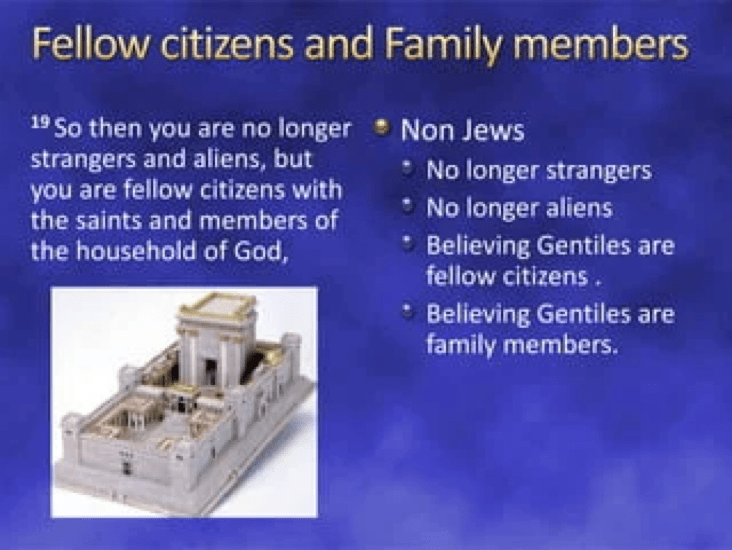
So it is sequential that ch 21 begins with a “new Jerusalem” coming down out of heaven to replace the “old Jerusalem” that has been destroyed in 70 AD. This new Jerusalem is described as the “bride of the Lamb”. This obviously refers to the church of the new covenant, which is described as the “heavenly Jerusalem” (Hebrews 12:22), the “bride of Christ” (Ephesians 5:22; 2 Corinthians 11:2). This new Jerusalem is not a physical city, but a spiritual one, the very body of Christ, the church. This new Jerusalem replaces the old Jerusalem soon after the letter is written, so it is not predicting a rebuilding of the physical city of Jerusalem at some time in our future, a many have predicted. Jesus never came to establish a physical kingdom built around the physical city of Jerusalem, as was the case under the old covenant. Under the old covenant, the Jewish nation was God’s chosen nation, but under the new covenant, the church is God’s chosen nation (1 Peter 2:9), a spiritual kingdom made up of Jewish and Gentile believers of all nations and ages since the establishment of the church in the book of Acts.

Ch 21 also says that the old heavens and earth passed away, obviously at the same time that the old Jerusalem was destroyed in 70 AD. The old heavens and earth was replaced by a new heavens and earth, and that had to happen shortly after the writing of the letter. Obviously the physical heavens and earth were not destroyed shorting after John wrote the letter, so it it is talking about that. We conclude that is symbolic of a new order of things in the Messianic Age. The old heavens and earth would be the old Jewish order of things under the old covenant, and the new heavens and earth would the the new order of things under the new covenant in the Messianic Age. Since the destruction of the old heavens and earth is not a physical destruction of the heavens and earth, the replacement new heavens and earth is not a physical thing. The new Jerusalem is called a “heavenly Jerusalem”, so this fits a new heavenly spiritual order of things. Isaiah had predicted a new heavens and earth with a new Jerusalem with no more weeping or crying (Isaiah 65:17-19), and that this new heavens and earth would endure forever (66:22). Isaiah connects the new Jerusalem with the new heavens and earth. Since the new Jerusalem is the church, we expect the new heavens and earth of Isaiah to be a spiritual fulfillment also. Peter must be referring to this promise in 2 Peter 3:13 of a new heavens and new earth. The only place in the Old Testament that predicts a new heavens and earth is in Isaiah 65,66. But is Peter in 2 Peter 3 predicting a physical destruction of the old heavens and earth at some time in our future, yet to be fulfilled? Is he predicting that the elements of the earth will be physically destroyed and that God will then rebuild the heavens and earth with a new physical heavens and earth? Many have taught that, but Peter in 2 Peter 3 is predicting the destruction of the old Jewish system, the old heavens and earth, and replacing it with the new order of things in the Messianic system of the new covenant. He is predicting the same thing as John did in Revelation 21. But doesn’t it say that the “elements will be burned up”? Yes, but study the Greek word for “elements”. It is used several times in the New Testament and it always refers to the elemental rules of the Law or of pagan religions. It never refers to the physical elements of the earth, such as Hydrogen, Oxygen, Nitrogen, etc. 2 Peter 3 is a symbolic description of the destruction of the old Jewish system in 70 AD and replacing it with the new Messianic system. The context of 1 and 2 Peter demands this interpretation also. In 1 Peter 4:7, Peter had predicted that the “end of all things is near”. If he was predicting that the end and destruction of the physical earth was near at the time of writing, then he was a false prophet since that did not occur. If he was predicting that the end of the Jewish system was near, then that was fulfilled in 70 AD and he was a true prophet, and that is the case. So he follows up that 1st letter shortly thereafter with the 2nd letter. His prediction of the destruction of the old heavens and earth in 2 Peter 3 would have to fit the time frame of 1 Peter 4:7, “the end of all things is near”. If not, then the end of all things was near but the end of the old heavens and earth would not be near (still left to be fulfilled even today). The 1st and 2nd letter cannot contradict themselves. If 2 Peter 3 does not predict a physical destructon of the heavens and earth, then does the Bible even predict such an event. Not to my knowledge. Several passsages state that the heavens and earth will endure forever. I’m sure God could decide to change His mind in the future and destroy this earth, but the Bible just doesn’t predict such an event. So it is very important to study 2 Peter 3 as we study Revelation 21:1 and the passing of the old heavens and earth, i.e. the old Jewish system and order.

21:3 also says that, after the destruction of the old Jerusalem, the tabernacle of God would be among men and that God would dwell among men. Ezekiel had predicted that when the Messiah would come that God would then dwell among His people and that His sanctuary would be in their midst forever (Ezekiel 37:27,28). That sanctuary would be the same as the tabernacle that John saw in Revelation 21. The tabernacle of the old covenant contained the Holy of Holies where God dwelt on the mercy seat of the ark of the covenant. That of course was a symbolic thing because we know God dwells in his temple in the heavens (Revelation 14:17), and Stephen said that God did not dwell in temples made with hands (Acts 7:48). So we conclude that this tabernacle among men in Rev 21 is the dwelling of God in His church. We are familiar with the fact that the New Testament tells us that God dwelt in the Christians through the indwelling of the Holy Spirit, and that indwelling was tangible, visible proof that God’s presence was, and still is, in Christians. This is a spiritual indwelling, since, again, God’s actual presence fills the universe.

In this new Jerusalem and tabernacle among men there will be no more crying, death, or pain. Often this has been interpreted as heaven itself, but this actually refers to the spiritual blessings of being in God’s church right here on earth in the Messianic Age (which has been here since the book of Acts). Passages like Isaiah 35:10 predict that in the church we will have everlasting joy and “sorrow and sighing” will flee away. Isaiah 25:8 predicts that in the Messianic Age death will be swallowed up and God will wipe away all tears from all faces. Paul said in 1 Corinthians 15:52ff that some of those he was writing to would still be alive when this passage was fulfilled and when death would be swallowed up in victory. “No more death, crying, or pain” therefore refers to the spiritual state of joy for Christians even though they may shed tears, feel pain, and die. Now heaven will be a continuation of that joy, even removing physical pain, crying, and death, but Revelation 21:4 is talking about God’s church on earth, not heaven.

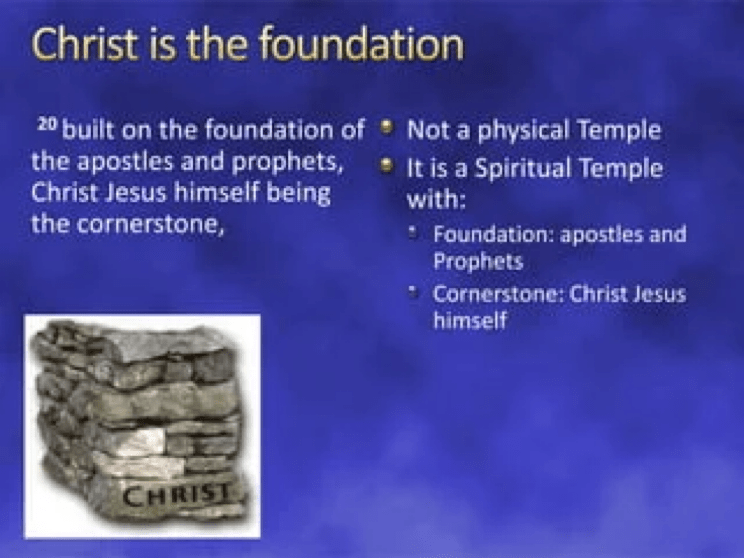
One of the angels who had had the 7 bowls of wrath shows John another vision of the new Jerusalem, the bride of the lamb (again, the church). This vision is of a great city, with walls with the names of the 12 tribes of Israel, and foundation stones with the names of the 12 apostles of Jesus. The new covenant church began as a Jewish Christian church and its foundation was the apostles (Ephesians 2:20), although the chief corner stone of that foundation was Jesus, of course. There were many precious stones in this city, and streets of gold. Again, this refers to the church, the new Jerusalem that replaced the old Jerusalem in 70 AD. Many times preachers have taught us that it refers to streets of gold in heaven, but that is not the case. This description is similar to Ezekiel’s prediction of a new Messianic temple in Ezekiel 40-48, which is also symbolic of the building of the church, not some physical temple on earth. Zechariah 6:12 says that the branch Jesus would build the temple of the Lord, i.e. the church, the tabernacle of Rev 21.

21:22 makes a significant statement that in this new Jerusalem there would be no temple because God and the Lamb are its temple. This can only mean that there will be no physical temple in this new Jerusalem in the Messianic Age. Of course, we have already seen that God dwells in His church, the tabernacle, the temple, and so there is no need or desire for a physical temple any longer. Oh how this contradicts the teaching of so many who expect the physical temple to be rebuilt some day! There will be no need for the sun or moon because the glory of God illuminates it and the Lamb is its lamp (Jesus is the light of the world). There is no night there and the gates will never be closed (again, symbolic of the church). The glory and honor of the nations will be brought into this new Jerusalem. We are reminded of the several times when Isaiah predicts that the nations, the Gentiles, will be brought in to the church on equal footing with the Jews in the church. Those Christian converts from among the Gentiles are the glory of the nations! Isaiah 66 predicts the destruction of the old Jerusalem and the establishment of the new Jerusalem, and says that brethren from the nations will be brought into the new Jerusalem and will be made priests and Levites. This can only refer to the church where all Jew and Gentile Christians are priests.

In ch 22 there is a river of the water of life flowing from the throne of God in this new Jerusalem church. This river is predicted by Ezekiel in Ezekiel 47 and 48. The tree of life that was lost in the Garden of Eden is restored, bearing fruit year round and for the spiritual healing of the nations. There will no more curse, for as Galatians 3 tells us, Jesus bore the curse of sin for us by dying on the cross. Those in this new Jerusalem church will see God’s face. While that might sound literal, we know that no one can see the face of God in its fullest. Instead, with God dwelling in us, we can see the face of God spiritually through faith through this new indwelling relationship with God, a new intimacy with Him. This is not talking about heaven some day, but the here and now in the church. The saints in the church will reign forever and ever in eternal life. As per the article on Revelation 20, the 1000 year reign refers symbolically to the 40 year period between the establishment of the church in 30 AD and the destruction of the old Jerusalem and the old heavens and earth in 70 AD. The saints reigned during that time, and at the end of the 1000 years, Satan is released and allowed to bring Gog and Magog, i.e. the Roman army, to surround the holy city Jerusalem and attack it. Since this is still things to happen shortly after the time of writing, it can only refer to the destruction of Jerusalem in 70 AD. The end of the 1000 year reign must be before 70 AD when Satan is released. But notice that in Revelation 22:5 the saints will reign forever. This is an accurate description of the reigning of the martyrs after 70 AD. They will reign for a 40 year period but then after 70 AD, they will continue to reign and forever. We have that promise to reign forever in eternal life after we die also.

As we have repeated often, the last chapter ends just as it began: the time was near for the fulfillment of the predictions in this book, including chapters 21 and 22. I highly recommend reading the book, The Parousia, by James Steward Russell (you can read it online free). The author, even in the late 1800’s, accurately understand the fulfillment of all prophecy and would agree with everything I have written about Revelation being fulfilled in 70 AD. But then, for some strange reason, he says that Revelation 21 and 22 were not fulfilled in 70 AD, but would be fulfilled later after 70 AD (going on 2,000 years now “later” and still unfulfilled). I can’t imagine why he left the context and took that view on the last two chapters of Revelation.

In chapter 22, Jesus also says that He is “coming quickly”. This coming is obviously connected with the prediction of the destruction of the old Jerusalem in 70 AD. In Matthew 24 Jesus predicts the destruction of the city of Jerusalem and the temple with the lifetime of the generation of Jews to whom he was speaking, i.e. 70 AD, but He also refers to that event as His coming in the clouds with the moon turning to blood, etc. That kind of figurative language is used several times in the Old Testament, not of the literal turning of the moon into blood, but of the judgment of nations like Babylon. Thus Revelation is not only predicting the destruction of the old Jerusalem in 70 AD, but is also predicting an imminent coming of Jesus to judge the Jews in 70 AD. Of course, the preterist position shows that the 2nd coming of Jesus as predicted by Jesus and the apostles was fulfilled in the coming of Jesus in judgement on the Jews in 70 AD using the Romans to do His avenging of the blood of the apostles, prophets, and saints. Some say that Jesus coming “quickly” only refers to a sudden coming and not an imminent one at the time of writing. But notice the context in Rev 21:12: His coming quickly was to either punish the evil Jews and to reward the faithful Jews, and that occurred soon, in 70 AD. The predictions of Revelation are not to be sealed. That is significant. Daniel made several predictions of 70 AD and the abomination of desolation, i.e. the destruction of the the temple, and the end of the Jewish age in 70 AD. But at the end of the book of Daniel, he is told to seal up the predictions because there will be about 600 years before they will be fulfilled. But Rev 21:10 John is told not to seal up the predictions of Revelation, which fits the statements about things shortly to come to pass, near.

The book closes with an invitation from the Spirit and the bride to come and drink freely of the water of life. John Milton wrote Paradise Lost, and then he wrote Paradise Restored. Genesis 1-3 is Paradise Lost, and Revelation 21-22 is Paradise restored. Not a restoration of a physical Garden or a renewed earth as many others predict, but a spiritual restoration of the tree of life for all believers in the spiritual new Jerusalem, the church of Jesus Christ, in a spiritual kingdom. That has been made available to all believers since God completed his plans and predictions in 70 AD. It bothers me greatly when Bible scholars interpret the book of Revelation as some physical renewal of the earth some day in the future. That view takes away from the spiritual fullness of the blessings we have in the new Jerusalem today. It encourages believers to put their hope in something physical in the future instead of the spiritual that we already have. It encourages them to be constantly trying to figure out world events trying to see how they might be fulfilled prophecies (which they are not). It encourages many to give financial support to the unbelieving state of Israel as if they are a vital part of God’s future plans (which they are not). God loves all people, and He loves all unbelieving Jews and wants them to become Christians. But in Matthew 21:43 Jesus said that the kingdom of God would be taken from the Jewish nation in 70 AD and given to a nation that would produce fruit for God, which can only refer to the spiritual nation, the church, of 1 Peter 2:9. Read Matthew 21:43 and see if it doesn’t say very clearly what I just stated.

I guess that concludes my blog article on Revelation. I hope the study has helped you understand this book. I believe that the early readers understood it, and I believe we can understand what they understood. We might not be able to interpret every single verse, and some of the symbolic language is difficult to interpret, but we can easily interpret the main thrust of the book. I don’t think the correct interpretation of Revelation is a matter of heaven and hell, but I do think it is a very important study.

Revelation 14-16

I grouped these 3 chapter together because they seem to be connected. John first sees the 144,000 (ch 14) on Mt. Zion, singing a new song. We identified the 144,000 in ch 7 as the faithful dead saints of the Old Testament. The number is symbolic of 12 X 12 X 1,000. 12 is the number of the 12 tribes of Israel, the 12 apostles, etc. The 1000 symbolizes “immensity, fullness of quantity”, as in Psalm 50:10, God owns the cattle on a 1,000 hills (He owns that cattle on all the hills but 1,000 is symbolic of that). Look at all the uses of the number 1000 from this site. http://www.scripturerevealed.com/bible-studies/the-meaning-of-numbers-the-number-1000/ It is obvious that the number often is symboic, not literal, and refers to a large number of persons or a long period of time. Remember this when we get to ch 20 and the 1000 year binding of Satan and reign of Christ. These 144,000 are in heaven with the Lamb. It says that they are virgin men, blameless. That is obviously symbolic, not literal, unless you want to say that only the virgin men of the entire Old Covenant made it to heaven. The Jehovah’s Witnesses claimed that their members, starting with the establishment of the Kingdom Hall of Jehovah’s Witnesses in 1914, were the 144,000. So they said the number was literal, but they ignored the virgin men part. Both the number and the virgin men part are symbolic.

3 angels are pictured as flying in the mid heaven. The first is preaching the gospel to the nations and announcing a coming judgment. That would be the judgment on the Jews in 70 AD, which is the theme of this book. The second is announcing the fall of Babylon, which we will see refers to Jerusalem in ch 17 and 18 (read the article on ch 17). The third warns that anyone who worships the beast, i.e. Rome,the sea beast of ch 13, and who has the mark (666) of the beast will receive the full wrath of God. In ch 13 we read that the mark of the beast, 666, allowed someone who worshipped the Roman emperors to participate in the trade guilds.

A voice from heaven says that the faithful who die from that time on will actually be blessed and allowed to rest from their labors. There will be more martys after the writing of this book. John then sees the Son of Man (Jesus) on a cloud with a sickle with which he swung and reaped the earth. The sickle gathers the grapes on the earth and cast them into the great wine press of the wrath of God, creating a massive flow of blood (200 miles: again a symboic number). Perhaps this reminds us of Ezekiel’s picture of the nation of Israel as a vineyard of worthless grapes.

Ch 15 introduces the 7 angels with 7 plagues, which are the “last”, which will “finish the wrath of God”. So these 7 plagues will be the very last events predicted by John, finishing the wrath God poured out on the Jews in 70 AD. Before those 7 plagues are poured out, John sees a sea of glass. Standing on the sea are those victorious over the beast, and they are singing the “song of Moses and the Lamb”. The song of Moses was sung by the Israelites after their crossing o the Red Sea as they watched God destroy the Egyptians in the sea. But this group on the sea have not worshiped the beast Rome, and have been cleansed by the blood of the Lamb, so their song includes the Lamb.

John then sees the temple of God in heaven opened. The true temple of God has always been the heavens where God dwells and not some structure on earth such as the one Solomon built. As Stephen said in Acts 7, God does not dwell in temples made with hands. 7 angels come out of the temple and are given 7 bowls of wrath to pour out on the earth. The first 5 bowls are poured out on those who worshiped the beast Rome, i.e. the Jews. The 6th bowl is poured out on the River Euphrates, drying it up, allowing the kings from the east to cross over. This is an illusion to the Assyrians and Babylonians who came from the easst to conquer Israel in the Old Testament.

John then sees 3 demonic spirits coming out of the dragon (Satan), the beast (the sea beast Rome in ch 13), and the false prophet (the earth beast in ch 13, the Jewish false prophets who persuaded the Jews to worship Rome). These demonic spirits perform signs to convince those on the earth to worship the beast (just what we read of the earth beast in ch 13). They convince them to gather for the war of the great day of God at Har-Mageddon. This is not the 1998 song by Apocalyptica. This is better known as Armageddon. It refers to the gathering of the Roman army to destroy Jerusalem in 70 AD (Revelation 20:8,9). It is called Armageddon because Megiddo was a town and plain southwest of the Sea of Galilee. In Judges 4 and 5, God’s enemies were defeated at Megiddo. King Ahab of Israel built fortifications there to stop invading armies from passing through Israel. King Josiah of Judah fought the Egyptians at Megiddo. It is symbolic of the place where God’s enemies met defeat, and in Revelation it refers to Jerusalem where God’s enemies would meet defeat (the dragon, the sea beast Rome, the earth beast Jewish false prophets, and the ungodly Jewish nation).

The 7th bowl is poured out with lightning, earthquakes, 100 pound hailstones, splitting the “great city” apart. 11:8 had already identified the “great city” as where the Lord was crucified, i.e. Jerusalem. It is also called Babylon, symbolic that the Jewish nation had become as wicked as the ancient empire of Babylon. After the 7th bowl is poured out, a voice from heaven cries out, “It is done”, so this plague terminates the predictions of the book and refers to the final destruction of Jerusalem in 70 AD.

These 3 chapters seem to be connected, picturing the last events before the actual destruction of the city of Jerusalem and temple in 70 AD. They are filled with symbolism, but the event is clear, i.e. the last battle of Armageddon at Jerusalem in 70 AD. Remember, ch 1 and ch 22 tells us that the events predicted in this book were to occur shortly after the time of writing. Ch 17 will tell us clearly that the book was written while Nero, the 6th emperor of Rome, was living (read the article on ch 17), so it was written before Nero died in 68 AD. The famous battle of Armageddon had to occur shortly after the book was written, and that fits perfectly the destruction of Jerusalem in 70 AD. It amazes me to read all the “end-time” predictions of Armageddon made by the Jehovah’s Witnesses and numerous others. They tell us it will be a great battle in our future in which the enemies of God will be defeated. They give specific predictions as to who will be engaged in this battle and how it will begin the 1000 year reign of Christ (read the article on Revelation 20 and the 1000 year reign of Christ). Many of them say it will happen in our lifetime, just as countless end time false prophets had predicted over the last 2,000 years since Revelation was written. The battle of Armageddon occurred in 70 AD. It is done. It is finished. The predictions of Revelation have already been fulfilled in 70 AD. The sad thing is that the false prophets make a lot of money and lead many astray, and yet the folly of their false predictions is only seen years after they are dead. It is urgent that we teach the book of Revelation correctly. I hope this study helps you understand the book!

Job and the problem of suffering and evil.

Job 40:1 Then the Lord said to Job, “Will the faultfinder contend with the Almighty? Let him who reproves God answer it.”Then Job answered the Lord and said, “Behold, I am insignificant; what can I reply to You?
I lay my hand on my mouth. “Once I have spoken, and I will not answer;
Even twice, and I will add nothing more.”

Job 42:1 Then Job answered the Lord and said,“I know that You can do all things, And that no purpose of Yours can be thwarted.
‘Who is this that hides counsel without knowledge?’ Therefore I have declared that which I did not understand, Things too wonderful for me, which I did not know.” ‘Hear, now, and I will speak; I will ask You, and You instruct me.’ “I have heard of You by the hearing of the ear; But now my eye sees You; Therefore I retract, And I repent in dust and ashes.”

You are probably familiar with the suffering Job endured. First, the loss of all his possessions and his children. Then, terrible pain from boils all over his body. At first, he handled all that well. “The Lord giveth and the Lord taketh away”. “How can we accept good from the Lord and not accept the bad also”. But then (ch 3) he wished he had never been born, or that he had been still born, and cursed the day he was born. When his 3 friends tried to tell him that his suffering must be the result of sins that he had done, he defended himself vigorously, saying that he had helped the poor and done nothing worthy of such suffering. But he also started claiming that he was not being treated fairly by God. He called for an arbitrator to step in between him and God to determine the fairness of his case.

That’s when God finally spoke out of a whirlwind. God rebuked Job for contending or arguing with God, for accusing God of not treating him fairly. He never told Job why He had allowed Satan to do all these evil, cruel things to him. He basically put Job in his place by asking him if he had been present when God created all the animals, stars, things of nature, etc. In other words, “who do you think you are to complain to Me like you are complaining?”

That’s when Job made the replies to God in ch 40 and 42 as shown above. He realizes that he has gone too far in criticizing God. He realizes that He is insignificant compared to God and should not be speaking so boldly to God. He realizes that he has been questioning God’s actions when he doesn’t have a right to, nor does he understand why God allows such suffering and evil as had happened to him. Those things are too wonderful for him to possibly understand because he can’t know God’s mind, and he simply needs to trust God during suffering and evil.

I have studied many discussions on the problem of evil and suffering. That is probably the number one reason that many atheists use to say why they don’t believe in God. You know the very early argument: a loving God who is all powerful would simply not allow evil and suffering to exist, especially in the horrific extremes that it exists such as genocides, tsunamis, famines, plagues, brutal dictatorships, torture, terrorism, rape, murder, etc.

I had read all the arguments defending God allowing evil and suffering. Some point out that God created man with freedom of choice and must allow evil consequences of our choices or even the choices of others. Or that the earth was cursed because of sin in the garden. Or that God wants to test us or humble us. Or the argument that no one can even say what is evil if there is no God or no divine moral code of right and wrong (i.e. who can say that what Hitler did is wrong if there is not a God who determines what he did to be wrong). Or someone will point out all the good things that can come when we suffer with faith instead of doubt, such as proven character, tested and proved faith, more hope for eternal life, an example for others who suffer (as Job’s example was for us), to make us stronger, to draw us closer to God, etc.

All those arguments are valid, but let’s go back to the story of Job. Notice that God did not make any of the arguments I just listed. He did not to convince or show Job the benefits of suffering. God just put him in His place and said “trust Me” during your suffering. Trust Me that I know what I am doing when I allow you to suffer. Trust me that even though it is painful that I will somehow in the end make it right, that I will make it better. And of course He did that by rewarding Job even in his lifetime with double the possessions and with more children. Now God doesn’t always reward faithful sufferers in this lifetime. Many faithful sufferers die for their faith and never see their reward until after death in heaven. The souls under the altar cried out from heaven for vengeance, so they died painful deaths without reward in this life. Lazarus the beggar did not get his reward for suffering in poverty at the hands of the rich man until after death. Stephen and many of the prophets died without reward in this life. I often wondered why God rewarded Job with replenishing his assets and children at the end of the story instead of letting him die in pain and with nothing. I think it was to show that God did reward faithful suffering, even though the reward might not come in this life for other sufferers (but they will be rewarded).

So I think we try to rationalize and use logic too much to discuss the problem of suffering and evil. There is a sufficient amount of evidence that God does exist: from the cosmological argument (you can’t get something from nothing), the argument from design (of the universe, of the human body, of the periodic table, of the cell), the moral argument (God put a conscience in us), etc. In Romans 1:20 For since the creation of the world His invisible attributes, His eternal power and divine nature, have been clearly seen, being understood through what has been made, so that they are without excuse. A person has no excuse for not believing that there is a supreme being, a God who created everything, a designer. There is ample evidence that this God is a loving God as revealed in His book to us, the Bible. He is just and must punish sin, but He is a loving God who wants the best for us and has prepared an eternity of happiness and bliss. That amount of evidence for the existence of an all powerful, loving, God cannot be ignored or refuted whether we figure out why God allows suffering and evil or not. The existence of suffering and evil might make us have doubts (as Habakkuk did) or questions, but it can’t take away our faith that there is a God. You either believe in God and trust Him during suffering or you don’t. Faith and trust in God is the answer to the problem of suffering and evil, not logic and rational arguments. It’s fine to discuss those arguments, but remember the story of Job. God could have told Job all about why He allowed Satan to do evil things to him, but he didn’t. So who are we to keep trying to figure out the mind of God on why He allows suffering and evil? Who are we to keep trying to come up with the perfect answers to give to all those who question the existence of God because of suffering and evil? We need to spend more time trying to show them the proof that there is a God, to ground them in the faith that there is a God, instead of trying to give them that perfect, logical argument as to why God allows suffering.

In conclusion, one verse comes to mind. Hebrews 11:And without faith it is impossible to please Him, for he who comes to God must believe that He is and that He is a rewarder of those who seek Him. Wow! Doesn’t that verse sum up everything I have tried to say in this long article? Many of the great heroes in the “hall of faith” in Hebrews 11 suffering many things. Most of them did not get their reward in this life. Their suffering did not cause them to lose their faith in God. The Hebrews writer said that they simply needed to believe that God exists, and that He will eventually reward them. They don’t need to understand why God allowed them to suffer. They just needed to believe God would reward them for their suffering. What a great verse to end with!!!!!!!!!! I hope this article strengthens your faith in God, especially if you are suffering or doubting God.

Revelation 13 The Two Beasts!

In chapter 13, we are introduced to something new that is really something old. We are introduced to two beasts: a sea beast and an earth beast. Who are they? Let’s start with the sea beast. He has 7 heads and 10 horns. He has characteristics of a leopard, a bear, and a lion. The dragon Satan gives him his power to get the earth to worship him. One of his heads is slain but his fatal wound was healed. He blasphemes God and is given power to act for 42 months.

While all this might sound strange and mysterious to us, I don’t believe it was so to the first readers of this vision. They key to identifying this beast is Daniel 7. Daniel saw 4 beasts in Daniel 7: a lion (Babylon), a bear (Media-Persia), a leopard (Greece and Alexander), and an iron beast with 10 horns (Rome). An 11th horn arises after that and blasphemes God and does great harm to the saints. He will be called the “little horn”. The Jewish Christians would have been very familiar with Daniel 7. In Daniel 2, Daniel had interpreted the statue that Nebuchadnezzar saw to be: the head of gold (Babylon), the chest of silver (Media-Persia), the thighs of bronze (Greece), and legs of iron (Rome). In the days of the 4th kingdom, the iron one, God would set us his eternal kingdom and put the Son of Man as king over that kingdom forever (Daniel 7:13). 600 years later, Jesus and John the Baptist came preaching, “the kingdom is at hand”. Rome was the ruling kingdom at that time and therefore we conclude that Rome was the iron legs of the statue. We also conclude that Rome was the iron beast of Daniel 7. Putting all this together would have been easy for the believers of Jesus. The sea beast must be the Roman Empire. They would have been very familiar with the pressure they faced to worship the emperor as god. The Jewish non-Christians actually offered a daily sacrifice to the emperor in the temple to appease the emperor. They did they up to 67 AD when they stopped that sacrifice, which Josephus says was the beginning of the wars of the Jews, the rebellion of the Jews against Rome that led to the destruction of the temple in 70 AD.

No doubt the “power to act for 42 months” refers to the period from 67-70 AD when the Romans killed thousands of Jews and then Titus destroyed Jerusalem and the temple in 70 AD. No doubt this is the same 42 months in Revelation 11:2 during which the nations (Rome) would be allowed to tread under foot the holy city (Jerusalem) for 42 months. No doubt this is what Jesus was predicting in Luke 21:24 when he said that Jerusalem would be “trampled under foot” by the Gentile nations.

So what are the 7 heads and 10 horns? We go to Revelation 17 to identify the 7 heads. Revelation 17:9-10 says that the 7 heads are 7 kings of the beast that the harlot woman is riding on in 17:3. 5 of the kings “had fallen”, and 1 “is”, and 1 is yet to come and will remain for a little while but is the 7th head, and then there an 8th who will be “one of the 7”. The wording here can only refer to the emperors of the beast, Rome, that the woman is riding on. It is so specific. The first 5 emperors of Rome had already died and the 6th was reigning the time John wrote this letter. While some say that Augustus was the first emperor, there is no doubt whom the Jews considered to be the first king of Rome, i.e. Julius Caesar. Josephus, who lived in the 1st century, several times says clearly that Augustus was the 2nd king of Rome. So the first 5 would be Julius Caesar, Augustus, Tiberius, Calilula, and Claudius. The 6th king would be Nero, the one who “is”, i.e. the one reiging at the time John wrote the letter. He reigned from 54-68 AD. Thus John wrote this letter while Nero was still alive. He wrote it before 68 AD when Nero died. But who are the 7th and the 8th? After Nero died, 3 emperors (Galba, Otho, and Vitellus) reigned for less than one year total, and are considered insignificant by John. Thus the 7th king would actually be Vespasian, the 10th emperor of Rome, but the 7th head in Revelation 13 (if you disregard the 7th, 8th, and 9th. Vespasian was the general sent to squelch the Jewish rebellion in 67 AD, and he killed thousands of the Jewish rebels until he heard that Nero had died and he began making plans to become emperor, and he did become emperor in 69 AD. He then sent his son Titus to finish putting down the Jewish rebellion, and it was Titus who destroyed the temple and the city in 70 AD. No doubt, the “8th” in Revelation 13 is Titus, who was not an emperor at the time he destroyed the temple, but would become an emperor later in 79 AD. Thus Titus could be considered as “one of the 7 heads”.

So who are the 10 horns? Daniel 7 said that the iron beast, Rome, had 10 horns. But an 11th horn, a “little horn”, arose after the 10, and blasphemed God and did harm to the saints. The 10 horns would be the first 10 emperors of Rome (Julius Caesar through Vespasian, this time including Galba, Otho, and Vitellus. The 11th horn would be Titus, a “little horn” because he was not yet an emperor when he killed thousands of Jewish “saints”. This fits in with Revelation 13 and the 8th head is Titus, not yet officially a head but given the same status as the first 7 heads or kings.

So who is the head that was fatally wounded and yet was healed? Tacitus and other historians mention that many thought that Nero was not dead, or that “false Neros” arose after his death. Thus, Titus could be the image here of a resurrected Nero since Titus finished the work Nero started, i.e. the squelching of the Jewish rebellion, killing thousands of Jews in the process.

Am I arrogant to think that I have interpreted all this correctly? I don’t think so. This is sound Biblical logic. This interpretation fits perfectly with the fact that in Revelation 1 and 22 John said the predictions in the book would occur soon. The internal evidence of 13:9 that the book was written during the reign of Nero who died in 69 AD is undeniable, in spite of what many thing Ireneaus said in the late 2nd century. I will take this early pre-70 AD dating of the book based on internal evidence instead of the late date of 96 AD taken from Ireneaus.

In Revelation 17, who is the woman who was riding on the Roman beast with the 7 king heads? That’s not hard to figure out either. 17:16-19 is the key. The 10 horns of the Roman beast that the harlot woman if riding on turn on the woman and burn her with fire. And this is part of God’s plan! It then says that the harlot woman is the “great city”. So if we can identify the “great city”, then we can identify the woman, and we can! Revelation 11:8 says that the “great city” is where “the Lord was crucified”. This can only refer to Jerusalem being the great city where Jesus was crucified! Thus, in 17:19 the woman is the same as the great city of 11:8, i.e. Jerusalem. It is easy to see why many interpreted the “great city” to be Rome, not Jerusalem, since Rome was the capital of the empire, but this internal evidence shows us that the great city was Jerusalem, not Rome. Plus, the woman was a harlot drunk with the blood of the saints and martyrs of Jesus. That fits Jerusalem. In Matthew 23, Jesus had predicted that the blood of the prophets, saints, and apostles that had been shed by the rebellious Jewish nation would be avenged “in that generation”. She was a harlot because the unbelieving Jewish nation had committed spiritual adultery, just as the Jews had done so vividly described in Ezekiel 16 and 23. The Jewish nation was God’s “bride” who turned after other gods and became a “spiritual harlot”. The name “Babylon” is written on the woman’s head in Revelation 17. The Jewish nation had become as wicked as the ancient city of Babylon. Revelation 18 is devoted to the fall of Babylon the great. There Babylon will be “burned with fire” (18:8), just as predicted in 17:9-10. Twice, in 18:20 and in 18:24 it says that the “blood of the apostles, prophets, and saints” will be avenged when Babylon is destroyed. This is actually the theme of the book of Revelation. Babylon, the name of the woman’s forehead, is synonymous with the woman, who is the great city, which is Jerusalem, not Rome. Rome never persecuted the prophets of old, but Jerusalem did, as mentioned by Jesus in Matthew 23. It is easy to see why some think that this Babylon of Revelation 17 and 18 is Rome, but it is not. It is just another picture of Jerusalem.

So who does the “earth beast” of Revelation 3 refer to. One key is that he comes from the earth, and not the sea like the first beast. In the prophets’ predictions, the sea is the realm of the Gentiles, coming from far away places by sea. The earth is the realm of God’s people, His chosen nation, the Jews, i.e Palestine, the Holy Land. This earth beast is Jewish in nature, not Gentile like the sea beast. Another key is the he does “signs” to get the earth, i.e. the Jews, to worship the sea beast Rome. He would give the mark “666” on the forehead of those who would worship Rome and the Roman emperors so as to allow them to buy and sell in the Roman guilds. In later centuries, there would even be a “libellus”, a one page document affirming that the person had performed a pagan sacrifice showing his loyalty to Rome and its emperors as gods. A such libellus has been uncovered in archaeology. The number 666 is figurative of course, but one thing is clear: whoever it refers to was living at the time John wrote this letter. In 11:18 John says that one with understanding could calculate who he was referring to, so it had to be someone living at that time. Many think it is Nero, and there is a numbering system that matches the number 666 to the name of Nero. There is a change of one letter to Nero’s name that results in the number 616, which is the number found in 13:18 is some early copies of Revelation. Indeed, Nero was the first emperor or king to persecute and kill Christians around 64 AD when Rome burned and he was trying to throw the blame off himself over to the Christians, which would include many Jewish Christians who were not worshiping the emperor.

So who, of a Jewish nature, did “signs” to deceive the Jews to worship Rome? It can only refer to the Jewish false prophets that Jesus said would come before the tribulation and destruction of Jerusalem in 70 AD (Matthew 24:11,24). Jesus said they would do “great signs and wonders” to deceive many. Of course, they could not do real signs but instead false signs (like Pharoah’s magicians did), but even that would deceive many.

On a side note, read 2 Thessalonians 2. Some said that the 2nd coming had already come (as of about 55-56 AD when Paul wrote 1st and 2nd Thessalonians. Paul says that it had not happened yet, but that an apostasy must first happen and that a “man of sin or lawless one” must first come, one who would sit in the temple of God, blaspheming God. Paul said this process was already occurring at the time he was writing, so it had to be someone living at that time. He said that the coming of this man of sin would be accompanied by “powers and signs and false wonders”, deceiving many. Was it not Titus who finally broke through the 3 walls of Jerusalem and stood in the very temple of God, allowing the legions to worship him as god, before proceeding to burn the temple to the ground? The “man of sin” of 2 Thessalonians 2 can only refer to Titus. Some have thought it refers to Nero, but Nero never stood in the temple of God in Jerusalem, blaspheming God, claiming to be god.

I hope this is helpful. I hope it is true to the text. It bothers me greatly to hear preachers today interpreting the predictions of Revelation to be something that will happen in our future. Their predictions will not come to pass in our generation, just as the predictions of William Miller did not come to pass in 1843 AD. Many lost their faith because of his failed predictions, and several cults formed soon after that trying to salvage the damage done. The 2,000 years of church history since Revelation was written have been filled with many false predictions of fulfillment of the predictions in Revelation. No doubt, skeptics of the Bible and Christianity have fed on these failed predictions. Instead of seeing the failed predictions to be due the the misinterpreting of Scripture, they see them as predictions that were made that did not come to pass. In other words, Jesus and the apostles made predictions about the end time that did not come true! Thus Jesus and the apostles are false prophets! And indeed they are, if the predictions of Matthew 24 and Revelation did not happen before that generation living at that time passed away.

It gives us great comfort to understand that the predictions of Jesus and the apostles came true in their generations just as they predicted. It gives comfort to see the completed plan of redemption, which included one last critical event, the destruction of the temple of Jerusalem in 70 AD. Only then would it be eternally clear for all times that God no longer considered the Jewish nation to be his chosen nation, but instead the church, a spiritual nation and kingdom, would be his chosen nation and priesthood (1 Peter 2:6-9). It gives comfort to know that God will eventually avenge the blood of those who persecute his church, even if we don’t see that vengeance executed in our lifetime. Millions have died without seeing their blood avenged, but it will be avenged. It gives us comfort that we don’t have to listen to all the preachers speculating on world events that they say are the fulfillment of Revelation and Matthew 24.

Revelation 10 The Mystery of God Is Finished in 70 AD

These are two key chapters in understanding the book of Revelation. There were 6 seals that had been opened. The 7th seal consisted of 7 trumpets to be sounded. 6 of those 7 trumpets had been sounded and the 7th is about to sound. There is something very final about this 7th trumpet.

Rev 10: and swore by him who lives forever and ever, who created heaven and what is in it, the earth and what is in it, and the sea and what is in it, that there would be no more delay, but that in the days of the trumpet call to be sounded by the seventh angel, the mystery of God would be fulfilled, just as he announced to his servants the prophets.

This is a prediction of the very final last days before the fall of Jerusalem in 70 AD. At that time, there would be no more “delay” of fulfillment of the predictions of Jesus about the destruction of the city and the temple (Matthew 24). This is similar to the language of Hebrews 10:37 “Yet a little while, and the coming one will come and will not delay”. In 2 Peter 3, the mockers mocked the delayed fulfillment of Jesus’ predictions, but there would be a day when there would be no more delay.

The mystery of God would be finished as announced by His servants the prophets. Amos 3:7 Surely the Lord GOD does nothing Unless He reveals His secret counsel To His servants the prophets. That phrase was used several times to refer to the prophets of the Old Testament (2 Kings 17:13,23 for example). Those prophets had predicted the final fall of Jerusalem of 70 AD several times (Daniel 9:24-27; Daniel 12; Joel 3; Zephaniah 14; Isaiah 66). It was the last OT prophecy to be fulfilled. There were no OT predictions of any events to occur after 70 AD.

Luke 21 20 “But when you see Jerusalem surrounded by armies, then know that its desolation has come near. 21 Then let those who are in Judea flee to the mountains, and let those who are inside the city depart, and let not those who are out in the country enter it, 22 for these are days of vengeance, to fulfill all that is written. 23 Alas for women who are pregnant and for those who are nursing infants in those days! For there will be great distress upon the earth and wrath against this people. 24 They will fall by the edge of the sword and be led captive among all nations, and Jerusalem will be trampled underfoot by the Gentiles, until the times of the Gentiles are fulfilled.” This is so clear! All OT prophecy would be fulfilled in 70 AD.

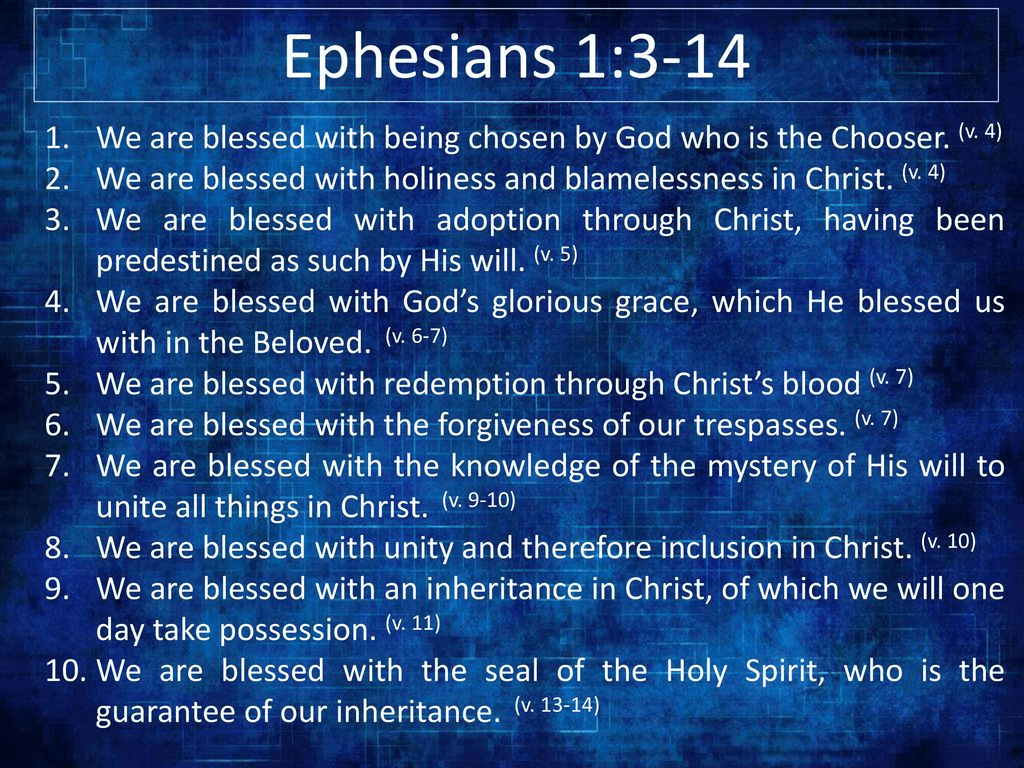
Also, the “mystery of God would be finished” when this last predicted event would occur in 70 AD. The Greek word is musterion, something hidden, unknown. Strong adds one use: the secret counsels which govern God in dealing with the righteous, which are hidden from ungodly and wicked men but plain to the godly. What is this “mystery” that the prophets announced that would be fulfilled in 70 AD? Several NT passages refer to this mystery that had been hidden in ages prior to the NT, but that it had been revealed to men by the NT apostles and prophets. Ephesians 1:9 He made known to us the mystery of His will, according to His kind intention which He purposed in Him. 3:3 that by revelation there was made known to me the mystery, as I wrote before in brief. 4 By referring to this, when you read you can understand my insight into the mystery of Christ. 3:9 and to bring to light what is the administration of the mystery which for ages has been hidden in God who created all things; 5:32 This mystery is great; but I am speaking with reference to Christ and the church. 6:19 and pray on my behalf, that utterance may be given to me in the opening of my mouth, to make known with boldness the mystery of the gospel. Romans 16:11:25 Now to Him who is able to establish you according to my gospel and the preaching of Jesus Christ, according to the revelation of the mystery which has been kept secret for long ages past, Colossians 1:25 26 that is, the mystery which has been hidden from the past ages and generations, but has now been manifested to His saints, 27 to whom God willed to make known what is the riches of the glory of this mystery among the Gentiles, which is Christ in you, the hope of glory. 2:2 that their hearts may be encouraged, having been knit together in love, and attaining to all the wealth that comes from the full assurance of understanding, resulting in a true knowledge of God’s mystery, that is, Christ Himself. 1 Timothy 3:16 By common confession, great is the mystery of godliness: He who was revealed in the flesh, Was vindicated in the Spirit, Seen by angels, Proclaimed among the nations, Believed on in the world, Taken up in glory. Jesus referred to this as the “mysteries of the kingdom of heaven”. Matthew 13:11 Jesus answered them, “To you it has been granted to know the mysteries of the kingdom of heaven, but to them it has not been granted.

As you can see from these verses, this mystery is referred to in different ways, but the idea behind the word is clear. God had a plan from the very beginning to save sinners through His Son Jesus. 1 Peter 1:18 knowing that you were ransomed from the futile ways inherited from your forefathers, not with perishable things such as silver or gold, 19 but with the precious blood of Christ, like that of a lamb without blemish or spot. 20 He was foreknown before the foundation of the world but was made manifest in the last times for the sake of you. The prophets announced this plan with messianic predictions that they didn’t even understand. 1 Peter 1:10 Concerning this salvation, the prophets who prophesied about the grace that was to be yours searched and inquired carefully, 11 inquiring what person or time[a] the Spirit of Christ in them was indicating when he predicted the sufferings of Christ and the subsequent glories. 12 It was revealed to them that they were serving not themselves but you, in the things that have now been announced to you through those who preached the good news to you by the Holy Spirit sent from heaven, things into which angels long to look. Thus this mystery was announced but the understanding of it was hidden until God revealed it to the NT apostles, like Paul, and prophets. It was summarized by one word, “Christ”, but it also involved the salvation of Jewish and Gentile believers in the church. It was preached in the “gospel”. It included the predictions of the removal of the old temple and old Jewish covenant, replacing them with the new Jerusalem and the new covenant. Thus it included the destruction of the temple and the city in 70 AD as predicted by the prophets. The mystery centered on the cross, but wasn’t completely finished until that last event. Hebrews 9:The Holy Spirit is signifying this, that the way into the holy place has not yet been disclosed while the [i]outer tabernacle is still standing.

John is then told to take the little scroll from the giant angel, who is probably Jesus, and eat it. This is similar to what Ezekiel was told to do in Ezekiel 3. That little scroll contains the very last predictions as described already in chapter 10. The big scroll would be the scroll with the 7 seals, which would be all the predictions of events during the wars of the Jews from the spring of 66 AD when Titus entered the Promised Land to put down the Jewish rebellion up to the final destruction of the city and temple in the summer of 70 AD. The little scroll would just be the very last events in those predictions.

Stereotyping the 7 churches of Asia in Revelation.

Comments on the 7 churches:

  1. Ephesus. Sound doctrine but they had left their first love.
    History. Acts 19. Then Paul met with elders of Ephesus at Miletus (too dangerous to return to Ephesus). Warned of grievous wolves, even wolf elders. Apparently they took him seriously and made sound doctrine a focal point of church.
    But they left their first love. How? By being so harsh on false teachers and false apostles that they became sectarian and judgmental of anyone who disagreed with them, no longer teaching the truth in love (Eph 4:16)? By being so focused on sound doctrine that they lost the emphasis on love among the members and love in general?
    Does that sound like a lot of coc churches?
  2. Smyrna. The poor (but rich), suffering church.
    This must represent the 3rd world poor, suffering Christians around the world, b/c it sure doesn’t match the rich church in the U.S. (neither poor nor suffering). Some suffering about to come on them (mello) but outcome sounds like death, not just temporary suffering. Could this match the period of Nero’s persecution of Christians in 64 AD in Rome which spread to other cities?
  3. Pergamum. Faithful under persecution but allowing false teaches who promote immorality.
    Many temples to the gods and even one to emperor Augustus. Faithful under testing, even at a time when witnesses like Antipas (one of their number) were being put to death (they might be killed also). So, a strong faith church, never denying Christ under persecution. But a few things? Apparently they “tolerated” or continued to fellowship some false teachers of the Nicolaitan persuasion who taught open immorality like that encouraged by Balaam at Peor (Numbers 25). I know of some churches that I really admire overall, but I notice they are becoming more accepting of open adultery, even homosexuality, among members. Study 1 Cor 5 as Paul dealt with the church being too lenient on immorality.
  4. Thyatira. Slow start, better lately, but tolerating false prophets.
    This is the post-modern church of the future. Maybe a slow start, but revitalized lately with a post-modern benevolent concern for others and for good causes (the poor, etc.). Actually doing a lot of good works (soup kitchens, etc.) but also easily led astray by false teachers, even false prophets who claim to have direct revelation from God. This led many in Tyatira into immorality. Today, it would be the homosexual immorality tolerated by many post-modern churches. The Methodist church barely voted to stay with the traditional view of marriage (53-47 %), but with large help from their conservative African brothers who have yet to lose faith in the inspiration of Paul.
  5. Sardis. The dead, and still dying church. Strengthen what remains.
    This church became well known among the brotherhood for a long time for its faith, good works, sound doctrine, etc. It still had a name that is alive. You hear the name of the church mentioned, and think, “great church”, when really it is now dead. It still have a few good things going, and a few good members who are still alive, but the things that remain are even dying. Why did this church die? We might think this is about the size of the church, but it is not. A lot of factors might cause a church to grow large, but then become smaller in the future. Location, demographics, urban flight, members moving, etc. But that church, now smaller, could still be alive. The Sardis church apparently died because they lost their faith, zeal, etc. Maybe they became very materialistic and just lost their priorities. Maybe a split or two along the way due to church politics and inward squabbling. There is still hope. A core of concerned members and a few good things that remain. Focus on strengthening what remains.
  6. Philadelphia. The little church that could, and did.
    Totally positive for this church. To whom more is given more will be expected. Give, and God will give you more so you can give more. 2 Corinthians 9 10 Now He who supplies seed to the sower and bread for food will supply and multiply your seed for sowing and increase the harvest of your righteousness; 11 you will be enriched in everything for all liberality, which through us is producing thanksgiving to God. Seed for the sower. God can use churches and individuals who are good stewards to do great things for Him. He will open new doors of opportunities. One church I know of made their motto: “God, show us the opportunities and good works that you want us to do”. Instead of giving to meet the budget and busy work involving the church business, that church gave as needs arose and got involved in good deeds away from the building. That might mean dismantling the business and budget, and most churches won’t do that. The Lord could show them a new need and they would say, “Sorry Lord, it’s not in the budget!”
  7. Laodicea. The lukewarm church.
    This church will always be known as the lukewarm church. Neither hot nor cold. Business as usual. Routine. Duty. All the items and ministries in their budget are getting done. But no zeal or enthusiasm. Everyone taking their turn to carry on the business. Still sound doctrinally. Probably a well paid staff and local preacher. Many charter members who aren’t excited about the church, but who wouldn’t leave it. They probably have a building paid for and cash to change the carpet and make renovations. They have a large, steady contribution. They think of themselves as a very good church, but God says they are blind to their real spiritual condition. We tend to judge churches by their size and budget. On a positive note, at least the church is not dead, like Sardis. It is not zealous, like Philadelphia, but maybe with a lot of prayer, repentance, and honest self-analysis this church could become hot. Notice that God is knocking at the door. He offers them eye salve so they can see their condition. He hasn’t written them off. If they don’t change, He will spew them out of His mouth.

So which of these, if any, is your church?
Many think that the number of churches chosen by John to send the letter to is a special number, 7, that would represent all churches. I don’t know about that. Surely this letter was circulated to more than the 7 churches in Asia. Surely other churches read it and thought, “we are just like Sardis, etc.”. Surely other churches read the warnings and knew that those warnings could apply to their church also. Rev 1:3 3 Blessed is he who reads and those who hear the words of the prophecy, and [b]heed the things which are written in it; for the time is near. Of course, that specifically applied to the 7 churches of Asia concerning things that were “about to” happen (that word Mello is used several times) to them. But in a secondary sense, surely anyone else back then or even today who read and took heed to the warnings would be blessed.

And what about me individually as a member of my church? Have I become complacent? Am I so preoccupied with worldly stuff that the spiritual status of my church doesn’t bother me? Do I just go to church as routine, duty? Have I lost my zeal and enthusiasm? Have I lost my first love? Do I now love the world more than I love Jesus and God? Have I taken a back seat and left the leadership of the church to others?

The church will only be as good and strong as the individual members. I pray that God will use the comments by John to the 7 churches to motivate us as needed.

The “Church” Business

This rambling article probably profits little, but deals with something I heard a brother talking about recently. He was questioning the way his church operates.

The church, of course, is the spiritual body of Christ. It is a spiritual kingdom made up of believers all over the world. Period. They may be part of different denominations, but that is a man made thing. They may meet in homes, as they did in the first century, or they may meet in church buildings. They may have big exciting assemblies or they may have simple old country church assemblies. They may have wonderful, harmonious, growing congregations or they may have a lot of problems, as did the Corinthian church. They may have suffering from their governments, as in China and many Muslim countries, or they may have very little suffering, if any, like in our churches in the U.S.

But notice that we usually end up thinking about church as the congregations or assemblies that we attend. Church has become a business of sorts. As a matter of fact, it is officially a non-profit organization recognized by the government, with trustees and by-laws. Where do you read about the church being like that in the New Testament. It owns property, has a budget, pays FICA and does W2’s for employees, has paid staff and secretaries, etc. The New Testament church did none of those things.

So is that bad? I suppose not, but I wonder if it is really a good thing. More importantly, is it the way Jesus would want his church to operate? If we can borrow enough money to build multi-million dollar buildings, would He want us to do that? Or would He want us to use that money to dig wells for clean water in 3rd world countries, to take care of AIDS orphans, to rescue child soldiers and child prostitutes, to fight human trafficking, to take care of widows and orphans all over the world, to print Bibles in the major languages of the world so that everyone can read the Bible in their own language, etc. You get the idea. Did Jesus ever want His church to buy any property? Or hire full time local preachers? I know churches do a lot of good things and raise money for a lot of the things I mentioned above, but usually it is a small portion of their contribution.

Not only that, a lot of the churches aren’t even loyal to the teachings of the New Testament anymore. Many of them deny the miracles and Deity of Jesus. Many of them have homosexual priests and endorse homosexual marriages. Many of them no longer believe in the verbal plenary inspiration of the scriptures. Yet they have their hierarchy of paid professionals and collect millions of dollars to operate. The paid professional clergy system has led to many sex scandals among the clergy. If Jesus turned over the tables in the temple, I wonder what He would do if He visited some of these churches.

On the other hand, maybe I am just being too critical. Churches do a lot of good works. The main purpose of the assemblies was for edification, and churches do a lot of edification in their assemblies, their preaching and teaching, their small groups, etc. I mean, surely our Christian liberty would allow us to build a building in order to do the Lord’s work, wouldn’t it? I mean, many preachers are overpaid, but some of them teach and edify a lot of people. Paul did say in 1 Corinthians 9 11 If we sowed spiritual things in you, is it too much if we reap material things from you? 12 If others share the right over you, do we not more? Nevertheless, we did not use this right, but we endure all things so that we will cause no hindrance to the gospel of Christ. 13 Do you not know that those who perform sacred services eat the food of the temple, and those who attend regularly to the altar have their share [g]from the altar? 14 So also the Lord directed those who proclaim the gospel to get their living from the gospel. Of course, in the first century that meant helping traveling evangelists with food and a place to stay, but they did not have paid local full time preachers. Of course, Paul also said that he would not take money from the congregation that he was working with even though he had a right to do so.

So is there a better way to do it? Maybe go back to house churches like in the New Testament? That certainly is a lot simpler and cheaper. Then those house churches could take their individual tithes and decide where to donate their money instead of paying for a building, utilities, staff, and secretaries! They could collect money for special causes among their members or those in need. Each house church would have one or more shepherds to care for that flock. They could have very good Bible study without a paid preacher preaching a sermon to them. They could teach their children in some little classes if they wanted to, or just make it a family type environment.

So why don’t we do it that way? I think that churches in church buildings is just the way we were raised and are accustomed to. Yes, in bigger churches you get to see a lot more people than in just a house church. You have a wider variety of gifts to be used for edification of the flock. But you can do both of those things without having churches like we have today. Also notice that most church growth is taking members from one church to another. We simply swap members for the most part.

Maybe we need to study the house churches in China. They suffer for their faith, just like in the first century. They are hungry for the word and for fellowship with other Christians. They meet in houses for the most part, in small groups. They use what little money they have to help each other and those in need. Sounds like the first century church doesn’t it? It has been estimated that 2/3 of Chinese Christians meet in house churches as opposed to the government controlled churches. Of course, many of those “house churches” have membership in the hundreds and rent space in commercial buildings, so that is more than a house church meeting in someone’s home. So maybe it is good to start as a house church in a home and then grow to hundreds of members and look for a place to rent.

So I don’t know the answer. It just seems like the “church business” is not what the Lord would want, but I don’t know for sure what the Lord wants. BTW I am involved hosting a house church on Wednesday nights and a shepherd in a church building church on Sundays, so I guess I can accept both types of “church”. Just some thoughts on a rainy day. I wonder who will even read them.

The theme of 1,2 Chronicles: King David was a type of the Messianic King Jesus

Thebibleproject.com has great short (7-8 minute) summaries of all the OT books in drawings and sketches that really keep your attention. The one on 1,2 Chronicles has some interesting points. They do a great job of giving the main themes and not just telling facts. They said the theme of the 2 books was to give hope for a Messianic King in the future who would be the anti-type of King David. I think they are correct.

The genealogies at the start of 1 Chronicles focus on the tribe of Judah from whom the Messiah and the kings will come. Genesis 49:10

“The scepter shall not depart from Judah,
Nor the ruler’s staff from between his feet,
[k]Until Shiloh comes,
And to him shall be the obedience of the peoples.

The life of King David is emphasized, but the negative stories about his adultery and murder are omitted. Purposely? Maybe. Maybe the Spirit wants to leave a totally positive image of David because he is a type of the perfect Messiah? The book does mention his sin of numbering the people, however. The video mentions an important truth. When several of the OT prophets predict the coming of the Messiah and the Messianic Age, they predict that “David” will be king, shepherd, and prince during that Messianic Age. Ezekiel 37 24 “My servant David will be king over them, and they will all have one shepherd; and they will walk in My ordinances and keep My statutes and observe them. 25 They will live on the land that I gave to Jacob My servant, in which your fathers lived; and they will live on it, they, and their sons and their sons’ sons, forever; and David My servant will be their prince forever. Ezekiel 34 23 “Then I will set over them one shepherd, My servant David, and he will feed them; he will feed them himself and be their shepherd. 24 And I, the Lord, will be their God, and My servant David will be prince among them; I the Lord have spoken.Jeremiah 30 But they shall serve the Lord their God and David their king, whom I will raise up for them. Most scholars believe that this prediction is fulfilled in Jesus as a type of King David from the lineage of David. Thus it is figurative language and does not mean David himself will be king in the Messianic Age. Some scholars actually expect David to be raised and co-reign with Jesus on the “millenial throne”. This is similar to the prediction that Elijah would come before the coming of the Messiah and judgement of the Jews. Malachi 4 “Behold, I am going to send you Elijah the prophet before the coming of the great and terrible day of the Lord. Of course, Jesus told us this was fulfilled in John the Baptist, and not in Elijah himself coming. Matthew 17 11 And He answered and said, “Elijah is coming and will restore all things; 12 but I say to you that Elijah already came, and they did not recognize him, but did [d]to him whatever they wished. So also the Son of Man is going to suffer [e]at their hands.” 13 Then the disciples understood that He had spoken to them about John the Baptist.

I always amazed when scholars tell us that the OT Messianic kingdom predictions must be interpreted “literally” when it is obvious that is just not the case as seen from these 2 examples (David and Elijah). They will interpret Messianic predictions about Israel being restored to their land as literal, and look for that to be fulfilled. Usually, they say it was fulfilled in 1948 when Israel was given statehood as a nation and given a large portion of the Holy Land that they occupy today. Two big mistakes. One, the promises of returning to the land was made to the remnant of Jews who believed in the Messiah, and not to the nation as a whole. Paul makes this point in Romans 9 But it is not as though the word of God has failed. For they are not all Israel who are descended from Israel. He quotes Isaiah on the remnant: 27 Isaiah cries out concerning Israel, “Though the number of the sons of Israel be like the sand of the sea, it is the remnant that will be saved. God never promised to save the whole nation in the Messianic Age. AS a matter of fact, he sent the Romans to destroy the unbelieving Jews in 70 AD. He took the kingdom from the Jews and gave it to His spiritual nation, the church, made up of Jew and Gentile believers only. Matthew 21 43 Therefore I say to you, the kingdom of God will be taken away from you and given to a [m]people, producing the fruit of it. Paul argues that all of God’s Messianic predictions and promises for Israel were fulfilled in the spiritual blessings received by the remnant of believing Jews in his time. Two, the promises to the remnant were not fulfilled literally, as in actually getting the land they once possessed as a nation. Jesus had said that his kingdom was not of this world. It is a spiritual kingdom, the church, and not a physical kingdom as in the days of David. The Jews expected the Messiah to “restore all things” to them as a nation, giving them the power over all other nations as they had in the days of David, but God never intended that. Sure, the prophets said that Israel would be “restored to their land and never lose that land again”, but that was fulfilled spiritually and had nothing to do with physical land anywhere. I know that sounds strange to many, but so would the prophecies about David and Elijah! So how was the remnant restored to their land? The kingdom of God is spiritual, and its land is the whole reign of God, a spiritual reign over the whole earth. We reign with Jesus over this spiritual realm as sons of God.

Other OT Messianic Age predictions illustrate this point. Jeremiah 33 14 ‘Behold, days are coming,’ declares the Lord, ‘when I will fulfill the good word which I have spoken concerning the house of Israel and the house of Judah. 15 In those days and at that time I will cause a righteous Branch of David to spring forth; and He shall execute justice and righteousness on the earth. 16 In those days Judah will be saved and Jerusalem will dwell in safety; and this is the name by which she will be called: the Lord is our righteousness.’ 17 For thus says the Lord, ‘[g]David shall never lack a man to sit on the throne of the house of Israel; 18 [h]and the Levitical priests shall never lack a man before Me to offer burnt offerings, to burn grain offerings and to prepare sacrifices [i]continually.’” God had promised David that one of his descendants would sit on his throne forever. That was fulfilled in Jesus, and thus “David shall never lack a man to sit on the throne”. But also the Levitcal priests shall never lack a man offer burnt offerings and sacrifices. That is a prediction for the new covenant, and yet we know that animal sacrifices were taken away under the new covenant. We know that the Levitical priests were supplanted by Jesus our high priest after the order of Melchizadek, not Levi (Hebrews 7) and that all Christians are priests, not Levites. So this obviously is a figurative predictiion fulfilled figuratively, not literally. Yet some demand literal interpretation of some of the OT Messianic predictions, and surely they would not think that in the Messianic Age that we will go back to animal sacrifices and Levitical priests, would they?

I hope this summary of 1,2 Chronicles has been helpful. I hope this discussion of the fulfillment of figurative OT Messianic predictions helps also.

Revelation 20: the 1000 years was actually only 40 years!

Yes, that was a teaser title. If you haven’t considered me crazy and stopped reading, then I will try to show why I believe the title is actually true. The majority of evangelicals believe that Jesus will return some day, set up an earthly kingdom, and reign on earth for 1000 years based on Revelation 20. I believe the 1000 years in Revelation was only a 40 year period that happened between 30-70 AD. BTW, there have been scholars who took that position, but I’m sure I am in the minority! Hear me out.

Before we begin, I encourage you to go to this site: http://www.scripturerevealed.com/bible-studies/the-meaning-of-numbers-the-number-1000/ Read the many passages where the number 1,000 is obviously symbolic of a long period or a great number, but not literal. Yes, it is also used as a literal number. So the context must determine in the 1000 year reign in Revelation 20 is symbolic or literal. The book of Revelation is filled with symbolic numbers and figures, so why would we be surprised if the 1000 year reign is symbolic, not literal? And that is what I hope to show.

First, what does it say? Satan will be bound for 1000 years, and after that 1000 years he would be released for a short time. Revelation 20:1Then I saw an angel coming down from heaven, holding the key of the abyss and a great chain [a]in his hand. And he laid hold of the dragon, the serpent of old, who is the devil and Satan, and bound him for a thousand years; and he threw him into the abyss, and shut it and sealed it over him, so that he would not deceive the nations any longer, until the thousand years were completed; after these things he must be released for a short time.”

Now, if we can determine what happens after he is released, that will help us determine what the 1000 years are. Revelation 20 When the thousand years are completed, Satan will be released from his prison, and will come out to deceive the nations which are in the four corners of the earth, Gog and Magog, to gather them together for the war; the number of them is like the sand of the seashore. And they came up on the broad plain of the earth and surrounded the camp of the saints and the beloved city, and fire came down from heaven and devoured them. 10 And the devil who deceived them was thrown into the lake of fire and brimstone, where the beast and the false prophet are also; and they will be tormented day and night forever and ever.” So, at the end of the 1000 years, Satan is released, Gog and Magog surround the camp of the saints and the beloved city. Now, most would say this is the battle of Armageddon and that battle is still in our future. Here is where my view of what the book of Revelation is about comes to play. Please read my blog articles 1) Revelations was written before 70 AD, and 2) The keys to understanding Revelation. Condensed version: Rev 17 tells us the book was written during the reign of the 6th emperor of Rome, Nero (54-68 AD), and thus before 70 AD. This, and other, internal evidence far outweighs the statement of Irenaeus in 180 AD upon which many date the writing of the book to be 96 AD. The harlot woman is Jerusalem, but is also the great city, Babylon, which is destroyed (11:6; 17:18), burned with fire, by the sea beast, Rome (13:1-3; 17:16). Babylon is not Rome, as many think. The theme of the book is “the avenging of the blood of the apostles, prophets, and saints” (18:20,24; 19:2). Jerusalem had persecuted and killed the prophets God sent them during their entire history, and they would kill apostles (Acts 12), and the Jewish Christians (as Paul did, Acts 9,22; 1 Thessalonians 2:12-14). This matches exactly what Jesus predicted in Matthew 23:29-39). He then foretold the destruction of Jerusalem and the temple that would happen within the generation of those he was speaking to (Matthew 24:34). The book of Revelation is the detailed fulfillment of what Jesus predicted in Matthew 23, 24: the destruction of Jerusalem and the temple in 70 AD. After all, John opens and closes the book saying that the things that were going to happen were to “shortly come to pass” , “soon”, “near” (1:1-3; 22:6), and “don’t seal up the words” (22:10). I know many say those words can be “soon in God’s time”, which could be thousands of years, but it is obvious that the words apply to the time frame of those he is writing to. Otherwise, it would be like someone telling us that America is going to fall soon, and it doesn’t happen. We would call them a false prophet. Also, all the internal evidence points to a date of writing before 70 AD, and the fall of Jerusalem in 70 AD fits exactly what John predicted would happen soon after the time of writing. Case closed.

I needed to say all that before further discussion of the 1000 years. The key is 20:9. This army of Gog and Magog, gathered by Satan, surround the “beloved city” at the end of the 1000 years. If the book is about the destruction of Jerusalem in 70 AD, this has to be the final siege of the city in 70 AD (it lasted 5 months to be precise) before destroying the city and the temple. Gog and Magog would be the Romans. Why Gog and Magog? Ezekiel predicted this in Ezekiel 38, 39. He predicts an army, Gog and Magog, will attack Israel and Jerusalem. He says that army had already been predicted to do this by other prophets before him. Ezekiel 38: 17 17 ‘Thus says the Lord God, “Are you the one of whom I spoke in former days through My servants the prophets of Israel, who prophesied in those days for many years that I would bring you against them?” Indeed, if this is Rome attacking Jerusalem in 70 AD, then indeed other prophets had predicted that (Joel 3; Zechariah 14; Isaiah 65,66; Deuteronomy 32; Daniel 7, 8,9,12). He also says this will happen in their “latter years” (38:8). That phrase “latter years” of Israel always refers to the “last days” of Israel, that last period from 30-70 AD. He also says this will happen during the time in which He will pour out His Spirit on the remnant: Ezekiel 39 29 I will not hide My face from them any longer, for I will have poured out My Spirit on the house of Israel,” declares the Lord God.” That OT prediction, just as in Joel 2 and other places, always refers to the miraculous outpouring of the Spirit during the period from 30-70 AD (Acts 2:16-21 where Peter says that period is the fulfillment of Joel 2).

So Ezekiel 38, 39 was actually predicting Rome attacking Jerusalem and Israel, and Rev 20:9 is the fulfillment of that prediction when Rome surrounded the “beloved city” in 70 AD and destroyed it. Surely, everyone would agree that the “beloved city” is Jerusalem. I did read one commentary that said the beloved city was the church, i.e. the “new Jerusalem”, but the new Jerusalem doesn’t come down out of heaven until Revelation 21, so it can’t be the new Jerusalem yet. So the end of the 1000 years is the destruction of Jerusalem in 70 AD. The beginning of the 1000 years is when Satan was bound. When was that? I believe that was 30 AD. But wasn’t he free from 30-70 AD? Yes, but the binding of Satan for 1000 years in Rev 20 was a specific, limited, binding, i.e. he was not allowed to destroy the temple until the end of the 1000 years. My conclusion: the 1000 years is actually the 40 years period from 30-70 AD.

So the number 1000 is used in a figurative sense. But I thought we were supposed to take everything literal in the Bible. Not so. Much of the Bible language is figurative, like when we say “it is raining cats and dogs” (really?). Revelation is full of figurative numbers: the 666 mark of the beast, the 144,000 (exactly 12,000 of every tribe of Israel), the 24 elders, the number 7 (lamps, trumpets, etc.). God said “the cattle of a thousand hills is mine” (Psalm 50:10). Did He not own the cattle on the rest of the hills? The number 1000 there is obviously figurative. The number 10 is viewed as the perfect number, made up of 4 (the number of the physical creation, as in the 4 directions, 4 corners of the earth), and 6 (the number of man, as used probably in 666). As such, 10 signifies testimony, law, responsibility and the completeness of order. There were 10 commandments, the Day of Atonement was on the 10th day of the 7th month, the sea beast in Rev 13, 17 had 10 horns, etc. 1000 is 10 X 10 X 10, the number 10 magnified to the 3rd power! So why would that 40 year period from 30-70 AD be represented figuratively by the number 1000? Maybe because that 40 year period is the final, perfect, complete wrap up of God’s eternal plan. Rev 10:7 but in the days of the voice of the seventh angel, when he is about to sound, then the mystery of God is finished, as He [b]preached to His servants the prophets.” After Satan is released and deceives Rome into attacking Jerusalem, he is thrown into the lake of fire and brimstone. Rev 20 10 And the devil who deceived them was thrown into the lake of fire and [f]brimstone, where the beast and the false prophet are also; and they will be tormented day and night forever and ever.” Satan thinks he is binging a final end to the worship of the one true God by getting Rome to destroy the temple and holy city, but He is playing right into God’s hand! Rev 17:17 17 For God has put it in their hearts to execute His [i]purpose [j]by having a common purpose, and by giving their kingdom to the beast, until the words of God will be fulfilled.” Satan was doing God’s plan in destroying the temple and didn’t even realize it. Once God was finished using him to do that, God cast Satan into the fire, along with the sea beast Rome, and the false prophet (the earth beast of Rev 13). This is not some physical destruction of Rome in 70 AD. Jesus had said to Pilate in John 18:36 “My kingdom [k]is not of this world. If My kingdom were of this world, then My servants would be fighting so that I would not be handed over to the Jews; but as it is, My kingdom is not [l]of this realm.” God’s eternal kingdom of Daniel 2:44, Mark 1:15;9:1 is a spiritual kingdom, the church over which He and Jesus reign forever. His plan was never for the church kingdom to physically destroy kingdoms on earth, like Rome. But in 70 AD, there was a complete finality to God’s redemptive plan. How so? All the prophecies of the OT were fulfilled. Luke 21:22 22 because these are days of vengeance, so that all things which are written will be fulfilled.: The last enemy, death, was conquered (1 Corinthians 15:26). 1 Corinthians 15 56 The sting of death is sin, and the power of sin is the law.” The law had to be completely removed to take away the power of sin to kill spiritually. After 70 AD, the temple has never been rebuilt, the priesthood cannot be restored or practice because the Romans destroyed the genealogical tables, animal sacrifices cannot be offered in the temple any longer, etc. God Himself took away the law. Hebrews 9:The Holy Spirit is signifying this, that the way into the holy place has not yet been disclosed while the [i]outer tabernacle is still standing, which is a symbol for the present time. This is why Hebrews 8 :13 said, “But whatever is becoming obsolete and growing old is [j]ready to disappear”, speaking of the removal of the law in 70 AD just a few years after Hebrews was written. 70 AD was the removal of the “old heavens and earth” (another blog for that one!) and replacing it with the “new heavens and earth” (i.e. the new Messianic order of things of the “age to come”). It was the removal of the old Jerusalem, replacing it with the new Jerusalem, ie. the church. Revelation 21:1-2 Then I saw a new heaven and a new earth; for the first heaven and the first earth passed away, and there is no longer any sea. And I saw the holy city, new Jerusalem, coming down out of heaven from God, made ready as a bride adorned for her husband.” Remember, John had said all these things in Revelation were to happen soon, shortly, the time is near, don’t seal up the words, etc. That must include ch 20-22 also or he is a false prophet. Many want to make ch 20-22 to still be in out future, unfulfilled predictions, but that contradicts what John said about the time for them to be fulfilled.

So, at least after reading this article, I hope you don’t think I am completely crazy. Some things only seem crazy because they contradict the traditional way they have been taught for centuries. The 1000 year reign on earth as a future event has been taught so long and so vehemently that, like the theory of evolution, it is just accepted as fact. The very idea of any reign of Jesus over a physical kingdom on earth contradicts John 18:36 “my kingdom is not of this world” and Mark 9:1 (his kingdom would be established before some whom he was speaking to would die). Those expecting Jesus to establish a physical kingdom some day and reign over it (for 1000 years or however long) are making the same mistake the Jews made, i.e. looking for a physical kingdom, the physical restoration of Israel, that caused them to reject Jesus as the Messiah. Of course, those advocating the 1000 year reign of Jesus on earth in a physical kingdom aren’t rejecting Jesus as the Jews did, but their teaching will diminish the glory of the church kingdom and can cause believers to be distracted from simple faith. Look how many believers are caught up in what is going on in Israel because they expect Israel to be involved in some “last days” coming of Jesus to set up his kingdom. Some even tell us to send money to Israel. Jesus was very clear in Matthew 21 43 Therefore I say to you, the kingdom of God will be taken away from you (i.e. the Jews) and given to a [m]people, producing the fruit of it.” Israel continued as a people, but no longer the people of God in any special way, no longer a part of His plans to redeem man in any way. He took the kingdom from them and gave it to the church, made up of Jew and Gentile believers in Jesus. He loves Israel, just like He loves all nations, but their hope is in becoming Christians and members of the church.

Footnotes:


The keys to understanding Revelation! Revelation 17,18

Please read my blog article “Revelation was written before 70 AD” before reading any more of this article. From that previous article: 1) From ch 17, the “5 kings have fallen” are the 1st 5 kings of Rome, starting with Julius whom Josephus clearly says was the first (living in the first century, he should know who was considered the first). The “one is” is the 6th emperor, Nero (54-68 AD) who was reigning at the time the book was written. This is undeniable internal evidence that the book was written before 70 AD. It gets a little tricky figuring out the next statement: Rev 17 11 The beast which was and is not, is himself also an eighth and is one of the seven, and he goes to destruction. I think the 8th king is Titus, who actually destroys the city and temple in 70 AD. He is not an emperor yet, but will be later. That is why Daniel 7 and 8 call him the “little horn” that comes up after the first 10 horns or emperors of Rome. Nero was the 6th. The next 3 reign only a few months each and are basically ignored in Rev 17. Vespasian becomes the 10th emperor in 69 AD and sends his son Titus to destroy Jerusalem, which he does. Vespasian could thus be considered the 7th and Titus the 8th. But for sure, the first 6 identify when the book was written.

2) The woman harlot was drunk with the blood of the saints and witnesses of Jesus. Why are these two groups separated since witnesses of Jesus (martyrs) would also be considered saints? The “saints” here must be those OT saints in Revelation 6 who are waiting for their blood to be avenged: When the Lamb broke the fifth seal, I saw underneath the altar the souls of those who had been slain because of the word of God, and because of the testimony which they had maintained; 10 and they cried out with a loud voice, saying, “How long, O [k]Lord, holy and true, [l]will You refrain from judging and avenging our blood on those who dwell on the earth?” 11 And there was given to each of them a white robe; and they were told that they should rest for a little while longer, until the number of their fellow servants and their brethren who were to be killed even as they had been, would be completed also. The “witnesses of Jesus” would be NT martyrs. The woman is a harlot. She is riding on the beast that has 7 heads and 10 horns. The 7 heads are both the 7 hills on which the beast sits and 7 kings of the beast. This beast is Rome. In Rev 13:1-3 Then I saw a beast coming up out of the sea, having ten horns and seven heads, and on his horns were ten diadems, and on his heads were blasphemous names. And the beast which I saw was like a leopard, and his feet were like those of a bear, and his mouth like the mouth of a lion. And the dragon gave him his power and his throne and great authority. I saw one of his heads as if it had been [b]slain, and his fatal wound was healed. Daniel’s vision of the 4 empires in Daniel 7 and 8 (Babylon, Medo Persian, Greece, and Rome) are symbolized by these same animals: leopard, bear, lion. The 4th empire was the iron one, Rome, during whose empire God would set up his kingdom which would never be desstroyed (Daniel 2:44). Jesus and John the Baptist both came saying “the kingdom is at hand” during the Roman Empire, so that also identifies the 4th beast as Rome. In Rev 13:1 the sea beast has the 7 heads and 10 horns, the same as in Rev 17. The woman is riding on the beast, so there is no conflict at first between the two. But then the beast turns on the woman and burns her with fire. Rev 17 16 And the ten horns which you saw, and the beast, these will hate the harlot and will make her desolate and naked, and will eat her flesh and will burn her up with fire. 17 For God has put it in their hearts to execute His [i]purpose [j]by having a common purpose, and by giving their kingdom to the beast, until the words of God will be fulfilled. 18 The woman whom you saw is the great city, which [k]reigns over the kings of the earth.” So who is the woman? She is the great city. What is the great city? The great city is the city where Jesus was crucified, i.e. Jerusalem. Rev 11 And their dead bodies will lie in the street of the great city which [f]mystically is called Sodom and Egypt, where also their Lord was crucified.” Thus the woman is the same as the great city which is Jerusalem. Indeed, at first Rome allowed the Jews to worship their God Jehovah and the Jews offered a daily sacrifice in honor of the emperor. But when the Jews rebelled in 66 AD, that began the Wars of the Jews (Josephus) and then in 70 AD Rome destroyed Jerusalem and burned the temple, just as Rev 17 predicted. For those who say the “great city is Rome: how do you explain the beast (which they also say is Rome) burning the great city (which they say is Rome)?

The woman has the name Babylon on her forehead. Rev 18 describes the fall of Babylon, the great city: 18:21 “So will Babylon, the great city, be thrown down with violence, and will not be found any longer.” The nation had become so corrupt that she would be compared to pagan Babylon of the OT. The woman is a harlot because she has committed spiritual adultery on God by worshiping other gods. The figure of Israel being called a harlot is used by Ezekiel and Jeremiah. Many of the Jews had even worshiped the beast Rome. Here is where the “earth beast” of Rev 13 comes in. 11 Then I saw another beast coming up out of the earth; and he had two horns like a lamb and he spoke as a dragon. 12 He exercises all the authority of the first beast [j]in his presence. And he makes the earth and those who dwell in it to worship the first beast, whose fatal wound was healed. 13 He performs great signs, so that he even makes fire come down out of heaven to the earth in the presence of men. 14 And he deceives those who dwell on the earth because of the signs which it was given him to perform [k]in the presence of the beast, telling those who dwell on the earth to make an image to the beast who *had the wound of the sword and has come to life. ” The word “earth” can mean land which can denote Palestine, the holy land. The signs that the earth beast does tell us that the earth beast is the false prophets who denied Jesus as the Messiah and who kept the Jews offering sacrifices to the emperor up to 66 AD. They are the ones Jesus predicted in Matthew 24 23 Then if anyone says to you, ‘Behold, here is the [l]Christ,’ or ‘[m]There He is,’ do not believe him. 24 For false Christs and false prophets will arise and will [n]show great [o]signs and wonders, so as to mislead, if possible, even the [p]elect.” These false prophets and false Christs would arise within the generation of those He was speaking to. Matthew 24 34 Truly I say to you, this [x]generation will not pass away until all these things take place.” Those who worshiped the beast Rome would receive the dreaded mark of the beast, 666 (Rev 13:18) and would not be allowed to buy and sell without that mark. Of course, all that changed in 66 AD when even those who paid homage to Rome rebelled against Rome. They stopped the daily sacrifice to the emperor, which Josephus says was the event that started the war with the Romans. So the woman harlot is Jerusalem and she is the great city also. She is also called Babylon. All those terms refer to Jerusalem, not Rome. Many say Babylon is Rome, but if the things written in Revelation were to “shortly come to pass”, then how do they explain the fact that Rome is not destroyed until the 5th century, almost 400 years later?

This brings us to the theme of the book: “the avenging of the blood of the prophets, apostles, and saints”. Rev 18 20 Rejoice over her, O heaven, and you [ah]saints and apostles and prophets, because God has [ai]pronounced judgment for you against her.”24 And in her was found the blood of prophets and of [ak]saints and of all who have been slain on the earth.” Rev 19:1-2 “Hallelujah! Salvation and glory and power belong to our God; because His judgments are true and righteous; for He has judged the great harlot who was corrupting the earth with her immorality, and He has avenged the blood of His bond-servants [al]on her.” Rev 6 When the Lamb broke the fifth seal, I saw underneath the altar the souls of those who had been slain because of the word of God, and because of the testimony which they had maintained; 10 and they cried out with a loud voice, saying, “How long, O [k]Lord, holy and true, [l]will You refrain from judging and avenging our blood on those who dwell on the earth?” This matches Jesus’ predictions in Matthew 23 31 So you testify against yourselves, that you are [x]sons of those who murdered the prophets. 32 Fill up, then, the measure of the guilt of your fathers. 33 You serpents, you brood of vipers, how [y]will you escape the [z]sentence of [aa]hell? 34 “Therefore, behold, I am sending you prophets and wise men and scribes; some of them you will kill and crucify, and some of them you will scourge in your synagogues, and persecute from city to city, 35 so that upon you may fall the guilt of all the righteous blood shed on earth, from the blood of righteous Abel to the blood of Zechariah, the son of Berechiah, whom you murdered between the [ab]temple and the altar. 36 Truly I say to you, all these things will come upon this generation.” God made Israel his chosen nation. He continually sent prophets to get them to turn from their worship of foreign gods and to obey him, but they continually rejected the true prophets, even killing them. They would kill apostles, as Herod beheaded the apostle James in Acts 12. They would kill Jewish Christians as Saul did before he converted and became the apostle Paul. BTW, Rome never killed the prophets. Many say that the theme of the book is the victory of Christians over persecution. That is not the main theme of the book. Yes, Daniel and Jesus both predicted a great “tribulation” on the Jewish nation, and Jewish Christians would suffer during that tribulation to some degree, although they had been warned by Jesus to get out of the city when they had the chance, and they did. Yes, Jew and Gentile Christians would suffer during the Neronian Persecution when he blamed the Christians for burning Rome, and when he killed Peter and Paul. That persecution was primarily in Rome, but you know it spread to other cities in the empire. The Greek word “mello”, which means “about to happen”, is used of the suffering they are about to go through. The word is used several times in Revelation. Write . . . the things that are about (mello, present indicative) to come after these things (1:19). Be not afraid of the things that thou art about (mello, same) to suffer (2:10). Strengthen the rest of the things that are about (mello, imperfect indicative) to die (3:2). The hour of the trial that is about (mello, present participle) to come upon all the world (3:10). Their brethren, who are about (mello, present participle) to be killed—even as they (6:31). The three messengers who are about (mello, same) to sound (8:13). I was about (mello, imperfect indicative) to write (10:4). When he may be about (mello, subjunctive) to sound (10:7). The beast . . . is about (mello, present indicative) to come up out of the abyss (17:8). Yes, great promises are made to those who do not worship the beast, who die as martyrs. Rev 12 11 And they overcame him because of the blood of the Lamb and because of the word of their testimony, and they did not love their life even [e]when faced with death. Rev 7 13 Then one of the elders answered, saying to me, “These who are clothed in the white robes, who are they, and where have they come from?” 14 I [a]said to him, “My lord, you know.” And he said to me, “These are the ones who come out of the great tribulation, and they have washed their robes and made them white in the blood of the Lamb. But the main theme is the avenging of the blood of the apostles, prophets, and saints.

I think all these points are the keys to understanding Revelation. It is foolish to try to determine the details of a crime without understanding the main plot, characters, motives, and time the crime occurred. Once we understand these keys, a lot of the details make more sense, even though they are often described in figurative language.

3