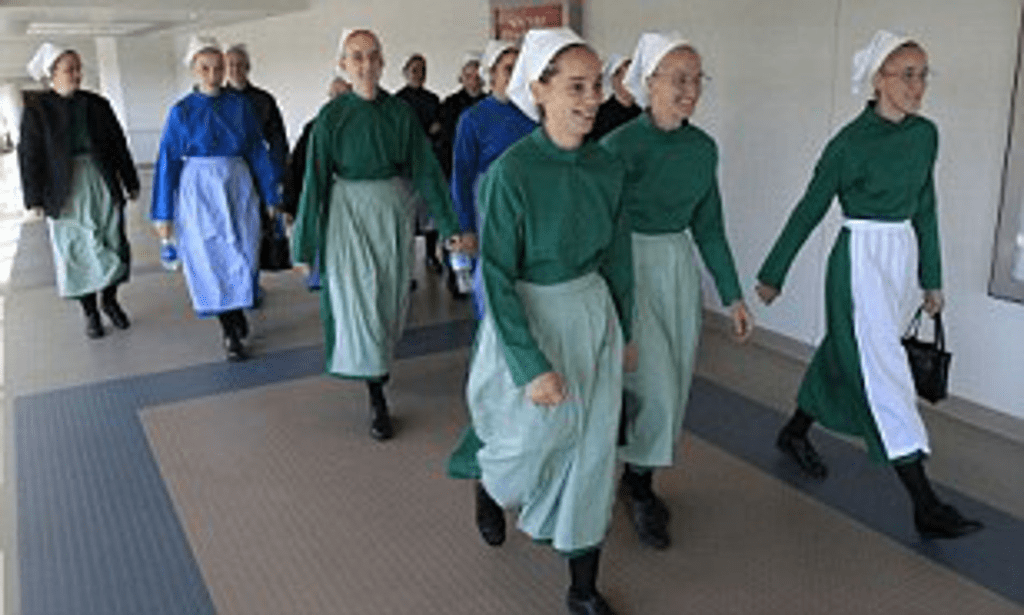
1 TIMOTHY 5:1-24 WIDOWS AND WIDOWS INDEED; TIMOTHY’S ALCOHOL USE! WHAT ABOUT DRINKING TODAY? COLLEGE DRINKING!

1 Timothy 5:1 Do not sharply rebuke (epipléssó: To rebuke, to reprove, to chide: It implies a strong, often public, expression of disapproval or correction) an older man, but rather appeal to him as a father, and to the younger men as brothers, to the older women as mothers, and to the younger women as sisters, in all purity.” Paul would tell Timothy: 2 Timothy 4:preach the word; be ready in season and out of season; correct, rebuke, and exhort, with great patience and instruction”. So there might come a time when he would need to publicly correct or rebuke a church member, but how he should do it is important. Instead of being harsh and dictatorial, try to approach them in love as you would a family member, as you would your own father or mother, respecting their age. Or a family brother, in love. Especially be careful how you correct a younger women, in all purity. Too many church preachers have gotten into sexual temptation while counseling a woman.

I often wonder what Paul is thinking as he wrote his letters. What was his flow of thoughts? He had just commented on older members and younger members in 5:1-2. Did that lead him into “how to approach widows”? Obviously caring for widows was of special importance to Paul. To God also. (AI) “In the Old Testament, the care of widows was considered a significant responsibility, with the Bible repeatedly instructing people to treat widows with compassion, provide for their needs, and protect them from exploitation, essentially portraying God as a defender of the widow and expecting his people to do the same; this included leaving food for them in the fields and setting aside a special tithe for their support.” Deuteronomy 14:28,29: 28 “At the end of every third year you shall bring out all the tithe of your produce in that year, and you shall deposit it in your town. “You are to set aside a portion for the foreigner, the fatherless and the widow in your land, so that they may eat and be satisfied; then the Lord your God will bless you in the land you are entering to possess.” Exodus 22:22:“Do not mistreat any widow or fatherless child.” Psalm 68:5:“A father to the fatherless, a defender of widows, is God in his holy dwelling.” Deuteronomy 26:12-13 Every third year, the year of the tithe, give a tenth of your produce to the Levite, the foreigner, the orphan, and the widow so that they may eat their fill in your cities. And then, in the Presence of God, your God, say this: I have brought the sacred share, I’ve given it to the Levite, foreigner, orphan, and widow. What you commanded, I’ve done. I haven’t detoured around your commands, I haven’t forgotten a single one.” Jeremiah 7:if you do not oppress (or expoloit) the stranger, the orphan, or the widow, and do not shed innocent blood in this place, nor follow other gods to your own ruin, then I will let you live in this place, in the land that I gave to your fathers forever and ever.” Zechariah 7:“This is what the Lord of armies has said: ‘Dispense true justice and practice kindness and compassion each to his brother; 10 and do not oppress the widow or the orphan, the stranger or the poor; and do not devise evil in your hearts against one another.’” Malachi 3:“Then I will come near to you for judgment; and I will be a swift witness against the sorcerers, the adulterers, against those who swear falsely, those who oppress the wage earner in his wages or the widow or the orphan, and those who turn away the stranger from justice and do not fear Me,” says the Lord of armies.” Deuteronomy 24:17-21 “You shall not pervert the justice due to the sojourner or to the fatherless, or take a widow’s garment in pledge, but you shall remember that you were a slave in Egypt and the Lord your God redeemed you from there; therefore I command you to do this. “When you reap your harvest in your field and forget a sheaf in the field, you shall not go back to get it. It shall be for the sojourner, the fatherless, and the widow, that the Lord your God may bless you in all the work of your hands. When you beat your olive trees, you shall not go over them again. It shall be for the sojourner, the fatherless, and the widow. When you gather the grapes of your vineyard, you shall not strip it afterward. It shall be for the sojourner, the fatherless, and the widow.” Ruth “gleaned” in the fields of Boaz. Isaiah 1:17 Learn to do good; seek justice, correct oppression; bring justice to the fatherless, plead the widow’s cause.” Isaiah 10:1 Woe to those who make unjust laws, to those who issue oppressive decrees,2 to deprive the poor of their rights and withhold justice from the oppressed of my people, making widows their prey and robbing the fatherless.”

James 1:27 Pure and undefiled religion in the sight of our God and Father is this: to visit orphans and widows in their distress, and to keep oneself unstained by the world.” The Greek word for “visit” is episkeptomai: To visit, to look after, to care for. (AI) “In the Greco-Roman world, visiting someone was not merely a social call but often carried the connotation of providing support or assistance. This cultural understanding is reflected in the New Testament usage, where visiting is often linked with acts of mercy, care, and oversight. In Jewish tradition, visiting the sick and caring for the needy were considered acts of righteousness and piety, aligning with the biblical emphasis on love and community responsibility.” You visit a widow with the intent of seeing what they need and then helping them.

So we come to some special instructions concerning widows. 1 Timothy 5:Honor widows who are actually widowsbut if any widow has children or grandchildren, they must first learn to show proper respect for their own family and to give back compensation to their parents; for this is acceptable in the sight of God. Now she who is actually a widow and has been left alone has set her hope on God, and she continues in requests and prayers night and day. But she who indulges herself in luxury is dead, even while she lives. Give these instructions as well, so that they may be above reproach. But if anyone does not provide for his own, and especially for those of his household, he has denied the faith and is worse than an unbeliever.” What does he mean by “actually widows” or “actually a widow”? He is talking about a widow who meet certain qualifications that would make them eligible for regular assistance from the church. First of all, she must “be left alone” with no family members that could take care of her. But what if there is a family member who could take care of a family widown but doesn’t? I’m sure Paul would say “take care of that widow”, but he would say “don’t put her on the list of widows to be given regular assistance”. Secondly, she must not be a widow who “indulges herself in luxury”.

The Old Testament had instructions for the care of widows, even a tithe every third year for the care of widows and orphans. There would no such laws for the care of widows in the Roman Empire when. Paul wrote 1 Timothy. There was no “state welfare” system. Family members were expected to take care of their widows. Paul expected family members to take care of their own widows. But the early church had a “list” of “actually widows” or “widows indeed” (KJV ) who received regular help and food. Acts 6 is an example of this. The Grecian widows were being neglected so 7 men were chosen to provide food for those widows, no doubt on a daily basis such as “meals of wheels” today takes food every day to the needy elderly. Widows in the U.S. often don’t even need help from family members. My mom was widowed twice, but she did not need financial help from me. She had social security, a teacher’s retirement benefit, and a surviving widow’s benefit from the military. She did not “indulge in luxury” (1 Timothy 5:6) but she had enough money to take care of herself in her own apartment. She did not need help from me or the church. But many widows in the U.S. maybe only have social security (or perhaps no social security depending on having worked or a deceased husband’s social security).

But which widows could be put on this list for regular church help? 1 Timothy 5:A widow is to be put on the list only if she is not less than sixty years old, having been the wife of one man, 10 having a reputation for good works; and if she has brought up children, if she has shown hospitality to strangers, if she has washed the saints’ feet, if she has assisted those in distress, and if she has devoted herself to every good work. 11 But refuse to register younger widows, for when they feel physical desires alienating them from Christ, they want to get married, 12 thereby incurring condemnation, because they have ignored their previous pledge. 13 At the same time they also learn to be idle, as they go around from house to house; and not merely idle, but also they become gossips and busybodies, talking about things not proper to mention14 Therefore, I want younger widows to get married, have children, manage their households, and give the enemy no opportunity for reproach; 15 for some have already turned away to follow Satan. 16 If any woman who is a believer has dependent widows, she must assist them and the church must not be burdened, so that it may assist those who are actually widows.

Pretty stringent requirements for a widow to be placed on this list. “At least 60 years old” would be a key one. Qualified widows apparently had to make a pledge of some kind to be put on the list. I would love to see what that pledge was. He mentioned younger widows having “physical desires” (sexual), wanting to get married. So the pledge was probably that the widow would pledge to abstain from sex, courting a man, etc. Paul says that the younger widows tended to have those physical desires, be idle gossips and busybodies, talking about things they should not mention. He tells the younger widows to get married, have children, and manage their households. Younger widows who behaved badly was apparently a problem in the church when Paul wrote b/c “some had already turned away to follow Satan”.

(AI) “Early Christian Church leaders did embrace the obligation to care for the most vulnerable—the third century Didascalia Apostolorum outlined numerous provisions of the responsibilities of the bishops towards widows and orphans, who were interestingly also considered Church officials.” Support: The church provided material support for widows. Community: The church incorporated widows into the community. Honor: The church honored widows’ contributions to the common good. Special status: Widows enjoyed a special status in the church and were able to serve in a particular manner. Order of Widows: The church organized formal groups of widows as part of its orders of ministry. “By the 3rd century (by 250 AD) the church at Rome had over 1500 registered widows and recipients of alms. The city was divided into seven administrative districts, or diaconiae, under the care of seven deacons. Instead of the Roman state distributing bread, the deacons looked after it.” Here is a great article from Christian History Institute on this topic. https://christianhistoryinstitute.org/magazine/article/new-era-in-roman-healthcare

The Romans looked to the god Asclepios, the god of medicine and healing, for immediate healing but there was nothing in place for long term caring for widows and orphans. Unwanted childen were often left out in the cold to die. Widows were left to die. The sick had not hospitals to go to. It was Christians who started hospitals and care facilities. “In the early fourth century, lay Christian orders began to appear in the large cities of the Eastern Roman Empire. The two best known were the spoudaioi (“the zealous ones”) and (in Egypt) the philoponoi (“lovers of labor”). The mission of these groups, drawn mostly from the lower classes, was to reach out to the indigent sick in cities such as Alexandria and Antioch. These cities had a large population of homeless sick and dying on the streets. The philoponoi would distribute food and money to them and take them to the public baths, where their basic hygienic needs could be met and they could find warmth in winter. None had medical training, but they were motivated by compassionate concern. Over time they became an intermediate order between clerical orders and laymen, and in the sixth and seventh centuries they were attached to large churches in the major cities of the Byzantine Empire and continued the long tradition of church-centered diaconal care of the sick.” (from the CHI article) “Many movements in the history of Christian philanthropy have drawn on the legacy of early Christian medical care. Roman Catholics have excelled in organizing and institutionalizing medical charities, including hospitals, most of them maintained by religious orders of women. The Sisters of Charity, founded by St. Vincent de Paul (1580–1660), became a major force in caring for the sick.”

Here is another CHI article about the Christians and the church establishing places to help the poor and the sick, which would include widows. https://christianhistoryinstitute.org/magazine/article/from-poorhouse-to-hospital

Here is another CHI article: https://christianhistoryinstitute.org/magazine/article/timeline-healthcare-and-hospitals

This article gives a timeline for a timeline of “healthcare and hospitals in the mission of the church”:

Early 2nd century: Christians by this time have developed church infrastructure to assist the sick. This assistance is usually led by deacons and deaconesses and focuses on palliative care.

— Late 2nd century: Galen (c. 131–201) practices as a physician and publishes the medical treatises that will form the basis of Western medicine for centuries.

— 250–51: Devastating plague spreads throughout the Western Roman Empire, causing the church to expand its program of benevolence. The church at Rome is said to minister to 1,500 widows and others in need, spending annually an estimated 500,000 to 1,000,000 sesterces.

— 4th century: Bishops in the eastern half of the empire begin to establish xenodocheia as Christian welfare institutions for the sick and poor.

— 330: Basil of Caesarea (c. 330–379) is born into a Christian family from Cappadocia in Asia Minor (central Turkey).

—360: Basil founds his hospital in Cappadocia; he is ordained bishop in 370.

— The decades after 370: In Constantinople, Alexandria, and throughout the Eastern empire, many hospitals are founded on the example of Basil’s great “Basileum.”

— Late 4th century: John Chrysostom (c. 349–407) tells us that the Great Church in Antioch, Syria, supported 3,000 widows and unmarried women, as well as the sick, the poor, and travelers.

— Late 4th century: Fabiola (d. 399?) establishes first Roman hospitals.

In the U.S., many widows need financial help, but often they don’t need financial help and are neglected by the church. My mom was an example of that. She did not need financial help but she loved the few visits that she received from a few, only a few, church members. One man and his wife, Keith and Jamie Coates, visited her every month without fail. Dorothy Minor, the wife of Hugh Minor, a long time ministry associate of mine, would visit my mom every week for Bible study (mom teaching her). Those visits helped my mom so much. That was what she needed; not money or food. But how many members of our church at that time visited my mom, a widow, or any other widows, on a regular basis. Or how many widows did I visit and look after emotionally and spiritually, if not financially.

5:17-22 is about elders and I included thoughts on these verses in the 1 Timothy 3 article on elders.

Actually 5:23-24 sounds connected to 5:17-22. It seems that Paul is stll talking about elders who sin and need to be rebuked. So it is intersting that between 5:22 and 5:24 Paul says: 23 Do not go on drinking only water, but use a little wine for the sake of your stomach and your frequent ailments.” Why throw that in here? Sometimes we may be talking to someone about a topic and remember something that we wanted to tell them about something else, so we pause and do a BTW on the 2nd topic. And then we resume the first topic. For whatever reason, Paul wanted to tell Timothy to use a little wine for his stomach and frequent ailments. Wine was a common drink in the early church. Even elders and deacons could drink wine as long as not too much wine and not addicted to wine. But apparently Timothy was a “tee-totaler” and drank no wine. Was he concerned that drinking wine might hurt his influence? Here is an article that discusses the many benefits of red wine, especially for heart health and digestion. https://www.medicalnewstoday.com/articles/265635 Maybe Paul found this out from his traveling companion, Dr. Luke. Of course, drinking too much alcohol can cause a lot of problems, including addiction and cirrhosis of the liver. Paul condemned drunkenness: Galatians 5:19 Now the deeds of the flesh are evident, which are: sexual immorality, impurity, indecent behavior, 20 idolatry, witchcraft, hostilities, strife, jealousy, outbursts of anger, selfish ambition, dissensions, factions, 21 envy, drunkenness, carousing, and things like these, of which I forewarn you, just as I have forewarned you, that those who practice such things will not inherit the kingdom of God.” Ephesians 5:18 And do not get drunk with wine, in which there is debauchery, but be filled with the Spirit.” Romans 13:13 Let’s behave properly as in the day, not in carousing and drunkenness, not in sexual promiscuity and debauchery, not in strife and jealousy.” 1 Peter 4:For the time already past is sufficient for you to have carried out the desire of the Gentiles, having pursued a course of indecent behavior, lusts, drunkenness, carousing, drinking parties, and wanton idolatries. In all this, they are surprised that you do not run with them in the same excesses of debauchery, and they slander you.” The Greek for “debauchery” is asótia: Dissipation, debauchery, profligacy, reckless living. These comments from biblehub.com on asotia: “Usage: The term “asótia” refers to a lifestyle characterized by excess, indulgence, and a lack of moral restraint. It implies a squandering of resources, both material and spiritual, in pursuit of hedonistic pleasures. In the New Testament, it is used to describe behaviors that are contrary to the disciplined and righteous life expected of believers. Cultural and Historical Background: In the Greco-Roman world, “asótia” was often associated with the behavior of those who lived extravagantly and without regard for societal norms or personal responsibility. Such lifestyles were typically marked by excessive drinking, sexual immorality, and wastefulness. The term would have been understood by early Christians as a warning against adopting the hedonistic practices prevalent in the surrounding pagan culture.” Drunkenness leads to debauchery or reckless living. These verses sound a lot like today’s society. Binge drinking is basically getting drunk. Large amounts of alcohol in a short period of time.

Particularly concerning is drinkin alcohol among college students ages 18-22. Prevalence of Drinking: According to the 2022 National Survey on Drug Use and Health (NSDUH), 49.0% of full-time college students ages 18–22 drank alcohol in the past month.1

Prevalence of Binge Drinking: According to the 2022 NSDUH, 28.9% of full-time college students ages 18–22 reported binge drinking in the past month.1

Prevalence of Heavy Alcohol Use: According to the 2022 NSDUH, 7.4% of full-time college students ages 18–22 reported heavy alcohol use in the past month.2

From alcohol help.com https://www.alcoholhelp.com/resources/college-alcohol-abuse/

“A large percentage of college students consume alcohol by binge drinking. Binge drinking is defined as when a person consumes an excessive amount of alcohol in a short timeframe. For men, binge drinking involves drinking five or more alcoholic beverages in two hours. On the other hand, binge drinking for women is considered four or more drinks within a two-hour time period.

The high-risk period of binge drinking for college students is during the first six weeks of their freshman year. Many of these students fall into peer pressure and begin drinking soon after the first day of classes. Alcohol use is commonly viewed as the “college experience” that students desire. They want to fit in and make new friends, so they keep drinking without thinking about the potential consequences involved.

Within the last couple of decades, college students have started consuming more hard liquor than beer. Rather than drinking to socialize, an increasing number of young adults are drinking to get drunk. Since liquor has one of the highest alcohol percentages by volume, it takes fewer drinks to feel its effects. The end goal for some is to drink as much as possible or black out. These outcomes are extremely dangerous and can possibly lead to life-threatening effects, such as alcohol poisoning.

Consequences Of Heavy Drinking In College: Nearly every college student has been impacted by alcohol use during their academic career – even if they have never drank themselves. For instance, a person can witness a friend’s drinking pattern worsening over time, gradually taking over their life. Heavy drinking affects more than just an individual; it can destroy anything in its path, including friendships and relationships. Excessive alcohol consumption can take a toll on a student’s academics. Drinking may even become a priority over attending classes, completing homework and studying for exams. An estimated one in every four college students admit to having poor grades or other academic problems because of their drinking behavior. Alcohol-related problems begin to arise when an individual drinks excessively and puts their health – and the health of others – at risk. Several consequences associated with heavy drinking in college are:

Performing Poorly In Classes

A lack of effort in school can make a difference in whether a student passes or fails a class. It can cost thousands of dollars to retake a course or change majors due to bad grades. In addition, failing classes will push back a student’s graduation, taking more time and money to complete the degree program.

Risking Injury

Drinking can increase a person’s risk of injury, ranging from minor cuts to broken bones or concussions. The higher someone’s blood alcohol content (BAC) level, the greater the chance of getting injured. Each year, close to 600,000 college students unintentionally injure themselves due to heavy drinking. Injuries can involve bruising, fractures, muscle sprains and other similar issues.

For those who struggle with depression or anxiety, alcohol consumption can cause life-threatening effects. Students who face extreme mental instabilities are most at risk of attempting to commit suicide or other acts of self-harm. Alcohol can significantly alter a person’s mind, which can make them act irrationally.

Becoming A Victim Of Assault

Alcohol is known to lower a person’s inhibitions and therefore, makes them more vulnerable to physical or sexual assault. Close to 700,000 students between the ages of 18 and 24 are assaulted by a student who had been drinking prior to the offense.

Another serious crime linked closely to alcohol use is sexual assault. All too often, perpetrators prey on victims who have been drinking. Victims are sometimes too incoherent to fight back or pass out before knowing what happened. Sexual assault can have a lasting effect on someone emotionally and physically, including getting a sexually transmitted disease (STD), having an unwanted pregnancy, or causing lasting psychological damage.

Committing Criminal Activities

When someone is under the influence of alcohol, their actions may be entirely different from how they would normally behave. This involves committing a crime, no matter how minor it may be, that a person wouldn’t have committed if they were sober. Highly intoxicated college students usually partake in vandalism, property damage, driving under the influence and other criminal activities.

Sometimes though, alcohol-related crimes can be extremely serious and put other people in danger. Harmful criminal activities involve battery, kidnapping and homicide. College students who commit crimes while intoxicated can face legal punishments such as fines, probation, suspended license and jail time.

Developing Health Issues

The effects of heavy drinking do not always happen immediately. It may take months or even years for some effects to occur. Nearly 150,000 college students develop some type of alcohol-related health problem every year. This may include liver damage, high blood pressure, inflammation of the pancreas and other health complications.

College students who participate in frequent drinking activities are also more likely to develop a dependency on alcohol later in life. Although alcoholism typically results from years of drinking, it can also happen during periods of heavy and frequent drinking during college. Bad drinking habits in college can evolve into other issues, like alcoholism, in the future.

College Drinking Statistics

Roughly 20% of college students meet the criteria for having an alcohol use disorder (AUD). Close to 60% of college students between the ages of 18 and 22 admitted to drinking in the past month. Of those, nearly two in every three engaged in binge drinking. A little less than 2,000 college students ranging from 18 to 24 years old die from unintentional, alcohol-related injuries each year.”

This is alarming information about drinking in college. Parents tend to send their kids off to college without monitoring their drinking habits in college. How many of these 28.9% of college students who got drunk in the last month or of the 20% of college student who have AUD (addiction to alcohol) hide their alcohol consumption from their parents? More than ever parents should consider Christian colleges. I’m sure there is some drinking and drunkenness there also, but it is monitored more closely there. “Christian colleges can and often do expel students for drunkenness, as most Christian colleges have strict alcohol policies that consider public intoxication a serious violation of their code of conduct, potentially leading to disciplinary actions including expulsion depending on the severity of the offense and the institution’s specific guidelines.” Students who drink in Christian colleges either hide it well or drink off campus, but it is monitored more closely than in public colleges. Apparently no one would ever be expelled from a public college just for drunkenness unnless it led to other serious infractions.

What about addiction to alcohol (AUD)?

“Globally an estimated 237 million men and 46 million women suffer from alcohol-use disorders with the highest prevalence among men and women in the European region (14.8% and 3.5%) and the Region of Americas (11.5% and 5.1%). Alcohol-use disorders are more common in high-income countries.” Alcoholism is the third-leading cause of preventable death in the United States. Every day, 385 Americans die from excessive alcohol use, with 83.9% of those deaths occurring in adults aged 35 or older. Of all deaths attributable to alcohol, 28% were due to injuries, such as those from traffic crashes, self-harm and interpersonal violence; 21% due to digestive disorders; 19% due to cardiovascular diseases, and the remainder due to infectious diseases, cancers, mental disorders and other health conditions.”

Maybe Timothy was wise to be “tee-totaler”! My church’s preachers condemned any drinking of alcohol, even in moderation, as a sin. But the Bible doesn’t condemn drinking in moderation. It only condemns drunkenness. The Law of Moses actually encouraged drinking of wine or strong drink in meals to be enjoyed at the tabernacle or temple. Deuteronomy 14:26 And you may spend the money (tithe money) on whatever your [heart desires: on oxen, sheep, wine, other strong drink, or whatever your heart desires; and there you shall eat in the presence of the Lord your God and rejoice, you and your household.” But it also condemns drunkenness as one of the sins of Israel: Isaiah 28:7 And these also reel with wine and stagger from intoxicating drink: The priest and the prophet reel with intoxicating drink, They are confused by wine, they stagger from intoxicating drink; They reel while having visions, They stagger when rendering a verdict. For all the tables are full of filthy vomit, without a single clean place.” Isaiah 5:11 Woe to those who rise early in the morning so that they may pursue intoxicating drink, Who stay up late in the evening so that wine may inflame them! 12 Their banquets are accompanied by lyre and harp, by tambourine and flute, and by wine; But they do not pay attention to the deeds of the Lord, Nor do they consider the work of His hands.”

Perhaps more than ever we need to encourage not drinking alcohol at all (unless you need it for your stomach ailments). It just leads to so many sinful things. Even if you drink in moderation at a social gathering, others are getting drunk. They might even mock and make fun of you for not getting drunk such as the Gentiles did in 1 Peter 4:In all this, they are surprised that you do not run with them in the same excesses of debauchery, and they slander you.” So avoid “drinking parties” 1 Peter 4:3 For the time already past is sufficient for you to have carried out the desire of the Gentiles,having pursued a course of indecent behavior, lusts, drunkenness, carousing, drinking parties, and wanton idolatries.” It can only hurt your influence as a Christian to drink moderately in such parties. Also you might never intend to get drunk, but you get persuaded by others to drink too much, and then bad things happen, especially to women as seen in the sexual assault statistics above.

Enough said. Go practice “pure and undefiled religion: to visit (to care for) widows and orphans”. If you drink alcohol, drink in moderation, but it is probably wiser to not drink at all.
1 TIMOTHY 4:6-16 A GOOD MINISTER’S DISCIPLINE; BODILY EXERCISE PROFITS LITTLE

A GOOD MINISTER’S DISCIPLINE

1 Timothy 4:In pointing out these things to the brothers and sisters, you will be a good servant of Christ Jesus, constantly nourished on the words of the faith and of the good doctrine which you have been following. But stay away from worthless stories that are typical of old women. Rather, discipline yourself for the purpose of godliness; for bodily training is just slightly beneficial, but godliness is beneficial for all things, since it holds promise for the present life and also for the life to come. It is a trustworthy statement deserving full acceptance. 10 For it is for this we labor and strive, because we have set our hope on the living God, who is the Savior of all mankind, especially of believers.”

Timothy was an evangelist, not a full time located paid preacher! 2 Timothy 4:But as for you, use self-restraint in all things, endure hardship, do the work of an evangelist (euaggelistés: Evangelist: a missionary, bearer of good tidings.), fulfill your ministry.” The word ‘evangelist’ is found three times in the N.T. It is an anglicized form of a Greek word which has the same root as the word translated ‘gospel’ or ‘good news.’ Thus, an evangelist is ‘one who tells good news’ or ‘a proclaimer of the gospel.’ The Greek word for gospel is euangelion (εὐαγγέλιον), which translates to “good news”. The word is a compound of eu, meaning “good”, and angelion, meaning “announcement”. The primary work of an evangelist was to proclaim, preach, or announce the gospel, the good news that Jesus saves. . If was one of the 5 miraculously gifted leadership positions in the early church. Ephesians 4:11 And He gave some as apostles, some as prophets, some as evangelists, some as pastors and teachers”. Evangelists were not full time located paid preachers. They traveled around preaching the gospel although they might be sent to a church to give them further instructions or rebuke false teachers. Paul left Timothy in Ephesus to do just that. 1 Timothy 1:Just as I urged you upon my departure for Macedonia, to remain on at Ephesus so that you would instruct certain people not to teach strange doctrines.” The church there would have had elders to shepherd the flock, but Paul felt that they needed Timothy for at least a while. Timothy was familiar with the church at Ephesus, having spent 3 years at Ephesus with Paul, probably spreading the gospel to surrounding areas.

Paul told Timothy to “point (hupotithémi: To lay down, to suggest, to propose, to set before)out these things to the church”. What things? Paul had just stated the creed of the church in 3:16 and warned about the falling away that was inevitable. So that would be “these things”. He was to be constantly nourished (entrephó: To bring up, to nurture, to train) on the words of “the faith” and good doctrine. Sounds a little misogynistic, but he was to “stay away from worthless stories typical of old women”! Paul had already talked about such myths. 1 Timothy 1:Just as I urged you upon my departure for Macedonia, to remain on at Ephesus so that you would instruct certain people not to teach strange doctrines, nor to pay attention to myths and endless genealogies, which give rise to useless speculation rather than advance the plan of God, which is by faith, so I urge you now.” “‘ Coupled here with ‘ endless genealogies ,’ Paul may be referring to legends about well-known figures in the Old Testament found in many non-canonical Jewish writings of the Second Temple period. He may also be referencing ‘genealogies’ and ‘stories’ about the Greek gods propagated by the Temple of Artemis.” Paul may have been referring to speculative genealogies about spiritual beings that were developed by Gnosticism.” I think he is saying that these myths were no better than some “old wives’s tales” there were pure speculation not based on facts. Such as: An apple a day keeps the doctor away. Don’t go out with wet hair or you’ll get sick. Putting onions in your socks to cure a cold. Eat carrots for better eyesight. White spots on your nails are caused by calcium deficiency. Your baby’s heart rate can predict its sex. Just to name a few. A great example of such a “worthless story” (4:7) would be the Mormon legends found in the Book of Mormon. “Latter-day Saints believe the Book of Mormon to be a record of God’s dealings principally with another group of Israelites he brought to the Western Hemisphere from Jerusalem about 600 b.c. They anticipated the birth and coming of Jesus Christ and believed in his Atonement and gospel.” The book is about as long as the New Testament. (AI) “According to the Book of Mormon, an angel named Moroni visited Joseph Smith and told him about the book, which was buried in a hill near Joseph’s home. Moroni revealed that the book was written on gold plates in an ancient language and contained the history of early Americans and teachings from Jesus Christ. The book was written by prophets, with Moroni being the last to contribute. Joseph Smith translated the book into English using special stones called “interpreters” that were buried with the plates. Smith claimed that he did not write the book, but instead translated it under divine guidance.” “The Book of Mormon is considered the “keystone” of Mormon religion, as it serves as a second witness to Jesus Christ, confirming the Bible’s teachings while providing additional details about his life and ministry, particularly his appearance to the ancient inhabitants of the Americas, which is seen as a restoration of lost truths about the gospel and a validation of Joseph Smith’s prophetic calling as the instrument through which it was revealed; essentially, it is a central pillar of their faith, proving the divinity of Jesus Christ and the legitimacy of their church.” So, this unproven myth is the cornerstone of Mormonoism, proving that Joseph Smith was a prophet and confirmin the legitimacy of their church. So millions of Mormons spend time studying the book of Mormon. Mormon “elders” are trained to spread and teach the book of Mormon all over the world. Sounds exactly what Paul was telling Timothy to stay away from. I know some devout Mormons who bear the. fruit of the Spirit as much as I do, but I feel sorry for them that they are so indoctrinated with the Mormon mythology. They have been grounded and nourished with the teachings of Joseph Smith and the book of Mormon.

“Rather discipline (gumnazó: To train, exercise, discipline: Derived from γυμνός (gumnos), meaning “naked” or “bare,” which relates to the practice of exercising unclothed in ancient Greek culture. The word we get “gymnasium” from) yourself for the purpose of godliness (eusebeia: Godliness, piety, devotion)”.   (AI) “ In ancient Greek culture, physical training was highly valued, and gymnasiums were central to education and social life. The Greeks believed in the harmony of body and mind, and physical exercise was seen as essential for developing both. This cultural backdrop provides a vivid metaphor for spiritual discipline in the New Testament, where believers are encouraged to pursue godliness with the same dedication as an athlete.” (AI) “In the New Testament, “eusebeia” refers to a reverent and devout attitude towards God, characterized by a life that reflects His holiness and commands. It encompasses both an inner piety and outward conduct that aligns with God’s will. This term is often associated with living a life that is pleasing to God, marked by moral integrity and spiritual devotion.”

Then Paul gives one of his 5 “trustworthy sayings”. 4:for bodily training is just slightly beneficial, but godliness is beneficial for all things, since it holds promise for the present life and also for the life to come. It is a trustworthy statement deserving full acceptance”.

Christ Came to Save Sinners – 1 Timothy 1:12-17 “Here is a trustworthy saying that deserves full acceptance: Christ Jesus came into the world to save sinners—of whom I am the worst.”

A Noble Task – 1 Timothy 3:1-7 “Here is a trustworthy saying: Whoever aspires to be an overseer desires a noble task.”

The Value of Godliness – 1 Timothy 4:8-10 “For physical training is of some value, but godliness has value for all things, holding promise for both the present life and the life to come. 9 This is a trustworthy saying that deserves full acceptance.”

He Remains Faithful – 2 Timothy 2:11-13 “Here is a trustworthy saying: If we died with him, we will also live with him; if we endure, we will also reign with him. If we disown him, he will also disown us; if we are faithless, he remains faithful, for he cannot disown himself.”

Saved by Grace. Now What? – Titus 3:1-8 “But when the kindness and love of God our Savior appeared, he saved us, not because of righteous things we had done, but because of his mercy. He saved us through the washing of rebirth and renewal by the Holy Spirit, whom he poured out on us generously through Jesus Christ our Savior, so that, having been justified by his grace, we might become heirs having the hope of eternal life. This is a trustworthy saying.”

“Bodily exercise (gumnasia: Exercise, training, discipline) is only slightly beneficial but godliness is beneficial for all things in this life and in eternal life”. Certainly bodily exercise is valuable for good health in this life, but that’s it. It won’t help you in eternity when you lose your physical body. (AI) “Today, there is a significant emphasis on exercise as a crucial component of overall health, with a growing awareness of its benefits for physical and mental well-being, including reducing the risk of chronic diseases, improving mood, enhancing cognitive function, and promoting better sleep, leading to widespread encouragement to incorporate regular physical activity into daily life; health professionals often consider exercise as important as medication for maintaining good health.” Athletes push their bodies with constant exercise, weight lifting, running, etc. to compete. Even health conscious people workout regularly, even have personal trainers. Many of them practice godliness with the same diligence, but many ignore their spiritual discipline. So what are the “spiritual disciplines” or training techniques? In Celebration of Discipline by Richard Foster, he has divided twelve prominent Christian Disciplines into three movements of the Spirit: inward (meditation, prayer, fasting, and study), outward (simplicity, solitude, submission, and service) and corporate (confession, worship, guidance, and celebration). Dallas Willard divides the disciplines into two classes: disciplines of abstinence (solitude, silence, fasting, frugality, chastity, secrecy, and sacrifice) and disciplines of engagement (study, worship, celebration, service, prayer, fellowship, confession, and submission). These will help you have a mature, joyful faith in this life and prepare you for eternal life. So enjoy your workout but then go home and practice these spiritual disciplines! 4:10 For it is for this we labor and strive, because we have set our hope on the living God, who is the Savior of all mankind, especially of believers.” Our God-man Jesus is the Savior of all mankind, i.e. 2:For there is one God, and one mediator also between God and mankind, the man Christ Jesus, who gave Himself as a ransom for all, the testimony given at the proper time. But “especially of believers”. Paul was not a universalist (i.e. all people will be saved). He told the Jews they would be lost if they did not believe in Jesus. Paul said in Romans 10:1Brothers, my heart’s desire and prayer to God for them is that they may be saved (after saying all but the remnant were “vessels prepared for destruction”. Romans 9:22 What if God, desiring to show his wrath and to make known his power, has endured with much patience vessels of wrath prepared for destruction.” So Jesus died for all men and God’s desire is that all men might be saved. 1 Timothy 2:This is good and acceptable in the sight of God our Savior, who wants all people to be saved and to come to the knowledge of the truth.” But it is only the believers who will be saved, so his death is “especially” (malista: Especially, chiefly, most of all) for believers as they are the only ones who will benefit from his death.

1 Timothy 4:11 Prescribe and teach these things. 12 Let no one look down on your youthfulness, but rather in speech, conduct, love, faith, and purity, show yourself an example of those who believe. 13 Until I come, give your attention to the public reading, to exhortation, and teaching. 14 Do not neglect the spiritual gift within you, which was granted to you through words of prophecy with the laying on of hands by the council of elders. 15 Take pains with these things; be absorbed in them, so that your progress will be evident to all. 16 Pay close attention to yourself and to the teaching; persevere in these things, for as you do this you will save both yourself and those who hear you. If Timothy was in his early 20’s when he joined Paul on his 2nd missionary journey, then he is in his middle 30’s when Paul wrote this, still a young man by Jewish standards. It was important for Timothy to not do or say anything that would hurt his teaching of the word. Notice the 5 areas that all Christians should be an example to unbelievers: speech, conduct (everything you do), love, faith, and purity. Believers did not have personal copies of the old testament or of the gospels and letters being circulated and copied among all the churches. So it was important to have “public” reading of whatever scriptures they had. I often hear a philosophical sermon and think, “why don’t we just have the reading of the Scriptures” and let the Holy Spirit speak to us through the written word. Timothy had a “spiritual gift”, i.e. a miraculous gift of teaching, no doubt given to him by the laying on of Paul’s hands. The apostles and Paul were the only ones who could impart spiritual gifts to baptized believers (Acts 8:14 Now when the apostles at Jerusalem heard that Samaria had received the word of God, they sent to them Peter and John, 15 who came down and prayed for them that they might receive the Holy Spirit, 16 for he had not yet fallen on any of them, but they had only been baptized in the name of the Lord Jesus. 17 Then they laid their hands on them and they received the Holy Spirit.) Acts 19:And Paul said, “John baptized with the baptism of repentance, telling the people to believe in the one who was to come after him, that is, Jesus.” On hearing this, they were baptized in the name of the Lord Jesus. And when Paul had laid his hands on them, the Holy Spirit came on them, and they began speaking in tongues and prophesying. There were about twelve men in all.” Some group (council) of elders had laid hands on Timothy, commissioning him to be an evangelist. Even Paul and Barnabas had been “set apart” for mission work by the laying on of hands of teachers and prophets at Antioch. Acts 13: Now there were in the church at Antioch prophets and teachers, Barnabas, Simeon who was called Niger,[a] Lucius of Cyrene, Manaen a lifelong friend of Herod the tetrarch, and Saul. While they were worshiping the Lord and fasting, the Holy Spirit said, “Set apart for me Barnabas and Saul for the work to which I have called them.” Then after fasting and praying they laid their hands on them and sent them off.” “Take pains” is meletaó: To meditate, to care for, to practice, to study: from which we get “meditate”. His progress should be evident to all: prokopé: Progress, advancement, furtherance. prokopḗ (from 4253 /pró, “in front of” and 2875 /kóptō, “cut, chop down”) properly, advance (progress) literally, “advancement by chopping down whatever impedes progress”; furtherance.” (AI) “The idea of moral and spiritual progress was significant in early Christian teachings, emphasizing the transformation and growth of individuals and communities in their faith journey.” When someone has a difficult task, we might ask him “are you making any progress”. Or we might observe his work and say “you’ve made a lot of progress on that”. We should not be satisfied with complacency in our spiritual growth. We should always be advancing to a deeper relationship with God and Jesus and more faith and good works. Such that an observer might say, “wow, you have really grown spiritually”. Pay attention (epechó: To hold upon, to hold fast, to pay attention to, to give heed to.) to both yourself and others. Often an evangelist is to bent on saving souls (which is good) but he ignores his own spiritual growth and falls into sin. (AI) “In the Greco-Roman world, the concept of focusing one’s mind or attention was significant in both philosophical and practical contexts. Philosophers often emphasized the importance of contemplation and reflection as means to attain wisdom and virtue. In a biblical context, this idea is extended to spiritual matters, encouraging believers to focus their minds and hearts on the teachings and person of Christ.”

Thanks for reading.

1 TIMOTHY 4:1-4 THE FALLING AWAY BEFORE 70 AD

1 Timothy 4:1 But the Spirit explicitly says that in later times some will [a]fall away from the faith, paying attention to deceitful spirits and teachings of demons,  by means of the hypocrisy of liars seared in their own conscience as with a branding iron, who forbid marriage and advocate abstaining from foods which God has created to be gratefully shared in by those who believe and know the truth. For everything created by God is good, and nothing is to be rejected if it is received with gratitude; for it is sanctified by means of the word of God and prayer.”

Notice these verses begin with “But” which ties them back to 3:15-17 where he gave the fundamental creed of the church in vs 16. “But” some will not be the “pillar and ground of that core truth”. Some will fall away from “the faith”. What is meant by “the faith”? The adding of “the” indicates that this phrase is more than just the usual word for faith. 2 Corinthians 13:Examine yourselves, to see whether you are in the faith. Test yourselves. Or do you not realize this about yourselves, that Jesus Christ is in you?—unless indeed you fail to meet the test! I hope you will find out that we have not failed the test.” 1 Corinthians 16:13 Be watchful, stand firm in the faith, act like men, be strong.” “The faith” in these verses seems to be the whole system of salvation by grace through faith in the death, burial, and resurrection of Jesus (as stated in the creed in 1 Timothy 3:16). This next verse in Jude makes that even clearer: Jude Beloved, while I was making every effort to write you about our common salvation, I felt the necessity to write to you appealing that you contend earnestly for the faith that was once for all time handed down to the saints.” The core gospel truth was revealed by the Holy Spirit to the apostles “once for all tiime”. John 16:13 But when He, the Spirit of truth, comes, He will guide you into all the truth; for He will not speak on His own, but whatever He hears, He will speak; and He will disclose to you what is to come.”

When would this “”falling away from the faith” be? When are the “later times“? Most think this is the “end times”. I believe that refers, like the phrase “the last days”, to the end times of the Jewish Age and of the Jewish nation in 70 AD. Paul spoke of these “last days” in 2 Timothy 3:1 But realize this, that in the last days difficult times will come.” Jesus predicted such a falling away in Matthew 24:10 And at that time many will fall away, and they will betray one another and hate one another. 11 And many false prophets will rise up and mislead many people. 12 And because lawlessness is increased, most people’s love will become cold.” Jesus added 24:34 Truly I say to you, this generation will not pass away until all these things take place.” So this falling away had to occur before the temple fell in 70 AD. Apparently a lot of Jewish Christians fell away in the days of the Jewish rebellion against the Romans in the years before 70 AD. The Hebrew letter is all about Jewish Christians being tempted to return to trusting in the Law. Hebrews 6:For it is impossible, in the case of those who have once been enlightened and have tasted of the heavenly gift and have been made partakers of the Holy Spirit, and have tasted the good word of God and the powers of the age to come, and then have fallen away, to restore them again to repentance, since they again crucify to themselves the Son of God and put Him to open shame. For ground that drinks the rain which often falls on it and produces vegetation useful to those for whose sake it is also tilled, receives a blessing from God; but if it yields thorns and thistles, it is worthless and close to being cursed, and it ends up being burned.”  Notice those who had “fallen away” already at the time of writing in about 60 AD. Notice the imminent threat of them being “burned”, which could be 70 AD. All this is why the phrase “he who endures to the end (i.e. the end of the age in 70 AD)” is used. Matthew 24:13 But the one who endures to the end is the one who will be saved. 14 This gospel of the kingdom shall be preached in the whole world as a testimony to all the nations, and then the end will come.” “The end” had to occur within that generation (24:34) so it must refer to the end of the Jewish Age in 70 AD. Hebrews 3 warns: 12 Take care, brothers and sisters, that there will not be in any one of you an evil, unbelieving heart that falls away (aphistémi: To depart, withdraw, remove, desert, fall away) from the living God.” (AI) “ In the Greco-Roman world, the concept of departure or withdrawal could apply to various contexts, including military, political, and religious settings. The term carries significant weight in the New Testament, where it often describes a turning away from God or the truth of the Gospel. This reflects the early Christian community’s concern with maintaining doctrinal purity and faithfulness amidst external pressures and internal challenges.” Hebrews 10:32 But remember the former days, [j]when, after being enlightened, you endured a great conflict of sufferings, 33 partly by being made a public spectacle through insults and distress, and partly by becoming [k]companions with those who were so treated. 34 For you showed sympathy to the prisoners and accepted joyfully the seizure of your property, knowing that you have for yourselves a better and lasting possession. 35 Therefore, do not throw away your confidence, which has a great reward. 36 For you have need of endurance, so that when you have done the will of God, you may receive what was promised. 37 For yet in a very little while, He who is coming will come, and will not delay. 38 But My righteous one will live by faith; And if he shrinks back, My soul has no pleasure in him. 39 But we are not among those who shrink (hupostelló: To draw back, to withdraw, to shrink from declaring.) back to destruction, but of those who have faith for the safekeeping of the soul.” Jesus’ 2nd coming was in “a very little while” (that has to be 70 AD) and thus the admonition to endure and not “shrink back to destruction”. The phrase “shrink” back” In the early Christian context, this term takes on a significant meaning as it relates to the boldness required to proclaim the Gospel amidst persecution and opposition.” Paul spoke of an apostasy in 2 Thessalonians 2:Now we ask you, brothers and sisters, regarding the coming of our Lord Jesus Christ and our gathering together to Him, that you not be quickly shaken from your composure or be disturbed either by a spirit, or a message, or a letter as if from us, to the effect that the day of the Lord has come. No one is to deceive you in any way! For it will not come unless the apostasy comes first, and the man of lawlessness is revealed, the son of destruction, who opposes and exalts himself above every so-called god or object of worship, so that he takes his seat in the temple of God, displaying himself as being God.” Here the Greek word for apostasy is apostasia: Apostasy, rebellion, defection, falling away; not the aphistemi word in Hebrews 3:12. It is the word we get “apostasy” from. This AI comment is interesting: “In the Greco-Roman world, “apostasia” could refer to political rebellion or a military defection. Within the Jewish context, it was often associated with a turning away from the covenant with God. In the early Christian church, apostasy was a significant concern as believers faced persecution and the temptation to revert to pagan practices or Jewish legalism. The term underscores the gravity of abandoning one’s faith in Christ, which was seen as a serious breach of loyalty to God.” That sounds exactly what many Jewish Christians did in the last days before the fall of Jerusalem in 70 AD, just as Jesus predicted and the book of Hebrews talks about. BTW in Paul went on in 2 Thessalonians 2 to say that this falling away was already at work:For the mystery of lawlessness is already at work; only He who now restrains will do so until He is removed.” The “man of lawlessness” would sit in the temple, the “son of destruction” (of the temple). It had to be someone living at the time Paul wrote 2 Thessalonians. That could only be Titus who entered the temple when he burned it down in 70 AD. This apostasy, a different word apostasia that can refer to a political revolt, could actually refer to the rebellion of the non-believing Jews in the years prior to 70 AD. Not a falling away of Jewish believers as in Hebrews 6:6 and Matthew 24:8.

Back to 1 Timothy 4:1 But the Spirit explicitly says that in later times some will fall away from the faith, paying attention to deceitful spirits and teachings of demons.” This falling away was due to Christians paying attention to deceitful spirits and teachings of demons”. Jesus predicted this to happen within that generation: Matthew 24:23 Then if anyone says to you, ‘Behold, here is the Christ,’ or ‘He is over here,’ do not believe him24 For false christs and false prophets will arise and will provide great signs and wonders, so as to mislead, if possible, even the elect.” Notice that many of the elect, i.e. Jewish Christians, might be mislead by these demonic false prophets, which did happen. Paul spoke of those false Satanic signs and wonders the deluded many Jewish Christians: 2 Thessalonians 2:Then that lawless one will be revealed, whom the Lord will eliminate with the breath of His mouth and bring to an end by the appearance of His coming; that is, the one whose coming is in accord with the activity of Satan, with all power and false signs and wonders, 10 and with all the deception of wickedness for those who perish, because they did not accept the love of the truth so as to be saved. 11 For this reason God will send upon them a deluding influence so that they will believe what is false, 12 in order that they all may be judged who did not believe the truth, but took pleasure in wickedness.”

The specific doctrines that the demonic false prophets were teaching is given: 2 Timothy 4:who forbid marriage and advocate abstaining from foods which God has created to be gratefully shared in by those who believe and know the truth. For everything created by God is good, and nothing is to be rejected if it is received with gratitude; for it is sanctified by means of the word of God and prayer.” Who was teaching this? “Gnostics believe that all physical matter is evil; therefore, the human body, all forms of sexuality, and pleasant food were labelled as evil. As a result, the Gnostics rejected marriage and taught people not to eat certain foods. A heresy that flourished in the first three centuries AD, Gnostics believed that physical matter was evil, including the human body, sexuality, and pleasant food.” I don’t think that gnosticism had developed by 70 AD as a movement, but Colossians 2 indicates that the gnostic principles were already at work in the church before 70 AD. 2:See to it that there is no one who takes you captive through philosophy and empty deception in accordance with human tradition, in accordance with the elementary principles of the world, rather than in accordance with Christ. 16 Therefore, no one is to act as your judge in regard to food and drink, or in respect to a festival or a new moon, or a Sabbath day— 17 things which are only a shadow of what is to come; but the substance belongs to Christ.20 If you have died with Christ [y]to the elementary principles of the world, why, as if you were living in the world, do you submit yourself to decrees, such as21 “Do not handle, do not taste, do not touch!” 22 (which all refer to things destined to perish with use)—in accordance with the commandments and teachings of man? 23 These are matters which do have the appearance of wisdom in self-made religion and humility and severe treatment of the body, but are of no value against fleshly indulgence.” The Jews were not allowed to eat unclean meats (Leviticus 11) under the old covenant, but Christians (Jew or Gentile) could eat anything they want as long as they give thanks for it. The Jewish Christians probably still followed the unclean meat laws till 70 AD. Acts 10:13 A voice came to him, “Get up, Peter, kill and eat (i.e. eat the unclean meats in the sheet)!” 14 But Peter said, “By no means, Lord, for I have never eaten anything unholy and unclean.” 15 Again a voice came to him a second time, “What God has cleansed, no longer consider unholy.” 16 This happened three times, and immediately the object was taken up into the sky.” That proves that Peter, a Jewish Christian continued to follow the unclean meats prohibition. After the temple was destroyed, it was impossible even for Jewish Christians to continue keeping the Law and the old covenant was officially done away with. Hebrews 8:13 When He said, “A new covenant,” He has made the first obsolete. But whatever is becoming obsolete and growing old is about to disappear.” So Gentile Christians can eat anything, but I would think Jewish Christians could eat anything also after 70 AD. They probably still don’t eat unclean meats to keep from offending their non believing Jewish brethren. I am told that many Messianic Jews do eat unclean meats. It is amazing how many Christian denominations fobid even Gentile Christians from the eating of unclean meats like pork: the Seventh Day Adventists being perhaps the main one.

Wow, this long for 5 verses but I hope it is hellpful.


1 TIMOTHY 3:16. IS THIS AN EARLY CREED? CHURCH CREEDS CONTROVERSIES. IS THE CONCEPT OF THE TRINITY BIBLICAL?

What is a religious “creed”? (AI) “A religious creed is a concise statement summarizing the core beliefs and doctrines of a particular faith, essentially a formal declaration of what a religious community believes in, often recited as part of a worship service or used for initiation rites; the word “creed” comes from the Latin “credere” meaning “to believe.” Some say that the earliest creed of the church was simply “Jesus is Lord”, or the confession “Jesus is the Christ, the Son of the Living God”. There are 3 main creeds of the early church. This site has the words of the 3 creeds. https://www.gci.org/articles/three-historic-christian-creeds/

1) The Apostolic Creed (probably 2nd, 3rd century AD). The title “Apostles’ Creed” was first mentioned in a letter from the Synod of Milan in 390 AD. The letter referred to the belief that each of the Twelve Apostles contributed an article to the creed. This is the Apostles’ Creed: I believe in God, the Father almighty, creator of heaven and earth; I believe in Jesus Christ, his only Son, our Lord. He was conceived by the power of the Holy Spirit and born of the Virgin Mary. He suffered under Pontius Pilate, was crucified, died, and was buried. He descended to the dead. On the third day he rose again. He ascended into heaven, and is seated at the right hand of Father. He will come again to judge the living and the dead. I believe in the Holy Spirit, the holy catholic Church, the communion of saints, the forgiveness of sins, the resurrection of the body, and the life everlasting. Amen.” Pretty basic. Notice that there is no statement on the divinity of Jesus, just the Father’s “only Son, our Lord”. This means that probably the Apostles’ Creed was a long time (probably 2nd or 3rd century) before the Nicene Creed which focused on the divinity of Jesus question. I can’t imagine a creed like the Apostles’ Creed being written after the Nicene Creed that did not discuss the divinity of Jesus question.

2) The Nicene Creed (381 AD: the Council of Nicea had met in 325 AD to discuss the question of the divinity of Jesus as a result of the Arian “heresy” that taught that Jesus was a created being and not fully divine. The key phrase in the creed would be “And in one Lord Jesus Christ, the only Son of God, begotten from the Father before all ages, God from God, Light from Light, true God from true God, begotten, not made; of the same essence as the Father.” (Thus declaring the full divinity of Jesus, that he was of the same essence as the Father, that he was eternal and not created). The Arians were declared heretics. But the original Nicene Creed stated: “We believe in the Holy Spirit, the Lord, the giver of life, who proceeds from the Father”. From https://www.crcna.org/welcome/beliefs/creeds/nicene-creed

 “Both the Greek (Eastern) and the Latin (Western) church held this creed in honor, though with one important difference: the Western church insisted on the inclusion of the phrase “and the Son” (known as the “filioque”) in the article on the procession of the Holy Spirit; this phrase still is repudiated by the Eastern Orthodox church. In its present form this creed goes back partially to the Council of Nicea (A.D. 325) with additions by the Council of Constantinople (A.D. 381). It was accepted in its present form at the Council of Chalcedon in 451, but the “filioque” phrase was not added until 589 (when it would read “the Holy Spirit …. proceeds from the Father and the Son”).” (From AI) “The filioque clause has been a source of controversy between Eastern and Western Christianity. The Orthodox Church and Eastern Catholic Churches do not include the filioque clause in their Nicene Creed. Some Orthodox Christians believe that the filioque clause violates Canon VII of the Council of Ephesus. The filioque clause was a contributing factor to the split between the Roman Catholic and Eastern Orthodox churches in 1054.”  

3) The Chalcedonian Creed (451 AD). Why was this creed written? It doesn’t seem to be a response to the filoque debate b/c it doesn’t even mention the Holy Spirit. “The Chalcedonian Creed was written to address and clarify controversies surrounding the nature of Jesus Christ, particularly to refute the “one-nature” heresy of Eutyches (378-456 AD), which claimed that Jesus’ divine and human natures merged into a single nature, by affirming that Jesus Christ is one person with two distinct natures, fully divine and fully human, united without confusion or separation; this was done at the Council of Chalcedon in 451 AD.” It was mainly directed at the heresy of Eutyches in the early 400’s AD.

But was there a creed in the New Testament itself?  Many believe that Paul stated the fundamental beliefs of the church in one verse (verse 16): 1 Timothy 3:14 I am writing these things to you, hoping to come to you before long; 15 but in case I am delayed, I write so that you will know how one should act in the household of God, which is the church of the living God, the pillar and support of the truth. 16 Beyond question, great is the mystery of godliness: The Greek word for mystery is musterion, something hidden. The mystery of how God was going to save sinners was hidden all through the old testament for centuries. “Paul’s point then is not that godliness is mysterious, but that our godliness, our piety, our devotion, our living of the Christian life is based on a great mystery (meaning something that was once concealed, but now revealed): God’s saving revelation of his redemptive plan in Christ.

Then Paul, in one verse, gives the basis of faith, or our devotion, and our living of the Christian life:

  1. He who was revealed in the flesh, (the incarnation of Jesus, God become flesh John 1:1  In the beginning was the Word, and the Word was with God, and the Word was God. He was in the beginning with God. All things were made through him, and without him was not any thing made that was made.) 14 And the Word became flesh and dwelt among us, and we have seen his glory, glory as of the only Son[d] from the Father, full of grace and truth.”
  2. Was vindicated (dikaioó: To justify, to declare righteous, to acquit) in the Spirit; Confirmation that Jesus was the Son of God by miraculous Holy Spirit signs, wonders, and miracles (Acts 2:22 “Men of Israel, hear these words: Jesus of Nazareth, a man attested to you by God with mighty works and wonders and signs that God did through him in your midst, as you yourselves know”) and being raised from the dead by the Spirit (Romans 1:and was declared to be the Son of God in power according to the Spirit of holiness by his resurrection from the dead, Jesus Christ our Lord.” Romans 8:11 If the Spirit of him who raised Jesus from the dead dwells in you…”
  3. Seen by angels, I quote Francis Dixon on this: “The angels were the first to see Him rise from the grave, and T.A. Gurney says that the words “seen by angels” have special reference to the post-resurrection of our Lord – to the forty days between His resurrection and ascension, “for”, he points out, “the word ‘seen’ implies self-exhibition”. Our Lord showed Himself alive to the angels (Ephesians 3:10 and 1 Peter 1:12).”
  4. Proclaimed among the nations, Jesus told the apostles Mark 16:15 And he said to them, “Go into all the world and proclaim the gospel to the whole creation. 16 Whoever believes and is baptized will be saved, but whoever does not believe will be condemned.” Also Matthew 28:18 And Jesus came and said to them, “All authority in heaven and on earth has been given to me. 19 Go therefore and make disciples of all nations, baptizing them in the name of the Father and of the Son and of the Holy Spirit, 20 teaching them to observe all that I have commanded you. And behold, I am with you always, to the end of the age.” The apostles did preach the gospel to the whole Roman Empire by 70 AD.
  5. Believed on in the world, That would begin with the 3,000 who heard the first gospel believed and were baptized on the Day of Pentecost in 30 AD (Acts 2:41). Those saved by grace through faith became the church, i.e. the spiritual body of Jesus, the saved. The book of Acts records thousands of others who believed, were baptized, and were forgiven of sins and added to the church.
  6. Taken up in glory. 40 days after his resurrection he ascended into heaven to take his seat at the right hand of God on the spiritual throne of David, to reign forever over the spiritual kingdom, the church, as King of Kings and Lord of Lords.

In conclusion, notice that the whole creed centres on the Person and the Work of Christ. Christianity is Christ! In one verse, Paul gives the core beliefs, or creed, upon which Christianity is built. It is simple. He does not get into the debates about the specific nature of Jesus that occupied the church in the first several centuries. It is enough to believe that Jesus was “revealed in the flesh”, i.e. God became flesh, the incarnation. It is sad that the church was embroiled in so much controvesy over the exact nature of Jesus. Some Christological heresies include: Sabellianism: The belief that the Father, Son, and Holy Spirit are three. Docetism: The belief that Jesus only seemed to have a physical body, and never fully took on human flesh. The term comes from the Greek word dokeō, which means “seem” or “appear”.  Nestorianism: The belief that Jesus was two distinct persons, the man Jesus and the divine Son of God.  Apollinarianism: The belief that Jesus had a human body and lower soul, but a divine mind.  Monothelitism: The belief that Jesus Christ had two natures but only one will.  Patripassianism: The belief that the Father and Son are not two distinct persons, and that God the Father suffered on the cross as Jesus.  Eutychianism: The belief that Jesus Christ has only one nature, which is a combination of his human and divine natures.

Peter made the great confession of faith: Matthew 16:15 He said to them, “But who do you say that I am?” 16 Simon Peter replied, “You are the Christ, the Son of the living God.” 17 And Jesus answered him, “Blessed are you, Simon Bar-Jonah! For flesh and blood has not revealed this to you, but my Father who is in heaven.” Martha made the great confession of faith: John 11:24 Martha said to him, “I know that he will rise again in the resurrection on the last day.” 25 Jesus said to her, “I am the resurrection and the life.[d] Whoever believes in me, though he die, yet shall he live, 26 and everyone who lives and believes in me shall never die. Do you believe this?” 27 She said to him, “Yes, Lord; I believe that you are the Christ, the Son of God, who is coming into the world.

”Paul referred to that great confession in 1 Timothy 6:12 Fight the good fight of the faith. Take hold of the eternal life to which you were called and about which you made the good confession in the presence of many witnesses. 13 I charge you in the presence of God, who gives life to all things, and of Christ Jesus, who in his testimony before Pontius Pilate made the good confession14 to keep the commandment unstained and free from reproach until the appearing of our Lord Jesus Christ.” When did Jesus make the good confession referred to here? Mark 14:60 And the high priest stood up in the midst and asked Jesus, “Have you no answer to make? What is it that these men testify against you?”[g] 61 But he remained silent and made no answer. Again the high priest asked him, “Are you the Christ, the Son of the Blessed?” 62 And Jesus said, “I am, and you will see the Son of Man seated at the right hand of Power, and coming with the clouds of heaven.” 63 And the high priest tore his garments and said, “What further witnesses do we need? 64 You have heard his blasphemy. What is your decision?” And they all condemned him as deserving death. 65 And some began to spit on him and to cover his face and to strike him, saying to him, “Prophesy!” And the guards received him with blows.”

Did the Ethipoan eunuch make the great confession? Acts 8:37 is not in the best early manuscripts, like the Sinatic, and most venerable versions of the New Testament. It seems to have been added from the formularies for baptism which came into current use. In the early church candidates for baptism had to repeat the great confession. 8:37 And Philip said, “If you believe with all your heart, you may.” And he answered and said, “I believe that Jesus Christ is the Son of God.” Most modern translations leave out Acts 8:37 but include it as a footnote, saying that it is not in the best oldest manuscripts. It is possible that he did make the great confession, however.

Isn’t it enough to “believe that Jesus is the Christi, the Son of God”? I think so. Don’t worry if you don’t even understand all the nuances of the debates about the nature of Jesus. Now, if you can’t say that He is the Son of God, that is a problem. 1 John 2:18 Children, it is the last hour, and as you have heard that antichrist is coming, so now many antichrists have come. 22 Who is the liar but he who denies that Jesus is the Christ? This is the antichrist, he who denies the Father and the Son. 23 No one who denies the Son has the Father. Whoever confesses the Son has the Father also.” 2 John For many deceivers have gone out into the world, those who do not confess the coming of Jesus Christ in the flesh. Such a one is the deceiver and the antichrist.”

Thomas made the confession: John 20:27 Then He *said to Thomas, “Place your finger here, and see My hands; and take your hand and put it into My side; and do not continue in disbelief, but be a believer.” 28 Thomas answered and said to Him, “My Lord and my God!” 29 Jesus *said to him, “Because you have seen Me, have you now believed? Blessed are they who did not see, and yet believed.” We must believe that He is God even if we don’t understand how he could be both fully God and fully man. Paul makes a statement in Philippians 2: Have this attitude in yourselves which was also in Christ Jesus, who, as He already existed in the form of God, did not consider equality with God something to be grasped, but emptied Himself by taking the form of a bond-servant and being born in the likeness of men. ” Paul says that Jesus did not keep his equality with God but emptied Himself. But John 5:18 says, 18 For this reason therefore the Jews were seeking all the more to kill Him, because He not only was breaking the Sabbath, but also was calling God His own Father, making Himself equal with God.” So John is saying that Jesus was making Himself equal with God. So maybe in Philippians 2:6-7 Paul is just saying that Jesus gave up being in the same spirit form as the Father, i.e. he gave us some of the qualities of God like God’s omnipresence (God is a spirit who exists everywhere in the universe).

Notice again what Paul said in Timothy 3:14 I am writing these things to you, hoping to come to you before long; 15 but in case I am delayed, I write so that you will know how one should act in the household of God, which is the church of the living God, the pillar and support of the truth. 16 Beyond question, great is the mystery of godliness”. The church should be the “pillar and support of the truth”. This “truth” is found in the creed of the 6 points in vs 16. We must defend the Deity of Jesus and all the 6 points in the creed. There are so many cults that deny the Deity of Jesus, such as Christian Science and Jehovah’s Witnesses. The Muslims believe that Jesus is a prophet, but they do not believe that He is the Son of God. Muhammed in the Koran said that God did not have a Son. Surah Al-Isra (Chapter 17), Verse 111 which reads, “And say, ‘Praise to Allah, who has not taken a son and has had no partner in [His] dominion and has no [need of a] protector out of weakness; and glorify Him with [great] glorification.'”. Musliims also do not believe that Jesus died on the cross for our sins nor that he arose from the dead. Unitarians believe that the Father is the sole deity and the Savior was not God. Any many more less well known cults. Deists believe in a Supreme Being who created the universe and watches over the world, but they deny that Jesus is the Son of God or divine. Deists also reject the Trinity, the Virgin Birth, the Resurrection, and the inspiration of the Bible. Deists believe that miracles cannot happen b/c they contradict natural law. Many liberal Christians in modern denominations deny the miracles and the Deity of Jesus based on the Deist beliefs.

I should point out that the early creeds did not specifically use the term “trinity”, nor did they claim that the Spirit was equal to God. The Apostles’ Creed was used by the early church and taught the existence of God as the Father, Son, and Holy Spirit. However, the first creed to explicitly state the equality of the three hypostases of the Trinity was the Athanasian Creed. The Athanasian Creed was likely written in the 5th or 6th century AD in southern Gaul, which is modern-day France. The creed’s earliest known appearance was in 633 at the fourth council of Toledo.  The creed is named after Athanasius, the archbishop of Alexandria in the 4th century who was instrumental in writing the Nicene Creed. However, scholars generally agree that Athanasius did not write the Athanasian Creed, which was written at least 100 years after he died. The creed’s author remains unknown. The creed focuses on the trinity: “Thus the Father is God the Son is God, the Holy Spirit is God. Yet there are not three gods; there is but one God. It attributes all the qualities of God the Father and Son to the Spirit also, such as being eternal, all powerful, etc. The last part of the creed defends the Deity of Jesus the Son.

I personally no believe in the trinity concept. Here is a site that looks at the 19 verses typically used to try to prove that the Spirit is God and thus part of the trinity. https://www.franknelte.net/article.php?article_id=190 I think he shows that those proof texts do not really prove that the Spirit is God. I agree with his conclusion. “Clearly the Holy Spirit is not “God”. It is THE POWER which God the Father and Jesus Christ both use, and which power flows out from them.” Frank W. Nelte

Humans have a human spirit but it is not separate in any way from us. The human spirit is the nonphysical part of a person that includes their character, feelings, and other aspects of life. God’s spirit is the power and energy that comes from him to reveal HIs will to men and to confirm His word through miracles. The Hebrew word for “Spirit” is ruakh, which is often translated as “wind” or “breath” in the Old Testament. This word is a metaphor for an invisible, animating energy that is present in the world. Psalm 104:30 You send forth Your Spirit (ruach: Spirit, wind, breath), they (the animals God created) are created; And You renew the face of the ground.” “Ruach” is often associated with God’s creative and sustaining power, as well as His presence and influence in the world and in individuals. πνεῦμα (pneuma): Often used in the New Testament to denote spirit, wind, or breath, similar to “ruach” in the Old Testament. Psalm 33:6 By the word of the Lord the heavens were made, And by the breath (ruach: Spirit, wind, breath) of His mouth all their lights.” Nowhere in the Bible is the Spirit represented as a separate personage of God. The Spirit will be described as having the same qualities of God b/c the Spirit comes from God. If God the father is eternal, then the Spirit has to be eternal. If God the Father is omnipresent, then the Spirit has to be ominpresent. But that doesn’t make the Spirit another personage of God. Nowhere in the Bible is the Spirit worshipped as God. John 5:22 For not even the Father judges anyone, but He has given all judgment to the Son, 23 so that all will honor the Son just as they honor the Father. The one who does not honor the Son does not honor the Father who sent Him.” The Son is to be honored with the same honor as the Father. The Spirit inspired John to write this statement. But nowhere in the Bible does it say that the Spirit is to be honored with the same honor as the Father and the Son.

I hope this is valuable research for you to look at and form your own opinion. For sure, we must affirm and defend the 6 points of the creed of 1 Timothy 3:16. Here is a grea site that looks at that creed in further detail.

https://www.wordsoflife.co.uk/bible-studies/study-8-the-creed-of-the-early-church/


1 TIMOTHY 3:8-16 WORK OF DEACONS; WOMEN DEACONS?

Does your church have deacons? I found this in AI: Deacons are found in many Christian denominations:

  • Catholic: Deacons are ordained ministers in the Catholic Church, and are one of the three orders of ordained ministers, along with bishops and presbyters. Deacons perform many ministries, including preaching, baptism, and leading funerals. 
  • Anglican: Deacons are appointed or elected in the Anglican Church, and often report directly to the bishops of their diocese. 
  • Lutheran: Deacons are found in Scandinavian Lutheran and Lutheran churches. 
  • Baptist: Deacons are managing trustees in Baptist churches, along with the minister. 
  • Presbyterian: Deacons are found in the Presbyterian Mission Agency. 
  • The role of deacons varies by denomination. In some denominations, deacons focus on administrative duties, while in others they focus on pastoral or liturgical duties. 

1 Timothy 3 gives the qualifications for deacons in the church. They come right after the qualifications for elders. The early church met in house churches. There were no paid preachers. The house churches were led by “elders and deacons”. Philippians 1:Paul and Timothy, bond-servants of Christ Jesus, To all the saints in Christ Jesus who are in Philippi, including the overseers and deacons.”
The Greek word for deacon is diákonos (διάκονος). It is an ancient Greek word that means “servant”, “waiter”, “minister”, or “messenger”. (AI) “In the Greco-Roman world, a “diakonos” was typically a servant or attendant who performed various duties. In the early Christian church, the term took on a more specific connotation, referring to those who served the community in both practical and spiritual matters. The role of a deacon, as outlined in the New Testament, was one of service and support, assisting the elders and apostles in the ministry of the church.”

But can we find the first deacons ever appointed in the church? Acts 6:1 Now at this time, as the disciples were increasing in number, a complaint developed on the part of the Hellenistic Jews against the native Hebrews, because their widows were being overlooked in the daily serving of foodSo the twelve summoned the congregation of the disciples and said, “It is not desirable for us to neglect the word of God in order to serve tables. Instead, brothers and sisters, select from among you seven men of good reputation, full of the Spirit and of wisdom, whom we may put in charge of this task. But we will devote ourselves to prayer and to the ministry of the word.” The announcement found approval with the whole congregation; and they chose Stephen, a man full of faith and of the Holy Spirit, and Philip, Prochorus, Nicanor, Timon, Parmenas, and Nicolas, a proselyte from Antioch. And they brought these men before the apostles; and after praying, they laid their hands on them.” While these men are not called “deacons”, it appears that they are the first deacons ever appointed by the church. They are to “serve” (diakoneó: To serve, to minister, to attend to) tables (providing food) for the neglected Hellenistic Jewish widows. 1 Timothy 5:-16 discusses the care of widows by the church. 1 Timothy 5:A widow is to be put on the list …” Qualifying widows were put on a list of widows to be taken care of by the church, especially daily food provided. More on all that in a later blog. These 7 men in Acts 6 were the first deacons. Notice that they were chosen by the wholee congreation, which would be they way to choose deacons today. In Acts 6 those deacons had to be “men of good reputation, full of the Spirit and of wisdom”. Why were any women not chosen? More on that later. The apostles officially appointed them by laying hands on them after the congregation chose them. I believe “full of the Spirit” means that these men had miraculous gifts of some kind, as did all those baptized believers whom the apostles laid their hands on to impart gifts to them.

Paul gives much more detailed qualifications for deacons in 1 Timothy 3: Deacons likewise must be men of dignity, not insincere, not prone to drink much wine, not greedy for money, but holding to the mystery of the faith with a clear conscience. 10 These men must also first be tested; then have them serve as deacons if they are beyond reproach. 11 Women must likewise be dignified, not malicious gossips, but temperate, faithful in all things. 12 Deacons must be husbands of one wife, and good managers of their children and their own households. 13 For those who have served well as deacons obtain for themselves a high standing and great confidence in the faith that is in Christ Jesus.

Qualifications for men in verses 8-10 and then 12-13 who are the “husbands of one wife”. Notice that the quallifications are less than for those of elders. The deacons do have to be married and manage their own households well. But they do not have to have believing children, and they do not have to be able to refute false teachers. It does not say that they can’t be a new convert (as with elders), but it does say they must be first tested in some way before they are officially appointed. Apparently some service tasks, such as helping or feeding widows, was given to men who met the qualifications in verses 8-9. They must prove themselves to be trustworthy, not slacking in duty or embezzling money or food, before they are officially appointed as deacons. Men given money or food to give to the widows could easily be tempted to keep those for themselves. Notice that they could drink wine, just not much wine. Deacons would no doubt be the ones to care for widows “on the list” (1 Timothy 5:9). They must “hold the mystery of the faith with a clear conscience”, i.e. they must have an honest conscience that would bother them if they misappropriated funds or food. The position of deacon might seem inferior to that of elders, but faithful deacons “obtain a high standing” in the faith. Their gifts are serving, not shepherding (elders’ work). “The writings of Ignatius of Antioch (5-108 AD) which mention the role of bishops, priests, and deacons as indispensable within the church structure. ” (AI) In the early Christian church, deacons assisted the bishop in a variety of ways, including: Funds: Deacons were responsible for funds for the needy. Liturgy: Deacons assisted the bishop during sacred liturgy. Alms: Deacons distributed alms to the poor. Eucharist: Deacons carried the bread and wine to the homes of those who were unable to attend the Lord’s Supper. Care of the sick: Deacons cared for the sick, as they were often the ones who were unable to attend the Lord’s Supper. Baptism: Deacons arranged for the baptism of catechumens. Holy Communion: Deacons brought Holy Communion to the baptized. Care of the needy: Deacons cared for the needs of widows, orphans, and the imprisoned. Sacred items: Deacons were responsible for sacred items such as liturgical books and vessels.”

Notice that all of the duties of deacons involved serving people in some way, whether it be widows, the sick, the needy, those being baptized, those taking the communion (the Lord’s Supper), those imprisoned for their faith and their families, orphans, etc.  That is the way it should be today and many deacons are appointed in churches today to take care of widows, etc. Unfortunately the church has evolved into a business with buildings, property, budgets, payroll, etc. to be maintained and managed. Often you will find deacons appointed today to take care of the church property, keep the grass cut, etc. Or a deacon to take care of the building. Or a deacon to do the finances. I guess that is needed and, in a way, serves the flock, but I don’t think that was the original intention for the work of deacons. Deacons actually are shepherding in a way, looking out after the needs of others. I would assume than many faithful deacons would later become elders when they reached elder qualifications.

But what about women deacons? The word is used 29 times, masculine in gender, but only used of the official position of deacons 3 times: 1 Timothy 3, Philippians 1:1, and Romans 16:1 where a woman is called a deacon. Romans 16:1 recommend to you our sister Phoebe, who is a servant of the church which is at Cenchrea, that you receive her in the Lord in a manner worthy of the saints, and that you help her in whatever matter she may have need of you; for she herself has also been a helper of many, and of myself as well.” Was she an officially appointed deacon (or is it deaconess?) or just a woman serving others and Paul?. Maybe. I don’t see why not appoint women as deacons as long as they don’t usurp authority over the men. Notice 1 Timothy 3:11 Women must likewise be dignified, not malicious gossips, but temperate, faithful in all things.” This verse is put right in the middle of the qualifications for men deacons. Who are the “women” in this verse that have to meet certain qualifications. Some say they are the wives of the elders or wives of the deacons, or both. But it seems as if Paul would say that if so. It seems for logical that Paul is giving qualifications for women deacons, like Phoebe (Romans 16:1). Men would the most logical choice for deacons b/c of the male leadership factor. Women Christians would be more likely to be at home taking care of their own children rather than out doing all the service projects that men deacons do. But there might be women like Phoebe who don’t have families to take care of and can devote time to doing the same service projects as men deacons would. Women could not be elders b/c elders might have to rebuke male false teachers and to take charge over the men at times, which is forbidden by Paul (1 Timothy 2). But deacons are not takin authority over anyone; they are just serving. There is no reason that women could not be deacons. The church I was raised in would never appoint women deacons. They did appoint women to serve in certain ministries such as teaching the children in Bible classes, even a women heading up the children’s program (not involving any men). Our church has 3 women who are in charge of the ladies’ ministry. They are not official deacons but could be, and for all practical purposes, they are deacons just like Phoebe.

That’s about it for deacons. If you are a deacon, woman or man, I commend your service. You are doing the real work of the Lord in helping others.

1 TIMOTHY 3: ELDERS; Rebuking elders

Let’s look at the office of elders in the church. First, a little word study. 1 Timothy 3:1 It is a trustworthy statement: if any man aspires to the office of overseer, it is a fine work he desires to do. The Greek for overseer is episkopé: Oversight, visitation, office of a bishop. It is the word that the Episcopalian church used to describe their “bishops”. The Episcopal Church is structured around bishops, who oversee geographic areas called dioceses. Bishops are considered the primary shepherds of the church, and their authority is equal to that of the Apostles. An overseer here is obviously the same as an elder in Titus 1 and 1 Peter 5:1 but a different Greek word is used there. Titus 1:This is why I left you in Crete, so that you might put what remained into order, and appoint elders in every town as I directed you. 1 Peter 5:1 So I exhort the elders among you, as a fellow elder …” Both times the Greek word is presbuteros: elder, older, presbyter (emphasis on an older man). The Presbyterian Church has presbyters. The word “Presbyterian” comes from the Greek word πρεσβύτερος (presbyteros), meaning “elder.” Accordingly, Presbyterian church government is elder-ruled church government, as we see clearly taught in the New Testament. BTW 1 Timothy 5:17 17 Let the elders who rule well be considered worthy of double honor, especially those who labor in preaching and teaching. The word for elders here is presbuteros, so that shows that the overseers in 1 Timothy 3:1 are the same as elders. Then in Titus 1:7 For an overseer, as God’s steward, must be above reproach. He must not be arrogant or quick-tempered or a drunkard or violent or greedy for gain.” The word for overseer is episkopos which is the same office as presbuteros translated elder in Titus 1:5. So they are the same office.

There is a 3rd word for elders. (AI) “The Greek word for pastor is poimēn (poy-MAYN). It appears in the New Testament 18 times, but is translated as “shepherd” in every instance except Ephesians 4:11, where it is translated as “pastor”. Poimēn is a noun that means “one who shepherds” or “one who serves as guardian or leader”. The verb form of the word is poimaino, which means “to tend a flock as a shepherd”. In the Bible, the terms “pastor,” “bishop,” and “elder” are used interchangeably to refer to the same office. Ephesians 4:11 And he gave the apostles, the prophets, the evangelists, the shepherds (or some translations “pastors”) and teachers. The work of elders is to shepherd the flock. 1 Peter 5:shepherd (poimanate) the flock of God that is among you, exercising oversight (episkopountes), not under compulsion, but willingly, as God would have you; not for shameful gain, but eagerly; not domineering over those in your charge, but being examples to the flock. Again, that equates the elders (presbuteros) of 1 Peter 5:1 with the overseers (episkopos) of 1 Peter 5:3 as being the same office. Acts 20 combines all 3 words. Paul has called the elders from the church at Ephesus to come meet him at Miletus. Acts 20:17 Now from Miletus he sent to Ephesus and called the elders (presbuteros) of the church to come to him. 18 And when they came to him, he said to them… 28 Be on guard for yourselves and for all the flock, among which the Holy Spirit has made you overseers (episkopos), to shepherd (poimainein)the church of God which He purchased with His own blood. So elders (presbuteros), overseers (episkopos), and pastors or shepherds (poimen) all refer to the same office although some churches have separated them. Some churches call the preachers “pastors” but unless they are qualified elders, that is not the Biblical use of the word.

The early church met in house churches. The structure was simple. Each church hopefully had some qualified men as elders and some lesser qualified men as deacons. Philippians 1:Paul and Timothy, bond-servants of Christ Jesus, To all the saints in Christ Jesus who are in Philippi, including the overseers and deacons. That was it. There might have been some elders who shepherded all the house churches in a given city. Paul told Titus in Titus 1:For this reason I left you in Crete, that you would set in order what remains and appoint elders in every city as I directed you” but that could mean elders in every house church in every city and not elders over all the house churches in every city. I do think that it is God’s plan for every house church to have elders and deacons. I don’t think it was God’s plan to have paid preachers, church groups owning property and buildings, etc. After all, nowadays churches have “trustees” and are incorporated. Where is that in the New Testament? Do the trustees make major decisions? Technically they probably due based on the church’s “charter”.

“During the 2nd century, the Christian church leadership transitioned from a system of multiple elders to a more centralized structure with a single bishop at the head of each congregation, assisted by a group of presbyters (elders) and deacons, marking a significant shift towards a more formal “episcopal” style of leadership; this development is particularly evident in writings from figures like Ignatius of Antioch.” This is not the scriptural organization of church leadership. “Kruger then points to evidence from the Didache, 1 Clement, and the Shepherd of Hermas  to show that during the first century a plurality of elders leading a local church was the most common pattern.” (The Simple Pastor) It evolved after the 2nd century to eventually be the Catholic church organization: (AI) The Catholic Church has a hierarchical structure with several levels of leadershipPope: The head of the Catholic Church and God’s representative on Earth. Cardinals: A group of close advisors to the Pope who usually choose the next Pope when the current one dies or resigns. Archbishops and bishops: Oversee multiple churches in a region. Priests: In charge of individual churches. Deacons: Assist with practical works of charity and have a more limited liturgical role. This is not the scriptural pattern of church organization either.  

That’s a lot, but important info on elders. Now let’s look at the qualifications of elders. The first elders had miraculous gifts. Ephesians 4:11 11 And He gave some as apostles, some as prophets, some as evangelists, some as pastors and teachers.” These are 5 miraculously gifted leadership positions in the early church. Paul established churches in Iconium, Lystra, and Derbe on his first missionary journey, and immediately backtracked through those cities appointing elders. Acts 14:23 When they had appointed elders for them in every church, having prayed with fasting, they entrusted them to the Lord in whom they had believed.” They did not have the New Testament. 1 Timothy 3:6 says the elders could not be a “new convert” but these new elders were new converts. The only way they could shepherd the church and protect it against false teachers was to have those miraculous gifs. James 5 is probably talking about some of those miraculously gifted elders who could heal people. James 5:14 Is anyone among you sick? Then he must call for the elders of the church and they are to pray over him, anointing him with oil in the name of the Lord; 15 and the prayer of faith will restore the one who is sick, and the Lord will raise him up, and if he has committed sins, they will be forgiven him.By the time Paul wrote 1 Timothy, the church would have access to almost all of the New Testament books so the need for miraculously gifted elders would have diminished.

The qualifications: 1 Timothy 3:1 It is a trustworthy statement: if any man aspires to the office of overseer, it is a fine work he desires to doAn overseer, then, must be above reproach, the husband of one wife, temperate, self-controlled, respectable, hospitable, skillful in teaching, not overindulging in wine, not a bully, but gentle, not contentious, free from the love of money. He must be one who manages his own household well, keeping his children under control with all dignity (but if a man does not know how to manage his own household, how will he take care of the church of God?), and not a new convert, so that he will not become conceited and fall into condemnation incurred by the devil. And he must have a good reputation with those outside the church, so that he will not fall into [f]disgrace and the snare of the devil.”

Titus 1 has these qualifications: For this reason I left you in Crete, that you would set in order what remains and appoint elders in every city as I directed you, namely, if any man is beyond reproach, the husband of one wife, having children who believe, not accused of indecent behavior or rebellion. For the overseer must be beyond reproach as God’s steward, not self-willed, not quick-tempered, not overindulging in wine, not a bully, not greedy for money, but hospitable, loving what is good, self-controlled, righteous, holy, disciplined, holding firmly the faithful word which is in accordance with the teaching, so that he will be able both to exhort in sound doctrine and to refute those who contradict it.

I think most of these are self explanatory. All Christian men should have most of these. The ones that are unique to elders: 1) Husband of one wife. 2) Skillful in teaching. 3) Believing children. 4) Not a new convert. 5) Manages his own household well keeping his children under control (to prove that he can manage the household of God). 6) Able to exhort in sound doctrine and to refute those who contradict it. This last one is very important if the elders are to fulfill what Paul asked elders to do in Titus 1:9 and Acts 20:28 Be on guard for yourselves and for all the flock, among which the Holy Spirit has made you [u]overseers, to shepherd the church of God which He purchased with His own blood. 29 I know that after my departure savage wolves will come in among you, not sparing the flock; 30 and from among your own selves men will arise, speaking perverse things to draw away the disciples after them.”

It might be surprising to some that elders could drink wine, just not be addicted to or overindulge in wine. Several questions might arise. What if a man is divorced and remarries? He is the husband of one wife, but is he stll quallified? What if his wife dies? Do all of his children have to be “believing”? Does that mean baptized believing children? If a man becomes an elder but one or more of his believing children leave the faith after he becomes an elder, should he resign? What if there are two elders in a church and one dies or resigns: should the remaining elder resign?

The main work of elders is to “shepherd” (poimen) the flock. Ezekiel has a scathing rebuke against the elders of Israel: Ezekiel 34:34 Then the word of the Lord came to me, saying, “Son of man, prophesy against the shepherds of Israel. Prophesy and say to those shepherds, ‘This is what the Lord [b]God says: “Woe, shepherds of Israel who have been feeding themselves! Should the shepherds not feed the flock? You eat the fat and clothe yourselves with the wool, you slaughter the fat sheep [e]without feeding the flock. Those who are sickly you have not strengthened, the diseased you have not healed, the broken you have not bound up, the scattered you have not brought back, nor have you searched for the lost; but with force and with violence you have dominated them. They scattered for lack of a shepherd, and they became food for every animal of the field and scattered. My flock strayed through all the mountains and on every high hill; My flock was scattered over all the surface of the earth, and there was no one to search or seek for them.”’” The work of the elders of Israel was to shepherd. To make sure the flock is fed well. To strengthen the sickly. To heal the diseased. To bind up the broken. To search for and bring back the lost sheep. They had not done these things. They “dominated” the sheep: the Hebrew is “with force (chozqah: Strength, power, might) you have ruled (radah: To rule, to have dominion, to subdue)”. Peter talks about that in 1 Peter 5:shepherd the flock of God among you, exercising oversight, not under compulsion but voluntarily, according to the will of God; and not with greed but with eagerness; nor yet as domineering (katakurieuó: to exercise dominion over: also translated “not lording it over”) over those assigned to your care, but by proving to be examples to the flock.” Elders are not to act like dictators over the flock. They must not be carried away with power over the flock. Instead they should be “examples”: the Greek word is tupos: the mark (of a blow), an impression, stamp (made by a die). They should be such good examples of what a Christian should be that the sheep want to be an exact imprint just like them.

Too often men are appointed as elders in a church just b/c they are important in their worldly occupations. The eldership becomes a “board of directors” whose main job is to “control” the flock. They push their opinions on the flock and shut out those who disagree. They don’t personally shepherd the sheep. They become the business managers of the church instead of shepherds. They spend more time in elders’ meetings than they do in shepherding. Lynn Anderson wrote the best book I have ever read of elders: They Smell Like Sheep. He told of a man who resigned from a “board of directors” eldership so he could actually shepherd the flock. He told of changing such an eldership from a “board of directors” model to a shepherding model. He told of a church having just a few elders even though there were many more men qualified to be shepherds, men who in some way were. shepherding at least a few of the sheep. That church went from 5 elders to 25 elders. They turned the business of the church over to deacons and trustees so that they could spend their time shepherding. They met rarely, and when they did, it wasn’t a business meeting: instead it was a prayer meeting and discussion of how to shepherd the flock better. I know of a church of 1,000 memers with 7 elders. That church no doubt had 30 or 40 men who were not elders but were just as qualified to be elders as those 7 elders. When that church added any elders, it was always adding 2 or 3 that totally agreed with the way the elders were doing business. I asked one of those 7 elders, “why don’t you appoint all those 30 or 40 qualified men as elders”? He said, “we might lose control if we did that”. 7 elders can control a flock as a board of directors but they can’t effectively shepherd the flock. 30 or 40 elders could divided the flock of 1,000 into small groups and actually effectively shepherd each group they are assigned to with small house church type groups. Each shepherd could have a small group that he could actually know the physical and spiritual needs of that group and shepherd that group. I know of a church that had several men who were not elders but were continually shepherding sheep in the flock, taking care of members. But those men, though fully qualified, would not allow the flock to make appoint them as elders. They saw the elders as a board of directors whose job was to make decisions for the flock and control the flock and they didn’t want that responsibility to be that type of an elder. So that church has 3 elders when they could have 15 elders.

Another important point is “how long should elders be appointed for”? Is it like a supreme court justice: appointed for life? The church I was raised in had no procedure to assess whether elders were doing a good job or not. The church voted them in as elders, but had no way of voting them out if need be. Some churches therefore have a “reup” each year or some time interval where they vote to reaffirm the current elders, which sounds like a good idea. Elders must have the confidence of the flock if they are to shepherd well.

That brings us to 1 Timothy 5: 17 The elders who lead well are to be considered worthy of double honor, especially those who work hard at preaching and teaching. 18 For the Scripture says, “You shall not muzzle the ox while it is threshing,” and “The laborer is worthy of his wages.” 19 Do not accept an accusation against an elder except on the basis of two or three witnesses. 20 Those who continue in sin, rebuke in the presence of all, so that the rest also will be fearful of sinning21 I solemnly exhort you in the presence of God and of Christ Jesus and of His chosen angels, to maintain these principles without bias, doing nothing in a spirit of partiality. 22 Do not lay hands upon anyone too quickly and thereby share responsibility for the sins of others; keep yourself free from sin.” “Double honor” would be the honor of serving as an elder but also getting some monetary help if need be. An elder might need supplemental income from the flock if he is devoting so much time to both shepherding and preaching. But where would they “preach” in addition to shepherding? In the New Testament, the word “preach” comes from the Greek word kerusso, which means to proclaim, to declare, to announce, or to herald a message. It was the message proclaimed by the kerux, who was the official spokesman or herald of a king.Used to describe the act of proclaiming the Gospel message of Jesus Christ.” It would not be the word used of an elder shepherding his house flock, although he might preach the gospel basics if a non Christian is visiting the group gathering. Apparently some elders would go to surrounding locations and actually preach the core gospel message to those who were not Christians. That might take time from their trade and incoome to support their family. The paid preacher system is not Biblical, but paying shepherds in some cases (rare) actually is. Most elders have full time jobs and don’t need any financial help from the flock.

Paul cautions about receiving an accusation against an elder unless there are 2 or.3 witnesses to some specific sin of an elder. It is easy for some sheep to sit back and overly criticize the elders. On the other hand, elders could and should be rebuked publicly if necessary. Remember, however, that Timothy was inspired by the Holy Spirit and would have miraculous guidance from the Spirit in rebuking an elder. An uninspired person might try to rebuke an elder in some kind of a power struggle. If, after a correctly done rebuking of an elder, he continues to sin, then he should be forced to resign. There should be no partiality in dealing with elders. If an elder sins, he should be rebuked whether we like the man or not. He should not be given any preferential treatment.

We do not have miraculously gifted elders as they did in the very early church (AD 30-70). Elders must realize that when making decisions. They must refute heresy, but they must be careful in what they deem to be “heresy”. I know of a church that forced an elder out b/c they said he was teaching heresy, but what he was teaching was not “heaven or hell” doctrine. Very few doctrines are “heaven or hell” essential doctrines. Elders must be careful not to force their opinions on non-essential on the flock. Elders must be very wise. I know a church where the elders made a very unwise decision that caused the church to split unecessaily. There was a way that the elders could have kept the flock together in love but they chose not to do that. They were more interested in controlling the flock.

I hope this is a beneficial study of elders.


JOSHUA: COURAGEOUS LEADER

appleofgodseye.wordpress.com

HisSermon4Kids.Com

HISTORICAL:

God had promised Abraham the land of Canaan (Gen 12:1-3) and repeated that promise to Isaac and Jacob. God told Abraham that his descendants would be in slavery in a foreign land for 400 years (Gen 15:13-16) before they would come out and occupy the land. Moses led them out of slavery, but was not allowed to go  into Canaan. He appointed Joshua to lead them into Canaan. In about 7 years, Israel defeated all the major forces of the cities of Canaan, starting with Jericho in the central part, then the conquest of southern Canaan, and finally the conquest of northern Canaan. The land was divided between the 12 tribes. The Levites received 48 Levitical cities (ch 21) spread throughout the land so they could teach the Law to all 12 tribes, but they did not get a “tribe portion” of the land. Instead, the 2 sons of Joseph, Ephraim and Manasseh, received a “tribe portion” of the land since Jacob had ultimately given Joseph the firstborn portion (Gen 48:21,22) which means that he would receive twice as much land as his brothers. There were 6 cities of refuge (ch 20). The 12 tribes then went to their respective parts of the land, and were commanded to finish utterly destroying the Canaanites. They did not utterly destroy them, but they did possess the land such that Joshua 21:43-45 says, “So the Lord gave Israel all the land which He had sworn to give to their fathers, and they possessed it and lived in it. Not one of the good promises which the Lord had made to the house of Israel failed; all came to pass.”

BIOGRAPHICAL:

Joshua has often been pictured as a type of Christ. Why is that? In 2 main ways. First, his name. Moses changed his name from Hoshea (“salvation” in Hebrew) to Joshua. “Jesus” is the Septuagint (LXX) spelling of Joshua, and Mary was told, “You shall call your son Jesus, for he shall save His people from their sins” (Mat 1:21). Secondly, Joshua led the Israelites to victory over all their enemies and enabled them to enter their “rest” (Jos 22:4) in Canaan. Their rest was a time of no more war with the Canaanites, and a time of prosperity as they took over all the wealth of the Canaanites. Read Deut 8:7-10 for a full description of the “rest” that they were allowed to enjoy in Canaan. Moses delivered them from Egypt (a type of our deliverance from the slavery of sin), but it was Joshua who led them to victory over all enemies and occupying the land, entering the “rest”. Many Israelites did not enter that rest due to unbelief and died in the 40 years in the wilderness (Heb 3), but the next generation under Joshua did enter the “rest”. Joshua was a 2nd type of Jesus in that Jesus overcame all enemies and led the 1st Christians to enter the Messianic “rest” after 40 years of testing and tribulation (not all made it as seen in the Hebrews warnings). Read Isaiah 65:17-25 for a great description of the “rest” that would be given Christians when the Messiah would come. That was fulfilled in a spiritual way in the spiritual blessings in the church of Jesus Christ, body of the save. Hebrews 4 pictures that Messianic rest as still future at the time of writing, so it must be referring to the final victory at 70 AD. It is unfortunate that many are still waiting for a physical fulfillment of that prophecy. Heb 10:35 says that they would get their reward, that rest, in a “very little while”. Joshua, of the tribe of Ephraim, died at 110 years old (24:29)

Here is a great topical outline of Joshua,n

ETB_Main Logo Color-

Outline of Joshua

Kathryn M. Schifferdecker

Revised by Monica Melanchthon (07/23)

1. Introduction (Joshua 1:1-18)

A. The Lord Commissions Joshua (Joshua 1:1-9)

God commands Joshua to be strong and courageous. There are giants in the land and each city has an army to defend it. But God promises to be with him and give him success.

From Pastor Dave Martine:

B. Joshua Prepares the People (Joshua 1:10-18)

The tribes of ReubenGad, and Manasseh had requested land east of the Jordan and were not planning on crossing the Jordan.   Joshua commanded the three tribes to first help their fellow Israelites in conquering the land west of the Jordan before they could settle east of the Jordan..

2. The Israelite Spies and Rahab (Joshua 2:1-24)

The 2 Israelite spies enter Jericho and meet Rahab, a prositute. She tells them how terrified the people are of Israel and their god, YHWH. They all had heard how YHWH defeated all the gods of Egypt in the 10 plagues and the drowning of Pharoah’s army in the Red Sea. She is ready to put her trust in the one true God of Israel, YHWH. BTW that tells us that every Canaanite had the same opportunity to turn from their false gods and turn to YHWH, but only Rahab did. God was just in wiping out the Canaanites due to their idolatry even though it seems like genocide to. us. The spies promises to spare her family.

By Diane Norton:

3. Israel Crosses the Jordan River (Joshua 3:1-5:1)

  The Israelites cross the Jordan River, into the land of promise, following the priests who carry the ark of the covenant. As at the Red Sea, God stops the flowing of the Jordan waters for the Israelites so that they cross on dry ground. Joshua and the Israelites set up twelve stones as a memorial at Gilgal, where they camp after crossing the Jordan. The leaders of Canaan hear of the drying of the waters of the Jordan and fear the Israelites. This crossing of the Joran confirmed to Israel that Joshua had taken over leading Israel just as the parting of the Red Sea confirmed Moses as leader.

4. Circumcision and Passover (Joshua 5:2-12)

 Those men born during the 40 years in the wilderness had not been circumcised, so Israel paused to circumcise them even though that would leave them vulnerable to attack from the Canaanites (as Simeon and Levi attacked and killed the Shechemites after they had been circumcised. The place where they were circumcised is named, Gibeath Haaraloth translated as the “hill of foreskins.” They celebrate the Passover and start eating the produce of the land. The supply of manna that sustained them in the wilderness for 40 years ceases.

5. The Commander of the Army of the Lord (Joshua 5:13-15)

A man  wielding a sword, the commander of the Lord’s army , appears to Joshua who falls on his face to the ground and requests instruction.The soldier tells tells Joshua to remove the sandals from his feet, for the ground upon which he is standing is holy. This soldier is probably the angel of the Lord, an appearance of God Himself in human form. He gives Joshua the battle plan for taking Jericho.

6. The Conquest and Destruction  of Jericho (Joshua 6:1-27)

The Israelite people march around the city of Jericho, once each day for days, with seven priests carrying the ark and blowing on trumpets of ram’s horns continually. In front of the ark are the armed men, while the rear guard follow the ark. On the seventh day, they march around the city seven times. Joshua tells them that they are to destroy the city and should not covet or take anything (silver, gold, iron, bronze, or garments). During the seventh march around the city, the people hear the long blast of the ram’s horn and shout as instructed. The walls of the city miraculously fall, giving access to the  Israelites who destroy Jericho and everyone and everything in it (both men and women, young and old, oxen, sheep, and donkeys), except for Rahab and her family. Anyone who attempts to rebuild the city now stands cursed. Joshua’s fame spreads.

7. The Sin of Achan (Joshua 7:1-26)

The spies sent to scout out Ai return and inform Joshua that it is a small city and that only a few soldiers need to be sent to take it. 3,000 Israelite men go to fight Ai and are defeated, losing 36 of their men.. Joshua is terribly disturbed b/c the Canannites would now think that Israel could be defeated. God tells Joshua that the defeat is due to “sin in the camp”: one of the Israelites has taken booty (a beautiful mantle from Shinar and 200 shekels of silver and a bar of gold weighing 50 shekels), from Jericho God reveals the culprit (by casting lots) to be Achan, of the tribe of Judah. He and his entire household (women, children, slaves, and livestock) are stoned, burned, and killed as punishment. A heap of stones is raised on the site, which to this day is named “the valley of Achor,” meaning “calamity.” This might sound like “group punishment” (punishing the whole group for the sin of one person) and I suppose that it is. God sometimes has to make an example for everyone to see what happens if he disobeys God. This reminds us of 1 Corinthians 5, where Paul rebukes the church for tolerating the sin of one member, and tells them to withdraw from him.

8. The Destruction of the City of Ai (Joshua 8:1-29)

Joshua and an army (30,000 in number) march against Ai and destroy it as they did Jericho. God tells them how to ambush and capturing the city of Ai. They kill all its inhabitants (12,000 in total). YHWH allows them to take livestock and other booty from the city as spoils of war. Ai is burnt and the king of Ai is hung; at sundown his body is taken down and thrown down at the city gates. Stones are raised into a heap on his body. 

9. Covenant Renewal (Joshua 8:30-35)

The Israelites fulfill Moses’ instructions God had given Moses in Deuteronomy 27 to hold a covenant renewal ceremony at Mount Ebal and Mount Gerizim. 6 of the tribes read the curses of disobedience from Mt. Ebal and the other 6 tribes read the blessings of obedience from Mt Gerizim. Joshua builds an altar of unhewn stones at Shechem, and the priests offer sacrifices. Joshua cuts out a copy of the law of Moses in stone and reads it to the Israelites.

10. Treaty with the Gibeonites (Joshua 9:1-27)

The Gibeonites of central Canaan persuade the Israelites to make a peace treaty with them, so that they and their cities will not be destroyed. The Israelites were commanded to destroy all the nations in Canaan but they could make a treaty with nations outside of Canaan. They present themselves as having come from afar, showing their dry bread and dusty footwear as evidence. When the Israelites discover the trick, they honor the treaty, but consign the Gibeonites to be “hewers of wood and drawers of water” for the tabernacle.

11. Continued War with the Peoples of the Land (Joshua 10:1-11:23)

A. The Sun Stands Still as Israel Fights the Amorites (Joshua 10:1-15)

5 Canaanite kings attack the Gibeonites b/c they made a treaty with Israel instead of fighting Israel. Joshua honors his word given to the Gibeonites and marches all night to defend them. The Israelites defeat the five Amorite kings (of Jerusalem, Hebron, Jarmuth, Lachish, and Eglon) who have attacked Gibeon. At Joshua’s request, the sun stands still for a day so that the Israelites can have more time to completely kill the attacking armies. 10:14 14 There has been no day like it before or since, when the Lord heeded the voice of a man, for the Lord fought for Israel.

B. Five Amorite Kings Killed (Joshua 10:16-27)

“The five Amorite kings flee and hide in a cave. Joshua finds them and has large stones rolled over the mouth of the cave, imprisoning them there until their armies are destroyed. The five kings are then brought to Joshua, and they are killed as a symbol of what will happen to all of Israel’s enemies. Their bodies are hung until sundown and then thrown into the same cave where they had hidden themselves and stones are set over the mouth of the cave.”    

C. Victories for Israel (Joshua 10:28-11:15)

Joshua and the Israelites capture and destroy  many cities in the South – Makkedah, Libnah, Lachish, Gezer, Eglon, Hebron, and Debir. They leave no survivors as instructed by God. From Kadesh-barnea to Gaza, the whole land of Goshen as far as Gibeon, the highlands, and the arid southern plains are all also struck down. 

Word of their victory spreads to the north and the Canaanite kings in the North mobilize a large army (“as numerous as the grains of sand on the seashore”) to attack the Israelites but they are defeated and the territory in the North is captured, the cities plundered, and the people wiped out.. In all this, Joshua is obeying the commands of the Lord to Moses (11:15).

D. Summary of Joshua’s Victories (Joshua 11:16-23)

These verses are a summary statement of all the land that Joshua and the Israelites conquer in Canaan just as was promised to Moses. However, the Anakim survived and are confined to the cities of Gaza, Gath, and Ashdod. The passage describes the boundaries of Israel at the height of the Davidic kingdom. The summary ends, “And the land had rest from war” (11:23).

E. The Kings Conquered by Moses (Joshua 12:1-6)

These verses list the lands and kings conquered by Moses and the Israelites east of the Jordan River. This land was given as property to the tribes of Reuben, Gad, and the half-tribe of Manasseh.

F. The Kings Conquered by Joshua (Joshua 12:7-24)

These verses list the lands and the 31 kings conquered by Joshua and the Israelites west of the Jordan River.

12. Dividing the Land for an Inheritance (Joshua 13:1-21:45)

The land captured by Israel, both east and west of the Jordan River, is divided and distributed by lots among the twelve tribes of Israel according to God’s will. 

A. Introduction: The Land Still Unconquered and the Command to Divide the Land (Joshua 13:1-7)

The Lord lists for Joshua the parts of Canaan still unconquered by the Israelites and promises to drive out the inhabitants of those lands. The Lord also commands Joshua to divide the land of Canaan for an inheritance to nine tribes plus one half-tribe of Israel.

B. The Land East of the Jordan Given by Moses to Israelite Tribes (Joshua 13:8-33)

The text lists the lands and cities east of the Jordan River given by Moses to the other two tribes and a half-tribe of Israel: Reuben (15-23), Gad (24-28), and the half-tribe of Manasseh (29-33).

C. The Land West of the Jordan Given by Eleazar and Joshua to Israelite Tribes (Joshua 14:1-19:51)

The land of Canaan, west of the Jordan, is divided by lot and given by Joshua and the priest Eleazar (son of Aaron) to nine Israelite tribes plus a half-tribe: Judah (15:1-12; the list of Judahite cities 20-63), Ephraim (16:1-10), the other half-tribe of Manasseh (17), Benjamin (18:11-28), Simeon (19:1-9), Zebulun (19:10-16), Issachar (19:17-23), Asher (19:24-31), Naphtali (19:32-39), and Dan (19:40-48). Joshua and Caleb, the only two people still living of the generation that came out of Egypt, are given their own individual allotments of land. Caleb is allotted Hebron (14:6-15); and he gives Kiriath-sepher to his daughter Achsah and Othniel his son-in-law (15:13-19); Joshua is given Timnath-serah in the highlands of Ephraim (19:49-51).

D. The Cities of Refuge (Joshua 20:1-9)

The Lord commands Israel to set aside “cities of refuge,” where a person who has killed someone unintentionally can take refuge from those who would seek revenge. The Israelites designate six cities, strategically located throughout their territory, as cities of refuge.

E. Cities for the Levites (Joshua 21:1-42)

The priestly tribe of Levi, is given no land because “the LORD God of Israel is their inheritance” (13:33). The tribe of Levi is allotted 48 towns scattered throughout the territory of the other tribes. These towns include the six cities of refuge.

F. Promises Fulfilled (Joshua 21:43-45)

These verses are a summary statement of the fulfillment of God’s promises to Israel concerning the land. It ends, “Not one of all the good promises that the LORD had made to the house of Israel had failed; all came to pass” (21:45).

13. An Altar Built and a War Prevented (Joshua 22:1-34)

The eastern tribes–Reuben, Gad, and the half-tribe of Manasseh–return to their territory after having helped the other tribes conquer Canaan. They build a memorial altar on the western bank of the Jordan River. The other tribes interpret the building of the altar as rebellion against the Lord and threaten war, but the eastern tribes explain that the altar is meant to serve as a witness in generations to come that they, too, worship the same God as the rest of Israel.

14. Joshua’s Exhortation (Joshua 23:1-16)

Joshua has grown old and is about to die. He calls all Israel to him and exhorts them to obey the commands of the book of the law of Moses, so that they might not be enticed by the nations around them to forsake the covenant.

15. Covenant Ceremony (Joshua 24:1-28)

Joshua calls all Israel to him at Shechem, where he asks them to serve the Lord–the God of AbrahamIsaac, and Jacob–rather than other gods. They reaffirm their allegiance to the Lord, and Joshua makes a covenant with them there, erecting a stone as a memorial of the covenant.

16. Death of Joshua and Death of Eleazar (Joshua 24:29-33)

Joshua dies at 110 years of age and is buried in the land he received as an inheritance. The bones of Joseph, which the Israelites brought out of Egypt, are buried at Shechem. The priest Eleazar, son of Aaron, dies and is buried at Gibeah.

1 TIMOTHY 2:8-10: How should godly women dress? What is “modest” dress? What about wearing jewelry?

Instructions for Believers 2:8-15

1 Timothy 2:Therefore I want the men in every place to pray, lifting up holy hands, without anger and dispute. Likewise, I want women to adorn themselves with proper clothing, modestly and discreetly, not with braided hair and gold or pearls or expensive apparel, 10 but rather by means of good works, as is proper for women making a claim to godliness. 11 A woman must quietly receive instruction with entire submissiveness. 12 But I do not allow a woman to teach or to exercise authority over a man, but to remain quiet. 13 For it was Adam who was first created, and then Eve. 14 And it was not Adam who was deceived, but the woman was deceived and became a wrongdoer. 15 But women will be preserved through childbirth—if they continue in faith, love, and sanctity, with moderation.”

I decided to make this a separate blog article b/c of the current discussions about the role of women in the church today. I believe that these instructions in these verses refer to the role of the men leaders when the church gathers, which was in house churches. As Guzik says: “Makes it clear Paul assumed men would take the lead at meetings of the congregation. Since the lifting up of hands was a common posture of prayer in ancient cultures, this text speaks of men leading public prayer — men representing the congregation before God’s throne.” Prayers without anger (having no vindictive feeling against any person; harboring no unforgiving spirit) or disputes (dialogismos: Reasoning, thought, argument, debate, doubt). Regardless of one’s views on the role of women in the church, surely we can agree that God wants male leadership in the church. Often women have to step up to leadership roles just b/c the men are not leading like they should. Deborah became the only woman judge b/c no men would step up. Barak reluctantly agreed to help her figt the Midianites, but Deborah said the glory of victory would be given to a women, and not to him. That was fulfilled when the woman Jael drove a tent peg through the temple of the Midianite commander Sisera as he slept in her tent.

So what about the role of women in the church? Paul says that topic really starts with the way they dress. First of all, I don’t think these verses apply to the role of women in society. He is not talking about women principals in schools, women elected to public offices, etc. Notice the most important thing he tells the women church members about their role is the way they dress before he even discusses them being silent. Sometimes the way Christian women dress speaks more loudly than what they say verbally. 1 Timothy 2:Likewise, I want women to adorn themselves with proper clothing, modestly and discreetly, not with braided hair and gold or pearls or expensive apparel, 10 but rather by means of good works, as is proper for women making a claim to godliness. It is their dress: modestly (aidós: Modesty, reverence, shame, respect, i.e. dressing in a way that would honor God) and discreetly (kosmios: Orderly, respectable, well-behaved: For early Christians, adopting a “kosmios” lifestyle was a way to distinguish themselves from the surrounding pagan culture and to bear witness to the transformative power of the Gospel.) We tend to think of “modest dress” as length of skirts, but here it seems to refer more to not dressing lavishly in vanity. Of course, a woman honoring God would not wear short skirts or tops that reveal too much, but skirt lengths standards do vary. (AI) “Pilgrim women were expected to dress modestly, which meant their clothing covered their ankles completely, as showing any part of the leg was considered inappropriate according to the societal norms of the time.” Is that still modest dress today? Is a skirt length just below the knee modest today? Most would say so. So each Christian woman must decide on how she will dress. Will she dress in the latest style with dresses way above the knee? She must decide if that is still honoring God? What about length of shorts? Which brings up another issue. Moms and dads, how will you allow your daughters to dress? Will you allow them to wear really short shorts? As a teacher, we have a dress code during school hours. But away from those school hours, you see good Christian girls wearing really short shorts. Is that honoring God? Have their parents talked about that with them? Have their parents set limits?

 
Not with braided hair, gold, pearls, or expensive apparel. Is this a command that all Christian women should obey? No pearls or gold jewelry? No expensive dresses? No $100/month to go to beauty parlor for your hair? No hours of doing makeup? The Church of God was known for taking these commands literally. Of course, the rest of us say we can pick and choose which commands are for us today, and which can be interpreted in some other way that the obvious. For example, Jesus commanded his disciples to wash one another’s feet in John 13:14 If I then, your Lord and Teacher, have washed your feet, you also ought to wash one another’s feet. 15 For I have given you an example, that you also should do just as I have done to you.” Most of us say that can be fulfilled by just serving one another. So the commands for women here: can we just interpret that to mean “don’t overdress with expensive jewelry and clothes; don’t be known for your outward dress”? Maybe. Instead, ladies be known by your good works (helping the poor, taking care of the sick and elderly, raising children for the Lord, being a godly submissive wife). That is what you would expect from women living for God and not for the vanity of this life. Peter says about the same thing. 1 Peter 3:Likewise, wives, be subject to your own husbands, so that even if some do not obey the word, they may be won without a word by the conduct of their wives, when they see your respectful and pure conduct. Do not let your adorning be external—the braiding of hair and the putting on of gold jewelry, or the clothing you wear— but let your adorning be the hidden person of the heart with the imperishable beauty of a gentle and quiet spirit, which in God’s sight is very precious. For this is how the holy women who hoped in God used to adorn themselves, by submitting to their own husbands, as Sarah obeyed Abraham, calling him lord. And you are her children, if you do good and do not fear anything that is frightening.” Peter focuses on the gentle and quiet spirit of a submissive godly wife, with Sarah as the chief example. He says that is the way you can convert an unbelieving husband to the Lord.

I know styles change. But ladies, don’t let the world dictate how you dress. You might not appear as attractively, worldly speaking, if you dress like an Almish woman. (AI) “mish women typically wear solid-color dresses with long sleeves and a full skirt, covered with a cape on the bodice. Some less conservative groups allow the women to wear short sleeved dresses but never sleeveless. Clothing is fastened with straight pins or snaps, stockings are black cotton and shoes are also black.” But maybe the Almish are wiser than we are (in some ways). It is a real challenge for Christian women to mix in with modern society and fashion and yet dress “modestly and discreetly”. But it gets back to “why” you dress like you do? To honor God or to be fashionable even if it draws more attention to your body that God would want? Even if it looks like your main concern is dressing lavishly with jewelry and clothes or with good works? A woman going to do the dirty work of helping a poor, elderly person would probably dress pretty modestly and simple.

Maybe the church of God had it right. No jewelry allowed. Many women have thousands of dollars in jewelry in very nice jewelry boxes. Is that a sin? I don’t think so. But it might say a lot about what a woman values. Or how many pairs of shoes can a woman need? Or how many purses can a woman need? Ok, now I am meddling and getting in trouble with women readers! But it is something to think about. We won’t talk about how many shoes a man should have or how many big boy toys he should buy to play with or how much he should spend on watching his favorite college football team! We’ll save that for another time!

I know I have given a lot of opinion in this article. You can decide on how valid my opinions are. There is a lot of talk about men being “misogynists” today. I hope I am not one of those, just trying to keep women in outdated submissive roles. I hope I am just teaching the roles for women as God laid out in scripture.

Thanks for reading.


1 TIMOTHY 2:11-15: Women’s silent in the church?Women elders and preachers?

Continuing the study of 1 Timothy 2:8-15, let’s get to the controversial part. 11 A woman must quietly receive instruction with entire submissiveness. 12 But I do not allow a woman to teach or to exercise authority over a man, but to remain quiet. 13 For it was Adam who was first created, and then Eve. 14 And it was not Adam who was deceived, but the woman was deceived and became a wrongdoer. 15 But women will be preserved through childbirth—if they continue in faith, love, and sanctity, with moderation.” The word “quietly” in 2:11 and “quiet” in 2:12 is hésuchia: Quietness, silence, tranquility. In the New Testament, “hésuchia” refers to a state of quietness or tranquility, often in the context of demeanor or lifestyle. It implies a peaceful and calm disposition, free from disturbance or agitation. This term is used to describe both an external quietness and an internal peace of mind.” I don’t think it means absolute silence at all times, although silence could be included at times. A submissive women in marriage or in the church will have a peaceful, calm demeanor and not be aggressively speaking out or challenging their husbands or the men in the church leadership. She cannot “teach or exercise authority over the man”. All this does not mean that the women could not speak in church gatherings. In 1 Corinthians 11, the women were told that they could pray and prophesy in a mixed men/women group if they would wear a veil to show that they were in submission and not trying to take over from the men. That has to be vocal prayer (prayer in silence would make no sense) and prophesying was vocal. This was based on the order given in 1 Cor 11:But I want you to understand that the head of every man is Christ, the head of a wife is her husband, and the head of Christ is God.” That order would apply to the home and church. But in 1 Cor 14:26 What then, brothers? When you come together, each one has a hymn, a lesson, a revelation, a tongue, or an interpretation. Let all things be done for building up.” Paul gives some guidelines for “when you come together” in any group of Christians, house church, small group, church building. This would have to include women who had a miraculous gift like prophecy b/c he had just told the women they could use their gift of prophecy as long as they wore a veil. So the women could use their gifts in a mixed assembly to teach or prophecy or pray aloud (maybe in tongues) or sing a solo song, etc. But in 1 Cor 14:33 As in all the churches of the saints, 34 the women should keep silent in the churches. For they are not permitted to speak, but should be in submission, as the Law also says. 35 If there is anything they desire to learn, let them ask their husbands at home. For it is shameful for a woman to speak in church.” The forbidden “speaking” here is sigaó: To be silent, to keep silence, to hold one’s peace. Guzik: “Some have said the reason for this is because in these ancient cultures (as well as some present-day cultures), men and women sat in separate sections. The thought is that women interrupted the church service by shouting questions and comments to their husbands during the service. Clarke expresses this idea: “It was lawful for men in public assemblies to ask questions, or even interrupt the speaker when there was any matter in his speech which they did not understand; but this liberty was not granted to women.” So the context of 1 Cor 14:34 women not speaking is indeed silence but silence under certain circumstances and not some general rule that in the assembly the women can’t use their gifts aloud at all, which would be a contradiction of 1 Cor 11.

I was raised in a church that used 1 Cor 14:34 to say that the women could not pray aloud in the assembly *even if veiled) or share a teaching in the assembly. I think that is a unbiblical restriction of the use of gifts that women in the church have to edify the church. Plus my church was so inconsistent on applying the rule. Women could sing in the assembly, but that goes against their literalist interprestion of not speaking at all. They could share a truth in a mixed Bible class before the assembly began but could not do the exact same thing once everyone went into the “sanctuary”. The early church only met in house churches, and there would be no such distinction between a Bible classroom and the sanctuary. The male leaders of the church are allowing the women to use their gifts in a mixed group gathering. The women are not “usurping” the authority of the men, trying to take charge, when they modestly use their gifts, yielding to the male leadership when need be.

BTW I need to add this. If women did lead prayer in a mixed group, I don’t think they would need to wear a veil to show submission. That was a cultural way in the first century of showing submission but that is not our culture here in the U.S. I think a woman could lead a prayer in a mixed group without a veil. I think it is obvious if a woman praying is being submissive or not without a veil. It is interesting that some of our churches of Christ stil encourage the ladies to wear little doillies during the assemblies. That is weird really since they are not even allowed to pray out loud, which is the reason for wearing a veil in 1 Cor 11, i..e. only if a woman is praying aloud in a mixed group. If a woman’s conscience tells her to wear a doillie like that, then she should follow her conscience. Hopefully she would not judge others who choose not to do so, and those who choose not to do so would not judge her (Romans 14:1-3).

Does this mean that women can’t be elders and preachers? The elder part of that question is obvious to me. 1 Timothy 3: one of the. qualifications of an elder is “husband of one wife”. Unless you are a LGBQT proponent of a wife having only one wife, that rules out women being elders. Sometimes I see unwise elders making terrible decisions for the flock and I wish some of the wise women in the. pews could be the elders instead, but we must trust God’s wisdom on this matter. What about women preachers? That is a little more difficult to answer. I concede that a woman can come into the gathering (even the main church assembly in the sanctuary) and share a teaching aloud to the flock as long as she does not try to usurp authority and take over from the men leaders. Then could the men agree to allow her to. preach a 30 minute sermon in the same assembly. Technically, I guess so. But this brings us back to a bigger issue. Why do we have a 30 minute sermon, even by some man preacher?

In the early church, there were many miraculous gifts for mutual edification. 1 Cor 12:Now there are varieties of gifts, but the same Spirit; and there are varieties of service, but the same Lord; and there are varieties of activities, but it is the same God who empowers them all in everyone. To each is given the manifestation of the Spirit for the common good. For to one is given through the Spirit the utterance of wisdom, and to another the utterance of knowledge according to the same Spirit, to another faith by the same Spirit, to another gifts of healing by the one Spirit, 10 to another the working of miracles, to another prophecy, to another the ability to distinguish between spirits, to another various kinds of tongues, to another the interpretation of tongues. 11 All these are empowered by one and the same Spirit, who apportions to each one individually as he wills.” Then in 1 Cor 14 Paul gives instructions on how to use those gifts in any assembly or gathering of sainst. 1 Cor 14:26 What then, brothers? When you come together, each one has a hymn, a lesson, a revelation, a tongue, or an interpretation. Let all things be done for building up. 27 If any speak in a tongue, let there be only two or at most three, and each in turn, and let someone interpret. 28 But if there is no one to interpret, let each of them keep silent in church and speak to himself and to God. 29 Let two or three prophets speak, and let the others weigh what is said. 30 If a revelation is made to another sitting there, let the first be silent. 31 For you can all prophesy one by one, so that all may learn and all be encouraged, 32 and the spirits of prophets are subject to prophets. 33 For God is not a God of confusion but of peace.”

No one gift dominated the time in the assemblies. We don’t have those miraculous gifts, but “prophecy” might be close to our concept of preaching today since the preacher is doing what the prophets did, which is revealing the word of God to people (although not miraculously like the prophets). So, 2 or 3 prophets, and apparently, if one of them goes too long and takes over the time, then a prophet sitting in the flock, then the long winded prophet was to “be silent” and let the one sitting speak. Apply that to church preachers today. Can you imagine 10 minutes into the preacher’s 30 minute sermon some man in the pews telling him that he has a teaching from the word of God that needs to be preached. He tells the main preacher to sit down and then he speaks for 10 minutes. Bottom line, the way we do it is not not scriptural. The assembly should be using our gifts (even if not miraculous gifts) to edify the flock. Use diverstiy of gifts: we don’t need more than 2 or 3 of any gift. Do not let any one gifted person dominate the time, even a paid preacher.

Which brings to a bigger question. Why do we have paid preachers in congregations? In the early church, you had house churches with elders (hopefully) in each group. You had miraculously gifted elders and teachers in each group. You would never think to hire a paid full time preacher for the group. If anything, 1 Timothy 5 will say that an elder might need supplemental income from the flock if he is devoting so much time to shepherding and preaching. 1 Timothy 5:17 Let the elders who rule well be considered worthy of double honor, especially those who labor in preaching and teaching.” But where would they “preach” in addition to shepherding? In the New Testament, the word “preach” comes from the Greek word kerusso, which means to proclaim, to declare, to announce, or to herald a message. It was the message proclaimed by the kerux, who was the official spokesman or herald of a king.Used to describe the act of proclaiming the Gospel message of Jesus Christ.” It would not be the word used of an elder shepherding his house flock, although he might preach the gospel basics if a non Christian is visiting the group gathering. Apparently some elders would go to surrounding locations and actually preach the core gospel message to those who were not Christians. That might take time from their trade and incoome to support their family.

The “evangelists” in the early church would go to different places for limited periods of time. Paul left the evangelists Timothy in Ephesus and Titus in Crete to work with those churches. The church might give them food and clothing, but they did not become full time paid preachers. They would stay for a while and then move on to preach the gospel somewhere else, establish a church, or work to correct a church that needed help (like Ephesus or Crete). The Didache (late 1st century church manual) says that if they stayed more than 2 or 3 days, they were false teachers preaching only for money! Didache Chapter 11 “Travelling teachers — Apostles — Prophets: 3 And concerning the Apostles and Prophets, act thus according to the ordinance of the Gospel.  4 Let every Apostle who comes to you be received as the Lord, 5 but let him not stay more than one day, or if need be a second as well; but if he stay three days, he is a false prophet. 6 And when an Apostle goes forth let him accept nothing but bread till he reach his night’s lodging; but if he ask for money, he is a false prophet.” So already in the first century they had problems with men preaching for money!

I know we are discussing whether women should be full time paid preachers. The bigger question: should anyone, man or woman, be a full time paid preacher. My answer is no. There are some full time paid preachers who have done a lot of good, but overall the full time paid preacher system has been a negative. It has killed mutual edificatioin in church assemblies. It has put too much power in the preacher, his talents, his opinions, his influence. It has become a job for many. It has become a real problem when the preacher commits some money or sex scandal. Very few paid preachers are out preaching the core gospel message to unconverted sinners. Most of what they preach is just edifying messages from the word but there are most likely several men who could do that, for free, with short messages without a 30 minute sermon.

But how could a big church with a building, a budget, etc. function without a full time paid preacher that draws the crowds? It probably can’t, although I would love to see an established big church try to do without a paid preacher. Do you see the problem? The house church is growing, using mutual edification and no paid preachers, so we decide to rent a bigger place to meet. Then we get even bigger and decide to build a church building. Then we decide to hire a full time paid preacher who can give us 30 minute sermons instead of mutual edification. We have now done what Israel did: ” Give us a king so that we can be like the other nations”. We have enetered the big church business competition. Some get a talented paid preacher that can draw new members (usually not new converts but Christians coming from other churches). Do you see the problem? So to correct all that, do we disband big churches, sell the property and use the money to drill wells overseas and print Bibles for mission work, and encourage members to start meeting in house churches? Or, do we just try to make the best of it, live with the system, hire good men to preach good edifying messages, and allow the flock to love and serve one another within the current system? (BTW I still fill in to preach an occasional sermon at our church). Or do I pull away from the big church and start a house church in my home, hoping to draw even non Christians to our group? And if our group gets too large, then split and start another evangelistic house church.

Enough said on that! The questions was “should women be preachers”? If we mean, full time paid preachers (as I think the question would imply), then “no”. But maybe neither men or women should be full time paid preachers. I guess if you decide to use unscriptural full time paid preachers, then you are making up your own rules for doing church work. If you do that, then I guess the argument could be made to allow men or women full time paid preachers. The problem even there might be if she is considered to be the “senior pastor” as many denominations do. The word for “pastor” in the New Testament refers to elders, so a woman can’t be a senior pastor elder. The male elders might have to rebuke false teacher men in the flock. A woman elder might have to do that, which would be usurping authority over men, which is forbidden. If a woman preachers is considered to be the senior pastor, even if not appointed as an elder, then she would perhaps need to rebuke false teacher men in the flock. Do you see the problem?

In conclusion, Paul gives the reasons that women are not to usurp authority over the men. 1 Timothy 2:12 But I do not allow a woman to teach or to exercise authority over a man, but to remain quiet. 13 For it was Adam who was first created, and then Eve. 14 And it was not Adam who was deceived, but the woman was deceived and became a wrongdoer. 15 But women will be preserved through childbirth—if they continue in faith, love, and sanctity, with moderation.” The chain of authority is 1 Cor 11:But I want you to understand that the head of every man is Christ, the head of a wife is her husband, and the head of Christ is God.” But is this just a first century cultural thing? In 1 Timothy 2, Paul says that this order goes back to the creation story in Genesis 1-3. 1) The order in which Adam and Eve were created. Adam was created and then Eve was created to be a “helper” to Adam. An electrician has an apprentice helper, but you can’t have 2 heads, 2 people in charge. The main electrician is the one in charge. 2) Eve was deceived by Satan, but Adam was not deceived. So what? The implication, to me, is that women might the more likely of the two to be deceived in spiritual matters. Why might that be? B/c God has given women some unique qualities for birthing, nursing, and caring for little children while men out working in the weeds to provide for the family. Men think with their head, and women think with their heart. So, yes, women might be more easily deceived. So the men are given the responsibility of leading the home and making the tough spiritual decisions and women are to be in submission. Paul says this same logic would mean that women were not to usurp authority over the men in the church also. BTW Paul added this about the subject: 2 Timothy 3:For among them are those who creep into households and capture weak women, burdened with sins and led astray by various passions, always learning and never able to arrive at a knowledge of the truth.”

I know I have given a lot of opinion in this article. You can decide on how valid my opinions are. There is a lot of talk about men being “misogynists” today. I hope I am not one of those, just trying to keep women in outdated submissive roles. I hope I am just teaching the roles for women as God laid out in scripture.

Thanks for reading.


1 TIMOTHY 2:1-7 A CALL TO PRAYER FOR ALL PEOPLE

Here is the David Guzik commentary on 1 Timothy 2. I encourage you to read this:

https://www.blueletterbible.org/comm/guzik_david/study-guide/1-timothy/1-timothy-2.cfm

A Call to Prayer 2:1-7

1 Timothy 2:1 First of all, then, I urge that requests, prayers, intercession, and thanksgiving be made in behalf of all people, for kings and all who are in authority, so that we may lead a tranquil and quiet life in all godliness and dignity. This is good and acceptable in the sight of God our Savior, who wants all people to be saved and to come to the knowledge of the truth. For there is one God, and one mediator also between God and mankind, the man Christ Jesus, who gave Himself as a ransom for all, the testimony given at the proper time. For this I was appointed as a preacher and an apostle (I am telling the truth, I am not lying), as a teacher of the Gentiles in faith and truth.”

Our prayers tend to focus on ourselves, our friends, our fellow church members, and our families. But we must remember to pray for “all people” around the world, especially for rulers all over the world that have the power to create war or peace. Peace is good since the gospel can spread better and can fulfill God’s plan for “all people to be saved and come to the knowledge of the truth”. I don’t know how God works to answer our prayers for all people and for rulers, but providentially He does work. My prayers each day should include the people in the Ukraine/Russian war zones, the oppressed people in Communist North Korea, the people in Communist China, the people in Lebanon, Gaza strip, and Israel caught up in the Middle East Crisis facing the terrorists group that create constant war among them, the people in Venezuela due to Venezuela due to the high risk of wrongful detentions, terrorism, kidnapping, crime, civil unrest, poor health infrastructure, the people facing militant Islamist violence in Africa, the people in Iran most of whom would probably like to do away with their Shia Muslim leadership that is determined to destroy Israel as they await the return of the Imam Mahdi to establish worldwide Islamic rule, the people in India as Hinduism is so predominate that it is hard to search for the truth of Jesus, the people in Muslim controlled countries who are persecuted if they become Christians, the people in the U.S as our country is spiralling into moral and doctrinal decline, the people in Africa who don’t have clean water for good health, the people in refugee camps caught up in the middle of war torn regions, etc.

We should pray for rulers all over the world, even for evil dictators, atheistic regimes, or radical Islamist leaders.  Guzik said this: “The early church leader Tertullian explained: “We pray for all the emperors, that God may grant them long life, a secure government, a prosperous family, vigorous troops, a faithful senate, an obedient people; that the whole world may be in peace; and that God may grant, both to Caesar and to every man, the accomplishment of their just desires.” (Clarke)

We should pray for the people all over the world, even in peaceful regions, that they may come to be saved by Jesus who “gave Himself as a ransom (antilutron: Ransom, Redemption Price: used only here in the New Testament. (AI) “ In the Greco-Roman world, the concept of a ransom was well understood. It was a price paid to free a slave or a prisoner of war. The idea of a ransom also appears in the Old Testament, where it is associated with the redemption of individuals or property. In the New Testament, this concept is applied to the spiritual realm, where Christ’s death is seen as the ultimate ransom that liberates believers from the bondage of sin and death.” The Greek word for “redemption” in the New Testament is “apolutrosis” (ἀπολύτρωσις).  “Aplutrosis” essentially means “deliverance” or “being set free by the payment of a ransom,” which aligns with the Christian concept of redemption through Jesus Christ’s sacrifice. It is used in Romans 3:24, Ephesians 1:7; Colossians 2:14 of our redemption through the blood of Jesus (which was the “antilutron” redemption price paid to God Himself to satisfy His wrath against our sins and to free us from the captivity of sin and death. Ephesians 1:In him we have redemption through his blood, the forgiveness of our trespasses, according to the riches of his grace, which he lavished upon us.” I have a little prayer pad, but my prayer requests are for friends, family, and church members. I am not praying for all people as Paul told Timothy to do. I plan to include all people in future prayers, including those I just mentioned above. Again, I don’t know how the providence of God can answer those prayers, but I believe He will. One way such prayers work is to get us aware of the spiritual and physical needs of people all over the world. That might get us to be directly involved in mission trips or humanitarian trips around the world. Or it might get us to use our vast monetary resources to help people all over the world, often through agencies like Healing Hands International. Or agencies like Eastern European Missions who print the Bible in the major world languages so people can learn about Jesus dying for their sins. Don’t forget to pray for missionaries who are preaching the gospel all over the world, even in Muslim countries.

There is one mediator between God and man, i.e. Jesus Christ. The term “mesités” refers to a mediator, one who intervenes between two parties to restore peace, make a covenant, or ratify an agreement. In the New Testament, it is primarily used to describe Jesus Christ as the mediator between God and humanity, highlighting His role in reconciling sinful humans to a holy God through His sacrificial death and resurrection. The Greek word for “reconciliation” in the New Testament is “katallage” (καταλλαγή). Meaning:“Katallage” literally means “exchange” or “adjustment of a difference,” and in the context of the Bible, it refers to the act of restoring a broken relationship, particularly between God and humanity through Jesus Christ. It is used in 2 Corinthians 5:17 Therefore, if anyone is in Christ, he is a new creation. The old has passed away; behold, the new has come. 18 All this is from God, who through Christ reconciled us to himself and gave us the ministry of reconciliation; 19 that is, in Christ God was reconciling the world to himself, not counting their trespasses against them, and entrusting to us the message of reconciliation. 20 Therefore, we are ambassadors for Christ, God making his appeal through us. We implore you on behalf of Christ, be reconciled to God. 21 For our sake he made him to be sin who knew no sin, so that in him we might become the righteousness of God.”

I decided to split 1 Timothy 2 into 2 articles. I just want this first part, the call to prayer for all people and rulers all over the world, to be something that we all need to do more of. I plan to try to answer that call better in the future.

How about you?