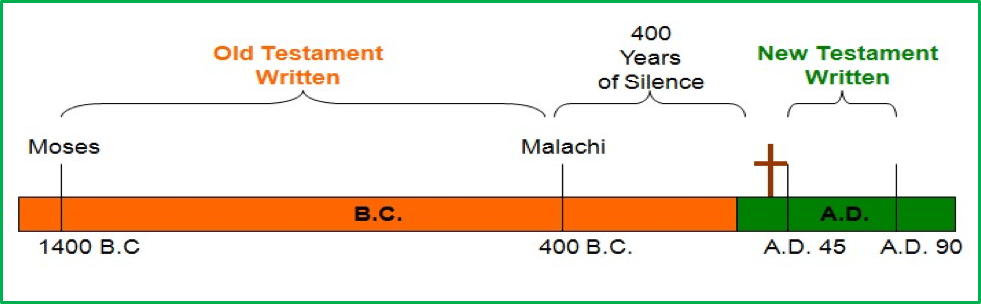
Please read the last article on the all sufficiency of Christ (Colossians chapters 1 and 2). Summary:Jesus is all sufficient for your forgiveness and guidance. He is the Son of God, the very icon (exact image) of the Father. He is the Creator and all things hold together by His power. He is your redemption from sin and reconciliation with God. He is the head of the church and directs every thought, word, and deed. Don’t let anyone tell you that simple faith and obedience is not enough, that you need to focus on sectarian rules or new revelation or asceticism or visions or intellectual doctrinal debates or charisms of some latter day prophet or legalism withdrawing fellowship with other believers. You don’t need those things to be “spiritual”, to be more “complete or mature” as a Christian.
So, Christ is all sufficient but what does that mean in practical daily Christian living? Since he is all sufficient, do we even need to try to quit sinning? Will the all sufficient grace of Jesus save us no matter what we do (universalism)? Do we need to do good works since salvation can’t be earned by good works? Are there any rules to keep? Are there any doctrines essential to salvation and fellowship with other Christians?
I think the Colossian letter answers all those questions. Remember, Paul is writing to house churches in Colossae who don’t have a completed New Testament. Some false teachers are trying to persuade them to focus on some new philosophy about the nature of Christ or some food laws of the Old Testament or some visions they have seen. After discussing the all sufficiency of Christ in chapters 1 and 2, what will Paul tell them to focus on.
1:4 Continue “your faith in Christ Jesus and the love which you have for all the saints.”
1:10 Walk in a manner worthy of the Lord, to please Him in all respects, bearing fruit in every good work and increasing in the knowledge of God.”
1:23 Continue in the faith firmly established and steadfast, and not shifting from the hope of the gospel that you have heard.”
3:1 Therefore, if you have been raised with Christ, keep seeking the things that are above, where Christ is, seated at the right hand of God. 2 Set your minds on the things that are above, not on the things that are on earth.” Don’t focus of all that stuff the false teachers are pushing at you.
3:5-11 Put off the old sinful self and all your old sinful thoughts, deeds, and practices. Sexual immorality, impurity, passion, evil desire, and greed, which amounts to idolatry, anger, wrath, malice, slander, and obscene speech from your mouth. lying. That list covers it all, doesn’t it? Look at each one of those and ask yourself, “How hard am I really tryin to no commit those sins?”
3:10-13 Put on the new self that is constantly being “renewed”. The Greek for renewed is anakainoó: To renew, to make new again. (AI): “The verb ἀνακαινόω (anakainoó) is used in the New Testament to describe the process of renewal or making something new again. It conveys the idea of restoration and transformation, often in a spiritual or moral sense. This renewal is typically associated with the inner self or mind, indicating a profound change that aligns with God’s will and purposes.” Put on a heart of compassion, kindness, humility, gentleness, and patience; 13 bearing with one another, and forgiving each other just as Christ forgives you, love, which is the perfect bond of unity, peace, be thankful. Let the word richly dwell within you b/c that is the main way that the Spirit renews your mind every day to put off the old and put on the new. It is a constant battle of the mind 24/7 to do that, but you have to stay in the word. Look at that list to put on. Which ones do you need to ask the Spirit to help you practice more? Ephesians expresses this same “put off the old, put on the new renewal of the mind: Ephesians 4:22 to put off your old self, which belongs to your former manner of life and is corrupt through deceitful desires, 23 and to be renewed in the spirit of your minds, 24 and to put on the new self, created after the likeness of God in true righteousness and holiness.” A great summary verse: Colossians 3:17 Whatever you do in word or deed, do everything in the name of the Lord Jesus, giving thanks through Him to God the Father.”
3:18-4:1. Be a submissive wife, loving husband, obedience child, gentle father, obedient slave, fair slave master. It should all start in the home!
4:2-4. Be devoted to prayer with thanksgiving. 3 praying at the same time for us as well, that God will open up to us a door for the word, so that we may proclaim the mystery of Christ. Pray for the spread of the gospel throughout the world. Pray and support organizations like EEM that print and distribute Bibles in many countries in many languages.
4:5-6. Make the most of every opportunity that you have to influence outsiders, non Christians. 6 Your speech must always be with grace, as though seasoned with salt, so that you will know how you should respond to each person.” That would include handling conflicts, not returning insult for insult, defending the faith ready to give an answer to everyone who asks you about the hope of eternal life that you have, and just being kind to others in your speech, encouraging others. That would include: Ephesians 5:4 Let there be no filthiness nor foolish talk nor crude joking, which are out of place, but instead let there be thanksgiving.”
4:7-18 Share greetings with fellow believers and co-workers in the kingdom. Paul mentions several, including John Mark and Luike. Special mention of Epaphras who started and pastored the church at Coossae but was in Rome when Paul wrote the letter: 4:12 Epaphras, who is one of your own, a bond-servant of Christ Jesus, sends you his greetings, always striving earnestly for you in his prayers, that you may stand mature and fully assured in all the will of God. 13 For I testify for him that he has a deep concern for you and for those who are in Laodicea and Hierapolis.” Also share this letter with the Laodiceans and read the letter I wrote to them.
In closing, remember that Paul told how they became Christians and how they were saved. Colossians 2:9 For in Him all the fullness of Deity dwells in bodily form, 10 and in Him you have been made complete, and He is the head over every ruler and authority; 11 and in Him you were also circumcised with a circumcision performed without hands, in the removal of the body of the flesh by the circumcision of Christ, 12 having been buried with Him in baptism, in which you were also raised with Him through faith in the working of God, who raised Him from the dead. 13 And when you were dead in your wrongdoings and the uncircumcision of your flesh, He made you alive together with Him, having forgiven us all our wrongdoings, 14 having canceled the certificate of debt consisting of decrees against us, which was hostile to us; and He has taken it out of the way, having nailed it to the cross. 15 When He had disarmed the rulers and authorities, He made a public display of them, having triumphed over them through Him.“
I’m still convinced that one must believe, repent, confess, and be baptized for the remission of sins (Acts 2:38; 22:16). These verses teach that baptism is the final “step”, being buried (the word baptizo means immersion) in the water and then raised up from the water. Still saved by grace through faith, but baptism is part of that initial saving faith. Similar to Namaan being told to dip in the River Jordan 7 times to be healed of leprosy. The water or the number of dips didn’t save him, it was the power of God. But he was given “conditions” to meet to be cleansed and he would not have been cleansed if he did not obey those conditions. The same with baptism. It’s not the water. It’s not a “work” by which we earn salvation. It’s simply a condition of faith that must be met. We were dead in sin, but after baptism we were raised to walk in newness of life (Romans 6:1-6). Baptism is not just something you do to join a church. It is a critical step in being saved by grace through faith.
So, if you are not a Christian, please do so. If you have not been baptized, please do so. Don’t let anyone get your focus off the all sufficiency of Jesus and what simple Christian living is.
Do you see why I made the title?If Colossians was the only book in the New Testament that you had, it would be more than adequate for you to believe in the all sufficiency of Christ and how you should live a a believer.
CHRIST IS ALL YOU NEED AND COLOSSIANS IS ALL YOU NEED!
(AI): “If you ever lose confidence in the all-sufficiency of Jesus Christ, it means you start to doubt that Jesus alone can provide everything you need for salvation and a fulfilling life, potentially looking to other sources or actions to fill the gaps in your faith, which goes against the core Christian belief that Jesus is enough on his own.”
The theme of the letter to the Colossians is “the all sufficiency of Christ”. Paul is in house arrest in Rome for 2 years around 60 AD, during which he wrote his 4 prison epistles: Ephesians, Philippians, Colossians, and Philemon. Epaphras started the church in Colossae. Epaphras was a coworker of Paul’s and a native of Colossae. He likely converted to Christianity while Paul was in Ephesus. Maybe he was converted while Paul was teaching two years in the school of Tyrannus in Ephesus. Paul would have laid his hands on him and given him miraculous gifts. He then returned to Colossae to spread the gospel. He probably ministered to the Colossae church for several years. He traveled to Rome to update Paul on the church’s condition. That’s how Paul knew about the heresy being spread at Colossae. He became Paul’s fellow prisoner in Rome. (AI): “During Paul’s three-year stay at Ephesus, “all the residents of Asia (including Colossae), both Jews and Greeks, heard the word of the Lord” (Acts 19:10, CSB). It is quite possible that Paul, while in Ephesus, had led Epaphras to Christ, discipled him, and then commissioned him as a church-planter to Colossae.”
Picture Paul in Rome writing a letter to the house church(es) in Colossae after Epaphras told him about the false teaching being spread in Colossae. Mind you that the church there doesn’t have a copy of the New Testament yet. They might have had access to the gospel. But Paul is dealing with a very specific issue that maybe Epaphras is not able to deal with. The Colossians would have respected Paul as an apostle and hopefully they dealt with the issues after receiving Paul’s letter. It makes you thankful that we have the completed New Testament “so that we may no longer be children, tossed to and fro by the waves and carried about by every wind of doctrine, by human cunning, by craftiness in deceitful schemes” (Ephesians 4:14).
What was the heresy being spread in the church there? This wasn’t a minor dispute over eating meats. The heresy attacked the very nature and sufficiency of Christ. (AI) “The concept of “all-sufficiency”: This means that Jesus’ sacrifice and power are enough to cover all your needs, including forgiveness of sins, eternal life, and strength to live a godly life; you don’t need to add anything else to be saved or live a righteous life.”
(AI): “The “Colossian Heresy” refers to a set of false teachings that spread within the early Christian church in Colossae, which Apostle Paul addressed in his Epistle to the Colossians; this heresy likely involved a mixture of Jewish legalism, pagan mysticism, and angel worship, essentially downplaying the supremacy of Christ and emphasizing the need for additional rituals or practices beyond faith in Jesus for salvation.
Key points about the Colossian Heresy:
Secret knowledge:The false teachers might have presented their beliefs as a form of “secret knowledge” accessible only to a select few.
Focus on angels:A significant aspect of the heresy was the excessive reverence or worship of angels, potentially viewing them as intermediaries between God and humans, diminishing Christ’s role.
Ascetic practices:The heresy might have also promoted strict asceticism, encouraging practices like fasting and self-denial beyond what was necessary.
Jewish legalism:Some elements of the heresy could have involved adherence to Jewish laws like circumcision or dietary restrictions, even for Gentile Christians.”
The false teachers were persuasive. Colossians 2:4 I say this so that no one will deceive you with persuasive arguments. 2:8 See to it that there is no one who takes you captive through philosophy and empty deception in accordance with human tradition, in accordance with the elementary principles of the world, rather than in accordance with Christ. 2:16 Therefore, no one is to act as your judge in regard to food and drink, or in respect to a festival or a new moon, or a Sabbath day— 17 things which are only a shadow of what is to come; but the substance belongs to Christ. 18 Take care that no one keeps defrauding you of your prize by delighting in humility and the worship of the angels, taking his stand on visions he has seen, inflated without cause by his fleshly mind, 19 and not holding firmly to the head, from whom the entire body, being supplied and held together by the joints and ligaments, grows with a growth which is from God.”
False teachers are still very persuasive today, deceiving many Christians. Following Christ is really pretty simple. You acknowledge Jesus as the Messiah, the Son of God, the Savior. You put your faith in His atoning death on the cross for the forgiveness of your sins. You try to stop “practicing” sin. You try to love fellow Christians and the lost. You try to allow Jesus to lead you in every aspect of your life. You try to obey his commands. You try to be a loving mate, child, worker, neighbor, and influence with everyone in your life. Then some persuasive false teacher comes along and says, “what you are doing is not enough. You need to keep some of the food and feast laws of the Old Testament”(even though they were given to the Jews and you are not a Jew, you are a Gentile Christian under the new covenant:the Seventh Day Adventists do this). “You need to have some secret knowledge that is not in the New Testament” (the Mormons do that with the Book of Mormons which they say is equal to the New Testament in authority; Christian Science does this with their special healing concepts taken from their prophetess). “You have the wrong view of the nature of Christ; he was a created being, not eternal” (the Jehovah’s Witnesses teach that and then use persuasive arguments to get you to believe that Jesus invisibly came in 1914 AD to establish the Kingdom Hall of Jehovah’s Witnesses and that you need to join).”
Or maybe a persuasive teacher (not so radical as the cult teachers mentioned above) comes along and says, “Here is a list of doctrines that you must follow: no instrumental music in worship, Lord’s Supper every Sunday, no jewelry, infant baptism, etc and you can’t fellowship with others who don’t adhere to these teachings” (the doctrines might just be honest attempts to teach the truth, but it is legalism to make minor doctrines as tests of fellowship with other Christians). “You need to come worship with us b/c we have a pastor or prophet who gets visions from God to guide us” (many cults have latter day prophets who rely on visions they have seen). “You need to speak in tongues to really be a spiritual Christian and you need to follow our Spirit led prophets” (the Bethel group does that as well as many Pentecostal groups: speaking in tongues might not be a heaven/hell issue but it can’t be used to make believers feel more spiritual than others who don’t do such practices).
Indeed we have plenty of the “Colossian heresy” today among religious groups. You might wonder why false teachers would come up with all these heretical or divisive teachings. Maybe it is just a desire for control or power over others, to make the false teacher feel more important b/c of his/her teaching. Maybe even money or sexual motives. Maybe an honest attempt to get people to believe in truths that he/she thinks other believers have missed, but even if that is the case they should not cause division.
But Paul says that the. root of the problem of the heresy is that some are not totally sold on the “all sufficiency of Christ”. Again: “The concept of “all-sufficiency”: This means that Jesus’ sacrifice and power are enough to cover all your needs, including forgiveness of sins, eternal life, and strength to live a godly life; you don’t need to add anything else to be saved or live a righteous life.” We should focus all our attention, devotion, and study on Christ and not issues, new philosophy, new rules and regulations, new forms of spirituality, new intellectual debates, new revelations, etc. Since Christ is the head of the body, he does give us all the basic truths we need. His revelation through the inspired apostles and prophets as recorded in the New Testament is sufficient for us. We won’t come up LGBQT approval if we trust in the sufficiency of His revelation. We won’t listen to a pope as the head of the church. We won’t accept extra books like the Book of Mormon. We won’t follow some latter day prophet. We might sit around in a house church and discuss issues and doctrines, and we can have minor disagreements, but we will always trust Jesus’ new covenant to keep us straight!
We will not feel like we have to keep more rules to be more righteous. We will trust in the reckoned or imputed righteousness of Christ that is given us by our faith in Jesus. We won’t feel like we need some extra secret knowledge or false spirituality to be more spiritual.
We are now ready for Paul’s doctrinal statement of the “all sufficiency of Christ”:
Colossians 1:13 For He rescued us from the domain of darkness, and transferred us to the kingdom of His beloved Son, 14 in whom we have redemption, the forgiveness of sins.
15 He is the image of the invisible God, the firstborn of all creation: 16 for [y]by Him all things were created, both in the heavens and on earth, visible and invisible, whether thrones, or dominions, or rulers, or authorities—all things have been created through Him and for Him. 17 He is before all things, and in Him all things hold together. 18 He is also the head of the body, the church; and He is the beginning, the firstborn from the dead, so that He Himself will come to have first place in everything. 19 For it was the Father’s good pleasure for all the fullness to dwell in Him, 20 and through Him to reconcile all things to Himself, whether things on earth or things in heaven, having made peace through the blood of His cross.
21 And although you were previously alienated and hostile in attitude, engaged in evil deeds, 22 yet He has now reconciled you in His body of flesh through death, in order to present you before Him holy and blameless and beyond reproach— 23 if indeed you continue in the faith firmly established and steadfast, and not shifting from the hope of the gospel that you have heard, which was proclaimed in all creation under heaven, and of which I, Paul, was made a minister.
24 Now I rejoice in my sufferings for your sake, and in my flesh I am supplementing what is lacking in Christ’s afflictions in behalf of His body, which is the church. 25 I was made a minister of this church according to the commission from God granted to me for your benefit, so that I might fully carry out the preaching of the word of God, 26 that is, the mystery which had been hidden from the past ages and generations, but now has been revealed to His saints, 27 to whom God willed to make known what the wealth of the glory of this mystery among the Gentiles is, the mystery that is Christ in you, the hope of glory. 28 We proclaim Him, admonishing every person and teaching every person with all wisdom, so that we may present every person complete in Christ. 29 For this purpose I also labor, striving according to His power which works mightily within me.“
Paul gives 12 facts about Christ in these verses:
He is King (verse 13). We are translated into his spiritual kingdom, the church, which is his figurative body of the saved. Jesus is “King of kings and Lord of lords” (Revelation 19:16) .
He is our Redeemer (verse 14). The Greek is apolutrósis: Redemption: release effected by payment of ransom. He frees us from the power of death and sin. The ransom price is paid to God to appease His wrath against our sin. His grace will cover you if you sincerely try. His blood will continue to cleanse us of our sins (1 John 1:7). Ephesians 1:7 In him we have redemption through his blood, the forgiveness of our trespasses, according to the riches of his grace, 8 which he lavished upon us, in all wisdom and insight”.
The image of the invisible God (verse 15). The Greek is eikón: Image, likeness, representation, as with the image of an emperor on a coin. “If you have seen Me, you have seen the Father” (John 1:9)
The firstborn of all creation (verse 15). The Greek is prototokos: Firstborn but in the sense that the firstborn son has preeiminence or soverignty over other sons. Jesus was the not the first thing created by God like the JW’s teach. Paul makes that clear in the next verse.
Creator of all things (verse 16). John 1:1 In the beginning was the Word, and the Word was with God, and the Word was God. 2 He was in the beginning with God. 3 All things were made through him, and without him was not any thing made that was made.” He is the creator of all things, so he can’t be part of the creation itself.
He is eternal (verse 17). “Before Abraham was, I Am” (John 5:58). Micah 5:2 But you, O Bethlehem Ephrathah, who are too little to be among the clans of Judah, from you shall come forth for me one who is to be ruler in Israel, whose coming forth is from of old, from ancient days.” Isaiah 9:For to us a child is born, to us a son is given; and the government shall be upon his shoulder, and his name shall be called Wonderful Counselor, Mighty God, Everlasting Father, Prince of Peace.” If he is eternal, then he was not created.
In Him all things hold together (verse 17). What is gravity? What keeps protons and electrons from collapsing into the nucleus of elements? What makes Newton’s laws of motion work? What keeps stars and planets in orbit? It is the power of Jesus who holds all things together.
The Head of the Church (verse 18, 24). The head controls every organ in the body and everything that we do. We must look to Jesus, not the pope, to direct everything we do. Ephesians 1:22 And he put all things under his feet and gave him as head over all things to the church, 23 which is his body, the fullness of him who fills all in all.”
The firstborn from the dead (verse 18). Again the Greek is prototokos: Firstborn. He was not the first one ever raised from the dead (for example Lazarus were raised by Jesus), but he was the preeminent one ever raised from the dead. His resurrection would verify Christianity.
The has first place in everything (verse 18). The Greek is próteuó: To have the first place, to be preeminent, the first in importance. He must be first in everything thing you think, say, and do. He must be first priority in your life.
In Him the fullness of God dwells (verse 19). The Greek is pléróma: Fullness, completion, that which fills. In other words, the Father filled Jesus with everything that He, the Father, is. He is God. John 1:1 In the beginning was the Word, and the Word was with God, and the Word was God. John 1:14 And the Word became flesh and dwelt among us, and we have seen his glory, glory as of the only Son from the Father, full of grace and truth.” John 20:28 Thomas answered him, “My Lord and my God!” 29 Jesus said to him, “Have you believed because you have seen me? Blessed are those who have not seen and yet have believed.” Believed what? Believed, like Thomas, that Jesus is Lord and God!
He is our reconciliation with God (verse 20-22). The Greek is apokatallassó: To reconcile completely, to restore to favor. It emphasizes the total restoration of a relationship that was once broken due to sin. Romans 5:10 For if while we were enemies we were reconciled to God by the death of his Son, much more, now that we are reconciled, shall we be saved by his life. 11 More than that, we also rejoice in God through our Lord Jesus Christ, through whom we have now received reconciliation.” 2 Coriinthians 5:18 All this is from God, who through Christ reconciled us to himself and gave us the ministry of reconciliation; 19 that is, in Christ God was reconciling[c] the world to himself, not counting their trespasses against them, and entrusting to us the message of reconciliation. 20 Therefore, we are ambassadors for Christ, God making his appeal through us. We implore you on behalf of Christ, be reconciled to God. 21 For our sake he made him to be sin who knew no sin, so that in him we might become the righteousness of God.”
Christ then is all sufficient for those who trust in Him. If you are just trusting in Jesus and walking in the light, then you don’t need anything or anyone else. Don’t let anyone tell you that you need something else to be “complete in Christ” (Colossians 1:28). It is “Christ in you” that is the hope of the glory of eternal life (Colossians 1:27). Focus on who Christ is and what he provides for you instead of your religious works and good deeds.
Let’s finish where we started. (AI): “If you ever lose confidence in the all-sufficiency of Jesus Christ, it means you start to doubt that Jesus alone can provide everything you need for salvation and a fulfilling life, potentially looking to other sources or actions to fill the gaps in your faith, which goes against the core Christian belief that Jesus is enough on his own.” When you have problems, do you believe that Christ is sufficient to give you the strength to handle the problem? When you feel like you are no doing enough or that you don’ know enough, do you trust Jesus to save you anyway? When someone is trying to add things that you need to be complete in Christ, can you tell them, “No thanks. Jesus is all I need.”
I close with a song. “Jesus is all the world to me.” You can listen to the song on youtube.
1 Jesus is all the world to me, My life, my joy, my all; He is my strength from day to day, Without him I would fall: When I am sad, to him I go, No other one can cheer me so; When I am sad, he makes me glad, He’s my friend.
2 Jesus is all the world to me, My friend in trials sore; I go to him for blessings, and He gives them o’er and o’er: He sends the sunshine and the rain, He sends the harvest’s golden grain; Sunshine and rain, harvest of grain, He’s my friend.
3 Jesus is all the world to me, And true to him I’ll be; Oh, how could I this friend deny, When he’s so true to me? Following him I know I’m right, He watches o’er me day and night; Following him by day and night, He’s my friend.
4 Jesus is all the world to me, I want no better friend; I trust him now, I’ll trust him when Life’s fleeting days shall end: Beautiful life with such a friend, Beautiful life that has no end; Eternal life, eternal joy, He’s my friend.
Okay, this article gets into some serious Bible study so buckle up!
Daniel 9 begins with: 9:1 “In the first year of Darius the son of Ahasuerus, of Median descent, who was made king over the kingdom of the Chaldeans— 2 in the first year of his reign, I, Daniel, observed in the books the number of the years which was revealed as the word of the Lord to Jeremiah the prophet for the completion of the desolations of Jerusalem, namely, seventy years.” Darius the Mede defeated Babylon and Belshazzar in 539 BC (Daniel 5:30). So in the 1st year of Darius in 539 BC the 70 years of Babylonian captivity is just about over (the 1st deportation in 606 BC to 536 BC when Cyrus the king of Persia allowed Jews to return to rebuild the temple). Daniel confesses the sins of the nation but asks God to fulfill His promise and let the Jews return to Palestine. Gabriel came to him and gave him what is called the “70 weeks prohecy” that goes way past the return in 536 BC.
Daniel 9:24 “Seventy weeks have been decreed for your people and your holy city, to finish the wrongdoing, to make an end of sin, to make atonement for guilt, to bring in everlasting righteousness, to seal up vision and prophecy, and to anoint the Most Holy Place. 25 So you are to know and understand that from the issuing of a decree to restore and rebuild Jerusalem, until Messiah the Prince, there will be seven weeks and sixty-two weeks; it will be built again, with streets and moat, even in times of distress. 26 Then after the sixty-two weeks, the Messiah will be cut off and have nothing, and the people of the prince who is to come will destroy the city and the sanctuary. And its end will come with a flood; even to the end there will be war; desolations are determined. 27 And he will confirm a covenant with the many for one week, but in the middle of the week he will put a stop to sacrifice and grain offering; and on the wing of abominations will come the one who makes desolate, until a complete destruction, one that is decreed, gushes forth on the one who makes desolate.”
Here is a great timeline of Daniel:
The best way to show what I believe is the correct interpretation of the 70 week prophecy is this chart:
Dates on the chart: Matthew 24 is critical in determining these dates as will be explained below.
1) 457 BC Decree to rebuild Jerusalem: 457 BC (when Artaxerxes allowed the Jews to finish rebuilding the walls and the city). Would be finished in 49 years (the 7 weeks)
2) 30 AD The Messiah cut off (died): 30 AD at the end of the 69th week (62 more weeks after the first 7 weeks for a total of 483 years from the decree to rebuild till the death of the Messiah Jesus)
3) 30 AD – 63 AD Gap (read below to see why there must be a gap)
3) 70 AD The destruction of the city(Jerusalem) and the sanctuary (the temple) and the abomination of desolation: 70 AD (the end of the 70th week and the last 7 years of the prophecy from 63-70 AD)
I do believe each week is a prophetic 7 year period, so 70 x 7 = 490 years from the decree to rebuild the Jerusalem ( 457 BC when Artaxerxes allowed the Jews to finish rebuilding the walls and the city as recorded in Ezra) to the end of the 70th week. 7 weeks (49 years) to rebuild the walls and the city, then 62 more weeks (434 years) till the Messiah Jesus is “cut off” (dies, is crucified) and that puts the end of the 69th week (after 483 years) it at about 30 AD. That date for the death of Christ can be off some since Jesus really was born in 4-5 BC instead of 0 BC/AD (you can google that!). But for sure the death of Christ is at the end of the 69th week and that just leaves one more week, the 70th week (7 years). But the 70th week cannot begin immediately after the end of the 69th week. Why not? B/c the end of the 70th week (490th year) is when the “the people of the prince who is to come will destroy the city and the sanctuary and that refers to the destruction of Jerusalem and the temple by the Romans and Titus in 70 AD. How do we know that? B/c Daniel 9:27 puts the “abomination of desolation” at the end of the 70th week, which refers to some desolation and destruction of the temple. So when was the “abomination of desolation”? We must go to Matthew 24 to get that answer. Jesus said in Matthew 24:15 “So when you see the abomination of desolation spoken of by the prophet Daniel, standing in the holy place (let the reader understand), 16 then let those who are in Judea flee to the mountains.” But then he adds in Matthew 24:34 Truly, I say to you, this generation will not pass away until all these things take place.” The Greek word for generation is genea and in the New Testament always refers to a 40 year period or the people living in. a 40 year period, just like we use the term the “x” generation. So Jesus is saying that the abomination of desolation predicted by Daniel in Daniel 9:27 had to occur within the next 40 years after he said these things in Matthew 24, and that could only be the destruction of the temple and Jerusalem by the Romans in 70 AD. So the end of the 70th week is the abomination of desolation. Daniel also predicted the abomination of desolation to occur at the “end time” in Daniel 11:31, 35, 40. Then in Daniel 12:11 Daniel again mentions the abomination of desolation at the “end time” (12:4, 9), the “end” (12:13) the “end of the age (12:13, i.e. the end of the Jewish Age). Again, we go to Matthew 24 to find when “the end” happened. Matthew 24:14 And this gospel of the kingdom will be proclaimed throughout the whole world as a testimony to all nations, and then the end will come.” That “end” would also have to happen within the next 40 years before that generation passed away(24:34). That could only be the end of the Jewish theocracy and the end of the Jewish Age in 70 AD.
The bottom line is that the 70th week ended at 70 AD at the destruction of the temple and city by the Roman emperor Titus. That means that those who say that the 70th week is yet to be fulfilled in our future, still yet to be fulfilled, are wrong! This is a typical iinterpretation of the 70th week that futurists say is stll to be fulfilled in the future: “According to the biblical prophecy in Daniel 9, the “70th week” refers to a seven-year period where the Antichrist will rise to power, make a covenant with Israel that he will later break, and unleash a time of great tribulation upon the earth, ultimately culminating in the return of Jesus Christ at his second coming. The covenant will be broken halfway through the seven-year period, marked by the “abomination of desolation” which could involve the re-establishment of pagan worship in the Jerusalem temple (so the temple has to be rebuilt?). The 70th week is often seen as the final stage before the end times and the 2nd coming of Jesus.” I believe that the 70th wek has already been fulfilled by 70 AD in the first century.
The end of the 70th week also coincided with the 2nd coming of Jesus. We go again to Matthew 24:29 “Immediately after the tribulation of those days the sun will be darkened, and the moon will not give its light, and the stars will fall from heaven, and the powers of the heavens will be shaken. 30 Then will appear in heaven the sign of the Son of Man, and then all the tribes of the earth will mourn, and they will see the Son of Man coming on the clouds of heaven with power and great glory.” That coming also had to happen within that generation (24:34). That is consistent with Jesus’ other predictions that his 2nd coming would be within the lifetime of those he was speaking to (Matthew 10:23; 16:27,28; 26:64), which could only refer to his coming in judgment on the Jews in 70 AD at the destruction of the temple. There are no other predictions by Jesus in the gospels of a “coming back” at some time beyond 70 AD or in our future.
Yes this view of the 70 weeks prophecy leaves a gap between the end of the. 69th week and the beginning of the 70th week. If not, then the 70th week would have to be the 7 years immediately following the death of Jesus at the end of the 69th week and that would not put the end of the 70th week to be 70 AD which we have established that it must be so. So the end of the 69th week is around 30 AD. The 70th week ends at 70 AD, so the 7 years of the 70th week must begin at 63 AD. That makes a gap of about 33 years. Why would there be such a gap? B/c even though Jesus predicted his 2nd coming to be within that generation, he also said that no one, even he, knew the exact time of the 2nd coming. So there had to be a gap where the 1st century Christians were waiting for the imminent 2nd coming but did not know the exact date. They had to be ready at all times. They could only watch for the signs of the 2nd coming such as the surrounding of Jerusalem by the Gentile army (the Romans) and the tribulation or suffering of the Jews during the wars of the Jews (67-70 AD). Those Jewish Christians who heeded Jesus’ warnings in Matthew 24 escaped the city before the final siege and safely fled to Pella according to Eusebius.
Daniel 12 also predicts a tribulation at the end of the age, at the end time. Daniel 12:1 “Now at that time Michael, the great prince who stands guard over the sons of your people, will arise. And there will be a time of distress such as never occurred since there was a nation until that time; and at that time your people, everyone who is found written in the book, will be rescued.” Again, Jesus said that tribulation surrounding the abomination of desolation was to happen within the generation he was speaking to. Matthew 24:21 For then there will be great tribulation, such as has not been from the beginning of the world until now, no, and never will be.” He is saying that Daniel’s prediction of a tribulation at the end time was fulfilled in the tribulation experienced by the Jews in the destruction of Jerusalem. During Titus’ siege of the city, the Jews in the city suffered greatly with hunger, resorting to cannibalism. Josephus said that one million Jews died in the siege and another 200,000 were taken captive back to Rome as slaves. Those who say the tribulation of Matthew 24:21 is still to be fulfilled in our future are wrong! They mistakenly propose some tribulation just before Jesus comes back and begins his supposed millennial reign.
The 70th week wil also bring several Messianic blessings. Daniel 9:24 “Seventy weeks have been decreed for your people and your holy city, to finish the wrongdoing, to make an end of sin, to make atonement for guilt, to bring in everlasting righteousness, to seal up vision and prophecy, and to anoint the Most Holy Place. The Messiah the Prince (9:25) finish the sins of the nation by judgment on the wicked Jews in 70 AD, end the grip that sin and death have on believers, provide atonement for sins through the death of Jesus, bring in righteousness imputed to believers through faith in Jesus, fulfill all the. prophecies of the Old Testament (Luke 21:22) and thus no more prophecies to fulfill after 70 AD, and anoint the new Most Holy Place in heaven when Jesus enters bringing His blood to the Father for our sins. If the 70th week hasn’t happened yet, then we don’t yet have these wonderful Messianic blessings. But by 70 AD, the plan of redemption was finished once for all time and believers have these blessings.
Finally, Daniel 12 also predicts a resurrection at the end time, at the end, at the end of the age. Daniel 12:2 And many of those who sleep in the dust of the ground will awake, these to everlasting life, but the others to disgrace and everlasting contempt.” In the Old Testament, both the righteous and the unrighteous went to the hadean world, probably the state described in the parable of the rich man and Lazarus. The righteous would be in comfort in Abraham’s bosom and unrighteous would be in torment. As we have seen, Jesus’ words in Matthew 24 show us that this resurrection of Daniel 12:2 would occur at the end of the age in 70 AD. The dead of the OT would be raised in 70 AD to receive their final sentencing: eternal life or eternal contempt. Paul said that resurrection of Daniel 12:2 was the “hope of Israel” and that it was “about to happen” when he spoke in Acts 24: 14 `And I confess this to thee, that, according to the way that they call a sect, so serve I the God of the fathers, believing all things that in the law and the prophets have been written, 15 having hope toward God, which they themselves also wait for, [that] there is about to be (Greek word mello which always means “about to be” in the NT) a rising again of the dead, both of righteous and unrighteous” (Young’s Literal Translation). Where did the prophets predict a resurrection. In Daniel 12:2! Hades was thrown into the lake of fire and brimstone in 70 AD so hades no longer exist. Revelation 20:13 And the sea gave up the dead who were in it, Death and Hades gave up the dead who were in them, and they were judged, each one of them, according to what they had done. 14 Then Death and Hades were thrown into the lake of fire. This is the second death, the lake of fire.” After 70 AD, believers would go directly to be with Jesus and enjoy eternal life.
If you are still reading, thanks. If all this is a little too much, just remember that Jesus basically said that the 70 weeks prophecy ended in 70 AD. That should ease your mind (or the mind of others whom you talk to who might be concerned due to false teaching) when you hear predictions about the 70th week being fulfilled in our future. It should also be comforting that we have all those wonderful Messianic blessings now. We are not still waiting for them to be delivered.
Peter spoke of trial by fire, a fiery trial. 1 Peter 1:1 Peter 1:7 “That the trial of your faith (being much more precious than gold that perisheth, though it be tested with fire)”. Peter 4:12-19 “Beloved, think it not strange concerning the fiery trial which is to try you, as though some strange thing happened unto you”. But I think that was figurative fire! How would you respond if you literally were thrown into a fiery furnce. Picture the fire chambers where they cremate bodies, or the iron furnaces in Birmingham, AL where they made steel. I can’t think of a worse way to die. Christians have been threatened with death by many different means over the past 2,000 years. 70 Christians were just beheaded in the Congo recently. Shelley writes, “Many Christians were even crucified. Some were sewn up in the skins of wild beasts; then big dogs were let loose upon them, and they were torn to pieces. Women were tied to mad bulls and dragged to death. After nightfall Christians were burned at the stake in Nero’s garden. The Roman people who hated the Christians were free to come into the garden, and Nero drove around in his chariot enjoying the horrible spectacle to the full.”[10] This may be what Peter was writing about, when he wrote, “Do not be surprised at the fiery ordeal among you” (1 Pet. 4:12). [10] Shelley, Bruce L. Church History in Plain Language: Fourth Edition. Nashville, NT: Thomas Nelson. 2013. 44. Here is a good article of persecution and martyrdom of Christians: https://www.evidenceunseen.com/theology/historical-theology/persecution-of-christianity-ad-33-325/ Foxes Book of Martyrs is also good.
You probably know where I am headed with this since I started the last article with Daniel 1. Yes, Daniel 3 tells about the 3 Hebrew young men who were thrown into the fiery furnace. They had refused to bow to the 90 feet high, 9 feet wide, gold image that King Nebuchadnezzar had made and had commanded that all bow down and worship. That’s nine stories high. I can’t imagine what it took to even make that image and what it was worth being solid gold. Some Chaldeans told the king about the 3 Hebrews who were not bowing down when the music sounded. The king gave them a 2nd chance to bow down, but they would not. Daniel 3:16 Shadrach, Meshach, and Abednego answered and said to the king, “O Nebuchadnezzar, we have no need to answer you in this matter. 17 If this be so, our God whom we serve is able to deliver us from the burning fiery furnace, and he will deliver us out of your hand, O king. 18 But if not, be it known to you, O king, that we will not serve your gods or worship the golden image that you have set up.” I admire the courage and faith of these 3 young men. They believed not only that God was “able” to deliver them from the fire, but that “he will deliver us”. We should believe that God is able to do what we pray for, but we don’t have to believe that he will always do what we pray for. Jesus asked the Father to remove the cup of suffering and death that he was facing, but I think he knew that the Father would not do that. He knew that he had to die for the sins of the world. John 12:27 “Now is my soul troubled. And what shall I say? ‘Father, save me from this hour’? But for this purpose I have come to this hour.” He added, “if not, thy will be done”. I believe that the 3 Hebrews would have been fine with just dying in the fire but they had that extra faith that God was going to deliver them. But even if it meant dying in the fire, they would not worship the image. That would violate the 1st and 2nd of the 10 commandments: Have no other gods and make no graven images to bow down and worship.
I honestly don’t know how I would respond if threatened with being burned to death, or beheaded or any other type of death, if I would not deny Christ. I hope I would respond as the 3 Hebrews did, but who knows what we will do in that moment facing threats of death. Many early Christians joyfully died as martyrs, refusing to deny Christ, such as Polycarp who was burned at the stake. Felicitas and Perpetua were Christian martyrs in the third century who were put to death in Carthage, Africa. Perpetua: A noblewoman who was recently married and nursing an infant son. Felicitas: A slave who was pregnant when arrested. Their martyrdom is told in The Passion of St Perpetua, St Felicitas, and their Companions Perpetua’s account is considered historical and is the earliest surviving text written by a Christian woman. According to the historical account of Saint Perpetua, her father repeatedly pleaded with her to renounce her Christian faith and offer a sacrifice to the Roman emperor, so that she could return home to her infant child and avoid martyrdom; essentially begging her to recant her faith to be with her baby. He might have told her that she didn’t even mean it if she would recant her faith and that God would surely understand her need to live and take care of her infant. I mean, Rahab lied about where the 2 spies were and God didn’t punish her for that. But no, Perpetua would not deny Christ even if it meant death and not being able to see her child again. They walked to the arena with their companions.They were placed in the arena with wild animals. A wild cow was let loose to mock Felicity as a nursing mother. Perpetua guided the executioner’s sword to her neck. Felicity and Perpetua embraced, kissed each other, and received the sword. (AI)
Who knows? Under such a death threat for my faith I might do as many did during the Decian persecution. The Decian persecution (250 AD) was a period of persecution of Christians that occurred under the Roman emperor Decius. The persecution was traumatic for Christian communities, and many lapsed in their faith and went into hiding, but later repented and asked to be readmitted into the church fellowship. The Novatian sect opposed the readmission of Christians who had lapsed in their faith during the Decian persecution. Would you have voted to allow those apostates, as they were called, back into Christian fellowship? What if your dad or mom had died under the persecution b/c they would not deny Christ? Would that change how you felt about the apostates being allowed back in?
These stories seem so foreign to us. There might be someone reading this blog who has suffered such persecution, but most of us have never suffered such, especially threats of death if we won’t deny Christ. In places like North Korea, Christians are under constant threat of being sent to labor camps or executed for their faith. Here are the 10 most dangersous places to be a Christian from the Open Doors ministry: https://www.opendoorsus.org/en-US/stories/10-most-dangerous-places-Christian/ I can only hope that I would have the faith and courage of the 3 Hebrew men if I faced death like they did and as many martyrs have faced.
What kind of persecution was Peter talking about when he spoke of “fiery trials”. This would about the same time period that Nero was persecuting Christians in Rome, burning some. In The Beast of Revelation, Kenneth L. Gentry argues that Nero’s persecution of Christians was empire-wide. So maybe that is why Peter called it “fiery” trials. Peter was writing to Jewish Christians scattered across the empire. The Hebrews letter affirms persecution in the empire since it was written to Jewish Christians in Palestine and Jerusalem. Hebrews 10:32 But recall the former days when, after you were enlightened, you endured a hard struggle with sufferings, 33 sometimes being publicly exposed to reproach and affliction, and sometimes being partners with those so treated. 34 For you had compassion on those in prison, and you joyfully accepted the plundering of your property, since you knew that you yourselves had a better possession and an abiding one.” 13:3 Remember those who are in prison, as though in prison with them, and those who are mistreated, since you also are in the body.”
Back to Daniel 3. They threw them in the fire but the king was astonished when he saw 4 men in the fire, he 4th like a son of the gods. Many believe that 4th man was the pre-incarnate Jesus who made brief appearances in the Old Testament such as the man who wrestled with Jacob and the angel of Jehovah. The 3 men came out of the fire, their clothes not burned, their hair not even singed. Do you really believe this miracle happened? If you do, it is a great testimony to the existence of the one true God Yahweh. The king then made a decree that anyone who spoke against the god of the Hebrew men would be killed, and promoted the 3 men.
Pray for believers who are persecuted all over the world, even facing death for their faith. Subscribe to receive the Voice of The Martyrs (VOM) magazine to read true stories of the faith of those persecuted. What if we had born born in North Korea? Why were we born in the U.S. where we are not persecuted? Would my faith be courageous in North Korea in spite of the risks? I can only hope so.
Usually I get my creative (what little creativity I get) early in the morning, I mean real early, like 3 AM. This morning I got nothing. So I fell back asleep and than at 7 AM I got a phone call I missed. It was from a man from Trinidad. He had tried to reach me a week ago and I didn’t recognize his name so I didn’t follow up to contact him. This morning something told me to call him, so I did. It was one of the teenagers that we baptized 50 years ago. Of course he is now 64, not the 14 when we baptized him in a crusade (what we called a “gospel meeting” but in a rented hall and not a church b/c there was no church in the town he lived in and where we held the crusade. We baptized several teens in that crusade and started the church in that town. I don’t think that I have seen him in 50 years. He has one grown son living in Queens, New York.I had a long talk with my long, lost brother in Christ. We talked about several of the brothers and sisters in Trinidad, some of whom I have talked to via WhatsApp recently. Many of those we worked with are now older than me and I am 75. Those guys were in their 30’s when we spent 3 years in Trinidad when I was in my mid 20’s. They are men whom we did intense Bible studies with to train them in the book so they could carry on the work in Trinidad after we left in 1976 and they have been carrying on the work in several congregations without any U.S. paid preachers and I am very proud of that. My long lost brother is still very active in the church there. I sadly learned that one of my most trusted friends and leaders in Trinidad now has advanced dementia; he doesn’t know anyone, he just sits and smiles. That church we started with that crusade is having their 50th year anniversary on April 15 of this year.
Ok, breaking news.My wife just came in and I mentioned our brother with dementia, that we should call them. The only phone we had for him and his wife was a landline, so we called it. She answered and we were able to talk to both of them. My dementia brother even perked up and I think remembered us! We chatted for a while and it was a joy. She said we made her day and it certainly made our day. From what she said, I’m not sure my bother has much longer to live.
All this is kinda personal, I know, and thank you for reading if you are reading it. I know everyone has their stories from the past but these are mine today! My mind is filled with a lot of thoughts right now. But I am so thankful that God providentially guided us to do 3 years of mission work in Trinidad back in the 70’s. It was a special, special time. But I think that I can relate more to what the apostle Paul said in Philippians 4:1 “Therefore, my brothers, whom I love and long for, my joy and crown, stand firm thus in the Lord, my beloved.” 1 Thessalonians 2:19 For what is our hope or joy or crown of boasting before our Lord Jesus at his coming? Is it not you? 20 For you are our glory and joy.” That’s exactly how I feel right now.
Paul also said in 2 Timothy 4:6 For I am already being poured out as a drink offering, and the time of my departure has come. 7 I have fought the good fight, I have finished the race, I have kept the faith. 8 Henceforth there is laid up for me the crown of righteousness, which the Lord, the righteous judge, will award to me on that day, and not only to me but also to all who have loved his appearing.” So there is a crown of life waiting for us. In the Roman Empire, crowns were often given to victorious military leaders, so the imagery of a crown carried connotations of triumph and overcoming challenges. It signifies the reward for enduring hardship and remaining faithful to the end. In other words, eternal life somewhere with the Father, Son, Holy Spirit, angels and other believers. But Paul’s other crown he was looking for was to be rerunited in eternity with all those he had converted to Chist and mentored and taught in his 30 years of preaching the gospel of Christ to the Gentiles. My Trinidadian brothers and sisters will be our crown some day, our joy. Even our boasting. We won’t boast about our good works. We will simply tell Jesus, “Look who I helped to become your brother”. We are all brothers to Jesus and sons of the same Father. Hebrews 2:11 For he who sanctifies and those who are sanctified all have one source. That is why he is not ashamed to call them brothers, 12 saying, “I will tell of your name to my brothers; in the midst of the congregation I will sing your praise.” That means that Jesus, having finished the word of dying for our sins and setting us apart (sanctification) from sin, would tell of the name (and character behind that name) of the Father to His brothers (those who believed in Jesus). When Jesus was raised, he told the women: Matthew 28:10 Then Jesus said to them, “Do not be afraid. Go and tell my brothers to go to Galilee; there they will see me.” He said the same thing in John 17:17 Jesus said to her, “Do not cling to me, for I have not yet ascended to the Father; but go to my brothers and say to them, ‘I am ascending to my Father and your Father, to my God and your God.’” I don’t think he ever called his apostles “brothers” until after the resurrection. I had never thought of that until writing this article, so the word always has something new for us.
I hope you have someone to be your crown and joy, to greet you when you get to heaven (or whom you can greet if get there before they do!). This has been an amazing day! I could hear my dementia brother’s wife after we had said good bye, and I could still hear her saing “Praise the Lord!”. Yes, praise the Lord.”
Luke 5:33 And they said to him, “The disciples of John fast often and offer prayers, and so do the disciples of the Pharisees, but yours eat and drink.” 34 And Jesus said to them, “Can you make wedding guests fast while the bridegroom is with them? 35 The days will come when the bridegroom is taken away from them, and then they will fast in those days.” 36 He also told them a parable: “No one tears a piece from a new garment and puts it on an old garment. If he does, he will tear the new, and the piece from the new will not match the old. 37 And no one puts new wine into old wineskins. If he does, the new wine will burst the skins and it will be spilled, and the skins will be destroyed. 38 But new wine must be put into fresh wineskins. 39 And no one after drinking old wine desires new, for he says, ‘The old is good.’”
The new wine would ferment more and release gasses that would cause the old wineskin to burst since the old wineskin had already shrunk all that it could schrink. The new cloth would shrinnk when washed, thus pulling away from the old cloth it was sewn to b/c the old cloth. That’s pretty easy to understand. So new wine needs to be put in new wineskins so that the new wineskin can expand as the new wine ferments.
So what is the lesson in this parable? Jesus is introducing new thinking to the legalism of the Pharisees. They were content with the old, “keep the Law” strictly, way of thinking. Jesus would introduce things like “you have heard don’t commit adultery, but I say unto you don’t lust”. They were more concerned about keeping the rituals of the Law rather than the purity of the heart. Jesus’ teaching would be the new wine and the new cloth. The Pharisees’ hypocrisy and legalism would be the old wineskins and the old cloth.
So how does that apply to me? Many of us have been brought up in churches where keeping the commands was the emphasis. Nothing wrong with that unless your strict law keeping ends up making you legalistic, judgmental, and self righteous. You might be exposed to some new spiritual thoughts that should expand your belief in the Bible or in Jesus and you are just closed minded and don’t give the new thoughts a fair chance. Don’t get me wrong. There is a lot of new thinking in churches that LGBQT is an acceptable way of loving. I am closed minded on that b/c the Bible clearly says that is a sin. But then I attend one of those mega churches that has a contemporary worship service with the band and the 7/11 music (repeating the same 7 words 11 times). My old church upbringing makes me a little skeptical. Is this entertainment or worship? Our legalistic preachers in the past told us it was entertainment. But while I was there, the lights were down low and I sat by a co-worker and her family and felt a peace that i was needing. I watched my co-worker’s little 9 year old girl singing every word with emotion, swaying to the music, and I thought, “I never did that as a kid. Maybe I need what she has.” I am anti-paid preachers and big churches, but I watched probably a thousand people worship in 3 different services that morning.
I heard a sermon from probably a $100,000+ preacher that challenged me. He was preaching on 1 Corinthians 2:1-5 where Paul said that he focused on just preaching the gosel without using persuasive words of wisdom. How Paul preached out of weakness (his thorn in the flesh?) and was not an elegant speaker like Apollos. He said Paul would be turned down for preaching at most big churches today. He mentioned men like David Brainerd, the apostle to the North American Indians, who was kicked out of Yale b/c of his “spiritual enthusiasm” that had been stirred up by George Whitefield (the 2nd Great Awakening movement). He lived with tuberculosis most of his life and suffered greatly from it, dying at the age of 29 from his disease. In later life, he suffered from depression, loneliness, and lack of food. He died staying in the house of Jonathon Edwards. He probably only converted a few Indians, but he influence men like William Carey, the father of Protestant missions., and Adoniram Judson, the missionary to inland China. John Wesley said ‘Let every preacher read carefully over the Life of David Brainerd‘.
Back to the worship service I attended and the sermon. The preacher challenged the audience, “have you been called to preach, which I thought was strange since he was preaching to an audience with probably no one there who was called to preach. Then I wondered if he was talking to me! He said it was the Spirit speaking through the word in sermons so maybe it was the Spirit.
My point is that the Spirit is trying to put new, fresh, spiritual thoughts in our hearts and minds all the time if we will just tune in. You have to tune in to your favorite radio program, to tune in to the frequency of that program, in order to listen to your favorite music. You have to change your old way of listening to other radio program frequencies to get the new one that will edify you. So I leave it with you to do that in your own experiences. I shared mine and I imagine you have things like that to share also. I need to look at the wordress site and see if there is something I can click that would allow readers to share comments with one another. Hey, that might be new wine.
Jesus concluded the parable with “and no one after drinking old wine desires new, for he says, ‘The old is good.’” I think that means that people tend to prefer what they are familiar with and are reluctant to try something new, even if it might be better. We are kinda stuck in our old ways and way of thinking.
Mark 7:14 And he called the people to him again and said to them, “Hear me, all of you, and understand: 15 There is nothing outside a person that by going into him can defile him, but the things that come out of a person are what defile him.” 17 And when he had entered the house and left the people, his disciples asked him about the parable. 18 And he said to them, “Then are you also without understanding? Do you not see that whatever goes into a person from outside cannot defile him, 19 since it enters not his heart but his stomach, and is expelled?” (Thus he declared all foods clean.) 20 And he said, “What comes out of a person is what defiles him. 21 For from within, out of the heart of man, come evil thoughts, sexual immorality, theft, murder, adultery, 22 coveting, wickedness, deceit, sensuality, envy, slander, pride, foolishness. 23 All these evil things come from within, and they defile a person.”
The Pharisees had just criticized Jesus’ disciples for not washing their hands before eating. In parenthesis, Mark explains that this was their tradition of washing hands when they came from the market place, which means washing away touching anything that a Gentile had touched, thus making them unclean. This was not a command under the Law for all Jewsalthough the priests were commanded to wash their hands before serving in the tabernacle or temple, so this was just a tradition of the Pharisees. Jesus then went on to show how hypocritical the Pharisees were. They held to their hand washing tradition legalistically, condemning those who disobeyed, and yet they would avoid supporting their parents in need, using a hypocritical oath saying they had given their money to God and didn’t have any for their parents. Mark 7:6 And he said to them, “Well did Isaiah prophesy of you hypocrites, as it is written, “‘This people honors me with their lips, but their heart is far from me; 7 in vain do they worship me, teaching as doctrines the commandments of men.’”
That led to a teaching by Jesus of what defiles a man. He was not saying that he Jews should no longer follow the laws of not eating unclean meats. That would contradict what Jesus said in Matthew 5:17 “Do not think that I have come to abolish the Law or the Prophets; I have not come to abolish them but to fulfill them. 18 For truly, I say to you, until heaven and earth pass away, not an iota, not a dot, will pass from the Law until all is accomplished. 19 Therefore whoever relaxes one of the least of these commandments and teaches others to do the same will be called least in the kingdom of heaven, but whoever does them and teaches them will be called great in the kingdom of heaven.” The Law would not be abolished until 70 AD according to Hebrews 8:13 In speaking of a new covenant, he makes the first one obsolete. And what is becoming obsolete and growing old is ready to vanish away.” That verse was written around 60 AD predicting the vanishing of the Law in 70 AD. Even the Jewish Christians continued to keep the Law during the transition period from 30 AD to 70 AD.
What Jesus is saying is that it’s not really what you eat that defiles you. What you eat is digested and the wastes come out. It’s what is in your heart that defiles you and what’s in your heart will always end up coming out of your mouth, your mind, your actions. Here’s a great image.
As the capital one commercial says, “What’s in your wallet?” What’s in your heart?
These verses comfort me and scare me. The other day in inservice at school, teachers in groups were asked to give a positive comment to all the teachers in their group. All the compliments given me were “Nicky has a lot of knowledge that he shares.” That’s good but other treachers got comments like “John really cares about the kids and loves them.” Why am I known more for my knowledge than my love.
Bottom line, it’s comforting to know that God looks at the heart. David was a man “after God’s own heart”. He committed adultery and murder, but God forgave him b/c David had a pure heart even though he really messed up. He later begged God, “Create in me a clean heart” again. I have so many bad things in my heart but it is comforting that the grace of God will forgive me just as He forgave David.
But then it’s scary to know that God looks past all my knowledge, good deeds, Bible teaching and preaching, and mission work to see what’s really in my heart. He knows when I am being hypocritical, unloving, judgmental, bitter, proud. He saves me by His grace but He expects me to change my heart, to try to get rid of all the bad things in my heart.
He gives me the Spirit to help me do that b/c my flesh is so evil that I can’t do it by myself. Ezekiel 36: 26 And I will give you ia new heart, and ia new spirit I will put within you. iAnd I will remove the heart of stone from your flesh and give you a heart of flesh.” For the mind set on the flesh is death, but the mind set on the Spirit is life and peace, because the mind set on the flesh is hostile toward God.” (Romans 8:6-8) When you have those evil thoughts in your heart, if you ask the Spirit to help you get rid of them and replace them with pure thoughts, then He will help you. It’s called the “renewing of your mind” b/c the heart is just an organ and it’s really all about the mind. Philippians 4:8 Finally, brothers, whatever is true, whatever is honorable, whatever is just, whatever is pure, whatever is lovely, whatever is commendable, if there is any excellence, if there is anything worthy of praise, think about these things.”
So we will never have a perfectly pure heart. That’s the scary part. We can fall from grace and lose our salvation. I need to try harder to allow the Spirit to change my heart. In Acts 8, Simon had been baptized but then he wanted to buy the apostles’ gift of laying hands on believers to give them miraculous gifts. Acts 8:20 But Peter said to him, “May your silver perish with you, because you thought you could obtain the gift of God with money! 21 You have neither part nor lot in this matter, for your heart is not right before God. 22 Repent, therefore, of this wickedness of yours, and pray to the Lord that, if possible, the intent of your heart may be forgiven you. 23 For I see that you are in the gall of bitterness and in the bond of iniquity.” That means that a baptized believer could be in serious trouble with God if his/her heart is not right before God.
So this article is to enoucrage me to try harder to let the Spirit help me change my heart.
Here’s a great song to close with. Please listen to it for your devotional thought for the day and then pray, “change my heart oh God, make it ever new…”
First, what is eschatology? Eschatology is the study of the end times and the “last things” (the 2nd coming, the resurrection, the judgement). There are 5 basic views of eschatology. The word “millennial” is based on the 1,000 years (a millennium) of Revelatioin 20 that Christ and the saints will reign for a thousand years, the end of which will be the battle of Armageddon.
1)A millennial –Realized Millennial. (Greek: a – “no” + millennialism) is the view in Christian eschatology which states that Christ is presently reigning through the Church and that the “1000 years” of Revelation 20:1-6 is a metaphorical reference to the present church age which will culminate in Christ’s return (the 2nd coming). .
2_ Post-Millennial – The 2nd coming will be at the end of the millennium. This was a popular view in the 19th and 20th centuries among abolitionists and social gospel reformers who hoped to create a 1,000 years of social reform that would enable the 2nd coming to happen.
3) Pre-Millennial – Historical. After the tribulation, the 2nd coming will be the beginning of the millennium. From gotquestions.org “Historic premillennialism was held by a large majority of Christians during the first three centuries of the Christian era. Many of the church fathers such as Ireneaus, Papias, Justin Martyr, Tertullian, Hippolytus, and others taught that there would be a visible kingdom of God upon the earth after the return of Christ. Historic premillennialism taught that the Antichrist would appear on earth and the seven-year tribulation would begin. Next would be the rapture, and then Jesus and His church would return to earth to rule for a thousand years When Christianity became the official religion of Rome in the fourth century, many things began to change, including acceptance of historic premillennialism. Amillennialism soon became the prevailing doctrine of the Roman Catholic Church.”
4) Pre-Millennial – Dispensational. A 2nd coming to rapture the church, followed by a 2nd coming with the church after the tribulation that will begin the millennium. 7 periods or dispensations are emphasized:
Here is a chart that compares the first 4 views of eschatology. There are several variations of some of these views, but this chart summarizes the basics.
5) Preterism. Preterism is a Christian belief that most or all Bible prophecies have already happened. The term comes from the Latin word preter, which means “past”. Full preterism believes that all have already happened by 70 AD when the Romans destroyed Jerusalem and the temple. The resurrection, the 2nd coming, and the judgment all happened at 70 AD. The millennium is the 40 year period from the beginning of the church on the day of Pentecost (Acts 2) in 30 AD to 70 AD (thus the 1,000 years of Revelation 20 is a figurative number, not a literal 1,000 years). The new heavens and new earth is the new Messianic system and age that replaced the old heavens and earth (i.e. the Jewish system and age). The new Jerusalem is the church that replaced the old Jerusalem that was destroyed in 70 AD. The new temple (Ezekiel 40-48) is the church in which God dwells.
Does eschatology even matter? Is it even important or worth the time to study eschatology? Isn’t faith in Jesus and living the Christian life all that really matters?
One’s view of eschatology is not necessarily a “heaven/hell” issue that a believer must understand correctly in order to be saved. No one will get to the pearly gates and be refused entrance b/c he/she misunderstood the correct view of eschatology above. One’s view of eschatology could, however, cause a believer to lose faith in the Bible prophecies and lose faith in the Bible being the inerrant word of God if that particular view of eschatology was proven to be false. That could in turn cause him/her to lose faith in the central message of the Bible, which is salvation by grace through faith in the death, burial, and resurrection of Jesus as the sacrifice for our sins. If you think the Bible prophecies did not come true as predicted, then the Bible is full of false prophesy. Why would you believe that the Bible is right about the salvation part if you think it is wrong about the eschatology part?
I would encourage you to stop now and read this article https://en.wikipedia.org/wiki/Great_Disappointment about the “great disappointment of 1843 AD. William Miller had predicted the 2nd coming would be in 1843 based on Daniel 8. People sold their possessions and waited on house tops on October 22, 1844 but nothing happened. “Henry Emmons, a Millerite, later wrote, ‘I waited all Tuesday [October 22] and dear Jesus did not come;—I waited all the forenoon of Wednesday, and was well in body as I ever was, but after 12 o’clock I began to feel faint, and before dark I needed someone to help me up to my chamber, as my natural strength was leaving me very fast, and I lay prostrate for 2 days without any pain—sick with disappointment’.” The followers of Miller were mocked after the prediction failed. Most of the Millerites did not lose their faith in the Bible. They came up with possible explanations for the failure and started new groups. One of those groups started when Hiram Edson theorized that Christ did return on Oct 22, 1844 but his return was an invisible event in heaven where he entered the Most Holy Place in the heavenly sanctuary and began investiagative judgment that would end in his visible 2nd coming. Ellen G. White became the prophetess of this group which became the Seventh Day Adventists. She taught that a major fault of Milerism was the church worship on Sunday instead of the sabbath day. The 7DA’s meet on Saturday.
Another interesting group that eventually resulted from the great disappointment was the Baha’i faith. “Members of the Baháʼí Faith believe that Miller’s interpretation of signs and dates of the coming of Jesus were, for the most part, correct. They believe that the fulfillment of biblical prophecies of the coming of Christ came through a forerunner of their own religion, the Báb, who declared that he was the “Promised One” on May 23, 1844, and began openly teaching in Persia in October 1844.”
Most of the Millerites still kept their faith in the Bible, which is good. I think that was b/c people just generally believed that the Bible was the inerrant word of God back in the 19th century. They might admit that Miller was wrong on his date for the 2nd coming, but they would never say that he was right on the date but that the Bible had made a false prophecy about that date. So they just came up with possible explanations for the failure, hoping that someone else would figure out the correct interpretation of the Bible on the 2nd coming prediction. There have been many since then who predicted date for the 2nd coming. The Jehovah’s Witnesses predicted 1975. Herbert Armstrong of the Worldwide Church of God predicted 1936, and then 1942, and then 1972. Jeane Dixon predicted 1962 and later changed it to 2020. Charles Manson predicted that Helter skelter, an apocalyptic race war, would occur in 1969. Chuck Smith, the founder of Calvary Chapel predicted that the generation of 1948 would be the last generation and the world would end by 1981. In late 1976, Pat Robertson predicted on his The 700 Club TV programme that the end of the world would come in that year, but later changed it to 2007. Edgar Whisenant predicted in his book 88 Reasons Why the Rapture Could Be in 1988 that the Rapture of the Christian Church would occur between 11 and 13 September 1988. Harold Camping predicted the Rapture would occur on 6 September 1994. When it failed to occur he revised the date to 29 September and then 2 October of 1994, but eventually changed it to 2011. Isaac Newton predicted that Christ’s Millennium would begin in 2000 in his book Observations upon the Prophecies of Daniel, and the Apocalypse of St. John. Yisrayl Hawkins, pastor and overseer of The House of Yahweh, predicted in his February 2006 newsletter that a nuclear war would begin on 12 September 2006 (that one interests me b/c one of the young men I trained in Trinidad to be a preacher later converted to the House of Yahweh). Hal Lindsey ublished a book, The Late Great Planet Earth, suggesting Christ would return in the 1980s, probably no later than 1988. During and before 1999, there were widespread predictions of a Y2K computer bug that would crash many computers at midnight of 31 December 1999, causing malfunctions that would lead to major catastrophes worldwide, and that society would cease to function.
Things have changed since the 19th century when most in the U.S. believe the Bible to be the inerrant word of God. Now, only about half believe that the bible is the “inerrant” word of God, i.e. without errors, fully inspired by God. About 1/4 of the world population are Muslims and 7% are atheist or agnostic. Then there are the non Christian Jews (only 0.2% of the world population). There are about 16% that are “religiously unaffiliated” (not connected to any particular rellgion) made up of atheists, agnostics, and even believers in God who aren’t connected to a church (the “nones” in religious surveys). These groups do not believe that the Bible is the inerrant word of God. So, when they read of a failed prediction of the 2nd coming, they tend to say that means that the Bible is full of failed prophecies, that it is written by fallible men who make false predictions. They say that the Bible is not reliable and cannot be trusted.
That leads us to the core of the full preterism eschatology. Jesus predicted his own return or 2nd coming only 4 times in the synoptics (Matthew 10:23; 16:27,28; 24:30-34; 26:64 and in the parallel passages in Mark and Luke). In all 4 predictions, Jesus predicted that he would return within the lifetime of the people he was speaking to. In Matthew 24 He predicted 29 “Immediately after the tribulation of those days the sun will be darkened, and the moon will not give its light, and the stars will fall from heaven, and the powers of the heavens will be shaken. 30 Then will appear in heaven the sign of the Son of Man, and then all the tribes of the earth will mourn, and they will see the Son of Man coming on the clouds of heaven with power and great glory. 34 Truly, I say to you, this generation will not pass away until all these things take place. The Greek word for “generation” is genea and always in the New Testament refers to a 40 year period or the people living in a 40 year period.
He even predicted: Matthew 16:27 `For, the Son of Man is about to (the Greek word is mello which always in the New Testament means something about to happen although most translators incorrectly translate it “certain to happen”) come in the glory of his Father, with his messengers, and then he will reward each, according to his work. 28 Verily I say to you, there are certain of those standing here who shall not taste of death till they may see the Son of Man coming in his reign.’ Jesus is not predicting, as some claim, his transfiguration which occurred after he made this prediction b/c the context is a coming in judgment and the transfiguration was not such a coming. It is a clear prediction of the 2nd coming within the lifetime of those he was speaking to and that some of the ones he was speaking to would still be alive to see his 2nd coming. There is no plausible way to avoid this interpretation of what Jesus was predicting. The Muslims, atheists, and non Christian Jews see this and conclude that Jesus was a false prophet. I mean, what do we conclude about all those failed predictions by men that I mentioned earlier? We conclude they were false prophets and we should not want to follow those false prophets in their varioius groups they started. Why would anyone follow Jesus and be a Christian if he was a false prophet? I wouldn’t.
BTW, there are no other predictions in the synoptics by Jesus of a return or coming back other than those 4 mentioned. I challenge someone to find a verse where he predicts a coming back that it not within the generation of those he was speaking to. Surely it would be there if this is a core teaching of Christianity for the past 2,000 years. BTW the apostles taught the same thing about the 2nd coming. James said the “coming of the Lord is at hand” (James 5:8). Peter said “the end of all things is at hand” (1 Peter 4:7). Paul taught that the 2nd coming was “already at work” as he was writing 2 Thessalonians 2. Paul said that “we (including the Christians he was writing to) shall not all sleep (be dead) but we shall all be changed” (1 Corinthians 15:51) when the resurrection would happen and believers, dead or alive, would be given immortality. John said they were living in “the last hour” (1 John 2:18). God told John that the predictions in Revelation would “soon take place, the time is near” (Rev 1:1-3) and tied that to Rev 1:7 Behold, he is coming with the clouds, and every eye will see him, even those who pierced him, and all tribes of the earth will wail on account of him.” He repeated that in Rev 22:6 that the predictions “must soon take place” and added “behold, I am coming soon” (22:7). He added “the time is near” (22:10) and “surely I am coming soon” (22:20). Quotations from the ESV.
The predictions by Jesus and the apostles of an imminent 2nd coming within the lifetime of those they were speaking or writing to is obvious. If these predictions didn’t come true, then Jesus and the apostles were false prophets. One could say they were just “mistaken”, but if that was so then they are not inerrant and how could we trust any of the rest of the things they wrote?
But just as with the great disappointment, many Christians see this problem with those predictions but it doesn’t cause them to lose their faith in the Bible where those predictions are found. Even C.S.Lewis said that Jesus was wrong in his prediction of an imminent 2nd coming but he still chose to follow Jesus an Christianity. They come up with other possible interpretations of those predictions. Some say “yes, Jesus and the apostles predicted an imminent 2nd coming that would occur in their lifetime, but due to the Jewish rejection of Jesus He postponed or delayed that imminent 2nd coming”. The Hebrew letter refutes that idea. Hebrews 10:37 For, “Yet a little while, and the coming one will come and will not delay.” They try to make the word “soon” in Revelation 1 and 22 to mean “soon in God’s time frame, which could be thousands of years”. But John says “Rev 1:3 Blessed is the one who reads, and those who hear the words of the prophecy and keep the things which are written in it; for the time is near.” It should be obvious that the reason the readers should keep the things written was that the time was soon or near in their lifeime. What if I told my students at school, “you better study hard on this new material b/c we are have a test on it soon”. I obiously mean “soon” in their time frame.
Such possible explanations of how Jesus and the apostles’ predictions did not come true might suffice most Christians and not cause them to lose their faith in Jesus or the apostles, but it would hinder my faith greatly. It also gives the atheists, skeptics, Muslims, and non Christian Jews plenty of arguments against Jesus and Christianity (which is the case in many of their writings). Instead, we are called to “always being prepared to make a defense to anyone who asks you for a reason for the hope that is in you” (1 Peter 3:15). I, for one, am going to try to make a defense (apologia: Defense, Answer, Apology) on behalf of Jesus and God’s word. We get our word “apology” from that Greek word, but did not mean an apology for us being Christians. “In the New Testament, “apologia” refers to a formal defense or justification of one’s beliefs, actions, or position. It is often used in the context of defending the Christian faith against accusations or misunderstandings. The term implies a reasoned argument or explanation, rather than a mere excuse.” Sometime it seems that Christians apologize for being Christians who claim that Jesus is the only way of salvation. For many, they seem to be apologizing for Jesus’ predictions of an imminent 2nd coming that didn’t come true, like “I know he said that but it didn’t really mean that or he didn’t really mean it like it sounds, but He is still the Savior”. I might say something radical that offends someone, and a friend of mine might try to apologize for what I said, “oh, he didn’t really mean that”.
Back to the 5 views of eschatology. The only view that fits the facts is the “full preterism” view. Again, this whole discussion might seem like a waste of time to some. “Interesting, but who cares. Eschatology doesn’t really matter”. But to some, a correct interpretation of Jesus and the apostles’ predictions of the 2nd coming might increase their faith in the Bible as the inerrant word of God. That in turn might increase their faith that the core message of salvation in Jesus is true. I had a friend recently tell me that this was indeed the case for her husband.
A correct understanding of all this should help us appreciate the church, which is the spiritual kingdom that Jesus said was “at hand” (Mark 1:15). He said ““My kingdom is not of this world. If my kingdom were of this world, my servants would have been fighting, that I might not be delivered over to the Jews. But my kingdom is not from the world.” (John 18:36). He never came to establish an earthly kingdom, nor will he come back to establish one in our future. Believing that Jesus will return to set up an earthly, physical kingdom (like the OT kingdom of David) keeps many from: Eph 3:21 to him be glory in the church and in Christ Jesus throughout all generations, forever and ever.” It puts an emphasis on possible future physical blessings instead of the spiritual blessings that we have right now in Jesus and in the church.
I hope this article is helpful to someone, or at least food for thought! Thanks for reading (i.e. if you made it reading it to the end!).
I am watching all the seasons of Castle on Amazon Prime. It’s one of those TV series, like Murdock’s Mysteries, where there is a constant romantic suggestion building between the male and female stars (Beckett and Castle). But the writers are brilliant. Castle is always coming up with crazy possibilities for solving crimes, but he always says “there is no such thing as ‘coincidence'” when looking at events in a crime. The events are always connected. The key to solving the crime is to find what the connection is.
That got me thinking about “coincidences” in life. A coincidence is a remarkable concurrence of events or circumstances without apparent causal connection. I was waiting for service on my car. I was trying to get hot water out of the machine. I pressed all the right buttons, or so I thought, and I got cold water. This Mexican lady and her husband were seated nearby. She saw my dilemma and stepped over, pushed the same buttons (or so I thought) and bingo, hot water for my tea. She sat down at a nearby table. I thanked her and waited a moment to see if she seemed to want any kind of conversation. She initiated the conversation and we talked for 30 minutes. Her husband is a cook and doesn’t speak English well. She is from Mexico and has been in the U.S. for 21 years. She has 4 kids. We talked about my missionary experiences in Colombia, South America. They attend a Spanish speaking church nearby. I plan to visit that church tomorrow. Maybe my random meeting with that lady might have some purpose in God’s plans.
I don’t believe that every single event in life is necessarily a part of some predetermined plan of God. But I firmly believe that we can use every event or circumstance to do His will.” God desires all people to be saved and to come to the knowledge of the truth.” (2 Timothy 2:4) Paul said “13 for it is God who works in you, both to will and to work for his good pleasure.” (Philippians 2:13).
Mordecai told Esther to go ask the king to stop Haman’s plan to kill all the Jews. Esther sent word to Mordecai: Esther 4:11 “All the king’s servants and the people of the king’s provinces know that if any man or woman goes to the king inside the inner court without being called, there is but one law—to be put to death, except the one to whom the king holds out the golden scepter so that he may live. But as for me, I have not been called to come in to the king these thirty days.” 12 And they told Mordecai what Esther had said. 13 Then Mordecai told them to reply to Esther, “Do not think to yourself that in the king’s palace you will escape any more than all the other Jews. 14 For if you keep silent at this time, relief and deliverance will rise for the Jews from another place, but you and your father’s house will perish. And who knows whether you have not come to the kingdom for such a time as this?” Saying “who knows” indicates to me that Mordecai did not have some direct revelation from God to tell Esther to go to the king. He is saying that she is in a special position as queen to perhaps save the Jews, and that maybe God put her there just for that situation. The whole choosing of a new queen and Esther, a Jew, becoming the new queen out of 128 provinces of beautiful women was part of God of God’s providence, but it still had a lot of moving parts to it. Parts that depended on the free will of people. Esther could choose to go into the king or not. The king could choose to kill her if she came to him, or not (he chose not to kill her). The king could chose to save the Jews once Esther told him about Haman’s plat, or not. But let’s be clear. Mordecai told Esther, “For if you keep silent at this time, relief and deliverance will rise for the Jews from another place, but you and your father’s house will perish.” If God wants something done, He will find someone who will choose to be a part of God’s working.
So that’s my take on coincidences. We should view every event or circumstance in our lives as a possible part of God’s plan to save souls. We should try to figure out how God might be using us to do HIs will. It’s called “possibility thinking”. “Possibility thinking requires both imagining what is not there and creating paths to it, so that it can become a reality. Possibility Thinking is the willingness to see possibilities everywhere instead of limitations.”
Most of us are watching the inauguration ceremony of Donad Trump as I write this article. I am amazed at the bureaucracy of the federal govenment, but also anxious to see what reforms Trump will initiate very soon once he is inaugurated. I am anxious to see if anyone will actually curb government spending and try to balance the budget (fat chance!). Boos and cheers at the ceremony as different ones walk in: sounds more like a sporting event. Oh well, enough of that. First time in 47years that it is indoors (due to the cold). I hope that it not a bad omen! All smiles as the most recent presidents are announced. A stirring rendition of “Glory, glory hallelujah, His truth is marching on”. I pray that God’s truth in morals will truly march on. Will we truly have one of those “grass roots revivals” that America experienced like the 1st and 2nd Great Awakenings and the Lampier Prayer revival? That remains to be scene. The smiles have rescended among some as Trump takes shots at the past administration. Very interesting that he claimed that he was saved by God from the assassination attempt on his life so that he can make America great again. Several standing ovations and applause. He just declared that the government would recognize two genders, male and female. Closing with a moving prayer by Pastor Sewell, quite appropriate on MLK day, reminiscent of a MLK speech.
I want to focus on a far more important inauguration, i.e. the inauguration of the king of kings, Jesus Christ. I read several articles that suggested different moments in the life of Jesus in which he was inaugurated. Was it at His baptism, Last Supper, or maybe His ascension?
We need to look at a couple of key passages in discussing this.
Daniel 7:13 “I saw in the night visions,and behold, with the clouds of heaven there came one like a son of man, and he came to the Ancient of Days and was presented before him. 14 And to him was given dominion and glory and a kingdom, that all peoples, nations, and languages should serve him; his dominion is an everlasting dominion, which shall not pass away, and his kingdom one that shall not be destroyed.”
Most say this refers to the ascension of Jesus into heaven, but there’s a passage in Luke that needs to be considered.
Luke 19:11 As they heard these things, he proceeded to tell a parable, because he was near to Jerusalem, and because they supposed that the kingdom of God was to appear immediately. 12 He said therefore, “A nobleman went into a far country to receive for himself a kingdom and then return. 13 Calling ten of his servants, he gave them ten minas, and said to them, ‘Engage in business until I come.’ 14 But his citizens hated him and sent a delegation after him, saying, ‘We do not want this man to reign over us.’ 15 When he returned, having received the kingdom, he ordered these servants to whom he had given the money to be called to him, that he might know what they had gained by doing business. 16 The first came before him, saying, ‘Lord, your mina has made ten minas more.’ 17 And he said to him, ‘Well done, good servant! Because you have been faithful in a very little, you shall have authority over ten cities.’ 18 And the second came, saying, ‘Lord, your mina has made five minas.’ 19 And he said to him, ‘And you are to be over five cities.’ 20 Then another came, saying, ‘Lord, here is your mina, which I kept laid away in a handkerchief; 21 for I was afraid of you, because you are a severe man. You take what you did not deposit, and reap what you did not sow.’ 22 He said to him, ‘I will condemn you with your own words, you wicked servant! You knew that I was a severe man, taking what I did not deposit and reaping what I did not sow? 23 Why then did you not put my money in the bank, and at my coming I might have collected it with interest?’ 24 And he said to those who stood by, ‘Take the mina from him, and give it to the one who has the ten minas.’ 25 And they said to him, ‘Lord, he has ten minas!’ 26 ‘I tell you that to everyone who has, more will be given, but from the one who has not, even what he has will be taken away. 27 But as for these enemies of mine, who did not want me to reign over them, bring them here and slaughter them before me.’”
Several things to notice in this parable. Some supposed that “the kingdom was going to appear immediately”. The kingdom referred to in the kingdom promised in Daniel 2:44-45 that would be established in the days of the 4th kingdom of Nebuchadnezzar’s statue, i.e. the Roman Empire. Both Jesus and John the Baptist had said “the kingdom is at hand”. The phrase “at hand” means “at hand” in the time frame of those Jesus is speaking to. Jesus made that even clearer in Mt 16:27 “For, the Son of Man is about to come ( mello, which. always means “about to be or about to happen” in the NT) in the glory of his Father, with his messengers, and then he will reward each, according to his work. 28 Verily I say to you, there are certain of those standing here who shall not taste of death till they may see the Son of Man coming in his reign.” (YLT) Not only does Jesus say that the judgement and 2nd coming was “about to” happen, but He also says that some of those he was speaking to would still be alive to see Him coming (His 2nd coming) in his kingdom. That kingdom that was “at hand” would indeed be established in the first century, but it was not a physical kingdom like that of the Jewish kingdom in the OT. It was a spiritual kingdom, the church. Jesus had said, John 18:36 Jesus answered, “My kingdom is not of this world; if my kingdom were of this world, my officers had struggled that I might not be delivered up to Jews; but now my kingdom is not from hence.” (YLT) Jesus had said to Peter in Matthew 16:18 And I also say to you that you are Peter, and upon this rock I will build My church; and the gates of Hades will not overpower it. 19 I will give you the keys of the kingdom of heaven.” Peter used the keys to open the door to enter that kingdom when he preached the first “gospel sermon” in Acts 2 and 3,000 were baptized for the remission of sins, becoming the first church, which is the spiritual body of Jesus of which he is the head. The kingdom of Jesus on earth in the NT was the church. Paul said, Colossians 1:13 For He rescued us from the domain of darkness, and transferred us to the kingdom of His beloved Son, 14 in whom we have redemption, the forgiveness of sins.” The Colossian Christians were in that kingdom.
So that kingdom of Daniel 2:44,45 was to be established within the lifetime of those Jesus spoke to, but in Luke 19 some supposed it was to appear immediately (i.e. immediately after Jesus’ lifetime which ended in about 30 AD). The establishment of that kingdom, the church, would indeed begin soon in Acts 2, but would involve a transition period of 40 years, from 30 AD to 70 AD. The parable says that “the nobleman would go into a far country to receive a kingdom and then return”. It says that “having received the kingdom” (in the far country) that he would “return” (the 2nd coming) to “reign”. That tells us Jesus did not officially receive his reign over his kingdom until his 2nd coming (his “return” from the farcountry).
Doesn’t that sound just like our inauguration process? We elected a president back in November. There was a transition period until Jan 20 till the official inauguration. The president elect did not take over the powers of the president until Jan 20. Jesus ascended into heaven to receive his kingdom, so technically he became king at this ascension. But he would not officially begin to reign fully until 70 AD, just as in the parable of Luke 19. Jesus’ official inauguration as King of Kings began in 70 AD and continues today since his kingdom is an everlasting kingdom.
I close with Revelation 11: 15 Then the seventh angel sounded; and there were loud voices in heaven, saying, “The kingdom of the world has become the kingdom of our Lord and of His Christ; and He will reign forever and ever.” 16 And the twenty-four elders, who sit on their thrones before God, fell on their faces and worshiped God, 17 saying, “We give You thanks, Lord God, the Almighty, the One who is and who was, because You have taken Your great power and have begun to reign.” This would be fulfilled after the events of the imminent destruction of Jerusalem in 70 AD. God and His Christ would begin to reign in the everlasting church kingdom from then on and He is reigning today over His spiritual kingdom, the church, which is above all the kingdoms of the world.
Gabriel told Mary, Luke 1:32 He (her baby Jesus)will be great and will be called the Son of the Most High; and the Lord God will give Him the throne of His father David; 33 and He will reign over the house of Jacob forever, and His kingdom will have no end.” Isaiah had predicted, Isaiah 9:For a Child will be born to us, a Son will be given to us; And the government will rest on His shoulders; And His name will be called Wonderful Counselor, Mighty God, Eternal Father, Prince of Peace. 7 There will be no end to the increase of His government or of peace On the throne of David and over his kingdom, To establish it and to uphold it with justice and righteousness From then on and forevermore. The zeal of the Lord of armies will accomplish this.”
Peter preached Acts 2:29 “Brothers, I may confidently say to you regarding the patriarch David that he both died and was buried, and his tomb is with us to this day. 30 So because he was a prophet and knew that God had sworn to him with an oath to seat one of his descendants on his throne, 31 he looked ahead and spoke of the resurrection of the Christ, that He was neither abandoned to Hades, nor did His flesh suffer decay. 32 It is this Jesus whom God raised up, a fact to which we are all witnesses. 33 Therefore, since He has been exalted at the right hand of God, and has received the promise of the Holy Spirit from the Father, He has poured out this which you both see and hear. 34 For it was not David who ascended into heaven, but he himself says: ‘The Lord said to my Lord, “Sit at My right hand, 35 Until I make Your enemies a footstool for Your feet.”’ Peter is saying that Jesus was raised and exalted at the right hand of God and had begun sitting on the throne of David. Not the physical throne of David as in the OT, but sitting on a spiritual throne of David (figurative fulfillement of 2 Samuel 7). He has been sitting on that throne since Acts 2 in 30 AD.
Zechariah adds another promise, Zechariah 6:13 Yes, it is He who will build the temple of the Lord, and He who will bear the majesty and sit and rule on His throne. So He will be a priest on His throne, and the counsel of peace will be between the two offices.”’ Jesus will be king and priest at the same time. That would nto be possible under the Law since Jesus was of the tribe of Judah but the high priest could only come from the tribe of Levi. I think all Christians agree that Jesus is our high priest today. That must be in heaven since the Hebrew writer said, Hebrews 8:4 Now if He were on earth, He would not be a priest at all, since there are those who offer the gifts according to the Law”. A little deductive reasoning here: 1) Jesus is our high priest in heaven now, and He could not be high priest on earth. 2) He is our king at the same time that he is our high priest. 3) Therefore, he must be king in heaven and not of earth.
His kingdom must be a kingdom that was established in the first century. That could only be the spiritual kingdom, the church. This debunks all the theories that Jesus will return some day to establish a physical kingdom on earth and reign a thousand years in that kingdom. Most say that Jesus did plan to establish a physical kingdom in the first century, but that he delayed that b/c of his rejection by the Jews. Hebrews debunks the notion of a delayed kingdom (and 2nd coming): Hebrews 10:For yet in a very little while, He who is coming will come, and will not delay. That was written in about 62 AD and predicts that Jesus would come in a “very little while” (the 2nd coming) and would not delay. That fits his 2nd coming in 70 AD.
Even if you don’t agree with some of this article, we can all agree that Jesus is the King of Kings, Lord of Lords. We can agree that the church is an important part of his kingdom, even if not all agree on the establishment of some future kingdom. Let us offer praise to the King of Kings.
In the darkness we were waiting Without hope, without light ‘Til from Heaven You came running There was mercy in Your eyes To fulfill the law and prophets To a virgin came the word From a throne of endless glory To a cradle in the dirt
Praise the Father, praise the Son Praise the Spirit, three in one God of glory, Majesty Praise forever to the King of Kings
To reveal the kingdom coming And to reconcile the lost To redeem the whole creation You did not despise the cross For even in your suffering You saw to the other side Knowing this was our salvation Jesus for our sake you died
Praise the Father, praise the Son Praise the Spirit, three in one God of glory, Majesty Praise forever to the King of Kings
And the morning that You rose All of Heaven held its breath ‘Til that stone was moved for good For the Lamb had conquered death And the dead rose from their tombs And the angels stood in awe For the souls of all who’d come To the Father are restored
And the church of Christ was born Then the Spirit lit the flame Now this gospel truth of old Shall not kneel, shall not faint By His blood and in His name In His freedom I am free For the love of Jesus Christ Who has resurrected me
Praise the Father, praise the Son Praise the Spirit, three in one God of glory, Majesty Praise forever to the King of Kings