AMY CARMICHAEL

Amy Carmichael (1867-1951)

“Perhaps not many people thought that Amy Carmichael had much of a chance at being a missionary. Suffering from neuralgia, Amy was often weak and in pain so great that she was confined to her bed for weeks at a time. But Amy knew that God had called her to mission work. And with the encouragement of a few, she did go. Landing in India in 1895, she found her life calling, and spent her remaining 55 years there without ever going home. Her life was dedicated to ending child prostitution and giving a home and a future to India’s many orphans. Amy was also a prolific author, and her many books have encouraged and inspired many throughout the years.” From Kindred Grace magazine

There are so many stories out there of little known people who did great things for God, even under much suffering and sacrifice. Amy Carmichael is one of those. She never married, although there were proposals, because she thought marriage would hinder her work for the Lord. AI: “For most of her life, she suffered from a nerve condition called neuralgia, which caused chronic pain, fatigue, and migraines. Then, due to a spine injury, she was bedridden and in severe pain for the last twenty years of her life. In 1931 while touring a medical clinic that was being built, Amy had fallen into a hole and was severely injured. She never recovered full physical mobility, but from her bed she wrote 35 books that are still widely read today, such as If, A Rose from Brier, and Candles in the Dark.”

An interesting story about Amy dying her skin. “The truth of what went on behind the temple scenes (i.e. forcing young girls to be temple prostitutes) was so hard to get people to understand, that Amy found she must pretend to be an Indian and visit the temples herself. She would dye and stain her light skin brown with coffee or tea bags, and her brown eyes helped her fit right in as a Hindu.” From Wikipedia: “Carmichael founded the Dohnavur Fellowship  in 1901 to continue her work in India. Carmichael’s fellowship transformed Dohnavur into a sanctuary for over one thousand children. Carmichael often said that her ministry of rescuing temple children (from temple prostitution)started with a girl named Preena. Having become a temple servant against her wishes, Preena managed to escape. Amy Carmichael provided her shelter, thus beginning her new ministry (that helped hundreds of girls). Temple prostitution was outlawed in India in 1948.

Her famous quotes from https://www.azquotes.com/author/17654-Amy_Carmichael:

You can give without loving, but you cannot love without giving.

Let us not be surprised when we have to face difficulties. When the wind blows hard on a tree, the roots stretch and grow the stronger, Let it be so with us. Let us not be weaklings, yielding to every wind that blows, but strong in spirit to resist.

When I consider the cross of Christ, how can anything that I do be called sacrifice?

We have all eternity to celebrate the victories but only a few hours before sunset to win them.

Sometimes when we read the words of those who have been more than conquerors, we feel almost despondent. I feel that I shall never be like that. But they won through step by step, by little bits of wills, little denials of self, little inward victories, by faithfulness in very little things. They became what they are. No one sees these little hidden steps. They only see the accomplishment, but even so, those small steps were taken. There is no sudden triumph, no spiritual maturity. That is the work of the moment.

Our loving Lord is not just present, but nearer than the thought can imagine – so near that a whisper can reach Him.

If the praise of others elates me and their blame depresses me; if I cannot rest under misunderstandin g without defending myself; if I love to be loved more than to love, to be served more than to serve, then I know nothing of Calvary love.

Thank God, He doesn’t measure out grace in teaspoons.

Joy is not gush. Joy is not mere jolliness. Joy is perfect acquiescence ~ acceptance, rest ~ in God’s will, whatever comes.

Prayer is the core of the day. Take prayer out, and the day would collapse.

It is not the place where we are, or the work that we do or cannot do that matters, it is something else. It is the fire within that burns and shines, whatever be our circumstances.

Now you are deep in what seems to me a peculiarly selfless service. The spiritual training of children must be that. You work for the years you will not see. You work for the Invisible all the time, but you work for the Eternal. So it is all worthwhile.

A cup brimful of sweetness cannot spill even one drop of bitter water, no matter how suddenly jarred.

Give me the Love that leads the way The Faith that nothing can dismay The Hope no disappointments tire The Passion that’ll burn like fire Let me not sink to be a clod Make me Thy fuel, Flame of God.”

I would rather burn out than rust out.

God bless you and utterly satisfy your heart…with Himself.

I really can’t imagine such a positive attitude from someone who suffered so much in life and wrote 35 books while suffering and bedridden the last 20 years of her life. I suggest that we meditate on these great quotes from this great servant of God. Think of all the hundreds of girls that she rescued from temple prostitution.

I hope you are enjoying these blog articles about missionaries. I have enjoyed researching them. Usually I just copy AI b/c it does such a good job!


FIRST WORLD PROBLEMS

I have recently been dealing with plumbing issues that dominated by thinking. I won’t go into detail, but terrible plumbing mistakes when we built our house 17 years ago left two major problems that led to dumping water into my crawl space. It has been very frustrating. Searching for a dependable, reasonably priced plumber is not easy. God has guided the process, helping me find the problems before they became major problems (and they could have), and then finding a good plumber.

That is typical of “first world problems”. “First-world problems” refers to minor inconveniences or frustrations experienced by people in developed countries, often considered trivial compared to the serious problems faced by those in less developed regions. Examples: Slow internet speeds.  Long lines at the coffee shop. Difficulty choosing a restaurant. Poor mobile-phone coverage.  Phone battery dying.  Television remote not working.  Not being able to find items in a shop.  Getting a bad haircut. Water drain stopped up. Car won’t start. Misplaced air-pods. Nothing in the pantry or fridge that you want to eat. (You can add your first world problems to this list).” AI

Before thinking about 3rd world problems, I wondered “what are 2nd world problems?” AI: “The concept of “Second World” was a construct of the Cold War and the term is still largely used to describe former communist countries that are between poverty and prosperity, many of which are now capitalist states, such as Eastern Europe.” Examples might be Romania, Poland, or Hungary.

“3rd world country” is often used to refer to countries that are less economically developed, facing challenges like poverty, and inadequate infrastructure. Examples of 3rd world problems: Poor household amenities. ✦The lack of basic services like a clean water supply, rubbish collection and sewerage disposal mean that the risks of disease are very high. ✦Poor hospital facilities especially in far-flung places ✦No access to support, information and services.” Countries like Sudan .

I found this on wellsonwheels.co.uk

“Here, we share 5 third-world struggles that people from developed countries take for granted:

Education – without the right education, the path to progression is difficult. Adequate educators are needed in order for communities to reach their full potential. There are countless stats out there that show the incredible powers of education, but one of the most staggering is that each additional year of education can increase a person’s future income by an average of 10%. More income means more access to water, food, healthcare, and so on – so path toward socio-economic development starts here.

Water– it may come as a surprise that women of all ages still carry most of the world’s water which, over time, can lead to chronic neck and back pain as well as musculoskeletal disorders. In fact, it’s not uncommon to see women and children walking some 2 miles a day to collect water, carrying as much as 10kg buckets on their head. We’re tackling this problem head-on, offering a unique invention called The Water Wheel which carries 5x more water per trip without the need for heavy lifting.

Hunger – studies estimate that 1 in 9 people are affected by hunger worldwide. Factors that affect this are poverty, war, economy and even climate change. In developed countries, we are spoiled with nutritional facts on the labels, but in third-world countries, there are missing out on nutrition full stop.

Healthcare – from simple GP visits to hospital stays, developed nations have the best medical facilities available. Compare that to others less fortunate that don’t have the medical supplies, let alone not having the required medical staff to administer them.

War – war-torn areas aren’t safe for anybody to inhabit. Imagine fearing for your life each and every day in places with social unrest and lack of protection. For those who suffer these hostile environments daily will be affected not only with their physical well-being but also their mental health.”

So I had to remind myself that dealing with issues with our 3rd and 4th bathroom tubs is a 1st world problem. But this is not about giving us a guilt trip b/c we live in a highly developed 1st world country or that we have many, many luxuries that we consider to be needs, not luxuries. It is simply to get us to put our 1st world problems in perspective. One little book someone gave me was titled “Don’t Sweat The Small Stuff”.

We should of course be grateful for what we have even when 1st world problems arise. Be grateful to God that you have a house, sewage disposal, clean abundant water (that we waste), electricity, cars, jobs, good income, good health care, plenty of food (that we waste), clothes (closets full), shoes (many pairs), furniture, hot water (my favorite), internet, cell phones, peaceful countries, police and fire protection, etc.

Use our resources, time, and energy to help others in need. Maybe a local food bank. Our church has 2 “closet days” each year where they give out tons of clothes. We can donate to many different organizations that are working with underdeveloped countries to provide food, clean water, health care, and education. The average church going Christian only gives 2-3 % of his/her income to charity or church. What about you? Do you at least “tithe” (10 %)? “For example, one study found that 13% of evangelicals tithe, while half give away less than 1% of their income annually. Estimates suggest that if all American Christians tithed, religious organizations would gain an additional $139 billion to $165 billion annually.” (AI) I am not suggesting that you tithe to a church which uses on average about 75 % of contributions on buildings and staff. I give all my contribution money to organizations that use at least 90 % of donations to drill wells for clean water, provide food, etc. That is where I would suggest that we give our charitable donations. On the average, churches use less than 20 % on helping 3rd world countries.

Of course, it is not enough to feed the poor and given them clean water. That should be a means to “remember the poor”. Multiple Bible verses tell us that God expects us to help the poor worldwide. https://www.brighthope.org/blog-stories/serving-the-poor/20-inspiring-bible-verses-about-helping-the-poor/ We should do that whether they become Christians or not. Jesus did have a time where he quit doing miracles for those who were only seeking miracles instead of seeking spiritual food (John 6). But it is important that we share the gospel with those who are given food and clean water. Many organizations do that. Missionaries follow up with the sharing of the gospel to those helped. Many are converted to Jesus. That is why I give to organizations that print Bibles in most of the major languages. One group (EEM) prints and distributes children’s Bibles. Some groups like VOM (Voice of the Martyrs) are dedicated to helping persecuted Christians worldwide.

So the next time you start to worry or complain about a “1st world problem”, go back and read this blog. I need to go back and read my own blog article on this every day!!!!!!!!!!!!!!!!!!!!!!!!!!!!!!!!!!!


HUDSON TAYLOR

J. Hudson Taylor (1832-1905)

“For 51 years, J. Hudson Taylor poured his life into bringing Christ behind the closed doors of China. He founded China Inland Mission (to share the gospel in the “unreached” interior regions of China), and as a result, more than 800 missionaries were brought into the country (who started 125 schools and directly resulted in 20,000 Christian conversions, as well as the establishment of more than 300 stations of work with more than 499 local helpers in all 18 provinces). Hudson Taylor was a prayer warrior and a faith giant. He was able to speak several Chinese dialects and helped to translate the new testament into the dialect used in Shanghai, where he spent many years of his life. Unlike many European missionaries, Taylor was careful of Chinese culture, respecting their way of life and even adopting their clothing (and a pigtail typical of Chinese men). He faced sickness and loss with a spirit of unshaken trust, leaving behind a legacy that has inspired thousands of missionaries in all corners of the world. In his own words, “All God’s giants have been weak men, who did great things for God because they reckoned on His being with them.” From Kindred Grace Magazine

“When the Chinese Evangelization Society, which had originally supported Taylor, was unable to pay his salary, he decided to strike out on his own, trusting God alone to meet his financial needs.” (Gotquestions.org) “Taylor was known for his deep faith and reliance on prayer, believing that God would honor His name and provide for every need.” ““Ebenezer and Jehovah-Jireh”: Hudson and Maria Taylor had the two words inscribed on plaques which they always kept on the mantle wherever they resided. Every time supplies would become desperately low at a mission facility Hudson was famous for saying, “Then the Lord’s time for helping us must be close at hand.” “”Ebenezer” is a Hebrew term meaning “stone of help” or “thus far has the Lord helped us,” derived from a biblical story in 1 Samuel where Samuel erected a stone to commemorate God’s victory over the Philistines.” “”Jehovah Jireh” translates to “The Lord will provide” and is a name for God used in the Bible, particularly in the story of Abraham and Isaac in Genesis 22, where God provided a ram as a substitute sacrifice.” From AI

What an amazing story! Do we truly trust in God to provide all our physical and spiritual needs. Most of us have jobs with good income, maybe a good retirement plan. We have pantries, refrigerators, and freezers full of food. We have medical insurance to cover medical needs. We have nice houses and cars. We have money to eat out a lot and go on expensive vacations every year. It is easy to take God for granted. A memory from the movie Shenandoah has always stuck in my mind. Jimmy Stewart is giving thanks at the dinner table with his children and this was his prayer: Lord, we cleared this land. We plowed it, sowed it, and harvested it. We cooked the harvest. It wouldn’t be here, we wouldn’t be eatin’ it if we hadn’t done it all ourselves. We worked dog-bone hard for every crumb and morsel, but we thank you just the same anyway, Lord, for the food we’re about to eat. Amen. 

We would never pray a prayer like that, but the reality is that we might actually feel that way about all our physical blessings. Do we get up every day trusting God for food for the day, like Israel had to do every morning with the manna? Do we trust God every day for the money to pay our bills? Do we take God for granted?

I will close with a lengthy passage from Deuteronomy 8. Israel has come to the plains of Moab, ready to enter the Promised Land. Moses, in one of his last sermons to the people before he dies, gave this warning. Deuteronomy 8:Observe the commands of the Lord your God, walking in obedience to him and revering him. For the Lord your God is bringing you into a good land—a land with brooks, streams, and deep springs gushing out into the valleys and hills; a land with wheat and barley, vines and fig trees, pomegranates, olive oil and honey; a land where bread will not be scarce and you will lack nothing; a land where the rocks are iron and you can dig copper out of the hills.

10 When you have eaten and are satisfied, praise the Lord your God for the good land he has given you. 11 Be careful that you do not forget the Lord your God, failing to observe his commands, his laws and his decrees that I am giving you this day. 12 Otherwise, when you eat and are satisfied, when you build fine houses and settle down, 13 and when your herds and flocks grow large and your silver and gold increase and all you have is multiplied, 14 then your heart will become proud and you will forget the Lord your God, who brought you out of Egypt, out of the land of slavery. 15 He led you through the vast and dreadful wilderness, that thirsty and waterless land, with its venomous snakes and scorpions. He brought you water out of hard rock. 16 He gave you manna to eat in the wilderness, something your ancestors had never known, to humble and test you so that in the end it might go well with you. 17 You may say to yourself, “My power and the strength of my hands have produced this wealth for me.” 18 But remember the Lord your God, for it is he who gives you the ability to produce wealth, and so confirms his covenant, which he swore to your ancestors, as it is today. 

It often takes some tragedy to make us trust in God and not ourselves. Maybe a serious illness or an accident or a job loss or a devastating tornado or a house fire to humble us. But the warning in Deuteronnomy 8 is for when things are going well, when Israel was enjoying the physical blessings awaiting them in the Promised Land. When things are going well financially and physically is when we tend to forget God and trust in ourselves.

Paul gave us a warning also. 1 Timothy 6:17 Command those who are rich in this present world not to be arrogant nor to put their hope in wealth, which is so uncertain, but to put their hope in God, who richly provides us with everything for our enjoyment. 18 Command them to do good, to be rich in good deeds, and to be generous and willing to share.” American Christians are truly “rich” comparied to third world countries, and yet research indicates that the average American Christian gives around 2-3% of their income to church or charity. Studies suggest that only 5% of church goers give at least a tenth (tithe) to church or charity. That still amounts to billions of dollars given to church or charity, but if all American Christians at least tithed, there would much more.

“Father, help us to not trust in ourselves or our money. Thank you for providing for us so richly. Help us to use those riches to do you work, to help the poor, to drill wells for clean water, to provide care for orphans worldwide, to print Bibles to spread the gospel. Help us to trust you daily for all our needs and never take you for granted. In Jesus name, Amen.”


Adoniram (1788-1850) and Ann (1789-1826) Judson: MISSIONARIES TO BURMA (MYANMAR)

Adoniram (1788-1850) and Ann (1789-1826) Judson

“At the age of 25, Adoniram Judson was the first American (raised in Massachusetts) missionary to Burma (he arrived in Burma in 1813). He and Ann married two weeks before they boarded a ship bound for India, from which they eventually were able to make their way to Burma. Judson would spend the next nearly forty years of his life living among and witnessing to the Burmese people. Until her death, Ann was the friend of many and even more fluent in the Burmese language than her academically inclined husband. Judson’s efforts were slow-going. (AI: Adoniram Judson was charged by the Burmese during the first Anglo-Burmese War with being an English spy and was imprisoned in June 1824. In a 21-month period of incarceration during the Anglo-Burmese War, he suffered from fever and malnutrition and underwent a forced march.”) He was imprisoned and tortured, but he never gave up on his God-given calling to reach Burma for Christ. Before his death, Adoniram Judson had not only established several churches in Burma, but he had also given Burma one of the greatest gifts: the Bible in their own language. .” From Kindred Grace Magazine

AI: “Judson had two master goals (passions): (1) translate the Bible into the Burmese language, and (2) live to see 100 converts. As mentioned earlier, it was six long years of witness before the first Burmese soul came to know Christ. By the time of Judson’s death, there were 63 churches and 7,000 converts. But that is out of a population of 4 milliion in Burma in 1800’s. Now there are 54 million people in Burma. Christianity was brought to Myanmar by missionaries from England and France in the 17th century. It was not until the 19th century however, that large numbers of converts were made in the country.”

AI: “Judson developed a serious lung disease and doctors prescribed a sea voyage as a cure. On April 12, 1850, he died at age 61 on board ship in the Bay of Bengal and was buried at sea, having spent 37 years abroad with only one trip back home to America. Ann died at Amherst, Lower Burma, of smallpox in 1826.”

Here’s a great article about the Judsons, the suffering Ann went through, the first convert and how more converts were made in Burma. https://www.asiaharvest.org/adoniram-judson-a-life-poured-out-to-god

Where is Burma, now called Myanmar?

AI: “The history of Burma (now Myanmar) is marked by ancient city-states, the rise of the Pagan Kingdom (850-1300), periods of Mongol invasion, and British colonial rule, culminating in independence in 1948, followed by decades of military rule and ongoing conflict. British rule in Burma lasted from 1824 to 1948. This started from the successive three Anglo-Burmese wars through the creation of Burma as a province of British India to the establishment of an independently administered colony. The rule finally ended with independence. Some 40,000 British and Indian troops fought in the First Anglo-Burmese War, of whom over 15,000 died. Since staging a coup on February 1, 2021, the Myanmar military has carried out a brutal nationwide crackdown on millions of people opposed to its rule, killing 6,000 people and displacing 1 1/2 million people. Christians have been persecuted, caught in the middle of the military and rebel groups fighting. The dominant religion in Myanmar is Theravada Buddhism, practiced by about 88% of the population, with significant minorities of Christians (6%) and Muslims (4.3%).” Pray for the Christians in Myanmar.

Have you ever studied Buddhism? Buddhism originated in India around the 6th to 5th century BCE, with the teachings of Siddhartha Gautama, also known as the Buddha, forming its foundation. It spread to many countries and a number of different schools of Buddhism evolved, such as the Therevada Buddhism of Burma. Here is an AI summary of Buddhist teachings: The Four Noble Truths:These truths address the nature of suffering (dukkha), its origin, its cessation, and the path to its cessation. First Noble Truth: Life is characterized by suffering, which arises from attachment and craving.  Second Noble Truth: Suffering arises from attachment to impermanent things, leading to dissatisfaction and craving.  Third Noble Truth: Suffering can be overcome and ended. Fourth Noble Truth: The path to the cessation of suffering is the Eightfold Path.  The Eightfold Path:This is the practical guide for achieving enlightenment and ending suffering, comprised of eight interconnected practices: right understanding, right thought, right speech, right action, right livelihood, right effort, right mindfulness, and right concentration.”  I sum it up like this: Life is suffering and unfulfilled desires. Suffering is due to the desire to not suffer, to want things. The end of suffering is to cease to want to not suffer, to want things. Quit wanting to not suffer and you won’t be upset when you do suffer. Buddhist are actually very good people living by the 8 fold path. They just don’t have a Savior for their sins. Buddha never claimed to be such a savior. You can be a Buddhist and not believe in any god, as Buddhism is often described as a non-theistic or nontheistic religion, meaning it doesn’t require belief in a creator god. Buddhism has some good teachings, but no Savior.

That was the predominant religious culture in Burma when Judson worked for 37 years. 6 long years and much suffering before the first Burmese convert to Christ. I am a numbers person and would probably have given up after a couple of years and returned to America. But that one convert, Byu, led 1,270 members of his tribe to Christ in 12 years, and then Christianity spread to other tribes.Judson spent 37 years in Burma and only returned to America one time (in 1845) during those years. My wife and I spent 5 years in mission work in Trinidad, West Indies and Colombia, South America. We went home once a year during those 5 years. I must admit that I longed for life back in Alabama even though we loved our mission work abroad. I can’t imagine 37 years abroad and ony returning one time. Can you imagine that one visit Judson made back home to Massachusetts in 1845? He saw where Texas had just become the 28th state. He probably saw the conflict brewing in the states which led to the Civil War in 1861. He probably saw a lot of indifference and materialism. He stayed for 9 months and headed back to his passion, Burma.

All these great missionaries inspire me. Maybe I can’t or won’t do mission work abroad again as we did back in the 1970’s. But I teach students in my Bible classes that might become a Byu. Indeed a few grads are doing mission work in Ecuador, Tunisia, etc. My rant again: churches need to quit spending so much money on ourselves (buildings, staff, and assembly comforts) and start spending the vast majority of their contributions on printing Bibles to get the gospel to all these Hindu, Buddhist, Muslim, and atheistic countries. Judson had a goal to print the Bible in the Burmese language, and he did. I wonder how many were converted by that Burmese Bible? We need to make the printing and distributing of the Bible in all the main languages a priority in our spending. If you can go do mission work, go, even if on a short term trip. If you can’t go, then live modestly and give your tithing to organizations that print Bibles like Eastern European Ministries (EEM).


MEMOIRS OF THE APOSTLES

I’m 75. When I was young, we still watched home movies on a Bell & Howell 8mm projector. My wife’s dad had one of those. Then along came 8 track tape players in 1965. My dad installed one of those in my 1964 1/2 Mustang that he bought me (the first Mustang model ever sold). My future wife and I used to listen to Herb Alpert and the Tijuana Brass tapes as we sat in her parents’ driveway. It was a cool car with a 3 speed stick shift in the floor. I could “pop a wheelie” with that little 6 cylinder. Then along came VHS tapes in 1976. I still have about 20 VHS of many important events in the life of our 3 kids. I’m trying to digitize them or at least DVD them. Then along came CD’s in 1982 for audio. I still have about 50 of those with all my “oldies” groups! Try to find a CD player! Then along came DVD’s in 1997. I remember the first DVD movie we rented to watch at home. I was accustomed to. watching movies on VHS where you had to be rewind the VHS before you returned it to the store or they would charge you extra. So we watched the DVD movie that first time and I asked “how do you rewind it before we take it back to the rental store?” Then along came Blu-ray Disc (BD) in 2006 that improved on DVD’s. Then along came 4k and 8k HDR Blu-ray. Then came streaming. Streaming services, as we know them today, began to take shape in the late 1990s and early 2000s, with key milestones including Netflix’s launch of its streaming service in 2007, YouTube’s founding in 2005, Amazon video in 2006. That’s the limit of my technological ability to even describe what they are doing now.

So what’s the point. We watched on VHS my oldest daughter’s high school pageant where her talent was twirling (she was a majorette) and her wedding. We watched on VHS my youngest daughter’s spend the night with friends acting crazy (one was her best friend who died in a car wreck the first week of her senior year). That was all on VHS. We might be able to digitize those memories, but that doesn’t change the memory at all. Digital would just improve the way it is communicated. What is we did not have VHS back when our kids were little? We might have vague memories but the VHS recording makes those memories come alive. My children’s children’s memories will be recorded on phones and digital videos.

God’s word is the same. For example, the gospel writers were relying on their Holy Spirit aided memories to write the gospel stories of Jesus’ teachings and miracles. John 14:26 But the Advocate, the Holy Spirit, whom the Father will send in my name, will teach you all things and will remind you of everything I have said to you.” Justin Martyr uses the term “memoirs of the apostles” to refer to what we now call the Gospels, specifically the accounts of Jesus’ birth, ministry, passion, and resurrection. We don’t have the original gospels. Since the originals, thousands of copies have been made in many languages. Then we had the audio gospels CD’s. Then we had DVD’s like The Gospel of John DVD which is great! The means of communicating those apostolic memories about Jesus have improved dramatically, but the memories are still the same. Seeing The Gospel of John, verse by verse, DVD is just amazing. It makes the apostolic memories recorded in the gospels come alive. But it is not about the technology! It’s about Jesus’ teachings and miracles. Just the written word in whatever translation, version, or paraphrase is an amazing memory of what Jesus did. The written word is the Holy Spirit inspired memories of the apostles and eyewitness accounts of all that Jesus did and his death, burial, resurrection, and ascension. Every time we read the word, the Holy Spirit is moving to get us to understand and apply the word to our lives in our culture. Before she died, my mother wrote some long letters expressing her feelings on some issues. When I read those letters, I can feel her presence in those letters. I can feel her looking at me from heaven, telling me that she wants me to do what she wrote in those letters. The presence of the Holy Spirit is the same.

So I encourage you to feel the presence of the Holy Spirit as you read and meditate on the Word. It is amazing how many technological aids that we have. to study the Word. On Biblehub.com (and other sites) you can find the Greek and Hebrew words for every verse with the meanings and all the ways they are translated and used. You can find commentaries free online on biblehub, commentaires that I paid hundreds or even thousands of dollars to buy when I first started serious study of the Word. Make use of all those tools.

DAVID LIVINGSTONE: EXPLORER, MISSIONARY, ABOLITI0NIST

Dr. David Livingstone (1813-1873)

Livingstone was a Scottish physician, a Congregationalist, who worked with the Londom Missionary Society as he explored Africa. “As a child, he worked in the cotton mills to help support his poverty-stricken family. David Livingstone learned perseverance and went on to put himself through medical school and become a doctor before following in the footsteps of Robert Moffat and going to Africa as a doctor and a missionary. Missionary, explorer, and champion of the anti-slavery movement. (While Great Britain and the United States had outlawed slavery in 1808, the Arab-Swahili slave trade persisted in East Africa, with Africans being enslaved and traded in the Middle East and other regions.) Dr. Livingstone used his influence and experience to fight great wrongs in the society of his day and to blaze a path for other missionaries to follow in the villages he went to. He believed that he was not called to preaching as much as he was called to finding routes and resources for trade that would displace the profit in slave trading and worked tirelessly towards this end. He was loved by many and respected by the tribes with whom he had contact.” From Chantel in kindredgrace.com

AI: “In his day, Livingstone was a national hero. He spent three decades (beginning in 1841) exploring Africa, was the first European to cross the continent, the first to see Victoria Falls. He was also searching for the source of the Nile River. During the course of his lifetime, he covered over 29,000 miles uncovering what lay beyond rivers and mountain ranges where no other white man had ever been. Everyone knows Henry Stanley’s famous question, “Dr Livingstone, I presume?”, when he found his hero in the heart of Africa (in 1871).” Livingstone had gone missing for 4 years and Stanley searched for and found him. “Livingstone died on May 1, 1873, at the age of 60, in Chief Chitambo’s village in what is now Zambia, from malaria and internal bleeding due to dysentery.” “It is said local people wanted Livingstone to be buried in his beloved Africa. Eventually just his heart and viscera (the soft internal organs) were retained there.”

So was he even a missonary in the usual Christian sense? AI: “Although Livingstone is known to have converted only one African to Christianity, a friend who was a Bakwain chief, he showed vast possibilities for the missionaries who followed his path of practical benevolence.” “He felt a deep commitment to Africa, viewing it as a place where Christianity, commerce, and civilization could be introduced, and where the slave trade needed to be abolished.” 

That one convert, Sechele) had 5 wives and Livingstone made him divorce 4 of them before becoming a Christian. Livingstone soon after that said that Sechele had fallen b/c he got one of his ex wives pregnant. But after Livingstone left Sechele continued to convert his own tribesmen and was a missionary to other tribes, bringing Chritianity to them. He ruled over 30,000 people at his death in 1892. He was a mixture of pagan and Christian. He later reverted to “rainmaking” (using magic to bring rain), polygamy, and charms. But n the estimation of Neil Parsons, of the University of Botswana, Sechele “did more to propagate Christianity in nineteenth-century southern Africa than virtually any single European missionary”. (Stephen Tompkins article https://www.bbc.com/news/magazine-21807368)

What an amazing story! Jesus said the kingdom was like a little leaven that spreads to the whole lump. He said that the kingdom was like a little seed that grew into a great tree for birds to come rest. Livingstone converted one man, and he even wrote that convert off b/c. he reverted to polygamy! But look at what God did through that one convert. There was a long standing debate among missionaries over whether converts in Africa should give up their extra polygamist wives in order to be baptized and become Christians. You could make a strong argument to allow them to keep their many wives since God allowed David, the man after God’s own heart, to have 8 wives and neither said nor did anything to condemn David’s polygamy. All that aside, you never know the influence you might have in just converting one person to Jesus. That one convert might convert his children, his friends, and even go on mission trips converting people. You might not even live to see the fruit of that one convert.

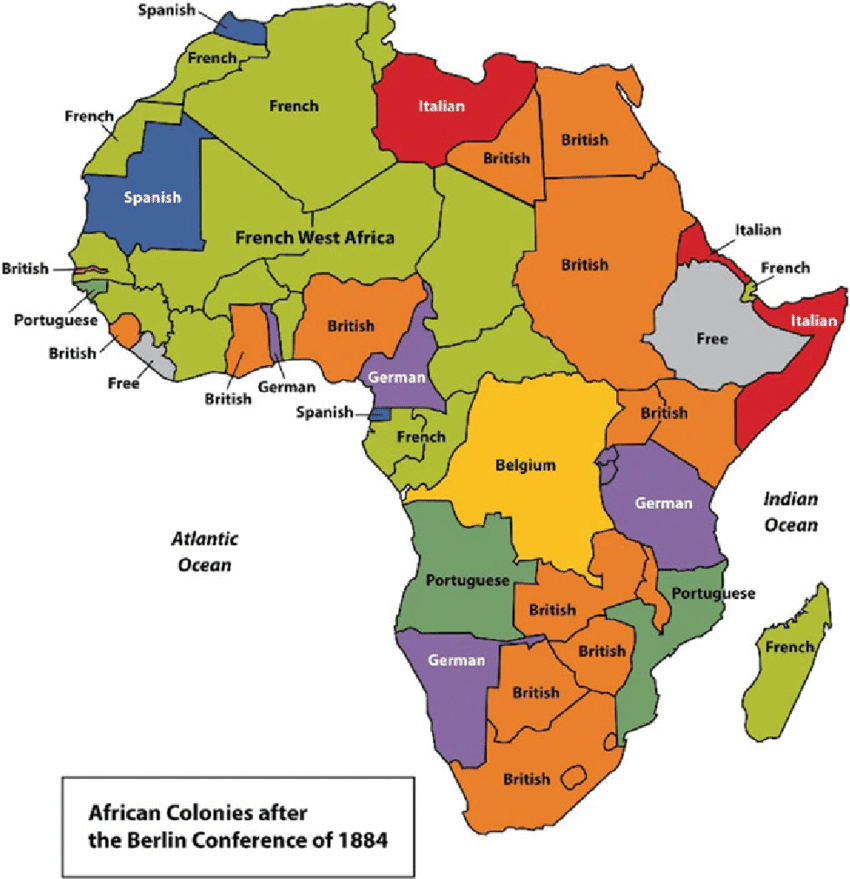
On a side note, I think it is sad to see what happened in Africa after Livingstone opened up the continent to tell the European Christians about the treasures to be found in Africa. AI: “The colonization of Africa, a period marked by the “Scramble for Africa” in the late 19th and early 20th centuries (1880’s to 1914), saw European powers rapidly seize control of vast territories for economic and strategic gains, leading to the imposition of colonial rule and lasting impacts on the continent’s political, economic, and social landscape. Britain: Established extensive colonies in Southern and Eastern Africa, including South Africa, Kenya, and Nigeria. France: Controlled large territories in West and North Africa, including Algeria, Morocco, and Senegal. Germany, Belgium, Italy, Portugal, and Spain: Also participated in the colonization of Africa, establishing colonies in various regions. Colonialism began to decline in the mid 1900’s as African nations fought for independence and as European empires began to decline.

AI: “During European colonization of Africa, Christian missionaries accompanied explorers and merchants, often using Christianity as a tool for cultural assimilation and justification of colonial rule, though some Africans later viewed it as a tool for liberation. Missionaries and colonial authorities often used Christianity to legitimize colonial rule, arguing that it would bring Africans out of “paganism” and into a more “civilized” state.” Colonialism is a sad movement in history as countires like Britain simply took over the rule of a foreign country, like South Africa or India. They basically stole their valuable resources like diamonds and subjugated the native people to their rule, taking away their rights to vote and take part in the government. But even sadder is that they justified doing this under the cloak of promoting civilization and spreading Christianity. They might have made some converts but that is not the way Jesus wanted us to make converts. Of course all this led to apartheid in South Africa. The Spanish did the same in the new world, converting many to Christianity while they stole their land, their gold and resources, killing anyone who opposed them. Can you imagine the opinion that Africans had of Christians who did the colonialism? As Ghandi said, “I like your Christ, I do not like your Christians. Your Christians are so unlike your Christ.” He observed how the British treated the people in India and started his non violent, passive resistance.

I found it very interesting that they buried Livingstone’s heart in Africa. I don’t know what the Africans were thinking when they wanted that to happen, but there is a great lesson. His passion was for the people of Africa. His heart was for Africa. “In Matthew 6:21, when Jesus says, “For where your treasure is, there your heart will be also” , he is asking us to reflect on what we value most in life—because whatever we treasure will inevitably capture our hearts and guide our actions.” What are you passionate about? Material things? Your hobby? Your favorite sports team? Our passion needs to be for God and HIs work. “Seek first the kingdom of God”.

GLADYS AYLWARD (INN OF THE 6TH HAPPINESS)

Gladys Aylward (1902-1970)

“She always knew that she would be a missionary, but when Gladys applied to the China Inland Mission she was denied. They didn’t think someone so young could learn the language, and she had little education to back her up. Gladys wasn’t one to give up, and after working as a housemaid, she spent her life savings on a train ticket to China. Her trip was full of setbacks, but in 1932, Gladys arrived in Yangcheng and began to work with an older missionary, Jennie in setting up the Inn of the Eighth Happiness. Gladys worked for the Chinese government as a “foot inspector”, enforcing the new laws against female foot binding. She became a beloved Chinese citizen, affectionately called “Ai-Weh-Deh”. She took in many orphans and unwanted girls. When the region was invaded by the Japanese during WWII, Gladys took around 100 orphans over the mountains to safety. Unable to return to China after the communist regime was in place after the war, Alyward settled in Taiwan where she spent her remaining days running her orphanage.” Chantel from kimdredgrace.com

From Gladys Aylward: The Little Woman book, an autobiography where Gladys tells her own story: “A solitary woman. A foreign country. An unknown language. An impossible dream? No! With no mission board to support or guide her, and less than ten dollars in her pocket, Gladys Aylward left her home in England to answer God’s call to take the message of the gospel to China. With the Sino-Japanese War waging around her, she struggled to bring the basics of life and the fullness of God to orphaned children.”

One of my favorite movies was Inn Of The 6th Happiness (1958) with Ingrid Bergman (a name only we old timers will be familiar with, a great actress). AI: “The movie “The Inn of the Sixth Happiness” is a dramatized, fictionalized account of Gladys Aylward’s life, not a strict biography, and deviates significantly from reality in several key aspects, including character portrayals, plot details, and the actual name of the inn.” It was actually “The Inn of the 8th Happiness”. AI: “The inn was originally called “The Inn of the Eight Happinesses” (Chinese: 八福客栈; pinyin: bāfú kèzhàn), referencing the eight virtues of Love, Virtue, Gentleness, Tolerance, Loyalty, Truth, Beauty and Devotion, but was renamed in the film “The Inn of the Sixth Happiness”. Some romantic scenes didn’t really happen, but the core of the movie is factual. Can you imagine a 30 year old poor woman setting out on a train by herself to go do mission work in Chine? Aylward took a train across Siberia on the Trans-Siberian Railway to China. This dangerous 7,000 mile, 5 week long, trip took place in 1930, at a time when the Soviet Union and China were in an undeclared war.  Can you imagine a young woman in China finding a way to support herself so she could learn Chinese and spread the gospel? Can you imagine her rescuing 100 orphans who were roaming the streets, abandoned, and starting an orphanage? Can you imagine a woman leading 100 orphans over the mountains, avoiding the Japanese, to get them to safety. It is amazing how God provided help for her on the journey. AI: “Gladys Aylward did not lead the children over the mountain entirely by herself; she received assistance along the way, including from a Buddhist priest, Chinese soldiers, and a Chinese officer who helped them cross the Yellow River.” At the end of the journey, “the brown-eyed, modest missionary was virtually unconscious and delirious with typhus and fever.”

I read the story of this woman’s zeal for mission work and her faith and I feel so inadequate. You don’t have to be a missionary in a foreign country to do the Lord’s work. I told my wife to be when we were dating that I wanted to be a missionary. I don’t know why I wanted that? I remember thinking as a teen that it would be more noble to preach the gospel where it had not been preached, which was the apostle Paul’s philosophy. Romans 15:20 It has always been my ambition to preach the gospel where Christ was not known, so that I would not be building on someone else’s foundation.” I remember thinking that we had plenty of paid preachers in the U.S. My philosophy led me and my wife to do 5 years of mission work in Trinidad, West Indies, and Cali, Colombia. But our mission work was nothing like what Gladys did. We didn’t have much money, but we had a supporting congregation, churches, and individuals who provided us to have what we needed to live on overseas. We got on a 6 hour flight to Trinidad, not a 5 week train ride filled with many dangers and hazards. I think the Lord was pleased with our mission work even if it didn’t even start to compare with what Gladys did, but I admire her so much.

I appreciate the good that paid preachers and youth ministers do here in the U.S. I was a full time paid preacher for 6 years. I appreciate the good that organized churches do with their buildings and staff. But I wonder if we are doing church the wrong way? The church in the book of Acts did not have a paid preacher system or buildings. When they took up a collection offering, it was for someone in need (according to Justyn Martyr). They had house churches led by elders. There were evangelists who were like our missionaries, going from place to place where needed, establishing or maturing churches, receiving food and a place to stay from members,but they never became full time paid preachers. Paul himself would never take money from the church he was working with. He supported himself by tent making. He did take some help from another church, other than the one he was working with, so that he could devote more time to preaching where he was working. That’s kinda what we do when we support missionaries for a few years in the field. Churches spend 3/4 of their contributions on buildings and staff. What if we spent 3/4 of the contributions on printing and distributing Bibles, drilling clean water wells, helping orphans (over 150 million orphans worldwide, orphaned by wars, disasters, poverty, diseases like AIDS), etc. Can you imagine the good that churches could do? I appreciate finding a preacher who at least is very involved in mission work, both going on short mission trips and organizing members of his church to go on such trips. I appreciate a church that raised over $200k a year to support an orphanage in Ecuador even if they spend most of their budget on building and staff. At least perhaps they are making the best of the church system that we have set up.

Reading about Gladys Aylward and other great missionaries inspires me to want to be like her. I want to get back to the days when my wife and I only lived to do one thing, to spread the gospel. Or, if we can’t do that now, then am I living to share the gospel with my students I teach at school and others? Is that my passion? God has blessed us so much financially even though making money was never our goal. Am I using my money to support organizations that are printing Bibles (like EEM), that are drilling wells (like Healing Hands), that are establishing self supported mission works (like Mission Upreach in Honduras), that are supporting poor children overseas (like Christian Relief Fund), that are doing mission work in Mexico (like Baja Missions with my long time friend Rex Watson). Those are some of my favorite mission works, but there are many, many more that you might be involved in. Am I involved in helping the poor right here where I live?

So, does the Gladys Aylward story inspire you? Watch the movie if you can. Read the book.

ERIC LIDDELL (CHARIOTS OF FIRE MOVIE)

Eric Liddell (1902–1945)

The movie, Chariots of Fire (1980): The movie is about the struggles of 2 British athletes competing in the 1924 Paris Olympics. Harold Abrahams was a Jew and struggled with anti semitism. Eric Liddell refused to run in the 100 m heat b/c it was on Sunday, which he considered to be the sabbath (many Christians have considered Sunday to be the “Christian sabbath”). He was under great pressure from the prince of Wales to compete, but Eric stayed true to his convictions. He ended up swapping his 100 m event with another British runner and won gold in the 400 m even though he wasn’t accustomed to running the 400 m. Here is the black/white actual footage of him winning the 400 m in world record time. https://www.youtube.com/watch?v=IYNUxdoIacA He would probably have won the 100m also if he had competed in it. Liddell set a British record of 9.7 seconds in the 100-yard sprint at the 1923 AAA Championships, a record that stood for 35 years. Being true to one’s convictions and overcoming adversity are the morals of the movie. Eric is considered by many to be the most popular Scottish sports hero of all times. He was nicknamed “The Flying Scotsman” due to his speed and athletic prowess. 

The theme song from the movie is inspiriing, especially as you watch Eric run. Here is a good youtube of the song and clips from the movie. https://www.youtube.com/watch?v=1eYGl8PNjlU

“Eric Liddell is probably best known for the 1980s film Chariots of Fire. The film mainly focused on his life as an Olympic runner, yet the story of Eric Liddell as a missionary is important. Liddell was born to missionary parents in North China. His parents were Scottish missionaries serving with the London Missionary Society. Though he was born in China, he spent his school years in Scotland.

After school and his time as an Olympic athlete, he returned to China as a missionary in 1925. He worked as a school teacher as well as a minister. By 1941, British nationals were encouraged to leave China by the British government because of the coming Japanese invasion. Liddell’s wife and children returned to Canada, which is where she was from. (His wife died in 1984). Eric remained to work in a hospital with his brother. In 1943, he was put in a prison camp by the Japanese and continued to teach children and preach the Bible. (The children called him “Uncle Eric”).

Mr. Liddell died of a brain tumor in the Weihsien Internment Camp on February 21, 1945. He died of an inoperable brain tumor. I recently had the privilege of meeting a lady who was a young girl in the same camp as Eric Liddell. She said that as children (she was with him from the time she was 9 to 11 years old), they knew nothing of his fame as an athlete. The children only knew that he was a kind, gentle man and one of their favorite teachers.” From article by David Peach. Eric’s wife was pregnant with their 3rd child when she left China: Eric never got to see his 3rd child or his wife ever again.

A quote from the actor who played Eric in the movie: “Wherever we go we either bring people nearer to Christ or we repel them from Christ. I believe God made me for a purpose, but he also made me fast! And when I run I feel his pleasure. You will know as much of God, and only as much of God, as you are willing to put into practice.” The self sacrifice and commitment of Eric is inspiring. I can’t imagine sending my family off to never see them again, and staying behind in China to help people in the name of Jesus, eventually dying in China. According to a fellow missionary, among his last words to a friend who was at his bedside were, “It’s complete surrender.” Liddell was not announcing his last breath. Instead, he was proclaiming how he had lived his life in complete submission to the Lord. From the movie: Eric Liddell: [reading from Isaiah, Chapter 40] “They that wait upon the Lord shall renew their strength. They shall mount up – with wings as eagles. They shall run – and not be weary.”

The story of Eric Liddell is so inspiring from both an athletic and Christian stand point. Paul spoke a lot about being true to your convictions, even if you might be wrong in what you believe (Romans 14). Conviction is defined as “a firmly held belief or opinion“, not being swayed by peers or others opinions. There can be a big difference between “belief” and “conviction”. One might believe that Jesus is the Son of God but might not have the conviction to confess that belief in the face of persecution. One might believe that something is morally and Biblically wrong but might not have the conviction to not do that thing in the face of peer pressure or temptation.

Athletics can be a purely prideful thing. It is always amazing to see an athlete who truly believes that he/she is using their God given athletic ability to glorify God and not themselves. Paul used “running in a race” to illustrate how Christians need to exercise the same self control as a runner. 1 Corinthians 9:24 Do you not know that those who run in a race all run, but only one receives the prize? Run in such a way that you may win. 25 Everyone who competes in the games exercises self-control in all things. So they do it to obtain a perishable wreath, but we an imperishable. 26 Therefore I run in such a way as not to run aimlessly; I box in such a way, as to avoid hitting air; 27 but I strictly discipline my body and make it my slave, so that, after I have preached to others, I myself will not be disqualified.” But Paul also reminds us, 1 Timothy 4: 7 discipline yourself for the purpose of godliness; for bodily training is just slightly beneficial, but godliness is beneficial for all things, since it holds promise for the present life and also for the life to come.”

The title of the movie reminds us of Elijah ascending. 2 Kings 2:11-12 As they (Elijah and Elisha) were walking along and talking, suddenly a chariot of fire appeared, drawn by horses of fire. It drove between the two men, separating them, and Elijah was carried by a whirlwind into heaven. Elisha saw it and cried out, “My father, my father, the chariot of Israel and its horsemen!” 

HELL AND MR. FUDGE

I encourage you to watch the movie, Hell and Mr. Fudge (it’s on Amazon Prime). Our Bible house group saw it at a small Athens, Al movie theater when it first came out. It’s the true story of Edward Fudge’s life and his journey of studying doctrines that were controversial in his church. He mainly focused on two main doctrines: 1) Do the wicked burn forever in torment in hell? 2) Does God’s grace cover all believers in all denominations? Fudge, after much, much indepth study, concluded that the wicked do not burn forever in hell but are annihilated or destroyed at death. He also concluded that there were Christians saved by the grace of God in all denominations and that we should not let our views on non essential issues separate us from fellowship with other denominations. Carl Ketcherside influenced him a lot on the second doctrine while Fudge was attending a Bible college. I remember when I was a teen hearing from the pulpit that Ketcherside was a liberal b/c. of his teaching.

I don’t know where you stand on these two issues, but this article is not about debating the issues. I mainly just want to encourage you to watch the movie. It has many warm stories of Edward meeting and marrying his wife and having children, his relationship with his father, his enouragement in tough times from a very close friend, the support of his father, mother, and wife. It has some sad stories of the death of his father, the death of a teen friend whom Edward was told would burn in hell forever, getting fired from a church. It is a study of the character of a man who studied the Bible and went wherever his study led him even it got him ostracized by church leaders and preachers.

It is a study of sectarian legalism. What is that? This is my definition: it is when beliefs that are not heaven or hell issues are made tests of fellowship with other believers. It leads to judging and condemning those who disagree with you. It leads to splits within churches over issues like instrumental music, kitchens and eating in the church building, using church contributions to support orphan homes, using only one cup in the Lord’s Supper, having Bible classes, frequency of taking the Lord’s Supper, and many, many more. All doctrines are important but very few are heaen/hell doctrines. Some say we must draw the line on any doctrine. My stance is that we should never make an issue or doctrine a test of fellowship unless the Bible clearly makes it a test of fellowship. There are only a few doctines that are clearly heaven/hell doctrines. 1 John lists 3: 1) Belief that Jesus is the Son of God who died for our sins. 2) Love one another, love God with all your heart, and love all mankind. 3) Obedience to God’s moral commands as defined by the Bible. There are black and white moral commands that must be obeyed. For example, the Bible clearly condemns the LGBQT teachings. All other issues than these 3 are not heaven/hell issues in my opinion.

The movie shows the dark side of sectarian legalism in the way Fudge was treated by many preachers and church leaders. He said that he was ostracized by the churches in Limestone County, Al which is where Athens is located. He went on to have a successful career as an attorney in Texas and continued his preaching ministry. There is a sad part toward the end of the movie. His wife took the kids and left him fo a while b/c he was so obsessed with endless studying to get the answer to the eternal fate of the wicked that he was hard to live with. In his own words, he became obsessed with defending his beliefs to the neglect of his family. In 1 Timothy 1:4, Paul cautioned against focusing on “fables and endless genealogies” as they lead to questions and disputes rather than godly edification through faith. So Fudge is not without fault in this movie and that’s a good lesson for us.

How did the movie end? He finally felt that he found the “missing piece” in the doctrine of the “immortal soul”, i.e. the doctrine that every person born has an eternal, immortal soul that must live forever somewhere, heaven or hell, after one dies. He concluded that the Bible doesn’t teach that, but that this docrine came in from outside influences like Plato. He read Matthew 10:28 And do not be afraid of those who kill the body but are unable to kill the soul; but rather fear Him who is able to destroy both soul and body in hell” and concluded that meant the annihilation of body and soul of the wicked. He noted that Jesus said that those who do not believe in him would “perish” not burn forever in agony (John 3:16). Romans 6:23 “the wages of sin is death but the free gift of God is eternal life”. Paul promised immortality to believers: 1 Corinthians 15:53 For this perishable body must put on the imperishable, and this mortal body must put on immortality.” Fudge finally concluded that immortality was only promised to believers, not to the wicked. He felt the pressure of going against 2,000 years of church teaching on hell. He based his beliefs on the study of the Bible and not emotion, but he did beieve that the eternal suffering of the wicked in hell went against the loving character of God. He wrote a book “The Fire That Consumes” in 1982. All of his research is in that book and he deals with objections to his conclusions. He was reunited with his wife and children once he ended his research.

Does it even matter whether the wicked just cease to exist at death or do they suffer torment in heall forever? Well of course if the Bible clearly teaches that the wicked suffer forever in hell, then we should be teaching that. Fudge doesn’t believe it teaches that but you will have to decide for yourself if he got it right. To some, it isn’t enough punishment for the wicked if they just cease to exist. Some feel that the wicked deserve to suffer forever. Fudge would say that goes against the loving character of God. The wicked made their choices in life and they die, are annihilated, and eternally separated from the presence of God. Is that enough “punishment”? Some feel that we need the doctrine of burnig in hell forever to scare people into becoming Christians. I know I got baptized at 14 mainly to keep from burning in hell forever. Would a wicked person be less likely to become a Christian if he thought that the consequences of his unbelief was simply ceasing to exist at death instead of burning forever in hell? I don’t know. Maybe some would say, “Well, I think I will just enjoy my lusts without any moral restraints, refuse to obey God, and then just die and cease to exist.” But eternal life is for those who want to live forever with Jesus, the Father, and the saints. The love of God in sending Jesus to die for our sins should be sufficient motivation for us becoming Christians and not the threat of hell. The Catholic church used the threat of purgatory and hell for 1,000 years to coerce people into obeying the rules of the church and paying indulgences! Evangelicals have used the same threat to get people to accept Jesus.

So what about universalism, the doctrine that eventually God will save everyone including the wicked in heaven eternally? Would an appeal to the loving character of God take us one step further than just denying the eternal suffering of the wicked in hell? Would that lead us to conclude that God will eventually save everyone and not allow the wicked to suffer forever or even to cease to exist and therefore not be able to enjoy eternity in heaven? Many have adopted universalism today. Fudge may have even adopted some form of universalism later: I’m not sure about that. I am not a universalist. Immortality is promised to believers. One’s opportunity to believe is in this life. There is no promise of a future opportunity after death to believe. Hebrews 9:27 And just as it is appointed for man to die once, and after that comes judgment.” To me, one’s eternal fate is sealed at death. I will not be disappointed if God decides to give the wicked a 2nd chance some day and save them in heaven eventually. I feel for people raised in Hindu or atheistic countries where it is so hard to leave the religion you are raised in. I feel for the many tribes in Africa that mabye don’t have the opportunity to hear the gospel fo Jesus like we do. I will allow God to decide the fate of all people. But I don’t find where the Bible teaches that He will just save everyone eventually. Is the character of God so loving that He will not allow the wicked to not live in heaven forever with Him? Or is that just wishful thinking? I’m going to make sure of my eternal life and immortality after death by believing in Jesus while here on earth. What about you?

WHAT IS YOUR “AMBITION”?

I encourage you to subscribe for free to have the My Utmost For His Highest by Oswald Chambers to come to your email every day. I am enjoyed a renewed interest in his daily devotionals.

For example the devotional for March 17 was tken from 2 Corinthians 5:Therefore we also have as our ambition, whether at home or absent, to be pleasing to Him.” The Greek for “ambition is philotimeomai: To strive earnestly, to aspire, to be ambitious. “The verb “philotimeomai” conveys the idea of making it one’s aim or ambition to achieve something honorable or praiseworthy. It reflects a strong desire to accomplish a goal that is considered noble or virtuous. In the New Testament, it is used to describe a commendable pursuit or aspiration, often in the context of living a life that is pleasing to God.” (AI). The word is also translated as “goal” or “aim”, but I think “ambition” is the best translation. “While ambition can be a positive motivator, unchecked or excessive ambition can lead to negative consequences, including unethical behavior, burnout, and neglecting important aspects of life.” There is nothing wrong with having the ambition to climb the corporate ladder, achieve success in your career or field, make a lot of money, or own a lot of possessions as long as that ambition doesn’t become the main goal in life to the neglect of the spiritual or as long as we give God the glory and use our success for Him.

But notice that 2 Corinthians 5:9 says that our ambition should be “to be pleasing to Him”. There is nothing wrong with having spiritual goals, such a converting others, helping build a good church, going on mission trips, being involved in community efforts, etc. But Chambers says that those things should no be out ambition or aim. Our ambition should simply be to be pleasing to God. Yes, that would lead to striving to achieve some spiritual goals, but our ambition is just to be pleasing to God. If we make that our ambition, then the Spirit will guide us into specific spiritual things that God wants us to be to make him happy, to make him be pleased with us. Sometimes we set our own spiritual goals mainly to please ourselves, using our own wisdom and gifts without seeking God to see if he would really be pleased with what we are trying to achieve. I might be wanting to preach somewhere but that might not be what he wants me to do to be pleasing to him. He might have other things that He wants me to do.

That Greek word for “ambition” is only used 3 times in the New Testament: Romans 15:20 where Paul “aspired” to preach the gospel; 2 Corinthings 5:9; and in 1 Thessalonians 4:11. I love the one in 1 Thessalonians 4:11 and to make it your ambition to lead a quiet life and attend to your own business and work with your hands, just as we instructed you, 12 so that you will behave properly toward outsiders and not be in any need.” I especially like this passage b/c it describes my dad. He was from the “great generation.” AI: “The “Greatest Generation” refers to Americans born roughly between 1901 and 1927, who came of age during the Great Depression and World War II, and are often characterized by their strong work ethic, frugality, and patriotism.” My dad was born in 1918 so he lived through the Great Depression and World War II (although he did not serve b/c of some medical reason I have been told). He was raised country farm dirt poor. I’m not sure he graduated high school before he went to work with a concrete making plant and worked for them for about 50 years. He never made more than minimum wage so he worked a lot of overtime to provide for us. There was no union at his work, so his reward for all those years was a retirment check of about $100 per month! He built a modest house for us to live in comfortably but we never had much money. He took time to carry me fishing a lot and we built a cabin from scratch on Smith Lake and spent many weekends there fishing and swimming. He attended church regularly with our family but never led a prayer in church. He never prayed aloud with me or our family except when my mom would say at the dinner table, “Ambres, lead the prayer”, and he would pray “God is great, God is good, let us thank him for our food”. We never had a spiritual talk. He never said “I love you”, probably b/c his parents never expressed love for each other. The first time he said “I love you” to me was when he was 72 and was told that he had only 2 more years to live due to a lung disease. He spend those last 2 years expressing love, listening to gospel music, and reading the Bible, and died at age 74 in 1992. As you can see, he didn’t do a lot of the things you might expect a spiritual father to do. But what he did do was to make it his ambition or goal in life to fulfill that passage in 1 Thessalonians 4:11 and to make it your ambition to lead a quiet life and attend to your own business and work with your hands, just as we instructed you, 12 so that you will behave properly toward outsiders and not be in any need.” He did those things all his life! He lived a simple, quiet life. He mided his own business. He worked with his hands. He helped anyone who needed someone to fix something. He did things for a lot of people. When he died, about 500 people signed the register book at his visitation or funeral. Those people were from work, church, family, community, etc. Just a lot of people that he had helped, using his hands and knowledge of how to fix things, all through his life. We tend to think that a “spiritual”man is a Bible quoting, daily Bible reader, prayer leader, elder or deacon in the church, regular church attender, etc. But to me, my dad defines what it means to be spiritual for just a lot of ordinary, hard working, common people.

Read what Paul said in 1 Corinthians 12:14 For the body is not one part, but many. 15 If the foot says, “Because I am not a hand, I am not a part of the body,” it is not for this reason any less a part of the body. 16 And if the ear says, “Because I am not an eye, I am not a part of the body,” it is not for this reason any less a part of the body. 17 If the whole body were an eye, where would the hearing be? If the whole body were hearing, where would the sense of smell be? 18 But now God has arranged the parts, each one of them in the body, just as He desired. 19 If they were all one part, where would the body be? 20 But now there are many parts, but one body. 21 And the eye cannot say to the hand, “I have no need of you”; or again, the head to the feet, “I have no need of you.” 22 On the contrary, it is much truer that the parts of the body which seem to be weaker are necessary; 23 and those parts of the body which we consider less honorable, on these we bestow greater honor, and our less presentable parts become much more presentable, 24 whereas our more presentable parts have no need of it. But God has so composed the body, giving more abundant honor to that part which lacked, 25 so that there may be no division in the body, but that the parts may have the same care for one another. 26 And if one part of the body suffers, all the parts suffer with it; if a part is honored, all the parts rejoice with it.

Think about what Paul said. We tend to give the most honor to the more gifted in the church, the leaders, the preacher, the elders, the youth ministers, the ones who seem to be more important. But Paul says that those people know that they are more gifted and more visible, and they do not need to constantly be told how important they are. they don’t need special attention to buld them up, to show how badly they are needed in the body. Often times they are inflated with their own gifts and importance, as was teh case in the Corinthian church where some of the more gifted members had become arrogant. Instead it is the less noticeable who we need to give special attention and honor to. We need to constantly be telling them how important they are in the body. There is someone like my dad who got very little notice in the church activities, but the church is the people, not the organized church business model. He was important to the body in what he was doing to use his hands to help a lot of people outside of the church assembly, men’s business meetings, Bible classes, or visitation programs. We tend to think of the church in the church business model and what the members visibly do for the church business. Instead we should think of the church as the people using their gifts 24/7 at home, at work, in their friendships, in taking care of their kids and/or elderly parents. We sometimes say “10% of the members do 90% of the church work”, but that usually means church work taking care of the building, being involved in the visitation program, attending Sunday night as well as Sunday morning, attending Wednesday evening Bible classes, doing projects around the building, taking care of assembly preparations, etc. Maybe not all, but many of those 90% that we criticize are people like my dad who are fulfilling 1 Thessalonians 4:11 every day. They are doing “church work”. Or maybe some unassuming, humble, barely noticeable lady member who takes food to the poor every Saturday, or takes care of elderly parents, or takes care of some widows in the church or takes care of foster children. That is “church work”. We tend to give honor to those more visible in the church busines work instead of the real church work. We need to keep giving special honor to the less noticeable members doing the less noticeable church work.

I guess I got sidetracked! Just make it your ambition to be pleasing to God and He will guide you on what He wants you to do. It might not be what you want to do, but that doesn’t matter! Ask yourself every moment today: “Does what I am doing, thinking, or saying please the Father?

Adios y Dios los bendiga! Goodbye and God bless you.