The following was written by my wife and is super good. She is much, much more verbal, creative, etc. than I am (as you will see when you read it). My blog on Matthew chapter 1 was on the birth of Jesus.
“Ponderings on the birth of Jesus – How might conversations have gone? Here’s a young Jewish girl, Mary, probably about 14 or 15 years old, when one day an angel named Gabriel appears to her and announces a message from God. God calls her “highly favored” and says has chosen her – out of all the women in Judah – a teenager – to conceive and bear the Son of God, Savior of the world. She is afraid, incredulous, very troubled at his words – “How can this be? I am a virgin”. Gabriel reassures her that she has favor with God and that she will indeed bear His son. The Son who will reign on the throne of David and whose kingdom will never end. Gabriel also announces to Mary that her relative Elizabeth is going to bear a son in her old age. “Nothing is impossible with God” says Gabriel. Mary finally says, “I am the Lord’s servant. Let it happen to me just as you have said.” Gabriel leaves her. What is she thinking right now?
Mary is pledged to be married to Joseph. Probably within the year. Maybe they have already seen the rabbi and set a date for the ceremony? What will she say to Joseph? When does she tell him about Gabriel’s words to her? Does she tell her mother and father? What will they think? Will they believe her?
It appears her parents sent her off the be with Elizabeth at this point. Maybe they were thinking some time should go by and maybe Mary would change her story? Maybe they hoped she would miscarry and avoid all the complications of an “unplanned” pregnancy? At any rate, Mary goes to the hill country and spends the next three months with her cousin Elizabeth who has conceived a child in her old age who will become John the Baptizer. And Elizabeth confirms what the angel Gabriel has told Mary – the tiny embryo growing inside her womb is indeed the son of God, divine in every way yet human as well.
Mary returns home to Nazareth after John’s birth, now 3 months pregnant – maybe just beginning to show a little “baby bump.” Has she felt the flutter of the little feet kicking yet? She must tell Joseph. Face to face. What will he say? How will he react? She knows he is a good man – if God has chosen her to be the mother of the Messiah, surely, He chose Joseph as well to be his earthly father.
Who knows? Perhaps the conversation went something like, “Joseph, you know I love you very much. Do you think we can move up the wedding a few months? – Why? – Well, you probably won’t believe this, but, and angel of God, he said his name was Gabriel, appeared to me and told me something incredible. You know how our women through the ages have hoped to be mother of the promised Messiah? – Yes, it would be the highest honor for a woman. – Well, this Gabriel told me that I am chosen. – Chosen?? – Yes, chosen to bear the Son of God, the Messiah we have all been waiting for. I am still in shock. – You are in shock? What about me? What does this mean?
I don’t know Mary – that sounds far-fetched. How do you know this person was telling the truth? Where did he go? I want to talk to him. – Joseph, I don’t know where he is now, but my parents are willing to move the date up – they don’t want a lot of talk.
Joseph may have said, “Let me go home and think this out – it’s going to be a scandal. A good girl from a good family – pregnant before marriage? How does that make me look? What shame on my family? I don’t know, Mary, this is not a good way to start out – the whole village will gossip. This is not good.”
Mary may have replied, “But Joseph, how can we not obey God? You said yourself just now that it is an honor for a woman to be chosen as the mother of our Messiah – and as unbelievable as it sounds, I did see an angel, he told me his name was Gabriel, and he did speak those words to me – “You are highly favored of God” – You will bear a son – and Joseph, we are to name him JESUS, Gabriel said.”
“I’ll be back tomorrow – let me sleep on this – it’s a lot to take in, Mary.” Joseph goes home, heavy hearted. How could Mary do this to him and his family? Has she really been with another man? What is this business about an angel? I just don’t know about that that incredible story she has told. An angel told her she would be the mother of the promised Messiah. Really? Even if I believe it, certainly no one else will. What will the elders of our village say? What are we going to do?
His heart very troubled, Joseph decides that he will divorce sweet Mary quietly, not wanting to cause her shame or worse. However, that night Gabriel appears to Joseph in a dream and tells him not to be afraid to take Mary as his wife; that her child is indeed the son of God, conceived by the Holy Spirit, and he confirms that all Mary has told him is true. Joseph, a righteous man who loves God, joyfully returns to Mary’s house in the morning and arranges to marry her right away.
Thoughts – Jesus became human so that we could see God. The God of creation has always been unapproachable by humans, so the incarnate son of God, Jesus, not only came to redeem humanity, but also to allow humanity to touch God. To converse with God. To have a personal relationship with the Creator. To eat and drink with him. To have complete fellowship. To be comforted by and guided by him. To have him not only as redeemer but as a friend. A brother. The unapproachable became approachable. God came near.
For centuries God has been ‘far away’ – a rule maker, a deity to be appeased with sacrifices, someone to be obeyed at cost of life…now, with the coming of Jesus, God is still to be obeyed but because we want to, not because we must. Because of Jesus’ love for us, we willingly give our lives as a sacrifice of love, not of compulsion or rule keeping. We can enjoy a relationship with God, Paradise restored in a way; the Garden that was lost after Adam and Eve sinned is now ours, and we can walk and talk with God in full fellowship because of Jesus.
What a beautiful plan – no wonder angels longed to know God’s plan for humanity.” (End of her article).
Wow! Good stuff. AI: The method of putting yourself in the emotions and situations of biblical characters is most commonly referred to as imaginative identification, experiential reading, or Ignatian contemplation. Sounds like what she did. I should start letting her write my blog articles. Don’t comment on that comment.
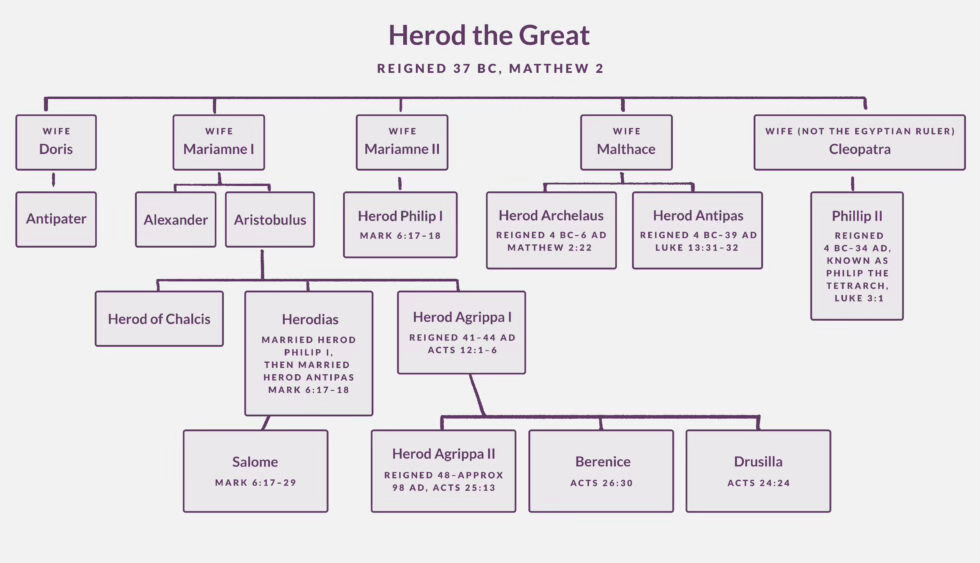
1 What do you know about Herod, King of the Jews? Show incredible journey video. Was he really capable of slaughtering the babies in Bethlehem?
Watch The incredible journey 28 min video of King Herod
2 Why was “all Jerusalem” troubled by news of birth of Jesus?
AI: Jerusalem was troubled by Jesus’ birth primarily because the Magi’s announcement of a newborn “King of the Jews” directly threatened the rule of King Herod the Great and raised widespread fears of retaliatory violence and political upheaval.
The joint anxiety of King Herod and the people of Jerusalem stemmed from a few key factors:
Herod’s Paranoia and Loss of Power: Herod held his throne by Roman decree, not through legitimate Jewish lineage. Historically, he was incredibly ruthless and paranoid, famously executing members of his own family and inner circle if he perceived them as threats to his power. The news of an prophesied, rightful “King” put him on high alert.
Fear of Bloody Retaliation: The citizens of Jerusalem were terrified because they knew that when Herod panicked, mass bloodshed and instability usually followed. The populace knew that a threatened king often meant violence, a fear that was later realized in the Slaughter of the Innocents.
Disruption of the Status Quo: The religious and political leaders in Jerusalem had built their security on maintaining favor with Herod and Rome. A new Messiah could spark Roman intervention, war, or an uprising, all of which jeopardized their positions of power
Two types of fulfillment of OT prophesy: Predictive (one and only one event predicted and fulfilled). Analogy: An event in the NT similar to an event in OT (Hosea 11:1).
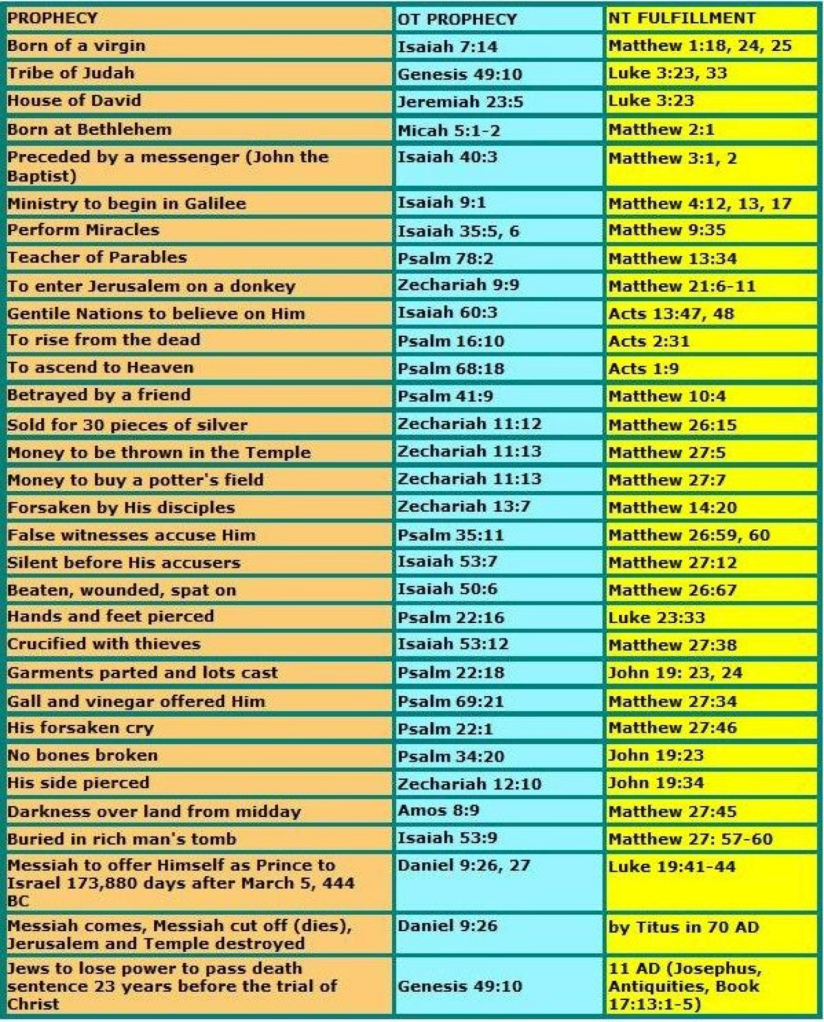
Micah 5:2 is predictive. Such predictions were used to proved Jesus as Messiah.
Can you name some other such prophecies that Jesus fulfilled proving that he was the Messiah?
These are the prophecies that Paul used in the synagogue in Thessalonica in Acts 17 showing the prophecies and then showing how Jesus fulfilled every one of them.
Acts 17:1 Now when they had traveled through Amphipolis and Apollonia, they came to Thessalonica, where there was a synagogue of the Jews. 2 And according to Paul’s custom, he visited them, and for three Sabbaths reasoned with them from the Scriptures, 3 explaining and giving evidence that the Christ had to suffer and rise from the dead, and saying, “This Jesus whom I am proclaiming to you is the Christ.” “Christ” is the Greek translation of the Hebrew word “Messiah”. “Giving evidence” in the Greek is paratithémi: To place beside, to set before, to entrust, to commit. It is listing the OT Messianic predictions and then “placing beside” that list the fulfillment of each prediction by Jesus.
3 What does it tell you about the collection of OT scrolls that had been collected by the time the scribes searched for the birthplace of Jesus? There had been a 400 silent year period of no prophets and no inspired writings, but this shows that all the 39 OT books were collected by about 400 BC.
4 Who were these magi from the east?
AI: The Magi were ancient scholars, often believed to be Persian or Babylonian astronomers and priests. The Bible does not state their number, but early traditions claim three. The origin of the “star” is heavily debated, with theories ranging from a supernatural light to rare planetary alignments.
Who Were the Magi?
Scholars & Astrologers: The term Magi refers to a class of highly educated wise men from the ancient East. They were likely a hereditary caste of priests or astrologers from ancient Persia or Babylon (modern-day Iran and Iraq).
Not Kings: The Bible refers to them as “wise men,” not kings. The tradition that they were kings arose later from interpretations of Old Testament prophecies about nations bringing gifts to a ruler.
The Number Three: Tradition assumes there were three Magi, which stems directly from the mention of three specific gifts: gold, frankincense, and myrrh.
Why They Traveled: Because these scholars also studied ancient history and literature, it is highly likely they had access to Jewish writings from the time when Jews were exiled in Babylon hundreds of years prior. This gave them an understanding of prophecies regarding the birth of a Jewish king. Maybe they studied Numbers 24:17 (the 4th of Balaam’s prophecies)
5 What was that star that led them to Jerusalem and then to Bethlehem?
AI: Because the “star” of Bethlehem performed unusual actions (e.g., appearing, disappearing, and moving to hover over a specific house), theologians and historians generally attribute its origin to one of three possibilities:
A Supernatural Phenomenon: The most common view among Christians is that the star was a miraculous, divinely created light meant specifically to guide the Magi to Jesus.
Planetary Conjunction: Astronomers have long hypothesized that the star was actually a rare, highly visible conjunction of planets (such as Jupiter and Saturn in 7–6 BC). To astrologers of the ancient world, this type of celestial event would have held profound cosmic significance.
A Comet or Supernova: Another popular theory is that the Magi observed an exploding star (supernova) or a bright, slow-moving comet, both of which would have been dramatic enough to prompt a months-long journey across the desert.
6 Why did the star not lead them directly to Bethlehem instead of Jerusalem first? Would that not have saved all the babies killed in Bethlehem? Could God have avoided this? Why didn’t he?
7 How do you think the wise men felt when they found baby Jesus? Would you like to have been one of the 3 magi? Where was the baby when they found him? Was he in the stable where he was born? Were there shepherds there? So how accurate is the typical nativity scene?
God warned Joseph to take his family to Egypt but God allowed Herod to kill all the 2 and under babies in Bethlehem. What kind of a God would do that? ‘
8 How long did Joseph stay in Egypt?
AI: The exact duration of the Holy Family’s stay in Egypt is not specified in the Bible, but most biblical scholars estimate it lasted between a few months and about three years They fled to escape King Herod’s massacre and stayed until they received word of Herod’s death in 4 BC.
Different traditions offer varying timeframes for the sojourn:
Biblical Scholars: Generally agree the exile was relatively short—typically from a few months to around two years, as Jesus was still a young toddler.
Coptic Tradition: Suggests a longer stay, with the Coptic Orthodox Church traditionally commemorating the stay at about three and a half years.
Apocryphal Texts: Ancient writings offer estimates spanning anywhere from one to seven years
9 Was Jesus born in the year 0?
AI: Historically and chronologically, Jesus was not born in the year zero In fact, there is no year zero in our standard calendar system; the calendar goes directly from 1 BC to 1 AD.
Scholars and historians widely agree on the following key points regarding the timeline:
Likely Birth Window: Modern historians and biblical scholars calculate that Jesus was actually born between 6 BC and 4 BC.
The Reason for the Error: The AD/BC calendar was devised in 525 AD by a Roman monk named Dionysius Exiguus. He attempted to calculate the year of Christ’s birth to establish a “Year of Our Lord”. However, he made a miscalculation, basing his math on the reign of King Herod the Great, who is now known to have died in 4 BC. Since Herod was alive during the biblical infancy narratives, Jesus had to be born before 4 BC.
No Year Zero: Dionysius did not include a year zero because the number zero did not exist in Roman numerals. Therefore, time transitions directly from 1 BC to 1 AD in the traditional calendar system.
Because of these discrepancies, many modern academic and historical texts use BCE (Before Common Era) and CE (Common Era) to denote time, which avoids the inaccuracies and religious implications of the traditional system.
10 Was Hosea 11:1 a predictive or analogy prophecy? Read Hosea 11. It is obviously talking about Israel coming out of Egyptian slavery. Therefore Joseph bringing Jesus out of Egypt must just be an analogy, similar event to Israel coming out of Egypt. It was not a direct prediction of Joseph and Egypt.
11 Why did Herod choose the babies 2 and under based on the time the magi came?
Many estimate that the baby Jesus was 6 months old when the magi found him in a house (not a stable). Herod found out that they had deceived him and left to go back to the East. So he would have estimated baby Jesus to be less than a year, but to make sure he was killed, Herod killed all the children under 2.
12 Was Jeremiah 31:15 of Rachel’s weeping a predictive or analogy fulfillment?
AI: Jeremiah 31:15 is an Old Testament lament where the symbolic mother of Israel, Rachel, weeps inconsolably for her lost and exiled children. The verse illustrates deep, agonizing grief but serves as an emotional backdrop for God’s impending promise of redemption, comfort, and eventual restoration.
Historical & Symbolic Meaning (Old Testament)
The Context: The prophet Jeremiah spoke this message to the people of Judah before they were exiled to Babylon by King Nebuchadnezzar.
Who is Rachel? Rachel was a beloved matriarch of Israel (mother of Joseph and Benjamin). Her historical burial site was located near Ramah and Bethlehem.
The Symbolism: Jeremiah personifies Rachel rising from her grave to weep bitterly as she watches her descendants (the Israelites) being captured, enslaved, and torn from their homeland. She refuses to be comforted because her children are “no more”.
The Hope: Although verse 15 focuses on unimaginable tragedy, the verses immediately following (Jeremiah 31:16-17) shift to a message of comfort. God promises Rachel that her weeping will end and that her children will eventually return from “the land of the enemy”.
Prophetic Fulfillment (New Testament)
Matthew 2:16-18: In the New Testament, the Gospel of Matthew quotes this exact verse.
The Context: Matthew applies the verse to the “Massacre of the Innocents”. When King Herod ordered the execution of all male toddlers in and around Bethlehem in an attempt to destroy the infant Jesus, the mothers of Bethlehem experienced inconsolable grief.
The Connection: Matthew uses Jeremiah’s lament to show that Rachel’s ancient weeping is echoed in the horrific suffering of the Bethlehem mothers, linking the historical sorrow of exile with the tragic sacrifices surrounding the birth of the Messiah.
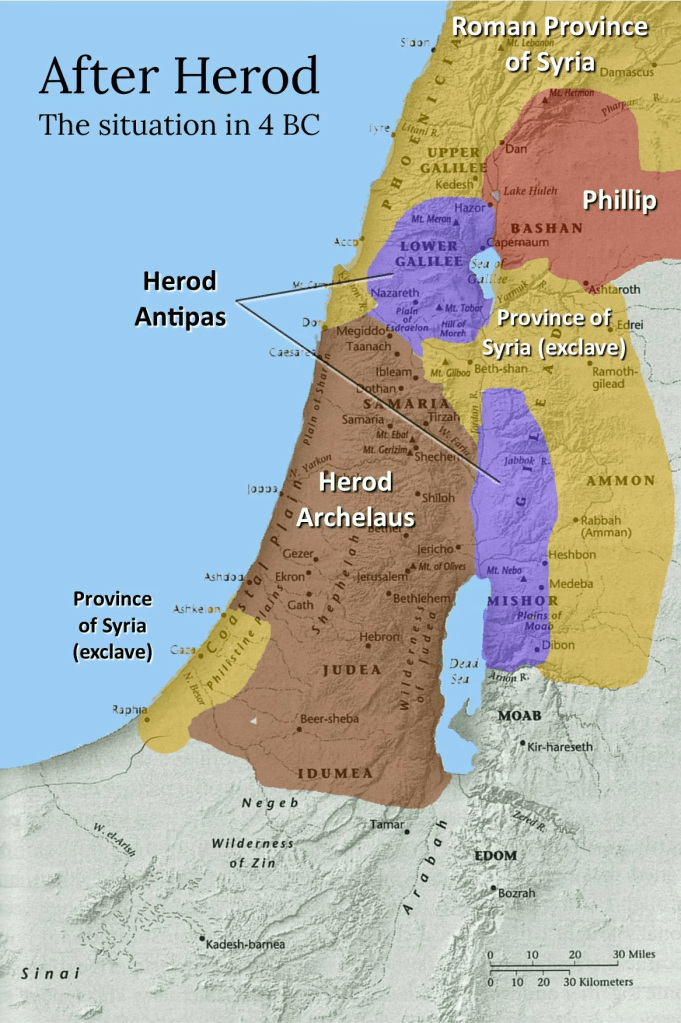
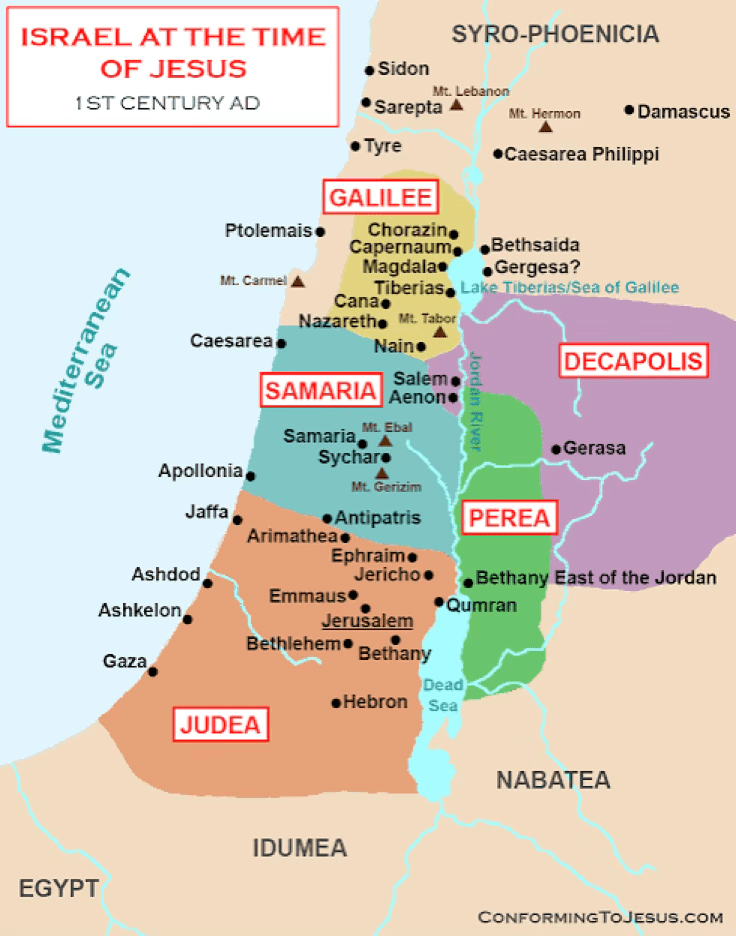
13 How was the land divided among the sons of Herod after he died? Archelaus got control of Judea.
14 What OT prophecy predicted that Jesus would be called a Nazarene?
AI: There is no single verse in the Old Testament that directly states, “He shall be called a Nazarene.” In fact, Nazareth is never mentioned in the Old Testament.
When Matthew writes in Matthew 2:23 that Jesus lived in Nazareth “so that what was said through the prophets might be fulfilled,” biblical scholars broadly agree that he is summarizing a prophetic theme rather than quoting a single text.
The main theories explain what Matthew might have meant:
The Messianic “Branch” (Netser): The Hebrew word for “Branch” or “sprout” is netser, which sounds very similar to Nazareth in Aramaic and Hebrew. This concept of the Messiah as a branch shooting up from the stump of Jesse is found in prophecies like Isaiah 11:1.
The “Despised” One: First-century Judeans generally looked down on the region of Galilee, and especially the obscure, tiny village of Nazareth. Can anything good come out of Nazareth? (Nathaniel) Calling Jesus a “Nazarene” carried a stigma of being insignificant or scorned. Matthew links this to Old Testament prophecies where the Messiah would be rejected and despised by his own people, such as Psalm 22:6-7 and Isaiah 53:3.
Jesus not only identified with humanity by coming to our world; He also identified with the lowly of this world. His upbringing in an obscure and despised town served as an important part of His mission. Jesus identified Himself as “Jesus of Nazareth” during His encounter with Saul on the road to Damascus (Acts 22:7–8). After his conversion, Paul mentioned Jesus of Nazareth (Acts 26:9). One of the names of the early Christians was “Nazarenes” (Acts 24:5), and the term Nasara, meaning “Nazarene,” is still used today by Muslims to identify a Christian.
15 Where did Joseph and Mary live during the betrothal period?
AI: Joseph and Mary lived in the Galilean town of Nazareth during their betrothal. In first-century Jewish tradition, a betrothal was a legally binding contract, but the couple did not yet live together. Consequently, Mary resided at her parents’ home in Nazareth, while Joseph likely lived with his parents or prepared their future home. So after they left Egypt, they went back to where they lived during the betrothal period.
16 Did Joseph and Mary find out about the slaughter of the babies? If so, how did they feel?
17 What does Luke add about the birth of Jesus that is not found in Matthew?
Luke’s Gospel provides a much more detailed historical narrative of the birth of Jesus. His unique additions include the annunciation to Mary, the worldwide Roman census, the journey to Bethlehem, the manger birth, the angelic appearance to the shepherds, and Jesus’ dedication at the Temple.
Specific details found only in Luke include:
The Announcement to Mary: The angel Gabriel appears to Mary in Nazareth to announce she will conceive. (Matthew focuses solely on the angel appearing to Joseph in a dream.)
The Roman Census: Mary and Joseph travel from Nazareth to Bethlehem to register for a decree by Caesar Augustus.
The Manger & Inn: Because there was no room at the inn, Jesus is laid in a manger after birth.
The Shepherds: An angel and a heavenly host announce the birth to local shepherds, who then visit the infant.
Temple Dedication: Mary and Joseph take Jesus to the Jerusalem Temple for purification 8 days after birth (where Simeon and Anna praise the baby).
The Magnificat: Mary’s famous song of praise (Luke 1:46-55).
The Birth of John the Baptist: Luke dedicates his opening chapter to the miraculous conception and birth of John the Baptist, Jesus’ cousin.
I am teaching a class on Wednesday night studying the gospel of Matthew using my combination of study/discussion questions and a lot of AI research. So I thought it might be good for blog readers to start following this study of all 28 chapters of Matthew chapter by chapter. So today I start with my chapter 1 questions and notes. I suggest that you have Matthew 1 open to read as you go through this.
MATTHEW DISCUSSION QUESTIONS
CH 1
1 Why were the genealogy tables so important to the Jews?
AI: Genealogies were incredibly important to Matthew because they provided legal and theological proof that Jesus was the promised Jewish Messiah. By tracing Jesus’ lineage back to Abraham and David, Matthew anchored Christianity in concrete history and demonstrated that Jesus fulfilled centuries of Old Testament prophecy. Matthew’s genealogy served four main purposes:
Messianic Legitimacy: To claim the throne of Israel, a claimant required a verifiable royal lineage. Matthew traced Jesus through the kingly line of David (via Solomon) to show that Jesus held the legal right to be the Messiah.
Connection to the Covenants: By tracing the lineage to Abraham, Matthew highlighted that Jesus was the ultimate fulfillment of God’s promise to bless all nations through Abraham’s seed.
Theological Structure: Matthew arranged the genealogy into three distinct sets of 14 generations (14 being the numerical value of the Hebrew letters for “David”). This mathematical symmetry acted as a “sermon” to his primarily Jewish audience, visually demonstrating that history was tightly ordered by God, moving perfectly from Abraham to the monarchy, to the exile, and finally to Christ.
A Gospel for All People: Matthew intentionally included four women (Tamar, Rahab, Ruth, and Bathsheba) in his list—a highly unusual practice for ancient patriarchal records. These women included Gentiles and those with complicated pasts. This signaled immediately that Jesus’ kingdom would include outcasts, Gentiles, and be open to the whole world
2 How long were the generations in the 42 generations in Matthew 1?
AI: God renamed Abram, who was born in 2167 BC, “Abraham” in 2068 BC when he was “ninety-nine years old” (Genesis 17:1); David was crowned king in 1010 BC; the southern kingdom of Judah was deported to Babylon in 586 BC; and Jesus was born about 6 BC (see When was Jesus born?). This means that the first set of “fourteen generations” in Matthew 1:17 covered 1,058 years (2068 BC to 1010 BC), the second set of “fourteen generations” covered 424 years (1010 BC to 586 BC), and the third set of “fourteen generations” covered about 580 years (586 BC to 6 BC).
So 1,058 + 424 + 580 =2,062 years from Abraham to Jesus. An average of 2,062/42 = 50 year generations although the 2nd and 3rd 14 were shorter and averaged 1,004/28 = 36 year generations.
3 What did a Jewish betrothal involve?
AI: In traditional Jewish law, a betrothal (kiddushin) is the legally binding first stage of marriage, establishing the couple as husband and wife While modern engagements are merely social promises, historical Jewish betrothal required a formal legal act.
A Jewish betrothal traditionally involved three binding legal and financial components:
The Act of Acquisition (Kiddushin): The groom gave the bride an object of value, such as a coin or the traditional wedding band, or a formal written document (shtar), accompanied by the declaration: “You are hereby consecrated to me with this ring according to the law of Moses and Israel”.
The Marriage Contract (Ketubah): Signed before or during the ceremony, this document served as a binding prenuptial agreement detailing the husband’s financial obligations to his wife. It guaranteed her financial support during the marriage and specified a settlement to be paid in the event of divorce or the husband’s death.
Conditions of the Engagement (Tena’im): Separate from the ketubah, these terms were the stipulations laid out between the two families. They outlined the dowry, wedding date, and financial penalties to be paid if either party broke the engagement before the final wedding ceremony (nissuin).
In antiquity, the betrothal lasted about a year, during which the groom prepared a home for the couple. Although legally married, the couple could not live together or consummate the marriage until the final nissuin ceremony took place. Because the betrothal was legally binding, dissolving it required a formal religious divorce (get), even if the marriage had never been consummated.
4 What were the emotions that Joseph had during this?
5 What were the emotions Mary had?
6 How long from the conception of Mary by the Holy Spirit until Joseph married her?
7 How many months of the one year betrothal had passed before the conception?
8 Did Mary tell Joseph about her pregnancy before or after the 3 month visit to Elizabeth
It is possible that 6 months of the one year betrothal had passed before the conception. And then after the 3 months with Elizabeth, Mary then tells Joesph she is pregnant. And Joesph immediately marries her while she is 3 month pregnant barely showing Which might help with the reaction of relatives and friends not knowing Mary conceived before marriage. .
9 How much did her friends and relatives know about the conception before marriage?
It seems that Joseph married her quickly after the angel appeared to him, and it would have been strange if he married her months before the one year ended. Did Mary tell her parents she was pregnant? Did they send her away to Elizabeth?
10 Was the prophecy of the virgin birth in Isaiah 7:14 only fulfilled in Jesus’ birth?
Review the history of the virgin birth prophecy from Isaiah 7-8.
The prophecy in Isaiah 7:14 originates during the Syro-Ephraimite crisis (circa 734–732 BC), when the Kingdom of Judah was threatened by an invading alliance of Israel and Syria.
AI: The Historical Context (8th Century BC)
The Crisis: King Rezin of Aram (Syria) and King Pekah of Israel launched a joint military campaign to siege Jerusalem. Their goal was to overthrow Judah’s King Ahaz, who refused to join their coalition against the expanding Assyrian Empire.
The Fear: King Ahaz and the people of Judah were terrified, believing their utter destruction was imminent.
The Message of Reassurance: God sent the prophet Isaiah to tell Ahaz to remain calm, promising that the enemy coalition would fail.
The Sign: To prove this, Isaiah offered King Ahaz a miraculous sign. When Ahaz hypocritically refused to ask for one, God provided one anyway: “Therefore the Lord himself will give you a sign: The virgin will conceive and give birth to a son, and will call him Immanuel” (Isaiah 7:14, NIV).
The Near-Term Fulfillment
Scholars debate the exact identity of the child in Isaiah’s time, but the prophecy carried an immediate message of timekeeping:
Timeline Marker: The sign stated that before this newly conceived child reached the age of knowing right from wrong (weaned, age 2 or 3?), the northern threats to Judah would be completely dismantled.
Historical Result: This came to pass just a few years later when the Assyrian Empire intervened, destroying Damascus and conquering the Northern Kingdom of Israel. This coincided with the birth of a child to Isaiah by a prophetess. We assume he married a prophetess and it was a natural birth.
The Original Hebrew Word: ‘Almah‘
A major point of historical and theological debate centers on the Hebrew word used in the original text: ‘almah.
In ancient Hebrew, ‘almah translates to “young woman” or “maiden”. While young unmarried women in that culture were presumed to be virgins, the word itself does not strictly denote virginity (the distinct Hebrew word for a literal virgin is betulah). But the prophecy of the birth of a child to a “maiden” in 7:14 was made before Isaiah married a prophetess and had a child by natural birth. So young maiden who most likely was a virgin when the prophesy was made then married and had a child by natural birth.
Thus it appears that Isaiah 7:14 was only predicting the birth of Isaiah’s child. So in Matthew 1 says 22 Now all this [u]took place so that what was spoken by the Lord through the prophet would be fulfilled and then he quotes Isaiah 7:14.
This is a fulfillment by analogy. There are two ways OT prophecy was fulfilled: 1) A one and one only event like Micah 5:2 2) Fulfilled by analogy: a similar event to the OT event, such as Hosea 11:1 “When Israel was a child, I loved him, and out of Egypt I called my son.” Historically, this refers to God rescuing the nation of Israel from slavery in Egypt during the Exodus. Yet Matthew 2:15, Matthew applies this verse to the infant Jesus returning from Egypt after escaping King Herod’s massacre. The prophet Hosea was looking backward at the nation of Israel’s history; he was not making a predictive statement about the future Messiah.
You can see the analogy and how Matthew could say that Jesus was born to a virgin (parthenon in the Greek always meant a virgin). The maiden (almah) in Isaiah’s day was probably a virgin when the prophesy was made, and Mary was a virgin when she conceived, but the difference was that Mary did not have sex before the child was born as the maiden in Isaiah 7 did. But the analogy of the virgins is clear and the prophecy was fulfilled by analogy.
The name of the child to be born to Isaiah would be Immanuel, which means “with us is God”. It would not imply that the child born to Isaiah was God in the flesh. It would just mean the presence of God was with the people through the birth of the child.
Isaiah 8 shows that the child born to Isaiah was called Immanuel: 5 Again the Lord spoke to me further, saying, 6 “Inasmuch as these people have rejected the gently flowing waters of Shiloah And rejoice in Rezin and the son of Remaliah; 7 Now therefore, behold, the Lord is about to bring on them the strong and abundant waters of the Euphrates River,That is, the king of Assyria and all his glory;And it will rise over all its channels and go over all its banks. 8 Then it will sweep on into Judah, it will overflow and pass through,It will reach as far as the neck;And the spread of its wings will fill the expanse of your land, Immanuel.9 “Be broken, you peoples, and be shattered; And listen, all remote places of the earth. Get ready, yet be shattered; Get ready, yet be shattered. 10 Devise a plan, but it will fail; State a proposal, but it will not stand, For God is with us.”
So in Matthew 1, the child born to the virgin Mary is called Immanuel b/c the birth of Jesus showed God’s presence among His people. He was even God in the flesh, but Isaiah was obviously not predicting a child in Isaiah’s time that would be God in the flesh incarnation like Jesus was. So the name “Immanuel” is not only used of Jesus as God.
AI: The Shift to “Virgin Birth” (2nd Century BC)
The Septuagint Translation: Centuries later, when Jewish scholars translated the Hebrew Old Testament into Greek (a version known as the Septuagint), they translated the Hebrew word ‘almah‘ into the Greek word ‘parthenos’.
Strict Meaning: Unlike the Hebrew term, the Greek word ‘parthenos’ explicitly and exclusively means “virgin”.
The Christian Fulfillment
The Gospel of Matthew applied Isaiah 7:14 directly to the birth of Jesus Christ (Matthew 1:22-23). Matthew used the Greek Septuagint’s wording (parthenos) to highlight that Mary’s miraculous, non-sexual conception of Jesus by the Holy Spirit was the ultimate, spiritual fulfillment of the prophecy (but only by analogy).
11 How important is it that someone believe in the virgin birth of Jesus? Can someone deny the virgin birth and still be a Christian?
The Unitarians, liberal branches of the Episcopal and Presbyterian church, the Christodelphians, and United Church of Christ all deny the virgin birth. Historically, this ancient Jewish-Christian sect the Ebionites in the early centuries of the Church viewed Jesus as the natural human son of Joseph and Mary who was “adopted” by God at his baptism
12 What are the Catholic doctrines about the virgin Mary?
Catholic doctrines about the Virgin Mary emphasize her unique role in God’s plan of salvation. These teachings are built upon four core Marian dogmas that define her sinless nature, divine motherhood, perpetual virginity, and bodily assumption into heaven.
AI: The Four Marian Dogmas
Mother of God (Theotokos): Defined at the Council of Ephesus (431 AD), this doctrine asserts that Mary is truly the “Mother of God” because she gave birth to Jesus, who is both fully human and fully divine.
Immaculate Conception: Defined by Pope Pius IX in 1854, this teaching states that, by a special grace from God, Mary was preserved free from original sin from the very moment of her own conception.
Perpetual Virginity: This doctrine holds that Mary was a virgin before, during, and after the birth of Jesus, remaining a virgin her entire life. They say that the named brothers of Jesus were spiritual brothers or sons of Joseph from a previous marriage.
Assumption: Defined by Pope Pius XII in 1950, this teaches that at the end of her earthly life, Mary was taken up (assumed) bodily and spiritually into heavenly glory.
Other Core Teachings
Veneration, Not Worship: Catholics do not worship Mary (a privilege reserved for God alone). Instead, she is given hyperdulia—an extraordinary level of honor due to her unique role as the Mother of Christ.
Intercession: Catholics pray to Mary in the sense of asking her to intercede on their behalf, meaning she brings their prayers to her Son, Jesus.
Spiritual Motherhood: Catholics view Mary as the spiritual mother of all Christians, a title rooted in Jesus’ words on the cross (John 19:26-27).
The New Eve: In Catholic theology, Mary is seen as the “New Eve” whose faithful obedience reversed the disobedience of the first Eve, helping to bring about salvation for humanity.
That’s chapter 1. Unless I change my mind, I will continue with blog articles on chapters 2-28, chapter by chapter. I hope this is beneficial to your private or group study.

 Nicky's Notes