DID YOU CONSULT THE LORD?

Recently I was asking for wisdom from the Lord on a decision I needed to make. It was solving a 1st world problem but a problem no less that was really dominating my thinking. I decided to ask some wise people for advice. I got 3 answers that were all the same. I decided that whatever the 3rd and last person consulted with advised me to do that I would do that, considering that to be a final answer from the Lord. But my wife asked me if I would really “let it go” and quit thinking about the problem, considering it solved with the Lord’s help. I said that I would try.

How do you know when the Lord has given you answer to your quest for His wisdom? I don’t know any hard rules for determining that but maybe here are a few guidelines. First of all, we must really seek the Lord’s wisdom and be ready to follow it. We should use the minds that God gave us, of course, to come up with good possible solutions, and yet allow the Lord to filter through those possibilities to show us the best solution, or even to show us a. solution we had not thought of. I always think of David when I consider this subject. Here is a great article on David’s nine inquiries of the Lord: https://tafj.org/2012/01/06/davids-nine-inquiries-of-the-lord/

1)1 Sam 23:1-3 He consulted the Lord to see if he should defend the city of Keilah against the Philistines. The Lord told him to defend Keilah. 2) 1 Samuel 23:4-5 He asked the Lord again about defending Keilah b/c his men didn’t want to do that, and was told to defend the city. 3) 1 Samuel 23:10-11 He asked the Lord if Saul was going to come to Keilah trying to find David so he could kill him. The Lord said that Saul was coming. 4) 1 Samuel 23:12-14 He asked the Lord if the men of Keilah would deliver David to Saul even though David had saved them from the Philistines. The Lord said they would turn him over to Saul, and that he should leave the city. 5) 1 Samuel 30:8-9 David and his 600 men had been away fighting. They returned to David’s home base in Philistia, the city of Ziklag. The Amalekites had captured the women and children of David and his men and carried them off. David’s men were ready to stone him, blaming him for their not being in Ziklag to defend that Amalekite attack. David asked the Lord if he should pursue the Amalekites, and was told to do so. He brought back all the women and children that had been captured. 6) 2 Samuel 2:1-2 After Saul and Jonathon were killed, David asked the Lord where he should go to be anointed as king of Israel. God told him to go to Hebron. He was anointed king there but only reigned over Judah and Benjamin for 7 1/2 years before becoming king over all 12 tribes and reigning in his capital, Jerusalem. 7) 2 Samuel 5:17-21 When he was anointed king over all 12 tribes, the Philistines came to attack him. He asked the Lord if he should fight them, and the Lord told him to do so and gave him the victory. 8) 2 Samuel 5:22-25 The Philistines regrouped after their defeat and attacked David again. David asked the Lord if he should go attack them face to face, but was told instead to circle them and attack them from behind. David defeated the Philistines again. 9) 2 Samuel 21:1 David asked the Lord why there was a famine for 3 years. The Lord told him that it was b/c Saul had killed the Gibeonites, a people that Joshua had made a treaty with to protect them. To end the famine, David handed over 7 of Saul’s sons to be hanged.

David was successful when he consulted the Lord before decisions, and when he did what the Lord told him to do. His problems came when he failed to consult the Lord before doing things. 1) He obviously did not consult the Lord at all during the adultery with Bathsheeba and the cover up of his sin by having Uriah her husband killed, taking Bathsheeba as his wife. For over a year until the baby was born, he never consulted the Lord about his actions. 2) He did not consult the Lord when bringing the ark of the covenant back to Jerusalem. They brought it back on an cart instead of being carried by the Levites on poles. This led to the death of Uzzah who tried to catch the ark when the oxen stumbled. 3) He did not consult the Lord when he initiated a census of the people as a remedy to the anger of the Lord that had come upon the people. Even Joab criticized the census. Apparently David was trusting in the number of fighting men that he had instead of consulting the Lord as to why He was angry with the people. If he had consulted the Lord, the Lord would have told him that He was angry with the people b/c of their sins and that they should repent. 4) Several times David failed to consult the Lord in making decisions during the 10 years that Saul was chasing him. We can understand why he was panicking at times out of fear while Saul pursued him with an army. In 1 Samuel 21 David in desperation had fled to King Achish in Philistine territory. He did not consult the Lord before doing so. He then faked insanity knowing that Achish would not kill and insane person. It worked but it would lead to further bad decisions. In 1 Samuel 27, David in desperation made a decision to take his 600 men to Philistine territory, thinking Saul would abandon his search to kill David instead of confronting the Philistines. He never consulted the Lord. It worked at first. Saul quit searching for David and Achish the Philistine king gave him the city of Ziklag for him and his men and their families to live in. But then David started killing several Canaanite peoples, telling King Achish that he was out killing Israelites. He lied. He left no survivors to tell what he was really doing. Later he had to lie to the king, acting as if he wanted to join the king in fighting Israelites. The Philistine commanders objected to David and his men fighting, which was fortunate for David or else he would have been confronted with killing his own people, the Israelites, or else Achish finding out how David had been deceiving him all along. Later, while David and his men would engaged in these Philistine battles, Ziklag was attacked by Amalekites and David’s men were ready to stone him, blaming him for their not being at Ziklag to defend the city. Again, all of these problems b/c David in desperation and fear failed to consult the Lord before making decisions. He ended up in Philistine territory, having to lie to Achish and endangering his 600 men b/c of his faking loyalty to Achish. Surely the Lord could have and would have protected David even if he had never fled to the Philistines if David had just consulted with the Lord and trusted in HIs guidance. When David, did consult the Lord while Saul was pursuing him, the Lord always led him to safety, as we saw in the 9 times that he did consult the Lord.

“Trust in the Lord with all your heart and lean not on your own understanding. In all your ways acknowledge Him, and He will direct your paths” (Proverbs 3:5-6) As I said, the Lord expects us to use our minds to come up with possible solutions. But before we do that, we should trust in Him for wisdom and guidance, and only after doing that should we start thinking about possible plans. James had a great comment on this. James 4:13 Come now, you who say, “Today or tomorrow we will go to such and such a city, and spend a year there and engage in business and make a profit.” 14 Yet you do not know what your life will be like tomorrow. For you are just a vapor that appears for a little while, and then vanishes away. 15 Instead, you ought to say, “If the Lord wills, we will live and also do this or that.” 16 But as it is, you boast in your arrogance; all such boasting is evil. 17 So for one who knows the right thing to do and does not do it, for him it is sin.” I tend to come up with plan A, plan B, and plan C before I ever consult the Lord for His plan! If we consult the Lord first, and then come up with possible plans, I think the Lord will guide us to the right plan, or maybe even a plan we hadn’t thought of. I think He will in some providential way show us HIs plan, and discourage us from following a bad plan. We should look for those providential signs of the Lord revealing His plan to us in any decision. Back to my initial 1st world problem that was dominating my thinking, I finally asked the Lord for a sign: “I will do what the 3rd and last person that I consult with for advice tells me to do”. I really wasn’t sure what he would tell me, and there were 3 possible plans of actions to solve my problem. That person told me what he thought I should do to solve the problem. I took that as being from the Lord. I can’t prove that, but that’s what I did. It finally gave me some piece of mind over the course of action that I ended up taking to solve the problem.

I don’t know if these guidelines help you in decision making. I also tried to not worry or second guess my final actions based on the advice from the 3rd person. I still struggle with worry and second guessing, but I hope I can try to work on that.

Is there anyone out there reading this blog who can relate to what I am saying in this article?

    COUNT YOUR MANY BLESSINGS

    Another Sunday morning McDonalds’ egg McMuffin senior coffee 7 AM with wife. The one we go to is very clean. A man was out pressure washing the entire parking lot, and it seems that they do that regularly. Another man does nothing but clean inside. So we get two overpriced muffin, egg, Canadian bacon breakfast sandwiches but the 2nd one is only $1 with the app. Senior coffee is 69 cents. Can’t beat that! The joy of being a senior citizen!

    The managers are very nice. They have come to know us as regulars. The lady manager was telling me that she lost her daughter in a car wreck 5 years ago. I asked her if today, mother’s day, was tough on her and she said it was, but she clinched a necklace that she was wearing that was her daughter’s or was given to her by her daughter (I don’t listen to details very well!) and said that she was doing ok. She also told me that her family had a history of early deaths due to cancer but that she didn’t even want to know if she had cancer b/c she was ready to just go to be with her daughter. Sounds like Paul, doesn’t it? He said that he would rather just die and go to be with the Lord. We gave her a nice tip to eat out on and that felt good. But most of all, it made us thankful that God has blessed us with 3 grown healthy children who have godly marriages and are raising godly families. Tragedy has never struck our house. Parents dying, yes, but never a tragedy like losing a child. I hope I could be as positive as that lady manager if I had a tragedy of losing a child.

    Also I must mention the debate over whether I should buy flowers for my wife on mother’s day. I had someone trying to make me feel guilty b/c I wasn’t going to buy flowers for my wife today. I argued that my wife was not my mother. My mother passed away in 2010. “But your wife is your children’s mother!” was the counter argument. “Excatly”, I said. “So my children should buy their mother flowers, not me.” I have had two or three people agree with me on this. So on the way home from House of the Harvest yesterday morning, I stop to buy chicken livers at Publix (for my grandson to fish with) and I see all these overpriced flower bouquets. To appease the person making me feel guilty for not buying flowers for my wife on mother’s day, I bought a bouquet. At least I wasn’t hypocritical about it. I told my wife that the main reason I bought the bouquet was so I would not be criticized for not buying. She just laughed so I guess all is well! Such is life in our family and 54 years of marriage. Actually I did buy them for my wife also. They look very nice on our kitchen bar and she likes them. Maybe I’m not totally bad.

    What’s that song? “Count your many blessings, name them one by one. And it will surprise you what the Lord has done.”

    Here are the lyrics to the song for us to meditate on today:

    1 When upon life’s billows you are tempest tossed,
    When you are discouraged, thinking all is lost,
    Count your many blessings, name them one by one,
    And it will surprise you what the Lord hath done.

    Refrain:
    Count your blessings, name them one by one;
    Count your blessings, see what God hath done;
    Count your blessings, name them one by one;
    Count your many blessings, see what God hath done.

    2 Are you ever burdened with a load of care?
    Does the cross seem heavy you are called to bear?
    Count your many blessings, ev’ry doubt will fly,
    And you will be singing as the days go by. [Refrain]

    3 When you look at others with their lands and gold,
    Think that Christ has promised you His wealth untold;
    Count your many blessings, money cannot buy
    Your reward in heaven, nor your home on high. [Refrain]

    4 So, amid the conflict, whether great or small,
    Do not be discouraged, God is over all;
    Count your many blessings, angels will attend,
    Help and comfort give you to your journey’s end. [Refrain]

    From staugustine.com. “Gipsy Smith, a famous evangelist of yesteryear, said of this song, “Men sing it, boys whistle it and women rock their babies to sleep to it.”

    Johnson Oatman, Jr., born April 21, 1856, was a citizen of Lumberton, N.J. His dad was a local merchant and just happened to be the best singer in town, with a rich, powerful voice. Young Johnson could not sing as well as his father, yet he grew up wanting to make some musical contributions of his own. However, for a time he worked in the family business, but soon gave up those opportunities and began to study for the ministry. After finishing school and ministering in the Methodist Episcopal churches for a time, Johnson continued to hope that life surely held some other plans for him.

    At 36, he realized that he did, without question, have a musical talent after all. He could write songs for other Christians to sing. So, every year some 200 songs flowed from his pen. He eventually had written 5,000 songs and was happy that in his musical compositions he had found a way to “preach the Gospel.”

    Of all the songs Oatman wrote. he seemed to claim as his own favorites, “No, Not One” (1895) and “Higher Ground (1898).” (In the Church of Christ we sang these songs many, many times).

    However, people everywhere seemed to adopt another of his very special songs, “Count Your Blessings,” written in 1897. Almost immediately it began its meteoric journey.” Oatman died in 1922.

    If you can’t sing, write songs for others to sing!


    JOHN HUSS: BURNED AT THE STAKE

    John Huss was born in 1369 in Bohemia (in the Czech Republic), the son of a peasant. He was influenced by John Wycliffe and became a pastor. People from common people to the wife of the king followed him and a movement of true Christianity broke out in Bohemia. The pope threatened him but he continued to preach. He taught the priesthood of believers (every Christian is a priest; not just the Roman Catholic church priests). He preached against the corruption in the Roman church and against the selling of indulgences. He was brought before the cardinals for a hearing and then cast into a sewage-filled dungeon. Eventually, his books were burned and he was burned at the stake in 1415 at the age of 46. After his execution, his followers, Hussites, engaged in the Hussite Wars between 1420 and 1431, defeating 5 papal crusades sent to wipe them out. The wars ended with a compromise with the Catholic church. Eventually most Hussites were absorbed into the Catholic church by the 17th century. One group of Hussites formed an independent church, the Unitas Fratrum (Unity of Brethren). The Moravian church emerged from the Unitas Fratrum. The Czechoslovak Hussite Church, is a recognized religious body today.  “Nearly six centuries later in 1999, Pope John Paul II expressed “deep regret for the cruel death inflicted” on Hus and added “deep sorrow” for Hus’s death and praised his “moral courage”. (Wikipedia)

    I can’t imagine the horror of being burned at the stake. This method was employed for various reasons, including treason, heresy, and witchcraft, and served as a public spectacle of punishment. “Witches were burned at the stake during European witch trials, particularly between the 15th and 18th centuries, as punishment for heresy or witchcraft, which was often seen as a crime against both the church and the state. The punishment was a standard practice in many parts of Europe, with local authorities and church leaders overseeing the executions.” (AI) Joan of Arc was burned at the stake for heresy in 1431, although her conviction was later overturned. 

    John Huss refused to recant his preaching at his trial which led to his execution. He said, “I am ready to die.” Would I recant my faith in Jesus if threatened with being burned at the stake? I hope not.

    The Bible speaks of “dying to self”. Actually, your old sinful self dies in the eyes of God when you are buried with Christ in baptism and raised as a new self cleansed by the blood of Jesus. That old sinful self stays dead in God’s eyes unless you fall from grace. Colossians 3:3 ESV  “For you have died, and your life is hidden with Christ in God.” me. Galatians 2:20 ESV / 104 helpful votes Helpful Not Helpful

    I have been crucified with Christ. It is no longer I who live, but Christ who lives in me. And the life I now live in the flesh I live by faith in the Son of God, who loved me and gave himself for me.”

    But then we are told to continually “die to self”, to deny self, to crucify the flesh, meaning relinquishing selfish desires and priorities to follow Christ. That is a constant battle every day, the flesh vs the spirit. Your salvation doesn’t depend on you winning that battle over the flesh perfectly. Your salvation is due to the grace of God and the continual cleansing of the blood of Jesus. But a truly converted sinner will constantly try to die to self out of gratitude for what Jesus did for us.

    Galatians 5:24-25 ESV “And those who belong to Christ Jesus have crucified the flesh with its passions and desires. If we live by the Spirit, let us also keep in step with the Spirit.” Ephesians 4:22 ESV “To put off your old self, which belongs to your former manner of life and is corrupt through deceitful desires.”

    Some Christians are still being called upon to die for their faith like John Huss. In the U.S. we will probably never be faced with that, but we are faced with “dying to self” every day. Are you living for yourself and your own desires, or are you living for Christ to please His desires?


    JOHN WYCLIFFE: MORNING STAR OF THE REFORMATION (1330-1384)

    You probably have heard of John Wycliffe. You could easily argue that Peter Waldo should have that title “morning star of the reformation” one hundred years earlier, but John Wycliffe had more impact than Waldo. Waldo believed much the same as Wycliffe. Born in England, Wycliffe abhorred the corruption in the Roman Catholic church. He taught that Christ, not the pope, is the head of the church. He taught that the Scriptures, not the Catholic church papal decrees and tradition, are the sole authority for faith and practice. He taught that the Catholic church should excommunicate immoral clergymen and give away the church’s excessive wealth and property. He taught against the selling of indulgences and he rejected transubstantiation. He began voicing his teaching at Oxford University where he had taught for many years. He began writing pamphlets in English that a farmer or shopkeeper could read. The common people only had the Latin Vulgate, so Wycliffe translated or was responsible for translating the Bible into Middle English (a version now called the “Wycliffe Bible”) so the common man could read it and decide what it meant instead of relying on the priests. “Wycliffe’s followers were called Lollards because the name, derived from the Dutch word “lollaert” meaning “mumbler,” was used pejoratively by critics to describe their practice of reading scripture and making long prayers.” (AI) His preachers went throughout England carrying copies of his English translation. They were called “Poor Preachers” b/c they dressed in simple clothes and lived with the common people, unlike the Roman priests who lived apart from the people and dressed in clerical garb. He was finally expelled from Oxford and was persecuted by the Catholic church, but the church was afraid to kill him, fearing it. would cause an uprising. He never left the Catholic church; he even died of a fatal stroke while at Mass. But 17 years after his death, anyone preaching Wycliffe’s ideas was punished by death by the Catholic church. In 1415, thirty years after his death, a Catholic council ordered that his books be burned and that his remains be dug up and burned. His ashes were thrown into the River Swift.

    We take it for granted that we have so many translations of the Bible into English so we can read it for ourselves and decide what we think it means. It is hard to imagine a time like in the 14th century when there were no Bibles in English. Since the 16th century, there have been around 250 translations into English alone (900 if you count revisions and partials)! The Catholic church actually did its own Douay-Rheims English version of the Bible in 1609, maybe partly as a result of the work of Wycliffe 200 years earlier. That version is older than the famous King James Version of 1611. Both versions used the Latin Vulgate as the main source. Wycliffe’s translation used the Latin Vulgate also.

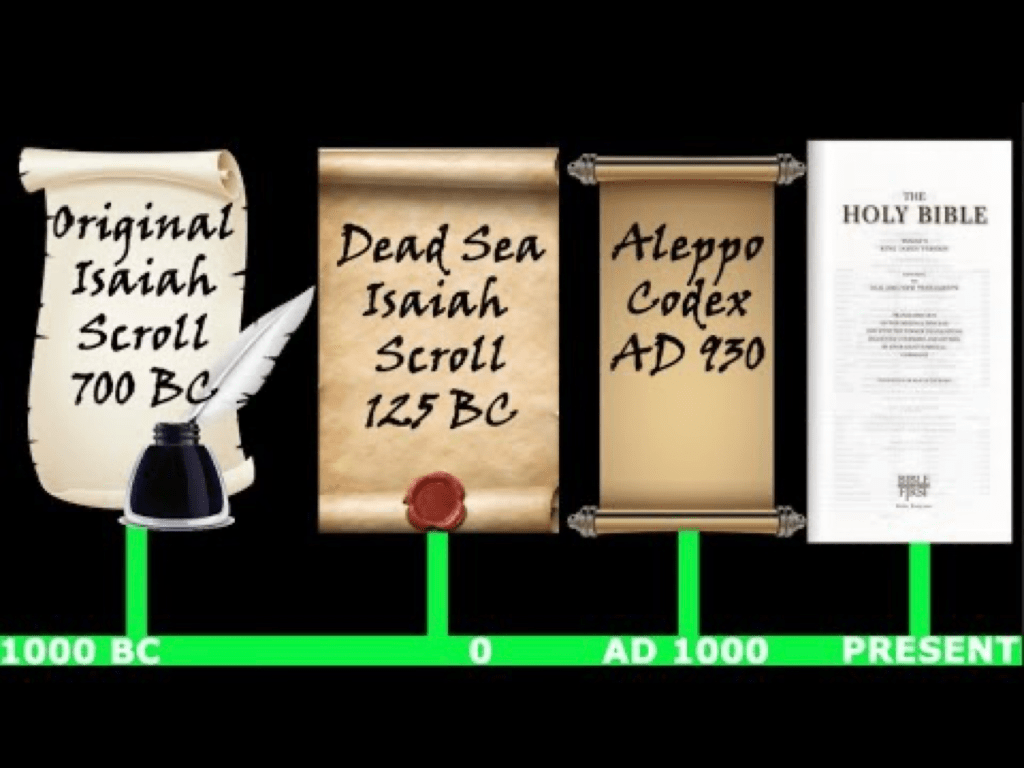
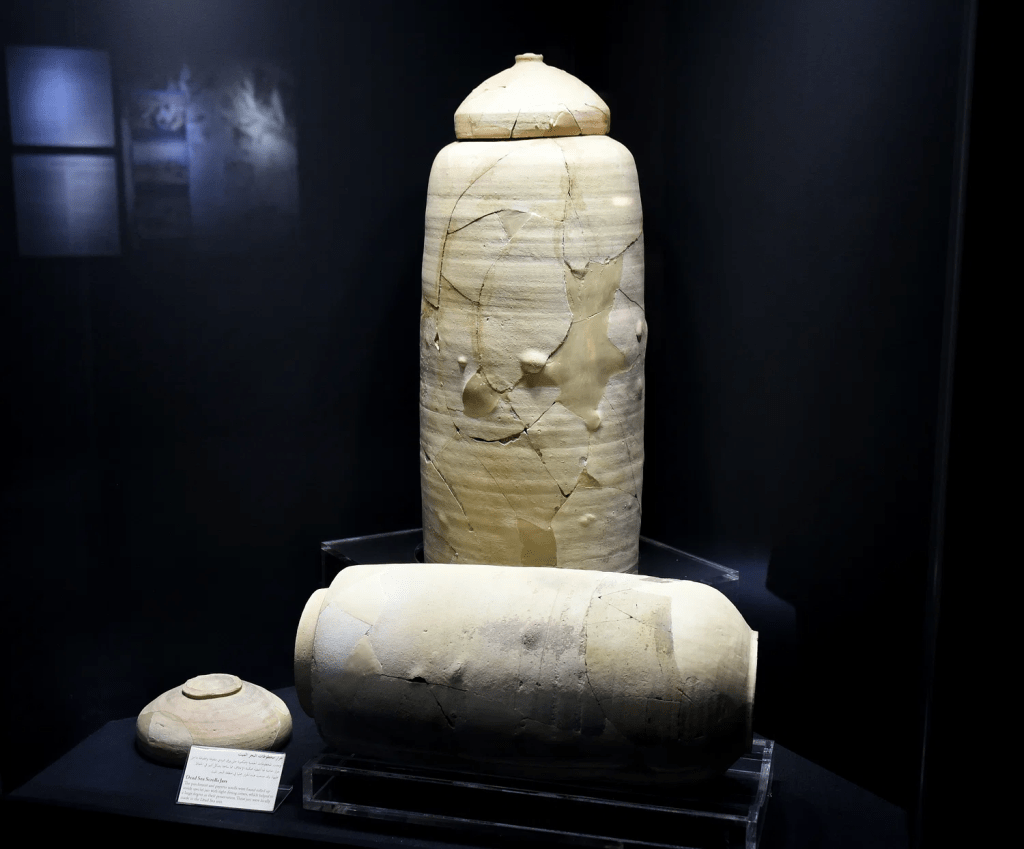
    The original Old Testament books were written in Hebrew mainly and the New Testament in Greek. We don’t have any of the original books of the Bible. Can we trust the English translations that we have? Yes we can. We have over 5,700 complete or partial manuscripts made or translations into other languages from which to come up with an accurate translation that we can trust. The New Testament sources go back to within 100 years of the original New Testament books in many papyri. When we compare the thousands of copies of the New Testament, they are 95 to 99% the same. The errors are typically small copyist errors. The Old Testament books were copied with extreme care for accuracy. The Dead Sea Scrolls (1948) show that the Old Testament was copied accurately over the centuries. For example, the complete copy of Isaiah called the “Great Isaiah Scroll” found in the DSS is 95% the same as the earliest Hebrew copy of Isaiah that we had, which was in 930 AD, over 1,000 years later than the Great Isaiah Scroll which was carbon dated as 125 BC. That shows that the book of Isaiah had been accurately copied for that 1,000 years and gives us confidence that the original book of Isaiah done in 800 BC was copied accurately over the centuries. There are at least portions of all the OT books except Esther in the DSS. So, yes you can trust a good English translation of the Bible. Be careful about paraphrases. There is a lot of debate about which English translation of the Bible is the most accurate. Jesus and the apostles quoted from the Septuagint, which is the translation of the Hebrew OT from Hebrew into Greek, done between the 3rd and 1st century BC. That shows that you can trust a good translation of the original languages even if you know it is not 100% accurate.

    I hope this helps us appreciate our Bible translations. More importantly, I hope it encourages us to read and study those translations since we have been blessed with the Bible in our own English language.

    PETER WALDO

    Have you ever heard of Peter Waldo? He is the founder of the Waldensians. Born around 1140 AD in Lyons, France, he was a wealthy merchant who became disgusted with the corruption in the Roman Catholic church. He became convinced that the Scriptures, not the Pope or Catholic tradition, are the sole authority for Christians. The Catholics used the Latin Vulgate, which few could understand, and claimed that ordinary Christians would be corrupted if they read the Bible for themselves. He paid to have the Bible translated into the current French language. After reading what Jesus told the rich ruler to do, “to sell what he had and give to the poor”, he sold what he had and lived as a beggar preacher. His followers sold or gave away what they had: they came to be called the “Poor of Lyons”. He believed that the Bible should be preached, even by lay preachers, which was also condemned by the Catholic church. Waldo’s followers, the Waldensians, were persecuted by the Catholic church. The infamous Roman Catholic Inquisition was a special church court established in the 1200’s to inquire about and judge matters of “heresy”. The inquisition lead to fierce persecution of the Waldensians. They lost their property and many were burned at the stake. The Waldensians were numerous in Italy, France, and Switzerland, and then spread throughout Europe.

    Here is a list of the doctrines of the Roman Catholic church that Waldo and the Waldensians rejected?

    • They rejected all claims to authority besides Scripture.
    • They rejected all mediators between God and man, except the man Christ Jesus (though Mary was venerated for quite a while).
    • They rejected the doctrine that only a priest could hear confession, and argued that all believers were qualified.
    • They rejected purgatory, and thus rejected indulgences and prayers for the dead.
    • They believed the only Scripture-sanctioned sacraments were baptism and communion.
    • They rejected the Church’s emphasis on fast and feast days and eating restrictions.
    • They rejected the priestly and monastic caste system.
    • They rejected the veneration of relics, pilgrimages, and the use of holy water.
    • They rejected the pope’s claim to authority over earthly rulers.
    • They eventually rejected the apostolic succession of the pope.

    You can see why Peter Waldo was considered one of the forerunners of the Protestan Reformation movement of the 1600’s. That list of objection to Catholic doctrine was the same as that of the Protestant Reformation movement. Any Waldensians in the 1600’s eventually joined the Protestant Reformation.

    So what do we learn from the story of Peter Waldo? We see how corrupt the Catholic church was. The church tortured and burned heretics. They wouldn’t let common people read the Bible in their language. It is hard for us to imagine that religious environment. We have had freedom of religion so long that we take it for granted. What if you lived back in the 12th century under the tyrannical power of the Catholci church? Would you have the courage to stand up to the church even if it cost you your life?

    So, what do you believe? At our Christian school the board came up with a “statement of faith” that the school believed in and practices. It is basic Christian doctrines, similar to those of Peter Waldo. Such a statement of basic beliefs became even more needed as issues like homosexual marriages and gender identity arose in the current culture. In a way, the anti-Christian culture of today is something that we Christians have to stand up to just as Waldo stood up to the Catholic church.. If you proclaim basic fundamentalist Christian teaching on marriage, homosexuality, and. gender you will be mocked. If you stand up for the Bible as the sole authority for doctrines, you will be mocked. Maybe not tortured or burned at the stake, but you will be persecuted and mocked. I hope the example of Peter Waldo will inspired you to have the courage to stand up to today’s anti-Christian culture.

    Wouldn’t it be great to talk to Peter Waldo? Maybe one day we can.

    JOHN G. PATTON: MISSIONARY TO CANNIBALS

    Do you have any idea where the New Hebrides islands are? They are in the South Pacific.

    The New Hebrides, now known as Vanuatu, consists of roughly 80 islands in the South Pacific. These islands are situated northeast of New Caledonia and southeast of the Solomons. While there are 80-odd islands in total, not all of them are inhabited. Notice the islands of Tanna and Aniwa. They are at the heart of the post today concerning John G. Paton. Born in Scotland in 1824, John married Mary in April, 1858 and 14 days later sailed to the South Pacific and landed on the island of Tanna in November, 1858. They joined a missionary who had been working there for several years. Three months after their arrival, a son, Peter Robert Robson, was born on 12 February 1859. But just 19 days later, Mary died from tropical fever soon to be followed to the grave by the newly born Peter at 36 days of age. The natives on Tanna were cannibals. In 1839 two missionaries had been martyred and eaten by the cannibals in the South Pacific. “After Mary died, John spent nights sleeping on their grave to protect them from the local cannibals. The gravesite is still accessible to this day with a plaque marking the spot, erected in 1996.” (Wikipedia)

    John continued alone for 4 years trying to convert the cannibals in spite of the danger he faced from the cannibals. 14 times he was attacked with a fever. He barely escaped the cannibals on many occasions. Later he returned to Scotland to raise money for the work in the New Hebrides and to encourage missionaries to go there. In 1865 he married again to Maggie and they went to another island in the New Hebrides, Aniwa, in 1866. The natives of Aniwa were cannibals also but they were more receptive than those in Tanna. “John learned the language and reduced it to writing. Maggie taught a class of about fifty women and girls who became experts at sewing, singing and plaiting hats, and reading. They trained the teachers, translated and printed and expounded the Scriptures, ministered to the sick and dying, dispensed medicines every day, taught them the use of tools, held worship services every Lord’s Day, built orphanages and took care of many orphans, and sent native teachers to all the villages to preach the gospel. Enduring many years of deprivation, danger from natives and disease, they continued with their work and after 15 years of patient ministry, the entire island of Aniwa professed Christianity. In 1899 Paton saw his Aniwa New Testament printed and the establishment of missionaries on twenty-five of the thirty islands of the New Hebrides.” (Wikipedia) Maggie died in 1905 and John died at the age of 82 in 1907. John spent almost 50 years mission work in Tanna and Aniwa. He was courageous and willing to put his life on the line to propagate the gospel of Jesus.

    “In Christianity, an unreached people group refers to an ethnic group without an indigenous, self-propagating Christian church movement. It is estimated that of the 8.08 billion people alive in the world today, 3.42 billion of them live in unreached people groups with little or no access to the Gospel of Jesus Christ.  For every $100,000 a Christian earns, only $107 on average will go to world missions. And roughly 1% of that money will support the 3.1 billion people who live in unreached people groups.” (AI)

    I encourage you to pray over this map of unreached people groups worldwide. Churches spend about 75-80 % of the money they collect in contributions on buildings and staff. Churches collect about 75 billion per in contributions but only a small % of that money goes into mission work and a very, very small % of that money goes toward reaching the unreached people groups with the gospel. Fellow Christians, what are we doing? Where do you think Jesus would want all that money spent? Children dying all over the world b/c of unclean water. Families and children in refugee camps trying to escape local warring groups. Famine and flood relief needed. The Bible needs to be translated into all the languages of the world. “As of November 2024 the whole Bible has been translated into 756 languages, the New Testament has been translated into an additional 1,726 languages, and smaller portions of the Bible have been translated into 1,274 other languages. Thus, at least some portions of the Bible have been translated into 3,756 languages.” (AI) So the translations are there, we just need to print and distribute them to the world.

    I hope you at least tithe (give a tenth). I hope you give that tithe to the many organizations that print Bibles, support missionaries, drill wells, provide food for the oppressed and needy worldwide.

    MARY MOFFAT

    This post honors missionary wives. Mary Moffat was the consummate (perfect or complete in every way) missionary wife of British missionary Robert Moffat. Robert was a gardener but his passion for mission work led him to Africa at the age of 21. Mary’s parents forbade her marriage to Robert, but finally consented and she joined in both in marriage and in his mission work in South Africa in 1816. They would spend 50 years as partners in Kuruman, South Africa trying to bring the Bechuana to Christ. She had come from a well to do family but adjusted to living in a hut with mud walls and floors, hauling water in every day. Living conditions were tough on Mary and Robert. Their “honeymoon” was spent on a 700 mile trip to Kuruman with all their belongings in an ox cart pulled by six spans of oxen that took 7 weeks (she described it as one long picnic). “For the Moffats there were long years of fruitlessness, of reducing an unwritten language, and of translating the Bible into that difficult tongue.  Other duties took time from the all-important task of evangelism:  planting, building, carrying, creating, butchering, salting, storing, sewing, cobbling, carpentering, blacksmithing, preaching, teaching, exhorting, pacifying, supporting, cleaning, feeding, doctoring, praying, writing, etc.” (from GFA missions) They constantly dealt with natives stealing their possessions. Robert made trips into the interior leaving Mary very fearful due to threats from warring chiefs. It was 7 long years before they made their first Christian convert. ” Robert was an independent individual given to moods, both visionary and of depression.  Mary was steady, disciplined, patient, and organized. She had a faith in the future that never wavered.  She was always ready to comfort and support Robert. They eventually served for over 52 years with only one furlough during that period of time.

    Mary was Robert’s “beloved partner,” a true helpmeet.  Their goal was to see the Bechuana come to Christ, a church planted, and the Word of God available in the language of the people.  Their love for the national was one, and their arms and home were open to the nationals.  Mary was wife, mother, and true missionary.  She was a great encourager to Robert in the tedious task of learning the language and translating the Bible, which took many years of plodding word by word, verse by verse.  Robert was self-taught in Greek. They were truly one flesh, one mind, and with one purpose—all to the glory of God.  Africa became their home. 

    There were times when Robert was very discouraged and depressed; but Mary, at his side as a true companion and a true partner in the work, saw him through these difficult times (Ephesians 5:31-33).  She was a woman of great faith.” (from GFA)

    Their oldest daughter married David Livingstone but died of a fever during his trips through Africa. Some of their other children became missionaries. “She and Robert were credited with creating a family of “Moffats” who carried forward the mission work.” (from Wikipedia)

    “By degrees, better conditions came. Once Mary Moffat wrote to friends at home for a communion service, because, as she said, she believed that native Christians would yet sit together at the Lord’s table in that land. That time came, and she wrote: “You can hardly conceive how I feel when I sit in the house of God surrounded with the natives. Though my situation may be despicable and mean in the eyes of the world, I feel that an honor has been conferred upon me which the kings of the earth could never have done for me. I am happy, remarkably happy, though my present habitation is a single room with a mud floor and a mud wall. Not only did a native Christian community grow up about them in Kuruman, but through the influence of the native Christians here and the teaching of Moffat on his missionary tours, groups of native Christians may now be found through all that region.” (Jessie Brown Pounds from wholesomewords.org)

    Do you see why I called Mary Moffat the “consummate missionary wife”? No doubt her daily life was filled with things like gardening, cooking, cleaning, etc. but she did all that with one purpose in mind: to partner with her husband to spread the gospel to the Bechuana in Kuruman. I encourage you to think about all the duties and chores that you do every single day. You ladies cook, clean, take care of the kids, run errands, shop, maybe work outside the home, wash clothes, etc. You men go to work every day, deal with the stress of providing for the family, fight the traffic coming and going to work, fix things around the house, deal with issues with the kids, watch sports, plan for future financial and health well being for your family, etc. But, men or women, do you do everything with one purpose in mind: to honor God, to save your own children first and then to share the gospel with as many people as you come in contact with? Do you just go through life doing the stuff you have to do or do you do follow Colossians 3:17 “Whatever you do in word or deed, do everything in the name of the Lord Jesus, giving thanks through Him to God the Father.”? Notice “whatever you do in word or deed”. That would include all the daily chores and duties that you do.

    I am also blessed with a consummate missionary wife. We have partnered in mission work overseas, church work here in the U.S., and over 35 years of Christian education (which I considered to be mission work here in the U.S.). She has been, like Mary, steady, a great mother to our 3 children, a great role model to our 10 grandchildren, never complaining about whatever living conditions we had, always making the best of bad situations, encouraging to me when I get discouraged. When I felt like the Lord was calling us to a mission field overseas or locally in Christian education, she never questioned that calling but joined in. Like Robert, I often was off on my mission trips or duties in Christian education, leaving her to deal with the real issues of raising a family and she did so with great success. We are proud of the faith of our 3 children and the loving Christian homes they have established, and their faith was largely due to their mother’s prayers and faith passed on to them. She would pray every night with them, “God help ___, ___, and ___ grow up to be Christians and marry Christians” (long before they knew what either concept meant), and they did both!

    Thanks to all consummate Christian wife partners in life. I can think of several more that I know well. How about you? Do you do all your daily duties and chores to honor God? I thought this was great from AI. “Making secular pursuits holy for God involves seeing all aspects of life, including work and everyday tasks, as opportunities to serve God and glorify him. This means approaching secular activities with diligence, honesty, and a sense of dedication, recognizing that even seemingly mundane tasks can be done for the glory of God.” Try that today as you go through the day. Make every thing you do holy. Think: “how can I make this mundane task become something holy to honor God?”

    LOTTIE MOON

    In my posts I try to gather info and pass it on to you. You can go to different sites and read the original sources that I gather from, but i hope my summaries make it simpler for you. Today, it’s Lottie Moon, missionary to China. Born in 1840, she went to China in 1873 at the age of 32 and spent 39 years there teaching women and girls and sharing the gospel in China. She was one of the first women to earn a master’s degree in the south. She never married (though engaged at one time) but instead dedicated her whole life to serving God. She spoke Latin, Greek, French, Italian, Spanish, and was fluent in reading Hebrew. Instead of pursuing a career in the U.S. she chose to devote her life to sharing the gospel in China. She adopted Chinese dress and customs and identified with the Chinese people. “She took a special interest in Chinese women, establishing schools for girls and working to free them from customs such as foot binding.” (AI) Lottie had several nicknames in China—foreign devil, foreign lady teacher, heavenly book visitor, and the cookie maker. (Lottie baked cookies to win the hearts of the children and families who were frightened of her.)” (AI) She was often persecuted by Chinese who hated foreigners. “Throughout her missionary career, Moon faced plague, famine, revolution, and war. The First Sino-Japanese War (1894), the Boxer Rebellion (1900) and the Chinese Nationalist uprising (which overthrew the Qing Dynasty in 1911) all profoundly affected mission work. Famine and disease took their toll as well.” (from Wikipedia)

    She is famous for her letters to southern Baptist Christians begging them to come do mission work in China among the 472 million Chinese living at that time, or send missionaries, or support sending missionaries. She was a realist. She once wrote home to the Foreign Mission Board, “Please say to the [new] missionaries: they are coming to a life of hardship, responsibility and constant self-denial.” “Disease, turmoil and lack of co-workers threatened to undo Lottie’s work. But she gave herself completely to God, helping lay the foundation of what would become the modern Chinese church, one of the fastest-growing Christian movements in the world. Lottie Moon died at 72 — ill and in declining health after decades ministering to her beloved Chinese. But her legacy lives on. And today, when gifts aren’t growing as quickly as the number of workers God is calling to the field, her call for sacrificial giving rings with more urgency than ever.” (from the International Missions Board of the southern Baptist Church) There are now 1.4 billion Chinese. In 1918 the Women’s Missionary Union started the annual Lottie Moon Christmas Offering for international Missions. Lottie died in 1912. “In her final hours, she sang “Jesus Loves Me” with the missionary nurse who accompanied her. Lottie made one final gesture, pushing her fists together in the form of the Chinese greeting.” (AI) Due to declining health and sharing her food with starving Chinese, she weighed 50 pounds when she died. She was a feminist, promoting gender equality. She would have fit in quite well with the modern feminist movement!

    I enjoyed learning more about Lottie Moon. I continue to be amazed at foreign missionaries like Lottie who suffered much to do life long mission work in foreign countries. My usual rant: the church in the U.S. should be sending and supporting missionaries to the unreached peoples groups around the world instead of spending 80% of the contributions on staff and buildings. Pray for all the missionaries abroad. In the messages to the 7 churches (Revelation 2,3), a warning is given several times to the churches to get back to their first love, to strengthen the things that remain, to repent of sin and worldliness, to oppose false teaching (like the lGBQT movement that has captured many churches), and to awake from lukewarm complacency. Those warnings would apply to many churches in the U.S.

    THE MURDERS OF JOHN AND BETTY STAM

    John Stam was born in 1907 and Betty Stam was born in 1906. Betty was raised in China by a missionary father. Both attended Moody Bible institute then were married in China in 1933 and began their mission work with China Inland Missions in China in November, 1934 during the Chinese Civil War. One month later they, along with their 3 month old daughter Helen were arrested by Communists for ransom, although the ransom note demanding $20,000 was never delivered. “The Communists knew that John was a Christian missionary and they despised him and his family because of it. They passionately believed in the Marxist teaching, “Religion is the sigh of the oppressed creature, the heart of a heartless world, and the soul of soulless conditions. It is the opium of the masses.” (from Eugene in BacktoJerusalem.com) They were marched 12 miles, during which in an overnight stay Betty hid baby Helen in a sleeping bag and left her. Later John were beheaded. A Christian shopkeeper was also executed for trying to get the soldiers to not kill the Stams. John Stam wrote a note to the mission authorities of how he and his wife had been captured, then wrote, “Philippians 1:20: ‘May Christ be glorified whether by life or death.'” The note was found after they died. Baby Helen was found by a Chinese pastor in an abandoned house along with $10 (which he and his wife used to buy milk for the baby) and rescued. She was taken to her maternal grandparents who were also missionaries in China, and then was raised by her aunt and uncle in the U.S.

    What were you doing when you were 27 or 28 years old? My wife and I would have been about that age when we were finishing up our 2 years mission work in Colombia, South America. It was about that time that some kidnapping of Americans began. Our first child, Nicole, was about 2 years old (she was born whle we were in Trinidad) at that time although I don’t remember being concerned about the kidnappings. But I can’t imagine how the Stams felt during their ordeal. Married a little over a year and with a 3 month old baby, they are kidnapped and face execution. Is God not protecting those sent out to preach the gospel of His Son Jesus? Can you imagine Helen leaving her 3 month old baby girl hidden in a sleeping bag, saying good bye to her not knowing the fate of the child but fairly certain that the child would be killed if she stayed with the Stams. Can you imagine the feelings of the maternal grandparents when baby Helen was brought to them, knowing what happened to their daughter and son in law, knowing that the child would never know her parents? Can you imagine the horror that the kidnapping and murder of the Stams was felt back in the Moody Bible Institute among the former teachers and mentors of the Stams?

    “Betty had written this in a journal entry before leaving for China, “I want something really worthwhile to live for. Like most young people, I want to invest this one life of mine as wisely as possible, in the place that yields richest profits to the world and to me … I want it to be God’s choice for me and not my own. There must be no self-interest at all, or I do not believe God can reveal His will clearly … I know very well that I can never realize the richest, most satisfying, life Christ meant for me, if I am not giving my own life unselfishly for others. I want Him to lead, and His Spirit to fill me. And then, only then, will I feel that my life is justifying its existence and realizing the maturity in Him that Christ meant for all men, in all parts of the world.” (From Melissaspoelstraministries )

    The sacrifice of the Stams inspired many to go into foreign missions, citing a new generation of young missionaries. 700 young people from Moody Bible Institute and 200 from Wheaton Bible college pledge to follow the Stams example. The murder of the Stams will either inspire you to go all in for Jesus or cause you to have doubts about the existence of God. How can God stand back and allow those murders to happen? In the same way He stood back and allowed evil men to crucify and kill HIs Son on the cross. It is that simple. God knew that He was going to raise Jesus 3 days later, which is why we celebrate Easter Sunday today, April 20, 2025. He knew that He was going to bring John and Betty Stam to glory after their martyrdom. It had to be tough on them and yet joyful as they looked down from heaven and saw their precious baby being taken care of after their death. I believe that faithful saints go straight to heaven and can actually see what is going on down on earth and even feel sorrow or joy. I know there are passages about “no tears in heaven” but those passages usually refer to spiritual joy of Christians on earth.

    Hopefully this story will inspire us to pray for and support missionaries who are sharing the gospel all over the world, especially among the unreached peoples groups which make up about 1/3 of the world’s population.

    Russell Deibler (1905-1943) and Darlene Deibler Rose (1917-2004)

    When we were doing mission work in Trinidad and Colombia, S.A., a song resonated with me: Follow Me. The third stanza goes like this:

    O, Jesus if I die upon
    A foreign field someday,
    ‘Twould be no more than love demands,
    No less could I repay,
    “No greater love hath mortal man
    Than for a friend to die”
    These are the words He gently spoke to me,
    “If just a cup of water
    I place within your hand
    Then just a cup of water
    Is all that I demand.”
    But if by death to living
    They can Thy glory see,
    I’ll take my cross and follow close to Thee.

    Here is the full song: https://www.youtube.com/watch?v=UyJIU0yHzrg

    Not that I wanted to do on a foreign field during our 5 years of mission work, but it was a noble thought just in case! Allow me to tell you about Russell and Darlene Diebler. They were married in 1937; Darlene was 12 years younger than Russell. They began their mission work together in Indonesia in 1938. Russell was doing mission work in the interior to unreached people groups. Darlene went to meet him. Darlene, the first woman to enter this remote area, got a glimpse of the Baliem Valley of New Guinea. She could see the people in the valley waving at her. They were as excited to meet her as she was to meet them. Darlene began to run down the mountainside to them shouting at the top of her lungs, “I’m home! I’m home!”

    “In the wake of the Japanese attack on Pearl Harbor in 1941, Darlene and her missionary friends were captured by the Japanese military. The men were the first to be taken and sent to a prison camp. Russell’s parting words to Darlene were, “Remember one thing, dear: God said that He would never leave us nor forsake us.” Darlene had no idea that that would be the last time she would speak to her husband or that she would have to endure horrific things during the next four years before the war ended and she’d be free again. Eventually the women and children were also taken to a different prison camp. Life in the POW camps was dreadful. There was often a meager food supply, and what was given was not enough to sustain the heavy labor the prisoners were expected to carry out. Prisoners were brutally beaten for small infractions, and diseases like dysentery and malaria claimed the lives of many. During Darlene’s imprisonment she tried her best to be a good soldier for the cause of Christ and strived to be an encouragement to the other women and children. She established a practice of reading a portion of God’s Word and praying as a group each night in the barracks where she lived. This helped to keep her barrack a calm center in the eye of the military storm that raged around them.” (Shari House) Russell died in his prison camp in 1943. He could indeed sing that song, “Follow Me” (if I die upon a foreign field some day…) She was tortured and forced to sign a false confession to being a spy and was set to be executed, but a kind officer saved her. She was released from prison camp in 1945 when the Japanese surrendered, emaciated and weighing 80 pounds.

    “Bitterness washed over her as large and daunting as the sea that surrounded her. In that moment she told the Lord she would never return to this place that had caused her so much pain. As she reached the flyboat and started to board it, she heard the sweet voices of the natives who had come to know the Lord and who had also shared in the indescribable suffering. They stood on the shoreline waving at her singing the song “God be with you, till we meet again . . .” Eventually Darlene would say of that moment, “Their song released the waters of bitterness that had flooded my soul, and the hurt began to drain from me as my tears flowed in a steady stream. The healing had begun. I knew then that someday, God only knew when, I would come back to these my people and my island home.” (Shari House)

    “She met Jerry Rose and the two fell in love and were married on April 4, 1948. In early 1949, Darlene and Jerry returned to the Wissel Lakes, the same area where she and her first husband had started their ministry. For the next 29 years Darlene and Jerry, along with their two sons, served together teaching, preaching, building landing strips, delivering babies, facing headhunters, and leading people to Christ.” (Shari House) They left New Guinea in 1978 and work the next 15 years in Australia with the Aboriginies where they led hundreds to the Lord. They returned to the U.S. in 1993 and she died in 2004 at the age of 86.

    I can’t imagine what Russell and Darlene suffered in the prison camps. Paul said 2 Timothy 2:12 If we suffer, we shall also reign with him.” Russell arrived in eternal glory about 60 years before Darlene arrived, but they are both enjoying eternal bless. Isn’t that what we are living for? Job said, ““Man, who is born of woman, Is short-lived and full of turmoil.” (Job 14:1, NASB) I’ve never suffered for Christ; have you? How would I handle being in a Japanese prison camp? I am thankful I have never suffered like that b/c I don’t know how I would handle it.

    Let us pray for Christians all over the world who are suffering persecution. Voice of the Martyrs tell story after story of such suffering. You can subscribe to receive their free magazine. Are you praying for persecuted brothers and sisters in Christ?