I encourage you to watch the movie, Hell and Mr. Fudge (it’s on Amazon Prime). Our Bible house group saw it at a small Athens, Al movie theater when it first came out. It’s the true story of Edward Fudge’s life and his journey of studying doctrines that were controversial in his church. He mainly focused on two main doctrines: 1) Do the wicked burn forever in torment in hell? 2) Does God’s grace cover all believers in all denominations? Fudge, after much, much indepth study, concluded that the wicked do not burn forever in hell but are annihilated or destroyed at death. He also concluded that there were Christians saved by the grace of God in all denominations and that we should not let our views on non essential issues separate us from fellowship with other denominations. Carl Ketcherside influenced him a lot on the second doctrine while Fudge was attending a Bible college. I remember when I was a teen hearing from the pulpit that Ketcherside was a liberal b/c. of his teaching.
I don’t know where you stand on these two issues, but this article is not about debating the issues. I mainly just want to encourage you to watch the movie. It has many warm stories of Edward meeting and marrying his wife and having children, his relationship with his father, his enouragement in tough times from a very close friend, the support of his father, mother, and wife. It has some sad stories of the death of his father, the death of a teen friend whom Edward was told would burn in hell forever, getting fired from a church. It is a study of the character of a man who studied the Bible and went wherever his study led him even it got him ostracized by church leaders and preachers.
It is a study of sectarian legalism. What is that? This is my definition: it is when beliefs that are not heaven or hell issues are made tests of fellowship with other believers. It leads to judging and condemning those who disagree with you. It leads to splits within churches over issues like instrumental music, kitchens and eating in the church building, using church contributions to support orphan homes, using only one cup in the Lord’s Supper, having Bible classes, frequency of taking the Lord’s Supper, and many, many more. All doctrines are important but very few are heaen/hell doctrines. Some say we must draw the line on any doctrine. My stance is that we should never make an issue or doctrine a test of fellowship unless the Bible clearly makes it a test of fellowship. There are only a few doctines that are clearly heaven/hell doctrines. 1 John lists 3: 1) Belief that Jesus is the Son of God who died for our sins. 2) Love one another, love God with all your heart, and love all mankind. 3) Obedience to God’s moral commands as defined by the Bible. There are black and white moral commands that must be obeyed. For example, the Bible clearly condemns the LGBQT teachings. All other issues than these 3 are not heaven/hell issues in my opinion.
The movie shows the dark side of sectarian legalism in the way Fudge was treated by many preachers and church leaders. He said that he was ostracized by the churches in Limestone County, Al which is where Athens is located. He went on to have a successful career as an attorney in Texas and continued his preaching ministry. There is a sad part toward the end of the movie. His wife took the kids and left him fo a while b/c he was so obsessed with endless studying to get the answer to the eternal fate of the wicked that he was hard to live with. In his own words, he became obsessed with defending his beliefs to the neglect of his family. In 1 Timothy 1:4, Paul cautioned against focusing on “fables and endless genealogies” as they lead to questions and disputes rather than godly edification through faith. So Fudge is not without fault in this movie and that’s a good lesson for us.
How did the movie end? He finally felt that he found the “missing piece” in the doctrine of the “immortal soul”, i.e. the doctrine that every person born has an eternal, immortal soul that must live forever somewhere, heaven or hell, after one dies. He concluded that the Bible doesn’t teach that, but that this docrine came in from outside influences like Plato. He read Matthew 10:28 And do not be afraid of those who kill the body but are unable to kill the soul; but rather fear Him who is able to destroy both soul and body in hell” and concluded that meant the annihilation of body and soul of the wicked. He noted that Jesus said that those who do not believe in him would “perish” not burn forever in agony (John 3:16). Romans 6:23 “the wages of sin is death but the free gift of God is eternal life”. Paul promised immortality to believers: 1 Corinthians 15:53 For this perishable body must put on the imperishable, and this mortal body must put on immortality.” Fudge finally concluded that immortality was only promised to believers, not to the wicked. He felt the pressure of going against 2,000 years of church teaching on hell. He based his beliefs on the study of the Bible and not emotion, but he did beieve that the eternal suffering of the wicked in hell went against the loving character of God. He wrote a book “The Fire That Consumes” in 1982. All of his research is in that book and he deals with objections to his conclusions. He was reunited with his wife and children once he ended his research.
Does it even matter whether the wicked just cease to exist at death or do they suffer torment in heall forever? Well of course if the Bible clearly teaches that the wicked suffer forever in hell, then we should be teaching that. Fudge doesn’t believe it teaches that but you will have to decide for yourself if he got it right. To some, it isn’t enough punishment for the wicked if they just cease to exist. Some feel that the wicked deserve to suffer forever. Fudge would say that goes against the loving character of God. The wicked made their choices in life and they die, are annihilated, and eternally separated from the presence of God. Is that enough “punishment”? Some feel that we need the doctrine of burnig in hell forever to scare people into becoming Christians. I know I got baptized at 14 mainly to keep from burning in hell forever. Would a wicked person be less likely to become a Christian if he thought that the consequences of his unbelief was simply ceasing to exist at death instead of burning forever in hell? I don’t know. Maybe some would say, “Well, I think I will just enjoy my lusts without any moral restraints, refuse to obey God, and then just die and cease to exist.” But eternal life is for those who want to live forever with Jesus, the Father, and the saints. The love of God in sending Jesus to die for our sins should be sufficient motivation for us becoming Christians and not the threat of hell. The Catholic church used the threat of purgatory and hell for 1,000 years to coerce people into obeying the rules of the church and paying indulgences! Evangelicals have used the same threat to get people to accept Jesus.
So what about universalism, the doctrine that eventually God will save everyone including the wicked in heaven eternally? Would an appeal to the loving character of God take us one step further than just denying the eternal suffering of the wicked in hell? Would that lead us to conclude that God will eventually save everyone and not allow the wicked to suffer forever or even to cease to exist and therefore not be able to enjoy eternity in heaven? Many have adopted universalism today. Fudge may have even adopted some form of universalism later: I’m not sure about that. I am not a universalist. Immortality is promised to believers. One’s opportunity to believe is in this life. There is no promise of a future opportunity after death to believe. Hebrews 9:27 And just as it is appointed for man to die once, and after that comes judgment.” To me, one’s eternal fate is sealed at death. I will not be disappointed if God decides to give the wicked a 2nd chance some day and save them in heaven eventually. I feel for people raised in Hindu or atheistic countries where it is so hard to leave the religion you are raised in. I feel for the many tribes in Africa that mabye don’t have the opportunity to hear the gospel fo Jesus like we do. I will allow God to decide the fate of all people. But I don’t find where the Bible teaches that He will just save everyone eventually. Is the character of God so loving that He will not allow the wicked to not live in heaven forever with Him? Or is that just wishful thinking? I’m going to make sure of my eternal life and immortality after death by believing in Jesus while here on earth. What about you?
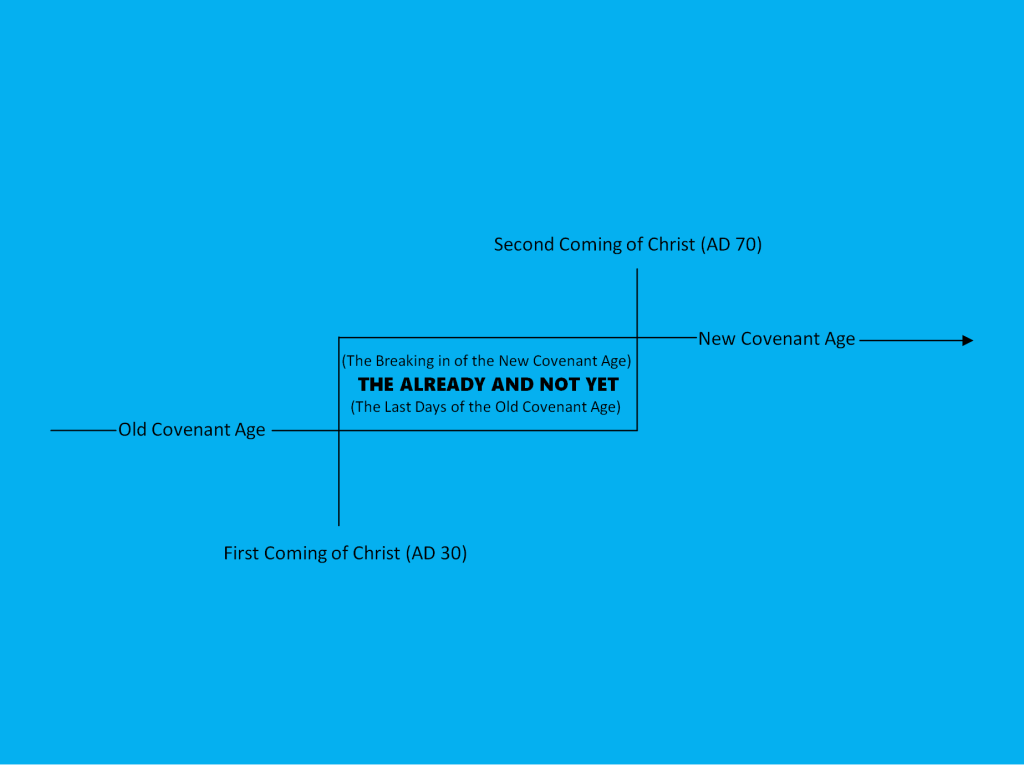
This is a follow up article to the “Jesus came to conquer spiritual death” article so please read that first. Jesus did conquer spiritual death. But there is an apparent contradiction. 1) Paul said that the Ephesian Christians had already been raised from the dead spiritually before 70 AD (he wrote Ephesians in about 60 AD)? Ephesians 2:4 But God, being rich in mercy, because of His great love with which He loved us, 5 even when we were dead in our wrongdoings, made us alive together with Christ (by grace you have been saved), 6 and raised us up with Him, and seated us with Him in the heavenly places in Christ Jesus.” Likewise with the Colossian Christians: Colossians 2:12 having been buried with Him in baptism, in which you were also raised with Him through faith in the working of God, who raised Him from the dead. 13 And when you were dead in your wrongdoings and the uncircumcision of your flesh, He made you alive together with Him, having forgiven us all our wrongdoings.” 2) But the last enemy, spiritual death, was not defeated until 70 AD according to 1 Corinthians 15 (again read the first article if you haven’t). If spiritual death, the last enemy, was not conquered until 70 AD (1 Corinthians 15), then how could the Ephesians and Colossians be raised from the dead spiritually before 70 AD. That is the “already and not yet” of the transition period from 30 AD to 70 AD. This is an excellent article by Alex Polyak on this topic: https://thebiblefulfilled.com/the-already-and-not-yet/. Thebiblefulfilled.com is his site and he has many excellent videos and articles. He also has an excelent book, “The End is Here” (amazon prime) that is very detailed and deals with all the objections to full preterism). Why reinvent the wheel? I can’t explain this any better than Alex did, so I will simply quote directly from his article and say “Amen”.
“The New Testament is filled with New Covenant realities that had already arrived in part (pre-AD 70), but had not yet arrived in full. Consider the following examples:
Salvation had already arrived in part (2 Tim. 1:9, Titus 3:5, 1 Cor. 6:11), but salvation still had to come in full (Rom. 13:10; 1 Pet. 1:5; Heb. 9:28).
Righteousness had already come in part at the cross (1 Pet. 2:24), yet Righteousness would not come in full until “the elements burned with fervent heat” / the new heaven and earth (2 Pet. 3:13; Gal. 5:5).
Redemption had already happened in part (Eph. 1:7), yet Redemption still needed to happen in full (Eph. 1:14; 4:30; Rom. 8:23).
The Adoption had already happened in part (Rom. 8:15), but the Adoption still needed to happen in full (Rom. 8:23)
The Kingdom of God had already come in part (Col. 1:13; Luke 11:20), but the Kingdom of God still needed to come in full (Mark 9:1, Luke 21:31, Rev. 11:15).
The Gathering of Jews and Gentiles into one new body, Christ, had already begun in part (Eph. 2:12–13), but the Gathering would happen in full at the second coming (2 Thess. 2:1–2, Matt. 24:30–31).
The New Jerusalem had arrived in part (John 4:23, Heb. 12:22–24), yet the New Jerusalem still had to come in full (John 4:21, 23; Rev. 21:2).
The (General) Resurrection had already happened in part (John 5:24–25; Eph. 2:1, 2:6; Col. 3:1–2), but the Resurrection still needed to happen in full (John 5:28–29; 1 Thess. 4:16–17; 1 Cor. 15:51–52; Rev. 20:13).
The New Testament is filled with such New Covenant realities that had already arrived in part, but had not yet arrived in full. In fact, some of these events are spoken about in both the present and future tenses in the very same passage, just a few verses apart (see the redemption example above)! Either the New Testament writers/apostles blatantly and repeatedly contradicted each other–and even their own statements–or there was something more going on here. The already/not yet concept explains this nicely. The New Covenant realities had already arrived in part (pre-AD 70)…but they had not yet arrived in full. And when would they arrive in full? When the Old Covenant age of types and shadows[1] completely vanished away, which would happen at Jesus’ second coming in AD 70.[2] Paul captured this sentiment beautifully in saying (in AD 62/63): “He who has begun a good work in you [saints in Philippi] will complete it until the day of Jesus Christ” (Phil. 1:6).
Note: Just about all Christians acknowledge the “already/not yet” concept. However, while preterists[3] contend it refers to the time period between AD 30 and AD 70, futurists[4] argue it refers to the time period between AD 30 and today–a 2000+ year time period–which would negate the purpose for using such a concept in the first place!
The time period between AD 30 (Jesus’ earthly ministry) and AD 70 (the second coming) was a time of transition. The Old Covenant types and shadows were gradually passing away…and the New Covenant realities were gradually being built up. As the writer of Hebrews said in approximately AD 60: “In that He [God] says, ‘A new covenant,’ He has made the first [covenant] obsolete. Now what is becoming obsolete and growing old is ready to vanish away (Heb. 8:13). The Old Covenant was growing old…and the New Covenant was being built up.”
Now a few of my comments. If the futurists are correct, then we are still waiting for Jesus to return to conquer the last enemy death. Maybe they think that means that Jesus will return in the future to conquer physical death, but we have already seen that he did not come to abolish physical death. So if he hasn’t fully conquered spiritual death yet, then our redemption is not complete. I prefer to believe that he fully accomplished what He came to do, and that is to conqer spiritual death completely in my life and in the life of all believers. We are not living in the transition period (30-70 AD), still waiting for the completion of the redemption process in 70 AD. We usually read the New Testament as if we were living in the transition period, taking things written to those living in the transition period as if they were written directly to us.
I’m especially interested in the point Alex made about the kingdom. “The Kingdom of God had already come in part (Col. 1:13; Luke 11:20), but the Kingdom of God still needed to come in full (Mark 9:1, Luke 21:31, Rev. 11:15).” The spiritual kingdom of God, which is the church, was established in Acts 2 in 30 AD. Christians in the transtion period were added to that kingdom. Colossians 1:13 For He rescued us from the domain of darkness, and transferred us to the kingdom of His beloved Son, 14 in whom we have redemption, the forgiveness of sins.” But then Paul told recent converts on his first missionary journey: Acts 14:21 And after they had preached the gospel to that city and had made a good number of disciples, they returned to Lystra, to Iconium, and to Antioch, 22 strengthening the souls of the disciples, encouraging them to continue in the faith, and saying, “It is through many tribulations that we must enter the kingdom of God.” So there was another phase of that kingdom that the believers were going to enter later. Most think that is heaven, but it is referring to the final phase of the establishing of the spiritual kingdom in 70 AD. That is what Jesus predicted in Luke 21:31 So you too, when you see these things happening, recognize that the kingdom of God is near. 32 Truly I say to you, this generation will not pass away until all things take place.” Luke 21 is Jesus’ predictions about the destruction of Jerusalem in 70 AD. If the kingdom had already been established in 30 AD, how could he say that the kingdom would be “near” in 70 AD. B/c the final phase of the establishment of the kingdom would happen in 70 AD at the end of the transition period. The mistake that futurists make is that they are still looking for Jesus to establish a physical kingdom. They think that the final phase will be Jesus returning some day to establish a physical kingdom, but he never planned to establish a physical kingdom. John 18:36 Jesus answered (Pilate), “My kingdom is not of this world. If My kingdom were of this world, My servants would be fighting so that I would not be handed over to the Jews; but as it is, My kingdom is not of this realm.”
Another good point by Alex: “The New Jerusalem had arrived in part (John 4:23, Heb. 12:22–24), yet the New Jerusalem still had to come in full (John 4:21, 23; Rev. 21:2).” Isaiah had predicted the new Jerusalem. Isaiah 65:“For behold, I create new heavens and a new earth; And the former things will not be remembered or come to mind. 18 But be glad and rejoice forever in what I create; For behold, I create Jerusalem for rejoicing And her people for gladness. 19 I will also rejoice in Jerusalem and be glad in My people; And there will no longer be heard in her The voice of weeping and the sound of crying.” Hebrews 12 calls it the “heavenly Jerusalem” and is referring to the church, not to a physical city. Hebrews 12:22 But you have come to Mount Zion and to the city of the living God, the heavenly Jerusalem, and to myriads of angels, 23 to the general assembly and church of the firstborn who are enrolled in heaven.” The new Jerusalem, which is the church, was established in 30 AD in Acts 2. So how does John predict the new Jerusalem coming down to earth at some time in the future after he wrote Revelation in about 65 AD?? Revelation 21:1 Then I saw a new heaven and a new earth; for the first heaven and the first earth passed away, and there is no longer any sea. 2 And I saw the holy city, new Jerusalem, coming down out of heaven from God, prepared as a bride adorned for her husband.” He then adds: 21:9 Then one of the seven angels who had the seven bowls, full of the seven last plagues, came and spoke with me, saying, “Come here, I will show you the bride, the wife of the Lamb.” 10 And he carried me away in the Spirit to a great and high mountain, and showed me the holy city, Jerusalem, coming down out of heaven from God, 11 having the glory of God.” Again, “already and not yet”. There was another phase of the establishment of the new Jerusalem, i.e. the church, that would be completed in 70 AD. Why 70 AD? B/c the book of Revelation was written about 65 AD about things that. were going to happen shortly, soon, near (Revelation 1:1-3; 22:1-10). The book is about the destruction of the old Jerusalem in 70 AD, just as Jesus had predicted in Matthew 24. The final phase of establishing the new Jerusalem would be the removal of the old Jerusalem in 70 AD. So the transition Christians were already in the kingdom but would enter the completed final phase of the kingdom in 70 AD. But still it would be a phase of the spiritual kingdom, the church, and not some physical kingdom. Revelation 21:1-11 says that the new Jerusalem was the “bride of Christ” which of course is the church. The Hebrew writer spoke of this: Hebrews 13:14 For here we do not have a lasting city, but we are seeking the city which is to come.” It was still in the future for the transtion Christians, but not for us. We live after the final phase of the new Jerusalem, the church, was completed in 70 AD.
One last point from Alex: “Redemption had already happened in part (Eph. 1:7), yet Redemption still needed to happen in full (Eph. 1:14; 4:30; Rom. 8:23).” Paul said that the Ephesians had their redemption, the forgiveness of sins. Ephesians 1:7 In Him we have redemption through His blood, the forgiveness of our wrongdoings, according to the riches of His grace 8 which He lavished on us.” But just a few verses later he spoke of a future redemption for them: 1:13 In Him, you also, after listening to the message of truth, the gospel of your salvation—having also believed, you were sealed in Him with the Holy Spirit of the promise, 14 who is a first installment of our inheritance, in regard to the redemption of God’s own possession, to the praise of His glory.” In Luke 21 Jesus predicted the destruction of Jerusalem in 70 AD in Luke 21. He spoke of the redemption of believers in 70 AD: Luke 21:28 But when these things begin to take place, straighten up and lift up your heads, because your redemption is drawing near.” So the redemption process began in Acts 2 in 30 AD when the first 3,000 were baptized for the remission of sins, but the full redemption process was not completed until 70 AD when the last enemy, spiritual death, was destroyed, when they would receive their immortality whether dead or alive (1 Corinthians 15, read the first article). BTW this is what Paul was referring to in Romans 8:23 And not only that, but also we ourselves, having the first fruits of the Spirit, even we ourselves groan within ourselves, waiting eagerly for our adoption as sons and daughters, the redemption of our body.” There was a future redemption for the transition Christians he was writing to even though they had already been redeemed and forgiven of sins. Futurists say this future redemption has not yet happened. They say it will be a future recreation of the earth to its original Garden of Eden state at some future 2nd coming of Jesus and that believers will get some kind of a new physical body to live on earth for a millennium or maybe even forever. But notice Romans 8:18 For I reckon that the sufferings of the present time [are] not worthy [to be compared] with the glory about to be (mello which always means something about to happen) revealed in us.” Their future redemption phase that Paul predicted in 8:23 was about to happen in their lifetime, so it could not refer to something that has not even happened yet some 2,000 years later! That future redemption for them was the final phase of redemption in 70 AD as predicted by Paul and Jesus. That is why the Roman Christians were so eagerly waiting for that final phase of redemption. Romans 8:19 For the eagerly awaiting creation waits for the revealing of the sons and daughters of God.” In 70 AD the identity of the true sons of God would be revealed. It would be shown once for all that God had rejected the unbelieving Jews and that the true sons of God were the Christians. The transition Christians had been told by Jesus and the apostles that all this was going to happen in their lifetime, so that explains why they were so eagerly awaiting their future redemption at 70 AD. I don’t know how much they understood all that would happen in 70 AD, but they were fully expecting it to happen within their lifetime and eagerly waiting for it. Again, we read transition passages as if they were written directly to us, but they weren’t. Romans 8:23 has already been fulfilled. The final redemption of believers has been available since 70 AD. We have that full redemption. When we die, we live on eternally in our spiritual bodies in heaven, wherever that is!
Hopefully this article explains the “already and not yet” concept. Again, I encourage you to read some of Alex Polyak’s articles and watch his videos on thebiblefulfilled.com.
One last note. Compare this transition period to our transition period in choosing a new president. We elect a new president in November but he is inaugurated in January. There is a transition period between the election and the inauguration. The newly elected president is called the president elect until his inauguration. He is the official next president once he is elected. He starts to form his new cabinet during the transition. The things of the old administration begin to b removed during the transition period, and are completely removed by the inauguration. But he doesn’t officially become the president until the inauguration. That’s the same as the transtion period in the New Testament. Jesus began his reign as king in his new spiritual kingdom in 30 AD, but he did not finalize his reign and his kingdom until 70 AD. He began removing all the remnants of the old Jerusalem, the old covenant, the old heavens and earth (i.e. the Jewish system), the old animal sacrifices, the old covenant priesthood, etc. during the last days of the Jewish Age (from 30-70 AD), but those things were completely removed in 70 AD. In about 60 AD, the Hebrew writer wrote: Hebrews 8:13 When He said, “A new covenant,” He has made the first obsolete. But whatever is becoming obsolete and growing old is about to disappear.” That old covenant was about to disappear in 70 AD just a few years after this was predicted. Hebrews 9:8 The Holy Spirit is signifying this, that the way into the holy place has not yet been disclosed while the outer tabernacle is still standing, 9 which is a symbol for the present time.” The final phase of the redemption process was not disclosed (phaneroó: To make manifest, to reveal, to make known, to show openly) until 70 AD after everything in the old covenant was removed. AI: “The verb “phaneroó” is used in the New Testament to describe the act of making something visible or known that was previously hidden or not apparent.” There had to be a lot of confusion about God’s final plan during this transition period. For 2,000 years God’s presence was built around the priesthood, the animal sacrifices, and the temple. But the Paul and others start preaching about a new covenant based on the blood of Jesus. So would believers in Jesus just try to obey both covenants? Should believers in the future do that? Just a lot of confusion. But 70 AD explains it all and brings the plan all together. This is what Paul was referring to in Ephesians 1:9 He made known to us the mystery of His will, according to His good pleasure which He set forth in Him, 10 regarding His plan of the fullness of the times, to bring all things together in Christ, things in the heavens and things on the earth.”
My wife suggested this one. I told her that no one was invisible b/c I can see them. But I really knew what she meant. We always eat our Egg McMuffins at McDonalds every Sunday morning at 7 AM. The one we eat at is especially clean and has great managers. They hire one man to do nothing but clean, mop, pick up trash, etc. He looks to be a very simple fellow although he might be the boss like in the TV show “undercover boss”. But he is there every week, so I don’t think he is the boss! My wife called him one of the “invisible people” that we seldom take notice of. AI: “”Invisible people” can include mentally challenged adults, disadvantaged, unwed mothers on welfare, runaway teens, ex offenders, uneducated and unskilled people, illegal immigrants who clean hotels or do menial jobs, residents in inner city projects, elderly, child orphans or foster children, homeless people or anyone who experiences a sense of being ignored or separated from society as a whole. It can include just ordinary people doing all the little jobs that make life easier for us, people that we take for granted. We might say “thank you” but that’s about it, or we might even tip a little. But often we just get our service from them and ignore them.
Jesus was good at not ignoring the invisible people. The woman at the well. Would you pay much attention to a woman who had been divorced 5 times, was living with someone not her husband, and who was a foreigner that many looked down on in society? Jesus did. He would not even “snuff out a smoldering wick or break a bruised reed”. He would try to bring out the best in everyone. He would draw out what little faith someone had. He would give hope to those struggling with life. We don’t know how that woman at the well ended up, but he gave her hope of a better life if she would accept the living water Jesus had to offer.
Jesus stopped to heal the blind men who were following him, even though they were crying out, making a disturbance. He talked with a sinful woman who anointed his feet at Simon the Pharisee’s house. Simon was appalled that Jesus would even let this sinful woman touch his feet. He laid his hands on and blessed the little children who were brought to him by their parents, even when his disciples were rebuking them for bringing the children. He stopped to heal the woman with the 12 year bleeding issue. He did not rebuke her for secretly touching his garment but praised her faith instead. Jesus took note of the demon possessed man who had been living in the tombs and cast the demon Legion out of him. The whole town nearby ignored this man and just hoped that he would stay in the tombs area. Jesus ate with the tax collector Matthew and his “sinner friends” even though he was criticized greatly for doing so. Jesus stopped to talk to the Syrophoenician woman even though his disciples were begging him to send her away b/c she was crying out loud, annoying them. He then challenged and drew out her faith and case the demon out of her daughter.
So the lesson today is for us to pay attention to the “invisible people” that we see every day. Not just pay attention to them, but seek them out. “To visit the widows and orphans is pure and undefiled religion” according to James 1:28. There are plenty of widows out there who might not need financial help but who would love to have some one come visit and talk to them. Each one has a story to tell. Go to some place like the House of the Harvest here in Huntsville on Saturday morning and you will find plenty of invisible people. Many of them speak Spanish and are delighted when I give them breakfast with a little Spanish conversation. Go offer to help someone who fosters children. They often have many challenges. Think through your own daily experiences and identify those invisible people in your life. Stop and take time to talk to them and help them if possible.
Remember, the invisible people are all very visible to God so don’t ignore them.
Are you always in a hurry? My wife and I have different hiking styles. I attack the trail to finish it as quickly as I can. She stops often, and I have to wait on her. She says that we should stop along the way to, as Jesus said, “consider” the great things God has created in nature. “Consider” in the Greek is katanoeó: To observe, consider, perceive, understand. (AI): “The verb κατανοέω (katanoeó) is used in the New Testament to denote a deep, attentive observation or consideration. It implies more than a casual glance, suggesting a thorough and careful examination or contemplation. This term is often used to encourage believers to pay close attention to spiritual truths or to the example set by others.” I am Type A: Type A individuals as outgoing, ambitious, rigidly organized, highly status-conscious, impatient, anxious, proactive, and concerned with time management. People with Type A personalities are often high-achieving workaholics.” My wife is Type B: People with a type B personality may be easygoing and laid-back, and approach tasks with less urgency. Type B personality traits include patience, flexibility, and an even temper. People with a type B personality may be more prone to procrastination or distraction from a task.” So combining a Type A and a Type B in marriage for 54 has been an experiment of patience with each other’s personality quirks. I won’t go any further in that discussion! I’m sure she has put up with a lot more of my quirks than I have hers. At least I am saying that for this article!
Back to hiking and life in general. Every day in an adventure with God if you will make it: the statement “everyday is an adventure with God if you will make it” suggests that embracing a life of faith and actively seeking God’s presence can transform ordinary days into meaningful and exciting experiences.” That means that we have to “stop along the way” and “consider” everything closely. We should ask, “What might God be doing in this situation? How can God use me in this situation? How can I be kind and help that person I see who needs help?” We can consider nature and everything God has created, and then praise God for creating it all, whether He did it in 6,000 or 6 billion years. Either way, it’s amazing to create everything from nothing with such amazing design. We can consider scriptures, looking more closely at what they meant to the original recipients and how they might apply to us today. Hebrews 2:1 Therefore we must pay much closer attention to what we have heard, lest we drift away from it.” Most of us dont just quit our devotion to Jesus. We just “drift away” slowly, like a small boat drifts out into the lake when it is loosed from the dock. We are so busy with our “worries, riches, and pleasures” (Luke 8:14) that keep us from bearing fruit and spiritual growth. We just drift away from our devotion, praying less, meditating on God and His word less.
So, short and sweet. Make today an adventure with God, considering God’s presence in everything in your life today.
Are you familiar with the book of devotionals by Oswald Chambers (1874-1917)? It is 365 devotionals to be read one at a time for the whole years. Oswald Chambers was talented in poetry, music, and art, but his passion was preaching the gospel. His parents were baptized by. the famed British pastor Charles Spurgeon and were very spiritual. Oswald felt that he heard the Lord call him, “I want you in My service but I can do without you.” He spent a decade in a theological training school and later began his own Bible Training School. He had a very “dry” period of several years until he asked God “for the baptism of the Holy Spirit, whatever that meant”. Jesus’ words in Luke 11:13 changed everything for him. Luke 11:3 If you then, who are evil, know how to give good gifts to your children, how much more will the heavenly Father give the Holy Spirit to those who ask him!” He asked God the Holy Spirit and relied on the Spirit for the rest of his life in his preaching and writing. He married Gertrude Hobbs but he called her “Biddy”. He died from complications from an appendectomy in 1917. After his death, Biddy began putting his writings into some 4 dozen books, most notably My Utmost For His Highest. With her help, Oswald reached more people after death than he had in life.
I remember reading his devotionals in My Utmost For His Highest. It just seemed that each one spoke to my needs for that particular day. Is that just coincidence or the work of the Holy Spirit through Oswald giving me what I need for that day? I don’t know, but it sure seemed to work everyday. Maybe that is why so many people read these same 365 devotionals year and year and they never get old.
I urge you to go online and request the daily devotionals from the book to be sent to your email. I feel the same way about the Spirit using the Bible every day to meet our particular needs for that day. The Bible is not just like our constitution, filled with laws and doctrines, once for all time (and it does have that). All of it was written specifically to someone living in the past: to the Jews, to people living in the first century, to believers in churches, and to individuals like Timothy and Titus. None of it was written directly to us and yet the Spirit can use the Bible to speak to us through the application of what the Spirit wrote to others. Hebrews 4:12 For the word of God is living and active, sharper than any two-edged sword, piercing to the division of soul and of spirit, of joints and of marrow, and discerning the thoughts and intentions of the heart.” The Spirit can apply the word to our lives and needs. So when we read the word, we should be asking, “Ok, I know this was written to someone else, but what would the Sprit want me to take from it in my life today?” My mom wrote several looooooong letters before she died, dealing with some issues. When I read those letters, I can feel her spirit still speaking behind those words. It is the same with the Spirit and the word. When you read the word, try to picture the Spirit (however you might picture the Sprit) watching you reading the word and hoping that you will apply what you read to your daily life and needs.
If you are not into eschatology, you might want to skip this article! If you are interested, what did Jesus mean when he said “I am coming quickly” in Revelation 22:7,12,20?
Jesus said “I am coming quickly” 3 times in Revelation 22 (22:7,12,20). Does that mean “like a speeding bullet” but not necessarily “soon”? Or does it mean “soon” as translated in the ESV and the YLT (Young’s Literal Translation)? Does it mean that, when He does come, it will happen swiftly, but not necessarily soon? The Greek word is tachu: Quickly, swiftly, soon. “The adverb “tachu” is used in the New Testament to convey a sense of immediacy or urgency. It often describes actions that are to be undertaken without delay or events that are expected to occur soon. The term emphasizes the promptness or rapidity of an action or event.” Thayer’s Greek Lexicon: ταχύ(neuter of the adjective ταχύς), adverb (from Pindar down), quickly, speedily (without delay): Matthew 5:25; Matthew 28:7; Mark 16:8 Rec.; Luke 15:22 L Tr brackets WH; John 11:29; ἔρχεσθαι, Revelation 2:5 Rec.bez elz, ; ; forthwith, i. e. while in the use of my name he is performing mighty works, Mark 9:39.” An example of its use in Matthew 22:7 And go quickly and tell His disciples that He has risen from the dead; and behold, He is going ahead of you to Galilee. There you will see Him; behold, I have told you.” 8 And they left the tomb quickly with fear and great joy, and ran to report to His disciples.” So the use here is swiftly but also without delay. It is used two other times in Revelation: 2:16 Therefore repent. If not, I will come to you soon and war against them with the sword of my mouth. (ESV) 3:10 `Because thou didst keep the word of my endurance, I also will keep thee from the hour of the trial that is about to (mello in the New Testament always means something about to happen) come upon all the world, to try those dwelling upon the earth. (YLT) 11 I am coming soon. Hold fast what you have, so that no one may seize your crown.” (ESV). In 3:10,11 the coming “soon” is tied to things “about to happen”, so the context shows that “soon” is the best interpretation of tachu in 3:11.
μέλλω (melló) (melló: to be about to, to intend, to be destined) is used several times in the messages to the seven churches. 1:19; 2:10; 3:2,10, 16. It is obvious that the meaning is things about to happen to the 7 churches. “The Greek verb “μέλλω” (melló) always means “about to happen” in the New Testament. It is often mistranslated “certainly or surely or just is to happen” but that is not how it is used in the New Testament. It always means “about to happen”. Young’s Literal Translation does a good job of always translating mello correctly as “about to”.
The 2nd coming is part of the predictions of Revelation. Revelation 1:7 Behold, He is coming with the clouds, and every eye will see Him, even those who pierced Him; and all the tribes of the earth will mourn over Him. So it is to be. Amen.” This is the same language as Matthew 24:30 And then the sign of the Son of Man will appear in the sky, and then all the tribes of the earth will mourn, and they will see the Son of Man coming on the clouds of the sky with power and great glory. ” That coming in Matthew 24 had to happen within that generation. 24:34 Truly I say to you, this generation will not pass away until all these things take place.” (genea in the New Testament always means a 40 year period or the people living in a 40 year period, just as we use it in the “baby boomers’ generation”). So what is the context of Revelation 1:7? The context is things that will happen shortly or soon. Revelation 1:1 The Revelation of Jesus Christ, which God gave Him to show to His bond-servants, the things which must soon (tachos: Speed, swiftness, quickness: Strongs “From the same as tachus; a brief space (of time), i.e. (with en prefixed) in haste — + quickly, + shortly, + speedily.”) take place. Tachos is the same word in Revelation 22:6 And he said to me, “These words are faithful and true”; and the Lord, the God of the spirits of the prophets, sent His angel to show His bond-servants the things which must soon take place.Revelation 1:3 Blessed is the one who reads, and those who hear the words of the prophecy and keep the things which are written in it; for the time is near.” The Greek for “near” is eggus: Near, close, at hand. “The Greek word “ἐγγύς” (eggus) is used to denote proximity in terms of space, time, or relationship. It conveys the idea of something being near or imminent. In the New Testament, it is often used to describe the nearness of the Kingdom of God, the coming of Christ, or the proximity of a person or event.” It is translated 29 out of 31 times used as “near”, so the context of Revelation is things that are “imminent”. Eggus is the word used in Revelation 22:10 And he *said to me, “Do not seal up the words of the prophecy of this book, for the time is near.” Just two verses after that is 22:12 “Behold, I am coming soon, bringing my recompense with me, to repay each one for what he has done.” There is that tachu word that means quickly, swiftly, soon, but the ESV translates it “soon” because it is predicting something that is “near” (22:10). The same with Revelation 22:20 He who testifies to these things says, “Surely I am coming soon.” Amen. Come, Lord Jesus!” One other thing. In 22:10, John is told “do not seal up the words of the prophecy of this book, for the time is near.” Why is he told not to seal up the prophecies? It, again, is b/c their fulfillment is “near“. How could that be thousands of years later? Daniel was told to seal up his predictions, and his predictions would happen about 600 years after he made them. So to not seal up the predictions of Revelation would have to mean they were going to happen at least in the next few hundred years, and not thousands of years. But “near” makes it mean soon after Revelation was written.
Hopefully, that is enough Greek word studies and Revelation context (probably overkill for most readers). But it should be apparent (at least I think it is) that the events predicted in the book of Revelation were “about to happen”, “soon”, “shortly”, “near”. Not just some of the events, but all of them. The book begins and ends with the same words: “the time is near”, these things are going to happen “soon”. That would include the 2nd coming which be both swiftly, soon, without delay: usually translated “quickly” but “soon would be the better translation as in the ESV. Those who believe that the 2nd coming “quickly” in Revelation 22:7,12,20 does not mean “soon” are those who do not believe that John is predicting that the 2nd coming was “near” and would happen “soon”. So they take “quickly” to mean just “swiftly” but not necessarily “soon”, but that is not the context of the 2nd coming in Revelation. So, is John predicting that the 2nd coming was soon, near? If so, could he be referring to Jesus’ coming in judgment on the Jews in 70 AD, just as Jesus predicted in Matthew 24:30-34, and not to some coming that would be thousands of years later? If he was predicting that Jesus’ 2nd coming would be soon, near and then it didn’t happen soon or near, then would that make him mistaken or a false prophet?
Here is Peyton Synthetic Gospel Harmony for Jesus praying in the Garden of Gethsemane. I like Peyton b/c it blends all 3 accounts of his prayer into one.
FRIDAY
Jesus Prays in Gethsemane – Before Dawn (Mk 14:32-42; Mt 26:36-46; Lk 22:39-46; Jn 18:1)
Lk 22:39 Then Jesus went out and made his way, as he customarily did, Mt 26:36 to a place called Gethsemane, Jn 18:1 across the Kidron Valley. There was an orchard there, and he and his disciples went into it. Lk 22:40 When he came to the place, he said to them, “Sit here and pray that you will not fall into temptation Mt 26:36 while I go over there and pray.” 37 He took with him Peter, James, and John, the two sons of Zebedee, and became anguished and distressed. 38 Then he said to them, “My soul is deeply grieved, even to the point of death. Remain here and stay awake with me.” Mk 14:35 Going a little farther, about a stone’s throw, he threw himself down with his face to the ground and prayed that if it were possible the hour would pass from him. 36 He said, “Abba, Father, all things are possible for you. Lk 22:42 If you are willing, take this cup away from me. Yet not my will but yours be done.” 43 [Then an angel from heaven appeared to him and strengthened him. 44 And in his anguish he prayed more earnestly, and his sweat was like drops of blood falling to the ground 45 When he got up from prayer, he came to the disciples and found them sleeping, exhausted from grief. Mk 14:37 He said to Peter, “Simon, why are you sleeping? Couldn’t you stay awake with me for one hour? 38 Get up, stay awake and pray that you will not fall into temptation. The spirit is willing, but the flesh is weak.” Mt 26:42 He went away a second time and prayed the same thing, “My Father, if this cup cannot be taken away unless I drink it, your will must be done.” Mk 14:40 When he came again he found them sleeping; they could not keep their eyes open. And they did not know what to tell him. Mt 26:44 So leaving them again, he went away and prayed for the third time, saying the same thing once more. 45 Then he came to the disciples a third time and said to them, “Are you still sleeping and resting? Enough of that! Look, the hour is approaching and the Son of Man is betrayed into the hands of sinners. 46 Get up, let us go. Look! My betrayer is approaching!”
Notice the words that describe Jesus’ mental and emotional state in the Garden. 1) Mt 26:37 “Anguished” (lupeó: To grieve, to cause sorrow, to distress). 2) “distressed” (adémoneó: To be distressed, troubled, or deeply grieved). 3) Mt 26:38 “Deeply grieved” (perilupos: Deeply distressed, exceedingly sorrowful, very sad). perílypos (an adjective, derived from 4012/perí, “encompassing” and 3077/lýpē, “sorrow”) – properly, being sorrowful “all-around,” i.e. engulfed in sorrow. AI: “The term “perilupos” is used to describe a state of profound emotional distress or sorrow. It conveys a sense of being overwhelmed by grief or sadness, often in response to a significant or impending event. In the New Testament, it is used to express the deep emotional turmoil experienced by individuals in moments of great trial or anticipation of suffering.” In other words, not just grieved (lupeo in 26:37) but overwhelmed with grief, perilupos 26:38). 4) Mt 26:38 “to the point of death”. What does that mean? “He confesses a deeply troubled state of mind. “Jesus describes this as being so distressed that He almost feels the emotion would kill Him.” Have you ever been so troubled, depressed, grieved that you just felt like you couldn’t go one, you couldn’t face life any longer? Jesus felt that. 5) Lk 22:44 “sweat like drops of blood falling to the ground”. 2 possible meanings for this: “Hematohidrosis: This condition occurs when blood vessels around the sweat glands rupture, allowing blood to mix with sweat. It can be caused by extreme distress or bleeding disorders. Simile: The phrase “like drops of blood” could be a simile to compare the large, heavy drops of sweat to blood dripping from a wound.” Since it says “like”, I think it means a simile.
So, was Jesus depressed? It would seem so. He is “overwhelmed” with grief which is a symptom of depression. He feels that his grief and anxiety is going to kill him. He is sweating thick drops of sweat, which is a sign of a panic attack for me (I have awakened from a panic attack, sweating profusely even though the room temperature is cool). Is depression a lack of faith? Had Jesus lost his faith in the Father’s plan? Of course not. Some might feel guilt b/c they feel that their depression is due to their lack of faith. That just adds more stress to their depression. Depression is just a fact of our human weakness that we all endure at one time or another, some for longer periods than others.
So how did Jesus handle his depression? He prayed. Mk 14:35 Going a little farther, about a stone’s throw, he threw himself down with his face to the ground and prayed that if it were possible the hour would pass from him. 36 He said, “Abba, Father, all things are possible for you. Lk 22:42 If you are willing, take this cup away from me. Yet not my will but yours be done.43 Then an angel from heaven appeared to him and strengthened him. 44 And in his anguish he prayed more earnestly.” He prayed this same prayer 3 times. Did he really think that it was “possible” that his impending hour of suffering and death would pass from him and not happen? He knew that his fate, dying on the cross, was imminent, but He knew it had to happen to do the Father’s will and save sinners. After his triumphal entry into Jerusalem, John 12:27 “Now is my soul troubled. And what shall I say? ‘Father, save me from this hour’? But for this purpose I have come to this hour. 28 Father, glorify your name.” I think his mind knew that it was not possible at the last moment to change God’s plan for him to die, but his fleshly spirit was so overwhelmed that he asked the Father if there was any other way. He is so distressed that he even reminds the Father “all things are possible for you”. But then he adds, “yet not my will but yours be done”. He is totally ready to accept his fate, suffer, and die. I think he knew there was no other way.
When we pray for a loved one with cancer, we know that all things are possible with God. He can use doctors and medicine to reverse a death sentence, or He can just reverse it mysteriously without medicine. So our grief causes us to pray for healing. We pray with faith that God can heal. We don’t pray with faith that God will heal. We know, as Jesus did, that for whatever reason God might not let the fate of our loved one pass: he/she will die from the cancer. We should not feel guilty if our loved one dies, thinking that he/she died b/c of our lack of faith or lack of prayer. I have heard some expressing that thought when we had a loved one die and it devastating to the survivors, causing them to live with unnecessary guilt for years afterward. We lost a loved one in a car accident, and as she was in intensive care I was asked, “we prayed and we believe so she will be okay, right?” We lost another loved one in intensive care and I heard someone say that if we prayed hard enough and believed enough that the loved one would live. She did not live and I wonder how that statement affected others’ faith in God.
We just have to pray, believing that God might heal, but we must be ready to accept whatever the will of the Father is. Not some predetermined Calvinistic fate, but whatever the Father feels is best. Then we just leave the outcome to God. We don’t lose any faith in God is he doesn’t heal. We accept it and move on. If we pray like Jesus did, then the Father can say “yes” to all of our prayers. We pray, “heal my loved one, but if not, do what is best”. The Father can say, “yes, I wil do that”: even if our loved one dies, He has answered “yes” to our prayer. If we just pray, “Father heal my loved one”, then He can’t say yes. He can say “I hear your prayer, but “no”, I will not heal your loved one.”
We can learn so much from the prayer life of Jesus. Here is a great site that lists all the verses (and you can click on the verses for each time of prayer listed) in which Jesus prayed: https://jesusalive.cc/times-jesus-prayed/. Here is a great summary from the article by Steve Shirley:
“The Bible tells us in (1 Th 5:17) to “pray without ceasing.” While I don’t believe this literally means to never stop praying, I would say that Jesus probably came closer to never stopping than any person who has ever lived on this planet. He was continually in a prayer mode. He is shown to pray: alone (Mt 14:23)(Mk 1:35)(Lk 9:18)(Lk 22:39-41), in public (Jn 11:41-42)(Jn 12:27-30), before meals (Mt 26:26)(Mk 8:6)(Lk 24:30)(Jn 6:11), before important decisions (Lk 6:12-13), before healing (Mk 7:34-35), after healing (Lk 5:16), to do the Father’s will (Mt 26:36-44), among other things. He also taught on the importance of prayer (Mt 21:22)(Mk 11:24-26)(Mt 7:7-11)(Lk 11:9-13)(Jn 14:13-14)(Jn 15:7,16)(Jn 16:23-24)(Mt 5:44)(Lk 6:27-28)(Mt 6:5-15: including the Lord’s Prayer)(Lk 11:2-4)(Mt 18:19-20). If you take all of the places that show Jesus praying, you will have a PERFECT outline of how to pray (check out Jn 17).” Go to the article and read this summary b/c you can click on the verses and see each verse for each category. You can’t do that from reading the summary in this blog article. The author lists 25 places, times, and occasions where Jesus prayed and you can click on the verses for each one.
I don’t know about you, but my prayer life is weak and I hope this article will help me be more prayerful.
So, add “prayer” to “heal to deal with depression.”
The prophet Elijah had just achieved a maor victory over the wicked King Ahab and his wicked wife, Queen Jezebel. On Mt. Carmel, he had just defeated the 400 prophets of Baal and the 450 prophets of Asherah. He should feel quite victorious, yes? No. Instead he goes into depression, even what would be considered suicidal depression. The mental health questionaires always ask, “did you ever consider killing yourself when you were depressed?” Eliah did. After his victory, he heard that Jezebel had sworn to kill him the next day. There would probably be many of her soldiers tracking him down 24/7. 1 Kings 19:3 Then he was afraid, and he arose and ran for his life and came to Beersheba, which belongs to Judah, and left his servant there. 4 But he himself went a day’s journey into the wilderness and came and sat down under a broom tree. And he asked that he might die, saying, “It is enough; now, O Lord, take away my life, for I am no better than my fathers.” That is suicidal thinking. An angel gave him food and sent him on a 40 day journey to Mt. Sinai. 1 Kings 19:9 There he came to a cave and lodged in it. And behold, the word of the Lord came to him, and he said to him, “What are you doing here, Elijah?” 10 He said, “I have been very jealous for the Lord, the God of hosts. For the people of Israel have forsaken your covenant, thrown down your altars, and killed your prophets with the sword, and I, even I only, am left, and they seek my life, to take it away.” “I have accomplished nothing, my life is a failure.”
What happens next is interesting. 1 Kings 19:11 And he said, “Go out and stand on the mount before the Lord.” And behold, the Lord passed by, and a great and strong wind tore the mountains and broke in pieces the rocks before the Lord, but the Lord was not in the wind. And after the wind an earthquake, but the Lord was not in the earthquake. 12 And after the earthquake a fire, but the Lord was not in the fire. And after the fire the sound of a low whisper. ” In other words: The Lord doesn’t always punish our enemies when and how we want him to. He doesn’t always remove our enemies when we want him to. It would be several years before God punishes Jezebel and the dogs eat almost all of her body and lick up her blood. Sometimes God has a more gentle way of dealing with our depressing circumstances, so we just need to trust him and be patient.
1 Kings 19:13 And when Elijah heard it, he wrapped his face in his cloak and went out and stood at the entrance of the cave. And behold, there came a voice to him and said, “What are you doing here, Elijah?” 14 He said, “I have been very jealous for the Lord, the God of hosts. For the people of Israel have forsaken your covenant, thrown down your altars, and killed your prophets with the sword, and I, even I only, am left, and they seek my life, to take it away.” Apparently Elijah didn’t get the lesson with the gentle breeze whisper! God asked him the same question that he did before the breeze. God was not asking that for His sake. He was asking that to challenge Elijah’s depression thinking. In other words: “Elijah, why are you even here? You should not even be here, several days away from the action. You should not be here feeling sorry for yourself.” Self pity is a big part of depression. You get the “victim mentality. You complain a lot. You dwell on things that have happened to you or past mistakes. You look at others who are doing better than you. You just feel sorry for yourself. Why me? Have you ever felt that? Self pity is a symptom of depression or can lead to depression. Of course, if you look at how many others are suffering then you won’t feel so sorry for yourself.
So what did God tell him to do to deal with his self pity and suicidal depression? 1 Kings 19:15 And the Lord said to him, “Go, return on your way to the wilderness of Damascus. And when you arrive, you shall anoint Hazael to be king over Syria. 16 And Jehu the son of Nimshi you shall anoint to be king over Israel, and Elisha the son of Shaphat of Abel-meholah you shall anoint to be prophet in your place. 17 And the one who escapes from the sword of Hazael shall Jehu put to death, and the one who escapes from the sword of Jehu shall Elisha put to death. 18 Yet I will leave seven thousand in Israel, all the knees that have not bowed to Baal, and every mouth that has not kissed him.” In other words: “Quit feeling sorry for yourself. Get back to work using your gift to do what I have commissioned you to do, i.e. to do the work of a prophet. I have work for you to do and this self pity and depression is hindering that work. Go anoint Hazael to be king over Syria: I will use him to punish the idolatry of Israel (and God did that later). Go anoint Jehu to wipe out the household and descendants to Ahab and Jezebel, which he did later. Go anoint Elisha to take your place later, and he will pronounce even more punishments on Israel for their idolatry. But be patient. The strong wind, earthquake, and fire will come, but only when I am ready and how I dictate it to happen. You just get back to work using your prophetic gift.” Elijah apparently immediately did what God said. Maybe it helped him deal with his depression and self pity.
So in part 1, we got lessons from the depression of Job. What is the main takeaway from the depression of Elijah. To me it is this: Quit feeling sorry for yourself. Get up and go use your gift to help others. 1 Peter 4:8 Above all, keep loving one another earnestly, since love covers a multitude of sins. 9 Show hospitality to one another without grumbling. 10 As each has received a gift, use it to serve one another, as good stewards of God’s varied grace: 11 whoever speaks, as one who speaks oracles of God; whoever serves, as one who serves by the strength that God supplies—in order that in everything God may be glorified through Jesus Christ. To him belong glory and dominion forever and ever. Amen.” 2 main types of gifts: teaching and serving. Using our gifts will help get our minds off our depression and make us feel useful. The world is full of opportunities for us to use our gifts. Find something that gives you purpose and perspective, that gives you a reason to live and gives meaning to your existence.
So, from Job: trust in God that he knows what’s best and humbly accept depressing circumstances.
From Elijah: quit feeling sorry for yourself and go use your gift to serve others.
From Paul: Keep your eyes on eternal life and whatever you face here on earth will be light and momentary in comparison with our eternal weight of glory.
When you have done all that, go get some good home made banana pudding, a good cup of coffee, and make the best of every day that you have left. At least, that’s what I do!
I was a little shocked at the severity of Job’s depression. Someone has said that Job 30 is a classical definition of the symptoms of depression. Justing quoting one section from that chapter.
Job30:16 “And now my soul is poured out within me; days of affliction have taken hold of me. 17 The night racks my bones, and the pain that gnaws me takes no rest. 18 With great force my garment is disfigured; it binds me about like the collar of my tunic. 19 God has cast me into the mire, and I have become like dust and ashes. 20 I cry to you for help and you do not answer me; I stand, and you only look at me. 21 You have turned cruel to me; with the might of your hand you persecute me. 22 You lift me up on the wind; you make me ride on it, and you toss me about in the roar of the storm. 23 For I know that you will bring me to death and to the house appointed for all living.
Physical and emotional pain, crying, hopeless feeling, physical exhaustion, sleeplessness, anger at God, self pity, loneliness, feeling of isolation. It’s all there. He had already wished that he had never been born or that he had been born dead in chapter 3 when his trials began. His 3 “friends” say that his suffering must be as a result of his sins. He argues that he has not committed sin and has always helped the needy, not lusted, etc. He wants an umpire to settle this dispute with God. He challenges God’s fairness. We don’t know how long Job sat with boils from head to foot, but by chapter 30 it seems that he is in full blown depression. A 4th friend, Elihu, speaks for the first time. He rebukes the 3 other men for not giving Job satisfactory advice, and he rebukes Job for his self righteousness and for challenging God.
Finally, for the first time in the book, the Lord speaks.
Job 38:1 Then the Lord answered Job out of the whirlwind and said:2 “Who is this that darkens counsel by words without knowledge?3 Dress for action like a man; I will question you, and you make it known to me.” In other words: “Man up. If you think you can challenge God, I have some questions for you. Where were you when I created all these wondrous things in nature?” 40:1 And the Lord said to Job: 2 “Shall a faultfinder contend with the Almighty? He who argues with God, let him answer it.” In other words: “Job, who do you think you are than you can challenge Me and question My character and fairness.”
Job 40:3 Then Job answered the Lord and said: 4 “Behold, I am of small account; what shall I answer you? I lay my hand on my mouth. 5 I have spoken once, and I will not answer; twice, but I will proceed no further.” In other words: “Shut my mouth. I will never challenge you again, God.”
God is not through with him. Job 40:6 Then the Lord answered Job out of the whirlwind and said:7 “Dress for action like a man; I will question you, and you make it known to me. 8 Will you even put me in the wrong? Will you condemn me that you may be in the right?” In other words: “Man up. I’ve got some more questions for you.”
Job has had enough! Job 42:Then Job answered the Lord and said: 2 “I know that you can do all things, and that no purpose of yours can be thwarted. 3 ‘Who is this that hides counsel without knowledge?’ Therefore I have uttered what I did not understand, things too wonderful for me, which I did not know. 4 ‘Hear, and I will speak; I will question you, and you make it known to me.’ 5 I had heard of you by the hearing of the ear, but now my eye sees you; 6 therefore I despise myself, and repent in dust and ashes.” In other words: “I repent of my attitude, my challenging you, God. I will humbly accept whatever you do to me and just trust you even if I don’t know why You are doing what You are doing.”
I don’t claim to be a counselor for depression, but at least my advice is free! I always told them when I was preaching every Sunday for a congregation of 500, only getting part time pay since I was full time in Christian education, “My preaching is not some super speaker, but at least it’s cheap!”
The next article on depression will be Elijah. God’s rebuke of Elijah in his depression will add to “how to deal with depression”. But what do we get from God’s rebuke of Job in his depression? Simple: “You just need to recognize that I am the Creator and Sustainer of all things and trust me whether you know why I am doing what I am doing or not. Just humbly recognize that I am God and trust Me that I know what’s best.”
Counselors give great advice on how to deal with depression that should be included here. From AI:
Seek Professional Help:
Consult a healthcare professional, such as a doctor or therapist, for a proper diagnosis and treatment plan.
Psychotherapy, such as cognitive behavioral therapy (CBT) or interpersonal therapy (IPT), can help individuals identify and change negative thought patterns and behaviors.
Antidepressant medications may be prescribed in some cases to improve mood and reduce symptoms.
Lifestyle Changes:
Engage in regular exercise, even if it’s just a short walk or bike ride.
Get enough sleep and maintain a healthy diet.
Avoid alcohol and drugs, as they can worsen symptoms.
Spend time with supportive friends and family members.
Self-Help Techniques:
Practice mindfulness and meditation to reduce stress and improve emotional regulation.
Engage in activities that bring joy, such as hobbies, reading, or spending time in nature.
Set small, achievable goals and celebrate your successes.
Keep a journal to track your thoughts and feelings, and identify triggers that may worsen depression.
That’s great thorough advice, so follow it. But Christian counseling adds another dimension, the spiritual. The very first step in dealing with depression is to simply trust God that He knows what is best. Just humbly accept whatever it is that depresses you. Trust God that He has something really good for you in the future that will make your depressing circumstances seem like nothing one day, sooner or later.
It might even be that God will reward your trust in this life, as he did with Job. 42:12 And the Lord blessed the latter days of Job more than his beginning. And he had 14,000 sheep, 6,000 camels, 1,000 yoke of oxen, and 1,000 female donkeys. 13 He had also seven sons and three daughters. 14 And he called the name of the first daughter Jemimah, and the name of the second Keziah, and the name of the third Keren-happuch. 15 And in all the land there were no women so beautiful as Job’s daughters. And their father gave them an inheritance among their brothers. 16 And after this Job lived 140 years, and saw his sons, and his sons’ sons, four generations. 17 And Job died, an old man, and full of days.”
But for most, that reward might be eternal life with the Father, Jesus, and loved ones. Jesus had jsut finished telling his apostles that riches would not be the reward for following Him. Peter then asked, “We have left everything to follow you. If the reward is not riches, what’s in it for us?” Jesus answered: Matthew 19:29 And everyone who has left houses or brothers or sisters or father or mother or children or lands, for my name’s sake, will receive a hundredfold and will inherit eternal life.”
So, when depressed, keep your eyes on eternal life after death. Whatever it is that depresses you will seem like nothing in eternity, so why are you allowing it to take away your joy of living? Just trust God and accept your depressing circumstances. Don’t question God or spend time asking “Why?” You might even be able just to laugh at it all and say, “Thanks God. This just keeps me humble and makes me appreciate heaven even more.” And then go do all those tips the counsellors gave you.
Paul’s suffered so much for Christ, but listen to his perspective on suffering. 2 Corinthians 4:16 So we do not lose heart. Though our outer self is wasting away, our inner self is being renewed day by day. 17 For this light momentary affliction is preparing for us an eternal weight of glory beyond all comparison, 18 as we look not to the things that are seen but to the things that are unseen. For the things that are seen are transient, but the things that are unseen are eternal.”
He calls his suffering “light momentary affliction?” Listen to what that “light” affliction was: 2 Corinthians 11:23 Are they servants of Christ? I am a better one—I am talking like a madman—with far greater labors, far more imprisonments, with countless beatings, and often near death. 24 Five times I received at the hands of the Jews the forty lashes less one. 25 Three times I was beaten with rods. Once I was stoned. Three times I was shipwrecked; a night and a day I was adrift at sea; 26 on frequent journeys, in danger from rivers, danger from robbers, danger from my own people, danger from Gentiles, danger in the city, danger in the wilderness, danger at sea, danger from false brothers; 27 in toil and hardship, through many a sleepless night, in hunger and thirst, often without food, in cold and exposure. 28 And, apart from other things, there is the daily pressure on me of my anxiety for all the churches. 29 Who is weak, and I am not weak? Who is made to fall, and I am not indignant?” I bet your depressing circumstances pale compared to what Paul suffered, but he was not depressed.
Why not? Because he knew his suffering was only “momentary”. But they lasted a lot longer than one moment of pain, didn’t they? Yes, his suffering lasted about 30 years from his conversion to his death by beheading at the hands of Nero. But Paul calls them “momentary” b/c he kept his eyes on his eternal reward in heaven. He viewed his suffering as “preparing an eternal weight in glory beyond all comparison”. In other words: “what I am suffering here is nothing compared to my eternal reward.” So that’s the key. Don’t let your mind dwell on your depressing circumstances. Make you mind look with faith to the distant future, eternal life in heaven. Block out all other thoughts and think about heaven. An atheiest can’t do that. We can. Even facing death, 1 Thessalonians 4:13 But we do not want you to be uninformed, brothers, about those who are asleep, that you may not grieve as others do who have no hope.” We have the hope of eternal life, which God promised, and God cannot lie (Titus 1:2).
I hope this helps if you suffer from depression. Trust God. Keep your eyes on eternal life in heaven. Enjoy the day as best as you can.
Please read the last article on the all sufficiency of Christ (Colossians chapters 1 and 2). Summary:Jesus is all sufficient for your forgiveness and guidance. He is the Son of God, the very icon (exact image) of the Father. He is the Creator and all things hold together by His power. He is your redemption from sin and reconciliation with God. He is the head of the church and directs every thought, word, and deed. Don’t let anyone tell you that simple faith and obedience is not enough, that you need to focus on sectarian rules or new revelation or asceticism or visions or intellectual doctrinal debates or charisms of some latter day prophet or legalism withdrawing fellowship with other believers. You don’t need those things to be “spiritual”, to be more “complete or mature” as a Christian.
So, Christ is all sufficient but what does that mean in practical daily Christian living? Since he is all sufficient, do we even need to try to quit sinning? Will the all sufficient grace of Jesus save us no matter what we do (universalism)? Do we need to do good works since salvation can’t be earned by good works? Are there any rules to keep? Are there any doctrines essential to salvation and fellowship with other Christians?
I think the Colossian letter answers all those questions. Remember, Paul is writing to house churches in Colossae who don’t have a completed New Testament. Some false teachers are trying to persuade them to focus on some new philosophy about the nature of Christ or some food laws of the Old Testament or some visions they have seen. After discussing the all sufficiency of Christ in chapters 1 and 2, what will Paul tell them to focus on.
1:4 Continue “your faith in Christ Jesus and the love which you have for all the saints.”
1:10 Walk in a manner worthy of the Lord, to please Him in all respects, bearing fruit in every good work and increasing in the knowledge of God.”
1:23 Continue in the faith firmly established and steadfast, and not shifting from the hope of the gospel that you have heard.”
3:1 Therefore, if you have been raised with Christ, keep seeking the things that are above, where Christ is, seated at the right hand of God. 2 Set your minds on the things that are above, not on the things that are on earth.” Don’t focus of all that stuff the false teachers are pushing at you.
3:5-11 Put off the old sinful self and all your old sinful thoughts, deeds, and practices. Sexual immorality, impurity, passion, evil desire, and greed, which amounts to idolatry, anger, wrath, malice, slander, and obscene speech from your mouth. lying. That list covers it all, doesn’t it? Look at each one of those and ask yourself, “How hard am I really tryin to no commit those sins?”
3:10-13 Put on the new self that is constantly being “renewed”. The Greek for renewed is anakainoó: To renew, to make new again. (AI): “The verb ἀνακαινόω (anakainoó) is used in the New Testament to describe the process of renewal or making something new again. It conveys the idea of restoration and transformation, often in a spiritual or moral sense. This renewal is typically associated with the inner self or mind, indicating a profound change that aligns with God’s will and purposes.” Put on a heart of compassion, kindness, humility, gentleness, and patience; 13 bearing with one another, and forgiving each other just as Christ forgives you, love, which is the perfect bond of unity, peace, be thankful. Let the word richly dwell within you b/c that is the main way that the Spirit renews your mind every day to put off the old and put on the new. It is a constant battle of the mind 24/7 to do that, but you have to stay in the word. Look at that list to put on. Which ones do you need to ask the Spirit to help you practice more? Ephesians expresses this same “put off the old, put on the new renewal of the mind: Ephesians 4:22 to put off your old self, which belongs to your former manner of life and is corrupt through deceitful desires, 23 and to be renewed in the spirit of your minds, 24 and to put on the new self, created after the likeness of God in true righteousness and holiness.” A great summary verse: Colossians 3:17 Whatever you do in word or deed, do everything in the name of the Lord Jesus, giving thanks through Him to God the Father.”
3:18-4:1. Be a submissive wife, loving husband, obedience child, gentle father, obedient slave, fair slave master. It should all start in the home!
4:2-4. Be devoted to prayer with thanksgiving. 3 praying at the same time for us as well, that God will open up to us a door for the word, so that we may proclaim the mystery of Christ. Pray for the spread of the gospel throughout the world. Pray and support organizations like EEM that print and distribute Bibles in many countries in many languages.
4:5-6. Make the most of every opportunity that you have to influence outsiders, non Christians. 6 Your speech must always be with grace, as though seasoned with salt, so that you will know how you should respond to each person.” That would include handling conflicts, not returning insult for insult, defending the faith ready to give an answer to everyone who asks you about the hope of eternal life that you have, and just being kind to others in your speech, encouraging others. That would include: Ephesians 5:4 Let there be no filthiness nor foolish talk nor crude joking, which are out of place, but instead let there be thanksgiving.”
4:7-18 Share greetings with fellow believers and co-workers in the kingdom. Paul mentions several, including John Mark and Luike. Special mention of Epaphras who started and pastored the church at Coossae but was in Rome when Paul wrote the letter: 4:12 Epaphras, who is one of your own, a bond-servant of Christ Jesus, sends you his greetings, always striving earnestly for you in his prayers, that you may stand mature and fully assured in all the will of God. 13 For I testify for him that he has a deep concern for you and for those who are in Laodicea and Hierapolis.” Also share this letter with the Laodiceans and read the letter I wrote to them.
In closing, remember that Paul told how they became Christians and how they were saved. Colossians 2:9 For in Him all the fullness of Deity dwells in bodily form, 10 and in Him you have been made complete, and He is the head over every ruler and authority; 11 and in Him you were also circumcised with a circumcision performed without hands, in the removal of the body of the flesh by the circumcision of Christ, 12 having been buried with Him in baptism, in which you were also raised with Him through faith in the working of God, who raised Him from the dead. 13 And when you were dead in your wrongdoings and the uncircumcision of your flesh, He made you alive together with Him, having forgiven us all our wrongdoings, 14 having canceled the certificate of debt consisting of decrees against us, which was hostile to us; and He has taken it out of the way, having nailed it to the cross. 15 When He had disarmed the rulers and authorities, He made a public display of them, having triumphed over them through Him.“
I’m still convinced that one must believe, repent, confess, and be baptized for the remission of sins (Acts 2:38; 22:16). These verses teach that baptism is the final “step”, being buried (the word baptizo means immersion) in the water and then raised up from the water. Still saved by grace through faith, but baptism is part of that initial saving faith. Similar to Namaan being told to dip in the River Jordan 7 times to be healed of leprosy. The water or the number of dips didn’t save him, it was the power of God. But he was given “conditions” to meet to be cleansed and he would not have been cleansed if he did not obey those conditions. The same with baptism. It’s not the water. It’s not a “work” by which we earn salvation. It’s simply a condition of faith that must be met. We were dead in sin, but after baptism we were raised to walk in newness of life (Romans 6:1-6). Baptism is not just something you do to join a church. It is a critical step in being saved by grace through faith.
So, if you are not a Christian, please do so. If you have not been baptized, please do so. Don’t let anyone get your focus off the all sufficiency of Jesus and what simple Christian living is.
Do you see why I made the title?If Colossians was the only book in the New Testament that you had, it would be more than adequate for you to believe in the all sufficiency of Christ and how you should live a a believer.
CHRIST IS ALL YOU NEED AND COLOSSIANS IS ALL YOU NEED!

 Nicky's Notes