COLOSSIANS

There is not much original material here but a few thoughts on application and a few good images.

Copied from gotquestions.org or from blueletterbible.org https://www.blueletterbible.org/study/eo/Col/Col000.cfm

Author: The apostle Paul was the primary writer of the Book of Colossians (Colossians 1:1).

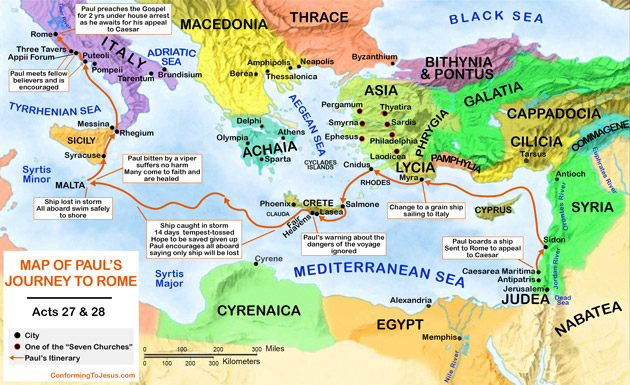
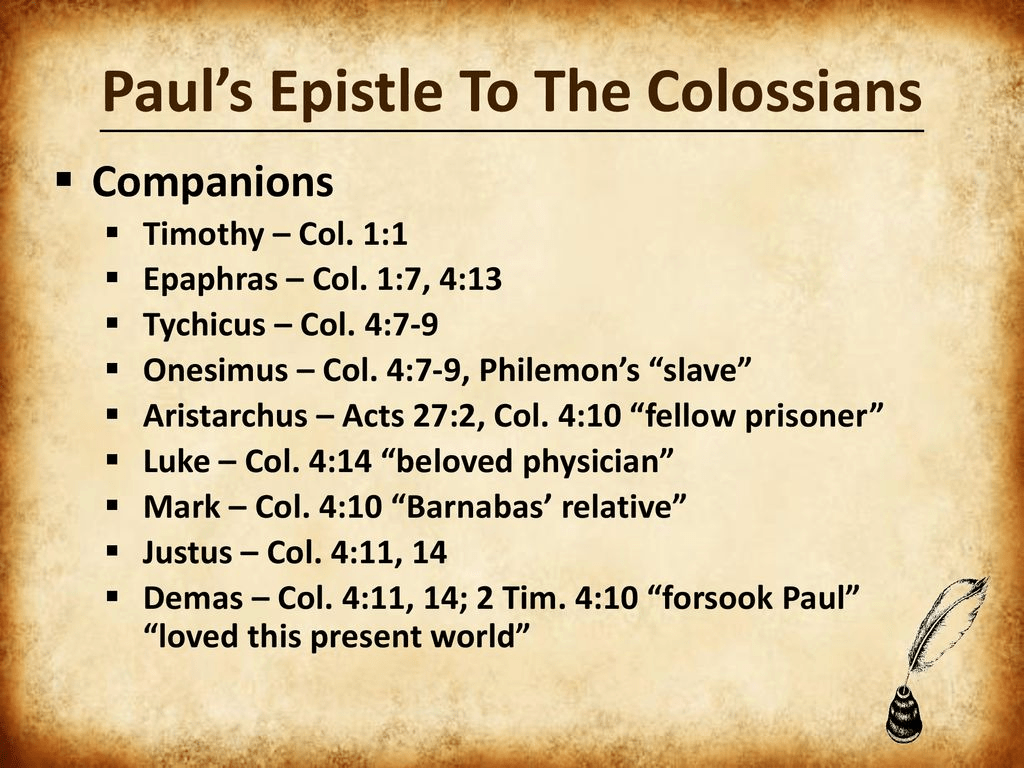
Date of Writing: The Book of Colossians was likely written between A.D. 58-62. The letter was part of the 4 “prison epistles” that Paul wrote during his 2 years of imprisonment (“house arrest”) in Rome at the end of his voyage to Rome when he appealed to have his trial before Caesar (the right of a Roman citizen, which he was).

Taken from gotquestions.org or from blueletterbible.org. https://www.blueletterbible.org/study/eo/Col/Col000.cfm

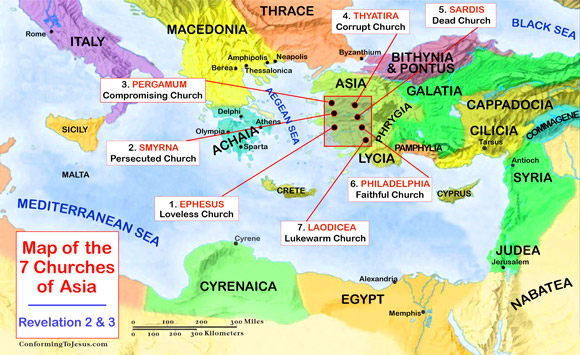
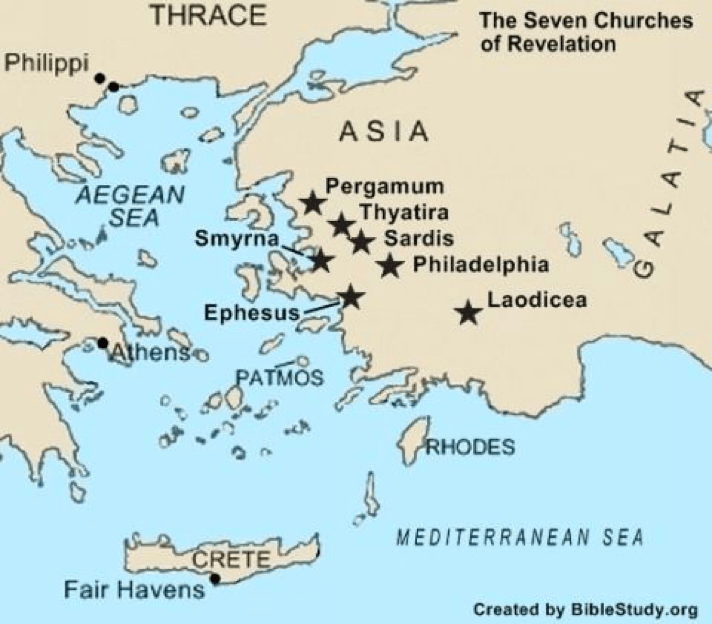
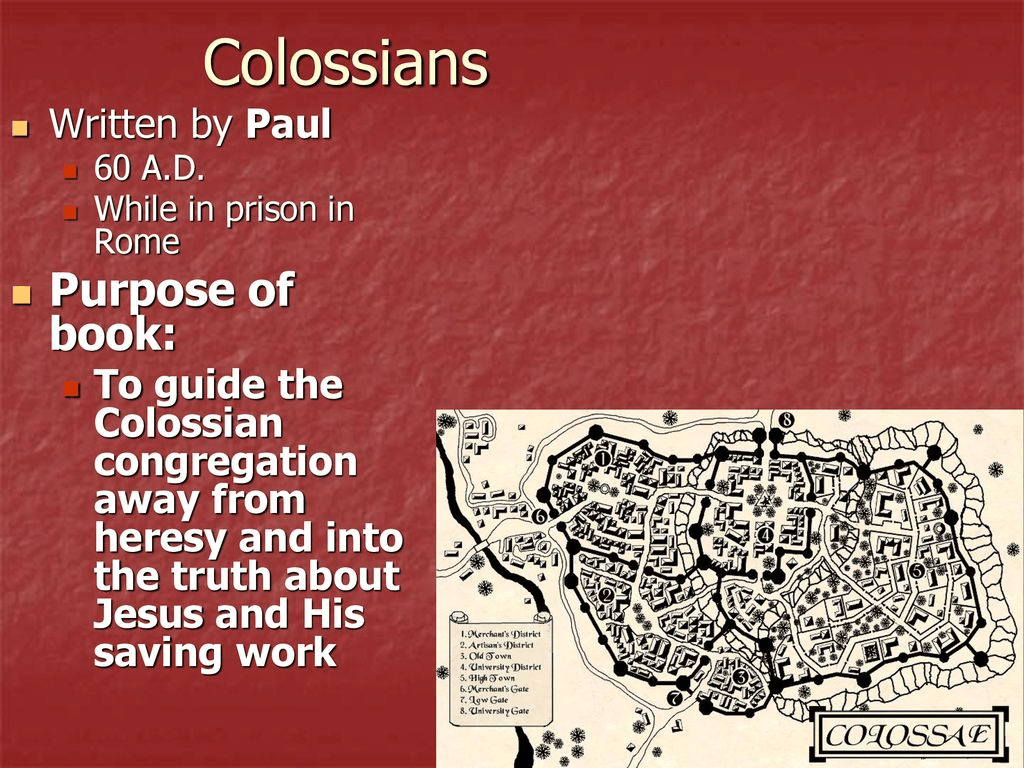
THE CITY OF COLOSSE: The city was located about 100 miles east of Ephesus in Asia Minor (modern day Turkey). Together with Hieropolis (Col 4:13) and Laodicea (Col 2:14:13-16.Re 3:14-22.), Colosse made up a tri-city area. Each city had its own distinction:

  • Hierapolis, a place for health, pleasure, and relaxation
  • Laodicea, known for its commercial trade and politics
  • Colosse, known simply as a small town

Colosse was mostly a pagan city, with a strong intermingling of Jews (in 62 B.C., there were 11,000 Jewish freemen in the tri-city area). This may explain the nature of some of the problems that arose among the church in Colosse (problems with both pagan and Jewish origin).

THE CHURCH AT COLOSSE: The establishment of the church is uncertain. At issue is whether Paul himself had ever been there. Some suggest that Paul may have done some work there during his third journey, on the way to Ephesus (cf. Ac 18:2319:1). Others point out that Paul’s comments imply that he had not personally been in Colosse (cf. Col 2:1). One possibility is that the church was established during Paul’s extended stay at Ephesus, where the effect of his work spread throughout Asia Minor (cf. Ac 19:8-10). It may not have been Paul himself, but one of his co-workers who went out to Colosse. Paul’s remarks in the epistle indicate that Epaphras was the one who preached the gospel there (Col 1:5-8) and in Hierapolis and Laodicea (Col 4:12-13). Though he was with Paul at the time the epistle was written, Epaphras is identified as “one of you” (Col 4:12), suggesting that he may have originally been from Colosse.

Other members of the church at Colosse included Philemon, Apphia, and Archippus, who may have been father, mother, and son. By comparing the epistle to the Colossians with that written to Philemon, it is reasonable to suppose that the church at Colosse met in their home (cf. Col 4:17. with Phe 1-2., and the references to Archippus). If Philemon and his family were hosts of the church at Colosse, then Onesimus (Philemon’s slave) would have also been a member there upon his return (cf. Col 4:7-9 with Phe 8-16).

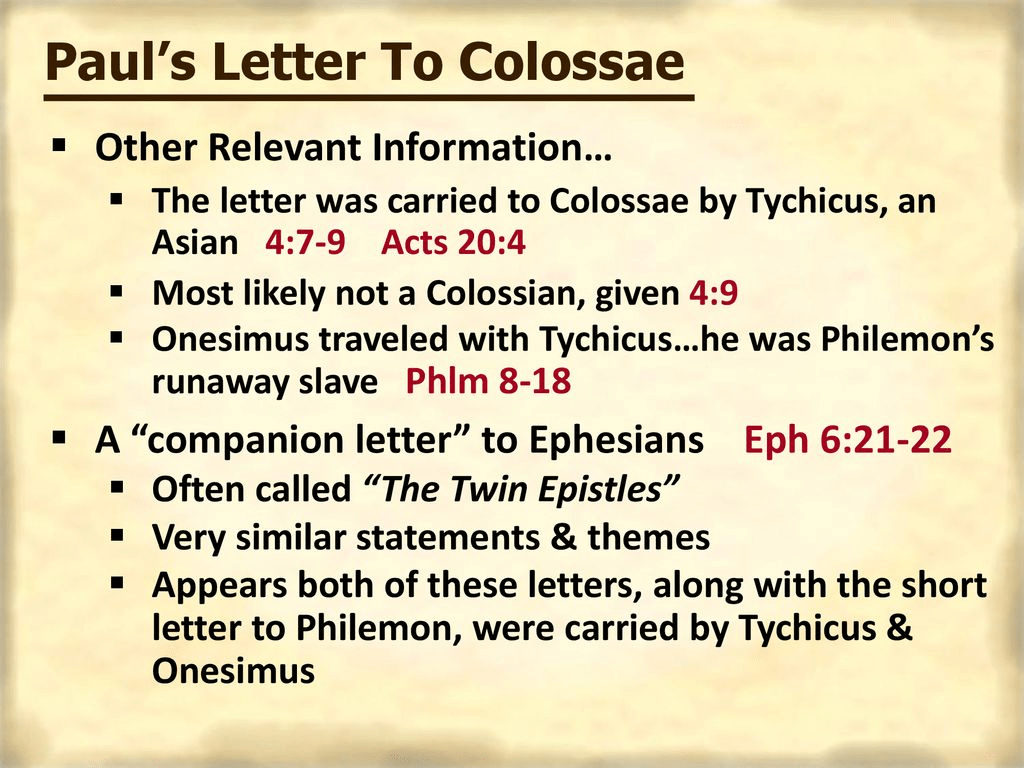
TIME AND PLACE OF WRITING: Colossians is one of Paul’s four “prison epistles” (Col 4:18.; cf. Ephesians, Philippians, and Philemon). The general consensus is that these epistles were written during Paul’s imprisonment at Rome (cf. Ac 28:16,30-31). If such is truly the case, then Paul wrote Colossians around 61-63 A.D. from Rome. The indication is that the epistles to the Colossians, Philemon and the Ephesians were carried to their destination by Tychicus and Onesimus (cf. Col 4:7-9Phile 10-12.Eph 6:21-22).

PURPOSE OF THE EPISTLE: Paul had received a report of the situation at Colosse by way of Epaphras (Col 1:7-8). This report was for the most part favorable (Col 2:5). But the subject matter in the epistle strongly suggests that the church was facing a two-fold danger as described below.

Purpose of Writing: Paul wrote Colossians to warn the believers of doctrinal error and to spur them to continued growth in Christ. The first half of the Book of Colossians is a theological treatise that includes one of the most profound presentations of “Christology”anywhere in the New Testament. The second half is a mini-ethics course, addressing every area of Christian life. Paul progresses from the individual life to the home and family, from work to the way we should treat others. The theme of this book is the Lordship of Jesus Christ and His sufficiency in meeting our needs in every area.

Here is a great article on “what is Christology” from gotquestions.org

The word “Christology” comes from two Greek words meaning “Christ / Messiah” and “word” – which combine to mean “the study of Christ.” Christology is the study of the Person and work of Jesus Christ. There are numerous important questions that Christology answers:

Who is Jesus Christ? Almost every major religion teaches that Jesus was a prophet, or a good teacher, or a godly man. The problem is, the Bible tells us that Jesus was infinitely more than a prophet, a good teacher, or a godly man.

Is Jesus God? Did Jesus ever claim to be God? Although Jesus never uttered the words “I am God,” He made many other statements that can’t be properly interpreted to mean anything else.

What is the hypostatic union? How can Jesus be both God and man at the same time? The Bible teaches that Jesus is both fully human and fully divine, that there is no mixture or dilution of either nature, and that He is one united Person, forever.

Why is the virgin birth so important? The virgin birth is a crucial biblical doctrine because it accounts for the circumvention of the transmission of the sin nature and allowed the eternal God to become a perfect man.
What does it mean that Jesus is the Son of God? Jesus is not God’s Son in the sense of how we think of a father/son relationship. God did not get married and have a son. Jesus is God’s Son in the sense that He is God made manifest in human form (John 1:1,14).

A Biblical understanding of Jesus Christ is crucial to our salvation. Many cults and world religions claim to believe in Jesus Christ. The problem is that they do not believe in the Jesus Christ presented in the Bible. That is why Christology is so important. It helps us to understand the significance of the deity of Christ. It demonstrates why Jesus is the atoning sacrifice for our sins. Christology teaches us that Jesus had to be man so that He could die – and had to be God so that His death would pay for our sins. It is perhaps the most important area of theology. Without a proper understanding of who Jesus Christ is and what He accomplished, all other areas of theology will be errant as well.

An in-depth study of Christology has incredible personal impact on the believer’s daily life. As we delve into the heart of Jesus, we begin to grasp the amazing concept that He, being fully Man and fully God, loves each of us with a never-ending love the extent of which is hard for us to imagine. The various titles and names of Christ in the Scriptures give insight into who He is and how He relates to us. He is our Good Shepherd, leading, protecting and caring for us as one of His own (John 10:11,14); He is the Light of the world, illuminating our pathway through a sometimes dark and uncertain world (John 8:12); He is the Prince of Peace (Isaiah 9:6), bringing tranquility into our tumultuous lives; and He is our Rock (1 Corinthians 10:4), the immovable and secure base who we can trust to keep us safe and secure in Him.

Brief Summary: Colossians was written explicitly to defeat the heresy that had arisen in Colosse, which endangered the existence of the church. While we do not know what was told to Paul, this letter is his response.

We can surmise based on Paul’s response that he was dealing with a defective view of Christ (denying His real and true humanity and not accepting His full deity). Paul appears also to dispute the “Jewish” emphasis on circumcision and traditions (Colossians 2:8-13; 3:11). The heresy addressed appears to be either a Jewish-Gnosticism or a mix between Jewish asceticism and Greek (Stoic?) philosophy. He does a remarkable job in pointing us to the sufficiency of Christ.

The Book of Colossians contains doctrinal instruction about the deity of Christ and false philosophies (1:15-2:23), as well as practical exhortations regarding Christian conduct, including friends and speech (3:1-4:18).

Connections: As with all the early churches, the issue of Jewish legalism in Colosse was of great concern to Paul. So radical was the concept of salvation by grace apart from works that those steeped in Old Testament law found it very difficult to grasp. Consequently, there was a continual movement among the legalists to add certain requirements from the law to this new faith. Primary among them was the requirement of circumcision which was still practiced among some of the Jewish converts. Paul countered this error in Colossians 2:11-15. in which he declares that circumcision of the flesh was no longer necessary because Christ had come. His was a circumcision of the heart, not the flesh, making the ceremonial rites of the Old Testament law no longer necessary (Deuteronomy 10:1630:6.Jeremiah 4:4.9:26.Acts 7:51Romans 2:29).

Practical Application: Although Paul addresses many areas, the basic application for us today is the total and complete sufficiency of Christ in our lives, both for our salvation and our sanctification. We must know and understand the gospel so as not to be led astray by subtle forms of legalism and heresy. We must be on guard for any deviation that would diminish the centrality of Christ as Lord and Savior. Any “religion” or cult that tries to equate itself with the truth using books that claim the same authority as the Bible, or which combines human effort with divine accomplishment in salvation must be avoided. Other religions cannot be combined with or added to Christianity. Christ gives us absolute standards of moral conduct. Christianity is a family, a way of life, and a relationship—not a religion. Good deeds, astrology, occultism and horoscopes do not show us God’s ways. Only Christ does. His will is revealed in His word, His love letter to us; we must get to know it!

The following ppt. slides are by Lindsay Morton and can be found in his ppt.

We are faced with the same dangers of legalism, philosophies of men, and heresy. The following was taken from blueletterbible.org. https://www.blueletterbible.org/study/eo/Col/Col000.cfm

The answer is the all sufficiency of Christ, His person, HIs work, and HIs wisdom.

  • The danger of relapse into paganism with its gross immorality (cf. Col 1:21-232:6.3:5-11.)
  •       We are facing that with the hedonism of our culture, the drinking, sex, overeating, gluttony, pursuit of pleasure (hedonism), worship of sports, gambling, luxury. This danger is probably greater to most Christians in America b/c of the affluence we enjoy. More Christians fall away from the love of money, the worries, riches, and pleasrues that rob us of bearing the fruit of the Spirit (Luke 8:14) rather than some doctrinal error such as the Colossians faced.
  • The danger of accepting what has been come to known as “The Colossian heresy”. This heresy was a syncretism involving four elements of both pagan and Jewish origin:
  • 1 Philosophies of men – which denied the all sufficiency and pre-eminence of Christ (Col 2:8.)
  •      If Christ is the head of the church, then we should be following his commands, trusting his wisdom on current hot topic issues involved sex. Instead we have the philosophy of men telling us why certain tings are ok. We are surrounded by religious cults and Christian groups that deny the deity of Jesus such as Christian Science and Jehovah’s Witnesses.
  • 2 Judaistic ceremonialism – which attached special significance to the rite of circumcision, food regulations, and observance of special days (Col 2:11.,16-17.). The Judaizers (Jewish Chritians who made keeping the Law as a test of fellowship with the Gentile Christians) followed Paul to every church he established, trying to destroy his teaching and influence.
  •       There are so many groups that want to get us back to keeping the unclean meats laws of the OT, keeping the Jewish feasts, etc. There are many cults that do that such as House of Yahweh. . 
  • 3 Angel worship – which detracted from the uniqueness of Christ (Col 2:18.) From Sam Storms: “Paul warns against the excessive preoccupation with angels and their involvement in human life. He believed that this preoccupation distracted from the centrality of Jesus Christ. The word translated as “worship” could also mean “invoke” or “conjure”. People who worship angels may be soliciting angels to provide protection, blessings, or success.” That happens today also.
  • 4 Asceticism – which called for harsh treatment of the body as the means to control its lusts (Col 2:20-23). “The word asceticism comes from the Greek askesis, which means practice, bodily exercise, or athletic training. Early Christians adopted the word to describe spiritual exercises performed to acquire virtue. ” Asceticism is a practice of self-denial that has been followed by many Christians throughout history. It can be practiced in a variety of ways, including: 
  • Fasting: Early Christians fasted before Easter, and some Christians have fasted periodically or abstained from specific foods and drinks.  
  • Celibacy: Celibacy was considered the first commandment in some ascetic movements, and virgins and celibates were prominent in early Christian communities.  
  • Solitary confinement: Some Christians have lived in solitary confinement in cells, or in deserted tombs or fortresses.  
  • Self-inflicted pain: Some Christians have inflicted pain on themselves as a form of asceticism. In the Phillipines some believers allow themselves to be nailed to a cross.
  • Living in poverty: Saint Francis required his brothers to live among the poor, and the Dominicans took a vow of poverty. 
  • Jesus taught “self denial” but not with the idea that makes someone holier than others or that abstaining from things earns one’s salvation.
image.png

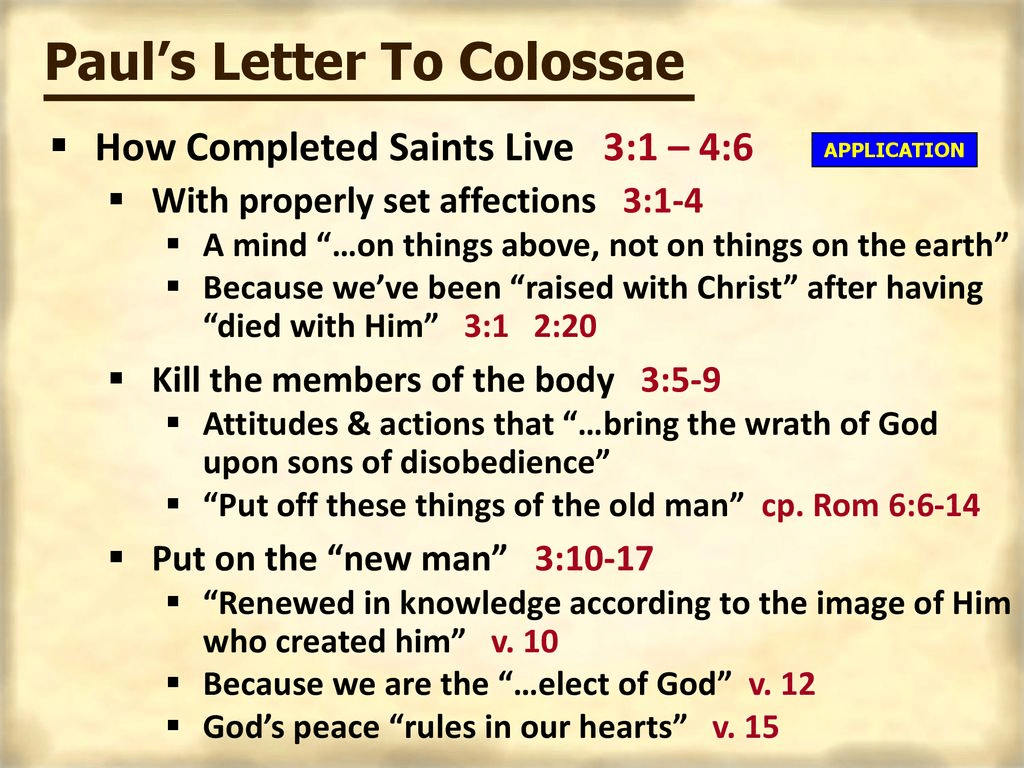
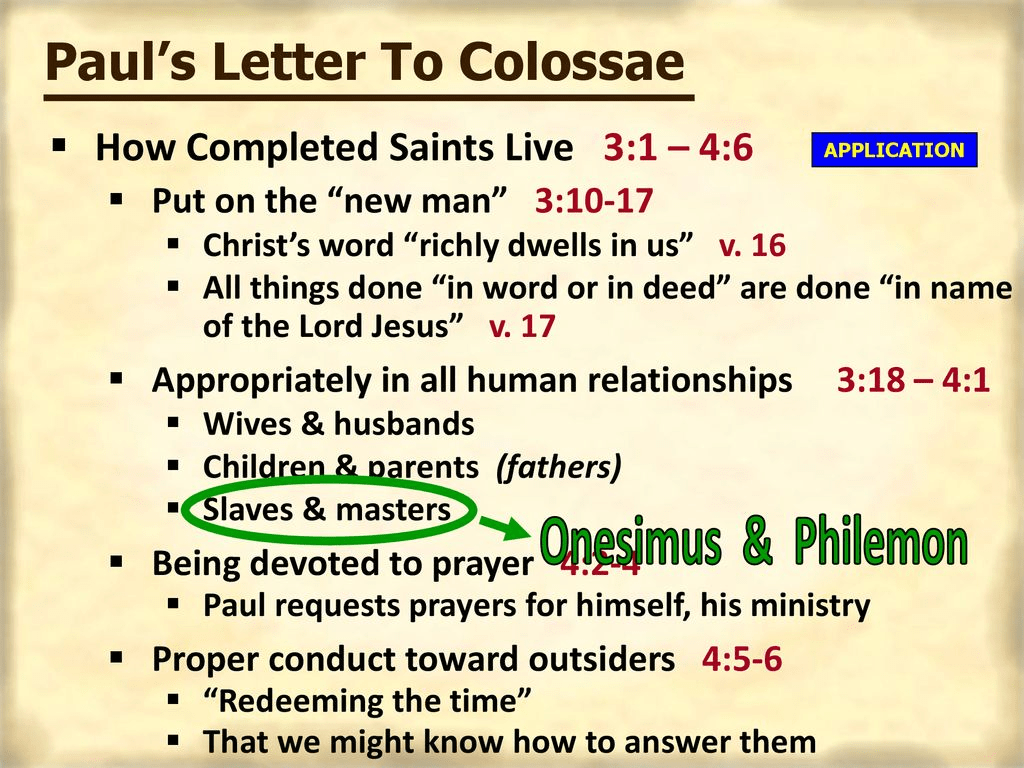
The 2nd section of Colossians is practice exhortatiions that the Colossian Christians should focus on instead of the philosophes of men, the legalism of Jewish asciticism, and the immorality around them.

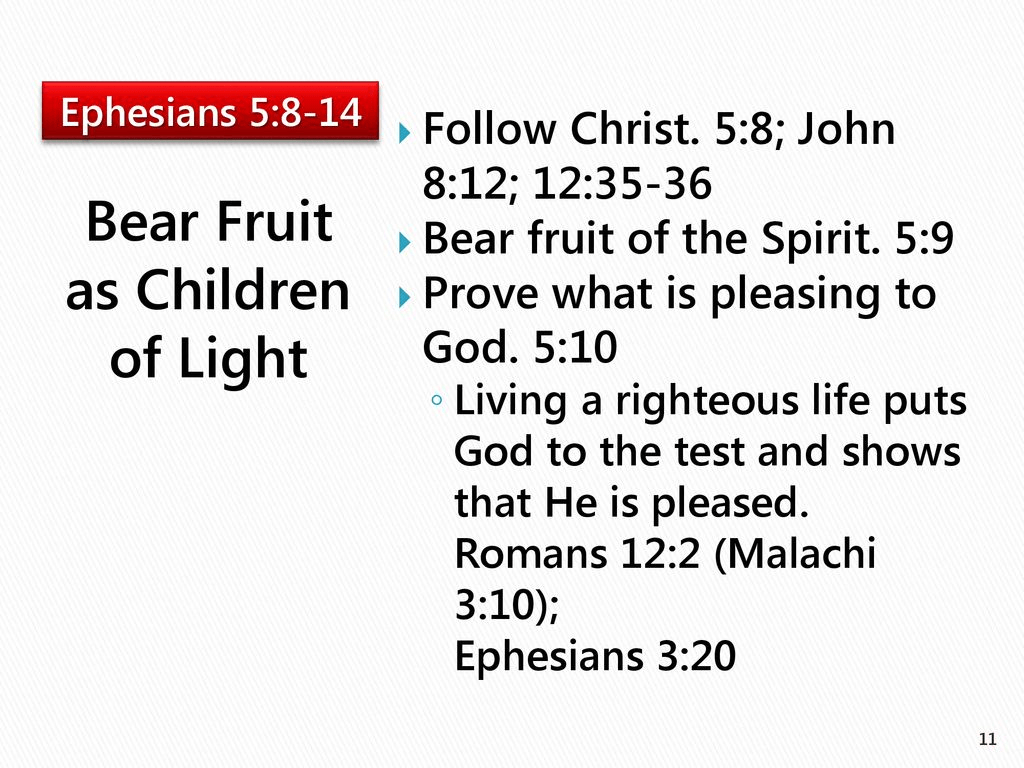
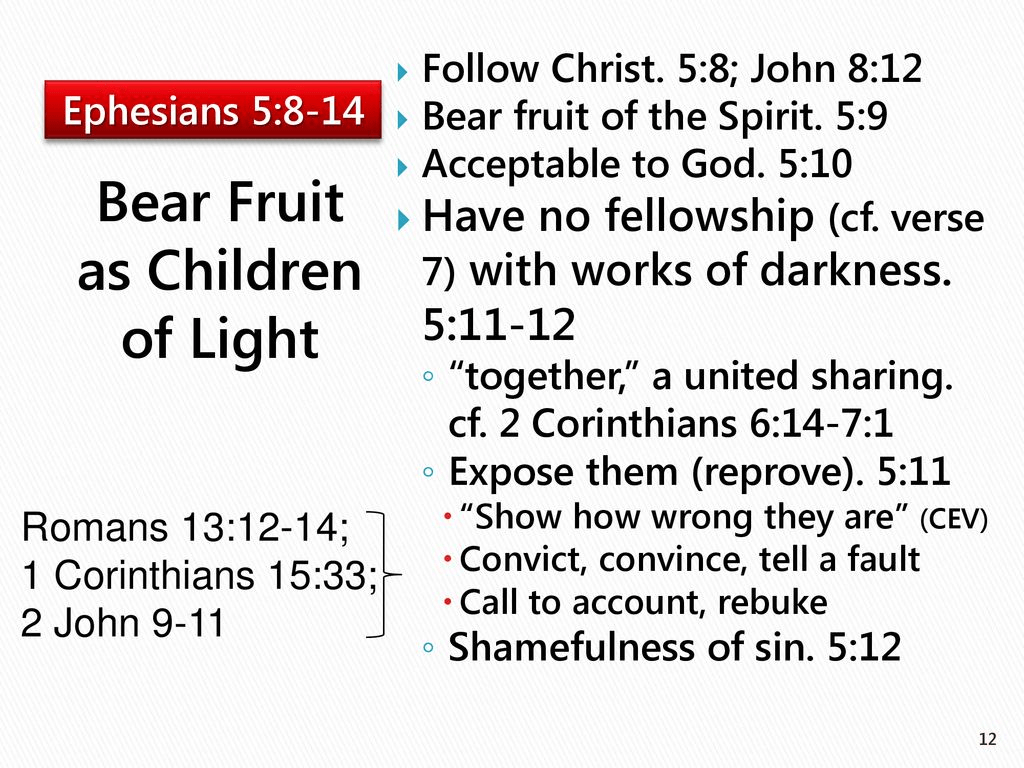
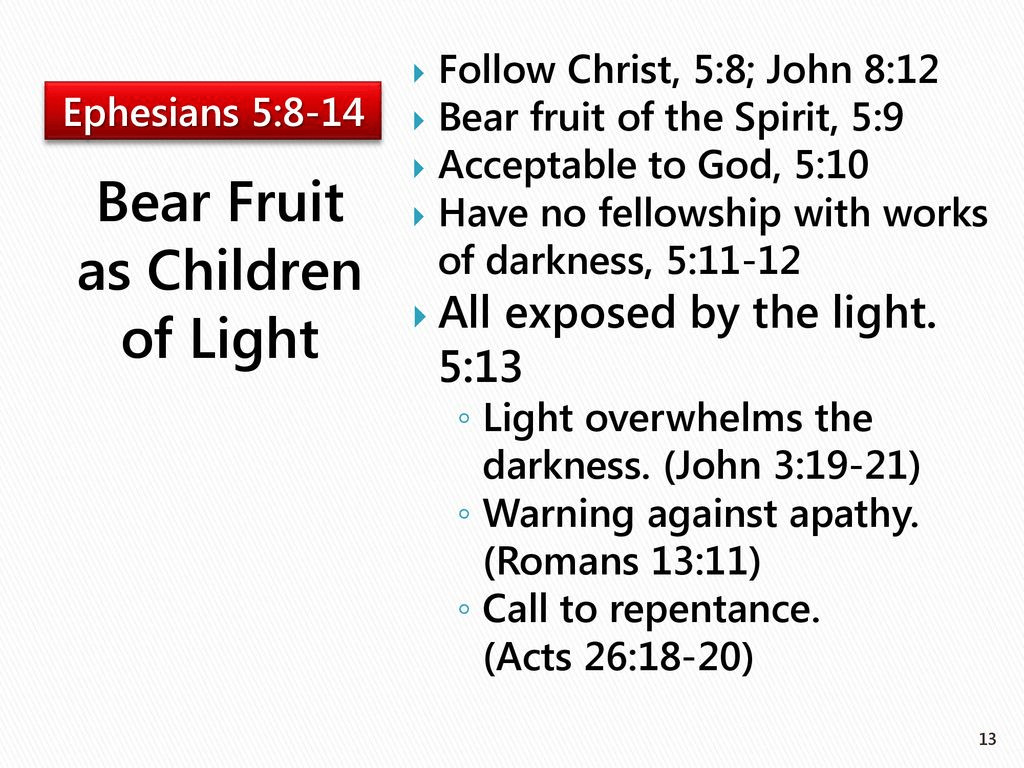
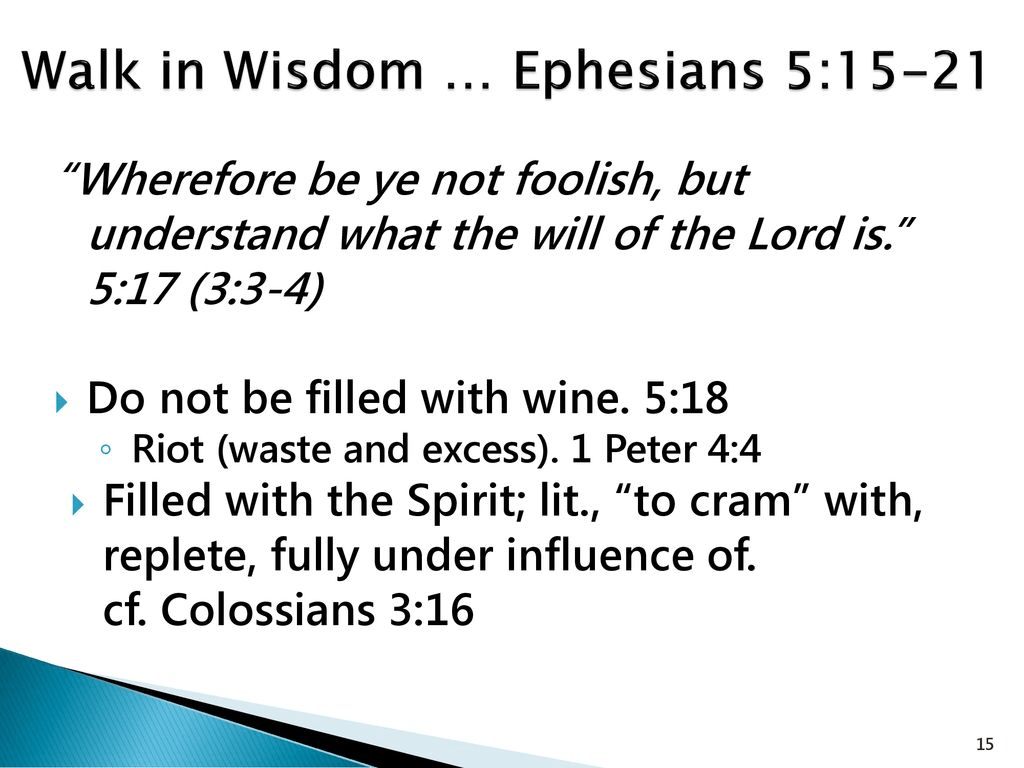
It is very similar to the practical section of Ephesians (ch 4-6). Just a few slides from the Lindsay Morton ppt.

My suggestion is to simply read Colossians 3 and 4. Too often we get caught up in discussing the different doctrines of the NT. It can become a very intellectual form of Christiantiy.

Ask yourself the following questions as you read these 2 chapters.

1 Is my mind mostly set on spiritual things or earthly things? 3:1-4

2 Are there any sinful deeds or emotions in 3:5-11 that I still struggle to “put off” (i.e. stop)? How hard am I really trying to put these things off?

3 How am I doing “putting on” the new self practices, attitudes, and deeds (3:12-17)? How much am I into the “word dwelling in me”? How thankful am I? How much do I listen to and sing Christian music at church or home? We would be good to read this section every day before we go to work or play.

4 Which of the categories in 3:18-4:1 apply to me (husband, wife, child, parent, boss, worker)? How well am I doing following the specific exhortations for my category? How submissive am I as a wife? How loving am I as a husband? How respectful and obedient am I as a child? How good am I as a father training my children witout provoking them to anger by my hypocrisies that they see and by how I treat them at times? How good am I doing as a loyal hard worker at work? How am I doing treating my workers fairly as a boss?

5 How devoted and consistent am I in my prayer life (4:2-4)? How often do I pray, not just asking for my personal needs and health, but for persecuted Christians worldwide (The Voice of the Martyrs organization constantly sends out info on that) and for the preaching of the gospel in foreign lands (locally also of course)?

6 Do I make wise use of my time, with emphasis on spiritual priorities instead of materialistic or pleasure (4:5-6)? Is my speech always kind and gracious to non Christians, always trying to speak to them as the Holy Spirit would want me to speak?

7 In 4:7-18 Paul mentions many of his co-workers and fellow Christians and commends them for their work with him in the kingdom, mentioning specific things they do and some of their needs. Take the time to make a list of you co-workers in the kingdom and the good things they are doing for Jesus. Pray for them, mentioning their needs to God and thanking God for them. Then send them an email telling them how much you appreciate their work.

EPHESIANS 5:3- The 4th and 5th walks

4. 5:3-14 Walk as children of light, no longer in darkness

These are the really bad things that characterize those who are walking in spiritual darkness. 

Again from gotquestions.org

Spiritual darkness is the state of a person who is living apart from God. The Old Testament book of Isaiah, in prophesying of the Messiah, speaks of a deep spiritual darkness that enveloped the people: “The people walking in darkness have seen a great light; on those living in the land of deep darkness a light has dawned” (Isaiah 9:2). This passage reappears in the New Testament, in Matthew 4:16, to announce that those who have come to know the God of Israel through His Son Jesus Christ are the ones who have been delivered from spiritual darkness and now walk in the light of God’s life.

The apostle John taught that God is light: “This is the message we heard from Jesus and now declare to you: God is light, and there is no darkness in him at all. So we are lying if we say we have fellowship with God but go on living in spiritual darkness; we are not practicing the truth” (1 John 1:5–6, NLT). And Jesus declared that He is the light of the world: “I am the light of the world. Whoever follows me will never walk in darkness, but will have the light of life” (John 8:12).

Thus, spiritual darkness means not having fellowship with God through a relationship with Jesus Christ. The darkness of separation from God is overcome through Christ: “In him was life, and that life was the light of all mankind. The light shines in the darkness, and the darkness has not overcome it” (John 1:4–5).

From the moment Adam and Eve sinned, humans have lived in a fallen world. All people are born in a fallen state of sin and separation from God. Until a person is reborn of God’s Spirit, he or she lives in spiritual darkness. Sin darkens our understanding and destroys our spiritual sight, cloaking us in deep darkness: “But the way of the wicked is like deep darkness; they do not know what makes them stumble” (Proverbs 4:19). Moses compares this state of sin and disobedience to groping about like “a blind person in the dark” (Deuteronomy 28:29). One of Job’s friends speaks of those who are lost in spiritual darkness: “Darkness comes upon them in the daytime; at noon they grope as in the night” (Job 5:14).

Living in rebellion to God and His will is equivalent to living in spiritual darkness. When the Lord commissioned Paul, He said, “I am sending you to the Gentiles to open their eyes, so they may turn from darkness to light and from the power of Satan to God. Then they will receive forgiveness for their sins and be given a place among God’s people, who are set apart by faith in me” (Acts 26:17–18, NLT).

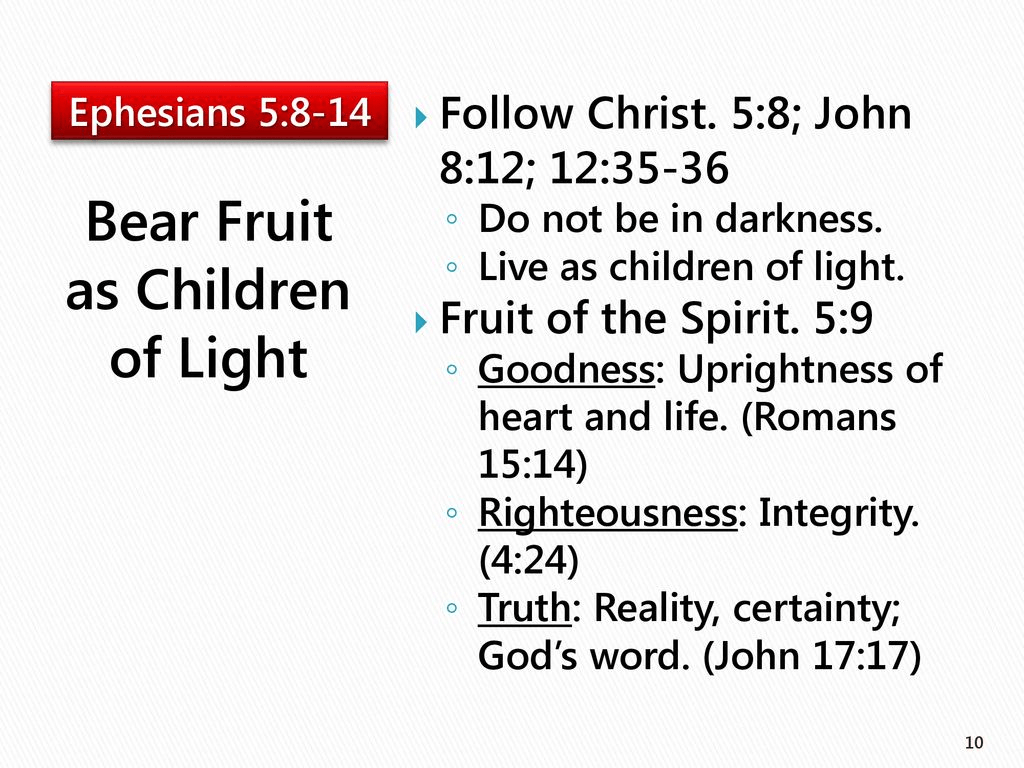
After salvation, believers become beacons of the spiritual light of Christ: “For you were once darkness, but now you are light in the Lord. Live as children of light” (Ephesians 5:8). Those who are in Jesus Christ have been rescued from the kingdom of darkness: “He has delivered us from the domain of darkness and transferred us to the kingdom of his beloved Son” (Colossians 1:13, ESV). Those who reject Jesus Christ face eternal separation from God in “blackest darkness” (Jude 1:4–13).

In Judaism, a person’s inner character and moral quality are understood to be reflected through the eyes. In Matthew 6:22–23, Jesus compares the moral condition of an unregenerate soul to darkness: “The eye is the lamp of the body. If your eyes are healthy, your whole body will be full of light. But if your eyes are unhealthy, your whole body will be full of darkness. If then the light within you is darkness, how great is that darkness!” Jesus’ listeners would have understood that a healthy eye is one that lets in light just as a healthy regenerated heart lets in spiritual light. But a sick or sinful eye (or heart) shuts out light, leaving the soul in spiritual darkness.

The apostle Paul describes those in a sinful state before knowing Christ as possessing a darkened, closed mind and a hardened heart: “Their minds are full of darkness; they wander far from the life God gives because they have closed their minds and hardened their hearts against him” (Ephesians 4:18, NLT).

Unbelievers live in spiritual darkness because Satan, the god of this world, has blinded their minds. They cannot see the glorious light of the gospel: “Satan, who is the god of this world, has blinded the minds of those who don’t believe. They are unable to see the glorious light of the Good News. They don’t understand this message about the glory of Christ, who is the exact likeness of God” (2 Corinthians 4:4, NLT).

Note: Many of the images below are from Micky Galloway ppt. which is on the internet so I assume I can use them.


Spiritual darkness refers to all that is in opposition to the light of God’s love in Christ. The good news that Jesus brings to this world is that His light—His life-giving Spirit—floods light and life into the spiritual darkness of the sinner’s heart. The One who opened the eyes of the blind can also bring us out of spiritual darkness. No matter how deep the darkness, the light of God’s love and truth overcomes every sin that separates us from God.

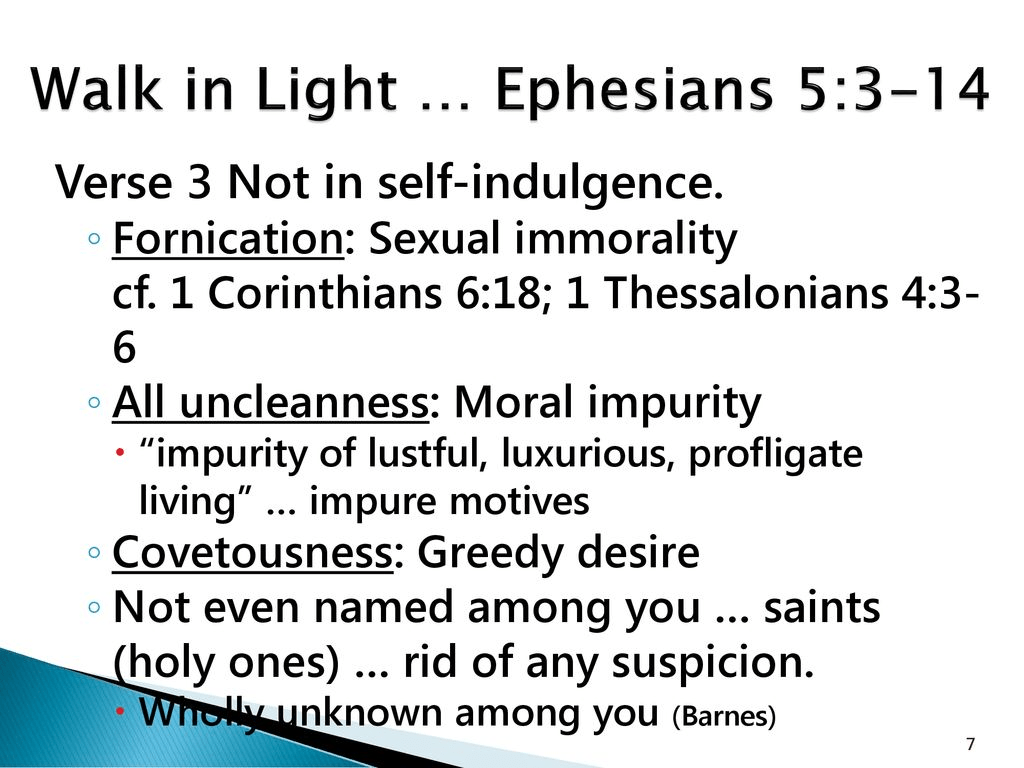
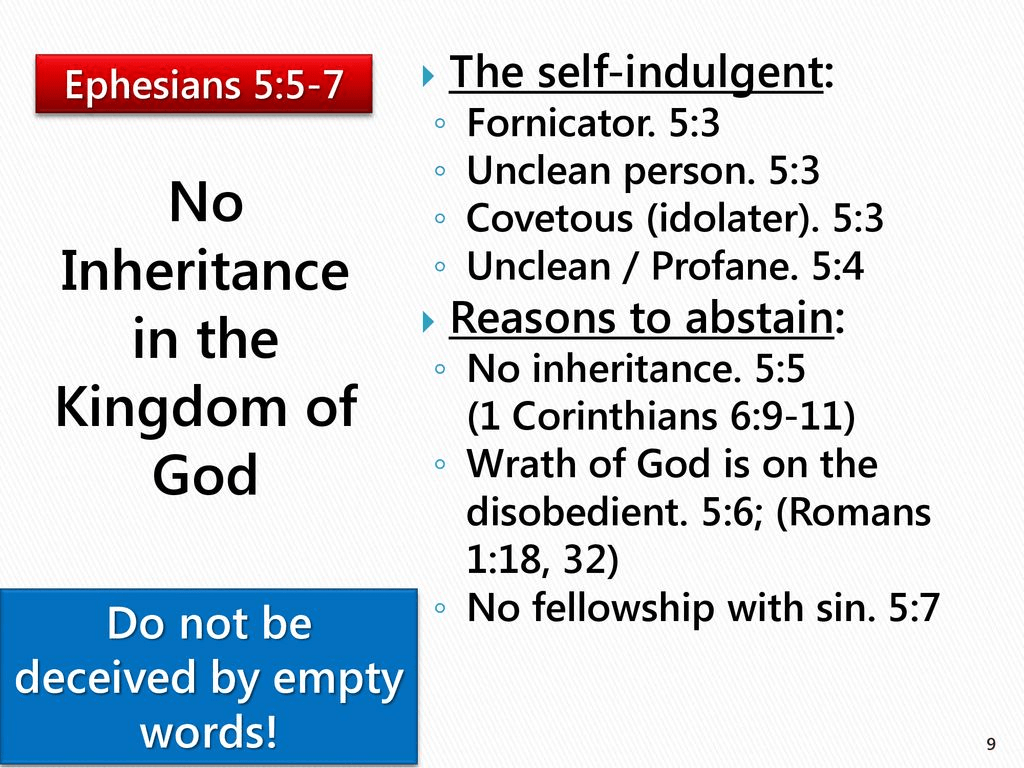
Q: 5:3,5 The two main sins of the darkness are sexual immorality and greed (covetousness). “Filthiness, foolish talk, and crude jesting” are probably connected to those two main sins. 

Would you say that our society today is characterized by 1)sexual immorality (4202 porneía (the root of the English terms “pornography, pornographic”; cf. 4205 /pórnos) which is derived from pernaō, “to sell off”) – properly, a selling off (surrendering) of sexual purity; promiscuity of any (every) type which would include fornication, adultery, homosexuality) and 

2) greed (4124 pleoneksía (a feminine noun derived from 4119 /pleíōn, “numerically more” and 2192 /éxō, “have”) – properly, the desire for more (things), i.e. lusting for a greater number of temporal things that go beyond what God determines is eternally best (beyond His preferred-will, cf. 2307 /thélēma); covetousness (coveting).

Q: What factors contribute to such a sexual immoral society that we have?

(Personal question to ask yourself): How hard is it to resist sexually immoral thoughts and deeds? How hard is it to to resist lust? What if, like Garfield, all our thoughts were put up in words above us all day? God sees those thoughts even if others can’t.  

Q: What factors contribute to such a greedy, materialistic society that we have? 

Jesus said, “Beware of all kinds of greed” (Luke 12:15) in the parable of the rich man building bigger barns. So are there different kinds of greed? Yes, “desire for more” material things, power, control, status, attention, recognition, even time. 

Q: We all are blessed materially. When does a healthy desire for more in life become greed?

(Personal question to ask yourself): Am I content with what I have or always thinking about how to get more? Contentment is the key to overcoming greed.

Hebrews 13:Let marriage be held in honor among all, and let the marriage bed be undefiled, for God will judge the sexually immoral and adulterous. Keep your life free from love of money, and be content with what you have, for he has said, “I will never leave you nor forsake you.” So we can confidently say,

“The Lord is my helper;
    I will not fear;
what can man do to me?”

Philippians 4:11 Not that I am speaking of being in need, for I have learned in whatever situation I am to be content. 12 I know how to be brought low, and I know how to abound. In any and every circumstance, I have learned the secret of facing plenty and hunger, abundance and need. 13 I can do all things through him who strengthens me.

Q: Paul says to not only don’t participate in them but to “expose the deeds of darkness”. How can we do that without becoming judgmental or self righteous? 


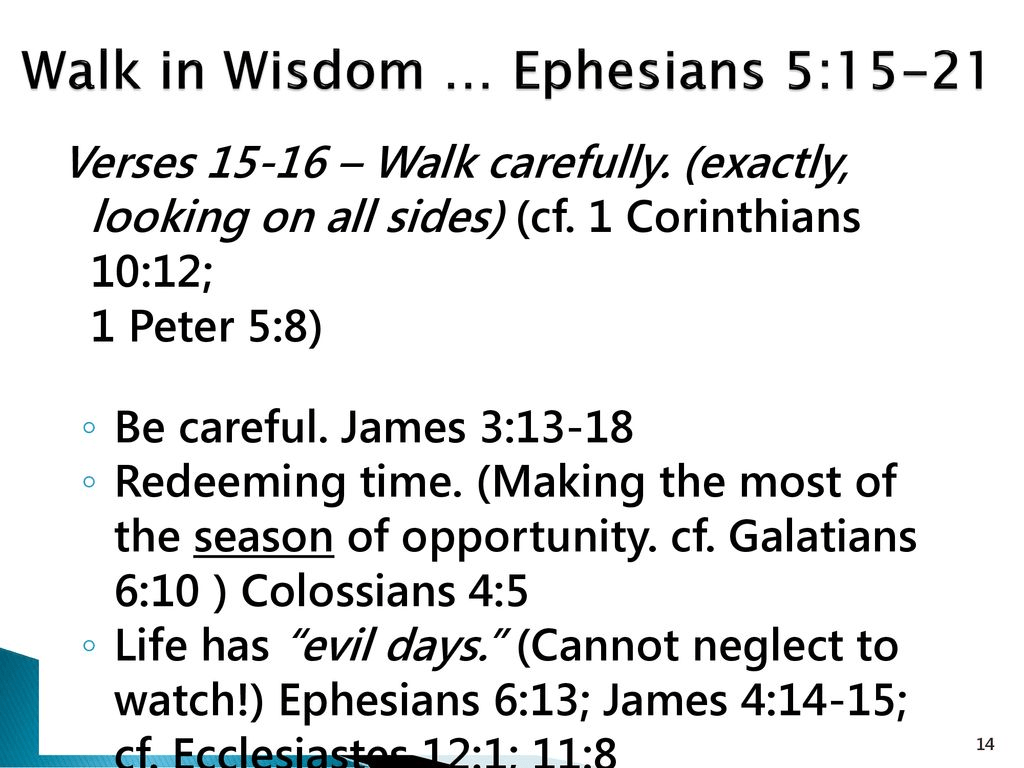
5. 5:15-21 Walk not as unwise men but as wise men

Q: What does “make the best use of your time for the days are evil” (4:16) mean? Is that just talking about time management for all your daily tasks (although that is wise)? 

In Ephesians 5:15, “make the best use of your time” means to be intentional and careful about how you spend your time, prioritizing activities that align with God’s will and serve others, rather than wasting time on worldly pursuits, especially considering that “the days are evil” (meaning the world is not aligned with God’s values)

Jesus said in John 9:We must work the works of him who sent me while it is day; night is coming, when no one can work. 

1 Peter 4:so as to live for the rest of the time in the flesh no longer for human passions but for the will of God. For the time that is past suffices for doing what the Gentiles want to do, living in sensuality, passions, drunkenness, orgies, drinking parties, and lawless idolatry. With respect to this they are surprised when you do not join them in the same flood of debauchery, and they malign you; but they will give account to him who is ready to judge the living and the dead. 

Q: 4:18 Don’t be drunk with wine, but be filled with the Spirit. 

How big of a problem is drinking in our society? 

Without naming names, think of all the Christians you know who have ruined their lives with drinking.

Drinking is considered a significant problem in society, as excessive alcohol use is a leading preventable cause of death, contributing to a substantial number of deaths each year, and also causing significant health, social, and economic issues, including accidents, violence, family problems, and workplace disruptions; making it a major public health concern both in the United States and globally.
Key points about the scale of the drinking problem:

  • High mortality rate:
    Excessive alcohol use is linked to a large number of deaths annually, ranking it among the leading preventable causes of death. 
  • Economic impact:
    Alcohol misuse incurs significant costs due to healthcare expenses, lost productivity, and legal issues associated with alcohol-related incidents. 
  • Prevalence of alcohol use disorder (AUD):
    Millions of people in the US are diagnosed with AUD, indicating a substantial population struggling with problematic drinking habits. 
  • Social consequences:
    Alcohol abuse can lead to family dysfunction, relationship problems, and increased risk of violence. 
  • Global concern:
    Excessive alcohol consumption is recognized as a major public health issue worldwide. 

Q: Why do people drink so much (moderate drinking is not forbidden in the Bible)? 

Why is it such a problem on college campuses?

Why do even many Christians ruin their lives with drinking? 

Q: What does it mean to be filled with the Spirit (4:18)? Miraculous? 

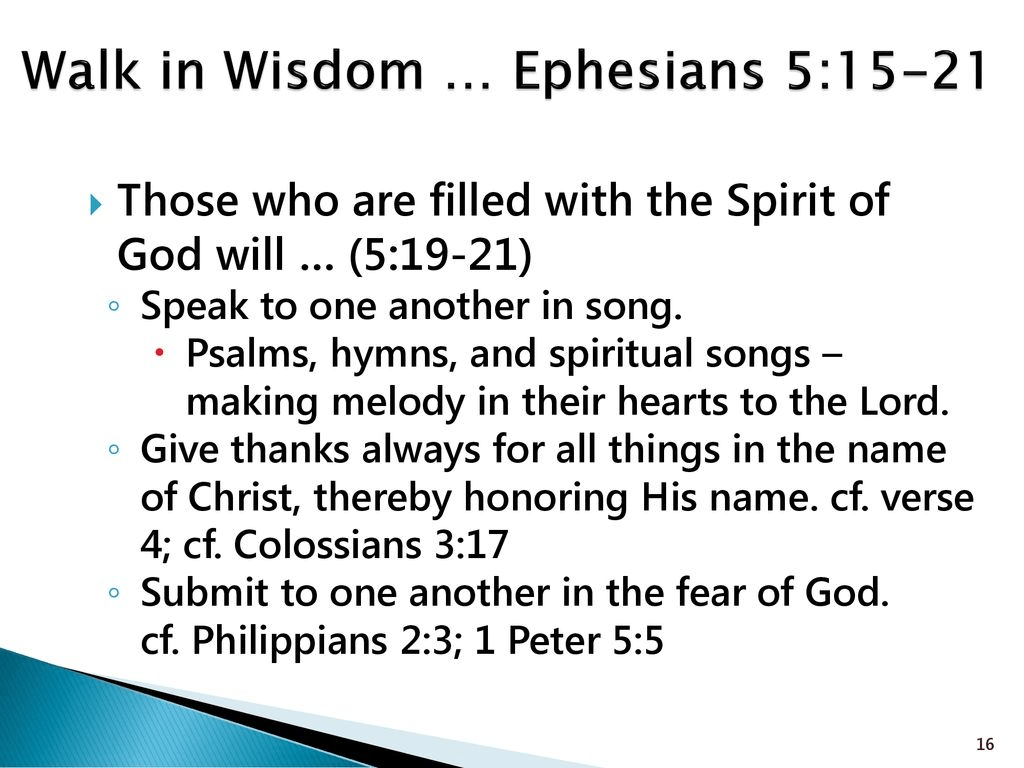
Q: 4:19 Being filled with the Spirit leads to singing psalms, hymns, and spiritual songs, singing and making melody in our hearts to the Lord, teaching and admonishing one another (Colossians 3:16).

What is the difference between psalms, hymns, spiritual songs? 

Do you enjoy singing to the Lord? 

Does such singing uplift you and edify you? 

What if we could all sing like Vincent?

Does it matter how good you sing? Make a joyful “noise” (Psalm 100)

How important is Christian music to you and others?

Does making melody in our hearts mean you can’t make melody with instruments along with the singing? 

    psalmos: a striking (of musical strings), a psalm.    5568 psalmós – a psalm (“Scripture set to music”). Originally, a psalm (5568 /psalmós) was sung and accompanied by a plucked musical instrument (typically a harp), especially the OT Psalms.

Regardless of one’s view of the use of instruments in worship, is that issue a heaven/hell issue?

Would it be good to add instruments to our worship, or would it be divisive? It seems that it would cause many to either violate their conscience and sing or to leave. 

Is there a workable solution if many of the congregation would like to have some instrumental worship? 

Does contemporary Christian music mean a lot to you? 

What are some of the dangers of using instruments in worship? 

Q: Tied to being filled with the Spirit is giving thanks to God the father and to our Lord Jesus Christ “always and for everything” (4:20). 

How often do you thank God each day?

How often do you tell others thank you (probably we do that more than we thank God as we tend to take God for granted). 

1 THESSALONIANS 5:16-18Rejoice always, pray continually, give thanks in all circumstances; for this is God’s will for you in Christ Jesus.

PSALM 103:1-4Praise the LORD, my soul; all my inmost being, praise His holy name. Praise the LORD, my soul, and forget not all His benefits — who forgives all your sins and heals all your diseases, who redeems your life from the pit and crowns you with love and compassion.

PSALM 95:1-5 (NKJV)Oh come, let us sing to the LORD! Let us shout joyfully to the Rock of our salvation. Let us come before His presence with thanksgiving; let us shout joyfully to Him with psalms. For the LORD is the great God, and the great King above all gods. In His hand are the deep places of the earth’ the heights of the hills are His also. The sea is His, for He made it; and His hands formed the dry land.

PHILIPPIANS 4:4-7Rejoice in the Lord always. I will say it again: Rejoice! Let your gentleness be evident to all. The Lord is near. Do not be anxious about anything, but in every situation, by prayer and petition, with thanksgiving, present your requests to God. And the peace of God, which transcends all understanding, will guard your hearts and your minds in Christ Jesus.

COLOSSIANS 3:15-17Let the peace of Christ rule in your hearts, since as members of one body you were called to peace. And be thankful. Let the message of Christ dwell among you richly as you teach and admonish one another with all wisdom through psalms, hymns, and songs from the Spirit, singing to God with gratitude in your hearts. And whatever you do, whether in word or deed, do it all in the name of the Lord Jesus, giving thanks to God the Father through Him.

EPHESIANS 4:1-5:2 The 2nd and 3rd “walks”

There were 6 “walks” in Eph 4-6. This referred to the way Christians were to live and act as a result of their special calling into the one body (the doctrinal section in Eph 1-3).

2. 4: 17-32 Walk no longer as the Gentiles

Paul had just talked about the church “maturing” (Eph 4:13), and now he describes what a mature church would look like.

4:25-32 But what does that mean to put off the old self and put on the new self. Let’s get specific on what to put off and what to put on.

4:30 A key verse in the midst of this. 30 And do not grieve the Holy Spirit of God, by whom you were sealed for the day of redemption. The Holy Spirit is constantly working to help us (through the written word and other ways) to do all this. Just like parents are constantly trying to instill these life principles in their children and it grieves them when their children do wrong and don’t do right. It grieves the Holy Spirit when we don’t. 

Q: Which one (or ones!) of these do you struggle with the most to put away the bad and do the right? 

Q: The “Gentiles” would be the non-Christians around us. Are the non-Christians today really as bad as Paul described them to be? 

Are we really different than them? Do we need to be different like the Amish? Can we be “in the world but not of the world”? John 17:14 I have given them your word, and the world has hated them because they are not of the world, just as I am not of the world. 15 I do not ask that you take them out of the world, but that you keep them from the evil one. 16 They are not of the world, just as I am not of the world.

Would your friends and co-workers say that you are different? How could they tell a difference?

3. 5:1-2 Walk in love as Christ loved us and gave himself for us

This is from got questions.org 

The “walk” of Ephesians 5:2 refers to our behavior and how we act. We walk in love when we act like God. When we behave like Jesus, we are walking in love. Just as children like to imitate their parents, we are to mimic God in the same way Jesus copied His Father’s behavior.

The Greek word translated as “love” in this passage is agapeAgape is sacrificial, unselfish, unconditional love that proves itself through actions. It perfectly describes God’s love for us (John 3:16) and Christ’s love for us (1 John 3:16). With agape, “God showed how much he loved us by sending his one and only Son into the world so that we might have eternal life through him” (1 John 4:9, NLT). When the Bible says, “God is love” in 1 John 4:8, the word “love” is a translation of agape. God’s nature, His essence, is selfless, sacrificial, unconditional love.

The apostle John stressed that, since God loves us sacrificially and unconditionally, we ought to love others in the same way: “Dear friends, since God so loved us, we also ought to love one another” (1 John 4:11). Again, we walk in love by imitating God’s love for us in how we show love to others. Jesus taught the same principle when He said, “There is no greater love than to lay down one’s life for one’s friends” (John 15:13, NLT).

The apostle Paul gives a detailed description of how to walk in love: “Love is patient and kind. Love is not jealous or boastful or proud or rude. It does not demand its own way. It is not irritable, and it keeps no record of being wronged. It does not rejoice about injustice but rejoices whenever the truth wins out. Love never gives up, never loses faith, is always hopeful, and endures through every circumstance” (1 Corinthians 13:4–7, NLT). The greatest virtue we can nurture in our Christian walk is agape love (1 Corinthians 13:13).

In Ephesians 5:2, Paul said that Jesus “gave himself up for us.” Giving ourselves up means offering our lives to God in sacrifice. It means following, obeying, submitting, serving, and living in a committed relationship with Him. Giving ourselves up means walking in love. When we behave like this, our lives become “a fragrant offering” that is pleasing to God and everyone who encounters the scent (Leviticus 1:173:16). Paul urged believers to offer themselves “as a living sacrifice, holy and pleasing to God—this is your true and proper worship” (Romans 12:1).

When we walk in love, we show the world that we are true followers of Jesus Christ: “Your love for one another will prove to the world that you are my disciples” (John 13:35, NLT; see also 1 John 3:14).

As God’s children and members of His family, we are called to deny our own selfish desires and interests for the sake of God and others. Although we are free in Christ, we use our freedom “to serve one another in love. For the whole law can be summed up in this one command: ‘Love your neighbor as yourself’” (Galatians 5:13–14, NLT). Peter said, “You were cleansed from your sins when you obeyed the truth, so now you must show sincere love to each other as brothers and sisters. Love each other deeply with all your heart” (1 Peter 1:22, NLT). This wholehearted, sacrificial imitation of God’s divine agape is what it means to walk in love.

Q: Would you friends, family, co-workers, people you do business with say that you are a loving Christian, that they see the love of God and of Jesus in you?

Of course there are different ways of expressing love?

Q: Which of these is your primary way of expressing love?

EPHESIANS 1:16-23 THANKSGIVING & PRAYER


Notice that this is giving thanks for the Ephesian believers b/c Paul had heard of their faith and love. He is thankful that they have believed and remained faithful even in a pagan city like Ephesus where Diana was worshipped (Acts 18).

He give these thanks in unceasing prayer and also prays that God will give them the “Spirit of revelation and wisdom and knowledge of him” having “their eyes enlightened to know 3 things:

1 The hope to which he has called you, i.e. the hope of eternal life.

2 The riches of his glorious inheritance in the saints

3 The immeasurable greatness of his power toward us who believe.

This power is in accordance with God’s power when he raised Jesus from the dead, seated him at His right hand “in the heavenly places” far above all spiritual powers of darkness and made him head over the church, which is his body. This last few verses will set the tone for God’s power raising us from the spiritual dead and seating us with Jesus at the right hand of God in the heavenly places. 

Q: What does “having the eyes of your heart enlightened” mean in Ephesians 1:18? (Does the human heart have spiritual senses that are dormant but can be awakened by God?)

We may be overlooking certain obvious truths here. Physiologically, the human heart consists of nothing more than “a hollow organ that pumps blood through the circulatory system by rhythmic contraction and dilation.”[1] Therefore, perhaps we might recognize references to “the heart” as the predispositions, inclinations and traits of personality that are characterized by our minds, at the core of our consciousness.

Naturally, the mind and the heart are two separate aspects of human nature; we shouldn’t allow metaphorical or poetic language to overwhelm our common sense. With that in mind, we can proceed a bit further metaphorically as we identify the “biblical heart.” Dr. James Burton Coffman has observed:

“According to the Scriptures, it is ‘the heart’ that imagines (Genesis 6:5), understands (Matthew 15:13), reasons (Mark 2:8), thinks (Luke 9:47), believes (Romans 10:9), and loves (1 Peter 1:22). These passages are more than enough to identify the Scriptural ‘heart’ as the mind or seat of the intelligence” (emphasis added).

Interestingly, the “blindness of the heart” is found in Ephesians 4 (KJV).

Ephesians 4:18, KJV: “[Gentiles having] the understanding darkened, being alienated from the life of God through the ignorance that is in them, because of the blindness of their heart…”

Suppose we illuminate this verse a bit by relying on key phrases in the NASB, beginning at verse 17 for context:

Ephesians 4:17-18: “So this I say, and affirm together with the Lord, that you walk no longer just as the Gentiles also walk, in the futility of their mindbeing darkened in their understanding, excluded from the life of God because of the ignorance that is in them, because of the hardness of their heart…” (emphasis added).

Here, the “eyes of [the] heart” constitute our intellect and mental, spiritual recognition of other-worldly truths. Paul’s reference to the Gentiles’ “ignorance” is helpful toward the remaining clause “hardness of their heart.” (“blindness” in KJV). As we put all the pieces together, we should understand that the phrase “eyes of the heart” is merely our conscious recognition of that which Satan labors so arduously to suppress:

2 Corinthians 4:3-4: “And even if our gospel is veiled, it is veiled to those who are perishing, in whose case the god of this world has blinded the minds of the unbelieving so that they might not see the light of the gospel of the glory of Christ, who is the image of God.”

Paul further relates his concern over the veil of duplicity that clouds the minds of the faithless:

2 Corinthians 11:3: “But I am afraid that, as the serpent deceived Eve by his craftiness, your minds will be led astray from the simplicity and purity of devotion to Christ” (emphasis added).

The biblical heart is clearly a vital aspect of our intellect, recognition of spirit truths, and the faithful humility we exercise in Christ.

According to the Bible, Elisha’s servant’s eyes were opened by the Lord in 2 Kings 6:17: 

  1. The king of Syria sent an army to capture the prophet Elisha in the city of Dothan. 
  2. Elisha and his servants were surrounded by the army at night. 
  3. The servant asked Elisha, “Oh, my lord, what shall we do?”. 
  4. Elisha replied, “Don’t be afraid. Those who are with us are more than those who are with them”. 
  5. Elisha prayed, “O LORD, open his eyes so he may see”. 
  6. The Lord opened the servant’s eyes, and he saw the hills full of horses and chariots of fire all around Elisha. 

Elisha then prayed to the Lord to make the Aramean army blind, which he did. Elisha led the Arameans to Samaria, telling them, “This is not the way, nor is this the city. Follow me and I will lead you to the man whom you are seeking”. 

Q: The spiritual blessings are found in “the heavenly places” (1:3). What are the “heavenly places”? 1:20 Jesus was raised to sit in the heavenly places. 

This phrase is used 5 times in Ephesians: 1:3,20; 2:6; 3:10; 6:12. In 2:6, the saved are seated with Christ in the heavenly places, so it must be a spiritual realm that we are in while on earth and not just a future place in heaven somewhere in the future after we die. The blessings are “spiritual” in nature, not physical. We are living in a spiritual world that can’t be seen. It is a spiritual world in which both good and bad powers and authorities exist and work (6:12). It is a spiritual realm where Christ has defeated all the evil powers that can rule over us. 

I believe it is a spiritual realm all around us, right now. I believe it is where my mother and father are, perhaps even totally aware of what is happening on earth. 

Doesn’t this make you just feel different about everything you do? Can you see yourself living in a spiritual realm as in an out-of-body experience at all the things happening in this world? 

Q: Do you believe that faithful Christians immediately go into another phase of these heavenly places when they die? If so, are they aware of what’s happening on earth? If so, can they be sad over bad things on earth? Does the phrase “no tears in heaven” apply here? 

A couple of key verses. 

John 11:24 Martha said to him, “I know that he will rise again in the resurrection on the last day.” 25 Jesus said to her, “I am the resurrection and the life.[d] Whoever believes in me, though he die, yet shall he live, 26 and everyone who lives and believes in me shall never die.

The OT dead were kept in hades until they were judged (Daniel 12:1,2) and given their final reward or punishment. That is not where the dead in Christ go. We are able to go be with Jesus immediately after death. 

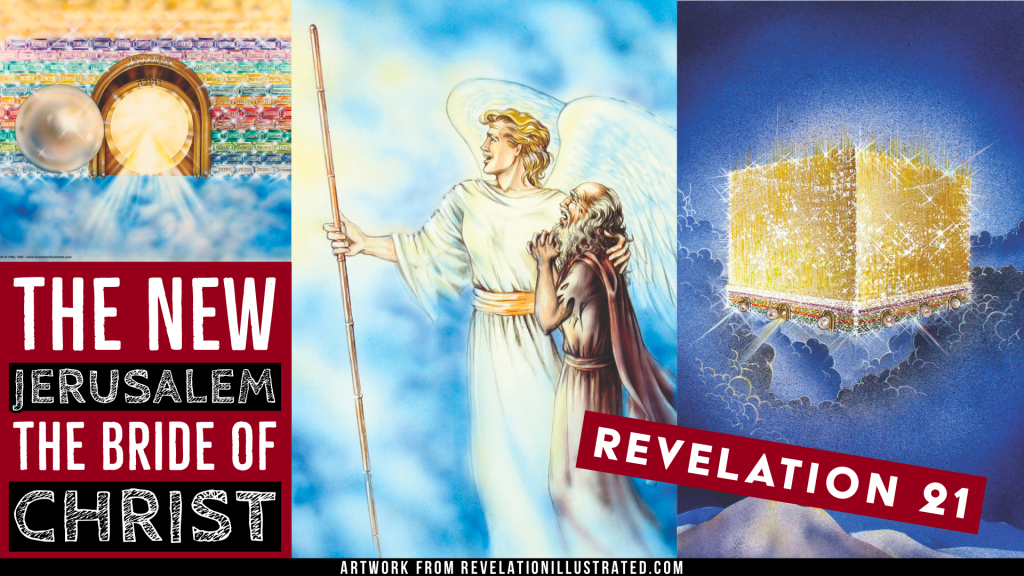
Revelation 21:1 Then I saw a new heaven and a new earth, for the first heaven and the first earth had passed away, and the sea was no more. And I saw the holy city, new Jerusalem, coming down out of heaven from God, prepared as a bride adorned for her husband. And I heard a loud voice from the throne saying, “Behold, the dwelling place of God is with man. He will dwell with them, and they will be his people,[b] and God himself will be with them as their God. He will wipe away every tear from their eyes, and death shall be no more, neither shall there be mourning, nor crying, nor pain anymore, for the former things have passed away.”

This describes the new Jerusalem, i.e. the church, on earth after the old Jerusalem has been destroyed. It describes God dwelling in his people and his people dwelling in God, right here on earth, now. The “no more tears, no death, no crying, no pain” etc. is right now on earth for Christians. This is spiritual joy and life even though we still cry and die physically. These verses do not refer to life after death although they would also describe life after death. But they would not preclude sadness in heaven after death.