IS THE BIBLE THE WORD OF GOD OR MEN?

In Swindoll’s Sept 2 “Insight For Living” he wrote: “Stay with the Scriptures. While our individual experiences may vary somewhat as the Lord uses each of us in unique ways, we must never—and I mean never—get too far from the revealed and reliable Word of God. If you do you will begin to use your experience as a basis for your beliefs, and the Scriptures will diminish in importance as you make more and more room for more strange experiences.”

“I have pastor friends who have done just that. And today when I talk with them, I find that they no longer believe that the Bible is God’s final Word. If that’s true, then how do I know where His Word starts and their vivid imagination stops? How much of it can I trust? No matter how persuasive the preacher, you and I need God’s inspired Word, not additional revelations of “truth.” When that happens, we are hopelessly awash.”

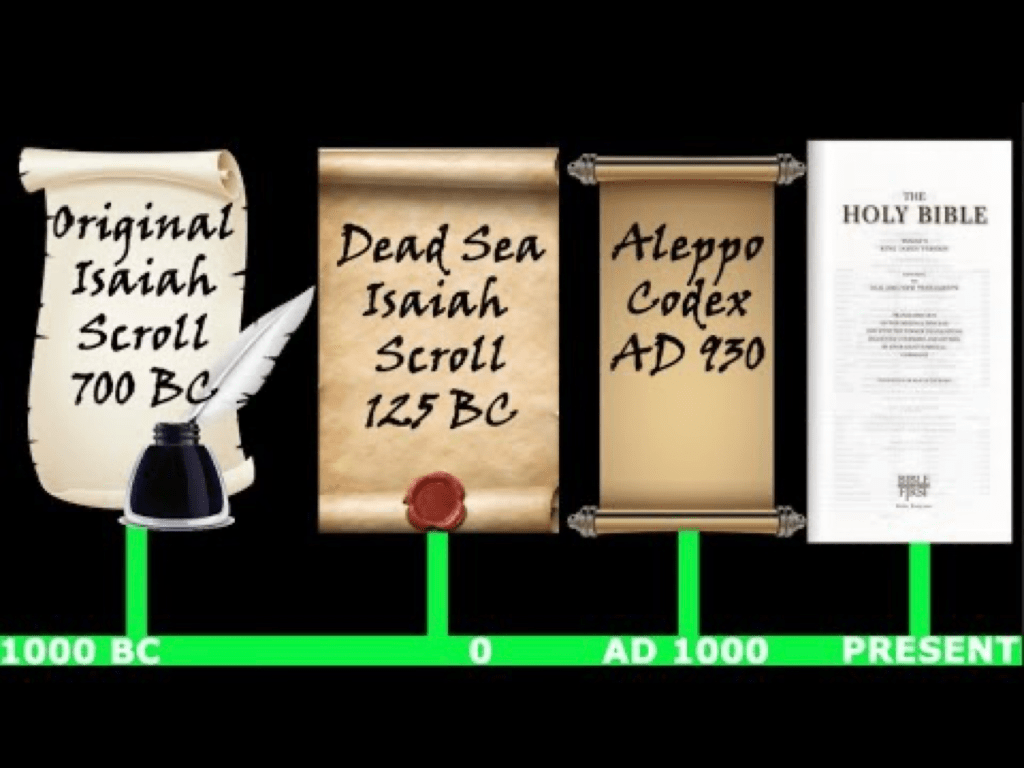
I teach “Christian Evidences” in my Bible classes, so the inspiration of the Word is a dear subject to me. It is true that we do not have the original writings of the apostles and prophets. But we do have thousands of manuscripts (copies) that help assure us that we have trustworthy translations today. It is true that there are “apparent contradictions” in the Word. But those can be explained if you give the Bible the “benefit of the doubt”. But today we hear more serious doubts about the inspiration of Scripture. Paul is considered to be just an uninspired man giving his homophobic, misogynistic opinions. Thus the LGBQT movement splits churches (the Methodist church and others). The inspired teachings of Paul are no longer the standard for determining right and wrong.

So they tell us that some parts of the Bible are inspired but that the false ideas of the writers are mixed in with the inspired portions. As Swindoll said, how can we determine which part is the actual word of God? Do we leave it to some uninspired preacher to tell us which parts of Scripture are “truth”?

I hope what Paul said of the Thessalonian Christians can be said of you. 1 Thessalonians 2:13 For this reason we also constantly thank God that when you received the word of God which you heard from us, you accepted it not as the word of mere men, but as what it really is, the word of God, which also is at work in you who believe.

ARE YOU LOSING YOUR FAITH? HAVE YOU LEFT YOUR CHURCH?

I found this on AI when I googled “why are people losing faith in God?” “People leave belief in God due to factors like intellectual doubts, disillusionment with religious institutions’ values or actions (such as hypocrisy or scandals), negative experiences with religious trauma, evolving personal values that conflict with religious teachings, influence from a more secularizing society, and changing family structures that don’t reinforce religious beliefs. The decision is often a complex, personal journey driven by a combination of these societal, institutional, and individual factors.”

Very well stated. Look at each of those reasons given for why people lose faith in God. Surveys say that only 5% of people in the U.S. are atheists, but many more are agnostics (who don’t believe there is enough evidence to decide if there is a God or not) or skeptics (who doubt that there is a God b/c that defies science in their opinion).

So then I googled, “why are people leaving churches”? and this is what I got. “People are leaving the Churches of Christ, as well as other religious groups, due to various factors including disagreement with legalistic practices (like their stance on instrumental music), lack of community and connection, perceived irrelevance to modern society, disillusionment with leadership or institutional hypocrisy, and personal experiences of church hurt or abuse. Other reasons are broader, such as a general trend of secularization and the rise of individual spirituality, where people prefer to find meaning online or outside of traditional religious structures.” Again, a very accurate and complete list of reasons. I struggle greatly with institutional Christianity, the “big business churches” that spend 80% of their money collections on their buildings, staff, an on themselves. I am a house church advocate with no budgets, buildings, or paid preachers and staff (which is the way it was in the first church in Acts). Justin Martyr, 2nd century apologist, said that the only collections taken up were to help the poor, widows, orphans, or stuggling families in their number. I can certainly relate to those who leave their church b/c it is going LGBQT like with the Methodist church or b/c of some scandal of their pastor having an affair with some of his members. All the reasons listed about contribute to the fact that 30% of those surveys check “none” for their religous affiliation. Only 5% of those 30% are atheists and the rest are just disallusioned with institutional Christianity and have “quit church”. Maybe the church has let them down. Maybe if the churches were more into spending their money collected into drilling wells, helping the poor and oppressed, and printing Bibles to share the gospel all over the world, especially to unevangelized nations and peoples. Maybe if the churches were more into just connecting as a family rather than focusing on bands and preachers which draws a lot of people to megachurches (many of whom admittedly do a good job with small groups, community service, and children’s ministries). So the “nones” are no longer going to church to at least have Bible teaching and Christian fellowship. Many of them find their own spirituality in some way, even basic Christian faith, but often they do not teach their children the faith. It is easy for them to just become worldly minded, lacking the spiriutal disciplines of Bible study, prayer, fellowship, etc. Sunday is just another day to go the lake or watch football. Nothing wrong with that unless we are forsaking Christian fellowship.

So, are you a “none”? How solid is your faith in God and in Jesus as the Son of God, our savior, raised from the dead? If your faith getting stronger or weaker? Have you left your church? Is there some other way that you can join with other Christians in a house church or small group? Are you grounding your children in the faith at home with family Bible studies? Do you constantly talk to them about the existence of God and the design in the universe and in nature? Do you talk about God in the home as if He is real?

Something to think about.

THE FAITH OF YOUR GRANDCHILDREN

I teach Christian evidences at a Christian school. My students come from different religious backgrounds. Some have wondered if God exists (our first study this year) and most have never questioned God’s existence. Most can’t make a defence of the hope of eternal life through the resurrection of Jesus as Peter called for (1 Peter 3:15). They are mostly surrounded by other kids raised in the Christian faith and churches, so they don’t even talk to Hindus, Buddhists, or atheists, although several said they had an atheist friend. So I teach them basic Christian evidences. We study the causal argument (God has to be the first cause that created everything since you can’t get something from nothing. We study the teleological argument (the design in the universe, in the human body, in DNA, in the periodic table, etc demands a supernatural designer), i.e. the intelligent design argument. We study the argument that evolved chemicals that end up as the human brain cannot have free will or a conscience of right and wrong, or reason. God must have put those things in people (a C. S. Lewis argument from Mere Christianity). So I teach the basics and pray that the seed will be sown. Fortunately, I had an atheist sudent come to belief in God and Jesus, and had the privilege of baptizing him. Hopefully what I have taught students will help them defend their faith, keep their faith as they go to colleges with a lot of atheistic teachers, and to help their friends come to faith.

But you know what is more important? I have a grandson who is very, very smart. At age 7, he could name all the moons of all the planets in our galaxy. He is into science, dinosaurs, etc. We had a discussion on the way back from McDonalds. Who made the sun? He said it was just formed like all the stars, i.e. somehow formed from the Big Bang explosion. Supposedly, all the matter in the uninverse was condensed into a small dense particle, a “singularity”, and it exploded and started forming all the stars and planets. But I asked him, “who created the singularity”? He said, “we don’t know.” I told him, “that is exactly what atheistic scientists tell us. They add, “science will figure that out some day.” I said, “you can’t get something from nothing (the first law of thermodynamics), so science can’t explain the creation from using the scientific method. Any theories they come up with is human speculation, not true science. But they will tell you that it could not have been created by a supernatural being, God. That would be out of the question. I told my grandson, “which is more logical: that everything was created from nothing, which violates scientific laws, or that there might be a supernatural God who created it all?” Neither scientists or creationists can prove their belief, and both involve faith even though scientists say their teaching is solely based on science, not faith (then they will tell you their theories as if they are facts). They will tell you that science will eventually get all the answers about creation, but that we no longer need to believe in some superstition about some God who created everything.

My point in all this is that it felt so good to be sharing evidences with my own grandson. Noah saved his own family. He was not able to save anyone else. I pray for my grandchildren to have faith in God and in Jesus, as I’m sure you the reader of this article pray for your families. They are so susceptible to modern scientific theories that go against the Bible and faith in God and Jesus. They are told that dinosaurs died out 70 million years ago and yet we have plenty of evidence that dinosaurs coexisted with people (drawings of dinosaurs on caves, figurines of dinosaurs made by native Indians, even dinosaurs in the Bible like Leviathon and Behemoth and the dragons in Isaiah). Atheistic scientists tell them that macro evolution (all life evolved from a single cell) is a proven fact when it is really just a theory that has little suport. The Law of Biogenesis says that you can’t get living things from nonliving things, and yet that (spontaneous generation) had to occur for macro evolution to happen. Spontaneous generation was disproved by Pasteur and Redi, and even atheists agree with the Law of Biogenesis.

Many atheists even admit that Darwinian macro evolution by natural selection and mutations could not produce the design in the universe, even though they don’t believe a supernatural God did it. There is a great video, “Evoltution and God” on youtube where college students are asked why they believe in macro evolution even though they can’t name a single proof. They simply say, “that’s what our science professors taught us”. The atheistic scientists say that miracles cannot happen b/c they can’t be tested in the lab, so the miracles in the Bible and the resurrection of Jesus can’t really have happened. Many of our founding fathers, like Thomas Jefferson, were Deists who believe that God created everything but then never intervened in human affairs after that. He rejected the miracles in the Bible. His famous Jeffersonian Bible has all the miracles of the gospels cut out! He did not believe tht Jesus was the Son of God, since God becoiming flesh by a virgin birth is impossible.

My prayer for you today is that God will bless your families, your children, your grandchildren, etc. that they might have faith in God and in Jesus in spite of all the attacks on Christianity and God and the Bible that they will hear. I know that you are praying for your families. Be ready to share basic evidences with you children and grandchildren. Have you ever tried to talk with them about God, about Jesus’ resurrection, about miracles in the Bible? You might be surpirised at some of their beliefs. Talk to them.

God bless you and your families.

1 TIMOTHY 4:1-5 FALSE TEACHERS

1 Timothy 4:1  “But the Spirit explicitly says that in later times some will fall away from the faith, paying attention to deceitful spirits and teachings of demons, by means of the hypocrisy of liars seared in their own conscience as with a branding iron, who forbid marriage and advocate abstaining from foods which God has created to be gratefully shared in by those who believe and know the truth. For everything created by God is good, and nothing is to be rejected if it is received with gratitude; for it is sanctified by means of the word of God and prayer.”

Paul is by the Spirit predicting some “apostasy”, a falling away from the faith. Paul also predicted this in 2 Thessalonians 2:1 “Now we ask you, brothers and sisters, regarding the coming of our Lord Jesus Christ and our gathering together to Him, that you not be quickly shaken from your composure or be disturbed either by a spirit, or a message, or a letter as if from us, to the effect that the day of the Lord has come. No one is to deceive you in any way! For it will not come unless the apostasy comes first, and the man of lawlessness is revealed, the son of destruction, who opposes and exalts himself above every so-called god or object of worship, so that he takes his seat in the temple of God, displaying himself as being God.”  

So Paul predicted some kind of “apostasy” (apostasia: Apostasy, rebellion, defection, falling away) before 70 AD. He could even be referring to the Jewish rebellion against Rome in 66-70 AD (one meaning of apostasia is “rebellion”) in 2 Thess 2:3. Or a spiritual apostasy. 1 Timothy 4 seems to be a spiritual apostasy where false teachers are making laws forbidding eating certain foods and forbidding marriage. Paul is very clear that Christians under the new covenant can eat anything, any animal, as long as they give thanks for it. I read one article that said that Paul was not saying that Christians can eat anyting, but that he was saying that some teachers were saying that Christians can’t eat the clean meats of Leviticus 11. That article said that Christians are still required to follow the meat laws of Leviticus, but I totally disagree with that. Those laws were given to the Jews, and only to the Jews. 1 Timothy 3:1-5 clearly says that Christians can eat anything that God created, and that includes eating any kind of meat, even the “unclean” meats forbidden for the Jews to eat in Leviticus 11. There are Christian groups like the 7th Day Adventists and the Worldwide Church of God that still follow the food laws of Leviticus 11. That’s fine, but they should not make that a heaven/hell issue for other believers.

The 2nd false teaching was the forbidding to marry. My research told me that the 2nd century church fathers suggested that celibacy would be better. They no doubt got this from 1 Corinthians 7 where Paul told the Corinthians to stay unmarried if they were not married, but he added that. was due to a “present distress” (persecution of Christians by the Jews or Rome). Obviously that is not a hard fast celibacy law for all ministers or priests. He even told them to marry if they were going to burn with lust if they did not marry. Some church fathers suggested that sex within marriage should only be for procreation, having children, and not for sexual enjoyment. But Paul in 1 Corinthians 7 told married partners not to withhold sex from their partners. The first official celibacy law was the Council of Elvira in 306 AD and it issued a decree for priests not to marry. The Western Church, the Roman Catholic church, eventually forbade priests from marrying, but the Eastern Church, the Orthodox church centered in Constantinople in the Byzantine Empire allowed their priests to marry. Bottom line, God never forbade marriage except on rare occasions (He told Jeremiah not to marry or have children in light of his “present distress” of the Jews going into Babylonian captivity very soon after he prophesied). Paul even told the younger widows in 1 Timothy 5:14 Therefore, I want younger widows to get married, have children, manage their households, and give the enemy no opportunity for reproach.” God wants us to marry if we so desire, to have children if we so desire, and enjoy sex within our marriages. If someone chooses not to marry, that is fine, but no one should make laws forbidding marriage like the Catholic Church has done with their priests. Or like the Shakers. The Christian Shakers were a religious group that practiced communal celibacy, believing that abstaining from sex was necessary to wage a spiritual war against the flesh. 

Be careful of any teachers who start making up laws that are not clearly taught in the New Covenant. Or teachers that make things to be heaven/hell doctrines when they are not.

Thanks for reading.

SCIENCE FALSELY SO CALLED (1 TIMOTHY 6:20)

The only translation (if I am correct) that uses the word “science” is the KJV in Daniel 1:4 and 1 Timothy 6:20. Here is 1 Timothy 6:20 “O Timothy, keep that which is committed to thy trust, avoiding profane and vain babblings, and oppositions of science falsely so called”. The Greek word is gnosis, which means knowledge, and that is how it is translated in most translations except the KJV. In the NASB 1 Timothy 6:20 Timothy, protect what has been entrusted to you, avoiding worldly, empty chatter and the opposing arguments of what is falsely called “knowledge”. Even the NKJV translates it as “knowledge”. So why would the KJV translators translate it as “science”? “The KJV translators were heavily influenced by the Latin Vulgate, which used the Latin word “scientia” (related to “knowledge”) to translate “gnosis”. In the early 17th century, “science” in English encompassed a broader range of knowledge than it does today. It could refer to any kind of learning or knowledge, not just what we now call scientific fields.” (AI) So even in 1611 AD the word “science” in the KJV did not refer to science as we know it today, science based on empirical evidence through the scientific method.

So what is the “knowledge falsely so called” in 1 Timothy 6:20? It referred to some kind of “knowledge” that wasn’t Biblical based knowledge or Spirit inspired truth from inspired writers like Paul and the apostles. It would include “worldly, empty chatter and opposing arguments” to the truth. It would include “myths and endless genealogies and speculation” (1 Timothy 1:4). It would include “forbidding marriage and advocating abstaining from certain foods” (1 Timothy 4:3). It would include “worthless stories typical of old women” (1 Timothy 4:7). It would include “controversial questions and disputes about words” (1 Timothy 6:4). Paul had already condemned all these false teachings in his letter to Timothy, so the context would say that is the “knowledge false called science” in 6:20.

Many commentators think that Paul is refuting “gnosticism” in 6:20, especially since gnosticism comes from the word gnosis. From AI: “Elements of Gnostic thought can be traced back to pre-Christian Jewish mysticism and Hellenistic philosophy, particularly Middle Platonism. Gnosticism developed alongside early Christianity, with some scholars suggesting it arose from within Christian communities while others propose it entered Christianity from other sources. Gnostic ideas and writings became prominent in the Mediterranean world during the 2nd century CE. Early Church Fathers denounced Gnosticism as heresy, and efforts to suppress it were largely successful, leading to the loss of much Gnostic literature.” For example, “A key figure (Irenaeus, 130-202 AD) in combating Gnosticism, he is known for his work “Against Heresies,” which systematically dismantled Gnostic teachings. He emphasized the importance of apostolic tradition and the physical resurrection of Christ, both of which were denied by Gnostics.” (AI)

What was “gnosticism”? “Gnosticism was a diverse set of religious and philosophical beliefs that originated before Christianity, with roots in Greek philosophy and various other traditions. It emphasized the concept of “gnosis,” a kind of esoteric knowledge that was believed to be essential for salvation and liberation from the flawed material world. Gnostics believed the material world was created by a lesser, flawed deity (the demiurge) rather than the ultimate, unknowable God.” (AI) “Interest in Gnosticism was revived in the 20th century with the discovery of Gnostic texts in Egypt, such as the Nag Hammadi library.” The Nag Hammadi library contains 52 texts, primarily Gnostic gospels, including the Gospel of ThomasGospel of Philip, and the Gospel of Truth. These texts, discovered in 1945 near Nag Hammadi, Egypt, offer insights into early Christian and Gnostic thought, often differing from mainstream Christian beliefs.” (AI) The Gospel of Thomas is secret sayings of Jesus given only to Thomas he apostle. The opening lines: “These are the secret sayings that the living Jesus spoke and Didymos Judas Thomas recorded. And [Jesus] said, ‘Whoever discovers the interpretation of these sayings will not taste death.'” “Notice that the emphasis is immediately on discovering an interpretation and on increasing knowledge as a way to eternal life. It contains nothing about salvation coming through one’s relationship with God or even about living a godly life. In this Gnostic gospel, eternal life comes from the secret knowledge that will explain the obscure sayings”. (theberean.org) The Gospel of Thomas is generally believed to have been written in the mid-second century CE, specifically between 100-180 CE. No one really believes that it was written by the apostle Thomas.

Another widely discussed gnostic gospel is the Gospel of Judas which was found in 1978 near El Minya, Egypt, and is part of the Codex Tchacos. “The opening line of the Gospel of Judas demonstrates this secret knowledge: “The secret account of the revelation that Jesus spoke in conversation with Judas Iscariot during a week, three days before he celebrated Passover.” This so-called gospel gives a quite different view of the relationship between Jesus Christ and Judas, and its defenders say that it offers “new insights” into Jesus’ betrayal, and the nature and character of Judas. “New insights” is another common theme of Gnosticism.” (theberean.org) The Gospel of Judas makes Judas a hero who is helping Jesus fulfill his destiny to die for the sins of the world instead of “the son of perdition” (Jesus called him that in John 17:12), the betrayer of Jesus who sold out his master for 30 pieces of siilver.

It doesn’t appear that gnosticism proper had been well formed by 62 AD when Paul wrote 1 Timothy, although some roots of it may have come from Jewish mysticism (which 1 Timothy mentions that) and Gentile philosophy. So we probably need to stick with the context of 1 Timothy, as stated above, to define the “knowledge false called science”.

I must admit, however, the temptation to make this a discussion of science today, especially as it relates to certain evolutionary theories that are taught as “knowledge” and facts which really are not scientific facts. So indulge me, please. I certainly think my logic could apply to that error today. Science is based on empirical knowledge that can be tested and proven by the scientific method. True science doesn’t contradict the Bible. But then modern science teaches several things that it calls “scientific facts” such as living matter coming from non-living matter (spontaneous generation). Spontaneous generation was believed to be possible until Pasteur and Redi disproved it in scientific experiments. But atheistic evolutionists still have to maintain that it did happen at some time in the past for their evolution to occur. Modern science teaches that the universe had a beginning, and that it had to come from nothing. But that contradicts their own 1st law of thermodynamics, which says that if there ever was nothing then there would still be nothing (my paraphrase of it). Modern science teaches that man (and every living creature) evolved from a single cell, and that there was “macro” evolution of species evolving to totally different species, such as reptiles evolving from amphibians and mammals evolving from reptiles. There is much adaptation within each species (which is called micro evolution) but there is no proof of species evolving into totally different species. Science claims several fossil proofs of that, but those are inconclusive. There should be millions of transitional fossils as animals went from one species to a totally different species, but that is not found in the fossil evidence. What science teaches is jus unfounded theory but it is taught as proven facts. Modern science teaches that the earth is at least 5 billion years old based on radiometric dating methods. That is pretty much taught as proven fact, but that dating method is based on assumptions that can’t be proved. The original amount of “mother” and “daughter” radioactive element that were in a sample found today must be known to be able to accurately use the radiometric dating method, and that cannot be known. So if science assumes that the original sample had 100% mother and 0% daughter, then that is an assumption that can’t be proven and that could totally disprove the reliability of that method of dating the earth. The Bible genealogical records say that the earth is about 6,000 years old and there are many proofs for a “young earth” such as the decay of the earth’s magnetic field, carbon-14 in diamonds, soft tissue found in dinosaur fossils, polystrate fossils found in multiple sediment layers, and erosion rates of canyons. God created everything full grown, so things would look old immediately after creation (this is called “apparent age”). Adam and Eve would have looked as young adults immediately after God created them. There were precious gems in the Garden of Eden immediately after creation that did not take thousands of years to form. Again, science is teaching things as facts that cannot be proven and can actually be disproven.

In spite of all that, science books continue to teach atheistic evolutionary theories as facts. In a video, “God vs Evolution” (you can watch it on youtube), college students and professors are asked if they believe in macro evolution. All interviewed say yes they do. But when asked why they believe it, they usually just say that they believe it b/c their teachers and science books and science teachers have taught them that such is basically proven facts. When asked to give examples of reptiles evolving from amphibians or other such macro evolution examples, they can’t give a single one.

Thanks for indulging me. I am currently teaching Christian evidences in my Bible classes and we will be studying evolution so what I have written is currently on my mind. It is extremely important that we apply what Paul told Timothy to do, i.e. to refute any “knowledge falsely called science”. If our children buy into atheistic macro evolution, then they will inevitably believe that we are nothing but evolved animals with no absolute morals. They will probably reject the Genesis account of creation in six 24 hour days and start thinking that the Genesis account is just myth. Their false confidence is science might get them to reject all the miracles of the Bible since since says that, for example, no one can walk on water or turn water to wine. Eventually they might lose faith in the Bible as God’s word, and if they do, they might then reject the whole idea of Jesus dying for our sins which is the central message of the Bible.

Thanks for reading.

THE MYSTERY OF GODLINESS

1 Timothy 3:14 I am writing these things to you, hoping to come to you before long; 15 but in case I am delayed, I write so that you will know how one should act in the household of God, which is the church of the living God, the pillar and support of the truth. 16 Beyond question, great is the mystery of godliness:

1. He who was revealed in the flesh,
2. Was vindicated in the Spirit,
3. Seen by angels,
4. Proclaimed among the nations,
5. Believed on in the world,
6. Taken up in glory. 

    The church is the pillar and support of the truth. What truth? Some sectarian list of rules and minor doctrines (like instrumental music)? All doctrine is important but the church must stay focused on the main truth of the Christian faith. The following was probably a core “confession of faith”, of what Christians believed in the early church. 

    1) Jesus was revealed in the flesh. When? The incarnation. In the beginning was the word, and the word was with God and the word was God, and the Word became flesh. John 1:1-3,14 Sadly, the church in the first few centuries had several different opinions on the nature of Jesus and much church controversy and division. It is sufficient that we believe that Jesus is the only Begotton Son of God.

    2) Jesus was vindicated in the Spirit. How? His miracles. Acts 2:22 “Men of Israel, listen to these words: Jesus the Nazarene, a Man attested (dikaioó: To justify, to declare righteous, to acquit. Usually translated “justified”) to you by God with miracles and wonders and signs which God performed through Him in your midst, just as you yourselves know.”

    3)Seen by angels. When? Angels were at His: 

    Birth: Angels announced Jesus’s birth to the shepherds and sang praises to God.                                        Temptation: Angels ministered to Jesus after his temptation in the wilderness.  Gethsemane: An angel strengthened Jesus during his agony in the Garden of Gethsemane.  Resurrection: Angels rolled the stone from the tomb and announced His resurrection to the women.  Ascension: Angels were present as Jesus ascended into heaven.  Ongoing Ministry: Angels continue to witness and praise Jesus in heaven (Revelation 5).

    4) Proclaimed among the nations. When? Preaching of the gospel in Acts. Romans 16:25 Now to Him who is able to establish you according to my gospel and the preaching of Jesus Christ.” Colossians 1:23 …”hope of the gospel that you have heard, which was proclaimed in all creation under heaven.”    

    5) Believed on in the world. When? The conversion of many in Acts. Saved by grace through faith.  

    6) Taken up in glory. When? The ascension. Restored to former glory. John 17:1-3. Raised to be king of kings over all the kingdoms of the world. 

    This is a great statement of the core faith, the confession of faith. It is a summary of the plan of redemption. Christians may differ on a lot of minor issues, but this is what we should all believe in adn agree on. This is the message we need to spend our resources on getting it to the nations of the world. Most denominations agree on these central truths. Some, however, do not believe in the miracles or divinity of Jesus, which is sad.

    This core set of beliefs is called a “mystery of godliness”. In the New Testament, the word “mystery” (Greek: musterion) generally refers to a truth previously hidden but now revealed, often through divine revelation. It doesn’t necessarily mean something inherently puzzling, but rather a secret known to God and now disclosed to certain individuals, especially through the gospel. (AI) It is used several times in the New Testament.

    1 Corinthians 15:51

    Behold, I show you a mystery; We shall not all sleep, but we shall all be changed,

    1 Corinthians 2:7

    But we speak the wisdom of God in a mystery, [even] the hidden [wisdom], which God ordained before the world unto our glory:

    1 Timothy 3:9

    Holding the mystery of the faith in a pure conscience.

    2 Thessalonians 2:7

    For the mystery of iniquity doth already work: only he who now letteth [will let], until he be taken out of the way.

    Colossians 1:26

    [Even] the mystery which hath been hid from ages and from generations, but now is made manifest to his saints:

    Colossians 1:27

    To whom God would make known what [is] the riches of the glory of this mystery among the Gentiles; which is Christ in you, the hope of glory:

    Colossians 2:2

    That their hearts might be comforted, being knit together in love, and unto all riches of the full assurance of understanding, to the acknowledgment of the mystery of God, and of the Father, and of Christ;

    Colossians 4:3

    Withal praying also for us, that God would open unto us a door of utterance, to speak the mystery of Christ, for which I am also in bonds:

    Ephesians 1:9

    Having made known unto us the mystery of his will, according to his good pleasure which he hath purposed in himself:

    Ephesians 3:3

    How that by revelation he made known unto me the mystery; (as I wrote afore in few words,

    Ephesians 3:4

    Whereby, when ye read, ye may understand my knowledge in the mystery of Christ)

    Ephesians 3:9

    And to make all [men] see what [is] the fellowship of the mystery, which from the beginning of the world hath been hid in God, who created all things by Jesus Christ:

    Ephesians 5:32

    This is a great mystery: but I speak concerning Christ and the church.

    Ephesians 6:19

    And for me, that utterance may be given unto me, that I may open my mouth boldly, to make known the mystery of the gospel,

    Mark 4:11

    And he said unto them, Unto you it is given to know the mystery of the kingdom of God: but unto them that are without, all [these] things are done in parables:

    Revelation 10:7

    But in the days of the voice of the seventh angel, when he shall begin to sound, the mystery of God should be finished, as he hath declared to his servants the prophets.

    Revelation 1:20

    The mystery of the seven stars which thou sawest in my right hand, and the seven golden candlesticks. The seven stars are the angels of the seven churches: and the seven candlesticks which thou sawest are the seven churches.

    Revelation 17:5

    And upon her forehead [was] a name written, MYSTERY, BABYLON THE GREAT, THE MOTHER OF HARLOTS AND ABOMINATIONS OF THE EARTH.

    Revelation 17:7

    And the angel said unto me, Wherefore didst thou marvel? I will tell thee the mystery of the woman, and of the beast that carrieth her, which hath the seven heads and ten horns.

    Romans 11:25

    For I would not, brethren, that ye should be ignorant of this mystery, lest ye should be wise in your own conceits; that blindness in part is happened to Israel, until the fulness of the Gentiles be come in.

    Romans 16:25

    Now to him that is of power to stablish you according to my gospel, and the preaching of Jesus Christ, according to the revelation of the mystery, which was kept secret since the world began,

     In ancient Rome, mystery cults were secretive religious groups that offered initiates a path to personal salvation and a more fulfilling afterlife through rituals and shared experiences. 
    Mystery cults were religious organizations with secret rites and beliefs. They often centered around a mythic narrative involving a god or goddess who experiences death and rebirth, symbolizing the cycle of life and death. Examples would be Mithraism, the Cult of Isis, the Cult of Cibele, the Eleusinian Mysteries, the Cult of Dionysus. The mystery of godliness was not like those pagan mysteries. The mystery of godliness was based on a true historical figure, Jesus, who died and was bodily raised from the dead with plenty of evidence to support that historical occurrence. The mystery of godliness was “how is God going to save and justify sinners and yet remain just to punish sin.” The answer to that mystery was revealed when Jesus died and was raised. That mystery was delivered to the apostles through the inspiration of the Spirit and they preached to the entire Roman Empire.

    We are very blessed to be living after the “mystery was finished” (Revelation 10:7) and recorded in the New Testament books. We are not able to see the miracles or resurrection of Jesus, but we have sufficient evidences that they really happened in history.

    DESCRIPTIVE TERMS FOR THE CHURCH

    I am teaching 1 Timothy and we are about to study 1 Timothy 3:14 I am writing these things to you, hoping to come to you before long; 15 but in case I am delayed, I write so that you will know how one should act in the household of God, which is the church of the living God, the pillar and support of the truth.” Of particular note, he calls the church, which is made up of saved believers in Jesus, the “household of God” and the “pillar and ground of the truth“. So what are the terms used in the NT to describe the church? I found this on AI:

    • City. The city of the living God, the heavenly Jerusalem. Heb 12:22 The New Jerusalem Rev 21:2 This is a spiritual city. Many look for Jesus to come back and establish a new physical city of Jerusalem, but that is not the case.
    • Body of Christ:
      This metaphor highlights the unity and interconnectedness of believers, with Christ as the head. Each member plays a vital role, contributing to overall health and function of the body. Col 1
    • Temple of God:
      Just as the temple was a dwelling place for God in the Old Testament, the church is seen as a place where God’s Spirit dwells (naos: Temple, sanctuary:denotes the sanctuary proper—the dwelling place of God—rather than the wider temple precincts.. Rev 21:3 the “tabernacle of God” (skénoó: To dwell, to tabernacle, to pitch a tent to live in). God dwells in believers. 1 Cor 3:16; 6:19
    • Bride of Christ:
      This metaphor emphasizes the intimate and loving relationship between Christ and the church. Christ is the bridegroom, and the church is his beloved bride. Eph 5
    • Flock of God:
      This imagery emphasizes the care and guidance that Christ provides for his followers, likening them to sheep under the care of a shepherd. Acts 20
    • Family of God:
      This term (oikos: House, household, home, family) highlights the close-knit relationships among believers, who are considered brothers and sisters in God’s family. 1 Peter 2:6 spiritual house (oikos) made up of “living stones”.
    • Kingdom of God:
      This emphasizes the reign and authority of God over the church, and the church’s role in extending God’s kingdom on earth. Col 1:13 This is a spiritual kingdom. Jesus said in John 18:36 “My kingdom is not of this world”. He also said in Matthew 16:27,28 Mark 9:1 that some would still be alive to see Him coming in his new kingdom, which is the church that was established in Acts 2.
    • Pillar and Ground of the Truth:
      This metaphor (stulos: evokes the architectural pillar—load-bearing, upright, immovable) emphasizes the church’s role in upholding and proclaiming the truth of the gospel. 1 Tim 3
    • Ekklesia:.The Greek word ekklesia, translated as “church” in English, literally means “an assembly” or “those called out,” highlighting the idea of believers being called out from the world to form a community. 

    I knew all this but it just reminded me of all the different perspectives the church represents. A complete list of what the church should mean to us as members of that church. Both doctrinally, in our relationships with Jesus and the Father, and in our relationships with one another. We tend to think of the church as a building or a 503c3 organization, but the early church did not own buildings and there was no such thing as a 503c3 with trustees to allow members to write off their donations to the church on their tax returns. The church was simply the believers meeting in house churches, and all the descriptive terms for the church above would have meant a lot to help them understand the role of the church. The Jews were coming out of Judaism with its impersonal rituals and rules. The Gentiles were coming our of worshipping idols with impersonal worship of idols. The idea of “the church” was foreign to them.

    So I know that thinking about this helped me to realize what the church should be to me. It helps me to think of being a part of a spiritual family, the dwelling place of God, the flock of sheep with Jesus as the shepherd, etc. It is easy just to “go to church”, sit through a sermon/worship service and let that be “church” to a person. The church should mean so much more to a believer, a member of the church.

    I hope this artlce helps us all.

    WHEN DO YOU GET YOUR TICKET TO TAKE A TRIP ON THE TRAIN? Corrie Ten Boom

    You probably know the story of Corrie Ten Boom and her family in the concentration camps in WWII. They weren’t Jews but hid some Jews in their house (The Hiding Place book and movie). She lost all her family in the camps. Her sister had great faith but feared death and Corrie comforted her by remembering what their father had once told her. “Father sat down on the edge of the narrow bed. “Corrie,” he began gently, “when you and I go to Amsterdam-when do I give you your ticket?” “When Corrie worries about the future, her father asks her when she is given the ticket to get on a train. I sniffed a few times, considering this. “Why, just before we get on the train.” “Exactly. And our wise Father in heaven knows when we’re going to need things, too. Don’t run out ahead of Him, Corrie. When the time comes that some of us will have to die, you will look into your heart and find the strength you need-just in time.

    I know Christians should not fear death. Martyrs like Polycarp were not afraid of death. “Polycarp’s steadfastness is highlighted in his refusal to deny Christ, even when threatened with death by burning and mauling by beasts. He viewed martyrdom not as something to be feared, but as an honor and a way to emulate Christ. He believed that true martyrs represented Christ in their actions surrounding death.” (AI) But I have to be honest. I do fear death. I blame my mom for all my fears! She was always trying to protect me from bad things that might happen. Don’t climb up high, you might fall. So I have acrophobia! Watch out for snakes, so I am afraid of snakes. My grandsons pick up non-poisonous snakes and handle them. My mom always knew of someone who had died from a minor injury or infection, like an infected toe. So even a little infection worries me. She was always cautious about checking the details of everything, so I am OCD. I do have faith that I will live eternally and never die (spiritually) just as Jesus promised, but I still have that fear of death and what it will be like to breathe your last breath and lose life in this body.  

    That is why the story of Corrie and her sister Betsy is comforting to me. When it comes time to die, I hope that God will give me the comfort and strength that I need to face death courageously. I believe that he will.

    I have a prayer that I make every day asking God to remove fear, doubt, worry, and stress from my mind, to help me to “cast all my anxiety on Him”. I admit that I am a worrier. Here’s what Corrie said about worry. ““Worrying is carrying tomorrow’s load with today’s strength-carrying two days at once. It is moving into tomorrow ahead of time. Worrying doesn’t empty tomorrow of its sorrow, it empties today of its strength. Trying to do the Lord’s work in your own strength is the most confusing, exhausting, and tedious of all work. But when you are filled with the Holy Spirit, then the ministry of Jesus just flows out of you.”

    Here is the article some of these quotes from Corrie were taken from. https://emilybrookswriter.com/2022/07/24/waiting-for-your-ticket-the-courage-of-corrie-ten-boom/?scrlybrkr=f2f8117f

    PAUL’S “4TH MISSIONARY JOURNEY” AND THE PASTORAL EPISTLES: FALSE TEACHERS (1 TIMOTHY 1)

    Paul was released from his 2 years in house arrest in Rome and made a final journey. He probably went to Spain, and then he went to Crete where he left Titus to correct false teachers on that island. He then went to Miletus (2 Timothy 4:20 where he left Trophimus ill) and Ephesus (or close by) where he left Timothy to correct false teachers in the church there. 1 Timothy 1:“I urge you, as I did when I was on my way to Macedonia, to remain in Ephesus so that you may instruct certain people not to teach different teachings and not to occupy themselves with myths and endless genealogies that promote speculations rather than the divine training that is known by faith.” He then went to Troas (we know that b/c he left his cloak there, 2 Timothy 4:13 “When you come, bring the cloak that I left with Carpus at Troas, also the books, and above all the parchments.”) Paul wrote 2 Timothy after he was arrested again and put in prison in Rome to be beheaded by Nero shortly thereafter. He then went to Macedonia where he proably wrote a letter to Titus and the first letter to Timothy. He then probably visited Corinth (1 Timothy 4:20 “Erastus remained in Corinth”). He was making his way to Nicopolis (Titus 3: 12 When I send Artemas to you, or Tychicus, do your best to come to me at Nicopolis, for I have decided to spend the winter there.” We don’t know if he made it to Nicopolis, but he was arrested either in Nicopolis or one the way to Nicopolis and put in prison in Rome where he would write 2 Timothy to Timothy. He would be beheaded by Nero in 66-67 AD or so.

    Here is a great simple map of this last journey (I hope it shows up in this blog; here is the site to find the map and a discussion: https://www.thebiblejourney.org/). So this map will be the basis for a few blogs on the Pastoral Epistles (1, 2 Timothy and Titus). He probably visited Spain at some point in this journey. Evidence from early church fathers: Clement of Rome (a late first century bishop of the church in Rome), a contemporary of Paul, suggests that Paul did travel to the West, which is believed to be Spain. Other early church fathers like John Chrysostom and Cyril of Jerusalem also support the idea of a Spanish visit. The Muratorian Fragment: (170-200 AD) This early Christian text mentions Paul’s departure from Rome for Spain.

    As stated in 1 Timothy 1:3 the main reason he left Timothy in Ephesus was to correct false teachers there. Timothy was an evangelist who had miraculous gifts of teaching, so he would have Biblical authority to correct false teachers. He describes the false teachers in several places in 1 Timothy.
    The false teachers there are not the usual Judaizers that Paul fought constantly who tried to make circumcision of Gentile Christians a test of fellowship (that issue is never mentioned in 1 Timothy). They did created legalistic rules (in 1 Timothy 4:1-4 they forbade marriage). They are characterized by their focus on endless genealogies and myths (perhaps legends about Old Testament characters as found in the pseudepigraphic like the book of Enoch) writings, which lead to speculation rather than promoting God’s work of faith. They distort the law, using it to create legalistic rules (1 Timothy 4:1-4 they forbade certain foods which would probably be the forbidden unclean meats of Leviticus in the Law) and divisions rather than understanding its purpose in revealing sin and pointing to Christ. Ultimately, their teachings are motivated by a desire for prestige and personal gain, rather than genuine love and a pure heart. Paul even named two of the false teachers (1 Timothy 1:20 among them are Hymenaeus and Alexander, whom I have turned over to Satan, so that they may be taught not to blaspheme.” Paul told Timothy that there might be some of the elders in Ephesus who needed to be rebuked by Timothy for false teaching or bad conduct (1 Timothy 5:17-22). Paul had warned the Ephesian elders about false teachers even among the elders (when he met with them at Miletus on his 3rd missionary journey). He had told the elders: Acts 20:28 Keep watch over yourselves and over all the flock, of which the Holy Spirit has made you overseers, to shepherd the church of God that he obtained with the blood of his own Son. 29 I know that after I have gone, savage wolves will come in among you, not sparing the flock. 30 Some even from your own group will come distorting the truth in order to entice the disciples to follow them.” Paul gave a detailed description of the false teachers in 1 Timothy 6:Whoever teaches otherwise and does not agree with the sound words of our Lord Jesus Christ and the teaching that is in accordance with godliness is conceited, understanding nothing, and has a morbid craving for controversy and for disputes about words. From these come envy, dissension, slander, base suspicions, and wrangling among those who are depraved in mind and bereft of the truth, imagining that godliness is a means of gain.” They were preaching for money.

    So, in trying to apply this particular situation of false teachers in Ephesus, what can be said of false teachers today. I came up with 3 tests for false teachers today.

    1. They preach and teach with impure motives. They desire power, money, or sex (or some combo of these 3). 2 Peter 2:1 “But false prophets also arose among the people, just as there will be false teachers among you, who will secretly bring in destructive opinions. They will even deny the Master who bought them—bringing swift destruction on themselves. Even so, many will follow their debaucheries, and because of these teachers the way of truth will be maligned. And in their greed they will exploit you with deceptive words. Their condemnation, pronounced against them long ago, has not been idle, and their destruction is not asleep. 12 These people, however, are like irrational animals, mere creatures of instinct, born to be caught and killed. They slander what they do not understand, and as those creatures are destroyed, they also will be destroyed, 13 suffering the wages of doing wrong. They count it a pleasure to revel in the daytime. They are blots and blemishes, reveling in their pleasures while they feast with you. 14 They have eyes full of adultery, insatiable for sin. They entice unsteady souls. They have hearts trained in greed. Accursed children!” It is hard to know the motives of teachers and preachers and we should be careful in judging anyone’s motives. But eventually a tree is known by its fruit and their motives will become more obvious. Jesus said: Matthew 7:15 “Beware of false prophets, who come to you in sheep’s clothing but inwardly are ravenous wolves. 16 You will know them by their fruits. Are grapes gathered from thorns or figs from thistles? 17 In the same way, every good tree bears good fruit, but the bad tree bears bad fruit. 18 A good tree cannot bear bad fruit, nor can a bad tree bear good fruit. 19 Every tree that does not bear good fruit will be cut down and thrown into the fire. 20 Thus you will know them by their fruits.” For example, a megachurch preacher who has a net worth of 30 million dollars (there are several of them) makes him (or her) a false teacher in my opinion. A paid preacher who is caught having affairs with some of the members of his church is another example (plenty examples of those). A preacher like Jim Jones (People’s Temple, the mass Guyana suicide)or David Karesh ( the Waco, Texas Branch Davidians) who claimed to be an inspired prophet who could freely have sex with the women in his flock are examples of false teaches with impure motives.
    2. Their teaching will focus on controversial issues, intellectual debates, etc. instead of focussing on the central themes of the person and work of Jesus and daily Christian living. They might impose their own interpretations of scripture on others. They might be as described in Colossians 2:16 Therefore, do not let anyone condemn you in matters of food or drink or of observing festivals, new moons, or Sabbaths. 17 These are only a shadow of what is to come, but the body belongs to Christ. 18 Do not let anyone disqualify you, insisting on self-abasement and worship of angels, initiatory visions, puffed up without cause by a human way of thinking, 19 and not holding fast to the head, from whom the whole body, nourished and held together by its ligaments and tendons, grows with a growth that is from God.” We had a movement within the Restoration Churches (known as the Churches of Christ) of preachers who started making as tests of fellowship issues like using money from the treasury to help orphanages or using one cup in the Lord’s Supper or having kitchens in the church building. Those issues were not heaven/hell issues and should have been discussed and debated lovingly but instead they ended up in power struggles and many divisions within the churches.
    3. Often false teachers will introduce teaching that is foreign to the basic teaching of the 27 books of the New Testament. For example, Christian Science adds all the writings of their prophetess Mary Baker Eddy (they also deny the deity of Jesus). The Jehovah’s Witnesses have their prophet founders Rutherford and Russell and their writings and a lot of rules they bind on their members. The Seventh Day Adventists have their prophetess Ellen White and her writings. The Mormons have the stories of Joseph Smith and his writings, as well as the book of Mormon which they say has equal authority as the New Testament. The Catholic church taught that the Pope would be the head of the church and that his papal decrees were equal authority to the decrees of the apostles. I would have to say that these are movements begun by false teachers and false prophets. We don’t need to judge those who are members of those movements (I know a Mormon man whom I think is a fruit of the Spirit Christian), but we must warn people about those false teachers and false prophets and their writings. We have to be careful before we call someone a false teacher. I know that in the church that I was raised in that our preachers called Baptist preachers and Billy Graham false teachers b/c those preachers didn’t preach baptism exactly like my church did (even though the Baptists taught the importance of immersion of those old enough to believe). My preachers acted like we had the correct teaching on every single doctrine and issue in the Bible, and that anyone who disagreed with our interpretations was a false teacher. Of course that led to many different lists of sectarian teachings that they couldn’t even all agree on. Conservative denominational preachers are not false teachers if their motives are pure. They might disagree on issues but they usually agree on the core teaching of the person and work of Christ and the requirements for Christian living. But I must mention that this latest LGBQT movement within some of the denominations (like the Methodists) is false teaching and should be condemned.

    So I hope this give us the basic context of 1 Timothy 1 and some possible application to false teachers today. Paul said in 1 Timothy 3:15 that the church is the “church of the living God, the pillar and support of the truth.” Jude warned in Jude 3: I find it necessary to write and appeal to you to contend for the faith that was once and for all handed on to the saints. For certain intruders have stolen in among you, people who long ago were designated for this condemnation as ungodly, who pervert the grace of our God into debauchery and deny our only Master and Lord, Jesus Christ.” Paul said in 2 Timothy 2:23 Have nothing to do with stupid and senseless controversies; you know that they breed quarrels. 24 And the Lord’s servant must not be quarrelsome but kindly to everyone, an apt teacher, patient, 25 correcting opponents with gentleness. God may perhaps grant that they will repent and come to know the truth 26 and that they may escape from the snare of the devil, having been held captive by him to do his will.” We must defend the faith in love, but we must correct those who really are false teachers and false prophets in order to protect those who would be led astray by them.

    DOES GOD SEND DELUSIONS ON PEOPLE?

    Does God send delusions on people that makes them believe lies? Some verses, on superficial reading, suggest that: 2 Thessalonians 2:11 For this reason God will send upon them a deluding influence so that they will believe what is false, 12 in order that they all may be judged who did not believe the truth, but took pleasure in wickedness.” Bert Thompson in his book, Creation Compromises, made some great comments on this.
    “The simple fact of the matter, however, is that we are responsible for what we choose to believe. Using the personal volition with which God has endowed us, we may choose freely to believe the truth, or we may choose just as freely to believe error. The choice is up to each individual. And once an individual has made up his mind that he prefers error over truth, God will not deter him, as Paul made clear when he wrote his second epistle to the Thessalonians. In that letter, he spoke of those who “received not the love of the truth” (2: 10), and then went on to say that “for this cause God sends them a working of error, that they should believe a lie” (2 Thessalonians 2:11). What a horrible thought—to go through life believing a lie! But what, exactly, was Paul suggesting when he stated in 2 Thessalonians 2:11 that “God sends them a working of error, that they should believe a lie”? Was the apostle teaching that God purposely causes men to believe error? No, he most certainly was not. Paul’s point in this passage was that because God has granted man personal volition, and because He has provided within the Bible the rules, regulations, and guidelines to govern the use of that personal volition, He therefore will refrain from overriding man’s freedom of choice—even when it violates His law. God will not contravene man’s decisions or interfere with the actions based on those decisions. The prophet Isaiah had recorded God’s words on this subject many years before when he wrote: Yea, they have chosen their own ways, and their soul delights in their abominations: I also will choose their delusions, and will bring their fears upon them; because when I called, none did answer; when I spake, they did not hear: but they did that which was evil in mine eyes, and chose that wherein I delighted not (Isaiah 66:3-4). The psalmist recorded God’s words on this matter when he wrote: “But my people hearkened not to my voice; and Israel would not hear me. So I let them go after the stubbornness of their heart, that they might walk in their own counsels” (Psalm 81:11-12). In Romans 11:8, Paul (quoting from Isaiah 29:10) stated concerning the rebellious Israelites: “God gave them a spirit of stupor, eyes that they should not see, and ears that they should not hear.” “

    In other words, God has provided all the revelation and confirmation (miracles) that we need to have the truth and believe the truth. If someone chooses not to believe the truth, then God might actually use his unbelief to send him a delusion that allows him to believe lies. That person is still choosing to believe the delusion, so God is not forcing him to violate his free will choices. So God is, in one sense, causing him to believe a lie. If God did not send the delusion, then that person would not believe the lie of that delusion.

    When I was a principal of a Christian school in Birmingham, Al, a high school student was sent to me for discipline by an elementary school teacher. The student was throwing rocks near the playground of some small children in the teacher’s class. He was not throwing rocks at the students but the teacher told him to quit throwing rocks. He disobeyed her and kept throwing rocks. Again, not any real danger but he disobeyed the elementary teacher and she sent him to my office. I will never forget his answer when I asked him why he disobeyed a teacher, using his own logic that he was not even close to hitting a child and therefore the teacher command was unnecessary. He told me: “If she had not told me to stop throwing rocks then I would not have been guilty of disobeying her.” In other words, it was her fault to telling him to stop. He saw himself as guiltless in the matter. I don’t remember how I answered him, but I do remember taking my 2 foot long, one inch thick, wood paddle and giving him 3 licks (this was an 11th grader). We did that kind of thing back then! Paddling took care of a lot of little stuff. Today we use detention, etc. but the paddling seemed to be more effective in my opinion!

    Back to the point. Sure, if God did not send that unbeliever a delusion that indirectly caused him to believe a lie, then that is one sin that the person would not commit and be guilty of. But God is not to blame for the person believing the delusion and lie. The person ultimately chose to follow the delusion and believe a lie of his own free will.

    This helps explain how God hardened Pharoah’s heart. It sounds like God made Pharoah violate his own free will choices and refuse to allow the Israelites slaves go free. But it also says that “Pharoah hardened his heart” and “the plagues hardened his heart”. If God had not sent the plagues, then, like my student, that is one sin that he would not have had the opportunity to commit. So God, by sending the plagues on him could be said to have caused him to harden his heart and disobey God. But he had already hardened his heart, so God was just using a hardened sinner to show his power over the gods of Egypt in the plagues. Pharoah was still making his own choices.

    That brings us to Romans 9:14 What shall we say then? There is no injustice with God, is there? Far from it! 15 For He says to Moses, “I will have mercy on whomever I have mercy, and I will show compassion to whomever I show compassion.” 16 So then, it does not depend on the person who wants it nor the one who runs, but on God who has mercy. 17 For the Scripture says to Pharaoh, “For this very reason I raised you up, in order to demonstrate My power in you, and that My name might be proclaimed throughout the earth.” 18 So then He has mercy on whom He desires, and He hardens whom He desires.

    19 You will say to me then, “Why does He still find fault? For who has resisted His will?” 20 On the contrary, who are you, you foolish person, who answers back to God? The thing molded will not say to the molder, “Why did you make me like this,” will it? 21 Or does the potter not have a right over the clay, to make from the same lump one object for honorable use, and another for common use?”

    This on the surface sounds like Pharoah is not at fault for disobeying God. It sounds like God hardened his heart and that he did not have free will choice when the plagues came. “Who can resist God’s will?” implies that he could not resist God’s plan for him to disobey God b/c God predestined it. This is typical Calvinistic thinking and doctrine. According to pure Calvinism, a person really isn’t capable of just choosing to obey the gospel and become a Christian. First, he must be one of the elect or he is totally out of luck since Jesus only died for the elect (the “L” limited atonement in TULIP). One is in the elect based purely on the arbitrary choosing of God and not any conditions that the sinner meets (the “U” unconditional election in TULIP). If he is the elect, he still can’t just choose to believe. He is born in sin, totally depraved, and isn’t capable of believing (the “T” total hereditary depravity in TULIP). So God has to send His Spirit to enable his heart to believe. God only sends His Spirit on the elect. When He does send His Spirit on the elect to enable them to believe, they can’t resist the Spirit working on their heart (the “I” irresistible grace in TULIP). Once an elect person receives the Spirit and is able to believe, he is saved and cannot lose his salvation by sinning (the “P” perseverance of the saints in TULIP). That’s the famous TULIP of Calvinism.

    But Pharoah had free will choice to obey God and let the slaves go free. He hardened his own heart even though God hardened his heart by sending the plagues, making him choose to obey or not. The plagues hardened his heart also. Once Pharoah hardened his heart, God has the right as God to use his hardened heart to disobey even more commands from God. God is the potter and man in the clay, and the potter has that right over the clay (Romans 9).

    None of that is Calvinism. Calvinism goes against the principle of free will choices that God gives everyone. What kind of a God would keep anyone from just choosing to accept and obey Jesus? What kind of a God would keep someone from being able to believe b/c he is not one of an arbitrarily chosen group that is predestined to be saved? Calvinism means well in that it wants to give all the glory to God for saving sinners and not give glory to the choices of sinful men, but it goes to far.

    So back to the first paragraph. Once a person hardens his heart in unbelief, God can send a delusion that makes them believe a lie and go further into sin. But the sinner has the ability to make free will choices in the whole process. God indirectly causes them to believe a lie by sending a delusion on them, but they freely choose to follow the delusion and believe the lie.