GEORGE GRENFELL (1849-1906): A LIGHT IN CONGO DARKNESS

George Grenfell began 30 years of mission work in central Africa in 1875. An affair with his black Jamaican housekeeper almost ended his mission work, but He overcame his moral failure and continued his mission work. He would travel thousands of miles on the Congo River and its tributaries first in his steamer Peace and then 2 later steamers. The Peace was constructed in England, then dismantled and shipped to Africa in 800 packages weighting 65 pounds each. It took 1,000 people four months to carry the cargo to its destination. 3 engineers died shortly after arriving in the Congo trying to reassemble the Peace. Grenfell oversaw the putting of the steamer together. He later wrote, “The Peace was prayed together”. The spiritual darkness and depravity was unbelievable: burial murders (some living person had to be sacrificed and die when someone was buried), witchcraft cruelties (killing tens of thousands), slave raiding (to replenish the slave lavor supply or to sell to foreign slave traders), cannibalism, sensuality (drunkenness and sexual immorality), and sadistic methods of punishment (they enjoyed inflicting pain). At the end of one voyage he wrote, “We have been attacked by natives about 20 different times; we have been stoned and shot at with arrows, and have been the mark for spears more than we can count.” “But the Congolese were not the only danger the mis­sionaries faced — death by disease was a constant threat. The Congo was called “the short-cut to heaven.” In 1883-84, seven of Grenfell’s colleagues died after only a few months of service. In 1885, four men died in three months. In 1887, six missionaries fell in five months. These enormous losses prompted the missionary society to con­sider abandoning or at least curtailing the work in the Congo. But Grenfell possessed a different spir­it. In 1888, he wrote the Society, “We can­not continue as we are. It is either advance or retreat, but if it is retreat, you must not count on me, I will be no party to it, and you will have to do without me.” Thank­fully, the Society chose not to retreat. For almost 25 years Grenfell labored in the Congo. His last years were darkened by the sorrows of illness but gladdened by the joys of harvest. In 1902, he wrote, “Our services are crowded as they have never been before; God’s spirit is manifestly working.” In his journeys up and down the river, he saw many evidences of change, and he reported, “The light of life was beginning to dawn in many dark hearts.”

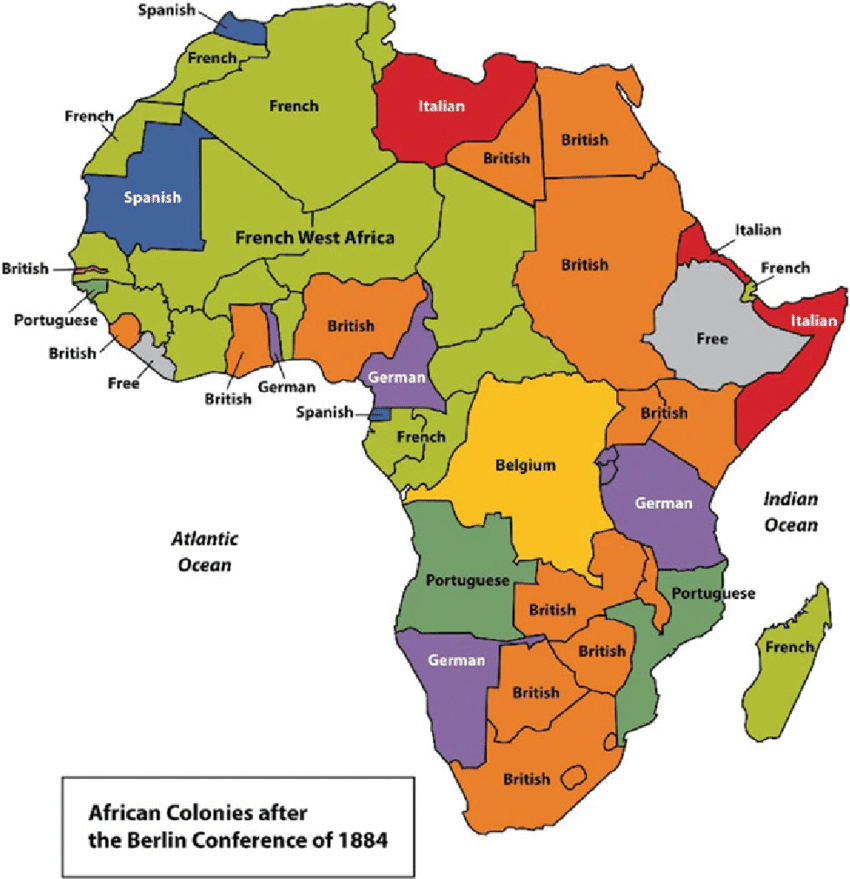
On a side note, Grenfell had dealings with the Belgium King Leopold II. Leopold II personally owned and controlled the Congo Free State, a vast territory in Central Africa, from 1885 until 1908. Under Leopold’s rule, Congolese people were subjected to brutal forced labor (working them literally to starvation and death), primarily for the collection of rubber, leading to widespread deaths and atrocities. Reports of human rights abuses in the Congo, including forced labor and widespread deaths, led to international condemnation and pressure on the Belgian government to take control of the colony. Facing mounting pressure and international criticism, the Belgian government intervened in 1908, taking control of the Congo Free State and renaming it the Belgian Congo, ending the reign of Leopold II over Belgium. The Belgian Congo remained a Belgian colony until 1960, when it gained independence and became the Democratic Republic of the Congo. Grenfell believed to the very end that Leopold had sincere intentions to help the people of the Congo until he finallly realized that he had been duped by Leopold who was only concerned about the wealth he could get from the Congo. Thus another sad chapter in the history of European colonization of Africa: European countries taking control over African areas to rob them of their precious resources in the guise of spreading civilization and Christianity! Here is a map of what that looked like around 1884. Ethiopia and Liberia were the only two countries never colonized by Europeans. Ethiopia had a strong Christian presence and military strength which helped them avoid colonization. Between 1945-1960 most of these colonized countries gained independence. Of course they were never reimbursed for all the resources that the European countries had stolen from them. It is amazing that during this colonial period of Africa that Christian missionaries helped make Africa about 50% Christian today. Unfortunately, it is about 45% Muslim which has led to much violence against Christians in Africa. In Sudan anti-Christian persecutions grew particularly after 1985, including murders of pastors and church leaders, destruction of Christian villages, as well as churches, hospitals, schools and mission bases, and bombing of Sunday church services. As of 2024, more than 100 churches have been damaged so far, and Christians have been abducted and killed.


Grenfell’s death occurred shortly after he opened a new mission station at Yalemba, near Stanley Falls. He fell ill from the dreaded haematuric fever and entered into the presence of his Lord, July 1, 1906. His last words were, “Jesus is mine.”” (Thomas Ray of the Baptist Bible Tribune) I wonder if he took those last 3 words from the song Blessed Assurance: Blessed assurance, Jesus is mine Oh, what a foretaste of glory divine Heir of salvation, purchase of God Born of his Spirit, washed in His blood. This is my story, this is my song. Praising my Savior all the day long This is my story, this is my song. Praising my Savior all the day long”. Here is the song to start your day: https://www.youtube.com/watch?v=UePXtov0zC0

Grenfell said: “Cruelty, sin, and slavery are as millstones around the necks of the people, dragging them down into a sea of sorrows.” Isaiah described it this way: Isaiah 5:8 “Woe to those who drag wrongdoing with the cords of deceit, and sin as if with cart ropes.” The imagery is the weariness of dragging a heavy. cart around everywhere you go. That cart is your sins. The cords you drug the cart with are deceit: you are deceived into thinking that the evil that you are doing is not sin. The 25 million natives along the Congo River believed that their many heathen practices were acceptable. As Isaiah said, “Woe to those who call evil good and good evil.” (Isaiah 5:20)

Grenfell was met with native spears when he first arrived in the Congo. 20 years later, he was met by little children who stood on the beach to welcome him and the singing of “All Hail the Power of Jesus’ Name” coming from a fishing canoe. He taught brick-making, treated the sick, engaged in translation, and was awarded a Gold Medal in 1886 for his service in exploration of the Congo and its tributaries. His legacy was that he prepared the way for the conversion of many in the Congo.

I continue to be amazed at the resilience and sacrifice of these missionaries to difficult foreign countries and unreached people groups. I see church preachers making 100k a year in their comfortable offices and wonder where church priorities are compared to these former giants of spreading the gospel. I know that located paid preachers do a lot of good, but think how many souls could be saved if we used most church contribution money for missions, printing Bibles, digging wells, feeding the poor, helping the oppressed! Most congregations have several talented, knowledgable Bible teachers that could preach sermons for us and let us all that staff money to support missionaries! I guess I end a lot of articles with that same thought, don’t I? But it does bother me.

George Grenfell got a Gold Medal on earth but he got a crown of righteousness (2 Timothy 4:8), a crown of glory (1 Peter 5:4), a crown of life (Revelation 2:10; James 1:12), an incorruptible crown (1 Corinthians 9:25), and a crown of joy (Philippians 4:1; 1 Thessalonians 2:19) after he finished his mission work, died, and got his reward in heaven. I have a feeling that he appreciated those spiritual crowns in heaven far more than his Gold Medal.

DAVID LIVINGSTONE: EXPLORER, MISSIONARY, ABOLITI0NIST

Dr. David Livingstone (1813-1873)

Livingstone was a Scottish physician, a Congregationalist, who worked with the Londom Missionary Society as he explored Africa. “As a child, he worked in the cotton mills to help support his poverty-stricken family. David Livingstone learned perseverance and went on to put himself through medical school and become a doctor before following in the footsteps of Robert Moffat and going to Africa as a doctor and a missionary. Missionary, explorer, and champion of the anti-slavery movement. (While Great Britain and the United States had outlawed slavery in 1808, the Arab-Swahili slave trade persisted in East Africa, with Africans being enslaved and traded in the Middle East and other regions.) Dr. Livingstone used his influence and experience to fight great wrongs in the society of his day and to blaze a path for other missionaries to follow in the villages he went to. He believed that he was not called to preaching as much as he was called to finding routes and resources for trade that would displace the profit in slave trading and worked tirelessly towards this end. He was loved by many and respected by the tribes with whom he had contact.” From Chantel in kindredgrace.com

AI: “In his day, Livingstone was a national hero. He spent three decades (beginning in 1841) exploring Africa, was the first European to cross the continent, the first to see Victoria Falls. He was also searching for the source of the Nile River. During the course of his lifetime, he covered over 29,000 miles uncovering what lay beyond rivers and mountain ranges where no other white man had ever been. Everyone knows Henry Stanley’s famous question, “Dr Livingstone, I presume?”, when he found his hero in the heart of Africa (in 1871).” Livingstone had gone missing for 4 years and Stanley searched for and found him. “Livingstone died on May 1, 1873, at the age of 60, in Chief Chitambo’s village in what is now Zambia, from malaria and internal bleeding due to dysentery.” “It is said local people wanted Livingstone to be buried in his beloved Africa. Eventually just his heart and viscera (the soft internal organs) were retained there.”

So was he even a missonary in the usual Christian sense? AI: “Although Livingstone is known to have converted only one African to Christianity, a friend who was a Bakwain chief, he showed vast possibilities for the missionaries who followed his path of practical benevolence.” “He felt a deep commitment to Africa, viewing it as a place where Christianity, commerce, and civilization could be introduced, and where the slave trade needed to be abolished.” 

That one convert, Sechele) had 5 wives and Livingstone made him divorce 4 of them before becoming a Christian. Livingstone soon after that said that Sechele had fallen b/c he got one of his ex wives pregnant. But after Livingstone left Sechele continued to convert his own tribesmen and was a missionary to other tribes, bringing Chritianity to them. He ruled over 30,000 people at his death in 1892. He was a mixture of pagan and Christian. He later reverted to “rainmaking” (using magic to bring rain), polygamy, and charms. But n the estimation of Neil Parsons, of the University of Botswana, Sechele “did more to propagate Christianity in nineteenth-century southern Africa than virtually any single European missionary”. (Stephen Tompkins article https://www.bbc.com/news/magazine-21807368)

What an amazing story! Jesus said the kingdom was like a little leaven that spreads to the whole lump. He said that the kingdom was like a little seed that grew into a great tree for birds to come rest. Livingstone converted one man, and he even wrote that convert off b/c. he reverted to polygamy! But look at what God did through that one convert. There was a long standing debate among missionaries over whether converts in Africa should give up their extra polygamist wives in order to be baptized and become Christians. You could make a strong argument to allow them to keep their many wives since God allowed David, the man after God’s own heart, to have 8 wives and neither said nor did anything to condemn David’s polygamy. All that aside, you never know the influence you might have in just converting one person to Jesus. That one convert might convert his children, his friends, and even go on mission trips converting people. You might not even live to see the fruit of that one convert.

On a side note, I think it is sad to see what happened in Africa after Livingstone opened up the continent to tell the European Christians about the treasures to be found in Africa. AI: “The colonization of Africa, a period marked by the “Scramble for Africa” in the late 19th and early 20th centuries (1880’s to 1914), saw European powers rapidly seize control of vast territories for economic and strategic gains, leading to the imposition of colonial rule and lasting impacts on the continent’s political, economic, and social landscape. Britain: Established extensive colonies in Southern and Eastern Africa, including South Africa, Kenya, and Nigeria. France: Controlled large territories in West and North Africa, including Algeria, Morocco, and Senegal. Germany, Belgium, Italy, Portugal, and Spain: Also participated in the colonization of Africa, establishing colonies in various regions. Colonialism began to decline in the mid 1900’s as African nations fought for independence and as European empires began to decline.

AI: “During European colonization of Africa, Christian missionaries accompanied explorers and merchants, often using Christianity as a tool for cultural assimilation and justification of colonial rule, though some Africans later viewed it as a tool for liberation. Missionaries and colonial authorities often used Christianity to legitimize colonial rule, arguing that it would bring Africans out of “paganism” and into a more “civilized” state.” Colonialism is a sad movement in history as countires like Britain simply took over the rule of a foreign country, like South Africa or India. They basically stole their valuable resources like diamonds and subjugated the native people to their rule, taking away their rights to vote and take part in the government. But even sadder is that they justified doing this under the cloak of promoting civilization and spreading Christianity. They might have made some converts but that is not the way Jesus wanted us to make converts. Of course all this led to apartheid in South Africa. The Spanish did the same in the new world, converting many to Christianity while they stole their land, their gold and resources, killing anyone who opposed them. Can you imagine the opinion that Africans had of Christians who did the colonialism? As Ghandi said, “I like your Christ, I do not like your Christians. Your Christians are so unlike your Christ.” He observed how the British treated the people in India and started his non violent, passive resistance.

I found it very interesting that they buried Livingstone’s heart in Africa. I don’t know what the Africans were thinking when they wanted that to happen, but there is a great lesson. His passion was for the people of Africa. His heart was for Africa. “In Matthew 6:21, when Jesus says, “For where your treasure is, there your heart will be also” , he is asking us to reflect on what we value most in life—because whatever we treasure will inevitably capture our hearts and guide our actions.” What are you passionate about? Material things? Your hobby? Your favorite sports team? Our passion needs to be for God and HIs work. “Seek first the kingdom of God”.

MARY SLESSOR (COURAGEOUS MISSIONARY)

Mary Slessor (1848-1915)

“Growing up in the slums of Aberdeen, Scotland, with an alcoholic father and little hope of changing your circumstances doesn’t seem like a promising start for anyone. But for Mary Slessor, her childhood taught her a tenacity and a strength that would serve her well in her years spent living in Nigeria. Mary grew up hearing her devout mother read the mission paper every month. In her heart grew a desire to share Jesus with others. She was 27 when David Livingston passed away, and she decided that she would go and continue his work to reach all of Africa. Mary’s work began in Calabar, and she lived and worked in places where no European had ever been. She faced life-threatening illness and hardship, but “Mighty Mary” did not once consider giving up. She lived with Okoyong and Efik people for 15 years, learning their languages and helping them settle disputes; working tirelessly to educate and overcome superstitions, such as twin-killing and women’s rights. She earned their love and respect and as a result was able to spread the gospel to areas no other missionary could.” Chaney from kindredgrace.com

I probably should have done David Livingstone first, but I am sitting here waiting for a colonoscopy, hoping I don’t go into Afib which might cancel the procedure! So “Might Mary”. Live update from the hospital! The anesthesiologist just came in and said they usually do the procedures even if someone is in afib, so I probably worried about that for a week for nothing! Isn’t that the way it is with most of our worries! Now I can worry about what they find in the colonoscopy! Just joking. I am not worried about that. You just want to know if you have colon cancer, and, if so, start treating it.

Back to Mary Slessor. Can you imagine her childhood with an alcoholic father. From Today’s Christian Living Magazine: “Mary’s childhood was riddled with trouble. When her alcoholic father lost his job, Mary went to work at the mill. She was just eleven years old. He would often abuse Mary’s mother, a godly woman, and kick Mary out onto the streets for days at a time. Working from 6 am to 6 pm at the mill didn’t leave time for Mary to get a formal education, so she taught herself to read when she was fourteen years old. When Mary appeared before the mission board in 1875, she was willing to go anywhere they needed her. She was thrilled when they sent her to Calabar. Few outsiders returned from the region, but Mary was undaunted. The Okoyong people were enslaved by evil. They killed all twins, believing the carried seeds of evil spirits. A wife was killed when her husband died so she could serve him in the afterlife. Violent brawls broke out incessantly. Mary began to rescue abandoned babies, raising the children as her own. She introduced trade to the tribe, opening the doors to good relationships with other tribes – which was instrumental in the Okoyongs’ openness to the gospel message. She started negotiating disputes and was eventually appointed tribal judge.

Once again against the advice of the local chief, Mary moved on – this time to the Azo people, a cannibalistic tribe. Though they were initially unreceptive to the good news of Christ’s sacrificial love, over time a whole village decided to follow the one, true God.

Over her nearly forty years of ministry, “Ma” Slessor fell ill several times. Each time she traveled to Scotland to recovered, then returned to her adopted home and ministry. Shortly after the onset of World War I, Mary fell ill the final time. She passed away in 1915.” From Today’s Christian Living Magazine
A dream of carrying on David Livingstone’s goal of reaching all of Africa with the gospel. Working in places where no European had ever been. Wouldn’t that be scary? “Mary Slessor died as a result of malaria. She likely contracted the illness during her first mission trip to Nigeria, and she suffered with it for about forty years. The recurrent high fevers weakened her body over time, but she refused to give up her missionary work.” Can you imagine seeing people kill their twins born b/c of a superstition that twins were cursed by evil? “Mary Slessor stopped the twins’ killings by sending out twins’ missionaries to mission houses to take care of the rejected twins she adopted. She is famous for stopping twins’ killing in Okoyong in Nigeria, where people believed twins were an evil curse.” AI :”Earlier missionaries had been killed by local tribesmen. Local tribes often mistrusted each other and fought resulting in loss of life on both sides. Grudges were held over long forgotten incidents and slights. Slavery had been abolished in Britain in 1833 but was still widespread in Africa in 1876.” So Mary would have been under constant threat of being killed.

Mary Slessar was an amazing, courageous missionary. I can’t imagine going to a cannibal tribe area to spread the gospel. I would be scared to death!

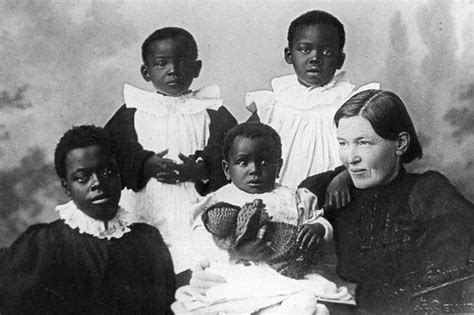
I hope its ok to copy this picture of Mary Slessor from Today’s Christian Living Magazine. It puts a face to her story.