KING HEZEKIAH OF JUDAH:

Again, https://www.gotquestions.org/life-Hezekiah.html has a great article on Hezekiah. Quoting:

“Hezekiah, a son of the wicked King Ahaz, reigned over the southern kingdom of Judah for twenty-nine years, from c. 715 to 686 BC. He began his reign at age 25 (2 Kings 18:2). He was more zealous for the Lord than any of his predecessors (2 Kings 18:5). During his reign, the prophets Isaiah and Micah ministered in Judah.

After Ahaz’s wicked reign, there was much work to do, and Hezekiah boldly cleaned house. Pagan altars, idols, and temples were destroyed. The bronze serpent that Moses had made in the desert (Numbers 21:9) was also destroyed, because the people had made it an idol (2 Kings 18:4). The temple in Jerusalem, whose doors had been nailed shut by Hezekiah’s own father, was cleaned out and reopened. The Levitical priesthood was reinstated (2 Chronicles 29:5), and the Passover was reinstituted as a national holiday (2 Chronicles 30:1). Under Hezekiah’s reforms, revival came to Judah.

Because King Hezekiah put God first in everything he did, God prospered him. Hezekiah “held fast to the Lord and did not stop following him; he kept the commands the Lord had given Moses. And the Lord was with him; he was successful in whatever he undertook” (2 Kings 18:6–7).”

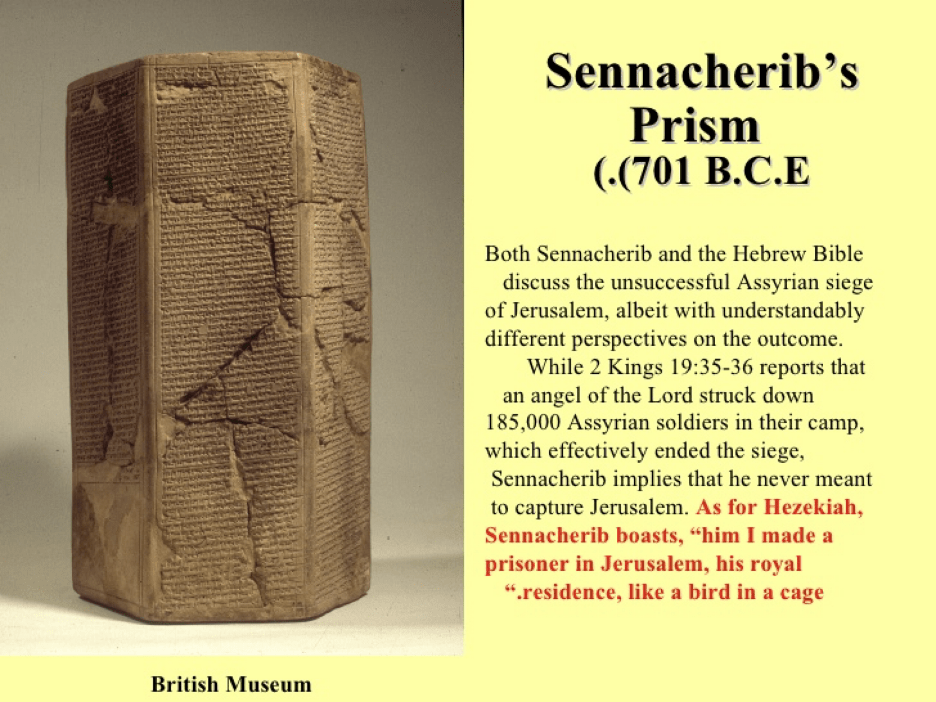
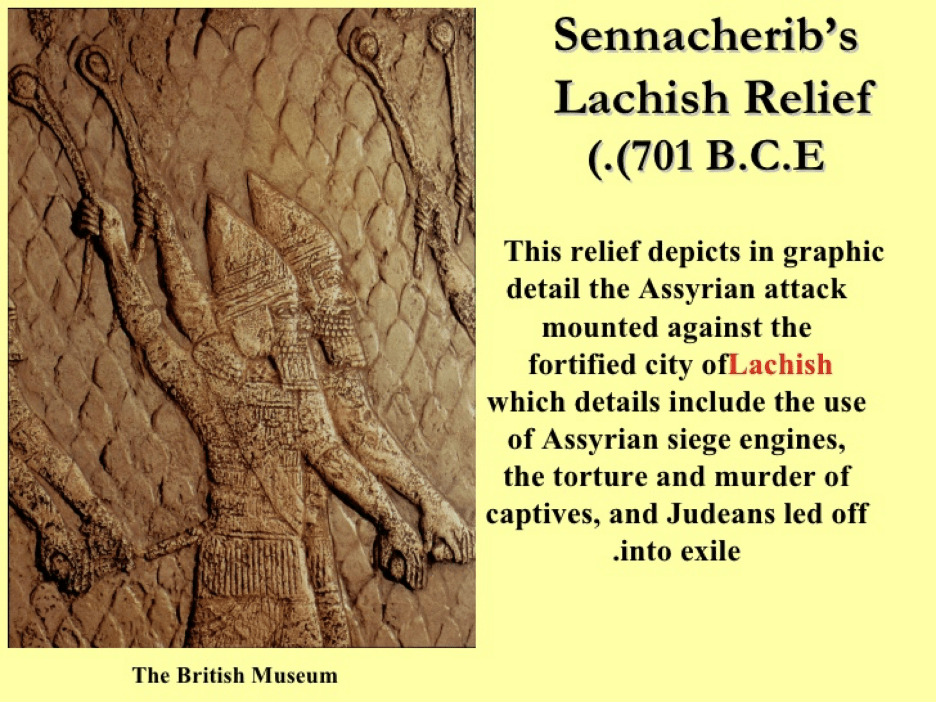
But Hezekiah faced a major crisis in 701 BC. I encourage you to stop right now and read 2 Kings 18-19 for that story. Here is my summary of the story. The Assyrians, who had already taken the northern kingdom captive in 722 BC, had captured several cities in Judah. Hezekiah payed much gold and silver to King Sennacherib to try to get him to. leave Jerusalem alone. The king. took the tribute but sent an. army to siege and take Jerusalem anyway. The Assyrian army commander Rabshakeh gave a loud speech to to Hezekiah’s men on the walls, mocking the god of Judah. He said that the god of Judah could no more save Jerusalem than the gods of all the nations that the Assyrians had conquered. He even claimed that the god of Judah had commanded him to destroy Jerusalem. Isaiah told Hezekiah that a rumor would cause the Assyrians to temporarily leave the siege and that eventually the Assyrian king would be assassinated. Maybe God was giving Sennacherib a chance to leave Jerusalem alone. But after dealing witht the rumor (that te Ethiopians were attacking, but they weren’t), Sennacherib later continued the siege with an army of 185,000. Hezekiah had tried to prepare for such a siege by contructing the S shaped 1750 foot long underground tunnel from the Gishon spring to provide water for the city during a siege. Hezekiah was powerless to save Jerusalem, but he told his men that God would be with them and that encouraged them.. Sennacherib sent a letter to Hezekiah, again mocking the god of Judah. Hezekiah spread the letter out in the temple and prayed for God’s help. Isaiah told him that the city would be saved without a fight. Yes, God had used the evil Assryians to punish the northern kingdom and take them captive in 722 BC, but the Assryians had gone too far in mocking God. That night, the angel of the Lord killed all 185,000 of the Assyrian army and all the rest of the Assyrians attacking cities of Judah returned to Ninevah. Years later in 681 BC, Sennahcerib was worshipping in the temple of his god Nisroch and 2 of his sons assassinated him, and Esarhaddon became king. The Assyrians would later be judged by God and conquered in 612 BC by Babylon and the Medes. The prophet Isaiah had said that God had used Assyria to punish the northern kingdom, “the rod of God’s anger”, but that Assryia would fall to Babylon. Jonah had preached to Ninevah and the city was spared for. a while, but later the prophet Nahum would pedict the fall fo Ninevah.

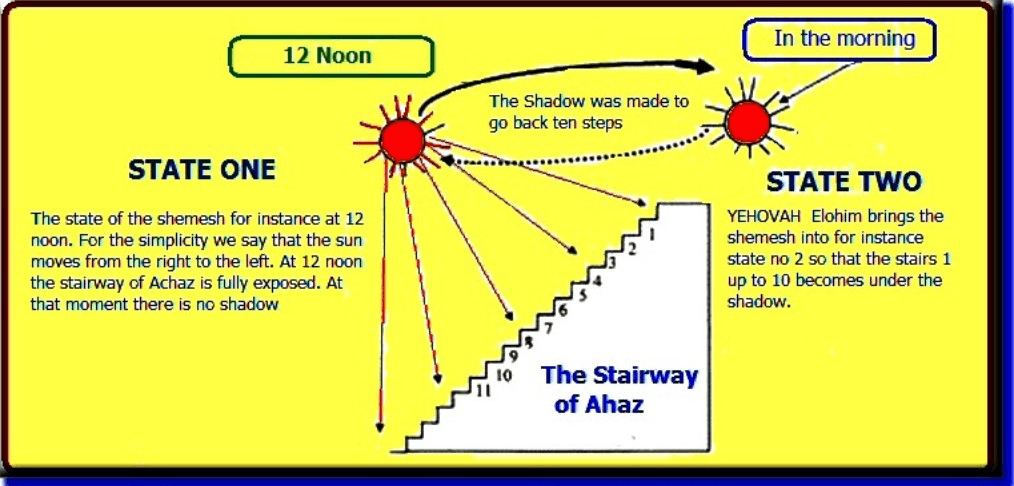
So far, so good. Hezekiah is humble, always trusting God for protection of Jerusalem, and prayerful in the midst of crisis. Unfortunately, his life did not end good. He became deathly sick and Isaiah told him that he was going to die. Hezekiah wept and prayed to be given more years, citing his past good deeds as the basis for God healing him. God gave him 15 extra years of life. He asked for a sign and Isaiah gave him a sign. The shadow on the sun dial would go back 10 steps. The Babylonians sent envoys to Hezekiah when they heard about this, and Hezekiah showed them all of his treasures. He had become prideful, bragging about all his treasures. B/c he did this, Isaiah told him that it would be the Babylonians, not the Assyrians, who would one day take all those treasures from Judah. God already knew and had predicted through Isaiah that the Babylonians would conquer Assyria in the future, and they did in 612 BC. Hezekiah was at least glad that would not happen in his days.

As mentioned in another article: most of the 19 kings of Judah were evil. A few were good, but even those few all had a bad ending. Asa won a victory over the Ethipians by trusting in God but was lifted up with pride when rebuked by the prophet Hanani for not trusting God in a later battle and died of diseased feet. Uzziah was made very strong militarily but was lifted up with pride, offered incense in the temple, and died with leprosy. Josiah died fighting Neco of Egypt even though Neco told him that he was not even tryiing to attack Judah. Joash was righeous as long as the priest Jehoida,who saved him from Athaliah killing all her grandchldren, lived but after he died Joash became evil and killed Jehoida’s son the prophet Zechariah who rebuked him. Joash was assassinated.

Hezekiah was no different. He was such an humble, righteous, prayerful man but became prideful after God gave him the 15 extra years. It might have been better if God had not given him that extra time, but it says that God was testing him to see what was in his heart. The victories and successes that God had given him had made him proud. When sieged by the Assyrians, he consults Isaiah as to what to do. He prays to God for wisdom and strength. He takes Sennacherib’s threatening letter to the temple and prays. But when the Babylonians come to inquire about his healing and the sun dial sign, he does not consult God for wisdom, nor does he pray. He acts out of pride, showing them “his” treasures. He died and his son Manasseh became king. Manasseh would become the most evil king of Judah, the “Ahab” of Judah.

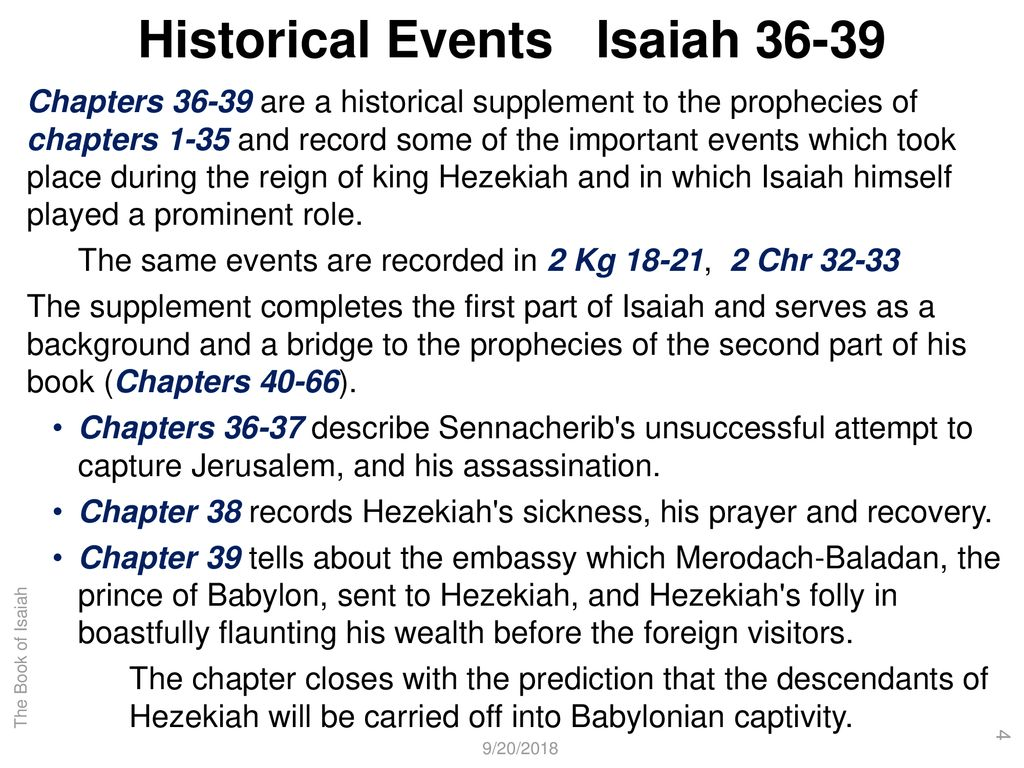
Isaiah tells this same story in chapters 36-39.
God has blessed me with many material blessings, houses and cars, financial security, relatively good health, godly children, a good marriage of 54 years, and several successful ministries in mission work, church work, and Christian education. I just pray that I don’t become prideful in my last years (I am 75 now) like Hezekiah did. I hope that I will become more prayerful, humble, and trusting in God. I pray that I will always seek God’s wisdom in dealing with crisis. I hope that God will give me what is best and not necessarily what I ask for at times. Hezekiah’s extra years turned out to be what he wanted but not what was best for him. I hope that I will remove the idols in my life, the things that I put ahead of God in my life.

What about you?

From Quantum Bible Study”
These images were taken from pinterest.com.

From holylandphotos blog. Hezekiah’s tunnel.

KING UZZIAH OF JUDAH: Great king but leper in the end!

I guess you can tell that I’m into the kings of Judah and Israel. Today is King Uzziah, the 10th king of Judah. Uzziah was 16 when he became king of Judah and reigned for 52 years. The first 24 years of his reign were as a co-regent with his father, Amaziah (the king in my last article). Such a long reign meant that he lived during several prophets and kings of Israel. Ministering during Uzziah’s reign were the prophets Hosea, Isaiah, Amos, and Jonah. The kings in the northern kingdom of Israel during his time were Jeroboam II, ZechariahShallum, Menahem, Pekahiah, Pekah, and Hoshea. Uzziah is also called Azariah in 2 Kings 14:21. From gotquestions.org “King Uzziah was sixteen years old when he began to reign, and he reigned for 52 years in Judah from approximately 790 to 739 BC. He almost lived up to the 722 BC Assyrian captivity of Israel. He “did what was right in the eyes of the Lord” as his father Amaziah had done (2 Chronicles 26:4). King Uzziah sought the Lord “during the days of Zechariah, who instructed him in the fear of God.” This Zechariah is most likely a godly prophet to whom Uzziah listened. As long as Uzziah made a point to seek God, God made him prosperous (2 Chronicles 26:5). Unfortunately, after Zechariah died, Uzziah made some mistakes later in his life.”

Uzziah could be compared to General Patton or Eisenhower. “King Uzziah in the Bible is shown as a wonderfully intelligent and innovative king, under whom the state of Judah prospered (2 Chronicles 26:6–15). He was used by God to defeat the Philistines and Arabs (verse 7), he built fortified towers and strengthened the armies of Judah (verses 9 and 14), and he commissioned skilled men to create devices that could shoot arrows and large stones at enemies from the city walls (verse 15). He also built up the land, and the Bible says he “loved the soil” (verse 10). The Ammonites paid tribute to King Uzziah, and his fame spread all over the ancient world, as far as the border of Egypt (verses 8 and 15).” MJG He “made Judah great” (not a political comment).

The evil kings of Judah died in various ways. Unfortunately, even the good kings of Judah usually had a bad ending. Amaziah (mostly a righteous king although after defeating the Edomites he brought back the Edomite god idols and worshipped them) was assassinated. Jehoshaphat (the righteous son of Asa but his son married wicked Athaliah, the daughter of Ahab and Jezebel) ended his reign with a failed business venture with a wicked king of Israel after a failed partnership with Ahab. Asa ended up with diseased feet and consulted with his doctors instead of God. Josiah (who found the book of the Law in the temple) died in battle with Pharoah Neco even though Neco told him that he was coming to fight Assyria, not Judah. Joash (Jehoash) (the only surviving grandchild after Athaliah killed all her grandchildren) was righteous as long as the priest Jehoida (the one who had Athaliah killed and Joash anointed as king) lived but after that restored Baal worship, killed the prophet Zechariah (the son of Jehoiada), and was assassinated. Hezekiah (the king when the 185,000 Assyrians who were sieging Jerusalem were killed and who was given 15 extra years) was lifted up with pride and showed the Babylonians the temple treasures when they came to inquire about the time shadow going back 10 steps (that led to God predicting that Judah would go into Babylonian captivity). Jotham (son of Uzziah) was righteous but did not remove the high places the people were sacrificing on and “the Lord began to send Rezin king of Aram and Pekah son of Remaliah against Judah” (apparently as punishment on Judah).

It will be no different ending for the good king Uzziah. 2 Chronicles 27:16 But when he was strong, he grew proud, to his destruction. For he was unfaithful to the Lord his God and entered the temple of the Lord to burn incense on the altar of incense. 17 But Azariah the priest went in after him, with eighty priests of the Lord who were men of valor, 18 and they withstood King Uzziah and said to him, “It is not for you, Uzziah, to burn incense to the Lord, but for the priests, the sons of Aaron, who are consecrated to burn incense. Go out of the sanctuary, for you have done wrong, and it will bring you no honor from the Lord God.” 19 Then Uzziah was angry. Now he had a censer in his hand to burn incense, and when he became angry with the priests, leprosy broke out on his forehead in the presence of the priests in the house of the Lord, by the altar of incense. 20 And Azariah the chief priest and all the priests looked at him, and behold, he was leprous in his forehead! And they rushed him out quickly, and he himself hurried to go out, because the Lord had struck him. 21 And King Uzziah was a leper to the day of his death, and being a leper lived in a separate house, for he was excluded from the house of the Lord. And Jotham his son was over the king’s household, governing the people of the land.”

Seems pretty obvious that the lesson for us is on “pride”. How could such a righteous king think that he could go into the temple and offer incense? He knew that only the priests could do that. Pride. God made him great and powerful as a military leader. Judah was prospering. Things were going great for Uzziah and Judah. But then he “got the big head”. He “grew proud”. “As a result of all his blessings, Uzziah, rather than humbling himself in thanksgiving to God, began to think more highly of himself than he should have and developed an exaggerated sense of his own importance and abilities.” (Thomas Tarrants)

Nebuchadnezzar might be the classic example of bad pride. Daniel 4:28 All this came upon King Nebuchadnezzar. 29 At the end of twelve months he was walking on the roof of the royal palace of Babylon, 30 and the king answered and said, “Is not this great Babylon, which I have built by my mighty power as a royal residence and for the glory of my majesty?” 31 While the words were still in the king’s mouth, there fell a voice from heaven, “O King Nebuchadnezzar, to you it is spoken: The kingdom has departed from you, 32 and you shall be driven from among men, and your dwelling shall be with the beasts of the field. And you shall be made to eat grass like an ox, and seven periods of time shall pass over you, until you know that the Most High rules the kingdom of men and gives it to whom he will.” 33 Immediately the word was fulfilled against Nebuchadnezzar. He was driven from among men and ate grass like an ox, and his body was wet with the dew of heaven till his hair grew as long as eagles’ feathers, and his nails were like birds’ claws.”

 A lesson on religious pride from the New Testament is found in the Parable of the Pharisee and the Tax Collector (Luke18:9–14). It is aimed at those “who trusted in themselves that they were righteous, and treated others with contempt.” It addresses spiritual or religious pride. In the story of the Pharisee and the Tax Collector, the Pharisee proceeds to commend himself to God because of his careful observance of the law and to look down with scornful contempt on the sinful tax collector. “God, I thank you that I am not like other men, extortioners, unjust, adulterers, or even like this tax collector. I fast twice a week; I give tithes of all that I get.” Notice in his prayer that his focus is not really on God at all but on how good he is and how bad others are. Here is pride wrapped in the cloak of religion (Tarrants).

In Mere Christianity C. S. Lewis said,
According to Christian teachers, the essential vice, the utmost evil, is Pride. Unchastity, anger, greed, drunkenness, and all that, are mere flea bites in comparison: it was through Pride that the devil became the devil:

Pride leads to every other vice: it is the complete anti-God state of mind…… it is Pride which has been the chief cause of misery in every nation and every family since the world began.1
So we need to be very careful not to be lifted up with pride. Most of us have a lot of financial security, good jobs, nice houses, nice cars, money to spend, etc. We might be considered important at work. Be careful that we don’t think more highly of ourselves than we should (Romans 12:3) and feel that we accomplished all those things by our own ability, not giving God the credit.

Most of us are faithful, church going Christians who do a lot of good works for Jesus. We have important roles in our churches. We don’t party and drink like most do today. We give a lot of money for God’s work. We are so much better religiously and spiritually than most of the world today. Be careful that we don’t have the religious pride that Pharisee had. We should have the attitude, “except for the grace of God, there go I”. That phrase has been attributed to St Francis of Assisi, or maybe John Bradford. John Bradford (1510–1555) was an English Reformer. He was imprisoned in the Tower of London for alleged crimes against Queen Mary I. He was burned at the stake on 1 July 1555. St. Francis of Assisi was an Italian friar who lived in Italy in the 13th century. He lived a life of ascetic poverty and was dedicated to Christian charity. Either one of those godly saints would be worthy of having said that phrase.


Open publish panel

  • Post

ISAIAH 7-35 JUDGMENT ON THE NATIONS

JUDGMENT ON ASSYRIA

Isaiah prophesied in Jerusalem from approximately 742–701 BC, during the reigns of the kings of Judah Uzziah, Jotham, Ahaz, Hezekiah, and Manasseh. The earliest recorded event in Isaiah’s life is his call to prophecy around 742 BC. The Medo-Babylonian conquest of the Assyrian Empire was the last war fought by the Neo-Assyrian Empire, between 626 and 609 BC. We also know that he lived during the reigns of four kings. The first, Uzziah, reigned from around 783 BC to 742 BC. The last king, Hezekiah, reigned from 715 BC to 698 BC. So we don’t know when Isaiah was born, but scholars estimate that he could’ve been a prophet for about 40 years. Isaiah 6:1 says that he saw the throne scene vision in the year that Uzziah died, which would be 742. He then prophesied until Hezekiah’s was King, and died around 14 years into his reign which ended in 698 BCE. Hezekiah reigned for almost 30 years which puts Isaiah’s death around 715 BCE. Supposing Isaiah began his ministry around 755, then his ministry went around 40 years.

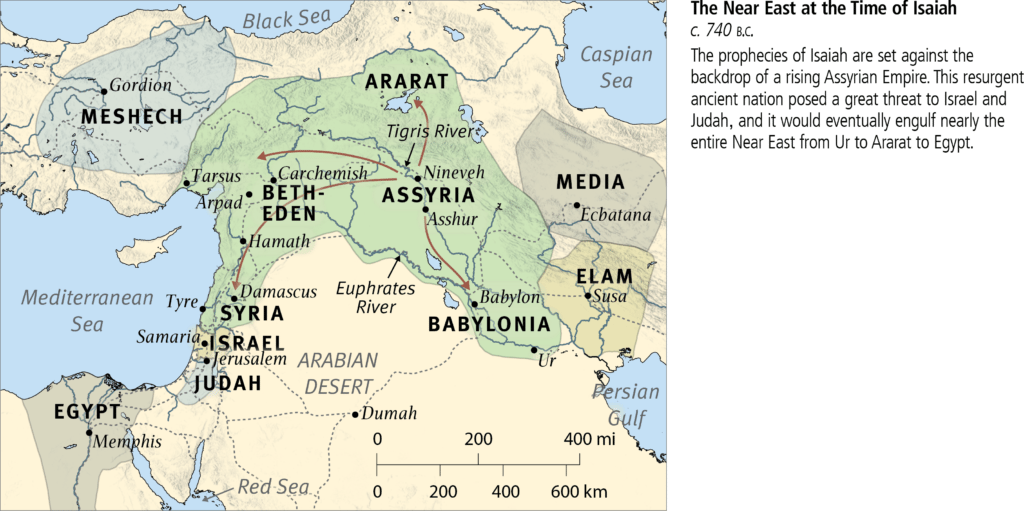
So Isaiah lived his entire life during the Assyrian Empire, although Babylon was gaining strength as a nation, as were the Medes and the Persians. He would have seen the northern kingdom of Israel (10 tribes) taken captive in 722 BC. He would be there in the 14th year of Hezekiah’s reign (Isaiah 36:1), which would be around 701 BC, when the Assyrians under King Sennacherib sieged Jerusalem. Isaiah told Hezekiah that Assyria, b/c of her arrogance in mocking God (Rabshakeh had mocked God’s ability to save the city), would not be allowed to take Jerusalem (Isaiah 37). He told Hezekiah that a remant would survive (37:31 And the surviving remnant of the house of Judah shall again take root downward and bear fruit upward. 32 For out of Jerusalem shall go a remnant, and out of Mount Zion a band of survivors.”). The Lord struck dead 185,000 in the Assyrian camp that night, Sennacherib returned to Ninevah and was assassinated by his sons as he worshipped his god Nisroch. God told Hezekiah he was going to die. He prayed and God gave him 15 extra years, and a sign that the sun dial would go back 10 steps. The king of Babylon sent envoys to observe this healing and the sign (which apparently affected Babylon as well). Hezekiah showed them the gold and silver in the temple, which would cause the Babylonians to later siege Jerusalem (586 BC). Isaiah told Hezekiah that, b/c he had foolishly shown the temple treasures to the Babylonians that the Babylonians would, after Hezekiah’s death, destroy the temple and take those treasures. So we see that Isaiah was heavily involved with predicting the Babylonians taking the city even though he did not live to see that. So let’s go back now earlier in Isaiah to read about Isaiah’s predictions for the nations around Israel

JUDGMENT ON ARROGANT ISRAEL

Isaiah 12:1-19 Isaiah predicts judgment on Assyria. Yes, God used Assyria to punish the northern kingdom of Israel (11 tries), destroy their capital Samaria, and take the 11 tribes captive into Assyria in 722 Bc, although God left a remnant of survivors in Samaria (12:20-23). He might have allowed Assyria to capture Jerusalem under Hezekiah (Isaiah 36-37) except for the arrogance of Assyria and their mocking the God of Israel. As noted earlier, the Babylonians defeated the Assyrians in 612 BC, so Isaiah’s prediction of the fall of Assyria is about 80 years in the future, and shows the value in fulfilled prophecy in proving that YHWH is the only one true God. Isaiah repeats this prediction of judgment on Assyria in 14:24-27.

THE FALL OF BABYLON

ISAIAH 13:1-16 predicts the fall of Babylon using figurative language (the sun and moon darkened 13:10). He then goes on to say it will be the Medes and Persians who will conquer Babylon in 13:17-22. The Medo-Persians conquered Babylon in 539 BC (as described in Daniel 5 with the handwriting on the wall announcing Babylon’s fate and that very night Darius captured Babylon). So Isaiah is predicting the fall of Babylon about 150 years in the future, which is amazing. He taunts Babylon in ch 14. He repeats this prediction of the fall of Babylon in 21:1-10.

JUDGMENT ON SURROUNDING NATIONS

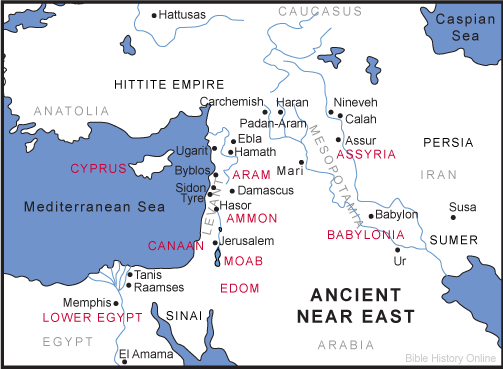
In 12:28 – 23:18 Isaiah predicts judgment on many of the surrounding nations. They would be invaded by either the Assyrians or later by the Babylonians as judgment for their sins. Here is a map from IBible.org that shows the nations Isaiah predicted judgment: Philistia, Moab, Damascus (Syria), Cush (southern Egypt and northern Sudan), Egypt, Tyre, Sidon (near Tyre). Ch 34 is judgment on basically all the nations surrounding Jerusalem.

JUDGMENT ON THE NORTHERN AND SOUTHERN KINGDOMS OF ISRAEL

Ch 28-29 predicts Ephraim (the northing kingdom of Israel, 11 tribes) going into captivity (fulfilled when the Assryians took them captive in 722 Bc), and the warning to Judah (the southern kingdom, 2 tribes) and Jerusalem that they will be judged if they don’t repent. He tells them Isaiah 29:13 Then the Lord said, “Because this people approaches Me with their words And honors Me with their lips, But their heart is far away from Me, And their reverence for Me consists of the commandment of men that is taught” Jesus quotes this in Matthew 15, saying that it applied to the Jews he was teaching. Isaiah warns Judah about trusting in Egypt to help them face the Assyrians and Babylonians (ch 30-31). He does predict a glorious future for the remnant (ch 32) who survive the judgment. This glorious future would even include the Messianic blessings in ch 35 (see blog article “Isaiah Messianic Prophet”) when God will come with a vengeance but also doing many miracles, redeeming Zion who come back to Jerusalem on the Highway of Holiness with everlasting joy and joyful singing. In Matthew 11, John was in prison and sent messengers to ask Jesus if he was the Coming One or not. Jesus healed some sick people (the blind, lame, etc as in Isaiah 35) while the messengers watched. He told them to go tell John what they saw. Jesus is saying that He is the Coming One who fulfills Isaiah 35. Those on the Highway of Holiness would be the remnant church of Jews who believed in Jesus as the Messiah when he would come 800 years later. This includes Isaiah 25:6 Now the Lord of armies will prepare a lavish banquet for all peoples on this mountain; A banquet of aged wine, choice pieces with marrow, And refined, aged wine. And on this mountain He will destroy the covering which is over all peoples, The veil which is stretched over all nations. He will swallow up death for all time, And the Lord God will wipe tears away from all faces. That prophecy was fulfilled when Jesus conquers spiritual death as his last enemy, giving immortality to believers (1 Cor 15:50ff). Jesus probably was citing this “banquet” of Isaiah 25 in Matthew 8:11 I tell you, many will come from east and west and recline at table with Abraham, Isaac, and Jacob in the kingdom of heaven. This would be a spiritual banquet of spiritual blessings (Ephesians 1:1-15), not physical food.