1 Timothy 6:11 But flee from these things, you man of God, and pursue righteousness, godliness, faith, love, perseverance, and gentleness. 12 Fight the good fight of faith;take hold of the eternal life to which you were called, and for which you made the good confession in the presence of many witnesses. 13 I direct you in the presence of God, who gives life to all things, and of Christ Jesus, who testified the good confession before Pontius Pilate, 14 that you keep the commandment without fault or reproach until the appearing of our Lord Jesus Christ, 15 which He will bring about at the proper time—He who is the blessed and only Sovereign, the King of kings and Lord of lords, 16 who alone possesses immortality and dwells in unapproachable light, whom no one has seen or can see. To Him be honor and eternal dominion! Amen.”
Those who teach and preach the word must “flee” (pheugó: to flee, escape, avoid: it can be translated “run away from”) from “controversial questions and disputes about words, from which come envy, strife, abusive language, evil suspicions” and pursue (diókó: To pursue, persecute, chase, press forward) the good things mentioned. Paul uses this idea of “fleeing” certain things elsewhere. 2 Timothy 2:22 Now flee from youthful lusts and pursue righteousness, faith, love, and peace with those who call on the Lord from a pure heart. 23 But refuse foolish and ignorant speculations, knowing that they produce quarrels. 24 The Lord’s bond-servant must not be quarrelsome, but be kind to all, skillful in teaching, patient when wronged, 25 with gentleness correcting those who are in opposition, if perhaps God may grant them repentance leading to the knowledge of the truth, 26 and they may come to their senses and escape from the snare of the devil, having been held captive by him to do his will.” There is the “gentleness” of 1 Timothy 6:11 things to pursue. 1 Corinthians 6:18 Flee sexual immorality. Every other sin that a person commits is outside the body, but the sexually immoral person sins against his own body. 19 Or do you not know that your body is a temple of the Holy Spirit within you, whom you have from God, and that you are not your own? 20 For you have been bought for a price: therefore glorify God in your body.” 1 Corinthians 10:13: “No temptation has taken you except what is common to man. God is faithful, who will not allow you to be tempted above what you are able, but will with the temptation also make the way of escape, that you may be able to endure it”. The word flee can also be translated “escape”. 1 Corinthians 10:14 Therefore, my beloved, flee from idolatry.” Remember: Ephesians 5:5 For this you know with certainty, that no sexually immoral or impure or greedy person, which amounts to an idolater, has an inheritance in the kingdom of Christ and God.” Greed (the desire for more) is idolatry, the worship of things ahead of God. Luke 12.15: “Then he said to them, “Watch out! Be on your guard against all kinds of greed; life does not consist in an abundance of possessions.” Joesph fled from temptation: Genesis 39:7-22 (KJV)And it came to pass about this time, that Joseph went into the house to do his business; and there was none of the men of the house there within. And she caught him by his garment, saying, Lie with me: and he left his garment in her hand, and fled, and got him out.” You can’t just stand there and think about whether you should do something or not. You should already have the conviction that you will not get near something bad. You will be aware of the danger when you see it. When you are caught in a tornado, you know to run, drive away as fast as you can in the opposite direction. You look for an “escape” route when there is a fire in a building. All this applies to temptation and to getting caught up in “controversial questions and disputes about words, from which come envy, strife, abusive language, evil suspicions”.
“Fight the good fight of faith”. As he sat in a Roman prison (his 2nd imprisonment after being released from his 2 years of “house arrest” of Acts 28), awaiting imminent beheading by Nero, he wrote this: 2 Timothy 4:7 I have fought the good fight, I have finished the course, I have kept the faith; 8 in the future there is reserved for me the crown of righteousness, which the Lord, the righteous Judge, will award to me on that day; and not only to me, but also to all who have loved His appearing.” So Paul lived what he preached. “I have fought the good fight” is also significant for believers today because it serves as a stark reminder that the Christian life is a struggle against evil—within ourselves and in the world: I think that is what the “good fight” is, i.e the fight against evil-within ourselves and in the world. The Greek word for “fight” is agónizomai: To strive, to struggle, to fight, to labor fervently (from which we get “agonize”). It can be translated “compete” as in 1 Corinthians 9:NAS: Everyone who competes in the games exercises self-control”. It can be used of fighting in warfare. From gotquestions.org “Our battle is not with flesh and blood “but against principalities, against powers, against the rulers of the darkness of this age, against spiritual hosts of wickedness in the heavenly places” (Ephesians 6:12). The Christian life is a fight in that Christians face a never-ending struggle against evil—not an earthly military campaign, but a spiritual battle against Satan. This is why we must “take up the whole armor of God, that you may be able to withstand in the evil day” (see Ephesians 6:13-18).” Paul was a warrior in spiritual battle. He fought or contended with false teachers in the church. He fought with those trying to kill him or persecute him. He fought through many dangers without quitting, surrendering, or turning back. Our battle is not with flesh and blood “but against principalities, against powers, against the rulers of the darkness of this age, against spiritual hosts of wickedness in the heavenly places” (Ephesians 6:12).” Paul reminded Timothy to “endure hardship as a good soldier of Jesus Christ” (2 Timothy 2:3). We are fighting evil in our own spiritual battles, but we are also fighting the Lord’s battles against evil as His soldiers. The Israelites soldiers went out fighting the Lord’s enemies, but they were fighting the Lord’s battles. But can you imagine a soldier during WWII sitting around in a nice cozy office while a battle is raging right around them? Is that us? We have become complacent. We still go to church and believe in the right doctrines, but we compromise so much. We don’t really fight to put off sin in our lives. We don’t fight to defend the truth against all the false doctrine that is out there. We are not bad people. We just don’t really get our hands dirty in the spiritual warfare out there.
What is the “good confession” that Paul told Timothy to be faithful to? 6:12 “take hold of the eternal life to which you were called, and for which you made the good confession in the presence of many witnesses. 13 I direct you in the presence of God, who gives life to all things, and of Christ Jesus, who testified the good confession before Pontius Pilate.” What was the confession Jesus made before Pilate? I believe that is found in Matthew 26:62 The high priest stood up and said to Him, “Do You offer no answer for what these men are testifying against You?” 63 But Jesus kept silent. And the high priest said to Him, “I place You under oath by the living God, to tell us whether You are the Christ, the Son of God.” 64 Jesus *said to him, “You have said it yourself. But I tell you, from now on you will see the Son of Man sitting at the right hand of power, and coming on the clouds of heaven.” Jesus confessed to Pilate “You got it right Pilate, I am the Christ the Son of God.” Peter made the good confession in Matthew 16: 15 He *said to them, “But who do you yourselves say that I am?” 16 Simon Peter answered, “You are the Christ, the Son of the living God.” 17 And Jesus said to him, “Blessed are you, Simon Barjona, because flesh and blood did not reveal this to you, but My Father who is in heaven.” Martha made the good confession” John 11:27 She *said to Him, “Yes, Lord; I have come to believe that You are the Christ, the Son of God, and He who comes into the world.” It is a public confession of faith. Romans 10:9–10 “If you confess with your mouth that Jesus is Lord and believe in your heart that God raised him from the dead, you will be saved. For with the heart one believes and is justified, and with the mouth one confesses and is saved.”
Timothy was to “take hold (epilambanomai: To take hold of, to seize, to grasp, to help) of the eternal life to which he was called.” (AI) “The verb ἐπιλαμβάνομαι is used in the New Testament to describe the act of taking hold of something or someone, often with a sense of urgency or purpose. It can imply a physical grasp, as well as a metaphorical or spiritual seizing. The term is used in contexts where there is an intervention, assistance, or a decisive action taken.” The Christian pursuit of eternal life is not a passive thing that we just sit back and let God do all the work saving us (as Calvinism teaches). We can’t earn eternal life, but we must actively reach out and grab it. If someone is handing you a package that is really important, then you don’t just sit back and admire it. You reach out and grab it so you can possess it and enjoy what’s in the package.
1 Timothy 6:14 that you keep the commandment without fault or reproach until the appearing of our Lord Jesus Christ, 15 which He will bring about at the proper time—He who is the blessed and only Sovereign, the King of kings and Lord of lords, 16 who alone possesses immortality and dwells in unapproachable light, whom no one has seen or can see. To Him be honor and eternal dominion! Amen.” This quite an expression of praise to God the Father, the only Sovereign, the King of kings and Lord of lords. The Father would bring about the 2nd coming at the proper time. He alone possesses immortality. I do not believe that every person born has an eternal “soul” that, when he dies, must exist eternally after death. The Hebrew word for soul just means “life force”. God breathed into man and he became a living soul. But the same word is used for the life in animals, and they don’t have eternal souls. God only promises immortality to believers in Jesus. 1 Corinthians 15:53 For this perishable must put on the imperishable, and this mortal must put on immortality.54 But when this perishable puts on the imperishable, and this mortal puts on immortality, then will come about the saying that is written: “Death has been swallowed up in victory. 55 Where, O Death, is your victory? Where, O Death, is your sting?” 56 The sting of death is sin, and the power of sin is the Law; 57 but thanks be to God, who gives us the victory through our Lord Jesus Christ.”
God dwells in “unapproachable light”. What does that mean? We know that “God is light” but what does that mean? God is a spirit who fills the universe, but He is not some bright light everywhere in the universe. What did Moses see when God put him behind a rock and let his see God’s “back side”? It had to be some bright shining light. Moses would talk to God face to face and then come out with his face shining. Was God a bright light in that tent of meeting with Moses? Maybe in the spiritual world of the “heavenlies” God is a bright light, but we just can’t see in now in the flesh. We can only see it when we die and go into the presence of God in the heavenlies.
You would think the letter would end with that great praise, but Paul has one last charge for Timothy. Maybe he was about to end the letter and thought of this last charge. 1 Timothy 6:20 Timothy, protect what has been entrusted to you, avoiding worldly, empty chatter and the opposing arguments of what is falsely called “knowledge”— 21 which some have professed and thereby have gone astray from the faith.” What are the arguments of what is falsely (pseudónumos: Falsely named, false from which we get pseudonym, a fictitious name) called knowledge (gnosis, knowledge) From bibleref.com “Paul also repeats a common theme of his instructions to church leaders: steer clear of false knowledge and shallow arguments. Among the false teachings in Ephesus was a philosophy which would soon be known as Gnosticism, named from the Greek root word for “knowledge.” Gnostic ideas presented matter as evil and spirit as good. Depending on the flavor of Gnostic teaching, the sins committed in the body either did not matter or all pleasures of the body were inherently wrong. Timothy was to stay away from such false teachings which contradicted the “sound doctrine” Paul had taught him (1 Timothy 1:8–11).” (AI) “The use of “pseudónumos” in the New Testament reflects a concern with false teachings that were prevalent in the early church. These teachings often masqueraded as legitimate Christian doctrine but were contrary to the apostolic teaching. The early church faced various heresies and false teachings, such as Gnosticism, which claimed to offer secret knowledge.” “In the Greco-Roman world, knowledge was highly valued, often associated with philosophy and intellectual pursuit. In the context of early Christianity, “gnósis” took on a distinct meaning, emphasizing not just intellectual understanding but also experiential and relational knowledge of God. This was in contrast to the Gnostic heresies that emerged in the early church, which claimed secret knowledge for salvation.” Gnosticism didn’t fully develop until the 3rd century, but the roots of it were present even in the first century. Gnostic ideas have impacted Western philosophy and spirituality, particularly through the rediscovery of the Nag Hammadi library. Books like the Gospel of Thomas consist of secret sayings given only to the apostle Thomas. It was not written by Thomas, probably written in the 3rd century, as were other gnostic books. Colossians 2:8 See to it that there is no one who takes you captive through philosophy and empty deception in accordance with human tradition, in accordance with the elementary principles of the world, rather than in accordance with Christ. 20 If you have died with Christ to the elementary principles of the world, why, as if you were living in the world, do you submit yourself to decrees, such as, 21 “Do not handle, do not taste, do not touch!” 22 (which all referto things destined to perish with use)—in accordance with the commandments and teachings of man? 23 These are matters which do have the appearance of wisdom in self-made religion and humility and severe treatment of the body, but are of no value against fleshly indulgence.”
I end my articles on 1 Timothy the same way Paul ended the letter.
“Grace be with you”. I hope you benefited from at least some of the articles.
1 Timothy 6:3 If anyone advocates a different doctrine and does not agree with sound words, those of our Lord Jesus Christ, and with the doctrine conforming to godliness, 4 he is conceited and understands nothing; but he has a sick craving for controversial questions and disputes about words, from which come envy, strife, abusive language, evil suspicions, 5 and constant friction between people of depraved mind and deprived of the truth, who suppose that godliness is a means of gain.
I found this: “The doctrine that conforms to godliness is a pure and purifying doctrine that aims to teach a proper way of life and a right state of mind. It is more than a collection of intellectual truths, but rather a way to promote spiritual growth and well-being.
In the Bible, 1 Timothy 6:3-8 describes the doctrine that conforms to godliness as a sound instruction that is free of corruption and error. It says that those who teach a different doctrine or disagree with the words of Jesus Christ are puffed up and do not understand. It also says that these people are more interested in word disputes and controversial questions, which can lead to envy, strife, and abusive language.
Godliness is defined biblically as conforming to God’s character in thoughts, feelings, actions, and desires.”
“Sound” (hugiainó: To be sound, to be healthy, to be well: used in Luke 7:10 they found the slave in “good health”) words. The pastoral epistles (1,2 Timothy and Titus) are full of admonition to teach sound words, sound doctrine. 1 Timothy 1:10; 6:3, 2 Timothy 4:3; Titus 1:9, 13; 2:1,2). The sound words of “our Lord Jesus Christ”. That would be the 4 gospels. The core teaching of Christianity are the teachings of Jesus as found in the gospels. Sure, there are a lot of issues, commands, etc. that Jesus did not cover. He left the Holy Spirit with the apostles to preach the completed gospel message (the death, burial and resurrection of Jesus. John 16:13 But when He, the Spirit of truth, comes, He will guide you into all the truth; for He will not speak on His own, but whatever He hears, He will speak; and He will disclose to you what is to come.” Jesus teaches about the things that really matter: love, service, faith, sacrifice, suffering, surrender, peace, the new birth, compassion, forgiveness, the kingdom of God, discipleship, repentance, prayer, humility, judgement, riches, lust, denying self, sin, His Deity, His death/burial/resurrection, obedience, kingdom living (the sermon on the mount Mt 5-7), eternal life, the Holy Spirit, fear, worry, joy, etc. But Jesus left the details of applying those teachings in churches with all the issues and problems that go along with bringing sinners into one saved body of believers from different backgrounds. Acts tells of the apostles preaching the gospel, witnessing the resurrection, establishing churches, doing mission work. 1 Corinthians deals with church division, law suits among member, immorality in the church, strong/weak brother issues, marriage issues, women’s role, Lord’s Supper problems, miraculous gifts problems, assembly problems, resurrection issues. Romans deals with Judaizers who are leading believers back to the Law instead of salvation by grace through faith. Ephesians gets into some heavy theological doctrines like predestination. Colossians fights the heresy facing the church there. 2 Thessalonians mainly deal with the 2nd coming issues. 1 Timothy gives basic instructions about women’s roles, elders, deacons, widows, the basic creed of the church (3:16). Revelation is about the destruction of Jerusalem in 70 AD, the fulfillment of Jesus’ predictions in Matthew 24.
But all those topics, issues, and problems dealt with in the book of Acts and the other 22 letters of the New Testament have been the source of endless debates. Calvinism vs Arianism. Catholicism vs Protestantism. How to be saved. Women’s roles in the church. Church governance. Baptism: sprinkling, pouring, immersion, of infants, purpose of baptism. Fulfillment of prophecy today: eschatology (study of end times, many different views). Marriage and divorce. Inspiration of the Scriptures. Deity of Jesus: first few councils dealt with multiple “heresies” about the nature of Jesus. Catholicism vs Orthodox split (11th century) issues. Catholicism vs Reformation differences. Catholicism vs Church of England bloody history. Religious wars. Pacifism or not. Role of Israel and Bible prophesy. Gay marriage and homosexuality. LGBQT. The abortion issue.
Most of these debates are healthy as honest, sincere, God fearing leaders seek to understand the word of God for the church for all times and cultures. But many of these debates had led to “a sick craving for controversial questions and disputes about words, from which come envy, strife, abusive language, evil suspicions, 5 and constant friction between people of depraved mind and deprived of the truth”. What is the source of these things? Church leaders and preachers “who suppose that godliness is a means of gain.” The bottom line: men and women leading the church and preaching for money. Men depraved of “the truth”, i.e. the basic core truth of the gospel as delivered by Jesus and the apostles. Of course, I believe I have most of the correct answers on most of the controversial issues! I try to teach the truth in love (Ephesians 4:15), but I also get caught up in debates over words. I believe Calvinism is wrong. I am a full preterist and I believe most all latter day eschatology teaching is wrong. I believe the LGBQT movement is wrong. I believe in the verbal, plenary (full) inspiration of Scripture, including the writings of the apostle Paul. I believe in baptism (immersion) for the forgiveness of sins of those old enough to believe, not infants. I believe that Jesus is the head of the church, not the Pope. I believe that Jesus is the Son of God. I believe that life begins at conception and that abortion is taking the life of a living being. In other words, basic conservatism! Basic fundamentalism.
I realize that there are many godly, sincere leaders and preachers who disagree with some or all of my positions. Most things we can “agree to disagree”. But some things are essential to salvation. The LGBQT issue, for example. To me, that is black and white. Anyone who promotes homosexuality and homosexual marriage is “depraved of the truth”. The abortion issue is another black and white thing to me. The thing that really bothers me is how much money is collected in church contributions in the name of Jesus that is used “as a means of godliness”. The recent split in the Methodist church over the LGBQT debate for example. The truth on that issue is so plain that it makes me wonder if it is all about preachers keeping their jobs, and church leaders controlling the flock and the money collected. Maybe we should address the whole issue of the paid preacher system that has helped promotes a lot of false teaching. Maybe we would be better just to have our house churches with no paid preacher system: just sincere believers studying and searching for the truth of God’s word, for free!
Take a look at all the cults and latter day prophet movements over the past 2,000 years of church history. Joseph Smith and Mormonism. David Koresh and the Branch Davidians (Waco). Jim Jones and the Peoples’ Temple (the Guyana tragedy). Many, many more. What were the motives of most of those false prophets? Some were just sincerly trying to interpret the Bible prophecies. Like William Miller who thought he had Daniel 8 figured out and taught that the 2nd coming would be in 1843 AD, which it wasn’t. I don’t think he was preaching that for money. He was just sincerely wrong and admitted so. But in the end, most of the time the motivation of false teachers was pride, sex, power, and money.
2 Peter 2:1-3 But false prophets also arose among the people, just as there will be false teachers among you, who will secretly bring in destructive heresies, even denying the Master who bought them, bringing upon themselves swift destruction. And many will follow their sensuality, and because of them the way of truth will be blasphemed. And in their greed they will exploit you with false words. Their condemnation from long ago is not idle, and their destruction is not asleep.”
Those verses say it all. Sex (sensuality), money (greed), power and control (explot you). Titus 1:11 They must be silenced, since they are upsetting whole families by teaching for shameful gain what they ought not to teach.” 2 Corinthians 2:17 For we are not, like so many, peddlers of God’s word, but as men of sincerity, as commissioned by God, in the sight of God we speak in Christ. Acts 20:29-30 I know that after my departure fierce wolves will come in among you, not sparing the flock; and from among your own selves will arise men speaking twisted things, to draw away the disciples after them. Matthew 7:15 “Beware of false prophets, who come to you in sheep’s clothing but inwardly are ravenous wolves. And there will always be an audience to follow and pay those false teachers. 2 Timothy 4:2-4Preach the word; be ready in season and out of season; reprove, rebuke, and exhort, with complete patience and teaching. For the time is coming when people will not endure sound teaching, but having itching ears they will accumulate for themselves teachers to suit their own passions, and will turn away from listening to the truth and wander off into myths.
I believe that, more than ever, we need to follow 1 John 4:1 Beloved, do not believe every spirit, but test the spirits to see whether they are from God, for many false prophets have gone out into the world.” I am proud of the conservative, anti-LGBQT churches that have made a stand and we need to support them. I have a co-worker who has been crushed by her church’s liberal decisions. I need to encourage her that she is doing the right thing. With all the “liberalism” in churches today, it is time for the conservative, fundamentalists to stand up and be counted.
1 Timothy 6:6 But godliness actually is a means of great gain when accompanied by contentment. 7 For we have brought nothing into the world, so we cannot take anything out of it, either. 8 If we have food and covering, with these we shall be content.
What a great truth: “godliness actually is a means of great gain when accompanied by contentment”. The gain of godliness is eternal life, not material or monetary blessings in this life. Jesus made that plaiin. Matthew 16:26 “For what will it profit a man if he gains the whole world and forfeits his soul? Or what shall a man give in return for his soul?” Matthew 19:27 Then Peter responded and said to Him, “Behold, we have left everything and followed You; what then will there be for us?” 28 And Jesus said to them, “Truly I say to you, that you who have followed Me, in the regeneration when the Son of Man will sit on His glorious throne, you also shall sit upon twelve thrones, judging the twelve tribes of Israel. 29 And everyone who has left houses or brothers or sisters or father or mother or children or farms on account of My name, will receive many times as much, and will inherit eternal life.” It is not a “reward” system based on works, but there is a great reward. Hebrews 11:6 And without faith it is impossible to please Him, for the one who comes to God must believe that He exists, and that He proves to be One who rewards those who seek Him.” Paul adds “when accompanied by contentment”. Why do you think he added that? Is it maybe because many who follow Jesus do so grudgingly, out of guilt, and not joyfully? They go to church and act religious but they are miserable. They give some money to the church, but inside they are greedy. The Greek word pleonexia means “the desire for more” (often more of what others have, i.e. coveting what they have). Godliness is a means of great gain, both in this life and in the life to come. Jesus came that we might have life, and have it more abundantly (John 10:10). We should be content with our wages, our standard of living, our clothes, our homes, our jobs. That doesn’t mean that we can’t try to improve those things, but the key is being content with what we do have even if we can’t improve those things. Phlippians 4:11 Not that I speak from need, for I have learned to be content in whatever circumstancesI am. 12 I know how to get along with little, and I also know how to live in prosperity; in any and every circumstance I have learned the secret of being filled and going hungry, both of having abundance and suffering need. 13 I can do all things through Him who strengthens me.” Are you content?
Back then Paul goes right back to the money thing. 9 But those who want to get rich fall into temptation and a trap, and many foolish and harmful desires which plunge people into ruin and destruction. 10 For the love of money is a root of all sorts of evil, and some by longing for it have wandered away from the faith and pierced themselves with many griefs.” It’s not just the preachers preaching for money here. This applies to all of us, clergy and laity. Money is not the “root of all evil”. It is the “love of money”. The love of money is what motivates people to lie, steal, cheat, gamble, embezzle, and even murder. People who have a love for money lack the godliness and contentment that is true gain in God’s eyes. Ecclesiastes 5:10-12 Those who love money and wealth will never be satisfied and will gain nothing except to look at their riches. The more wealth people have, the more friends they have to help spend it.” Even being rich is not condemned by God. Abraham, the father of believers, was rich in herds and sheep. Being rich can be a blessing as you pass the riches on to others on behalf of God. But Jesus warns: “Truly, I say to you, only with difficulty will a rich person enter the kingdom of heaven. Again I tell you, it is easier for a camel to go through the eye of a needle than for a rich person to enter the kingdom of God” (Matthew 19:23–24). This is a hard saying, especially for 21st-century people living in North America. Jesus is saying that wealth is one of the biggest obstacles to coming to faith in Christ. The reason is obvious: wealth becomes a slave master in our lives and drives us to do all sorts of things that drive us further and further away from God. The good news is that what is impossible for man, entering into the Kingdom of God, is possible with God (Matthew 19:26). (From gotquestions.org). I’m sure all of us know someone who was a faithful Christian until they got a lot of money and they left the faith and became preoccupied with their money and materialism.
In the U.S., most of us middle class church Christians are so blessed with material goods and money. That can be a great blessing as we share those things with others. We give millions to organizations that drill wells for clean water, print Bibles to preach the gospel, feed the poor, rescue child force prostitution kids, give food to people in refugee camps due to war/conflict. Of course, we spend 80% of what churches collect on ourselves, which I think is really bad, but that is another subject. But most of us must heed Jesus’ warning. Has our love of money and greed (desire for more) taken over our motives, our time, our spending? Are we like the thorny soil in Luke 8: 14 And the seed which fell among the thorns, these are the ones who have heard, and as they go on their way they are choked by worries, riches, and pleasures of this life, and they bring no fruit to maturity.” We spend way too much on pleasures. Materialism just produces a lot of worry also. Worry about not losing our wealth. I think I was more devoted to God’s work and saving souls back in my 20’s when we did mission work, living on the poverty level income (though comfortable), with no church health insurance or retirement plan for my new family. Now, I have more than ever, blessed by God even though I never took a job b/c of what it paid or turned down a job (the Lord’s work somewhere in missions or in Christian education) b/c of what it paid. But then I worry about insuring cars and houses and health and paying utilities and taxes and how much it takes now just to pay the bills that maintain our relatively high standard of living (we have been blessed with a nice house and cars). So now I am less committed to the Lord’s work and saving souls. Maybe even not as content as back in my 20’s when we had very little.
Skipping around a little, we go down to 1 Timothy 6:17 Instruct those who are rich in this present world not to be conceited or to set their hope on the uncertainty of riches, but on God, who richly supplies us with all things to enjoy. 18 Instruct them to do good, to be rich in good works, to be generous and ready to share, 19 storing up for themselves the treasure of a good foundation for the future, so that they may take hold of that which is truly life.” Seems to me like these verses should go right after verse 11. That phrase: “the uncertainty of riches”. Proverbs 11:28 warns that “he who trusts in his riches will fall.” Proverbs 23:4–5 adds, “Do not weary yourself to gain wealth, cease from your consideration of it. When you set your eyes on it, it is gone. For wealth certainly makes itself wings, like an eagle that flies toward the heavens.” Proverbs 23:5 “Cast but a glance at riches and they are gone. For they will certainly sprout wings and fly off like an eagle.” Jesus warned: Do not store up for yourselves treasures on earth, where moths and vermin destroy, and where thieves break in and steal. But store up for yourselves treasures in heaven, where neither moth nor rust destroys, and where thieves do not break in or steal …” (Matthew 6:19-20). Part of one’s riches back then was expensive garments, which moths or rats could destroy. Rust could destroy metallic gold or silver coins. Stock markets go up and down, even crash. Banks fail. Tornados, fires, and hurricanes destroy homes. An embezzler depletes your 401K plan. You are fired from a high paying job. A thief breaks into your home and steal precious jewelry. You have an uninsured medical emergency that wipes out your savings. (AI) “Your riches and money could fail through various means, including economic downturns or a depression, poor investment choices, unexpected expenses, legal issues and lawsuits, lifestyle inflation, business failures, natural disasters, and even simply not managing your wealth wisely, potentially leading to significant losses or depletion of your funds.” Identity theft. Phone scams. Don’t set your hope on the uncertainty of riches, which could be here today, gone tomorrow.
Set your hope on God. He adds, “who richly supplies us with all things to enjoy”. That is an important phrase. The Gnostics said that all fleshly things were evil and that one should deny himself of all normal pleasures. God said that we can enjoy things as long as we don’t set our hope on those things, as long as those things don’t master us and make us greedy. Ecclesiastes 5:19-20 (ESV)Everyone also to whom God has given wealth and possessions and power to enjoy them, and to accept his lot and rejoice in his toil—this is the gift of God. For he will not much remember the days of his life because God keeps him occupied with joy in his heart.” Tell the rich to focus on being rich in good works, not rich in money. To be generous and ready to share. To store up treasure in heaven that will help you to receive eternal life. That is the only life that really matters, i.e. eternal life, “truly life”.
A good closing warnin from Deut. 8.10-14: “When you have eaten and are satisfied, you shall bless the Lord your God for the good land which He has given you. Beware that you do not forget the Lord your God by not keeping His commandments and His ordinances and His statutes which I am commanding you today; otherwise, when you have eaten and are satisfied, and have built good houses and lived in them, and when your herds and your flocks multiply, and your silver and gold multiply, and all that you have multiplies, then your heart will become proud and you will forget the Lord your God who brought you out from the land of Egypt, out of the house of slavery.”
1 Timothy 6:1 All who are under the yoke as slaves are to regard their own masters as worthy of all honor so that the name of God and our doctrine will not be spoken against. 2 Those who have believers as their masters must not be disrespectful to them because they are brothers or sisters, but must serve them all the more, because those who partake of the benefit are believers and beloved. Teach and preach these principles.
Paul bounces around to different topics. He now speaks to Christian slaves. (AI) “During the time of the Apostle Paul in the Roman Empire, slavery was a widespread and deeply entrenched part of society, with estimates suggesting that nearly a third of the population were slaves; people could become enslaved through war, debt, or even by being sold by their own families, and their conditions varied depending on their master and role, with some household slaves enjoying relatively better lives compared to those forced into harsh labor in mines or gladiatorial combat.” So, when a slave became a Christian, as Onesiphorus in the letter to Philemon, they became free in Christ. But did that mean they could free themselves from their masters? The answer is no. Christian slaves should “honor” their masters and serve them well. What if a Christian slave’s master becomes a believer? Now that slave and master are brothers in Christ, does that mean that the slave doesn’t have to serve his master since they are brothers? The answer is no. “Serve them all the more”.
What if a Christian slave has a harsh, mean master? Would that mean that the slave is free to rebel and run away? The answer is no. 1 Peter 2:18 Servants, be subject to your masters with all respect, not only to those who are good and gentle, but also to those who are harsh. 19 For this finds favor, if for the sake of conscience toward God a person endures grief when suffering unjustly. 20 For what credit is there if, when you sin and are harshly treated, you endure it with patience? But if when you do what is right and suffer for it you patiently endure it, this finds favor with God.”
Ephesians 6:5 Slaves, be obedient to those who are your masters according to the flesh, with fear and trembling, in the sincerity of your heart, as to Christ; 6 not by way of eye-service, as people-pleasers, but as slaves of Christ, doing the will of God from the heart. 7 With goodwill render service, as to the Lord, and not to people, 8 knowing that whatever good thing each one does, he will receive this back from the Lord, whether slave or free.”
We all know the evil of slavery throughout history. “It is almost impossible for us to utter the word ‘slavery’ without thinking of the appalling transfer of three million black Africans across the Atlantic between 1492 and 1807.” No one should be able to capture a person and make him a slave to be bought and sold. If it is such an evil institution, did Jesus speak against slavery? The answer is no. In Luke 4:18, Jesus says that his role is to “proclaim release to the captives” and “to set free those who are oppressed”, but he was speaking of those in spiritual captivity to Satan. Hebrews 2:14 Therefore, since the children share in flesh and blood, He Himself likewise also partook of the same, so that through death He might destroy the one who has the power of death, that is, the devil, 15 and free those who through fear of death were subject to slavery all their lives.” John 8:31 So Jesus was saying to those Jews who had believed Him, “If you continue in My word, then you are truly My disciples; 32 and you will know the truth, and the truth will set you free.” 33 They answered Him, “We are Abraham’s descendants and have never been enslaved to anyone; how is it that You say, ‘You will become free’?” 34 Jesus answered them, “Truly, truly I say to you, everyone who commits sin is a slave of sin. 35 Now the slave does not remain in the house forever; the son does remain forever. 36 So if the Son sets you free, you really will be free.”
Did Paul ever condemn slavery? The answer is no. He does condemn “slave traders”. 1 Timothy 1:8 But we know that the Law is good, if one uses it lawfully, 9 realizing the fact that law is not made for a righteous person but for those who are lawless and rebellious, for the ungodly and sinners, for the unholy and worldly, for those who kill their fathers or mothers, for murderers, 10 for the sexually immoral, homosexuals, slave traders (andrapodistés: Slave trader, kidnapper), liars, perjurers, and whatever else is contrary to sound teaching, 11 according to the glorious gospel of the blessed God, with which I have been entrusted.” But he did not condemn the institution of slavery or command slave owners to release their slave. He did not tell Christian slaves that they could rebel against their masters and gain their freedom. 1 Corinthians 7:21 Were you called as a slave? Do not let it concern you. But if you are also able to become free, take advantage of that. 22 For the one who was called in the Lord as a slave, is the Lord’s freed person; likewise the one who was called as free, is Christ’s slave. 23 You were bought for a price; do not become slaves of people. 24 Brothers and sisters, each one is to remain with God in that condition in which he was called.” If you are a slave when you became a believer, then stay a slave. If you have the opportunity to become free, then take advantage of that, but don’t rebel. (AI) “In ancient Rome, slaves could gain freedom through a process called manumission, which could be formal or informal: Other methodsSlaves could be freed by their master’s will, or by marrying their master if they were female. Slaves could also buy their own freedom, but this was uncommon. Formal manumission: A magistrate would perform a ceremony where the slave would kneel and be touched on the shoulder with a rod. The slave would receive the pileus, a conical hat that symbolized their freedom. The freed slave would become a citizen and take the first two names of their former master. They would also be expected to serve their former master in some way, such as paying a portion of their earnings or inheriting from them. Informal manumission: The slave would not become a citizen and would lose any property or wealth they accumulated when they died.” That helps explain how a Christian slave might seek to become free.
But what about Philemon? Did Paul command Philemon to free his slave Onesimus was Philemon’s runaway slave whom Paul converted while in his 2 years of house arrest in Rome (Acts 28). Onesimus helped Paul while in prison. But Paul sent him back to Philemon with these requests: Philemon 10 I appeal to you for my [j]son [k]Onesimus, whom I [l]fathered in my imprisonment, 11 who previously was useless to you, but now is useful both to you and to me. 12 I have sent him back to you in person, that is, sending my very heart, 13 whom I wanted to keep with me, so that in your behalf he might be at my service in my imprisonment for the gospel; 14 but I did not want to do anything without your consent, so that your goodness would not be, in effect, by compulsion, but of your own free will. 15 For perhaps it was for this reason that he was separated from you for a while, that you would have him back forever, 16 no longer as a slave, but more than a slave, a beloved brother, especially to me, but how much more to you, both in the flesh and in the Lord. 17 If then you regard me as a partner, accept him as you would me. 18 But if he has wronged you in any way or owes you anything, charge that to my account; 19 I, Paul, have written this with my own hand, I will repay it (not to mention to you that you owe to me even your own self as well). 20 Yes, brother, let me benefit from you in the Lord; refresh my heart in Christ.21 Having confidence in your obedience, I write to you, since I know that you will do even more than what I say.” He sees Onesimus’ running away as maybe the providence of God so that he could become a Christian in Rome. God can even take our mistakes and make something good from them. He tells Philemon to accept Onesimus back as a brother in Christ, but that doesn’t mean a command to free him. Paul says that Onesimus will continue to benefit Philemon as a slave. “In the Roman Empire, a runaway slave could face severe punishments upon capture, including whipping, branding, being chained, forced labor in the mines, and in extreme cases, even execution, as slaves were considered property with no legal rights and their owners had significant power over them; helping a runaway slave was also considered illegal and punishable.” So you can see why Paul wrote this. Paul was willing to pay, “charge to my account”, any thing Onesimus owed to Philemon. I’m not sure if Paul meant paying Philemon money since Paul had no money. He might have just meant, “you owe it to me since I helped you become a Christian (we don’t know who converted Philemon)”. The key phrase as it relates to our topic is 21 “Having confidence in your obedience, I write to you, since I know that you will do even more than what I say.” Was he suggesting that Philemon give freedom to Onesimus? If so, he certainly wasn’t commanding him to do so. Was he suggesting that, once Onesimus returned to Philemon and was reinstated as a slave to him, that Philemon allow Onesimus to return to Rome to continue helping Paul. I think that is the case.
What about slavery in the Old Testament? Was it allowed? Without going into great detail, I thought this AI summed it up pretty well.
Yes, the Old Testament did allow for slavery, with specific laws regulating the practice, particularly regarding the enslavement of non-Israelites; however, it’s important to understand that the Bible’s portrayal of slavery is not condoning it, but rather attempting to mitigate its harshness within the cultural context of the time.
Key points about slavery in the Old Testament:
Cultural context:Slavery was prevalent in the ancient near eastern societies where the Bible was written, and the Old Testament laws aimed to regulate it rather than abolish it completely.
Distinction between Israelites and foreigners:The laws often differentiated between Israelite slaves, who were typically considered temporary indentured servants, and foreign slaves who could be held in perpetual bondage.
Leviticus as key text:The Book of Leviticus contains detailed regulations regarding slavery, including provisions for how to acquire slaves, how to treat them, and how to redeem them.
Not condoning cruelty:While slavery was allowed, the Old Testament also included laws to protect slaves from abuse and to ensure their basic needs were met.
In other words, the Law tolerated and allowed slavery. Some say that was just indentured servitude, but it included having foreign slaves. We don’t know why God allowed slavery, just as we don’t know why he allowed polygamy in the Old Testament. We can only assume that in some way it was the best thing for the people at large at that time in history.
Indeed, Christianity played a significant role in the abolishment of slavery in the past. Augustine (400 AD) described slavery as a result of sin and against God’s will. John Wesley questioned the morality of slavery in his Thoughts upon Slavery. William Wilberforce, an evangelical Anglican MP, believed he was called by God to end the slave trade. In 1807, Wilberforce’s efforts led to the passing of the Abolition of the Slave Trade Act, which prohibited the transportation of enslaved people. However, this did not free the enslaved people who were already in existence. 18th century abolition movement: A small number of Christian churches began to take an abolitionist stance, and the evangelical revival of the 18th century led to a growth in calls for abolition. Christian abolitionists: Christian activists, such as John Brown, Harriet Beecher Stowe, and Charles Finney, were at the forefront of the abolitionist movement in the 1800’s in the U.S. Alexander Campbell, a leader in the Restoration Movement and a slave owner, tolerated slavery but eventually freed his own slaves. Another leader Barton Stone freed his slaves after becoming convinced that slavery was incompatible with Christianity and civil liberty. Many of the largest Protestant denominations in the United States split over the issue of slavery in the 1800s:
Methodist Episcopal Church: In 1844, the Methodist Episcopal Church split into northern and southern branches over slavery, race, and episcopacy. The split was a result of the church’s membership spanning regions, classes, and races.
Baptist churches: In 1845, Southern Baptists formed the Southern Baptist Convention after disagreeing with Northern Baptists over slavery and missions. The Baptists had previously avoided discussing slavery, but the American Baptist Anti-Slavery Convention in 1840 brought the issue to the forefront
.Presbyterians: The Presbyterians split over slavery as early as 1838.
So has slavery ended? From AI: Here are some facts about modern slavery in the world today:
Number of victimsIn 2021, an estimated 50 million people were living in modern slavery, which is a 10 million increase from 2016.
Types of slavery28 million people were in forced labor, and 22 million were in forced marriages.
Vulnerable populationsWomen and children are disproportionately vulnerable, with roughly a quarter of all victims being children. Migrant workers are also particularly vulnerable.
LocationModern slavery occurs in almost every country in the world, but more than half of forced labor and a quarter of forced marriages are in high-income or upper-middle income countries.
CausesThe COVID-19 pandemic has made the conditions that lead to modern slavery worse. Government corruption and a lack of robust governance and policing can also create environments where human trafficking and slavery thrive.
Hidden costPeople in modern slavery are often forced to make products or offer services that people buy or use without realizing the human cost.
Chattel slaveryThis is when an enslaved person is considered the personal property of another person and can be bought and sold.
Sex traffickingThis is when an adult is forced to engage in a commercial sex act through force, threats, fraud, or coercion.
There are many organizations fighting human trafficking today worldwide. Human trafficking is the 2nd largest criminal industry in the world today, second only to the illegal drug trade. However, it is the fastest growing criminal industry in the world. It is only a matter of time until it becomes the largest criminal industry in the world. The United States is again ranked as one of the worst countries in the world for human trafficking. According to a recently released report by the State Department, the top three nations of origin for victims of human trafficking in 2018 were the United States, Mexico and the Philippines. From https://www.enditalabama.org/facts. here are more slaves today than at any other time in the history of the world. It is estimated that there are 27 million slaves in the world today. Of the estimated 27 million slaves in the world today, about half are children. The Trafficking Victims Protection Act of 2000 defines human trafficking as labor trafficking and sex trafficking. Traffickers gain complete control of their victims through coercion, force, or fraud. Although both types of trafficking occur, sex trafficking is the most prevalent form in the United StatesThe average age of entry into sex trafficking as a victim is 11-14 years of age and exploitation can continue for years. There are many adult victims, too. 80% of human trafficking victims are female. However, males are victims, too. Sex trafficking of children is a brutal form of human trafficking and child sexual abuse. Experts estimate that up to as many as 300,000 children are at risk of being exploited into prostitution each year. Pimps target the vulnerable, such as runaways, homeless youth, or children who have been abused or neglected. It is estimated that 2 children are trafficked into sexual exploitation every minute. A very lucrative business, it is estimated to be approximately a $32 billion industry annually. Some estimates are even higher – up to $150 billion per year. Unlike drugs and arms dealing, traffickers can continue to exploit their victims because human beings can be sold over and over again. Human trafficking is called “Modern Day Slavery.” It is the human rights issue we face today just as we faced it in the trans-Atlantic era of the mid-1800’s.Human trafficking is not just happening in third world countries anymore. It is happening across the United States, and it is happening in Alabama. Human trafficking has become a reality in our state and the big cities in the states surrounding us: Nashville, Memphis, Atlanta, and Chattanooga. Human trafficking continues to escalate and spill over into Alabama communities – both large and small cities and towns. Human trafficking is definitely a clear and present danger to Alabama and its communities. Human trafficking cases have been reported all across the state. Cases have been reported in Montgomery County, Birmingham, Fort Payne, Madison County, Huntsville, Albertville, Guntersville, Dothan, and Mobile. Governor Kay Ivey signed into law House Bill 42 – The Sound of Freedom Act – elevating Alabama’s anti human trafficking law to become the toughest in America. The new law raises the penalty for first-degree human trafficking to a mandatory sentence of life imprisonment when the victim was a minor. I suggest you watch the movie Sound of Freedom if you haven’t. Based on a true story.
It makes you wonder why churches are not more vocal and active in fighting human trafficking right in our midst and overseas. Are we content to have our nice assemblies and sermons, spending 80% of our money on ourselves? Maybe we should be spending most of the millions we collect in contributions to drill wells to people can have clean water, print Bibles to distribute worldwide, helping the poor, and supporting organizations that are actually doing these things “on the ground” where we can’t or won’t go. Just a thought.
1 Timothy 5:1 Do not sharply rebuke (epipléssó: To rebuke, to reprove, to chide: It implies a strong, often public, expression of disapproval or correction) an older man, but rather appeal to him as a father, and to the younger men as brothers, 2 to the older women as mothers, and to the younger women as sisters, in all purity.” Paul would tell Timothy: 2 Timothy 4:2 preach the word; be ready in season and out of season; correct, rebuke, and exhort, with great patience and instruction”. So there might come a time when he would need to publicly correct or rebuke a church member, but how he should do it is important. Instead of being harsh and dictatorial, try to approach them in love as you would a family member, as you would your own father or mother, respecting their age. Or a family brother, in love. Especially be careful how you correct a younger women, in all purity. Too many church preachers have gotten into sexual temptation while counseling a woman.
I often wonder what Paul is thinking as he wrote his letters. What was his flow of thoughts? He had just commented on older members and younger members in 5:1-2. Did that lead him into “how to approach widows”? Obviously caring for widows was of special importance to Paul. To God also. (AI) “In the Old Testament, the care of widows was considered a significant responsibility, with the Bible repeatedly instructing people to treat widows with compassion, provide for their needs, and protect them from exploitation, essentially portraying God as a defender of the widow and expecting his people to do the same; this included leaving food for them in the fields and setting aside a special tithe for their support.” Deuteronomy 14:28,29:28 “At the end of every third year you shall bring out all the tithe of your produce in that year, and you shall deposit it in your town. “You are to set aside a portion for the foreigner, the fatherless and the widow in your land, so that they may eat and be satisfied; then the Lord your God will bless you in the land you are entering to possess.” Exodus 22:22:“Do not mistreat any widow or fatherless child.” Psalm 68:5:“A father to the fatherless, a defender of widows, is God in his holy dwelling.” Deuteronomy 26:12-13 Every third year, the year of the tithe, give a tenth of your produce to the Levite, the foreigner, the orphan, and the widow so that they may eat their fill in your cities. And then, in the Presence of God, your God, say this: I have brought the sacred share, I’ve given it to the Levite, foreigner, orphan, and widow. What you commanded, I’ve done. I haven’t detoured around your commands, I haven’t forgotten a single one.” Jeremiah 7:6 if you do not oppress (or expoloit) the stranger, the orphan, or the widow, and do not shed innocent blood in this place, nor follow other gods to your own ruin, 7 then I will let you live in this place, in the land that I gave to your fathers forever and ever.” Zechariah 7:9 “This is what the Lord of armies has said: ‘Dispense true justice and practice kindness and compassion each to his brother; 10 and do not oppress the widow or the orphan, the stranger or the poor; and do not devise evil in your hearts against one another.’” Malachi 3:5 “Then I will come near to you for judgment; and I will be a swift witness against the sorcerers, the adulterers, against those who swear falsely, those who oppress the wage earner in his wages or the widow or the orphan, and those who turn away the stranger from justice and do not fear Me,” says the Lord of armies.” Deuteronomy 24:17-21 “You shall not pervert the justice due to the sojourner or to the fatherless, or take a widow’s garment in pledge, but you shall remember that you were a slave in Egypt and the Lord your God redeemed you from there; therefore I command you to do this. “When you reap your harvest in your field and forget a sheaf in the field, you shall not go back to get it. It shall be for the sojourner, the fatherless, and the widow, that the Lord your God may bless you in all the work of your hands. When you beat your olive trees, you shall not go over them again. It shall be for the sojourner, the fatherless, and the widow. When you gather the grapes of your vineyard, you shall not strip it afterward. It shall be for the sojourner, the fatherless, and the widow.” Ruth “gleaned” in the fields of Boaz.Isaiah 1:17 Learn to do good; seek justice, correct oppression; bring justice to the fatherless, plead the widow’s cause.” Isaiah 10:1 Woe to those who make unjust laws, to those who issue oppressive decrees,2 to deprive the poor of their rights and withhold justice from the oppressed of my people, making widows their prey and robbing the fatherless.”
James 1:27 Pure and undefiled religion in the sight of our God and Father is this: to visit orphans and widows in their distress, and to keep oneself unstained by the world.” The Greek word for “visit” is episkeptomai: To visit, to look after, to care for. (AI) “In the Greco-Roman world, visiting someone was not merely a social call but often carried the connotation of providing support or assistance. This cultural understanding is reflected in the New Testament usage, where visiting is often linked with acts of mercy, care, and oversight. In Jewish tradition, visiting the sick and caring for the needy were considered acts of righteousness and piety, aligning with the biblical emphasis on love and community responsibility.” You visit a widow with the intent of seeing what they need and then helping them.
So we come to some special instructions concerning widows. 1 Timothy 5:3 Honor widows who are actually widows; 4 but if any widow has children or grandchildren, they must first learn to show proper respect for their own family and to give back compensation to their parents; for this is acceptable in the sight of God. 5 Now she who is actually a widow and has been left alone has set her hope on God, and she continues in requests and prayers night and day. 6 But she who indulges herself in luxury is dead, even while she lives. 7 Give these instructions as well, so that they may be above reproach. 8 But if anyone does not provide for his own, and especially for those of his household, he has denied the faith and is worse than an unbeliever.” What does he mean by “actually widows” or “actually a widow”? He is talking about a widow who meet certain qualifications that would make them eligible for regular assistance from the church. First of all, she must “be left alone” with no family members that could take care of her. But what if there is a family member who could take care of a family widown but doesn’t? I’m sure Paul would say “take care of that widow”, but he would say “don’t put her on the list of widows to be given regular assistance”. Secondly, she must not be a widow who “indulges herself in luxury”.
The Old Testament had instructions for the care of widows, even a tithe every third year for the care of widows and orphans. There would no such laws for the care of widows in the Roman Empire when. Paul wrote 1 Timothy. There was no “state welfare” system. Family members were expected to take care of their widows. Paul expected family members to take care of their own widows. But the early church had a “list” of “actually widows” or “widows indeed” (KJV ) who received regular help and food. Acts 6 is an example of this. The Grecian widows were being neglected so 7 men were chosen to provide food for those widows, no doubt on a daily basis such as “meals of wheels” today takes food every day to the needy elderly. Widows in the U.S. often don’t even need help from family members. My mom was widowed twice, but she did not need financial help from me. She had social security, a teacher’s retirement benefit, and a surviving widow’s benefit from the military. She did not “indulge in luxury” (1 Timothy 5:6) but she had enough money to take care of herself in her own apartment. She did not need help from me or the church. But many widows in the U.S. maybe only have social security (or perhaps no social security depending on having worked or a deceased husband’s social security).
But which widows could be put on this list for regular church help? 1 Timothy 5:9 A widow is to be put on the list only if she is not less than sixty years old, having been the wife of one man, 10 having a reputation for good works; and if she has brought up children, if she has shown hospitality to strangers, if she has washed the saints’ feet, if she has assisted those in distress, and if she has devoted herself to every good work. 11 But refuse to register younger widows, for when they feel physical desires alienating them from Christ, they want to get married, 12 thereby incurring condemnation, because they have ignored their previous pledge. 13 At the same time they also learn to be idle, as they go around from house to house; and not merely idle, but also they become gossips and busybodies, talking about things not proper to mention. 14 Therefore, I want younger widows to get married, have children, manage their households, and give the enemy no opportunity for reproach; 15 for some have already turned away to follow Satan. 16 If any woman who is a believer has dependent widows, she must assist them and the church must not be burdened, so that it may assist those who are actually widows.“
Pretty stringent requirements for a widow to be placed on this list. “At least 60 years old” would be a key one. Qualified widows apparently had to make a pledge of some kind to be put on the list. I would love to see what that pledge was. He mentioned younger widows having “physical desires” (sexual), wanting to get married. So the pledge was probably that the widow would pledge to abstain from sex, courting a man, etc. Paul says that the younger widows tended to have those physical desires, be idle gossips and busybodies, talking about things they should not mention. He tells the younger widows to get married, have children, and manage their households. Younger widows who behaved badly was apparently a problem in the church when Paul wrote b/c “some had already turned away to follow Satan”.
(AI) “Early Christian Church leaders did embrace the obligation to care for the most vulnerable—the third century Didascalia Apostolorum outlined numerous provisions of the responsibilities of the bishops towards widows and orphans, who were interestingly also considered Church officials.” Support: The church provided material support for widows. Community: The church incorporated widows into the community. Honor: The church honored widows’ contributions to the common good. Special status: Widows enjoyed a special status in the church and were able to serve in a particular manner. Order of Widows: The church organized formal groups of widows as part of its orders of ministry. “By the 3rd century (by 250 AD) the church at Rome had over 1500 registered widows and recipients of alms. The city was divided into seven administrative districts, or diaconiae, under the care of seven deacons. Instead of the Roman state distributing bread, the deacons looked after it.” Here is a great article from Christian History Institute on this topic. https://christianhistoryinstitute.org/magazine/article/new-era-in-roman-healthcare
The Romans looked to the god Asclepios, the god of medicine and healing, for immediate healing but there was nothing in place for long term caring for widows and orphans. Unwanted childen were often left out in the cold to die. Widows were left to die. The sick had not hospitals to go to. It was Christians who started hospitals and care facilities. “In the early fourth century, lay Christian orders began to appear in the large cities of the Eastern Roman Empire. The two best known were the spoudaioi (“the zealous ones”) and (in Egypt) the philoponoi (“lovers of labor”). The mission of these groups, drawn mostly from the lower classes, was to reach out to the indigent sick in cities such as Alexandria and Antioch. These cities had a large population of homeless sick and dying on the streets. The philoponoi would distribute food and money to them and take them to the public baths, where their basic hygienic needs could be met and they could find warmth in winter. None had medical training, but they were motivated by compassionate concern. Over time they became an intermediate order between clerical orders and laymen, and in the sixth and seventh centuries they were attached to large churches in the major cities of the Byzantine Empire and continued the long tradition of church-centered diaconal care of the sick.” (from the CHI article) “Many movements in the history of Christian philanthropy have drawn on the legacy of early Christian medical care. Roman Catholics have excelled in organizing and institutionalizing medical charities, including hospitals, most of them maintained by religious orders of women. The Sisters of Charity, founded by St. Vincent de Paul (1580–1660), became a major force in caring for the sick.”
This article gives a timeline for a timeline of “healthcare and hospitals in the mission of the church”:
Early 2nd century: Christians by this time have developed church infrastructure to assist the sick. This assistance is usually led by deacons and deaconesses and focuses on palliative care.
— Late 2nd century: Galen (c. 131–201) practices as a physician and publishes the medical treatises that will form the basis of Western medicine for centuries.
— 250–51: Devastating plague spreads throughout the Western Roman Empire, causing the church to expand its program of benevolence. The church at Rome is said to minister to 1,500 widows and others in need, spending annually an estimated 500,000 to 1,000,000 sesterces.
— 4th century: Bishops in the eastern half of the empire begin to establish xenodocheia as Christian welfare institutions for the sick and poor.
— 330: Basil of Caesarea (c. 330–379) is born into a Christian family from Cappadocia in Asia Minor (central Turkey).
—360: Basil founds his hospital in Cappadocia; he is ordained bishop in 370.
— The decades after 370: In Constantinople, Alexandria, and throughout the Eastern empire, many hospitals are founded on the example of Basil’s great “Basileum.”
— Late 4th century: John Chrysostom (c. 349–407) tells us that the Great Church in Antioch, Syria, supported 3,000 widows and unmarried women, as well as the sick, the poor, and travelers.
— Late 4th century: Fabiola (d. 399?) establishes first Roman hospitals.
In the U.S., many widows need financial help, but often they don’t need financial help and are neglected by the church. My mom was an example of that. She did not need financial help but she loved the few visits that she received from a few, only a few, church members. One man and his wife, Keith and Jamie Coates, visited her every month without fail. Dorothy Minor, the wife of Hugh Minor, a long time ministry associate of mine, would visit my mom every week for Bible study (mom teaching her). Those visits helped my mom so much. That was what she needed; not money or food. But how many members of our church at that time visited my mom, a widow, or any other widows, on a regular basis. Or how many widows did I visit and look after emotionally and spiritually, if not financially.
5:17-22 is about elders and I included thoughts on these verses in the 1 Timothy 3 article on elders.
Actually 5:23-24 sounds connected to 5:17-22. It seems that Paul is stll talking about elders who sin and need to be rebuked. So it is intersting that between 5:22 and 5:24 Paul says: 23 Do not go on drinking only water, but use a little wine for the sake of your stomach and your frequent ailments.” Why throw that in here? Sometimes we may be talking to someone about a topic and remember something that we wanted to tell them about something else, so we pause and do a BTW on the 2nd topic. And then we resume the first topic. For whatever reason, Paul wanted to tell Timothy to use a little wine for his stomach and frequent ailments. Wine was a common drink in the early church. Even elders and deacons could drink wine as long as not too much wine and not addicted to wine. But apparently Timothy was a “tee-totaler” and drank no wine. Was he concerned that drinking wine might hurt his influence? Here is an article that discusses the many benefits of red wine, especially for heart health and digestion. https://www.medicalnewstoday.com/articles/265635 Maybe Paul found this out from his traveling companion, Dr. Luke. Of course, drinking too much alcohol can cause a lot of problems, including addiction and cirrhosis of the liver. Paul condemned drunkenness: Galatians 5:19 Now the deeds of the flesh are evident, which are: sexual immorality, impurity, indecent behavior, 20 idolatry, witchcraft, hostilities, strife, jealousy, outbursts of anger, selfish ambition, dissensions, factions, 21 envy, drunkenness, carousing, and things like these, of which I forewarn you, just as I have forewarned you, that those who practice such things will not inherit the kingdom of God.” Ephesians 5:18 And do not get drunk with wine, in which there is debauchery, but be filled with the Spirit.” Romans 13:13 Let’s behave properly as in the day, not in carousing and drunkenness, not in sexual promiscuity and debauchery, not in strife and jealousy.” 1 Peter 4:3 For the time already past is sufficient for you to have carried out the desire of the Gentiles, having pursued a course of indecent behavior, lusts, drunkenness, carousing, drinking parties, and wanton idolatries. 4 In all this, they are surprised that you do not run with them in the same excesses of debauchery, and they slander you.” The Greek for “debauchery” is asótia: Dissipation, debauchery, profligacy, reckless living. These comments from biblehub.com on asotia: “Usage: The term “asótia” refers to a lifestyle characterized by excess, indulgence, and a lack of moral restraint. It implies a squandering of resources, both material and spiritual, in pursuit of hedonistic pleasures. In the New Testament, it is used to describe behaviors that are contrary to the disciplined and righteous life expected of believers. Cultural and Historical Background: In the Greco-Roman world, “asótia” was often associated with the behavior of those who lived extravagantly and without regard for societal norms or personal responsibility. Such lifestyles were typically marked by excessive drinking, sexual immorality, and wastefulness. The term would have been understood by early Christians as a warning against adopting the hedonistic practices prevalent in the surrounding pagan culture.” Drunkenness leads to debauchery or reckless living. These verses sound a lot like today’s society. Binge drinking is basically getting drunk. Large amounts of alcohol in a short period of time.
Particularly concerning is drinkin alcohol among college students ages 18-22. Prevalence of Drinking: According to the 2022 National Survey on Drug Use and Health (NSDUH), 49.0% of full-time college students ages 18–22 drank alcohol in the past month.1
Prevalence of Binge Drinking: According to the 2022 NSDUH, 28.9% of full-time college students ages 18–22 reported binge drinking in the past month.1
Prevalence of Heavy Alcohol Use: According to the 2022 NSDUH, 7.4% of full-time college students ages 18–22 reported heavy alcohol use in the past month.2
“A large percentage of college students consume alcohol by binge drinking. Binge drinking is defined as when a person consumes an excessive amount of alcohol in a short timeframe. For men, binge drinking involves drinking five or more alcoholic beverages in two hours. On the other hand, binge drinking for women is considered four or more drinks within a two-hour time period.
The high-risk period of binge drinking for college students is during the first six weeks of their freshman year. Many of these students fall into peer pressure and begin drinking soon after the first day of classes. Alcohol use is commonly viewed as the “college experience” that students desire. They want to fit in and make new friends, so they keep drinking without thinking about the potential consequences involved.
Within the last couple of decades, college students have started consuming more hard liquor than beer. Rather than drinking to socialize, an increasing number of young adults are drinking to get drunk. Since liquor has one of the highest alcohol percentages by volume, it takes fewer drinks to feel its effects. The end goal for some is to drink as much as possible or black out. These outcomes are extremely dangerous and can possibly lead to life-threatening effects, such as alcohol poisoning.
Consequences Of Heavy Drinking In College: Nearly every college student has been impacted by alcohol use during their academic career – even if they have never drank themselves. For instance, a person can witness a friend’s drinking pattern worsening over time, gradually taking over their life. Heavy drinking affects more than just an individual; it can destroy anything in its path, including friendships and relationships. Excessive alcohol consumption can take a toll on a student’s academics. Drinking may even become a priority over attending classes, completing homework and studying for exams. An estimated one in every four college students admit to having poor grades or other academic problems because of their drinking behavior. Alcohol-related problems begin to arise when an individual drinks excessively and puts their health – and the health of others – at risk. Several consequences associated with heavy drinking in college are:
Performing Poorly In Classes
A lack of effort in school can make a difference in whether a student passes or fails a class. It can cost thousands of dollars to retake a course or change majors due to bad grades. In addition, failing classes will push back a student’s graduation, taking more time and money to complete the degree program.
Risking Injury
Drinking can increase a person’s risk of injury, ranging from minor cuts to broken bones or concussions. The higher someone’s blood alcohol content (BAC) level, the greater the chance of getting injured. Each year, close to 600,000 college students unintentionally injure themselves due to heavy drinking. Injuries can involve bruising, fractures, muscle sprains and other similar issues.
For those who struggle with depression or anxiety, alcohol consumption can cause life-threatening effects. Students who face extreme mental instabilities are most at risk of attempting to commit suicide or other acts of self-harm. Alcohol can significantly alter a person’s mind, which can make them act irrationally.
Becoming A Victim Of Assault
Alcohol is known to lower a person’s inhibitions and therefore, makes them more vulnerable to physical or sexual assault. Close to 700,000 students between the ages of 18 and 24 are assaulted by a student who had been drinking prior to the offense.
Another serious crime linked closely to alcohol use is sexual assault. All too often, perpetrators prey on victims who have been drinking. Victims are sometimes too incoherent to fight back or pass out before knowing what happened. Sexual assault can have a lasting effect on someone emotionally and physically, including getting a sexually transmitted disease (STD), having an unwanted pregnancy, or causing lasting psychological damage.
Committing Criminal Activities
When someone is under the influence of alcohol, their actions may be entirely different from how they would normally behave. This involves committing a crime, no matter how minor it may be, that a person wouldn’t have committed if they were sober. Highly intoxicated college students usually partake in vandalism, property damage, driving under the influence and other criminal activities.
Sometimes though, alcohol-related crimes can be extremely serious and put other people in danger. Harmful criminal activities involve battery, kidnapping and homicide. College students who commit crimes while intoxicated can face legal punishments such as fines, probation, suspended license and jail time.
Developing Health Issues
The effects of heavy drinking do not always happen immediately. It may take months or even years for some effects to occur. Nearly 150,000 college students develop some type of alcohol-related health problem every year. This may include liver damage, high blood pressure, inflammation of the pancreas and other health complications.
College students who participate in frequent drinking activities are also more likely to develop a dependency on alcohol later in life. Although alcoholism typically results from years of drinking, it can also happen during periods of heavy and frequent drinking during college. Bad drinking habits in college can evolve into other issues, like alcoholism, in the future.
College Drinking Statistics
Roughly 20% of college students meet the criteria for having an alcohol use disorder (AUD). Close to 60% of college students between the ages of 18 and 22 admitted to drinking in the past month. Of those, nearly two in every three engaged in binge drinking. A little less than 2,000 college students ranging from 18 to 24 years old die from unintentional, alcohol-related injuries each year.”
This is alarming information about drinking in college. Parents tend to send their kids off to college without monitoring their drinking habits in college. How many of these 28.9% of college students who got drunk in the last month or of the 20% of college student who have AUD (addiction to alcohol) hide their alcohol consumption from their parents? More than ever parents should consider Christian colleges. I’m sure there is some drinking and drunkenness there also, but it is monitored more closely there. “Christian colleges can and often do expel students for drunkenness, as most Christian colleges have strict alcohol policies that consider public intoxication a serious violation of their code of conduct, potentially leading to disciplinary actions including expulsion depending on the severity of the offense and the institution’s specific guidelines.” Students who drink in Christian colleges either hide it well or drink off campus, but it is monitored more closely than in public colleges. Apparently no one would ever be expelled from a public college just for drunkenness unnless it led to other serious infractions.
What about addiction to alcohol (AUD)?
“Globally an estimated 237 million men and 46 million women suffer from alcohol-use disorders with the highest prevalence among men and women in the European region (14.8% and 3.5%) and the Region of Americas (11.5% and 5.1%). Alcohol-use disorders are more common in high-income countries.” Alcoholism is the third-leading cause of preventable death in the United States. Every day, 385 Americans die from excessive alcohol use, with 83.9% of those deaths occurring in adults aged 35 or older. Of all deaths attributable to alcohol, 28% were due to injuries, such as those from traffic crashes, self-harm and interpersonal violence; 21% due to digestive disorders; 19% due to cardiovascular diseases, and the remainder due to infectious diseases, cancers, mental disorders and other health conditions.”
Maybe Timothy was wise to be “tee-totaler”! My church’s preachers condemned any drinking of alcohol, even in moderation, as a sin. But the Bible doesn’t condemn drinking in moderation. It only condemns drunkenness. The Law of Moses actually encouraged drinking of wine or strong drink in meals to be enjoyed at the tabernacle or temple. Deuteronomy 14:26 And you may spend the money (tithe money) on whatever your [heart desires: on oxen, sheep, wine, other strong drink, or whatever your heart desires; and there you shall eat in the presence of the Lord your God and rejoice, you and your household.” But it also condemns drunkenness as one of the sins of Israel: Isaiah 28:7 And these also reel with wine and stagger from intoxicating drink: The priest and the prophet reel with intoxicating drink, They are confused by wine, they stagger from intoxicating drink; They reel while having visions, They stagger when rendering a verdict. 8 For all the tables are full of filthy vomit, without a single clean place.” Isaiah 5:11 Woe to those who rise early in the morning so that they may pursue intoxicating drink, Who stay up late in the evening so that wine may inflame them! 12 Their banquets are accompanied by lyre and harp, by tambourine and flute, and by wine; But they do not pay attention to the deeds of the Lord, Nor do they consider the work of His hands.”
Perhaps more than ever we need to encourage not drinking alcohol at all (unless you need it for your stomach ailments). It just leads to so many sinful things. Even if you drink in moderation at a social gathering, others are getting drunk. They might even mock and make fun of you for not getting drunk such as the Gentiles did in 1 Peter 4:4 In all this, they are surprised that you do not run with them in the same excesses of debauchery, and they slander you.” So avoid “drinking parties” 1 Peter 4:3 3 For the time already past is sufficient for you to have carried out the desire of the Gentiles,having pursued a course of indecent behavior, lusts, drunkenness, carousing, drinking parties, and wanton idolatries.” It can only hurt your influence as a Christian to drink moderately in such parties. Also you might never intend to get drunk, but you get persuaded by others to drink too much, and then bad things happen, especially to women as seen in the sexual assault statistics above.
Enough said. Go practice “pure and undefiled religion: to visit (to care for) widows and orphans”. If you drink alcohol, drink in moderation, but it is probably wiser to not drink at all.
1 Timothy 4:6 In pointing out these things to the brothers and sisters, you will be a good servant of Christ Jesus, constantly nourished on the words of the faith and of the good doctrine which you have been following. 7 But stay away from worthless stories that are typical of old women. Rather, discipline yourself for the purpose of godliness; 8 for bodily training is just slightly beneficial, but godliness is beneficial for all things, since it holds promise for the present life and also for the life to come. 9 It is a trustworthy statement deserving full acceptance. 10 For it is for this we labor and strive, because we have set our hope on the living God, who is the Savior of all mankind, especially of believers.”
Timothy was an evangelist, not a full time located paid preacher! 2 Timothy 4:5 But as for you, use self-restraint in all things, endure hardship, do the work of an evangelist (euaggelistés: Evangelist: a missionary, bearer of good tidings.), fulfill your ministry.” The word ‘evangelist’ is found three times in the N.T. It is an anglicized form of a Greek word which has the same root as the word translated ‘gospel’ or ‘good news.’ Thus, an evangelist is ‘one who tells good news’ or ‘a proclaimer of the gospel.’ The Greek word for gospel is euangelion (εὐαγγέλιον), which translates to “good news”. The word is a compound of eu, meaning “good”, and angelion, meaning “announcement”. The primary work of an evangelist was to proclaim, preach, or announce the gospel, the good news that Jesus saves. . If was one of the 5 miraculously gifted leadership positions in the early church. Ephesians 4:11 And He gave some as apostles, some as prophets, some as evangelists, some as pastors and teachers”. Evangelists were not full time located paid preachers. They traveled around preaching the gospel although they might be sent to a church to give them further instructions or rebuke false teachers. Paul left Timothy in Ephesus to do just that. 1 Timothy 1:3 Just as I urged you upon my departure for Macedonia, to remain on at Ephesus so that you would instruct certain people not to teach strange doctrines.” The church there would have had elders to shepherd the flock, but Paul felt that they needed Timothy for at least a while. Timothy was familiar with the church at Ephesus, having spent 3 years at Ephesus with Paul, probably spreading the gospel to surrounding areas.
Paul told Timothy to “point (hupotithémi: To lay down, to suggest, to propose, to set before)out these things to the church”. What things? Paul had just stated the creed of the church in 3:16 and warned about the falling away that was inevitable. So that would be “these things”. He was to be constantly nourished (entrephó: To bring up, to nurture, to train) on the words of “the faith” and good doctrine. Sounds a little misogynistic, but he was to “stay away from worthless stories typical of old women”! Paul had already talked about such myths. 1 Timothy 1:3 Just as I urged you upon my departure for Macedonia, to remain on at Ephesus so that you would instruct certain people not to teach strange doctrines, 4 nor to pay attention to myths and endless genealogies, which give rise to useless speculation rather than advance the plan of God, which is by faith, so I urge you now.” “‘ Coupled here with ‘ endless genealogies ,’ Paul may be referring to legends about well-known figures in the Old Testament found in many non-canonical Jewish writings of the Second Temple period. He may also be referencing ‘genealogies’ and ‘stories’ about the Greek gods propagated by the Temple of Artemis.” Paul may have been referring to speculative genealogies about spiritual beings that were developed by Gnosticism.” I think he is saying that these myths were no better than some “old wives’s tales” there were pure speculation not based on facts. Such as: An apple a day keeps the doctor away. Don’t go out with wet hair or you’ll get sick. Putting onions in your socks to cure a cold. Eat carrots for better eyesight. White spots on your nails are caused by calcium deficiency. Your baby’s heart rate can predict its sex. Just to name a few. A great example of such a “worthless story” (4:7) would be the Mormon legends found in the Book of Mormon. “Latter-day Saints believe the Book of Mormon to be a record of God’s dealings principally with another group of Israelites he brought to the Western Hemisphere from Jerusalem about 600 b.c. They anticipated the birth and coming of Jesus Christ and believed in his Atonement and gospel.” The book is about as long as the New Testament. (AI) “According to the Book of Mormon, an angel named Moroni visited Joseph Smith and told him about the book, which was buried in a hill near Joseph’s home. Moroni revealed that the book was written on gold plates in an ancient language and contained the history of early Americans and teachings from Jesus Christ. The book was written by prophets, with Moroni being the last to contribute. Joseph Smith translated the book into English using special stones called “interpreters” that were buried with the plates. Smith claimed that he did not write the book, but instead translated it under divine guidance.” “The Book of Mormon is considered the “keystone” of Mormon religion, as it serves as a second witness to Jesus Christ, confirming the Bible’s teachings while providing additional details about his life and ministry, particularly his appearance to the ancient inhabitants of the Americas, which is seen as a restoration of lost truths about the gospel and a validation of Joseph Smith’s prophetic calling as the instrument through which it was revealed; essentially, it is a central pillar of their faith, proving the divinity of Jesus Christ and the legitimacy of their church.” So, this unproven myth is the cornerstone of Mormonoism, proving that Joseph Smith was a prophet and confirmin the legitimacy of their church. So millions of Mormons spend time studying the book of Mormon. Mormon “elders” are trained to spread and teach the book of Mormon all over the world. Sounds exactly what Paul was telling Timothy to stay away from. I know some devout Mormons who bear the. fruit of the Spirit as much as I do, but I feel sorry for them that they are so indoctrinated with the Mormon mythology. They have been grounded and nourished with the teachings of Joseph Smith and the book of Mormon.
“Rather discipline (gumnazó: To train, exercise, discipline: Derived from γυμνός (gumnos), meaning “naked” or “bare,” which relates to the practice of exercising unclothed in ancient Greek culture. The word we get “gymnasium” from) yourself for the purpose of godliness (eusebeia: Godliness, piety, devotion)”. (AI) “In ancient Greek culture, physical training was highly valued, and gymnasiums were central to education and social life. The Greeks believed in the harmony of body and mind, and physical exercise was seen as essential for developing both. This cultural backdrop provides a vivid metaphor for spiritual discipline in the New Testament, where believers are encouraged to pursue godliness with the same dedication as an athlete.” (AI) “In the New Testament, “eusebeia” refers to a reverent and devout attitude towards God, characterized by a life that reflects His holiness and commands. It encompasses both an inner piety and outward conduct that aligns with God’s will. This term is often associated with living a life that is pleasing to God, marked by moral integrity and spiritual devotion.”
Then Paul gives one of his 5 “trustworthy sayings”. 4:8 for bodily training is just slightly beneficial, but godliness is beneficial for all things, since it holds promise for the present life and also for the life to come. 9 It is a trustworthy statement deserving full acceptance”.
Christ Came to Save Sinners – 1 Timothy 1:12-17 “Here is a trustworthy saying that deserves full acceptance: Christ Jesus came into the world to save sinners—of whom I am the worst.”
A Noble Task – 1 Timothy 3:1-7 “Here is a trustworthy saying: Whoever aspires to be an overseer desires a noble task.”
The Value of Godliness – 1 Timothy 4:8-10 “For physical training is of some value, but godliness has value for all things, holding promise for both the present life and the life to come. 9 This is a trustworthy saying that deserves full acceptance.”
He Remains Faithful – 2 Timothy 2:11-13 “Here is a trustworthy saying: If we died with him, we will also live with him; if we endure, we will also reign with him. If we disown him, he will also disown us; if we are faithless, he remains faithful, for he cannot disown himself.”
Saved by Grace. Now What? – Titus 3:1-8 “But when the kindness and love of God our Savior appeared, he saved us, not because of righteous things we had done, but because of his mercy. He saved us through the washing of rebirth and renewal by the Holy Spirit, whom he poured out on us generously through Jesus Christ our Savior, so that, having been justified by his grace, we might become heirs having the hope of eternal life. This is a trustworthy saying.”
“Bodily exercise (gumnasia: Exercise, training, discipline) is only slightly beneficial but godliness is beneficial for all things in this life and in eternal life”. Certainly bodily exercise is valuable for good health in this life, but that’s it. It won’t help you in eternity when you lose your physical body. (AI) “Today, there is a significant emphasis on exercise as a crucial component of overall health, with a growing awareness of its benefits for physical and mental well-being, including reducing the risk of chronic diseases, improving mood, enhancing cognitive function, and promoting better sleep, leading to widespread encouragement to incorporate regular physical activity into daily life; health professionals often consider exercise as important as medication for maintaining good health.” Athletes push their bodies with constant exercise, weight lifting, running, etc. to compete. Even health conscious people workout regularly, even have personal trainers. Many of them practice godliness with the same diligence, but many ignore their spiritual discipline. So what are the “spiritual disciplines” or training techniques? In Celebration of Discipline by Richard Foster, he has divided twelve prominent Christian Disciplines into three movements of the Spirit: inward (meditation, prayer, fasting, and study), outward (simplicity, solitude, submission, and service) and corporate (confession, worship, guidance, and celebration). Dallas Willard divides the disciplines into two classes: disciplines of abstinence (solitude, silence, fasting, frugality, chastity, secrecy, and sacrifice) and disciplines of engagement (study, worship, celebration, service, prayer, fellowship, confession, and submission). These will help you have a mature, joyful faith in this life and prepare you for eternal life. So enjoy your workout but then go home and practice these spiritual disciplines! 4:10 For it is for this we labor and strive, because we have set our hope on the living God, who is the Savior of all mankind, especially of believers.” Our God-man Jesus is the Savior of all mankind, i.e. 2:5 For there is one God, and one mediator also between God and mankind, the man Christ Jesus, 6 who gave Himself as a ransom for all, the testimony given at the proper time. But “especially of believers”. Paul was not a universalist (i.e. all people will be saved). He told the Jews they would be lost if they did not believe in Jesus. Paul said in Romans 10:1Brothers, my heart’s desire and prayer to God for them is that they may be saved (after saying all but the remnant were “vessels prepared for destruction”. Romans 9:22 What if God, desiring to show his wrath and to make known his power, has endured with much patience vessels of wrath prepared for destruction.” So Jesus died for all men and God’s desire is that all men might be saved. 1 Timothy 2:3 This is good and acceptable in the sight of God our Savior, 4 who wants all people to be saved and to come to the knowledge of the truth.” But it is only the believers who will be saved, so his death is “especially” (malista: Especially, chiefly, most of all) for believers as they are the only ones who will benefit from his death.
1 Timothy 4:11 Prescribe and teach these things. 12 Let no one look down on your youthfulness, but rather in speech, conduct, love, faith, and purity, show yourself an example of those who believe. 13 Until I come, give your attention to the public reading, to exhortation, and teaching. 14 Do not neglect the spiritual gift within you, which was granted to you through words of prophecy with the laying on of hands by the council of elders. 15 Take pains with these things; be absorbed in them, so that your progress will be evident to all. 16 Pay close attention to yourself and to the teaching; persevere in these things, for as you do this you will save both yourself and those who hear you. If Timothy was in his early 20’s when he joined Paul on his 2nd missionary journey, then he is in his middle 30’s when Paul wrote this, still a young man by Jewish standards. It was important for Timothy to not do or say anything that would hurt his teaching of the word. Notice the 5 areas that all Christians should be an example to unbelievers: speech, conduct (everything you do), love, faith, and purity. Believers did not have personal copies of the old testament or of the gospels and letters being circulated and copied among all the churches. So it was important to have “public” reading of whatever scriptures they had. I often hear a philosophical sermon and think, “why don’t we just have the reading of the Scriptures” and let the Holy Spirit speak to us through the written word. Timothy had a “spiritual gift”, i.e. a miraculous gift of teaching, no doubt given to him by the laying on of Paul’s hands. The apostles and Paul were the only ones who could impart spiritual gifts to baptized believers (Acts 8:14 Now when the apostles at Jerusalem heard that Samaria had received the word of God, they sent to them Peter and John, 15 who came down and prayed for them that they might receive the Holy Spirit, 16 for he had not yet fallen on any of them, but they had only been baptized in the name of the Lord Jesus. 17 Then they laid their hands on them and they received the Holy Spirit.) Acts 19:4 And Paul said, “John baptized with the baptism of repentance, telling the people to believe in the one who was to come after him, that is, Jesus.” 5 On hearing this, they were baptized in the name of the Lord Jesus. 6 And when Paul had laid his hands on them, the Holy Spirit came on them, and they began speaking in tongues and prophesying. 7 There were about twelve men in all.” Some group (council) of elders had laid hands on Timothy, commissioning him to be an evangelist. Even Paul and Barnabas had been “set apart” for mission work by the laying on of hands of teachers and prophets at Antioch. Acts 13: Now there were in the church at Antioch prophets and teachers, Barnabas, Simeon who was called Niger,[a] Lucius of Cyrene, Manaen a lifelong friend of Herod the tetrarch, and Saul. 2 While they were worshiping the Lord and fasting, the Holy Spirit said, “Set apart for me Barnabas and Saul for the work to which I have called them.” 3 Then after fasting and praying they laid their hands on them and sent them off.” “Take pains” is meletaó: To meditate, to care for, to practice, to study: from which we get “meditate”. His progress should be evident to all: prokopé: Progress, advancement, furtherance. prokopḗ (from 4253/pró, “in front of” and 2875/kóptō, “cut, chop down”) properly, advance (progress) literally, “advancement by chopping down whatever impedes progress”; furtherance.” (AI) “The idea of moral and spiritual progress was significant in early Christian teachings, emphasizing the transformation and growth of individuals and communities in their faith journey.” When someone has a difficult task, we might ask him “are you making any progress”. Or we might observe his work and say “you’ve made a lot of progress on that”. We should not be satisfied with complacency in our spiritual growth. We should always be advancing to a deeper relationship with God and Jesus and more faith and good works. Such that an observer might say, “wow, you have really grown spiritually”. Pay attention (epechó: To hold upon, to hold fast, to pay attention to, to give heed to.) to both yourself and others. Often an evangelist is to bent on saving souls (which is good) but he ignores his own spiritual growth and falls into sin. (AI) “In the Greco-Roman world, the concept of focusing one’s mind or attention was significant in both philosophical and practical contexts. Philosophers often emphasized the importance of contemplation and reflection as means to attain wisdom and virtue. In a biblical context, this idea is extended to spiritual matters, encouraging believers to focus their minds and hearts on the teachings and person of Christ.”
1 Timothy 4:1 But the Spirit explicitly says that in later times some will [a]fall away from the faith, paying attention to deceitful spirits and teachings of demons, 2 by means of the hypocrisy of liars seared in their own conscience as with a branding iron, 3 who forbid marriage and advocate abstaining from foods which God has created to be gratefully shared in by those who believe and know the truth. 4 For everything created by God is good, and nothing is to be rejected if it is received with gratitude; 5 for it is sanctified by means of the word of God and prayer.”
Notice these verses begin with “But” which ties them back to 3:15-17 where he gave the fundamental creed of the church in vs 16. “But” some will not be the “pillar and ground of that core truth”. Some will fall away from “the faith”. What is meant by “the faith”? The adding of “the” indicates that this phrase is more than just the usual word for faith. 2 Corinthians 13:5 Examine yourselves, to see whether you are in the faith. Test yourselves. Or do you not realize this about yourselves, that Jesus Christ is in you?—unless indeed you fail to meet the test! 6 I hope you will find out that we have not failed the test.” 1 Corinthians 16:13 Be watchful, stand firm in the faith, act like men, be strong.” “The faith” in these verses seems to be the whole system of salvation by grace through faith in the death, burial, and resurrection of Jesus (as stated in the creed in 1 Timothy 3:16). This next verse in Jude makes that even clearer: Jude 3 Beloved, while I was making every effort to write you about our common salvation, I felt the necessity to write to you appealing that you contend earnestly for the faith that was once for all time handed down to the saints.” The core gospel truth was revealed by the Holy Spirit to the apostles “once for all tiime”. John 16:13 But when He, the Spirit of truth, comes, He will guide you into all the truth; for He will not speak on His own, but whatever He hears, He will speak; and He will disclose to you what is to come.”
When would this “”falling away from the faith” be? When are the “later times“? Most think this is the “end times”. I believe that refers, like the phrase “the last days”, to the end times of the Jewish Age and of the Jewish nation in 70 AD. Paul spoke of these “last days” in 2 Timothy 3:1 But realize this, that in the last days difficult times will come.” Jesus predicted such a falling away in Matthew 24:10 And at that time many will fall away, and they will betray one another and hate one another. 11 And many false prophets will rise up and mislead many people. 12 And because lawlessness is increased, most people’s love will become cold.” Jesus added 24:34 Truly I say to you, this generation will not pass away until all these things take place.” So this falling away had to occur before the temple fell in 70 AD. Apparently a lot of Jewish Christians fell away in the days of the Jewish rebellion against the Romans in the years before 70 AD. The Hebrew letter is all about Jewish Christians being tempted to return to trusting in the Law. Hebrews 6:4 For it is impossible, in the case of those who have once been enlightened and have tasted of the heavenly gift and have been made partakers of the Holy Spirit, 5 and have tasted the good word of God and the powers of the age to come, 6 and then have fallen away, to restore them again to repentance, since they again crucify to themselves the Son of God and put Him to open shame. 7 For ground that drinks the rain which often falls on it and produces vegetation useful to those for whose sake it is also tilled, receives a blessing from God; 8 but if it yields thorns and thistles, it is worthless and close to being cursed, and it ends up being burned.” Notice those who had “fallen away” already at the time of writing in about 60 AD. Notice the imminent threat of them being “burned”, which could be 70 AD. All this is why the phrase “he who endures to the end (i.e. the end of the age in 70 AD)” is used. Matthew 24:13 But the one who endures to the end is the one who will be saved. 14 This gospel of the kingdom shall be preached in the whole world as a testimony to all the nations, and then the end will come.” “The end” had to occur within that generation (24:34) so it must refer to the end of the Jewish Age in 70 AD. Hebrews 3 warns: 12 Take care, brothers and sisters, that there will not be in any one of you an evil, unbelieving heart that falls away (aphistémi: To depart, withdraw, remove, desert, fall away) from the living God.” (AI) “In the Greco-Roman world, the concept of departure or withdrawal could apply to various contexts, including military, political, and religious settings. The term carries significant weight in the New Testament, where it often describes a turning away from God or the truth of the Gospel. This reflects the early Christian community’s concern with maintaining doctrinal purity and faithfulness amidst external pressures and internal challenges.” Hebrews 10:32 But remember the former days, [j]when, after being enlightened, you endured a great conflict of sufferings, 33 partly by being made a public spectacle through insults and distress, and partly by becoming [k]companions with those who were so treated. 34 For you showed sympathy to the prisoners and accepted joyfully the seizure of your property, knowing that you have for yourselves a better and lasting possession. 35 Therefore, do not throw away your confidence, which has a great reward. 36 For you have need of endurance, so that when you have done the will of God, you may receive what was promised. 37 For yet in a very little while, He who is coming will come, and will not delay. 38 But My righteous one will live by faith; And if he shrinks back, My soul has no pleasure in him. 39 But we are not among those who shrink (hupostelló: To draw back, to withdraw, to shrink from declaring.) back to destruction, but of those who have faith for the safekeeping of the soul.” Jesus’ 2nd coming was in “a very little while” (that has to be 70 AD) and thus the admonition to endure and not “shrink back to destruction”. The phrase “shrink” back” In the early Christian context, this term takes on a significant meaning as it relates to the boldness required to proclaim the Gospel amidst persecution and opposition.” Paul spoke of an apostasy in 2 Thessalonians 2:Now we ask you, brothers and sisters, regarding the coming of our Lord Jesus Christ and our gathering together to Him, 2 that you not be quickly shaken from your composure or be disturbed either by a spirit, or a message, or a letter as if from us, to the effect that the day of the Lord has come. 3 No one is to deceive you in any way! For it will not come unless the apostasy comes first, and the man of lawlessness is revealed, the son of destruction, 4 who opposes and exalts himself above every so-called god or object of worship, so that he takes his seat in the temple of God, displaying himself as being God.” Here the Greek word for apostasy is apostasia: Apostasy, rebellion, defection, falling away; not the aphistemi word in Hebrews 3:12. It is the word we get “apostasy” from. This AI comment is interesting: “In the Greco-Roman world, “apostasia” could refer to political rebellion or a military defection. Within the Jewish context, it was often associated with a turning away from the covenant with God. In the early Christian church, apostasy was a significant concern as believers faced persecution and the temptation to revert to pagan practices or Jewish legalism. The term underscores the gravity of abandoning one’s faith in Christ, which was seen as a serious breach of loyalty to God.” That sounds exactly what many Jewish Christians did in the last days before the fall of Jerusalem in 70 AD, just as Jesus predicted and the book of Hebrews talks about. BTW in Paul went on in 2 Thessalonians 2 to say that this falling away was already at work:7 For the mystery of lawlessness is already at work; only He who now restrains will do so until He is removed.” The “man of lawlessness” would sit in the temple, the “son of destruction” (of the temple). It had to be someone living at the time Paul wrote 2 Thessalonians. That could only be Titus who entered the temple when he burned it down in 70 AD. This apostasy, a different word apostasia that can refer to a political revolt, could actually refer to the rebellion of the non-believing Jews in the years prior to 70 AD. Not a falling away of Jewish believers as in Hebrews 6:6 and Matthew 24:8.
Back to 1 Timothy 4:1 But the Spirit explicitly says that in later times some will fall away from the faith, paying attention to deceitful spirits and teachings of demons.” This falling away was due to Christians paying attention to deceitful spirits and teachings of demons”. Jesus predicted this to happen within that generation: Matthew 24:23 Then if anyone says to you, ‘Behold, here is the Christ,’ or ‘He is over here,’ do not believe him. 24 For false christs and false prophets will arise and will provide great signs and wonders, so as to mislead, if possible, even the elect.” Notice that many of the elect, i.e. Jewish Christians, might be mislead by these demonic false prophets, which did happen. Paul spoke of those false Satanic signs and wonders the deluded many Jewish Christians: 2 Thessalonians 2:8 Then that lawless one will be revealed, whom the Lord will eliminate with the breath of His mouth and bring to an end by the appearance of His coming; 9 that is, the one whose coming is in accord with the activity of Satan, with all power and false signs and wonders, 10 and with all the deception of wickedness for those who perish, because they did not accept the love of the truth so as to be saved. 11 For this reason God will send upon them a deluding influence so that they will believe what is false, 12 in order that they all may be judged who did not believe the truth, but took pleasure in wickedness.”
The specific doctrines that the demonic false prophets were teaching is given: 2 Timothy 4:3 who forbid marriage and advocate abstaining from foods which God has created to be gratefully shared in by those who believe and know the truth. 4 For everything created by God is good, and nothing is to be rejected if it is received with gratitude; 5 for it is sanctified by means of the word of God and prayer.” Who was teaching this? “Gnostics believe that all physical matter is evil; therefore, the human body, all forms of sexuality, and pleasant food were labelled as evil. As a result, the Gnostics rejected marriage and taught people not to eat certain foods. A heresy that flourished in the first three centuries AD, Gnostics believed that physical matter was evil, including the human body, sexuality, and pleasant food.” I don’t think that gnosticism had developed by 70 AD as a movement, but Colossians 2 indicates that the gnostic principles were already at work in the church before 70 AD. 2:8 See to it that there is no one who takes you captive through philosophy and empty deception in accordance with human tradition, in accordance with the elementary principles of the world, rather than in accordance with Christ. 16 Therefore, no one is to act as your judge in regard to food and drink, or in respect to a festival or a new moon, or a Sabbath day— 17 things which are only a shadow of what is to come; but the substance belongs to Christ.20 If you have died with Christ [y]to the elementary principles of the world, why, as if you were living in the world, do you submit yourself to decrees, such as, 21 “Do not handle, do not taste, do not touch!” 22 (which all referto things destined to perish with use)—in accordance with the commandments and teachings of man? 23 These are matters which do have the appearance of wisdom in self-made religion and humility and severe treatment of the body, but are of no value against fleshly indulgence.” The Jews were not allowed to eat unclean meats (Leviticus 11) under the old covenant, but Christians (Jew or Gentile) could eat anything they want as long as they give thanks for it. The Jewish Christians probably still followed the unclean meat laws till 70 AD. Acts 10:13 A voice came to him, “Get up, Peter, kill and eat (i.e. eat the unclean meats in the sheet)!” 14 But Peter said, “By no means, Lord, for I have never eaten anything unholy and unclean.” 15 Again a voice came to him a second time, “What God has cleansed, no longer consider unholy.” 16 This happened three times, and immediately the object was taken up into the sky.” That proves that Peter, a Jewish Christian continued to follow the unclean meats prohibition. After the temple was destroyed, it was impossible even for Jewish Christians to continue keeping the Law and the old covenant was officially done away with. Hebrews 8:13 When He said, “A new covenant,” He has made the first obsolete. But whatever is becoming obsolete and growing old is about to disappear.” So Gentile Christians can eat anything, but I would think Jewish Christians could eat anything also after 70 AD. They probably still don’t eat unclean meats to keep from offending their non believing Jewish brethren. I am told that many Messianic Jews do eat unclean meats. It is amazing how many Christian denominations fobid even Gentile Christians from the eating of unclean meats like pork: the Seventh Day Adventists being perhaps the main one.
Wow, this long for 5 verses but I hope it is hellpful.
What is a religious “creed”? (AI) “A religious creed is a concise statement summarizing the core beliefs and doctrines of a particular faith, essentially a formal declaration of what a religious community believes in, often recited as part of a worship service or used for initiation rites; the word “creed” comes from the Latin “credere” meaning “to believe.” Some say that the earliest creed of the church was simply “Jesus is Lord”, or the confession “Jesus is the Christ, the Son of the Living God”. There are 3 main creeds of the early church. This site has the words of the 3 creeds. https://www.gci.org/articles/three-historic-christian-creeds/
1) The Apostolic Creed (probably 2nd, 3rd century AD). The title “Apostles’ Creed” was first mentioned in a letter from the Synod of Milan in 390 AD. The letter referred to the belief that each of the Twelve Apostles contributed an article to the creed. This is the Apostles’ Creed: I believe in God, the Father almighty, creator of heaven and earth; I believe in Jesus Christ, his only Son, our Lord. He was conceived by the power of the Holy Spirit and born of the Virgin Mary. He suffered under Pontius Pilate, was crucified, died, and was buried. He descended to the dead. On the third day he rose again. He ascended into heaven, and is seated at the right hand of Father. He will come again to judge the living and the dead. I believe in the Holy Spirit, the holy catholic Church, the communion of saints, the forgiveness of sins, the resurrection of the body, and the life everlasting. Amen.” Pretty basic. Notice that there is no statement on the divinity of Jesus, just the Father’s “only Son, our Lord”. This means that probably the Apostles’ Creed was a long time (probably 2nd or 3rd century) before the Nicene Creed which focused on the divinity of Jesus question. I can’t imagine a creed like the Apostles’ Creed being written after the Nicene Creed that did not discuss the divinity of Jesus question.
2) The Nicene Creed (381 AD: the Council of Nicea had met in 325 AD to discuss the question of the divinity of Jesus as a result of the Arian “heresy” that taught that Jesus was a created being and not fully divine. The key phrase in the creed would be “And in one Lord Jesus Christ, the only Son of God, begotten from the Father before all ages, God from God, Light from Light, true God from true God, begotten, not made; of the same essence as the Father.” (Thus declaring the full divinity of Jesus, that he was of the same essence as the Father, that he was eternal and not created). The Arians were declared heretics. But the original Nicene Creed stated: “We believe in the Holy Spirit, the Lord, the giver of life, who proceeds from the Father”. From https://www.crcna.org/welcome/beliefs/creeds/nicene-creed
“Both the Greek (Eastern) and the Latin (Western) church held this creed in honor, though with one important difference: the Western church insisted on the inclusion of the phrase “and the Son” (known as the “filioque”) in the article on the procession of the Holy Spirit; this phrase still is repudiated by the Eastern Orthodox church. In its present form this creed goes back partially to the Council of Nicea (A.D. 325) with additions by the Council of Constantinople (A.D. 381). It was accepted in its present form at the Council of Chalcedon in 451, but the “filioque” phrase was not added until 589 (when it would read “the Holy Spirit …. proceeds from the Father and the Son”).” (From AI) “The filioque clause has been a source of controversy between Eastern and Western Christianity. The Orthodox Church and Eastern Catholic Churches do not include the filioque clause in their Nicene Creed. Some Orthodox Christians believe that the filioque clause violates Canon VII of the Council of Ephesus. The filioque clause was a contributing factor to the split between the Roman Catholic and Eastern Orthodox churches in 1054.”
3) The Chalcedonian Creed (451 AD). Why was this creed written? It doesn’t seem to be a response to the filoque debate b/c it doesn’t even mention the Holy Spirit. “The Chalcedonian Creed was written to address and clarify controversies surrounding the nature of Jesus Christ, particularly to refute the “one-nature” heresy of Eutyches (378-456 AD), which claimed that Jesus’ divine and human natures merged into a single nature, by affirming that Jesus Christ is one person with two distinct natures, fully divine and fully human, united without confusion or separation; this was done at the Council of Chalcedon in 451 AD.” It was mainly directed at the heresy of Eutyches in the early 400’s AD.
But was there a creed in the New Testament itself? Many believe that Paul stated the fundamental beliefs of the church in one verse (verse 16): 1 Timothy 3:14 I am writing these things to you, hoping to come to you before long; 15 but in case I am delayed, I write so that you will know how one should act in the household of God, which is the church of the living God, the pillar and support of the truth. 16 Beyond question, great is the mystery of godliness: The Greek word for mystery is musterion, something hidden. The mystery of how God was going to save sinners was hidden all through the old testament for centuries. “Paul’s point then is not that godliness is mysterious, but that our godliness, our piety, our devotion, our living of the Christian life is based on a great mystery (meaning something that was once concealed, but now revealed): God’s saving revelation of his redemptive plan in Christ.
Then Paul, in one verse, gives the basis of faith, or our devotion, and our living of the Christian life:
He who was revealed in the flesh, (the incarnation of Jesus, God become flesh John 1:1 In the beginning was the Word, and the Word was with God, and the Word was God. 2 He was in the beginning with God. 3 All things were made through him, and without him was not any thing made that was made.) 14 And the Word became flesh and dwelt among us, and we have seen his glory, glory as of the only Son[d] from the Father, full of grace and truth.”
Was vindicated (dikaioó: To justify, to declare righteous, to acquit) in the Spirit; Confirmation that Jesus was the Son of God by miraculous Holy Spirit signs, wonders, and miracles (Acts 2:22 “Men of Israel, hear these words: Jesus of Nazareth, a man attested to you by God with mighty works and wonders and signs that God did through him in your midst, as you yourselves know”) and being raised from the dead by the Spirit (Romans 1:4 and was declared to be the Son of God in power according to the Spirit of holiness by his resurrection from the dead, Jesus Christ our Lord.” Romans 8:11 If the Spirit of him who raised Jesus from the dead dwells in you…”
Seen by angels, I quote Francis Dixon on this: “The angels were the first to see Him rise from the grave, and T.A. Gurney says that the words “seen by angels” have special reference to the post-resurrection of our Lord – to the forty days between His resurrection and ascension, “for”, he points out, “the word ‘seen’ implies self-exhibition”. Our Lord showed Himself alive to the angels (Ephesians 3:10 and 1 Peter 1:12).”
Proclaimed among the nations, Jesus told the apostles Mark 16:15 And he said to them, “Go into all the world and proclaim the gospel to the whole creation. 16 Whoever believes and is baptized will be saved, but whoever does not believe will be condemned.” Also Matthew 28:18 And Jesus came and said to them, “All authority in heaven and on earth has been given to me. 19 Go therefore and make disciples of all nations, baptizing them in the name of the Father and of the Son and of the Holy Spirit, 20 teaching them to observe all that I have commanded you. And behold, I am with you always, to the end of the age.” The apostles did preach the gospel to the whole Roman Empire by 70 AD.
Believed on in the world, That would begin with the 3,000 who heard the first gospel believed and were baptized on the Day of Pentecost in 30 AD (Acts 2:41). Those saved by grace through faith became the church, i.e. the spiritual body of Jesus, the saved. The book of Acts records thousands of others who believed, were baptized, and were forgiven of sins and added to the church.
Taken up in glory. 40 days after his resurrection he ascended into heaven to take his seat at the right hand of God on the spiritual throne of David, to reign forever over the spiritual kingdom, the church, as King of Kings and Lord of Lords.
In conclusion, notice that the whole creed centres on the Person and the Work of Christ. Christianity is Christ! In one verse, Paul gives the core beliefs, or creed, upon which Christianity is built. It is simple. He does not get into the debates about the specific nature of Jesus that occupied the church in the first several centuries. It is enough to believe that Jesus was “revealed in the flesh”, i.e. God became flesh, the incarnation. It is sad that the church was embroiled in so much controvesy over the exact nature of Jesus. Some Christological heresies include: Sabellianism: The belief that the Father, Son, and Holy Spirit are three. Docetism: The belief that Jesus only seemed to have a physical body, and never fully took on human flesh. The term comes from the Greek word dokeō, which means “seem” or “appear”. Nestorianism: The belief that Jesus was two distinct persons, the man Jesus and the divine Son of God. Apollinarianism: The belief that Jesus had a human body and lower soul, but a divine mind. Monothelitism: The belief that Jesus Christ had two natures but only one will. Patripassianism: The belief that the Father and Son are not two distinct persons, and that God the Father suffered on the cross as Jesus. Eutychianism: The belief that Jesus Christ has only one nature, which is a combination of his human and divine natures.
Peter made the great confession of faith: Matthew 16:15 He said to them, “But who do you say that I am?” 16 Simon Peter replied, “You are the Christ, the Son of the living God.”17 And Jesus answered him, “Blessed are you, Simon Bar-Jonah! For flesh and blood has not revealed this to you, but my Father who is in heaven.” Martha made the great confession of faith: John 11:24 Martha said to him, “I know that he will rise again in the resurrection on the last day.” 25 Jesus said to her, “I am the resurrection and the life.[d] Whoever believes in me, though he die, yet shall he live, 26 and everyone who lives and believes in me shall never die. Do you believe this?” 27 She said to him, “Yes, Lord; I believe that you are the Christ, the Son of God, who is coming into the world.
”Paul referred to that great confession in 1 Timothy 6:12 Fight the good fight of the faith. Take hold of the eternal life to which you were called and about which you made the good confession in the presence of many witnesses. 13 I charge you in the presence of God, who gives life to all things, and of Christ Jesus, who in his testimony before Pontius Pilate made the good confession, 14 to keep the commandment unstained and free from reproach until the appearing of our Lord Jesus Christ.” When did Jesus make the good confession referred to here? Mark 14:60 And the high priest stood up in the midst and asked Jesus, “Have you no answer to make? What is it that these men testify against you?”[g]61 But he remained silent and made no answer. Again the high priest asked him, “Are you the Christ, the Son of the Blessed?”62 And Jesus said, “I am, and you will see the Son of Man seated at the right hand of Power, and coming with the clouds of heaven.” 63 And the high priest tore his garments and said, “What further witnesses do we need? 64 You have heard his blasphemy. What is your decision?” And they all condemned him as deserving death. 65 And some began to spit on him and to cover his face and to strike him, saying to him, “Prophesy!” And the guards received him with blows.”
Did the Ethipoan eunuch make the great confession? Acts 8:37 is not in the best early manuscripts, like the Sinatic, and most venerable versions of the New Testament. It seems to have been added from the formularies for baptism which came into current use. In the early church candidates for baptism had to repeat the great confession. 8:37 And Philip said, “If you believe with all your heart, you may.” And he answered and said, “I believe that Jesus Christ is the Son of God.” Most modern translations leave out Acts 8:37 but include it as a footnote, saying that it is not in the best oldest manuscripts. It is possible that he did make the great confession, however.
Isn’t it enough to “believe that Jesus is the Christi, the Son of God”? I think so. Don’t worry if you don’t even understand all the nuances of the debates about the nature of Jesus. Now, if you can’t say that He is the Son of God, that is a problem. 1 John 2:18 Children, it is the last hour, and as you have heard that antichrist is coming, so now many antichrists have come. 22 Who is the liar but he who denies that Jesus is the Christ? This is the antichrist, he who denies the Father and the Son. 23 No one who denies the Son has the Father. Whoever confesses the Son has the Father also.” 2 John 7 For many deceivers have gone out into the world, those who do not confess the coming of Jesus Christ in the flesh. Such a one is the deceiver and the antichrist.”
Thomas made the confession: John 20:27 Then He *said to Thomas, “Place your finger here, and see My hands; and take your hand and put it into My side; and do not continue in disbelief, but be a believer.” 28 Thomas answered and said to Him, “My Lord and my God!” 29 Jesus *said to him, “Because you have seen Me, have you now believed? Blessed are they who did not see, and yet believed.” We must believe that He is God even if we don’t understand how he could be both fully God and fully man. Paul makes a statement in Philippians 2: 5 Have this attitude in yourselves which was also in Christ Jesus, 6 who, as He already existed in the form of God, did not consider equality with God something to be grasped, 7 but emptied Himself by taking the form of a bond-servant and being born in the likeness of men. ” Paul says that Jesus did not keep his equality with God but emptied Himself. But John 5:18 says, 18 For this reason therefore the Jews were seeking all the more to kill Him, because He not only was breaking the Sabbath, but also was calling God His own Father, making Himself equal with God.” So John is saying that Jesus was making Himself equal with God. So maybe in Philippians 2:6-7 Paul is just saying that Jesus gave up being in the same spirit form as the Father, i.e. he gave us some of the qualities of God like God’s omnipresence (God is a spirit who exists everywhere in the universe).
Notice again what Paul said in Timothy 3:14 I am writing these things to you, hoping to come to you before long; 15 but in case I am delayed, I write so that you will know how one should act in the household of God, which is the church of the living God, the pillar and support of the truth. 16 Beyond question, great is the mystery of godliness”. The church should be the “pillar and support of the truth”. This “truth” is found in the creed of the 6 points in vs 16. We must defend the Deity of Jesus and all the 6 points in the creed. There are so many cults that deny the Deity of Jesus, such as Christian Science and Jehovah’s Witnesses. The Muslims believe that Jesus is a prophet, but they do not believe that He is the Son of God. Muhammed in the Koran said that God did not have a Son. Surah Al-Isra (Chapter 17), Verse 111 which reads, “And say, ‘Praise to Allah, who has not taken a son and has had no partner in [His] dominion and has no [need of a] protector out of weakness; and glorify Him with [great] glorification.'”. Musliims also do not believe that Jesus died on the cross for our sins nor that he arose from the dead. Unitarians believe that the Father is the sole deity and the Savior was not God. Any many more less well known cults. Deists believe in a Supreme Being who created the universe and watches over the world, but they deny that Jesus is the Son of God or divine. Deists also reject the Trinity, the Virgin Birth, the Resurrection, and the inspiration of the Bible. Deists believe that miracles cannot happen b/c they contradict natural law. Many liberal Christians in modern denominations deny the miracles and the Deity of Jesus based on the Deist beliefs.
I should point out that the early creeds did not specifically use the term “trinity”, nor did they claim that the Spirit was equal to God. The Apostles’ Creed was used by the early church and taught the existence of God as the Father, Son, and Holy Spirit. However, the first creed to explicitly state the equality of the three hypostases of the Trinity was the Athanasian Creed. The Athanasian Creed was likely written in the 5th or 6th century AD in southern Gaul, which is modern-day France. The creed’s earliest known appearance was in 633 at the fourth council of Toledo. The creed is named after Athanasius, the archbishop of Alexandria in the 4th century who was instrumental in writing the Nicene Creed. However, scholars generally agree that Athanasius did not write the Athanasian Creed, which was written at least 100 years after he died. The creed’s author remains unknown. The creed focuses on the trinity: “Thus the Father is God the Son is God, the Holy Spirit is God. Yet there are not three gods; there is but one God. It attributes all the qualities of God the Father and Son to the Spirit also, such as being eternal, all powerful, etc. The last part of the creed defends the Deity of Jesus the Son.
I personally no believe in the trinity concept. Here is a site that looks at the 19 verses typically used to try to prove that the Spirit is God and thus part of the trinity. https://www.franknelte.net/article.php?article_id=190 I think he shows that those proof texts do not really prove that the Spirit is God. I agree with his conclusion. “Clearly the Holy Spirit is not “God”. It is THE POWER which God the Father and Jesus Christ both use, and which power flows out from them.” Frank W. Nelte
Humans have a human spirit but it is not separate in any way from us. The human spirit is the nonphysical part of a person that includes their character, feelings, and other aspects of life. God’s spirit is the power and energy that comes from him to reveal HIs will to men and to confirm His word through miracles. The Hebrew word for “Spirit” is ruakh, which is often translated as “wind” or “breath” in the Old Testament. This word is a metaphor for an invisible, animating energy that is present in the world. Psalm 104:30 You send forth Your Spirit (ruach: Spirit, wind, breath), they (the animals God created) are created; And You renew the face of the ground.” “Ruach” is often associated with God’s creative and sustaining power, as well as His presence and influence in the world and in individuals. πνεῦμα (pneuma): Often used in the New Testament to denote spirit, wind, or breath, similar to “ruach” in the Old Testament. Psalm 33:6 By the word of the Lord the heavens were made, And by the breath (ruach: Spirit, wind, breath) of His mouth all their lights.” Nowhere in the Bible is the Spirit represented as a separate personage of God. The Spirit will be described as having the same qualities of God b/c the Spirit comes from God. If God the father is eternal, then the Spirit has to be eternal. If God the Father is omnipresent, then the Spirit has to be ominpresent. But that doesn’t make the Spirit another personage of God. Nowhere in the Bible is the Spirit worshipped as God. John 5:22 For not even the Father judges anyone, but He has given all judgment to the Son, 23 so that all will honor the Son just as they honor the Father. The one who does not honor the Son does not honor the Father who sent Him.” The Son is to be honored with the same honor as the Father. The Spirit inspired John to write this statement. But nowhere in the Bible does it say that the Spirit is to be honored with the same honor as the Father and the Son.
I hope this is valuable research for you to look at and form your own opinion. For sure, we must affirm and defend the 6 points of the creed of 1 Timothy 3:16. Here is a grea site that looks at that creed in further detail.
Continuing the study of 1 Timothy 2:8-15, let’s get to the controversial part.11 A woman must quietly receive instruction with entire submissiveness. 12 But I do not allow a woman to teach or to exercise authority over a man, but to remain quiet. 13 For it was Adam who was first created, and then Eve. 14 And it was not Adam who was deceived, but the woman was deceived and became a wrongdoer. 15 But women will be preserved through childbirth—if they continue in faith, love, and sanctity, with moderation.” The word “quietly” in 2:11 and “quiet” in 2:12 is hésuchia: Quietness, silence, tranquility. In the New Testament, “hésuchia” refers to a state of quietness or tranquility, often in the context of demeanor or lifestyle. It implies a peaceful and calm disposition, free from disturbance or agitation. This term is used to describe both an external quietness and an internal peace of mind.” I don’t think it means absolute silence at all times, although silence could be included at times. A submissive women in marriage or in the church will have a peaceful, calm demeanor and not be aggressively speaking out or challenging their husbands or the men in the church leadership. She cannot “teach or exercise authority over the man”. All this does not mean that the women could not speak in church gatherings. In 1 Corinthians 11, the women were told that they could pray and prophesy in a mixed men/women group if they would wear a veil to show that they were in submission and not trying to take over from the men. That has to be vocal prayer (prayer in silence would make no sense) and prophesying was vocal. This was based on the order given in 1 Cor 11:3 But I want you to understand that the head of every man is Christ, the head of a wife is her husband, and the head of Christ is God.” That order would apply to the home and church. But in 1 Cor 14:26 What then, brothers? When you come together, each one has a hymn, a lesson, a revelation, a tongue, or an interpretation. Let all things be done for building up.” Paul gives some guidelines for “when you come together” in any group of Christians, house church, small group, church building. This would have to include women who had a miraculous gift like prophecy b/c he had just told the women they could use their gift of prophecy as long as they wore a veil. So the women could use their gifts in a mixed assembly to teach or prophecy or pray aloud (maybe in tongues) or sing a solo song, etc. But in 1 Cor 14:33 As in all the churches of the saints, 34 the women should keep silent in the churches. For they are not permitted to speak, but should be in submission, as the Law also says. 35 If there is anything they desire to learn, let them ask their husbands at home. For it is shameful for a woman to speak in church.” The forbidden “speaking” here is sigaó: To be silent, to keep silence, to hold one’s peace. Guzik: “Some have said the reason for this is because in these ancient cultures (as well as some present-day cultures), men and women sat in separate sections. The thought is that women interrupted the church service by shouting questions and comments to their husbands during the service. Clarke expresses this idea: “It was lawful for men in public assemblies to ask questions, or even interrupt the speaker when there was any matter in his speech which they did not understand; but this liberty was not granted to women.” So the context of 1 Cor 14:34 women not speaking is indeed silence but silence under certain circumstances and not some general rule that in the assembly the women can’t use their gifts aloud at all, which would be a contradiction of 1 Cor 11.
I was raised in a church that used 1 Cor 14:34 to say that the women could not pray aloud in the assembly *even if veiled) or share a teaching in the assembly. I think that is a unbiblical restriction of the use of gifts that women in the church have to edify the church. Plus my church was so inconsistent on applying the rule. Women could sing in the assembly, but that goes against their literalist interprestion of not speaking at all. They could share a truth in a mixed Bible class before the assembly began but could not do the exact same thing once everyone went into the “sanctuary”. The early church only met in house churches, and there would be no such distinction between a Bible classroom and the sanctuary. The male leaders of the church are allowing the women to use their gifts in a mixed group gathering. The women are not “usurping” the authority of the men, trying to take charge, when they modestly use their gifts, yielding to the male leadership when need be.
BTW I need to add this. If women did lead prayer in a mixed group, I don’t think they would need to wear a veil to show submission. That was a cultural way in the first century of showing submission but that is not our culture here in the U.S. I think a woman could lead a prayer in a mixed group without a veil. I think it is obvious if a woman praying is being submissive or not without a veil. It is interesting that some of our churches of Christ stil encourage the ladies to wear little doillies during the assemblies. That is weird really since they are not even allowed to pray out loud, which is the reason for wearing a veil in 1 Cor 11, i..e. only if a woman is praying aloud in a mixed group. If a woman’s conscience tells her to wear a doillie like that, then she should follow her conscience. Hopefully she would not judge others who choose not to do so, and those who choose not to do so would not judge her (Romans 14:1-3).
Does this mean that women can’t be elders and preachers? The elder part of that question is obvious to me. 1 Timothy 3: one of the. qualifications of an elder is “husband of one wife”. Unless you are a LGBQT proponent of a wife having only one wife, that rules out women being elders. Sometimes I see unwise elders making terrible decisions for the flock and I wish some of the wise women in the. pews could be the elders instead, but we must trust God’s wisdom on this matter. What about women preachers? That is a little more difficult to answer. I concede that a woman can come into the gathering (even the main church assembly in the sanctuary) and share a teaching aloud to the flock as long as she does not try to usurp authority and take over from the men leaders. Then could the men agree to allow her to. preach a 30 minute sermon in the same assembly. Technically, I guess so. But this brings us back to a bigger issue. Why do we have a 30 minute sermon, even by some man preacher?
In the early church, there were many miraculous gifts for mutual edification. 1 Cor 12:4 Now there are varieties of gifts, but the same Spirit; 5 and there are varieties of service, but the same Lord; 6 and there are varieties of activities, but it is the same God who empowers them all in everyone. 7 To each is given the manifestation of the Spirit for the common good. 8 For to one is given through the Spirit the utterance of wisdom, and to another the utterance of knowledge according to the same Spirit, 9 to another faith by the same Spirit, to another gifts of healing by the one Spirit, 10 to another the working of miracles, to another prophecy, to another the ability to distinguish between spirits, to another various kinds of tongues, to another the interpretation of tongues. 11 All these are empowered by one and the same Spirit, who apportions to each one individually as he wills.” Then in 1 Cor 14 Paul gives instructions on how to use those gifts in any assembly or gathering of sainst. 1 Cor 14:26 What then, brothers? When you come together, each one has a hymn, a lesson, a revelation, a tongue, or an interpretation. Let all things be done for building up. 27 If any speak in a tongue, let there be only two or at most three, and each in turn, and let someone interpret. 28 But if there is no one to interpret, let each of them keep silent in church and speak to himself and to God. 29 Let two or three prophets speak, and let the others weigh what is said. 30 If a revelation is made to another sitting there, let the first be silent. 31 For you can all prophesy one by one, so that all may learn and all be encouraged, 32 and the spirits of prophets are subject to prophets. 33 For God is not a God of confusion but of peace.”
No one gift dominated the time in the assemblies. We don’t have those miraculous gifts, but “prophecy” might be close to our concept of preaching today since the preacher is doing what the prophets did, which is revealing the word of God to people (although not miraculously like the prophets). So, 2 or 3 prophets, and apparently, if one of them goes too long and takes over the time, then a prophet sitting in the flock, then the long winded prophet was to “be silent” and let the one sitting speak. Apply that to church preachers today. Can you imagine 10 minutes into the preacher’s 30 minute sermon some man in the pews telling him that he has a teaching from the word of God that needs to be preached. He tells the main preacher to sit down and then he speaks for 10 minutes. Bottom line, the way we do it is not not scriptural. The assembly should be using our gifts (even if not miraculous gifts) to edify the flock. Use diverstiy of gifts: we don’t need more than 2 or 3 of any gift. Do not let any one gifted person dominate the time, even a paid preacher.
Which brings to a bigger question. Why do we have paid preachers in congregations? In the early church, you had house churches with elders (hopefully) in each group. You had miraculously gifted elders and teachers in each group. You would never think to hire a paid full time preacher for the group. If anything, 1 Timothy 5 will say that an elder might need supplemental income from the flock if he is devoting so much time to shepherding and preaching. 1 Timothy 5:17 Let the elders who rule well be considered worthy of double honor, especially those who labor in preaching and teaching.” But where would they “preach” in addition to shepherding? In the New Testament, the word “preach” comes from the Greek word kerusso, which means to proclaim, to declare, to announce, or to herald a message. It was the message proclaimed by the kerux, who was the official spokesman or herald of a king.Used to describe the act of proclaiming the Gospel message of Jesus Christ.” It would not be the word used of an elder shepherding his house flock, although he might preach the gospel basics if a non Christian is visiting the group gathering. Apparently some elders would go to surrounding locations and actually preach the core gospel message to those who were not Christians. That might take time from their trade and incoome to support their family.
The “evangelists” in the early church would go to different places for limited periods of time. Paul left the evangelists Timothy in Ephesus and Titus in Crete to work with those churches. The church might give them food and clothing, but they did not become full time paid preachers. They would stay for a while and then move on to preach the gospel somewhere else, establish a church, or work to correct a church that needed help (like Ephesus or Crete). The Didache (late 1st century church manual) says that if they stayed more than 2 or 3 days, they were false teachers preaching only for money! Didache Chapter 11 “Travelling teachers — Apostles — Prophets: 3 And concerning the Apostles and Prophets, act thus according to the ordinance of the Gospel. 4 Let every Apostle who comes to you be received as the Lord, 5 but let him not stay more than one day, or if need be a second as well; but if he stay three days, he is a false prophet. 6 And when an Apostle goes forth let him accept nothing but bread till he reach his night’s lodging; but if he ask for money, he is a false prophet.” So already in the first century they had problems with men preaching for money!
I know we are discussing whether women should be full time paid preachers. The bigger question: should anyone, man or woman, be a full time paid preacher. My answer is no. There are some full time paid preachers who have done a lot of good, but overall the full time paid preacher system has been a negative. It has killed mutual edificatioin in church assemblies. It has put too much power in the preacher, his talents, his opinions, his influence. It has become a job for many. It has become a real problem when the preacher commits some money or sex scandal. Very few paid preachers are out preaching the core gospel message to unconverted sinners. Most of what they preach is just edifying messages from the word but there are most likely several men who could do that, for free, with short messages without a 30 minute sermon.
But how could a big church with a building, a budget, etc. function without a full time paid preacher that draws the crowds? It probably can’t, although I would love to see an established big church try to do without a paid preacher. Do you see the problem? The house church is growing, using mutual edification and no paid preachers, so we decide to rent a bigger place to meet. Then we get even bigger and decide to build a church building. Then we decide to hire a full time paid preacher who can give us 30 minute sermons instead of mutual edification. We have now done what Israel did: ” Give us a king so that we can be like the other nations”. We have enetered the big church business competition. Some get a talented paid preacher that can draw new members (usually not new converts but Christians coming from other churches). Do you see the problem? So to correct all that, do we disband big churches, sell the property and use the money to drill wells overseas and print Bibles for mission work, and encourage members to start meeting in house churches? Or, do we just try to make the best of it, live with the system, hire good men to preach good edifying messages, and allow the flock to love and serve one another within the current system? (BTW I still fill in to preach an occasional sermon at our church). Or do I pull away from the big church and start a house church in my home, hoping to draw even non Christians to our group? And if our group gets too large, then split and start another evangelistic house church.
Enough said on that! The questions was “should women be preachers”? If we mean, full time paid preachers (as I think the question would imply), then “no”. But maybe neither men or women should be full time paid preachers. I guess if you decide to use unscriptural full time paid preachers, then you are making up your own rules for doing church work. If you do that, then I guess the argument could be made to allow men or women full time paid preachers. The problem even there might be if she is considered to be the “senior pastor” as many denominations do. The word for “pastor” in the New Testament refers to elders, so a woman can’t be a senior pastor elder. The male elders might have to rebuke false teacher men in the flock. A woman elder might have to do that, which would be usurping authority over men, which is forbidden. If a woman preachers is considered to be the senior pastor, even if not appointed as an elder, then she would perhaps need to rebuke false teacher men in the flock. Do you see the problem?
In conclusion, Paul gives the reasons that women are not to usurp authority over the men. 1 Timothy 2:12 But I do not allow a woman to teach or to exercise authority over a man, but to remain quiet. 13 For it was Adam who was first created, and then Eve. 14 And it was not Adam who was deceived, but the woman was deceived and became a wrongdoer. 15 But women will be preserved through childbirth—if they continue in faith, love, and sanctity, with moderation.” The chain of authority is 1 Cor 11:3 But I want you to understand that the head of every man is Christ, the head of a wife is her husband, and the head of Christ is God.” But is this just a first century cultural thing? In 1 Timothy 2, Paul says that this order goes back to the creation story in Genesis 1-3. 1) The order in which Adam and Eve were created. Adam was created and then Eve was created to be a “helper” to Adam. An electrician has an apprentice helper, but you can’t have 2 heads, 2 people in charge. The main electrician is the one in charge. 2) Eve was deceived by Satan, but Adam was not deceived. So what? The implication, to me, is that women might the more likely of the two to be deceived in spiritual matters. Why might that be? B/c God has given women some unique qualities for birthing, nursing, and caring for little children while men out working in the weeds to provide for the family. Men think with their head, and women think with their heart. So, yes, women might be more easily deceived. So the men are given the responsibility of leading the home and making the tough spiritual decisions and women are to be in submission. Paul says this same logic would mean that women were not to usurp authority over the men in the church also. BTW Paul added this about the subject: 2 Timothy 3:6 For among them are those who creep into households and capture weak women, burdened with sins and led astray by various passions, 7 always learning and never able to arrive at a knowledge of the truth.”
I know I have given a lot of opinion in this article. You can decide on how valid my opinions are. There is a lot of talk about men being “misogynists” today. I hope I am not one of those, just trying to keep women in outdated submissive roles. I hope I am just teaching the roles for women as God laid out in scripture.
1 Timothy 2:1 First of all, then, I urge that requests, prayers, intercession, and thanksgiving be made in behalf of all people, 2 for kings and all who are in authority, so that we may lead a tranquil and quiet life in all godliness and dignity. 3 This is good and acceptable in the sight of God our Savior, 4 who wants all people to be saved and to come to the knowledge of the truth. 5 For there is one God, and one mediator also between God and mankind, the man Christ Jesus, 6 who gave Himself as a ransom for all, the testimony given at the proper time. 7 For this I was appointed as a preacher and an apostle (I am telling the truth, I am not lying), as a teacher of the Gentiles in faith and truth.”
Our prayers tend to focus on ourselves, our friends, our fellow church members, and our families. But we must remember to pray for “all people” around the world, especially for rulers all over the world that have the power to create war or peace. Peace is good since the gospel can spread better and can fulfill God’s plan for “all people to be saved and come to the knowledge of the truth”. I don’t know how God works to answer our prayers for all people and for rulers, but providentially He does work. My prayers each day should include the people in the Ukraine/Russian war zones, the oppressed people in Communist North Korea, the people in Communist China, the people in Lebanon, Gaza strip, and Israel caught up in the Middle East Crisis facing the terrorists group that create constant war among them, the people in Venezuela due to Venezuela due to the high risk of wrongful detentions, terrorism, kidnapping, crime, civil unrest, poor health infrastructure, the people facing militant Islamist violence in Africa, the people in Iran most of whom would probably like to do away with their Shia Muslim leadership that is determined to destroy Israel as they await the return of the Imam Mahdi to establish worldwide Islamic rule, the people in India as Hinduism is so predominate that it is hard to search for the truth of Jesus, the people in Muslim controlled countries who are persecuted if they become Christians, the people in the U.S as our country is spiralling into moral and doctrinal decline, the people in Africa who don’t have clean water for good health, the people in refugee camps caught up in the middle of war torn regions, etc.
We should pray for rulers all over the world, even for evil dictators, atheistic regimes, or radical Islamist leaders. Guzik said this: “The early church leader Tertullian explained: “We pray for all the emperors, that God may grant them long life, a secure government, a prosperous family, vigorous troops, a faithful senate, an obedient people; that the whole world may be in peace; and that God may grant, both to Caesar and to every man, the accomplishment of their just desires.” (Clarke)
We should pray for the people all over the world, even in peaceful regions, that they may come to be saved by Jesus who “gave Himself as a ransom (antilutron: Ransom, Redemption Price: used only here in the New Testament. (AI) “In the Greco-Roman world, the concept of a ransom was well understood. It was a price paid to free a slave or a prisoner of war. The idea of a ransom also appears in the Old Testament, where it is associated with the redemption of individuals or property. In the New Testament, this concept is applied to the spiritual realm, where Christ’s death is seen as the ultimate ransom that liberates believers from the bondage of sin and death.” The Greek word for “redemption” in the New Testament is “apolutrosis” (ἀπολύτρωσις). “Aplutrosis” essentially means “deliverance” or “being set free by the payment of a ransom,” which aligns with the Christian concept of redemption through Jesus Christ’s sacrifice. It is used in Romans 3:24, Ephesians 1:7; Colossians 2:14 of our redemption through the blood of Jesus (which was the “antilutron” redemption price paid to God Himself to satisfy His wrath against our sins and to free us from the captivity of sin and death. Ephesians 1:7 In him we have redemption through his blood, the forgiveness of our trespasses, according to the riches of his grace, 8 which he lavished upon us.” I have a little prayer pad, but my prayer requests are for friends, family, and church members. I am not praying for all people as Paul told Timothy to do. I plan to include all people in future prayers, including those I just mentioned above. Again, I don’t know how the providence of God can answer those prayers, but I believe He will. One way such prayers work is to get us aware of the spiritual and physical needs of people all over the world. That might get us to be directly involved in mission trips or humanitarian trips around the world. Or it might get us to use our vast monetary resources to help people all over the world, often through agencies like Healing Hands International. Or agencies like Eastern European Missions who print the Bible in the major world languages so people can learn about Jesus dying for their sins. Don’t forget to pray for missionaries who are preaching the gospel all over the world, even in Muslim countries.
There is one mediator between God and man, i.e. Jesus Christ. The term “mesités” refers to a mediator, one who intervenes between two parties to restore peace, make a covenant, or ratify an agreement. In the New Testament, it is primarily used to describe Jesus Christ as the mediator between God and humanity, highlighting His role in reconciling sinful humans to a holy God through His sacrificial death and resurrection. The Greek word for “reconciliation” in the New Testament is “katallage” (καταλλαγή). Meaning:“Katallage” literally means “exchange” or “adjustment of a difference,” and in the context of the Bible, it refers to the act of restoring a broken relationship, particularly between God and humanity through Jesus Christ. It is used in 2 Corinthians 5:17 Therefore, if anyone is in Christ, he is a new creation. The old has passed away; behold, the new has come. 18 All this is from God, who through Christ reconciled us to himself and gave us the ministry of reconciliation; 19 that is, in Christ God was reconciling the world to himself, not counting their trespasses against them, and entrusting to us the message of reconciliation. 20 Therefore, we are ambassadors for Christ, God making his appeal through us. We implore you on behalf of Christ, be reconciled to God. 21 For our sake he made him to be sin who knew no sin, so that in him we might become the righteousness of God.”
I decided to split 1 Timothy 2 into 2 articles. I just want this first part, the call to prayer for all people and rulers all over the world, to be something that we all need to do more of. I plan to try to answer that call better in the future.
First, let’s establish the time of writing and circumstances of writing. These charts help:
Acts closes with Paul in Rome during those 2 years. He was released, traveled widely over the Roman Empire for 2-3 years, going perhaps as far as Spain, before his last imprisonment and martyrdom. He wrote 1 Timothy from Macedonia (1 Tim 1:3) in 66 AD (on his way to Nicopolis, Tit 3:12) to Timothy who was in Ephesus. He states a desire to visit Timothy (1 Tim 3:14,15;4:13). The style and subject matter are very different, but it would make sense that, as Paul nears death and the end of the miraculous period is nearing, he directs Timothy (and Titus later also) in matters like public prayer, the subjective position of women, qualifications for future elders and deacons, church support of widows, rebuking of elders, and the use of wealth. He also condemns the Law teaching Judaizers, Hymenaeus and Alexander by name (2 Tim 2:17), warns of an apostasy, warns against worldly fables, warns about false teachers who have a morbid interest in controversial questions and disputes about words and constant friction who are preaching for gain (6:3ff), and tells him to guard what was entrusted to him, avoiding arguments of what is falsely called “knowledge” (1 Tim 6:20-21). This last heresy was already developing in Colossians, a Jewish prre-gnostic heresy. He also gives personal encouragement to Timothy in this ministry of teaching and preaching the word, stressing personal purity and faithfulness to his ministry (1 Tim 4:11ff; 6:11ff).
Here is a map of Paul’s last journey after release from Roman house arrest (Acts 28) without showing a visit to Spain (tradition says he did that trip).
Here’s another map that include the possible visit to Spain before he heads to Crete.
There are some good commentaries on 1 Timothy such as: blueletterbible.org is good by David Guzik. This is an intro:
1:3 As I urged you when I was going to Macedonia, remain at Ephesus so that you may charge certain persons not to teach any different doctrine, 4 nor to devote themselves to myths and endless genealogies, which promote speculations rather than the stewardship from God that is by faith.”
The church at Ephesus has quite a history. Paul established the church there in Acts 19 on his 3rd missionary journey (53-57 AD: see the chart above). He stayed 3 years there. After a riot led by Demetrius the silversmith who made idols of the goddess Diana (or Artemis), he left for Macedonia. He returned near Ephesus at Miletus where he called for the elders of the Ephesian church to come. He warned them: Acts 20:28 Pay careful attention to yourselves and to all the flock, in which the Holy Spirit has made you overseers, to care for the church of God, which he obtained with his own blood. 29 I know that after my departure fierce wolves will come in among you, not sparing the flock; 30 and from among your own selves will arise men speaking twisted things, to draw away the disciples after them. 31 Therefore be alert, remembering that for three years I did not cease night or day to admonish every one with tears. 32 And now I commend you to God and to the word of his grace, which is able to build you up and to give you the inheritance among all those who are sanctified.” He wrote the letter to the Ephesians while in 2 years of house arrest (Acts 28) in Rome (60-62 AD), but there is no mention of false teachers in that letter. But it is not surprising, as he warned, that false teachers, even from among the elders, would arise in the church by the time he wrote this letter, 1 Timothy, to Timothy in Ephesus in 63 AD, about 5 years after he established the church there. On his missionary journey after he was released from house arrest in Rome, he passed near or through Ephesus (probably only near Ephesus) and left Timothy there to deal with the false teachers.
It was about this same time, 63 AD, that John the apostle wrote Revelation. In Revelation 2:“To the angel of the church in Ephesus write: ‘The words of him who holds the seven stars in his right hand, who walks among the seven golden lampstands.
2 “‘I know your works, your toil and your patient endurance, and how you cannot bear with those who are evil, but have tested those who call themselves apostles and are not, and found them to be false. 3 I know you are enduring patiently and bearing up for my name’s sake, and you have not grown weary. 4 But I have this against you, that you have abandoned the love you had at first. 5 Remember therefore from where you have fallen; repent, and do the works you did at first. If not, I will come to you and remove your lampstand from its place, unless you repent. 6 Yet this you have: you hate the works of the Nicolaitans, which I also hate. 7 He who has an ear, let him hear what the Spirit says to the churches. To the one who conquers I will grant to eat of the tree of life, which is in the paradise of God.’ John commends the church at Ephesus, led by its elders, for identifying and refuting false apostles there, even the Nicolaitans. The church must have become very rigid about fighting false teachers and maintaining doctrinal purity. The Nicolaitans were a heretical group of Christians in the early church who were known for their immoral and idolatrous practices. John did rebuke the church at Ephesus for leaving their “first love”. We can only wonder if the church at Ephesus heeded John’s warning and returned to their first love. Some say the church died out in the 2nd century, although I have seen no hard proof of that. It is possible today to have a church today that is committed to fighting doctrinal error but one that has lost the love that Jesus wanted his followers to be known for (John 13:34 A new commandment I give to you, that you love one another: just as I have loved you, you also are to love one another. 35 By this all people will know that you are my disciples, if you have love for one another.” I was raised in a church that kinda fits that description. My church was so intent on fighting doctrinal error that it ended up creating its own sectarian legalism, unlovingly judging and condemning any who disagreed with their sectarian teaching.
Guzik: “Perhaps the endless genealogies (1 Timothy 1:4) had to do with Gnostic-type theories of “emanations” from God. Perhaps they were connected with Jewish-type legalism that sought righteousness by virtue of one’s ancestry. Or perhaps he had in mind doctrinal systems based on mystic readings of Old Testament genealogies. Ancient Jewish writings have been discovered which dig into the most complex genealogies, connecting them with wild speculations about spiritual mysteries. A consuming interest in these kinds of things will crowd out godly edification which is in faith.”
Christian history is full of such false doctrines over the past 2,000 years. Church of God of prophecy claims to have traced the the genealogy of the ‘lost 10 tribes” of the northern kingdom of Israel, with Ephraim being Great Britain and Manasseh being the U.S. Mormons add the Book of Mormon to the same authority as the New Testament. Latter-day Saints believe the Book of Mormon to be a record of God’s dealings principally with another group of Israelites he brought to the Western Hemisphere from Jerusalem about 600 b.c. They anticipated the birth and coming of Jesus Christ and believed in his Atonement and gospel. Such false doctrines lead to speculation since none of them can be verified. They distract from “the stewardship of God which is by faith”. Paul spoke of this stewardship (oikonomia: Stewardship, administration, management, dispensation) in Ephesians 3:1 “For this reason I, Paul, a prisoner of Christ Jesus on behalf of you Gentiles— 2 assuming that you have heard of the stewardship of God’s grace that was given to me for you, 3 how the mystery was made known to me by revelation, as I have written briefly.” A person would be appointed to manage the estate or affairs of someone. Paul, by the direct revelation of the Holy Spirit, was made a steward to tell the Gentiles about the mystery (musterion) of the gospel, i.e. uniting Jew and Gentile believers in the one body of the saved, i.e. the church. The other apostles had been led to “all truth” by the Holy Spirit (John 16:13; 14:26). Paul was an apostles of equal authority. The New Testament contains all the truth that we need to not be tossed about by every wind of doctrine. Ephesians 4:13 until we all attain to the unity of the faith and of the knowledge of the Son of God, to mature manhood, to the measure of the stature of the fullness of Christ, 14 so that we may no longer be children, tossed to and fro by the waves and carried about by every wind of doctrine, by human cunning, by craftiness in deceitful schemes.” Beware of any doctrine that is not clearly taught in the New Testament.
1 Timothy 1:5 The aim of our charge is love that issues from a pure heart and a good conscience and a sincere faith. 6 Certain persons, by swerving from these, have wandered away into vain discussion, 7 desiring to be teachers of the law, without understanding either what they are saying or the things about which they make confident assertions.” Those who teach the revealed gospel (whether it is the original apostles and Paul or us today) are charged (paraggelia: Command, instruction, charge) to teach the gospel without changing or adding to it. Those teaching must have pure motives: a pure heart, good conscience, and a sincere faith. The motives of most false teachers are lust, money, sex, and power. The paid preacher system can put preachers on a pedestal that leads them to scandals involving sex or money. The cult leaders are key examples of impure motives of sex, money, and power.
1:8 Now we know that the law is good, if one uses it lawfully, 9 understanding this, that the law is not laid down for the just but for the lawless and disobedient, for the ungodly and sinners, for the unholy and profane, for those who strike their fathers and mothers, for murderers, 10 the sexually immoral, men who practice homosexuality, enslavers, liars, perjurers, and whatever else is contrary to sound doctrine, 11 in accordance with the gospel of the glory of the blessed God with which I have been entrusted.”
“Sound (hugiainó: To be sound, to be healthy, to be well; often used of someone bein in good physical health) doctrine”: in other words, teachings that will promote good spiritual health. Apparently the false teachers in Ephesus taught unhealthy doctrines that promoted the sins listed in these verses. Apparently they tolerated or allowed these sins. Does that sound like many of the liberal Christian denominations today? For example, “homosexuality” is arsenokoites: Homosexual, sodomite: Derived from ἄρσην (arsen, meaning “male”) and κοίτη (koite, meaning “bed” or “lying down”), indicating a male engaging in sexual activity with another male. This is the same word used in 1 Corinthians 6:9 list of sins. Paul was “entrusted” with teaching the gospel but the gospel called for repenting of sins. But what is sin in the eyes of God? People might define sin based on their opinions and emotions, but sin must be defined based of God’s word as given us by, in this passage, Paul. Of course, many liberals say that Paul was not inspired by the Holy Spirit, that he was just giving his homophobic opinions that we don’t have to follow today. But Paul was an inspired apostle. At the same time, almost all would say that Peter was an inspired apostle. But Peter wrote this in 2 Peter 3:15 And count the patience of our Lord as salvation, just as our beloved brother Paul also wrote to you according to the wisdom given him, 16 as he does in all his letters when he speaks in them of these matters. There are some things in them that are hard to understand, which the ignorant and unstable twist to their own destruction, as they do the other Scriptures.17 You therefore, beloved, knowing this beforehand, take care that you are not carried away with the error of lawless people and lose your own stability. 18 But grow in the grace and knowledge of our Lord and Savior Jesus Christ. To him be the glory both now and to the day of eternity. Amen.” The apostle Peter is saying that Paul’s writings are “scripture” just like the other scriptures (old testament scriptures). The writings of Paul, Peter, John, Matthew, and others would be considered scriptures also. So if you accept Peter as an apostle, and few Christians question that, then you have to accept Paul as an apostle.
Christ Jesus Came to Save Sinners 1:12-20
1:12 I thank him who has given me strength, Christ Jesus our Lord, because he judged me faithful, appointing me to his service, 13 though formerly I was a blasphemer, persecutor, and insolent opponent. But I received mercy because I had acted ignorantly in unbelief, 14 and the grace of our Lord overflowed for me with the faith and love that are in Christ Jesus. 15 The saying is trustworthy and deserving of full acceptance, that Christ Jesus came into the world to save sinners, of whom I am the foremost. 16 But I received mercy for this reason, that in me, as the foremost, Jesus Christ might display his perfect patience as an example to those who were to believe in him for eternal life. 17 To the King of the ages, immortal, invisible, the only God, be honor and glory forever and ever. Amen.”
In this section Paul seems to be telling how and why he was entrusted with the gospel even though he was formerly a “blasphemer, persecutor, and insolent opponent (hubristés: Insolent, violent, arrogant, one who behaves with wanton violence or outrage)”. Paul began persecuting Christians in Acts 7:58 Then they cast him out of the city and stoned him. And the witnesses laid down their garments at the feet of a young man named Saul. Then some time later, Acts 9:1 And there arose on that day a great persecution against the church in Jerusalem, and they were all scattered throughout the regions of Judea and Samaria, except the apostles. 2 Devout men buried Stephen and made great lamentation over him. 3 But Saul was ravaging the church, and entering house after house, he dragged off men and women and committed them to prison. Acts 9:1 But Saul, still breathing threats and murder against the disciples of the Lord, went to the high priest 2 and asked him for letters to the synagogues at Damascus, so that if he found any belonging to the Way, men or women, he might bring them bound to Jerusalem.” He told Agrippa in Acts 26:9 “I myself was convinced that I ought to do many things in opposing the name of Jesus of Nazareth. 10 And I did so in Jerusalem. I not only locked up many of the saints in prison after receiving authority from the chief priests, but when they were put to death I cast my vote against them. 11 And I punished them often in all the synagogues and tried to make them blaspheme, and in raging fury against them I persecuted them even to foreign cities. Acts 22:4 I persecuted this Way to the death, binding and delivering to prison both men and women. It was on his way to Damascus that the resurrected Jesus appeared to him. He became a believer in Jesus, was baptized by Ananias in Damascus (Acts 22:16 And now why do you wait? Rise and be baptized and wash away your sins, calling on his name), and began his ministry to preach the gospel to the Gentiles. He returned to Jerusalem but Jesus appeared to him again, telling him to get out of Jerusalem b/c the Jews there would not listen to his preaching. Acts 22: 19 And I said, ‘Lord, they themselves know that in one synagogue after another I imprisoned and beat those who believed in you. 20 And when the blood of Stephen your witness was being shed, I myself was standing by and approving and watching over the garments of those who killed him.’ 21 And he said to me, ‘Go, for I will send you far away to the Gentiles.’” Galatians 1:13 For you have heard of my former life in Judaism, how I persecuted the church of God violently and tried to destroy it.”
But Paul received mercy b/c he acted “ignorantly in unbelief”. He thought that the Jewish Christians were blasphemers b/c Jesus claimed to be equal with God (John 5:18 This was why the Jews were seeking all the more to kill him, because not only was he breaking the Sabbath, but he was even calling God his own Father, making himself equal with God.) He sincerely thought that he was doing what God waned him to do by killing Christians. He became a mass murderer and torturer of Christians, entering homes to find Jewish Christians to beat them. But in 1 Timothy 1:14 the grace of our Lord overflowed for me with the faith and love that are in Christ Jesus.” All his past sins were “washed away” when he was baptized (Acts 22:16).
Baptism alone does not save, but it is part of saving faith. It is an act of faith; it is not a work that one does to earn salvation. We believe the gospel, confess Jesus to be the Son of God, repent of our sins, but it is in baptism that our sins are washed away. Saul (Paul) was not saved on the road to Damascus when he saw Jesus. He was saved when he was baptized. This is what Jesus, after he was raised from the dead, told the apostles in Mark 16:15 And he said to them, “Go into all the world and proclaim the gospel to the whole creation. 16 Whoever believes and is baptized will be saved, but whoever does not believe will be condemned.” Peter told those asking “what must we do to be saved”, Acts 2:38 And Peter said to them, “Repent and be baptized every one of you in the name of Jesus Christ for the forgiveness of your sins, and you will receive the gift of the Holy Spirit.” Forgiveness of sins comes after baptism, not before (as some teach). It is an act of faith: Colossians 2:12 having been buried with him in baptism, in which you were also raised with him through faith in the powerful working of God, who raised him from the dead. 13 And you, who were dead in your trespasses and the uncircumcision of your flesh, God made alive together with him, having forgiven us all our trespasses”. Baptism is the moment of being raised from being spiritually dead (also raised up from the water) to walk in newness of life. Romans 6:3 Do you not know that all of us who have been baptized into Christ Jesus were baptized into his death? 4 We were buried therefore with him by baptism into death, in order that, just as Christ was raised from the dead by the glory of the Father, we too might walk in newness of life.”
Some think that we are teaching a works salvation when we teach that one is not saved till they are baptized, but we are not. We are just saying that the Scriptures teach that baptism is an essential part of saving faith, just like repentance and confess. Peter is the apostle who taught that forgiveness comes after baptism (Acts 2:38 above). Later in one of Peter’s letters Peter even used the phrasse, “baptism now saves you”. 1 Peter 3:18 For Christ also suffered once for sins, the righteous for the unrighteous, that he might bring us to God, being put to death in the flesh but made alive in the spirit, 19 in which he went and proclaimed to the spirits in prison, 20 because they formerly did not obey, when God’s patience waited in the days of Noah, while the ark was being prepared, in which a few, that is, eight persons, were brought safely through water. 21 Baptism, which corresponds to this, now saves you, not as a removal of dirt from the body but as an appeal to God for a good conscience, through the resurrection of Jesus Christ, 22 who has gone into heaven and is at the right hand of God, with angels, authorities, and powers having been subjected to him.” Was Peter teaching baptism only saves? No, but he was teaching that it is at baptism that one is saved by water, just as Noah and his family were saved by water from the sinful society that surrounded them. I’v heard many preachers say, “baptism doesn’t save”, but Peter plainly said “baptism now saves you”. In context, we understand why Peter could say that. I always compare baptism to Namaan’s dipping in the Jordan River 7 times to be healed of leprosy. That was what Elisha the prophet had told him to do, and he was reluctant at first. He did go dip 7 times and was healed of his leprosy. Was it the water that healed him? No. Was it the number of times he dipped? No. Could Elijah have just healed him without the dipping in water? Yes, but he didn’t. But the fact remains, he was healed after he obeyed in faith the command to be dipped 7 times in the Jordan River. I think baptism is an act of faith similar to the story of Namaan.
Please remember that baptism in the name of Jesus (also in the name of the Father, Son, and Holy Spirit) was only a command for salvation for those living after the death of Jesus. It was a new covenant command. That’s why the thief on. the cross could be saved while on his cross without being baptized. Someone will say, “what if someone is on his way to be baptized and falls dead before he gets to the water?” That doesn’t change what the scriptures teach about baptism and salvation. I do feel, however, that God is a gracious God so I will leave that person’s salvation up to God. What if a person is sprinkled instead of immersed? The Greek word for baptism is baptizó: To baptize, to immerse, to dip. I know I would want to do exactly what Jesus said, to be immersed. Namaan was told to “dip in the Jordan River”, not to just pour some water on his head. Again, though, I will leave to God the salvation of a person who is sprinkled with water instead of immersed. Mother Teresa, being a Cathholic, ws probably sprinkled as a child instead of adult believer immersion, but I would hope that would not keep her out of heaven! If she doesn’t make it, how can I? What if a person does the “sinner’s prayer”, asking Jesus to come into his heart and save him before baptism, later to be baptized as an outward sign showing that he was saved? Again, surely God would still saved that person even if that isn’t exactly the way it was done in the book of Acts. As you can tell, I am pretty convicted that the scriptures teach that baptism is essential to salvation, but I am pretty tolerant of those who don’t understand baptism the way I do.
Back to 1 Timothy1:12-17. Paul said that the grace and mercy that saved him, the “chief of sinners b/c of his killing Christians, confirmed the saying: 15 The saying is trustworthy and deserving of full acceptance, that Christ Jesus came into the world to save sinners, of whom I am the foremost.” If God’s grace could saved Paul in spite of his sins, then God’s grace can save anyone. Paul said that his salvation was “an example” for others for all time. John Newton was a slave trader, but was saved.
Paul closes chapter 1 with 18 This charge I entrust to you, Timothy, my child, in accordance with the prophecies previously made about you, that by them you may wage the good warfare, 19 holding faith and a good conscience. By rejecting this, some have made shipwreck of their faith, 20 among whom are Hymenaeus and Alexander, whom I have handed over to Satan that they may learn not to blaspheme. Apparently some prophet had predicted that Timothy would be an evangelist, preaching the gospel. Paul told him to have that “sincere faith and good conscience” that he mentioned in 1:5. We don’t know the exact sins of Hymenaeus and Alexander except that it was bad enough for Paul to hand them over to Satan, i.e. to withdraw fellowship from them as heretics. 2 Tim 2:17 does mention a Hymenaeus who was teaching that the resurrection of the dead had already happened, so that might be the same Hymenaeus here in 1 Timothy 1, and that might be his heretical sin.
Again, I encourage you to study this chapter using the blueletterbible.org site by David Guzak. I encourage you to be saved just as Paul was in order to receive the grace of God no matter how sinful you have been. I encourage you, as part of your saving faith, to be baptized (immersed) in water for the forgiveness of sins just as Paul was (Acts 22:16). I hope you would study the subject of baptism in the new testament if need be to get your own conviction of what baptism should be.


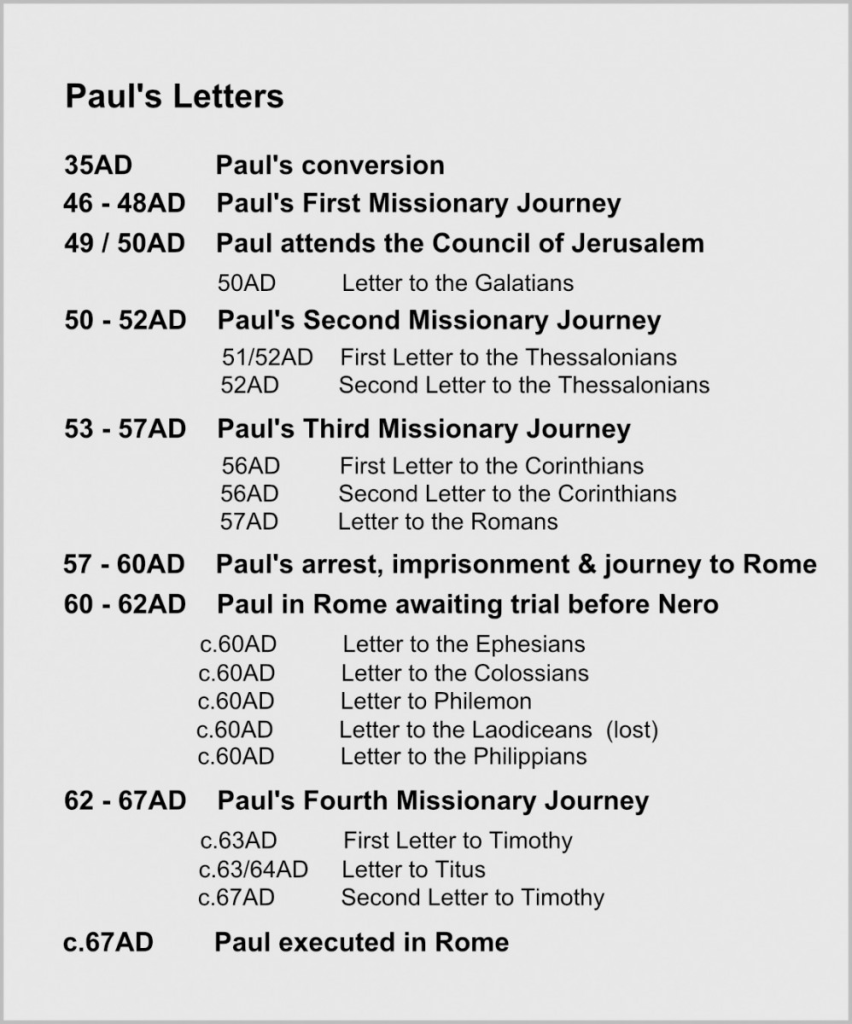
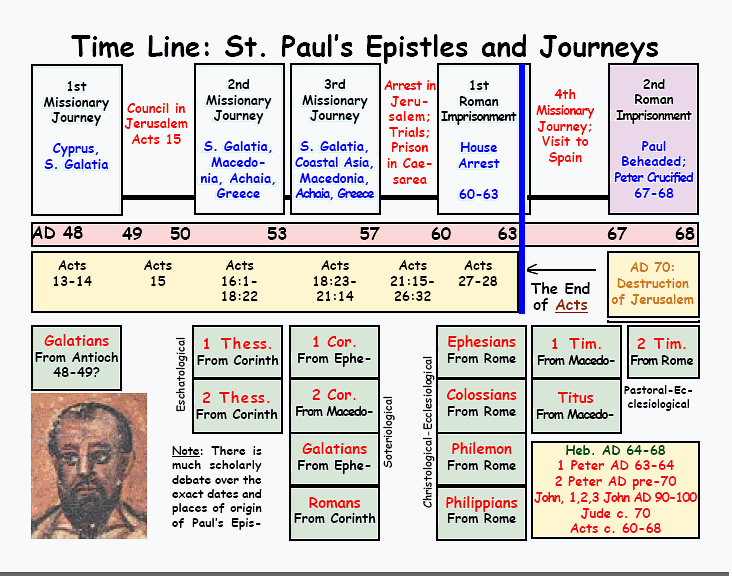


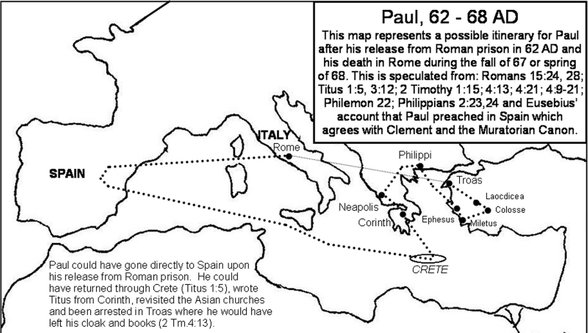
 Nicky's Notes