INSTRUCTIONS TO THOSE WHO MINISTER
1 Timothy 6:1 All who are under the yoke as slaves are to regard their own masters as worthy of all honor so that the name of God and our doctrine will not be spoken against. 2 Those who have believers as their masters must not be disrespectful to them because they are brothers or sisters, but must serve them all the more, because those who partake of the benefit are believers and beloved. Teach and preach these principles.
Paul bounces around to different topics. He now speaks to Christian slaves. (AI) “During the time of the Apostle Paul in the Roman Empire, slavery was a widespread and deeply entrenched part of society, with estimates suggesting that nearly a third of the population were slaves; people could become enslaved through war, debt, or even by being sold by their own families, and their conditions varied depending on their master and role, with some household slaves enjoying relatively better lives compared to those forced into harsh labor in mines or gladiatorial combat.” So, when a slave became a Christian, as Onesiphorus in the letter to Philemon, they became free in Christ. But did that mean they could free themselves from their masters? The answer is no. Christian slaves should “honor” their masters and serve them well. What if a Christian slave’s master becomes a believer? Now that slave and master are brothers in Christ, does that mean that the slave doesn’t have to serve his master since they are brothers? The answer is no. “Serve them all the more”.
What if a Christian slave has a harsh, mean master? Would that mean that the slave is free to rebel and run away? The answer is no. 1 Peter 2:18 Servants, be subject to your masters with all respect, not only to those who are good and gentle, but also to those who are harsh. 19 For this finds favor, if for the sake of conscience toward God a person endures grief when suffering unjustly. 20 For what credit is there if, when you sin and are harshly treated, you endure it with patience? But if when you do what is right and suffer for it you patiently endure it, this finds favor with God.”
Ephesians 6:5 Slaves, be obedient to those who are your masters according to the flesh, with fear and trembling, in the sincerity of your heart, as to Christ; 6 not by way of eye-service, as people-pleasers, but as slaves of Christ, doing the will of God from the heart. 7 With goodwill render service, as to the Lord, and not to people, 8 knowing that whatever good thing each one does, he will receive this back from the Lord, whether slave or free.”
We all know the evil of slavery throughout history. “It is almost impossible for us to utter the word ‘slavery’ without thinking of the appalling transfer of three million black Africans across the Atlantic between 1492 and 1807.” No one should be able to capture a person and make him a slave to be bought and sold. If it is such an evil institution, did Jesus speak against slavery? The answer is no. In Luke 4:18, Jesus says that his role is to “proclaim release to the captives” and “to set free those who are oppressed”, but he was speaking of those in spiritual captivity to Satan. Hebrews 2:14 Therefore, since the children share in flesh and blood, He Himself likewise also partook of the same, so that through death He might destroy the one who has the power of death, that is, the devil, 15 and free those who through fear of death were subject to slavery all their lives.” John 8:31 So Jesus was saying to those Jews who had believed Him, “If you continue in My word, then you are truly My disciples; 32 and you will know the truth, and the truth will set you free.” 33 They answered Him, “We are Abraham’s descendants and have never been enslaved to anyone; how is it that You say, ‘You will become free’?” 34 Jesus answered them, “Truly, truly I say to you, everyone who commits sin is a slave of sin. 35 Now the slave does not remain in the house forever; the son does remain forever. 36 So if the Son sets you free, you really will be free.”
Did Paul ever condemn slavery? The answer is no. He does condemn “slave traders”. 1 Timothy 1:8 But we know that the Law is good, if one uses it lawfully, 9 realizing the fact that law is not made for a righteous person but for those who are lawless and rebellious, for the ungodly and sinners, for the unholy and worldly, for those who kill their fathers or mothers, for murderers, 10 for the sexually immoral, homosexuals, slave traders (andrapodistés: Slave trader, kidnapper), liars, perjurers, and whatever else is contrary to sound teaching, 11 according to the glorious gospel of the blessed God, with which I have been entrusted.” But he did not condemn the institution of slavery or command slave owners to release their slave. He did not tell Christian slaves that they could rebel against their masters and gain their freedom. 1 Corinthians 7:21 Were you called as a slave? Do not let it concern you. But if you are also able to become free, take advantage of that. 22 For the one who was called in the Lord as a slave, is the Lord’s freed person; likewise the one who was called as free, is Christ’s slave. 23 You were bought for a price; do not become slaves of people. 24 Brothers and sisters, each one is to remain with God in that condition in which he was called.” If you are a slave when you became a believer, then stay a slave. If you have the opportunity to become free, then take advantage of that, but don’t rebel. (AI) “In ancient Rome, slaves could gain freedom through a process called manumission, which could be formal or informal: Other methodsSlaves could be freed by their master’s will, or by marrying their master if they were female. Slaves could also buy their own freedom, but this was uncommon.
Formal manumission: A magistrate would perform a ceremony where the slave would kneel and be touched on the shoulder with a rod. The slave would receive the pileus, a conical hat that symbolized their freedom. The freed slave would become a citizen and take the first two names of their former master. They would also be expected to serve their former master in some way, such as paying a portion of their earnings or inheriting from them. Informal manumission: The slave would not become a citizen and would lose any property or wealth they accumulated when they died.” That helps explain how a Christian slave might seek to become free.
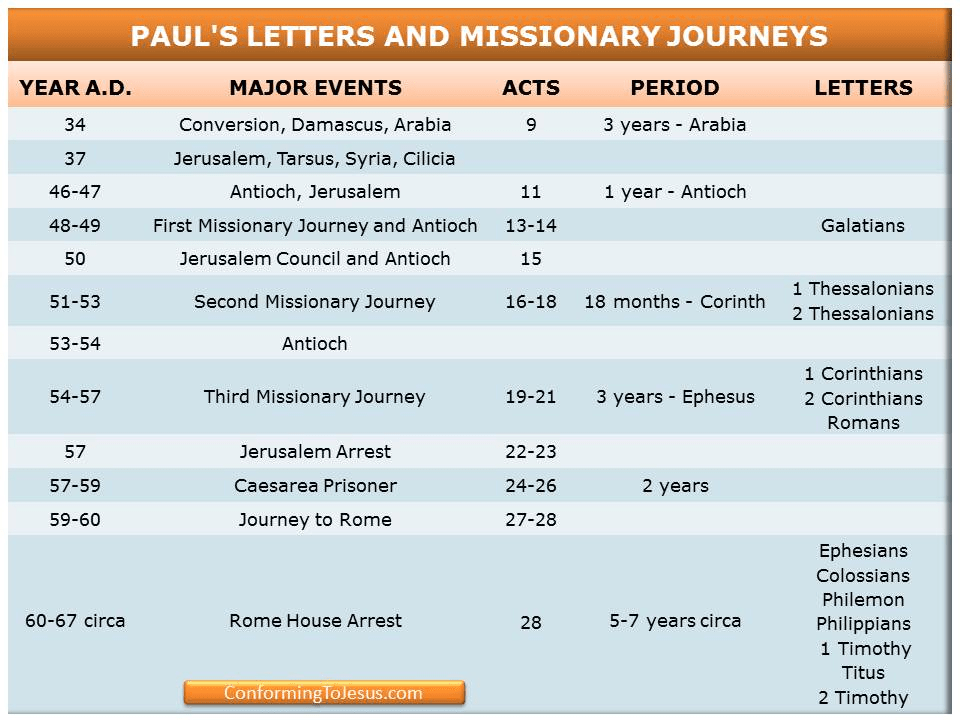
But what about Philemon? Did Paul command Philemon to free his slave Onesimus was Philemon’s runaway slave whom Paul converted while in his 2 years of house arrest in Rome (Acts 28). Onesimus helped Paul while in prison. But Paul sent him back to Philemon with these requests: Philemon 10 I appeal to you for my [j]son [k]Onesimus, whom I [l]fathered in my imprisonment, 11 who previously was useless to you, but now is useful both to you and to me. 12 I have sent him back to you in person, that is, sending my very heart, 13 whom I wanted to keep with me, so that in your behalf he might be at my service in my imprisonment for the gospel; 14 but I did not want to do anything without your consent, so that your goodness would not be, in effect, by compulsion, but of your own free will. 15 For perhaps it was for this reason that he was separated from you for a while, that you would have him back forever, 16 no longer as a slave, but more than a slave, a beloved brother, especially to me, but how much more to you, both in the flesh and in the Lord. 17 If then you regard me as a partner, accept him as you would me. 18 But if he has wronged you in any way or owes you anything, charge that to my account; 19 I, Paul, have written this with my own hand, I will repay it (not to mention to you that you owe to me even your own self as well). 20 Yes, brother, let me benefit from you in the Lord; refresh my heart in Christ.21 Having confidence in your obedience, I write to you, since I know that you will do even more than what I say.” He sees Onesimus’ running away as maybe the providence of God so that he could become a Christian in Rome. God can even take our mistakes and make something good from them. He tells Philemon to accept Onesimus back as a brother in Christ, but that doesn’t mean a command to free him. Paul says that Onesimus will continue to benefit Philemon as a slave. “In the Roman Empire, a runaway slave could face severe punishments upon capture, including whipping, branding, being chained, forced labor in the mines, and in extreme cases, even execution, as slaves were considered property with no legal rights and their owners had significant power over them; helping a runaway slave was also considered illegal and punishable.” So you can see why Paul wrote this. Paul was willing to pay, “charge to my account”, any thing Onesimus owed to Philemon. I’m not sure if Paul meant paying Philemon money since Paul had no money. He might have just meant, “you owe it to me since I helped you become a Christian (we don’t know who converted Philemon)”. The key phrase as it relates to our topic is 21 “Having confidence in your obedience, I write to you, since I know that you will do even more than what I say.” Was he suggesting that Philemon give freedom to Onesimus? If so, he certainly wasn’t commanding him to do so. Was he suggesting that, once Onesimus returned to Philemon and was reinstated as a slave to him, that Philemon allow Onesimus to return to Rome to continue helping Paul. I think that is the case.
What about slavery in the Old Testament? Was it allowed? Without going into great detail, I thought this AI summed it up pretty well.
Yes, the Old Testament did allow for slavery, with specific laws regulating the practice, particularly regarding the enslavement of non-Israelites; however, it’s important to understand that the Bible’s portrayal of slavery is not condoning it, but rather attempting to mitigate its harshness within the cultural context of the time.
Key points about slavery in the Old Testament:
- Cultural context:Slavery was prevalent in the ancient near eastern societies where the Bible was written, and the Old Testament laws aimed to regulate it rather than abolish it completely.
- Distinction between Israelites and foreigners:The laws often differentiated between Israelite slaves, who were typically considered temporary indentured servants, and foreign slaves who could be held in perpetual bondage.
- Leviticus as key text:The Book of Leviticus contains detailed regulations regarding slavery, including provisions for how to acquire slaves, how to treat them, and how to redeem them.
- Not condoning cruelty:While slavery was allowed, the Old Testament also included laws to protect slaves from abuse and to ensure their basic needs were met.
- In other words, the Law tolerated and allowed slavery. Some say that was just indentured servitude, but it included having foreign slaves. We don’t know why God allowed slavery, just as we don’t know why he allowed polygamy in the Old Testament. We can only assume that in some way it was the best thing for the people at large at that time in history.
- Indeed, Christianity played a significant role in the abolishment of slavery in the past. Augustine (400 AD) described slavery as a result of sin and against God’s will. John Wesley questioned the morality of slavery in his Thoughts upon Slavery. William Wilberforce, an evangelical Anglican MP, believed he was called by God to end the slave trade. In 1807, Wilberforce’s efforts led to the passing of the Abolition of the Slave Trade Act, which prohibited the transportation of enslaved people. However, this did not free the enslaved people who were already in existence. 18th century abolition movement: A small number of Christian churches began to take an abolitionist stance, and the evangelical revival of the 18th century led to a growth in calls for abolition. Christian abolitionists: Christian activists, such as John Brown, Harriet Beecher Stowe, and Charles Finney, were at the forefront of the abolitionist movement in the 1800’s in the U.S. Alexander Campbell, a leader in the Restoration Movement and a slave owner, tolerated slavery but eventually freed his own slaves. Another leader Barton Stone freed his slaves after becoming convinced that slavery was incompatible with Christianity and civil liberty. Many of the largest Protestant denominations in the United States split over the issue of slavery in the 1800s:
- Methodist Episcopal Church: In 1844, the Methodist Episcopal Church split into northern and southern branches over slavery, race, and episcopacy. The split was a result of the church’s membership spanning regions, classes, and races.
- Baptist churches: In 1845, Southern Baptists formed the Southern Baptist Convention after disagreeing with Northern Baptists over slavery and missions. The Baptists had previously avoided discussing slavery, but the American Baptist Anti-Slavery Convention in 1840 brought the issue to the forefront
- .Presbyterians: The Presbyterians split over slavery as early as 1838.
So has slavery ended? From AI: Here are some facts about modern slavery in the world today:
- Number of victimsIn 2021, an estimated 50 million people were living in modern slavery, which is a 10 million increase from 2016.
- Types of slavery28 million people were in forced labor, and 22 million were in forced marriages.
- Vulnerable populationsWomen and children are disproportionately vulnerable, with roughly a quarter of all victims being children. Migrant workers are also particularly vulnerable.
- LocationModern slavery occurs in almost every country in the world, but more than half of forced labor and a quarter of forced marriages are in high-income or upper-middle income countries.
- CausesThe COVID-19 pandemic has made the conditions that lead to modern slavery worse. Government corruption and a lack of robust governance and policing can also create environments where human trafficking and slavery thrive.
- Hidden costPeople in modern slavery are often forced to make products or offer services that people buy or use without realizing the human cost.
- Chattel slaveryThis is when an enslaved person is considered the personal property of another person and can be bought and sold.
- Sex traffickingThis is when an adult is forced to engage in a commercial sex act through force, threats, fraud, or coercion.
There are many organizations fighting human trafficking today worldwide. Human trafficking is the 2nd largest criminal industry in the world today, second only to the illegal drug trade. However, it is the fastest growing criminal industry in the world. It is only a matter of time until it becomes the largest criminal industry in the world. The United States is again ranked as one of the worst countries in the world for human trafficking. According to a recently released report by the State Department, the top three nations of origin for victims of human trafficking in 2018 were the United States, Mexico and the Philippines. From https://www.enditalabama.org/facts. here are more slaves today than at any other time in the history of the world. It is estimated that there are 27 million slaves in the world today. Of the estimated 27 million slaves in the world today, about half are children. The Trafficking Victims Protection Act of 2000 defines human trafficking as labor trafficking and sex trafficking. Traffickers gain complete control of their victims through coercion, force, or fraud. Although both types of trafficking occur, sex trafficking is the most prevalent form in the United StatesThe average age of entry into sex trafficking as a victim is 11-14 years of age and exploitation can continue for years. There are many adult victims, too. 80% of human trafficking victims are female. However, males are victims, too. Sex trafficking of children is a brutal form of human trafficking and child sexual abuse. Experts estimate that up to as many as 300,000 children are at risk of being exploited into prostitution each year. Pimps target the vulnerable, such as runaways, homeless youth, or children who have been abused or neglected. It is estimated that 2 children are trafficked into sexual exploitation every minute. A very lucrative business, it is estimated to be approximately a $32 billion industry annually. Some estimates are even higher – up to $150 billion per year. Unlike drugs and arms dealing, traffickers can continue to exploit their victims because human beings can be sold over and over again. Human trafficking is called “Modern Day Slavery.” It is the human rights issue we face today just as we faced it in the trans-Atlantic era of the mid-1800’s.Human trafficking is not just happening in third world countries anymore. It is happening across the United States, and it is happening in Alabama. Human trafficking has become a reality in our state and the big cities in the states surrounding us: Nashville, Memphis, Atlanta, and Chattanooga. Human trafficking continues to escalate and spill over into Alabama communities – both large and small cities and towns. Human trafficking is definitely a clear and present danger to Alabama and its communities. Human trafficking cases have been reported all across the state. Cases have been reported in Montgomery County, Birmingham, Fort Payne, Madison County, Huntsville, Albertville, Guntersville, Dothan, and Mobile. Governor Kay Ivey signed into law House Bill 42 – The Sound of Freedom Act – elevating Alabama’s anti human trafficking law to become the toughest in America. The new law raises the penalty for first-degree human trafficking to a mandatory sentence of life imprisonment when the victim was a minor. I suggest you watch the movie Sound of Freedom if you haven’t. Based on a true story.
It makes you wonder why churches are not more vocal and active in fighting human trafficking right in our midst and overseas. Are we content to have our nice assemblies and sermons, spending 80% of our money on ourselves? Maybe we should be spending most of the millions we collect in contributions to drill wells to people can have clean water, print Bibles to distribute worldwide, helping the poor, and supporting organizations that are actually doing these things “on the ground” where we can’t or won’t go. Just a thought.

 Nicky's Notes