NEHEMIAH: LESSONS ON LEADERSHIP

Leadership lessons from Nehemiah” Great godly leaders exhibit these qualities: Links to an external site.

1) Prayerful, depending on God for success, for wisdom to handle conflict, to get strength from God, to confess sin, etc. Great leaders pray, depending on God, in everything they do. 

Here are the times when Nehemiah prayed: 

Nehemiah 1:4-11 When he heard that there were no walls in Jerusalem

When I heard these things, I sat down and wept. For some days I mourned and fasted and prayed before the God of heaven. Then I said:

“Lord, the God of heaven, the great and awesome God, who keeps his covenant of love with those who love him and keep his commandments, let your ear be attentive and your eyes open to hear the prayer your servant is praying before you day and night for your servants, the people of Israel. I confess the sins we Israelites, including myself and my father’s family, have committed against you.We have acted very wickedly toward you. We have not obeyed the commands, decrees and laws you gave your servant Moses.

“Remember the instruction you gave your servant Moses, saying, ‘If you are unfaithful, I will scatter you among the nations, but if you return to me and obey my commands, then even if your exiled people are at the farthest horizon, I will gather them from there and bring them to the place I have chosen as a dwelling for my Name.’

10 “They are your servants and your people, whom you redeemed by your great strength and your mighty hand. 11 Lord, let your ear be attentive to the prayer of this your servant and to the prayer of your servants who delight in revering your name. Give your servant success today by granting him favor in the presence of this man.”

I was cupbearer to the king. 

Nehemiah 2:4 Before he asked the king if he could go to Jerusalem

The king said to me, “What is it you want?”

Then I prayed to the God of heaven

Nehemiah 4:4-5 When the work was ridiculed by the enemies

4 Hear us, our God, for we are despised. Turn their insults back on their own heads. Give them over as plunder in a land of captivity. 5 Do not cover up their guilt or blot out their sins from your sight, for they have thrown insults in the face of the builders.

Nehemiah 5:19 When he dealt with charging interest to fellow Jews

19 Remember me with favor, my God, for all I have done for these people.

Nehemiah 6:9 When threatened by the Samaritan enemies

They were all trying to frighten us, thinking, “Their hands will get too weak for the work, and it will not be completed.”

But I prayed, “Now strengthen my hands.”

Nehemiah 6:14 When betrayed by fellow Jews and false prophets

14 Remember Tobiah and Sanballat, my God, because of what they have done; remember also the prophet Noadiah and how she and the rest of the prophets have been trying to intimidate me.

Nehemiah 9:5-38 When confessing the sins of the nation

And the Levites—Jeshua, Kadmiel, Bani, Hashabneiah, Sherebiah, Hodiah, Shebaniah and Pethahiah—said: “Stand up and praise the Lord your God, who is from everlasting to everlasting.[aLinks to an external site.]”

“Blessed be your glorious name, and may it be exalted above all blessing and praise. You alone are the Lord. You made the heavens, even the highest heavens, and all their starry host, the earth and all that is on it, the seas and all that is in them. You give life to everything, and the multitudes of heaven worship you.

“You are the Lord God, who chose Abram and brought him out of Ur of the Chaldeans and named him Abraham. You found his heart faithful to you, and you made a covenant with him to give to his descendants the land of the Canaanites, Hittites, Amorites, Perizzites, Jebusites and Girgashites. You have kept your promise because you are righteous.

“You saw the suffering of our ancestors in Egypt; you heard their cry at the Red Sea.[bLinks to an external site.10 You sent signs and wonders against Pharaoh, against all his officials and all the people of his land, for you knew how arrogantly the Egyptians treated them. You made a name for yourself, which remains to this day. 11 You divided the sea before them, so that they passed through it on dry ground, but you hurled their pursuers into the depths, like a stone into mighty waters. 12 By dayyou led them with a pillar of cloud, and by night with a pillar of fire to give them light on the way they were to take.

13 “You came down on Mount Sinai; you spoke to them from heaven. You gave them regulations and laws that are just and right, and decrees and commands that are good. 14 You made known to them your holy Sabbath and gave them commands, decrees and laws through your servant Moses. 15 In their hunger you gave them bread from heaven and in their thirst you brought them water from the rock; you told them to go in and take possession of the land you had sworn with uplifted hand to give them.

16 “But they, our ancestors, became arrogant and stiff-necked, and they did not obey your commands. 17 They refused to listen and failed to remember the miracles you performed among them. They became stiff-necked and in their rebellion appointed a leader in order to return to their slavery. But you are a forgiving God, gracious and compassionate, slow to anger and abounding in love. Therefore you did not desert them, 18 even when they cast for themselves an image of a calf and said, ‘This is your god, who brought you up out of Egypt,’ or when they committed awful blasphemies.

19 “Because of your great compassion you did not abandon them in the wilderness. By day the pillar of cloud did not fail to guide them on their path, nor the pillar of fire by night to shine on the way they were to take. 20 You gave your good Spirit to instruct them. You did not withhold your manna from their mouths, and you gave them water for their thirst. 21 For forty years you sustained them in the wilderness; they lacked nothing, their clothes did not wear out nor did their feet become swollen.

22 “You gave them kingdoms and nations, allotting to them even the remotest frontiers. They took over the country of Sihon[cLinks to an external site.] king of Heshbon and the country of Og king of Bashan. 23 You made their children as numerous as the stars in the sky, and you brought them into the land that you told their parents to enter and possess. 24 Their children went in and took possession of the land. You subduedbefore them the Canaanites, who lived in the land; you gave the Canaanites into their hands, along with their kings and the peoples of the land, to deal with them as they pleased. 25 They captured fortified cities and fertile land; they took possession of houses filled with all kinds of good things, wells already dug, vineyards, olive groves and fruit trees in abundance. They ate to the full and were well-nourished; they reveled in your great goodness.

26 “But they were disobedient and rebelled against you; they turned their backs on your law. They killed your prophets, who had warned them in order to turn them back to you; they committed awful blasphemies. 27 So you delivered them into the hands of their enemies, who oppressed them. But when they were oppressed they cried out to you. From heaven you heard them, and in your great compassion you gave them deliverers, who rescued them from the hand of their enemies.

28 “But as soon as they were at rest, they again did what was evil in your sight.Then you abandoned them to the hand of their enemies so that they ruled over them. And when they cried out to you again, you heard from heaven, and in your compassion you delivered them time after time.

29 “You warned them in order to turn them back to your law, but they became arrogant and disobeyed your commands. They sinned against your ordinances, of which you said, ‘The person who obeys them will live by them.’ Stubbornly they turned their backs on you, became stiff-necked and refused to listen. 30 For many years you were patient with them. By your Spirit you warned them through your prophets. Yet they paid no attention, so you gave them into the hands of the neighboring peoples. 31 But in your great mercy you did not put an end to them or abandon them, for you are a gracious and merciful God.

32 “Now therefore, our God, the great God, mighty and awesome, who keeps his covenant of love, do not let all this hardship seem trifling in your eyes—the hardship that has come on us, on our kings and leaders, on our priests and prophets, on our ancestors and all your people, from the days of the kings of Assyria until today. 33 In all that has happened to us, you have remained righteous; you have acted faithfully, while we acted wickedly. 34 Our kings, our leaders, our priests and our ancestors did not follow your law; they did not pay attention to your commands or the statutes you warned them to keep. 35 Even while they were in their kingdom, enjoying your great goodness to them in the spacious and fertile land you gave them, they did not serve you or turn from their evil ways.

36 “But see, we are slaves today, slaves in the land you gave our ancestors so they could eat its fruit and the other good things it produces. 37 Because of our sins, its abundant harvest goes to the kings you have placed over us. They rule over our bodies and our cattle as they please. We are in great distress.

38 “In view of all this, we are making a binding agreement, putting it in writing, and our leaders, our Levites and our priests are affixing their seals to it.”

Nehemiah 13:14 When tithes were not payed to support the Levites

14 Remember me for this, my God, and do not blot out what I have so faithfully done for the house of my God and its services.

Nehemiah 13:22 When the people were violating the Sabbath

22 Then I commanded the Levites to purify themselves and go and guard the gates in order to keep the Sabbath day holy.

Remember me for this also, my God, and show mercy to me according to your great love.

Nehemiah 13:29 When rebuking some for marrying foreign wives

29 Remember them, my God, because they defiled the priestly office and the covenant of the priesthood and of the Levites.

2) Develop a God-inspired vision.Links to an external site.

Ch 1 Nehemiah had a cushy job as cupbearer to the king of Persia, but he had a vision of doing something great for God. Jerusalem and the temple had been rebuilt but there were no walls and the city was defenseless. Nehemiah had a vision of going to Jerusalem to rebuild those walls. Great leaders have great visions of what God can use them to accomplish.

3) Plan diligently, trust faithfullyLinks to an external site.

Ch 2 He gets to Jerusalem and the first thing he does is to secretly at night inspect the walls to come up with a plan before he talked to the people. Great leaders trust God but they use their wisdom to come up with a good plan to accomplish their mission.

4) Lead with courage and dependence on GodLinks to an external site.

Ch 2 He must be very nervous when the king asks him why his is sad. The king’s cupbearer is supposed to always be cheerful around the king. He can’t be showing his own personal sadness before the king. So Nehemiah prays and then shows great courage in telling the king about the walls and how he wants to take a leave of absence and go rebuild them. That took courage. The king could have become angry and had him removed as cupbearer. 

Ch4 He showed great courage when the Samaritan enemies threatened the builders on the walls. He stood up to them and prayed to God for courage. The people were getting discouraged and afraid. The enemies planned to make several attacks on the builders at different places, but Nehemiah found out about their plan. He got the people back to work, carrying a defensive weapon in one hand and a bulding tool in the other. 

4:

But we prayed to our God, and because of them we set up a guard against them day and night.

10 And so [amLinks to an external site.]in Judah it was said:

“The strength of the burden bearers is failing,
Yet there is much rubble;
And we ourselves are unable
To rebuild the wall.”

11 And our enemies said, “They will not know or see until we come among them, kill them, and put a stop to the work.” 12 When the Jews who lived near them came and told us ten times, “They will come up against us from every place where you may turn,” 13 then I stationed men in the lowest parts of the space behind the wall, the exposed places, and I stationed the people in families with their swords, spears, and bows. 14 When I saw their fear, I stood and said to the nobles, the officials, and the rest of the people: “Do not be afraid of them; remember the Lord who is great and awesome, and fight for your brothers, your sons, your daughters, your wives, and your houses.”

15 Now when our enemies heard that it was known to us, and that God had frustrated their plan, then all of us returned to the wall, each one to his work. 16 And from that day on, half of my servants carried on the work while half of them kept hold of the spears, the shields, the bows, and the coats of mail; and the captains were behind all the house of Judah. 17 Those who were rebuilding the wall and those who carried burdens carried with one hand doing the work, and the other keeping hold of a weapon. 18 As for the builders, each wore his sword strapped to his waist as he built, while the trumpeter stood near me. 19 And I said to the nobles, the officials, and the rest of the people, “The work is great and extensive, and we are separated on the wall far from one another. 20 At whatever place you hear the sound of the trumpet, assemble to us there. Our God will fight for us.”

21 So we carried on the work with half of them holding spears from dawn until the stars appeared. 22 At that time I also said to the people, “Each man with his servant shall spend the night within Jerusalem, so that they may be a guard for us by night and a laborer by day.” 23 So neither I, my brothers, my servants, nor the men of the guard who followed me—none of us [arLinks to an external site.]removed our clothes; each took his weapon even to the water.” 

Great leaders must have great courage and trust in God when their followers become discouraged and afraid. Nehemiah did.

5) Build and empower teamsLinks to an external site.

Ch 2 He inspired the men to join with him in his vision. 2:17 Then I said to them, “You see the bad situation we are in, that Jerusalem is desolate and its gates have been burned by fire. Come, let’s rebuild the wall of Jerusalem so that we will no longer be a disgrace.” 18 And I told them how the hand of my God had been favorable to me and also about the king’s words which he had spoken to me. Then they said, “Let’s arise and build.” So they put their hands to the good work.

Ch 3 He appointed different men to each rebuild a small part of the wall or a gate in the wall. He delegated the work. He did not try to do it all by himself. He built teams of workers to accomplish the task. 

6) Address conflicts with wisdom and compassionLinks to an external site.

Ch 5 He had compassion on some whom he heard had been charged interest on loans and were having difficulty paying the interest. Jews were not supposed to charge interest on fellow Jews but many were doing that. Nehemiah addressed this conflic which could have divided the workers among themselves and hindered the work on the walls. Often groups can be doing a good work for the Lord but start fighting among themselves and the work gets stopped. Great leaders know how to wisely handle such internal conflicts. 

7) Maintain integrity and transparencyLinks to an external site.

Ch 5 He said that for 12 years he had payed to feed 150 of the leaders to eat at his table.  There was a “governor’s allowance” that he could have used to pay for this, but he did not. Neither did he buy any land for himself. He showed great integrity. He sacrificed a lot to lead the project. Great leaders are not in ti for the money. They usually end up spending their own money to do the Lord’s work. 5:

14 Furthermore, since the day that I was appointed to be their governor in the land of Judah, from the twentieth year to the thirty-second year of King Artaxerxes, for twelve years, neither I nor my kinsmen have eaten the governor’s food allowance15 But the previous governors who were before me [azLinks to an external site.]laid burdens on the people and took from them bread and wine besides forty shekels of silver; even their servants domineered the people. But I did not do so because of my fear of God. 16 I also [baLinks to an external site.]applied myself to the work on this wall; we did not buy any land, and all my servants were gathered there for the work. 17 Moreover, there were at my table 150 Jews and officials, besides those who came to us from the nations that were around us. 18 Now that which was prepared for each day was one ox and six choice sheep; also birds were prepared for me, and every ten days all sorts of wine were provided in abundance. Yet for all this I did not request the governor’s food allowance, because the forced labor was heavy on this people. 19 Remember me, my God, for good, in return for all that I have done for this people.

8) Stay focused despite distractionsLinks to an external site.

Ch 4 The enemies ridiculed the work on the walls. 4:1 Now it came about that when Sanballat heard that we were rebuilding the wall, he became furious and very angry, and he mocked the Jews. And he spoke in the presence of his brothers and the [aeLinks to an external site.]wealthy people of Samaria and said, “What are these feeble Jews doing? Are they going to restore the temple for themselves? Can they offer sacrifices? Can they finish it in a day? Can they revive the stones from the heaps of rubble, even the burned ones?” Now Tobiah the Ammonite was near him, and he said, “Even what they are building—if a fox were to jump on it, it would break their stone wall down!” Nehemiah did not let this ridicule slow him down. 

So they continued the work till the wall was built up to half its height. 4:So we built the wall, and the entire wall was joined together to half its height, for the people had a mind to work. Now when Sanballat, Tobiah, the Arabs, the Ammonites, and the Ashdodites heard that the repair of the walls of Jerusalem went on, and that the breaches began to be closed, they were very angry. So all of them conspired together to come to fight against Jerusalem and to cause confusion in it.” 

These distractions did not stop Nehemiah. He stayed focused on the work. Nothing could stop him from fulfilling his vision.

Ch 6 As the work on the walls was nearing completion with no gaps in the walls but no doors in the gates (the finishing touch), the enemies were desperate and sent letters to him 5 times offering to meet with him, supposedly to have “peace talks” with him, but really they were planning on killing him. They came up with false rumors that Nehemiah was trying to get himself made king and rebel against the Persians, which wasn’t true. Nehemiah stood up to them despite all the distractions to the work. 

Ch 6 One of his fellow Jews to try to scare him into going into the temple for safety which would have been a sin since he was not a priest. He refused to enter the temple and trusted God for his safety. He then discovered that his fellow Jew had been hired by the enemies to get Nehemiah to enter the temple and sin. They could have then used that to discredit him as a leader and get the work on the walls stopped. 

Ch 6 Because of his leadership, the walls were completed in 52 days despite all the distractions (6:15). The enemies lost their confidence. But some of his fellow Jews were loyal to Tobiah, a leader of the Samaritan enemies b/c they had intermarried with some of the Samaritans. They had been corresponding in letters with Tobiah the whole time, betraying Nehemiah. They tried to praise Tobiah when with Nehemiah. Tobiah sent more letters to frighten Nehemiah, threatening to cause him to lose his leadership position since many of his fellow Jews were loyal to Tobiah. None of this stopped Nehemiah. 

9) Celebrate milestones and give glory to GodLinks to an external site.

Ch 7:1 Now when the wall was rebuilt and I had installed the doors, and the gatekeepers, the singers, and the Levites were appointed. He is getting the people ready for a great celebration over the finishing of the walls.

Ch 8 Nehemiah gathers the people and has Ezra read from the book of the Law (the Pentateuch, the fist 5 books of the OT). They made a podium for him to stand on. The people stood as he read from early morning to noon! 8:Then Ezra blessed the Lord, the great God. And all the people answered, “Amen, Amen!” with the raising of their hands; then they kneeled down and worshiped the Lord with their faces to the ground.” Other leaders explained what Ezra was reading in more detail. The people were crying as they heard the reading and realized how much they had sinned in not keeping the Law like they should. BTW this was the reason for Ezra making the 2nd return from Babylon, i.e. to get the people keeping the Law better. Nehemiah told them to quit weeping but instead to go get ready to celebrate a joyful feast, the Feat of Tabernacles. Ezra read to them that it was the time of the year to celebrate that feast. So they gathered branches and palms to make little booths to live in for 7 days, reading from the Law the whole time and celebrating with food and great rejoicing. The people had not celebrated this feast as they should since the days of Joshua! On the 8th day they came together for a solemn, reverent assembly. 

Nehemiah inspired the people to enjoy doing God’s work, to obey God fully, and to give God the glory for success. Great leaders know how to bring people together to enjoy doing God’s work. 

10) Commit to ongoing spiritual renewalLinks to an external site.

Great leaders are not just about getting the people to start a building program to build a new church building or an addition. They are more concerned about spiritual reforms needed among the people. It is easier to get people excited about building a building than it is to confessing and repenting of our many sins.

Ch 9 Nehemiah persuaded the people to confess their sins. 9:1 Now on the twenty-fourth day of this month the sons of Israel assembled with fasting, in sackcloth and with dirt upon them. The descendants of Israel separated themselves from all foreigners, and they stood and confessed their sins and the wrongdoings of their fathers. While they stood in their place, they read from the Book of the Law of the Lord their God for a fourth of the day; and for another fourth they confessed and worshiped the Lord their God.”

Then comes a long summary of the history of the Jews up to that point in time. It mentions all that God had done for Israel (the plagues, the conquest of Canaan, etc.) but how that over and over the people disobeyed God. Ch 9 is a prayer of confession of the sins of Israel in their whole history up to that point in time. But it repeatedly said that God had compassion on them and asks God to have compassion on them again as they commit to have a revival and keep God’s laws.. 

9:16 “But they, our fathers, acted arrogantly;
They became stubborn and would not listen to Your commandments.
17 They refused to listen,
And did not remember Your wondrous deeds which You performed among them;
So they became stubborn and appointed a leader to return to their slavery in Egypt.
But You are a God of forgiveness,
Gracious and compassionate,
Slow to anger and abounding in mercy;
And You did not abandon them.

9:Nevertheless, in Your great compassion You did not make an end of them or abandon them,
For You are a gracious and compassionate God.

Nehemiah and Ezra inspired them to make an agreement, a covenant, in writing to obey God and the Law (9:38). The leaders all signed it. 1) To obey all the Law. 2) To divorce foreign wives they had married and not give their children in marriage to foreginers.. 3) To not buy and sell on the Sabbath. 4) To pay a yearly temple tax to support the sacrifices and work in the temple. 5) To give the firstfruits of everything they grew to the Lord to support the priests and Levites. 6) To move 1 of every 10 Jews in the land to live in the city of Jerusalem as 9/10 of the people lived in other cities. The leaders already lived in Jerusalem. 

Ch 12 This led to another celebration and “dedication” of the completed walls. 12:27 Now at the dedication of the wall of Jerusalem they sought out the Levites from all their places, to bring them to Jerusalem so that they could celebrate the dedication with joy, with songs of thanksgiving and with songs to the accompaniment of cymbals, harps, and lyres.” There were 2 choirs of singers on top of the walls. 

Ch 13 Nehemiah made a trip back to Susa. No doubt he told the king about the rebuilding of the wall and how God had blessed the work. But when he returned to Jerusalem, he found several issues and addressed them. 1) Some of the Jews who were related by marriages to Tobiah, the Samaritan enemy had made a room in a chamber of the temple for Tobiah to stay in. Apparently Tobiah had fallen out of favor with his fellow Samaritans. Nehemiah kicked him out of the room. 2) He also remanded the people for not paying tithes to the Levites. 3) He rebuked them for buying and selling on the Sabbath and ordered that the gates to the city be shurt at sundown on Friday and not opened until the Sabbath ended at sundown on Saturday. 4) He severely rebuked some for marrying foreign women and made them swear to stop doing that. 13:25 So I quarreled with them and cursed them, and struck some of them and pulled out their hair, and made them swear by God, “You shall not give your daughters to their sons, nor take any of their daughters for your sons or for yourselves.” 

WAS JESUS DEPRESSED? HOW TO DEAL WITH DEPRESSION (3)

Here is Peyton Synthetic Gospel Harmony for Jesus praying in the Garden of Gethsemane. I like Peyton b/c it blends all 3 accounts of his prayer into one.

FRIDAY

Jesus Prays in Gethsemane – Before Dawn (Mk 14:32-42; Mt 26:36-46; Lk 22:39-46; Jn 18:1)

Lk 22:39 Then Jesus went out and made his way, as he customarily did, Mt 26:36 to a place called Gethsemane, Jn 18:1 across the Kidron Valley. There was an orchard there, and he and his disciples went into it. Lk 22:40 When he came to the place, he said to them, “Sit here and pray that you will not fall into temptation Mt 26:36 while I go over there and pray.” 37 He took with him Peter, James, and John, the two sons of Zebedee, and became anguished and distressed. 38 Then he said to them, “My soul is deeply grieved, even to the point of death. Remain here and stay awake with me.” Mk 14:35 Going a little farther, about a stone’s throw, he threw himself down with his face to the ground and prayed that if it were possible the hour would pass from him. 36 He said, “Abba, Father, all things are possible for you. Lk 22:42 If you are willing, take this cup away from me. Yet not my will but yours be done.” 43 [Then an angel from heaven appeared to him and strengthened him. 44 And in his anguish he prayed more earnestly, and his sweat was like drops of blood falling to the ground 45 When he got up from prayer, he came to the disciples and found them sleeping, exhausted from grief. Mk 14:37 He said to Peter, “Simon, why are you sleeping? Couldn’t you stay awake with me for one hour? 38 Get up, stay awake and pray that you will not fall into temptation. The spirit is willing, but the flesh is weak.” Mt 26:42 He went away a second time and prayed the same thing, “My Father, if this cup cannot be taken away unless I drink it, your will must be done.” Mk 14:40 When he came again he found them sleeping; they could not keep their eyes open. And they did not know what to tell him. Mt 26:44 So leaving them again, he went away and prayed for the third time, saying the same thing once more. 45 Then he came to the disciples a third time and said to them, “Are you still sleeping and resting? Enough of that! Look, the hour is approaching and the Son of Man is betrayed into the hands of sinners. 46 Get up, let us go. Look! My betrayer is approaching!”

Notice the words that describe Jesus’ mental and emotional state in the Garden. 1) Mt 26:37 “Anguished” (lupeó: To grieve, to cause sorrow, to distress). 2) “distressed” (adémoneó: To be distressed, troubled, or deeply grieved). 3) Mt 26:38 “Deeply grieved” (perilupos: Deeply distressed, exceedingly sorrowful, very sad). perílypos (an adjective, derived from 4012 /perí, “encompassing” and 3077 /lýpē, “sorrow”) – properly, being sorrowful “all-around,” i.e. engulfed in sorrow. AI: “The term “perilupos” is used to describe a state of profound emotional distress or sorrow. It conveys a sense of being overwhelmed by grief or sadness, often in response to a significant or impending event. In the New Testament, it is used to express the deep emotional turmoil experienced by individuals in moments of great trial or anticipation of suffering.” In other words, not just grieved (lupeo in 26:37) but overwhelmed with grief, perilupos 26:38). 4) Mt 26:38 “to the point of death”. What does that mean? “He confesses a deeply troubled state of mind. “Jesus describes this as being so distressed that He almost feels the emotion would kill Him.” Have you ever been so troubled, depressed, grieved that you just felt like you couldn’t go one, you couldn’t face life any longer? Jesus felt that. 5) Lk 22:44 “sweat like drops of blood falling to the ground”. 2 possible meanings for this: “Hematohidrosis: This condition occurs when blood vessels around the sweat glands rupture, allowing blood to mix with sweat. It can be caused by extreme distress or bleeding disorders.  Simile: The phrase “like drops of blood” could be a simile to compare the large, heavy drops of sweat to blood dripping from a wound.” Since it says “like”, I think it means a simile.

So, was Jesus depressed? It would seem so. He is “overwhelmed” with grief which is a symptom of depression. He feels that his grief and anxiety is going to kill him. He is sweating thick drops of sweat, which is a sign of a panic attack for me (I have awakened from a panic attack, sweating profusely even though the room temperature is cool). Is depression a lack of faith? Had Jesus lost his faith in the Father’s plan? Of course not.  Some might feel guilt b/c they feel that their depression is due to their lack of faith. That just adds more stress to their depression. Depression is just a fact of our human weakness that we all endure at one time or another, some for longer periods than others.

So how did Jesus handle his depression? He prayed. Mk 14:35 Going a little farther, about a stone’s throw, he threw himself down with his face to the ground and prayed that if it were possible the hour would pass from him. 36 He said, “Abba, Father, all things are possible for you. Lk 22:42 If you are willing, take this cup away from me. Yet not my will but yours be done. 43 Then an angel from heaven appeared to him and strengthened him. 44 And in his anguish he prayed more earnestly.” He prayed this same prayer 3 times. Did he really think that it was “possible” that his impending hour of suffering and death would pass from him and not happen? He knew that his fate, dying on the cross, was imminent, but He knew it had to happen to do the Father’s will and save sinners. After his triumphal entry into Jerusalem, John 12:27 “Now is my soul troubled. And what shall I say? ‘Father, save me from this hour’? But for this purpose I have come to this hour. 28 Father, glorify your name.” I think his mind knew that it was not possible at the last moment to change God’s plan for him to die, but his fleshly spirit was so overwhelmed that he asked the Father if there was any other way. He is so distressed that he even reminds the Father “all things are possible for you”. But then he adds, “yet not my will but yours be done”. He is totally ready to accept his fate, suffer, and die. I think he knew there was no other way.

When we pray for a loved one with cancer, we know that all things are possible with God. He can use doctors and medicine to reverse a death sentence, or He can just reverse it mysteriously without medicine. So our grief causes us to pray for healing. We pray with faith that God can heal. We don’t pray with faith that God will heal. We know, as Jesus did, that for whatever reason God might not let the fate of our loved one pass: he/she will die from the cancer. We should not feel guilty if our loved one dies, thinking that he/she died b/c of our lack of faith or lack of prayer. I have heard some expressing that thought when we had a loved one die and it devastating to the survivors, causing them to live with unnecessary guilt for years afterward. We lost a loved one in a car accident, and as she was in intensive care I was asked, “we prayed and we believe so she will be okay, right?” We lost another loved one in intensive care and I heard someone say that if we prayed hard enough and believed enough that the loved one would live. She did not live and I wonder how that statement affected others’ faith in God.

We just have to pray, believing that God might heal, but we must be ready to accept whatever the will of the Father is. Not some predetermined Calvinistic fate, but whatever the Father feels is best. Then we just leave the outcome to God. We don’t lose any faith in God is he doesn’t heal. We accept it and move on. If we pray like Jesus did, then the Father can say “yes” to all of our prayers. We pray, “heal my loved one, but if not, do what is best”. The Father can say, “yes, I wil do that”: even if our loved one dies, He has answered “yes” to our prayer. If we just pray, “Father heal my loved one”, then He can’t say yes. He can say “I hear your prayer, but “no”, I will not heal your loved one.”

We can learn so much from the prayer life of Jesus. Here is a great site that lists all the verses (and you can click on the verses for each time of prayer listed) in which Jesus prayed: https://jesusalive.cc/times-jesus-prayed/. Here is a great summary from the article by Steve Shirley:

“The Bible tells us in (1 Th 5:17) to “pray without ceasing.” While I don’t believe this literally means to never stop praying, I would say that Jesus probably came closer to never stopping than any person who has ever lived on this planet. He was continually in a prayer mode. He is shown to pray: alone (Mt 14:23)(Mk 1:35)(Lk 9:18)(Lk 22:39-41), in public (Jn 11:41-42)(Jn 12:27-30), before meals (Mt 26:26)(Mk 8:6)(Lk 24:30)(Jn 6:11), before important decisions (Lk 6:12-13), before healing (Mk 7:34-35), after healing (Lk 5:16), to do the Father’s will (Mt 26:36-44), among other things. He also taught on the importance of prayer (Mt 21:22)(Mk 11:24-26)(Mt 7:7-11)(Lk 11:9-13)(Jn 14:13-14)(Jn 15:7,16)(Jn 16:23-24)(Mt 5:44)(Lk 6:27-28)(Mt 6:5-15: including the Lord’s Prayer)(Lk 11:2-4)(Mt 18:19-20). If you take all of the places that show Jesus praying, you will have a PERFECT outline of how to pray (check out Jn 17).”
Go to the article and read this summary b/c you can click on the verses and see each verse for each category. You can’t do that from reading the summary in this blog article. The author lists 25 places, times, and occasions where Jesus prayed and you can click on the verses for each one.

I don’t know about you, but my prayer life is weak and I hope this article will help me be more prayerful.

So, add “prayer” to “heal to deal with depression.”

LORD I NEED SOME ANSWERS

Have you been there? You have some things really troubling you? You might even be a little depressed? You have some key decisions that you need to make? You are thinking about quitting in some way? You feel like others don’ appreciate you? You are starting to imagine some conspiracy plots against you?

But you also know that maybe you deserve some of the things that are troubling you? You know your secret sins even if others don’t. You know that you have had some ulterior motives that you don’t want others to know about.

You know that pride could be part of your problem. It might be that the Lord has already been trying to answer your questions and lead you in a good path but your pride has kept you going on your own path. God said, “My ways are not your ways, and my thoughts are not your thoughts”. Maybe you have been relying on your own thoughts and ways instead of God’s. Maybe God is testing you. Maybe God is trying to humble you. Asa, Uzziah, and Hezekiah were great men of God until they were lifted up with pride. You don’t want to let your pride cause you to make some really, stupid, rash decisions. You want to just selfishly pull away from people, from the things you have been involved in. The future looks bleak. You have so much to be thankful for, but you are in a real funk. You might even have considered trying to drink your problems away, although that is not characteristic of you. You dont know who to talk to and who to turn to for help.

Lord, I need some answers. How do I get them? Well it starts with humbly asking God for wisdom. James 1:If any of you lacks wisdom, let him ask God, who gives generously to all without reproach, and it will be given him. But let him ask in faith, with no doubting, for the one who doubts is like a wave of the sea that is driven and tossed by the wind.” Then in faith trust God that He will give you some answers and lead you in the best path for you to take. Then, the hard part, wait for Him to clearly show you the answers. You look for signs or indicators of God’s leading. You try not to just look for the signs that might want to find, but be totally open to any and all signs. You think you have a sign and then you look for confirmation of that sign. Gideon asked God for a sign: a wet fleece on dry ground. He got it, but then he asked for confirmation: a dry fleece on a wet ground. I can’t believe the Lord gave him the 2nd sign without scolding him for his lack of faith.

I know some people who are just so decisive. They survey the situation. They make decisions and take action. They never second guess themselves or look back if they make a bad decision. But some of us don’t have as much confidence in our decision making skill. We have trouble making decisions. We second guess our decisions. We are always asking “What if I hadn’t don that, or what if I had done that”. We worry about making a decision and we worry if we made the right decision. That doesn’t sound like a lot of confidence that the decisions you make are in harmony with what the Lord wants you to do. If you feel like the Lord is helping you make a decision, then you make it and then the results and consequences of your decision over to the Lord.

Hebrews 4:16 Let us then with confidence draw near to the throne of grace, that we may receive mercy and find grace to help in time of need.” I am in need, Lord, please hear my prayer and help me.

Lord, I am feeling lost and uncertain right now. I come before you with a heavy heart, seeking your guidance and wisdom. Please, reveal your answers to the questions that trouble me, and help me to see clearly the path you want me to follow. I trust in your love and your perfect plan for my life. Amen.” 


So I prayed and now I wait. I am afraid He will give me some answers that I don’t want to hear even though I say that I want answers. I was going to quit, maybe make a big show of quitting with an bad attitude. What if he tells me to get my act together, quit my pity party, and don’t quit. What if he tells me that he had me in just the right spot that he wanted me to be in.

Things will usually look better in the morning. Weeping may endure for a night, but joy cometh in the morning. Psalm 30:5 These troubling, uncertain times are when you find out how much you really depend on and trust God to lead you. Use them to grow closer to God.

If this article seems to be just what you need to hear today, then that’s great. Praise God and pray. Pray that prayer several times. William Carey was the father of Protestant mission work. He had a dream of preaching the gospel to the heathen Hindus in India. He met resistance from his Calvinistic preachers who said that, if God wanted that done in India, then God would send the Spirit directly to get it done without anyone even going there. But Carey had a saying: “Expect great things from God. Attempt great things for God.” He went. He had many difficult times and lost his family, but he ended up printing, not preaching. He printed to Bible in the native Indian dialects that led to the conversion of thousands. His picture is on a commemorative stamp.

Once you think you know what the lord wants you to do, then be bold. Expect great things from God. Attempt great thing for God. If He closes a door, then he will open another door for you.

God bless you (and me) as we try to seek answers from the Lord. If this article doesn’t fit where you are right now, then be assured it fits someone else. Go encourage them. Let God use you to help someone who is down right now.

START YOUR DAY WITH THESE 7 THINGS

Philippians 4:Always be filled with joy in the Lord. I will say it again. Be filled with joy.

Let everyone see that you are gentle and kind. The Lord is coming soon. Don’t worry about anything, but pray and ask God for everything you need, always giving thanks for what you have. And because you belong to Christ Jesus, God’s peace will stand guard over all your thoughts and feelings. His peace can do this far better than our human minds.” ESV

The secret to having good days is to start the day right. A great place to do that is Philippians 4.

1 Rejoice, be filled with joy. If you have eternal life, why does anything on earth really matter. The worst case scenario might be the health or death of loved ones, but when we all get to heaven, sickness and death here on earth will seem like a minor illness that you had 30 years ago.

2 Be kind and gentle. Try a little kindness. Instead of focusing on my problems, my work to be done, my stuff, let your mind think of ways you can show little acts of kindness to others today. It will bring joy to you and it will get your mind off your stressors.

That Glen Campbell song Try A Little Kindness is great:

https://www.youtube.com/watch?v=MvswocNN-g8

 If you see your brother standing by the road
With a heavy load from the seeds he sowed
And if you see your sister falling by the way
Just stop and say, “You’re going the wrong way”

… You’ve got to try a little kindness
Yes, show a little kindness
Just shine your light for everyone to see
And if you try a little kindness
Then you’ll overlook the blindness
Of narrow-minded people on the narrow-minded streets

… Don’t walk around the down and out
Lend a helping hand instead of doubt
And the kindness that you show every day
Will help someone along their way

 3. Don’t worry. 1 Peter 5:Give all your worries to him, because he cares for you.” ERV It’s nice to be able to write down on a piece of paper the things that you are concerned or worried about (there is a fine lline between the two) and then just hand that paper over to someone whom you trust, who has the capabiltiy and resources to take care of everything you put on that paper, and to just tell that person “Take care of these things for me, please”, and then relax and trust the person to take care of it all. It frees you to do other good stuff.
Luke 10: “Martha, Martha, you are getting worried and upset about too many things. 42 Only one thing is important. Mary has made the right choice, and it will never be taken away from her.” ERV

4. Pray. Have A Little Talk With Jesus. That song goes back to 1937, first sung by The Stamps Quartet.

I may have doubts and fears
My eyes be filled with tears
But Jesus is a friend who watches day and night
I go to him in prayer
He knows my every care
And just a little talk with Jesus makes it right

Now let us have a little talk with Jesus
Let us tell Him all about our troubles
He will hear our faintest cry
And He will answer by and by

And when you feel a little prayer wheel turnin’
And you will know a little fire is burnin’
You will find a little talk with Jesus makes it right

5. Be thankful. 1 Thessalonians 5:16 Always be full of joy. 17 Never stop praying. 18 Whatever happens, always be thankful. This is how God wants you to live in Christ Jesus.” ERV I pray with the ACTS model: Adoration (praise), Confession, Thanksgiving, Supplecation (for others or requests). Sometimes I start with the T instead of the A. Often if we just start with thanking our Father for all the good things he has given us, it minimizes the bad things that we might be concerned about.

The song Count Your Many Blessings is always a great one.

https://www.youtube.com/watch?v=5v18f_y2wA8

When upon life’s billows you are tempest tossed,
When you are discouraged, thinking all is lost,
Count your many blessings name them one by one,
And it will surprise you what the Lord hath done.

Count your blessings, name them one by one;
Count your blessings, see what God hath done;
Count your blessings, name them one by one,
    And it will surprise you what the Lord hath done.

Are you ever burdened with a load of care?
Does the cross seem heavy you are called to bear?
Count your many blessings, every doubt will fly,
And you will be singing as the days go by.

When you look at others with their lands and gold,
Think that Christ has promised you His wealth untold.
Count your many blessings, money cannot buy
Your reward in heaven, nor your Lord on high.

So amid the conflict, whether great or small,
Do not be discouraged, God is over all;
Count your many blessings, angels will attend,
Help and comfort give you to your journey’s end.

6. Tell God your requests, what you need, what you want. That’s the S (supplecation) in the ACTS model. Philippians 4:6, which says “Do not be anxious about anything, but in everything by prayer and supplication with thanksgiving let your requests be made known to God.” NASV The word “supplication” comes from the Latin “supplicare” which means “to plead humbly.” The Greek word for supplicaation is deésis: Derived from δέομαι (deomai), meaning “to beg” or “to ask. “From biblebasedliving.com “Supplication is an essential aspect of prayer as it involves making specific requests to God. It goes beyond general prayers of praise or thanksgiving and allows believers to bring their specific needs before the Lord. When we engage in supplication, we humbly acknowledge our dependence on God and His ability to meet our needs. It is an act of surrendering our desires to His will and seeking His guidance in all matters.” Ephesians 6:18 praying at all times in the Spirit, with all prayer and supplication.”
Make your requests known to him (He already knows what you are thinking or wanting or needing, but He wants to hear you ask, showing your dependence and trust in Him. Then, leave the answered prayers up to God. “Thy will be done”. Whatever you think is best, Father, I’m ok with that.

7. Find the peace of God. Let the peace of God “guard” against all negative emotions and feelings. The Greek for guard is phroureó: To guard, protect, keep watch over. “The term “phroureó” would have been familiar to early Christians as it was used in both military and civilian contexts to describe the act of keeping watch or protecting something valuable.” 2 Corinthians 11:32 At Damascus, the governor under King Aretas was guarding the city of Damascus in order to seize me, 33 but I was let down in a basket through a window in the wall and escaped his hands.” A military or civilian guard keeps anyone or anything out that would endanger the thing or person that he/she is guarding. The peace of God will keep out fear, doubt, worry, bitterness, anger, wrath, hate, envy, jealousy, lust, pride, frustration, guilt, disgust, helplessness, loneliness, confusion, sadness, shame, self-criticism, judging others, contempt, stress, inadequacy, resentment. The peace of God will not allow those emotions to keep you from rejoicing in the Lord. John 14:27 Peace I leave with youmy peace I give you. I do not give to you as the world gives. Do not let your hearts be troubled and do not be afraid.” Isaiah 26:3 “Thou wilt keep him in perfect peace, whose mind is stayed on thee: because he trusteth in thee.Colossians 3:15 “And let the peace of God rule in your hearts, to the which also ye are called in one body; and be ye thankful.” The Greek for rule is brabeuó: To rule, to arbitrate, to decide, to govern. From the root word βραβεύς (brabeus), meaning “an umpire” or “a judge.” From AI: “In ancient Greek culture, athletic games were a significant part of society, and the role of the umpire was crucial in ensuring fair competition. The umpire, or “brabeus,” was responsible for enforcing the rules and awarding the prize to the victor. This cultural backdrop provides a vivid metaphor for the spiritual life, where believers are encouraged to let the peace of Christ rule in their hearts, much like an umpire ensuring harmony and order.”

The song Peace, Perfect Peace. https://www.youtube.com/watch?v=ibqgZxWa6bM

I need to read this article every morning and listen to these songs!


KING HEZEKIAH OF JUDAH:

Again, https://www.gotquestions.org/life-Hezekiah.html has a great article on Hezekiah. Quoting:

“Hezekiah, a son of the wicked King Ahaz, reigned over the southern kingdom of Judah for twenty-nine years, from c. 715 to 686 BC. He began his reign at age 25 (2 Kings 18:2). He was more zealous for the Lord than any of his predecessors (2 Kings 18:5). During his reign, the prophets Isaiah and Micah ministered in Judah.

After Ahaz’s wicked reign, there was much work to do, and Hezekiah boldly cleaned house. Pagan altars, idols, and temples were destroyed. The bronze serpent that Moses had made in the desert (Numbers 21:9) was also destroyed, because the people had made it an idol (2 Kings 18:4). The temple in Jerusalem, whose doors had been nailed shut by Hezekiah’s own father, was cleaned out and reopened. The Levitical priesthood was reinstated (2 Chronicles 29:5), and the Passover was reinstituted as a national holiday (2 Chronicles 30:1). Under Hezekiah’s reforms, revival came to Judah.

Because King Hezekiah put God first in everything he did, God prospered him. Hezekiah “held fast to the Lord and did not stop following him; he kept the commands the Lord had given Moses. And the Lord was with him; he was successful in whatever he undertook” (2 Kings 18:6–7).”

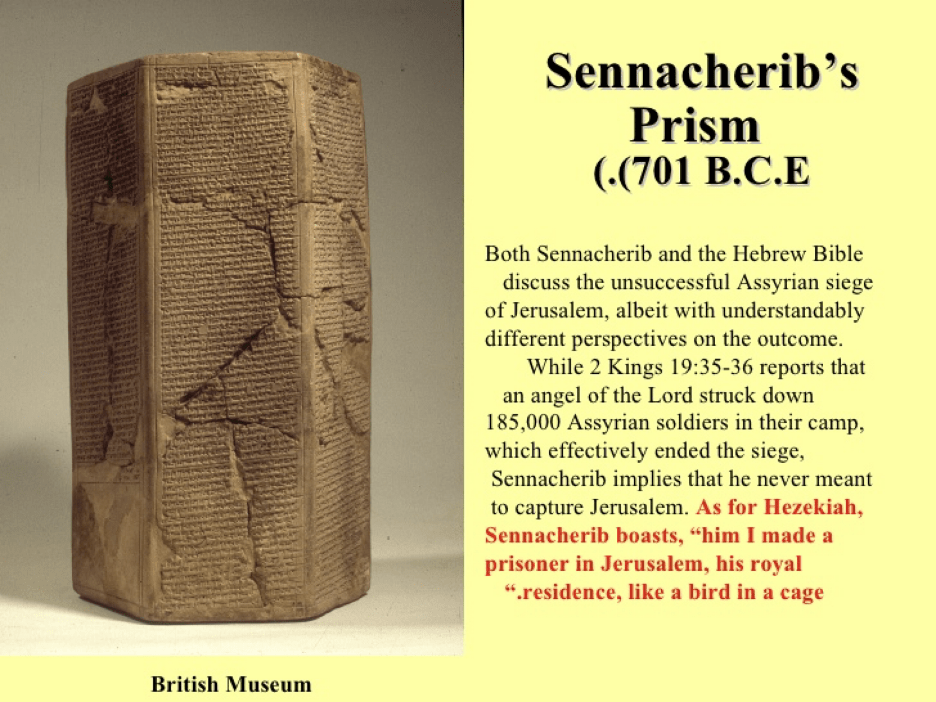
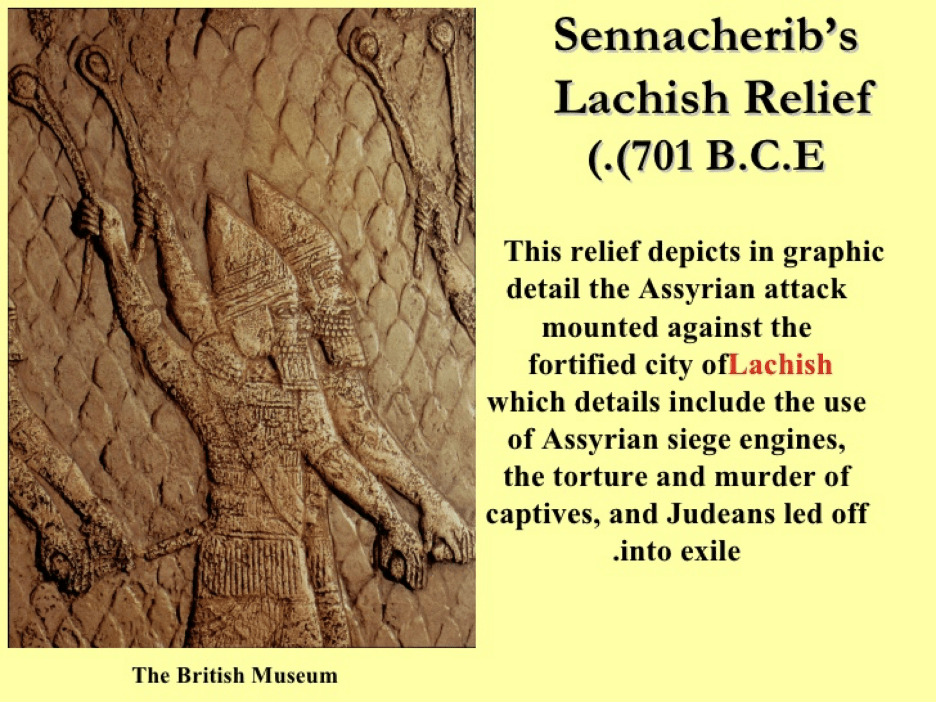
But Hezekiah faced a major crisis in 701 BC. I encourage you to stop right now and read 2 Kings 18-19 for that story. Here is my summary of the story. The Assyrians, who had already taken the northern kingdom captive in 722 BC, had captured several cities in Judah. Hezekiah payed much gold and silver to King Sennacherib to try to get him to. leave Jerusalem alone. The king. took the tribute but sent an. army to siege and take Jerusalem anyway. The Assyrian army commander Rabshakeh gave a loud speech to to Hezekiah’s men on the walls, mocking the god of Judah. He said that the god of Judah could no more save Jerusalem than the gods of all the nations that the Assyrians had conquered. He even claimed that the god of Judah had commanded him to destroy Jerusalem. Isaiah told Hezekiah that a rumor would cause the Assyrians to temporarily leave the siege and that eventually the Assyrian king would be assassinated. Maybe God was giving Sennacherib a chance to leave Jerusalem alone. But after dealing witht the rumor (that te Ethiopians were attacking, but they weren’t), Sennacherib later continued the siege with an army of 185,000. Hezekiah had tried to prepare for such a siege by contructing the S shaped 1750 foot long underground tunnel from the Gishon spring to provide water for the city during a siege. Hezekiah was powerless to save Jerusalem, but he told his men that God would be with them and that encouraged them.. Sennacherib sent a letter to Hezekiah, again mocking the god of Judah. Hezekiah spread the letter out in the temple and prayed for God’s help. Isaiah told him that the city would be saved without a fight. Yes, God had used the evil Assryians to punish the northern kingdom and take them captive in 722 BC, but the Assryians had gone too far in mocking God. That night, the angel of the Lord killed all 185,000 of the Assyrian army and all the rest of the Assyrians attacking cities of Judah returned to Ninevah. Years later in 681 BC, Sennahcerib was worshipping in the temple of his god Nisroch and 2 of his sons assassinated him, and Esarhaddon became king. The Assyrians would later be judged by God and conquered in 612 BC by Babylon and the Medes. The prophet Isaiah had said that God had used Assyria to punish the northern kingdom, “the rod of God’s anger”, but that Assryia would fall to Babylon. Jonah had preached to Ninevah and the city was spared for. a while, but later the prophet Nahum would pedict the fall fo Ninevah.

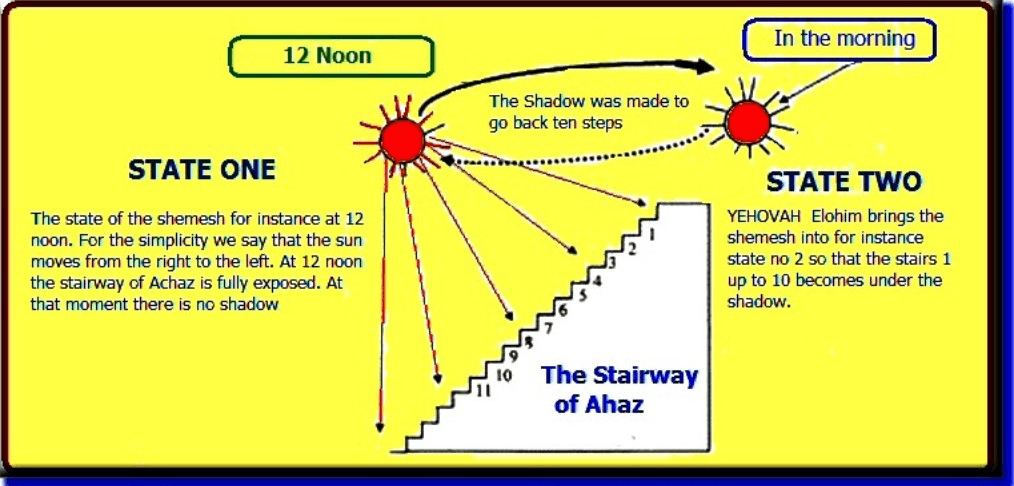
So far, so good. Hezekiah is humble, always trusting God for protection of Jerusalem, and prayerful in the midst of crisis. Unfortunately, his life did not end good. He became deathly sick and Isaiah told him that he was going to die. Hezekiah wept and prayed to be given more years, citing his past good deeds as the basis for God healing him. God gave him 15 extra years of life. He asked for a sign and Isaiah gave him a sign. The shadow on the sun dial would go back 10 steps. The Babylonians sent envoys to Hezekiah when they heard about this, and Hezekiah showed them all of his treasures. He had become prideful, bragging about all his treasures. B/c he did this, Isaiah told him that it would be the Babylonians, not the Assyrians, who would one day take all those treasures from Judah. God already knew and had predicted through Isaiah that the Babylonians would conquer Assyria in the future, and they did in 612 BC. Hezekiah was at least glad that would not happen in his days.

As mentioned in another article: most of the 19 kings of Judah were evil. A few were good, but even those few all had a bad ending. Asa won a victory over the Ethipians by trusting in God but was lifted up with pride when rebuked by the prophet Hanani for not trusting God in a later battle and died of diseased feet. Uzziah was made very strong militarily but was lifted up with pride, offered incense in the temple, and died with leprosy. Josiah died fighting Neco of Egypt even though Neco told him that he was not even tryiing to attack Judah. Joash was righeous as long as the priest Jehoida,who saved him from Athaliah killing all her grandchldren, lived but after he died Joash became evil and killed Jehoida’s son the prophet Zechariah who rebuked him. Joash was assassinated.

Hezekiah was no different. He was such an humble, righteous, prayerful man but became prideful after God gave him the 15 extra years. It might have been better if God had not given him that extra time, but it says that God was testing him to see what was in his heart. The victories and successes that God had given him had made him proud. When sieged by the Assyrians, he consults Isaiah as to what to do. He prays to God for wisdom and strength. He takes Sennacherib’s threatening letter to the temple and prays. But when the Babylonians come to inquire about his healing and the sun dial sign, he does not consult God for wisdom, nor does he pray. He acts out of pride, showing them “his” treasures. He died and his son Manasseh became king. Manasseh would become the most evil king of Judah, the “Ahab” of Judah.

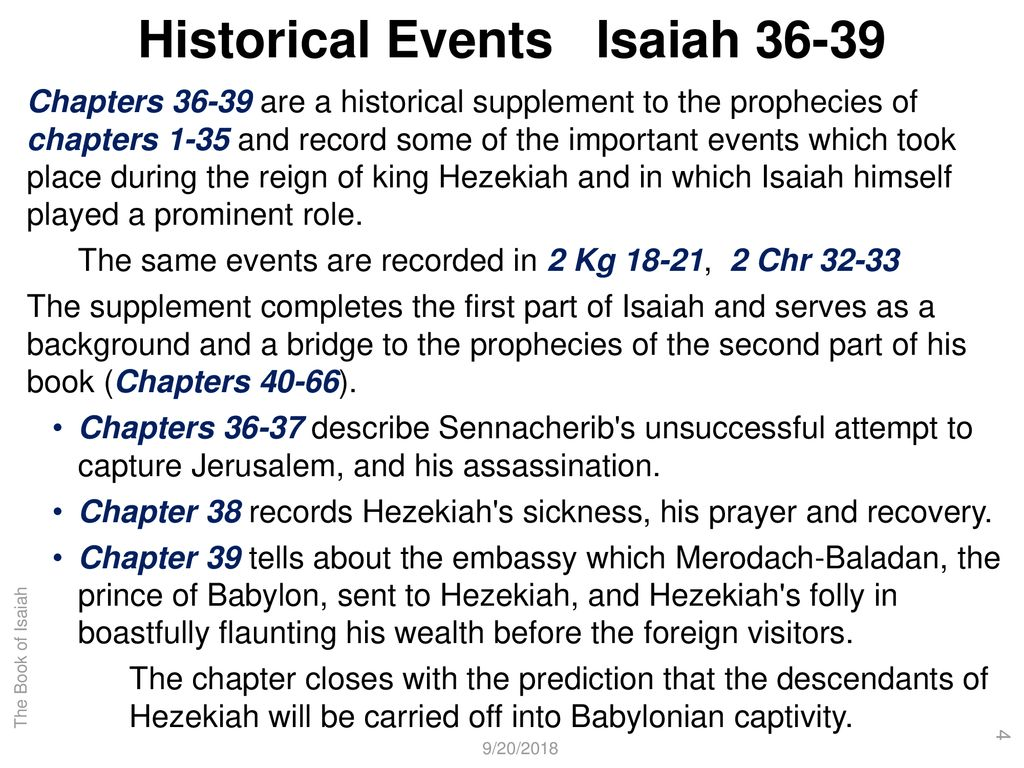
Isaiah tells this same story in chapters 36-39.

God has blessed me with many material blessings, houses and cars, financial security, relatively good health, godly children, a good marriage of 54 years, and several successful ministries in mission work, church work, and Christian education. I just pray that I don’t become prideful in my last years (I am 75 now) like Hezekiah did. I hope that I will become more prayerful, humble, and trusting in God. I pray that I will always seek God’s wisdom in dealing with crisis. I hope that God will give me what is best and not necessarily what I ask for at times. Hezekiah’s extra years turned out to be what he wanted but not what was best for him. I hope that I will remove the idols in my life, the things that I put ahead of God in my life.

What about you?

From Quantum Bible Study”

These images were taken from pinterest.com.

From holylandphotos blog. Hezekiah’s tunnel.

WAKING UP AT 3 AM

Ok, it is 3 AM and I just woke up. Sometimes I try to go back to sleep, but often I just go ahead and get up and watch a TV series (I suggest Sue Thomas FBI on Amazon Prime, 3 seasons)- or I start blogging! “No, not another blog! When will he quit doing a daily blog?”

So, what about waking up at 3 AM? C.S.Lewis said, “You probably think you have insomnia.No you probably do not have a sleeping problem . Instead something spiritual is taking place. God is trying to reach out to you as one of his chosen.” Often it is the middle of the night that our darkest fears arise, maybe even a panic attack (if you’ve never had one, you can’t empathize). We awaken to a cloud of worry and doom. (AI) “According to C.S. Lewis, when God wakes you up between 3 AM and 5 AM, He wants you to: 1) Align yourself with His will: Hear His voice, intercede for others, and receive direction, wisdom, and spiritual empowerment.  2) Pray fervently: Pray against the enemy, who can pervert the good things God does.  3) Maximize the moment: Don’t force yourself back to sleep, but embrace the moment of encounter.”  Lewis says that God speaks specifically to us at 3 AM. His voice gives us instructions on how to deal with and solve the problems and issues we will face during the day. It is a time to ask God questions and then patiently wait for his answers to your questions. Those answers may come in many different forms, but they will come.

Jacob wrestled all night with the man at Penuel as he anxiously waiting meeting Esau, thinking Esau would seek revenge for how Jacob stole his birthright and blessing. After the man touched Jacob’s hip and knocked it our of joint, Jacob realized he had been wrestling with, not just a man, but God visiting him in human form. He named the place Penuel, “the face of God”, b/c he had seen the face of God and lived. But then Jacob demanded a blessing before he would let the man go! That takes a lot of nerve! It would be obvious to Jacob that, if the man could knock his hip out by touching him, that he could knock out every joint in body, totally disabling him. And yet Jacob dared to. demand a blessing before he would let him go. And then the man blessed him and changed his name from Jacob to Israel (“he who wrestles with God).

Lewis suggests that you sleeplessness could be you subconsciously wrestling with your fears, your worris, your doubts, and your questions. But, like Jacob, you can emerge from your 3 AM wakening with a new sense of purpose and closeness to God. The world might sleep, but God does not sleep. Psalms 121:4-5 TPT He will never slumber nor sleep; he is the Guardian-God for his people, Israel. YAHWEH himself will watch over you; he’s always at your side to shelter you safely in his presence.” (Lewis) “While the world sleeps, God is fully alert, intimately aware of your fears, doubts, and deepest desires. Don’t worry. God is waking you up at 3 AM to have a divine encounter.”

I encourage you to watch this video of C.S.Lewis. Even if you don’t wake up at 3 AM regularly, it is still a very inspiring message. https://www.youtube.com/watch?v=EJXGdXdrW-8

David cried out to God in the middle of the night. Psalm 119:62 states, “At midnight I rise to give thanks unto thee because of thy righteous judgments.” Psalm 63:6 says this: “On my bed I remember you; I think of you through the watches of the night.” Actually, David had 7 set times of prayer. Psalm 119:164 Seven times a day I praise You Because of Your righteous judgments.” I don’t know the 7 exact times of the day that David praised God, but maybe this helps. “The divisions in earlier times were simpler, and here they are listed in 7 stages beginning from sunset – the start of the Hebrew day:

Cool of the day – breezes before evening (Gen. 3:8)

Evening – the 1st night watch (Lamentations 2:19)

Midnight – the middle night watch (Judges 7:19)

Cockcrow – the last night watch (3 Maccabees 5:23-26)

Dawn – the morning watch (Exodus 14:24)

When the sun gets hot – late morning (1 Sam. 11:9,11)

Noon – the middle of the day (Psalm 55:17)

David prayed and praised the Lord at all of these times, including the 3rd watch, which is from 12 AM midnight to 3 AM. Jesus mentioned 4 watches: Mark 13:35 Therefore, stay alert—for you do not know when the master of the house is coming, whether in the evening, at midnight, or when the rooster crows, or in the morning”. We should be on the alert for spiritual danger and pray at these hours. Prayer is a weapon to fight the evil influences in your life. If you don’t pray regularly, then that is like going into a battle without any weapons (Lewsi). Lewis said that God is awakening us spiritually at 3 AM (or 3AM – 5 PM). It is a time for self reflection spiritually, for praying for others, for finding the “peace that passes all understanding” (Philippians 4:8). The distractions and daily worries and routine are still a few hours away. The mind is clearer and not rushed. Jesus walked on water in the 4th watch (3-5 AM) to meet the disciples in the storm for a divine encounter.

Ok, you don’t wake up at 3 AM like me. What about when you first wake up every morning at 6 AM or 7 AM. Lewis in Mere Christianity: “It comes the very moment you wake up each morning. All your wishes and hopes for the day rush at you like wild animals. And the first job each morning consists simply in shoving them all back; in listening to that other voice, taking that other point of view, letting that other larger, stronger, quieter life come flowing in. And so on, all day. Standing back from all your natural fussings and frettings; coming in out of the wind.” How many of us begin each day without even talking or listening to God in a brief moment of prayer? We are always in a hurry to get ready to go to work, to go workout, to go play golf, to get the kids ready for school and make breakfast for the family (at least my mother did that; today I think it’s “grab a pop tart on the way out”). Rush, rush, rush: no time for God. Then we are so busy at work or school and we spend the whole day without talking to God. We come home tired, ready for supper and to watch a ballgame or a movie or read a book. We forget to talk to God. We go to bed and maybe say a brief prayer, maybe even fall asleep while praying (I do that often). All that doesn’t sound like someone who is seeking God and God’s guidance 24/7.

At 3 AM, we can relax, pray, and encounter God. We can pray for others. As I write this (closer to 6 AM now), I can almost feel the presence of God in our kitchen/den area. It’s like God is everywhere, but God is right here with me in this room. That’s the amazing thing about God. He is a spirit that fills the universe, and yet He is a personal being who can intimately be with anyone who seeks him. Lewis said “relying on God has to begin again every day.”

If we wake to pray at 3 AM or whenever we awake, praye will call us to action and purpose during the day. We pray for guidance, and then we look all day for God guiding us to do things, say things. We pray for others, and then all day we look for ways to contact and encourage those we pray for. We pray for God to “lead us not into temptation, but deliver us from evil” and then we are more alert to spiritual temptation during the day. We thank him in the morning, and then we are more likely to thank him often during the day.

It is important to clear our minds of daily distractions and stresses in order to clearly hear the voice of God. You know how irritating it is to try to talk to someone when their minds are on something else. It is the same with God. How do we know when God is actually speaking to us? You always have the word of God, but what about that small voice He talks to us with, or that divine feeling or emotion? It took little boy Samuel 4 times to decide that the voice calling him was not Eli, but Samuel But when he finally answered the voice, God gave him the instructions he needed to tell Eli. Each of us has to decide when God is directly speaking to us. The key is your closeness to God. The closer you are to God, the easier it will be to determine that God is speaking to you. All that is subjective, but true.

So, if God does wake you up at 3 Am, or if you have trouble falling asleep, or if you wake at 6 AM, I hope C..S.Lewis’ suggestions will help you. Listen to the video. Meanwhile, we went to McDonalds for breakfast and I’m headed home to take a nap!