Romans 6:12 Therefore sin is not to reign in your mortal body so that you obey its lusts, 13 and do not go on presenting the parts of your body to sin as instruments of unrighteousness; but present yourselves to God as those who are alive from the dead, and your body’s parts as instruments of righteousness for God. 14 For sin shall not be master over you, for you are not under the Law but under grace.
15 What then? Are we to sin because we are not under the Law but under grace? Far from it! 16 Do you not know that the one to whom you present yourselves as slaves for obedience, you are slaves of that same one whom you obey, either of sin resulting in death, or of obedience resulting in righteousness? 17 But thanks be to God that though you were slaves of sin, you became obedient from the heart to that form of teaching to which you were entrusted, 18 and after being freed from sin, you became slaves to righteousness. 19 I am speaking in human terms because of the weakness of your flesh. For just as you presented the parts of your body as slaves to impurity and to lawlessness, resulting in further lawlessness, so now present your body’s parts as slaves to righteousness, resulting in sanctification.
20 For when you were slaves of sin, you were free in relation to righteousness. 21 Therefore what benefit were you then deriving from the things of which you are now ashamed? For the outcome of those things is death. 22 But now having been freed from sin and enslaved to God, you derive your benefit, resulting in sanctification, and the outcome, eternal life. 23 For the wages of sin is death, but the gracious gift of God is eternal life in Christ Jesus our Lord.”
The “therefore” in verse 12 is a follow up of 6:1-11. Since we have died to the power of sin to kill us then we should not allow sin to use our body parts to sin! Even if you do sin, sin will not become your master getting you to sin continually. You have been freed from your former master sin who controlled you by getting you to break whatever moral law you were under. You are freed from the power of the master sin and are now “under grace”. That grace forgives you of any sin 24/7 by the blood of Jesus.
Someone might think, “since I am saved by grace and sins forgiven 24/7, then I can just continue to sin willfully b/c I am now under grace” (6:15). Paul then says that reasoning is wrong (6:15).
1) 6:16 He states an obvious fact: “you are the slave of the one you obey”. Picture 1st century slavery in Rome. You would know if someone was a slave to some master b/c that slave would be obeying his master 24/7.
2) 6:16 If you choose to continue obeying your former master sin after becoming a Christian, then you make yourself a slave to master sin. That would put you back under the power of master sin which would lead to you falling from grace and sin being able to condemn you again.
3) 6:17 Thankfully you chose to leave your old master sin. You chose to become a slave to righteousness instead of master sin. It is ironic that we are “freed” from the slavery of our sin master and his power to kill us spiritually, and yet we chose to become slaves to obey Jesus 24/7.
4) 6:19 So, as slaves to righteousness, present your body parts to obey your new master Jesus. This will result in “sanctification”. I’m sure AI took this from some article, but I thought it was really good.
“In the Bible, sanctification refers to the process of being set apart and made holy, a work of God’s grace that transforms believers into more Christlike individuals. It’s not just a one-time event, but a progressive journey of spiritual growth and becoming more like Jesus.
1. Initial Sanctification: This refers to the moment of conversion or being born again, when a person is declared righteous in God’s sight through faith in Jesus Christ. This is often compared to being “washed” and “set apart”. Hebrews 10:14 For by a single offering he has perfected for all time those who are being sanctified. 1 Corinthians 6:11 And such were some of you. But you were washed, you were sanctified, you were justified in the name of the Lord Jesus Christ and by the Spirit of our God.
2. Progressive Sanctification: This is the ongoing process of becoming more Christlike, involving growth in holiness, purity, and righteousness. It involves the believer actively choosing to obey God’s Word, submitting to the Holy Spirit’s guidance, and putting off sin and putting on Christlike character. Eph 4:20–24 But that is not the way you learned Christ!—assuming that you have heard about him and were taught in him, as the truth is in Jesus, to put off your old self, which belongs to your former manner of life and is corrupt through deceitful desires, and to be renewed in the spirit of your minds, and to put on the new self, created after the likeness of God in true righteousness and holiness.1 Thessalonians 4:3 “For this is the will of God, your sanctification: that you should abstain from sexual immorality.”
3. Future Sanctification: This refers to the ultimate perfection and holiness that believers will experience in heaven when they are united with Christ. 1 Thessalonians 5:23 Now may the God of peace himself sanctify you completely, and may your whole spirit and soul and body be kept blameless at the coming of our Lord Jesus Christ.
In essence, sanctification is a journey:
Becoming like Jesus:The goal of sanctification is to be more like Christ in character, thoughts, and actions. Setting apart for God’s use:Like the vessels used in religious rituals, believers are set apart for a specific purpose in God’s plan.
Being holy:Sanctification involves striving to live a life that pleases God, avoiding sin, and growing in holiness.
5) 6:20 When you were the slave to master sin, you were free from obeying master Jesus. But what benefit did you get from obeying master sin? Spiritual death is what you received as the reward for your obeying master sin.
6) 6:22 But now with your new master Jesus and grace, what benefit or reward do you receive? Sanctification and eternal life.
7) 6:23 For the wages of sin is death, but the gracious gift of God is eternal life in Christ Jesus our Lord.” This is really a profound statement. The word “wages” implies something that you earn by working. The wages of obeying master sin will be spiritual death and either eternal annihilation or suffering. But notice that eternal life is not called “wages”. Instead it is called “the gracious gift of God”. The Greek is charisma: Gift, grace-gift, spiritual gift (usually used to refer to miraculous spiritual gifts in the early church). But in 6:23 the charisma or gift is eternal life. I don’t believe that we still have those miraculous gifts of the early church, but we have a gift far greater, i.e. eternal life. You can’t earn the “reward” of choosing to become a slave to Jesus. Ephesians 2:8 For by grace you have been saved through faith; and this is not of yourselves, it is the gift of God; 9 not a result of works, so that no one may boast.” That doesn’t mean there aren’t any conditions or commands to be met on our part. We are told to repent, be baptized, obey Jesus’ commands, do good works, bear fruit, etc. We are told that if we don’t bear fruit, we will be cut off (John 15). But obedience to Jesus’ commands doesn’t mean that you have “earned” eternal life. If I extend my hand with a $100 bill to just give you as an unearned gift, but then I tell you that to get it you will have to reach out and take it out of my hand. When you do that and get the $100, does that mean that you have earned it b/c you obeyed my condition that I stated that you had to obey my command to reach out with your hand to take it out of my hand??????? No. It is the same with our salvation. You must obey the command to repent and be baptized in order to be saved, but when you do so it doesn’t mean that you have earned salvation in any degree. It is just a “condition” required to be saved, not a work to earn salvation. Remember Namaan the leper. He had to obey a command or condition in order to be cleansed of leprosy: he had to dip in the Jordan River 7 times. He finally did that and was cleansed of leprosy. His dipping in water did not earn his cleansing, but he had to obey or he would not have been cleansed.
2 Corinthians 9:15 Thanks be to God for His indescribable gift! God gave us His Son Jesus to die on the cross for our sins. He gave us eternal life as a gift for choosing to believe and obey Jesus. We all get excited when someone gives us a gift that we really like. How excited are we about the gift of eternal life that God gives us through Jesus?
1 Peter 2:4 And coming to Him as to a living stone which has been rejected by people, but is choice and precious in the sight of God, 5 you also, as living stones, are being built up as a spiritual house for a holy priesthood, to offer spiritual sacrifices that are acceptable to God through Jesus Christ. 6 For this is contained in Scriptures (Psalm 118:22-23): “Behold, I am laying in Zion a choice stone, a precious cornerstone,
And the one who believes in Him will not be put to shame.” 7 This precious value, then, is for you who believe; but for unbelievers, “A stone which the builders rejected, This became the chief cornerstone,” 8 and, “A stone of stumbling and a rock of offense”; for they stumble because they are disobedient to the word, and to this they were also appointed.
A couple of other passages like this come to mind: 1 Corinthians 3:11 For no one can lay a foundation other than that which is laid, which is Jesus Christ.” Ephesians 2:19 So then you are no longer strangers and aliens, but you are fellow citizens with the saints and members of the household of God, 20 built on the foundation of the apostles and prophets, Christ Jesus himself being the cornerstone, 21 in whom the whole structure, being joined together, grows into a holy temple in the Lord. 22 In him you also are being built together into a dwelling place for God by the Spirit.” These passages got me thinking about Matthew 16:13 Now when Jesus came into the district of Caesarea Philippi, he asked his disciples, “Who do people say that the Son of Man is?” 14 And they said, “Some say John the Baptist, others say Elijah, and others Jeremiah or one of the prophets.” 15 He said to them, “But who do you say that I am?” 16 Simon Peter replied, “You are the Christ, the Son of the living God.” 17 And Jesus answered him, “Blessed are you, Simon Bar-Jonah! For flesh and blood has not revealed this to you, but my Father who is in heaven. 18 And I tell you, you are Peter, and on this rock I will build my church, and the gates of hell shall not prevail against it. 19 I will give you the keys of the kingdom of heaven, and whatever you bind on earth shall be bound in heaven, and whatever you loose on earth shall be loosed in heaven.” 20 Then he strictly charged the disciples to tell no one that he was the Christ.” There is much debate over who or what the “rock” (petra) is that Jesus said he would build his church on. Is it Peter (petros) or is it the confession that Peter made that Jesus is the Christ, the Son of God. There is a big difference in the 2 Greek words petros and petra: 4074Pétros (a masculine noun) – properly, a stone (pebble), such as a small rock found along a pathway. 4074/Pétros (“small stone”) then stands in contrast to 4073/pétra (“cliff, boulder,” Abbott-Smith). It looks like Jesus would have used the same Greek word for Peter (petros) and rock (petra) if he meant they both referred to Peter. It could mean that Peter would be a significant apostle in establishing the church. He was the apostle to the Jews (Galatians 2). He would indeed use the “keys to the kingdom” when he preached the first gospel sermon in Acts 2, with 3,000 being baptized and becoming the first church, which is the kingdom of God on earth, which is the spiritual body of Christ, the saved. Thus he used the keys to open the door into the church kingdom. Even if that is what Jesus. meant, it would not mean that Peter was the head of the church, the first pope. Ephesians 4:11 lists the leadership positions of the early church: apostles, prophets, evangelists, pastors (elders), and teachers. If a pope was the head of the church as Catholics claim, surely that would be included in Ephesians 4:11. Also in Galatians 2, Paul said that the “pillars” of the church in Jerusalem were Peter, James, and John. That puts those 3 men on the same level, which would not be true if Peter was the head of the church and the pope. Having said all that, the passages about Jesus being the cornerstone of the church makes me lean more to the rock being the confession that Peter made that Jesus is the Christ, the Son of God. That would certainly be a “cliff or boulder” (petra) to build the church on as opposed to a “small stone” (petros). Several scriptures point to Jesus being the chief cornerstone, which would be a large “rock”. If there is no other foundation (1 Corinthians 3:11), then how could the church be built on a man, Peter, instead of Jesus the cornerstone? So I think the rock is the confession of Peter that Jesus is the rock, the Son of God, that the church is built on.
Of course, we have to add the apostles and prophets in the foundation of the church: Ephesians 2:20 built on the foundation of the apostles and prophets, Christ Jesus himself being the cornerstone.” Here is a great image for that:
1 Pete 2:9 But you are a chosen people, a royal priesthood, a holy nation, a people for God’s own possession, so that you may proclaim the excellencies of Him who has called you out of darkness into His marvelous light; 10 for you once were not a people, but now you are the people of God; you had not received mercy, but now you have received mercy.”
Vs 10 is the verse that makes many say that the letter of 1 Peter was written to Gentiles Christians who were scattered all over. That would be the only time “disapora” (1 Peter 1:1; James 1:1; John 7:35) ever referred to Gentiles. John 7:35 NAS: to go to the Dispersion among the Greeks”, which shows a clear distinction between the Jewish diaspora and the Gentiles. Vs 10 quotes Hosea 1:10; 2:25 where “you were once not a people but now you are the people of God”. Most commentaries would say that Hosea is referring to Gentiles, but that is not the context. The 2nd child of Hosea and Gomer was to be called “no mercy” (Hosea 1:6). The 3rd child was to be called “not my people” (Hosea 1:8). So those two names refer to apostate Israel and not Gentiles. Then Hosea 1:And in the place where it was said to them, “You are not my people,” it shall be said to them, “Children of the living God.” 11 And the children of Judah and the children of Israel shall be gathered together, and they shall appoint for themselves one head.” The context would be the remnant of Judah and Israel that would believe in Jesus as the Messiah and thus no longer be called “no mercy” or “not my people”. The believing remnant would be called the children of God, the NT people of God. Hosea 2:1 Say to your brothers, “You are my people,” and to your sisters, “You have received mercy.” Hosea 2 tells how God will take back apostate Israel in the Messianic Age, just as Hosea was to take back his runaway wife Gomer. Hosea 2:23 And I will have mercy on No Mercy, and I will say to Not My People, ‘You are my people’; and he shall say, ‘You are my God.’” Again the context is saving the remnant of Israel, not saving the Gentiles. Chapter 3 is a Messianic prediction. Hosea 3:And the Lord said to me, “Go again, love a woman who is loved by another man and is an adulteress, even as the Lord loves the children of Israel, though they turn to other gods and love cakes of raisins.” 2 So I bought her for fifteen shekels of silver and a homer and a lethech of barley. 3 And I said to her, “You must dwell as mine for many days. You shall not play the whore, or belong to another man; so will I also be to you.” 4 For the children of Israel shall dwell many days without king or prince, without sacrifice or pillar, without ephod or household gods. 5 Afterward the children of Israel shall return and seek the Lord their God, and David their king, and they shall come in fear to the Lord and to his goodness in the latter days.” Notice that the context is remnant Israel, not Gentiles. But what about Romans 9:22 What if God, desiring to show his wrath and to make known his power, has endured with much patience vessels of wrath prepared for destruction, 23 in order to make known the riches of his glory for vessels of mercy, which he has prepared beforehand for glory— 24 even us whom he has called, not from the Jews only but also from the Gentiles? 25 As indeed he says in Hosea, “Those who were not my people I will call ‘my people,’ and her who was not beloved I will call ‘beloved.’” 26 “And in the very place where it was said to them, ‘You are not my people, there they will be called ‘sons of the living God.’” Is Paul here saying that Hosea 1-3 is referring to Gentiles who were not His people but now were called His people? I don’t think so. Notice that “not my people but now my people” includes Jew and Gentile believers (Romans 9:24). He is talking about the remnant of Israel, Romans 9:27 And Isaiah cries out concerning Israel: “Though the number of the sons of Israel be as the sand of the sea, only a remnant of them will be saved”, which is what Hosea is predicting. Paul is simply saying that the Gentile believers will be included with the remnant of Israel to be saved in the church. He is not changing the original context of Hosea, which is not about Gentiles. So 1 Peter 2:10 is not an indication that 1 Peter was written to the Gentiles. 1 Peter 2:10 is referring to the remnant diaspora of Jewish Christians, just as Hosea did. It may sound like Hosea 1-3 and 1 Peter 2:10 are referring to Gentiles, but they don’t.
1 Peter 2:9 9 But you are a chosen people, a royal priesthood, a holy nation, a people for God’s own possession.” Who is this referring to? Again, it refers to the Jewish remnant who accepted Jesus as the Messiah and who became the first church. In the OT, it was the nation of Israel that were God’s chosen people, HIs holy nation. On Mt Sinai, God said to the Israelites, Exodus 19:5 Now therefore, if you will indeed obey my voice and keep my covenant, you shall be my treasured possession among all peoples, for all the earth is mine; 6 and you shall be to me a kingdom of priests and a holy nation.” Deuteronomy 7:6: “For you [Israel] are a people holy to the Lord your God. The Lord your God has chosen you out of all the peoples on the face of the earth to be his people, his treasured possession” But in the new covenant Israel as a nation is no longer God’s chosen people or holy nation. Matthew 21:43 Therefore I tell you, the kingdom of God will be taken away from you and given to a people producing its fruits.” This verse makes it clear that as of 70 AD when he judged the rebellious, evil Jewish unbelievers that. Israel was no longer God’s holy nation or chosen people after 70 AD. In the new covenant, God’s chosen people and holy nation are the church, made up of Jewish and Gentile believers in Jesus, and not the whole nation of Israel. I guess I do believe in “replacement theology”: (AI) In Christianity, “replacement theology” or “supersessionism” is the belief that the Christian Church has superseded or replaced the Jewish people as God’s chosen people. This doctrine suggests that the New Covenant established through Jesus Christ has replaced the Old Covenant made with the Israelites”. This new covenant was actually made with the remnant of Israel (Hebrews 8:8 “Behold, the days are coming, declares the Lord, when I will establish a new covenant with the house of Israel and with the house of Judah”) but would include Gentile believers also. The new covenant was made abailable to all Jews as the gospel was preached to the Roman Empire in the first century, to the Jew first and then to the Gentiles. But only believing Jews would be included in that new covenant. Only the remnant Jews would be forgiven of sins under the new covenant (Hebrews 8:10-12). God no longer has any special promises to the nation of Israel such as he did in the Old Testament. Of course, God wants all Jews today to accept Jesus and enjoy the blessings of the new covenant. I guess that is “replacement theology” that a lot of people today don’t like to hear. They want the entire nation to have a special place in God’s promises today even if they don’t believe in Jesus as the Messiah. If God rejected the nation (Matthew 21:43) in 70 AD, taking the nation away from Israel and giving it to the church nation, then why would God feel any different about all the Jews over in Israel today who, for the most part, reject Jesus as the Messiah?????????????
1 Peter 2:11 Beloved, I urge you as foreigners and strangers to abstain from fleshly lusts, which wage war against the soul. 12 Keep your behavior excellent among the Gentiles, so that in the thing in which they slander you as evildoers, they may because of your good deeds, as they observe them, glorify God on the day of visitation.”
Since we are God’s holy nation, then our citizenship is a spiritual one, not an earthly one. Philippians 3:20 But our citizenship is in heaven, and from it we await a Savior, the Lord Jesus Christ, 21 who will transform our lowly body to be like his glorious body, by the power that enables him even to subject all things to himself.” That makes us foreigners (paroikos: Sojourner, foreigner, stranger, alien) and strangers (parepidémos: Sojourner, stranger, exile, temporary resident) here on earth even though we are still citizens of whatever country we are in. My wife and I lived in Trinidad, West Indies and in Colombia, South America. We were “extranjeros” (foreigners) while living there b/c our citizenship was back in the U.S. That is how it is with our citizenship in heaven. While foreigners living in overseas, we did not buy property or plant roots deeply b/c we knew we would only be there for a few years. Christians should think the same way. Don’t plant your roots too deeply in this world. The song: This world is not my home, I’m just a passing through” says it all! So abstain from the lusts of this world which wage war against your soul and can keep you from receiving eternal life in heaven. 1 John 2:15 Do not love the world or the things in the world. If anyone loves the world, the love of the Father is not in him. 16 For all that is in the world—the desires of the flesh and the desires of the eyes and pride of life—is not from the Father but is from the world. 17 And the world is passing away along with its desires, but whoever does the will of God abides forever.” Keep your behavior excellent among the Gentiles. That again sounds like Jewish Christians among the Gentiles and that the letter is written to Jewish Christians. The Gentile pagans might slander you as evildoers (refer to the article 1 Peter 3:8-22 for more discussion of how the Gentiles accused the Christians (Jew or Gentile Christians) of being evil. Mainly they accused them of cannibalism (eating the flesh and blood of Jesus, atheism (b/c they didn’t believe in the Romans gods), and incest (b/c they called each other brothers and sisters). But in 70 AD, the “day of visitation”, God would show that the Jewish Christians were his chosen people and not the unbelieving Jews. They would take not of all the good deeds of the Jewish Christians and glorify God as they could then after 70 AD see God’s plan of salvation realized, no doubt drawing many Gentile Christians to join the Jewish Christians in the church. Honor Authority
1 Peter 2:13 Submit yourselves for the Lord’s sake to every human institution, whether to a king as the one in authority, 14 or to governors as sent by him for the punishment of evildoers and the praise of those who do right. 15 For such is the will of God, that by doing right you silence the ignorance of foolish people. 16 Act as free people, and do not use your freedom as a covering for evil, but use it as bond-servants of God. Let every person be subject to the governing authorities. For there is no authority except from God, and those that exist have been instituted by God. 2 Therefore whoever resists the authorities resists what God has appointed, and those who resist will incur judgment. 3 For rulers are not a terror to good conduct, but to bad. Would you have no fear of the one who is in authority? Then do what is good, and you will receive his approval, 4 for he is God’s servant for your good. But if you do wrong, be afraid, for he does not bear the sword in vain. For he is the servant of God, an avenger who carries out God’s wrath on the wrongdoer. 5 Therefore one must be in subjection, not only to avoid God’s wrath but also for the sake of conscience. 6 For because of this you also pay taxes, for the authorities are ministers of God, attending to this very thing. 7 Pay to all what is owed to them: taxes to whom taxes are owed, revenue to whom revenue is owed, respect to whom respect is owed, honor to whom honor is owed.
This section brings up an important point. If Christians feel that they can, b/c they are citizens of a spiritual nation, the church, rebel against the government or authorities on earth, then they will be slandered as evildoers. If they say they don’t have to pay taxes, then they will be slandered (and arrested). Matthew 17:24 When they came to Capernaum, the collectors of the two-drachma tax went up to Peter and said, “Does your teacher not pay the tax?” 25 He said, “Yes.” And when he came into the house, Jesus spoke to him first, saying, “What do you think, Simon? From whom do kings of the earth take toll or tax? From their sons or from others?” 26 And when he said, “From others,” Jesus said to him, “Then the sons are free. 27 However, not to give offense to them, go to the sea and cast a hook and take the first fish that comes up, and when you open its mouth you will find a shekel. Take that and give it to them for me and for yourself.” Technically, Jesus says, only citizens of the U.S. will pay federal income tax. You could argue that Christians are “free” from their government rules and taxes b/c our citizenship is in heaven and we are “foreigners”. But “to not give offense”, pay the taxes. That is, to not be slandered as rebellious citizens of the U.S., which is the exact context of 1 Peter 2. But what if the government is evil, such as the Roman government where the emperor claimed to be god. The general rule is that governments are from God to punish evildoers and to prevent anarchy. Paul elaborates on this in Romans 13:Let every person be subject to the governing authorities. For there is no authority except from God, and those that exist have been instituted by God. 2 Therefore whoever resists the authorities resists what God has appointed, and those who resist will incur judgment. 3 For rulers are not a terror to good conduct, but to bad. Would you have no fear of the one who is in authority? Then do what is good, and you will receive his approval, 4 for he is God’s servant for your good. But if you do wrong, be afraid, for he does not bear the sword in vain. For he is the servant of God, an avenger who carries out God’s wrath on the wrongdoer. 5 Therefore one must be in subjection, not only to avoid God’s wrath but also for the sake of conscience. 6 For because of this you also pay taxes, for the authorities are ministers of God, attending to this very thing. 7 Pay to all what is owed to them: taxes to whom taxes are owed, revenue to whom revenue is owed, respect to whom respect is owed, honor to whom honor is owed.” Paul’s command to not resist authorities was written during an evil Roman government, but the command to not resist sill applies. Of course, an evil government could be so evil that it presents a difficult choice for Christians. Bonhoeffer was a Lutheran pastor in Germany as Hitler rose to poser. He advocated not resisting the government until he realized that Hitler was exterminating millions of Jews, gypsies, etc. He had a tough choice. He decided to resist and took part in a plot to assassinate Hitler which failed. I will not judge him for making that choice. Sometimes we have to break a law of God if the circumstances require it. But don’t use your Christian “freedom” as a covering for evil, i.e. as an excuse for rebelling against the government simply b/c you want to be free from the government. The American Revolution against England is interesting. Religious scholars say it was the providence of God leading George Washington and the rebels to rebel. But Romans 13 says that the colonies, most of whom claimed to be Christians, should not resist the government. Why did they resist King George? Not even b/c he will killing people in America like Hitler did, but b/c they didn’t like his tax without representation. Sounds to me like a forbidden resistance, at least for Christians, instead of a providential uprising and rebellion. I might have a few who disagree with that! Peter concludes this section: 1 Peter 2:17 Honor all people, love the brotherhood, fear God, honor the king.”Romans 13:7 Pay to all what is owed to them: taxes to whom taxes are owed, revenue to whom revenue is owed, respect to whom respect is owed, honor to whom honor is owed.” Those are the guiding principles of how Christians should react with the governments in the countries they live in, which might be difficult in some evil, atheistic or Islamic countries.
Peter even includes servants who have harsh masters, and tells them to obey them anyway. 1 Peter 2:18 Servants, be subject to your masters with all respect, not only to those who are good and gentle, but also to those who are harsh.” That would be applying the earlier principles to slaves. Many of the early Christians in the Roman Empire were slaves. Could they just rebel against their masters once they become Christians? Maybe it their masters were harsh and evil, that could be the excuse for them to rebel. Not so, says Peter.
Wow, this was long but different thoughts just kept coming. Some of this section required some deeper digging into the word.
1 Peter 1:17 If you address as Father the One who impartially judges according to each one’s work, conduct yourselves in fear during the time of your stay on earth; 18 knowing that you were not redeemed with perishable things like silver or gold from your futile way of life inherited from your forefathers, 19 but with precious blood, as of a lamb unblemished and spotless, the blood of Christ. 20 For He was foreknown before the foundation of the world, but has appeared in these last times for the sake of you 21 who through Him are believers in God, who raised Him from the dead and gave Him glory, so that your faith and hope are in God.
1) “1:17 is interesting. We are not saved by our works, but we will be judged by our works. Bottom line, you must try to live holy and not sin even though you don’t have to be sinless. God’s grace will save you by the blood of Jesus. But at the same time, if you go back into sin, your sins will cause you to fall from grace and lose your eternal life when you die. 2 Peter 2:20 For if, after they have escaped the defilements of the world by the knowledge of the Lord and Savior Jesus Christ, they are again entangled in them and are overcome, the last state has become worse for them than the first. 21 For it would be better for them not to have known the way of righteousness, than having known it, to turn away from the holy commandment handed on to them. 22 It has happened to them according to the true proverb, “A dog returns to its own vomit,” and, “A sow, after washing, returns to wallowing in the mire.” Therefore, we need to conduct ourselves in “fear” while on earth. Aren’t we supposed to have full assurance of our salvation and not be fearful of standing before God in judgment? Doesn’t “perfect love cast our fear” (1 John 4:17 By this, love is perfected with us, so that we may have confidence in the day of judgment; because as He is, we also are in this world. 18 There is no fear in love, but perfect love drives out fear, because fear involves punishment, and the one who fears is not perfected in love.)” Yet Peter tells them to live in fear while on earth. Bottom line is that we still need to be fearful of losing our salvation while on earth. Paul, the proponent of “salvation by grace through faith, not works”, echoes this fear command: Philippians 2:12 So then, my beloved, just as you have always obeyed, not as in my presence only, but now much more in my absence, work out your own salvation with fear and trembling; 13 for it is God who is at work in you, both to desire and to work for His good pleasure.”
2) The motivation for this appeal to be holy is that they were “redeemed (lutroó: To redeem, to ransom, to liberate by paying a ransom price) by the blood of the Lamb”. In the ancient Greco-Roman world, the concept of redemption was well understood in the context of slavery and captivity. A person could be freed from slavery or imprisonment if a ransom was paid. The ransom price to free us from the slavery of sin was the blood of Jesus, i.e. his death on the cross. Some of the early church fathers thought that God paid this ransom price to Satan, but that is not true. God paid the ransom price to Himself to satisfy his wrath against our sin so that he could justify us. That appeasing of God’s wrath is called propitiation. This plan to redeem us by the blood of Jesus was “foreknown” by God before he even started the creation week in Genesis 1. How is that? He knew he was going to create humns with free will and that they, given the choice of the tree of life and the tree of knowledge of good and evil, would chose to sin, and then everyone born after the fall would make the same choice to sin. Romans 5:12 Therefore, just as through one man sin entered into the world, and death through sin, and so death spread to all mankind, because all sinned.” So God is thinking, “I love all people and want them to have a way to be saved from my just wrath; how can I do that”? Maybe he could let us try to save ourselves by good works, or even by buying our salvation with “gold or silver”? No that would not satisfy God’s wrath. The only thing that would satisfy HIs wrath against our sins was to let His Son become flesh and die for us. I don’t understand why that was the only thing that could do that, but it was. So Jesus appeared the first time in his incarnation (God becoming flesh, John 1:14 and the word became flesh and dwelt among us) and God proved that he would redeem us by the blood of Jesus by raising Jesus from the dead.
3) 1 Peter 1:22 Since you have purified your souls in obedience to the truth for a sincere love of the brothers and sisters, fervently love one another from the heart, 23 for you have been born again not of seed which is perishable, but imperishable, that is, through the living and enduring word of God. 24 For, “All flesh is like grass, And all its glory is like the flower of grass. The grass withers, And the flower falls off, 25 But the word of the Lord endures forever.” And this is the word which was preached to you.” Peter now switches from “obedience” verses to “love” verses for the first time. We purify (hagnizó: To purify, to cleanse, to sanctify) ourselves by obedience, by no conforming to our former lusts, by living a set apart life. But is that all there is to the Christian life, just stay away from sin? No. God wants us to purify ourselves so that we can love one another: a sincere, fervent love from the heart. Replace the “lusts” with “love”. The whole spirit of Christianity is “love”. The motivation is that we have been “born again” of the imperishable seed of the word of God that endures forever. We have a new self that is filled with love for one another b/c God loved us and gave His Son to save us. I know that has been the biggest challenge in my Christian walk. I was raised where the emphasis seemed to be getting all the right doctrines even though I’m sure that love was preached and shown by a lot of church members. My parents never said “I love you” until they were in their 70’s and I was in my 40’s, although I know they loved me. They were raised on the farm in the depression and WWII, working hard all their lives. Expressing emotion was not something they were raised in and they didn’t show it in my life. Maybe in my last days I can work on that!
4) 1 Peter 2:1 Therefore, rid yourselves of all malice and all deceit and hypocrisy and envy and all slander, 2 and like newborn babies, long for the pure milk of the word, so that by it you may grow in respect to salvation, 3 if you have tasted the kindness of the Lord.” “Therefore (based on what went on before), i.e. you were born again (1:23) so you are “newborns” spiritually. Newborns feed on milk and spiritual newborns feed on the milk of the word of God, i.e. the basics of obedience and love. The Hebrew writer talks about the “meat” of the word as he discusses the priesthood of Melchizadek and the change of the Law in Hebrews 5:11 About this we have much to say, and it is hard to explain, since you have become dull of hearing. 12 For though by this time you ought to be teachers, you need someone to teach you again the basic principles of the oracles of God. You need milk, not solid food, 13 for everyone who lives on milk is unskilled in the word of righteousness, since he is a child. 14 But solid food is for the mature, for those who have their powers of discernment trained by constant practice to distinguish good from evil.” So God doesn’t want us to keeping eating milk but that is where we all start as spiritual newborns. But first you must put away the bad stuff in your heart and mind. The motivation for all this: “if you have tasted the kindness of the Lord”.
First, let’s establish the time of writing and circumstances of writing. These charts help:
Acts closes with Paul in Rome during those 2 years. He was released, traveled widely over the Roman Empire for 2-3 years, going perhaps as far as Spain, before his last imprisonment and martyrdom. He wrote 1 Timothy from Macedonia (1 Tim 1:3) in 66 AD (on his way to Nicopolis, Tit 3:12) to Timothy who was in Ephesus. He states a desire to visit Timothy (1 Tim 3:14,15;4:13). The style and subject matter are very different, but it would make sense that, as Paul nears death and the end of the miraculous period is nearing, he directs Timothy (and Titus later also) in matters like public prayer, the subjective position of women, qualifications for future elders and deacons, church support of widows, rebuking of elders, and the use of wealth. He also condemns the Law teaching Judaizers, Hymenaeus and Alexander by name (2 Tim 2:17), warns of an apostasy, warns against worldly fables, warns about false teachers who have a morbid interest in controversial questions and disputes about words and constant friction who are preaching for gain (6:3ff), and tells him to guard what was entrusted to him, avoiding arguments of what is falsely called “knowledge” (1 Tim 6:20-21). This last heresy was already developing in Colossians, a Jewish prre-gnostic heresy. He also gives personal encouragement to Timothy in this ministry of teaching and preaching the word, stressing personal purity and faithfulness to his ministry (1 Tim 4:11ff; 6:11ff).
Here is a map of Paul’s last journey after release from Roman house arrest (Acts 28) without showing a visit to Spain (tradition says he did that trip).
Here’s another map that include the possible visit to Spain before he heads to Crete.
There are some good commentaries on 1 Timothy such as: blueletterbible.org is good by David Guzik. This is an intro:
1:3 As I urged you when I was going to Macedonia, remain at Ephesus so that you may charge certain persons not to teach any different doctrine, 4 nor to devote themselves to myths and endless genealogies, which promote speculations rather than the stewardship from God that is by faith.”
The church at Ephesus has quite a history. Paul established the church there in Acts 19 on his 3rd missionary journey (53-57 AD: see the chart above). He stayed 3 years there. After a riot led by Demetrius the silversmith who made idols of the goddess Diana (or Artemis), he left for Macedonia. He returned near Ephesus at Miletus where he called for the elders of the Ephesian church to come. He warned them: Acts 20:28 Pay careful attention to yourselves and to all the flock, in which the Holy Spirit has made you overseers, to care for the church of God, which he obtained with his own blood. 29 I know that after my departure fierce wolves will come in among you, not sparing the flock; 30 and from among your own selves will arise men speaking twisted things, to draw away the disciples after them. 31 Therefore be alert, remembering that for three years I did not cease night or day to admonish every one with tears. 32 And now I commend you to God and to the word of his grace, which is able to build you up and to give you the inheritance among all those who are sanctified.” He wrote the letter to the Ephesians while in 2 years of house arrest (Acts 28) in Rome (60-62 AD), but there is no mention of false teachers in that letter. But it is not surprising, as he warned, that false teachers, even from among the elders, would arise in the church by the time he wrote this letter, 1 Timothy, to Timothy in Ephesus in 63 AD, about 5 years after he established the church there. On his missionary journey after he was released from house arrest in Rome, he passed near or through Ephesus (probably only near Ephesus) and left Timothy there to deal with the false teachers.
It was about this same time, 63 AD, that John the apostle wrote Revelation. In Revelation 2:“To the angel of the church in Ephesus write: ‘The words of him who holds the seven stars in his right hand, who walks among the seven golden lampstands.
2 “‘I know your works, your toil and your patient endurance, and how you cannot bear with those who are evil, but have tested those who call themselves apostles and are not, and found them to be false. 3 I know you are enduring patiently and bearing up for my name’s sake, and you have not grown weary. 4 But I have this against you, that you have abandoned the love you had at first. 5 Remember therefore from where you have fallen; repent, and do the works you did at first. If not, I will come to you and remove your lampstand from its place, unless you repent. 6 Yet this you have: you hate the works of the Nicolaitans, which I also hate. 7 He who has an ear, let him hear what the Spirit says to the churches. To the one who conquers I will grant to eat of the tree of life, which is in the paradise of God.’ John commends the church at Ephesus, led by its elders, for identifying and refuting false apostles there, even the Nicolaitans. The church must have become very rigid about fighting false teachers and maintaining doctrinal purity. The Nicolaitans were a heretical group of Christians in the early church who were known for their immoral and idolatrous practices. John did rebuke the church at Ephesus for leaving their “first love”. We can only wonder if the church at Ephesus heeded John’s warning and returned to their first love. Some say the church died out in the 2nd century, although I have seen no hard proof of that. It is possible today to have a church today that is committed to fighting doctrinal error but one that has lost the love that Jesus wanted his followers to be known for (John 13:34 A new commandment I give to you, that you love one another: just as I have loved you, you also are to love one another. 35 By this all people will know that you are my disciples, if you have love for one another.” I was raised in a church that kinda fits that description. My church was so intent on fighting doctrinal error that it ended up creating its own sectarian legalism, unlovingly judging and condemning any who disagreed with their sectarian teaching.
Guzik: “Perhaps the endless genealogies (1 Timothy 1:4) had to do with Gnostic-type theories of “emanations” from God. Perhaps they were connected with Jewish-type legalism that sought righteousness by virtue of one’s ancestry. Or perhaps he had in mind doctrinal systems based on mystic readings of Old Testament genealogies. Ancient Jewish writings have been discovered which dig into the most complex genealogies, connecting them with wild speculations about spiritual mysteries. A consuming interest in these kinds of things will crowd out godly edification which is in faith.”
Christian history is full of such false doctrines over the past 2,000 years. Church of God of prophecy claims to have traced the the genealogy of the ‘lost 10 tribes” of the northern kingdom of Israel, with Ephraim being Great Britain and Manasseh being the U.S. Mormons add the Book of Mormon to the same authority as the New Testament. Latter-day Saints believe the Book of Mormon to be a record of God’s dealings principally with another group of Israelites he brought to the Western Hemisphere from Jerusalem about 600 b.c. They anticipated the birth and coming of Jesus Christ and believed in his Atonement and gospel. Such false doctrines lead to speculation since none of them can be verified. They distract from “the stewardship of God which is by faith”. Paul spoke of this stewardship (oikonomia: Stewardship, administration, management, dispensation) in Ephesians 3:1 “For this reason I, Paul, a prisoner of Christ Jesus on behalf of you Gentiles— 2 assuming that you have heard of the stewardship of God’s grace that was given to me for you, 3 how the mystery was made known to me by revelation, as I have written briefly.” A person would be appointed to manage the estate or affairs of someone. Paul, by the direct revelation of the Holy Spirit, was made a steward to tell the Gentiles about the mystery (musterion) of the gospel, i.e. uniting Jew and Gentile believers in the one body of the saved, i.e. the church. The other apostles had been led to “all truth” by the Holy Spirit (John 16:13; 14:26). Paul was an apostles of equal authority. The New Testament contains all the truth that we need to not be tossed about by every wind of doctrine. Ephesians 4:13 until we all attain to the unity of the faith and of the knowledge of the Son of God, to mature manhood, to the measure of the stature of the fullness of Christ, 14 so that we may no longer be children, tossed to and fro by the waves and carried about by every wind of doctrine, by human cunning, by craftiness in deceitful schemes.” Beware of any doctrine that is not clearly taught in the New Testament.
1 Timothy 1:5 The aim of our charge is love that issues from a pure heart and a good conscience and a sincere faith. 6 Certain persons, by swerving from these, have wandered away into vain discussion, 7 desiring to be teachers of the law, without understanding either what they are saying or the things about which they make confident assertions.” Those who teach the revealed gospel (whether it is the original apostles and Paul or us today) are charged (paraggelia: Command, instruction, charge) to teach the gospel without changing or adding to it. Those teaching must have pure motives: a pure heart, good conscience, and a sincere faith. The motives of most false teachers are lust, money, sex, and power. The paid preacher system can put preachers on a pedestal that leads them to scandals involving sex or money. The cult leaders are key examples of impure motives of sex, money, and power.
1:8 Now we know that the law is good, if one uses it lawfully, 9 understanding this, that the law is not laid down for the just but for the lawless and disobedient, for the ungodly and sinners, for the unholy and profane, for those who strike their fathers and mothers, for murderers, 10 the sexually immoral, men who practice homosexuality, enslavers, liars, perjurers, and whatever else is contrary to sound doctrine, 11 in accordance with the gospel of the glory of the blessed God with which I have been entrusted.”
“Sound (hugiainó: To be sound, to be healthy, to be well; often used of someone bein in good physical health) doctrine”: in other words, teachings that will promote good spiritual health. Apparently the false teachers in Ephesus taught unhealthy doctrines that promoted the sins listed in these verses. Apparently they tolerated or allowed these sins. Does that sound like many of the liberal Christian denominations today? For example, “homosexuality” is arsenokoites: Homosexual, sodomite: Derived from ἄρσην (arsen, meaning “male”) and κοίτη (koite, meaning “bed” or “lying down”), indicating a male engaging in sexual activity with another male. This is the same word used in 1 Corinthians 6:9 list of sins. Paul was “entrusted” with teaching the gospel but the gospel called for repenting of sins. But what is sin in the eyes of God? People might define sin based on their opinions and emotions, but sin must be defined based of God’s word as given us by, in this passage, Paul. Of course, many liberals say that Paul was not inspired by the Holy Spirit, that he was just giving his homophobic opinions that we don’t have to follow today. But Paul was an inspired apostle. At the same time, almost all would say that Peter was an inspired apostle. But Peter wrote this in 2 Peter 3:15 And count the patience of our Lord as salvation, just as our beloved brother Paul also wrote to you according to the wisdom given him, 16 as he does in all his letters when he speaks in them of these matters. There are some things in them that are hard to understand, which the ignorant and unstable twist to their own destruction, as they do the other Scriptures.17 You therefore, beloved, knowing this beforehand, take care that you are not carried away with the error of lawless people and lose your own stability. 18 But grow in the grace and knowledge of our Lord and Savior Jesus Christ. To him be the glory both now and to the day of eternity. Amen.” The apostle Peter is saying that Paul’s writings are “scripture” just like the other scriptures (old testament scriptures). The writings of Paul, Peter, John, Matthew, and others would be considered scriptures also. So if you accept Peter as an apostle, and few Christians question that, then you have to accept Paul as an apostle.
Christ Jesus Came to Save Sinners 1:12-20
1:12 I thank him who has given me strength, Christ Jesus our Lord, because he judged me faithful, appointing me to his service, 13 though formerly I was a blasphemer, persecutor, and insolent opponent. But I received mercy because I had acted ignorantly in unbelief, 14 and the grace of our Lord overflowed for me with the faith and love that are in Christ Jesus. 15 The saying is trustworthy and deserving of full acceptance, that Christ Jesus came into the world to save sinners, of whom I am the foremost. 16 But I received mercy for this reason, that in me, as the foremost, Jesus Christ might display his perfect patience as an example to those who were to believe in him for eternal life. 17 To the King of the ages, immortal, invisible, the only God, be honor and glory forever and ever. Amen.”
In this section Paul seems to be telling how and why he was entrusted with the gospel even though he was formerly a “blasphemer, persecutor, and insolent opponent (hubristés: Insolent, violent, arrogant, one who behaves with wanton violence or outrage)”. Paul began persecuting Christians in Acts 7:58 Then they cast him out of the city and stoned him. And the witnesses laid down their garments at the feet of a young man named Saul. Then some time later, Acts 9:1 And there arose on that day a great persecution against the church in Jerusalem, and they were all scattered throughout the regions of Judea and Samaria, except the apostles. 2 Devout men buried Stephen and made great lamentation over him. 3 But Saul was ravaging the church, and entering house after house, he dragged off men and women and committed them to prison. Acts 9:1 But Saul, still breathing threats and murder against the disciples of the Lord, went to the high priest 2 and asked him for letters to the synagogues at Damascus, so that if he found any belonging to the Way, men or women, he might bring them bound to Jerusalem.” He told Agrippa in Acts 26:9 “I myself was convinced that I ought to do many things in opposing the name of Jesus of Nazareth. 10 And I did so in Jerusalem. I not only locked up many of the saints in prison after receiving authority from the chief priests, but when they were put to death I cast my vote against them. 11 And I punished them often in all the synagogues and tried to make them blaspheme, and in raging fury against them I persecuted them even to foreign cities. Acts 22:4 I persecuted this Way to the death, binding and delivering to prison both men and women. It was on his way to Damascus that the resurrected Jesus appeared to him. He became a believer in Jesus, was baptized by Ananias in Damascus (Acts 22:16 And now why do you wait? Rise and be baptized and wash away your sins, calling on his name), and began his ministry to preach the gospel to the Gentiles. He returned to Jerusalem but Jesus appeared to him again, telling him to get out of Jerusalem b/c the Jews there would not listen to his preaching. Acts 22: 19 And I said, ‘Lord, they themselves know that in one synagogue after another I imprisoned and beat those who believed in you. 20 And when the blood of Stephen your witness was being shed, I myself was standing by and approving and watching over the garments of those who killed him.’ 21 And he said to me, ‘Go, for I will send you far away to the Gentiles.’” Galatians 1:13 For you have heard of my former life in Judaism, how I persecuted the church of God violently and tried to destroy it.”
But Paul received mercy b/c he acted “ignorantly in unbelief”. He thought that the Jewish Christians were blasphemers b/c Jesus claimed to be equal with God (John 5:18 This was why the Jews were seeking all the more to kill him, because not only was he breaking the Sabbath, but he was even calling God his own Father, making himself equal with God.) He sincerely thought that he was doing what God waned him to do by killing Christians. He became a mass murderer and torturer of Christians, entering homes to find Jewish Christians to beat them. But in 1 Timothy 1:14 the grace of our Lord overflowed for me with the faith and love that are in Christ Jesus.” All his past sins were “washed away” when he was baptized (Acts 22:16).
Baptism alone does not save, but it is part of saving faith. It is an act of faith; it is not a work that one does to earn salvation. We believe the gospel, confess Jesus to be the Son of God, repent of our sins, but it is in baptism that our sins are washed away. Saul (Paul) was not saved on the road to Damascus when he saw Jesus. He was saved when he was baptized. This is what Jesus, after he was raised from the dead, told the apostles in Mark 16:15 And he said to them, “Go into all the world and proclaim the gospel to the whole creation. 16 Whoever believes and is baptized will be saved, but whoever does not believe will be condemned.” Peter told those asking “what must we do to be saved”, Acts 2:38 And Peter said to them, “Repent and be baptized every one of you in the name of Jesus Christ for the forgiveness of your sins, and you will receive the gift of the Holy Spirit.” Forgiveness of sins comes after baptism, not before (as some teach). It is an act of faith: Colossians 2:12 having been buried with him in baptism, in which you were also raised with him through faith in the powerful working of God, who raised him from the dead. 13 And you, who were dead in your trespasses and the uncircumcision of your flesh, God made alive together with him, having forgiven us all our trespasses”. Baptism is the moment of being raised from being spiritually dead (also raised up from the water) to walk in newness of life. Romans 6:3 Do you not know that all of us who have been baptized into Christ Jesus were baptized into his death? 4 We were buried therefore with him by baptism into death, in order that, just as Christ was raised from the dead by the glory of the Father, we too might walk in newness of life.”
Some think that we are teaching a works salvation when we teach that one is not saved till they are baptized, but we are not. We are just saying that the Scriptures teach that baptism is an essential part of saving faith, just like repentance and confess. Peter is the apostle who taught that forgiveness comes after baptism (Acts 2:38 above). Later in one of Peter’s letters Peter even used the phrasse, “baptism now saves you”. 1 Peter 3:18 For Christ also suffered once for sins, the righteous for the unrighteous, that he might bring us to God, being put to death in the flesh but made alive in the spirit, 19 in which he went and proclaimed to the spirits in prison, 20 because they formerly did not obey, when God’s patience waited in the days of Noah, while the ark was being prepared, in which a few, that is, eight persons, were brought safely through water. 21 Baptism, which corresponds to this, now saves you, not as a removal of dirt from the body but as an appeal to God for a good conscience, through the resurrection of Jesus Christ, 22 who has gone into heaven and is at the right hand of God, with angels, authorities, and powers having been subjected to him.” Was Peter teaching baptism only saves? No, but he was teaching that it is at baptism that one is saved by water, just as Noah and his family were saved by water from the sinful society that surrounded them. I’v heard many preachers say, “baptism doesn’t save”, but Peter plainly said “baptism now saves you”. In context, we understand why Peter could say that. I always compare baptism to Namaan’s dipping in the Jordan River 7 times to be healed of leprosy. That was what Elisha the prophet had told him to do, and he was reluctant at first. He did go dip 7 times and was healed of his leprosy. Was it the water that healed him? No. Was it the number of times he dipped? No. Could Elijah have just healed him without the dipping in water? Yes, but he didn’t. But the fact remains, he was healed after he obeyed in faith the command to be dipped 7 times in the Jordan River. I think baptism is an act of faith similar to the story of Namaan.
Please remember that baptism in the name of Jesus (also in the name of the Father, Son, and Holy Spirit) was only a command for salvation for those living after the death of Jesus. It was a new covenant command. That’s why the thief on. the cross could be saved while on his cross without being baptized. Someone will say, “what if someone is on his way to be baptized and falls dead before he gets to the water?” That doesn’t change what the scriptures teach about baptism and salvation. I do feel, however, that God is a gracious God so I will leave that person’s salvation up to God. What if a person is sprinkled instead of immersed? The Greek word for baptism is baptizó: To baptize, to immerse, to dip. I know I would want to do exactly what Jesus said, to be immersed. Namaan was told to “dip in the Jordan River”, not to just pour some water on his head. Again, though, I will leave to God the salvation of a person who is sprinkled with water instead of immersed. Mother Teresa, being a Cathholic, ws probably sprinkled as a child instead of adult believer immersion, but I would hope that would not keep her out of heaven! If she doesn’t make it, how can I? What if a person does the “sinner’s prayer”, asking Jesus to come into his heart and save him before baptism, later to be baptized as an outward sign showing that he was saved? Again, surely God would still saved that person even if that isn’t exactly the way it was done in the book of Acts. As you can tell, I am pretty convicted that the scriptures teach that baptism is essential to salvation, but I am pretty tolerant of those who don’t understand baptism the way I do.
Back to 1 Timothy1:12-17. Paul said that the grace and mercy that saved him, the “chief of sinners b/c of his killing Christians, confirmed the saying: 15 The saying is trustworthy and deserving of full acceptance, that Christ Jesus came into the world to save sinners, of whom I am the foremost.” If God’s grace could saved Paul in spite of his sins, then God’s grace can save anyone. Paul said that his salvation was “an example” for others for all time. John Newton was a slave trader, but was saved.
Paul closes chapter 1 with 18 This charge I entrust to you, Timothy, my child, in accordance with the prophecies previously made about you, that by them you may wage the good warfare, 19 holding faith and a good conscience. By rejecting this, some have made shipwreck of their faith, 20 among whom are Hymenaeus and Alexander, whom I have handed over to Satan that they may learn not to blaspheme. Apparently some prophet had predicted that Timothy would be an evangelist, preaching the gospel. Paul told him to have that “sincere faith and good conscience” that he mentioned in 1:5. We don’t know the exact sins of Hymenaeus and Alexander except that it was bad enough for Paul to hand them over to Satan, i.e. to withdraw fellowship from them as heretics. 2 Tim 2:17 does mention a Hymenaeus who was teaching that the resurrection of the dead had already happened, so that might be the same Hymenaeus here in 1 Timothy 1, and that might be his heretical sin.
Again, I encourage you to study this chapter using the blueletterbible.org site by David Guzak. I encourage you to be saved just as Paul was in order to receive the grace of God no matter how sinful you have been. I encourage you, as part of your saving faith, to be baptized (immersed) in water for the forgiveness of sins just as Paul was (Acts 22:16). I hope you would study the subject of baptism in the new testament if need be to get your own conviction of what baptism should be.
Romans 11:25 Lest you be wise in your own sight, I do not want you to be unaware of this mystery, brothers:[k] a partial hardening has come upon Israel, until the fullness of the Gentiles has come in. 26 And in this way all Israel will be saved, as it is written, “The Deliverer will come from Zion, he will banish ungodliness from Jacob”;27 “and this will be my covenant with them when I take away their sins.”
Romans 11:27 is considered to quote from the Old Testament prophet Isaiah, specifically from passages like Isaiah 59:20-21 and Isaiah 27:9, although the exact wording aligns most closely with the Septuagint translation of these verses, which is the Greek translation of the Hebrew Bible used by early Christians;.
2 main questions from Romans 11:25-27: 1) Who is the “all Israel” that will be saved, and when will “all Israel be saved”? 2) What and when is the “fulness of the Gentiles”?
First of all, I must acknowledge that my interpretation of this passage comes from a full preterist view. That is important b/c that view eliminates futuristic interpretations of the passage. Many scholars believe that the passage is still to be fulfilled in our future, that it refers to the 2nd coming and a salvation of the Jewish people in the future. The full preterism view is that the 2nd coming was in 70 AD, so that would eliminate futuristic views completely. You can read my articles on the 2nd coming to. get a study of the full preterist view if you chose, but in this article I won’t defend the full preterism view.
Having said that, how do I answer those 2 main questions? Let’s look at the context of Romans 9-11. Those 3 chapters describe the process of saving the remnant of Israel (those who would believe that Jesus is the Messiah and be saved in the church) and the grafting in of the Gentile believers into the new covenant church along with the Jewish believers.
Key thoughts in these 3 chapters. 9:4 They are Israelites, and to them belong the adoption, the glory, the covenants, the giving of the law, the worship, and the promises. That would be fleshly Israel, that nation of Israel in the OT. 9:6 But it is not as though the word of God has failed. For not all who are descended from Israel belong to Israel, 7 and not all are children of Abraham because they are his offspring, but “Through Isaac shall your offspring be named.” 8 This means that it is not the children of the flesh who are the children of God, but the children of the promise are counted as offspring. “All who are descended from Israel” would be fleshly Israel, the nation. But “belong to Israel” would be the remnant of Israel who would believe in Jesus as the Messiah and be saved in the church. Those would be “the children of God, the children of promise”. “It is not the children of the flesh (the nation) who are the children of God”. In other words, not all who are of the fleshly Israel are in the remnant, only those Jews who believe in Jesus. “It is not as though the word of God has failed”. God made promises in the OT to save Israel in the Messianic Age. For example, Isaiah 27:9 “Therefore by this the guilt of Jacob will be atoned for, and this will be the full fruit of the removal of his sin” (quoted in Romans 11:27). The OT prophets spoke of “restore the fortunes of Israel” (Jeremiah 30:3,7,18; 32:44; 33:7,11; Amos 9:13-15). The cities will be rebult, Israel will return to their land and will dwell securely in the land. Israel will be saved (Jeremiah 33:16 “In those days Judah will be saved, and Jerusalem will dwell securely. And this is the name by which it will be called: ‘The Lord is our righteousness.’” God would make a new covenant with Israel (Jeremiah 31:31 “Behold, the days are coming, declares the Lord, when I will make a new covenant with the house of Israel and the house of Judah) in which he would “forgive their iniquity and remember their sins no more” (Jeremiah 31:34 For I will forgive their iniquity, and I will remember their sin no more.”) Jeremiah 31:36 “If this fixed order departs from before me, declares the Lord, then shall the offspring of Israel cease from being a nation before me forever.” The future of Israel would be as certain as the fixed order of the sun, moon, and stars in their orbits.
Now, on the surface, this looks as if these passages predict that the entire Jewish nation would be restored to the power of the nation under King David, that the nation of Israel would get and keep all the Promised Land forever in the Messianic Age, that the entire nation of Israel would be saved. But Paul says that “not all Israel belong to Israel” (Romans 9:6). He also says that these OT promises for Israel’s restoration and salvation have been fulfilled at the tiime he wrote Romans (“it is not as though the word of God has failed” Romans 9:6). This shows that those OT promises were made to the nation, but only the remnant (those Jews who accepted Jesus as the Messiah) would be the recipients of those promises. So, were those promises fulfilled phycially or is this figurative language? The remnant Jewish church did not receive the Promised Land that Joshua conquered. They did not rebuild cities. They did not restore the power of the kingdom under David. But they were saved spiritually and were the recipients of the OT promises. Therefore, those promises must be figurative language. Jesus said in John 18:36 “My kingdom is not of this world. If my kingdom were of this world, my servants would have been fighting, that I might not be delivered over to the Jews. But my kingdom is not from the world.” Jesus said in Matthew 21: 43 “Therefore I tell you, the kingdom of God will be taken away from you and given to a people producing its fruits.” Israel was God’s kingdom on earth in the OT (Exodus 19:6 and you shall be to me a kingdom of priests and a holy nation). God took that kingdom away from the fleshly nation of Israel and gave it to the church kingdom nation (of Jewish and Gentile believers). 1 Peter 2:9 But you are a chosen race, a royal priesthood, a holy nation, a people for his own possession. Revelatiiion 1:5 “To him who loves us and has freed us from our sins by his blood 6 and made us a kingdom, priests to his God and Father, to him be glory and dominion forever and ever. Amen.” The OT promises made to Israel were: 1) Spiritual, not physical, in nature; 2) Fulfilled only by the remnant of Jewish believers and not the entire nation.
Let’s move on to Romans 9:22 What if God, desiring to show his wrath and to make known his power, has endured with much patience vessels of wrath prepared for destruction, 23 in order to make known the riches of his glory for vessels of mercy, which he has prepared beforehand for glory— 24 even us whom he has called, not from the Jews only but also from the Gentiles? 25 As indeed he says in Hosea, “Those who were not my people I will call ‘my people,’ and her who was not beloved I will call ‘beloved.’” 26 “And in the very place where it was said to them, ‘You are not my people,’ there they will be called ‘sons of the living God.’” 27 And Isaiah cries out concerning Israel: “Though the number of the sons of Israel[c] be as the sand of the sea, only a remnant of them will be saved, 28 for the Lord will carry out his sentence upon the earth fully and without delay.” 29 And as Isaiah predicted, “If the Lord of hosts had not left us offspring, we would have been like Sodom and become like Gomorrah.”
Notice that most of the Jewish nation were “vessels of wrath prepared for destruction”, i.e. the Jews who rejected Jesus as the Messiah would be destroyed, a prediction of the judgment on the Jews in 70 AD when the Romans destroyed the city of Jerusalem and the temple and one million Jews were killed (according to Josephus). But God called the remnant who believed in Jesus as the Messiah to be saved, along with Gentiles who believed in Jesus as the Messiah. In 9:27 Paul quotes Isaiah 10:22. I like Gill’s Exposition of the Entire Bible “The remnant shall return”,…. This is said in allusion to Shearjashub, the name of Isaiah’s son, Isaiah 7:3 which signifies “the remnant shall return”, and was imposed on him, to give assurance of it; meaning, either that they should return from the Babylonish captivity, as they did, or to God by repentance; or rather the sense is, they shall turn to the Lord, be converted to Christ, to the faith and obedience of him, as some of them were when he came, a few, not all, only a remnant, as it is explained in the next clause”. In other words, Isaiah 10:22 could be a Messianic prediction of the remnant of believing Jews, which is the way Paul used it in Romans 9:27. For sure, Paul is saying that only a remnant of the nation of Israel would be saved in the Messianic Age. Remember that b/c in 11:27 he will say “all Israel will be saved”. Same language as chapter 9. The “Israel” of 11:27 would be the same remnant, spiritual church Israel as in ch 9. The “will be saved” would only refer to the remnant being saved and not the entire nation. Too many scholars intepret 11:27 based on their views of a future 2nd coming in which the nation of Israel will be retored to the Promised Land instead of examinng the context of chapter 9.
Paul concludes chapter 9, saying 9:What shall we say, then? That Gentiles who did not pursue righteousness have attained it, that is, a righteousness that is by faith; 31 but that Israel who pursued a law that would lead to righteousness did not succeed in reaching that law. 32 Why? Because they did not pursue it by faith, but as if it were based on works. They have stumbled over the stumbling stone, 33 as it is written, “Behold, I am laying in Zion a stone of stumbling, and a rock of offense; and whoever believes in him will not be put to shame.” This is discussing the unbelieving Jews and why they missed out on the spiritual promises of salvation by the Messiah. These would be the “vessels of wrath prepared for destruction”. Why did they miss out? B/c they pursued the Law to earn salvation by keeping the Law and became self righteous, not feeling that they needed the grace and forgiveness that Jesus came to bring the remnant. They were invited to receive that, but their self righteousness kept them from receiving it. “Many are called but few chosen” (Mt 22:14). BTW Calvinism says that only the arbitrarily predetermined elect are called, but Jesus says that not all those called will be chosen for salvation. Also, Paul in Romans 9:30-33 says that the Jews who did not accept Jesus as the Messiah did so off their own freewill choice, that they did so b/c they pursued the Law as a means of righteousness (which cannot save) instead of a means of leading them to the saving righteousness of Jesus (which can save). Does that sound like Calvinism where the elect really don’t have a choice. Paul says that the Jews had a choice, but made the wrong choice in how they pursued the Law. Read the article I wrote on Ephesians 1:15 for a more thorough discussion of predestination and Calvinism.
I know all this figurative fulfillment of OT prophecies for Israel is heresy to those who expect Jesus to set up a physical kingdom at his 2nd coming and that he will restore the nation of Israel to their land forever, but please consider the context of Romans 9. The OT promises to restore the fortunes of Israel and to restore them their land had been fulfilled when Paul wrote Romans. They were fulfilled only in and for the remnant Jews who accepted Jesus as the Messiah. Those OT promises were not fulfilled physically for the nation. Therefore, those OT promises must have been fulfilled spiritually and only for the remnant. I’m sure that could be put in some syllogistic reasoning. Syllogistic reasoning is a type of deductive argument that uses two premises to reach a specific conclusion. Here are some examples of syllogistic reasoning: All mammals are animals, camels are mammals, therefore camels are animals. Maybe, 1) All the OT promises for Israel in the Messianic Age were fulfilled for only the remnant by the time Paul wrote Romans. 2) Those promises were not fulfilled pysically for the nation when Paul wrote Romans. 3) Those promises could only be fulfilled spiritually for the renmnant, not the whole nation. I knowfigurative language can be confusing or even misleading. The Jews expected the OT promises to be fulfilled literally, for the power of the nation of Israel to be restored and a resoration to the Promised Land to be held forever. I can see why why would think that. That is also the reason they rejected Jesus, i.e. b/c he came to establish a spiritual kingdom, not physical. They expected the Messiah to defeat Israel’s enemies, the Romans, but he said he came to destroy spiritual, not physical, powers of the darkness. Even the apostles expected a physical kingdom, even after the resurrection. Acts 1:6 Then they gathered around him and asked him, “Lord, are you at this time going to restore the kingdom to Israel?” In other words, “Lord you didn’t restore the kingdom to Israel (physcially) while you were alive, but now we get it, now you are going to restore it to Israel?” Had they forgotten Mt 21:43 “Therefore I tell you that the kingdom of God will be taken away from you and given to a people who will produce its fruit.” The kingdom would not only not be restored to the nation, but it would be taken away from the nation. Remember, Jesus used figurative language a lot. He said that the fulfillment of Malachi 4:5 “See, I will send the prophet Elijah to you before that great and dreadful day of the Lord comes” was in John the Baptist, not the literal man Elijah coming. Mt 11:13 For all the Prophets and the Law prophesied until John. 14 And if you are willing to accept it, he is the Elijah who was to come. Mt 17:11 Jesus replied, “To be sure, Elijah comes and will restore all things. 12 But I tell you, Elijah has already come, and they did not recognize him, but have done to him everything they wished. In the same way the Son of Man is going to suffer at their hands.” 13 Then the disciples understood that he was talking to them about John the Baptist”.
I wish those who expect a literal fulfillment of OT promises to Israel would be consistent. In the same “restore the fortunes of Israel” passages of Jeremiah 33:7,11, it predicts 33:17 “For thus says the Lord: David shall never lack a man to sit on the throne of the house of Israel, 18 and the Levitical priests shall never lack a man in my presence to offer burnt offerings, to burn grain offerings, and to make sacrifices forever.” Would they not have to say that, since they expect the restoration of Israel to be still in our future, then 33:17 would be fulfilled in our future at the same time? If so, do they expect that when Jesus returns that Christians will go back to having a Levitical priesthood that burns animal sacrifices? That would be a total contradiction of the whole book of Hebrews. No, the literalists would probaly say, “Oh, well that part was fulfilled spiritually”. Do you see how inconsistent their interpretation is? Literal in 33:7, 11 but figurative in 33:17,18. Now, the unbelieving Jews today still expect both the restoration of Israel and the restoration of the Levitical priesthood to be fulfilled when the real Messiah comes in our future (they don’t believe Jesus was the Messiah). At least they are consistent, even if they are totally wrong! Why can’t the literalists see that they are making the same mistake that the unbelieving Jews made when they expected a literal fulfillment of the OT promises to Israel?????? They then might start preaching that the kingdom of God, of heaven, of Jesus is the church and that there is not physical kingdom to be set up at his 2nd coming.
They might even then examine the predictions of Jesus that his 2nd coming would be in the lifetime of those he was speaking to. Mt 11:23 `And whenever they may persecute you in this city, flee to the other, for verily I say to you, ye may not have completed the cities of Israel till the Son of Man may come. Mt 16:27 `For, the Son of Man is about to come in the glory of his Father, with his messengers, and then he will reward each, according to his work. 28 Verily I say to you, there are certain of those standing here who shall not taste of death till they may see the Son of Man coming in his reign. Notice “the Son of Man is about to come” That is the Greek word mello, and it always means “about to be, about to happen”. Thankfully Young’s Literal Translation (YLT) translates it correctly in Mt 16:28. Most translations just say “is going to come”. Jesus is a false prophet if his 2nd coming was not imminent, about to happen, or if some listening to him would not be alive when he returned in his reign or kingdom (same Greek word, basileia: Kingdom. Mt 24:29 “And immediately after the tribulation of those days, the sun shall be darkened, and the moon shall not give her light, and the stars shall fall from the heaven, and the powers of the heavens shall be shaken; 30 and then shall appear the sign of the Son of Man in the heaven; and then shall all the tribes of the earth smite the breast, and they shall see the Son of Man coming upon the clouds of the heaven, with power and much glory.” This coming of the Son of Man had to occur within the generation of those Jesus was talking to. Mt 24:34 Verily I say to you, this generation may not pass away till all these may come to pass. That word for generation is genea which always is used in the NT of a 40 year period or the people living in a 40 year period, like we speak of the x or z generation. Mt 1 has 42 generations of the genealogy of Jesus which covers about 2,000 years. In the chapter before Mt 24, Jesus had just predicted judgment on the Jews for killing the prophets and the apostles. He told them Mt 23:36 “verily I say to you, all these things shall come upon this generation.” The word generation clearly refers to that generation of Jews that were currently alive when he spoke. They are the ones who will be judged in about 40 years in 70 AD. Jesus told Caiaphas in Mt 26:64 Jesus saith to him, `Thou hast said; nevertheless I say to you, hereafter ye shall see the Son of Man sitting on the right hand of the power, and coming upon the clouds, of the heaven.’ We don’t know when Caiaphas died, but I believe Jesus is not a false prophet. Caiaphas must have lived to at least see the beginning of the 2nd coming in judgement on the Jews. These are the only 4 passages where Jesus predicts his 2nd coming. They all say that his 2nd coming would be within the lifetime of those he was speaking to, that it was “about to” happen. I challenge you to find any othe passage in the gospels where he predicts a “coming” that would not be within their lifetime. It is not to be found. Would that not be strange if a 2nd coming that is still in our future was never even predicted by Jesus in the gospels? Well, I guess I got into full preterism after all, but I still hope you will read my article “The 2nd coming” for a more thorough disscussion.
Back to Romans! Romans 10:3 “For, being ignorant of the righteousness of God, and seeking to establish their own, they did not submit to God’s righteousness. 4 For Christ is the end of the law for righteousness to everyone who believes.” This verse again shows that they had the freewill to not submit to God’s righteousness. Why would Paul blame them for not submitting if they did not have the freewill to either accept or submit (as Calvinism teaches)? It also shows again, as 9:32, that their problem was that they pursued the Law as a means of righteousness. The Law was given to show them that they could not obtain righteousness by Law keeping b/c no one could keep the Law perfectly, and the Law did not provide for eternal forgiveness of sisn by animal sacrifices. If someone understood that, they would gladly accept Jesus and receive the righteousness which is by faith in Jesus, the reckoned or imputed righteousness that Paul spoke of in Romans 4:2 “for if Abraham by works was declared righteous, he hath to boast — but not before god; 3 for what doth the writing say? `And Abraham did believe God, and it was reckoned to him — to righteousness;’ 4 and to him who is working, the reward is not reckoned of grace, but of debt; 5 and to him who is not working, and is believing upon Him who is declaring righteous the impious, his faith is reckoned — to righteousness: 6 even as David also doth speak of the happiness of the man to whom God doth reckon righteousness apart from works.” Then in Philippians 3:9 “not having my righteousness, which [is] of law, but that which [is] through faith of Christ — the righteousness that is of God by the faith.” That reckoned righteousness which comes by faith is Romans 10:9 because, if you confess with your mouth that Jesus is Lord and believe in your heart that God raised him from the dead, you will be saved. 10 for with the heart doth [one] believe to righteousness, and with the mouth is confession made to salvation.” It comes by faith and not keeping the Law (or any law).
Paul then brings up a possible objection: Romans 10:18 But I ask, have they not heard? Indeed they have, for “Their voice has gone out to all the earth, and their words to the ends of the world.” Maybe all fleshly Jews did not have the opportunity to hear the gospel and believe? Paul says that the gospel had been preached to the ends of the (Roman) world. Colossians 1:”23 if also ye remain in the faith, being founded and settled, and not moved away from the hope of the good news, which ye heard, which was preached in all the creation that [is] under the heaven, of which I became — I Paul — a ministrant.” Paul says that the gospel had been preached to the whole Roman world (empire) by the time he wrote Colossians in about 62 AD. Then Paul gives another possible objection, Romans 10:19 “But I ask, did Israel not understand?” Well, they probably didn’t understand the need for the gospel, but it wasn’t b/c they were not capable of understanding. It certainly wasn’t b/c only the predestined elect could understand by “I” (irresistible grace in Calvinism) when God would send His Spirit basically allowing and forcing the elect to be able to believe (Calvinism). Paul says that they simply refused to believe. Romans 10:21 But of Israel he says, “All day long I have held out my hands to a disobedient and contrary people.” They could have chosen to believe but refused to. It is amazing to me how Calvinists use Romans 9-11 as a proof text of their teaching when the context refutes Calvinism over and over.
All this might sound like God has rejected the whole nation of Israel. Paul anticipated that thought. Romans 11:”I ask, then, has God rejected his people? By no means!” He had rejected those Jews who refused to accept Jesus as Messiah and prepared them as vessels of wrath for destruction in 70 AD. But Romans 11:5 “So too at the present time there is a remnant, chosen by grace. 6 But if it is by grace, it is no longer on the basis of works; otherwise grace would no longer be grace.” God had not rejected the remnant of Jews who would believe in Jesus as the Messiah. Back to the remant idea. Yes, “chosen” but chosen by grace through faith; not the chosen of Calvinism (the elect chosen with irresistible grace without their freewill choice to believe or not). Romans 11:7 What then? Israel failed to obtain what it was seeking. The elect obtained it, but the rest were hardened, 8 as it is written, “God gave them a spirit of stupor, eyes that would not see and ears that would not hear, down to this very day.” If you didn’t read the context of chapters 9 and 10, you might say this is pure Calvinism in these verses. The “elect” obtained salvation and grace but God gave a stupor of unbelief that made them not believe in Jesus???? The context of chapters 9 and 10 show that the Jews had the freewill choice to accept Jesus as the Messiah or not. It shows why they failed to accept Jesus as the Messiah, i.e. they pursued the Law as a means of righteousness, which implies they were to blame and would be held accountable for their unbelief. In Calvinism, you have to blame God if someone is lost b/c He has arbitrarily predestined some to be lost regardless of their freewill choices. Again, Calvinism is wrong. Paul explains how God gave them a “spirit of stupor” that they could not see or hear. How did God do that? By somehow making their hearts unable to believe? No. Romans 11:9 And David says, “Let their table become a snare and a trap, a stumbling block and a retribution for them; 10 let their eyes be darkened so that they cannot see,and bend their backs forever.” The design of salvation was the death of Jesus on a cross like a common criminal. That was an intentional design to weed out those who would not accept God’s plan b/c of their pride. The cross would be a stumbling block to the Jews b/c they were looking for physical blessings and kingdom. 1 Corinthians 1:21 for, seeing in the wisdom of God the world through the wisdom knew not God, it did please God through the foolishness of the preaching to save those believing. 22 Since also Jews ask a sign, and Greeks seek wisdom, 23 also we — we preach Christ crucified, to Jews, indeed, a stumbling-block, and to Greeks foolishness, 24 and to those called — both Jews and Greeks — Christ the power of God, and the wisdom of God,25 because the foolishness of God is wiser than men, and the weakness of God is stronger than men.” In spite of Isaiah 53 predicting the death of the Messiah, they did not expect the Messiah to die.
Paul anticipates another thought. Romans 11:11 “So I ask, did they stumble in order that they might fall? By no means!” By this he means was the stumbling of the unbelieving Jews a permanent thing that left them with no hope? By not means, he says. “Rather, through their trespass salvation has come to the Gentiles, so as to make Israel jealous. 12 Now if their trespass means riches for the world, and if their failure means riches for the Gentiles, how much more will their full inclusion mean!” So, if those unbelieving Jews eventually see the Gentiles saved and are filled with jealousy, and if they change and accept Jesus as the Messiah, they can be saved. That would be their “full inclusion” (YLT). That would mean that, when you add them to the ones who initially accepted Jesus as the Messiah, you then have the “full” remnant that will be saved before 70 AD. BTW this pretty well answers the question in 11:27 “who is the all Israel who will be saved”. It is when the entire remnant is gathered by 70 AD by the preaching of the gospel in the whole Roman empire. Jesus spoke of this “gathering of the elect from the four winds” in Mt 24:31 And he will send out his angels with a loud trumpet call, and they will gather his elect from the four winds, from one end of heaven to the other. We have to assume that there were many such Jews who initially rejected the gospel but later accepted it and were added to the church. Paul warns the Gentile believers not to be arrogant toward any unbelieving Jews who later believe. He says that if God did not spare the unbelieving natural branches (the unbelieving Jews) b/c of their unbelief, then He will not spare Gentile believers fall away. Those unbelieving natural branches (unbelieving Jews) were cut off the tree, but they will be grafted back into the tree (just as the Gentile believers were grafted into the tree) if they repent and later believe in Jesus. BTW doesn’t this help up with the 11:27 “the fulness of the Gentiles”? The language of 11:12, “the full inclusion”, meant when all the remnant was saved and gathered. So does that mean that the “fulness of the Gentiles” would be similar, i.e. when all the Gentile believers were gathered by 70 AD? Maybe so.
That brings us to the actual topic we started with. Romans 11:25 Lest you be wise in your own sight, I do not want you to be unaware of this mystery, brothers:[d] a partial hardening has come upon Israel, until the fullness of the Gentiles has come in. 26 And in this way all Israel will be saved, as it is written, “The Deliverer will come from Zion, he will banish ungodliness from Jacob”; 27 “and this will be my covenant with them when I take away their sins.” Again, 2 main questions from Romans 11:25-27: 1) Who is the “all Israel” that will be saved, and when will “all Israel be saved”? 2) What and when is the “fulness of the Gentiles”?
Hopefully we have already seen that the “all Israel will be saved” refers to the gathering of all the remnant of the Jews who believed in Jesus as the Messiah. This gathering of the remnant would take place when “The Deliverer will come from Zion, he will banish ungodliness from Jacob”; 27 “and this will be my covenant with them when I take away their sins.” This is a quote from Isiah 59:20 “And a Redeemer will come to Zion, to those in Jacob who turn from transgression,” declares the Lord.21 “And as for me, this is my covenant with them,” says the Lord: “My Spirit that is upon you, and my words that I have put in your mouth, shall not depart out of your mouth, or out of the mouth of your offspring, or out of the mouth of your children’s offspring,” says the Lord, “from this time forth and forevermore.” There is a lot of debate on this quote b/c Isaiah says “to Zion” and Romans 11:27 says “from Zion”. You have to think that this is in reference to the 2nd coming, coming to Zion (Jerusalem) to establish the new covenant of Isaiah 59:21 where he will saved the remnant and take away their sins. You can research the “to” or “from” Zion if you want to dig deeper, but it is safe to say that 11:27 is referring to the 2nd coming of Jesus. In Mt 24, the elect remnant would be gathered (24:31) within that generation (24:34) and the 2nd coming (24:30) would be within that generation. So the timing and event match.
The fulness of the Gentiles. 11:27 “the fulness of the Gentiles”? The language of 11:12, “the full inclusion”, meant when all the remnant was saved and gathered. So does that mean that the “fulness of the Gentiles” would be similar, i.e. when all the Gentile believers were gathered by 70 AD? Maybe so. There was a process of natural branches being broken off, Gentile believers being grafted in, and then unbelieving Jews who later believed being grafted back in this Messianic church kingdom tree. All this would be fulfilled by 70 AD and the 2nd coming. That doesn’t mean that the process would stop after that. There would continue to be Jews and Gentiles converted, but Paul is peaking specifically of the process developing by 70 AD when the plan of redemption was finally realized. Here is a good statement AI from the internet. “The fullness is the state of being fully included in the covenant. A transitional period between Christ’s great commission and the destruction of Jerusalem (and the sacrificial system).” So by 70AD the gentiles are now fully included in the covenant.ApHere is a great image of that from pinterest.
Paul closes with this doxology: Romans 11:33 Oh, the depth of the riches and wisdom and knowledge of God! How unsearchable are his judgments and how inscrutable his ways!” God’s plan from all eternity was to save Jews and Gentiles who would accept His Son as the Messiah who died for their sins, and unite them in one body, the church. That was the mystery of Ephesians 3. Revelation 10:7 but that in the days of the trumpet call to be sounded by the seventh angel, the mystery of God would be fulfilled, just as he announced to his servants the prophets. What a great statement. Who would have ever thought that this would be God’s plan of salvation. Amazing!
I hope this is beneficial to you. Long but it needs a careful examination.
Eph 2:1-10 is directly tied to 1:15-23. Again, from p. 19: This power of God’s working (that Paul wanted the eyes of their hearts opened to see) is in accordance with God’s power when he raised Jesus from the dead, seated him at His right hand “in the heavenly places” far above all spiritual powers of darkness and made him head over the church, which is his body. This last few verses will set the tone for God’s power raising us from the spiritual dead, making us alive spiritually, and seating us with Jesus at the right hand of God in the heavenly places.
Yes, “saved by grace through faith” is considered the central doctrine of the New Testament, primarily based on verses like Ephesians 2:8-9 which state that salvation is a gift from God received through faith, not by any merit of our own actions; essentially meaning that God’s grace is the sole basis for our salvation when we put our trust in Jesus Christ.
Key points about this doctrine:
Grace is undeserved favor: This means that God’s love and forgiveness are freely given, not earned by good works.
Faith is essential: To receive this grace, one must believe in Jesus Christ and accept his sacrifice as sufficient for their salvation.
Not by works: This doctrine emphasizes that salvation cannot be achieved through personal efforts or adherence to religious laws, but solely through faith in Jesus.
Romans 3:21 But now the righteousness of God has been manifested apart from the law, although the Law and the Prophets bear witness to it— 22 the righteousness of God through faith in Jesus Christ for all who believe. For there is no distinction: 23 for all have sinned and fall short of the glory of God, 24 and are justified by his grace as a gift, through the redemption that is in Christ Jesus, 25 whom God put forward as a propitiation by his blood, to be received by faith. This was to show God’s righteousness, because in his divine forbearance he had passed over former sins. 26 It was to show his righteousness at the present time, so that he might be just and the justifier of the one who has faith in Jesus.
27 Then what becomes of our boasting? It is excluded. By what kind of law? By a law of works? No, but by the law of faith. 28 For we hold that one is justified by faith apart from works of the law. 29 Or is God the God of Jews only? Is he not the God of Gentiles also? Yes, of Gentiles also, 30 since God is one—who will justify the circumcised by faith and the uncircumcised through faith. 31 Do we then overthrow the law by this faith? By no means! On the contrary, we uphold the law.
Romans 3 is perhaps the greatest detailed statement of salvation by grace through faith, not works. Eph 2:8-10 is a shortened form. Paul continually has to fight the Judaizers who are undermining his teaching of the gospel. They teach that the Gentile Christians should keep the Law of Moses as well as the teachings of Jesus. They made that a test of fellowship in the early church.
In Romans 3, he uses the term “justification” for salvation. It is a legal term. dikaioó: to show to be righteous, declare righteous. The believer is “made righteous/justified” (1344/dikaióō) by the Lord, cleared of all charges (punishment) related to their sins. Moreover, they are justified (1344/dikaióō, “made right, righteous”) by God’s grace through faith. This also called “imputed or reckoned righteousness” in Romans 4:What then shall we say was gained by Abraham, our forefather according to the flesh? 2 For if Abraham was justified by works, he has something to boast about, but not before God. 3 For what does the Scripture say? “Abraham believed God, and it was counted to him as righteousness.” 4 Now to the one who works, his wages are not counted as a gift but as his due. 5 And to the one who does not work but believes in him who justifies the ungodly, his faith is counted as righteousness. The Greek word for “counted or credited or imputed” is logizomai: to reckon, to consider. 3049logízomai (the root of the English terms “logic, logical“) – properly, compute, “take into account”; reckon (come to a “bottom-line”), i.e. reason to a logical conclusion (decision). This word is used 11 times in Romans 4 alone.
The “bottom line of” or “logical reason for” salvation is that works can’t save someone (neither works of the Law of Moses or any works system), and that God counts a person to be righteous by his faith, not works. It is “on the basis of faith”.
Philippians 3:8 Indeed, I count everything as loss because of the surpassing worth of knowing Christ Jesus my Lord. For his sake I have suffered the loss of all things and count them as rubbish, in order that I may gain Christ 9 and be found in him, not having a righteousness of my own that comes from the law, but that which comes through faith in Christ, the righteousness from God that depends on faith—
Romans 11:6 But if it is by grace, it is no longer on the basis of works; otherwise grace would no longer be grace.
Q: Does James contradict Paul in James 2?
James 2:21 Was not Abraham our father justified by works when he offered up his son Isaac on the altar? 22 You see that faith was active along with his works, and faith was completed by his works; 23 and the Scripture was fulfilled that says, “Abraham believed God, and it was counted to him as righteousness”—and he was called a friend of God. 24 You see that a person is justified by works and not by faith alone.
Martin Luther, the main leader of the Protestant Reformation, promoted 3 key concepts of reform of the Catholic Church.
The three solas are a set of maxims that summarize Martin Luther’s theology and were a rallying cry for Luther and other reformers:
Sola scriptura: Scripture alone
Sola gratia: By grace alone
Sola fide: By faith alone
By “faith alone” he meant salvation is not by works, just as Paul taught. But he called the letter of James a “strawy epistle” b/c of James’ saying that “a person is justified by works and not by faith alone”. He said that the letter should not be in the NT canon.
Paul and James do not contradict each other. Paul is discussing the basis of God saving someone, which is 100% by grace. But Paul does say that faith is necessary. James is discussing what kind of faith is necessary for salvation by grace, which is an active, working faith. Faith without works is dead and will not save someone. James is not saying that salvation is on the basis of works, which would indeed contradict Paul. Works prove or show that one has sincere, saving faith necessary to be saved.
Q: How many works are necessary to prove that one has the faith that is necessary to be saved?
A key verse: Matthew 13:8 Still other seed fell on good soil, where it produced a crop—a hundred, sixty or thirty times what was sown.
Also Luke 12:48 From everyone who has been given much, much will be demanded; and from the one who has been entrusted with much, much more will be asked.
In my religious upbringing, we were taught salvation by grace through faith. But b/c of our fear of teaching of denominations who taught that salvation was by grace through faith that did not include baptism, and who taught “once saved, always saved” (without having to have an active working faith), we ended up emphasizing the necessity of works so much that it left members thinking that there was no way they could do enough works to be saved. They doubted their salvation b/c of that.
He reconciled Jew and Gentile believers back to God through the blood of the cross. That made them brothers in Christ and took away the enmity between the two. to reconcile completely (ἀπό) (others, to reconcile back again, bring back to a former state of harmony. The Law of Moses was a source of conflict dividing the two, making the Jews feel superior, looking down and judging the Gentiles. Jesus took away that wall by destroying the condemning power of the law, even for the Jews who continued to keep the Law up till 70 AD. Of course, the Gentiles were never under the Law. There was now peace between Jew and Gentile believers.
The only way conflicts between different groups will be removed is when all of them become Christians, brothers and sisters in Christ.
John 14:27 Peace I leave with you; my peace I give you. I do not give to you as the world gives. Do not let your hearts be troubled and do not be afraid.
The church, made up of Jew and Gentile believers, is a spiritual temple built on the foundation of the apostles and prophets, with Jesus being the chief cornerstone.
Some great images taken from the internet:
Q: How was the Law a source of enmity between Jews and Gentiles?
The problem was not the law itself. The Law was spiritual (Romans 7), perfect. But it did separate the Jew from the Gentiles, giving the Jews a sense of superiority (Romans 2). But even then the Law, if used properly (Romans 10), would lead all Jews to Christ where they would be united with the Gentiles in the church. Under grace, the Law no longer had condemning power even if the Jewish Christians continued to keep the Law up till 70 AD. Jesus destroyed the condemning power of the Law when he died to save from sin. After his death, the Law should no longer be a source of enmity b/c both Jew and Gentile Christians were saved by the same grace, and none were saved by the Law.
Q: What are some of the sources of conflicts between groups of people today?
The world is full of hate and conflict. Most current is the Arab/ Israel conflict that goes all the way back to Isaac and Ishmael. We have the Ukraine/Russia conflict. There is North and South Korea. We still have a big racial divide in the U.S. in spite of decades of legislation trying to remove that. We have “hate crimes” against minority groups in the U.S.
Q: Many actual walls have been built to separate groups that are enemies, such as the Berlin Wall. Many peace treaties have been made in attempts to make peace between groups that are enemies, such as the Treaty of Versailles: Ended World War I between Germany and the Allies. The treaty required Germany to disarm, pay reparations, and recognize the independence of states that were previously part of the German Empire.
But what is the only way to make peace between groups that are enemies for whatever reason?
Q: In what way is the church built upon the foundation of the apostles and prophets? Does that mean there would be no additional apostles and prophets after the original ones?
(The Mormons and others claim to have apostles today.)
The original 12 apostles (minus Judas replaced by Mathias, Acts 1) plus Paul (an apostle out of due season, 1 Cor 15) were given special authority (Ephesians 4 will define that authority). Jesus told them that the Holy Spirit would guide them into all the truth.
John 14:26 26 But the Helper, the Holy Spirit, whom the Father will send in my name, he will teach you all things and bring to your remembrance all that I have said to you.
John 16:13 13 When the Spirit of truth comes, he will guide you into all the truth, for he will not speak on his own authority, but whatever he hears he will speak, and he will declare to you the things that are to come.
This led to a “once for all time” delivery of the faith of Jesus.
Jude 3:3 Beloved, although I was very eager to write to you about our common salvation, I found it necessary to write appealing to you to contend for the faith that was once for all delivered to the saints.
Only these original apostles had that special authority. There is no “apostolic succession” of apostles (as the Mormons claim they have with their apostles, and other groups like the Latter Rain claim to have apostles) after them to replace them and continue special revelation after they died.
It’s been a while since I bogged on Nicky’s Notes but I plan on doing more now.
I am enjoying teaching Ephesians to our home group on Wednesday nights. Here are some thoughts on Ephesians. Paul finished his voyage to Rome (his 4th journey) in Rome as a prisoner under house arrest for 2 years (Acts 28). Here is a neat map off the google images.
During those 2 years, he wrote the “prison epistles” of Ephesians, Colossians, Philippians, and Philemon. While some claim this letter might not have been written specifically to the Ephesian church, it clearly says it was written to the Ephesians (1:1). Of course, Paul meant for all of his letters to be passed around and read by all the churches he was associated with.
There are two distinct sections in this book. 1) Doctrinal Ch 1-3; 2) Practical Ch 4-6
This article will discuss the doctinal section by dividing the 3 chapters into several topcs.
1:3-15 SPIRITUAL BLESSINGS IN CHRIST
I found this image.
Notice the phrase “to the praise of His glory” in 1:6,12,14. This section is about what God has graciously done for those who have “heard and believed in Him (Jesus)”.
These spiritual blessings were by the “purpose of HIs will” (1:5,9,11) and “plan” (1:10). All this was due to the “grace” of God (1:6,7). We did not and cannot earn it by good works. Notice that we were “predestined” (1:5,11) and chosen before the foundation of the world.
Before we get into the controversial issues in this section, just look at that list of spiritual blessings and rejoice in what God has done for you (if you are a sincere, faithful believer). Using the numbers in the image above:
#1 You were chosen by God. You didn’t choose your parents, your parents chose you. Not so with adopted chldren. The parents out of love and compasion chose to adopt you. That is how it is with us, the Father’s adopted children. Once adopted, we are fully accepted as if we were birth children. My wife and I try to make no distinction bewteen our natural and adopted children.
#2 We are blessed with being holy, not by our own goodness, but b/c God has made us holy by His grace. He has reckoned or imputed righteousness to us even though we are not righteous. The word for holy means “set apart”. The word for saint is “one who has been set apart”. We are all saints (not like the Catholic saints who have to acheive or earn sainthood by some great works). On your worst sinful day, you are still holy in the eyes of God by God’s doing, not your own. Repent, ask for forgiveness, and rejoice that you are still holy in the eyes of god. 1 Corinthians 1:30: “Because of God you are in Christ Jesus, who has become for us wisdom from God. In Christ we are put right with God, and have been made holy, and have been set free from sin”. Hebrews 10:10, 14: “And in accordance with this will [of God], we have been made holy (consecrated and sanctified) through the offering made once for all of the body of Jesus Christ (the Anointed One)”.
#3) You have been predestined to be adopted as sons of God, children of the Father. 1 John 3:1 “See what kind of love the Father has given to us, that we should be called children of God; and so we are”. I have 10 grandchildren, 5 of whom were adopted. I have seen the joy of those adopted grandchildren as they have found joy in finding the love and security of their new moms and dads (my children) whereas they were basically orphans before their adoption. That adoption as children of the Father and thus brothers of Jesus should mean just as much to us!
#4) You are blessed with grace “in the Beloved”, i.e. Jesus. The phrase “In Christ” is used 35 times in the book of Ephesians, 11 times just in this section alone. These spiritual blessings are only available “in Christ” to those who believe. Galatians 3:26 “for in Christ Jesus you are all sons of God, through faith. 27 For as many of you as were baptized into Christ have put on Christ. 28 There is neither Jew nor Greek, there is neither slave nor free, there is no male and female, for you are all one in Christ Jesus”.The emphasis is clearly on what God has done and not what we have done. He takes a sinner and by His grace, not by our works or goodness, He makes us a cleansed sinner even though we still sin. God gets all the glory when the world looks at a cleansed sinner. Our new cleansed self is not b/c of what we have done or the good works we do as Christians. It is 100% the work of God in cleansing us by His grace and power.
#5) You are redeemed by the blood of the Lamb. The Greek word: apolutrósis: a release effected by payment of ransom. As in paying a ransom price to free a slave. This redemption price was his blood according to the riches of his grace which he “lavished” on us (1:8). “Lavished” in the Greek is perisseuó: to be over and above, to abound. In English, “lavish” means bestow something in generous or extravagant quantities.
#6) You are forgiven of sins by God’s grace “in the Beloved”, ie. “in Christ. You don’t even have to live a sinless life. 1 John 1:7 “if we walk in the light…the blood of Jesus cleanses (present tense, continues to cleanse) us from all sin”. 1 John 2:1,2 “if we do sin, we have an adocate with the Father, Jesus Christ… the propitiation for our sins”.
#7 We know the solution to the mystery that was hidden all through the Old Testament that even the prophets did not understand (1 Peter 1:”10 Concerning this salvation, the prophets who prophesied about the grace that was to be yours searched and inquired carefully, 11 inquiring what person or time[a] the Spirit of Christ in them was indicating when he predicted the sufferings of Christ and the subsequent glories. 12 It was revealed to them that they were serving not themselves but you, in the things that have now been announced to you through those who preached the good news to you by the Holy Spirit sent from heaven, things into which angels long to look”). The mystery or hidden plan was how could God saved sinners and yet be just and punish sin which the just Judge of the universe must do? We know the answer to that mystery, i.e. that Jesus died for us, satisfying the wrath of God against our sins, allowing God to be “just and the justifier of the one who has faith in Jesus” (Romans 3:26).
#8 We are blessed to be united into the worldwide body of believers, the church, the spiritual body of Jesus, made up of different ethnic groups. We look different and live in different cultures, but we all have one thing in common, i.e. saved by God’s grace and children of God in one big spiritual family. I know it warms my heart to hear of fellow believers coming to Christ in foreign nations. It greives me to hear of brothers and sisters suffering for their faith in foreign countries as organizations like Voice of the Martyrs continual remind us of (get there monthly publication free). We have so much racial tension in America and yet there is nothing but love between us in Christ. We see the constant conflict between Muslims and Israel but then we hear of Arab Muslims being converted to Christ now worshipping with Jewish Christians in some places. #9)You have been predestined to receive an “inheritance”, eternal life, both now (1 John 5:13 ” I am writing these things to you who believe in the name of the Son of God that you may know that you have eternal life”) and after you die physically (John 11:25 Jesus said to her, “I am the resurrection and the life.[d] Whoever believes in me, though he die, yet shall he live”). Most would love to get the news that they just inherited a billion dolars. That does’t even compare with our inheritance!
#10 You are sealed with the Holy Spirit as a guarantee that you will receive that eternal inheritance. “Sealed” in the Greek: 4972 sphragízō (from 4973/sphragís, “a seal”) – properly, to seal (affix) with a signet ring or other instrument to stamp (a roller or seal), i.e. to attest ownership, authorizing (validating) what is sealed. “Guarantee” in the Greek: 728 arrhabṓn – properly, an installment; a deposit (“down-payment”) which guarantees the balance (the full purchase-price).
But now for the controversial topic:predestination (#3 above, Ephesians 1:5,11). The Greek word means “to predetermine, foreordain”. So, predestination is a Biblical doctrine. The question is whether God’s predestination takes away the freewill of men. Is the Calvinism doctrine of predestination Biblical?
What verses do Calvinists use to support Calvinism?
T
Romans 5: 12 Therefore, just as sin entered the world through one man, and death through sin, and in this way death came to all people, because all sinned—
U
Ephesians 1:4 even as he chose us in him before the foundation of the world, that we should be holy and blameless before him. In love 5 he predestined us[b] for adoption to himself as sons through Jesus Christ, according to the purpose of his will,
L
John 10:11 “I am the good shepherd. The good shepherd lays down his life for the sheep.
I
John 6:37 “All that the Father gives Me will come to Me, and whoever comes to Me I will never cast out.” 44 “No one can come to me unless the Father who sent me draws them
P
John 10:27 My sheep listen to my voice; I know them, and they follow me. 28 I give them eternal life, and they shall never perish; no one will snatch them out of my hand. 29 My Father, who has given them to me, is greater than all; no one can snatch them out of my Father’s hand.
What are the verses that refute Calvinism?
T
Rom 5:12 death passed upon all men b/c all have sinned, not b/c all have been born inheriting Adam’s sin
Ezek 18 the soul that sinners shall die. The chapter goes on to discuss a righteous man who has an ungodly son, and vice versa. Each one shall give account for his own sins.
U
Eph 1:13 those predestined had heard and believed the gospel.
John 3:16 “For God so loved the world, that he gave his only Son, that whoever believes in him should not perish but have eternal life.
Acts 2:37 Now when they heard this they were cut to the heart, and said to Peter and the rest of the apostles, “Brothers, what shall we do?” 38 And Peter said to them, “Repent and be baptized every one of you in the name of Jesus Christ for the forgiveness of your sins, and you will receive the gift of the Holy Spirit.
Salvation can’t be earned, but it is “conditional” based on the response of the hearer of the gospel.
L
2 Corinthians 5:15 says, “He died for all, so that those who live would no longer live for themselves, but for Him who died and was raised for their sake”.
1 John 2:2: “Christ is the propitiation for not only the sins of those who are believers, but of the whole world”.
Revelation 3:20 KJV Behold, I stand at the door, and knock: if any man hear my voice, and open the door, I will come in to him, and will sup with him, and he with me.
I
Ac 7:51 “You men who are stiff-necked and uncircumcised in heart and ears are always resisting the Holy Spirit; you are doing just as your fathers did.”
P
Galatians 5:4 You are severed from Christ, you who would be justified[a] by the law; you have fallen away from grace.
2 Peter 2:20 For if, after they have escaped the defilements of the world through the knowledge of our Lord and Savior Jesus Christ, they are again entangled in them and overcome, the last state has become worse for them than the first. 21 For it would have been better for them never to have known the way of righteousness than after knowing it to turn back from the holy commandment delivered to them.
Hebrews 6:4 For it is impossible, in the case of those who have once been enlightened, who have tasted the heavenly gift, and have shared in the Holy Spirit, 5 and have tasted the goodness of the word of God and the powers of the age to come, 6 and then have fallen away, to restore them again to repentance, since they are crucifying once again the Son of God to their own harm and holding him up to contempt.
Often verses in the Bible “seem” to contradict each other but we know the Bible is the inspired word of God and it cannot contradict itself. So seemingly contradictory passages must be harmonized. For example, how can John 10:27-29 (above under “P”) which supports Calvinism teaching that one of he elect can’t fall from grace be harmonized with Galatians 5:4 (above under “P” verses that refute Calvinism) which clearly says that some of the Galatian believers had “fallen from grace”? The answer s in taking a closer look at John 10:27-29. Verse 27 says “my sheep hear my voice, they listen and they follow me”. The security of the believer in Jesus here is clearly for those sheep who continue to follow Jesus, is it not? This doesn’t promise “once saved always saved” for those who cease following Jesus. How can Calvinists just ignore Galatians 5:4 and 2 Peter 2:20-21?
So how do some try to explain the apparent contradiction? Some would simply say, “that believer who goes back into sin and rejects faith in Jesus ” never was really saved, never was really one of the “elect”. But Galatians 5:4 says they had “fallen from grace”. You can’t fall from a horse that you were never on. You can’ fall from grace if you were never in grace. If “irresistable grace” (the “I” of Calviinism) was working on a perso to enable them to believe and be saved in the beginning, why would that “I” not keep them from ceasing to believe later in their spirtual journey? This type of trying to explain away the obvious teaching of the Scriptures leads to other issues. Can a believer ever be assured of his salvation if it might be that “he was never really saved” if he falls later? Yet, the preacher will tell him that he has the assurance of his salvation once he believes. Arminians who reject Calvinism and yet say they believe in eternal security of the believer often say “they were never really saved” if one “backslides” back into sin, and yet they assure the one who gets saved that he can have the full assurance of his salvation. True Calvinism would just say this discussion is meaningless. God’s power can save the elect even if they fall back into sain b/c salvation is just not by human goodness or works. God’s grace is so powerful that it can saved the elect even if they fall back into sin (whether they ever repent and change or not). I think that is the teaching of Calvinism, but there are probably Calvinists who have their own opinions on this.
Bottom line, why is it so hard to just harmonize John 10:27-29 and Galatians 5:4 and accept that initial salvation is conditional based on a person believing in Jesus (salvation is by grace through faith, not of works Ephesians 2:8-9) but continued salvation after that is also conditional on a sincere, working faith (James 2:24 you see that a man if justified by works and not faith alone). Thus one can truly be saved and have the full assurance of salvation by grace only to lose that salvation if he “falls from grace” through disobedience and loss of faith in Jesus. Of course, we would never know when one “crosses that line” into falling from grace (only God determiines that) but the line does exist according to Scripture.
Of course, that gets back to the “U” (unconditional election) of Calvinism. We know that one is not saved “on the basis of his works or what he does”, but that does not mean that there are no conditions one must submit to in order to be saved. As John 3:16 and Acts 2:38 show in the verses that refute Calvinism, two things are obvious: 1) Johne 3:16 Salvation is available to “whosover” chooses to be saved (not just an elect group arbitrarily chosen by God to the exclusion of all others to show God’s sovereign power); 2) Acts 2:38 they asked “what must we do?”. Why didn’t Peter tell them, “you are totally depraved due to the original sin of Adam (the “T” in Calvinism), you are unable to even believe or do anything in order to be saved, you need to just sin at the mourners’ bench and cry out to God for some sign that you are in the elect and if you don’t get that sign, sorry, no salvation for you? That is basically what Calvinism would tell someone to do although I’m sure many Calvinists modify that. It is obvious that God has placed “conditions” that one must meet in order to be saved even though salvation is 100% by grace. Those initial conditions to be saved are belief, repentance, confession, and baptism. The condition to remain saved by grace is a sincere, working faith (not a perfect faith or a sinless faith). It is obvious that the invitaion to salvation is available to anyone and not just the ones that God has predetermined to be saved (the “L” limited atonement, i.e since only the predestined elect are going to be saved, then Jesus only died for the elect and not ror all men which 1 John 2:2 (above) refutes). Of course this is the Arminian position that says that salvation is by grace and yet is consitonal based on the freewill choices of men on whether to believe and obey Jesus or not.
Is Calvinism really a dangerous doctine? Yes and no. Many true Calvinists or even Arminians who have a modified view of “once saved always saved” continue to believe, obey, and bear the fruit of the Spirit and are truly saved (even if they believe that they could backslide and yet still be saved (Calvinism)or even if they believe that there is the possiblity that they never were really saved if they do backslide (Aminianism)). So in the end, for those believers who are “faithful unto death”, the whole Calvinism vs Arminianism discussion is bunch of theological words. They just want to live for Jesus by God’s grace, assured of their salvation. So for them Calvinism is not a dangerous doctrine even if it is wrong.
But for many, Calvinism could be dangerous and that is the point of writing this long article trying to refute Calvinism. How could it be dangerous? 1) It could make someone believe that, even if he belleves he is one of the saved elect, that he can continue in a blatant sinful life that he will be saved anyway. Paul said, “shall we continue in sin that grace may abound?” (Romans 6:1). I think Paul anticipated someone saying that b/c he had just said in Romans 5:20 “where sin increased, grace abounded all the more”. If “P” of Calvinism is false and a person can fall from grace, then Calvinism could be fatally dangerous to the eternal salvation of such a person. 2) If could make someone quit tryiing to get saved if he sincerely goes to the mourners’ bench and yet gets no sign that the Holy Spirit is enabling him to believe and be saved. He feels nothing, there is no miraculous direct operation of the Spirit confirmation. He goes home discouraged, thinking there is no hope for his salvation. I have personally seen this happen to someone. That person was a sincere, hard working family man of impeccable character. He was taught the Calvinistic view of being saved, went to mourners’ bench, felt nothing and went home discouraged, thinking he was not one of he elect and that there was nothing he else he could do to be saved. I showed him Acts 2:38 and he said, “you mean I can simply choose to believe, repent, and be baptized” and be saved and have the assurance that I am saved?” I said “that’s what Peter an apostle said, that’s what the 3,000 did and they were added to the church, which is the saved (Acts 2:47), and that’s what you can do to be saved and know that you are saved”. He was so joyful. He was baptized that night and enjoyed his savlation by grace for many years until he died a few years ago. I thank God that He led that man and me to that conversation.
Do you see why I say that Calvinism can be a dangerous doctrine? Die hard Calvinists will read this article and immediately start refuting my points. Many Calvinistic preachers of Calvinistic churches would probably lose their position if they refuted Calvinism. Or maybe they just truly believe that TULIP is Biblical. My hope is that this article will help someone who is confused by Calvinism. Maybe someone like my friend who is searching for salvation but can’t find it b/c of Calvinism. Or just someone who thinks the Bible is full of contradictions that even the theological scholars cannot agree on.
I truly hope that the first part of this article will warm your hearts with the spiritual blessings that we have in Jesus. I hope the 2nd part about Calvinism will not take away from your Christian joy if your are indeed living for Jesus regardless of you doctrinal position on the matter. God bless your reading of this article. I pray that I have “spoke the truth in love” (Ephesians 4:15).


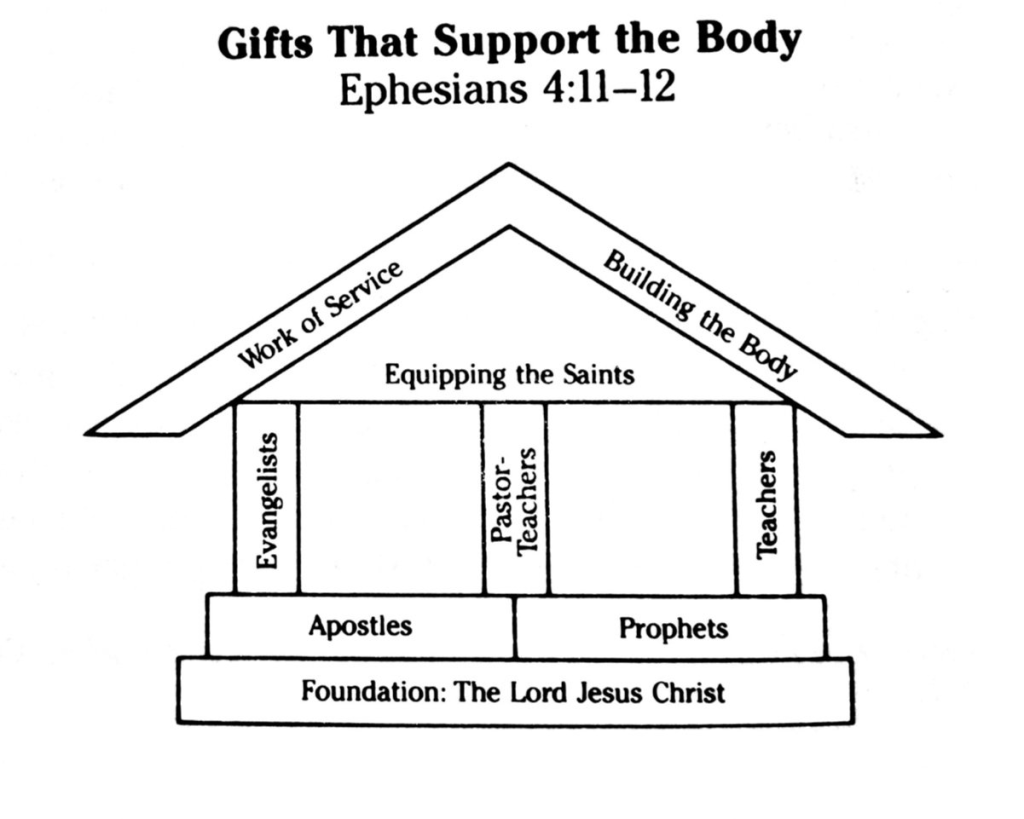

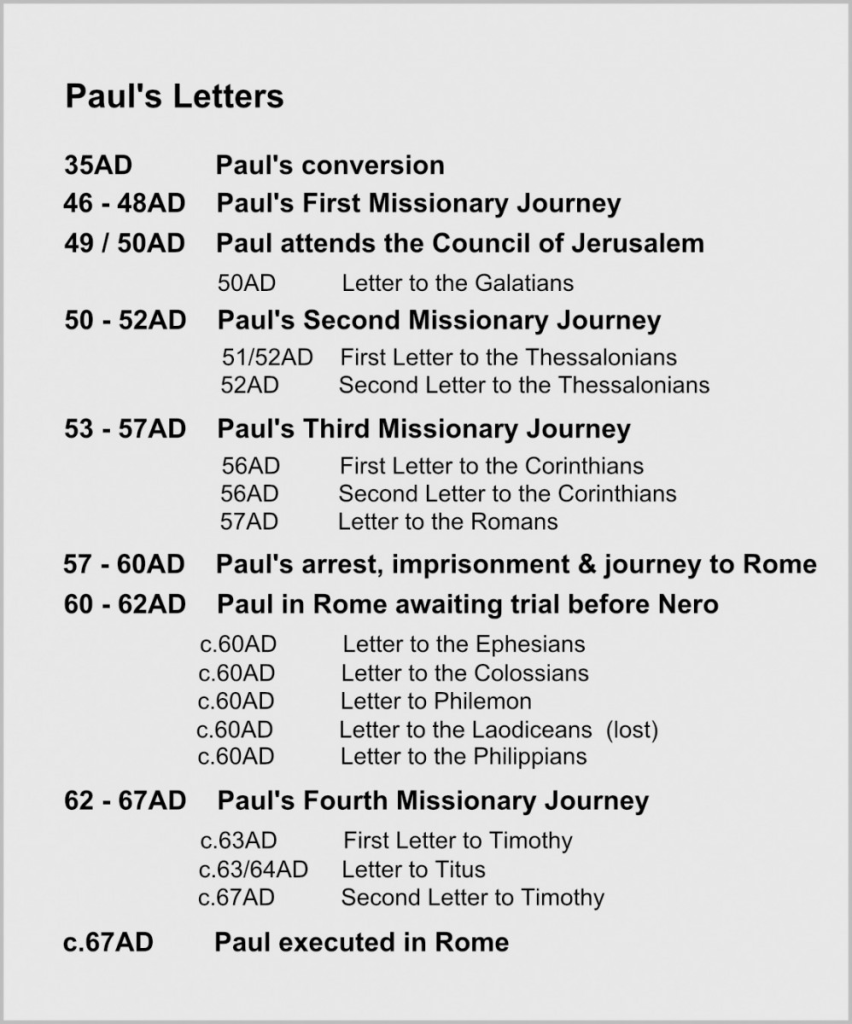
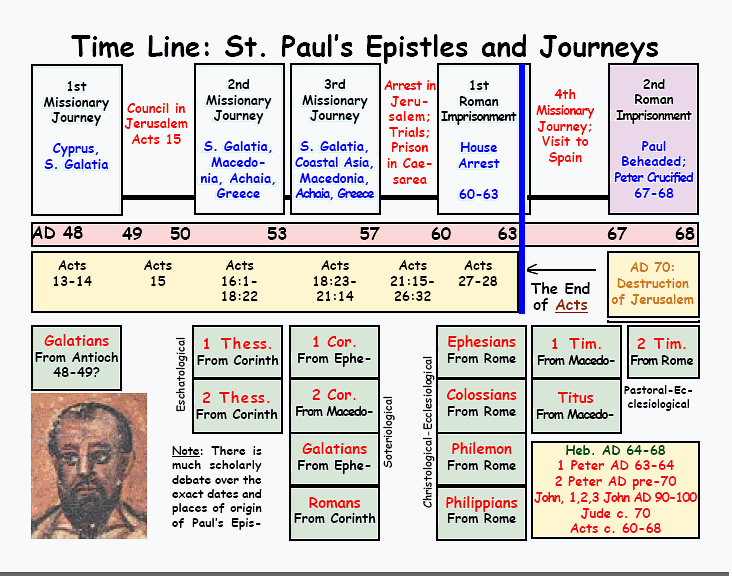


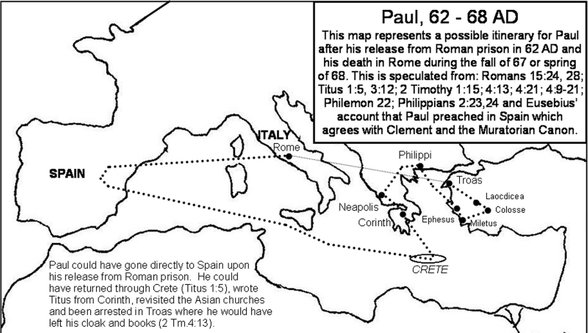
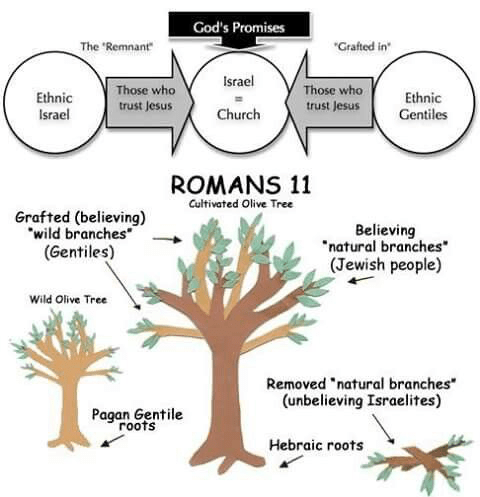
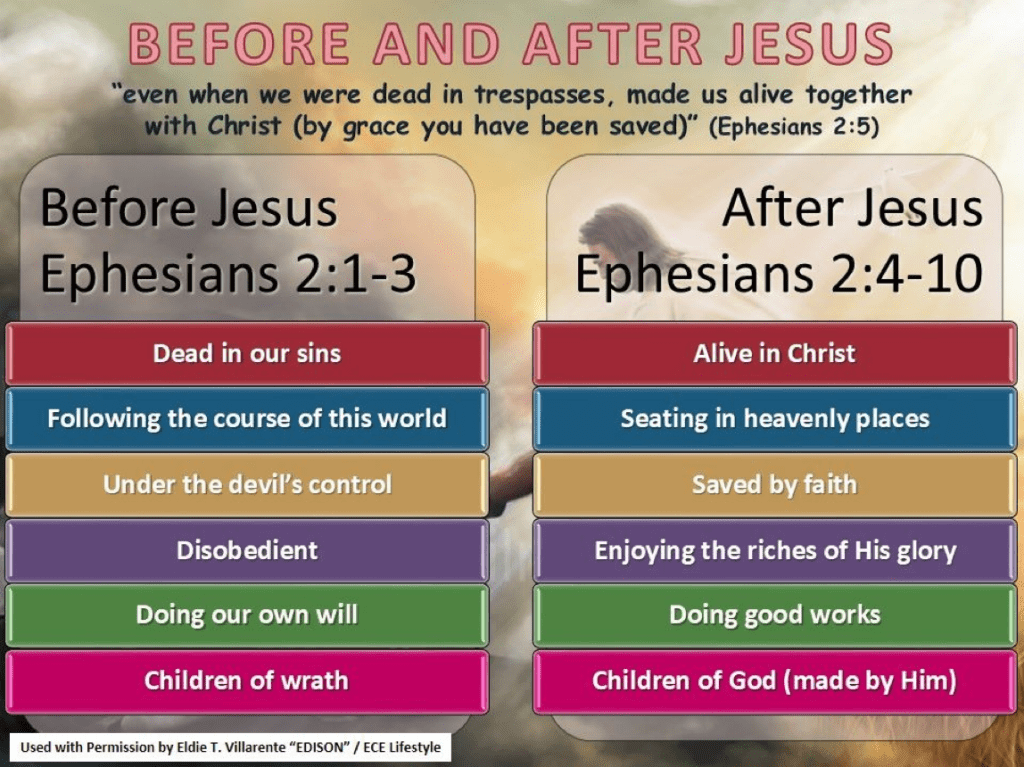


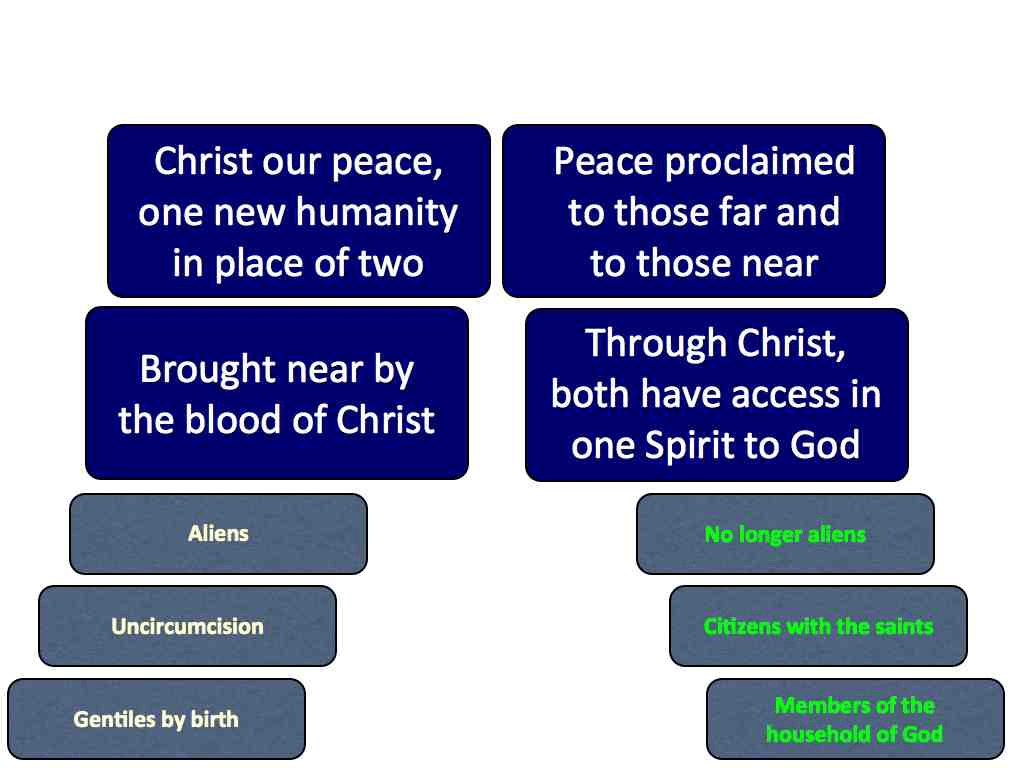

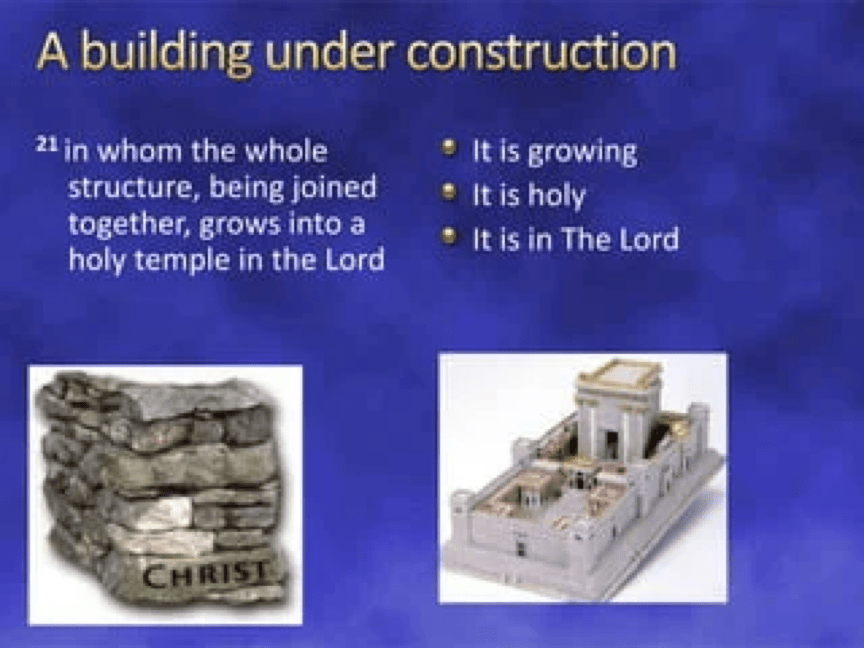
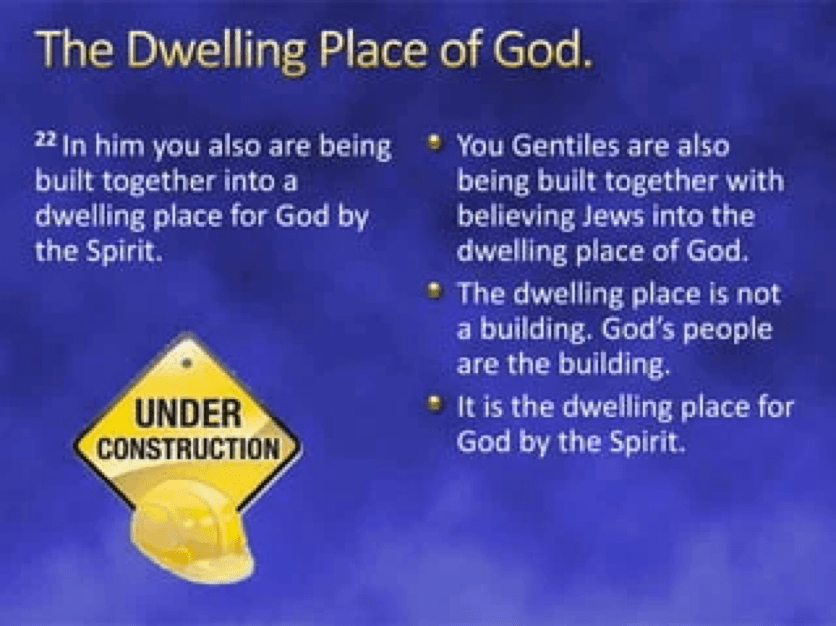
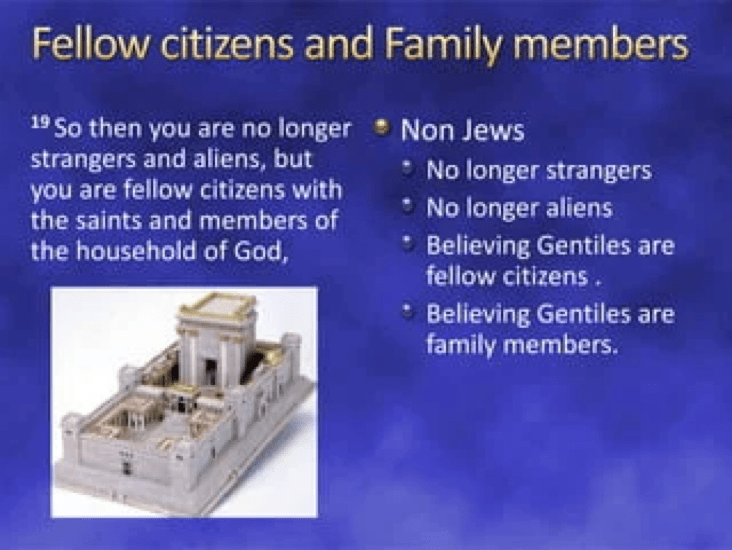
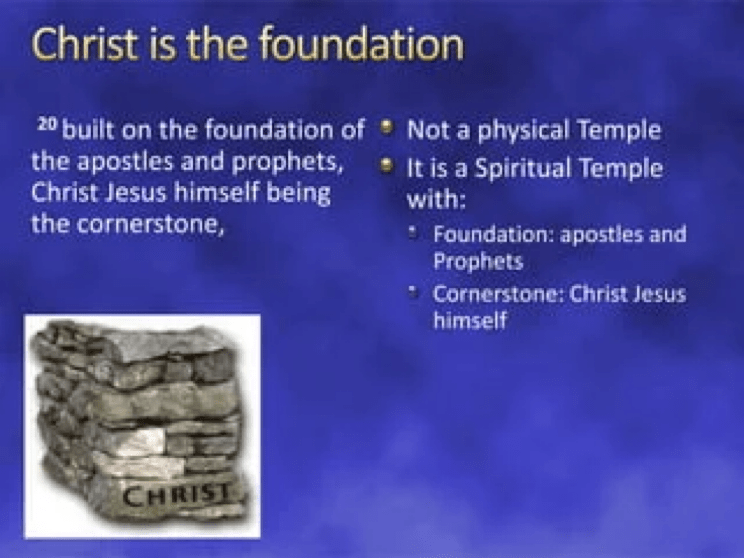

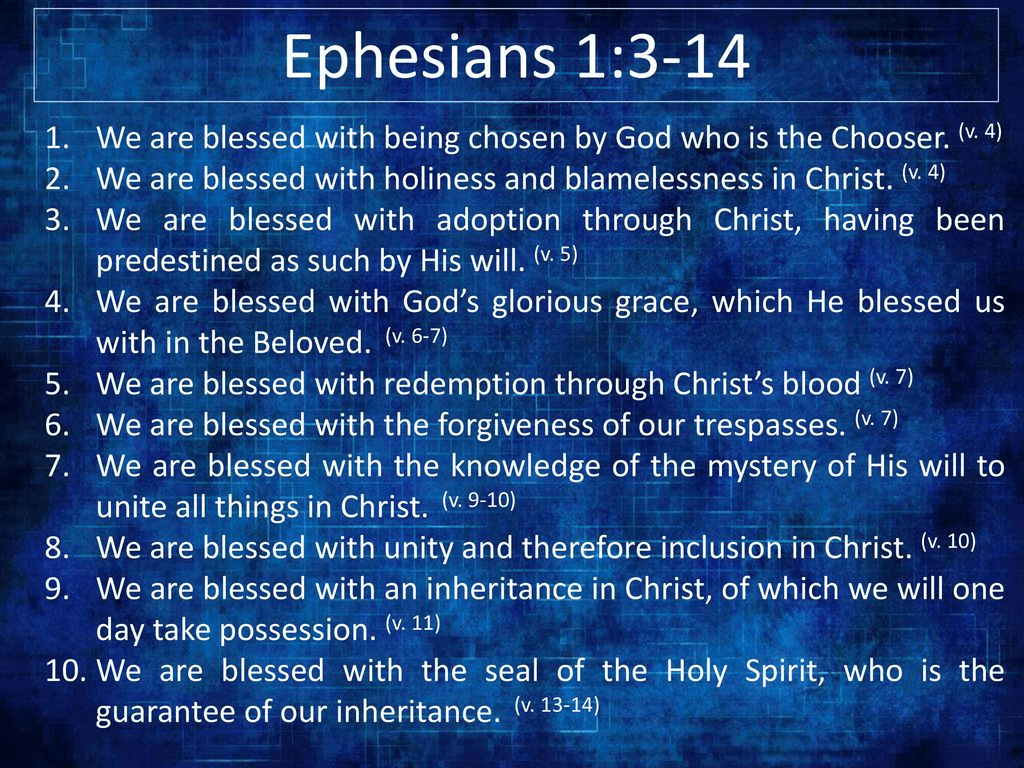

 Nicky's Notes