
Published by Eli Marske
From the internet:
Samuel was a religious leader in Israel during the 11th century BCE. His life is described in the Hebrew Bible (Old Testament) and is considered pivotal to Israel’s history:
- Birth: Samuel was born to Hannah, a barren woman who prayed to God for a child. 1 Samuel 1:10 She was deeply distressed and prayed to the Lord and wept bitterly. Eli the priest thought she was drunk. She made a vow: 1 Sam 1:11 And she vowed a vow and said, “O Lord of hosts, if you will indeed look on the affliction of your servant and remember me and not forget your servant, but will give to your servant a son, then I will give him to the Lord all the days of his life, and no razor shall touch his head.” God granted he request and gave her a child, Samuel.
- Dedication: Raised by El. Hannah dedicated Samuel to God and, after he was weaned, he was raised in the tabernacle at Shiloh by the priest Eli. He grew up surrounded by Eli’s 2 evil sons. Eli’s sons Hophni and Phinehas were guilty of several sins, including:
- Extortion: They used their authority as priests to take the best parts of sacrifices for themselves before giving any to God.
- Sexual immorality: They had sexual relations with the women who served at the tabernacle.
- Violating sacrificial procedures: They did not follow the sacrificial procedures prescribed by Moses.
- Despising the Lord: They did not know the Lord or regard him.
- Eli tried to confront his sons, but they ignored him and continued in their evil ways. Eli did not remove them from office. A man of God rebuked Eli for not disciplining his sons (all he did was talk to them about their sins). The priesthood would be removed from Eli and his 2 sons would die on the same day.
- The call of Samuel. Samuel heard a voice, “Samuel” 3 times. He woke Eli, thinking Eli was callig him, but it was not Eli. Eli told him it was God calling and to listen to His message. The message was: 1 Sam 3:13 And I declare to him (Eli) that I am about to punish his house forever, for the iniquity that he knew, because his sons were blaspheming God, and he did not restrain them. Eli made Samuel tell him in the morning what the message from God was. Eli accepted his fate.
- Samuel becomes a prophet. 1 Sam 3:19 And Samuel grew, and the Lord was with him and let none of his words fall to the ground. 20 And all Israel from Dan to Beersheba knew that Samuel was established as a prophet of the Lord.
- The ark of the covenant is captured. Eli’s 2 evil sons carried the ark with them to battle the Philistines. They were both killed and the ark was captured. When Eli heard that, he fell over backwards, his neck was broken, and he died at the age of 98. He had served as priest for 40 years.
- The ark is returned to Israel. According to the Bible, the Ark of the Covenant was returned to Israel after being held by the Philistines for seven months:
- The Ark is moved to Ekron: The Philistines moved the Ark from Ashdod to Gaza to Ashkelon to Gath to Ekron, but wherever it went, the people were struck with plague and rats. The Baal idol falls in front of it and is broken.
- The Philistines decide to return the Ark: After seven months, the Philistines consulted their priests and diviners and decided to return the Ark.
- The Ark is returned with gifts: The Philistines returned the Ark with gifts, including golden images of mice and tumors that had afflicted them.
- The Ark is placed on a cart: The Philistines placed the Ark on a new cart drawn by two oxen and sent it on its way.
- The Ark arrives at Beth Shemesh: The Ark arrived at Beth Shemesh, where the Israelites welcomed it back with joy. The Levites took the Ark down and placed it on a large rock. 70 men are killed b/c they look inside the ark.
- The Ark is moved to Kiriath Jearim: The Ark was moved to Kiriath Jearim, where it remained for 20 years in the house of Abinadab. Can you imagine having the ark of the covenant in your house for 20 years? You know that it should be in the tabernacle at Shiloh, but after the 70 dying at Beth Shemesh, everyone is afraid of moving it.
- The Ark is moved to Jerusalem: After 20 years,King David moved the Ark to Jerusalem around 1004 BC and placed it in a tent he had made just for the ark. That tent was called the “tabernacle of David” (2 Sam 6; Amos 9:11) and the ark stayed there for 40 years before Solomon built the temple and put the ark in the temple. He danced with his cloak off as it arrived in his capital Jerusalem that he had just captured.
- Samuel starts a revival. He persuaded the people to put away their idols and prayed for them at Mizpah. The Philistines attacked them at Mizpah, but God sent a thunderstorm on them and they were defeated. Samuel set up the stone of Ebenezar (which means “stone of help”) in honor of the victory and God’s help. He would on a circuit to the cities to judge Israel and settle disputes. He was the last judge of Israel.
- The people want to have a king. Samuel appoints his sons as judges, but they are evil and rejected by the people. They ask Samuel to give them a king “to be like the other nations”, thinking perhaps that the king would mount an army and protect them from enemies. God tells Samuel that they had rejected God, not Samuel, but that he would give them a king. He warned them about the negative consequences of having a king.
- Loss of freedom: The people became the king’s servants and were no longer free.
- Economic hardship: The people faced heavy taxation and regulations, making it more beneficial to work for the king than to run a business.
- Military conscription: The king conscripted the people’s sons and daughters into military service.
- Confiscation of property: The king took the people’s property.
- Violence and alienation: The people experienced a spiral of violence and alienation.
- Rejection of God: The Israelites rejected God’s way of leadership and turned to an earthly king instead.
- Splitting of the nation: The people resisted the oppression of the king, and Israel split in two before the end of Rehoboam’s reign.
- Samuel anoints Saul as the first king of Israel. Saul was a handsome, tall man from the tribe of Benjamin, who at first appeared to be the perfect king that the people desired. He seemed humble, not considering himself worthy of being a king. The Spirit moved Saul to join a group of prophets who were prophesying (probably dancing with music and in a frenzy). Saul was hiding among the baggage when Samuel went to anoint him as king at Mizpah. After his anointing, the Spirit came on Saul and he rescued the city of Jabesh Gilead when the Ammonites threatened to put out the right eyes of the men of the city as a conditon of not killing them. Again, it looks like Saul is the perfect choice for the king the people wanted.
- Samuel’s farewell address. Samuel made the people witness that he had never wronged them. He warned them of the consequences if they and their new king disobeyed God. God sent thunder and rain all day to make them fear Him. They aked Samuel to pray for them. Samuel said 1 Sam 12:23 Moreover, as for me, far be it from me that I should sin against the Lord by ceasing to pray for you, and I will instruct you in the good and the right way.
- Samuel rebukes Saul the first time (1 Sam 13,14). The Philistines had gathered to fight Israel at Gilgal with 30,00 chariots, 6,000 horsemen, and innumerable soldiers. Saul’s army of 3,000 were terrified and began deserting Saul. Samuel had told Saul to wait 7 days for him to come offer a sacrifice before the battle. Saul panicked when Samuel was late and offered rhe sacrifice himself. Samuel told him that his kingdom would be taken from him b/c of his disobedience. Saul’ army is only 1,200 men now with no iron spears or swords b/c the Philistines had stopped them from making them. Jonathon bravely took his 600 men and killed some Philistines in their camp, creating panic and the fleeiing Philistines killed each other. Saul and the rest of his army defeated the Philistines in spite of Saul’s sin of offering the sacrifice. Saul made a rash vow (like Jephthah who vowed to offer the first thing to come out of his house if God would give him victory in battle, and his daughter came out!) that no one would eat food until he had completely destroyed the fleeing Philistine army. Jonathon did not know Saul had done that, and at some honey. Saul’s vow also caused his men to desperately eat some captured animals, blood and all. Saul was going to kill Jonathon for breaking the vow, but the people interceded for Jonathon and saved him. Saul actually was very successful in defeating the enemies of Israel for some time after that. 1 Samuel 14:47 When Saul had taken the kingship over Israel, he fought against all his enemies on every side, against Moab, against the Ammonites, against Edom, against the kings of Zobah, and against the Philistines. Wherever he turned he routed them. 48 And he did valiantly and struck the Amalekites and delivered Israel out of the hands of those who plundered them.
- Samuel rebukes Saul the 2nd time (1 Sam 15). God has already rejected Saul as king, but is He giving Saul a 2nd chance to redeem himself? Samuel told Saul destroy the Amalekites, who had attacked Israel from the rear coming out of Egypt, man, woman, child, and animals. Spare nothing. Saul took his army of 210,000 men and defeated the Amalekites but he spared the king Agag and the best of the animals, and “set up a monument for himself”. He partly obeyed God. Samuel rebuked him for not obeying God, but Saul began making excuses, saying they spared the best animals to offer as sacrifices. Samuel said, ““Has the Lord as great delight in burnt offerings and sacrifices, as in obeying the voice of the Lord? Behold, to obey is better than sacrifice, and to listen than the fat of rams. 23 For rebellion is as the sin of divination, and presumption is as iniquity and idolatry. Because you have rejected the word of the Lord, he has also rejected you from being king.” Saul said that he had sinned and asked for pardon, but it was too little, too late. His fate was sealed. Samuel then hacked Agag to pieces. A sad ending: 34 Then Samuel went to Ramah, and Saul went up to his house in Gibeah of Saul. 35 And Samuel did not see Saul again until the day of his death, but Samuel grieved over Saul. And the Lord regretted that he had made Saul king over Israel.
- Samuel anoints David as the 2nd king of Israel (1 Sam 16). God sent Samuel to anoint David, the son of Jesse. He thought Eliab would be the one to anoint, but God said, ““Do not look on his appearance or on the height of his stature, because I have rejected him. For the Lord sees not as man sees: man looks on the outward appearance, but the Lord looks on the heart.” He passed over 7 more sons before the youngest son, David, who was keeping sheep, was brought in and Samuel anointed him. And the Spirit of the Lord rushed upon David from that day forward. And Samuel rose up and went to Ramah.
- David flees to Samuel at Ramah (19:18-24). This is during the 10 years that Saul was chasing David trying to kill him. David had just escaped from Saul at David’s house with the help of his wife, Michal, Saul’s daughter. He told Samuel all that Saul was doing. David and Samuel went to Naioth.Saul sent messengers to go kill David, but the Spirit came over them when they saw the prophets prophesying, with Samuel at their head, and they began prophesying and did not take David. That happened 3 times. Saul then went to Naioth to take David and he stripped his clothes off and began prophesying, lying naked all night. The saying went out, “Is Saul among the prophets?”
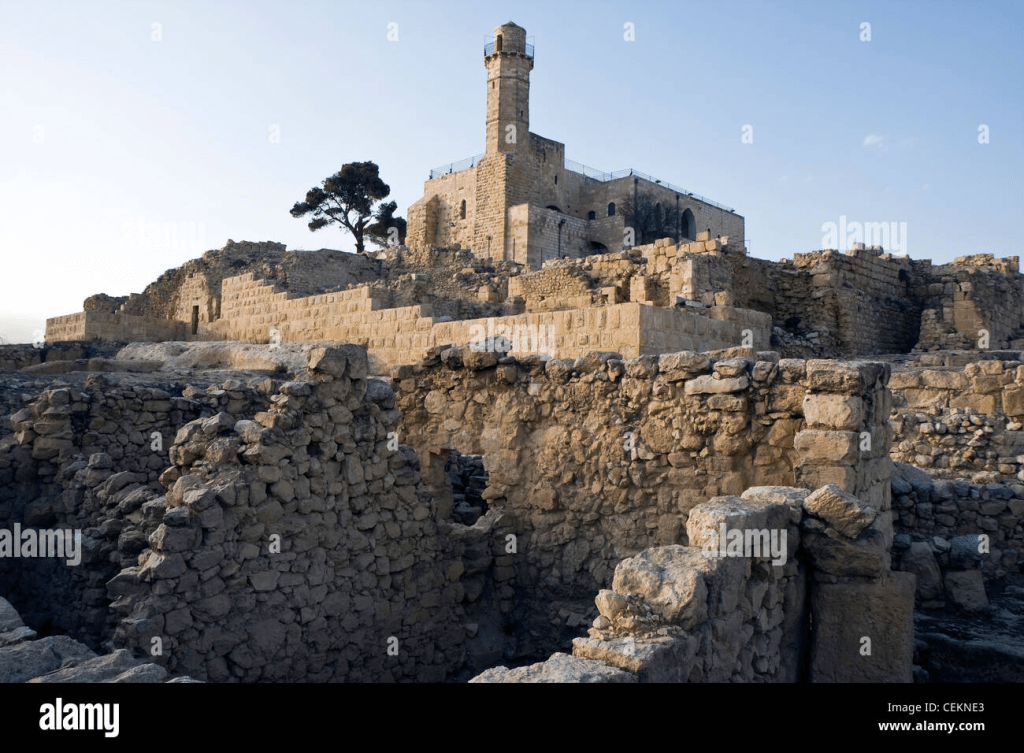
- The death of Samuel. 1 Sam 25:1 ; 28:3 Now Samuel died. And all Israel assembled and mourned for him, and they buried him in his house at Ramah. There is a traditional site of Samuel’s Tomb 3 mi SW of Ramah at Mizpah. He probably died aroud the age of 90.
- Samuel appears to Saul at Endor.1 Sam 28 God was no longer speaking to Saul in any way. Saul had expelled all the mediums in the land, but was able to find a medium at Endor, and went there to get her to call up Samuel from the dead to tell him his fate. Samuel did appear to Saul in a vision to warn him of his death if he continued to violate God’s word. I think the medium (she is often called the witch at Endor) was surprised (she cried out with a loud voice when he appeared) that Samuel appeared b/c we know that mediums can’t really call up the dead. Samuel then told Saul that he and his sons were going to be killed the very next day by the Philistines.
- Lessons: Samuel’s life is considered an example for believers today, with lessons including obedience to God, faith, and willingness to intercede for others.
Jeremiah 15:1 Then the Lord said to me, “Though Moses and Samuel stood before me, yet my heart would not turn toward this people.” God would not change his prediction of the fall of Jerusalem to Babylon even if Moses and Samuel were standing before God, pleading him to relent. The fact that God paired Samuel with Moses tells us the high regard God had for Samuel. Ezekiel 14:14 14 even if these three men, Noah, Daniel, and Job, were in it, they would deliver but their own lives by their righteousness, declares the Lord God. God would not relent even if Noah, Daniel, and Job were interceding for Jerusalem. Noah, Daniel, Job, Moses, and Samuel must be the most highly regarded OT characters. You might not expect Samuel to be in that group, so that tells you how important Samuel is in the eyes of God.
Samuel listened to God.1 Sam 3:1 Now the boy Samuel was ministering to the Lord in the presence of Eli. And the word of the Lord was rare in those days; there was no frequent vision. During the entire period of the judges (about 300 years), only twice is a prophet mentioned. Judges 4:4 Deborah was a prophetess. Judges 6:8 the Lord sent a prophet in the time of Gideon. Prophets were God’s spokesmen, delivering God’s messages to the people. Due to the disobedience of the people during that time, God had ceased sending prophets. He had basically quit speaking to the people. Prophetic messages were “rare”. Eli was a good priest, but his 2 sons were very evil, so God was not speaking to the people through prophets then either. Samuel would become a great prophet and would begin the institution of prophets, as observed by the group of prophets he was leading when Saul came to Naioth to try to kill David. Even as a child, God began speaking to Samuel with prophecies about the punishment of Eli.
Samuel always urged the people to obey God. He warned them of the consequences of disobeying God. But he also kept praying for them. 1 Sam 12:19-25 tells us a lot about the heart of Samuel for the people in spite of their constant disobedience. 19 And all the people said to Samuel, “Pray for your servants to the Lord your God, that we may not die, for we have added to all our sins this evil, to ask for ourselves a king.” 20 And Samuel said to the people, “Do not be afraid; you have done all this evil. Yet do not turn aside from following the Lord, but serve the Lord with all your heart. 21 And do not turn aside after empty things that cannot profit or deliver, for they are empty. 22 For the Lord will not forsake his people, for his great name’s sake, because it has pleased the Lord to make you a people for himself. 23 Moreover, as for me, far be it from me that I should sin against the Lord by ceasing to pray for you, and I will instruct you in the good and the right way. 24 Only fear the Lord and serve him faithfully with all your heart. For consider what great things he has done for you. 25 But if you still do wickedly, you shall be swept away, both you and your king.” He would never stop praying for them, no matter how bad it got.
Samuel was the last judge, and traveled on circuit to the cities judging the people and rendering decisions for them. But he was even greater as a prophet, in my opinion. You don’t think of him on par with Isaiah, Jeremiah, Ezekiel, and Daniel, but in God’s eyes he was right up there with them.
I hope you have enjoyed this study of Samuel, judge and prophet.
 Nicky's Notes