NOV 7 READ 1 CHRONICLES 28-29; 2 CHRONICLES 1-3

1 Chronicles 28 David’s address to the people and to Solomon about building the temple. Especially his charge to Solomon: 28:9 “As for you, my son Solomon, know the God of your father, and serve Him with a whole heart and a willing mind; for the Lord searches all hearts, and understands every intent of the thoughts. If you seek Him, He will let you find Him; but if you forsake Him, He will reject you forever. 10 Consider now, for the Lord has chosen you to build a house for the sanctuary; be courageous and act.” Life Lesson: The Lord knows your heart, your thoughts, and your motives. That’s a little scary. We can fool people but we can’t fool God! If you seek Him He will let you find Him. He is always present, waiting for you to decide to seek Him. That doesn’t sound like Calvinism, does it? In Calvinism, a sinner doesn’t have the ability to choose to seek God. God has to send His Spirit to basically force him to seek God. That totally contradicts “if you seek Him, He will let you find Him.” David gave Solomon all the plans for building the temple. 28:19 “All this,” said David, “the Lord made me understand in writing by His hand upon me, all the details of this pattern.”

1 Chronicles 29 David gave much gold, silver, iron, and timbers to Solomon for building the temple, as well as the Israelites in the 12 tribes. 29:9 Then the people rejoiced because they had offered so willingly, for they made their offering to the Lord with a whole heart, and King David also rejoiced greatly.” David gave an humble prayer of thanks and praise to God. They offered 1000 bullls, 1000 rams and 1000 lambs. 22 So they ate and drank that day before the Lord with great gladness.” They anointed Solomon as king. A fitting desciption of the reign and death of David: 29:26 Now David the son of Jesse reigned over all Israel. 27 The period which he reigned over Israel was forty years; he reigned in Hebron seven years and in Jerusalem thirty-three years.28 Then he died in a ripe old age, full of days, riches and honor; and his son Solomon reigned in his place. 29 Now the acts of King David, from first to last, are written in the chronicles of Samuel the seer, in the chronicles of Nathan the prophet and in the chronicles of Gad the seer, 30 with all his reign, his power, and the circumstances which came on him, on Israel, and on all the kingdoms of the lands.”

2 Chronicles 1:1 Now Solomon the son of David established himself securely over his kingdom, and the Lord his God was with him and exalted him greatly.” The ark was still in the tent David made for it in Jerusalem and Solomon still went to the tabernacle in Gibeon to offer animal sacrifices. God offered to give Solomon whatever he asked for, and he asked for wisdom, not wealth. God gave him both widom and wealth. 1:14 Solomon amassed chariots and horsemen. He had 1,400 chariots and 12,000 horsemen, and he stationed them in the chariot cities and with the king at Jerusalem. 15 The king made silver and gold as plentiful in Jerusalem as stones, and he made cedars as plentiful as sycamores in the lowland.”

2 Chronicles 2 Solomon makes preparations to build the temple with the help of Huram king of Tyre who sent Solomon skilled craftsmen. The work force is massive: 2:2 So Solomon assigned 70,000 men to carry loads and 80,000 men to quarry stone in the mountains and 3,600 to supervise them.”

2 Chronicles 3 Solomon starts building the temple. 3:1 Then Solomon began to build the house of the Lord in Jerusalem on Mount Moriah, where the Lord had appeared to his father David, at the place that David had prepared on the threshing floor of Ornan the Jebusite. 2 He began to build on the second day in the second month of the fourth year of his reign.” The dimensions and materials are given for the temple.”

Only 1 and 2 Chronicles tells about how much David contributed to the building of the temple. He seems to take great delight in Solomon building the temple even though he wanted to build it himself. David made a lot of mistake, but he had a good heart and wanted to please God. His prayers of thanks and praise are humbling. It’s too bad that his legacy is so marred by his sin with Bathsheeba and the troubles in his household with his 3 sons.
OCT 24 READ 1 KINGS 5-9

1 Kings 5: Solomons gets cedars from Lebanon. Solomon and Hiram King of Tyre were good friends but we don’t know how that friendship was formed. This is really interesting about those cedars: AI

Cedars (specifically the Cedars of Lebanon) are mentioned frequently in the Bible—around 70 to over 100 times—because they were the most prized, durable, and majestic natural resource in the ancient Near East.

Key Reasons Cedars Appear So Often

  • Superior Building Material: Cedar wood was fragrant, reddish, straight-grained, and naturally resistant to rot, decay, and insect attacks.
  • Royal and Sacred Construction:
    • King David used cedar wood to build his palace (2 Samuel 5:11).
    • King Solomon imported massive amounts of cedar from King Hiram of Tyre to build the First Temple in Jerusalem and his own royal palace (1 Kings 5:6-10; 1 Kings 7:2–12).
    • Cedar beams were also used later when rebuilding the Second Temple (Ezra 3:7).
  • Symbol of Strength and Permanence: Growing up to 130 feet tall with deep roots and massive branches, the cedar represented physical might, majesty, stability, and enduring power (Job 40:17).
  • Spiritual Metaphors:
    • The Bible often compares the righteous to the cedars of Lebanon, noting how they grow strong, tall, and deeply rooted (Psalm 92:12).
    • Conversely, towering cedars were also used as a prophetic metaphor for human pride and arrogance that gets cut down or humbled by God (Isaiah 2:13; Ezekiel 31:3–9).
  • Divine Provision: Scripture views the cedar forests of Lebanon as a direct creation and gift from God (Psalm 104:16) (“the cedars of Lebanon, which he has planted”).

Do you remember those warnings that Moses and Samuel gave about how a king would burden the people? One of the areas was making Israelites from the 12 tribes be forced labor. Solomon did that. 5:13 Now King Solomon levied forced laborers from all Israel; and the forced laborers numbered 30,000 men. 15 Now Solomon had 70,000 transporters, and 80,000 hewers of stone in the mountains. Remember, it took 13 years to build his palace and 7 years to build his temple. That’s 20 years total, half of his 40 year reign, with forced labor. It’s a wonder that the 10 tribes waited till he died to rebel against his heavy handed way of treating them.

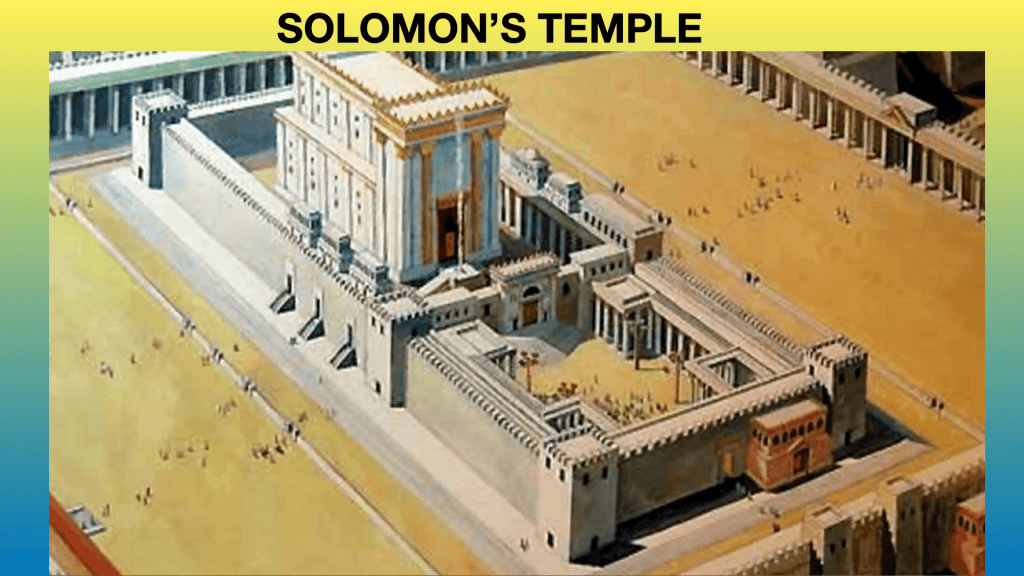
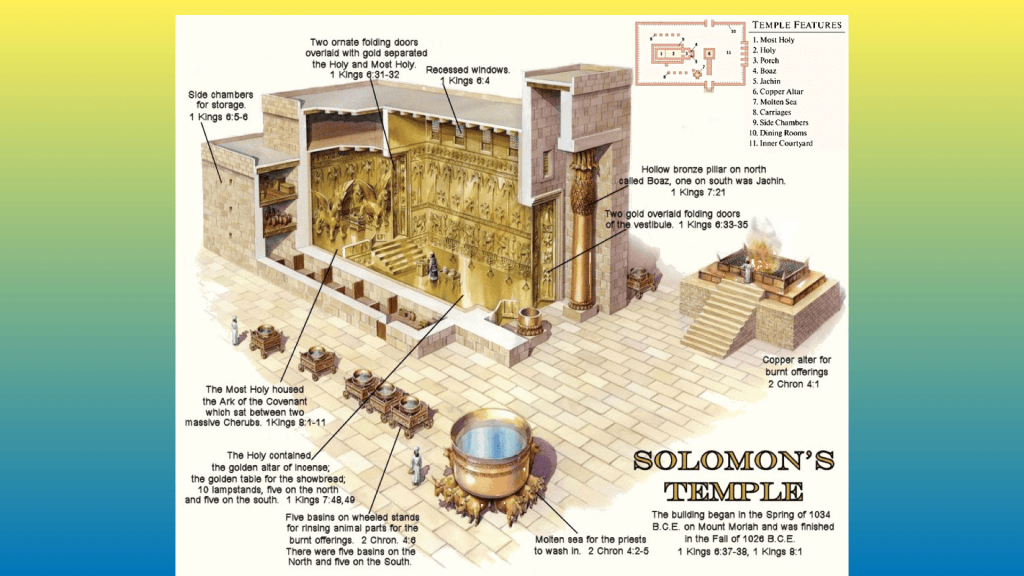
2 Samuel 6 Solomon builds the temple. In the 4th year of his reign he began building the temple and it took 7 years to finish. The stones for the temple were cut without iron tools (making it a lot harder) at the quarry and not on the temple site. These stones typically weighed up to 25-40 tons each and were 12-15 feet long. The quarries were located close by to Jerusalem, allowing the finished stones to be dragged or moved overland via manual labor, sleds, rollers, or ramps without requiring long-distance freight. Still a massive amount of labor hewing those stones (80,000 stonemasons) and dragging those stones (70, 000 transporters) to the temple site.

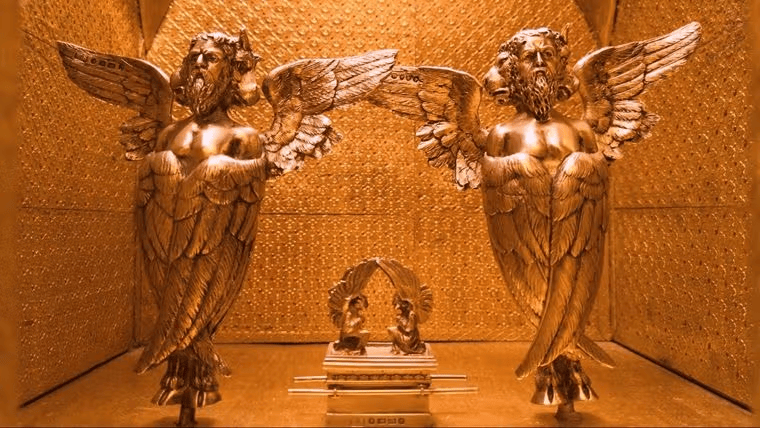
In the original ark put in the tabernacle there were two cherubim on the mercy seat on the ark facing each other, but the cherubim of Solomon’s temple stood side by side, 15 feet tall, wings toughing stretching across the full 30 feet wide holy of holies.

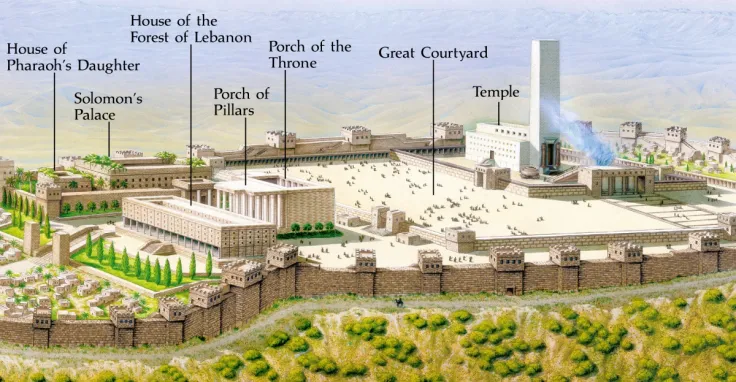
2 Samuel 7 Solomon’s builds his palace. Solomon’s Palace: He spent 13 years building a large personal royal complex and dwelling for himself, which included structures like the Throne Hall and the House of the Forest of Lebanon (1 Kings 7:1–8). Pharaoh’s Daughter’s Palace: He built a separate, matching house specifically for his wife, Pharaoh’s daughter (1 Kings 7:8).

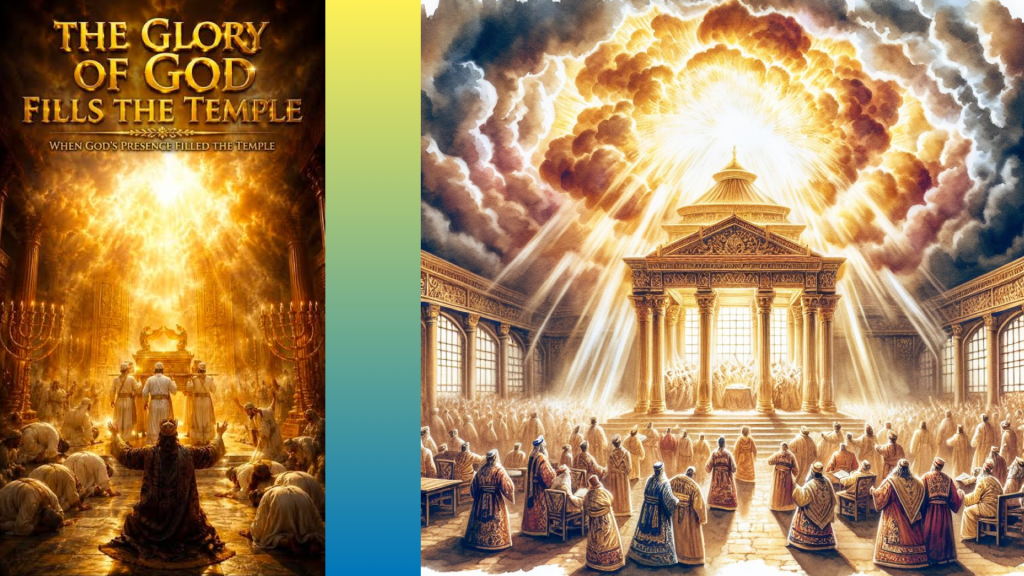
1 Kings 8 Solomon’s puts the ark of the covenant in the temple. Before King Solomon placed the Ark of the Covenant into the newly built temple, King David housed it in a special tent (often called the Tabernacle of David) in the City of David (also known as Mount Zion) in Jerusalem (2 Samuel 6:17, 1 Kings 8:1). Solomon had it brought from there to the holy of holies in the new temple. 8:10 It happened that when the priests came from the holy place, the cloud filled the house of the Lord, 11 so that the priests could not stand to minister because of the cloud, for the glory of the Lord filled the house of the Lord.”

  • Setting: Solomon stood on a bronze platform before the altar of the Lord, facing the assembly of Israel, then knelt with his hands stretched toward heaven.
  • Core Acknowledgment: He confessed that the highest heavens cannot contain God, let alone a physical building, yet asked God to watch over the temple day and night and listen to prayers directed toward it.

Key Themes of the Prayer of Dedication for the Temple:

  • Praise for God’s Faithfulness: Solomon praised God for keeping His covenant and fulfilling the promise made to his father, King David, regarding the Davidic lineage.
  • Seven Petitions (Scenarios for Intervention): The prayer outlines seven specific situations where Solomon asked God to hear from heaven, grant justice, and forgive the people when they turn back to Him:
    1. Legal Disputes: When someone is charged and forced to take an oath before the altar.
    2. Military Defeat: When Israel is defeated by an enemy because of sin.
    3. Drought: When the skies are shut and there is no rain due to rebellion.
    4. Natural Calamities: Famines, plagues, blights, mildew, or locusts.
    5. Foreigners: When outsiders hear of God’s great name and pray toward the temple.
    6. War: When Israel goes into battle at God’s command.
    7. Exile: When the people sin, are taken captive to a distant or near land, and repent toward the temple.

Conclusion of the Event

  • Divine Response: Fire fell from heaven to consume the burnt offerings and sacrifices, and the glory of the Lord filled the temple.
  • Celebration: Solomon and all Israel offered massive sacrifices (22,000 cattle and 120,000 sheep) and hosted a 14-day festival of gratitude.

1 Kings 9 God’s warning to Solomon. God warned Solomon about what would happen if he or his sons (descendants from the tribe of Judah) started worshipping idols. Israel would be cut off and the temple would become a “heap of ruins”. That is exactly what happened to the temple in the period of the divided kingdom when Judah became so evil that God sent the Babylonians to destroy the temple in 586 BC. BTW Solomon gave Hiram king of Tyre 20 cities in gratitude for his cedars and his craftsmanship help. Solomon also had a fleet of ships that he used to bring in gold from the surrounding subjugated nations.

So far, so good with Solomon’s reign for the first 20 years. But then is what he falls from grace! Stay tuned.