
2:1-10 SAVED BY GRACE THROUGH FAITH
Taken from the internet:
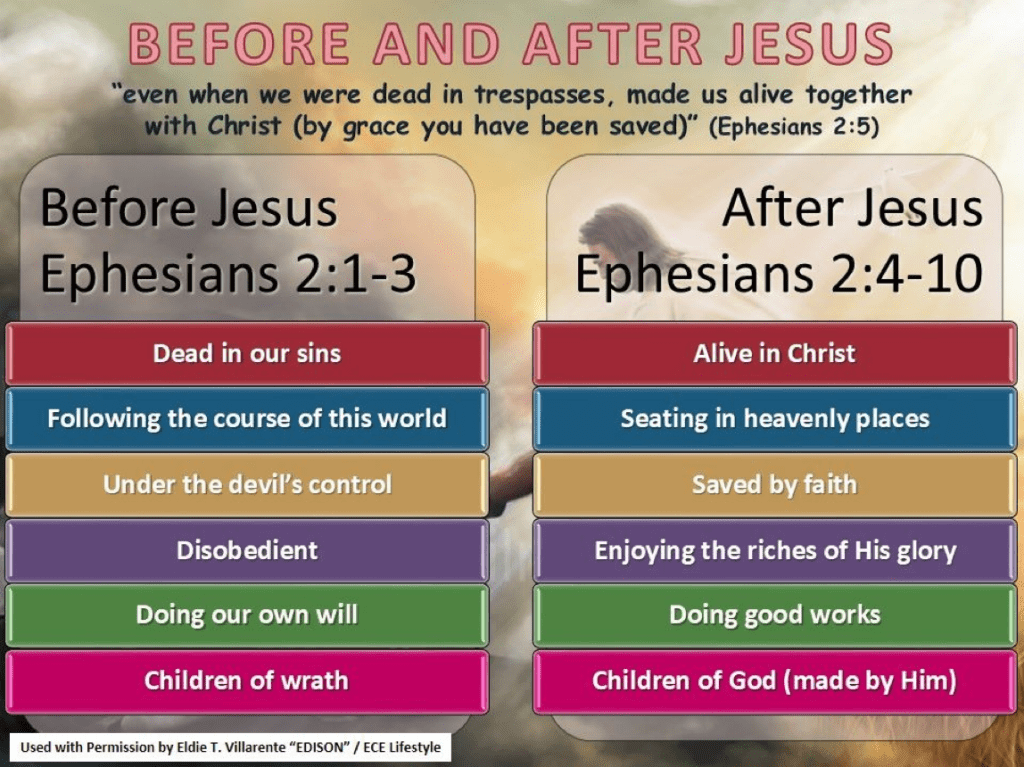
Eph 2:1-10 is directly tied to 1:15-23. Again, from p. 19: This power of God’s working (that Paul wanted the eyes of their hearts opened to see) is in accordance with God’s power when he raised Jesus from the dead, seated him at His right hand “in the heavenly places” far above all spiritual powers of darkness and made him head over the church, which is his body. This last few verses will set the tone for God’s power raising us from the spiritual dead, making us alive spiritually, and seating us with Jesus at the right hand of God in the heavenly places.
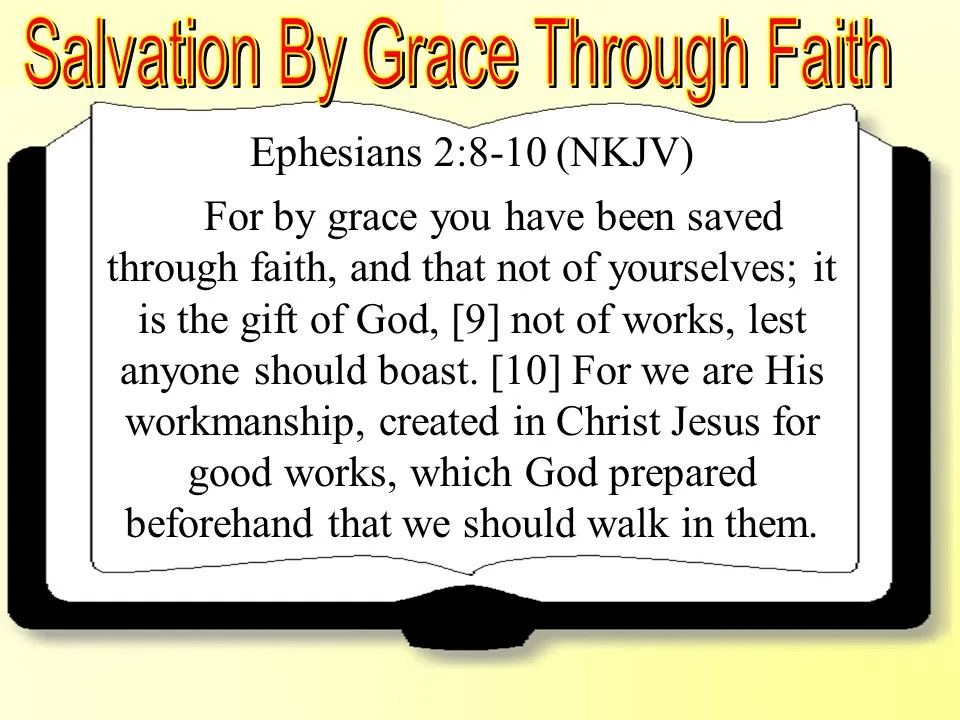
Yes, “saved by grace through faith” is considered the central doctrine of the New Testament, primarily based on verses like Ephesians 2:8-9 which state that salvation is a gift from God received through faith, not by any merit of our own actions; essentially meaning that God’s grace is the sole basis for our salvation when we put our trust in Jesus Christ.
Key points about this doctrine:
- Grace is undeserved favor:
This means that God’s love and forgiveness are freely given, not earned by good works. - Faith is essential:
To receive this grace, one must believe in Jesus Christ and accept his sacrifice as sufficient for their salvation. - Not by works:
This doctrine emphasizes that salvation cannot be achieved through personal efforts or adherence to religious laws, but solely through faith in Jesus.
- Romans 3:21 But now the righteousness of God has been manifested apart from the law, although the Law and the Prophets bear witness to it— 22 the righteousness of God through faith in Jesus Christ for all who believe. For there is no distinction: 23 for all have sinned and fall short of the glory of God, 24 and are justified by his grace as a gift, through the redemption that is in Christ Jesus, 25 whom God put forward as a propitiation by his blood, to be received by faith. This was to show God’s righteousness, because in his divine forbearance he had passed over former sins. 26 It was to show his righteousness at the present time, so that he might be just and the justifier of the one who has faith in Jesus.
27 Then what becomes of our boasting? It is excluded. By what kind of law? By a law of works? No, but by the law of faith. 28 For we hold that one is justified by faith apart from works of the law. 29 Or is God the God of Jews only? Is he not the God of Gentiles also? Yes, of Gentiles also, 30 since God is one—who will justify the circumcised by faith and the uncircumcised through faith. 31 Do we then overthrow the law by this faith? By no means! On the contrary, we uphold the law.
- Romans 3 is perhaps the greatest detailed statement of salvation by grace through faith, not works. Eph 2:8-10 is a shortened form. Paul continually has to fight the Judaizers who are undermining his teaching of the gospel. They teach that the Gentile Christians should keep the Law of Moses as well as the teachings of Jesus. They made that a test of fellowship in the early church.
- In Romans 3, he uses the term “justification” for salvation. It is a legal term. dikaioó: to show to be righteous, declare righteous. The believer is “made righteous/justified” (1344 /dikaióō) by the Lord, cleared of all charges (punishment) related to their sins. Moreover, they are justified (1344 /dikaióō, “made right, righteous”) by God’s grace through faith. This also called “imputed or reckoned righteousness” in Romans 4:What then shall we say was gained by Abraham, our forefather according to the flesh? 2 For if Abraham was justified by works, he has something to boast about, but not before God. 3 For what does the Scripture say? “Abraham believed God, and it was counted to him as righteousness.” 4 Now to the one who works, his wages are not counted as a gift but as his due. 5 And to the one who does not work but believes in him who justifies the ungodly, his faith is counted as righteousness. The Greek word for “counted or credited or imputed” is logizomai: to reckon, to consider. 3049 logízomai (the root of the English terms “logic, logical“) – properly, compute, “take into account”; reckon (come to a “bottom-line”), i.e. reason to a logical conclusion (decision). This word is used 11 times in Romans 4 alone.
The “bottom line of” or “logical reason for” salvation is that works can’t save someone (neither works of the Law of Moses or any works system), and that God counts a person to be righteous by his faith, not works. It is “on the basis of faith”.
Philippians 3:8 Indeed, I count everything as loss because of the surpassing worth of knowing Christ Jesus my Lord. For his sake I have suffered the loss of all things and count them as rubbish, in order that I may gain Christ 9 and be found in him, not having a righteousness of my own that comes from the law, but that which comes through faith in Christ, the righteousness from God that depends on faith—
Romans 11:6 But if it is by grace, it is no longer on the basis of works; otherwise grace would no longer be grace.
Q: Does James contradict Paul in James 2?
James 2:21 Was not Abraham our father justified by works when he offered up his son Isaac on the altar? 22 You see that faith was active along with his works, and faith was completed by his works; 23 and the Scripture was fulfilled that says, “Abraham believed God, and it was counted to him as righteousness”—and he was called a friend of God. 24 You see that a person is justified by works and not by faith alone.
Martin Luther, the main leader of the Protestant Reformation, promoted 3 key concepts of reform of the Catholic Church.
The three solas are a set of maxims that summarize Martin Luther’s theology and were a rallying cry for Luther and other reformers:
- Sola scriptura: Scripture alone
- Sola gratia: By grace alone
- Sola fide: By faith alone
- By “faith alone” he meant salvation is not by works, just as Paul taught. But he called the letter of James a “strawy epistle” b/c of James’ saying that “a person is justified by works and not by faith alone”. He said that the letter should not be in the NT canon.
Paul and James do not contradict each other. Paul is discussing the basis of God saving someone, which is 100% by grace. But Paul does say that faith is necessary. James is discussing what kind of faith is necessary for salvation by grace, which is an active, working faith. Faith without works is dead and will not save someone. James is not saying that salvation is on the basis of works, which would indeed contradict Paul. Works prove or show that one has sincere, saving faith necessary to be saved.
Q: How many works are necessary to prove that one has the faith that is necessary to be saved?
A key verse: Matthew 13:8 Still other seed fell on good soil, where it produced a crop—a hundred, sixty or thirty times what was sown.
Also Luke 12:48 From everyone who has been given much, much will be demanded; and from the one who has been entrusted with much, much more will be asked.
In my religious upbringing, we were taught salvation by grace through faith. But b/c of our fear of teaching of denominations who taught that salvation was by grace through faith that did not include baptism, and who taught “once saved, always saved” (without having to have an active working faith), we ended up emphasizing the necessity of works so much that it left members thinking that there was no way they could do enough works to be saved. They doubted their salvation b/c of that.
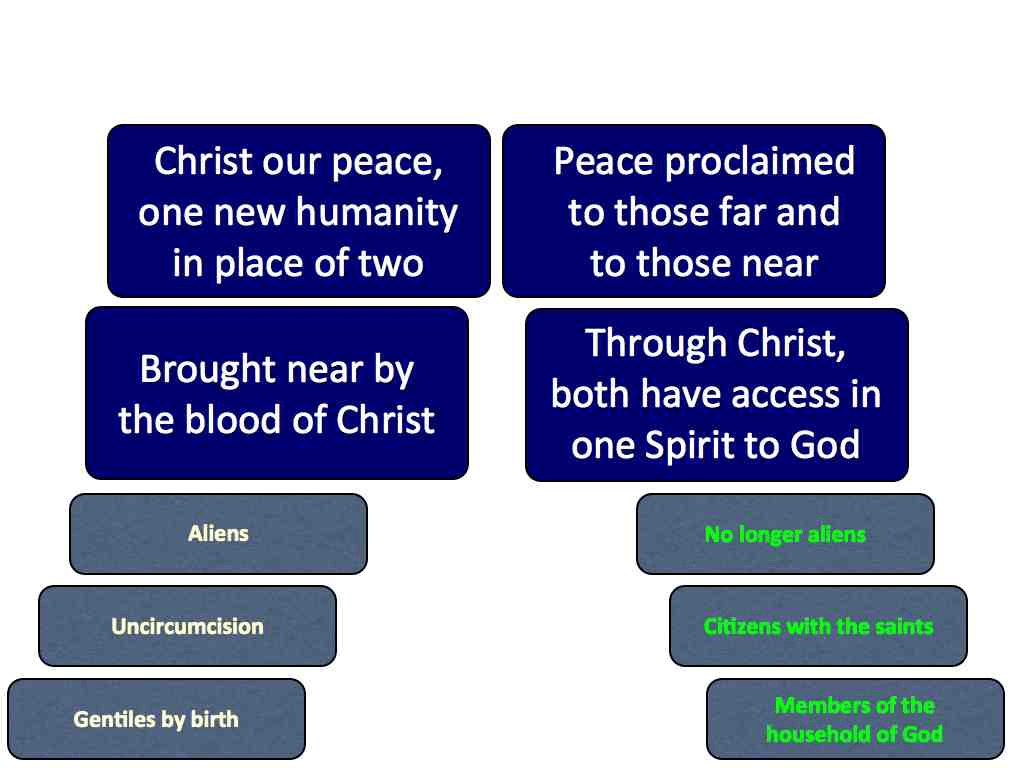
He reconciled Jew and Gentile believers back to God through the blood of the cross. That made them brothers in Christ and took away the enmity between the two. to reconcile completely (ἀπό) (others, to reconcile back again, bring back to a former state of harmony. The Law of Moses was a source of conflict dividing the two, making the Jews feel superior, looking down and judging the Gentiles. Jesus took away that wall by destroying the condemning power of the law, even for the Jews who continued to keep the Law up till 70 AD. Of course, the Gentiles were never under the Law. There was now peace between Jew and Gentile believers.
The only way conflicts between different groups will be removed is when all of them become Christians, brothers and sisters in Christ.
John 14:27 Peace I leave with you; my peace I give you. I do not give to you as the world gives. Do not let your hearts be troubled and do not be afraid.


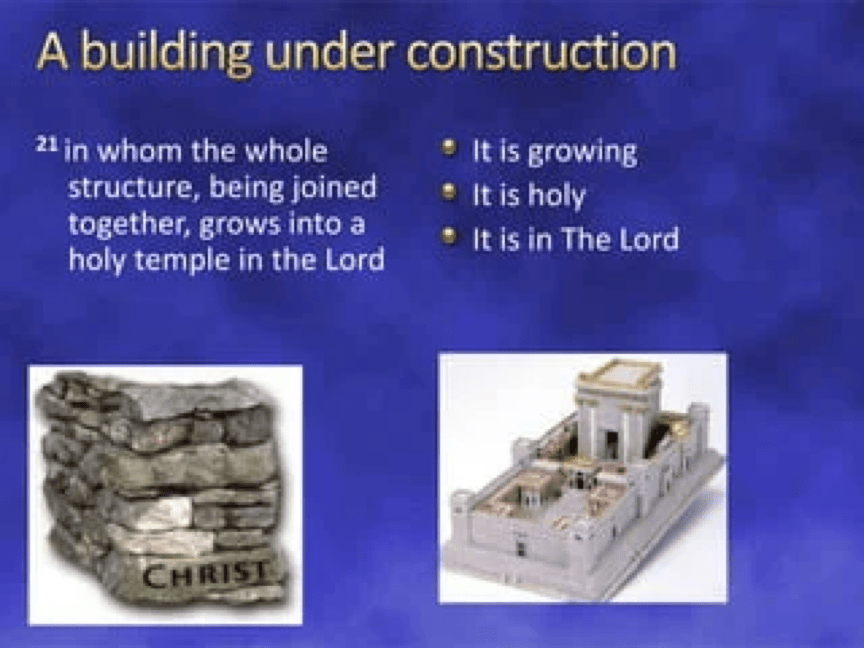
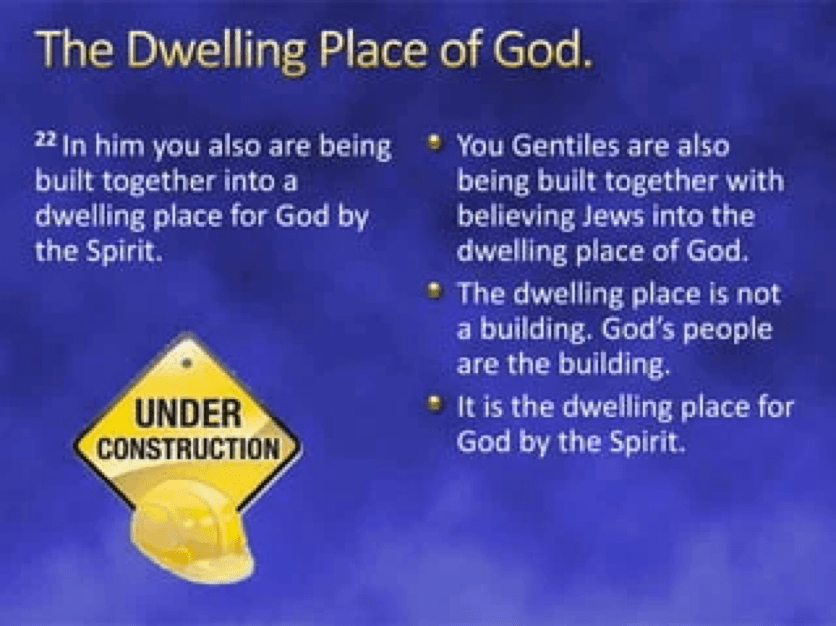
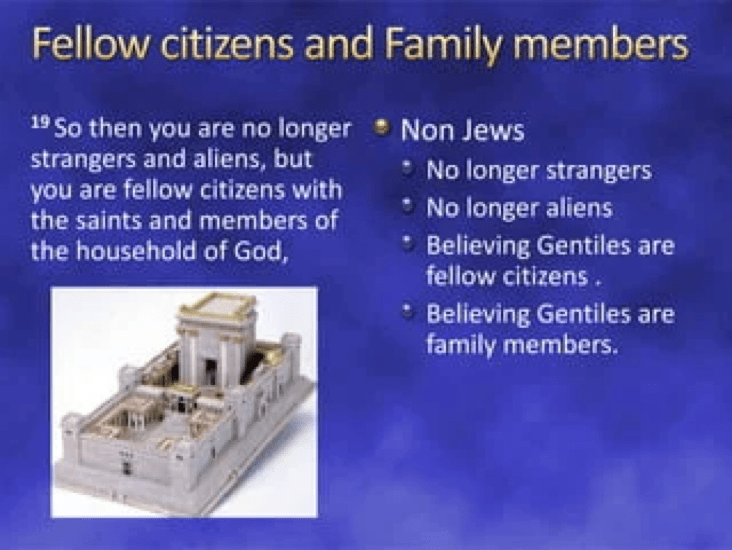
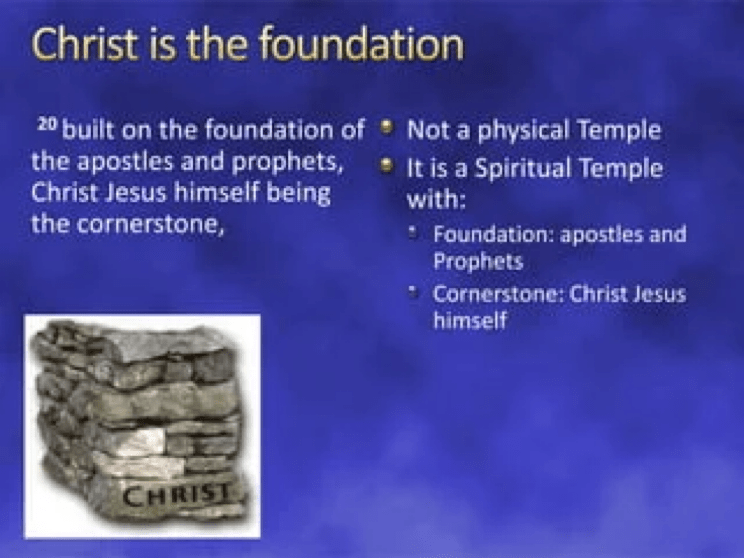
The church, made up of Jew and Gentile believers, is a spiritual temple built on the foundation of the apostles and prophets, with Jesus being the chief cornerstone.
Some great images taken from the internet:
Q: How was the Law a source of enmity between Jews and Gentiles?
The problem was not the law itself. The Law was spiritual (Romans 7), perfect. But it did separate the Jew from the Gentiles, giving the Jews a sense of superiority (Romans 2). But even then the Law, if used properly (Romans 10), would lead all Jews to Christ where they would be united with the Gentiles in the church. Under grace, the Law no longer had condemning power even if the Jewish Christians continued to keep the Law up till 70 AD. Jesus destroyed the condemning power of the Law when he died to save from sin. After his death, the Law should no longer be a source of enmity b/c both Jew and Gentile Christians were saved by the same grace, and none were saved by the Law.
Q: What are some of the sources of conflicts between groups of people today?
The world is full of hate and conflict. Most current is the Arab/ Israel conflict that goes all the way back to Isaac and Ishmael. We have the Ukraine/Russia conflict. There is North and South Korea. We still have a big racial divide in the U.S. in spite of decades of legislation trying to remove that. We have “hate crimes” against minority groups in the U.S.
Q: Many actual walls have been built to separate groups that are enemies, such as the Berlin Wall. Many peace treaties have been made in attempts to make peace between groups that are enemies, such as the Treaty of Versailles: Ended World War I between Germany and the Allies. The treaty required Germany to disarm, pay reparations, and recognize the independence of states that were previously part of the German Empire.
But what is the only way to make peace between groups that are enemies for whatever reason?
Q: In what way is the church built upon the foundation of the apostles and prophets? Does that mean there would be no additional apostles and prophets after the original ones?
(The Mormons and others claim to have apostles today.)
The original 12 apostles (minus Judas replaced by Mathias, Acts 1) plus Paul (an apostle out of due season, 1 Cor 15) were given special authority (Ephesians 4 will define that authority). Jesus told them that the Holy Spirit would guide them into all the truth.
John 14:26 26 But the Helper, the Holy Spirit, whom the Father will send in my name, he will teach you all things and bring to your remembrance all that I have said to you.
John 16:13 13 When the Spirit of truth comes, he will guide you into all the truth, for he will not speak on his own authority, but whatever he hears he will speak, and he will declare to you the things that are to come.
This led to a “once for all time” delivery of the faith of Jesus.
Jude 3:3 Beloved, although I was very eager to write to you about our common salvation, I found it necessary to write appealing to you to contend for the faith that was once for all delivered to the saints.
Only these original apostles had that special authority. There is no “apostolic succession” of apostles (as the Mormons claim they have with their apostles, and other groups like the Latter Rain claim to have apostles) after them to replace them and continue special revelation after they died.
 Nicky's Notes