
Romans 11:25 Lest you be wise in your own sight, I do not want you to be unaware of this mystery, brothers:[k] a partial hardening has come upon Israel, until the fullness of the Gentiles has come in. 26 And in this way all Israel will be saved, as it is written, “The Deliverer will come from Zion,
he will banish ungodliness from Jacob”;27 “and this will be my covenant with them
when I take away their sins.”
Romans 11:27 is considered to quote from the Old Testament prophet Isaiah, specifically from passages like Isaiah 59:20-21 and Isaiah 27:9, although the exact wording aligns most closely with the Septuagint translation of these verses, which is the Greek translation of the Hebrew Bible used by early Christians;.
2 main questions from Romans 11:25-27: 1) Who is the “all Israel” that will be saved, and when will “all Israel be saved”? 2) What and when is the “fulness of the Gentiles”?
First of all, I must acknowledge that my interpretation of this passage comes from a full preterist view. That is important b/c that view eliminates futuristic interpretations of the passage. Many scholars believe that the passage is still to be fulfilled in our future, that it refers to the 2nd coming and a salvation of the Jewish people in the future. The full preterism view is that the 2nd coming was in 70 AD, so that would eliminate futuristic views completely. You can read my articles on the 2nd coming to. get a study of the full preterist view if you chose, but in this article I won’t defend the full preterism view.
Having said that, how do I answer those 2 main questions? Let’s look at the context of Romans 9-11. Those 3 chapters describe the process of saving the remnant of Israel (those who would believe that Jesus is the Messiah and be saved in the church) and the grafting in of the Gentile believers into the new covenant church along with the Jewish believers.
Key thoughts in these 3 chapters. 9:4 They are Israelites, and to them belong the adoption, the glory, the covenants, the giving of the law, the worship, and the promises. That would be fleshly Israel, that nation of Israel in the OT. 9:6 But it is not as though the word of God has failed. For not all who are descended from Israel belong to Israel, 7 and not all are children of Abraham because they are his offspring, but “Through Isaac shall your offspring be named.” 8 This means that it is not the children of the flesh who are the children of God, but the children of the promise are counted as offspring. “All who are descended from Israel” would be fleshly Israel, the nation. But “belong to Israel” would be the remnant of Israel who would believe in Jesus as the Messiah and be saved in the church. Those would be “the children of God, the children of promise”. “It is not the children of the flesh (the nation) who are the children of God”. In other words, not all who are of the fleshly Israel are in the remnant, only those Jews who believe in Jesus. “It is not as though the word of God has failed”. God made promises in the OT to save Israel in the Messianic Age. For example, Isaiah 27:9 “Therefore by this the guilt of Jacob will be atoned for, and this will be the full fruit of the removal of his sin” (quoted in Romans 11:27). The OT prophets spoke of “restore the fortunes of Israel” (Jeremiah 30:3,7,18; 32:44; 33:7,11; Amos 9:13-15). The cities will be rebult, Israel will return to their land and will dwell securely in the land. Israel will be saved (Jeremiah 33:16 “In those days Judah will be saved, and Jerusalem will dwell securely. And this is the name by which it will be called: ‘The Lord is our righteousness.’” God would make a new covenant with Israel (Jeremiah 31:31 “Behold, the days are coming, declares the Lord, when I will make a new covenant with the house of Israel and the house of Judah) in which he would “forgive their iniquity and remember their sins no more” (Jeremiah 31:34 For I will forgive their iniquity, and I will remember their sin no more.”) Jeremiah 31:36 “If this fixed order departs from before me, declares the Lord, then shall the offspring of Israel cease from being a nation before me forever.” The future of Israel would be as certain as the fixed order of the sun, moon, and stars in their orbits.
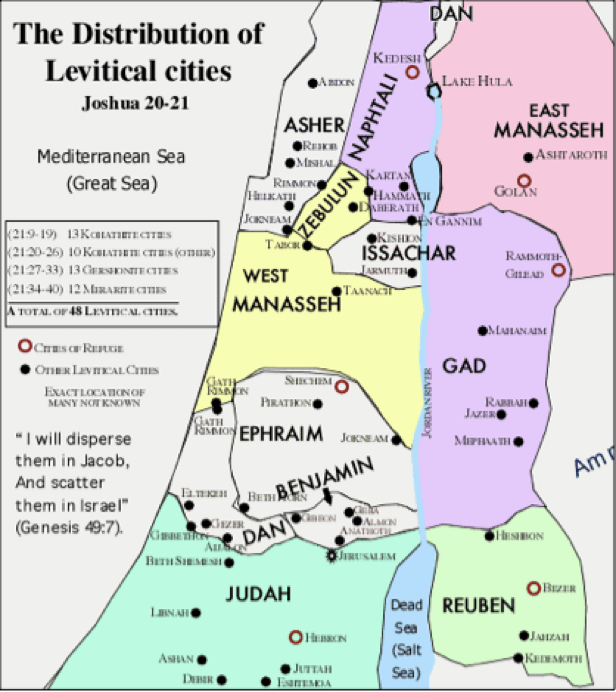
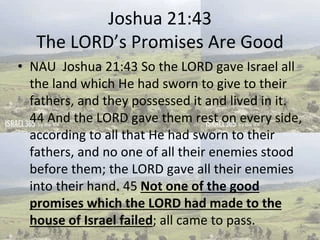
Now, on the surface, this looks as if these passages predict that the entire Jewish nation would be restored to the power of the nation under King David, that the nation of Israel would get and keep all the Promised Land forever in the Messianic Age, that the entire nation of Israel would be saved. But Paul says that “not all Israel belong to Israel” (Romans 9:6). He also says that these OT promises for Israel’s restoration and salvation have been fulfilled at the tiime he wrote Romans (“it is not as though the word of God has failed” Romans 9:6). This shows that those OT promises were made to the nation, but only the remnant (those Jews who accepted Jesus as the Messiah) would be the recipients of those promises. So, were those promises fulfilled phycially or is this figurative language? The remnant Jewish church did not receive the Promised Land that Joshua conquered. They did not rebuild cities. They did not restore the power of the kingdom under David. But they were saved spiritually and were the recipients of the OT promises. Therefore, those promises must be figurative language. Jesus said in John 18:36 “My kingdom is not of this world. If my kingdom were of this world, my servants would have been fighting, that I might not be delivered over to the Jews. But my kingdom is not from the world.” Jesus said in Matthew 21: 43 “Therefore I tell you, the kingdom of God will be taken away from you and given to a people producing its fruits.” Israel was God’s kingdom on earth in the OT (Exodus 19:6 and you shall be to me a kingdom of priests and a holy nation). God took that kingdom away from the fleshly nation of Israel and gave it to the church kingdom nation (of Jewish and Gentile believers). 1 Peter 2:9 But you are a chosen race, a royal priesthood, a holy nation, a people for his own possession. Revelatiiion 1:5 “To him who loves us and has freed us from our sins by his blood 6 and made us a kingdom, priests to his God and Father, to him be glory and dominion forever and ever. Amen.” The OT promises made to Israel were: 1) Spiritual, not physical, in nature; 2) Fulfilled only by the remnant of Jewish believers and not the entire nation.
Let’s move on to Romans 9:22 What if God, desiring to show his wrath and to make known his power, has endured with much patience vessels of wrath prepared for destruction, 23 in order to make known the riches of his glory for vessels of mercy, which he has prepared beforehand for glory— 24 even us whom he has called, not from the Jews only but also from the Gentiles? 25 As indeed he says in Hosea, “Those who were not my people I will call ‘my people,’ and her who was not beloved I will call ‘beloved.’” 26 “And in the very place where it was said to them, ‘You are not my people,’ there they will be called ‘sons of the living God.’” 27 And Isaiah cries out concerning Israel: “Though the number of the sons of Israel[c] be as the sand of the sea, only a remnant of them will be saved, 28 for the Lord will carry out his sentence upon the earth fully and without delay.” 29 And as Isaiah predicted, “If the Lord of hosts had not left us offspring, we would have been like Sodom and become like Gomorrah.”
Notice that most of the Jewish nation were “vessels of wrath prepared for destruction”, i.e. the Jews who rejected Jesus as the Messiah would be destroyed, a prediction of the judgment on the Jews in 70 AD when the Romans destroyed the city of Jerusalem and the temple and one million Jews were killed (according to Josephus). But God called the remnant who believed in Jesus as the Messiah to be saved, along with Gentiles who believed in Jesus as the Messiah. In 9:27 Paul quotes Isaiah 10:22. I like Gill’s Exposition of the Entire Bible “The remnant shall return”,…. This is said in allusion to Shearjashub, the name of Isaiah’s son, Isaiah 7:3 which signifies “the remnant shall return”, and was imposed on him, to give assurance of it; meaning, either that they should return from the Babylonish captivity, as they did, or to God by repentance; or rather the sense is, they shall turn to the Lord, be converted to Christ, to the faith and obedience of him, as some of them were when he came, a few, not all, only a remnant, as it is explained in the next clause”. In other words, Isaiah 10:22 could be a Messianic prediction of the remnant of believing Jews, which is the way Paul used it in Romans 9:27. For sure, Paul is saying that only a remnant of the nation of Israel would be saved in the Messianic Age. Remember that b/c in 11:27 he will say “all Israel will be saved”. Same language as chapter 9. The “Israel” of 11:27 would be the same remnant, spiritual church Israel as in ch 9. The “will be saved” would only refer to the remnant being saved and not the entire nation. Too many scholars intepret 11:27 based on their views of a future 2nd coming in which the nation of Israel will be retored to the Promised Land instead of examinng the context of chapter 9.
Paul concludes chapter 9, saying 9:What shall we say, then? That Gentiles who did not pursue righteousness have attained it, that is, a righteousness that is by faith; 31 but that Israel who pursued a law that would lead to righteousness did not succeed in reaching that law. 32 Why? Because they did not pursue it by faith, but as if it were based on works. They have stumbled over the stumbling stone, 33 as it is written, “Behold, I am laying in Zion a stone of stumbling, and a rock of offense; and whoever believes in him will not be put to shame.” This is discussing the unbelieving Jews and why they missed out on the spiritual promises of salvation by the Messiah. These would be the “vessels of wrath prepared for destruction”. Why did they miss out? B/c they pursued the Law to earn salvation by keeping the Law and became self righteous, not feeling that they needed the grace and forgiveness that Jesus came to bring the remnant. They were invited to receive that, but their self righteousness kept them from receiving it. “Many are called but few chosen” (Mt 22:14). BTW Calvinism says that only the arbitrarily predetermined elect are called, but Jesus says that not all those called will be chosen for salvation. Also, Paul in Romans 9:30-33 says that the Jews who did not accept Jesus as the Messiah did so off their own freewill choice, that they did so b/c they pursued the Law as a means of righteousness (which cannot save) instead of a means of leading them to the saving righteousness of Jesus (which can save). Does that sound like Calvinism where the elect really don’t have a choice. Paul says that the Jews had a choice, but made the wrong choice in how they pursued the Law. Read the article I wrote on Ephesians 1:15 for a more thorough discussion of predestination and Calvinism.
I know all this figurative fulfillment of OT prophecies for Israel is heresy to those who expect Jesus to set up a physical kingdom at his 2nd coming and that he will restore the nation of Israel to their land forever, but please consider the context of Romans 9. The OT promises to restore the fortunes of Israel and to restore them their land had been fulfilled when Paul wrote Romans. They were fulfilled only in and for the remnant Jews who accepted Jesus as the Messiah. Those OT promises were not fulfilled physically for the nation. Therefore, those OT promises must have been fulfilled spiritually and only for the remnant. I’m sure that could be put in some syllogistic reasoning. Syllogistic reasoning is a type of deductive argument that uses two premises to reach a specific conclusion. Here are some examples of syllogistic reasoning: All mammals are animals, camels are mammals, therefore camels are animals. Maybe, 1) All the OT promises for Israel in the Messianic Age were fulfilled for only the remnant by the time Paul wrote Romans. 2) Those promises were not fulfilled pysically for the nation when Paul wrote Romans. 3) Those promises could only be fulfilled spiritually for the renmnant, not the whole nation. I know figurative language can be confusing or even misleading. The Jews expected the OT promises to be fulfilled literally, for the power of the nation of Israel to be restored and a resoration to the Promised Land to be held forever. I can see why why would think that. That is also the reason they rejected Jesus, i.e. b/c he came to establish a spiritual kingdom, not physical. They expected the Messiah to defeat Israel’s enemies, the Romans, but he said he came to destroy spiritual, not physical, powers of the darkness. Even the apostles expected a physical kingdom, even after the resurrection. Acts 1:6 Then they gathered around him and asked him, “Lord, are you at this time going to restore the kingdom to Israel?”
In other words, “Lord you didn’t restore the kingdom to Israel (physcially) while you were alive, but now we get it, now you are going to restore it to Israel?” Had they forgotten Mt 21:43 “Therefore I tell you that the kingdom of God will be taken away from you and given to a people who will produce its fruit.” The kingdom would not only not be restored to the nation, but it would be taken away from the nation. Remember, Jesus used figurative language a lot. He said that the fulfillment of Malachi 4:5 “See, I will send the prophet Elijah to you before that great and dreadful day of the Lord comes” was in John the Baptist, not the literal man Elijah coming. Mt 11:13 For all the Prophets and the Law prophesied until John. 14 And if you are willing to accept it, he is the Elijah who was to come. Mt 17:11 Jesus replied, “To be sure, Elijah comes and will restore all things. 12 But I tell you, Elijah has already come, and they did not recognize him, but have done to him everything they wished. In the same way the Son of Man is going to suffer at their hands.” 13 Then the disciples understood that he was talking to them about John the Baptist”.
I wish those who expect a literal fulfillment of OT promises to Israel would be consistent. In the same “restore the fortunes of Israel” passages of Jeremiah 33:7,11, it predicts 33:17 “For thus says the Lord: David shall never lack a man to sit on the throne of the house of Israel, 18 and the Levitical priests shall never lack a man in my presence to offer burnt offerings, to burn grain offerings, and to make sacrifices forever.” Would they not have to say that, since they expect the restoration of Israel to be still in our future, then 33:17 would be fulfilled in our future at the same time? If so, do they expect that when Jesus returns that Christians will go back to having a Levitical priesthood that burns animal sacrifices? That would be a total contradiction of the whole book of Hebrews. No, the literalists would probaly say, “Oh, well that part was fulfilled spiritually”. Do you see how inconsistent their interpretation is? Literal in 33:7, 11 but figurative in 33:17,18. Now, the unbelieving Jews today still expect both the restoration of Israel and the restoration of the Levitical priesthood to be fulfilled when the real Messiah comes in our future (they don’t believe Jesus was the Messiah). At least they are consistent, even if they are totally wrong! Why can’t the literalists see that they are making the same mistake that the unbelieving Jews made when they expected a literal fulfillment of the OT promises to Israel?????? They then might start preaching that the kingdom of God, of heaven, of Jesus is the church and that there is not physical kingdom to be set up at his 2nd coming.
They might even then examine the predictions of Jesus that his 2nd coming would be in the lifetime of those he was speaking to. Mt 11:23 `And whenever they may persecute you in this city, flee to the other, for verily I say to you, ye may not have completed the cities of Israel till the Son of Man may come. Mt 16:27 `For, the Son of Man is about to come in the glory of his Father, with his messengers, and then he will reward each, according to his work. 28 Verily I say to you, there are certain of those standing here who shall not taste of death till they may see the Son of Man coming in his reign. Notice “the Son of Man is about to come” That is the Greek word mello, and it always means “about to be, about to happen”. Thankfully Young’s Literal Translation (YLT) translates it correctly in Mt 16:28. Most translations just say “is going to come”. Jesus is a false prophet if his 2nd coming was not imminent, about to happen, or if some listening to him would not be alive when he returned in his reign or kingdom (same Greek word, basileia: Kingdom. Mt 24:29 “And immediately after the tribulation of those days, the sun shall be darkened, and the moon shall not give her light, and the stars shall fall from the heaven, and the powers of the heavens shall be shaken; 30 and then shall appear the sign of the Son of Man in the heaven; and then shall all the tribes of the earth smite the breast, and they shall see the Son of Man coming upon the clouds of the heaven, with power and much glory.” This coming of the Son of Man had to occur within the generation of those Jesus was talking to. Mt 24:34 Verily I say to you, this generation may not pass away till all these may come to pass. That word for generation is genea which always is used in the NT of a 40 year period or the people living in a 40 year period, like we speak of the x or z generation. Mt 1 has 42 generations of the genealogy of Jesus which covers about 2,000 years. In the chapter before Mt 24, Jesus had just predicted judgment on the Jews for killing the prophets and the apostles. He told them Mt 23:36 “verily I say to you, all these things shall come upon this generation.” The word generation clearly refers to that generation of Jews that were currently alive when he spoke. They are the ones who will be judged in about 40 years in 70 AD. Jesus told Caiaphas in Mt 26:64 Jesus saith to him, `Thou hast said; nevertheless I say to you, hereafter ye shall see the Son of Man sitting on the right hand of the power, and coming upon the clouds, of the heaven.’ We don’t know when Caiaphas died, but I believe Jesus is not a false prophet. Caiaphas must have lived to at least see the beginning of the 2nd coming in judgement on the Jews. These are the only 4 passages where Jesus predicts his 2nd coming. They all say that his 2nd coming would be within the lifetime of those he was speaking to, that it was “about to” happen. I challenge you to find any othe passage in the gospels where he predicts a “coming” that would not be within their lifetime. It is not to be found. Would that not be strange if a 2nd coming that is still in our future was never even predicted by Jesus in the gospels? Well, I guess I got into full preterism after all, but I still hope you will read my article “The 2nd coming” for a more thorough disscussion.
Back to Romans! Romans 10:3 “For, being ignorant of the righteousness of God, and seeking to establish their own, they did not submit to God’s righteousness. 4 For Christ is the end of the law for righteousness to everyone who believes.” This verse again shows that they had the freewill to not submit to God’s righteousness. Why would Paul blame them for not submitting if they did not have the freewill to either accept or submit (as Calvinism teaches)? It also shows again, as 9:32, that their problem was that they pursued the Law as a means of righteousness. The Law was given to show them that they could not obtain righteousness by Law keeping b/c no one could keep the Law perfectly, and the Law did not provide for eternal forgiveness of sisn by animal sacrifices. If someone understood that, they would gladly accept Jesus and receive the righteousness which is by faith in Jesus, the reckoned or imputed righteousness that Paul spoke of in Romans 4:2 “for if Abraham by works was declared righteous, he hath to boast — but not before god; 3 for what doth the writing say? `And Abraham did believe God, and it was reckoned to him — to righteousness;’ 4 and to him who is working, the reward is not reckoned of grace, but of debt; 5 and to him who is not working, and is believing upon Him who is declaring righteous the impious, his faith is reckoned — to righteousness: 6 even as David also doth speak of the happiness of the man to whom God doth reckon righteousness apart from works.” Then in Philippians 3:9 “not having my righteousness, which [is] of law, but that which [is] through faith of Christ — the righteousness that is of God by the faith.” That reckoned righteousness which comes by faith is Romans 10:9 because, if you confess with your mouth that Jesus is Lord and believe in your heart that God raised him from the dead, you will be saved. 10 for with the heart doth [one] believe to righteousness, and with the mouth is confession made to salvation.” It comes by faith and not keeping the Law (or any law).
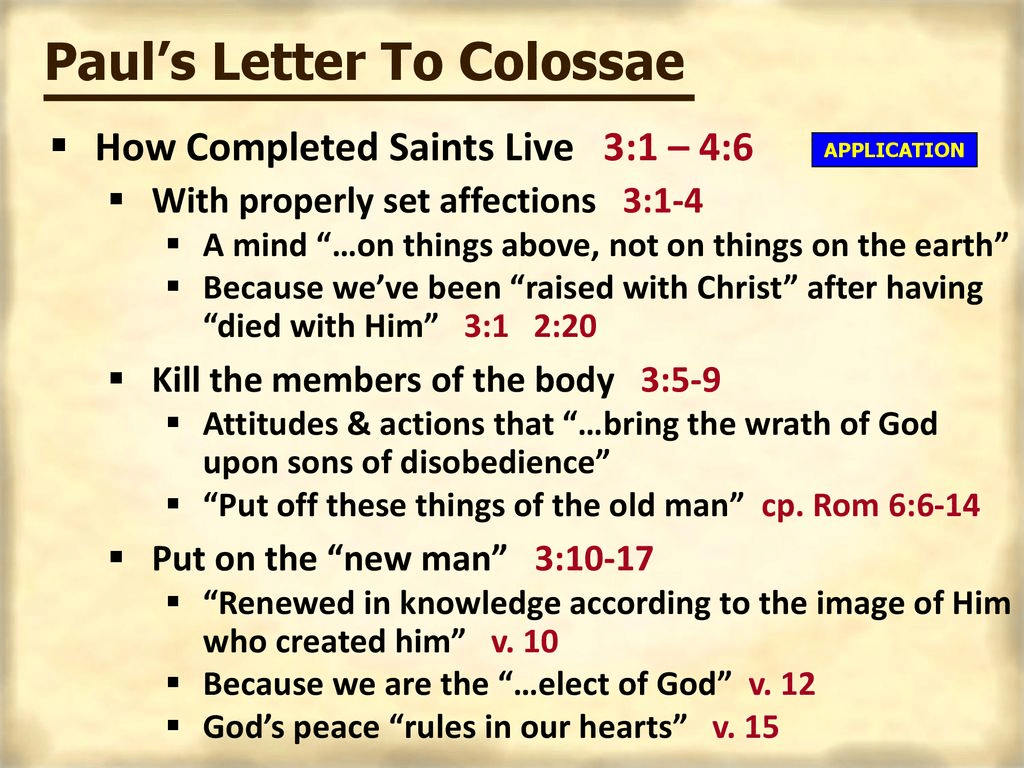
Paul then brings up a possible objection: Romans 10:18 But I ask, have they not heard? Indeed they have, for “Their voice has gone out to all the earth, and their words to the ends of the world.” Maybe all fleshly Jews did not have the opportunity to hear the gospel and believe? Paul says that the gospel had been preached to the ends of the (Roman) world. Colossians 1:”23 if also ye remain in the faith, being founded and settled, and not moved away from the hope of the good news, which ye heard, which was preached in all the creation that [is] under the heaven, of which I became — I Paul — a ministrant.” Paul says that the gospel had been preached to the whole Roman world (empire) by the time he wrote Colossians in about 62 AD. Then Paul gives another possible objection, Romans 10:19 “But I ask, did Israel not understand?” Well, they probably didn’t understand the need for the gospel, but it wasn’t b/c they were not capable of understanding. It certainly wasn’t b/c only the predestined elect could understand by “I” (irresistible grace in Calvinism) when God would send His Spirit basically allowing and forcing the elect to be able to believe (Calvinism). Paul says that they simply refused to believe. Romans 10:21 But of Israel he says, “All day long I have held out my hands to a disobedient and contrary people.” They could have chosen to believe but refused to. It is amazing to me how Calvinists use Romans 9-11 as a proof text of their teaching when the context refutes Calvinism over and over.
All this might sound like God has rejected the whole nation of Israel. Paul anticipated that thought. Romans 11:”I ask, then, has God rejected his people? By no means!” He had rejected those Jews who refused to accept Jesus as Messiah and prepared them as vessels of wrath for destruction in 70 AD. But Romans 11:5 “So too at the present time there is a remnant, chosen by grace. 6 But if it is by grace, it is no longer on the basis of works; otherwise grace would no longer be grace.” God had not rejected the remnant of Jews who would believe in Jesus as the Messiah. Back to the remant idea. Yes, “chosen” but chosen by grace through faith; not the chosen of Calvinism (the elect chosen with irresistible grace without their freewill choice to believe or not). Romans 11:7 What then? Israel failed to obtain what it was seeking. The elect obtained it, but the rest were hardened, 8 as it is written, “God gave them a spirit of stupor, eyes that would not see and ears that would not hear, down to this very day.” If you didn’t read the context of chapters 9 and 10, you might say this is pure Calvinism in these verses. The “elect” obtained salvation and grace but God gave a stupor of unbelief that made them not believe in Jesus???? The context of chapters 9 and 10 show that the Jews had the freewill choice to accept Jesus as the Messiah or not. It shows why they failed to accept Jesus as the Messiah, i.e. they pursued the Law as a means of righteousness, which implies they were to blame and would be held accountable for their unbelief. In Calvinism, you have to blame God if someone is lost b/c He has arbitrarily predestined some to be lost regardless of their freewill choices. Again, Calvinism is wrong. Paul explains how God gave them a “spirit of stupor” that they could not see or hear. How did God do that? By somehow making their hearts unable to believe? No. Romans 11:9 And David says, “Let their table become a snare and a trap, a stumbling block and a retribution for them; 10 let their eyes be darkened so that they cannot see,and bend their backs forever.” The design of salvation was the death of Jesus on a cross like a common criminal. That was an intentional design to weed out those who would not accept God’s plan b/c of their pride. The cross would be a stumbling block to the Jews b/c they were looking for physical blessings and kingdom. 1 Corinthians 1:21 for, seeing in the wisdom of God the world through the wisdom knew not God, it did please God through the foolishness of the preaching to save those believing. 22 Since also Jews ask a sign, and Greeks seek wisdom, 23 also we — we preach Christ crucified, to Jews, indeed, a stumbling-block, and to Greeks foolishness, 24 and to those called — both Jews and Greeks — Christ the power of God, and the wisdom of God,25 because the foolishness of God is wiser than men, and the weakness of God is stronger than men.” In spite of Isaiah 53 predicting the death of the Messiah, they did not expect the Messiah to die.
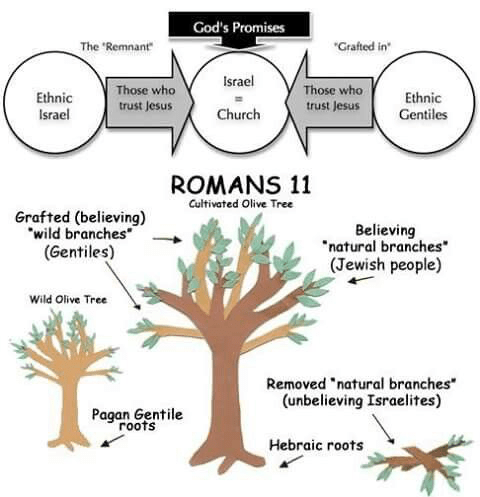
Paul anticipates another thought. Romans 11:11 “So I ask, did they stumble in order that they might fall? By no means!” By this he means was the stumbling of the unbelieving Jews a permanent thing that left them with no hope? By not means, he says. “Rather, through their trespass salvation has come to the Gentiles, so as to make Israel jealous. 12 Now if their trespass means riches for the world, and if their failure means riches for the Gentiles, how much more will their full inclusion mean!” So, if those unbelieving Jews eventually see the Gentiles saved and are filled with jealousy, and if they change and accept Jesus as the Messiah, they can be saved. That would be their “full inclusion” (YLT). That would mean that, when you add them to the ones who initially accepted Jesus as the Messiah, you then have the “full” remnant that will be saved before 70 AD. BTW this pretty well answers the question in 11:27 “who is the all Israel who will be saved”. It is when the entire remnant is gathered by 70 AD by the preaching of the gospel in the whole Roman empire. Jesus spoke of this “gathering of the elect from the four winds” in Mt 24:31 And he will send out his angels with a loud trumpet call, and they will gather his elect from the four winds, from one end of heaven to the other. We have to assume that there were many such Jews who initially rejected the gospel but later accepted it and were added to the church. Paul warns the Gentile believers not to be arrogant toward any unbelieving Jews who later believe. He says that if God did not spare the unbelieving natural branches (the unbelieving Jews) b/c of their unbelief, then He will not spare Gentile believers fall away. Those unbelieving natural branches (unbelieving Jews) were cut off the tree, but they will be grafted back into the tree (just as the Gentile believers were grafted into the tree) if they repent and later believe in Jesus. BTW doesn’t this help up with the 11:27 “the fulness of the Gentiles”? The language of 11:12, “the full inclusion”, meant when all the remnant was saved and gathered. So does that mean that the “fulness of the Gentiles” would be similar, i.e. when all the Gentile believers were gathered by 70 AD? Maybe so.
That brings us to the actual topic we started with. Romans 11:25 Lest you be wise in your own sight, I do not want you to be unaware of this mystery, brothers:[d] a partial hardening has come upon Israel, until the fullness of the Gentiles has come in. 26 And in this way all Israel will be saved, as it is written, “The Deliverer will come from Zion, he will banish ungodliness from Jacob”; 27 “and this will be my covenant with them when I take away their sins.” Again, 2 main questions from Romans 11:25-27: 1) Who is the “all Israel” that will be saved, and when will “all Israel be saved”? 2) What and when is the “fulness of the Gentiles”?
- Hopefully we have already seen that the “all Israel will be saved” refers to the gathering of all the remnant of the Jews who believed in Jesus as the Messiah. This gathering of the remnant would take place when “The Deliverer will come from Zion, he will banish ungodliness from Jacob”; 27 “and this will be my covenant with them when I take away their sins.” This is a quote from Isiah 59:20 “And a Redeemer will come to Zion, to those in Jacob who turn from transgression,” declares the Lord.21 “And as for me, this is my covenant with them,” says the Lord: “My Spirit that is upon you, and my words that I have put in your mouth, shall not depart out of your mouth, or out of the mouth of your offspring, or out of the mouth of your children’s offspring,” says the Lord, “from this time forth and forevermore.” There is a lot of debate on this quote b/c Isaiah says “to Zion” and Romans 11:27 says “from Zion”. You have to think that this is in reference to the 2nd coming, coming to Zion (Jerusalem) to establish the new covenant of Isaiah 59:21 where he will saved the remnant and take away their sins. You can research the “to” or “from” Zion if you want to dig deeper, but it is safe to say that 11:27 is referring to the 2nd coming of Jesus. In Mt 24, the elect remnant would be gathered (24:31) within that generation (24:34) and the 2nd coming (24:30) would be within that generation. So the timing and event match.
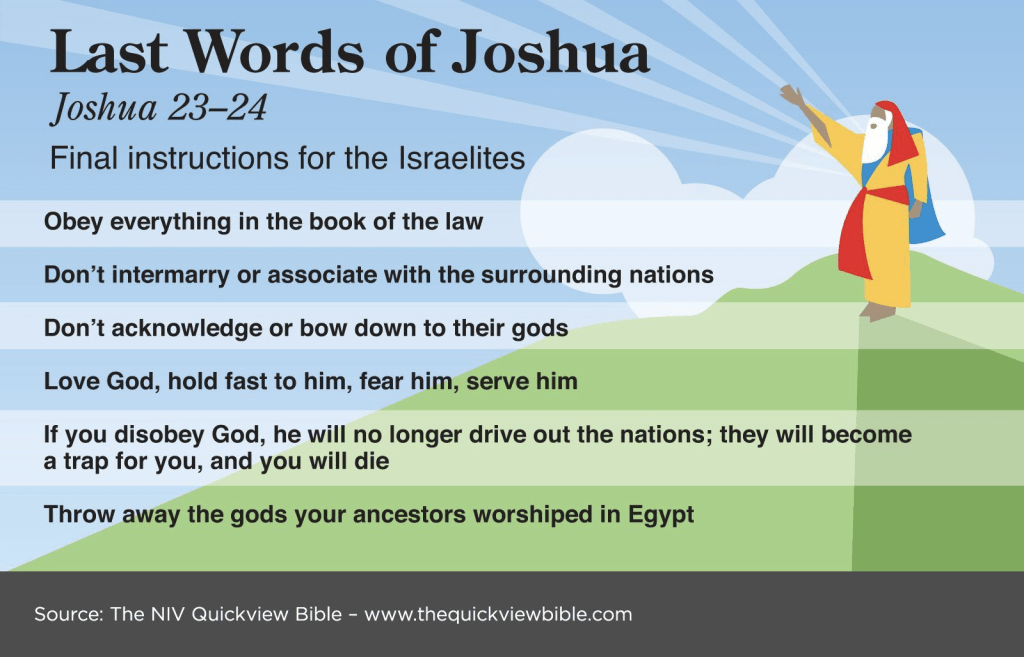
- The fulness of the Gentiles. 11:27 “the fulness of the Gentiles”? The language of 11:12, “the full inclusion”, meant when all the remnant was saved and gathered. So does that mean that the “fulness of the Gentiles” would be similar, i.e. when all the Gentile believers were gathered by 70 AD? Maybe so. There was a process of natural branches being broken off, Gentile believers being grafted in, and then unbelieving Jews who later believed being grafted back in this Messianic church kingdom tree. All this would be fulfilled by 70 AD and the 2nd coming. That doesn’t mean that the process would stop after that. There would continue to be Jews and Gentiles converted, but Paul is peaking specifically of the process developing by 70 AD when the plan of redemption was finally realized. Here is a good statement AI from the internet. “The fullness is the state of being fully included in the covenant. A transitional period between Christ’s great commission and the destruction of Jerusalem (and the sacrificial system).” So by 70AD the gentiles are now fully included in the covenant.ApHere is a great image of that from pinterest.
Paul closes with this doxology: Romans 11:33 Oh, the depth of the riches and wisdom and knowledge of God! How unsearchable are his judgments and how inscrutable his ways!” God’s plan from all eternity was to save Jews and Gentiles who would accept His Son as the Messiah who died for their sins, and unite them in one body, the church. That was the mystery of Ephesians 3. Revelation 10:7 but that in the days of the trumpet call to be sounded by the seventh angel, the mystery of God would be fulfilled, just as he announced to his servants the prophets. What a great statement. Who would have ever thought that this would be God’s plan of salvation. Amazing!
I hope this is beneficial to you. Long but it needs a careful examination.
Thanks for reading.














 Nicky's Notes