
6. 5:22-6:9 Walk in submission to one another.
Actually, 5:21 says 21 submitting to one another out of reverence for Christ. So it doesn’t say “walk” but I am making it one of the “walks” of chapters 4-6.
“Walk in submission to one another” in Ephesians 5:21 means to humbly prioritize the needs and perspectives of others in your relationships, putting aside your own desires and ego, with the understanding that this act of submission is done out of reverence for Christ and to reflect his love in your interactions with others; essentially, it calls for mutual respect and a willingness to yield to one another within a community or relationship.
We might think this is just a verse for wives to be subject to their husbands, which it does include that, but it would include all our relations with others: husbands and wives, children and parents; slaves and masters. A husband is submitting in a way to his wife when he puts aside his own ego and needs to love and cherish her needs. Etc.
Christianity should change the way we treat others in all the different relationships in 5:22-6:9. What good is it if a man is a great member of the church but mistreats his wife, or abuses his wife or children, or is a cruel boss to his workers? He might obey all the commands in 4:1-5:21 and yet commit perhaps the worse sin of all in how he treats others.
This is also tied to being filled with the Spirit.
6. 5:22-6:9 Walk in submission to one another.
Actually, 5:21 says 21 submitting to one another out of reverence for Christ. So it doesn’t say “walk” but I am making it one of the “walks” of chapters 4-6.
“Walk in submission to one another” in Ephesians 5:21 means to humbly prioritize the needs and perspectives of others in your relationships, putting aside your own desires and ego, with the understanding that this act of submission is done out of reverence for Christ and to reflect his love in your interactions with others; essentially, it calls for mutual respect and a willingness to yield to one another within a community or relationship.
We might think this is just a verse for wives to be subject to their husbands, which it does include that, but it would include all our relations with others: husbands and wives, children and parents; slaves and masters. A husband is submitting in a way to his wife when he puts aside his own ego and needs to love and cherish her needs. Etc.
Christianity should change the way we treat others in all the different relationships in 5:22-6:9. What good is it if a man is a great member of the church but mistreats his wife, or abuses his wife or children, or is a cruel boss to his workers? He might obey all the commands in 4:1-5:21 and yet commit perhaps the worse sin of all in how he treats others.
This is also tied to being filled with the Spirit.
6. 5:22-6:9 Walk in submission to one another.
Actually, 5:21 says 21 submitting to one another out of reverence for Christ. So it doesn’t say “walk” but I am making it one of the “walks” of chapters 4-6.
“Walk in submission to one another” in Ephesians 5:21 means to humbly prioritize the needs and perspectives of others in your relationships, putting aside your own desires and ego, with the understanding that this act of submission is done out of reverence for Christ and to reflect his love in your interactions with others; essentially, it calls for mutual respect and a willingness to yield to one another within a community or relationship.
We might think this is just a verse for wives to be subject to their husbands, which it does include that, but it would include all our relations with others: husbands and wives, children and parents; slaves and masters. A husband is submitting in a way to his wife when he puts aside his own ego and needs to love and cherish her needs. Etc.
Christianity should change the way we treat others in all the different relationships in 5:22-6:9. What good is it if a man is a great member of the church but mistreats his wife, or abuses his wife or children, or is a cruel boss to his workers? He might obey all the commands in 4:1-5:21 and yet commit perhaps the worse sin of all in how he treats others.
This is also tied to being filled with the Spirit where Paul ended the 5th walk as wise men.
- 5:22-33 Husbands and wives
A. 5:22-33 Husbands and wives
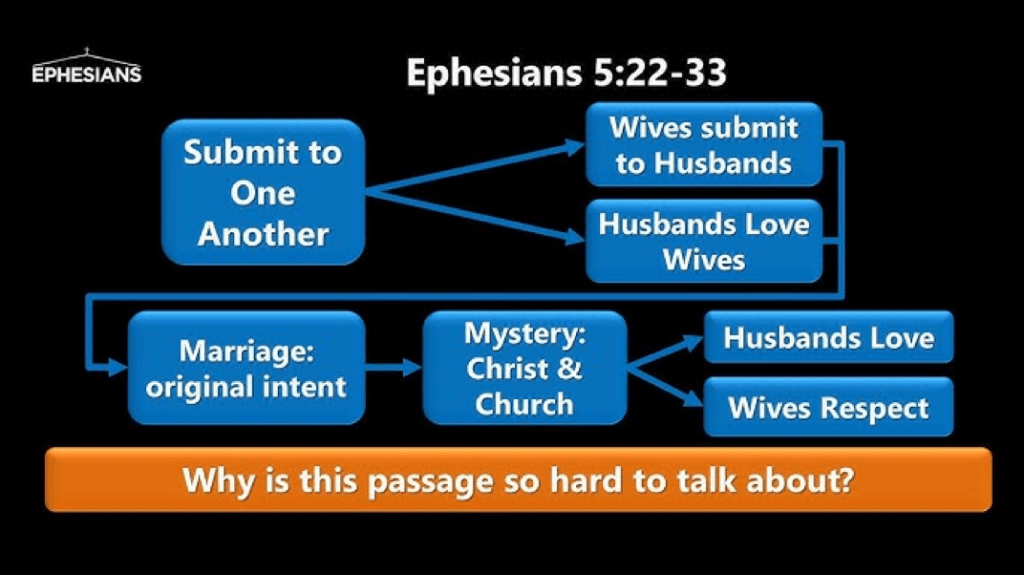
These images are from saralandchristians.com

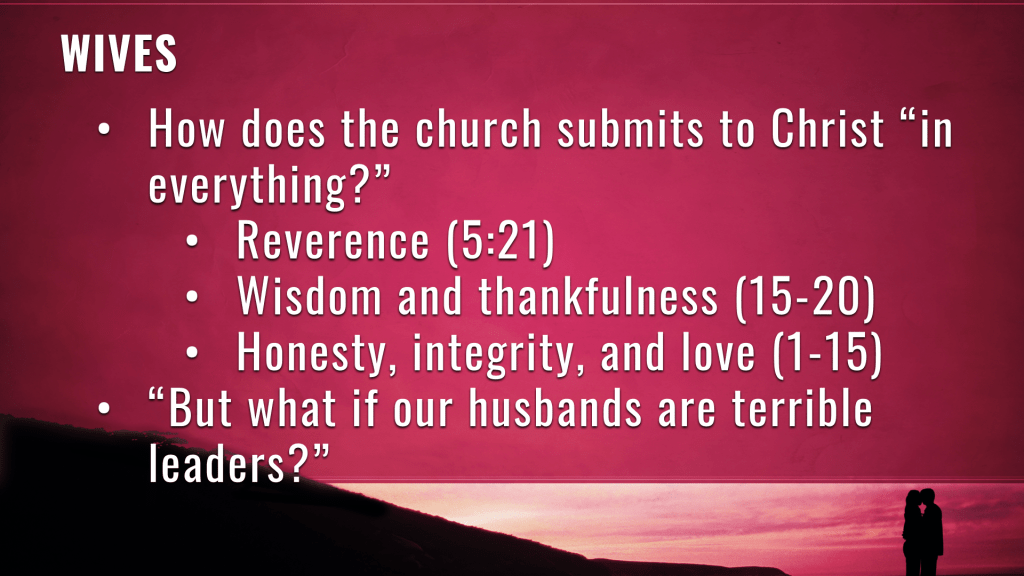
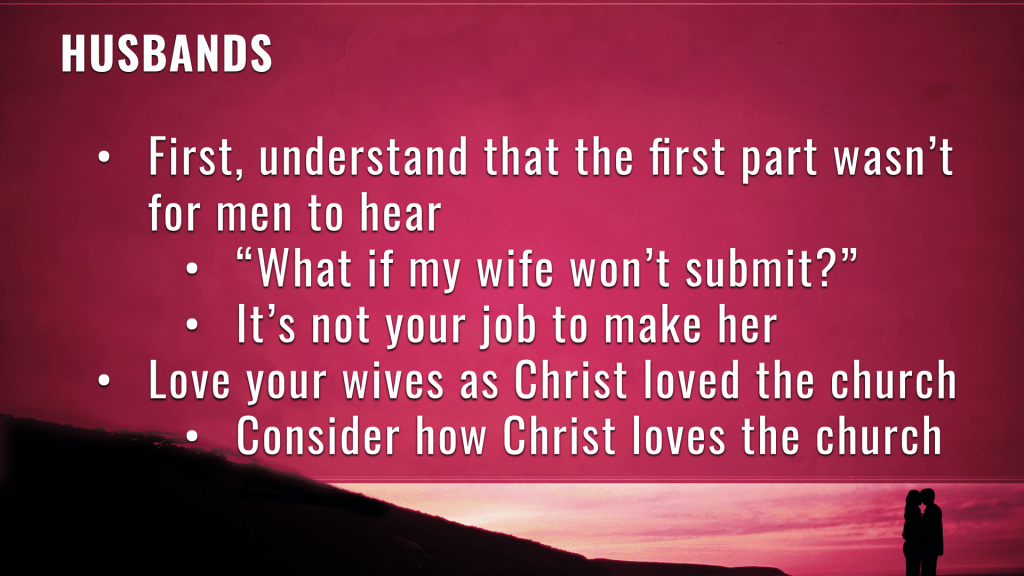
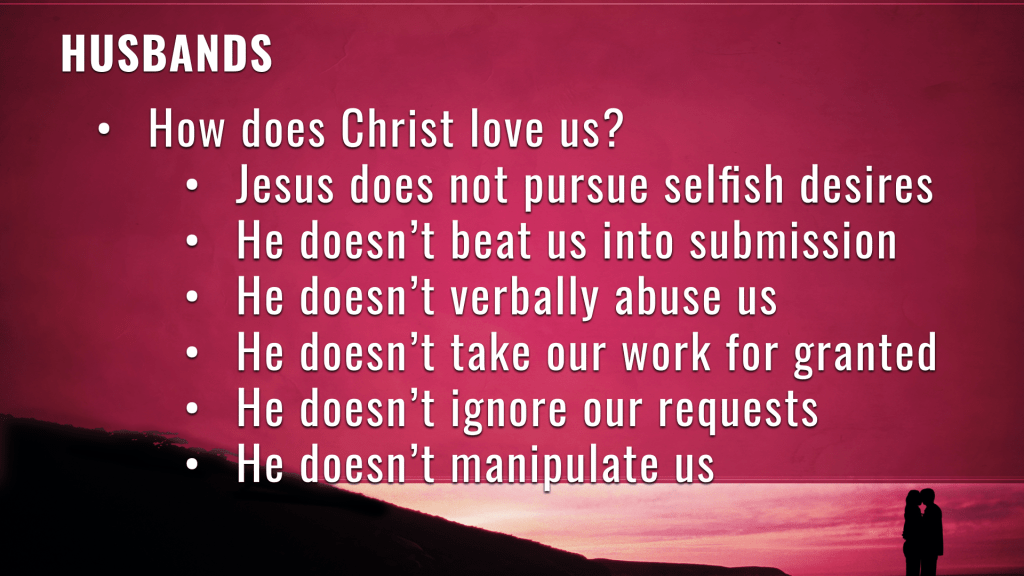
4:20 The husband is to nourish (supply her needs)and cherish (thalli, to keep warm, warm someone up, revive their health, by nourishing. Used in 1 Thess 2:7 of a nursing mother cherishing (cares for) her children).
Q: Do most husbands even know what their wives needs are or care if he is really supplying those needs?
Q: Do most husbands show their wives how much they cherish them? “Cherish is the word that I use to describe …” song by the Association.
Q: What would you say are a wife’s main needs?
Q: Under what circumstances would a wife not have to be in submission to her husband? If he beat her? If he verbally abused her? If he lied to her? If he didn’t support her financially? If he was a drunk?
B) 6:1-4 Children and parents
Also from saralandchristians.com
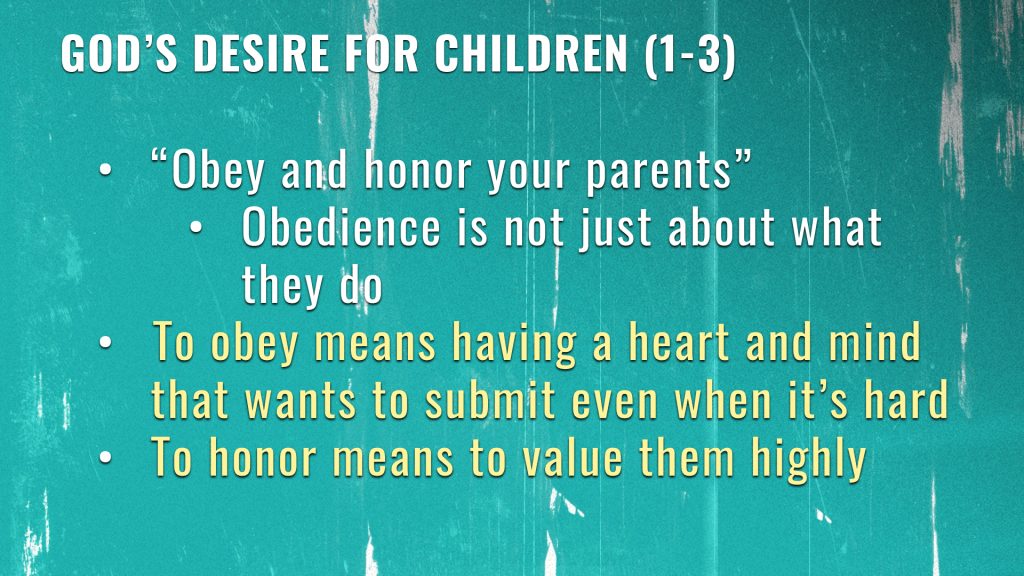
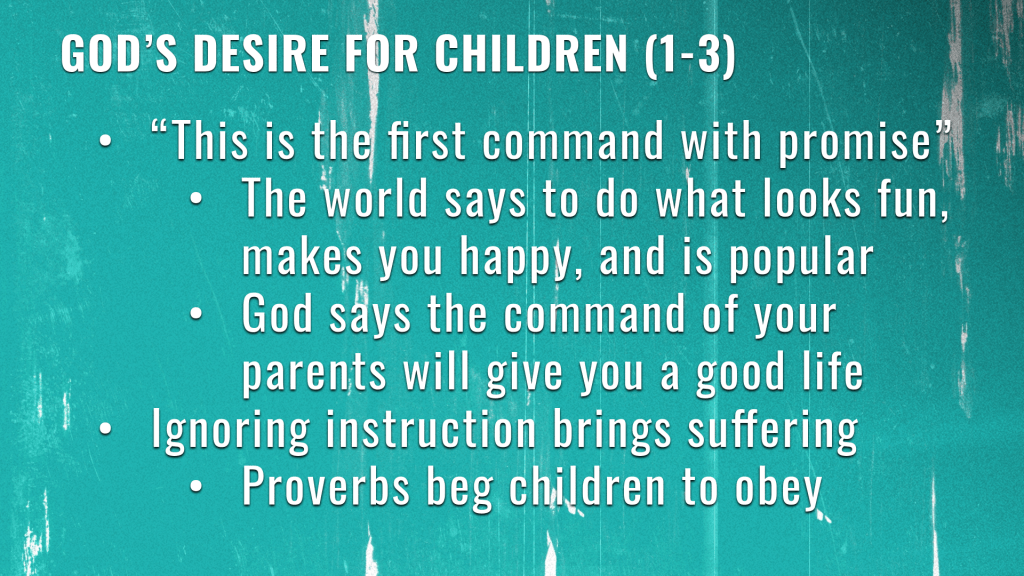

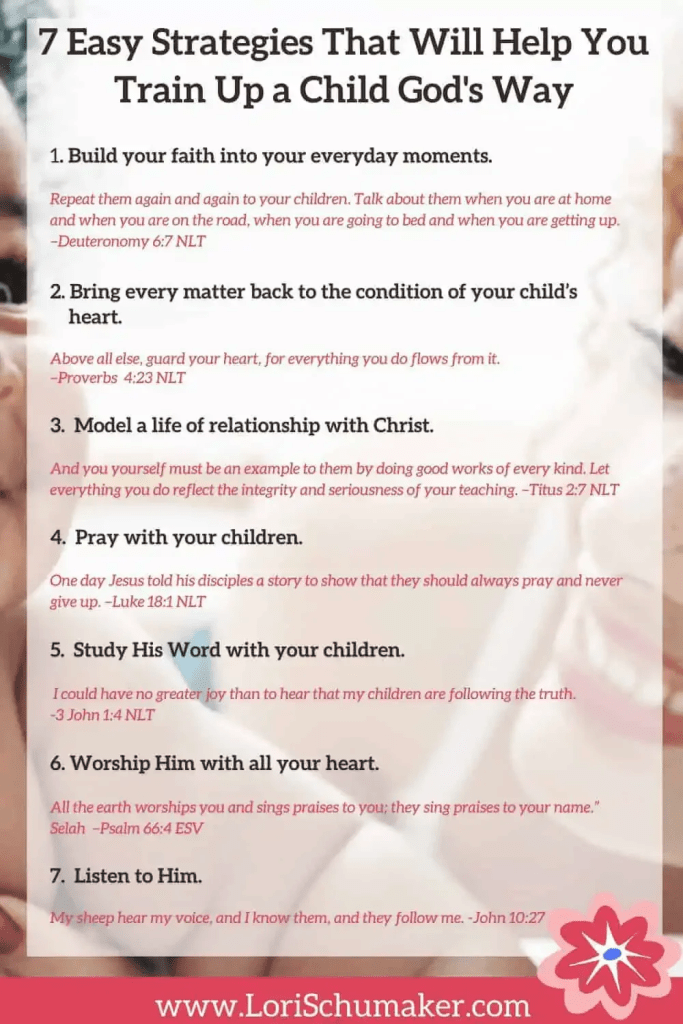
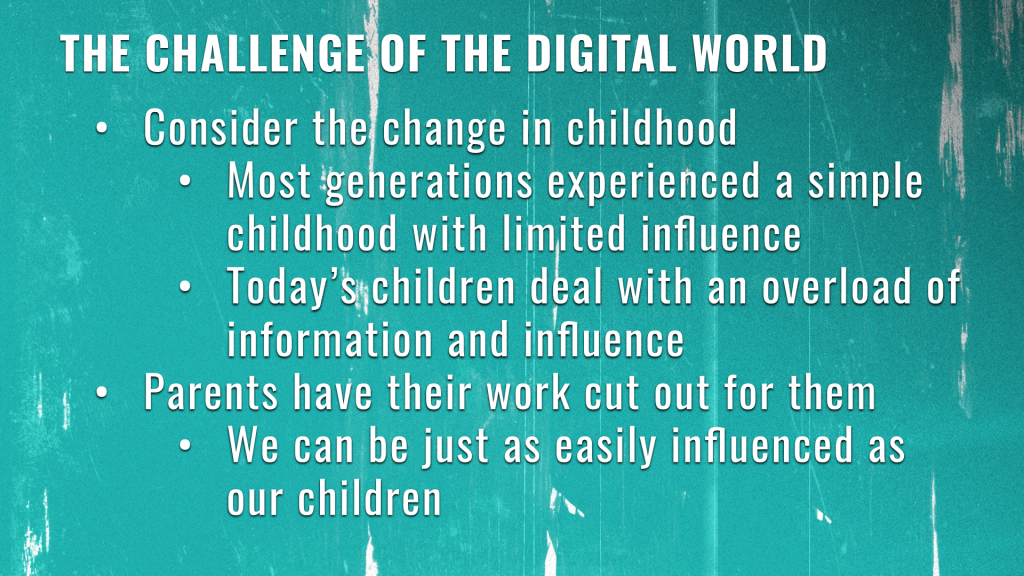
Q: Is there ever a time when children do not have to obey their parents?
What if the parents won’t let them be baptized or go to church with their friends?
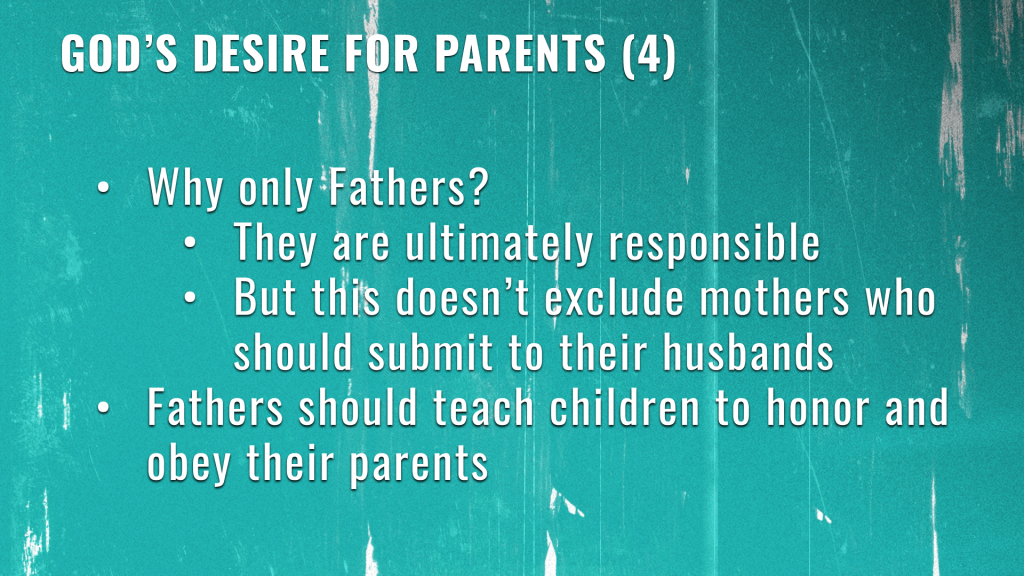
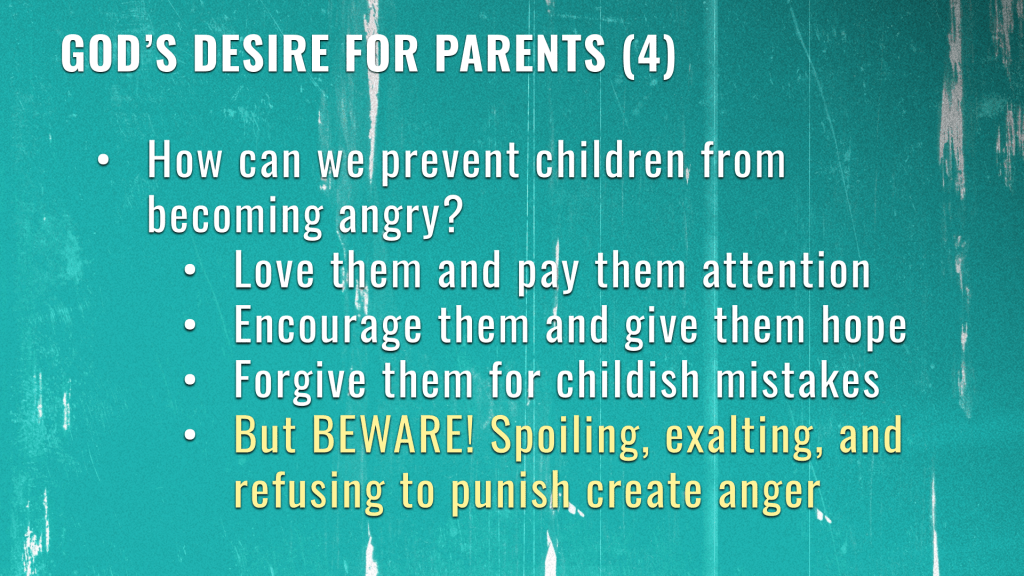
Q: What are some ways that fathers might exasperate their children and provoke them to anger?
Why are only fathers mentioned here and not mothers?
If you have children, do you remember times when you probably provoked your children to anger or disobedience because of the way you disciplined them?
C) 6:5-9 Bondservants and masters

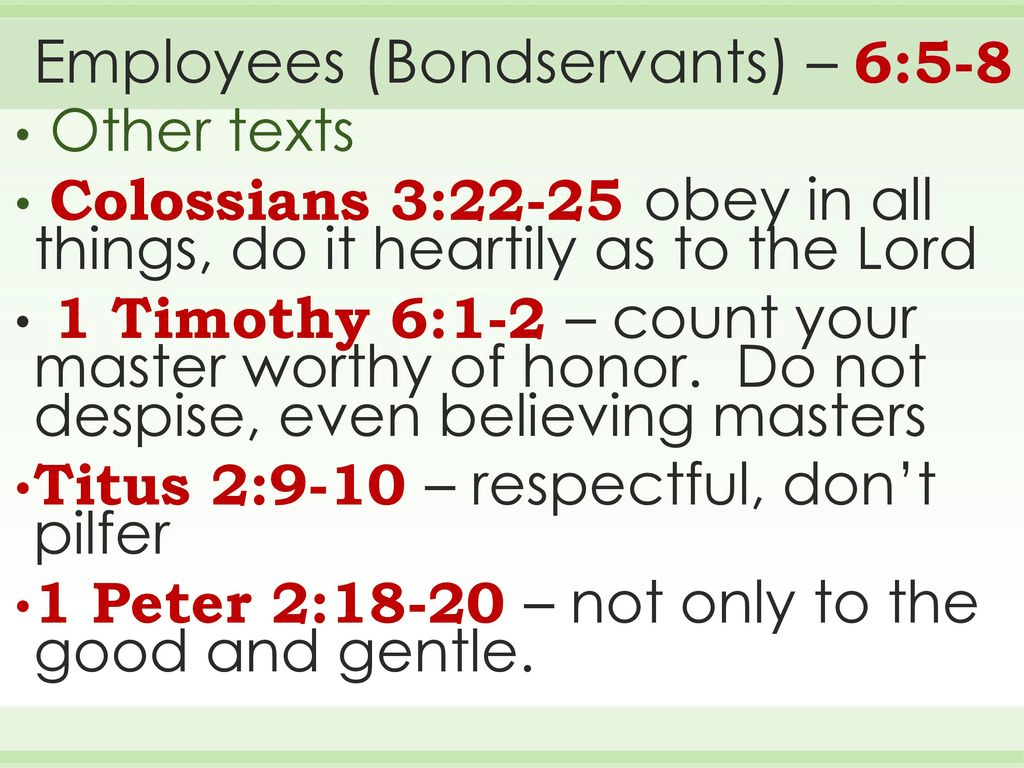
Q: Does it surprise you that neither Jesus nor the apostles tried to do away with slavery?
How did the Christians in the northern and southern churches handle the slavery issue around the time of the Civil War?
Do you think that a Christian master would voluntarily free his slave once he becomes a Christian?
We will study Philemon later where Paul tells Philemon to receive back kindly his runaway slave who had become a Christian while Paul was in Roman prison. Paul did not tell him to free Onesiphorus.
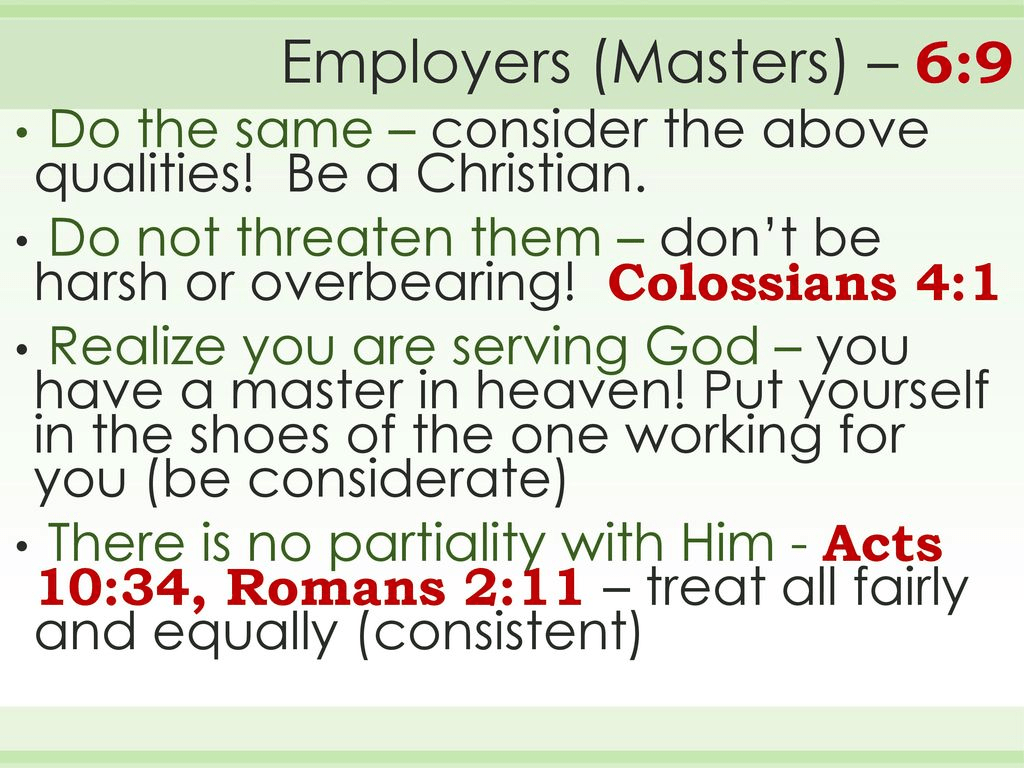
7. 6:10-20 Stand with the armor of God against the schemes of the devil
So far it has been about our “walk” and conduct. But if you are out walking and someone attacks you, then you have to keep walking to get to your goal but you need to defend yourself with a weapon like a gun or a knife, etc.
The Christian walk is the same way. The devil had devious schemes to deceive Christians and many different ways of attacking Christians to get them to sin and fall from grace.
Thus the need for the “whole armor of God”. You can’t fight on your own. You need the strength of God and His armor.
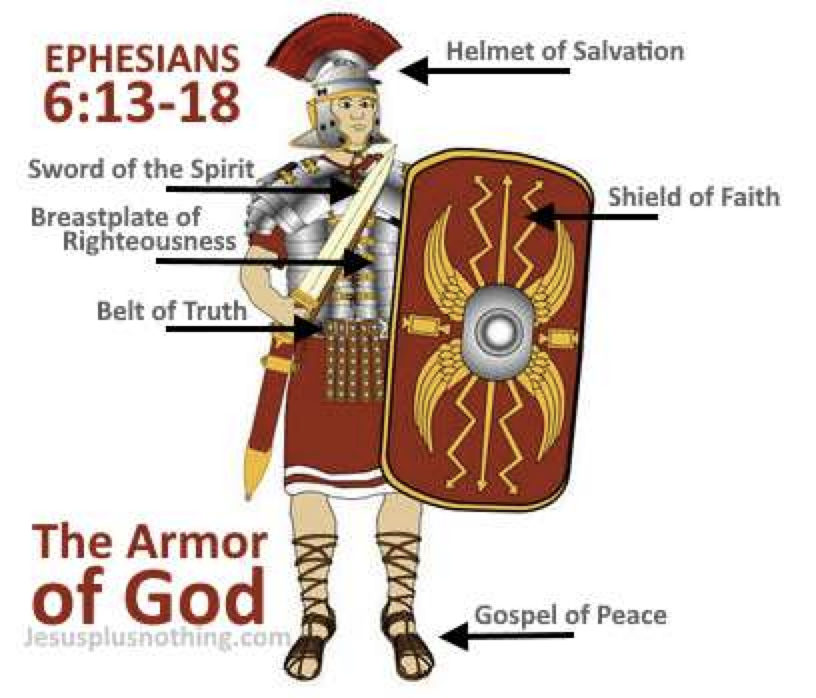
Q: After reading all the individual parts of the armor and what they do, which one do you need the most?
Q: 6:18 8 praying at all times in the Spirit, with all prayer and supplication. To that end, keep alert with all perseverance.
How often do you pray for God to help you fight the devi, to not give in to temptation?
6:21-24 FINAL GREETINGS
Paul sent Tychicus to see how they were doing.
Tychicus is mentioned five times in the New Testament:
- Acts 20:4: Tychicus is mentioned alongside Trophimus
- Ephesians 6:21–22: Paul sends Tychicus to the Ephesians to tell them about his circumstances and encourage them
- Colossians 4:7–9: Paul sends Tychicus to the Colossians to tell them about his circumstances and encourage them
- Titus 3:12: Paul considers sending Tychicus to Crete to assist Titus
2 Timothy 4:12: Paul sends Tychicus to Ephesus. Tychicus was an Asiatic Christian who accompanied Paul on part of his journey from Macedonia to Jerusalem. Paul trusted Tychicus and referred to him as a “dear brother” and “faithful servant”. - The Catholic Church calls Tychicus St. Tychicus, and his feast day is April 29. Church tradition holds that he was martyred for his faith in Colophon, which is 24 miles from Ephesus.


 Nicky's Notes