
I have several blog articles on Revelation, but this is more of a summary in one post.
- Who? Who wrote it? Who was it written to?
- The early church accepted John the apostle as the author. There was some speculation about another John the Elder but it was John the apostle who was exiled to Patmos.
- It was written to the 7 churches of Asia (ch 1-3).
- Who? Who wrote it? Who was it written to?
- The early church accepted John the apostle as the author.
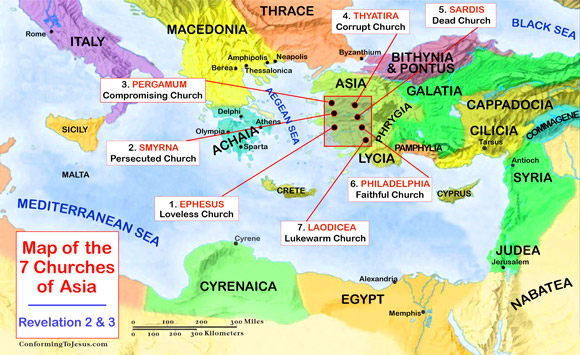
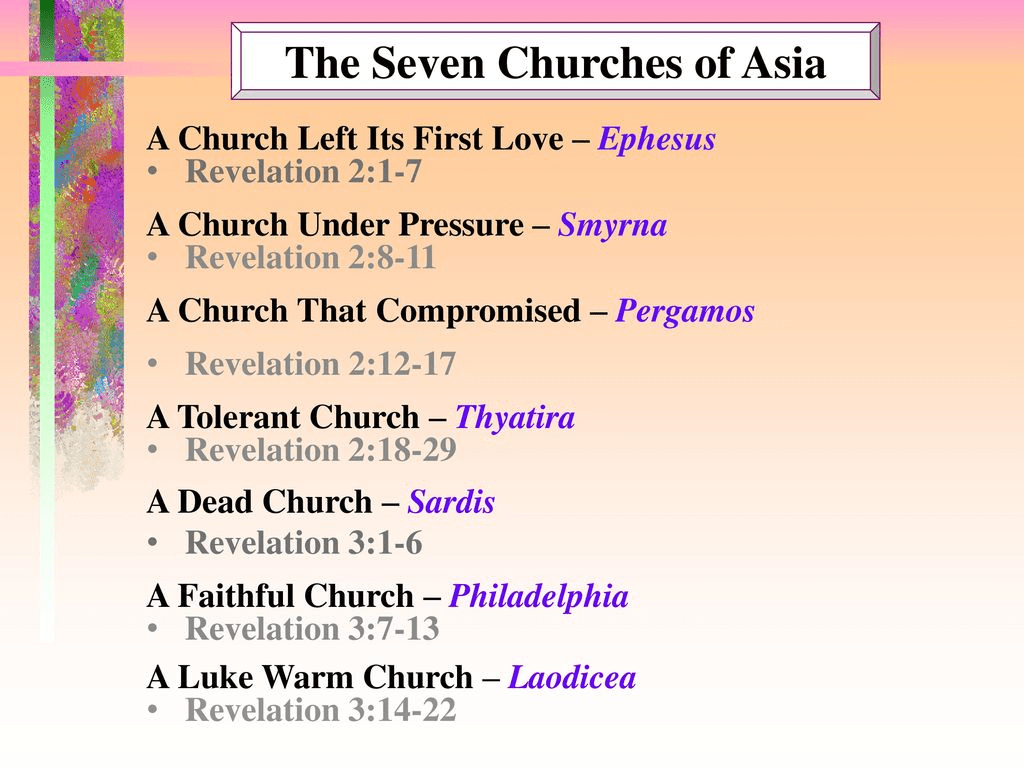
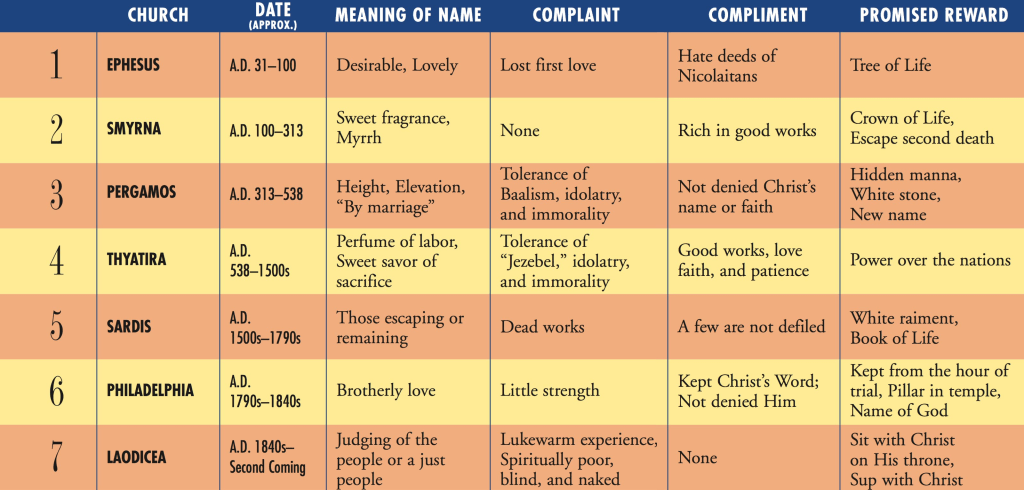
- It was written to the 7 churches of Asia (ch 1-3). The map below gives a nickname to each of the 7 churches. Read ch 2-3 and see why each church is called by that nickname.
II. Where? Where was John when he wrote the book?
The Syrian translation of the NT, which dates to late 1st/early 2nd century AD, states that Revelation was written during the reign of Nero (thus before Nero died in 68 AD) which would make John being exiled by Nero, not Domitian.
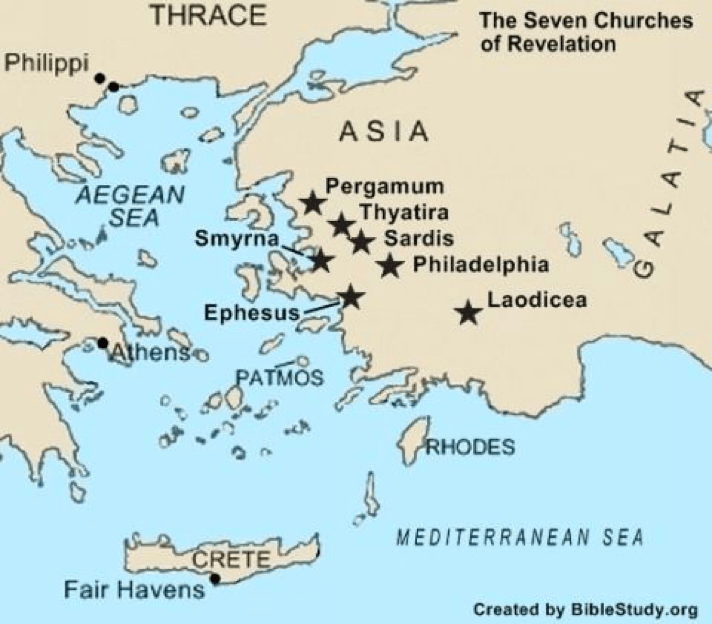
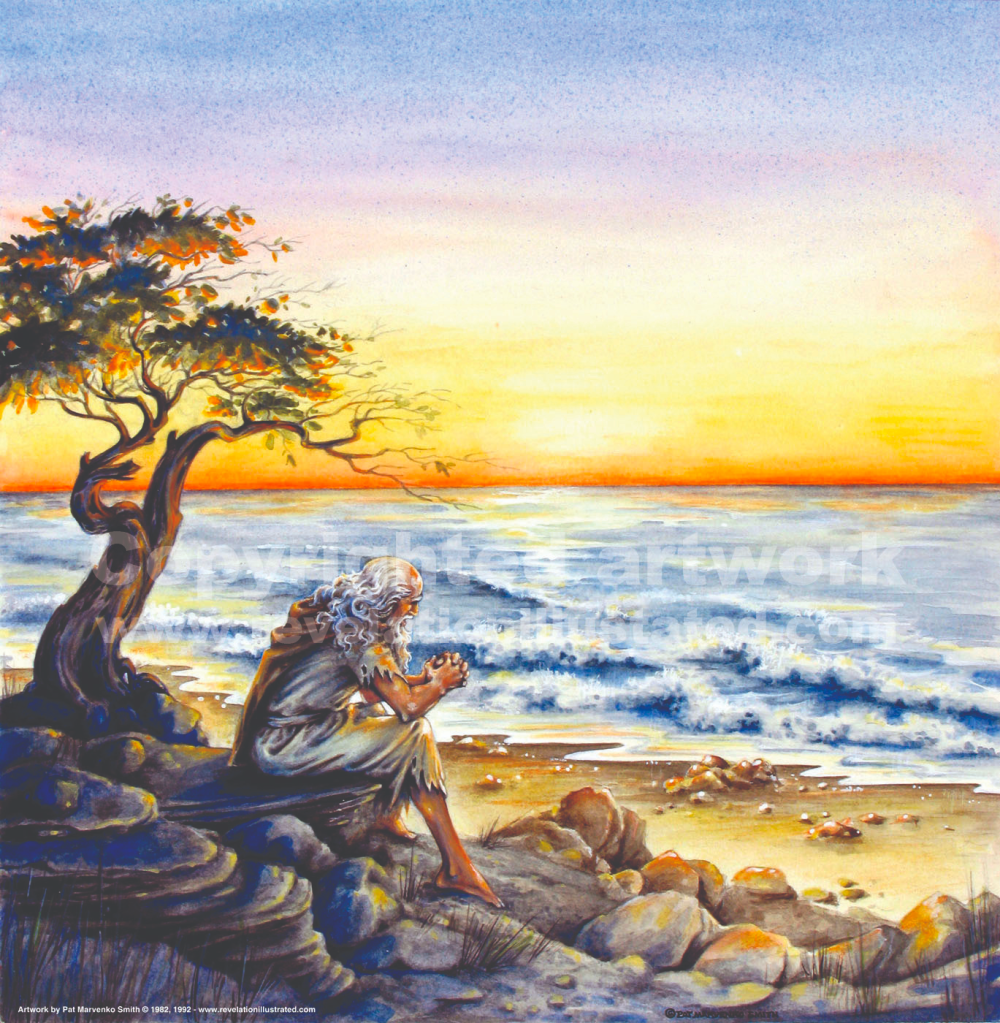
John was exiled to the island of Patmos during the reign of Nero.
Some claim his exile was during the reign of Domitian (81-96 AD) based on a statement by Irenaeus in about 175 AD, but that statement is uncertain as to what Ireneaus is even saying.
III. When? When was it written? When would its predictions be fulfilled?
The internal evidence is conclusive. It was written before 70 AD.
- Ireneaus statement (170 AD) is the sole early source of the tradition that John was in exile during the reign of Domitian, 81-96 AD (thus he dates the book 96 AD). Ireneaus statement is uncertain as to its meaning.
- The internal evidence is conclusive, however. It was written in the early 60’s AD, and definitely before the destruction of Jerusalem in 70 AD..
5 have fallen, one “is”.
- 17:7 the beast (the sea beast of ch 13) had 7 heads, which were 7 kings
- (17:10). 5 had fallen (were dead) at the time of writing, and “one is”.
- So the book was written during the reign of the 6th emperor. Starting with Julius Caesar, Nero would be the 6th emperor or king. He reigned from 54-68 AD, so the book had to be written before he died.
- Some say Augustus was the 1st emperor, but Josephus, who lived in the first century and would know who was considered to be the 1st king or emperor of Rome, twice said that Augustus was the 2nd emperor.
- The internal evidence wins out. The book was written before 70 AD.

Is there any other evidence for an early date of writing?
- Gentry claims there are 145 scholars who advocate the early date of writing of Revelation, including the great church historian Phillip Schaff.
- The Muratorian Canon of 170 AD says that Paul, following the example of his predecessor John, wrote to 7 churches. That means that John wrote Revelation before Paul wrote his last letter to a 7th church, and Paul died in 66-68 AD. Therefore, Revelation was written before Paul died and not in 96 AD.
- The Syriac translation of the NT says it was written during the reign of Nero. Nero died in 68 AD, so it was written before 68 AD.
What if John died before 70 AD? That of course would mean that he wrote it before 70 AD.
- Another proof of the early date is that John died before 70 AD.
- Tradition says he lived to the age of 100 and died a natural death.
- The church father Papias (100 AD) said that John died a martyr’s death at the hands of the Jews, just as Jesus predicted for James (James was killed with a sword by Herod in Acts 12) and John (Mark 10:35-45).
- That could only have occurred before 70 AD when the Jews had the ability to kill anyone, just as they killed James the Lord’s brother just before 70 AD.
- Although Papias does not give a date for the martyrdom of John, it is most likely that John died before 70 AD based on his statement.
Shortly. Soon. Near.
- The books begins and ends with the statements that the predictions would “soon take place (tachos: Speed, swiftness, quickness)” (1:1), “time is near (eggus: Near, close, at hand)” (1:3), “soon take place (tachos: Speed, swiftness, quickness)” (22:6), “don’t seal up the words of the prophecy of this book for the time is near (eggus: Near, close, at hand” (22:10).
- Many use 2 Peter 3:8 “one day is with the Lord as a thousand years, and a thousand years as one day” to say that “soon” could be thousands of years.
- But when the Holy Spirit say something is soon, at hand, etc. it must have meaning that is relevant to the readers. If I told my math class, “you need to do your homework each day because we have a test soon”. What if one of my students said, “do you mean the test is next year since soon can be a thousand years with God?”
- For example, Jesus said “Repent for the kingdom of God is at hand”. The urgency to repent is based on the nearness of the coming kingdom and judgment of those who don’t accept the Messianic kingdom.
- Revelation 1:1-3. He writes to the 7 churches. He tells them “blessed is the one who reads, hears, and keeps the things written”. Why? “For the time (of fulfillment, Amplied Bible) is near. He doesn’t say “the time could be anytime”. He makes a statement: the time is near. A fact. A prediction.
- John is also told not to seal up the predictions in Revelation. In contrast, Daniel was told to seal up the predictions in Daniel b/c the time for their fulfillment would be in the distant future, about 600 years after Daniel died. Not so with Revelation. The predictions would happen soon so don’t seal them up. Leave them open where people can read them and heed them (Rev 1:1-3).
- So, whether early (before 70 AD) or late (96 AD) date of writing, that eliminates the views that Revelation is predicting anything beyond the first century. The historical view was that it predicted the Catholic Church and the beast was the Pope. The futurist view is that it predicts future end time events and an Antichrist beast and Armageddon that is still unfulfilled as of today. .
Mello in the book of Revelation.
The Greek word mello, which always means “about to be or about to happen” is used several times in the book (1:19; 2:10; 3:10,16; 6:11; 8:13; 12:5), indicating that the events predicted were about to happen.
From parousiafulfilled.com
Another important use of the word “mello” is in the Apocalypse (ie: Book of Revelation). Just as in the passages above, the author of Revelation also talks about the parousia (Second Coming) of Christ. The angel revealed to Apostle John that the parousia was “ABOUT TO” happen… it would be SOON. Young’s Literal Translation (YLT) ii of the New Testament renders the relevant passages correctly.
Here are some examples of the use of “mello” in Revelation, from YLT:
Another important use of the word “mello” is in the Apocalypse (ie: Book of Revelation). Just as in the passages above, the author of Revelation also talks about the parousia (Second Coming) of Christ. The angel revealed to Apostle John that the parousia was “ABOUT TO” happen… it would be SOON. Young’s Literal Translation (YLT) ii of the New Testament renders the relevant passages correctly.
Here are some examples of the use of “mello” in Revelation, from YLT:
Revelation 1:19 YLT – Write the things that thou hast seen, and the things that are, and the things that are about to [Gk: μέλλει : mellei : is (are) about to] iii ) come after these things;
Revelation 2:10 YLT – Be not afraid of the things that thou art about to [Gk: μέλλεις : melleis : are about to] suffer; lo, the devil is about to [Gk: μέλλει : mellei : is about to] cast of you to prison, that ye may be tried, and ye shall have tribulation ten days; become thou faithful unto death, and I will give to thee the crown of the life.
Revelation 3:10,16 YLT – Because thou didst keep the word of my endurance, I also will keep thee from the hour of the trial that is about to [Gk: μελλούσης : mellouses : which is about to] come upon all the world iv, to try those dwelling upon the earth v … So ‐‐ because thou art lukewarm, and neither cold nor hot, I am about to [Gk: μέλλω : mello : I am about to] vomit thee out of my mouth.
Revelation 6:11 YLT – and there was given to each one white robes, and it was said to them that they may rest themselves yet a little time, till may be fulfilled also their fellow-servants and their brethren, who are about to [Gk: μέλλοντες : mellontes : are about to] be killed ‐‐ even as they.
Revelation 8:13 YLT – And I saw, and I heard one messenger, flying in the mid-heaven, saying with a great voice, ‘Wo, wo, wo, to those dwelling upon the land from the rest of the voices of the trumpet of the three messengers who are about to [Gk: μελλόντων : mellonton : are about to] sound.’
Revelation 12:5 YLT – and she brought forth a male child, who is about to [Gk: μέλλει : mellei : is about to] rule all the nations with a rod of iron, and caught away was her child unto God and His throne.
What would be the point of telling Christians in the 1st Century about apocalyptic events, if those things were not expected for thousands of years… after they were all dead and their world had disappeared? How could those events have any meaning or significance to 1st Century people, if they would NOT live to see and experience them? It just doesn’t make any sense.
Conversely, if those early Christians were “ABOUT TO” experience great tribulations and persecutions, they would obviously find encouragement and hope in the knowledge that “SOON” their Lord Jesus Christ was “ABOUT TO” return and rescue them from their enemies… the last wicked and perverse generation of Old Covenant Jews and their temporary Roman allies.
The obvious meaning of the Greek word “mello” throughout the New Testament is that certain things were “ABOUT TO” happen… SOON… in a very short time. And when it refers to the parousia (Second Coming) of Christ, the word “mello” was clearly intended to warn people that it was “ABOUT TO” happen, in the lifetime of those early Christians. This is exactly what Jesus promised his disciples:
“27 For, the Son of Man is about to [Gk: μέλλει : mellei : is about to] come in the glory of his Father, with his messengers, and then he will reward each, according to his work. 28 Verily I say to you, there are certain of those standing here who shall not taste of death till they may see the Son of Man coming in his reign.” (Matthew 16:27-28 YLT)
IV. What? What is the book about?
The theme of the book.
- The theme of the book is the “avenging of the blood of the apostles, saints, and prophets” (18:20,24).
- The book is about the upcoming destruction of Jerusalem in 70 AD.
- In ch 17 a harlot is riding on the beast (the sea beast, Rome, ch 13) indicating harmony between the two, but then in 17:16 the beast burns the harlot with fire.
- 17:18 says that the woman harlot is the “great city”.
- The harlot has the name “Babylon” on her forehead.
- In 11:8 the great city is where the Lord of the 2 witnesses was crucified (Jesus), so the great city is Jerusalem. 8 and their dead bodies (of the two witnesses) will lie in the street of the great city that symbolically is called Sodom and Egypt, where their Lord was crucified.
- So the sea beast Rome burns the great city harlot woman (Jerusalem). That is what happened!
- So the harlot= the great city= Babylon= Jerusalem.
The main subject of the book.
- So the main subject of the book is the destruction of Jerusalem in 70 AD, and that fits the theme of ch 18 also.
- It was Jerusalem that had killed the saints (Jewish Christians), apostles, and prophets (of the Old Testament), and the destruction of Jerusalem in 70 AD would be God’s vengeance on the nation, just as Jesus predicted in Mt 23:34-36. 34 Therefore I send you prophets and wise men and scribes, some of whom you will kill and crucify, and some you will flog in your synagogues and persecute from town to town, 35 so that on you may come all the righteous blood shed on earth, from the blood of righteous Abel to the blood of Zechariah the son of Barachiah,[f] whom you murdered between the sanctuary and the altar. 36 Truly, I say to you, all these things will come upon this generation.
- Some say Rome is the great city, but Rome never killed the prophets. But the Jews did.
- The harlot, Jerusalem, is also called Babylon (17:5 ch 18) b/c of her sinful ways.

V. Why? Why was the book written? Why all the figurative language?
The book was written to warn the 7 churches.
- The book was intended to be read, heard, and kept (heeded and taken to heart, Amplified Bible) by the original readers (1:1-3), so it directly applied to them, not us. The comments to the 7 churches (ch 2,3) prove that, predicting things about to happen to them (mello).
The book was written to declare the finished mystery of salvation.
- 10:7 says that the “mystery is finished as he announced the gospel to his servants the prophets” when the book’s predictions all come true.
- The book sums up the eternal mystery of God’s plan of salvation as given through the prophets of the OT, which included the destruction of the temple in 70 AD.
- Several places in the OT predict the destruction of Jerusalem in 70 AD (Daniel 9, 12; Joel 3; Zechariah 14; Isaiah 65-66).
- Ezekiel 40-48 even predicts the building of the new church temple, although he describes it in figurative language.
- Heb 9:8 said that the “way into the new Holy of Holies has not yet been disclosed (fully) as long as the first tabernacle (the temple) is still standing”.
- Thus it is essential that God remove the 1st temple to complete His plan of giving us the new church temple.
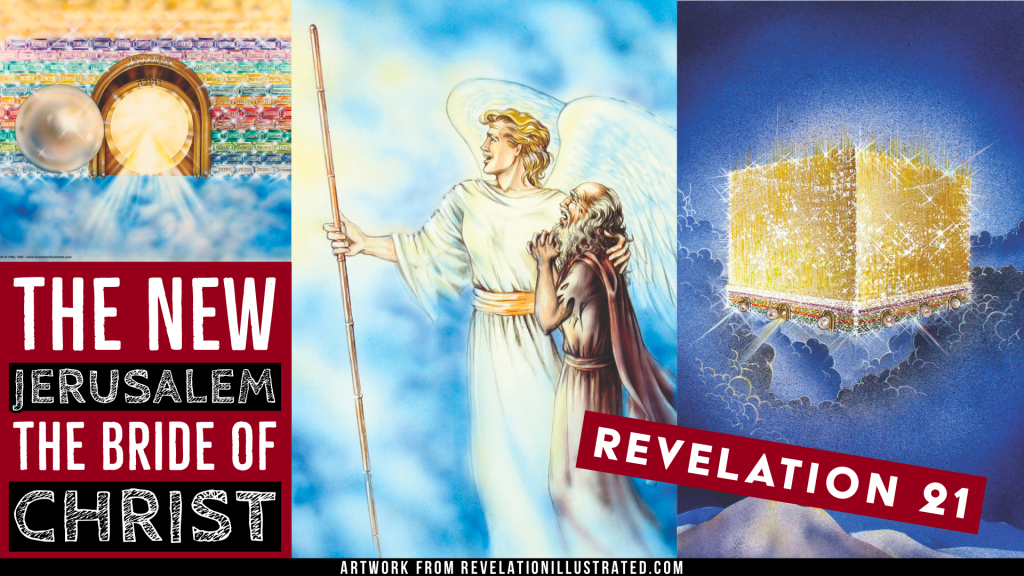
- Ch 21 gives a picture of the new Jerusalem (the church, the bride of Christ) coming down to earth so God can dwell in his sanctuary, the church, on earth.
- Ch 22 picture a river flowing from the new Jerusalem with the water of life and the tree of life with leaves for the healing of the nations.
- Ch 22 is a picture of Eden’s Paradise Restored spiritually in the church as of 70 AD
But why describe the predicted events in such figurative language?
Won’t that make it harder to understand?
- Why so much figurative language? John wrote about real events that would happen soon, but in figurative language.
- In 13:18 he talks about the mark of the beast, 666 (using a numbers for letters system perhaps), but he says that those readers with insight could calculate exactly who he was talking about, probably Nero. John would not want to name Nero. It had to be someone living at that time if they were told that they could identify him.
Symbolic numbers in Revelation.
- Other times, the numbers are symbolic, such as 4 (the earth number, the 4 directions, the 4 living creatures of ch 4 who execute God’s wrath on earth); or 7 (the complete number, the 7 churches, stars, Spirits, seals, angels, plagues, bowls of wrath, heads),, or 10 (10. Horns, 10 kings), or 12 (12 gates, pearls, foundations, apostles of the church in ch 22).
Big symbolic numbers. The 1,000 reign of Revelation 20.
- Some bigger numbers are multiples of these symbolic numbers. 1,000 is 10X10X10.
- The 1,000 years in ch 20 has been used to teach a 1,000 year reign of Christ on earth when he returns, but it only refers to the 40 year period from Acts 2 (30 AD) to 70 AD.
- Why do I say that? 22:7,8 says that at the end of the 1,000 years that Gog and Magog (as predicted in Ezekiel 38-39) will surround the “beloved city” which has to be Jerusalem. If this is an event soon to take place based on Rev 1:1-3 and Rev 21:4-7, then this has to be the Romans (God and Magog) surrounding Jerusalem in 70 AD. So the end of the 1000 years is AD 70. The 1000 years must be the 40 years from AD 30 to AD 70.
- There is a 200 million man army (Rev 9:16) attacking (200X10^6), which is Rome.
- There is the 144,000 who are sealed for protection (ch 7, 14). There are the 12,000 of ch 7 (12X1000).
Symbolic animals.
- Other figures like the sea beast of ch 13 are taken from OT predictions (Daniel 7 names the next 4 kingdoms: Babylon, Medo-Persia, Greeks, Romans) using lion, leopard, and bear, the same figures used to describe the sea beast Rome in ch 13 (the iron beast in Daniel 2,7). Surely the readers of the letter would connect Daniel 7 animals with the Revelation 13 sea beast.
- There is also an earth beast which is the Jewish false prophets.
- The dragon in ch 12 and ch 20, which John tells us is Satan.
- The 4 living creatures in ch 4 (the same figure in Ezekiel 1).

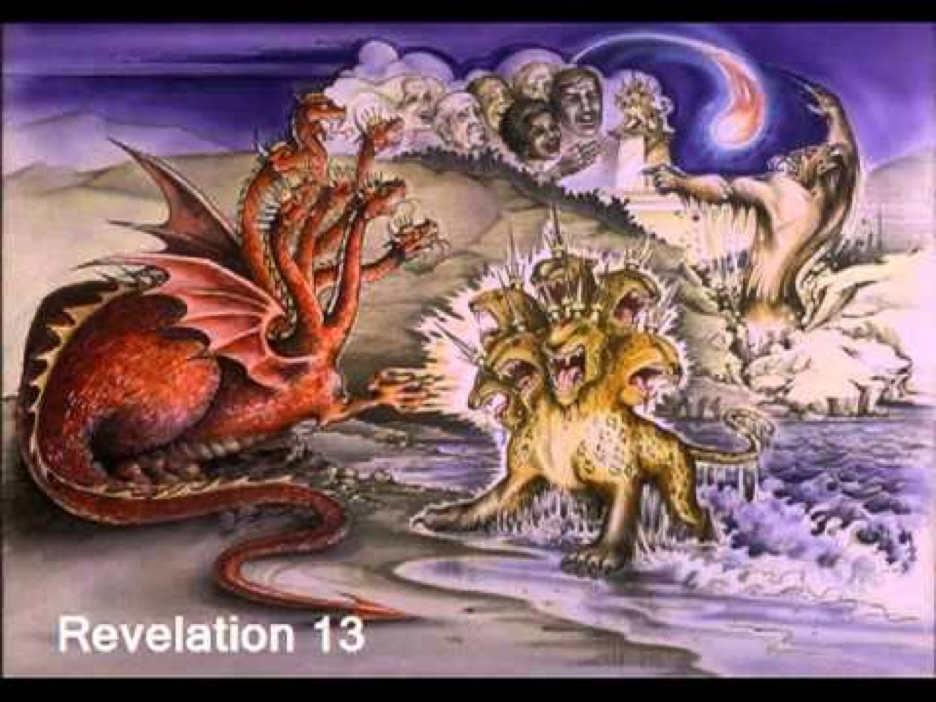
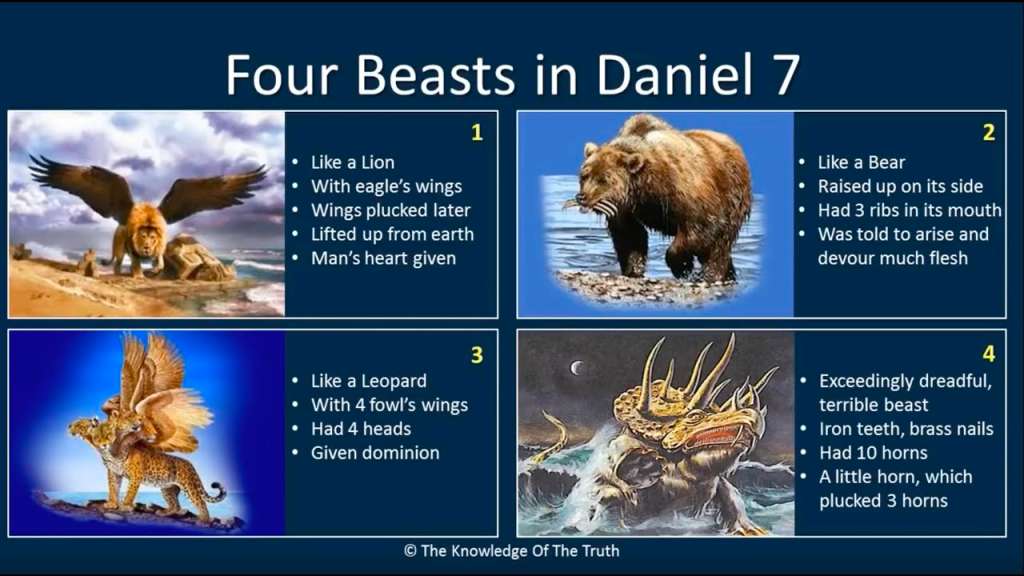
- Apparently the Holy Spirit just wanted to describe these imminent events more powerfully than just literal language, the same way we use “it’s raining cats and dogs” to describe heavy rain. In the same way that C.S.Lewis in The Lion, Witch, and Wardrobe used animals to portray the propitiation of Jesus’ death in Romans 3.
- Then there is the lamb of ch 5, standing as if slain, the only one who could open the scrolls that would predict the imminent events.

Revelation 5:6-7And there between the throne (with the four living creatures) and among the elders I saw a Lamb (Christ) standing, [bearing scars and wounds] as though it had been slain, with seven horns (complete power) and with seven eyes (complete knowledge), which are the seven Spirits of God who have been sent [on duty] into all the earth. 7 And He came and took the scroll from the right hand of Him who sat on the throne.
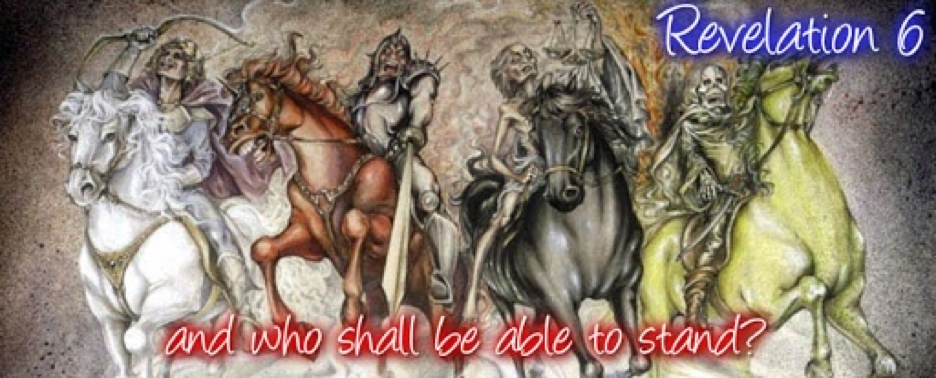
The 4 horsemen of ch 6 which represent conquest, war, famine, and death. This is taken from Zechariah 6.
The new Jerusalem, the sanctuary, the bride of Christ. .
- 21:1-3 The new Jerusalem comes down from heaven to earth so that God can dwell in his sanctuary forever. This was the “city which is to come” (Hebrews 13:14).
- Revelation 21:1Then I saw a new heaven and a new earth; for the first heaven and the first earth had passed away (vanished), and there is no longer any [a]sea. 2 And I saw the holy city, new Jerusalem, coming down out of heaven from God, arrayed like a bride adorned for her husband; 3 and then I heard a loud voice from the throne, saying, “See! The tabernacle of God is among men, and He will live among them, and they will be His people, and God Himself will be with them [b][as their God,] 4 and He will wipe away every tear from their eyes; and there will no longer be death; there will no longer be sorrow and anguish, or crying, or pain; for the [c]former order of things has passed away.”
- The new Jerusalem is not a physical city (as many say it will be) but is the bride of Christ, the church (Ephesians 5:25-33).
- Revelation 21:9 Then one of the seven angels who had the seven bowls filled with the seven final plagues came and spoke with me, saying, “Come here, I will show you the bride, the wife of the Lamb.” 10 And he carried me away in the Spirit to a vast and lofty mountain, and showed me the holy (sanctified) city of Jerusalem coming down out of heaven from God
Ezekiel predicted all this 700 years earlier.
- The prophet Ezekiel predicted this sanctuary on earth for God to dwell in his people. Not a physical sanctuary, but the temple of God where the Spirit of God dwells, i.e. the church.
- Ezekiel 37:24 “My servant David will be king over them, and they all will have one shepherd. They will also walk in My ordinances and keep My statutes and observe them. 25 They will live in the land where your fathers lived, [the land] that I gave to My servant Jacob, and they will live there, they and their children and their children’s children, forever; and My servant David will be their leader forever. 26 I will make a covenant of
peace with them; it will be an everlasting covenant with them. And I will place them and multiply them, and will put My sanctuary in their midst forever. 27 My dwelling place also will be with them; and I will be their God, and they will be My people. 28 Then the nations will know [without any doubt] that I am the Lord who sets apart and sanctifies Israel [for holy use], when My sanctuary is in their midst forever.”’”
The streets of gold. The river and tree of life.
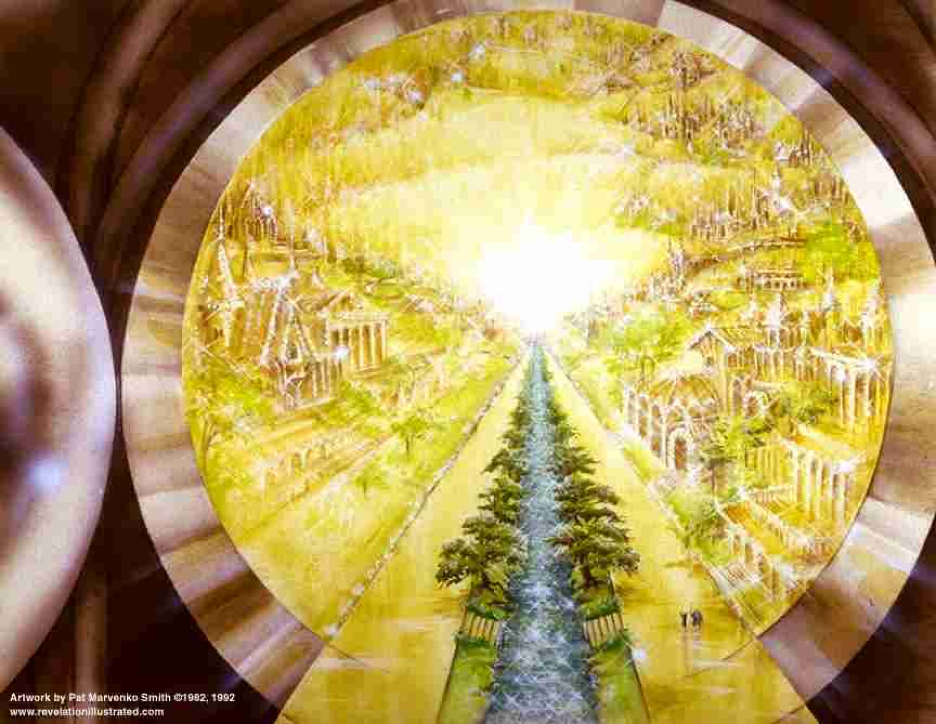
- Then in ch 21 he describes the soon to be finished church, the bride of Christ, as a city with 12 gates, precious stones, streets of gold with gates never closed, open to bring the nations in, no night there.
- Ch 22 closes with a river of life and tree of life, all beautiful symbolic figures of the restoration of everything that was lost in the fall in the Garden of Eden. This was predicted in Ezekiel 47.
- Revelation 22:Then the angel showed me a river of the water of life, clear as crystal, flowing from the throne of God and of the Lamb (Christ), 2 in the middle of its street. On either side of the river was the tree of life, bearing twelve kinds of fruit, yielding its fruit every month; and the leaves of the tree were for the healing of the nations. 3 There will no longer exist anything that is cursed [because sin and illness and death are gone]; and the throne of God and of the Lamb will be in it, and His bond-servants will serve and worship Him [with great awe and joy and loving devotion]; 4 they will [be privileged to] see His face, and His name will be on their foreheads. 5 And there will no longer be night; they have no need for lamplight or sunlight, because the Lord God will illumine them; and they will reign [as kings] forever and ever.
- Those figures just give us a beautiful picture of the completed plan of God that we have had now going on 2,000 years later.
- But I thought the church was established in Acts 2 (30 AD).
- It was, but the final, fully revealed and confirmed church, the new Jerusalem, was not fully established until the old temple had been destroyed in 70 AD.
- This is the “already, not yet” phrase. They had salvation and the church but not fully realized till 70 AD after death was destroyed (1 Cor 15).
- It is like electing our president on Nov 5. But his government doesn’t officially begin to rule until June 20, 2025. There is a transition period.
- It is sad that people say Revelation 21-22 has not been fulfilled yet. They are looking for a physical city someday.
- It is as if you have a new house ready to live in but don’t realize it and can’t enjoy living in it.
I hope this abbreviated synopsis of Revelation Is helpful. There is a great DVD called Revelation Illustrated that has every image of every chapter. Most of the images in this summary are from that DVD. These are copyrighted so be careful how you use them . There are many other things in Revelation but this is just a synopsis for you to study.
 Nicky's Notes