
HOUSE CHURCHES IN THE FIRST CENTURY Christianity has changed so much since the first century and the book of Acts. In Acts the church met in house churches. For example, Romans 16:5 Paul greets “the church that meets at their house”. 1 Corinthians 16:19 “Aquila and Prisca greet you heartily in the Lord, with the church that is in their house.” Colossians 4:15 Greet the brothers and sisters who are in Laodicea and also Nympha and the church that is in her house.” Philemon 1:1 To Philemon our beloved brother and fellow worker, 2 and to Apphia our sister, and to Archippus our fellow soldier, and to the church in your house.” Acts 2:46 Day by day continuing with one mind in the temple, and breaking bread from house to house, they were taking their meals together with gladness and [sincerity of heart.” “They utilized the Temple courts, a large public space, for gathering in large numbers to hear the apostles preach, teach, and pray and to try to convert other Jews. While the Temple served as the large group gathering place for teaching, they met in homes for intimate fellowship and breaking bread.” (AI) So what changed that we have mostly a church building system today?
THE EARLIEST CHURCH BUILDINGS “The earliest identified Christian house church, featuring a baptistery and wall frescoes, is at Dura-Europos in Syria, dating to 233–256 AD, while the earliest known purpose-built church is the Aqaba Church in Jordan, constructed in the late 3rd century (c. 290s–303 AD). These sites pre-date the widespread construction of churches following the legalization of Christianity in the early 4th century. (AI)
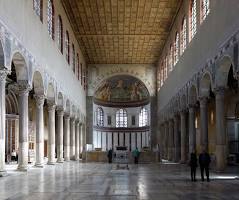
After Emperor Constantine legalized Christianity with the Edict of Milan in 313 AD, church construction shifted from hidden house churches to massive, public, imperial-sponsored buildings. Architects adopted the Roman basilica—a rectangular, longitudinal civic building—to accommodate large congregations, establishing a standard, awe-inspiring design.” (AI) Modern churches almost always have church buildings. “Churches build physical structures primarily to provide a dedicated,, consistent space for corporate worship, community fellowship, and ministry operations. These buildings function as central hubs for teaching, outreach, and refuge, while also representing a visible, stable presence in the community.” (AI) An argument could be made for church buildings as a place for public worship and a center for church activities. But most churches spend about 25% of their collections on their buildings. That money could be used to help the poor and needy. More on the spending of church collections in the clergy comments below. Many Christians do the house church model today without church buildings and can allow their members to give their tithes to benevolence instead of paying off building loans. Most church buildings lie dormant during the week which seems to be a waste of the Lord’s money. Some churches use their buildings during the week for daycare or Christian schools, so that is good. Will churches with church buildings ever stop meeting in buildings and start meeting only in house churches? Probably not. But there are also a lot of empty or almost empty church buildings that are out there, especially in Europe where Christianity has declined so much. Will that happen in the U.S. some day?
THE LORD’S SUPPER “In the first-century church, the Lord’s Supper was intimately connected to, or part of, a communal meal known as an agape meal or “love feast”. This full meal, which emphasized fellowship and unity, was often held in homes, with bread and wine shared during or after it. These gatherings allowed early Christians to share food, support one another, and remember Christ’s sacrifice. Paul addressed abuses in 1 Corinthians 11:20-21, where wealthy members ate before the poor, turning the fellowship meal into a scene of shame rather than unity. The term “love feast” appears in Jude 1:12, referring to a, perhaps, Agape feast of the early apostolic church. Based on 1 Corinthians 16:2 and context from 1 Corinthians 11:18, the church in Corinth (and early churches generally) came together for worship, instruction, edification, and the Lord’s Supper on the “first day of the week” (Sunday, the day Jesus arose from the dead). These gatherings were regular assemblies, likely held in the evening, rather than an infrequent or special event. Sunday was still a “work day” until the 4th century. Or they met early Sunday mornings.They most likely met every Sunday, but they also met in their homes to take the Lord’s Supper and fellowship during the week. The Lord’s Supper would not have been restricted to Sundays only. Evidence from the Didache (circa A.D. 100-150) and Justin Martyr indicates a weekly Sunday observance, which was considered the central purpose of their assembling. Over time, largely due to abuses such as gluttony and social division noted in 1 Corinthians 11, the sacramental Eucharist (or Mass) became separated from this meal, ultimately taking its place as a distinct, solemn service. The term “Mass” in Catholicism originates from the Latin word missa, derived from the dismissal formula at the end of the Eucharistic celebration: “Ite, missa est“. Meaning “Go, it is the sending” or “Go, the dismissal is made,” this phrase signifies that the faithful are sent forth to share the Gospel in their daily lives. This eventually led to the entire service being called the Mass in Catholociism. Protestants significantly changed the Lord’s Supper (Communion) during the Reformation by rejecting the Catholic doctrine of transubstantiation, moving from a daily/weekly sacrifice to a primarily symbolic memorial, and reducing the frequency of observance.” Modern churches take the Lord’s Supper in church buildings mainly with the passing of the bread and juice or members coming to the front of the building to take the emblems. I wish churches would go back to taking the Lord’s Supper as part of a love feast, which is very possible in homes but very difficult in big churches.
THE CLERGY SYSTEM “The distinction between clergy and laity began developing in the 2nd century, with firmer, more defined hierarchies emerging by the 3rd century. While the New Testament emphasizes a “brotherhood” rather than distinct classes, early church leaders like Clement of Rome (c. 95-96 AD) began using the term “laity” to distinguish non-ordained members from ordained ministry. By the 3rd century a clear,3-tier structure of bishop, presbyter (priest), and deacon was established, creating a distinct “clerical” class. By the 4th and 5th centuries Roman Emperor Constantine and the Theodosian Code (438) granted special privileges to the clergy, reinforcing the separation. Catholicism used priests as their local church ordained leaders and had many higher clergical positions such as cardinals, bishops, archbishops, and the pope,. Protestantism modified but generally continued a clergy/laity distinction, despite introducing the “priesthood of all believers” doctrine. While reformers like Luther aimed to eliminate the rigid medieval divide and empower laypeople, most Protestant traditions maintained ordained paid ministers for teaching and preaching, though they no longer viewed them as a separate sacramental order. Clergy roles shifted from primarily offering sacrifices (sacramental) to teaching and preaching the Word.” The clergy/laity system is so foreign to the church in the New Testament where all members were considered equal but with different miraculous gifts for the edification of the church. There were 5 main miraculously gifted leadership positions: apostles, prophets, evangelists, pastors (elders), and teachers (Ephesians 4:11). But the local house churches would be led by elders and deacons, Evangelists like Timothy and Titus would travel to churches to work for a while or they would go out establishing churches. They were not local paid preachers who stayed at one church. They received food and a place to stay where they preached. The Didache says that if they stayed more than 3 days they were just teaching for money and should move on! In other words, there was no paid preacher/clergy system in the church in the New Testament. One might argue for such a paid preacher system by looking at the good many paid preachers have done. But one might point out the bad that has been done by paid preachers in the Catholic church and in Protestant churches. The LGBTQ movement is led by paid clergy. Think about how church collections are spent. About 50% of church donations today are spent on paid clergy positions (including all staff). “In contrast, early Christians primarily used collected funds to support the needy, feed the poor, and care for widows and orphans within their communities. Funds were often pooled to provide for immediate needs and to assist with disasters. In his First Apology (written c. 155 A.D.), Justin Martyr explains that Sunday church collections were voluntary, with wealthier members giving what they chose. This money was entrusted to the “president” (leader/bishop) to care for orphans, widows, the sick, prisoners, and strangers, acting as a “protector of all who are in need.” (AI) Paul refused to accept money from the churches he worked with although he did accept some support from churches like the Philippians while he preached in Corinth. He most often supported himself with his tent making, but support from other churches allowed him to spend more time preaching. In the same way, missionaries need to be supported by churches in their foreign mission work. But, to repeat, there was no paid clergy/preacher system in the early church. The movement to build buildings and do church work in buildings has necessitated the paying of clergy, but that is a system that we invented that has often caused much harm and uses 50% of the money collected that could otherwise be used for the poor and for spreading of the gospel.
THE MISSION OF THE CHURCH “The mission of a church is to glorify God by fulfilling the “Great Commission,” which involves making disciples of all nations through preaching the gospel, baptizing believers, and teaching obedience to Jesus’ commands. It serves to worship God, build up (“edify”) the saints, and demonstrate the gospel through love and service to the world. Also maintaining doctrinal purity and upholding the gospel message.” (AI) Paul said that the church was the “pillar and support of the truth” and then states what the core truths of Christianity should be. 1 Timothy 3:15 but in case I am delayed, I write so that you will know how one should act in the household of God, which is the church of the living God, the pillar and support of the truth. 16 Beyond question, great is the mystery of godliness:
He who was revealed in the flesh (the incarnation, God becoming flesh in Jesus),
Was vindicated in the Spirit (by the miracles Jesus did and His resurrection),
Seen by angels (on several occasions ministered to by angels),
Proclaimed among the nations (the apostles preached the gospel to the whole Roman Empire by 70 AD),
Believed on in the world (converts were made and churches were established all over the Roman Empire),
Taken up in glory (after his resurrection he ascended to heaven to sit as king of kings at the right hand of the Father).”
The purpose of churches assembling (whether in church buildings or house churches) was for edification (building up, 1 Corinthians 12-14) of the members through love, teaching, and service to one another. The church should also use funds collected to help the poor locally and worldwide (like drilling clean water wells, providing disaster relief, providing poor children with medical and educational needs, etc.). But the main mission of the church should be getting the gospel to the lost. The Social Gospel movement (late 19th-early 20th century) shifted focus from traditional individual salvation (preaching for heaven) to applying Christian ethics to solve societal ills like poverty, labor abuses, and inequality. The movement often downplayed doctrines of sin, hell, and the afterlife in favor of creating the “Kingdom of God” on earth.” (AI) So we are not about the “socia gospel”.
Jesus indeed had compassion on the sick and the poor, and he constantly gave them aid, but he stated his main mission in Luke 19:10 For the Son of Man has come to seek and to save that which was lost.” Helping the poor will give them a better life here on earth, but only the gospel will give them eternal life in heaven. Churches have ample opportunity to help the poor and spread the gospel. Organizations like Eastern European Missions (EEM) focus on printing and distributing Bibles to over 30 countries in 30 different languages. Organizations like Healing Hands International (HHI) focus on drilling wells and feeding the poor, but they always follow up with the preaching of the gospel. Organizations like Christian Relief Fund (CRF) provide medical and educational help to the poorest children in the world. Churches can support these organizations with their collections, but unfortunately 75-80% of the money collected by churches goes to salaries and buildings. That doesn’t leave much for fulfilling the mission of the church, does it?
CONCLUSION A Christian can either pull completely out of the church building/ paid clergy system and start or join a house church. Many are doing that. But I wouldn’t go so far as to say that the church building/paid clergy system is a sin. If you think that it is still a good thing and you are good with how they spend your tithes, then that is your choice. Synagogues were never authorized by God but Jesus meet in synagogues to preach the gospel and he healed people in synagogues without ever condemning the synagogues. My only recommendation is that you stand up and speak for the poor and the lost worldwide. Encourage your church to spend their money on the poor and the lost. Encourage them to delegate ministries to deacons instead of hiring more and more staff and secretaries, enabling them to use that money for the poor and lost. Be a voice for the poor and lost in the world. I guarantee you that if one of the children who walk 3 miles one way each day to get dirty water was with your church this Sunday, you would get clean water to that child. That child can’t be here Sunday, so you speak up for that child. If dirty water was a problem for our own children here in the U.S., we would sell buildings to get clean water for them. If one of the people in former Communist countries was in your church Sunday begging for a copy of the Bible in his own language, we would find a way to get him a Bible. EEM reported that recently they had a request for over 100,000 Bibles in the Farsi language (the dominant language in the Middle East) Did EEM just say, “no, we’re sorry but too many of our churches in the U.S. spend most of their money on buildings and staff and we don’t have money to print Farsi Bibles”? Fortunately EEM said they would find a way to provide those Bibles and they did and souls are being saved. Be a voice where you are for the poor and the lost in the world. Challenge your church leaders to spend their collections on the poor and the lost.
 Nicky's Notes