
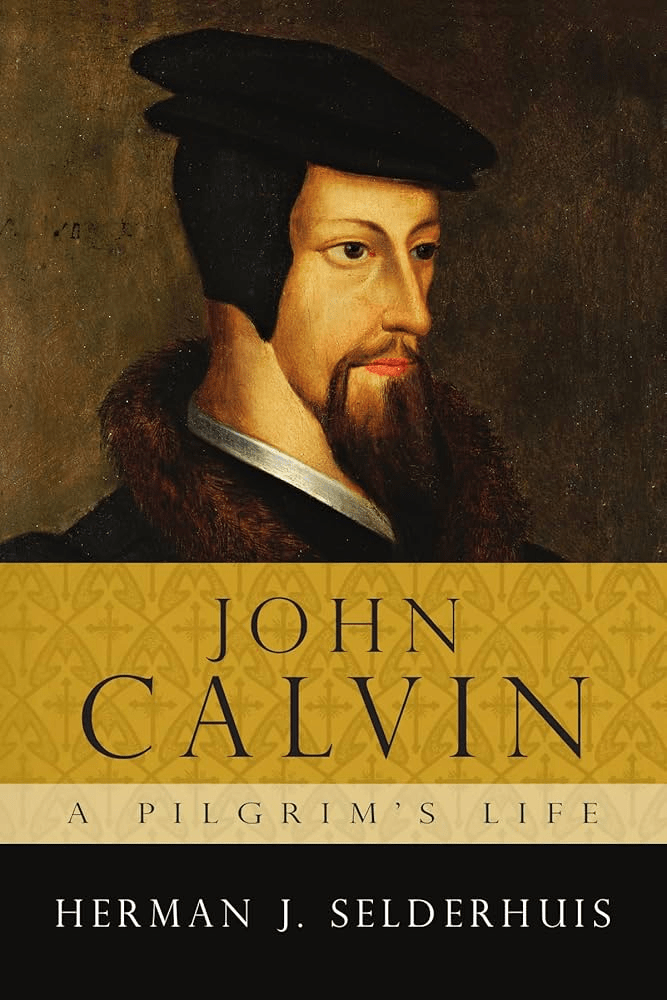
JOHN CALVIN’S TULIP: John Calvin’s doctrine of predestination posits that God, before creation, eternally and sovereignly decreed who would be saved (the elect) and who would be condemned (the reprobate). Calvin believed God’s will is supreme, and human salvation is not based on foreseen faith or merit.” In other words, God arbitrarily chooses who will be saved or lost and people do not have the ability to change that fate even if they want to b/c they are born “Totally depraved” (the T in TULIP). There are no “conditions” or requirements to be met by a person if he is the saved “elect”: thus “Unconditional election” (the U in TULIP). Since only a select number, the elect, were were predestined to be saved, then Jesus only died for those elect and not for all men: “Limited atonement”(the L in TULIP); If you are the predetermined elect, then you can’t choose to resist God’s salvation. You are depraved and can’t just choose to believe. God must send His Spirit on you to change your heart and enable you to believe.Thus, “Irresistible” grace (the I in TULIP). Finally, if you are the saved elect, you will never lose your salvation no matter what you do or don’t do. God’s grace is so powerful that your salvation doesn’t depend on what you do or don’t do. Even if you continue in willful sin, grace will still save you. Thus: “Perseverance of the saints”: you can’t fall from grace (the P in TULIP). THAT’S CALVINISM AND TULIP!!!!!!! Calvinists have Bible passages to support each of the 5 points in TULIP: Ephesian 1:4; Romans 8:28; John 6:44; 10:27-29.
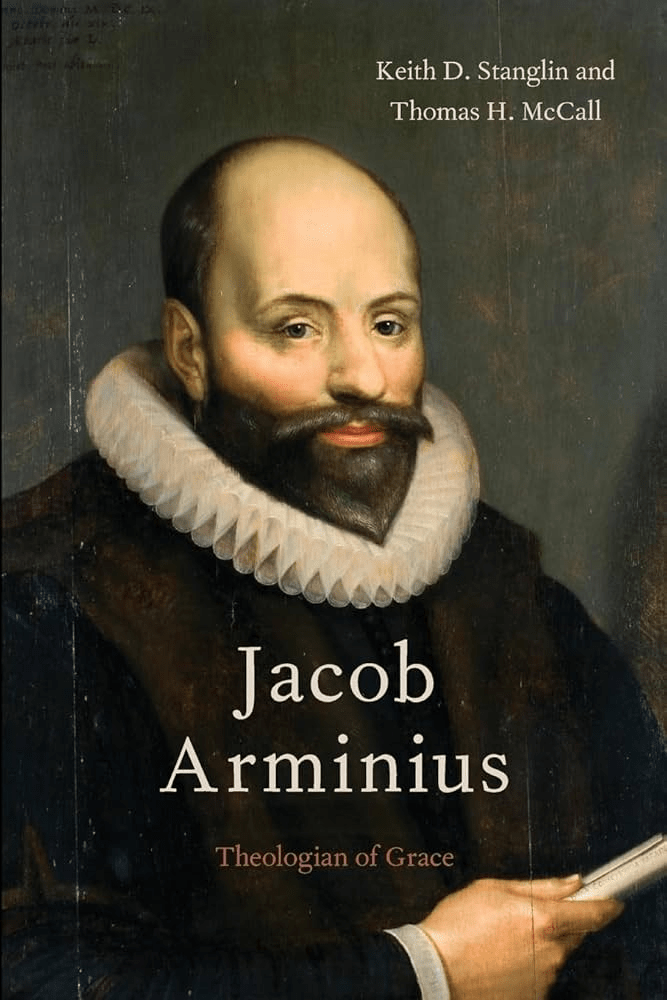
ARMINIANISM: Have you ever heard of the Arminians? AI: “Arminians are followers (called the Remonstrants) of the 16th-century Dutch theologian Jacobus Arminius, holding a Protestant theological view that emphasizes human free will in accepting or rejecting God’s grace, universal atonement (Jesus died for all), and conditional election. They generally disagree with Calvinist doctrines of predestination and irresistible grace, believing instead that God desires all to be saved. God extends grace to all people, enabling, but not forcing, them to believe. Humanity, empowered by grace, has the ability to choose or reject salvation. God chooses (“elects”) individuals for salvation based on His foreknowledge of who will freely believe in Christ, not by arbitrary decree. Christ’s death was for every person, though only those who believe receive the benefit. While views vary, many Arminians believe it is possible to fall from grace or lose salvation through apostasy. Arminianism is widely found in many Pentecostal, Wesleyan, Free Will Baptist, and other evangelical denominations.” Arminians have Bible passages to support each of their counter arguments against Calvinism: Galatians 5:4; 2 Peter 2:1,20,21; John 3:16; Revelation 3:20; 1 John 2:2; Hebrews 2:9; 6:4-6; Acts 2:38. AS YOU MIGHT GUESS, I AM AN ARMINIAN!!!!!!
CALVIN (16TH CENTURY) AND AUGUSTINE (5TH CENTURY): Calvinistic verses emphasize God’s grace and power in salvation. We can’t earn salvation by good works. Calvinism really began with Augustine, not Calvin. AI: “In the early 5th century, Augustine of Hippo opposed Pelagius in a major theological controversy over salvation, grace, and human nature. Pelagius argued that humans have the free will to achieve righteousness without divine aid, denying original sin. Augustine countered that humanity is corrupted by sin and requires irresistible grace to be saved. Augustine argued that Adam’s sin corrupted all humanity, while Pelagius believed sin is merely a voluntary act. Pelagius emphasized humanity’s capacity to choose good independently. Augustine insisted that, due to the Fall (and original sin), human will is enslaved to sin and entirely dependent on God’s grace for salvation.” Augustine was defending God’s grace against the doctrine that man can saved himself by his own goodness. AI: “Augustine’s theology of predestination profoundly influenced John Calvin, forming the foundation of Calvinist soteriology. Calvin considered Augustine a faithful interpreter of Scripture, often quoting him to support unconditional election, irresistible grace, and the inability of fallen humanity to initiate salvation.”
RECONCILING CALVINISTIC AND ARMINIAN VERSES: To me, it does seem that that many verses appear to support Calvinism, but then there are those verses that refute Calvinism that can’t be ignored. For example, John 10:27-29 appear to teach that no one can fall from grace, but then Galatians 5:4 clearly says that some had “fallen from grace”. They can’t both be true. The scriptures can’t contradict themselves. The only possible explanation that teaches the truth of both verses is this: John 10 says that the sheep who hear his voice and follow Jesus will always have God’s grace, but that is conditional on the sheep hearing and following Jesus. If they do not do that, then they can fall from grace as in Galatians 5:4. So John 10 is a great verse that gives assurance to those following Jesus even though they can fall from grace if they quit following Jesus. That is the only possible reconciliation of the 2 verses that makes sense and avoids a contradiction. The same logic can be applied to all TULIP points and verses that refute TULIP. In each case, each point of TULIP is shown to be false based on the verses that refute TULIP.
A LOVING GOD WOULD NOT DO THE THINGS OF CALVINISM: Then there’s the emotional, logical argument for free will and the nature of God. God is a loving God who desires all men to be saved, “not willing for any to perish” (1 Timothy 2:4; 2 Peter 3:9). Why would God send Jesus just to die for a few men instead of all men? Why would God not allow all men to make a free will choice to believe in Jesus and be saved? Why would He arbitrarily pick some to be saved and others lost with no ability to choose to be saved. Why would He put conditions, like repentance and baptism (Acts 2:38) if it is totally unconditional? Why would Stephen condemn the Jews for “resisting the Holy Spirit” (Acts 7:51) if the Spirit is “irresistible”? Why would God blame the for resisting when they weren’t the elect and didn’t even have the ability to choose to accept or resist? There are so many illogical flaws in Calvinism that go against the loving nature of God.
Churches that teach Calvinism (Reformed theology) are primarily found in the Presbyterian churches, Primitive Baptist churches, and Reformed churches. Presbyterian churches owe their origins to John Knox, who studied under Calvin in the 1550s and desired to establish churches governed by the elder system (elder, in Greek, is presbuteros, hence “Presbyterian”). They follow the “Westminster Confession of Faith” that was drawn up in 1646 AD in England. The confession is a systematic exposition of Calvinist theology but also contains many other church doctrines and beliefs.There have been many famous Calvinistic preachers such as Jonathon Edwards, George Whitefield, Charles Spurgeon, R.C.Sproul, and John MacArthur. Most evangelical churches and preachers are Arminian, not Calvinists. Barton Stone and Aexander Campbell were key leaders in the Church of Christ Restoration Movement. Though a Presbyterian minister, Stone rejected the Westminster Confession of Faith and Calvinistic teachings on predestination, viewing them as unscriptural and divisive. He was more Arminian in his views and focused on the idea that salvation was available to all. Alexander Campbell: Campbell left his Presbyterian ordination (mainly due to infant baptism) and was known for strongly opposing Calvinism and, in particular, the Calvinist-influenced Baptist confessions. He favored a view that emphasized personal faith, repentance, and immersion as necessary for the remission of sins,”
IS CALVINISM HERESY? Can a person believe in Calvinism and still be saved? A saved person might believe that he can’t fall from grace and yet never commit sins that would cause him to fall from grace. But what if a saved person believes that he can’t fall from grace b/c of Calvinist teaching and then commits sins that do cause him to fall from grace? He might still feel like he is saved even though he has fallen from grace. His belief in the P of Calvinism can cost him his eternity with Jesus. Some Baptists avoid this possible situation by saying that a “backsliding church member” who falls back into sin and rejects Jesus “never was really saved”, which doesn’t make sense. They will assure that person that he is saved by God’s grace through his faith for a year and then tell him that he never was really saved if he backslides after that year. The Bible teaches that you can be fully assured of your salvation by grace through faith and yet fall from grace. Why is that so hard to understand? I must also include an experience I had teaching someone who had been influenced by Calvinism. He was a very good moral man who wanted to be saved. But he had been taught by Calvinists that you go to the mourners’ bench to see if you are one of the saved elect and wait for the Spirit to enter and enable you to be saved and give you a sign (an emotional or miraculous sign) to confirm that you are the elect. He tried that 2 or 3 times and got nothing (he was not an emotional person). He gave up on being saved although he continued to be a good moral, family man. I studied Acts 2 with him and showed him the those whose hearts were pricked simply repented and were baptized for the remission of their sins. They knew they were saved b/c the gospel Peter preached to them told they would be saved if they repented and were baptized. My friend said, “You mean if I do that tonight then I will be saved?” I said “yes” and he was baptized that very night and was a faithful, assured Christian until his death several years ago. I wonder how many people never found salvation b/c of Calvinism?
ANOTHER LOOK AT CALVINISM.
 Nicky's Notes