
4. 5:3-14 Walk as children of light, no longer in darkness
These are the really bad things that characterize those who are walking in spiritual darkness.
Again from gotquestions.org
Spiritual darkness is the state of a person who is living apart from God. The Old Testament book of Isaiah, in prophesying of the Messiah, speaks of a deep spiritual darkness that enveloped the people: “The people walking in darkness have seen a great light; on those living in the land of deep darkness a light has dawned” (Isaiah 9:2). This passage reappears in the New Testament, in Matthew 4:16, to announce that those who have come to know the God of Israel through His Son Jesus Christ are the ones who have been delivered from spiritual darkness and now walk in the light of God’s life.
The apostle John taught that God is light: “This is the message we heard from Jesus and now declare to you: God is light, and there is no darkness in him at all. So we are lying if we say we have fellowship with God but go on living in spiritual darkness; we are not practicing the truth” (1 John 1:5–6, NLT). And Jesus declared that He is the light of the world: “I am the light of the world. Whoever follows me will never walk in darkness, but will have the light of life” (John 8:12).
Thus, spiritual darkness means not having fellowship with God through a relationship with Jesus Christ. The darkness of separation from God is overcome through Christ: “In him was life, and that life was the light of all mankind. The light shines in the darkness, and the darkness has not overcome it” (John 1:4–5).
From the moment Adam and Eve sinned, humans have lived in a fallen world. All people are born in a fallen state of sin and separation from God. Until a person is reborn of God’s Spirit, he or she lives in spiritual darkness. Sin darkens our understanding and destroys our spiritual sight, cloaking us in deep darkness: “But the way of the wicked is like deep darkness; they do not know what makes them stumble” (Proverbs 4:19). Moses compares this state of sin and disobedience to groping about like “a blind person in the dark” (Deuteronomy 28:29). One of Job’s friends speaks of those who are lost in spiritual darkness: “Darkness comes upon them in the daytime; at noon they grope as in the night” (Job 5:14).
Living in rebellion to God and His will is equivalent to living in spiritual darkness. When the Lord commissioned Paul, He said, “I am sending you to the Gentiles to open their eyes, so they may turn from darkness to light and from the power of Satan to God. Then they will receive forgiveness for their sins and be given a place among God’s people, who are set apart by faith in me” (Acts 26:17–18, NLT).
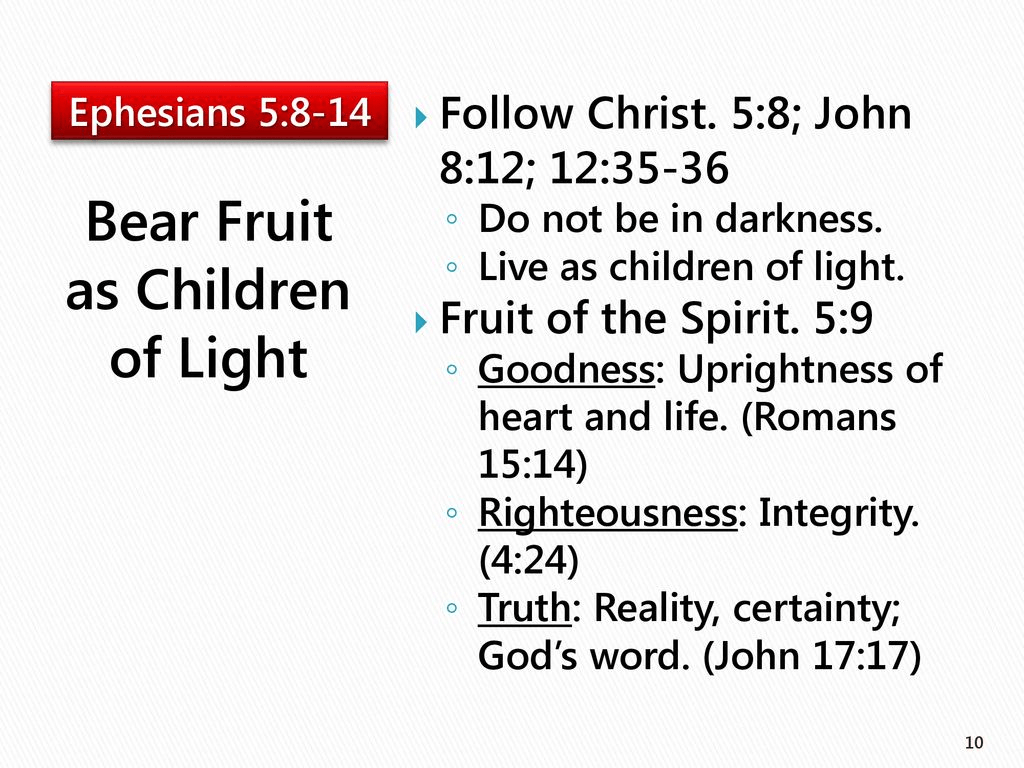
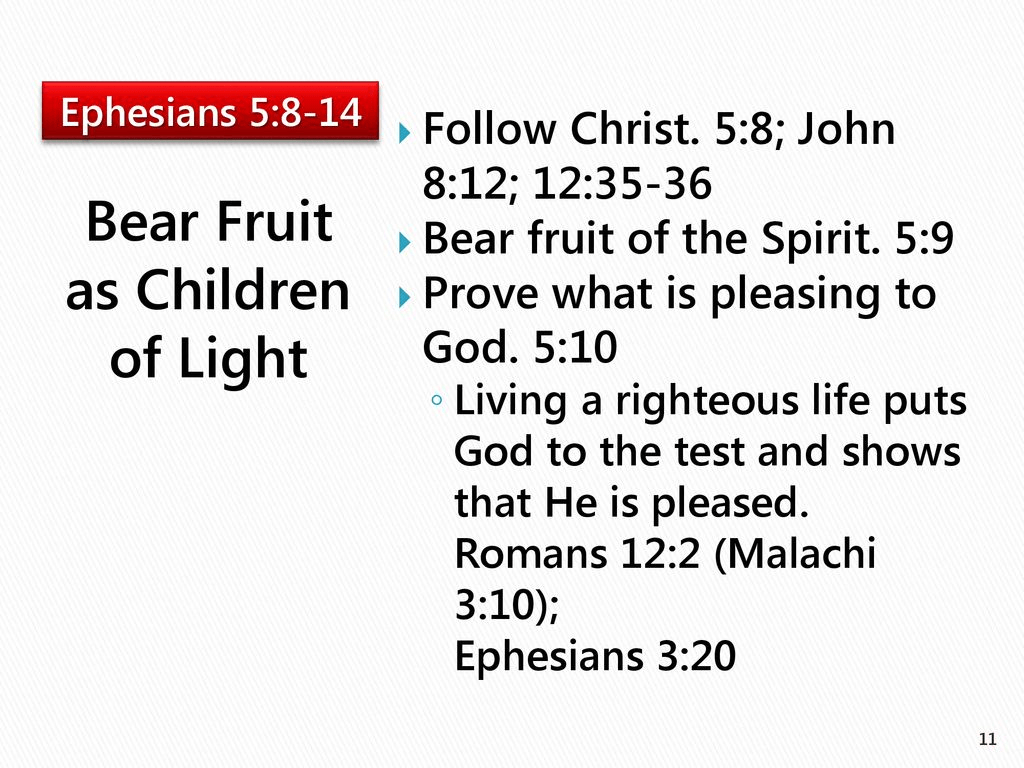
After salvation, believers become beacons of the spiritual light of Christ: “For you were once darkness, but now you are light in the Lord. Live as children of light” (Ephesians 5:8). Those who are in Jesus Christ have been rescued from the kingdom of darkness: “He has delivered us from the domain of darkness and transferred us to the kingdom of his beloved Son” (Colossians 1:13, ESV). Those who reject Jesus Christ face eternal separation from God in “blackest darkness” (Jude 1:4–13).
In Judaism, a person’s inner character and moral quality are understood to be reflected through the eyes. In Matthew 6:22–23, Jesus compares the moral condition of an unregenerate soul to darkness: “The eye is the lamp of the body. If your eyes are healthy, your whole body will be full of light. But if your eyes are unhealthy, your whole body will be full of darkness. If then the light within you is darkness, how great is that darkness!” Jesus’ listeners would have understood that a healthy eye is one that lets in light just as a healthy regenerated heart lets in spiritual light. But a sick or sinful eye (or heart) shuts out light, leaving the soul in spiritual darkness.
The apostle Paul describes those in a sinful state before knowing Christ as possessing a darkened, closed mind and a hardened heart: “Their minds are full of darkness; they wander far from the life God gives because they have closed their minds and hardened their hearts against him” (Ephesians 4:18, NLT).
Unbelievers live in spiritual darkness because Satan, the god of this world, has blinded their minds. They cannot see the glorious light of the gospel: “Satan, who is the god of this world, has blinded the minds of those who don’t believe. They are unable to see the glorious light of the Good News. They don’t understand this message about the glory of Christ, who is the exact likeness of God” (2 Corinthians 4:4, NLT).
Note: Many of the images below are from Micky Galloway ppt. which is on the internet so I assume I can use them.
Spiritual darkness refers to all that is in opposition to the light of God’s love in Christ. The good news that Jesus brings to this world is that His light—His life-giving Spirit—floods light and life into the spiritual darkness of the sinner’s heart. The One who opened the eyes of the blind can also bring us out of spiritual darkness. No matter how deep the darkness, the light of God’s love and truth overcomes every sin that separates us from God.
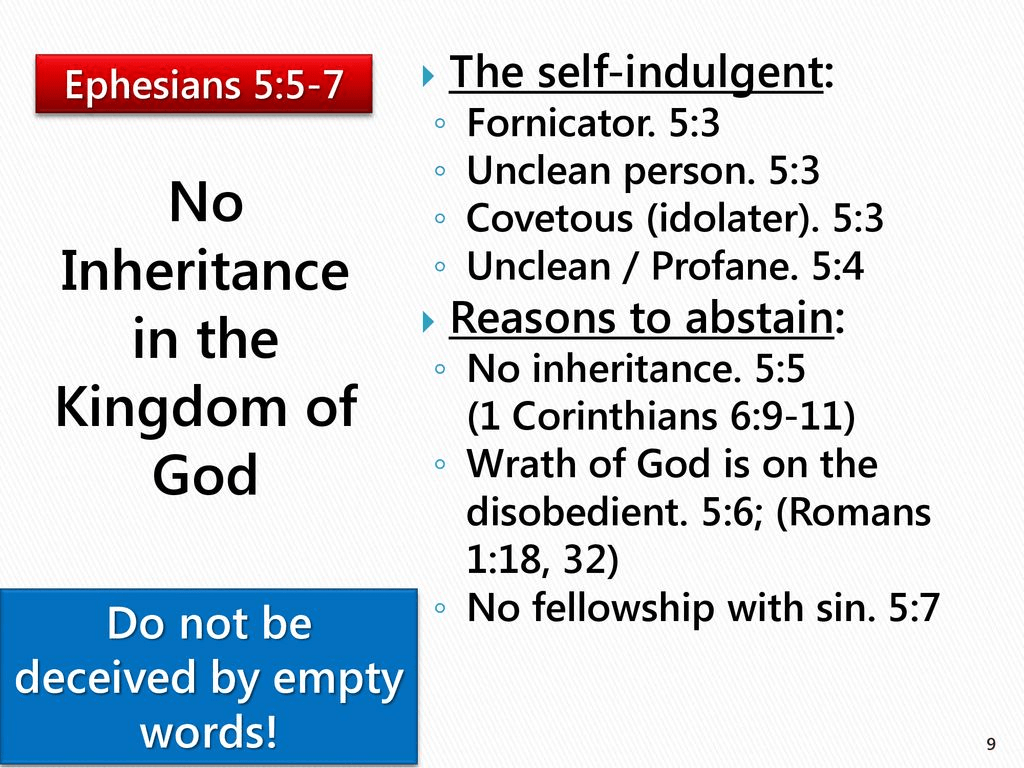
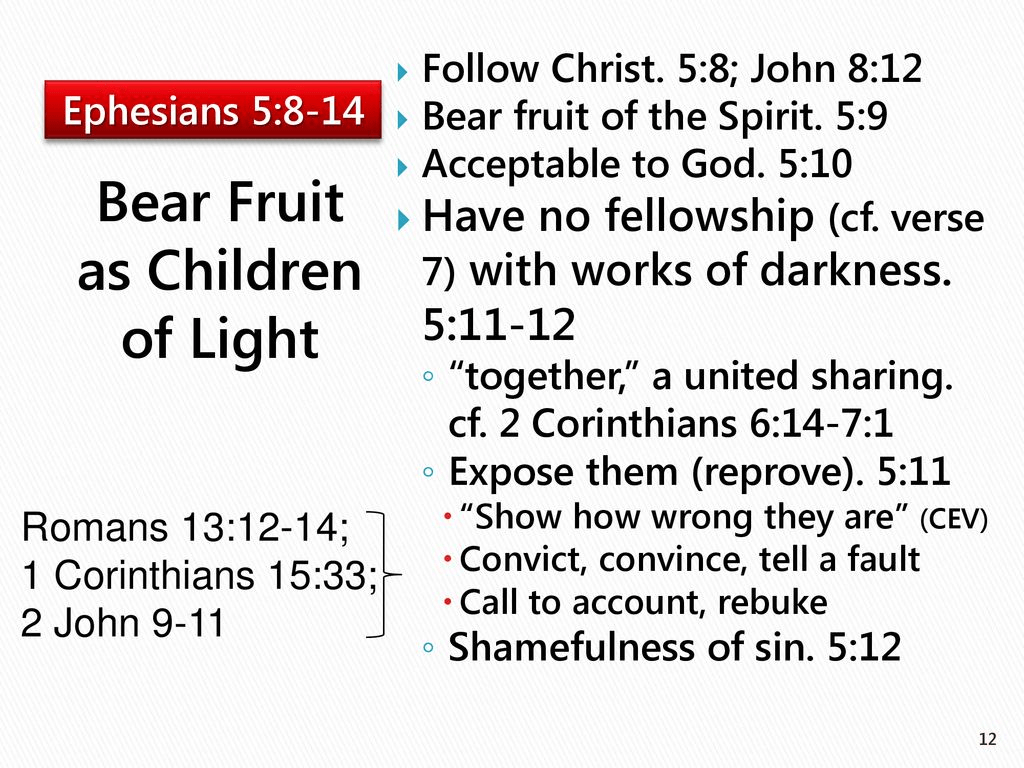
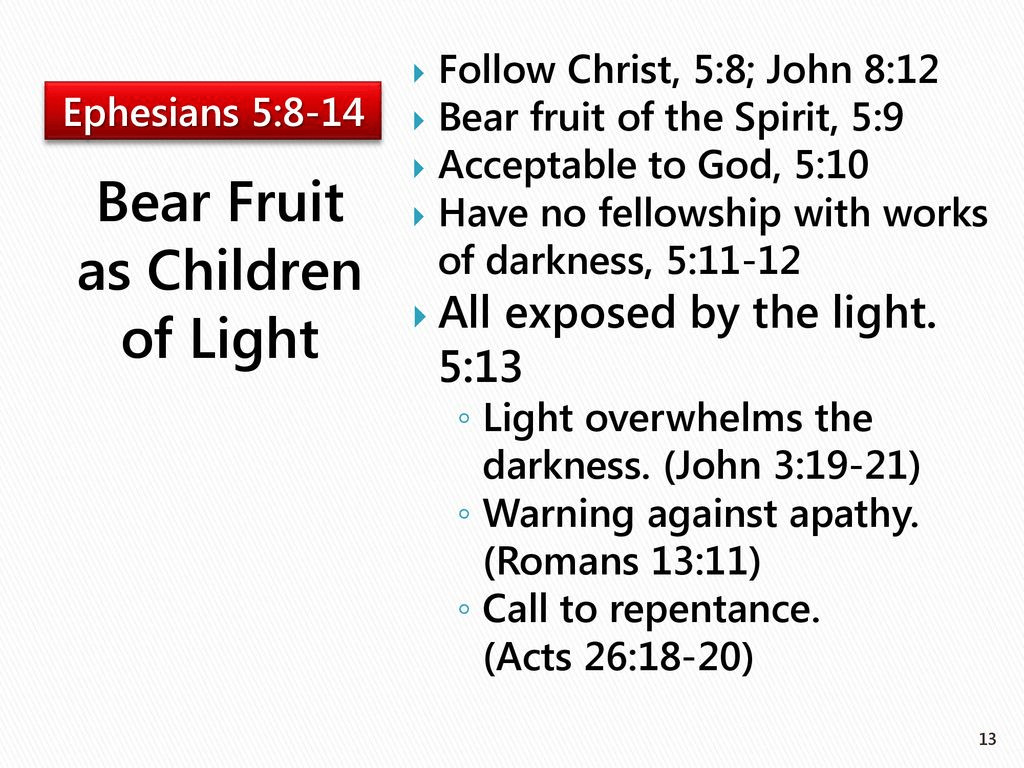

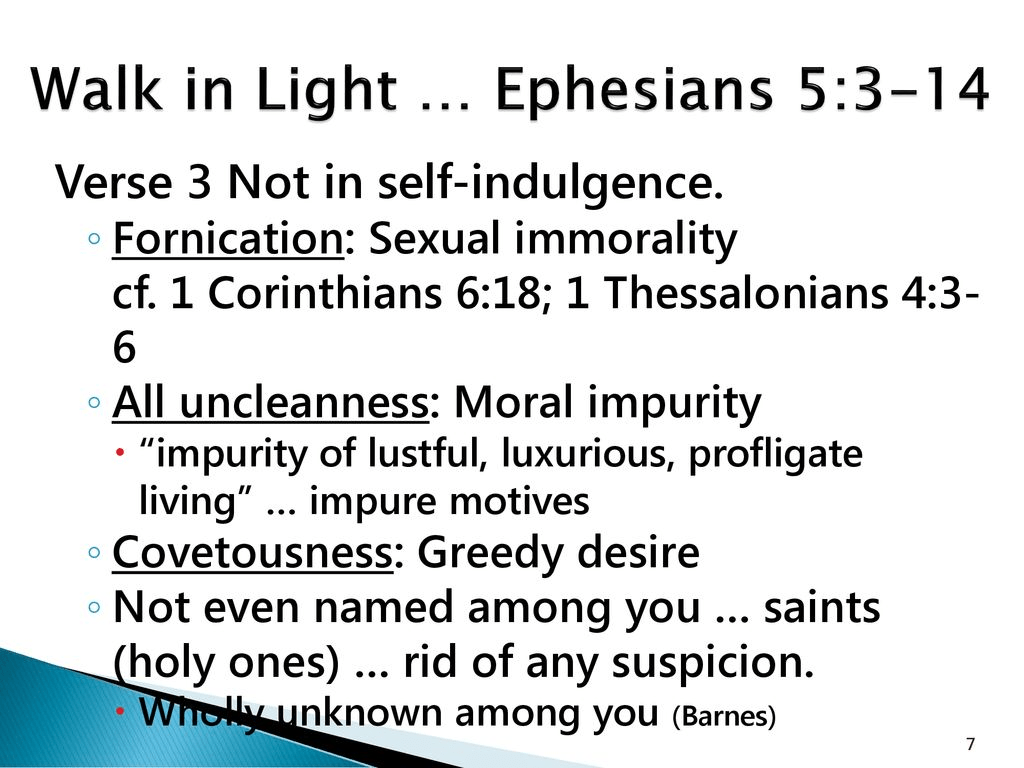
Q: 5:3,5 The two main sins of the darkness are sexual immorality and greed (covetousness). “Filthiness, foolish talk, and crude jesting” are probably connected to those two main sins.
Would you say that our society today is characterized by 1)sexual immorality (4202 porneía (the root of the English terms “pornography, pornographic”; cf. 4205 /pórnos) which is derived from pernaō, “to sell off”) – properly, a selling off (surrendering) of sexual purity; promiscuity of any (every) type which would include fornication, adultery, homosexuality) and
2) greed (4124 pleoneksía (a feminine noun derived from 4119 /pleíōn, “numerically more” and 2192 /éxō, “have”) – properly, the desire for more (things), i.e. lusting for a greater number of temporal things that go beyond what God determines is eternally best (beyond His preferred-will, cf. 2307 /thélēma); covetousness (coveting).
Q: What factors contribute to such a sexual immoral society that we have?
(Personal question to ask yourself): How hard is it to resist sexually immoral thoughts and deeds? How hard is it to to resist lust? What if, like Garfield, all our thoughts were put up in words above us all day? God sees those thoughts even if others can’t.
Q: What factors contribute to such a greedy, materialistic society that we have?
Jesus said, “Beware of all kinds of greed” (Luke 12:15) in the parable of the rich man building bigger barns. So are there different kinds of greed? Yes, “desire for more” material things, power, control, status, attention, recognition, even time.
Q: We all are blessed materially. When does a healthy desire for more in life become greed?
(Personal question to ask yourself): Am I content with what I have or always thinking about how to get more? Contentment is the key to overcoming greed.
Hebrews 13:4 Let marriage be held in honor among all, and let the marriage bed be undefiled, for God will judge the sexually immoral and adulterous. 5 Keep your life free from love of money, and be content with what you have, for he has said, “I will never leave you nor forsake you.” 6 So we can confidently say,
“The Lord is my helper;
I will not fear;
what can man do to me?”
Philippians 4:11 Not that I am speaking of being in need, for I have learned in whatever situation I am to be content. 12 I know how to be brought low, and I know how to abound. In any and every circumstance, I have learned the secret of facing plenty and hunger, abundance and need. 13 I can do all things through him who strengthens me.
Q: Paul says to not only don’t participate in them but to “expose the deeds of darkness”. How can we do that without becoming judgmental or self righteous?
5. 5:15-21 Walk not as unwise men but as wise men
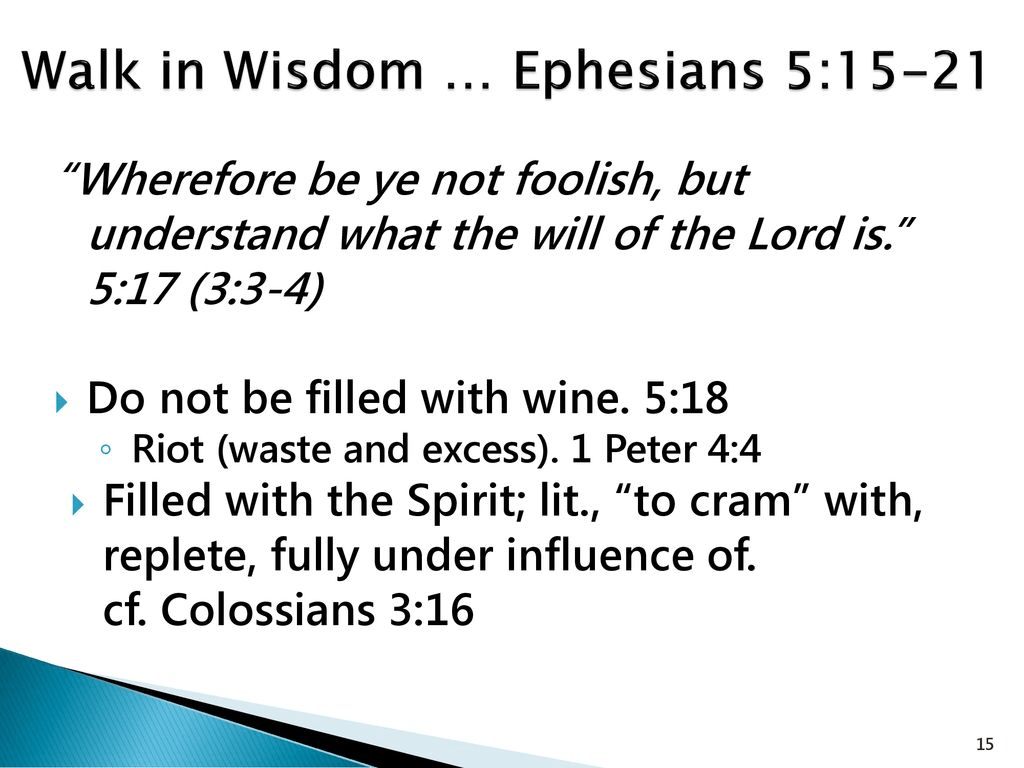
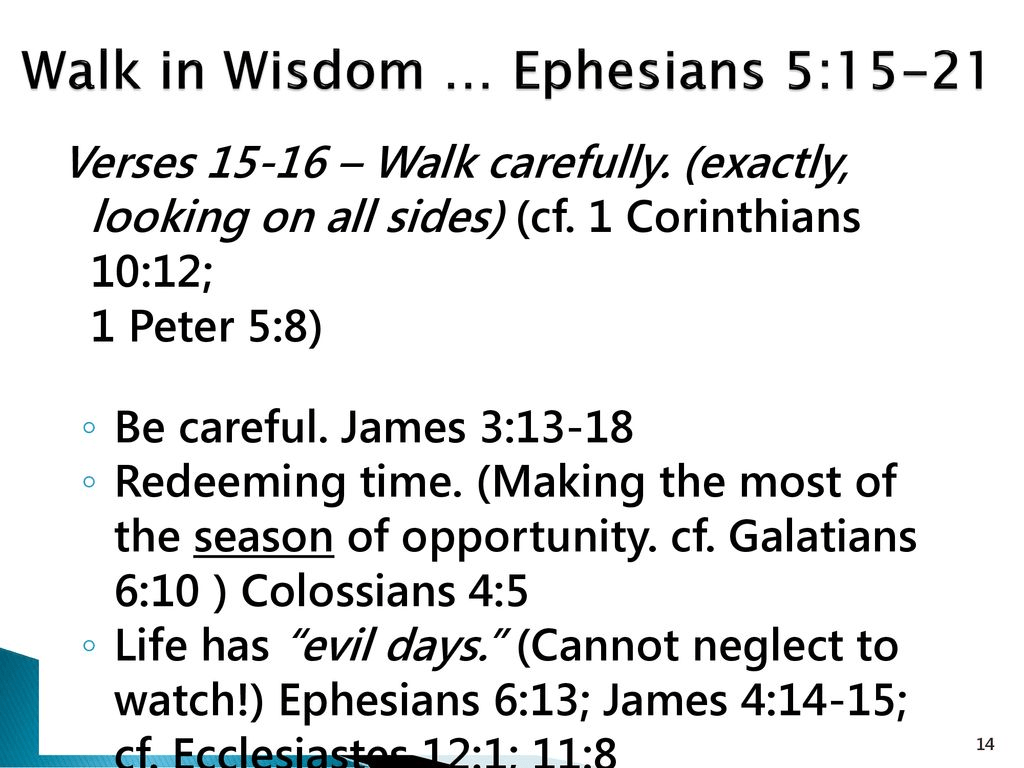
Q: What does “make the best use of your time for the days are evil” (4:16) mean? Is that just talking about time management for all your daily tasks (although that is wise)?
In Ephesians 5:15, “make the best use of your time” means to be intentional and careful about how you spend your time, prioritizing activities that align with God’s will and serve others, rather than wasting time on worldly pursuits, especially considering that “the days are evil” (meaning the world is not aligned with God’s values)
Jesus said in John 9:4 We must work the works of him who sent me while it is day; night is coming, when no one can work.
1 Peter 4:2 so as to live for the rest of the time in the flesh no longer for human passions but for the will of God. 3 For the time that is past suffices for doing what the Gentiles want to do, living in sensuality, passions, drunkenness, orgies, drinking parties, and lawless idolatry. 4 With respect to this they are surprised when you do not join them in the same flood of debauchery, and they malign you; 5 but they will give account to him who is ready to judge the living and the dead.
Q: 4:18 Don’t be drunk with wine, but be filled with the Spirit.
How big of a problem is drinking in our society?
Without naming names, think of all the Christians you know who have ruined their lives with drinking.
Drinking is considered a significant problem in society, as excessive alcohol use is a leading preventable cause of death, contributing to a substantial number of deaths each year, and also causing significant health, social, and economic issues, including accidents, violence, family problems, and workplace disruptions; making it a major public health concern both in the United States and globally.
Key points about the scale of the drinking problem:
- High mortality rate:
Excessive alcohol use is linked to a large number of deaths annually, ranking it among the leading preventable causes of death. - Economic impact:
Alcohol misuse incurs significant costs due to healthcare expenses, lost productivity, and legal issues associated with alcohol-related incidents. - Prevalence of alcohol use disorder (AUD):
Millions of people in the US are diagnosed with AUD, indicating a substantial population struggling with problematic drinking habits. - Social consequences:
Alcohol abuse can lead to family dysfunction, relationship problems, and increased risk of violence. - Global concern:
Excessive alcohol consumption is recognized as a major public health issue worldwide.
Q: Why do people drink so much (moderate drinking is not forbidden in the Bible)?
Why is it such a problem on college campuses?
Why do even many Christians ruin their lives with drinking?
Q: What does it mean to be filled with the Spirit (4:18)? Miraculous?
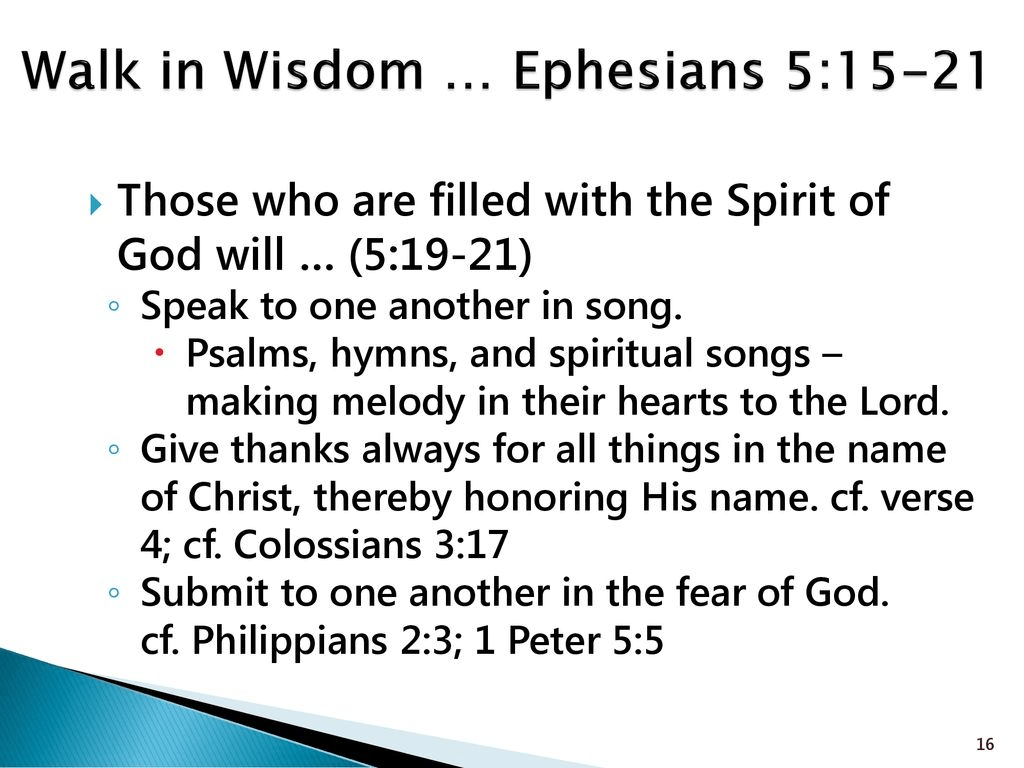
Q: 4:19 Being filled with the Spirit leads to singing psalms, hymns, and spiritual songs, singing and making melody in our hearts to the Lord, teaching and admonishing one another (Colossians 3:16).
What is the difference between psalms, hymns, spiritual songs?
Do you enjoy singing to the Lord?
Does such singing uplift you and edify you?
What if we could all sing like Vincent?
Does it matter how good you sing? Make a joyful “noise” (Psalm 100)
How important is Christian music to you and others?
Does making melody in our hearts mean you can’t make melody with instruments along with the singing?
psalmos: a striking (of musical strings), a psalm. 5568 psalmós – a psalm (“Scripture set to music”). Originally, a psalm (5568 /psalmós) was sung and accompanied by a plucked musical instrument (typically a harp), especially the OT Psalms.
Regardless of one’s view of the use of instruments in worship, is that issue a heaven/hell issue?
Would it be good to add instruments to our worship, or would it be divisive? It seems that it would cause many to either violate their conscience and sing or to leave.
Is there a workable solution if many of the congregation would like to have some instrumental worship?
Does contemporary Christian music mean a lot to you?
What are some of the dangers of using instruments in worship?
Q: Tied to being filled with the Spirit is giving thanks to God the father and to our Lord Jesus Christ “always and for everything” (4:20).
How often do you thank God each day?
How often do you tell others thank you (probably we do that more than we thank God as we tend to take God for granted).
1 THESSALONIANS 5:16-18Rejoice always, pray continually, give thanks in all circumstances; for this is God’s will for you in Christ Jesus.
PSALM 103:1-4Praise the LORD, my soul; all my inmost being, praise His holy name. Praise the LORD, my soul, and forget not all His benefits — who forgives all your sins and heals all your diseases, who redeems your life from the pit and crowns you with love and compassion.
PSALM 95:1-5 (NKJV)Oh come, let us sing to the LORD! Let us shout joyfully to the Rock of our salvation. Let us come before His presence with thanksgiving; let us shout joyfully to Him with psalms. For the LORD is the great God, and the great King above all gods. In His hand are the deep places of the earth’ the heights of the hills are His also. The sea is His, for He made it; and His hands formed the dry land.
PHILIPPIANS 4:4-7Rejoice in the Lord always. I will say it again: Rejoice! Let your gentleness be evident to all. The Lord is near. Do not be anxious about anything, but in every situation, by prayer and petition, with thanksgiving, present your requests to God. And the peace of God, which transcends all understanding, will guard your hearts and your minds in Christ Jesus.
COLOSSIANS 3:15-17Let the peace of Christ rule in your hearts, since as members of one body you were called to peace. And be thankful. Let the message of Christ dwell among you richly as you teach and admonish one another with all wisdom through psalms, hymns, and songs from the Spirit, singing to God with gratitude in your hearts. And whatever you do, whether in word or deed, do it all in the name of the Lord Jesus, giving thanks to God the Father through Him.
 Nicky's Notes