
As Living Stones
1 Peter 2:4 And coming to Him as to a living stone which has been rejected by people, but is choice and precious in the sight of God, 5 you also, as living stones, are being built up as a spiritual house for a holy priesthood, to offer spiritual sacrifices that are acceptable to God through Jesus Christ. 6 For this is contained in Scriptures (Psalm 118:22-23): “Behold, I am laying in Zion a choice stone, a precious cornerstone,

And the one who believes in Him will not be put to shame.” 7 This precious value, then, is for you who believe; but for unbelievers, “A stone which the builders rejected, This became the chief cornerstone,” 8 and, “A stone of stumbling and a rock of offense”; for they stumble because they are disobedient to the word, and to this they were also appointed.
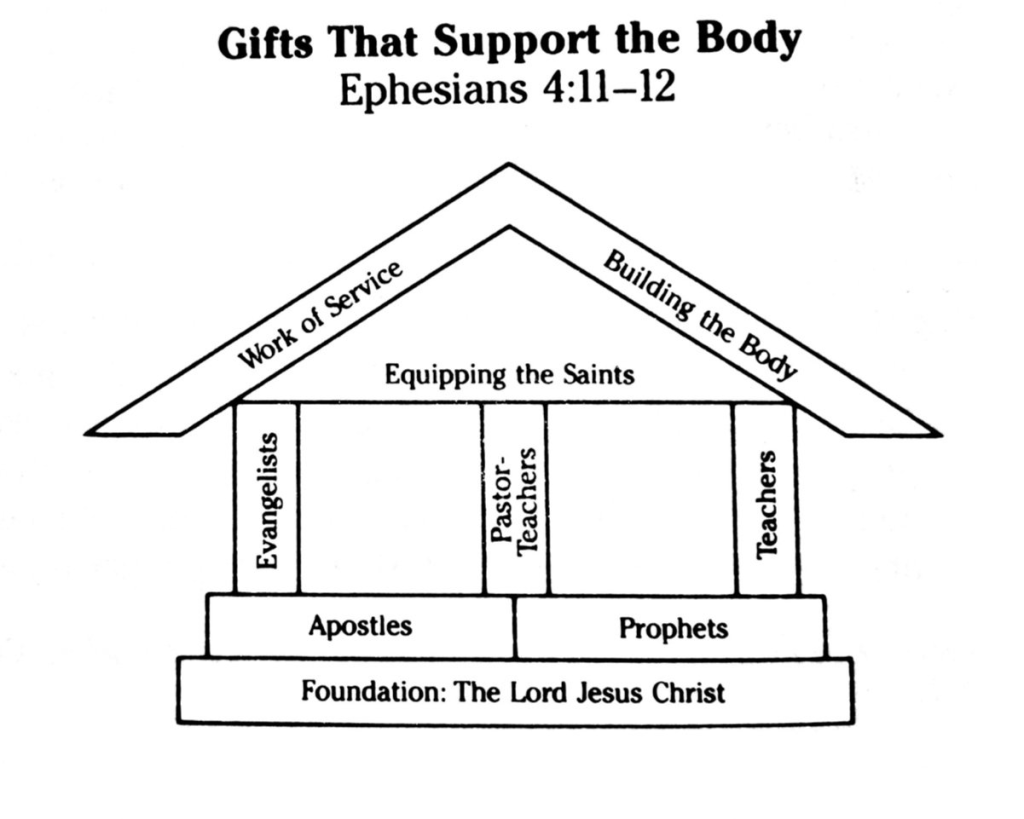
A couple of other passages like this come to mind: 1 Corinthians 3:11 For no one can lay a foundation other than that which is laid, which is Jesus Christ.” Ephesians 2:19 So then you are no longer strangers and aliens, but you are fellow citizens with the saints and members of the household of God, 20 built on the foundation of the apostles and prophets, Christ Jesus himself being the cornerstone, 21 in whom the whole structure, being joined together, grows into a holy temple in the Lord. 22 In him you also are being built together into a dwelling place for God by the Spirit.” These passages got me thinking about Matthew 16:13 Now when Jesus came into the district of Caesarea Philippi, he asked his disciples, “Who do people say that the Son of Man is?” 14 And they said, “Some say John the Baptist, others say Elijah, and others Jeremiah or one of the prophets.” 15 He said to them, “But who do you say that I am?” 16 Simon Peter replied, “You are the Christ, the Son of the living God.” 17 And Jesus answered him, “Blessed are you, Simon Bar-Jonah! For flesh and blood has not revealed this to you, but my Father who is in heaven. 18 And I tell you, you are Peter, and on this rock I will build my church, and the gates of hell shall not prevail against it. 19 I will give you the keys of the kingdom of heaven, and whatever you bind on earth shall be bound in heaven, and whatever you loose on earth shall be loosed in heaven.” 20 Then he strictly charged the disciples to tell no one that he was the Christ.” There is much debate over who or what the “rock” (petra) is that Jesus said he would build his church on. Is it Peter (petros) or is it the confession that Peter made that Jesus is the Christ, the Son of God. There is a big difference in the 2 Greek words petros and petra: 4074 Pétros (a masculine noun) – properly, a stone (pebble), such as a small rock found along a pathway. 4074 /Pétros (“small stone”) then stands in contrast to 4073 /pétra (“cliff, boulder,” Abbott-Smith). It looks like Jesus would have used the same Greek word for Peter (petros) and rock (petra) if he meant they both referred to Peter. It could mean that Peter would be a significant apostle in establishing the church. He was the apostle to the Jews (Galatians 2). He would indeed use the “keys to the kingdom” when he preached the first gospel sermon in Acts 2, with 3,000 being baptized and becoming the first church, which is the kingdom of God on earth, which is the spiritual body of Christ, the saved. Thus he used the keys to open the door into the church kingdom. Even if that is what Jesus. meant, it would not mean that Peter was the head of the church, the first pope. Ephesians 4:11 lists the leadership positions of the early church: apostles, prophets, evangelists, pastors (elders), and teachers. If a pope was the head of the church as Catholics claim, surely that would be included in Ephesians 4:11. Also in Galatians 2, Paul said that the “pillars” of the church in Jerusalem were Peter, James, and John. That puts those 3 men on the same level, which would not be true if Peter was the head of the church and the pope. Having said all that, the passages about Jesus being the cornerstone of the church makes me lean more to the rock being the confession that Peter made that Jesus is the Christ, the Son of God. That would certainly be a “cliff or boulder” (petra) to build the church on as opposed to a “small stone” (petros). Several scriptures point to Jesus being the chief cornerstone, which would be a large “rock”. If there is no other foundation (1 Corinthians 3:11), then how could the church be built on a man, Peter, instead of Jesus the cornerstone? So I think the rock is the confession of Peter that Jesus is the rock, the Son of God, that the church is built on.
Of course, we have to add the apostles and prophets in the foundation of the church: Ephesians 2:20 built on the foundation of the apostles and prophets, Christ Jesus himself being the cornerstone.” Here is a great image for that:

1 Pete 2:9 But you are a chosen people, a royal priesthood, a holy nation, a people for God’s own possession, so that you may proclaim the excellencies of Him who has called you out of darkness into His marvelous light; 10 for you once were not a people, but now you are the people of God; you had not received mercy, but now you have received mercy.”
Vs 10 is the verse that makes many say that the letter of 1 Peter was written to Gentiles Christians who were scattered all over. That would be the only time “disapora” (1 Peter 1:1; James 1:1; John 7:35) ever referred to Gentiles. John 7:35 NAS: to go to the Dispersion among the Greeks”, which shows a clear distinction between the Jewish diaspora and the Gentiles. Vs 10 quotes Hosea 1:10; 2:25 where “you were once not a people but now you are the people of God”. Most commentaries would say that Hosea is referring to Gentiles, but that is not the context. The 2nd child of Hosea and Gomer was to be called “no mercy” (Hosea 1:6). The 3rd child was to be called “not my people” (Hosea 1:8). So those two names refer to apostate Israel and not Gentiles. Then Hosea 1:And in the place where it was said to them, “You are not my people,” it shall be said to them, “Children of the living God.” 11 And the children of Judah and the children of Israel shall be gathered together, and they shall appoint for themselves one head.” The context would be the remnant of Judah and Israel that would believe in Jesus as the Messiah and thus no longer be called “no mercy” or “not my people”. The believing remnant would be called the children of God, the NT people of God. Hosea 2:1 Say to your brothers, “You are my people,” and to your sisters, “You have received mercy.” Hosea 2 tells how God will take back apostate Israel in the Messianic Age, just as Hosea was to take back his runaway wife Gomer. Hosea 2:23 And I will have mercy on No Mercy, and I will say to Not My People, ‘You are my people’; and he shall say, ‘You are my God.’” Again the context is saving the remnant of Israel, not saving the Gentiles. Chapter 3 is a Messianic prediction. Hosea 3:And the Lord said to me, “Go again, love a woman who is loved by another man and is an adulteress, even as the Lord loves the children of Israel, though they turn to other gods and love cakes of raisins.” 2 So I bought her for fifteen shekels of silver and a homer and a lethech of barley. 3 And I said to her, “You must dwell as mine for many days. You shall not play the whore, or belong to another man; so will I also be to you.” 4 For the children of Israel shall dwell many days without king or prince, without sacrifice or pillar, without ephod or household gods. 5 Afterward the children of Israel shall return and seek the Lord their God, and David their king, and they shall come in fear to the Lord and to his goodness in the latter days.” Notice that the context is remnant Israel, not Gentiles. But what about Romans 9:22 What if God, desiring to show his wrath and to make known his power, has endured with much patience vessels of wrath prepared for destruction, 23 in order to make known the riches of his glory for vessels of mercy, which he has prepared beforehand for glory— 24 even us whom he has called, not from the Jews only but also from the Gentiles? 25 As indeed he says in Hosea, “Those who were not my people I will call ‘my people,’ and her who was not beloved I will call ‘beloved.’” 26 “And in the very place where it was said to them, ‘You are not my people, there they will be called ‘sons of the living God.’” Is Paul here saying that Hosea 1-3 is referring to Gentiles who were not His people but now were called His people? I don’t think so. Notice that “not my people but now my people” includes Jew and Gentile believers (Romans 9:24). He is talking about the remnant of Israel, Romans 9:27 And Isaiah cries out concerning Israel: “Though the number of the sons of Israel be as the sand of the sea, only a remnant of them will be saved”, which is what Hosea is predicting. Paul is simply saying that the Gentile believers will be included with the remnant of Israel to be saved in the church. He is not changing the original context of Hosea, which is not about Gentiles. So 1 Peter 2:10 is not an indication that 1 Peter was written to the Gentiles. 1 Peter 2:10 is referring to the remnant diaspora of Jewish Christians, just as Hosea did. It may sound like Hosea 1-3 and 1 Peter 2:10 are referring to Gentiles, but they don’t.
1 Peter 2:9 9 But you are a chosen people, a royal priesthood, a holy nation, a people for God’s own possession.” Who is this referring to? Again, it refers to the Jewish remnant who accepted Jesus as the Messiah and who became the first church. In the OT, it was the nation of Israel that were God’s chosen people, HIs holy nation. On Mt Sinai, God said to the Israelites, Exodus 19:5 Now therefore, if you will indeed obey my voice and keep my covenant, you shall be my treasured possession among all peoples, for all the earth is mine; 6 and you shall be to me a kingdom of priests and a holy nation.” Deuteronomy 7:6: “For you [Israel] are a people holy to the Lord your God. The Lord your God has chosen you out of all the peoples on the face of the earth to be his people, his treasured possession” But in the new covenant Israel as a nation is no longer God’s chosen people or holy nation. Matthew 21:43 Therefore I tell you, the kingdom of God will be taken away from you and given to a people producing its fruits.” This verse makes it clear that as of 70 AD when he judged the rebellious, evil Jewish unbelievers that. Israel was no longer God’s holy nation or chosen people after 70 AD. In the new covenant, God’s chosen people and holy nation are the church, made up of Jewish and Gentile believers in Jesus, and not the whole nation of Israel. I guess I do believe in “replacement theology”: (AI) In Christianity, “replacement theology” or “supersessionism” is the belief that the Christian Church has superseded or replaced the Jewish people as God’s chosen people. This doctrine suggests that the New Covenant established through Jesus Christ has replaced the Old Covenant made with the Israelites”. This new covenant was actually made with the remnant of Israel (Hebrews 8:8 “Behold, the days are coming, declares the Lord, when I will establish a new covenant with the house of Israel and with the house of Judah”) but would include Gentile believers also. The new covenant was made abailable to all Jews as the gospel was preached to the Roman Empire in the first century, to the Jew first and then to the Gentiles. But only believing Jews would be included in that new covenant. Only the remnant Jews would be forgiven of sins under the new covenant (Hebrews 8:10-12). God no longer has any special promises to the nation of Israel such as he did in the Old Testament. Of course, God wants all Jews today to accept Jesus and enjoy the blessings of the new covenant. I guess that is “replacement theology” that a lot of people today don’t like to hear. They want the entire nation to have a special place in God’s promises today even if they don’t believe in Jesus as the Messiah. If God rejected the nation (Matthew 21:43) in 70 AD, taking the nation away from Israel and giving it to the church nation, then why would God feel any different about all the Jews over in Israel today who, for the most part, reject Jesus as the Messiah?????????????
1 Peter 2:11 Beloved, I urge you as foreigners and strangers to abstain from fleshly lusts, which wage war against the soul. 12 Keep your behavior excellent among the Gentiles, so that in the thing in which they slander you as evildoers, they may because of your good deeds, as they observe them, glorify God on the day of visitation.”
Since we are God’s holy nation, then our citizenship is a spiritual one, not an earthly one. Philippians 3:20 But our citizenship is in heaven, and from it we await a Savior, the Lord Jesus Christ, 21 who will transform our lowly body to be like his glorious body, by the power that enables him even to subject all things to himself.” That makes us foreigners (paroikos: Sojourner, foreigner, stranger, alien) and strangers (parepidémos: Sojourner, stranger, exile, temporary resident) here on earth even though we are still citizens of whatever country we are in. My wife and I lived in Trinidad, West Indies and in Colombia, South America. We were “extranjeros” (foreigners) while living there b/c our citizenship was back in the U.S. That is how it is with our citizenship in heaven. While foreigners living in overseas, we did not buy property or plant roots deeply b/c we knew we would only be there for a few years. Christians should think the same way. Don’t plant your roots too deeply in this world. The song: This world is not my home, I’m just a passing through” says it all! So abstain from the lusts of this world which wage war against your soul and can keep you from receiving eternal life in heaven. 1 John 2:15 Do not love the world or the things in the world. If anyone loves the world, the love of the Father is not in him. 16 For all that is in the world—the desires of the flesh and the desires of the eyes and pride of life—is not from the Father but is from the world. 17 And the world is passing away along with its desires, but whoever does the will of God abides forever.” Keep your behavior excellent among the Gentiles. That again sounds like Jewish Christians among the Gentiles and that the letter is written to Jewish Christians. The Gentile pagans might slander you as evildoers (refer to the article 1 Peter 3:8-22 for more discussion of how the Gentiles accused the Christians (Jew or Gentile Christians) of being evil. Mainly they accused them of cannibalism (eating the flesh and blood of Jesus, atheism (b/c they didn’t believe in the Romans gods), and incest (b/c they called each other brothers and sisters). But in 70 AD, the “day of visitation”, God would show that the Jewish Christians were his chosen people and not the unbelieving Jews. They would take not of all the good deeds of the Jewish Christians and glorify God as they could then after 70 AD see God’s plan of salvation realized, no doubt drawing many Gentile Christians to join the Jewish Christians in the church.
Honor Authority
1 Peter 2:13 Submit yourselves for the Lord’s sake to every human institution, whether to a king as the one in authority, 14 or to governors as sent by him for the punishment of evildoers and the praise of those who do right. 15 For such is the will of God, that by doing right you silence the ignorance of foolish people. 16 Act as free people, and do not use your freedom as a covering for evil, but use it as bond-servants of God. Let every person be subject to the governing authorities. For there is no authority except from God, and those that exist have been instituted by God. 2 Therefore whoever resists the authorities resists what God has appointed, and those who resist will incur judgment. 3 For rulers are not a terror to good conduct, but to bad. Would you have no fear of the one who is in authority? Then do what is good, and you will receive his approval, 4 for he is God’s servant for your good. But if you do wrong, be afraid, for he does not bear the sword in vain. For he is the servant of God, an avenger who carries out God’s wrath on the wrongdoer. 5 Therefore one must be in subjection, not only to avoid God’s wrath but also for the sake of conscience. 6 For because of this you also pay taxes, for the authorities are ministers of God, attending to this very thing. 7 Pay to all what is owed to them: taxes to whom taxes are owed, revenue to whom revenue is owed, respect to whom respect is owed, honor to whom honor is owed.
This section brings up an important point. If Christians feel that they can, b/c they are citizens of a spiritual nation, the church, rebel against the government or authorities on earth, then they will be slandered as evildoers. If they say they don’t have to pay taxes, then they will be slandered (and arrested). Matthew 17:24 When they came to Capernaum, the collectors of the two-drachma tax went up to Peter and said, “Does your teacher not pay the tax?” 25 He said, “Yes.” And when he came into the house, Jesus spoke to him first, saying, “What do you think, Simon? From whom do kings of the earth take toll or tax? From their sons or from others?” 26 And when he said, “From others,” Jesus said to him, “Then the sons are free. 27 However, not to give offense to them, go to the sea and cast a hook and take the first fish that comes up, and when you open its mouth you will find a shekel. Take that and give it to them for me and for yourself.” Technically, Jesus says, only citizens of the U.S. will pay federal income tax. You could argue that Christians are “free” from their government rules and taxes b/c our citizenship is in heaven and we are “foreigners”. But “to not give offense”, pay the taxes. That is, to not be slandered as rebellious citizens of the U.S., which is the exact context of 1 Peter 2. But what if the government is evil, such as the Roman government where the emperor claimed to be god. The general rule is that governments are from God to punish evildoers and to prevent anarchy. Paul elaborates on this in Romans 13:Let every person be subject to the governing authorities. For there is no authority except from God, and those that exist have been instituted by God. 2 Therefore whoever resists the authorities resists what God has appointed, and those who resist will incur judgment. 3 For rulers are not a terror to good conduct, but to bad. Would you have no fear of the one who is in authority? Then do what is good, and you will receive his approval, 4 for he is God’s servant for your good. But if you do wrong, be afraid, for he does not bear the sword in vain. For he is the servant of God, an avenger who carries out God’s wrath on the wrongdoer. 5 Therefore one must be in subjection, not only to avoid God’s wrath but also for the sake of conscience. 6 For because of this you also pay taxes, for the authorities are ministers of God, attending to this very thing. 7 Pay to all what is owed to them: taxes to whom taxes are owed, revenue to whom revenue is owed, respect to whom respect is owed, honor to whom honor is owed.” Paul’s command to not resist authorities was written during an evil Roman government, but the command to not resist sill applies. Of course, an evil government could be so evil that it presents a difficult choice for Christians. Bonhoeffer was a Lutheran pastor in Germany as Hitler rose to poser. He advocated not resisting the government until he realized that Hitler was exterminating millions of Jews, gypsies, etc. He had a tough choice. He decided to resist and took part in a plot to assassinate Hitler which failed. I will not judge him for making that choice. Sometimes we have to break a law of God if the circumstances require it. But don’t use your Christian “freedom” as a covering for evil, i.e. as an excuse for rebelling against the government simply b/c you want to be free from the government. The American Revolution against England is interesting. Religious scholars say it was the providence of God leading George Washington and the rebels to rebel. But Romans 13 says that the colonies, most of whom claimed to be Christians, should not resist the government. Why did they resist King George? Not even b/c he will killing people in America like Hitler did, but b/c they didn’t like his tax without representation. Sounds to me like a forbidden resistance, at least for Christians, instead of a providential uprising and rebellion. I might have a few who disagree with that!
Peter concludes this section: 1 Peter 2:17 Honor all people, love the brotherhood, fear God, honor the king.”Romans 13:7 Pay to all what is owed to them: taxes to whom taxes are owed, revenue to whom revenue is owed, respect to whom respect is owed, honor to whom honor is owed.” Those are the guiding principles of how Christians should react with the governments in the countries they live in, which might be difficult in some evil, atheistic or Islamic countries.
Peter even includes servants who have harsh masters, and tells them to obey them anyway. 1 Peter 2:18 Servants, be subject to your masters with all respect, not only to those who are good and gentle, but also to those who are harsh.” That would be applying the earlier principles to slaves. Many of the early Christians in the Roman Empire were slaves. Could they just rebel against their masters once they become Christians? Maybe it their masters were harsh and evil, that could be the excuse for them to rebel. Not so, says Peter.
Wow, this was long but different thoughts just kept coming. Some of this section required some deeper digging into the word.
 Nicky's Notes