
Joshua 24. Ch 23 and 24 are Joshua’s farewell address. He is in his late 80’s and will die soon. In chapter 24 Joshua revews the history of Israel from Abraham to the conquest of Canaan. 13 I gave you a land on which you had not labored, and cities which you had not built, and you have lived in them; you are eating of vineyards and olive groves which you did not plant.’ Joshua told them to choose whom they would serve, either Yahweh or the gods of the Canaanites. They said, “We will only serve Yahweh”. Joshua, said, “No you won’t!” I think he knew that down deep the people were still not completely committed to following Yahweh, and that prediction came true shortly after Joshua died. Joshua set up a stone at an ok by the tabernacle as a witness to their promise. Joshua made his personal pledge, “as for me and my house, we will serve the Lord.” (24:15). Joshua died at the age of 110 so he still lived several years after his farewell address. 24:31 Israel served the Lord all the days of Joshua and all the days of the elders who survived Joshua, and had known all the deeds of the Lord which He had done for Israel.” They buried the bones of Joseph in the cave of Machpelah just as Joseph had made them swear to do. Thus we end the book of Joshua.
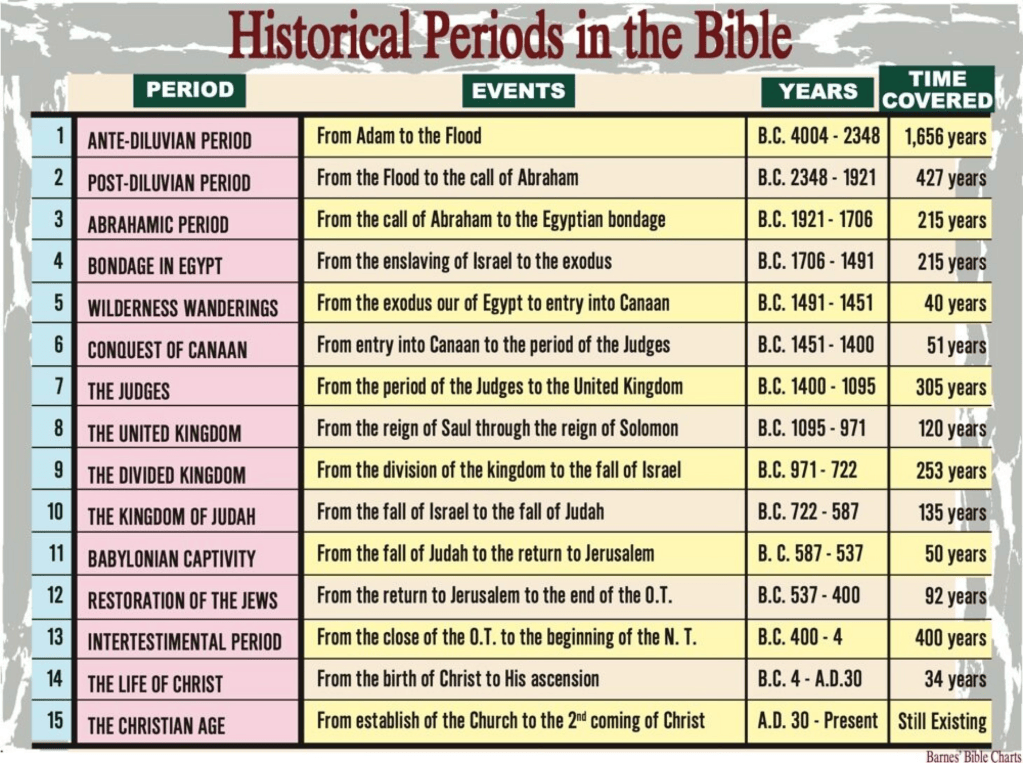
We now enter the 7th period of Old Testament history, the period of the Judges.
Judges 1 describes the capture of several cites but also names the cities they failed to conquer.
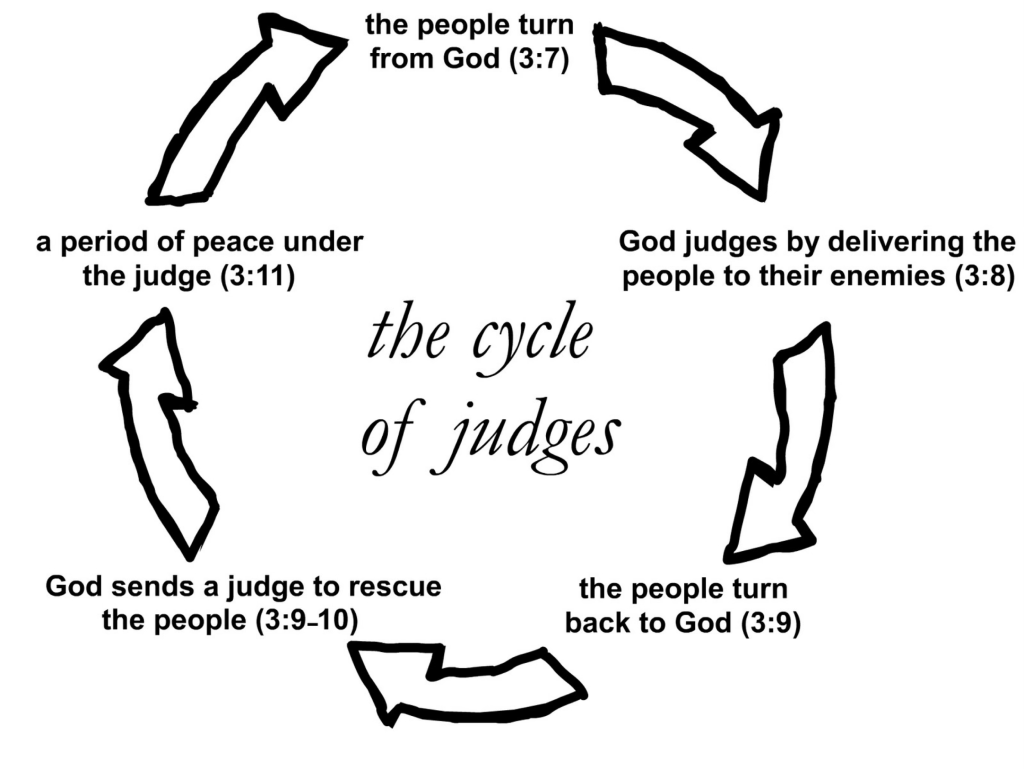
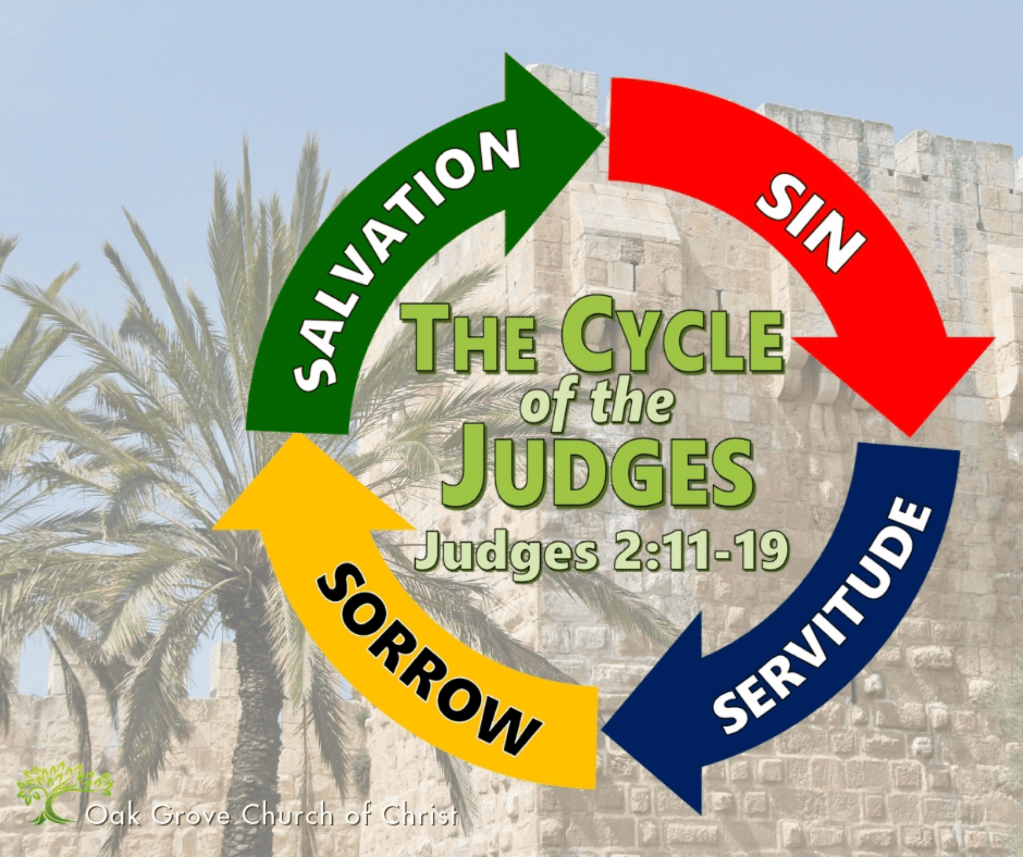
Judges 2. An angel rebukes Israel for not driving out and destroying all the Canaanites as God had commanded. So now they will become as thorns in your sides and their gods will be a snare to you.’ (2:3). 7 The people served the Lord all the days of Joshua, and all the days of the elders who survived Joshua, who had seen all the great work of the Lord which He had done for Israel. Joshua died. 2:10 All that generation also were gathered to their fathers; and there arose another generation after them who did not know the Lord, nor yet the work which He had done for Israel.” Joshua then describes the vicious cycle repeated over and over in the period of the judges.
Judge 3. The unconquered nations were a “test” to see if Israel would obey God. Just as Joshua predicted, they did not obey God. They lived among the Canaanites, intermarried with them, and served the Baals and Ascheroth. Judges 3 then gives the first three judges.
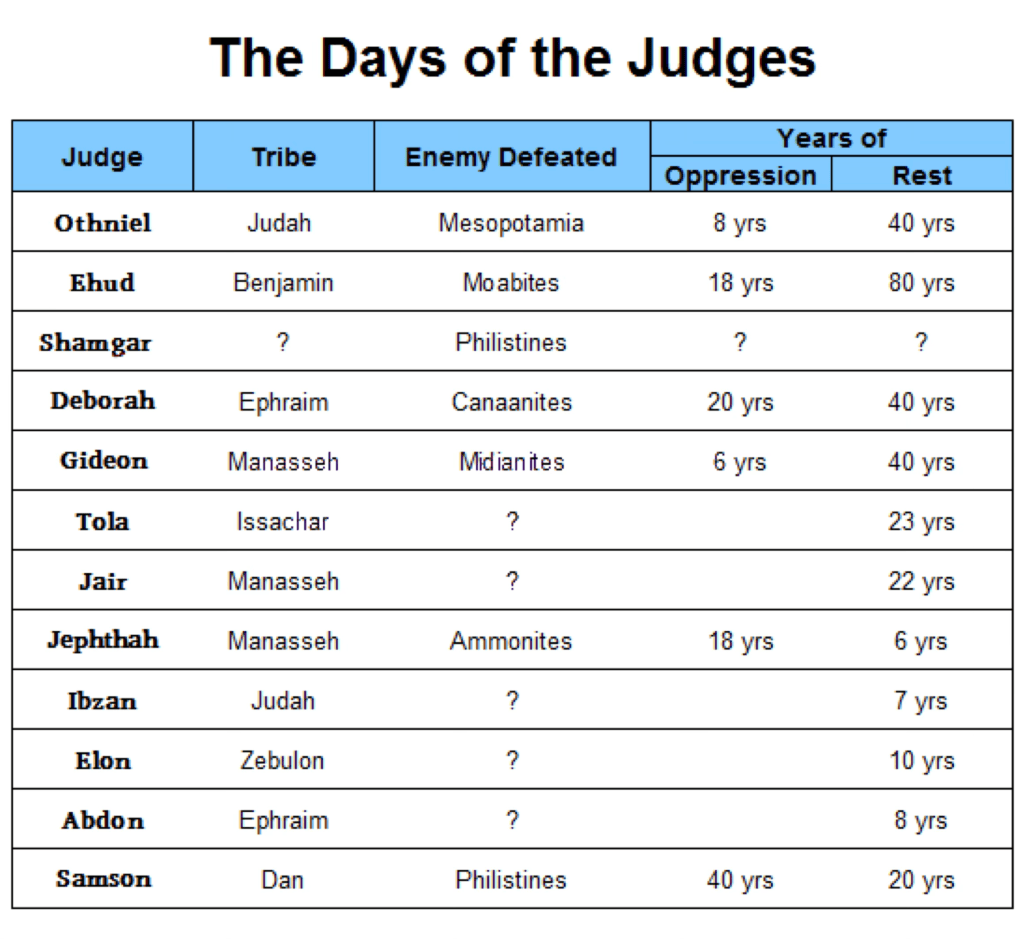
No need to tell all the stories of each judge. Ehud is memorable b/c he stabbed a “very fat” Moabite King Eglon with a two-edged 18 inch long sword and Eglon was so fat that his fat completely covered the whole sword! Ehud just left the sword in him and fled. Shamgar is memorable b/c he killed 600 Philistines with an oxgoad.
Judges 4. Deborah and Barak defeat Jabin and Sisera of the Canaanites. Deborah was the only woman judge. Apparently no men were stepping up to bed judges at that time and deliver Israel from the 20 year long oppression of the Canaanites. Barak reluctantly agreed to help her. Sisera had 900 iron chariots and Israel would have had none. But the Lord took care of that. He sent rain to flood the River Kishon and the chariots mired in the mud and could not move any further. Israel routed Sisera army and Barak chased Sisera. He came to what he thought was an ally in Jael the wife of Heber the Kenite. She tricked him into going to sleep in her tent and then drove a tent peg through his temple into the ground. Ouch! So now we have two heroic women, Deborah and Jael. We don’t know why Jael turned on Sisera since they were supposed to be allies.
Life Lesson: Of course I am going to discuss the role of female leadership. It is obvious that God expected the men to take the lead in Israel and in the church today. Elders were to be the “husbands of one wife”. But that didn’t mean that women could not use the gifts God gave them to edify the church. In 1 Corinthians 11 Paul told the women that they could pray (out loud) and prophesy in the midst of men as long as they wore a veil (a custom back then to show submission to the men). I’m sure the early church assemblies were full of both men and women speaking in tongues and prophesying. The women were told not to “usurp authority or teach over the men” (1 Timothy 2:12) but that command did not keep them from using their gifts in a mixed gender assembly. Yes the women were told to “keep silent” in the churches (1 Corinthians 14:34) but that command can’t contradict that they were allowed to speak as long as they veiled (1 Corinthians 11). So Paul must have been speaking to some unruly women who were usurping the authority of the male leaders and causing a disturbance in the assemblies. Some have tried to make that a general rule that women cannot pray in a mixed gender assembly and I think that is sad b/c it limits us from being edified by the beautiful, heart-felt prayers of the ladies. I would be against having women elders and preachers b/c elders and preachers will sometimes need to rebuke men in the congregation and thus “usurp authority” over the men. The qualifications for elders are for men only. I believe women should be allowed to lead prayers, lead songs, read Scriptures, and give short teachings in the assemblies. Often churches allow those things in Bible classes and small groups but forbid them in the “worship assembly”, but there are not different rules for small groups vs big assemblies. Also, women can step up to lead if the men won’t (as with Deborah). It was both Aquila and his wife Priscilla who taught Apollos about correct baptism. I’m sure many women took the lead in house churches when no men were stepping up. Nympha hosted a house church in her home (Colossians 4:15). Phoebe was a “deaconness” (Romans 16:1). Junia is described by Paul in Romans 16:7 as “outstanding among the apostles,” indicating a high-level commissioning in the early movement.
The Judges cycle will be repeated many times.

