
We continue to name and number the places David fled to during the 10 years that Saul was pursuing him
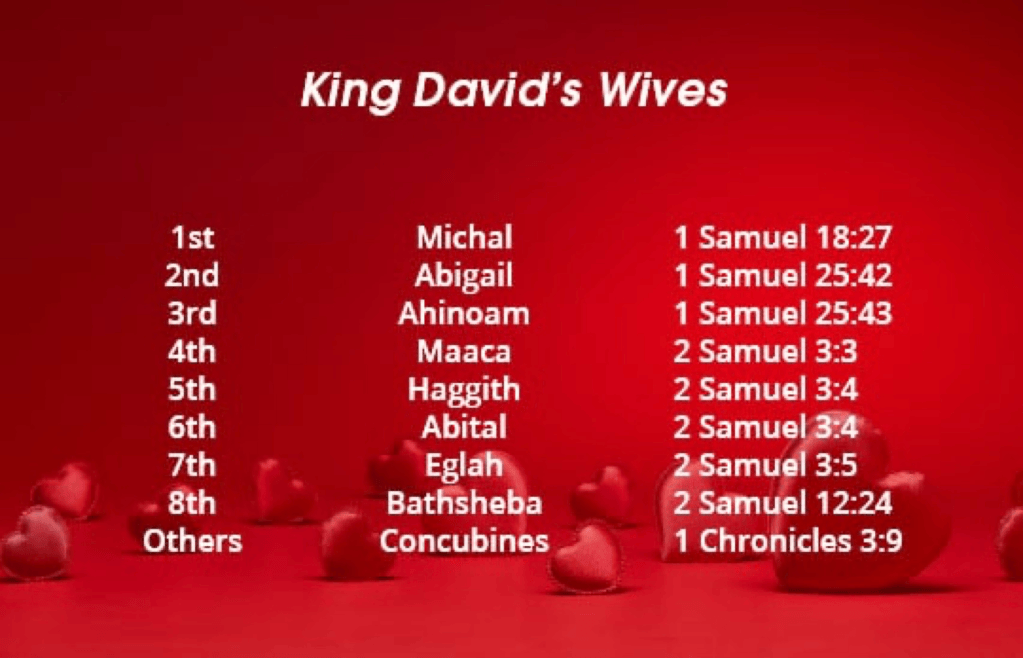
10. Wilderness of Paran 1 Sam 25. A very rich but harsh, evil business man, Nabal, refused to give David sheep for his men even though David’s men could have raided Nabal’s sheep in the fields but did not. David gets 400 of his men ready to go kill Nabal and his servants, and take what they want. Nabal’s wife, Abigail, brought plenty of food to David without Nabal knowing, and asked him not to kill Nabal. David concluded that the Lord had sent her to keep him from seeking vengeance in anger, and thanked her for her discernment. Many New Testament verses tell us not to ever seek revenge against our enemies or seek retaliation. When Abigail returned to Nabal and he found out what she had done, his heart died within in and the Lord struck him dead 10 days later. David took Abigail as his wife, along with Ahinoam, b/c Saul had given his wife Michal to Palti. Here’s a map showing where the wilderness of Paran was located.
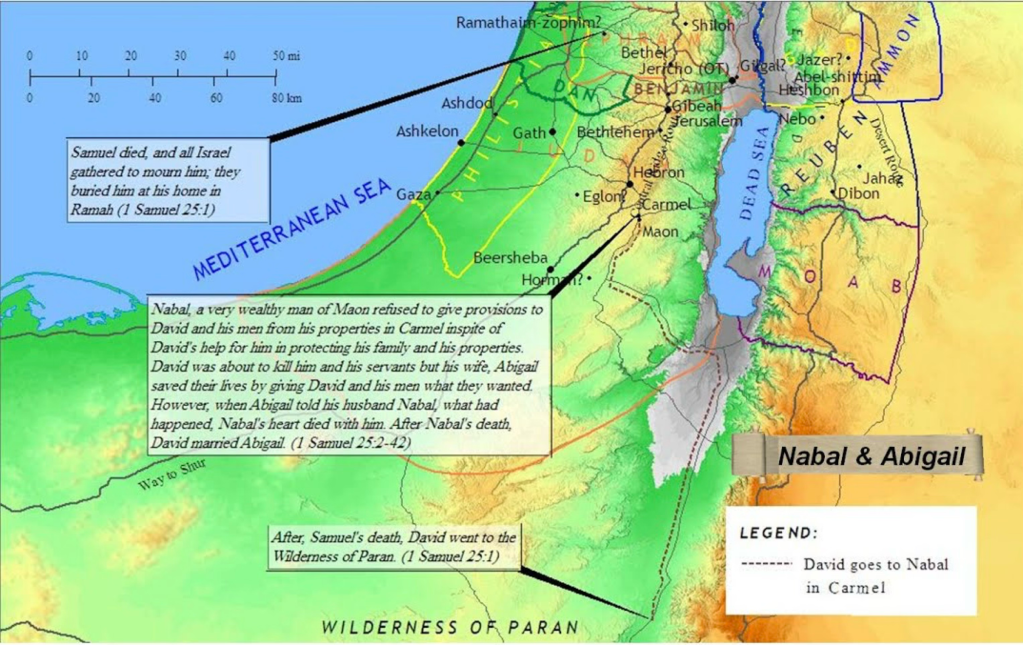
Here’s a map of places David fled to in 1 Samuel 24-27.
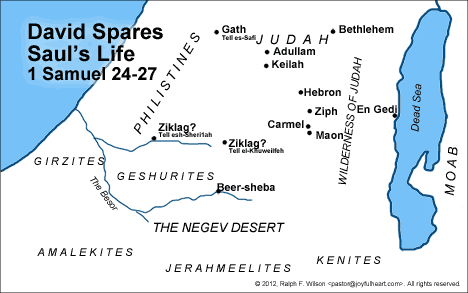
11. Wilderness of Ziph 1 Sam 26 The Ziphites told Saul where David was, and Saul took 3000 men to pursue him. David’s spies told him where Saul’s camp was, so David sneaked in and took Saul’s spear and jug of water, even though Abishai was telling him to kill Saul. From a distance David called out to Abner, showing him the spear and jug. Saul, as in the cave in 1 Sam 24, seems penitent again, and leaves.
12. Gath 1 Sam 27 David decides that his only choice is to escape to the Philistine king of Gath for protection, and Saul, upon hearing that, no longer searched for him. The king Achish gave David the city of Ziklag so David’s wives and the families of his men would eventually all be living in Ziklag. While telling Achish that he is raiding Israelites, he actually is raiding non-Israelite enemies of Achish, killing everyone both men and women there so there would be no witnesses. The Philistines prepared for war against Israel, and Achish trusted David to be his bodyguard for life and David agreed.
1 Samuel 28 Saul goes to the medium at Endor.
King Saul visits a hidden medium at Endor to summon the dead prophet Samuel for military advice on the eve of a battle against the Philistines.
The Background
- The threat: The Philistine army gathered for war against Israel, and King Saul grew deeply afraid.
- God’s silence: Saul tried to seek guidance from God through dreams, prophets, and sacred lots, but received no answer.
- The hypocrisy: Out of desperation, Saul turned to necromancy—despite having previously banned and expelled all mediums and sorcerers from Israel on pain of death. Moses had condemned mediums, spiritists, etc. in Deuteronomy.
The Encounter at Endor
- The disguise: Saul disguised himself, traveled by night with two men, and found a medium (the “Witch of Endor”).
- The oath: The woman initially hesitated out of fear of Saul’s own laws, but Saul swore an oath by God that no harm would come to her.
- The summoning: Saul asked her to bring up the spirit of Samuel. The woman saw the apparition, realized her visitor was Saul, and cried out in shock. Saul calmed her and asked what she saw. Her shock proves that she had not been able to actually raise someone from the dead before this IMO.
The Prophecy and Aftermath
- The message: The spirit of Samuel rebuked Saul for turning to the occult after God had departed from him.
- The doom: Samuel foretold that the Lord would hand Israel over to the Philistines, and that Saul and his sons would die in battle the very next day.
- The end: Overwhelmed with terror and despair, Saul collapsed to the ground. True to the prophecy, the Israelite army was routed at Mount Gilboa the next day, and Saul committed suicide to avoid capture. Jonathon was killed in the battle also.
13 Ziklag 1 Sam 29-30. The Philistine lords joining Achish in the battle against Israel demanded that David not be allowed to go into battle with them b/c of his reputation of killing Israel’s enemies (1 Samuel 29). Achish told David that he could not go. David acted offended, but it must have been a relief for him b/c he would have been forced to kill Israelites if he had gone. Achish then sends David back to Ziklag so his days in Gath are finished. Meanwhile, while David was off with Achish, Amalekites had raided Ziklag and taken captive David’s two wives and the families of the 600 men fighting with him. His men spoke of stoning David. He inquired of the Lord using the high priest ephod to see if he should pursue the Amalekites, and was told to do so. He took 400 men, leaving 200 exhausted men with the baggage, and rescued the captives, slaughtering the Amalekites. The 400 men who went did not want to share the spoils with the 200 who stayed with the baggage, but David said “The share of the man who stayed with the supplies is to be the same as that of him who went down to the battle. All will share alike.” 25 David made this a statute and ordinance for Israel from that day to this.” David shared the spoils from the raid with the people of Judah living in cities of Judah. That’s a great principle today. Many go off into foreign fields to do the Lord’s work and many, for whatever reasons, stay back in the US and support those who go. They share the “spoils” of success equally. I read every day where EEM partners in Europe deliver Bibles and see the joy of those receiving them. I get to share in that great work by supporting EEM.
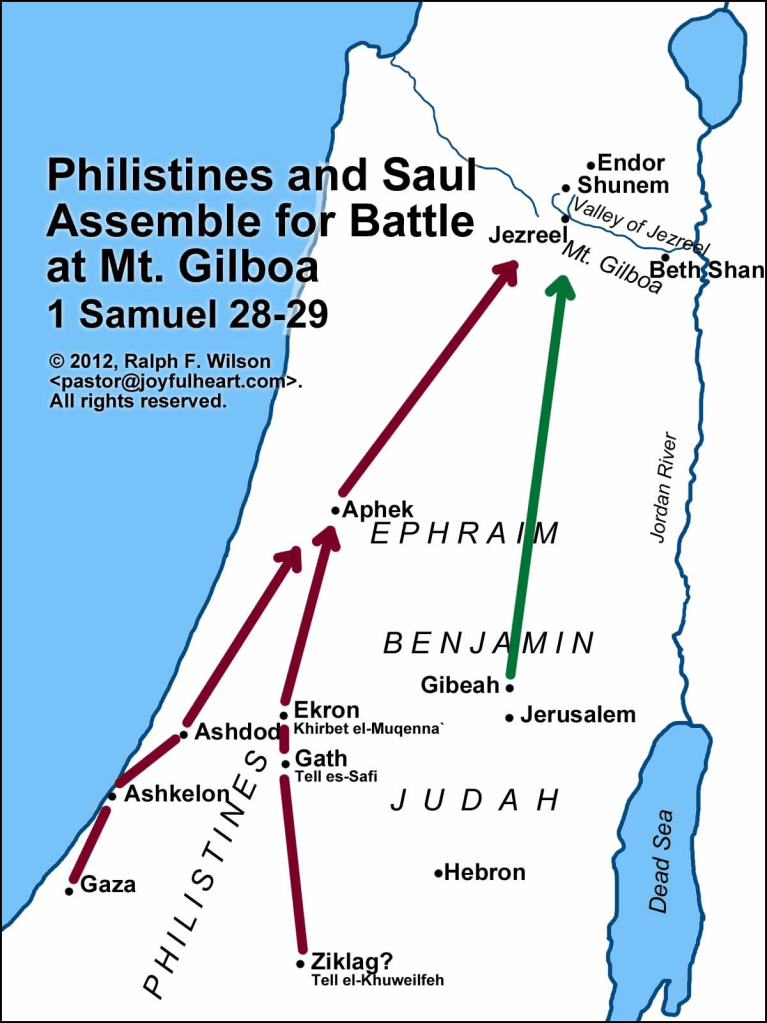
I actually added 1 Samuel 30 to today’s reading.

