In Exodus 25-31 God gave Moses the instructions for building the tabernacle and making the furnishings in it. You may wantt to go back to the blog article on Exodus 26-30 for pictures of the tabernacle, the coverings, the furnishings, and the priestly garments. Exodus 35-40 tells about the actual building of the tabernacle, its furnishings, and the priestly garments. The people volunteered to bring the materials: gold, silver, skins for curtains, linen, etc and they brought so much that they were told to quit bringing any. It has been estimaed that the value of the materials donated was 70-100 million dollars in today’s currency. God gave the Spirit to certain craftsmen to enable them to build with. It took about 6 months to build everything and it was completed about one year from when they left Egypt. Exodus 39:42 So the sons of Israel did all the work according to all that the Lord had commanded Moses. 43 And Moses examined all the work and behold, they had done it; just as the Lord had commanded, this they had done. So Moses blessed them.” In chapter 40 Moses put everything it its proper place and location.
THE GLORY OF THE LORD Exodus 40:34 “Then the cloud covered the tent of meeting, and the glory of the Lord filled the tabernacle. 35 Moses was not able to enter the tent of meeting because the cloud had settled on it, and the glory of the Lord filled the tabernacle. 36 Throughout all their journeys whenever the cloud was taken up from over the tabernacle, the sons of Israel would set out; 37 but if the cloud was not taken up, then they did not set out until the day when it was taken up. 38 For throughout all their journeys, the cloud of the Lord was on the tabernacle by day, and there was fire in it by night, in the sight of all the house of Israel.”
The main idea of the tabernacle is that it was a visible place of the dwelling of God among Israel. Exodus 25:8: “And let them make me a sanctuary; that I may dwell among them.” Exodus 29:45-46: “And I will dwell among the children of Israel, and will be their God. And they shall know that I am the Lord their God… Shekinah is a Hebrew word meaning “that which dwells” or “the dwelling presence”. While the exact word Shekinah does not appear in the Hebrew Bible, the root verb shakan (meaning “to dwell” or “to pitch a tent”) is used frequently. Rabbis later used Shekinah to describe tangible encounters with God. The tabernacle was later replaced with the temple that Solomon built, and God dwelt in that temple. God’s presence filled Solomon’s Temple as a radiant cloud of glory during its dedication, According to 1 Kings 8 and 2 Chronicles 5, when the priests placed the Ark of the Covenant inside the Most Holy Place, a thick cloud filled the house of the Lord so intensely that the priests could not continue their work. Later in the history of Israel, the glory of the Lord would depart from the temple due to the sins of the people (Ezekiel 10-11) which led to the destruction of the temple in 586 BC by the Babylonians.
Ezekiel predicted that when the Messiah would come: Ezekiel 37:27: “My tabernacle also shall be with them: yea, I will be their God, and they shall be my people. Ezekiel predicted that the glory of God would return to the temple in Ezekiel 43:1–5, “coming from the east and entering through the east gate to fill the temple.” There is much debate over what Ezekiel’s temple was in Ezekiel 40-48, but I believe it is fulfilled in church, the temple of God in the New Testament. God came to dwell in His people, the church, a spiritual temple not physical. “The New Testament reveals that this physical tent foreshadowed Jesus coming to “tabernacle” or dwell among us, and later sending the Holy Spirit to live inside believers. John 1:14: “And the Word was made flesh, and dwelt among us, (and we beheld his glory, the glory as of the only begotten of the Father,) full of grace and truth.” The Greek word for “dwelt” is skenoo, which literally means to “tabernacle” or pitch a tent. 2 Corinthians 6:16: “…For ye are the temple of the living God; as God hath said, I will dwell in them, and walk in them; and I will be their God, and they shall be my people.” Revelation 21:3: “And I heard a great voice out of heaven saying, Behold, the tabernacle of God is with men, and he will dwell with them, and they shall be his people, and God himself shall be with them, and be their God.” Zechariah 6:12 predicted, “‘Thus says the Lord of hosts, “Behold, a man whose name is Branch, for He will branch out from where He is; and He will build the temple of the Lord.” I believe that temple that Jesus built for God to dwell in is the church. The same Shekinah glory that filled the tabernacle fills the church today where God dwells in His people.
Chapter 31 begins telling how God put His Spirit in different men giving them the wisdom and craftsmanship to make all the intricate designs and details of the construction of the tabernacle and its furnishings.
THE SIGN OF THE SABBATH This is a critical passage when discussing the keeping of the sabbath today. Exodus 31:17 It is a sign between Me and the sons of Israel forever; for in six days the Lord made heaven and earth, but on the seventh day He ceased from labor, and was refreshed.” The Sabbath was a sign between God and Israel only. The day itself was chosen b/c God rested on that day in the creation week. Genesis 2:3 Then God blessed the seventh day and sanctified it, because in it He rested from all His work which God had created and made.” But that verse does not say that God commanded Adam and Eve to observe the Sabbath (which is what the 7th Day Adventists claim). Most scholars believe that Moses wrote Genesis during the 40 years of wilderness wandering, about 2500 years after the creation week. By the time he wrote Genesis, Moses and the Israelites would have been commanded at Mt Sinai to keep the Sabbath, so it is understandable that he includes the verse in Genesis 2:3 telling why God sanctified the Sabbath. But again, it does not say that God commanded all mankind to start keeping the Sabbath from the beginning of time. Nowhere in Genesis do we find Abraham, Isaac, or Jacob observing the Sabbath. The 7DA’s will quote Jesus when He said, “The Sabbath was made for man, not man for the Sabbath” as if Jesus is saying that the Sabbath was a command for all men from the beginning, but that is not what Jesus meant. Jesus was saying that the Sabbath was not a law that overrode common sense situations like healing on the Sabbath (which he was doing) or getting an ox out of the ditch on the Sabbath (which the Pharisees did). But Jesus is not changing to whom the Sabbath was given to: it was given to Israel and not all mankind. Also, in the book of Nehemiah it says, ““Then You came down on Mount Sinai, and spoke with them from heaven; You gave them just ordinances and true laws, good statutes and commandments. “So You made known to them Your holy sabbath, and laid down for them commandments, statutes and law through Your servant Moses.” (Nehemiah 9:13-14). He did not make the Sabbath known before Mt Sinai in Exodus 20 in the giving of the 10 commandments. It does say in Exodus 16:22-30 that on the way from the Red Sea to Mt Sinai that the leaders came to ask Moses why they were to gather twice as much on Friday as other days of the week and Moses told them about the Sabbath, and they “rested on the Sabbath day” (Exodus 16:30). But if the Israelites had been keeping the Sabbath all along they would have known why they could not gather manna on the Sabbath. Also, they are in the wilderness of Sin which is very close to Mt Sinai and just a very short time before the giving of the 10 commandments in Exodus 20. Yes, Jesus kept the Sabbath as well as all the Law of Moses b/c He was a Jew and the Law of Moses was still valid when he lives. Yes, Paul and other Jewish Christians kept the Sabbath b/c they were Jews and the Law was binding on all the Jews (Christian or not) until 70 AD when the Hebrew writer said that the Law would “disappear” (Hebrews 8:13). Any Christian, Jew or Gentile, can keep the Sabbath if they so desire. It is actually still a good thing to put away worldly pursuits, pleasure, and business and rest on the Sabbath. Many Gentile Christians do keep the Sabbath, but they should not make it a test of fellowship on other Gentile Christians who do not believe that they are commanded to keep the Sabbath. One final point. Many denominational preachers have said, “we should keep the 10 commandments today, even the 4th “remember the Sabbath to keep it holy”, but they say that “Sunday is the Christian sabbath”. Nowhere does the Bible say that God changed the Sabbath to Sunday. The Sabbath has always been from 6pm Friday to 6pm Sunday. We Christians do not make Sunday a rest day, but most Christians assemble on Sunday b/c that is the day that Jesus arose from the dead. BTW, it is interesting that the 7DA’s agree that Jesus was raised on Sunday. Another thing to point out is the inconsistency of those who claim to keep the Sabbath today. The penalty for breaking the Sabbath was death. Exodus 31:14 Therefore you are to observe the sabbath, for it is holy to you. Everyone who profanes it shall surely be put to death; for whoever does any work on it, that person shall be cut off from among his people. 15 For six days work may be done, but on the seventh day there is a sabbath of complete rest, holy to the Lord; whoever does any work on the sabbath day shall surely be put to death.” I’m always amazed at how Sabbath keepers ignore this penalty. They might try to make the penalty a “ceremonnial” law that was done away with by Jesus, but how can they ignore this passage in Exodus 31 where he is giving the penalty for breaking the Sabbath as a “perpetual” covenant. I hope this discussion of the Sabbath was helpful to you. I tried to cover all baes on this issue. Now you must decide if you wish to observe the Sabbath rest in any way.
THE GOLDEN CALF Chapter 32 begins the incident of the making and worshipping of the golden calf. The unbelief of the Israelites is hard to fathom. They saw the 10 plagues. They saw the Red Sea kill Pharoah’s chariots and believed (Exodus 14:31). It had only been about 3 months since the crossing of the Red Sea. Sure, Moses was up on Mt Sinai a long time (40 days and nights) and they began to wonder what had happened to him. But to get Aaron to make a golden calf and say “This is your god, O Israel, who brought you up from the land of Egypt”? What happened to that belief they had as they watched Pharoah’s army drown? And look at Aaron’s role in this incident. When Moses came down from the mount with the two tablets of stone, he confronted Aaron. Aaron said, “So they gave gold to me, and I threw it into the fire, and out came this calf.” Moses saw that the people were out of control “b/c Aaron had let them get out of control” (Exodus 32:24). This is God’s newly appointed high priest. Moses had to be greatly disappointed in his brother Aaron’s actions in this incident. Moses’ anger burned against the people, he ground the calf into powder and made them drink it, and called upon the Levites to kill 3,000 of the rebels. Life Lesson: It is difficult at times to believe in a God whom we cannot see. The Israelites wanted to have a god they could see, so they made the calf. You can understand why idolatry is so prevealent in so many non-Christian cultures and religions. I struggle at times to believe in a God whom I can’t see, who fills the universe in some spiritual way. That is hard to believe! I’m thankful for the resurrection of Jesus that assures me that Yahweh truly exists.
MOSES’ INTERCESSION FOR THE ISRAELITES WHO MADE THE GOLDEN CALF While on the mount, God told Moses about the golden calf. Exodus 32:9 The Lord said to Moses, “I have seen this people, and behold, they are an obstinate people. 10 Now then let Me alone, that My anger may burn against them and that I may destroy them; and I will make of you a great nation.” What a temptation for Mosses! For God to make of Moses a great nation instead of Abraham! But Moses pleads for God not to destroy the people. He reminds God of his covenant to Abraham and what it would look like to the Egyptians if He destroyed them after after all those plagues to save them. Later in Numbers 13-14 Moses will again intercede for the people when the 12 spies are sent out and God is ready to destroy the people and make the great nation out of Moses, not Abraham. Numbers 12 says that Moses was the “meekest man on earth” and his intercession for the people on several occasions proves that. Moses even told God, Exodus 32:32 But now, if You will, forgive their sin—and if not, please blot me out from Your book which You have written!” He takes his role leading the people that seriously! Life Lesson: How is your intercessory prayer life? 1 Timothy 2:1 urges that petitions, prayers, intercession, and thanksgiving be made for all people.” I use rhe ACTS prayer model: Adoration (praise), Confession (of sins), Thanksgiving, Supplication (intercession for others). I don’t know exactly how intercessory prayer works to convince God to do things or to not do things. I do know that Moses’ intercessory prayer changed God’s mind about destroying the people. Exodus 32:14 So the Lord changed His mind about the harm which He said He would do to His people.” Some teach that all things are predestined and that God never changes His mind, but several verses show where God planned to do something but intercessory prayer changed His mind. Pray, believing that your prayer might convince God to change His mind about something that looks inevitable.
GOD SPEAKS TO MOSES FACE TO FACE AND HIS FACE SHINES Moses had a temporary tent (the tabernacle had not been built yeet) where God would speak to him “face to face as a man speaks to a friend”. Deuteronomy 34:10 says that Moses was the only one God ever spoke face to face with. Exodus 34:29-35 tells us that Moses’ face would shine after he came from speaking with God in the tent as he told the people what God had to say to them. To keep from diminishing the importance of God’s word to them, he would put a veil on after speaking so they could not see the fading glory in his face. In 2 Corinthians 3:12-13 Paul said that the unbelieving Jews that he was trying to convert were hearing the new covenant teachings with a veil over their minds preventing them from the seeing the fading glory of the old covenant. Life Lesson: People should be able to see a change in our countenance after we spend time speaking with God in prayer. They should be able to see that our personal one on one time with God and in meditation on His word delights us, convicts us, assures us. We should come out of that prayer time with happy and peaceful expressions on our faces. Life lesson: Paul said this in 2 Corinthians 4 after talking about the veil that was keeping the Jews from accepting the fading glory of the old covenant: 3 And even if our gospel is veiled, it is veiled to those who are perishing, 4 in whose case the god of this world has blinded the minds of the unbelieving so that they might not see the light of the gospel of the glory of Christ, who is the image of God.” God has shown us the spiritual light of salvation through Jesus, the Light of the world. John 8:12 “Again Jesus spoke to them, saying,“I am the light of the world. Whoever follows me will not walk in darkness, but will have the light of life.” But there is a veil over the minds of unbelievers that keeps them from seeing that Light. It might be their pride, their refusal to give up their sinful lusts, their intellectual arrogance, their bitterness over bad things that have happened to them, their rejection of belief in God b/c of the existence and of pain and suffering, their belief that science and evolution negates the need for belief in God. Do you have a veil that keeps you from seeing the light of the gospel? You read God’s word but it doesn’t change you. You have some veil that keeps you from really seeing the spiritual light that God can give you.
MOSES IS GIVEN A SPECIAL GLIMPSE OF THE GLORY OF GOD Moses was burdened with leading these obstinate Israelites and you can understand why! He told God, “I pray You, if I have found favor in Your sight, let me know Your ways that I may know You” (Exodus 33:13). “I pray You, show me Your glory!” (Exodus 33:18) Exodus 33:21 Then the Lord said, “Behold, there is a place by Me, and you shall stand there on the rock; 22 and it will come about, while My glory is passing by, that I will put you in the cleft of the rock and cover you with My hand until I have passed by. 23 Then I will take My hand away and you shall see My back, but My face shall not be seen.” Moses did as God said and saw a glimpse of the glory of God that no man has ever seen but him. It gave him the assurance he needed to lead the people. God also gave Moses a summary of His “ways” and His attributes: Exodus 34:6 Then the Lord passed by in front of him and proclaimed, “The Lord, the Lord God, compassionate and gracious, slow to anger, and abounding in lovingkindness and truth; 7 who keeps lovingkindness for thousands, who forgives iniquity, transgression and sin; yet He will by no means leave the guilty unpunished, visiting the iniquity of fathers on the children and on the grandchildren to the third and fourth generations.” 8 Moses made haste to bow low toward the earth and worship.” In Judaism, Exodus 34:6-7 is called the Thirteen Attributes of Mercy Exodus 34:6-7 is mentioned between 15 and 27 times by various biblical authors, including King David (Psalms 86:15, 103:8, 145:8), Joel (Joel 2:13), Jonah (Jonah 4:2), and Numbers 14:18. This makes it the most cross-referenced verse in the old testament, showing its importance. The verses are cited whenever God is about to punish sin, to forgive sin, to be patient with disobedient Israel, etc. Life Lesson: Romans 1:20 says that we can “clearly see the invisible attributes of God” by the things He created, That is called “natural revelation”. But the incredible design of the universe and the human body doesn’t tell us what that Creator is like? It takes special revelation from God’s mouth to tell us what God is like. He gave that special revelation to Moses and He gives it to us in His word. Are you studying the word daily to. know God’s ways and attributes? Life lesson: The “nature” of God is a critical topic. Many struggle with belief in God b/c of the existence of pain, evil, and suffering. How can a loving God allow such? How can a loving God command the Israelites to commit genocide of the Canaanites? How can a loving God allow my little child to die? Why does God often allow the righteous to suffer and the wicked to prosper? Billy Graham’s fellow evangelist preacher, Charles Templeton walked of the campaign trail and became an atheist b/c of the existence of evil in the world and his belief that science and evolution refuted the Bible. He wrote his book, Farewell To God, in 1996 and died an atheist. Do you ever have such doubts about the nature of God and His ways? Find a place where you can ask God to show you His glory and His ways. That place might be an inner room in your house, a church prayer room, a rock by a beautiful lake or mountain. Tell him about your struggles and how much you need a special glimpse of His glory to keep you faith going and to help you with your struggles. He will reveal Himself to you just as He revealed Himself to Moses.
These chapters are the instructions given Moses by God for building the tabernacle. Exodus 25:8 Let them construct a sanctuary for Me, that I may dwell among them. 9 According to all that I am going to show you, as the pattern of the tabernacle and the pattern of all its furniture, just so you shall construct it.” Of course, God dwells everywhere, so this is a figurative dwelling of God. They were commanded to make the ark of the covenant out of acacia wood and keep the 2 tables of stone on which the 10 commandments were written inside the ark. Acacia is the largest and most durable tree native to the arid Sinai region, making it the only practical timber available of sufficient size along their route. The wood used to cons truct the ark had to be durable since the ark would last for hundreds of years. The mercy seat of pure gold was placed on top of the ark with two cherubim on top of the mercy seat. Exodus 25:21 You shall put the mercy seat on top of the ark, and in the ark you shall put the testimony which I will give to you. 22 There I will meet with you; and from above the mercy seat, from between the two cherubim which are upon the ark of the testimony, I will speak to you about all that I will give you in commandment for the sons of Israel.” The ark would be placed in the Most Holy Place in the tabernacle. Later we read that the high priest would go into the Most Holy Place only on the Day of Atonement once each year and sprinkle blood on the mercy seat to “atone” for the sins of the people for the past year.
As you read of the construction of the tabernacle and its furnishings, you will notice a lot of gold, silver, curtain material, etc. These materials would have been the things the Egyptians gave Israel as they were leaving Egypt after the death of the firstborn. It even says that Israel “plundered” Egypt, so there were a lot of materials given to them. Here are some great slides of the tabernacle and its furnishings. These images are all found by a google search and I never use them to make money. I only use them for my Bible classes, for teaching the Bible, and for my blog articles (for which I do not charge a subscription).
Of special note is the ark of the covenant in the Most Holy Place. The two tables of stone of the 10 commandments, a jar of manna, and Aaron’s rod that budded were all kept inside the ark.
Chapter 28 gives the instructions for the garments for Aaron the first high priest and his sons who were priests. The garments were lavish as God wanted to show His glory in the dress of these priests who would be ministering to him in the tabernacle. Notice the golden ephod with its golden breastplate with 12 precious stones and the Uriim and Thumim used to determine God’s will. Animal sacrifices were made for the conssecration of Aaron and his sons and they were anointedd with oil.
The priests were commanded to offer two lambs on the brazen altar (the altar of burnt offerings) each day (one in the morning and one at twilight). Exodus 29:45 I will dwell among the sons of Israel and will be their God. 46 They shall know that I am the Lord their God who brought them out of the land of Egypt, that I might dwell among them; I am the Lord their God. God gave this pattern for building the tabernacle and its furnishings in great detail.” Hebrews 8:4 Now if He were on earth, He would not be a priest at all, since there are those who offer the gifts according to the Law; 5 who serve a copy and shadow of the heavenly things, just as Moses was warned by God when he was about to erect the tabernacle; for, “See,” He says, “that you make all things according to the pattern which was shown you on the mountain.” Exodus 25: Exodus 25:8 Let them construct a sanctuary for Me, that I may dwell among them. 9 According to all that I am going to show you, as the pattern of the tabernacle and the pattern of all its furniture, just so you shall construct it.”
The typology of the tabernacle and its seven sacred furnishings serves as an earthly shadow and prophetic blueprint pointing directly to the person, work, and mediatorial ministry of Jesus Christ.
The Outer Court The Altar of Burnt Offering: Made of acacia wood covered in bronze, it symbolized divine judgment and Christ as the ultimate, substitutionary sacrifice for the forgiveness of sins. The Bronze Laver: A basin of water where priests washed before ministering, typifying daily spiritual cleansing and regeneration through the Word and the Spirit.
The Holy Place The Golden Lampstand (Menorah): A pure gold, seven-branched lamp providing continuous light, prefiguring Christ as the Light of the World and the illuminating power of the Holy Spirit. The Table of Showbread: Held twelve loaves representing the twelve tribes, symbolizing Christ as the Bread of Life who sustains communion between God and His people. The Altar of Incense: Stood before the inner veil, typifying the perpetual intercession and prayers of Christ on behalf of the redeemed.
The Most Holy Place (Holy of Holies) The Veil: A heavy curtain separating humanity from God’s immediate presence, which was torn open at Christ’s crucifixion, granting believers direct access to the Father. The Ark of the Covenant and Mercy Seat: An acacia and gold chest housing the Law beneath the blood-sprinkled mercy seat, representing the throne of grace, atonement, and the dwelling presence of God.
Israel would stay at Mt Sinai for a year so there was plenty of time to build the tabernacle and its furnishings.
Chapters 21-23 are called the “book of the covenant” (Exodus 24:7). Here’s a great AI summary of the book of the covenant. The book contains an ancient set of practical case laws given by God to Israel at Mount Sinai to show how the Ten Commandments apply to everyday life.
Exodus 21: Laws on People and Injury
Servants: Rules for Hebrew and foreign servants, including freedom after six years of service.
Violence: Punishments for murder, accidental manslaughter, and striking parents.
Personal Injury: Rules for physical fights and harm to pregnant women, establishing proportional justice (lex talionis, or “an eye for an eye”).
Animal Liability: Owner responsibility if a dangerous ox gores someone.
Exodus 22: Property, Theft, and Moral Duty
Theft and Restitution: Rules requiring thieves to pay back stolen property, sometimes multiple times.
Property Damage: Responsibility for fires spreading to a neighbor’s field or livestock eating crops.
Social Morality: Laws on not mistreating vulnerable people like widows, orphans, and strangers.
Moral Purity: Strict prohibitions against sorcery, bestiality, and idol worship.
Exodus 23: Justice, Sabbaths, and Feasts
Fair Justice: Warnings against taking bribes, spreading false rumors, or ganging up to pervert justice. Even enemies must receive basic help with their stray animals.
Sabbath Year: Letting farm fields rest every seventh year so the poor and wild animals can eat.
Weekly Sabbath: Commanding a day of rest for workers and animals.
Three Annual Feasts: The Feast of Unleavened Bread, the Feast of Harvest, and the Feast of Ingathering, where all males must appear before God.
The Angel’s Role: God promises to send an angel ahead of Israel to guard them on the way and bring them into Canaan.
Call to Obedience: The people must listen to the angel’s voice and not rebel, because God’s name is in him and rebellion will not be pardoned.
Warnings Against Idolatry
Reject False Gods: Israel is strictly commanded not to bow down to, serve, or imitate the religious practices of the local inhabitants (Amorites, Hittites, Perizzites, Canaanites, Hivites, and Jebusites).
Destroy Idols: The Israelites must utterly overthrow these nations and break their sacred pillars in pieces.
Avoid Snares: Foreign nations cannot remain in the land, or they will tempt Israel into idolatry.
Promises of Blessing and Victory
Gradual Conquest: God will drive out the enemy nations “little by little” so the land does not become desolate and overrun by wild animals before Israel’s population grows enough to occupy it.
Provision and Health: Serving the Lord brings divine blessing on their bread and water, freedom from sickness, and fertile land where none are barren. Blessings in the old covenant are pretty much physical in nature.
Moses told the people all these words and twice the people said, ““All the words which the Lord has spoken we will do!” (Exodus 24:3). Of course, they did not obey the Lord’s words in the future. Moses had them offer bulls as a sacrifice to God and then sprinkled half the blood on the altar and half on the people, calling it the “blood of the (old) covenant”. The book of Hebrews tells us that blood of animals was insufficient to provide eternal forgivenss of sins, and that the blood of Jesus was the blood of the new covenant that would forgive sins once for all time.
Then something strange happened. Exodus 24:9 Then Moses went up with Aaron, Nadab and Abihu, and seventy of the elders of Israel, 10 and they saw the God of Israel; and under His feet there appeared to be a pavement of sapphire, as clear as the sky itself. 11 Yet He did not stretch out His hand against the nobles of the sons of Israel; and they saw God, and they ate and drank.” God would later tell Moses, “You cannot see My face, for no man can see Me and live!” (Exodus 33:20) so it is unusual that these men “saw God” and lived. Then Moses went up on Mt Sinai alone and stayed there 40 days. The people looked on as the glory of the Lord appeeared as a burning fire on top of the mountain. Chapter 25 begins the detailed instructions for building the tabernacle and the furnishings that God gave Moses during those 40 days. So we will hold off on discussing the tabernacle since it is covered in the next day reading. BTW Nadab and Abihu were priests who were killed by God for offering strange fire in Numbers 10.
Hope you are keeping up with the daily reading and blog articles. I am enjoying writing them for you and hope they are helpful.
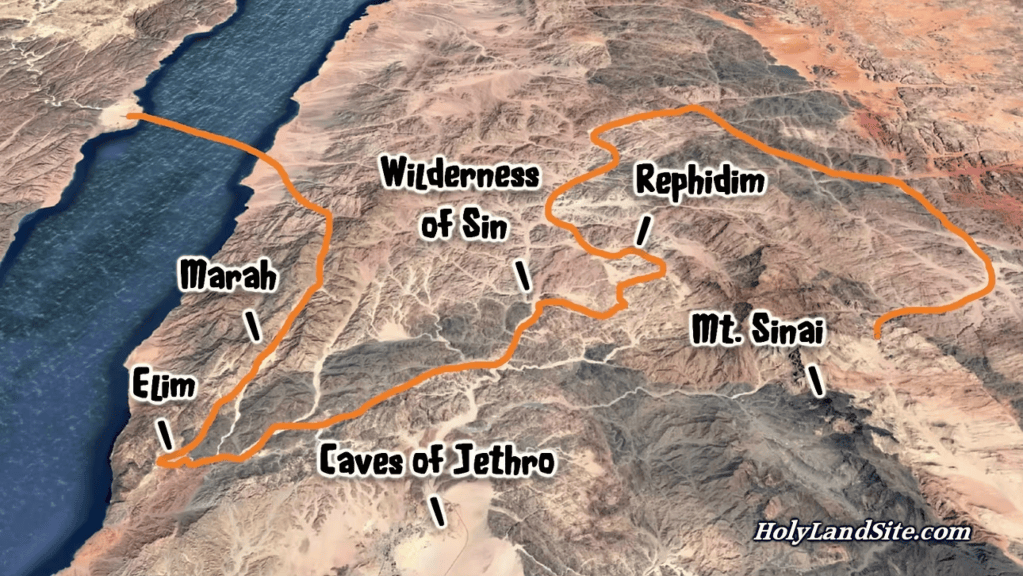
FROM THE RED SEA TO MT SINAI The The complaining and grumbling of Israel began at Marah (Exodus 15:22-25). Several more things happened between the Red Sea and Mt Sinai in Exodus 16-20. Here is a summary:
1. Marah: This is where the travelers encountered bitter, undrinkable water. Moses miraculously sweetened the water by casting a piece of wood into it.
2. Elim: They camped beside 12 springs of water and 70 date palms.
3.. Wilderness of Sin: Here, the community grumbled about food shortages. In response, God introduced the weekly Sabbath and began providing daily manna and evening quail.
4. Rephidim (Massah and Meribah): Rephidim encompasses multiple events:
Massah & Meribah: These titles mean “testing” and “quarrelling”. They describe the exact spot within Rephidim where the people complained about water, prompting Moses to strike the rock at Horeb to supply them.
The Battle of Rephidim: The location where Joshua led the defense against the attacking Amalekites while Aaron and Hur held up Moses’ arms. Much later God would tell Saul to completely wipe out the Amalekites b/c of this attack. Yahweh-Nissi (The Lord is my Banner).
4.Mount Sinai(Mount Horeb): The sacred mountain where Israel camped, received the Ten Commandments, and constructed the Tabernacle
MANNA AND WATER FROM THE ROCK God gave them manna every day for the 40 years in the wilderness (except on the Sabbath: they would gather twice as much on Friday although some tried to gather on the Sabbath and found none( ) and water fron the rock. They could only gather what they could eat in a day: anything extra would rot at sunset. 1 Corinthians 10:1 For I do not want you to be unaware, brethren, that our fathers were all under the cloud and all passed through the sea; 2 and all were baptized into Moses in the cloud and in the sea; 3 and all ate the same spiritual food; 4 and all drank the same spiritual drink, for they were drinking from a spiritual rock which followed them; and the rock was Christ.” As they crossed the Red Sea, the sea was on both sides of them and the cloud that followed them was above them: thus they were “immersed” (baptized) in the cloud and sea. The rock was Christ: water from the rock is a type of Jesus giving the water of eternal life to believers.
JETHRO COMES TO MOSES Exodus 18: Apparently Moses’ wife and two sons had started his journey back to Egypt but returned to Midian b/c Jethro (Ruel) brought them to meet Moses at Mt Sinai. Jethro saw that Moses was wearing himself out trying to judge every single dispute among the people and advised him to delegate the minor issues to various capable men.
ARRIVAL AT MT SINAI. Exodus 19: The Israelites arrived at Mt Sinai in the 3rd month after they left Egypt. They had traveled about 350 miles. They camped at the foot of Mt Sinai. The terrifying scene at Mount Sinai in Exodus 19 features a violent display of divine presence with heavy thunder, flashes of lightning, a thick dark cloud, and a blaring trumpet that caused the entire Israelite camp to shake with fear. This display of God’s power was designed to strike fear in the people such that they would be afraid to not obey God. Hebrews 12 describes this same scene: 12:18 For you have not come to a mountain that can be touched and to a blazing fire, and to darkness and gloom and whirlwind, 19 and to the blast of a trumpet and the sound of words which sound was such that those who heard begged that no further word be spoken to them. 20 For they could not bear the command, “If even a beast touches the mountain, it will be stoned.” 21 And so terrible was the sight, that Moses said, “I am full of fear and trembling.” The Hebrew writer would then go on to say that the Hebrew Christians had not come to Mt Sinai but had come to a spiritual Mt Zion and the heavenly Jerusalem, the church and warned them not to leave their faith in Jesus to return to Judaism. I can’t imagine what it was like being at the fout of Mt Sinai seeing and hearing all this. It had to be terrifying.
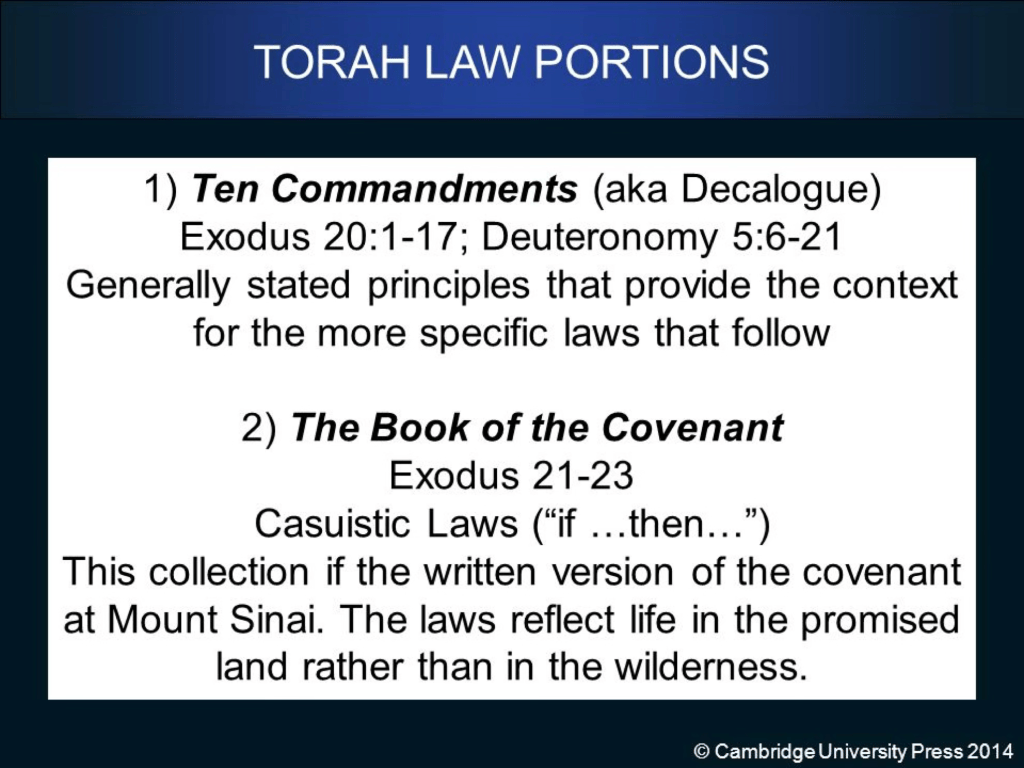
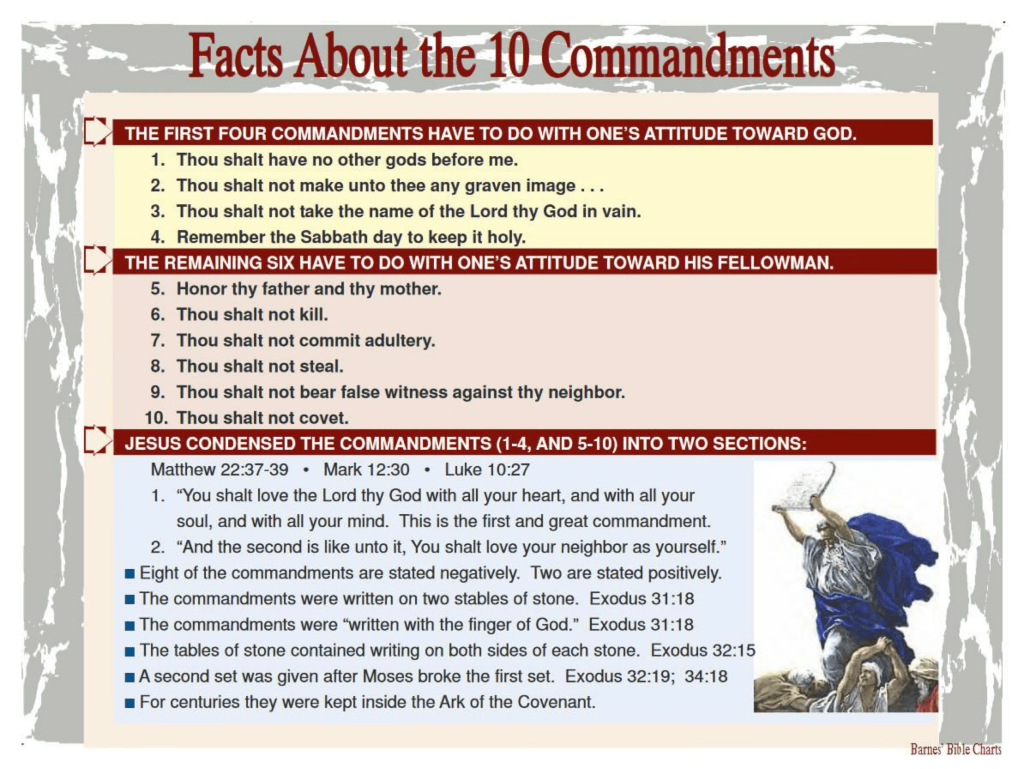
THE 10 COMMANDMENTS Moses want up on Mt Sinai and God gave him the 10 commandments. Here is a great slide:
ARE THE 10 COMMANDMENTS BINDING ON GENTILE CHRISTIANS UNDER THE NEW COVENANT? 9 of the 10 commandments would apply to Christians under the new covenant also, but “remember the Sabbath day to keep it holy” was a special command given to Israel and not to Gentile Christians under the new covenant. Eodus 31:12 The Lord spoke to Moses, saying, 13 “But as for you, speak to the sons of Israel, saying, ‘You shall surely observe My sabbaths; for this is a sign between Me and you throughout your generations, that you may know that I am the Lord who sanctifies you.” Nehemiah 9:13 says that God made known the Sabbath at Mt Sinai. They did not have a command to rest on the Sabbath before Mt Sinai The 7th Day Adventists claim that people were commanded to keep the Sabbath from the very beginning in the Garden of Eden but that is not true. Genesis 2 says that God blessed and sanctified the Sabbath day but it doesn’t say that He commanded Adam and Eve to start resting on the Sabbath. Nowhere in the new covenant are Gentile Christians commanded to keep the Sabbath. Jesus kept the Sabbath but this is b/c he was a Jews still living under the old covenant. Paul and Jewish Christians continued to keep the Sabbath until 70 AD when the old covenant “disappeared” (Hebrews 8:13). Of course, any Christian is free to observe a day or rest on Saturday, but he/she should not bind that on others.
Chapters 11 and 12 tell about the 10th plague, the death of the firstborn of Egypt, including the cattle, at midnight. Can you imagine the horror, the cries and screaming coiming for every house in your neighborhood, all at the same time at the stroke of midnight? Picture that happening all through the land of Egypt to about 3 million Egyptians (according to historians). They awaken to find dead cattle all over the land in mass numbers. No wonder they begged the Israelites to leave Egypt and gave them silver and gold and clothing. That gold, unfortunately, would be used to make a golden calf and worship it at Mt Sinai. The Israelites “plundered” the Egyptians (Exodus 12:36).
THE PASSOVER That night of the death of the firstborn the Israelites were to eat the Passover lamb (chapter 12) with their sandals on, ready to make a hasty departure from Egypt. They were to sprinkle the blood of the lamb on their doorposts and lintels. If they did, the Lord would “pass over” their houses and not allow the “destroyer” (Exodus 12:23, some have called this the “death angel”) to kill their firstborn. They would not have time to let their bread leaven, so they made cakes of unleavened bread for their meal and their journey. God then gave Moses detailed instructions for this Passover Feast and Feast of Unleavened Bread (a 7 day feast) to be an annual ritual for Israel. The Israelites are to use these feasts to teach and remind their children about how God brought Israel out of Egyptian slavery.
Life Lesson: The Passover lamb was a type of Jesus, our Passover lamb who was slain to save us from our sins. 1 Corinthians 5:6 For Christ our Passover also has been sacrificed.” The Passover lamb was to be “unblemished” and Christ was sinless. John 1:29 John the Baptist proclaims Jesus to be the “Lamb of God, who takes away the sin of the world!” 1 Peter 1:18 you were not redeemed with perishable things like silver or gold from your futile way of life inherited from your forefathers, 19 but with precious blood, as of a lamb unblemished and spotless, the blood of Christ. 20 For He was foreknown before the foundation of the world.” You see, even before God created man, God knew that man would sin and that God would send His sinless Son to die to redeem man from sin (for some reason that satisfied God’s wrath against our sins and allowed Him to be both just and the justifier of those who put their faith in Jesus). So, God gave the commands to Israel in Egypt for a Passover Lamb as a type of Christ our Passover Lamb. Gentile Christians don’t celebrate the Passover Feast each year but we celebrate Christ as our Passover Lamb every moment of every day (or at least we should). Do you begin each day thanking God for sending Jesus to save us? Do you begin each day thanking Jesus for dying for us? Jesus ate his last supper with his disciples in the upper room the night before his death with a Passover meal with unleavened bread. During that meal, he instituted the Lord’s Supper with the wine and the unleavened bread, which he said represented his body and blood offered for sin. Early Christians were told to partake of that Lord’s Supper in remembrance of Jesus dying for them. It appears that they ate the Lord’s Supper as part of a meal, the “love feasts” (Jude 1:12, a love meal with the rich and the poor Christians). It’s kinda sad to me that we make the Lord’s Supper just the eating of a little wafer and sip of grape juice instead of part of a love feast meal. I think the early Christians took the Lord’s Supper often, even during the week, as part of their meals together. But whenever, however, and how often you partake of the Lord’s Supper, it should be a sacred reminder of Jesus, the Passover Lamb who was slain to take away the sins of the world. Hebrews 11:28 By faith he kept the Passover and the sprinkling of the blood, so that he who destroyed the firstborn would not touch them.”
THE CONSECRATION OF THE FIRSTBORN God also commanded the people to “consecrate their firstborn” of children and animals as a remembrance of God sparing the firstborn of Israel in Egypt (chapter 13). The first of all their crops was to be given to the Lord. The firstborn of clean animals was to be offered as a sacrifice to God. The firstborn of unclean animals was to be substituted with a lamb sacrifice since unclean animals could not be sacrificed to God. But the firstborn children could be “redeemed” instead of killed by giving 5 shekels of silver to the support of the Levitical priests (Numbers 18:15-16). If you are a firstborn in your family, this ritual has to have some meaning for you even if you are not an Israelites and even if you were not redeemed with money. You are special to God.
THE EXODUS Exodus 12:40 Now the time that the sons of Israel lived in Egypt was four hundred and thirty years. 41 And at the end of four hundred and thirty years, to the very day, all the hosts of the Lord went out from the land of Egypt.” If you are one for technicalities, the statement that Israel went our from Egypt after 430 years “to the very day” is interesting. In Genesis 15 God told Abraham that his descendants would come out of slavery in the 4th generation which proved to be true: Levi/Kohath/Amram/Moses. Levi, Kohath, and Amram lived to their 130’s, but those 4 generations overlapped and would not give a total of 430 years in actual slavery. The 430 years in Exodus 12:41 is calculated as the total time of the Abrahamic Sojourn, spanning from the time God made His covenant promise to Abraham in Canaan until the Exodus. Scholars divide the 430-year period into two equal blocks of 215 years based on the chronological data in Genesis. First 215 Years (Canaan): From when Abraham was 75 and received the divine promise (Genesis 12:4) until Isaac was born (25 years), plus the years Isaac and Jacob lived as foreigners in Canaan before descending into Egypt. Second 215 Years (Egypt): From when Jacob and his family moved to Egypt (at age 130) until the final Exodus, covering the 4 generations of Levi/Kohath/Amram/Moses. Genesis 15:13 mentions 400 years of affliction, which begins later (approx. 30 years into the timeline, after Isaac is mocked or Ishmael/afflictions begin) and specifically isolates the time of hardship, while the 430 years marks the complete legal span of the covenant. Joseph was 40 when Jacob moved his family to Egypt and he died at 110 before a new king arose and began the slavery of the Israelites, so that is 70 years of peace and prosperity including the time of Levi, the son of Jacob. If the Israelites were only in Egypt for 215 years, then that only leaves a maximum of 140 years that they were enslaved. How’s that for being technical! It does kinda nullify my teaching in the past that the Israelites were actually in slavery for a full 400 years. Oh well, live and learn.
THE CROSSING OF THE RED SEA Chapter 14 tells how God led 600,000 men (probably over 1 1/2 million total men, women, and children) to the Red Sea instead of going by the well traveled route that passed close by the Mediteranean Sea through Philistine territory (He knew they would see the military of the Philistines and rebel, returning to Egypt). He led them with a pillar of cloud by day and a pillar of fire by night so they “could travel day and night”. They camped by the Red Sea when Pharoah decided to track them down with 600 select chariots. To Pharoah it looked like the Israelites were trapped in the wilderness b/c they could not cross the Red Sea and had nowhere to escape. So he pursued them. Actually this was another part of God’s plan. He would harden Pharoah’s heart one more time (Exodus 14:4,8) into tricking him into thinking that the Israelites were trapped and easy prey to kill. Again, Pharoah made his own choice to pursue Israel. What the Israelites said to Moses when they saw the dust of the approaching Egyptian chariots reveals their lack of faith in God. Exodus 14:10 As Pharaoh drew near, the sons of Israel looked, and behold, the Egyptians were marching after them, and they became very frightened; so the sons of Israel cried out to the Lord. 11 Then they said to Moses, “Is it because there were no graves in Egypt that you have taken us away to die in the wilderness? Why have you dealt with us in this way, bringing us out of Egypt? 12 Is this not the word that we spoke to you in Egypt, saying, ‘Leave us alone that we may serve the Egyptians’? For it would have been better for us to serve the Egyptians than to die in the wilderness.” This lack of faith in God would be repeated many times in the wilderness. Moses’ reply to them: Exodus 14:13 But Moses said to the people, “Do not fear! Stand by and see the salvation of the Lord which He will accomplish for you today; for the Egyptians whom you have seen today, you will never see them again forever. 14 The Lord will fight for you while you keep silent.” But then it is almost as if the Lord is telling Moses to quit talking and start doing something to save the people. Exodus 14:15 Then the Lord said to Moses, “Why are you crying out to Me? Tell the sons of Israel to go forward. 16 As for you, lift up your staff and stretch out your hand over the sea and divide it, and the sons of Israel shall go through the midst of the sea on dry land. 17 As for Me, behold, I will harden the hearts of the Egyptians so that they will go in after them; and I will be honored through Pharaoh and all his army, through his chariots and his horsemen. 18 Then the Egyptians will know that I am the Lord, when I am honored through Pharaoh, through his chariots and his horsemen.” You know what happened next. Moses parted the Red Sea, the Israelites crossed (it took all night while the angel of God kept the Egyptian army at bay), the Egyptians tried to cross and were drowned (was Pharoah drowned also?). Exodus 14:30 Thus the Lord saved Israel that day from the hand of the Egyptians, and Israel saw the Egyptians dead on the seashore. 31 When Israel saw the great power which the Lord had used against the Egyptians, the people feared the Lord, and they believed in the Lord and in His servant Moses.” They sand the “song of Moses” praising the Lord (Yahweh) for their deliverance (chapter 15). Aaron and Moses’ sister Miriam sang, danced and praised God with timbrels. Hebrews 11:29 By faith they passed through the Red Sea as though they were passing through dry land; and the Egyptians, when they attempted it, were drowned.This would be a superficial, shallow belief in the Lord and Moses that would not last very long. Once they left the Red Sea they would continually complain and show lack of faith in God. After 3 days in the wilderness with no water, they grumbled at Marah when they found bitter water but Moses threw a tree in the waters and made them drinkable. This was just the beginning of their grumbling. They would complain for the next 40 years as God made them wander (Numbers 14).
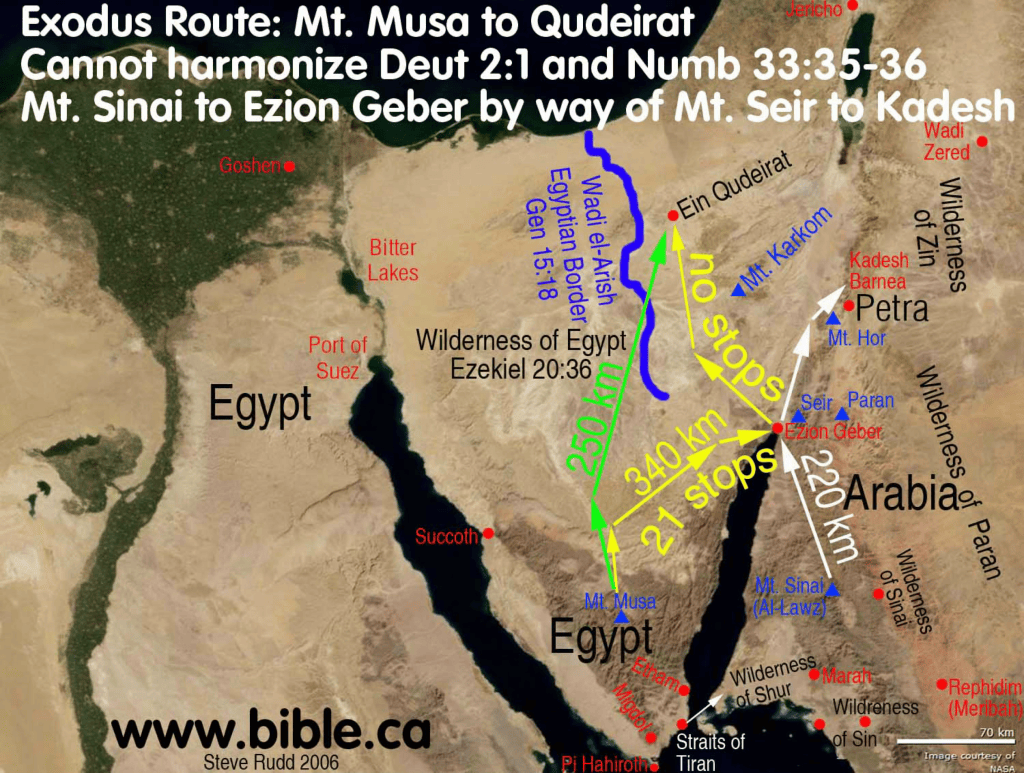
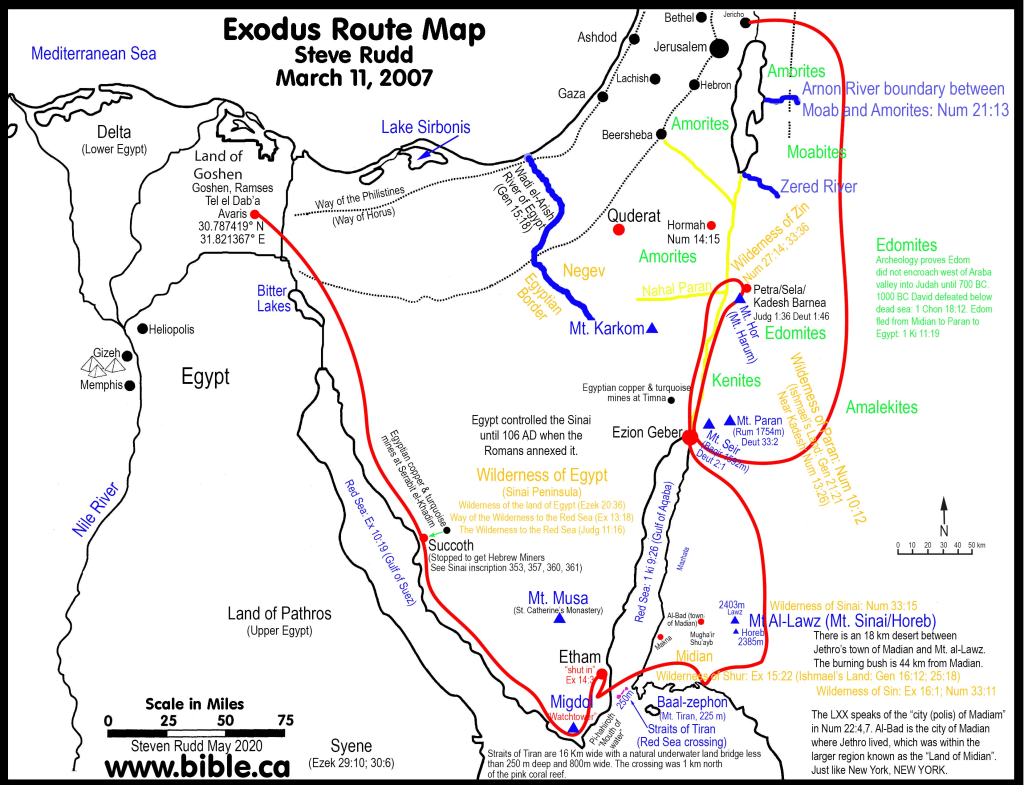
Here is a map of where I think the crossing of the Red Sea occurred. It places Mt Sina east of the Red Sea (known as the Gulf of Aqaba today) instead of the traditional site west of the Gulf of Aqaba. Moses 40 years later would taked his sheep to Mt Sinai looking for pasture. That would fit the location of Mt Sinai in Midian (now Saudi Arabia) east of the Gulf. I can’t imagine him taking his sheep up to the northern tip of the Gulf of Aqaba and then southwest into the wilderness to the traditional Mt Sinai location in the middle of the wilderness, a journey of about 200 miles!. So I think the map is correct even though we don’t know the exact place of the crossing (although some have claimed to find evidence of the crossing in the Gulf of Aqaba). The Red Sea had to be deep enough to drown an army, so it couldn’t be the shallow “Sea of Reeds” (Yam Suph could refer to a shallow lake of reeds near the Nile) as liberals claim, trying to deny the miracle of the parting of the Red Sea.
Life Lesson: Teach your children the story of the Red Sea crossing and the exodus. This miraculous event is alluded to or mentioned over 20 times in the Old Testament including Psalm 66:6, Psalm 78:13, Psalm 106:9, Psalm 114:3, Psalm 136:13. Isaiah 11:15, Isaiah 51:10, and Isaiah 63:12–13. Psalm 78:13 He divided the sea and caused them to pass through, and He made the waters stand up like a heap. Psalm 106: 6 We have sinned like our fathers, We have committed iniquity, we have behaved wickedly. 7 Our fathers in Egypt did not understand Your wonders; They did not remember Your abundant kindnesses, But rebelled by the sea, at the Red Sea. 8 Nevertheless He saved them for the sake of His name, That He might make His power known. 9 Thus He rebuked the Red Sea and it dried up, And He led them through the deeps, as through the wilderness. 10 So He saved them from the hand of the one who hated them, And redeemed them from the hand of the enemy. 11 The waters covered their adversaries; Not one of them was left. 12 Then they believed His words; They sang His praise.” We must teach out children stories about the exodus, the crossing of the Red Sea, etc. These are not fairy tales or myths. They are real stories that show the awesome power of God.
Life Lesson: Have you ever been faced with a desperate situation where you see no escape, a “Red Sea”? Circumstances have become very dificult for you. Maybe cancer, divorce, financial problems, health, children problems. You’v just about given up on a way of escape. 1 Corinthians 10:13 No temptation has overtaken you but such as is common to man; and God is faithful, who will not allow you to be tempted beyond what you are able, but with the temptation will provide the way of escape also, so that you will be able to endure it.” A “way of escape”, just as God provided a way of escape for Israel from Pharoah’s army at the Red Sea. When you are desperate for a way of escape, “Stand by and see the salvation of the Lord which He will accomplish for you today.” God will in some way provide a way of escape, even if death itself might be the way to escape the pain and suffering of thhis life to be able to move on to the eternal joy in heaven (wherever that is). The Israelites panicked when they saw the dust of the approaching chariots of Pharoah. They did not have faith in God. I can’t tell you how many times I have had panic attacks b/c I didn’t have faith in God to rescue me from some desperate situation. I can’t sleep. I worry. I wake up thinking about some bad situation I am facing. I come up “what if’s” that might happen. God must be thinking, “How many times do I have to prove to you that I am with you and will provide and protect you?”
God had promised Abraham, “I will make you a great nation” (Genesis 12:2). He promised Abraham to give him the land of Canaan, the “promised land” (Genesis 15::18). But he also told Abraham, “Know for certain that your descendants will be strangers in a land that is not theirs, where they will be enslaved and oppressed four hundred years” (Genesis 15:13). What was this whole story of Joseph and Egypt about? Genesis 46:3 God told Jacob as he was about to bring his whole family to Egypt to see Joseph, “I am God, the God of your father; do not be afraid to go down to Egypt, for I will make you a great nation there. 4 I will go down with you to Egypt, and I will also surely bring you up again; and Joseph will close your eyes.” This was about God making a great nation from Jacob, whose name had been changed to “Israel” (i.e. the nation of Israel). Jacob was excited to see Joseph alive after thinking he was dead for 20 years, but he was also afraid. He is 130 years old and knows he doesn’t have many years to live. He would be moving to a land filled where Pharoah probably had over 1,000 chariots and Jacob has a history of being afraid. So God tells him not to be afraid. Have you ever made a major move to a new place that scared you? Maybe moving that first time into a dorm or an apartment at college, far away from home? Maybe moving to a new city on a new job? Were you afraid? My wife and I moved around a lot during our mission travels. I counted 11 moves that we made in a 10 year period when we were in our 20’s and early 30’s. We loaded my ’69 mustang and moved 300 miles from our house we had just bought to a school of preaching in Louisiana to live in a house trailer for 2 years. We got on a plane to fly 2,000 miles to the island of Trinidad in the West Indies to do mission work. I remember the fear I felt when we boarded that plane and I sat down in my seat. All the excitement of going was gone. All the supporters sending us off were left back at the departure gate, including all our parents. Now it was just fear of the unknown. Jacob was afraid of the move to Egypt, but God eased his fears. God had a plan. His family would not be slaves to begin with. They would live in Goshen, isolated as shepherds b/c the Egyptians did not like sheep and considered shepherds as “loathsome” (Genesis 46:34). Have you read of the range wars between cattle herders and sheep herders out west from 1870-1900? Cattle herders don’t like sheep b/c the sheep will eat all the grass right down to the root (cattle don’t). Another aspect of the providence of God to isolate Jacob’s family in Goshen for the next 400 years where they would not mix with the pagan Egyptians. They were not slaves at first. Joseph was about 40 when Jacob moved his family to Egypt, and Joseph died at 110. Exodus 1:6-11 says that they only became slaves at some point after Joseph died, so that means that Jacob’s descendants had at least 70 years of peace and prosperity in Egypt before they became slaves. What is this whole story about? God is making a great nation of Jacob, fulfilling the promise to Abraham. Jacob’s descendants will grow from 70 (Genesis 46:27) to maybe 2 million at the end of their stay in Egypt. They would never have grown that large in Canaan. This whole story of the providential working of God in the life of Joseph is about God making a great nation of Jacob (Israel).
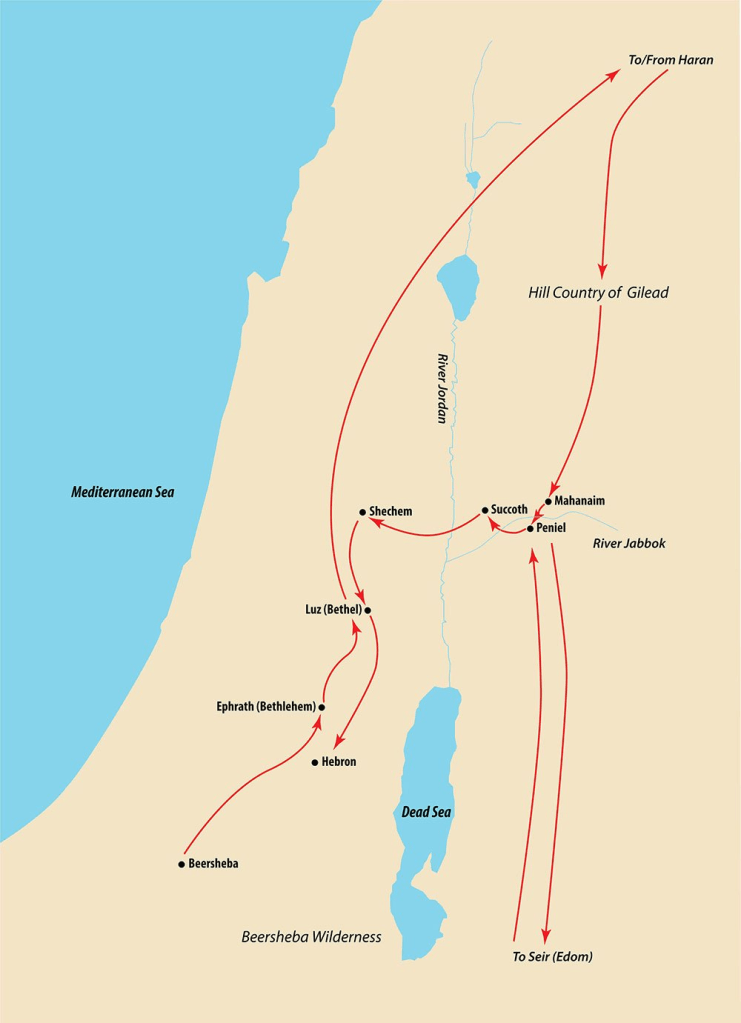
Most of Genesis 46-50 is about the last 17 years of Jacob’s life spent in Egypt with Joseph. A couple of incidents stand out to me. 1) Joseph met Pharoah for the first time. Genesis 47:7 Then Joseph brought his father Jacob and presented him to Pharaoh; and Jacob blessed Pharaoh. 8 Pharaoh said to Jacob, “How many years have you lived?” 9 So Jacob said to Pharaoh, “The years of my sojourning are one hundred and thirty; few and unpleasant have been the years of my life, nor have they attained the years that my fathers lived during the days of their sojourning.” The Hebrew word for “unpleasant” is ra’: Evil, bad, wicked, harmful, unpleasant. So Joseph is using a really strong word to sum up his 130 years so far. I am 76 and can’t have many more years to live. If someone asked me to sum up my life, I hope I would not say my life has been “unpleasant” or miserable so far. And I wouldn’t say that. God as blessed me with many great years and memories. A few difficulties, but overall great and blessed. Why would Jacob say that his 130 years had been unpleasant? Let’s review his life: He lied to his father and steals Esau’s blessing, and fled his home in Canaan b/c. Esau was going to kill him. He was deceived and cheated by Laban for 20 years in Haran. He had a terrifying meeting with Esau at Penuel. He had a horrible incident at Shechem with the raping of Dinah, the vengeful acts of Simeon and Levi, and his fear that the Canaanites will all unite against him. He had many conflicts with the Philistines over wells that his men dug. His favorite wife Rachel, the only one he loved, died in childbirth (“to his sorrow, Genesis 48:7) as they arrived in Canaan after 20 years in Haran. He spent 20 years thinking his favorite son was dead, killed by an animal. He was terribly afraid of letting Benjamin go with the other brothers to Egypt and no doubt worried greatly while they were gone. I guess I can see why he said his years were “unpleasant”? But the main issue is that he spent most of those years “wrestling’ with God for control (which is what God was tellling him at Penuel). He spent his whole life trying to control his circumstances and get physical blessings by using his own cunning instead of trusting God, and it always led to disaster even though, as in Haran, God blessed him physically anyway.
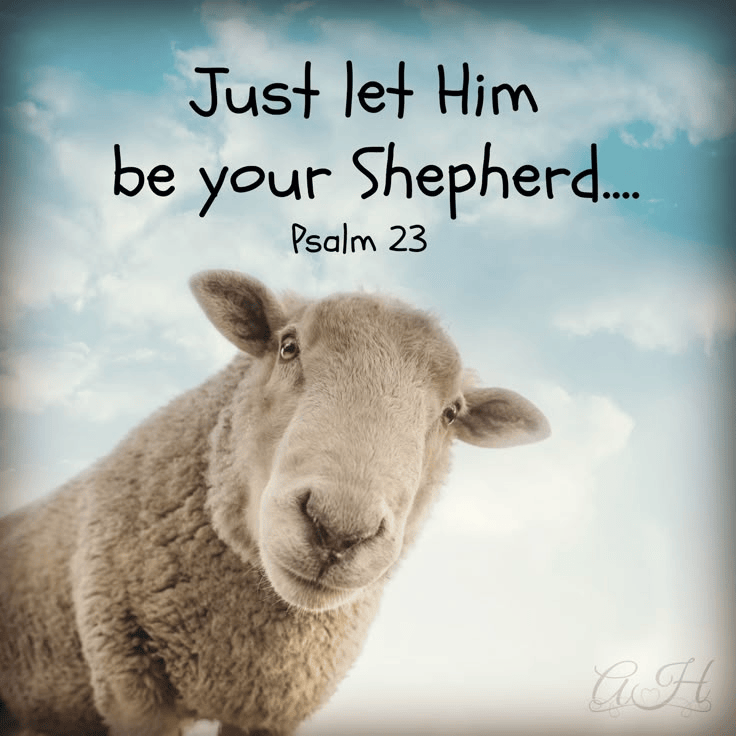
Life Lesson: Look back at your life so far. Have you been letting God control your life, your decisions, your morals, your actions or have you tried to control evrything? Has your lack of trust in God’s control caused you to spend your years in fear and worry just like Jacob? I must admit that I have spent my life much like Jacob, in fear and worry and “what if’s”. Here’s a great image:
2) In Genesis 48, Jacob is sick, can’t see any longer, and is literally on his “dying bed”. He somehow finds the strength to “sit up in his bed” and call for Joseph’s two sons, Ephraim and Manasseh, to be brought to him so he could bless them before he died. He elevated Joseph’s two sons to equal status as Jacob’s biological sons. That also explains why Ephraim and Manasseh are given land when the promised land is divided among the 12 tribes. The Levites get 48 cities but no large portion of land. Joseph is not one of the 12 land divisions but his two sons are. So technically the 12 tribes of Israel which included Ephraim and Manasseh are not the same as the 12 biological sons of Jacob (Israel). But what interests me is what he said as he blessed the two boys, “The God before whom my fathers Abraham and Isaac walked, the God who has been my shepherd all my life to this day,the angel who has redeemed me from all evil, bless the lads” (Genesis 48:15-16). It seems as if on his dying bed he finally realizes that, in spite of wrestling with God most of his life for control, that God was his shepherd all along the way: protecting him, guiding him, rescuing him, providing for his physical needs, doing all the things a shepherd does for the sheep! He just seldom realized that. He was filled with worry and fear b/c he didn’t trust God as his shepherd. Contrast that with David in Psalm 23. David found great peace and courage b/c God was his shepherd even though he had his moment of fear and doubt. Jacob had very little peace in his life.
Life Lesson: I can look back at my life and see how God was my shepherd all along the way even when I didn’t realize it or when I didn’t turn to him for protection and guidance. Can you look back at your life and see that? But more importantly, what about your life now and in the future? Are you allowing God to be your shepherd? Are you trusting Him to guide, protect, and provide for your needs? Are you trusting the “good shepherd” Jesus to do the same? Does this verse resonate with you: 1 Peter 2:25 For you were continually straying like sheep, but now you have returned to the Shepherd and Guardian of your souls.” Jesus wants to be your shepherd. Will you let him?
Jacob’s story and life ends as he blesses his 12 sons before he dies. Most notably is the blessing to Judah: Genesis 49:10 “The scepter shall not depart from Judah, nor the ruler’s staff from between his feet, until Shiloh comes”. Most interpret this as saying that the rightful kingly line of Israel down to Jesus (Shiloh) will come from the tribe of Judah. He charged his sons to bury him in the cave of Machpelah where Abraham, Sara, Isaac, Rebekah, and Leah (Rachel was buried near Bethlehem). Genesis 49:33 When Jacob finished charging his sons, he drew his feet into the bed and breathed his last, and was gathered to his people.” Hebrews 11:21 By faith Jacob, as he was dying, blessed each of the sons of Joseph, and worshiped, leaning on the top of his staff.” I find it interesting that the only moment of faith in Hebrews “hall of faith” is that moment as he was dying and worshipping God. He could finally let go of all his fears, worries, plotting, and planning. He could just praise God who had been his shepherd and be joined to his ancestors. I kinda look forward to that day myself when it is inevitable that I am going to die (if I am allowed that moment). I might still have a little fear of the unknown and of dying, but finally I will be able to quit worrying about all the “what if’s” that I dream up, quit being afraid of so many things, quit struggling with the flesh and evil thoughts. I can just relax and worship God and look forward to seeing my mom and dad again along with many others.
Read chapter 50. It was a marvelous, unparalleled funeral procession from Egypt to Canaan. Joseph and his brothers buried Jacob in the cave of Machpelah. When they returned to Egypt, Joseph’s brothers were afraid that Joseph would retract his forgiveness of them now that their father was dead. Genesis 50:19 But Joseph said to them, “Do not be afraid, for am I in God’s place? 20 As for you, you meant evil against me, but God meant it for good in order to bring about this present result, to preserve many people alive.” Joseph is still confident that his whole story is about the providence of God in saving Jacob’s family and making a great nation from Jacob. The next book of the Bible, Exodus, will fast forward for a couple of hundred years.
This should be a lot shorter than past blogs. You can read the chapters and get most of the details. We all know Pharoah’s two dreams: the fat cows that came up first, then the skinny cows came up and ate the fat cows. The same with the 7 full ears of grain followed by 7 withered ears that ate the full ears. We need to notice that Joseph gives full credit to God, not himself, for interpeting Pharoah’s dreams. He constantly says that God is the one who will cause the 7 years of plenty followed by 7 years of famine. Giving credit to God is typical of the character and integrity of Joseph. So Genesis 41:39 Pharaoh said to Joseph, “Since God has informed you of all this, there is no one so discerning and wise as you are. 40 You shall be over my house, and according to your command all my people shall do homage; only in the throne I will be greater than you.” 41 Pharaoh said to Joseph, “See, I have set you over all the land of Egypt.” Joseph then set about with a plan to store excess grain during the 7 years of plenty and then sell it to people all over suffering from the 7 years of famine. BTW Joseph is 30 when he stood before Pharoah 41:46. He was 17 when his brothers sold him to a caravan. He spent 2 years in prison false accused by Potiphar’s wife. The restored butler forgot Joseph for 2 years so that means he spend 4 years total in prison. That means he spent about 9 years as a slave in Potiphar’s house. That’s longer than I thought!
I’m not going to give all the details of Joseph’s brothers two trips to Egypt to buy food. That’s fairly easy, plain reading. I am going. to focus on chapter 45. Joseph is moved to tears as he hears Judah make a very passionate appeal to Joseph not to keep Benjamin in Egypt. Judah said that would kill Jacob, their father. He offered to take Benjamin’s place and stay in Egypt as a slave if Joseph would let Benjamin go back to his father in Canaan. Joseph heard that plea and realized that that his brothers had changed. Joseph wept so loudly that Pharoah’s household heard him weeping. He then revealed to his brothers that he was Joseph. He then said, “Genesis 45:5 Now do not be grieved or angry with yourselves, because you sold me here, for God sent me before you to preserve life. 6 For the famine has been in the land these two years, and there are still five years in which there will be neither plowing nor harvesting. 7 God sent me before you to preserve for you a remnant in the earth, and to keep you alive by a great deliverance. 8 Now, therefore, it was not you who sent me here, but God; and He has made me a father to Pharaoh and lord of all his household and ruler over all the land of Egypt.” We could call this an epiphany (a sudden moment of clear understanding or a great realization). It finally dawned on him that everything that had happened was part of God’s providential working to get Jacob’s family to move to Egypt where they would end up enslaved but multiplying to over a million people so that God’s promises in Genesis 15 could come true, i.e. that Abraham’s descendants would be slaves for 400 years and then come out to go possess the promised land of Canaan. They would never have grown so much if they had stayed in Canaan. Joseph told his brothers that it wasn’t them that sent him to Egypt: it was God. It actually was his brothers who sold him into slavery in Egypt but was in control of making that happen. We don’t know how God works behind the scenes to make His plans happen. He uses the free will choices of people but He also directs circumstances to make things happen. Joseph forgave his brothers and they had a tearful but joyous reunion. Joseph, with Pharoah’s help and wagons, had Jacob moved from Canaan to Egypt, about 75 people.
Life Lesson: When bad things happen, you never know what good things God might make happen out of the bad. You have to trust God. Romans 8:28 God causes all things to work together for good to those who love him. That’s called the “behind the scenes providential working of God. It’s a mixture of God allowing people to make good and bad choices but sill making things work out like He wants them to. Usually there are no Bible miracles involved. The story of Joseph and the story of Esther are ttwo great examples of the providence of God working. The book of Esther doesn’t even have the name of God in it, but the hand of God is seen throughout the book and the events in the book. I will close with my example. I have only been fired once in my 76 years. It wasn’t for anything bad I had done. The elders where I was preaching just decided to tell me to move on since I had been telling them that I was probably going to take another job in Huntsville at Madison Academy when it came open. But they did fire me. It was very rough making the move to Huntsville. I took a 50% cut in pay to come to Madison Academy and my wife lost her new, very good paying teacher job in Vernon Alabama. But God blessed us, my wife found a good job, and I became principal of the school a year later which doubled my pay. I also started preaching part time with a church in Huntsville. But the greatest blessing of getting fired was my 3 children finding their mates in Huntsville over the next few years after we moved. I truly believe that God was working to get us to Huntsville. I believe that He was behind our firing. He did not make the elders fire me. They did so on their own, but God somehow influenced them to make that decision. Before they fired me, I had just decided to not move to Huntsville, but after they fired me I had no choice since I no longer had the preaching job in Vernon. That was rough on us at the time, but I look back and it was one of the best things that has ever happened to my family. Do you have a story of God working in your life? Of God making bad things work for good? Have you ever had an epiphany like Joseph did and it just hit you that God had been working all along even though you didn’t realize it?
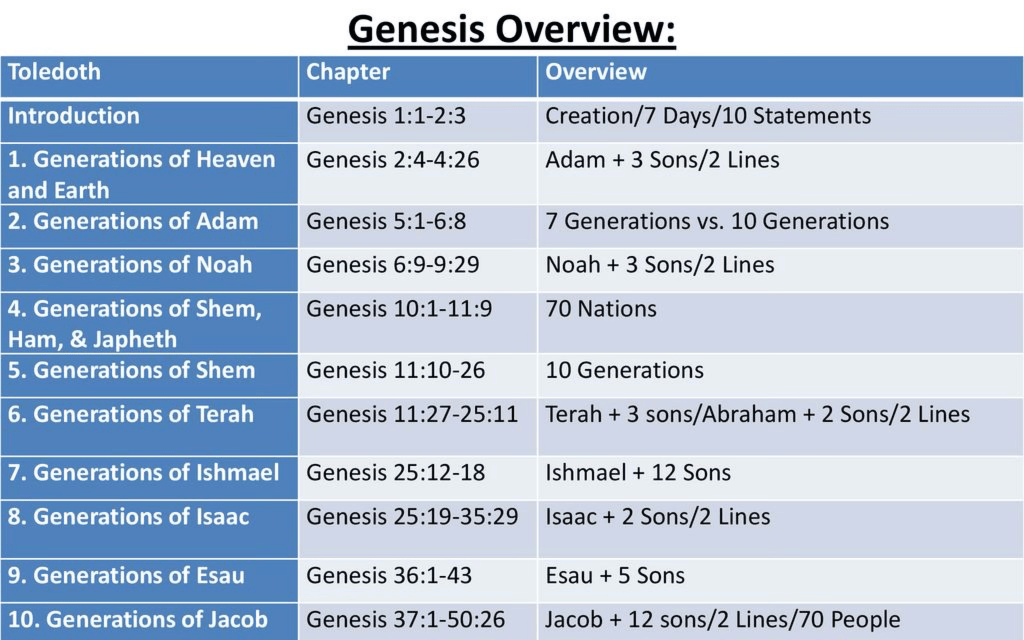
I like outlines of books. Seldom does a book of the Bible actually give an outline for that specific book, but Genesis does.
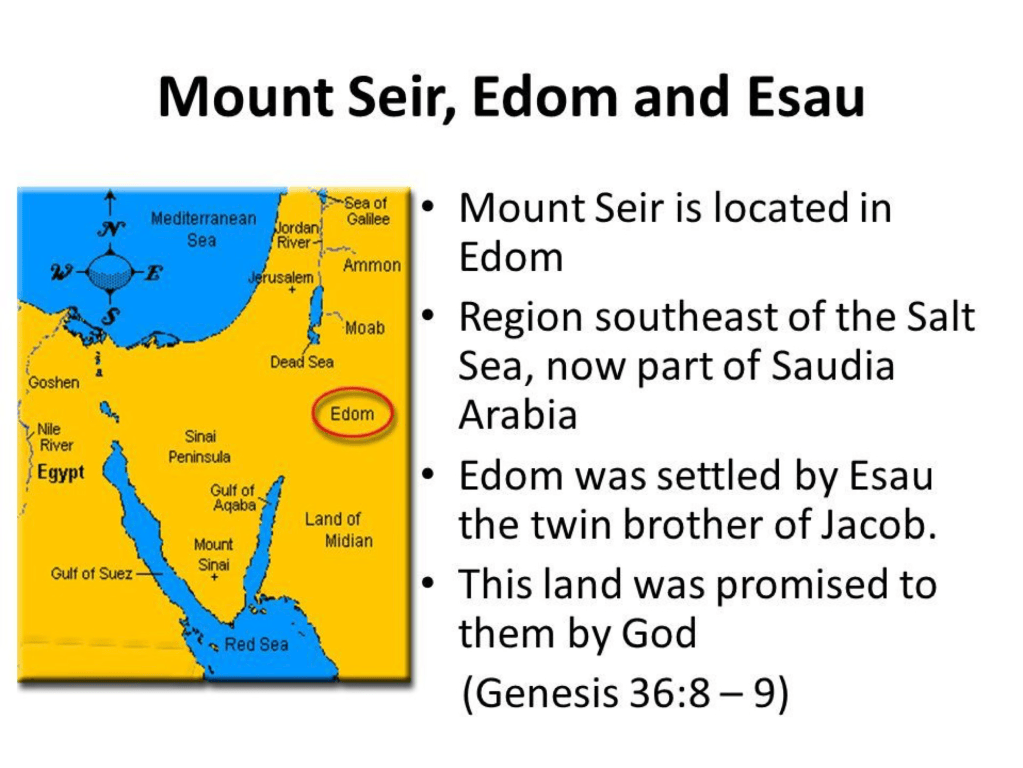
Each part of the outline begins “These are the records of the generations of …” as in Genesis 36:9 “These are the records of the generations of Esau” and then 37:1 “These are the records of the generations of Jacob”. It is interesting that Abraham, a main character in Genesis, does not have his own “generations of Abraham”. Instead, he is included in the “generations of Terah” (his father). Likewise, Joseph has 13 chapters (Genesis 3-50) devoted to his life, but does not have have his own “generations of Joseph”. Instead he is included in “the generations of Jacob” (his father). But Ishmael, Abraham’s son by Hagar, has his own “These are the records of the generations of Ishmael” in Genesis 25:12 which would not seem important to the Jews since Isaac, born to Sarah, was the son of the promises to Abraham and not Ishmael. But both Ishmael and Esau had many powerful and important descendants. Esau has his own chapter of generations (chapter 36).The Arabs come from Ishmael. The Edomites descended from Esau. The Edomites played a complex role in the history of Israel. They refused to allow Israel to pass through their territory as Israel was making their way to Canaan. The Edomites cheered and plundered Jerusalem when Babylon destroyed Jerusalem in 586 BC. The short one chapter book of the prophet Obadiah is a prediction about the destruction of Edom b/c of “violence done to your brother Jacob”, b/c they took part in plundering and “looting” Jerusalem when it fell, b/c they “gloated and rejoiced” over the fall of Jerusalem, b/c they killed or imprisoned fugitives trying to escape from the city when it fell. Obadiah mentions their arrogance: they live in mountain ranges like Petra where they felt no enemy could defeat them. AI: “the ancient city of Petra in Jordan appears in Indiana Jones and the Last Crusade (1989). Harrison Ford and Sean Connery’s characters travel through the narrow gorge (the Siq) and arrive at the Treasury where the holy grail is during the final sequence of the film.” The Edomites grew rich and proud from controlling trade routes that passed through Edom. But Obadiah predicted the destruction of Edom and the house of Esau. That prophecy was fulfilled by the time of the Romans when Edom no longer existed as a separate people. The only survivors were living in Idumea, not Edom, and were called Idumeans. Herod the Great who ruled Judea was an Idumean appointed by the Romans as king. More than you wanted to know about Edom, maybe, but Genesis 36 and the book of Obadiah show the importance of Edom and the descendants of Esau in the Bible.
Moving on to Genesis 37:2 “these are the records of the generations of Jacob”. The life of Jacob was already told in Genesis 25-36, so this last section of generations in the Genesis outline is really mainly about Joseph and the other sons of Jacob, along with Jacob, moving to Egypt during the famine. Jacob committed favoritism, just as his parents Isaac and Rebekah had done with him and his brother Esau, by loving Joseph more than his other sons. Joseph was the son of his favorite wife Rachel. It caused his brothers to hate him and sell him to a caravan going to Egypt. Joseph even contributed to their hatred by telling them of his dreams of the brothers, even including Jacob and Rachel, bowing down to Joseph. Why tell that dream to your brothers who already hate you and are jealous of you? Did Joseph have a little bit of an “attitude”, “better than his brothers”? Joesph was given special privileges. The brothers were out shepherding the flocks, but not Joseph. He was back with Jacob who sent him to check up on his brothers who have moved the sheep to Dothan, about 65 miles north of where they all lived in Hebron. So shepherding and finding pasture for large flocks all over Canaan would have been hard work that Joseph (and probably Benjamin, Jacob’s other favorite son by his wife Rachel) were exempt from that hard work. Jacob made Joseph a “coat of many colors” which made his brothers hate him even more. Stop and youtube Dolly Parton’s song, “Coat of many colors”. Her mother sowed her a coat from rags, inspired by the Bible story of Joseph’s coat of many colors. So when he found his brothers, they put him in a pit and eventually sold him to the caravan going to Egypt. They dipped his coat in animal blood and showed it to Jacob, saying an animal had killed Joseph. Jacob was very grieved. He would believe that Joseph was dead for the next 22 years before he was reunited with Joseph in Egypt. Life Lesson: Be thankful if you have never been involved in some type of family conflict among siblings or parents! Many of us have and it is a miserable thing to deal with. Joseph and his brothers will end up in a happy reunion 22 years later, but many sibling and family conflicts don’t end up in happy reunions. They end up with hatred and bitterness, accusing each other of wrong doing, squabbling over family inheritance, one sibling having to care for aging parents while the other siblings just give lip service. If you do have such family conflicts, try to be the peacemaker. You may end up being the responsible sibling who does more work and sacrifices more than the others, but God will reward you for your integrity and your sense of responsibility.
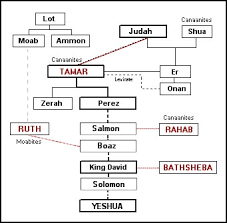
Then we come to one of the strangest chapters in the Bible, Genesis 38. Right in the middle of telling about Joseph’s childhood and being sold into slavery in Genesis 37 and his being a slave to Potiphar in Egypt in Genesis 39 is a totally unrelated chapter about a sordid affair in Genesis 38. Read it for the details. Judah, Jacob’s son who is in the seed line of the rightful kings of Judah down to Jesus, unknowingly goes to a prostitute who is his daughter in law Tamar. Tamar married one of Judah’s sons but that son died without a child, so the other two brothers were supposed to take her as wife and bear a child for their deceased brother. This was called the Levirate marriage law and is found in Deuteronomy 25:5-10. The 2nd son refused to put his seed in Tamar and was killed. The 3rd son was still too young, so Judah promised that later he would give that 3rd son to Tamar to bear a child for the deceased brother, but as the 3rd son grew older, Judah failed to keep his promise and failed to obey the Levirate marriage law. He probably knew that his 3rd son was evil like the first two sons and was afraid the 3rd son would disobey and be killed also. Did Tamar know that Judah was prone to visit prostitutes? She dressed up as a temple prostitute and Judah had sex with her, promising to pay her with a goat. He gave her his ring as collateral. But Judah’s friend was sent to give her the goat and recover Judah’s ring but the prostitute (Tamar) was nowhere to be found. Judah discontinues the search for Tamar and his ring, and hopes no one will find out about the sordid affair, making him a “laughingstock”. 3 months later they bring Tamar to Judah b/c she is pregnant, saying she had committed prostitution. Judah said, “Let her be burned”. Burning someone was a capital punishment used for certain crimes in the Old Testament, like a man marrying both a woman and her mother (Leviticus 20:14) or like the burning of Achan for taking forbidden items from Jericho (Joshua 7). Perhaps the victim was killed first and then his/her body burned. As they were carrying her out to be burned, she basically says, “BTW Here is the ring of the man who got me pregnant if you want to track him down and punish him also”. Can you imagine the startled look on Judah’s face as he looks at his own ring that he had given Tamar after having sex with her? The guilt, the shame, the embarrassment, the exposure of his self righteous conviction of Tamar. Can you imagine the startled look on the faces of those who were carrying Tamar out when they realized Judah had gotten his own daughter in law pregnant while she was posing as a temple prostitute? Can you imagine the shock of Judah’s friend, the Adullamite, whom Jacob sent to take Tamar the goat and retrieve his ring? I guess that friend knew Judah had been to a prostitute, which was a sin, but did not know that the woman posing as a prostitute was Tamar. Tamar was not burned, but instead had twins, Perez and Zerah. But the most unusual thing about this sordid affair is that Perez is in the seed line of Jesus. Perez will be the great grandfather of King David! Life Lesson: Don’t judge people based on their family history. I wonder if anyone mocked Perez as he was growing up, knowing that he was the illegitimate “bastard” son of the noble Judah and his daughter in law Tamar. Leviticus 18:15 states directly: “Do not have sexual relations with your daughter-in-law; she is your son’s wife, so you must not have sexual relations with her”. Leviticus 20:12 reinforces this rule, stating that if a man has sexual relations with his daughter-in-law, both of them must be put to death because it is a perversion.” The Law of Moses had not yet been given at the time of Judah, but this would still have been a terrible sin. But this wasn’t the fault of Perez. Often you see children of bad, immoral people. The children might have a rough upbringing with sinful, irresponsible parents. They might end up considered to be “bad” kids and looked down on by outsiders. But you never know what all those “bad” children have gone through. Don’t judge the kids by their family history. We would like to think that Perez handled people knowing about his shameful birth well. Maybe that is why he was chosen to be in the seed line of Jesus instead of Zerah. It had looked like Zerah was coming out of Tamar’s womb first (the midwife put a scarlet thread on Zerah’s hand as his hand first emerged but then his hand drew back and Perez came out first, making him the firstborn). Maybe God knew Perez could handle his family’s sordid history better than Zerah? Surely you have seen that where two siblings from bad parenting and shameful births react totally different to their bad family history. One learns from it and uses it to be a better person than his/her parents. The other lets the family history make him a victim of self pity all his life.
Genesis 39 and 40 tell about Joseph being a slave to Potiphar in Egypt and being imprisoned falsely b/c Potiphar’s wife falsely accused him of trying to rape her when it was really she who was trying to seduce Joseph. The thing we admire about Joseph is his integrity and character. He could have just become another miserable slave, wallowing in self pity. Instead he was such a loyal and responsible slave to Potiphar that he was put in charge of everything Potiphar had. He had moral integrity. They say, “integrity is doing what is right when no one is looking”. Surely it was tempting for Joseph to have sex with Potiphar’ wife. He perhaps had never had sex with a woman. He wouldn’t want to risk causing her to become angry with him by rejecting her advances, would he? Surely they could keep it a secret affair and Potiphar never find out? But Joseph “just said no”. He apparently had his convictions on not having sex out side of marriage. He told her, “No, I won’t sin against my master and against my God”. “Hell hath no fury like a woman scorned” did not come from Shakespeare. The phrase comes from the English playwright William Congreve in his 1697 play The Mourning Bride. But wherever it originated, it fits Joseph’s predicament. She lies to Potiphar and has Joseph thrown in prison unjustly. Life Lesson: Stats say that 25% of marriages have some adulterous affair. AI: “When emotional affairs, online connections, and sexting are included, rates jump to roughly 45% for men and 35% for women. Many couples report that emotional cheating can hurt a relationship just as much as a physical affair.” Paul said that fornicators and adulterers will not inherit the kingdom of God (1 Corinthians 6:9,10). He then added, “6:18 Flee immorality. Every other sin that a man commits is outside the body, but the immoral man sins against his own body. 19 Or do you not know that your body is a temple of the Holy Spirit who is in you, whom you have from God, and that you are not your own? 20 For you have been bought with a price: therefore glorify God in your body.” Joseph literally “fled” from Potiphar’s wife, leaving his garment in her hand. To resist fornication (sex outside of marriage) or adultery (sex with a marriage involved) requires that a person has conviction about his sexual boundaries, about how far he/she will go sexually in a relationship. He/she already has his/her mind made up and is ready to say “no” when temptation arises or when he/she is being pressured into having sex. He/she is ready to “flee”. Some good advice: Avoid places or times with close contact where you will be tempted. Promptly just leave a place when you see where it is headed sexually. Don’t give in to lines like “if you loved me then you would have sex with me”. Avoid flirtatious friendships at work that can lead to emotional infidelity. Certainly avoid pornographic literature or videos that can pollute your mind. If you are still young and dating, do group dating so that you won’t find yourself in isolated, tempting or pressured situations. Think about the horrible conseqences to your family if you cheated on your mate. Would an affair be worth the damage it would cause? Get in the word and study passaages about sexual purity.
But again instead of wallowing in self pity in prison, it says that Joseph was such a responsible prisoner that the chief jailor put him in charge of all the other prisoners. Many times people in prison just want to talk about how unfairly they were treated or that they were innocent of charges. They talk about the inequity of their harsh, lengthy prison sentences as opposed to prison sentence given to the rich. They talk about racism being part of prison sentences. Not Joseph. His character is seen as he just sets about to be the best prisoner he can be. Several times it says “The Lord was with Joseph and prospered Joseph”, both in Potiphar’s house and in prison, showing how God rewards integrity and character. Life Lesson: I have a friend who spent 25 years in prison for committing murder. He never once said he was innocent or that he got an unfair prison sentence (he got “life” but not “life without parole”). He had no money so that didn’t help in his legal representation, but he never complained. I would talk to him once a month for 25 years. I baptized him while he was in local jail waiting on his trial. We studied the Bible once a week. We studied a lot of Old Testament history just like the past few weeks of our study. In prison, he spent his time studying the Bible and trying to convert other prisoners. He had his depressed times, but usually we talked about people he was trying to help. Finally after 25 years and 2 or 3 “parole denied” hearings, he was released on parole and is still on parole. But the Lord rewarded him for his integrity and character. He has held a steady job and gone to church regularly since his release. His faith is still strong and he helps others. Not all prisoners released do as well as my friend. The stats say 70% of prisoners released end up back in prison within 5 to 9 years after release. Prison ministry is a difficult one with many failures. But that doesn’t mean that there is not someone who is like my friend, who is part of the 30 % who do not end up back in prison. If released prisoners have the integrity and character of Joseph, they can live successful lives in spite of their past history and crimes. Don’t judge someone when you find out they have been in prison before. It might just be like my friend.
Finally, chapter 40 tells about Joseph interpreting the dreams of two fellow prisoners that leads to the release and restoration to his job of Pharoah’s butler and the beheading of Pharoah’s baker. The sad part about this is that Joseph asked the butler to remember him after he will be released. The butler was restored to his position and could have helped Joseph get out of prison a lot earlier than the did but the butler forgot Joesph and what Joseph had done for him. Life Lesson: Have you ever helped someone and just asked them to remember you in the future if you need their help- but they forgot you? Someone said, “I’m tired of people just remembering me when they need help”. They never call me or socialize with me, but then out of the blue they call me wanting help in some way. They never call you or contact you unless they need something. Do you ever feel like people are “using you” to get what they want? They don’t really appreciate your friendship or what you have done for them. They seldom thank you or show appreciation. That’s ok. Find new friends who are loyal to you. Two great verses to close with: Proverbs 18:24: This verse warns against fake companions and highlights that a real friend sticks closer than a brother. Proverbs 17:17: This verse explains that a true friend loves at all times and is born to help during times of distress.
This has been long but there is so much to discuss in Genesis, especially doing 5 chapters at a time. I hope you are keeping up with the daily reading. Sept 3 will be Genesis 41-45 and Joseph’s time in Egypt.
Again, each day 5 chapters and comments. For Sept 1, read Genesis 31-35. Here is the map of Jacob’s journey from Beersheba to Haran and back to Canaan. You can trace his journey by key places on the map, even number them if you wish.
BEERSHEBA. He begins in Beersheba when he steal the blessing that Isaac intended to give to Esau. He flees from Esau’ plan to kill him, going to Haran supposedly to get a godly wife but really to escape Esau.
BETHEL He leaves Beersheba at the age of 77. His first night away from being protected by his mama Rebekah, he dreams of the ladder to heaven and names the place, Bethel, “house of God”, sensing God’s presence there.
HARAN. He spends the next 20 years working for Laban who is a bigger con man than Jacob ever was. But God blesses him and after the 20 years he ends up with 11 sons, 1 daughter, and much wealth. But he only has one wife that he loves, i.e. Rachel, and his favorite son is the son born to Rachel, i.e. Joseph.
GILEAD. (Genesis 31) After 20 years working for Laban, Jacob observes that Laban’s attitude has become hostile to Jacob. Why has Laban become so hostile toward Jacob? The reason is that during those last 6 years of the 20 years, Jacob worked for Laban, paid with sheep. Laban would say that Jacob’s pay was all the speckled sheep born that year, which would only be a few, but God would make there be many, many speckled born. Laban would then get mad and change Jacob’s wages to the spotted ones born, but God would multiply the spotted ones born. Laban would change his wages again, etc. for 10 times in 6 years. By the end of the 6 years Laban is very angry with Jacob. God then told Jacob to return with his family and flocks to Canaan where he began his journey 20 years earlier. Jacob tells his wives and they agree, sensing that Laban has nothing to give them as an inheritance. It is interesting to note that Jacob, while trying to outsmart Laban (read how Jacob used tree “rods” to try to induce a certain type of sheep born and stronger sheep in Genesis 30:37-43), it seems that Jacob has finally realized that it was God who made him wealthy and not his own cunning. He told Rachel and Leah, “God has been with me”, “God did not allow Laban to hurt me”, and “God took away Laban’s flocks and gave them to me”. I consider this to be an important step in Jacob’s spiritual growth. Laban deceived, lied to, and cheated Jacob for 20 years but God kept Jacob safe and made him wealthy. Jacob and his family, servants, and animals flee Haran without telling Laban. When Laban discovers their departure, he is furious. He chases Jacob down for 7 days, catching him at the hill country of Gilead. God warned Laban not to hurt Jacob. An interesting side note is that Rachel had stolen Laban’s household god idols and hidden them on her camel. That means that Rachel apparently has some reverence for the foreign gods of Laban. Laban doesn’t find the idols. He and Jacob made a treaty to not hurt each other and Laban goes back to Haran. Again, Jacob gives God the credit for his wealth and protection from Laban (31:42). They name the place of their peace covenant Gilead or Mizpah. Life lesson: Have you ever been through a real tough time in your life? You tried to use your own cunning and ingenuity to handle things but felt frustrated the whole time? But then, somehow, later there was a break through and things changed and got better without your help? You then realized that it was God blessing you even during the tough times? That’s how God works some times!
MAHANAIIM. (Genesis 32:1-2) Find it on the map. The angels meet him and he names the place “Mahanaim” which means “two camps” (i.e. his camp and the camp of angels). Another step in Jacob’s spiritual growth? He realizes when he meets those angels that God will protect him with his angels wherever he goes? Unfortunately, that doesn’t keep him from being terrified at the next stop in Penuel. Life lesson: God’s angels are protecting us at all times but we don’t always see them.
PENUEL (Genesis 32:3-33:17) Find it. Panic! Jacob learns that Esau is headed toward him with 400 men. The last time he saw Esau, Esau (say that fast) was planning to kill Jacob (20 years earlier). He was “greatly afraid and distressed” (32:7). He resorted to his own cunning instead of trusting God. He devised a plan for Rachel and Joseph to escape if Esau kills his less favorite sons and Leah. I assume he would escape with them. He tries to bribe his way out by offering Esau animals. Pretty cowardly, but typical of Jacob. That night a man wrestles with Jacob all night but neither prevail. In the morning, the man touches Jacob’s thigh and dislocates it. An interesting trait of Jacob follows. You would think that Jacob would gladly let the man go after the man dislocates his thigh by just touching him. I mean, if the man could do that, then he could have done that the first 5 minutes of the wrestling match. If the man was that powerful, then why would he still keep him in your grasp after he dislocates your thigh? But Jacob would not let the man go unless the man blessed him. He must have realized that this was not an ordinary man, but was God himself who had taken the form of a man just to wrestle with Jacob. For all his faults, Jacob seems to realize that all blessings come from God and therefore he wants more blessings from God. The man changes Jacob’s name to “Israel”, which means “he who strives or wrestles with God”. Jacob names the place “Penuel”, which means “face of God”. He felt he had seen and wrestled with God himself, but that God had not killed him so God must have bigger plans for Jacob. This idea that Jacob wrestled with God seems to fit Jacob’s whole life. He had always tried to control things and get blessings by his own cunning and ingenuity. He had wrestled with God for control of his life instead of giving God complete control. Life Lesson: Does anyone reading this relate to that? I know I do. I have always tried to control things instead of giving complete control to God. Usually I am pretty successful, but often I realize that I have not let God have complete control. Often I make a mess of things by not submitting to God.
The next day when Esau came, Esau hugged him and kissed him and they both wept! Esau was the redneck who could threaten to kill you one day and have a friendly beer with you the next day! God had blessed Esau with wealth to compensate for what Jacob took from him. Jacob made an amazing statement: “I see your face as one sees the face of God” (33:10) and you have received me favorably (i.e. forgiven me). Perhaps Jacob had felt guilty over the years for the way he stole from and took advantage of Esau. Perhaps he wondered if God would ever forgive him of that wrong he had done. But when Esau forgave him, that was like looking at the face of God and God saying, “Jacob, I forgive you for what you did to Esau”. Life lesson: Have you ever struggled to forgive yourself for wrongs you have done to others? God will forgive you. Have you ever struggled with fear and panic attacks facings some danger or bad situation? Sometimes, God uses someone like Esau to ease your fears. I had that happen to me one time. I was about to have a nervous breakdown over an issue I was dealing with. A friend took me to a legal expert and that man told me, “you have nothing to worry about, we “got your back”, get back to using your gifts for God and quit worrying and being afraid”. That man telling me that allowed me to sleep that night (I had been getting about an hour of sleep every night and waking up worrying and my mind racing). I saw the face of God in that man who helped me. I should have seen the face of God a month earlier and trusted God and found peace of mind, but I just couldn’t do it. I needed that man’s help and I think God used him like God used Esau to help Jacob see God’s forgiveness for Jacob. Does any of that resonate with you?
SUCCOTH. (Genesis 33:17) Find it on the map. Jacob then goes to Succoth, just east of the Jordan River and close to Canaan. Apparently he planned to stay there for an extended period b/c he built a house. Many think he stayed about a year there. Why didn’t he just cross the Jordan River and just go on over into Canaan? We don’t know, but perhaps what happened at Shechem when he did cross the Jordan gives an indication of his reluctance to cross the Jordan. We must remember that there were many powerful armies in Canaan. Jacob might have been afraid to cross over?
SHECHEM. (Genesis 33:18-34:31) Find it. After leaving Succoth, Jacob camped near Shechem. Shechem was a well developed fortified urban center with massive walls, inhabited by Canaanite people with polytheistic practices. Leah’s daughter Dinah visited the city (we don’t know why?) and was raped by a man named Shechem who said he loved her and wanted to marry her. Jacob’s usual cowardice shows up and he does nothing to correct the wrong done to his daughter Dinah. But two of her biological brothers (all born to Leah) were angry. They devised a plan. They got the men of Shechem to agree to all be circumcised so they could marry the “daughters” in Jacob’s family. Again, we hear nothing from Jacob. But the 3rd day after they Shechemites are all circumcised and completely incapacitated by the “surgery”, Simeon and Levi go in the city and kill all the men. They rescued Dinah from the house of Shechem and killed him, and Jacob’s other sons looted the city completely. Jacob’s reaction? He was only concerned that what Simeon and Levi had done would unite the other Canaanites to attack him. Again, Jacob’s cowardice and lack of trust in God pops up. How could any father be so passive if his daughter gets raped and do nothing? I know I would be tempted to take the law into my own hands if that happened to one of my two daughters (which would be wrong to do of course). God could have righted this wrong done to Dinah without this deceptive and cruel plan of Simeon and Levi. Life Lesson: Rape is one of the most degrading, horrible crimes ever. We have to wonder how Dinah handled this whole incident later. Do you know of someone who has had to deal with a rape incident? Was justice served?
BETHEL (Genesis 35) Find it. God told Jacob to move on to Bethel and make an altar. Do you remember Bethel, “house of God” where he spent his first night after leaving Beersheba to flee to Haran at the age of 77? He is about 97 years old when he returned to Bethel. His journey has made “full circle”. To his credit, another step in spiritual growth. He makes an altar at Bethel, makes his family give up their foreign gods idols, and said, “God answered me in the day of my distress and has been with me wherever I have gone.” Jacob has come a long way, distance wise and spiritually also. God takes care of his fears as the people of Canaan have apparently heard of the ruthlessness of Jacob’s sons and are afraid of Jacob, which is just the opposite reaction to what Jacob had feared. At Bethel, God reaffirmed Jacob’s name change to Israel and his promises of a nation and land. Life Lesson: Do you have a “Bethel” in your life, a place and time when you finally decided to put way your idols and totally trust in God like you never had before? Where you realized that you had been on a long journey with God and finally arrived at a more trusting relationship with God? Share that with others.
BETHLEHEM. (Genesis 35:16-21) Leaving Bethel, on the way to Bethlehem, Rachel died giving birth to Benjamin. Rachel’s two sons, Joseph and Benjamin, would become Jacob’s favorite sons which cause a lot of problems later. Jacob would stay in Canaan 33 years after returning to Canaan.
HEBRON (Genesis 35:21-29) Find it. This is where he found his father Isaac whom he had not seen for 20 years. Isaac was 137 years old when Jacob left for Haran. He was about 157 when Jacob came to Hebron. He died at the age of 180. So Jacob would have been able to spend about 20 years with Isaac at Hebron before Isaac died. You have to wonder what that was like. Did Isaac see a changed person in Jacob after he returned from Haran? Did he see a more mature spiritual man than the deceptive, cunning, lying son that Jacob was before he left for Haran? Did Jacob ever apologize to his father for lying and deceiving him when he stole the blessing from Esau? Was Jacob’s mother Rebekah still alive when Jacob returned to Hebron to live with Isaac? She is never mentioned in Genesis after she sent Jacob off to Haran so some assume that she died while he was in Haran. Genesis 49:31 tells us that she was buried in the cave of Machpelah but we don’t know when she died. It is interesting that Jacob and Esau join together to bury their father Isaac. Esau had settled in Edom, which is southeast of the Dead Sea. I wonder what that reunion was like when they buried their father. Did Jacob and Esau ever see each other again after that? Life Lesson: God can reconcile broken family relationships like that of Jacob and Esau.
Jacob would be 130 when he moved to Egypt so he spent 33 years in Canaan. His journey will not be totally complete until he spends his last 17 years in Egypt and meets Pharoah, but we will save that for later. I hope you keep up with the daily reading and maybe even read these blog article that go along with each reading. This could be a great plan for personal or small group Bible study on a daily basis.