
Job 40-41 God basically asked Job, “Who do you think you are?” (chapters 33-37). God then told him that he was an insignificant part of creation with limited knowledge and power, Based on that, 40:1 Then the Lord said to Job, 2 “Will the faultfinder contend with the Almighty? Let him who reproves God answer it.” “Job, you are finding fault with the way Yahweh the Almighty is doing things (i.e. Job’s suffering). Do you realize what you are doing?” “Faultfinder” in the Hebrew is yakach: To reprove, to correct, to argue, to decide, to judge. Same word in Job 13:3 “I desire to argue with God”. God takes Job’s arguing as “finding faults with God, judging God”. “Contend” in the Hebrew is rib or rub: To strive, contend, dispute, quarrel, plead. “Job do you realize that you are quarreling, arguing with Yahweh the Almighty, with creator of all life and creation.”
Those two verses (40:1-2) put Job in his place and silence him. 40:3 Then Job answered the Lord and said, 4 “Behold, I am insignificant; what can I reply to You? I lay my hand on my mouth. 5 “Once I have spoken, and I will not answer; even twice, and I will add nothing more.” God, speaking out of the whirlwind, had showing his insignificance and he humbly accepts that rebuke He says that he will not utter another word. It’s one thing to wonder “why” God allows evil, pain, and suffering. We all wonder that at times. God’s only reply is often “just trust me, I will reward the righteous, if not in this lfie, then in the next life with eternal life.” If we can’t humbly accept that answer and continue asking “why”, then aren’t we guilty of “contending with God” as Job was? Maybe the problem is that we just haven’t humbled ourselves as to our insignificance. Maybe we don’t realize who it is that we are challenging as to His actions and motives. I teach high school. Occasionally I will rebuke a student for something that he is doing, some distraction, and that student will argue with me, “but John did the same thing and you didn’t get on to him”, etc. My first comment is not to explain my actions or motives. My first comment to that student is, “don’t argue with me, I am the teacher and you are just a student. If you want to meet and ask me nicely, then I will discuss my actions and motives with you, but you are not going to argue with me in class; that is disrespect.” Wouldn’t that be true with God also?
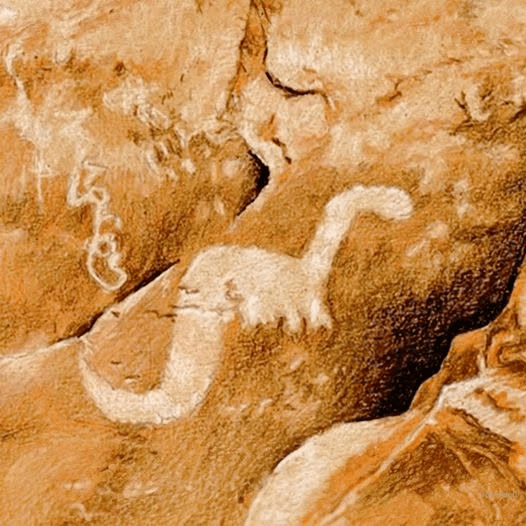
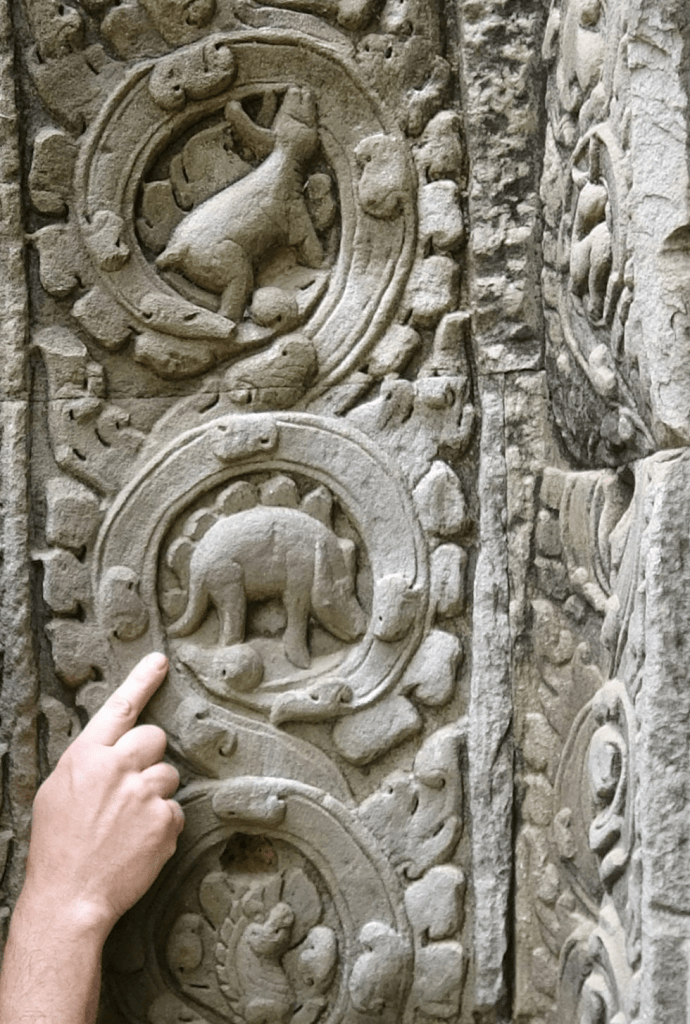
Then, out of that same storm, God is not through with Job. 40:7. 7 “Now gird up your loins like a man; I will ask you, and you instruct Me. 8 “Will you really annul My judgment? Will you condemn Me that you may be justified?” In other words, “man up, I’ve got two more examples to show you how insignificant you are. 1) Behemoth (40:15-24), and 2) Leviathan (41:1-34). Behemoth and Leviathan are two massive, untamable creatures—one of the land and one of the sea—that God describes to humble Job and demonstrate supreme divine power over creation. Some have interpreted behemoth as a hippopotamus who is one of the strongest animals, but they don’t have a “cedar-like tail”. It sounds like a dinosaur to me. Yes, I know that we are told that dinosaurs died out 70 million years ago, but there is plenty of cave drawings and other evidence that shows that dinosaurs co-existed with humans. That is what Genesis 1 taught all along, that God created humans and land mammals (including dinosaurs) on day 6. Yes that means that dinosaurs were on the ark. There are reports of dinosaurs in many cultures since the flood. If God was going to. pick the biggest, strongest land animal to show His creative powers, would he not pick a land dinosaur? Some have interpreted leviathan to be a crocodile, but crocodiles don’t have fiery breath and flashing eyes. This sound more like some dinosaur sea creature much bigger and more powerful than even a crocodile. Again, there have been what appear to be credible eyewitness reports of such sea creature dinosaurs in different cultures. 12th-century Nordic logs and 18th-century naturalists reported multi-armed beasts pulling ships down. I know many of those reports might be mythical, but many appear to be credible eyewitnesses. Of course, God created sea creatures and fish on day 5 of creation week. Again, if God was going to pick the biggest, strongest sea animal to show His creative power, would he not pick a sea dinosaur? They were not destroyed in the flood and would certainly have been around in the time of Job, usually dated as the time of the patriarchs in Genesis.
But what happened to dinosaurs like behemoth and leviathan if they did co-exist with humans? They simply became extinct like over 2,000 other species have become extinct over time. There was not some meteor that destroyed all the dinosaurs 70 million years ago as the books teach kids today. Most just accept that to be true b/c the science books say that it is true. Please examine the evidence that dinosaurs have co-existed with humans all along in different cultures. Cave drawings that show humans trying to kill dinosaurs are very convincing proof that dinosaurs co-existed with humans.Those drawings will have different real animals, and then a dinosaur. It is is illogical that those who made the drawings just out of the blue drew an imaginary animal that they had never seen.
Natural Bridges National Monument in Utah.
Cambodia temple. Stegasaurus carving.
The end of this saga comes in chapter 42. After God challenging Job with his land and sea creatures that He created: 42:1Then Job answered the Lord and said,
2 “I know that You can do all things,
And that no purpose of Yours can be thwarted.
3 ‘Who is this that hides counsel without knowledge?’
Therefore I have declared that which I did not understand,
Things too wonderful for me, which I did not know.”
4 ‘Hear, now, and I will speak;
I will ask You, and You instruct me.’
5 “I have heard of You by the hearing of the ear;
But now my eye sees You;
6 Therefore I retract,
And I repent in dust and ashes.”
Indeed, why God does what He does is “knowledge too wonderful for our limited minds to understand.” Job’s next comment speaks to all of us: “I have heard of you by the hearing of the ear but now my eye sees you”. The suffering and the struggle with the why for the suffering had taken Job into a new, deeper understanding and relationship with God. Do you ever feel that your knowledge of God is pretty superficial? Sure, you know “about” God from al those Bible classes and sermons, but do you really have an intimate relationship with God. Maybe being a Christian in the U.S. is pretty easy with no suffering. You wonder what your faith would be like if you lived in a country that persecutes Christians, like North Korea, China, or Iran. Suffering like what Job suffered can drive you away from God or it can deepen your faith and make you stronger.
Epilogue: God rebuked Job’s 3 friends for giving Job bad advice and bad reasoning about his suffering. God then restored to Job twice what he had before, and gave him 10 more children. He lived 140 more years and saw his descendants to the 4th generation. He was rewarded for his faithfulness inspite of his arguing with God. Not all suffering is rewarded in this life, but for some reason Job was rewarded in this life.
The story of Job is an example for all who suffer for being. Christian. James 5:10 As an example, brethren, of suffering and patience, take the prophets who spoke in the name of the Lord. 11 We count those blessed who endured. You have heard of the endurance of Job and have seen the outcome of the Lord’s dealings, that the Lord is full of compassion and is merciful.” If you have a tendency to worry about the “why” God allows evil, suffering, and pain, then read the book of Job again.
PSALMS
First a good AI introduction to the Psalms.
The Book of Psalms (also called the Psalter) is a collection of 150 ancient Hebrew poems, songs, and prayers that served as Israel’s worship hymnbook. Its Hebrew name, Tehillim, means “Praises,” while the Greek psalmoi refers to songs sung with plucked stringed instruments.
Structure: Five Books
The collection is divided into five sections, each ending with a closing blessing (doxology):
- Book 1 (Psalms 1–41): Heavy focus on David, personal trials, repentance, and God’s protection.
- Book 2 (Psalms 42–72): Features laments, royal psalms, and trust in God as a refuge.
- Book 3 (Psalms 73–89): Shifts toward deeper distress, national crisis, and questions about God’s promises.
- Book 4 (Psalms 90–106): Emphasizes God’s eternal rule over creation amid human frailty and exile.
- Book 5 (Psalms 107–150): Highlights thanksgiving, pilgrimage songs, and a crescendo of praise culminating in five “Hallelujah” psalms.
Authorship and Origins
- Authors: 73 psalms are attributed to King David. Other contributors include Asaph, the sons of Korah, Solomon, Moses, and Heman and Ethan, with many psalms remaining anonymous.
- Timeline: Composed and compiled across centuries of Israel’s history—from early traditions through the monarchy and post-exilic worship.
Key Genres and Themes
- Lament: The largest category, expressing grief, confusion, anger, or cries for justice while moving toward trust in God.
- Praise and Thanksgiving: Celebrations of God’s character, creation, and acts of rescue.
- Wisdom and Torah: Reflections on righteous living, obedience, and meditating on God’s law (such as Psalm 1).
- Royal and Messianic: Poems about Israel’s anointed king that point toward a future, ultimate ruler.
Psalm 1
Let’s keep it simple instead of trying to diagnose each part of each psalm. Psalm 1 is a contrast of the wicked and the righteous. The righteous will be blessed and the wicked will perish. Choose your path. BTW I just read in the latest issue of the Voice of the Martyrs magazine about the persecution of Iranian believers. One lady suffered much persecution but. she said that Psalm 1 was great comfort to her in her persecution. Psalm 1 is God’s assurance that in the end the righteous will be blessed, if not in this life then in the next life.
Psalm 2
Let’s get a little more technical with psalm 2. This is about Yahweh’s “Anointed”. The Hebrew is mashiach: Anointed one, Messiah. The word is used 39 times but it almost always refers to the anointing of a king or priest. It is translated as “Anointed” except in Daniel 9:25-26 in the 70 weeks prophecy where it is “transliterated” as “Messiah” where it definitely is a prediction of Jesus the Messiah who will be “cut off” (killed). We know this time it is a direct prediction of the rulers killing Jesus b/c it is quoted in Acts 4:25. Peter and John are released from jail and they join the fellow Christians in prayer. They then said, 4:27 For truly in this city there were gathered together against Your holy servant Jesus, whom You anointed, both Herod and Pontius Pilate, along with the Gentiles and the peoples of Israel, 28 to do whatever Your hand and Your purpose predestined to occur.” It was interesting when Mel Gibson was accused of being anti-semitic in his movie “The Passion of Christ”. The critics said that he portrayed the Jews as having the main part in the crucifixion of Jesus, which they clearly did! They said that he downplayed the role of the Romans. But Acts 4 shows that the blame was to be shared by the Romans and the Jews.
But then Psalm 2 says that the Lord laughed at them and installed His Anointed as king even though they killed Jesus. God calls Jesus his “begotten Son” (John 1:14 the “only begotten) and promises to give him the nations as his inheritance. The palmist warns the kings of the earth to worship the Lord and do homage to His Son. The Hebrew word for “homage” is nashaq: To kiss, to touch gently. It often just means a kiss but here it is the reverent kiss one would give while bowing to a king. In John 5 Jesus spoke of this equal honor that we should give the Father and the Son: 5:22 For not even the Father judges anyone, but He has given all judgment to the Son, 23 so that all will honor the Son even as they honor the Father. He who does not honor the Son does not honor the Father who sent Him.” Islam teaches that Jesus is just a prophet and not the Son of God, certainly not equal to the Father. Most of the cults say that Jesus was just a man. The non-Christian Jews don’t accept Jesus as the Messiah, God’s Anointed. Messianic Jews do accept Jesus as the Messiah. The word translates in the Greek as “Christ” and means “anointed one”. John 1:41 He (Peter) found first his own brother Simon and *said to him, “We have found the Messiah” (which translated means Christ).” Peter made the great confession: Matthew 16:16 “You are the Christ, the Son of the living God”. John affirmed the same in John 20:30 Therefore many other signs Jesus also performed in the presence of the disciples, which are not written in this book; 31 but these have been written so that you may believe that Jesus is the Christ, the Son of God; and that believing you may have life in His name.” Believing that Jesus was the predicted Messiah doesn’t mean the same as it would to a Jew in the first century. The Jews had been waiting for centuries for the Messiah who would fulfill all the predictions made by the prophets. The preaching of the apostles tried to show that Jesus fulfilled all those predictions. Acts 17:1 Now when they had traveled through Amphipolis and Apollonia, they came to Thessalonica, where there was a synagogue of the Jews. 2 And according to Paul’s custom, he went to them, and for three Sabbaths reasoned with them from the Scriptures, 3 explaining and giving evidence that the Christ had to suffer and rise again from the dead, and saying, “This Jesus whom I am proclaiming to you is the Christ.” They did not expect the Messiah to die but Isaiah 53 clearly predicted that, and Paul said that Jesus had to suffer and die. His death did not eliminate him from being the Messiah; instead it confirmed that he was the Messiah.
I hope you will enjoy reading and meditating on the psalms.

