
Leviticus 21-22: Laws for priests.
Rules on Mourning and Death (Leviticus 21:1–6)
- General priests: Cannot make themselves ceremonially unclean by touching a dead body, except for immediate family members (mother, father, son, daughter, brother, or dependent unmarried sister). [1, 2]
- Body modifications: Priests are prohibited from shaving their heads, trimming their beards, or cutting their bodies as part of funeral mourning rituals.
Rules on Marriage and Family (Leviticus 21:7–15)
- Marriage restrictions: Ordinary priests cannot marry a prostitute, a woman who has been defiled, or a divorced woman.
- The High Priest: Held to an even higher standard; he must marry only a virgin from his own people and cannot marry a widow, a divorced woman, or a prostitute. He also cannot go near any dead body, even that of his own parents.
- Family discipline: If a priest’s daughter becomes a prostitute, she brings shame upon her father and is to be burned to death.
Physical Requirements for Service (Leviticus 21:16–24)
- No physical blemishes: Any descendant of Aaron with a physical defect or blemish cannot approach the altar to offer food/gifts to God.
- Disqualifying conditions: Included blindness, lameness, a disfigured face, a broken limb, a hunchback, a dwarf, chronic eye/skin diseases, or damaged testicles.
- Allowance: While disqualified from serving at the altar or entering the inner sanctuary, priests with physical defects were still permitted to eat the holy food.
Handling Holy Offerings and Uncleanness (Leviticus 22)
- Partaking in sacrifices: Priests who are ceremonially unclean (due to a bodily discharge, skin disease, or touching something unclean) cannot eat the sacred holy offerings until they are cleansed.
- Who may eat: Only members of the priest’s household (including bought servants or daughters who return home due to widowhood/divorce) may eat the holy food; unauthorized outsiders, guests, or hired workers cannot.
- Unblemished sacrifices: Priests were also responsible for ensuring that any animal brought by the Israelites for sacrifice was completely free of physical defects.
Leviticus 23: The feast days.
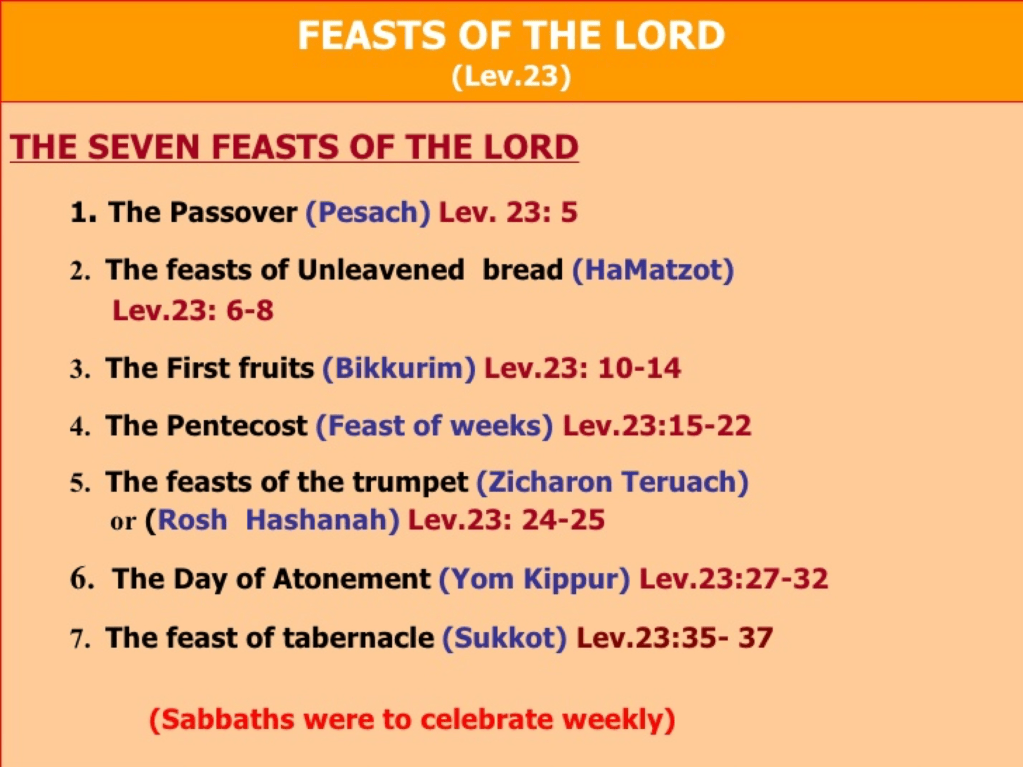
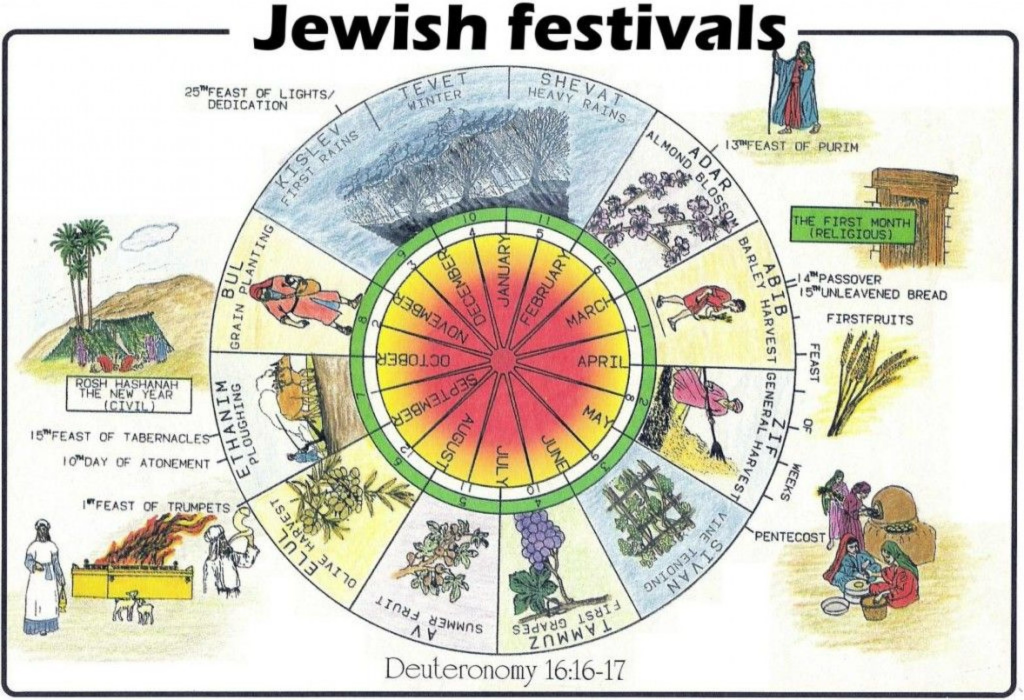
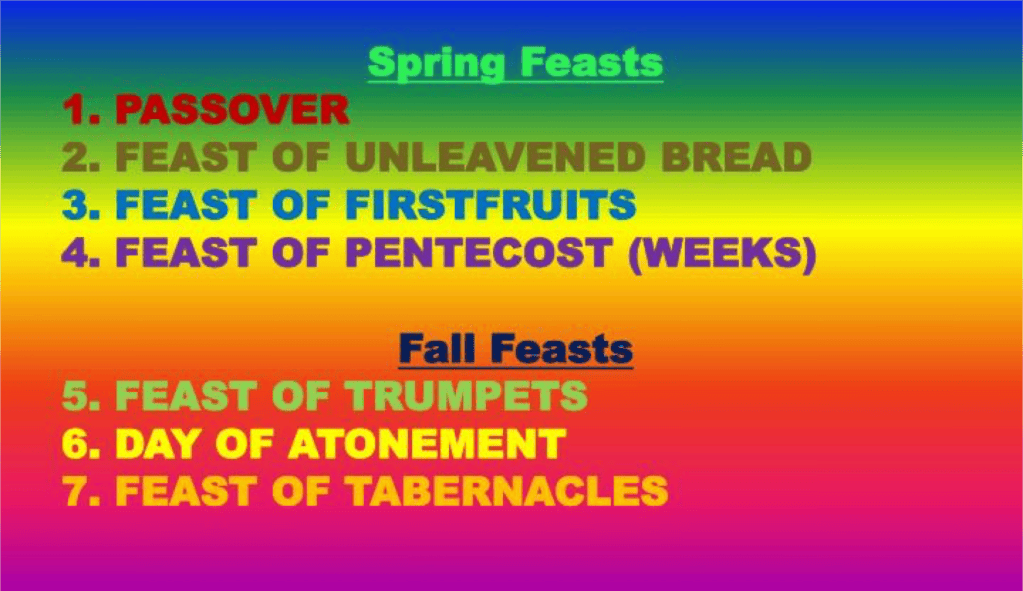
Leviticus 24: The lamp and bread of the sanctuary. The priests were commanded to keep the lamps on the lampstand (the menora) burning continuously. There were to change out the bread on the table of shewbread every Sabbath and the priests could eat the old bread. A blasphemer is stoned to death by the entire congregation. “Eye for eye and tooth for tooth” is established as a rule of justice.
Leviticus 25: The Sabbatic year and the year of Jubilee. The laws for redemption.
Leviticus 25 outlines a system of Sabbath and Jubilee years that functioned as a radical agricultural, economic, and social reset for ancient Israel.
The Sabbath Year (Shabbat)
- Timing: Occurred every seventh year.
- Land Rest: Fields and vineyards were left unworked; no sowing, pruning, or harvesting of planned crops.
- Provision: Whatever the land produced naturally could be eaten freely by everyone, including landowners, servants, hired workers, and local animals.
- Trust: It required Israel to trust God for a triple harvest in the sixth year to sustain them through the fallow period.
The Year of Jubilee (Yovel)
- Timing: Occurred every 50th year, following a sequence of seven Sabbath cycles (7 x 7 = 49 years).
- Proclamation: Announced with the blowing of the ram’s horn (shofar) on the Day of Atonement.
- Land Return: Leased, sold, or mortgaged ancestral land reverted to its original family owners.
- Emancipation: Hebrew debt slaves and bonded laborers were set free to return to their clans.
- Agricultural Rest: Like the Sabbath year, the land received a second consecutive year of rest from planting and harvesting.
Theological Purpose
- Divine Ownership: The foundational premise was that “the land is mine [God’s] and you reside in my land as foreigners and strangers” (Lev. 25:23).
- Economic Equity: It prevented permanent generational poverty and the extreme accumulation of land and debt by a wealthy few. Capitalism is better than communism but capitalism breeds greed
In Leviticus 25, the laws of redemption ensured that ancestral land and impoverished Israelites could not be permanently lost or enslaved.
Rules for Redeeming Property (Land)
- Temporary sales: Land was never sold permanently because it ultimately belonged to God; a sale was essentially a lease based on the number of crops until the next Jubilee.
- Self-redemption: The original owner could buy their land back at any time by paying back the value of the crops for the remaining years until the Jubilee.
- Kinsman-Redeemer (Go’el): If a person grew too poor to redeem their land, a nearest relative was obligated to step in and buy it back for them.
- The Jubilee Reset: If neither the owner nor a relative could redeem the land, it automatically reverted to the original family during the 50th Year of Jubilee.
Rules for Redeeming People (Slaves/Servants)
- Poverty-driven servitude: An Israelite who grew impoverished could sell themselves into service to a fellow Israelite or a foreigner.
- Family buyout: A relative could redeem an Israelite sold into servitude to a foreigner at any time by calculating the price based on the years remaining until the Jubilee.
- Release at Jubilee: If they were not redeemed earlier by a family member, indentured Israelites were freed automatically with their children during the Year of Jubilee.
These chapters are hard to read and sort out the detials so I hope that the AI bullet articles help clarify all the laws.

